Elżbieta Szczepańska
1, A, C, D, F, Mariola Klocek
2, B–D, Marek Kardas
4, C, D,
Lechosław Dul
3, GChange of the Nutritional Habits and Anthropometric
Measurements of Type 2 Diabetic Patients
– Advantages of the Nutritional Education Carried Out
¹ Department of Human Nutrition, Medical University of Silesia, Zabrze, Poland² Diabetes Clinic, Sosnowiec, Poland
3 Department of Biostatistics, Medical University of Silesia, Bytom, Poland
4 Department of Technology and Food Quality Evaluation, Medical University of Silesia, Poland
A – research concept and design; B – collection and/or assembly of data; C – data analysis and interpretation; D – writing the article; E – critical revision of the article; F – final approval of article; G – other
Abstract
Background.Diabetes is one of many diseases in which prevention and treatment are essentially based on proper nutrition. Nutritional education should be a constant, integral and indispensable part of the therapeutic procedure in diabetes.
Objectives.The aim of the study was an estimation of the nutritional habits of patients with type 2 diabetes before and after individual nutritional education and the answers to the question what influence this education had on the change of nutritional habits and the change of the anthropometric measurements of the patients.
Material and Methods. 148 patients of diabetesoutpatient clinics participated in our study, which contained, among others, anthropometric measurements and carrying out a questionnaire that tested dietary habits. An indi-vidual nutrition plan was established and the indiindi-vidual dietary education of the patients was carried out on the basis of the gathered data. The nutritional habits and the anthropometric measurements were verified again three months after the education.
Results. The analysis of the results received revealed an occurrence of the differences between the incidence of proper nutritional habits and middle-values of body weight and waist size in the period before and after educa-tion. Before the education, an enormous amount of improper nutritional habits were found and the values of body weight and waist size were higher, while after the education the improvement of habits and a reduction in body weight and waist size were observed.
Conclusions. The results of our study carried out before the education revealed the occurrence of many unfa-vorable nutritional habits. As a result of the education, nutritional habits improved, which were simultaneously reflected in an improvement of the anthropometric parameters. The results of the studies carried out proved the efficiency and profitable influence of dietary education on changes to the nutritional habits of respondents (Adv Clin Exp Med 2014, 23, 4, 589–598).
Key words: diabetes, nutritional habits, anthropometric measurements, nutritional education.
Adv Clin Exp Med 2014, 23, 4, 589–598 ISSN 1899–5276
ORIGINAL PAPERS
© Copyright by Wroclaw Medical University
Diabetes, as a syndrome of metabolic disor-ders of the body, is one of many diseases in which prevention and treatment are essentially based on proper nutrition. Constantly increased blood glu-cose level is the characteristic feature of the illness. This condition may cause the destruction of many organs and systems, may be the cause of disability and leads to a reduction in lifespan. People suffering from diabetes make up a considerable percentage
of the patients treated both by general practitio-ners and by specialist clinics such as cardiology, ne-phrology, ophthalmology and surgical [1–3].
frequency of diabetes occurrence from 171 m in 2000 to 366 m in 2030 [5]. According to data from the International Diabetes Federation (IDF), 246 m people suffer from diabetes worldwide now-adays [6]. This means that 7 m new cases appear each year [7] and, according to some evaluations, the number may reach 439 m in 2030 [8]. Simul-taneously, the quoted treatises point out that the incidence of diabetes will concern older people to a higher degree in advanced countries and middle-aged people in developing countries [7].
According to IDF data, there are more than 2.6 m people suffering from diabetes in Poland [9]. In the opinion of the Polish Diabetes Association (PDA), the occurrence of diabetes in Poland has in-creased from 6.3% in the 70’s of the 20th century to about 9.3% of the population nowadays [10], and the further increase of the percentage to 11% is predicted by 2025 [9]. It is also alarming that diabetes remains undiagnosed in about 30–40% of cases [10].
Diabetes treatment is a complex process, it in-cludes insulin therapy or taking chemicals oral-ly, proper nutrition and regular physical activi-ty. Moreover, the widely understood education including both individual and group nutritional education should be a constant, integral and in-dispensable part of the therapeutic procedure in diabetes. The aim of nutritional education should be to make it possible for patients to use the ther-apeutic strategy without assistance and to modi-fy their lifestyle so that it complies with the use of proper nutritional recommendations and increase of physical activity [11].
Numerous scientific reports show the influ-ence of education on the improvement of tional habits [12, 13] and an increase of the nutri-tional knowledge level [14, 15] which is evident in the improvement of clinical results such as a de-crease of glucose and HbA1c level [16–18] and lip-ids concentration [12, 19].
The aim of the study was the estimation of the nutritional habits of the tested group of patients with type 2 diabetes before and after carrying out individual nutritional education and answering the question how such education influences the change of nutritional habits in our country’s conditions.
Material and Methods
The study comprised the patients from two dia-betic outpatients clinics from Sosnowiec in Poland. 148 persons participated in the first part of the study (including 93 women and 55 men) whereas 122 (75 women and 47 men), from among the 148 tak-ing part in the first stage, participated in the second. The average age of the participants was 61 ± 9.1.
In the first part of the study, 148 patients were subjected to several stages which included anthro-pometric measurements, blood pressure measure-ment, biochemical tests, carrying out a question-naire, testing nutritional habits and individual nutritional education conducted in the form of di-rect conversation with a dietician.
The results of the anthropometric measure-ments (height, body mass and waist size) were used to calculate the body mass index (BMI) and to es-timate the fat tissue distribution. The biochemical tests included glucose level, HbA1c and lipids pa-rameters evaluation.
The questionnaire consisted of 21 questions including 6 referring to the social status of the re-spondents, duration of the illness and form of treat-ment and 15 questions concerning the number of meals eaten, frequency of the chosen groups of gro-ceries taken in and type of products consumed.
An individual nutrition plan, in accordance with the Polish Diabetic Association [11] and directives of the National Food and Nutrition Institute [20], was es-tablished for each patient based on the results of the anthropometric measurements and biochemical tests, after carrying out the survey and estimating the nutri-tional habits. In the process of the education, accessi-ble didactic means were used in the form of taaccessi-bles of composition and the nutritive values of groceries and meals, a products and meals photo album and plastic models of groceries. Particular note was taken of the elimination of the nutritional mistakes observed during the earlier studies. Regular meals of the proper size and quality, taking into consideration products with a low glycemic index, in everyday nutrition were recom-mended. Moreover, the technologies were introduced for preparing meals minimizing the loss of vitamins and mineral ingredients and reducing the fat content. All patients were acquainted with the rules of menu planning and equipped with educational materials.
122 of those patients had anthropometric mea-surements done again, which were used for body mass index (BMI) evaluation and estimated fat tis-sue distribution, for the second part of the study that took place three months after the end of the first one. Moreover, the nutritional habits test was given to the patients again.
the population of the respondents in body mass, waist circumference and BMI before and after the education was carried out, was done using the Wilcoxon pair se-quence test. The effect of the education on the change of nutritional habits in the population of the respon-dents was analyzed by the test of correlation between the statistical feature “Education (before, after)” and the questions included in the survey, using the χ2 test, cor-respondence analysis, V Cramér’s test, and rang γ
cor-relation coefficient. χ2 McNemar’s test was used to es-timate the effect realized of the educational program on the number of people among whom an improve-ment of the nutritional habits was observed in the gen-eral population of the patients. The significance level α = 0.05 was adopted for all statistic analyses.
Results
Sociological Characteristics
of the Tested Group
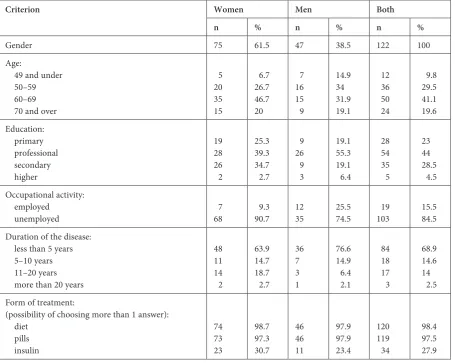
Table 1 shows the sociological characteristics of the tested group, taking their gender into account.
Clinical Characteristics
of the Tested Group
Table 2 shows the clinical characteristics of the tested group. Among all the tested patients, the largest percentage consisted of obese people (65.9%), including both men (69.6%) and wom-en (63.4%). The patiwom-ents with regular body mass constituted only 5.1% of all those tested. The anal-ysis of the waist circumference measurements re-vealed that people taking part in the research were characterized by considerable abdominal obesi-ty (86.9%). There were more women (94.7%) than men (74.5%) in this group.
A desirable blood pressure level for diabetic patients was observed in 77% of the tested, regular glucose level in 18.2% and a desired level of HbA1c in 54.6%. The desirable value of lipid parameters for diabetic patients, referring to triglycerides con-centration, was observed among 42.5%, total cho-lesterol concentration among 20.3%, HDL choles-terol level among 51.6% and LDL cholescholes-terol level among 72%.
Table 1. Sociological characteristics, duration of the illness and form of treatment of the tested group
Criterion Women Men Both
n % n % n %
Gender 75 61.5 47 38.5 122 100
Age:
49 and under 50–59 60–69 70 and over
5 20 35 15
6.7 26.7 46.7 20
7 16 15 9
14.9 34 31.9 19.1
12 36 50 24
9.8 29.5 41.1 19.6 Education:
primary professional secondary higher
19 28 26 2
25.3 39.3 34.7 2.7
9 26 9 3
19.1 55.3 19.1 6.4
28 54 35 5
23 44 28.5 4.5 Occupational activity:
employed
unemployed 768 9.390.7 1235 25.574.5 19103 15.5 84.5
Duration of the disease: less than 5 years 5–10 years 11–20 years more than 20 years
48 11 14 2
63.9 14.7 18.7 2.7
36 7 3 1
76.6 14.9 6.4 2.1
84 18 17 3
68.9 14.6 14 2.5 Form of treatment:
(possibility of choosing more than 1 answer): diet
pills insulin
74 73 23
98.7 97.3 30.7
46 46 11
97.9 97.9 23.4
120 119 34
Analysis of the Nutritional
Habits of the Tested Group
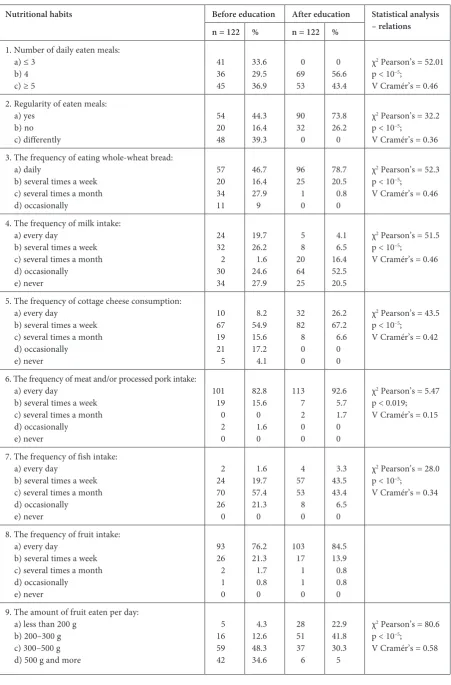
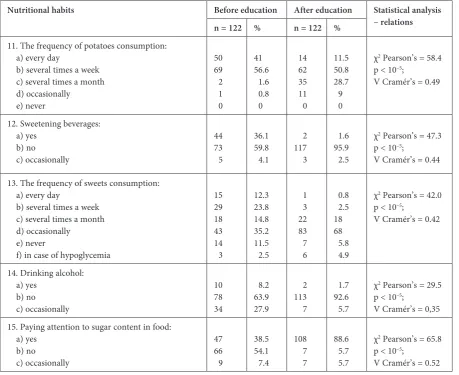
Table 3 shows the nutritional habits of the tested group before and after the conducted education.
Table 4 shows the correlation that has been as-certained in the tested group between nutritional habits before and after education.
A Comparison of the Frequency
of Appearance of the Proper
Nutritional Habits Before
and After the Conducted
Education
The statistic analysis of the results received showed the frequency of the differences between incidences of proper nutritional habits in the peri-od before and after the education was carried out (t-test and the Wilcoxon test).
Table 2. Clinical characteristics of the group tested
Women Men Both
n % n % n %
Body mass /BMI: 18.5–24.9* 25–29.9 ≥ 30
4 23 48
5.6 31 63.4
2 12 33
4.3 26.1 69.6
6 35 81
5.1 29 65.9 Waist circumference:
< 80 cm in women, < 94 cm in men* 80–88 cm in women, 94–102 cm in men > 88 cm in women, > 102 cm in men
2 2 71
2.7 2.7 94.7
3 9 35
6.4 19.1 74.5
5 11 106
4.1 9 86.9 Blood pressure level:
< 130/80*
≥ 130/80 5916 78.721.3 3512 74.525.5 94 28 7723
Glucose level: < 100 mg/dL* 100–125 mg/dL > 125mg/dL
15 13 47
20.3 17.6 62.2
7 6 34
14.9 12.8 72.3
22 19 81
18.2 15.7 66.1 HbA1c:
< 7.0%*
≥ 7.0% 4035 5347 2720 5743 67 55 54.645.4
Triglycerides: < 150 mg/dL*
≥ 150 mg/dL 3342 44.555.5 1928 4060 52 70 42.557.5
Total cholesterol: < 175 mg/dL*
≥ 175 mg/dL 1263 16.183.9 1235 26.673.4 24 98 20.379.7
HDL:
> 40 mg/dL in men, > 50 mg/dL in women*
≤ 40 mg/dL in men, ≤ 50 mg/dL in women 4530 6139 1829 3862 63 59 51.648.4
LDL:
< 100 mg/dL*
≥ 100 mg/dL 4926 6535 39 8 82.517.5 88 34 7228
Table 3. The nutritional habits of the tested group before and after education
Nutritional habits Before education After education Statistical analysis – relations n = 122 % n = 122 %
1. Number of daily eaten meals: a) ≤ 3
b) 4 c) ≥ 5
41 36 45 33.6 29.5 36.9 0 69 53 0 56.6 43.4
χ2 Pearson’s = 52.01
p < 10–5;
V Cramér’s = 0.46 2. Regularity of eaten meals:
a) yes b) no c) differently 54 20 48 44.3 16.4 39.3 90 32 0 73.8 26.2 0
χ2 Pearson’s = 32.2
p < 10–5;
V Cramér’s = 0.36 3. The frequency of eating whole-wheat bread:
a) daily
b) several times a week c) several times a month d) occasionally 57 20 34 11 46.7 16.4 27.9 9 96 25 1 0 78.7 20.5 0.8 0
χ2 Pearson’s = 52.3
p < 10–5;
V Cramér’s = 0.46
4. The frequency of milk intake: a) every day
b) several times a week c) several times a month d) occasionally e) never 24 32 2 30 34 19.7 26.2 1.6 24.6 27.9 5 8 20 64 25 4.1 6.5 16.4 52.5 20.5
χ2 Pearson’s = 51.5
p < 10–5;
V Cramér’s = 0.46
5. The frequency of cottage cheese consumption: a) every day
b) several times a week c) several times a month d) occasionally e) never 10 67 19 21 5 8.2 54.9 15.6 17.2 4.1 32 82 8 0 0 26.2 67.2 6.6 0 0
χ2 Pearson’s = 43.5
p < 10–5;
V Cramér’s = 0.42
6. The frequency of meat and/or processed pork intake: a) every day
b) several times a week c) several times a month d) occasionally e) never 101 19 0 2 0 82.8 15.6 0 1.6 0 113 7 2 0 0 92.6 5.7 1.7 0 0
χ2 Pearson’s = 5.47
p < 0.019; V Cramér’s = 0.15
7. The frequency of fish intake: a) every day
b) several times a week c) several times a month d) occasionally e) never 2 24 70 26 0 1.6 19.7 57.4 21.3 0 4 57 53 8 0 3.3 43.5 43.4 6.5 0
χ2 Pearson’s = 28.0
p < 10–5;
V Cramér’s = 0.34
8. The frequency of fruit intake: a) every day
b) several times a week c) several times a month d) occasionally e) never 93 26 2 1 0 76.2 21.3 1.7 0.8 0 103 17 1 1 0 84.5 13.9 0.8 0.8 0 9. The amount of fruit eaten per day:
a) less than 200 g b) 200–300 g c) 300–500 g d) 500 g and more
5 16 59 42 4.3 12.6 48.3 34.6 28 51 37 6 22.9 41.8 30.3 5
χ2 Pearson’s = 80.6
p < 10–5;
Depending on the number of the irregularities found in the estimated nutritional habits, the test-ed group was dividtest-ed into three categories (levels) of nutritional habits: L – low level of habits (less than 40% of correct habits), M – median level
of nutritional habits (40–70% of correct habits), H – high level of nutritional habits (more than 70% of correct habits).
The statistical relevance of dependence be-tween variables was ascertained: education (before
Nutritional habits Before education After education Statistical analysis – relations n = 122 % n = 122 %
11. The frequency of potatoes consumption: a) every day
b) several times a week c) several times a month d) occasionally
e) never
50 69 2 1 0
41 56.6 1.6 0.8 0
14 62 35 11 0
11.5 50.8 28.7 9 0
χ2 Pearson’s = 58.4
p < 10–5;
V Cramér’s = 0.49
12. Sweetening beverages: a) yes
b) no c) occasionally
44 73 5
36.1 59.8 4.1
2 117 3
1.6 95.9 2.5
χ2 Pearson’s = 47.3
p < 10–5;
V Cramér’s = 0.44
13. The frequency of sweets consumption: a) every day
b) several times a week c) several times a month d) occasionally
e) never
f) in case of hypoglycemia
15 29 18 43 14 3
12.3 23.8 14.8 35.2 11.5 2.5
1 3 22 83 7 6
0.8 2.5 18 68 5.8 4.9
χ2 Pearson’s = 42.0
p < 10–5;
V Cramér’s = 0.42
14. Drinking alcohol: a) yes
b) no c) occasionally
10 78 34
8.2 63.9 27.9
2 113 7
1.7 92.6 5.7
χ2 Pearson’s = 29.5
p < 10–5;
V Cramér’s = 0,35 15. Paying attention to sugar content in food:
a) yes b) no c) occasionally
47 66 9
38.5 54.1 7.4
108 7 7
88.6 5.7 5.7
χ2 Pearson’s = 65.8
p < 10–5;
V Cramér’s = 0.52
Table 3. The nutritional habits of the tested group before and after education (cd.)
Table 4. The correlation between the nutritional habits of the tested group before and after education
Nutritional habits Statistical analysis – correlations
Number of meals eaten per day p < 10–6; γ = 0.38
Frequency of whole-wheat bread intake p < 10–6; γ = 0.66
Frequency of milk intake p < 2*10–5; γ = –0.29
Frequency of cottage cheese consumption p < 10–6; γ = 0.68
Frequency of meat and/or processed pork intake p < 5*10–4; γ = 0.45
Frequency of fish intake P < 10–6; γ = 0.56
Frequency of fruit intake p = 0.03; γ = 0.24
Amount of fruit eaten p < 10–6; γ = 0.93
Frequency of vegetable intake p = 10–6; γ = 0.79
and after) and the level of nutritional habits (L, M, H) for the accepted level of relevance α. The value of Pearson’s χ2 = 49.4; p < 10–5. V Cramér’s = 0.45, which means a moderate strength of dependence between the analyzed statistical features in the test.
The results of the correspondence analysis shows that the period before education was con-nected with a low level of habits (large number of incorrect habits), whereas in the period after ed-ucation the high level of habits (large number of correct habits) in the tested statistical communi-ty in general was ascertained. The median level of habits appears equally frequently before and after the education in the tested statistical population.
The correlation between variables: education (be-fore and after) and level of nutritional habits (L, M, H) in the tested population (p < 10–6) was ascertained. The power of dependence between the analyzed sta-tistical features was high, γ = 0.71 in the test.
The results received show that the education carried out corresponds with the improvement of the nutritional habits in the tested population.
Using McNemar’s χ2 test, it was revealed that, as a result of the education, the number of people with a high nutritional habit level increased statis-tically significantly (p < 10–4).
The Estimation of Body Mass,
Waist Circumference
and BMI Changes
The results of the tests and the analysis of the differences of arithmetic means for the tested fea-tures in the try-outs show that, for the random vari-ables (body mass, waist circumference and BMI) in the tested populations after the education was car-ried out, a decrease of the mean values occurred.
The differences of arithmetic means for body mass, waist circumference and BMI before and af-ter education in the tests respectively amounted to 2.6 ± 4.3 kg, 2.03 ± 3.8 cm and 0.9 ± 1.6 kg/m². The statistical values respectively amounted to Z = 6.3, p < 10–6; Z = 5.9; p < 10–6 and Z = 5.9, p < 10–6 (Wil-coxon test).
The results received mean that the educa-tion carried out, and thus the improvement of nutritional habits, influences the body mass and waist circumference loss for persons in the tested population.
Discussion
The results of the research pursued among pa-tients with type 2 diabetes before education show the occurrence of many unfavorable nutritional
habits. The improvement of nutritional habits af-ter the conducted education together with simulta-neous body mass and waist circumference reduc-tion was obvious.
In accordance with dietary recommendations, patients with type 2 diabetes should eat 4–5 meals per day. Regular arrangement of meals during the day and eating more frequently but in smaller amounts, agrees with better compensation of daily glucose concentration [11]. In our study, 66.4% of the patients before education and 100% after edu-cation ate the recommended 4–5 meals per day. In Batista’s et al. study carried out in Vicosa in Bra-sil among female patients with newly-diagnosed diabetes, 54% of the tested answered that they ate 4–5 meals a day whereas 42% answered they ate 3 meals a day [21]. However, Hankó etal., testing the treatment and lifestyle of 142 Hungarian pa-tients with type 2 diabetes, ascertained that almost half of the questioned (46.5%) ate less than 5 meals a day [22]. In Lim’s et al. research, whose aim was the estimation of the influence of the individual di-etary education carried out on the change of nutri-tional habits, showed that under its influence, the number of the meals consumed daily by the pa-tients increased [19].
Apart from the proper number of meals per day, it is very important that the consumption at regular hours correlated with the number of dos-es and pharmacodynamic featurdos-es of insulin or oral hypoglycemic medicines and the character of physical exercise [11].
Our studies revealed that, as a result of the ed-ucation carried out, the number of patients who eat regular meals increased (from 44.3% to 73.8%). In Tan’s and Magarey’s research, carried out in Ma-laysia among 126 adults with diabetes, nearly 80% of those questioned answered that they ate meals regularly. It is necessary to emphasize that the an-swers were given after giving the dietary advice to the patients [23].
and the patient more frequently consumed whole-wheat bread [24].
Milk and dairy products are the main source of protein and calcium, including the natural sug-ar lactose, which makes their consumption influ-ence the increase of glucose blood concentration. Whereas our research showed that milk and cottage cheese consumption was insufficient and, after car-rying out the education, in comparison to the pre-vious period, additionally a decrease of the num-ber of persons who drank milk everyday occurred (4.1% and 19.7%, respectively), whereas the number of persons eating cottage cheese every day increased (from 8.2% to 26.2%). Batistaet et al. ascertained that, from among 156 people tested, 61% consumed milk every day while 56% ate cottage cheese at least once a month [21]. Johansen and etal., who tested the changes of nutritional habits of 198 overweight Pakistani women living in Oslo endangered with di-abetes, observed that after carrying out the dietary education, a decrease of particularly fat milk and yo-gurt consumption occurred [25].
Meat and fish are products which provide a large amount of protein but some of them contain a lot of fat and cholesterol as well. In our research, 82.8% of the patients before education and 92.6% after the education answered that they ate meat and its products every day. As a result of the education carried out the percentage of patients who ate fish several times a week increased as well from 19.7% to 43.5%. Other results in the range of frequency of meat consumption were received by Johansen etal., who tested the changes of dietary habits after intro-ducing the Inna Diab-DEPLAN program. They re-vealed that, as a result of the education carried out, the intake of red meat decreased [25]. Whereas Ba-tista etal.,analyzing the results of the research in the matter of fish intake, ascertained that up to 74% of the tested patients ate fish every day [21].
The regular intake of green vegetables and fruit by the persons with diabetes influences the decrease of glycated hemoglobin [26]. In this re-spect, their daily consumption is recommended with every meal, best in the form of salads. It is worth paying attention to fruit intake for their eas-ily digestible carbohydrates – glucose and fructose. Their consumption in larger amounts may cause an increase of blood glucose concentration.
The results of our research both before and af-ter education showed that patients most often de-clared the daily consumption of vegetables and fruit and the number of these patients increased as a re-sult of the education. Similar rere-sults were received by Johansen et al., who estimated the change of di-etary habits of Pakistani women living in Oslo af-ter introducing the Inna Diab-DEPLAN program, and ascertained that the daily intake of vegetable
and fruit servings increased as a result [25]. Nelson etal., who tested the current state of knowledge of 717 war veterans from Washington suffering from diabetes, and simultaneously estimated their will-ingness to make the possible changes, ascertained that 14% of the questioned declared an intake of more than 5 servings of vegetables and fruits while up to 22% of the respondents answered that they did not eat fruit and vegetables every day. The tention to improve dietary habits regarding an crease in the frequency of fruit and vegetable in-take up to 5 times a day was declared by up to 59% of the questioned [27]. In the research of Nelson et al., who tested the nutrition and the physical ac-tivity of 1480 adult Americans with type 2 diabe-tes applied to the 3rd National Health and Nutri-tion ExaminaNutri-tion Survey (NHANES III), revealed that 62% of all patients questioned answered that they ate less that 5 portions of vegetables and fruit per day [28]. Miller et al.,estimating the changes in nutrition of adult Americans with type 2 diabe-tes, received other results [24]. They ascertained that both before and after the education, the test subjects ate the same number of fruits. Simultane-ously in the same study, they proved that as a re-sult of the conducted education, the test subjects decreased the consumption of potatoes. Such a de-crease was ascertained in our research as well.
In accordance with the standpoint of the Pol-ish Diabetic Association, alcohol consumption by patients with type 2 diabetes is forbidden. Alcohol inhibits the release of glucose from the liver and, through this connection, it may favor the occurrence of hypoglycemia [11]. On the grounds of the results of our research, it was ascertained that most of the patients had not drunk any alcohol, and as a result of the education carried out, this number increased from 63.9% to 92.6%. In Batista’s etal.research, 28% of the tested persons declared drinking alcohol, 71% of them answered that they had drunk at least once a week and 29% once a month [21]. In Magas’ et al. study, whose aim was an estimation of the salubrious behavior of Croatian patients suffering from diabetes and comparison to the behavior of healthy persons, it was revealed that from among those ill with dia-betes, 5.8% drank alcohol [29]. Eliat-Adar etal., who estimated the compliance with dietary recommenda-tions of 1008 participants of the Strong Heart Study (SHS) and 373 participants of the National Health and Nutrition Survey (NHANES) with diabetes, as-certained that respectively 999 and 349 persons de-clared drinking alcohol [26].
education carried out on the change of anthropo-metric parameters of the tested persons, it can be ascertained that similar weight loss was observed by the authors of other research like Matvienko et al. [30], Lim etal.[19] in Korea and Deakin et al.
[31]in Great Britain,among others. Matvienko et al.,after 12 months since the author’s program re-ferring to the modification of nutritional habits was introduced, a loss of body weightof6% in 56% of the tested persons was observed [30]. In Lim’s et al. research, similarly to ours, a decrease of BMI was observed – on average from 24.4 to 23.7 [19]. In other studies where, as in our research, the ef-fectiveness was estimated of the education carried out by a qualified dietician as one of the forms of type 2 diabetes prevention, after a yearlong period, weight loss of 4.2 ± 5.1 kg was observed. A body
mass measurement carried out among the tested persons after two years showed that body mass re-mained lower (3.5 ± 5.5 kg) than in the days before education [32]
Kattlemann etal. [33], Metghalchietal. [34] and Gurkaetal.[35] also observed a slightly lesser although significant body mass loss and decrease of BMI. In Gurka’s et al. studies, the authors ob-served the fact that the persons with less formal education had received better results of body mass reduction than those with higher education. Si-multaneously the authors noticed the diminution of waist circumference [35].
Williamson et al. showed amean loss of body mass of the tested persons that was larger than in our research; a body mass decrease of8.2 kg was
observed. Simultaneously, the authors of the study paid attention to the improvement of general fit-ness of the test subjects that carrying out the ed-ucational program had contributed to in a funda-mental way in their opinion [36]. Torres et al., who in their research compared the efficiency of indi-vidual and group education carried out among the patients of a university hospital in Brazil, received interesting results. After three months since the education, a small increase in body mass was ob-served among the patients who had participated in the group education while, in the case of individual education, body mass decreased 2.7 kg [37].
The results of our research and many of the quoted studies confirm that the proper education of patients with diabetes may broaden their knowl-edge of the treatment [33, 38, 39] and of proper nu-trition in diabetes [39]. This may have a reflection in the improvement of anthropometric measurements and biochemistry tests results, and the quality of life that follows, of the diabetic patients [19, 30, 40].
The results of our studies carried out among pa-tients with type 2 diabetes before education revealed the occurrence of many unfavorable dietary habits. It was proved that, in the results of the education carried out, improvement occurred in that respect. The number of persons with a high level of good dietary habits statistically significantly increased, which reflected simultaneously in the improvement of anthropometric measurements. The results of the studies carried out proved the efficiency and profit-able influence of dietary education on the change of the nutritional habits of the tested patients.
References
[1] Bernas M, Czech A, Tatoń J: Diabetologia Praktyczna. PZWL, Warszawa 2008.
[2] Klupa T: Patofizjologia zaburzeń gospodarki węglowodanowej – jak powstaje cukrzyca. Kw Biul Pol Tow Diet 2007, 3, 3–4.
[3] American Diabetes Association. Clinical practice recommendations. Diabetes Care 2009, 32, Suppl C.
[4] American Diabetes Association. Economic costs of diabetes in the US in 2002. Diabetes Care 2003, 26, 917–932. [5] Wild S, Roglic G, Green A, Sicree R, King H: Global Prevalence of Diabetes: Estimates for the year 2000 and
projections for 2030. Diabetes Care 2004, 27, 1047–1053. [6] International Diabetes Federation (IDF) http://www.idf.org/
[7] Shaw JE, Sicree RA, Zimmet PZ: Global estimates of the prevalence of diabetes for 2010 and 2030. Diabetes Res Clin Pract 87, 1, 4–14.
[8] World health statistics 2010. World Health Organization 2010 http://www.who.int/whosis/whostat/EN_WHS10_Full.pdf [9] International Diabetes Federation, Diabetes Atlas, 3rd ed., International Diabetes Federation, Brussels 2006. [10] Dokument wydany przez International Diabetes Federation dotyczący sytuacji diabetologicznej w Europie w 2008
roku-Polska. Diabetol Prakt 2009, 10, 1, 45–48.
[11] Zalecenia kliniczne dotyczące postępowania u chorych na cukrzycę, 2010. Stanowisko Polskiego Towarzystwa Diabetologicznego. Diabetol Prakt 2010, 11, supl. A.
[12] Norris SL, Engelgau MM, Narayan KM: Effectiveness of self-management training in type 2 diabetes: a systematic review of randomized controlled trials. Diabetes Care 2001, 24, 561–587.
[13] Albarran NB, Ballesteros MN, Morales GG, Orteqa MI: Dietary behavior and type 2 diabetes care. Patient Educ Couns 2006, 61, 191–199.
[14] Lim HS, Chyun JH, Kim YS, Nam MS: Effect of nutrition education on diabetic management in diabetic patients. The Korean Journ of Nutr 2001, 34, 69–78.
[16] Christensen NK, Steiner J, Whalen J, Pfister R: Contribution of Medical Nutrition Therapy and Diabetes Self-management Education to Diabetes Control As Assessed by Hemoglobin A1C. Diabetes Spectrum 2000, 13, 72–75. [17] Miller CK, Edwards L, Kissling G, Samville L: Nutrition education improves metabolic outcomes among older
adults with diabetes mellitus: results from a randomized controlled trial. Prev Med 2002, 34, 252–259.
[18] Shabbidar S, Fathi B, Shirazifard M: Effects of clinical nutrition education on glycemic control outcomes in type 2 diabetes. Int J Diabetes Dev C 2006, 26, 156–159.
[19] Lim HM, Park JE, Choi YJ, Huh KB, Kim I: Individualized diabetes nutrition education improves compliance with diet prescription. Nutr Res Pract 2009, Winter, 3, 4, 315–322.
[20] National Food and Nutrition Institute http://www.izz.waw.pl
[21] Batista MC, Priore SE, Rosado LE, Tinôco AL, Franceschini SC: Dietary assessment of the patients detected with hyperglycemia in the “Detection of Diabetes in Suspect Cases Campaign” in Viçosa, MG. Arq Bras Endocrinol Metabol 2006, 50, 6, 1041–1049.
[22] Hanko B, Kamer M, Kumil P, Hragyel Z, Samu A, Lincze Z, Zelko R: Self-reported medication and lifestyle adherence in Hungarian patients with Type 2 diabetes. Pharm World Sci 2007, 29, 58–66.
[23] Tan MY, Magarey J: Self-care practices of Malaysian adults with diabetes and sub-optimal glycaemic control. Patient Educ Couns 2008, 72, 2, 252–267.
[24] Miller CK, Gutshcall MD, Mitchell DC: Change in food choices following a glycemic load intervention in adults with type 2 diabetes. J Am Diet Assoc 2009, 109, 2, 319–324.
[25] Johansen KS, Bjørge B, Hjellset VT, Holmboe-Ottesen G, Råberg M, Wandel M: Changes in food habits and motivation for healthy eating among Pakistani women living in Norway: results from the Inna Diab-DEPLAN study. Public Health Nutr 2010, 13, 6, 858–867.
[26] Eilat-Adar S, Xu J, Zephier E, O’Leary V, Howard BV, Resnick HE: Adherence to dietary recommendations for saturated fat, fiber, and sodium is low in American Indians and other U.S. adults with diabetes. J Nutr 2008, 138, 9, 1699–1704. [27] Nelson KM, Mc Farland L, Reiber G: Factors influencing disease self-management among veterans with diabetes
and poor glycemic control. Intern Gen J Med 2007, 22, 4, 442–447.
[28] Nelson KM, Reiber G, Boyko EJ: Diet and exercise among adults with type 2 diabetes: findings from the third national health and nutrition examination survey (NHANES III). Diabetes Care 2002, 25, 10, 1722–1728.
[29] Magas S, Poljicanin T, Sekerija M, Ajduković D, Metelko Z, Car N, Kern J: Lifestyle habits of Croatian diabetic population: observations from the Croatian Adult Health Survey. Coll Antropol 2009, 33, Suppl 1, 115–119. [30] Matvienko OA, Hoehns JD: A lifestyle intervention study in patients with diabetes or impaired glucose tolerance:
translation of a research intervention into practice. J Am Board Fam Med 2009, 22, 5, 535–543.
[31] Deakin TA, Cade JE, Williams R, Greenwood DC: Structured patient education: the diabetes X-PERT Programme makes a difference. Diabet Med 2006, 23, 9, 944–954.
[32] Tuomilehto J, Lindström J, Eriksson JG: Prevention of type 2 diabetes mellitus by changes in lifestyle among subjects with impaired glucose tolerance. N Engl J Med 2001, 344, 18, 1343–1350.
[33] Kattelmann KK, Conti K, Ren C: The medicine wheel nutrition intervention: a diabetes education study with the Cheyenne River Sioux Tribe. J Am Diet Assoc 2009, 109, 9, 1532–1539.
[34] Metghalchi S, Rivera M, Beeson L, Firek A, De Leon M, Balcazar H, Cordero-MacIntyre ZR: Improved clinical outcomes using a culturally sensitive diabetes education program in a Hispanic population. Diabetes Educ 2008, 34, 4, 698–706. [35] Gurka MJ, Wolf AM, Conaway MR, Crowther JQ, Nadler JL, Bovbjerg VE: Lifestyle intervention in obese patients
with type 2 diabetes: impact of the patient’s educational background. Obesity (Silver Spring) 2006, 14, 6, 1085–1092. [36] Williamson DA, Rejeski J, Lang W, Van Dorsten B, Fabricatore AN, Toledo K: Look AHEAD Research Group
Impact of a weight management program on health-related quality of life in overweight adults with type 2 diabetes. Arch Intern Med 2009, 169, 2, 163–171.
[37] Torres CHDE, Franco LJ, Stradioto MA, Hortele VA, Schall VT: Evaluation of diabetes education program. Rev Saude Publica 2009, 43, 2, 291–298.
[38] Baradaran HR, Knill-Jones RP, Wallia S, Rodgers A: A controlled trial of the effectiveness of a diabetes education programme in a multi-ethnic community in Glasgow [ISRCTN28317455]. BMC Public Health 2006, 18, 6, 134. [39] Otero LM, Zanetti ML, Ogrizio MD: Knowledge of diabetic patients about their disease before and after
imple-menting a diabetes education program. Rev Lat Am Enfermagem 2008, 16, 2, 231–237.
[40] Sinorita H, Saádah, Jazakillah S: Effects of dietary pattern and education on glycemic control in patients with type 2 diabetes mellitus at Dr. Sardjito Central General Hospital, Yogyakarta. Acta Med Indones 2008, 40, 2, 55–58.
Address for correspondence:
Elżbieta Szczepańska
Department of Human Nutrition Medical University of Silesia Jordana 19
41-808 Zabrze Tel.: 48 32 275 51 97
E-mail: [email protected]
Conflict of interest: None declared