This is an open access journal, and articles are distributed under the terms of the Creative Commons Attribution-Non Commercial-ShareAlike 4.0 License, which allows others to remix, tweak, and build upon the work non-commercially, as long as appropriate credit is given and the new creations are licensed under the identical terms.
© 2018 Journal of Advanced Pharmacy Education & Research | Published by SPER Publication
109
Investigating the frequency, prevalence and management of
pain in children
Sadegh Ahmadi Mazhin
1, Maryam Kiarsi
1, Ahmad Moosavi
2, Mohammad Maniey
1, Omid Zakeri
3,
Ali Sadeghi Moghaddam
1*1Master of Science in Nursing, Dezful University of Medical Sciences, Dezful, Iran, 2PhD in Health Management, Dezful University of Medical Sciences, Dezful, Iran, 3
Student Research Committee, Dezful University of Medical Sciences, Dezful, Iran.
Correspondence:Ali Sadeghi Moghaddam, Azadegan Boulevard, Dezful, Iran. E-mail:[email protected]
ABSTRACT
Introduction: Pain is one of the most common symptoms in children. Epidemiologic studies in this area can provide valuable information to track the pain-related problems in children. Therefore, the aim of this study was to evaluate the frequency of pain and examination and management of pain by the nurses in selected pediatric hospitals of Khuzestan. Materials and Methods: In this cross-sectional study, pain-based information during the past 24 hours was achieved from 110 children who were admitted to the pediatric ward and were selected using census method. The data (including demographic information, prevalence, cause and type of the pain, pain assessment, and pain evaluation and management by nurses) were collected through interviews and information from the medical files. Results: According to the findings of the present study, 80.9% of the hospitalized children had suffered from pain during the last 24 hours; 89.9% of the patients were relieved from pain. According to the nurses, in 68.2% of the cases, they were aware of children's pain. In examining patients’ records, 32.7% of the children’s pain was charted by a nurse or physician within 24 hours. The measures that were taken to control the pain were 32.9% medicinal and 67.1% non-medicinal measures. Conclusion: Controversial results in the statistics showed that there was still no integrated approach to examining, evaluating, controlling and treating pain in pediatric hospitals. Contrary to the importance of controlling pain in children, it is not fully managed and supported at the clinics.
Keywords: Pain, treatment, assessment, management, children.
Introduction
One of the unpleasant sensory and emotional experiences caused by a real or potential tissue injury is pain, and its control is a crucial part of the healthcare, to the extent that the American Pain Society (APS) promoted "Pain, the Fifth Vital Sign" to emphasize its significance and increase the awareness of the health team regarding pain control [1-3].
Individuals usually experience some degree of pain in their life, such that pain accounts for the most common reason for
referring to the treatment centers and pain control takes 12% of the medication prescriptions; however, the concept of pain may take different perceptions [4-7]. Actually, pain is far more
understandable in humans than what was previously thought and leaves significant effects on the mental health of humans [8].
In addition, long exposure to pain leaves adverse effects that should be avoided [9, 10].
Children are not that strange with pain. Children experience painful events since the very first days of birth for phlebotomy and vaccination, and during childhood, due to prevalent diseases or incidents. Addressing the children's pain relief is important because it leads to significant changes in the quality of their life and disrupts the natural growth process [11, 12]. Based
on the studies, difficulty in expressing pain to the children’s caregivers, namely, parents and nurses, especially in younger children, is one of the main reasons for inadequate pain treatment [13]. Children vary one another in terms of the
cognitive power, mental development, personality, disease conditions, and response to painful interventions necessitating nurses and parents to learn how children express their pain and Access this article online
Website: www.japer.in E-ISSN: 2249-3379
How to cite this article: Sadegh Ahmadi Mazhin, Maryam Kiarsi, Ahmad Moosavi, Mohammad Maniey, Omid Zakeri, Ali Sadeghi Moghaddam.
Investigating the frequency, prevalence and management of pain in children. J Adv Pharm Edu Res 2018;8(4):109-115.
110 Journal of Advanced Pharmacy Education & Research | Oct-Dec 2018 | Vol 8 | Issue4 carefully listen to the child's words and pay attention to
behaviors indicating the child's pain. Based on the American Children's Society and the American Pain Society, painful interventions in children should be adequately anticipated, prevented, and treated [14]. Unfortunately, due to the lack of
awareness and sufficient amount of time of many healthcare team members, analgesics have not always been associated with sufficient relief; therefore, patients lacked quality of care [15, 16].
Although it is recommended that pain control is a key element in the quality of child care, yet a large number of children still experience unbearable levels of pain [17].
Moreover, diagnosing patients' pain and their response to pain is a key element in treating and determining the time of pain infliction, the pain intensity size, its quality, and release which would contribute to a proper diagnosis and treatment [18].
Undesirable pain management increases hospitalization and healthcare costs [19]. Pain management is a vital part of the
healthcare [20]. The desirable management of pain in children
commences with pain examination, then the treatment plan would be planned after identifying the type of the pain and its effective factors; medicinal and non-medicinal interventions would be adapted in accordance with the child's conditions, and then the effectiveness of the methods would be evaluated [21].
Effective management of pain minimizes the adverse physiological and behavioral effects of the child, reduces the days that require connection to the ventilation and oxygen therapy, increases weight, improves the recovery, and reduces the length of hospitalization [22]. Some standards were proposed
by JCAHO for examining and managing pain in 2001; based on this statement, pain should be regularly examined, and the response to its treatment should be controlled. Except for cases, where the pain is necessary for the treatment, the pain should be resolved or minimized, because if the pain is not desirably treated, the child would suffer unreasonable damages
[23]. Pain management includes the administration of all methods
used for preventing, reducing or relieving pain [24]. The optimal
management of children's pain begins with examining the pain, and after identifying the type of the pain and its effective factors, the treatment would be planned and medicinal and non-medicinal interventions would be adapted in accordance with the child's conditions, and then the effectiveness of the methods would be evaluated [25]. In a study conducted in 2012, Linhares
et al., stated that doctors only noticed 38% of the pain in clinical examination of their clients, of whom only 66% were treated; as for the nurses, they only noticed 50% cases of pain in children and intervened for 78% of them [26].
Nurses play a vital role in managing children's pain [27].
According to all healthcare professionals, nurses play a crucial role in evaluating and managing patient's pain [28]. Nurses are
permanently acquired to make decisions on measuring and controlling pain in patients, including making decisions concerning the level of pain and the need for analgesics. Pain relief is also considered as the core of the nursing care, and the significance of playing this role by nurses is becoming further prominent [29].
Considering the importance of pain as a global issue and its importance in children as the most vulnerable group [30, 31], and
its investigation and management by the treatment team, the present research was aimed to investigate the prevalence of pain and the manner of its investigation and management by the nurses and doctors in the educational-medical centers of Khuzestan province in 2015; so that investigating the obtained results would contribute to better prevention and control of the pain in children.
Method
The present cross-sectional study was conducted in two selected educational hospitals of Khuzestan province after obtaining permission from the Research and Ethics Council of Dezful University of Medical Sciences in 2017. The population included all the patients in the pediatric ward (above 2 years old), nurses of the intended patients, the companions of the intended patients, and nursing and medical reports of the intended patients; the participants were interviewed using questions from the study of Linhares et al., 2012 in terms of the prevalence of pain, pain expression, pain perception, pain investigation and pain management in children. Medical and nursing reports of the patients were also evaluated. Based on the number of the participants, the data were collected until reaching the target within several working days. It should be noted that the present study mainly focused on the patients’ pain within the last 24 hours, and investigating and managing the pain.
Data collection tools included a questionnaire consisting of 4 parts (Part 1 and 2: Reporting the children’s pain and their companion to the caregivers, Part 3: perception and assessment of the pain by the nurse, and part 4: reports of the physicians and nurses in the medical file).
Interview: In-person interview with patients, their companions and their nurses was used for data collection. Also, the medical records of the last 24 hours were observed and recorded. The nursing and medical records were documented by 3 trained professionals with an MSc degree in nursing during several working days and then categorized by the researcher.
It should be noted that the face and content validity of the questions was confirmed by 5 academic members of the Nursing Faculty of Dezful University of Medical Sciences and the existing problems were resolved.
The present research attempted to provide the maximum possible sample within the research time period considering exclusions (patients who were excluded for any reason); therefore, while applying the inclusion criteria for those referring to the hospital, it was expected to estimate and determine the minimum sample size using the following equation:
𝑛 = (𝑧𝑆 𝑟𝑋̅)
2
(1 +1 𝑁(
𝑧𝑆 𝑟𝑋̅)
2
in which z approximately presents 2, 𝑋̅ presents the mean of observations, S is the standard deviation of observations, 𝑟 is the estimation error and 𝑁 is the volume of the estimated population (sampling methods, Dr. Ali Amidi, March, 1995). A minimum of 100 patients were taken into consideration, according to previous studies such as [12] and considering the
period of time; due to the possible sample loss, the number of samples was increased to 110 patients.
The exclusion criteria:
- Unwillingness of the participants to continue the cooperation during the study
- Having known diagnosed pain
- Being under 2 years’ old
The inclusion criteria:
All the children above the age of 2 years who were hospitalized for at least 24 hours at the pediatric ward and visited by a doctor were included in this study.Sampling method:
A census was conducted on all the eligible patients to reach the required number of samples.Research limitations:
The children's form (companion) was used to investigate the pain in underage children who could not speak or understand.First, the answers to the open questions were categorized (presence and absence of the pain, pain location, pain description based on eland color scale, pain background, procedure type, assessment or non-assessment of the pain, managing or not managing the pain, and type of the pain management). In the next step, in addition to the question, the medical and nursing records were reviewed to investigate the accuracy of the presence or absence of the pain and its assessment, management and execution. Also, the correlation between the reported pain by the child or the child's companion with the nurses' perception of the pain and the recorded pain in the file would also be investigated. Descriptive and inferential statistics were used for data analysis. Descriptive statistics indices including frequency tables, charts, mean, standard deviation, and minimum and maximum scores were investigated.
Findings
The present research was conducted on 110 samples who were hospitalized in pediatric wards, and their family care givers who were present during the hospitalization period. Also, the patients' information was collected from 44 caregiving nurses. In the present study, 80.9% of the hospitalized children suffered from pain during the past 24 hours, of which 18% of the reports were made by their companions due to the inability of the children. The most painful area was the abdominal region (38.2%), and the least painful area was the genital area (11.2%). Based on the pain description criteria (intense,
moderate, slight, painless), 52.8% had slight pain, and 19.1% had intense pain. Only two did not report their pain among the 89 patients (80.9%) who had pain during the past 24 hours. Also, 89.9% of the samples stated that they received care to relieve their pain, and 10.1% stated that they did not receive any care (Table 1).
Table 1: Findings of interviewing children and their family carers
Variable Number percentage
Pain YesNo 8921 89.919.1
location of pain
abdominal 34 38.2
Head and Neck 19 21.3
Hand 14 15.7
Foot 12 13.5
genital 10 11.2
pain description
painless 0 0
slight 47 58.2
moderate 25 28.1
intense 17 19.1
report pain Yes 89 82.4
No 19 17.6
received care to
relieve the pain YesNo 809 89.910.1
All the nurses participating in this research were female and had a mean age of 32. The nurses verbally reported 68.2% of the children's pain in the interviews. The identification of children's pain by the nurses was such that 46.8% of the pain was reported by the children, 46.8% by the family caregivers, and 6.3% based on the nurses’ observations. Nurses stated that the most inflicted pain in the children was 44.3% in medical terms, and the least inflicted pain was 12.7% following a surgery. After pain examination by the nurse, 32.9% was acute pain caused by the procedure, and 67.1% was acute pain caused by the disease. Based on the reports made by the nurses, pain assessment was conducted in 94.5% of the children after noticing pain in them. According to the nurses, in 79.6% of the children measures were taken to control the pain , and for 20.4%, no measures were taken. According to the nurses, 58.2% of the taken measures for pain control were medicinal, and 41.8% were non-medicinal (Table 2).
Table 2: Findings of interviewing nurses
Variable Number percentage
nurses verbally reported of the children's pain
Yes 75 68.2
No 35 31.8
Identification PAIN
Self-report 37 46.8
family caregiver 37 46.8 nurses observations 5 6.3
Type of pain
Acute pain caused by
the procedure 26 32.9
acute pain caused by
the disease 53 67.1
Cause of pain
procedure 19 24.1
medical 35 44.3
surgery 10 12.7
Other factors 15 19
pain assessment YesNo 1046 94.55.5
measures Yes 86 79.6
112 Journal of Advanced Pharmacy Education & Research | Oct-Dec 2018 | Vol 8 | Issue4 Performance type non-medicinalmedicinal 4633 58.241.8
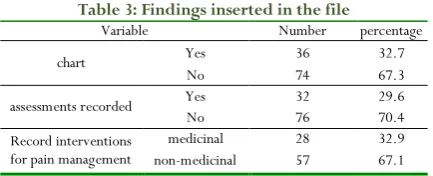
Table 3 presents the pain chart and its interventions in the medical records (patient's file) and pain information over the past 24 hours including recording the time of the pain, chart in the nurse's report, the method of pain assessment, mentioning the evaluator's name and position, conduction or non-conduction of the interventions and type of the intervention. A nurse or a physician charted 32.7% of the child's pain over 24 hours, and 67.3% of the pain was not charted. Also in terms of pain assessment in medical files, 29.6% of the pain assessments were recorded. 32.9% of the taken measures to control pain were medicinal, and 67.1% were non-medicinal, according to the medical files.
Table 3: Findings inserted in the file
Variable Number percentage
chart Yes 36 32.7
No 74 67.3
assessments recorded Yes 32 29.6
No 76 70.4
Record interventions for pain management
medicinal 28 32.9
non-medicinal 57 67.1
Discussion and Conclusion
Pain is an unpleasant feeling that would affect children's psychological integrity. Treating and reacting to support and control such unpleasant feeling leaves a profound effect on the spirit and psyche and the development of children’s behavioral patterns. The identification, assessment and control of pain are among the most important tasks of nurses in the pediatric wards. Based on the results of the present research and investigating the previous studies, despite the significance of controlling this pain in the clinic, it has not been fully supported.
The results of the present research indicated that the samples had 80.9% pain for 24 hours, reported by the children or through observing symptoms by their caregivers. Nurses reported pain awareness of 68.2% in the children, and 31.8% of the pain was not reported by the nurses. This was a high number for nurses' unawareness of the pain because when the child is hospitalized and under care, it is expected that the child's pain is timely detected and controlled. In this study, nurses only detected 6.3% of the pain through their observation and examination, which could indicate low accuracy, lack of adequate training, lack of assessment tools, or not administering such tools in the clinic.
CoConsidering the prevalence of pain in 24 hours, Linhares et al. (2015) stated that 59% of 34 children complained of pain. Moreover, 49% of the 82 family caregivers identified the symptoms of children's pain, and mostly reported their observations to the professional treatment team. Physicians reported 38% of nurses reported 50% of pain in the hospitalized patients. These results were consistent with the findings of the present study, which, on the one hand, indicated
the prevalence of pain in children and, on the other, the lack of knowledge of pain in the medical personnel towards hospitalized children. In the present study, nurses reported 68.2% pain in the children, while 80.9% of the children had pain. Similarly, Linhares et al. found that pain assessment is not regularly conducted in children in most parts of Swedish hospitals, and valid measurements were rarely made [32]. The
difficulty of pain assessment in children, lack of a proper pain assessment tool, or not administering the tools were among the reasons for failing to diagnose the pain by the medical personnel.
Harris et al. (2016), in their study widely recommended using pain assessment tools due to the difficulty of assessing the pain in the newborns and children as well as various emotional and cognitive stages and behavioral complexities, so that they could be used as a mean for coordination between the medical personnel to show the pain, and evaluate the effect of medicinal and non-medicinal interventions [33]. In 2015, LaFond et al.
introduced the "Virtual Human Vignette" as an efficient tool for pain assessment in children through examining the child's face expressions. In this study, pain detection from facial expressions was reported as 98.4% [34], while in the present study, nurses
reported pain as 6.3% through their observations. In the present study, 80.9% of the hospitalized children suffered from pain during the past 24 hours, of which, 68.2% were reported verbally in the interviews, and only 32.7% of the children's pain was charted in the patient's file within 24 hours; in terms of recording the pain assessment in medical files through nurses' verbal statements after pain awareness, pain assessment was conducted in 94.5% of the children, while after reviewing the records, only 29.6% were recorded, and 70.4% were not recorded. Different statistics in this study between the verbal and written assessments indicated nurses' lack of precision in examining, assessing and recording the pain in children. The children's pain was not detected in most cases and, in cases it was detected, its assessment and examination were not recorded in the medical file. In the study by Taylor et al. (2008), the prevalence of pediatric pain 24 hours before the interview was 64%. Also, the score for pain was not recorded within the past 24 hours in 73% of the reviewed files [30].
Regarding the pain chart, 74% of the files lacked a pain chart in the Linhares study. Similarly, Linhares et al. found that pain assessment in children was not regularly conducted in most wards of Swedish hospitals, and valid measurements were made only in rare cases; pain records were also not well documented in medical records [32]. According to a study by Stevens et al.
(2011), 84.8% of the medicinal interventions were conducted to control the pain in children within 24 hours prior to the data collection. However, only 28.3% of the records were mentioned and recorded [31]. The above results were consistent
10.1% did not receive any kind of care; while taken measures to control the pain by the nurses was 79.6, and in 20.4% of the cases, they did not take any measures. According to the nurses, in order to control the pain, 58.2% of the interventions were medicinal, and 41.8% were non-medicinal. However, in the patients' file, only 32.9% of the measures were medicinal, and 67.1% of them were non-medicinal for controlling the pain. One of the reasons for such differences between the recorded evidence of the verbal records, was probably the lack of legal ability of the nurses to prescribe certain pharmacological procedures, shortage in the personnel, heavy workload, lack of time, lack of pain assessment tools in accordance with the children's age, and the lack of access to the guidelines and clinical pain control policies. Based on the study conducted by Linhares et al. (2012), pain management is still inadequate. On the one hand, medicinal interventions were used mainly in all the pediatric wards of the hospitals, and on the other, non-medicinal interventions were used less than non-medicinal interventions by the medical personnel, which could reflect lack of knowledge about non-medicinal methods [32]. Contrary to the
results of the above study, in the study conducted by ChristoffeI et al. (2015), in terms of drug prescriptions and demand for pain in neonates, during the first 24 hours after surgery, even if prescription was necessary, 31% of the nurses and technicians were strongly opposed to it, while most other experts agreed with the statement. The proportion of the nurses and doctors who agreed to this statement was higher than the assistant nurses and technicians (Moreira Christoffel et al., 2016). Although most of the participants in this study had academic degrees, the need for better academic education and more participation in pain training and courses was examined among the medical personnel [35]. LeMay et al. (2016) indicated that
the ideal analgesic for moderate to severe pain and using non-medicinal interventions in the pediatric population has not been clearly specified yet. Based on the investigations, there has been a need for further research to obtain strong evidence for treating children's pain [36]. The controversial results of the
above studies indicated that there have been still no integrated strategies for examining, assessing, controlling and treating children in the hospitals, and there has been no pain management in hospitals.
Hoon et al. (2011), stated that the management of children's pain has still remained a challenge in clinical settings. Parents can assist in accurate assessment and management of their children's pain. The role of the parents in managing children’s pain should be clarified, and their efforts should be confirmed. Nurses should also educate and support parents [37]. Gates et al.
(2017), indicated that there were accessible evidence-based interventions for pain management in children and infants, but they rarely would be used. Parents played a significant role in managing their children's pain. However, many of them lacked sufficient knowledge on how to do this [38]. Gagnon et al. (2016)
believed that the pain in children was poorly managed in all the healthcare centers. Although educational programs were developed to improve the health care providers' knowledge and skills, clinical practices have not been always associated with the
knowledge advancement [39]. Consequently, the medical
personnel needs knowledge on pain management and in order for this knowledge to lead to changes in practice, strategies must be developed to train the personnel to minimize this shortage, and create a protocol with the participation of all the personnel. Implementing clinical guidelines is essential for improving the assessment quality and safe treatment of the pain. The big challenge has been to implement learning in practice, which requires continuous education. Based on the study conducted by Aziznejad Roshan et al. (2015), nurses could play a crucial role in child's pain management, accurate pain assessment, proper intervention, and pain relief assessment. However, there have been challenges that would lead to poor performance of the nurses in this area [40].
Conclusion
The epidemiological findings of the present study suggested the high prevalence of pain in children and lack of knowledge and awareness of the nurses concerning children's pain. With regard to the findings of the present study, the pain in children was assessed incompletely, and in successful cases, it was mostly not recorded. Also, contrary to the prevalence of the pain in children's ward, pain control was not conducted for all the patients, and in most cases that would receive pain control interventions, it was not recorded or was recorded incompletely. Reported records in the medical files concerning the diagnosis, assessment, and especially the quality of pain control differed in most cases with the verbal statements of the patients and the nurses. Based on the investigations made on the previous studies, the reasons for these differences and the inability to manage the pain in the children's wards were the lack of awareness about the children's pain management, inadequate knowledge of the nurses on the significance of pain control, inadequate awareness of the nurses on analgesics and non-medicinal methods of pain relief, pain physiology and evaluation, organizational barriers, lack of pain assessment tools in accordance with the children's age, lack of pain record flowchart, nurses’ lack of authentication for prescribing some medical measures and lack of access to the guidelines and pain control policies in the clinic.
Acknowledgement
This paper was the result of a research project (code: DUR-135) approved by Dezful University of Medical Sciences in 2016.
Funding/Support:
This study was supported in part by grant (DUR-135) from the Research Branch of Dezful University of Medical sciencesConflict of interest:
114 Journal of Advanced Pharmacy Education & Research | Oct-Dec 2018 | Vol 8 | Issue4
References
1. Ely B, Lim MC, Becker E, Wilson B. (108) The pain experience of hospitalized youth: assessment and management preferences. The Journal of Pain. 2016 Apr 1;17(4): S3.
2. Brunner LS, Smeltzer SC, Bare BG, Hinkle JL, Cheever KH. Brunner & Suddarth’s Textbook of Medical-surgical Nursing: Suzanne C. Smeltzer... [et Al.]: Wolters Kluwer Health. 2014.
3. Aghababaeian H, Ahvazi LA. Isn’t it Time to Use Opioid Drugs in Emergency Medical Services?. Iranian Journal of Emergency Medicine. 2018 Feb 9.5, e2.
4. Loeser JD. Pain Terms. IASP. 2011 July; Available from: http://www.iasppain.
org/Content/NavigationMenu/GeneralResourceLinks/P ainDefinitions/default.htm.
5. Hazinski MF. Analgesia, sedation, and neuromuscular blockade. 3rd ed. Chapter 5: Nursing care of the critically ill child. Elsevier Mosby; 2013p.78.
6. Suzanne c. smeltzer, Brenda G. bare, Janice l. hinkle, Kerry h. cheever, brunner&suddarth's, textbook of medical – surgical nursing 13thed, c2014
7. Maghami M, Aghababaeian H, Ahmadi Majin S, Moosavi A, Tahery N. Knowledge, attitude and performance of the nurses working in neonatal wards about treatment of pain in neonates. Journal of Chemical and Pharmaceutical Sciences. 2016.9(4), pp: 2796-2801.
8. Kennedy RM, Luhmann J, Zempsky WT. Clinical implications of unmanaged needle-insertion pain and distress in children. Pediatrics 2008; 122(3): 130-3. 9. Arab M, Tirgari B, Abazari F, Hadid A. The effect of using
anesthesia evaporative spray on pain intensity associated with intravenous injection in hospitalized children in Imam Reza Hospital in Sirjan. Medical – Surgical Nursing Journal 2015; 4(1): 10-15.
10. Majidipour N, Nirouzad F, Sarrafzade S, Kalani L, Aghababaeian H, Haghighat Borujeni S. The Effect of Holy Quran Recitation on the Physiological Responses of Premature Infants during Phlebotomy: A Randomized Clinical Trial. International Journal of Pediatrics. 2017 Jun 12:7869-81.
11. Strong J, Clark E, Mandellico G. Pain a Textbook for Therapists. London: Churchill Livingstone; 2002. P. 100-307
12. Baggott H, Barrows H, Glens W, WilkiK. Nursing care of children and Adolescents with cancer.W.B. Saunders; 2002. P. 323-324
13. McGrath, P.J. (1995). Annotation: aspects of pain in children and adolescents. Journal of child psychology, 36(5), 717-730.
14. Renee C.B. Manowrren, Linda S. Hynan. Clinical Validation of FLACC: Preverbal Patient Pain Scale. Pediatric Nursing/March –April 2003/vol.29/no.2.pp :140-6.
15. Whaley LF, Wong DL. Essentials of Pediatric Nursing. Nursing2016. 1982 May 1;12(5):103-6.
16. Aghababaeian H, Maghami M, Saadati M, Ahvazi LA. Investigation of the capability of pharmaceutical calculation in the staff and technicians of emergency medical centers of northern Khuzestan in 2014. Sadra Medical Sciences Journal. 2017 Dec 17;2(2), pp:151-9. 17. McClearlyLA.Ellis, Rowley B. Evaluation of the pain
resource nurse role: A resource for improving pediatric pain management. Pain management nursing. 2004; 5(1): 29-36.
18. Abram, staphen E, The pain clinic manual: Lippincott Williams & Wilkins; 2nded, c2000.
19. R, Puntillo F, Draisci G, Pasetto A, Pietropaoli P, Pinto G, et al. ITalian observational study of the management of mild-to-moderate post-operative pain (ITOSPOP). Minerva Anestesiol. 2012; 78(1):15-25.
20. Clark L. Pain management in the pediatric population. Crit Care Nurs Clin North Am.2011; 23(2):291-301. 21. Habich M, Wilson D, Thielk D, Melles GL, Crumlett HS,
Masterton J, McGuire J. Evaluating the Effectiveness of Pediatric Pain Management Guidelines. J Pediatr Nurs 2012; 27(4):336-345.
22. Ballweg D. Neonatal and pediatric pain management: Standards and application 2008; 18(1): 61- 66
23. Allen J, vessey J. Children with a Chronic Condition. St. Louis: Mosby; 2004. P. 91.
24. Timby B, smith N. Introductory Medical-surgical Nursing. 8 th ed. Lippincot; 2003. P. 226.
25. Mccaffery M, pasero C. Pain clinical manual. St. Louis: Mosby; 1999. P. 30-54-364.
26. Linhares MB, Doca FN, Martinez FE, Carlotti AP, Cassiano RG, Pfeifer LI, Funayama CA, Rossi LR, Finley GA. Pediatric pain: prevalence, assessment, and management in a teaching hospital. Brazilian Journal of Medical and Biological Research. 2012 Dec; 45(12):1287-94.
27. Gimbler-Berglund I, Ljusegren G, Enskär, K. Factors influencing pain management in children. Paediatr Nurs. 2008; 20(10):21-4.
28. Namnabati M, Abazari P, Talakoub S. Identification of perceived barriers of pain management in Iranian children: A qualitative study. Int J Nurs Pract 2012; 18 (3): 221– 225.
29. Idvall E, Ehrenberg A. Nursing documentation of Postoperative pain management. J Clin Nurs. 2002; 11(6):734-42.
30. Taylor EM, Boyer K, Campbell FA. Pain in hospitalized children: a prospective cross-sectional survey of pain prevalence, intensity, assessment and management in a Canadian pediatric teaching hospital. Pain Res Manag 2008; 13 (1): 25-32.
procedures in children in Canadian hospitals. CMAJ 2011;183(7): E403-E410.
32. Linhares M, Doca F, Martinez F, Carlotti A, Cassiano R, Pfeifer L, et al. Pediatric pain: prevalence, assessment, and management in a teaching hospital. Brazilian Journal of Medical and Biological Research. 2012;45(12):1287-94.
33. Harris J, Ramelet A-S, van Dijk M, Pokorna P, Wielenga J, Tume L, et al. Clinical recommendations for pain, sedation, withdrawal and delirium assessment in critically ill infants and children: an ESPNIC position statement for healthcare professionals. Intensive care medicine. 2016;42(6):972-86.
34. LaFond CM, Vincent CVH, Lee S, Corte C, Hershberger PE, Johnson A, et al. Development and validation of a virtual human vignette to compare nurses’ assessment and intervention choices for pain in critically ill children. Simulation in healthcare: journal of the Society for Simulation in Healthcare. 2015;10(1):14.
35. Moreira Christoffel M, Corrêa Castral T, Firmino Daré M, Langona Montanholi L, Silvan Scochi CG. Knowledge of healthcare professionals on the evaluation and treatment of neonatal pain. Revista brasileira de enfermagem. 2016;69(3), 552-8.
36. Le May S, Ali S, Khadra C, Drendel AL, Trottier ED, Gouin S, et al. Pain management of pediatric musculoskeletal injury in the emergency department: a systematic review. Pain Research and Management. 2016; 2016:4809394. doi: 10.1155/2016/4809394.
37. Hoon LS, Hong-Gu H, Mackey S. Parental involvement in their school‐aged children's post‐operative pain management in the hospital setting: a comprehensive systematic review. JBI Database of Systematic Reviews and Implementation Reports. 2011;9(28):1193-225. 38. Gates A, Shave K, Featherstone R, Buckreus K, Ali S,
Scott S, et al. Parent experiences and information needs relating to procedural pain in children: a systematic review protocol. Systematic reviews. 2017;6(1):109. 39. Gagnon MM, Hadjistavropoulos T, Hampton AJ, Stinson
J. A Systematic Review of Knowledge Translation (KT) in Pediatric Pain: Focus on Health Care Providers. The Clinical journal of pain. 2016;32(11):972-90.