R E S E A R C H
Open Access
Assessment of the availability and
rationality of unregistered fixed dose drug
combinations in Nepal: a multicenter
cross-sectional study
Arjun Poudel
1,2, Mohamed Izham Mohamed Ibrahim
3*, Pranaya Mishra
2,4and Subish Palaian
2,5Abstract
Background:The medications that are registered and available in a country are meant for the prevention and treatment of ailments and diseases. However, a lack of effective regulatory bodies and operative control mechanisms, especially in developing countries, promotes irrational and inappropriate use of medicines. This study aims to evaluate the availability and rationality of unregistered fixed-dose drug combinations (FDCs) in Nepal.
Methods:A snowball sampling method with visits to 20 retail pharmacies in each of five major cities in Nepal was used to assess the availability of unregistered FDCs. To justify the rationality of the FDCs obtained from these five cities, the toolkit developed by Health Action International Asia-Pacific (HAI-AP) was used.
Results:Altogether, 41 unregistered FDCs were obtained from the five cities. Among the total 41 FDCs, a majority were anti-inflammatory/analgesic/antipyretics. A maximum of eight drugs and a minimum of two drugs per combination were present among the total 41 FDCs, with a majority in the form of tablets followed by suspensions. The cost ranges from a minimum of 3.7 Nepalese Rupees (NRs) (= USD 0.05) to a maximum of 240 NRs (= USD 3.15). None of the FDCs fulfilled all the fundamental requirements as stated in the toolkit; thus, they were categorized as‘irrational’.
Conclusions:Unregistered FDCs are available in the Nepalese pharmaceutical market. All the unregistered FDCs found in our study were ‘irrational’ as per the HAI-AP toolkit. Regulatory authorities should initiate strict monitoring and appropriate regulatory mechanisms to prohibit the use of unregistered and irrational FDCs.
Keywords: Availability, Rationality, Fixed-dose drug combinations, Nepal
Background
In general, all the formulations that are registered and available in a country are meant for the prevention and treatment of ailments and diseases [1]. In Nepal, several fixed-dose drug combinations (FDCs) are available in the market, many of them being irrational [2]. Irrational FDCs have several disadvantages, e.g., wastefulness, unnecessary additional cost, the difficulty of adjusting the dose, increased risk of adverse drug reactions, and uncertainty about the adequacy of the amount of a medicine in the combinations. In general, combinations
of two or more active drugs in a single dosage form are classified as FDCs [3]. FDCs are available in Nepal for the treatment of various ailments ranging from nutri-tional deficiencies to cardiovascular diseases, but usually their rationality is doubtful. Meanwhile, there are no guidelines or criteria to identify the rationality of the combination. Health Action International Asia-Pacific (HAI-AP), a part of an independent global network, has worked to increase access to essential medicines and improve their rational use. The organization developed a toolkit to identify the rationality of FDCs based on 15 requirements or criteria developed based on the avail-able data and scientific and medical principles [4]. This toolkit has been used by researchers in India [5] and pilot tested in Nepal investigating the registration status, * Correspondence:[email protected]
3Social and Administrative Pharmacy, Clinical Pharmacy and Practice Section,
College of Pharmacy, Qatar University, Doha, Qatar
Full list of author information is available at the end of the article
availability and utilization pattern of FDCs in the Western region of Nepal and reported the presence FDCs on the market that are not registered with the national drug regulatory authority of Nepal [6]. FDCs are also widely used in different health care settings. Similarly, a preliminary study done in six major cities of Nepal identified the existence of irrational fixed-dose drug combinations (IFDCs) and suggested the need for immediate regulatory measures to control their avail-ability in the country [2].
Since many FDCs are available in the Nepalese pharmaceutical market, it is difficult to determine whether a particular combination is rational. Many such FDCs are not even registered on the drug list of Nepal but are nonetheless available in the market and can be purchased without necessarily presenting a valid pre-scription. In developing countries such as Nepal and India, there is a widespread distribution and availability of IFDCs, but essential medicines are scarce. [1, 7]. Medical experts worldwide have expressed serious concerns over the increased marketing of FDCs by pharmaceutical companies, particularly in developing countries [8]. Studies from Nepal also document sig-nificant use of IFDCs and other combinations of doubtful efficacy [6, 9, 10].
The Current Index of Medical Specialties (CIMS) and Monthly Index of Medical Specialties (MIMS) list more than 100 IFDCs that are not approved in any developed countries but are being marketed in developing coun-tries such as Nepal and India [11]. Nepal shares an open border with India, where there is an intense use of FDCs, which poses an additional risk [12]. Many FDCs available in Nepal are of Indian origin. Although the regulatory requirements for the approval of combination products vary across countries, there are no such spe-cific regulations in Nepal. There are no clear guidelines or criteria to suggest whether the particular FDC is rational or irrational. Moreover, the registered drug list of Nepal is not periodically evaluated. In addition, there are no guidelines for the manufacturing and marketing of FDCs. The findings of this study would provide evi-dence to the relevant drug regulatory authority about the scenario of rampant availability and utilization of IFDCs in Nepal. This study is also expected to provide evidence on the existence of products in the Nepalese market and the extent of the potential problems the products could cause to the public. Despite the unavail-ability of clear and concise guidelines, the toolkit used in the study may act as a current evidence-based method or a guiding principle to classify an FDC as either ‘rational’or‘irrational’.
This study aimed to assess the availability and to justify the rationality of unregistered fixed-dose drug combinations in five major cities in Nepal.
Methods Study design
This study applied a market survey method to evaluate the availability of unregistered FDCs in five major cities of Nepal.
Study setting
The market survey was carried out in five major cities in Nepal. These five cities were selected because they are the major cities in Nepal in terms of population, area and economy [13]. The details on these cities are shown below:
Kathmandu: Kathmandu is the capital and the largest metropolitan city of Nepal, with a population of approximately 1.183 million. Tourism is a major source of income for much of the city's population.
Biratnagar: Biratnagar is Nepal’s second biggest city and is located in Koshi Zone on the southern plain land belt of Nepal, near the southeastern border with India. The city is only three kilometers away from the Indian border. The population of the municipality is 201,125.
Birgunj: Birgunj is a sub-metropolitan municipality and border town in Parsa District in the Narayani Zone of southern Nepal. It lies 190 km west of the capital, Kathmandu, and two kilometers north of the border of the Indian state of Bihar. The population of Birgunj is approximately 300,000. As an entry point to Nepal from the Indian cities of Patna and Calcutta, it is also known as the gateway to Nepal.
Bhairahawa: Bhairahawa (now called Siddharthanagar) is a town and municipality located in Rupandehi District in Lumbini Zone of southern Nepal, near the southwestern border with India. The city is only five kilometers away from India. The population of this city is approximately 163,483. Being located near the border of India and Nepal, it plays an important role in the import and export business.
Pokhara: Pokhara is the third largest city in Nepal after Kathmandu and Biratnagar. It is the headquarter of Kaski District, Gandaki Zone and the Western Development Region. It has a population of approximately 255,465 people.
Study population and sampling
requirements [14]. Chain-referral sampling of a hidden population begins with a convenience sample of initial subjects that serve as ‘seeds’ through which other subjects are recruited. We were able to recruit 20 pharmacies from each city to find unregistered FDCs.
Inclusion and exclusion criteria
All the available FDCs that are not registered in Nepal were included in the study. The unregistered FDCs
found in pharmacies from different cities were
purchased. Identical FDCs of different brands were excluded from the study. Topical and intravenous FDCs were excluded from the study.
Study tools
The following tools were used in the study:
HAI-AP toolkit to identify the rationality of fixed-dose drug combinations
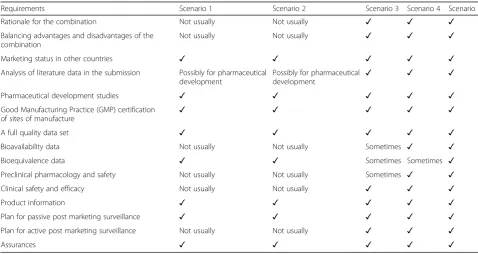
As a goal to improve the rational use of medicines, HAI-AP initiated an advocacy program and a campaign to remove irrational FDCs. The toolkit developed by HAI-AP is used in this study to identify the irrational FDCs (Appendix 1) [4]. The literature basis for HAI-AP advocacy and its campaign to remove irrational FDCs is based on the 39thReport, 2005, compiled by the World Health Organization (WHO) Expert Committee on Specifications for Pharmaceutical Preparations. The re-port consists of necessary criteria for developing new FDCs for the countries that do not yet have guidelines for FDCs [15]. The toolkit was pilot tested in Nepal and applied in this research [6].
International Network for Rational Use of Drugs (INRUD) indicators
The INRUD indicators are intended to measure aspects of health provider behavior in health care facilities in a reliable way, irrespective of who collects the data [16]. The indicators provide information to health care man-agers concerning medicine use, prescribing habits and important aspects of patient care. Since, behavior in health care facilities was not analyzed in the study, the indicators were modified according to the study objec-tives. Parameters such as‘drug containing herbal constit-uents’and‘drugs containing vitamins and minerals’were added to the indicators (Appendix 2).
Data analysis procedure
The FDCs available from different cities were analyzed as per the study objectives. The SPSS program, version 16.0 (SPSS Inc. Released 2007. SPSS for Windows, Version 16.0. Chicago, SPSS Inc.), was used to compute the descriptive statistics.
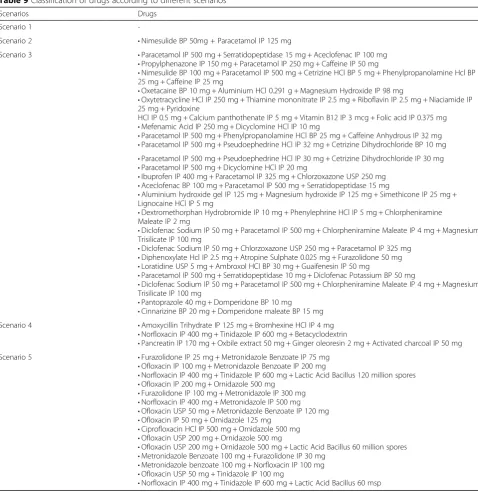
A toolkit developed by HAI-AP was used to assess the rationality of each FDC. Before the toolkit was applied, all of the FDCs obtained from different cities were clas-sified into different scenarios as per the HAI-AP toolkit. The various scenarios are described below:
(i) Scenario 1: The new FDC contains the same active ingredients in the same doses as an existing FDC. It is a‘generic’of the existing FDC: they are
‘multisource’products. The quality, safety and efficacy of the existing product have been established.
(ii)Scenario 2: The new FDC contains the same active ingredients in the same dose as an established regimen of single-entity products, and the dosage regimen is the same. Alternatively, the established regimen may involve combinations of single entities and FDCs, for example, a single entity combined with an FDC that contains two active ingredients. (iii)Scenario 3: The FDC combines active ingredients that are of established safety and efficacy but have not previously been used in combination for this indication. The new FDC comprises a combination for which safety and efficacy have been established, but that will be used in a different dosage regimen. (iv)Scenario 4: The FDC contains one or more new
chemical entities.
(v)Scenario 5: FDC containing two or more drugs with uncertain safety and efficacy.
Results
Part I: Analysis of the unregistered fixed-dose drug com-binations in Nepal
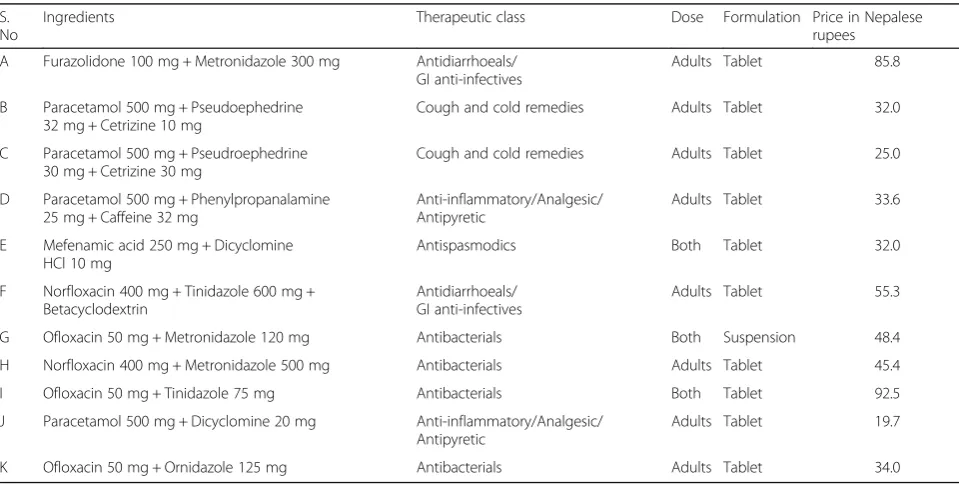
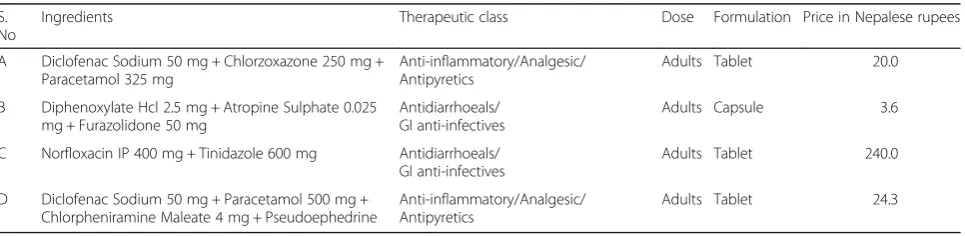
Altogether, 41 FDCs were obtained from the five major cities of Nepal. The details from the cities are shown in Table 1 for Biratnagar, Table 2 for Birgunj, Table 3 for Bhairahawa, Table 4 for Pokhara and Table 5 for Kathmandu.
Comparison of retail price of similar fixed-dose drug combi-nations between cities
Among the total 41 FDCs, only 7 FDCs were similar and could be found in multiple cities. The details are shown in Table 6.
Comparison of number of ingredients in fixed-dose drug combinations based on retail price
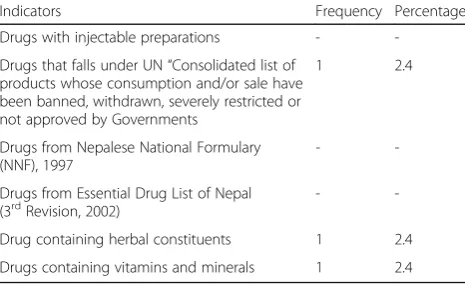
Classification of fixed-dose drug combinations based on INRUD indicators and other criteria
Among all FDCs found in five major cities of Nepal, only one drug,‘furazolidone’, was found in a combin-ation that falls under the United Ncombin-ations (UN) ‘ Con-solidated list of products whose consumption and/or sale have been banned, withdrawn, severely restricted or not approved by governments’. Similarly, one FDC containing ‘ginger oleoresin’ as an herbal constituent and one FDC containing a ‘multivitamin combination’
with antibacterials were found. The details of the study are shown in Table 8.
Part II: Application of a toolkit developed by HAI-AP
HAI-AP developed a toolkit to identify IFDCs. The study was carried out in two phases:
Phase I: Classification of FDCs found from different
cities into different scenarios, and
Phase II: Application of a toolkit to identify IFDCs.
Table 1Fixed-dose drug combinations available in Biratnagar (n= 9)
S. No Ingredients Therapeutic class Dose Formulation Price in Nepalese rupees
A Furazolidone 25 mg + Metronidazole 75 mg Antidiarrhoeals/GI anti-infectives Both Suspension 13.7
B Oxetacaine 10 mg + Aluminium Hcl 0.291 + Magnesium Hydroxide 98 mg
Drugs acting on gastrointestinal tract
Adults Suspension 110.1
C Amoxycillin trihydrate 125 mg + Bromhexine Hcl 4 mg
Antibacterials Children Syrup 41.6
D Norfloxacin 400 mg + Tinidazole 600 mg +
Lactic Acid Bacillus 120 million spores
Antidiarrhoeals/GI anti-infectives Adults Tablet 106.8
E Ofloxacin 100 mg + Metronidazole 200 mg Antidiarrhoeals/GI anti-infectives Adults Suspension 54.4
F Prophenazone 150 mg + Paracetamol 250 mg + Caffeine 50 mg
Anti-inflammatory/Analgesic/ Antipyretic
Adults Tablet 20.0
G Paracetamol 500 mg + Serratidopeptidase 15 mg + Aceclofenac 100 mg
Anti-inflammatory/Analgesic/ Antipyretic
Adults Tablet 189.2
H Nimesulide 100 mg + Paracetamol 500 mg + Cetrizine 5 mg + Phenylpropanalamine 25 mg + Caffeine 25 mg
Cough and cold remedies Adults Tablet 69.8
I Multivitamin combination + Oxytetracycline 250 mg
Antibacterials Adults Capsule 10.0
1 US $ = Approximately 76 NRs
Table 2Fixed-dose drug combinations available in Birgunj (n= 11) S.
No
Ingredients Therapeutic class Dose Formulation Price in Nepalese
rupees
A Furazolidone 100 mg + Metronidazole 300 mg Antidiarrhoeals/ GI anti-infectives
Adults Tablet 85.8
B Paracetamol 500 mg + Pseudoephedrine 32 mg + Cetrizine 10 mg
Cough and cold remedies Adults Tablet 32.0
C Paracetamol 500 mg + Pseudroephedrine 30 mg + Cetrizine 30 mg
Cough and cold remedies Adults Tablet 25.0
D Paracetamol 500 mg + Phenylpropanalamine 25 mg + Caffeine 32 mg
Anti-inflammatory/Analgesic/ Antipyretic
Adults Tablet 33.6
E Mefenamic acid 250 mg + Dicyclomine HCl 10 mg
Antispasmodics Both Tablet 32.0
F Norfloxacin 400 mg + Tinidazole 600 mg + Betacyclodextrin
Antidiarrhoeals/ GI anti-infectives
Adults Tablet 55.3
G Ofloxacin 50 mg + Metronidazole 120 mg Antibacterials Both Suspension 48.4
H Norfloxacin 400 mg + Metronidazole 500 mg Antibacterials Adults Tablet 45.4
I Ofloxacin 50 mg + Tinidazole 75 mg Antibacterials Both Tablet 92.5
J Paracetamol 500 mg + Dicyclomine 20 mg Anti-inflammatory/Analgesic/ Antipyretic
Adults Tablet 19.7
K Ofloxacin 50 mg + Ornidazole 125 mg Antibacterials Adults Tablet 34.0
Phase I: Classification of fixed-dose drug combinations into different scenarios
Each FDC obtained from any of the five cities was classi-fied into five different scenarios that comprise a set of requirements for marketing authorization of an FDC. A total of 41 FDCs from the five cities under study were classified according to different scenarios. The details are shown in Table 9.
Phase II: Application of a HAI-AP toolkit
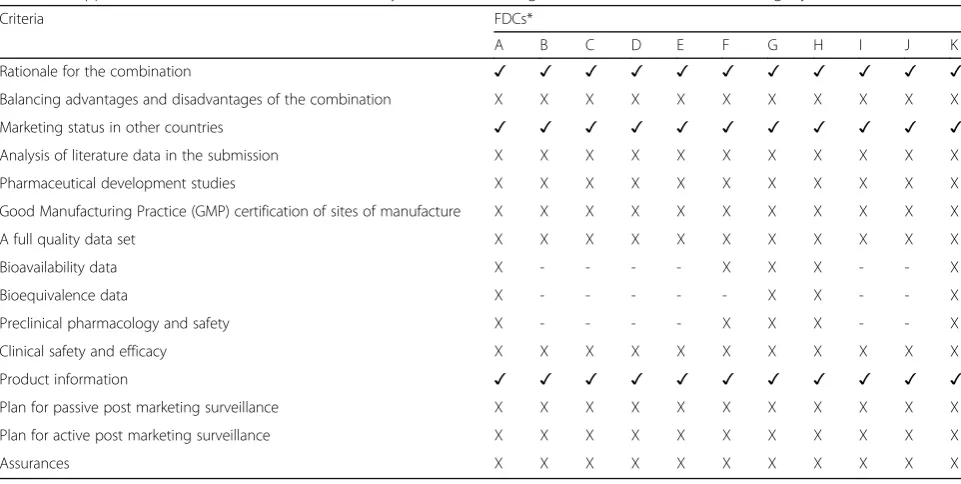
Among the 41 FDCs found from five major cities in Nepal, none of the FDCs fulfilled all the necessary re-quirements mentioned in the toolkit. The toolkit states 15 parameters that need to be fulfilled by any given
FDC. All FDCs fulfilled three or fewer criteria. Certain criteria such as bioavailability data, bioequivalence data, preclinical pharmacology and safety are required only on some occasions, depending on the scenario. Details regarding the application of the toolkit for FDCs from different cities are shown in Table 10 for Biratnagar, Table 11 for Birgunj, Table 12 for Bhairahawa, Table 13 for Pokhara and Table 14 for Kathmandu.
Discussion
This is the first study that evaluated the availability of unregistered FDCs in Nepal. The FDCs that were not registered with the drug control regulatory authority of Nepal were assessed. According to the WHO (1992),
Table 3Fixed-dose drug combinations available in Bhairahawa (n= 13)
S. No Ingredients Therapeutic class Dose Formulation Price in Nepalese rupees
A Metronidazole 100 mg + Furazolidone 30 mg Antidiarrhoeals/GI anti-infectives Both Suspension 88.0
B Ciprofloxacin 500 mg + Ornidazole 500 mg Antibacterial Adults Tablet 100.0
C Cinnarizine 20 mg + Domperidone 15 mg Antiemetic Adults Tablet 180.0
D Dextromethorphan 10 mg + Phenylepherine 5 mg + Chlorpheniramine Maleate 2 mg
Cough and cold remedies Both Syrup 156.0
E Ibuprofen 400 mg + Paracetamol 325 mg + Chlorzoxazone 250 mg
Anti-inflammatory/Analgesic/Antipyretic Adults Tablet 40.0
F Ofloxacin 200 mg + Ornidazole 500 mg + Lactic Acid Bacillus 60 million spores
Antibacterial Adults Tablet 156.0
G Aluminium hydroxide 125 mg + Magnesium hydroxide 125 mg + Simethicone 25 mg + Lignocaine 5 mg
Drugs acting on gastrointestinal tract Both Suspension 87.0
H Nimesulide 50 mg + Paracetamol 125 mg Anti-inflammatory/Analgesic/Antipyretic Children Suspension 77.0
I Aceclofenac 100 mg + Paracetamol 500 mg + Serratidopeptidase 15 mg
Anti-inflammatory/Analgesic/Antipyretic Adults Tablet 155.0
J Metronidazole 100 mg + Norfloxacin 100 mg Antidiarrhoeals/Gastro Intestinal anti-infectives
Children Suspension 60.0
K Ofloxacin 50 mg + Tinidazole 100 mg Antibacterials Children Suspension 130.0
L Ofloxacin 200 mg + Ornidazole 500 mg Antibacterials Adults Tablet 190.0
M Pancreatin 170 mg + Oxbile extract 50 mg + Ginger oleoresin 2 mg + Activated charcoal 50 mg
Gastrointestinal agents Adults Tablet 46.7
1 US $ = Approximately 76 NRs
Table 4Fixed-dose drug combinations available in Pokhara (n= 4) S.
No
Ingredients Therapeutic class Dose Formulation Price in Nepalese rupees
A Diclofenac Sodium 50 mg + Chlorzoxazone 250 mg + Paracetamol 325 mg
Anti-inflammatory/Analgesic/ Antipyretics
Adults Tablet 20.0
B Diphenoxylate Hcl 2.5 mg + Atropine Sulphate 0.025 mg + Furazolidone 50 mg
Antidiarrhoeals/ GI anti-infectives
Adults Capsule 3.6
C Norfloxacin IP 400 mg + Tinidazole 600 mg Antidiarrhoeals/ GI anti-infectives
Adults Tablet 240.0
D Diclofenac Sodium 50 mg + Paracetamol 500 mg + Chlorpheniramine Maleate 4 mg + Pseudoephedrine
Anti-inflammatory/Analgesic/ Antipyretics
Adults Tablet 24.3
“fixed ratio combination products are acceptable only when the dosage of each ingredient meets the require-ment of a defined population group and when the com-bination has a proven advantage over single compounds administered separately in therapeutic effect, safety or compliance” [17]. The study also attempted to test the toolkit developed by HAI-AP to identify an FDC either as‘rational’or‘irrational’.
Altogether, 41 unregistered FDCs were found in five different cities of Nepal. Our findings are supported by a pilot conducted in six different cities of Nepal. The pilot study assessed the availability of FDCs that are not regis-tered with the Department of Drug Administration (DDA) and are not approved by any standard drug infor-mation sources [2]. Nepal shares an open border with India. Thirty-three FDCs found in the study were from the plain lands (border area). The prevalence rate of IFDCs was higher in the cities that share an open border with India, and almost all IFDCs found were of Indian origin. On the other hand, a huge margin on IFDCs lures retail pharmacists to dispense and promote them. The booming availability of these FDCs in the market is
also due to weak inspection or regulation by the relevant drug-regulating authority.
Among the total 41 FDCs, a majority were anti-inflam-matory/analgesic/antipyretics. Analgesic, anti-inflammatory and antipyretic agents are used in various combinations in treating the common cold, influenza and inflammatory conditions. Many of these combinations have little docu-mentary evidence that a preparation containing the combination is more effective than a single-ingredient preparation [18–20]. In addition, combining two NSAIDs may increase the side effects of each [1]. Nearly one-fourth of FDCs in our study were antibacterials, which in principle are ‘prescription-only’ medications but are easily avail-able from retail pharmacies without a prescription in several parts of Nepal. The use of antibiotic FDCs can rapidly give rise to resistant strains of organisms, which is a matter of serious concern to the health care situation in our resource-poor country. A glaring example is the emergence of ciprofloxacin-resistant
Salmonella typhi strains, which have made treatment of typhoid fever a difficult and expensive proposition today [3].
Table 5Fixed-dose drug combinations available in Kathmandu (n= 4)
S. No Ingredients Therapeutic class Dose Formulation Price in Nepalese rupees
A Loratidine 5 mg + Ambroxyl HCl 30 mg + Guaiphensin 50 mg
Cough and cold remedies Children Syrup 60.4
B Pantoprazole 40 mg + Domperidone 10 mg
Drugs acting on gastrointestinal tract Adults Tablet 183.0
C Diclofenac Sodium 50 mg + Paracetamol 500 mg + Chlorpheniramine Maleate 4 mg + Magnesium Trisilicate 100 mg
Anti-inflammatory/Analgesic/Antipyretic Adults Tablet 80.0
D Paracetamol 500 mg + Serratidopeptidase 10 mg + Diclofenac 50 mg
Anti-inflammatory/Analgesic/Antipyretic Adults Tablet 55.0
1 US $ = Approximately 76 NRs
Table 6Comparison of retail prices (NR) of similar FDCs between cities
Biratnagar Birgunj Bhairahawa Pokhara Kathmandu
(Furazolidone 25 mg + Metronidazole 75 mg)
(Furazolidone 25 mg + Metronidazole 75 mg)
na na na
Suspension Tablet
NRs 13.7 NRs 85.8
(Norfloxacin 400 mg + Tinidazole 600 mg + + Betacyclo-dextrin)
(Norfloxacin 400 mg + Tinidazole 600 mg + Betacyclo-dextrin)
na (Norfloxacin IP 400 mg +
Tinidazole 600 mg)
na
Tablet Tablet Tablet
NRs 106.8 NRs 55.3 NRs 240.0
(Paracetamol 500 mg + Serratidopeptidase
15 mg + Aceclofenac 100 mg)
na (Aceclofenac 100 mg + Paracetamol
500 mg + Serratidopeptidase 15 mg)
na na
Tablet Tablet
NRs 189.2 NRs 155.0
FDCs are becoming popular and are easily assessable for several reasons. They are easily available over the counter (OTC), provide immediate recovery, or are available at a low cost. To the average middle- or lower-middle-class family, an earlier recovery from an illness means an earlier return to work. The patient's objective is to get well early and get back to work. Pharmaceutical manufacturers of FDCs and prescribing doctors are aware of their patients’psychology. Therefore, instead of spending the time needed to first perform a diagnostic test and then administer the appropriate medicine, they opt for prescribing FDCs. Administering FDCs is per-ceived as a benefit in terms of gain of workdays for the consumer. An FDC is more expensive, but since it involves only one visit to the physician, no test, and an immediate start to treatment resulting in a faster cure, it may be less expensive for the patient [19]. The know-ledge and awareness regarding FDCs among prescribers are also crucial. In a study among dental clinician and residents reported that the study respondents have poor knowledge and lack of awareness about the advantages and disadvantages of FDCs [21].
A maximum of eight drug combinations and a mini-mum of two drug combinations were present among the total of 41 FDCs, with a majority in the form of tablets followed by suspension. The cost ranges from a
minimum of 3.7 NRs to a maximum of 240 NRs. The cost advantage of FDCs compared to their individual components is still controversial, although some studies suggest that the cost of the combination is as high as three times the total added cost of individual component [22]. It is reported that prescribing combination therapy increases the cost of therapy [23].
The HAI-AP toolkit to identify IFDCs consists of fifteen parameters to be fulfilled by a particular FDC under study. The parameters in the toolkit state that the FDC should have a marketing status in different countries, clear‘ prod-uct information’for the indicated diseases with information leaflets, a full high-quality data set, data for marketing authorization, well-characterized safety and efficacy includ-ing compliance with a suitable code of good manufacturinclud-ing practice (GMP) during manufacture, etc. Such information on safety and effectiveness are crucial because study by Dalal et al. assessing the pharmacokinetic and pharmacody-namic of FDCs concluded that many of the FDCs approved were lacked of rationality [24]. In general, preclinical or clinical safety and efficacy data are not required. Similarly, FDCs from different cities were analyzed as per INRUD in-dicators. Other criteria were also taken into consideration, such as ‘drugs containing herbal constituents’,‘drugs con-taining vitamins and minerals’,‘presence of banned drugs in combination’, etc. INRUD has set up some criteria to design, test, and disseminate effective strategies to improve the way drugs are prescribed, dispensed, and used, with a particular emphasis on resource-poor countries [16].
The HAI-AP toolkit reported that all the 41 FDCs obtained from five different cities did not fulfill the neces-sary requirements or criteria set up in the toolkit. When a particular FDC does not fulfill the necessary data require-ments for marketing authorization of an FDC in the rele-vant scenario, it is then labeled an ‘Irrational Fixed-Dose Combination’that should be withdrawn from the market until its safety and efficacy are established. Similarly, INRUD indicators found that there were no injectable FDCs; the study found a combination of furazolidone and metronidazole that is banned in several countries because of concerns that it induces birth defects and cancer [25]. None of the FDCs were from NNF and EDL. One FDC each from Biratnagar and Bhairahawa had vitamin and herbal constituents, respectively. Usually, many vitamins are available as multivitamin combinations without any justification. Similarly, herbal remedies are often used in combination, usually in FDCs; however, the scientific literature supporting the efficacy of herbal therapies is incomplete [26]. Verifications of the potency and the therapeutic value of the herbal FDCs are very few [27].
Limitations
The study had a few limitations. Although the study was able to find some FDCs in five major cities of
Table 7Comparison of number of ingredients in fixed-dose
drug combinations (n= 41)
No of ingredients in FDC
N Percentage
2 18 43.9
3 18 43.9
4 3 7.4
5 1 2.4
8 1 2.4
Total 41 100
Table 8Classification of fixed-dose drug combinations based
on some of the INRUD indicators and other criteria (n= 41)
Indicators Frequency Percentage
Drugs with injectable preparations -
-Drugs that falls under UN“Consolidated list of products whose consumption and/or sale have been banned, withdrawn, severely restricted or not approved by Governments
1 2.4
Drugs from Nepalese National Formulary (NNF), 1997
-
-Drugs from Essential Drug List of Nepal (3rdRevision, 2002)
-
-Drug containing herbal constituents 1 2.4
Drugs containing vitamins and minerals 1 2.4
Nepal, these do not represent the overall scenario. There might be many unregistered FDCs that we were not able to assess in the cities included in the study. Hence, the study cannot conclude that the FDCs found in this study represent the full comple-ment of IFDCs in Nepal. The toolkit developed by HAI-AP was tested for the first time in our study. Although we sought collaboration with international experts, we were not able to obtain certain parameters such as bioavailability, bioequivalence data, clinical
safety and efficacy. The limited literature and research in these areas made it difficult to interpret the findings conclusively. In contrast, this study’s method-ology and findings could establish a good platform for future studies in other low- and middle-income countries.
Recommendations
There is a need for extensive research in this area. There is also a need for an adequate awareness program for
Table 9Classification of drugs according to different scenarios
Scenarios Drugs
Scenario 1
-Scenario 2 •Nimesulide BP 50mg + Paracetamol IP 125 mg
Scenario 3 •Paracetamol IP 500 mg + Serratidopeptidase 15 mg + Aceclofenac IP 100 mg
•Propylphenazone IP 150 mg + Paracetamol IP 250 mg + Caffeine IP 50 mg
•Nimesulide BP 100 mg + Paracetamol IP 500 mg + Cetrizine HCl BP 5 mg + Phenylpropanolamine Hcl BP 25 mg + Caffeine IP 25 mg
•Oxetacaine BP 10 mg + Aluminium HCl 0.291 g + Magnesium Hydroxide IP 98 mg
•Oxytetracycline HCl IP 250 mg + Thiamine mononitrate IP 2.5 mg + Riboflavin IP 2.5 mg + Niaciamide IP 25 mg + Pyridoxine
HCl IP 0.5 mg + Calcium panthothenate IP 5 mg + Vitamin B12 IP 3 mcg + Folic acid IP 0.375 mg •Mefenamic Acid IP 250 mg + Dicyclomine HCl IP 10 mg
•Paracetamol IP 500 mg + Phenylpropanolamine HCl BP 25 mg + Caffeine Anhydrous IP 32 mg •Paracetamol IP 500 mg + Pseudoephedrine HCl IP 32 mg + Cetrizine Dihydrochloride BP 10 mg •Paracetamol IP 500 mg + Pseudoephedrine HCl IP 30 mg + Cetrizine Dihydrochloride IP 30 mg •Paracetamol IP 500 mg + Dicyclomine HCl IP 20 mg
•Ibuprofen IP 400 mg + Paracetamol IP 325 mg + Chlorzoxazone USP 250 mg •Aceclofenac BP 100 mg + Paracetamol IP 500 mg + Serratidopeptidase 15 mg
•Aluminium hydroxide gel IP 125 mg + Magnesium hydroxide IP 125 mg + Simethicone IP 25 mg + Lignocaine HCl IP 5 mg
•Dextromethorphan Hydrobromide IP 10 mg + Phenylephrine HCl IP 5 mg + Chlorpheniramine Maleate IP 2 mg
•Diclofenac Sodium IP 50 mg + Paracetamol IP 500 mg + Chlorpheniramine Maleate IP 4 mg + Magnesium Trisilicate IP 100 mg
•Diclofenac Sodium IP 50 mg + Chlorzoxazone USP 250 mg + Paracetamol IP 325 mg •Diphenoxylate Hcl IP 2.5 mg + Atropine Sulphate 0.025 mg + Furazolidone 50 mg •Loratidine USP 5 mg + Ambroxol HCl BP 30 mg + Guaifenesin IP 50 mg
•Paracetamol IP 500 mg + Serratidopeptidase 10 mg + Diclofenac Potassium BP 50 mg
•Diclofenac Sodium IP 50 mg + Paracetamol IP 500 mg + Chlorpheniramine Maleate IP 4 mg + Magnesium Trisilicate IP 100 mg
•Pantoprazole 40 mg + Domperidone BP 10 mg •Cinnarizine BP 20 mg + Domperidone maleate BP 15 mg
Scenario 4 •Amoxycillin Trihydrate IP 125 mg + Bromhexine HCl IP 4 mg
•Norfloxacin IP 400 mg + Tinidazole IP 600 mg + Betacyclodextrin
•Pancreatin IP 170 mg + Oxbile extract 50 mg + Ginger oleoresin 2 mg + Activated charcoal IP 50 mg
Scenario 5 •Furazolidone IP 25 mg + Metronidazole Benzoate IP 75 mg
•Ofloxacin IP 100 mg + Metronidazole Benzoate IP 200 mg
•Norfloxacin IP 400 mg + Tinidazole IP 600 mg + Lactic Acid Bacillus 120 million spores •Ofloxacin IP 200 mg + Ornidazole 500 mg
•Furazolidone IP 100 mg + Metronidazole IP 300 mg •Norfloxacin IP 400 mg + Metronidazole IP 500 mg •Ofloxacin USP 50 mg + Metronidazole Benzoate IP 120 mg •Ofloxacin IP 50 mg + Ornidazole 125 mg
•Ciprofloxacin HCl IP 500 mg + Ornidazole 500 mg •Ofloxacin USP 200 mg + Ornidazole 500 mg
•Ofloxacin USP 200 mg + Ornidazole 500 mg + Lactic Acid Bacillus 60 million spores •Metronidazole Benzoate 100 mg + Furazolidone IP 30 mg
•Metronidazole benzoate 100 mg + Norfloxacin IP 100 mg •Ofloxacin USP 50 mg + Tinidazole IP 100 mg
consumers regarding the hazards of IFDCs, along with careful monitoring and censoring of misleading claims by pharmaceutical industries. Moreover, there should be defined criteria to approve an FDC in the country. The use of the HAI-AP toolkit may be beneficial in these aspects. Regulatory authorities, healthcare professionals and pharmaceutical companies should join together to
formulate an effective guideline for the FDCs. The regu-latory approval process of FDCs need to be stringent because the failure for critical analysis of the scientific validity of the formulations will allow irrational and dan-gerous products to be sold freely in the market [28]. We recommend that the DDA, the drug regulatory authority of Nepal, initiate strict monitoring and appropriate
Table 10Application of toolkit to assess the rationality of fixed-dose drug combinations obtained from Biratnagar (n= 9)
Criteria FDCs*
A B C D E F G H I
Rationale for the combination ✓ ✓ ✓ ✓ ✓ ✓ ✓ ✓ ✓
Balancing advantages and disadvantages of the combination X X X X X X X X X
Marketing status in other countries ✓ ✓ ✓ ✓ ✓ ✓ ✓ ✓ ✓
Analysis of literature data in the submission X X X X X X X X X
Pharmaceutical development studies X X X X X X X X X
Good Manufacturing Practice (GMP) certification of sites of manufacture X X X X X X X X X
A full quality data set X X X X X X X X X
Bioavailability data X - X X X - - -
-Bioequivalence data X - - X X - - -
-Preclinical pharmacology and safety X - X X X - - -
-Clinical safety and efficacy X X X X X X X X X
Product information ✓ ✓ ✓ ✓ ✓ ✓ ✓ ✓ ✓
Plan for passive post marketing surveillance X X X X X X X X X
Plan for active post marketing surveillance X X X X X X X X X
Assurances X X X X X X X X X
‘✓’= Fulfilled,‘X’= Not fulfilled,‘-’= Not required *=refer to Table1
Table 11Application of toolkit to assess the rationality of fixed-dose drug combinations obtained from Birgunj (n= 11)
Criteria FDCs*
A B C D E F G H I J K
Rationale for the combination ✓ ✓ ✓ ✓ ✓ ✓ ✓ ✓ ✓ ✓ ✓
Balancing advantages and disadvantages of the combination X X X X X X X X X X X
Marketing status in other countries ✓ ✓ ✓ ✓ ✓ ✓ ✓ ✓ ✓ ✓ ✓
Analysis of literature data in the submission X X X X X X X X X X X
Pharmaceutical development studies X X X X X X X X X X X
Good Manufacturing Practice (GMP) certification of sites of manufacture X X X X X X X X X X X
A full quality data set X X X X X X X X X X X
Bioavailability data X - - - - X X X - - X
Bioequivalence data X - - - X X - - X
Preclinical pharmacology and safety X - - - - X X X - - X
Clinical safety and efficacy X X X X X X X X X X X
Product information ✓ ✓ ✓ ✓ ✓ ✓ ✓ ✓ ✓ ✓ ✓
Plan for passive post marketing surveillance X X X X X X X X X X X
Plan for active post marketing surveillance X X X X X X X X X X X
Assurances X X X X X X X X X X X
regulatory initiatives to either ban or prohibit the use of IFDCs. Educational interventions for students as well as patients (consumers) at different levels may be required.
Conclusions
Although the study had several limitations, we found that unregistered FDCs are available in the Nepalese
pharmaceutical market. FDCs were available for
treatment of different conditions, ranging from coughs and colds to bacterial infections, and in different dosage forms, from a maximum of eight to a mini-mum of two drugs. All the unregistered FDCs found in our study were ‘irrational’ as per the HAI-AP toolkit.
Table 12Application of toolkit to assess the rationality of fixed-dose drug combinations obtained from Bhairahawa (n= 13)
Criteria FDCs*
A B C D E F G H I J K L M
Rationale for the combination ✓ ✓ ✓ ✓ ✓ ✓ ✓ ✓ ✓ ✓ ✓ ✓ ✓
Balancing advantages and disadvantages of the combination X X X X X X X X X X X X X
Marketing status in other countries ✓ ✓ ✓ ✓ ✓ ✓ ✓ ✓ ✓ ✓ ✓ ✓ ✓
Analysis of literature data in the submission X X X X X X X X X X X X X
Pharmaceutical development studies X X X X X X X X X X X X X
Good Manufacturing Practice (GMP) certification of sites of manufacture X X X X X X X X X X X X X
A full quality data set X X X X X X X X X X X X X
Bioavailability data X X - - - X - - - X X X X
Bioequivalence data X X - - - X - - - X X X
-Preclinical pharmacology and safety X X - - - X - - - X X X X
Clinical safety and efficacy X X X X X X X X X X X X X
Product information ✓ ✓ ✓ ✓ ✓ ✓ ✓ ✓ ✓ ✓ ✓ ✓ ✓
Plan for passive post marketing surveillance X X X X X X X X X X X X X
Plan for active post marketing surveillance X X X X X X X X X X X X X
Assurances X X X X X X X X X X X X X
‘✓’= Fulfilled,‘X’= Not fulfilled,‘-’= Not required *=refer to Table3
Table 13Application of toolkit to assess the rationality of fixed-dose drug combinations obtained from Pokhara (n= 4)
Criteria FDCs*
A B C D
Rationale for the combination ✓ ✓ ✓ ✓
Balancing advantages and disadvantages of the combination X X X X
Marketing status in other countries ✓ ✓ ✓ ✓
Analysis of literature data in the submission X X X X
Pharmaceutical development studies X X X X
Good Manufacturing Practice (GMP) certification of sites of manufacture X X X X
A full quality data set X X X X
Bioavailability data - - X
-Bioequivalence data - - X
-Preclinical pharmacology and safety - - X
-Clinical safety and efficacy X X X X
Product information ✓ ✓ ✓ ✓
Plan for passive post marketing surveillance X X X X
Plan for active post marketing surveillance X X X X
Assurances X X X X
Appendix 1
Table 14Application of toolkit to assess the rationality of fixed-dose drug combinations obtained from Kathmandu (n= 4)
Criteria FDCs*
A B C D
Rationale for the combination ✓ ✓ ✓ ✓
Balancing advantages and disadvantages of the combination X X X X
Marketing status in other countries ✓ ✓ ✓ ✓
Analysis of literature data in the submission X X X X
Pharmaceutical development studies X X X X
Good Manufacturing Practice (GMP) certification of sites of manufacture X X X X
A full quality data set X X X X
Bioavailability data - - -
-Bioequivalence data - - -
-Preclinical pharmacology and safety - - -
-Clinical safety and efficacy X X X X
Product information ✓ ✓ ✓ ✓
Plan for passive post marketing surveillance X X X X
Plan for active post marketing surveillance X X X X
Assurances X X X X
‘✓’= Fulfilled,‘X’= Not fulfilled,‘-’= Not required *=refer to Table5
Table 15Toolkit developed by HAI-AP to identify irrational FDCs
Requirements Scenario 1 Scenario 2 Scenario 3 Scenario 4 Scenario 5
Rationale for the combination Not usually Not usually ✓ ✓ ✓
Balancing advantages and disadvantages of the combination
Not usually Not usually ✓ ✓ ✓
Marketing status in other countries ✓ ✓ ✓ ✓ ✓
Analysis of literature data in the submission Possibly for pharmaceutical development
Possibly for pharmaceutical
development ✓ ✓ ✓
Pharmaceutical development studies ✓ ✓ ✓ ✓ ✓
Good Manufacturing Practice (GMP) certification of sites of manufacture
✓ ✓ ✓ ✓ ✓
A full quality data set ✓ ✓ ✓ ✓ ✓
Bioavailability data Not usually Not usually Sometimes ✓ ✓
Bioequivalence data ✓ ✓ Sometimes Sometimes ✓
Preclinical pharmacology and safety Not usually Not usually Sometimes ✓ ✓
Clinical safety and efficacy Not usually Not usually ✓ ✓ ✓
Product information ✓ ✓ ✓ ✓ ✓
Plan for passive post marketing surveillance ✓ ✓ ✓ ✓ ✓
Plan for active post marketing surveillance Not usually Not usually ✓ ✓ ✓
Assurances ✓ ✓ ✓ ✓ ✓
Appendix 2
Abbreviations
CIMS:Current Index of Medical Specialties; DDA: Department of Drug Administration; EDL: Essential Drug List; FDCs: Fixed-dose Drug Combinations; GMP: Good Manufacturing Practice; HAI-AP: Health Action International Asia-Pacific; IFDCs: Irrational Fixed-dose Drug Combinations; INRUD: International Network for Rational Use of Drugs; MIMS: Monthly Index of Medical Specialties; NNF: Nepalese National Formulary;
NSAIDs: Nonsteroidal Anti-inflammatory Drugs; NRs: Nepalese Rupees; OTC: Over-the-counter; SPSS: Statistical Package for the Social Sciences; USD: United States Dollar; WHO: World Health Organization
Acknowledgements
We thank the late Dr. Balasubramaniam K. and Health Action International Asia-Pacific for supporting this study financially and otherwise.
Funding
The study was funded by Health Action International Asia-Pacific. The fund-ing body was not involved in the collection, analysis, and interpretation of data, or in writing the manuscript.
Availability of data and materials
The datasets used and/or analyzed during the current study are available from the corresponding author on reasonable request.
Authors’contributions
MIMI and MP are both supervisors, and AP is the principal investigator of the study. The original tool used in this study was developed by AP with the collaboration of MIMI, MP and SP. All the authors collaboratively designed the study. AP planned the first draft of the manuscript. The data collection and analysis were done by AP under the supervision of MIMI. SP and MIMI formatted the manuscript according to the journal requirement. All the authors have revised the manuscript and approved it for final submission.
Competing interests
The authors declare that they have no competing interests.
Consent for publication Not applicable.
Ethics approval and consent to participate
The study was approved by the Department of Drug Administration of Nepal.
Author details
1Postdoctoral Research Associate, School of Clinical Sciences, Faculty of
Health, Queensland University of Technology, Brisbane, Australia. 2Department of Hospital and Clinical Pharmacy, Manipal Teaching Hospital,
Phulbari-11, Pokhara, Nepal.3Social and Administrative Pharmacy, Clinical Pharmacy and Practice Section, College of Pharmacy, Qatar University, Doha,
Qatar.4Department of Pharmacology, American University of the Caribbean School of Medicine, University Drive at Jordan Road, Cupecoy, St. Maarten. 5Department of Pharmacy Practice, College of Pharmacy, Gulf Medical
University, Ajman, United Arab Emirates.
Received: 2 December 2016 Accepted: 26 March 2017
References
1. Anand S, Asha AN, Bhosle U, Suresh S. Emergence of irrationality in fixed dose combinations. Pharma Times. 2008;40:17–21.
2. Poudel A, Khanal S, Alam K, Palaian S. Regarding the article“Irrational fixed dose combinations in Nepal: Need for intervention”(KUMJ), Vol 6, No. 3, Issue 23, p. 399–405). Kathmandu Univ Med J. 2008;6(4):537–8. 3. Gautam CS, Saha L. Fixed dose drug combinations (FDCs): rational or
irrational: a view point. Br J Clin Pharmacol. 2008;65(5):795–6. 4. Health Action International- Asia Pacific. Advocacy and campaigns to
remove irrational fixed dose combinations. A toolkit to identify irrational fixed dose combinations. 2008.
5. Community Development Medicinal Unit, Health Action International Asia Pacific (2010 Dec 15) Report on research project:‘fixed-dose combination in India, inception-marketing-a study’[cited 2017 Feb]. Available from: http:// www.cdmuindia.org/Pdf-files/Final-report-IFDCs.pdf.
6. Poudel A, Palaian S, Mishra P, Izham MIM, Jayasekera J. Prevalence of fixed dose drug combinations in Nepal: Preliminary study. J Clin Diagn Res. 2010;4:2246–52.
7. Holloway KA, Gautam BR. Consequences of over‐prescribing on the dispensing process in rural Nepal. Tropical Med Int Health. 2001;6(2):151–4. 8. Roderick P, Mahajan R, McGettigan P, Pollock AM. India should introduce a
new drugs act. The Lancet. 2014;18;383(9913):203.
9. Poudel A, Palaian S, Izham MIM. Use of ampicillin/cloxacillin combination in Nepal: need for intervention. Gandaki Med J. 2008;1:61–3.
10. Sakar C, Das B. Prescribing trend of fixed-dose drug combinations in a tertiary hospital in Nepal. J Inst Med. 2000;22:53–8.
11. Gautam CS, Ditya S. Irrational drug combinations: need to sensitize undergraduates. Indian J Pharmacol. 2006;38:169–70.
12. Hazra A. FDCs in the Indian market - anything goes. Ration Drug Bull. 2005;15(1):1.
13. Explore Nepal (2008) [Online]. [cited 2017 Feb 7]. Available from: http:// www.explore-nepal.com/nepal-travel.
14. Heckathorn DD. Respondent-driven sampling: a new approach to the study of hidden populations. Soc Probl. 1997;44:174–99.
15. WHO. 46thReport, 2012. WHO expert committee on specifications for
pharmaceutical preparations. [cited 2017 March 6]. Available from: http:// www.who.int/medicines/areas/quality_safety/quality_assurance/expert_ committee/TRS-970-pdf1.pdf.
16. WHO. How to investigate drug use in health facilities: selected drug use indicators. Geneva: World Health Organization; 1993. EDM Research Series No. 007.
17. WHO. The use of essential drugs. Model list of essential drugs (seventh list). Fifth report of the WHO Expert Committee. World Health Organ Tech Rep Ser. 1992;825:1–75.
18. Kulkarni SK. On the safety of nimesulide, a preferential COX-2 inhibitor. Curr Sci. 2002;83(12):1442–3.
19. Chakrabarti A. Prescription of fixed dose combination drugs for diarrhea. Indian J Med Ethics. 2007;4(4):165–7.
20. Albanna AS, Smith BM, Cowan D, Menzies D. Fixed-dose combination antituberculosis therapy: a systematic review and meta-analysis. Eur Respir J. 2013;42:721–32. doi:10.1183/09031936.00180612.
21. Sharma K, Sharma A, Singh V, Pilania D, Sharma YK. Irrational fixed dose combinations & need for intervention: understanding of dental clinicians and residents. J Clin Diagn Res. 2014;8(12):ZC49–52.
22. Panda J, Tiwari P, Uppal R. Evaluation of the rationality of some FDCs: focus on antihypertensive drugs. Indian J Pharm Sci. 2006;68:649–53.
23. Balady GJ, Williams MA, Ades PA, Bittner V, Comoss P, Foody JM, et al. Choosing an appropriate therapy. Diabetes mellitus: a guide to patient care. Circulation. 2007;115(20):2675–85.
24. Dalal K, Ganguly B, Gor A. Assessment of rationality of fixed dose combinations approved in CDSCO list. J Clin Diagn Res. 2016;10(4):FC05–8. 25. Mudur G. Indian regulators are accused of laxity in not banning drugs. BMJ.
2004;329:878. doi:10.1136/bmj.329.7471.878-f.
Table 16INRUD and other drug use indicators
Indicators Frequency Percentage
Drugs with injectable preparations
Drugs that falls under UN‘Consolidated list of products whose consumption and/or sale have been banned, withdrawn, severely restricted or not approved by Governments’
Drugs from Nepalese National Formulary (NNF), 1997
Drugs from Essential Drug List of Nepal (3rdRevision, 2002)
Drug containing herbal constituents
26. Szelenyi I, Brune K. Herbal remedies for asthma treatment: between myth and reality. Drugs Today. 2002;38:265.
27. WHO. WHO Drug Information 1989; 3(2): 49–50. [cited 2017 March 6]. Available from: http://digicollection.org/hss/documents/h5781e/h5781e.pdf. 28. Prajapati K, Shah S, Desai M. Critical analysis of cardiovascular and central
nervous system fixed dose combinations available in indian market. J Clin Diagn Res. 2016;10(12):FC36–9.
• We accept pre-submission inquiries
• Our selector tool helps you to find the most relevant journal • We provide round the clock customer support
• Convenient online submission • Thorough peer review
• Inclusion in PubMed and all major indexing services • Maximum visibility for your research
Submit your manuscript at www.biomedcentral.com/submit