Solution of P versus NP problem
Mustapha Hamidi
Meknes, Morocco
Abstract This paper, taking Travelling Salesman Problem as our object, wishes to develop a constructive algorithm to
prove P=NP. Our algorithm is described as this process: initially, constructing a convex polygon that includes all points and creating a special centroid of this convex polygon, next, examine the position of each point compared to the centroid's position; then, repeating the previous step until all vertexes are included into the optimal tour. This paper has shown that our constructive algorithm can solve the Travelling Salesman Problem in polynomial time.Keywords NP-complete problems, Travelling salesman problem, Algorithm, Distance, Point, Convex polygon, Triangle,
Special Centroid1. Introduction
This paper, taking Travelling Salesman Problem as our object, wishes to develop a constructive algorithm to prove P=NP, which is one of the seven Millennium Prize Problems selected by the Clay Mathematics Institute, and is also a major unsolved problem in computer science. NP represents the class of questions for which there is no known way to find an answer quickly, but an answer can be verified in polynomial time. For the hardest NP problems (i.e., NP-complete problems), given an efficient algorithm for any one of them, we can find an efficient algorithm for all of them [1-4].
The Traveling Salesman Problem (TSP) is the problem of finding a least-cost sequence in which to visit a set of cities, starting and ending at the same city, and in such a way that each city is visited exactly once. This problem has received a tremendous amount of attention over the years due in part to its wide applicability in practice (see [5], for examples). Also, since its seminal formulation as a mathematical
* Corresponding author:
[email protected] (Mustapha Hamidi) Published online at http://journal.sapub.org/algorithms
Copyright © 2015 Scientific & Academic Publishing. All Rights Reserved
programming problem in the 1950's [6], the problem has been at the core of most of the developments in the area of Combinatorial Optimization [7]. A key issue has been the question of whether there exists a polynomial-time algorithm for solving the problem [8].
In this paper, we present a polynomial-sized linear programming formulation of the Traveling Salesman Problem (TSP).
2. Solution’s Idea
Let G be the special centroid of triangle𝐴𝐴1𝐴𝐴2𝐴𝐴4, which verifies 𝐴𝐴1𝐴𝐴2+𝐺𝐺𝐴𝐴4=𝐴𝐴2𝐴𝐴4+𝐺𝐺𝐴𝐴1=𝐴𝐴1𝐴𝐴4+𝐺𝐺𝐴𝐴2
We have 𝐴𝐴3 within the triangle𝐴𝐴1𝐺𝐺𝐴𝐴4, and thus the shortest distance is obtained by connecting 𝐴𝐴3 to 𝐴𝐴1 and 𝐴𝐴4.
Therefore the shortest path is 𝐴𝐴1𝐴𝐴2𝐴𝐴4𝐴𝐴3𝐴𝐴1.
It describes the main concept of the solution.
3. Algorithm
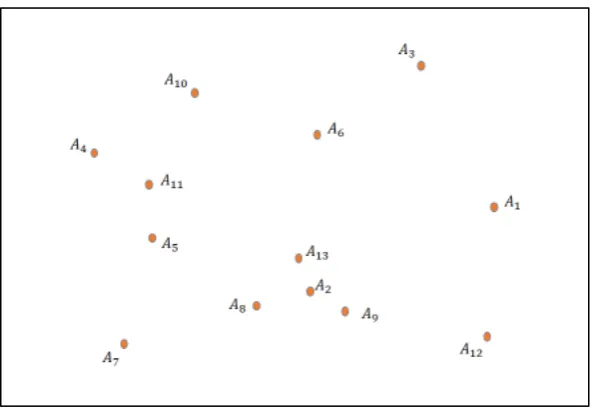
Let n be a number of points 𝐴𝐴𝑖𝑖, 1≤ i ≤n; and let S= {𝐴𝐴1, … . ,𝐴𝐴𝑛𝑛} be a set of these points.
We want to calculate the minimum distance between these points by returning to the starting point.
First, we create a convex polygon that includes all points by the “look left”, method [9]. Creation of convex polygon: look left:
We will examine our points in order, as if we start from one point, and continue by driving around our polygon. The idea is to choose the correct direction so that the interior of the polygon is to the left.
Here is the concept:
A point is inside the polygon if and only if it is "on your left" all along your route. Thus for each orientation as we proceed around the polygon, we examine whether the point being tested is to the left or not. If it is to the right, even once, then the point is not inside.
𝑨𝑨
𝒋𝒋𝑨𝑨
𝒌𝒌𝑨𝑨
𝒊𝒊Determinant:
Mathematically, a simple calculation suffices as the determinant. We have points 𝑨𝑨𝒊𝒊, 𝑨𝑨𝒋𝒋, 𝑨𝑨𝒌𝒌 .
Let D be the vector 𝑨𝑨𝒊𝒊𝑨𝑨𝒋𝒋:
Determining the polygon containing the points of the set E= {𝑃𝑃1, … . ,𝑃𝑃𝑁𝑁}⊆S; N ≤ n, where 𝐴𝐴𝑖𝑖 gives : For 1≤ i ≤n;
For 1≤ j ≤n / j ≠ i;
We put: 𝑫𝑫����⃗𝒊𝒊𝒋𝒋 = (𝑨𝑨𝑨𝑨𝒋𝒋𝒋𝒋𝒋𝒋𝒋𝒋− 𝑨𝑨− 𝑨𝑨𝒊𝒊𝒋𝒋𝒊𝒊𝒋𝒋)
For 1≤ k ≤n / k ≠ i; k ≠ j;
Let T be the vector 𝑨𝑨𝒊𝒊𝑨𝑨𝒌𝒌 : we put 𝑻𝑻����⃗𝒊𝒊𝒌𝒌 = (𝑨𝑨𝑨𝑨𝒌𝒌𝒋𝒋𝒌𝒌𝒋𝒋− 𝑨𝑨− 𝑨𝑨𝒊𝒊𝒋𝒋𝒊𝒊𝒋𝒋)
Let d the determinant of D,T. The determinant is calculated simply as (Rule gamma): 𝒅𝒅𝒊𝒊𝒋𝒋𝒌𝒌=𝑫𝑫𝒋𝒋*𝑻𝑻𝒋𝒋-𝑫𝑫𝒋𝒋*𝑻𝑻𝒋𝒋
If 𝑑𝑑𝑖𝑖𝑖𝑖𝑖𝑖> 0; so 𝐴𝐴𝑖𝑖 is to the left of (𝐴𝐴𝑖𝑖𝐴𝐴𝑖𝑖).
If 𝑑𝑑𝑖𝑖𝑖𝑖𝑖𝑖< 0; so 𝐴𝐴𝑖𝑖 is to the right of (𝐴𝐴𝑖𝑖𝐴𝐴𝑖𝑖).
If 𝑑𝑑𝑖𝑖𝑖𝑖𝑖𝑖= 0; so 𝐴𝐴𝑖𝑖 is on the line (𝐴𝐴𝑖𝑖𝐴𝐴𝑖𝑖).
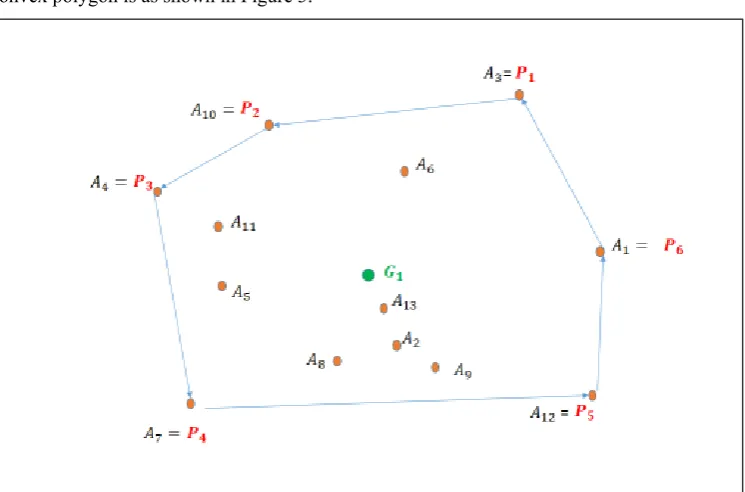
Thus the convex polygon is as shown in Figure 3.
Thus, let N be the number of points in the convex polygon, and let 𝑃𝑃𝑖𝑖; 1≤ i ≤N; N≤n are the points belonging to the convex
polygon.
Let G be the special centroid of the polygon, which verifies:
If N=4: 𝑃𝑃1𝑃𝑃2+𝑃𝑃2𝑃𝑃3+𝑃𝑃3𝑃𝑃4+𝑃𝑃4𝐺𝐺+𝐺𝐺𝑃𝑃1=𝑃𝑃2𝑃𝑃3+𝑃𝑃3𝑃𝑃4+𝑃𝑃4𝑃𝑃1+𝑃𝑃1𝐺𝐺+𝐺𝐺𝑃𝑃2
𝑃𝑃2𝑃𝑃3+𝑃𝑃3𝑃𝑃4+𝑃𝑃4𝑃𝑃1+𝑃𝑃1𝐺𝐺+𝐺𝐺𝑃𝑃2=𝑃𝑃3𝑃𝑃4+𝑃𝑃4𝑃𝑃1+𝑃𝑃1𝑃𝑃2+𝑃𝑃2𝐺𝐺+𝐺𝐺𝑃𝑃3
𝑃𝑃3𝑃𝑃4+𝑃𝑃4𝑃𝑃1+𝑃𝑃1𝑃𝑃2+𝑃𝑃2𝐺𝐺+𝐺𝐺𝑃𝑃3=𝑃𝑃4𝑃𝑃1+𝑃𝑃1𝑃𝑃2+𝑃𝑃2𝑃𝑃3+𝑃𝑃3𝐺𝐺+𝐺𝐺𝑃𝑃4
𝑃𝑃1𝑃𝑃2+𝑃𝑃4𝐺𝐺+𝐺𝐺𝑃𝑃1=𝑃𝑃4𝑃𝑃1+𝑃𝑃1𝐺𝐺+𝐺𝐺𝑃𝑃2
𝑃𝑃2𝑃𝑃3+𝑃𝑃1𝐺𝐺+𝐺𝐺𝑃𝑃2=𝑃𝑃1𝑃𝑃2+𝑃𝑃2𝐺𝐺+𝐺𝐺𝑃𝑃3
𝑃𝑃3𝑃𝑃4+𝑃𝑃2𝐺𝐺+𝐺𝐺𝑃𝑃3=𝑃𝑃2𝑃𝑃3+𝑃𝑃3𝐺𝐺+𝐺𝐺𝑃𝑃4
If N=5: 𝑃𝑃1𝑃𝑃2+𝑃𝑃2𝑃𝑃3+𝑃𝑃3𝑃𝑃4+𝑃𝑃4𝑃𝑃5+𝑃𝑃5𝐺𝐺+𝐺𝐺𝑃𝑃1=𝑃𝑃2𝑃𝑃3+𝑃𝑃3𝑃𝑃4+𝑃𝑃4𝑃𝑃5+𝑃𝑃5𝑃𝑃1+𝑃𝑃1𝐺𝐺+𝐺𝐺𝑃𝑃2
𝑃𝑃2𝑃𝑃3+𝑃𝑃3𝑃𝑃4+𝑃𝑃4𝑃𝑃5+𝑃𝑃5𝑃𝑃1+𝑃𝑃1𝐺𝐺+𝐺𝐺𝑃𝑃2=𝑃𝑃3𝑃𝑃4+𝑃𝑃4𝑃𝑃5+𝑃𝑃5𝑃𝑃1+𝑃𝑃1𝑃𝑃2+𝑃𝑃2𝐺𝐺+𝐺𝐺𝑃𝑃3
𝑃𝑃3𝑃𝑃4+𝑃𝑃4𝑃𝑃5+𝑃𝑃5𝑃𝑃1+𝑃𝑃1𝑃𝑃2+𝑃𝑃2𝐺𝐺+𝐺𝐺𝑃𝑃3=𝑃𝑃4𝑃𝑃5+𝑃𝑃5𝑃𝑃1+𝑃𝑃1𝑃𝑃2+𝑃𝑃2𝑃𝑃3+𝑃𝑃3𝐺𝐺+𝐺𝐺𝑃𝑃4
𝑃𝑃4𝑃𝑃5+𝑃𝑃5𝑃𝑃1+𝑃𝑃1𝑃𝑃2+𝑃𝑃2𝑃𝑃3+𝑃𝑃3𝐺𝐺+𝐺𝐺𝑃𝑃4=𝑃𝑃5𝑃𝑃1+𝑃𝑃1𝑃𝑃2+𝑃𝑃2𝑃𝑃3+𝑃𝑃3𝑃𝑃4+𝑃𝑃4𝐺𝐺+𝐺𝐺𝑃𝑃5
𝑃𝑃1𝑃𝑃2+𝑃𝑃5𝐺𝐺+𝐺𝐺𝑃𝑃1=𝑃𝑃5𝑃𝑃1+𝑃𝑃1𝐺𝐺+𝐺𝐺𝑃𝑃2
𝑃𝑃2𝑃𝑃3+𝑃𝑃1𝐺𝐺+𝐺𝐺𝑃𝑃2=𝑃𝑃1𝑃𝑃2+𝑃𝑃2𝐺𝐺+𝐺𝐺𝑃𝑃3
𝑃𝑃3𝑃𝑃4+𝑃𝑃2𝐺𝐺+𝐺𝐺𝑃𝑃3=𝑃𝑃2𝑃𝑃3+𝑃𝑃3𝐺𝐺+𝐺𝐺𝑃𝑃4
𝑃𝑃4𝑃𝑃5+𝑃𝑃3𝐺𝐺+𝐺𝐺𝑃𝑃4=𝑃𝑃3𝑃𝑃4+𝑃𝑃4𝐺𝐺+𝐺𝐺𝑃𝑃5
Thus for 4 ≤ N≤ n:
(1) 𝑃𝑃1𝑃𝑃2+𝑃𝑃𝑁𝑁𝐺𝐺+𝐺𝐺𝑃𝑃1=𝑃𝑃𝑁𝑁𝑃𝑃1+𝑃𝑃1𝐺𝐺+𝐺𝐺𝑃𝑃2
(2) 𝑃𝑃2𝑃𝑃3+𝑃𝑃1𝐺𝐺+𝐺𝐺𝑃𝑃2=𝑃𝑃1𝑃𝑃2+𝑃𝑃2𝐺𝐺+𝐺𝐺𝑃𝑃3
. . .
(𝑁𝑁 −1) 𝑃𝑃𝑁𝑁−1𝑃𝑃𝑁𝑁+𝑃𝑃𝑁𝑁−2𝐺𝐺+𝐺𝐺𝑃𝑃𝑁𝑁−1=𝑃𝑃𝑁𝑁−2𝑃𝑃𝑁𝑁−1+𝑃𝑃𝑁𝑁−1𝐺𝐺+𝐺𝐺𝑃𝑃𝑁𝑁
The horizontal axis of G is 𝐺𝐺𝑁𝑁𝑥𝑥, and its ordinate is 𝐺𝐺𝑁𝑁𝑦𝑦.
For 1≤ i ≤N; 1≤ j ≤n the distance between 𝑃𝑃𝑖𝑖 and 𝐴𝐴𝑖𝑖 is 𝑑𝑑𝑃𝑃𝑖𝑖→𝐴𝐴𝑖𝑖 =�⃓𝑥𝑥𝑖𝑖− 𝑥𝑥𝑖𝑖⃓2+⃓𝑦𝑦𝑖𝑖− 𝑦𝑦𝑖𝑖⃓2
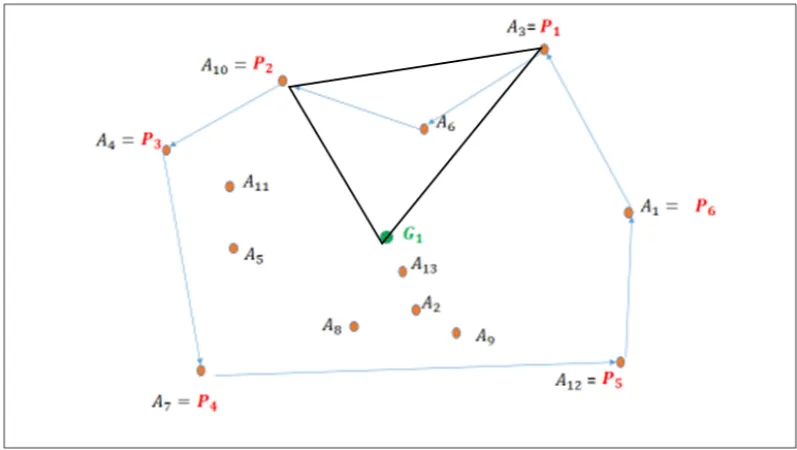
If 𝐴𝐴𝑖𝑖, 1≤ j ≤n is within the triangle G𝑃𝑃𝑖𝑖𝑃𝑃𝑖𝑖−1; 2≤ i ≤N; N≤n.
- If 𝐴𝐴𝑖𝑖is alone in the triangle, then 𝐴𝐴𝑖𝑖 is connected to 𝑃𝑃𝑖𝑖and 𝑃𝑃𝑖𝑖−1 (Figure 4).
- If 𝐴𝐴𝑖𝑖is alone in the triangle, then 𝐴𝐴𝑖𝑖 is connected to 𝑃𝑃𝑖𝑖and 𝑃𝑃𝑖𝑖−1 (Figure 4).
- If there are two points 𝐴𝐴𝑖𝑖 and 𝐴𝐴𝑖𝑖, 1≤ j ≤n and 1≤ k ≤ n within the triangle (Figure 5), then:
- If 𝑑𝑑𝑃𝑃𝑖𝑖→𝐴𝐴𝑖𝑖 +𝑑𝑑𝐴𝐴𝑖𝑖→𝑃𝑃𝑖𝑖−1 ≥ 𝑑𝑑𝑃𝑃𝑖𝑖−1→𝐴𝐴𝑖𝑖 +𝑑𝑑𝐴𝐴𝑖𝑖→𝑃𝑃𝑖𝑖 then 𝐴𝐴𝑖𝑖 is connected to 𝑃𝑃𝑖𝑖−1and𝐴𝐴𝑖𝑖.
- Otherwise 𝐴𝐴𝑖𝑖 will be connected to 𝑃𝑃𝑖𝑖 and𝐴𝐴𝑖𝑖.
Figure 5. Two points in the triangle 𝐺𝐺1𝑃𝑃3𝑃𝑃4
- If there are r points 𝐴𝐴𝑖𝑖 within the triangle G𝑃𝑃𝑖𝑖𝑃𝑃𝑖𝑖−1, 2<r≤ n-N, 1 ≤ j ≤ n; we compose the convex polygon between
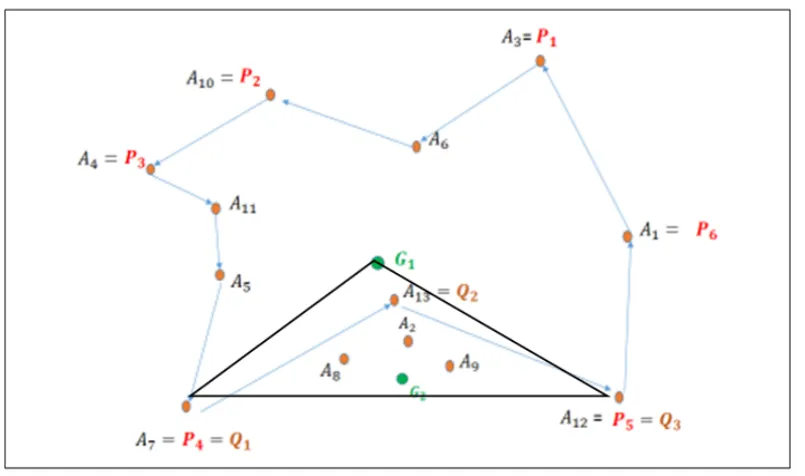
the points 𝑃𝑃𝑖𝑖,𝑃𝑃𝑖𝑖−1 that includes points 𝐴𝐴𝑖𝑖: 𝑃𝑃4𝑃𝑃5𝐴𝐴13 (Figure 6).
Therefore, there are M points forming a set F= {𝑄𝑄1, … . ,𝑄𝑄𝑀𝑀}≠E= {𝑃𝑃1, … . ,𝑃𝑃𝑁𝑁} and F⊂S = {𝐴𝐴1, … . ,𝐴𝐴𝑛𝑛} .
Figure 6. Many points in the triangle 𝐺𝐺1𝑃𝑃4𝑃𝑃5, thus we create a new convex polygon within the triangle 𝐺𝐺1𝑃𝑃4𝑃𝑃5
(𝑤𝑤ℎ𝑖𝑖𝑖𝑖ℎ𝑖𝑖𝑖𝑖𝑄𝑄1𝑄𝑄2𝑄𝑄3 ≡ 𝑃𝑃4𝑃𝑃5𝐴𝐴13) and its centroid (𝐺𝐺2)
We are looking for 𝐺𝐺𝑀𝑀 , a centroid of M points, and apply the same method as above (from ) until all point
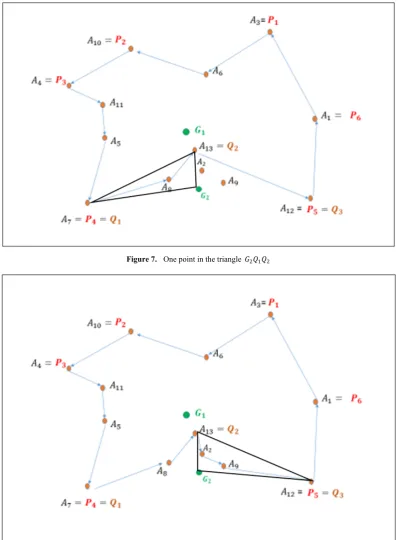
Figure 7. One point in the triangle 𝐺𝐺2𝑄𝑄1𝑄𝑄2
Figure 8. Two points in the triangle 𝐺𝐺2𝑄𝑄2𝑄𝑄3
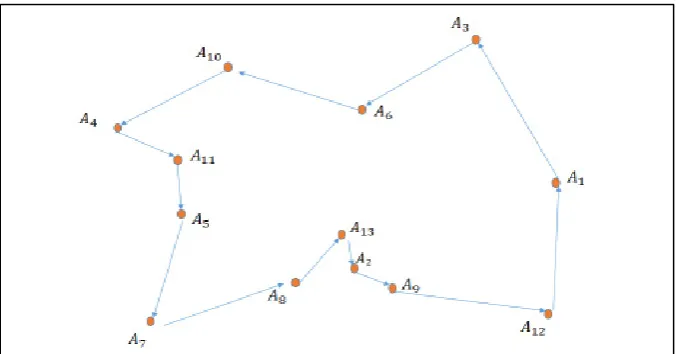
Figure 9. Optimal path
4. Discussion
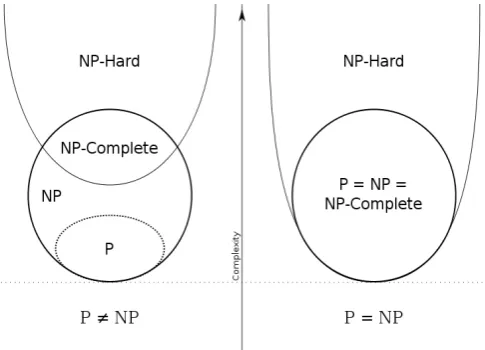
To understand the importance of the P versus NP problem let us imagine a world where P=NP. Technically we could have P = NP, but not have practical algorithms for most NP-complete problems. But suppose in fact we do have very quick algorithms for all these problems.
Many focus on the negative, that if P = NP then public-key cryptography becomes impossible. True, but what we will gain from P = NP will make the whole Internet look like a footnote in history.
Since all the NP-complete optimization problems become easy, everything will be much more efficient. Transportation of all forms will be scheduled optimally to move people and goods around quicker and cheaper. Manufacturers can improve their production to increase speed and create less waste.
Learning becomes easy by using the principle of Occam's razor—we simply find the smallest program consistent with the data. Near perfect vision recognition, language comprehension and translation and all other learning tasks become trivial. We will also have much better predictions of weather and earthquakes and other natural phenomenon.
P = NP would also have big implications in mathematics. One could find short, fully logical proofs for theorems but these proofs are usually extremely long. But we can use the Occam razor principle to recognize and verify mathematical proofs as typically written in journals. We can then find proofs of theorems that have reasonable length proofs say in under 100 pages. A person who proves P = NP would walk home from the Clay Institute not with $1 million check but with seven (actually six since the Poincaré Conjecture appears solved).
5. Conclusions
The Travelling Salesman Problem is solvable in polynomial time, and consequently the polynomial solvability of NP-complete problems is stated.
The consequences of this solution are considerable in many areas: cryptology, computer science, mathematics, engineering, economics… The implications of the solution may make the resolution of other problems Millennium trivial.
REFERENCES
[1] Fortnow, L. The status of the P versus NP problem. Communications of the ACM, 52 (9): 78-86, 2009. [2] Cook, S. The complexity of theorem-proving procedures. In
Proceedings of the 3rd ACM Symposium on the Theory of Computing, ACM, NY, 1971, 151-158.
[3] Karp, R. Reducibility among combinatorial problems. Complexity of Computer Computations. R. Miller and J. Thatcher, Eds. Plenum Press, 1972, 85-103.
[4] Levin, L. Universal'nyie perebornyie zadachi (Universal search problems: in Russian). Problemy Peredachi Informatsii, 9(3): 265-266, 1973.
[5] Lawler, E.L., J.K. Lenstra, A.H.G. Kinnooy Kan, and D.B. Shmoys, eds, The Traveling Salesman Problem: A Guided Tour of Combinatorial Optimization, Wiley, 1985.
[6] Dantzig, G.B., D.R. Fulkerson, and S.M. Johnson, Solution of a large-scale traveling- salesman problem, Operations Research, Vol. 2, 1954, pp. 393-4 10.
[7] Nemhauser, G.L. and L.A. Wolsey, Integer and Combinatorial Optimization, Wiley, 1988.
[8] Garey, M.R. and D.S. Johnson, Computers and Intractability: A Guide to the Theory of NP- Completeness, Freeman, San Francisco, 1979.