110
Copyright © 2018. IJEMR. All Rights Reserved.
Volume-8, Issue-2, April 2018
International Journal of Engineering and Management Research
Page Number: 110-117
Social and Cultural Expectations and Changing Role of Women
Dr. K. R. Subramanian
Senior Consultant - Operations Management, Credait.com, INDIA
Corresponding Author: [email protected]
ABSTRACT
The role of women in public life and in the social context has changed in the last few decades. From the role of a bread maker it has changed to bread winner in many cases. Business and cultural environments have exerted a great influence on these roles. Social changes have made the role different. In the context of today’s environment, they play different roles from business entrepreneurs to Corporate Executives to policy makers. But still there are cultural pressures on the ideal role to be played by them in society. There are still cultures which consider women not suitable for taking up employment and their roles are restricted to home making. In the current global environment this expectation is making difficult for them to choose their career and education. This article would try and trace the roles played by women as entrepreneurs and social emancipation to play a larger role in society. This is very much influenced by local cultures and beliefs, in spite of globalization of businesses. There are expectations and responsibilities associated with such winds of change.
Keywords-- Changing role and social expectations,
Progress from home maker to rule maker, entrepreneurship and globalization of business
I.
INTRODUCTION
The role of women has changed in recent years. But how has it changed? There are the obvious: Changes
in families. Fewer women staying at home, fewer children born to families, more women in college; Changes in law and the enforcement of existing law, involving such issues as reproductive rights, sexual harassment and domestic violence; Changes in the workforce. 34% of women worked outside the home in 1950, it‘s 60% today. That compares to 75% of men; and changes in what we may call ―where you see female faces.‖ Women are now in growing numbers in law offices, doctors‘ offices, science labs, board rooms, the military, outer space, the ministry, Congress, the Supreme Court, faculties, and even university presidencies. The biggest change, it seems to me, if you summarize all of this, is a change in opportunity, and in options.
Women bring a different viewpoint to problem solving that enhances the quality of the solution. Women bring a different set of issues to decision making that enhances the quality of the decision. I can make an identical case for diversity of all kinds. Faculty from the sciences and the humanities will make better curriculum decisions than scientists by themselves or humanists by themselves. A group consisting of faculty, staff, students and members of the community will come up with a better master plan for the university than faculty by themselves. And just look what a great decision can be made by a presidential search committee that comes from diverse constituencies!
111
Copyright © 2018. IJEMR. All Rights Reserved.
Social changes are fast and furious, education and opportunities along with awareness of rights and responsibilities have paved the way for a new generation of women, educated and empowered to make a different world and mark their presence!
II.
OBJECTIVES AND
METHODOLOGY
There are several changes happening n the environment of business and society. One of the significant changes in the last few decades is the changes in role of women in society which is inescapable for keen observers. Women are no more tied to house hold duties and participate in the family and society by a better involvement and contribution. Education has made it possible for women to take up good career opportunities and some of them occupy corporate positions and have seized entrepreneurial opportunities. Social and cultural changes have impacted this process. The purpose of this research article is to focus on the changes happening and to forecast what can be expected in future. For the purpose of the current study following Objectives have been identified:
1. A current review of environmental changes. 2. Analyze impact of such environmental changes
on the role of women.
3. Present changes and expected role of women in society
4. A review of social and cultural changes happening
5. Impact of such changes on the role of women in society
6. Conclusions and recommendation.
There is enormous amount of literature on the topic. The challenge was to collect, collate and classify them to reach conclusions based I the objectives identified for the research. This has been done. The data collected from various sources have enabled the researcher to arrive at the conclusions at the end o this paper. One of the
observations, the researcher would like to make is that the winds of change are very fast and frequent studies to update and analyze the situation are necessary. Digital progress has contributed much in this regard and this can be seen in the analysis and evaluation of data.
III.
REVIEW OF LITERATURE
From a passive housewife to an active member of society - in times of social change, where are our women heading? So, what influenced the women in our society to change? With smiles on their faces and freshly cooked meals on the tables, they used to wait for their husbands to come back home from work. Their ambitions were centered on the marriage, fulfillment of the role of a proud housewife and devoted mother and the economic security that their husbands, the breadwinners, have provided them. But, in the past fifteen years, a woman's path from an obeying housewife to an emancipated, independent and active member of society has been both, a cause and a reflection of social change in the world.
Despite some basic changes in the status and role of women in the society, no society treats its women equally as well as its men. Consequently, women continue to suffer from diverse deprivations from kitchens to key-boards, from the cradle to the grave across nations. Historically women in India were revered and the birth of a girl was widely believed to mark the arrival of Lakshmi – the Goddess of wealth and riches. Women have been considered ‗Janani‘, i.e., the progenitor and ‗Ardhangini‘ i.e., half of the body. Women are also considered to be an embodiment of Goddess Durga. Women have shouldered equal responsibilities with men. Widespread discrimination against women is, however, reflected in recurrent incidents of rape, acid throwing, dowry killings, wife beating, honour killings, forced prostitution, etc. Some of these issues were highlighted by ‗Satyamev Jayate‘ (Truth alone prevails) – an acclaimed television show hosted by Bollywood icon Aamir Khan.
112
Copyright © 2018. IJEMR. All Rights Reserved.
The gross under representation of women and the attitudinal bias towards women are very much reflected in several areas of employment like Police, Judiciary and the law. Despite some cosmetic changes in the role of women in society, no society is treating women as equal to men. Women continue to suffer from deprivations from kitchen to key board, from cradle to grave across nations, but as pointed out by Kofi Annan no development strategy is more beneficial to society than ―treating men and women alike‖. Apart from inequality, gender discrimination is also hampering development of Nation by underutilization of women population, their entrepreneurial roles, agricultural activities, village handicrafts etc. The correction of this unhappy situation requires focused intervention targeting education, training, health care, nutrition, credit deployment, as also legal support and safeguards.
In the struggle for freedom it was highlighted that political freedom must ultimately led to economic freedom and independence by eliminating shortcomings in terms of Education, Nutrition and Health. Factors impeding the advancement of women include lack of access to housing and basic amenities, inadequate support services and technologies for drudgery and occupational health hazards and for enhancing productivity. This necessitated devising of a broad-based strategic action plan for the realization of equal partnership of men and women in all spheres of life and economic activity. In the struggle for independence, it was stressed that political freedom must ultimately lead to emancipation of women in terms of health, Nutrition and
education. But this is yet to be realized and the best way is empowering women to advance economic growth and development. Laws relating to marriage, marriage, inheritance and maintenance have not been fully effective because of their inherent problems. Hence attempt to provide equality to women s to be carried to its logical conclusion for which stricter laws, enforcement and exemplary punishment are necessary.
There are some striking examples of emancipation women oft quoted include the name of Meera Kumar, erstwhile speaker of Lok Sabha, Sushma Swaraj, Minister of External affairs, Chanda Kochar Chair person of ICCI Bank, Shika Sharma etc easily come to mind. Clearly, one swallow does not make a summer and more needs to be done. But the gross under utilization of women in Police, Judiciary etc are seen clearly. Gender inequalities, and its social causes, impact India's sex ratio, women's health over their lifetimes, their educational attainment, and economic conditions. Gender inequality in India is a multifaceted issue that concerns men and women alike. Some argue that some gender equality measures, place men at a disadvantage. However, when India's population is examined as a whole, women are at a disadvantage in several important ways. In India, discriminatory attitudes towards either sex have existed for generations and affect the lives of both sexes. Although the constitution of India has granted men and women equal rights, gender disparity still remains.
Figure 3: 2015 Picture of International Women‘s day
The United Nations began celebrating International Women‘s Day (IWD) on 8 March during International Women‘s Year 1975. In 2015, International Women‘s Day highlighted the Beijing Declaration and Platform for Action, a historic roadmap signed by 189 governments 20 years ago that sets the agenda for realizing women‘s rights. This is the time to uphold women‘s achievements, recognize challenges, and focus greater attention on women‘s rights and gender equality to mobilize all people to do their part. To this end, the theme of this year‘s International Women‘s Day is the clarion call of UN Women‘s Beijing+20 campaign is Empowering women, Empowering Humanity: Picture it Join
governments and activists across the world in commemorating the ground-breaking Conference of 1995.
113
Copyright © 2018. IJEMR. All Rights Reserved.
These include things like women wear dresses, men like cars, women are nurturing, men are good at math, etc. It is important to note that these gender stereotypes are not
necessarily true; they are simply things that a critical mass of people generally believe about male and female genders.
Figure 4: The swans are believed to be ‗white‘
Humans are masters of pattern recognition; we use previous patterns to help us make decisions about future patterns. Our pattern recognition system was not developed to be perfectly accurate or objective, and it is deliberately biased to our own experiences. If a person has only ever seen white swans, they might assume that all swans are white (even though this is a misuse of inductive reasoning). A black swan would have a more difficult time convincing someone who has only seen white swans that he, too, is a swan. Our imperfect but hugely powerful brains pick up on patterns and, over time, can create unconscious biases about expected behavior.
Given that we have these expectations about how people behave, what happens when someone violates our expectations? Violating social norms elicits varying degrees of responses. If someone steps into your personal space you might step backward to correct the violation. If someone older acts too "young," they might be mocked for their behavior in an attempt to let them know it is unacceptable. And if someone were to crowd you in an elevator or stand facing you directly, you might give them an angry look or make a remark about their behavior. Workplace environments that require masculine behavior for advancement force women to choose between behavior
that's in line with a promotion and behavior that's in line with social expectations. The first could earn those negative remarks and ostracism; the second could prevent them from being promoted.
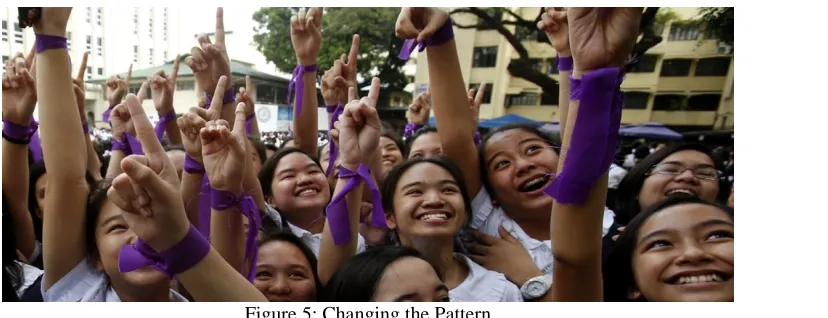
Tracking data is one of the best ways you can remove reliance on your own faulty judgment and biases. Data can reveal trends and behavior that go against our expectations, things like pay gaps, promotion gaps, and mentorship gaps. Track employees' progress in their roles and progression through the company. How long do they spend in each role? How long does it take for them to get a salary bump? How much is that salary bump? Make sure that women and minorities are not falling behind men. A small startup might have too little data to see trends, but even tracking it will help you think about biases you might have and notice discrepancies early. Data is imperfect, but it is still less biased than the average human. Making it a part of your companies‘ efforts to reduce bias and discrimination is a big step toward something resembling 'objectivity'. The next thing that can be done is to try to change the pattern. Challenge the traditional ideas of how successful engineers and leaders look and behave. A successful leader can be soft-spoken and introverted. A talented engineer can be girly and socially adept.
114
Copyright © 2018. IJEMR. All Rights Reserved.
While everyone is familiar with the female leaders who generate headlines at Davos – inspiring women like Angela Merkel, Christine Lagarde and Sheryl Sandberg – you might be less aware of the other exceptional women involved with the World Economic Forum‘s work. From an astronaut to an executive campaigning for gay rights at work, from scientists to social entrepreneurs, these women are challenging what is expected of their gender and changing the world around them for the better. But change is happening, and not just in the conventional corridors of power. In fact, the nature of power in itself is changing, becoming less top-down, less institutional and less predictable.
Academic and policy interest in the economic lives of women in developing countries has been stimulated by evidence of the positive impacts of enterprising activity on poverty alleviation and the reserve of unused talents of women, especially for those living in rural areas. Centuries of gender inequality have been perpetuated by social and cultural norms that restrict women‘s access to education, mobility, networks and freedoms. In countries with equal opportunities legislation, laws have had some impact on empowering and changing societal attitudes towards women. These advances are not universal, and NGOs have been active in helping women find ways to support themselves and their families. We have shown how social entrepreneurship also makes a contribution to empowering women and advancing social change.
Talent harnessing is a main concern of modern organizations. This can be achieved in a better way by
harnessing the potential and skill levels of women due to their education temperament and experience in life. In today‘s fiercely competitive environment, organizations cannot afford to underutilize nearly half of their workforce. Women influence 83 percent of all dollars spent on consumer purchases. Both men and women agree that women have special insights into female consumers. Yet little progress is being made in the development, advancement and leveraging of female talent at many consumer products and retail companies. Traditional talent management systems are not advancing women. Radical shifts in the workforce, pressures in the marketplace and women employees who are less willing to tolerate wage and opportunity gaps have made intrinsic, foundational organization change a business imperative. By recognizing the strategic importance of women to business transformation and growth and acknowledging the profound impact unconscious bias has on women‘s career trajectory, progressive companies can begin to overhaul their approach to gender diversity and inclusion and realize increased profits.
Women earning more degrees than men; Women will earn nearly two-thirds of the associate degrees and more than half of the doctorates in the United States this year. (See Figure 6) You can‘t get ahead if you work part time. You must have an MBA to lead a business unit. You must have tenure to get promoted. Only an Ivy League grad can be a good leader here. You have to do an international rotation to move to the vice president level.
% Men % women
Associate 37.7% 62.3%
Bachelor 43.4% 56.6%
Master 41.2% 58.8%
Doctorate 48.4% 51.6%
Source: National Center for Education Statistics.
Figure 6: Women are making headway
To further gender equity, existing thought models and bias regarding talent management in the organization must be identified and challenged. People responsible for talent management are the linchpin for expanding the talent pool. All managers—regardless of gender, race or nationality—have individual and collective socio cultural programming that provides preferences, standards, interpretations and filters of other people. No one is bias-free. In fact, we need certain types of bias to survive and manage in this complex world. But bias that unconsciously extends to groups of people is detrimental to all concerned.
115
Copyright © 2018. IJEMR. All Rights Reserved.
responsible for talent management and collectively identify and challenge all of the assumptions the organization makes about talent. Most often, these thought models are never examined. They simply become part of the talent requirements because ―that‘s the way we‘ve always done it.‖ Some of these mental models could be: ―You must have an MBA to lead a business unit.‖ ―You can‘t get ahead if you work part time.‖ ―Only an Ivy League grad can be a good leader here.‖ ―You have to do an international rotation before you can move to the vice president level.‖ ―You must have a certain amount of tenure before you can get promoted.‖ After the review, create a more objective list of talent criteria and identify the appropriate channels for communication. A credible outside voice may bring a broader perspective.
There is often a strong economic case to be made for increasing female participation at all levels of the labor force. In Japan – which has one of the lowest female labor participation rates among OECD countries – the labor force is predicted to shrink by 15 percent between 2010 and 2030, threatening GDP growth. Women could help to fill this gap. And in Malaysia, we estimate that raising the participation rates of women to match those of Singapore or South Korea has the potential to increase Malaysia‘s GDP by between RM6 billion and RM9 billion. But what is the business case for increasing the number of women in senior management positions? The answer is that, unless they do so, companies are surrendering two important sources of competitive advantage: having the best talent in an age of talent scarcity, and capitalizing on the particular performance benefits that women in leadership positions bring to an organization. Companies that fail to attract able women risk penalizing themselves by failing to attract the best talent possible. Ralph Norris, former CEO of Commonwealth Bank of Australia, put it like this, ―Women in leadership. It‘s just good business. There‘s no difference in leadership potential between women and men; making sure you can capture a better share of high-performing women is better for the organization.‖
IV.
ANALYSIS AND CONCLUSIONS
Social changes are sweeping all over the world and India is no exception. There was a time when the Indian society based on indigenous culture gave a pride of place for women and their contribution in all spheres of life. Subsequent attacks on the Indian soil by invaders and marauders of wealth destroyed our flourishing businesses and trade. But today once again there is growing awareness of the role that women can play in our society and family life. Education has emancipated women to take up employment other than household chores and we see many women in executive positions in organizations. Winds of change are sweeping across the globe and all over the world there is a rising awareness and ability of women to contribute to mainstream life. While education
has helped, the creation of nuclear families and the need for both the wife and husband to earn has made a tremendous impact on the role of women in society. From traditional roles and occupations women today are seen to embrace roles more appropriate to their qualifications and talent.
Women and their skills focused organizations have been created. Environmental changes like the higher education levels of women, Participation of women in sports have brought laurels for India. Participation of women in Employment areas like Police Department, Public utilities like metro transport, Airline pilots and space travel have boosted the image of women and the 21st Century women is quite different from her image of the earlier times. Banking and Financial services industry have seen several women in top positions and sharing a platform equally with men. Even in Politics we have such figures as Mamta Banerjee, Chief Minister of Bengal, Sushma Swarj, Miniser for External affairs who are examples of women empowerment and demonstration of rising power of women in India. We have several Research Scholars and Professors among women. In media we see entry of several powerful women and their decibel levels cannot be missed when you switch on the TV.
With the women taking up challenging roles in society and Politics there is no limit to their involvement in shaping the future of life in this planet. Regarding expected roles, we can say only that sky is the limit and women are taking up more and more challenging roles every passing day. With digital development and the opportunities thrown up, women are more and more empowered to express themselves in ways they have never before done. In Fashion design and exclusive boutiques they are way ahead of their male counter parts. Opportunities to expand and express their talent are galore and women are making use of them because of the communication network through mobiles World Wide Web and e-mails. Communication has made them identify suitable roles for themselves based on their inclination and skill sets.
Several social taboos have been given up to pave the way for equal opportunities for women. We can see more and more women in the work force of companies working hand in hand with men. There is hardly any occupation which we can call only a domain of men. From Sriharikota to Kota women are occupied in different and diverse businesses. In arts and science they are not left behind by their male counter parts. In inter-planetary travel also women have not lagged behind as several astronauts have emerged. Till recently there were many active military and civil roles considered as ‗Taboo‘ for women. Now this barrier has been removed.
116
Copyright © 2018. IJEMR. All Rights Reserved.
more and more contribution to society and common cause. Technical Education which used to be male dominated area is no more so. More and more women are seen to take up career in Manufacturing industries and Shop floor. To quote and example, if you visit Tata Motors, you will find several women Engineers working in tandem with their men counterparts – whether it is a Production shop or Assembly line or design department. This was not so several years ago when only men were recruited for such positions! In fact there is cut throat competition for positions in the Software industries for each and every position that falls vacant or advertised. The Future will not be different and men and women will compete on equal platform.
RECOMMENDATION
The role of women in society is very critical to the development of future. If their role is restricted we stand to lose some contributions they can otherwise make. In fact we owe to women who bring out the male or female children who are the future of tomorrow. From Catering to Civil Aviation they are continuing to make their mark and there are several women candidates who have been shortlisted for positions of Airport Managers! While the women may be limited in a small way because of their being women, they are no more called the weaker sex! In fact the times are not far off when men have to be cautious that their need in society may be limited by what they can do for society at large that women cannot do! What is needed today is an appreciation of their power and potential to contribute in a male dominated society.
REFERENCES
A. PRINTAND PUBLICATION
[1] Ahmed, S. (2004). Sustaining peace, re-building livelihoods: The gujarat harmony project. Gender & Development, 12(3), 94–102.
[2] Arora. (2012). Gender inequality, economic development, and globalization: A state level analysis of India. The Journal of Developing Areas, 46(1), 147–164. [3] Adler. P & Kless S. (1992). Socialization to gender roles: Popularity among elementary school boys and girls. Sociology of Education, 65(3), 169–087.
[4] Blowfield, M., & Frynas, J. G. (2005). Setting new agendas: Critical perspectives on corporate social responsibility in the developing world. International Affairs, 81(3), 499–513.
[5] Courtney, A., & Lockeretz, S. (1971). A woman's place: An analysis of the roles portrayed by women in magazine advertisements. Journal of Marketing Research, 8, 92-95.
[6] Datta, P. B., & Gailey, R. (2012). Empowering women through social entrepreneurship: Case study of a women‘s
cooperative. Entrepreneurship Theory and Practice, 36(3), 569–587.
[7] Dijkstra; Hanmer (2000). Measuring socio-economic gender inequality: Toward an alternative to the UNDP gender-related development index. Feminist Economics, 6(2), 41–75.
[8] Umiker-Sebeok, J. (1981). The seven ages of women: A view from American magazine advertisements. New York: Springer-Verlag.
[9] Sen, Amartya (2001). Many faces of gender inequality. Frontline, India's National Magazine, 18(22), 1–17. [10] Sekher, TV & Neelambar Hattie (2010). Unwanted daughters: Gender discrimination in Modern India. Jaipur: Rawat Publications.
[11] Gupta, Monica Das. (1987). Selective discrimination against female children in rural Punjab, India. Population and Development Review, 13(1), 77–100.
[12] Muthulakshmi. R. (1997). Female infanticide, its causes and solutions. New Delhi: Discovery Publishing House.
[13] Babu & Babu (2011). Dowry deaths: a neglected public health issue in India. International Health, 3(1), 35-43.
[14] Srinivasan, Padma, & Gary R. Lee. (2004). The dowry system in northern india: Women's attitudes and social change. Journal of Marriage and Family, 66.5, 1108-1117.
[15] Wood, W. & Eagly, A. H. (2002). A cross-cultural analysis of the behavior of women and men: Implications for the origins of sex difference. Psychological Bulletin, 128(5), 699–727.
[16] Fortin, Nicole (2005). Gender role attitudes and the labor market outcomes of women across OECD countries. Oxford Review of Economic Policy, 21(3), 416–438. [17] Kertzer, D.I., White, M.J., Bernardi, L., & Gabrielli, G. (2009). Italy‘s path to very low fertility: The adequacy of economic and second demographic transition theories. European Journal of Population, 25(1), 89-115.
[18] Edgar M. Naganag. (2014). The role of indigenous women in forest conservation in upland Kalinga Province, Northern Philippines. International Journal Advanced Research in Management and Social Sciences, 3(6), 75-89. [19] Klammer, U., Neukirch, S., & Weßler-Poßberg, D. (2012). Wenn Mama das Geld verdient. Familienernährerinnen zwischen Prekarität and neuen Rollenbildern. Berlin: Forschung aus der Hans-Böckler-Stifung.
[20] Chant, S. (2006). Re-thinking the "feminization of poverty" in relation to aggregate gender indices. Journal of Human Development, 7(2), 201-220.
[21] Köppen, K. (2006). Second births in western Germany and France. Demographic Research, 14(14), 295-330.
117
Copyright © 2018. IJEMR. All Rights Reserved.
role of empowerment. Journal of Business Ethics, 133(4), 643–658.
[23] Jalovaara, M. (2002). Socioeconomic differentials in divorce risk by duration of marriage. Demographic Research, 7(16), 537-564.
[24] Isen, A., & Stevenson, B. (2010). Women's education and family behaviour: Trends in marriage, divorce and fertility. Chicago: University of Chicago Press.
[25] Iversen, T., Rosenbluth, F., & Soskice, D. (2005). Divorce and the Gender Division of Labor in Comparative Perspective. Social Politics: International Studies in Gender, State & Society, 12(2), 216-242.
[26] Benko, Cathy & Weisberg, Anne C. (2007). Mass career customization: Aligning the workplace with today’s nontraditional workforce. Boston: Harvard Business School Press.
[27] Kalmijn, M. (2012). Longitudinal analyses of the effects of age, marriage, and parenthood on social contacts and support. Advance in Life Cource Research, 17(4), 177-190.
[28] Rijken, A. & Knijn, T. (2009). Couples‘ decisions on having a first child. Comparing pathways to early and late parenthood. Demographic Research, 21(26), 765-802. [29] Vikat, A. (2004). Women's labour force attachment and childbearing in Finland. Demographic Research, SC3(8), 177-212.
B. WEB REFERNCES
[1]
http://in.one.un.org/task-teams/gender-equality-and-empowerment
[2]
https://www.theguardian.com/global- development/poverty-matters/2011/may/25/india-census-alarming-sex-ratio-female-foeticide
[3] Clancy, Susan. 92014). The Hidden Reason Women Aren't Making It To The Top. Forbes.com