97
All Rights Reserved © 2014 IJDCN
COMPARATIVE ANALYSIS OF ALGORITHMS USING DIFFERENT
PARAMETERS FOR SECURING DATA IN CLOUD COMPUTING
B.Mahalakshmi Research Scholar,
Department of Information Technology,
School of Computing Sciences, Vels University,
Chennai.
Dr.G.Suseendran Assistant Professor,
Department of Information Technology,
School of Computing Sciences, Vels University,
Chennai.
Dr.Kusum Yadav,
College of Computer Science and Engineering,
University of Hail,
Kingdom of Saudi Arabia. [email protected]
ABSTRACT:
Finding which cryptographic algorithm is better by evaluating the algorithm for securing the data in cloud computing. There are many services available in cloud computing and the users are in need of higher security for protecting their data towards the services. We are in need of securing our data from unauthorized access. For this we are using a technique called cryptography and we discussed about the cryptography types and also encryption types. Many of the symmetric Encryption algorithms are available among these which are the best algorithms available and how the parameters are compared all these are analyzed using some of the parameters such as architecture, scalability, limitations, flexibility, and security of encryption algorithm and which one suits better for the data. In order to improve the quality of the encryption algorithm not only for the parameters above we also having some other issues are in need to be discussed for that the it is considered for further analysis with some other algorithms.
KEY WORDS: AES, Cryptography, Parameters,
Symmetric encryption,
1. INTRODUCTION:
Cryptography is a technique for protecting information by altering its plain text to cipher text as a term called encryption and then decryption is changing cipher text to plain text. A cryptographic algorithm is a mechanism in which the combinations of word, phrase or number are combined to form a key for encrypting/decrypt data. The algorithm accurately combines the information to be protected with a supplied key for encrypting the data and the result is encrypted data. For decryption, it performs a calculation using a key which is already derived from the encrypted message, so that we can get the original message called decryption. If either the data or key is modified, it creates a unlike result. The main objective of the cryptography method is to create a complex encrypted text so that the decryption is by default not possible without using the key.
98
All Rights Reserved © 2014 IJDCN input. The two kinds of key-based encryption
algorithms are asymmetric and symmetric encryption algorithms. The difference is the key value that is using the identical key for encrypting or decrypting the data in symmetric algorithm, whereas a different key is used for encryption and decryption in asymmetric encryption algorithm, and the decryption key which is not derived from encryption key. Some common terms of cryptography algorithms are Encryption: Converting plain text to cipher text with the help of a key value for protecting data from unauthorized access. Decryption: The reverse of encryption is decryption that is converting cipher text to plain with the help of a key value. Key: It is a combination of characters, phrases and numbers for the conversion. Plaintext: The original message is called plain text and finally Cipher text: It is the encrypted message of original text.
1.1. LITERATURE REVIEW:
Here we discuss some of the related works done by some other Authors. In [1] based on the performance and time complexity comparison is done between AES and DES.
In [2] the discussion is about some of the symmetric algorithm and it is discussed about the usage that how much memory is occupied for the conversion of cipher text.
In this paper [3] the discussion is done on the basis of the performance for the algorithm such as CAST and RC5 and the performance is analyzed.
Here the overall common survey of the symmetric algorithms based on the performance, memory and some other constraints are discussed in the paper [4].
In the next paper the performance of different symmetric encryption algorithms are discussed and analyzed [5].
2. DESCRIPTION
2.1 BASED ON ARCHITECTURE:
Depends upon the block size, key size, no of rounds performed and structure the algorithms are discussed.
2.1.1. DES (DATA ENCRYPTION STANDARD):
In 1972 IBM designed DES and the U.S. Government adopted it as a standard encryption method. Design of the algorithm is Feistel Network based. DES is a symmetric algorithm which it uses the key sizes of 56 bit and the block size is 64 bit. It is encrypting the data by processing total of 16 rounds. Getting some restrictions from NSA for 64 bits IBM planned to use 56 bit as its key length for encryption and for error detection the 8 remaining bits are used as a parity bit. It uses 8 boxes and it divides the block of 64 bit into 2 identical parts and for each part it applies the function. Various tasks of algorithm are Key Mixing, Expansion, Permutation and Substitution. Decryption is done as the same method of encryption [6].
2.1.2. 3DES:
3DES was published in 1998 which is from DES. It uses key length of 56 bits but it is having total size of 168 bite using 3 different keys. All of the keys are same or else the 1st and 3rd key may be identical in this algorithm. It uses 8 S- boxes by dividing the text into 64 bits and executes 48 rounds of processing. 3DES is more complex and structured to safeguard the data for different attacks. The U.S. Government approves it for the higher level of security [7].
2.1.3. IDEA (INTERNATIONAL DATA
ENCRYPTION ALGORITHM):
99
All Rights Reserved © 2014 IJDCN key algorithm. It is a substitution-permutation based
structure. IDEA is a 64 bit block and 128 bit as key. The IDEA performs 8.5 rounds and for each round
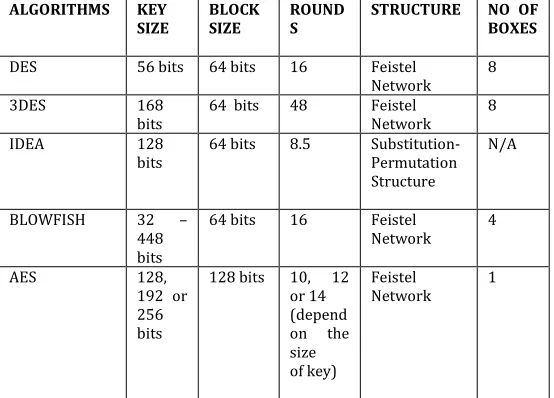
Table I Comparative Analysis Based on Architecture
Addition, XOR and Multiplication are performed. Decryption is identical as encryption only the key is reversed [8].
2.1.4. BLOWFISH:
In 1993 BlowFish is planned by Bruce Schneier. For safe socket Layer program and other it is used because it is a simple and fast algorithm. BlowFish is a Feistel based Network which supports a block size of 64 bit and 32-448 bit of the key size. It performs 16 rounds of processing and also having 4 S-boxes and is dependent on key. Data encryption and Key expansion are two methods of this algorithm [9]. Table I Shows the Comparative analysis of Symmetric algorithm based on architecture.
2.1.5. AES (ADVANCED ENCRYPTION
STANDARD):
AES is a symmetric encryption algorithm by Vincent Rijmen and Joan Daemen in 1998. It is a
Feistel network based algorithm and it can grasp up to 128 bit of block size and then its key size is of 128, 192 and 256 bits. Depends upon the key the number of rounds is calculated it is listed as 10, 12 or 14. It performs 10 rounds for key size 128 bit it takes 10 rounds for the performance then for 192 bit it takes out nearly 12 rounds and finally for 256 bit 14 rounds are taken into consideration [10]. In each round Shift-row, Add-round key, Sub-byte generation and Mix-columns are performed while in the Final-rounds, similar tasks are carried out except that Mix-columns method[11].
2.2. BASED ON SCALABILITY:
The scalability of the algorithm is based on the performance and used memory of the encryption algorithm. Based on the encryption rate the algorithm’s performance is calculated. Encryption rate is computed by the algorithm’s processing time. The memory needed by every algorithm depends on the amount of data and it is executed by the method of encryption algorithm. Due to insufficient of memory the performance of the task there is a need of reduction of memory to carry out the algorithm. If any of the algorithms needs little amount of memory there is a better proficiency for space. Fig 1 represents the graphical representation of Scalability of algorithms.
2.3. BASED ON LIMITATIONS:
2.3.1. DES:
The key size is short due to this the brute force attack is easily performed by 2^56 imaginations. The major problem of DES is the key size it doesn’t protect the data against the attack.
2.3.2. 3DES:
The advances of DES are 3DES. In this is also there are some disadvantages that are it encrypt the data 3 times so the space required is 3 times more than DES.
ALGORITHMS KEY
SIZE BLOCK SIZE ROUNDS STRUCTURE NO OF BOXES
DES 56 bits 64 bits 16 Feistel
Network 8
3DES 168
bits 64 bits 48 Feistel Network 8
IDEA 128
bits 64 bits 8.5 Substitution- Permutation Structure
N/A
BLOWFISH 32 – 448 bits
64 bits 16 Feistel
Network 4
AES 128,
192 or 256 bits
128 bits 10, 12 or 14 (depend on the size of key)
Feistel
100
All Rights Reserved © 2014 IJDCN 2.3.3. IDEA:
There is some possibility of data to be attacked in minimum round and different weak keys. The initial three rounds of the algorithm are noticed for the related-key differential timing and key-schedule attacks.
2.3.4. Blowfish:
Blowfish is a very secure algorithm except Initial 4 rounds of blowfish are observed insecure from 2nd-order differential attack.
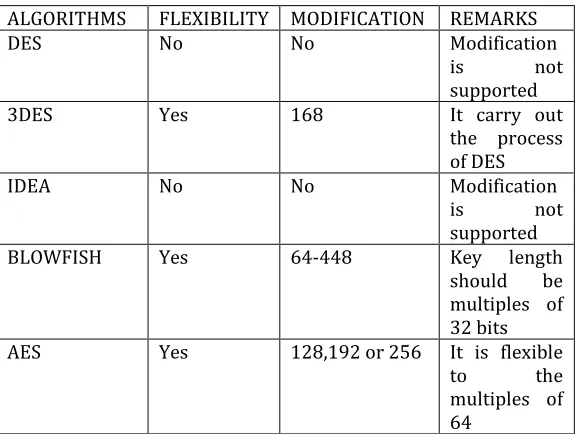
Table II Comparison Based on Flexibility
2.3.5. AES:
No any such kind of weakness has been observed in AES. Some initial rounds of AES are observed insecure i.e. early round can break by square method.
2.4. BASED ON FLEXIBILITY:
Comparison is based on the flexibility. Here flexibility is nothing but the modifications done on the future which may be depend on the requirements. Table II represents the flexibility of algorithms.
2.5. BASED ON SECURITY:
The security level of the algorithm is discussed here and it is considered to be the most important part
of the algorithm because the algorithm is a better one if its security level is high [12].
2.5.1. DES:
DES is not a secured algorithm because its key length is of 56 bits, so the security is weak and it is the drawback of the algorithm [13].
0 1 2 3 4 5 6 7 8
DES 3DES IDEA BLOWFISH AES
Perforance of Algortihm Memory
Fig 1. Comparison of Algorithms based on Scalability
2.5.2. 3DES (TDES):
It is the improved version of DES so it overcomes the security problem. It performs the process of DES for 3 times with various key values for better security. Comparing with DES it is high in security level.
2.5.3. IDEA:
It is a high level secured algorithm for overall attacks. In IDEA several methods are performed for boosting the protection level. Using key size of 128 bits makes it as a strong encryption algorithm. Here there is no limitation connected to opening and sequential attacks [14].
2.5.4. Blowfish:
Blowfish has a superior security point due to the key length of 32-448 bits. Here every bit of the key performs several rounds which are independent because of this it is a treated as a better protected algorithm for various attacks [15].
ALGORITHMS FLEXIBILITY MODIFICATION REMARKS
DES No No Modification
is not
supported
3DES Yes 168 It carry out
the process of DES
IDEA No No Modification
is not
supported
BLOWFISH Yes 64-448 Key length
should be multiples of 32 bits
AES Yes 128,192 or 256 It is flexible
to the
101
All Rights Reserved © 2014 IJDCN 2.5.5. AES:
It is having the key size of 128, 192 and 256 bits so that the security level is very high here. Various types of attacks are tried to hit tried to split the algorithm but the key size is strong so it is considered to be the highly secured algorithm.
3. CONCLUSION
Analysis of symmetric encryption algorithm is presented in this paper. The memory of AES and DES are same but the performance of AES is high compared to DES. DES having some disadvantages it does not support flexibility because of that future modification is not possible. The memory of 3DES and IDEA are same but the performance is different. The performance of BlowFish and AES are same but the performance is varying. After comparing these algorithm AES is comparatively better compared to other on the basis of all the parameters.
4. REFERENCES:
[1] A. K. Mandal, C. Parakash and M. A. Tiwari, “Performance Evaluation of Cryptographic Algorithms: DES and AES”, 2012 IEEE Student’s Conference on Electrical, Electronics and Computer Science.
[2] V. Singh and S. K. Dubey, “Analyzing Space Complexity of Various Encryption Algorithms”, International Journal of Computer Engineering and Technology (IJCET), Volume 4, Issue 1, January- February (2013).
[3] Tingyuan Nie, Yansheng Li and Chuanwang Song, “Performance Evaluation for CAST and RC5 Encryption Algorithms”, International Conference on Computing, Control and Industrial Engineering, IEEE, 2010.
[4] E. Thambiraja, G. Ramesh and Dr. R. Umarani " A Survey on Various Most Common Encryption Techniques", IJARCSSE, Volume 2, Issue 7, July 2012.
[5] A.Ramesh and Dr.A.Suruliandi, “Performance Analysis of Encryption Algorithms for Information Security”, International Conference on Circuits, Power and Computing Technologies [ICCPCT-2013], IEEE, 2013.
[6] Shashi Mehrotra Seth, Rajan Mishra, “Comparative Analysis of Encryption Algorithms for Data Communication”, IJCST , Vol. 2, Iss ue 2, June 2011.
[7] Michal Halas, Ivan Bestak, Milos Orgon, and Adrian Kovac, “Performance Measurement of Encryption Algorithms and Their Effect on Real Running in PLC Networks”, IEEE, 2012. [8] Md Imran Alam and Mohammad Rafeek Khan,”Performance
and Efficiency Analysis of Different Block Cipher Algorithms of Symmetric Key Cryptography”, International Journal of
Advanced Research in Computer Science and Software Engineering, Volume 3, Issue 10, October 2013.
[9] Z. Zahang and Shiliang sun, “Image encryption algorithm based on logistic chaotic system and s-boxes scrambling”,Image and Signal Processing (CISP), 4th International Congress on (Volume: 1),2011.
[10] Md Asif Mushtaque, H. Dhiman, S. Hussain and Shivangi Maheshwari,“Evaluation of DES, TDES, AES, Blowfish and Twofish Encryption Algorithm Based on Space Complexity”, International Journal of Engineering.
[11] Fei Shao, Zinan Chang and Yi Zhang, “AES Encryption Algorithm Based on the High Performance Computing of GPU”, Second International Conference on Communication Software and Networks.
[12] Md Asif Mushtaque, H. Dhiman, S. Hussain and Shivangi Maheshwari,“Evaluation of DES, TDES, AES, Blowfish and Twofish Encryption Algorithm Based on Space Complexity”, International Journal of Engineering Research & Technology (IJERT), Vol. 3 Issue 4, April – 2014.
[13]Hamdan.O.Alanazi, B.B.Zaidan, A.A.Zaidan, Hamid A.Jalab, M.Shabbir and Y. Al-Nabhani, “NewComparative Study between DES, 3DES and AES”, journal of computing, volume 2, issue 3, march 2010.
[14] Mushtaque, Md Asif. "Comparative Analysis on Different
parameters of Encryption Algorithms for Information
Security." JCSE International Journal of Computer Science 2.4 (2014).