REVIEW
Biomass waste-to-energy valorisation
technologies: a review case for banana
processing in Uganda
Robert Gumisiriza
1*, Joseph Funa Hawumba
1, Mackay Okure
2and Oliver Hensel
3Abstract
Background: Uganda’s banana industry is heavily impeded by the lack of cheap, reliable and sustainable energy mainly needed for processing of banana fruit into pulp and subsequent drying into chips before milling into banana flour that has several uses in the bakery industry, among others. Uganda has one of the lowest electricity access levels, estimated at only 2–3% in rural areas where most of the banana growing is located. In addition, most banana farmers have limited financial capacity to access modern solar energy technologies that can generate sufficient energy for industrial processing. Besides energy scarcity and unreliability, banana production, marketing and industrial process-ing generate large quantities of organic wastes that are disposed of majorly by unregulated dumpprocess-ing in places such as swamps, thereby forming huge putrefying biomass that emit green house gases (methane and carbon dioxide). On the other hand, the energy content of banana waste, if harnessed through appropriate waste-to-energy technolo-gies, would not only solve the energy requirement for processing of banana pulp, but would also offer an additional benefit of avoiding fossil fuels through the use of renewable energy.
Main body: The potential waste-to-energy technologies that can be used in valorisation of banana waste can be grouped into three: Thermal (Direct combustion and Incineration), Thermo-chemical (Torrefaction, Plasma treatment, Gasification and Pyrolysis) and Biochemical (Composting, Ethanol fermentation and Anaerobic Digestion). However, due to high moisture content of banana waste, direct application of either thermal or thermo-chemical waste-to-energy technologies is challenging. Although, supercritical water gasification does not require drying of feedstock beforehand and can be a promising thermo-chemical technology for gasification of wet biomass such as banana waste, it is an expensive technology that may not be adopted by banana farmers in Uganda. Biochemical conversion technologies are reported to be more eco-friendly and appropriate for waste biomass with high moisture content such as banana waste.
Conclusion: Uganda’s banana industrialisation is rural based with limited technical knowledge and economic capa-bility to setup modern solar technologies and thermo-conversions for drying banana fruit pulp. This review explored the advantages of various waste-to-energy technologies as well as their shortfalls. Anaerobic digestion stands out as the most feasible and appropriate waste-to-energy technology for solving the energy scarcity and waste burden in banana industry. Finally, potential options for the enhancement of anaerobic digestion of banana waste were also elucidated.
Keywords: Banana waste, Waste-to-energy technologies, Biomass valorisation, Bioenergy, Biofuels, Biomass energy, Anaerobic digestion
© The Author(s) 2017. This article is distributed under the terms of the Creative Commons Attribution 4.0 International License (http://creativecommons.org/licenses/by/4.0/), which permits unrestricted use, distribution, and reproduction in any medium, provided you give appropriate credit to the original author(s) and the source, provide a link to the Creative Commons license, and indicate if changes were made. The Creative Commons Public Domain Dedication waiver (http://creativecommons.org/ publicdomain/zero/1.0/) applies to the data made available in this article, unless otherwise stated.
Open Access
*Correspondence: [email protected]; [email protected] 1 School of Biosciences, Makerere University, P.O Box 7062,
Kampala, Uganda
Background
Globally, energy crisis and proper waste disposal are among the major challenges facing most nations [5]. Uganda is the second largest global producer of bananas after India and the leading in Africa [164], with annual production estimated at 9.77 million tonnes [59]. The most widely grown cultivars are cooking types belong-ing to the East African highland banana (EAHB) sub-group. The other banana cultivars grown in Uganda include the dessert bananas locally known as Sukali Ndizi and Bogoya and some other plantain cultivars for roasting such as Gonja and Kivuuvu while ‘ Kay-inja’ and ‘Kisubi’ are mainly for making local beer. The EAHB cooking banana (AAA-EA group), locally called matooke, is the leading staple food [166] with the annual production of over 6 million tonnes [155]. Banana growing in Uganda is either cultivation by smallhold-ers in association with other food crops at low densities (as shade trees for perennials such as coffee) or in com-mercial plantations at high densities in a monoculture system.
Banana processing in Uganda, like other agro-pro-cessing, relies mainly on costly imported petroleum products for energy. Cheap and sustainable energy is critically essential in banana processing for efficient dry-ing of banana fruit pulp into chips prior to processdry-ing into value-added products such as starch and flour for export as well as local food security. Scarlat et al. [145] pointed out that access to cheap, reliable and sustainable energy is an important factor that makes agricultural and industrial processes more efficient. For instance, in the processing of banana, energy would be required for pro-cesses such as: drying, milling and also in conversion of the flour into valuable products: starch, bread and cakes, among others. Besides, energy is needed in households’ utilities such as cooking, lighting and refrigeration. The biggest challenge facing banana industry is the fact that banana-growing areas, that are concentrated in the rural as well as the remote parts of the country, are not con-nected to the national electricity grid. This makes banana processing not only expensive but also rather incomplete as there are many wastages. Typically, electricity distribu-tion in Uganda is one of the lowest in Africa; estimated at only 9–12% of the total Ugandan population [99, 162] and at only 2–3% in the rural areas [168]. This is compli-cated by the fact that most banana farmers have limited financial capacity to access modern solar energy technol-ogies that would generate sufficient energy for industrial processing. Therefore, such limited and unreliable energy access translates into underutilisation of the banana crop, excessive wastage, as well as emission of large vol-umes of banana waste, leading to the underdevelopment of the banana industry. This, in turn, contributes to the
limited employment opportunities and poverty that are the major impediments to economic growth [82].
As already pointed out from the foregoing, banana production and banana fruit processing are not only faced with energy scarcity and unreliability, but also they are accompanied by the generation of vast quantities of waste. Banana Waste (BW) comprises the following frac-tions: rotten/damaged fruits, peels, fruit-bunch-stem (stalks), leaves, fibres, pseudo-stem and rhizome [1]. These fractions of banana wastes are generated from both, banana production and fruit processing. The waste category generated from the former includes all the off-cuts such as pseudo-stem, leaves, fibres and rhizome that remain in the garden after harvesting fruit bunches, while the latter generates residues such as peels, fruit-bunch-stem (stalks) and rotten/damaged fruits. Uganda’s banana fruit processing alone is estimated to generate more than three million tonnes of banana waste annually [155, 166], which means that it is possible to think of the waste as a resource for waste-to-energy conversion. Nev-ertheless, banana waste is currently heaped to decom-pose in uncontrolled manner thereby emitting large volumes of Green House Gases (GHGs) especially meth-ane and carbon dioxide that are major drivers of climate change. In addition, leachate from BW dump sites con-tains high biological oxygen demand and nutrients which if channelled into water bodies aggravate climate change through eutrophication [83]. Since the main problem of banana industrialisation in Uganda is dual comprising: lack of cheap sustainable energy coupled with the emis-sion of large quantities of organic waste residues, yet the solution to these problems seems to lie in the ability to convert banana waste into valuable energy. The develop-ment of either new or the adaptation of existing waste-to-energy technologies would not only solve the energy needs of the banana industry, but would also eliminate the waste burden with its accompanying environmen-tal pollution. This review explores the various waste-to-energy technologies and evaluates their suitability in the generation of energy for use in the banana processing industry.
Current banana waste utilisation in Uganda
banana bacterial wilt. Applying banana waste from infected banana plants into banana fields as mulches or compost manure is one of the leading means of trans-mitting banana bacterial wilt [89, 167]. There have been efforts towards utilising of banana fibres in the produc-tion of such products as paper, rope, table mats and handbags [137, 112]. Even these efforts are not economi-cally viable since such products have very short lifes-pan. Hence, utilisation of banana waste through energy conversions could be the most appropriate venture for Uganda’s banana industrialisation.
Energy requirement for banana processing
Banana processing in Uganda starts with cutting of mature banana fruit bunches from the pseudo-stems in the plantation. Subsequently, the fruit is de-bunched to separate fruit fingers; the fingers are peeled to get the pulp; the pulp is sliced, and finally dried into banana chips. The banana chips serve as the raw material for industrial banana processing into value-added products such as starch and flour, for both export and local food security. The drying of banana fruit pulp into chips is the step that requires reliable energy in order to produce consistently standard quality products. Moreover, it has been established [86, 142] that the drying of banana pulp consumes more energy than that of other related fresh foods such as pineapples and potato. This is so because the activation energy (Ea) for the diffusion of water in green banana is 51.21 kJ/mol which is higher than that for potato (32.24 kJ/mol), pineapple (35.17 kJ/mol) and grape seeds (30.45 kJ/mol) [85, 86, 142, 170]. The differences in the activation energy values can be attributed to the dif-ferences in the chemical composition and cellular struc-ture [86]. In Uganda, the drying of banana pulp is done by directly spreading fresh banana fruit pulp on the mat and exposed directly to sunshine. Nevertheless, although Uganda is located on the equator, the number of hours of sunshine per day varies significantly depending on the season. During rainy season, there are few hours of sun-shine that make the traditional drying method take many days resulting in the pulp either rotting, or infested with moulds that produce aflatoxins. Aflatoxin contamination is one of the major hindrances to the development of the banana industry as the products thereof would not meet the minimum standards for human consumption. There-fore direct sunshine drying, as done locally, does not meet the energy requirements for efficient and safe dry-ing of the pulp for subsequent processdry-ing. Other options would be: (a) the use of modern solar dryers. This, how-ever, has not been massively adopted due to the high cost of installation and (b) hot air convection drying. This is one of the oldest methods that have been used to pre-serve agricultural products like banana [143] and relies
on the flow of hot air over the sliced pulp. Its application is, however, hampered by the high energy of operation [6,
94, 101, 117]. Therefore the conversion of waste biomass to energy would offer a cheap and affordable alternative source of energy for drying the pulp by banana growers and processors.
Waste valorisation: a concept
Waste valorisation has been defined as the process of converting waste materials into more useful products such as chemicals, materials and fuels [13]. Waste val-orisation as a concept relies on the assumption that even after the intended use, the residue/waste still contains untapped polymeric substance that can be converted to either energy or other chemical forms. Such products make waste a valuable resource that should not be left unharnessed. This concept is currently being applied on both synthetic waste as well as biowaste, with promising success, and it is the basis of the current waste-to-energy (WtE) approaches. Moreover, due to the fast depletion of natural/primary resources, waste valorisation is not a lux-ury for academic exploration but rather a much needed technology for cost-effective and sustainable waste man-agement options and generation of renewable energy as well as production of high-value chemicals such as etha-nol and materials such as nano-bioplastics (Fig. 1). Apart from renewable energy and high-value chemicals, waste valorisation offers additional advantages including: ame-lioration of waste mal-odours and environmental pollu-tion, and reduction of the volume of waste, resulting in
the recovery of more space for other uses. In a typical process, high-value chemicals are produced from waste residues through any of the four downstream processing i.e. using inorganic and organic chemicals, a combination of chemicals and enzymes, biotechnological approach using genetically engineered organisms, and green pro-cessing technologies whereby only water is used as a rea-gent in waste volarisation [13].
Waste-to-Energy (WtE), defined as the process of recov-ering energy in the form of either electricity and/or heat from waste, [30] applies the waste valorisation concept to generate renewable energy such as heat and biofuels (biogas, syngas and bioethanol). Waste-to-Energy tech-nologies are categorised into two major groups namely; (a) thermo-chemical processes comprising combustion, pyrolysis and gasification; and (b) biological processes com-prising anaerobic digestion and bioethanol fermentation. These WtE technologies provide cheap sources of energy that is crucial for industrial processes such as drying, pack-aging and preservation industrial products. As already highlighted, the banana industry releases a large volume of waste that is currently neglected and left to decompose in an uncontrolled manner. Besides, the development of this industry is hampered by both scarcity and costly energy inputs. The application of this volarisation concept, par-ticularly the green processing options, would solve both of these hindrances to the banana industrial development. Scarlat et al. [145] reported that the energy content of such wastes as banana waste can be recovered by employing appropriate WtE technologies. A number of studies have been conducted to establish the best way to harness energy from banana waste. For instance, banana wastes have been used to make briquettes that store energy for further uses in industrial and domestic heating [98, 149, 183]. In a separate study, Tock et al. [163] applied direct combus-tion of pseudo-stems and leaves to generate heat energy. The green processing option has been attempted [44, 163] whereby microorganisms have been employed to anaerobi-cally convert banana peels into methane, in one study, and banana fruit residues fermented into ethanol [64, 74, 179] in another study. Thus, recovery of energy from waste can play a role in minimising the impact of waste on the envi-ronment with the additional benefit of providing a local source of cheap energy [145].
Development of innovative technologies with high WtE efficiencies is largely dependent on two major but inter-linked factors namely, the type of waste to be harnessed [174] and the available legislation. The legislation for environmental pollution abatement compels the waste sources (industries) to employ the most eco-friendly technologies for waste management. In addition, the physico-chemical nature of the waste dictates the choice of the technology appropriate for treating such a waste.
As already mentioned in the foregoing, the WtE options are most preferred due to recovery of energy that can offset the cost of waste treatment. The energy content of waste is usually recovered by means of either thermo-chemical processes such as combustion, pyrolysis and gasification or biological processes such as anaerobic digestion. A possible algorithm (Fig. 2) for selecting or developing a suitable WtE technology has been described by Stehlik [156]. In this algorithm, the waste is first assessed for its suitability for thermal processing due to ease of application of thermal conversion technologies. Wastes that cannot be appropriately degraded by thermal means, the emitting industry either employs the existing non-thermal convenient technologies such as anaerobic digestion or supports research for development of new WtE technologies tailored to the type of waste emitted. On the other hand, wastes that are suited for degradation by thermal means are further evaluated for use as alterna-tive fuels. Wastes that are not amenable for use as alter-native fuel are degraded via incineration while for those that conform to use as alternative fuel are converted to energy via other WtE technologies such as pyrolysis, gasification as well as thermo-mechanical pulverisation to form refuse-derived fuel. Furthermore, the algorithm supports the need for research and development of new technologies in order to either improve on the efficiency of the available technologies and/or innovate new appro-priate WtE technologies for waste management. These new technologies need to prove their economic viability prior to full-scale implementation. Generally, the simpler design has low propensity for technological failure.
Potential WtE technologies for banana waste valorisation
The potential WtE technologies that can be used in the valorisation of BW can be grouped into: Thermal (Direct combustion and Incineration), Thermo-chemical (Tor-refaction, Plasma treatment, Gasification and Pyrolysis) and Biochemical (Composting, Ethanol fermentation and Anaerobic Digestion) [30] Fig. 3. Generally, thermal tech-nologies convert the waste directly into heat energy while thermo-chemical and biochemical ones first convert the waste into secondary energy carriers such as syngas, tor-refied pellets, biogas, bioethanol and biooil, which can subsequently be burnt (in furnaces, steam turbine, gas turbine or gas engine) to produce energy in the form of heat and/or electricity. The conversion of solid wastes into secondary energy carriers allows for a cleaner and more efficient energy harnessing process.
Thermal conversion technologies
direct combustion or incineration. Direct combustion is the burning of biomass directly to convert chemi-cal energy stored in plants into heat and electricity [45]. The direct burning of dry biomass to generate heat energy for mainly cooking and lighting has been practised globally for years. Dry banana waste such as leaves, fibres and fruit-bunch-stems can be used as a source of heat energy in domestic cooking and indus-trial boilers. Indusindus-trially, biomass is burnt in the fur-nace to generate thermal energy that subsequently heats boiler to produce steam. The pressure of the steam can be used to turn a turbine that is attached to an electrical generator which subsequently gener-ates electricity [37]. The potential of banana residue to be directly combusted for energy generation strictly depends on its energy content or heating value [163]. However, banana residues have very high moisture content which lead to low net energy efficiency when combusted without prior drying process. Moreover, open burning of waste is particularly discouraged due to the emission of harmful compounds such as diox-ins, acid gases and furans that cause air pollution [145]. Hence, direct combustion is not a suitable technology for harnessing energy from banana biomass.
Waste incineration, on the other hand, is a full oxida-tive combustion of the waste in an engineered structure
called an incinerator with the purpose of generating thermal energy and simultaneous destruction of patho-genic waste material under emission control. During incineration, the biomass is converted either directly into CO2 and water vapour or indirectly into CO, H2 and Char (Fig. 4). The concentration of oxygen avail-able for the process is the major determining factor. The direct step is favoured at higher oxygen concentra-tions while the latter occurs when there is limited oxy-gen supply. Waste incineration is common practice in the developed countries (EU, US, Japan) where waste-related policies limit waste disposal on land [145]. Although waste incineration appears simple and appli-cable for Uganda’s banana processing waste, the tech-nology can be challenged by a number of bottlenecks. The high capital, maintenance and operation costs of waste incineration plants prevent the large-scale appli-cation of this technology as an energy recovery option [171, 172]. As with direct combustion, incineration is also affected by the high moisture content of banana waste, which makes continuous and optimal plant oper-ation difficult to achieve owing to the requirement of additional fuel to support the process. Besides, without proper controls, waste incineration can be highly pol-luting, generating harmful emissions, such as dioxins and heavy metals.
Thermo‑chemical conversion technologies
Unlike incineration and open combustion, thermo-chemical conversion technologies employ a series of chemical reactions occurring at different temperatures and may require partial oxidation as in gasification or proceed in the absence of oxygen as in pyrolysis. These conversion technologies are temperature depended and proceed through overlapping spatial and temporal stages of drying and degassing, pyrolysis and gasifica-tion and finally full oxidative combusgasifica-tion that turns the organic waste into ash (Fig. 5). All these technologies
require strict control of process conditions in specially designed reactors that are able to separate tempera-ture accordingly. Without temperatempera-ture separation and proper air rationing, thermo-chemical reactions do not occur ultimately, turning the process into incineration or combustion.
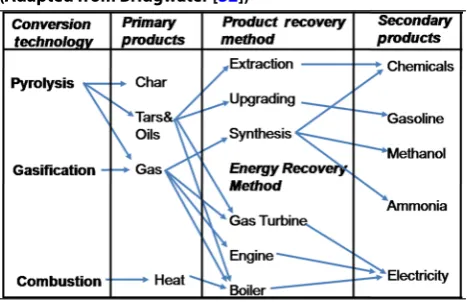
Pyrolysis and gasification differ from incineration in that the former may be used for recovering the chemi-cal value of the waste, while the latter is used to recover its energy value. The chemical products generated from pyrolysis and gasification may be either used as fuel to generate heat energy or as secondary feedstocks (char) for subsequent fuel generation (Fig. 6). The products from incineration are generally non-fuel and include ash and flue gas that mainly consists of carbon dioxide and water vapour.
Like incineration, pyrolysis and gasification also release carbon dioxide. A comparison of pyrolysis, gasification and combustion based on generated products is shown in Table 1. The principles underlying the application of each of the thermo-chemical conversion technologies
Fig. 3 Potential WtE technologies for valorisation of banana waste [30]
in harnessing energy from biomass are here below described in detail:
Pyrolysis
Pyrolysis is the thermal degradation of organic mate-rial in the absence of oxygen. It occurs at relatively low temperatures (400–900 °C) [30]. In pyrolysis, biomass is subjected to an optimal temperature of 700 °C in the absence of oxygen resulting in the production of pyrolysis oil (biooil), char and synthesis gas (Syngas). Syngas is a mixture of majorly CO, CO2, H2, H2O, CH4, trace amounts of higher hydrocarbons such as ethane and propane, as well as various contaminants such as small char particles. These can be used as secondary
Fig. 5 The temperature overlapping of thermo-chemical conversion technologies
Fig. 6 Sequential product generation during pyrolysis and gasification
Table 1 Thermo-conversion processes and products
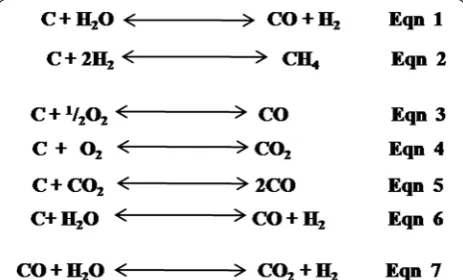
fuel to generate electricity. In a typical process the biomass is transformed into high quality fuel without creating ash or emitting large volumes of flue gas as in combustion. The process proceeds through the fol-lowing basic process stages: (1) grinding to increase the surface area for improved heat transfer and reac-tion; (2) drying to increase the efficiency of gas–solid reactions within the reactor; (3) anoxic thermal deg-radation of organics to generate pyrolysis products (pyrolysis gas, biooil and char); and (4) ultimate sec-ondary treatment of pyrolysis gas and pyrolysis char. The last step involves the condensation of the gases for the extraction of energetically usable oil mixtures and/ or combustion of gas and char as secondary energy products. The major gases generated from pyroly-sis are methane, carbon monoxide and hydrogen and are shown by reaction Eqs. 1 and 2 (Fig. 7). Pyrolysis offers a flexible and attractive way of converting solid biomass into an easily stored and transportable fuel, which can be successfully used for the production of heat, power and chemicals. Pyrolysis gas, for example, may be used to power gas engines and gas turbines to generate electricity more efficiently than conventional steam boilers. Moreover, pyrolysis of biomass may lead to the recovery of organic liquid fraction as fuel in the form of methanol that can be distilled for use in vari-ous industries. Notably too, combustion of pyrolysis products emits smaller volumes of flue gas compared to direct combustion and incineration of biomass and hence pyrolysis reduces the flue gas treatment capital costs. Despite the advantages of pyrolysis, bio-mass with high ash content such as straw and banana waste are not good feedstocks for pyrolysis process due to reactor blockage by ash accumulation. Besides, pyrolysis is an expensive technology that requires high investment costs before it can be carried out commer-cially for energy harnessing.
Gasification
Gasification is a partial oxidation of organic substances at elevated temperature (500–1800 °C) to produce syn-gas. Biomass gasification occurs as the char reacts with carbon dioxide and water vapour (steam) to produce car-bon monoxide and hydrogen via the reaction Eqs. 3–6 (Fig. 7). In addition, the concentrations of carbon mon-oxide, steam, carbon dioxide and hydrogen are balanced very fast at the temperatures in a gasifier via the equilib-rium reaction Eq. 7 (Fig. 7). Syngas can be used as a fuel for efficient production of electricity and/or heat [169]. A gasifier can use oxygen, steam, carbon dioxide or a mix-ture of these as gasification agents.
On the other hand, banana waste being a wet biomass is not regarded as a promising feedstock for direct utilisa-tion or applicautilisa-tion of the convenutilisa-tional thermo-chemical gasification processes due to its high moisture content [163]. This problem can be circumvented by employing a recently developed technology referred to as supercriti-cal water gasification (SCWG) whereby water is used as a reaction medium. In this technology, gasification of wet biomass may be accomplished without having to dry the material and thereby avoiding the high processing costs associated with the drying process. Supercritical water gasification of wet biomass, as an advanced technology, has drawn the attention of a few research groups in the USA, Germany, Japan and the Netherlands [163]. The main advantage of using SCWG is that the technology does not require drying of wet biomass prior to gasi-fication [62]. As a matter of fact, water in wet biomass is essential for the chemical reactions. Moreover, the SCWG of wet biomass results into high yields of hydro-gen (H2) and very low yield of carbon monoxide (CO) when compared to the ‘‘dry processes’’ in which syn-gas is produced with CO as the main product. Besides, in SCWG less tar and coke are formed and inorganic ingredients such as salts remain in aqueous solution, thus corrosion problem during gas treatment can be avoided. Nevertheless, SCWG is an expensive technology which requires high capital investment before put into operation.
Plasma technology
Plasma technology relies on the physical principle that matter changes its state when energy is supplied to it: solids become liquid, and liquids become gaseous. When more energy is supplied to a gas, it is ionised and goes into the energy-rich plasma state, the fourth state of mat-ter [126]. The initial energy required to create plasma can either be thermal or electric current or electromag-netic radiations. The presence of charged gaseous spe-cies makes the plasma highly reactive and causes it to behave significantly different from other gases, solids
and liquids. The peculiar advantage of this technology is that the energy contained in the plasma allows the use of low energy biomass that would otherwise not be suitable as feedstock for energy generation using gasi-fication technology. The high-temperature conditions that are reached in plasma results in the decomposition of organic compounds into their elemental constituents and ultimately forming a high-energy synthesis gas, con-stituted mainly of hydrogen and carbon monoxide. Nev-ertheless, the application of plasma-based systems for waste management is challenging. For instance, the use of electricity as an initial energy vector is expensive, turning economic considerations into the strongest barrier for using plasmas for waste treatment. Moreover, the inor-ganic fraction (glass, metals and silicates) that is melted and converted into a dense, inert, non-leaching vitrified slug can be hazardous when released to the environment.
Torrefaction
Torrefaction is defined as the thermal upgrading of bio-mass into a more homogeneous product that is densified through pelletisation to generate a more energy-dense product called torrefied pellets (TOPs) or briquettes, with similar properties to coal [19]. The energy derived from biomass through thermal upgrading (heating) is
concentrated into an energy-dense and homogeneous product (TOPs) useful for further thermo-chemical con-versions [188]. Torrefaction technology is also referred to as mild pyrolysis and is a thermo-chemical process con-ducted in the temperature range between 200 and 300 °C under an inert atmosphere and low heating rate [110]. The process involves biomass chipping to allow efficient drying, screening for impurities before sizing [148] and drying to 20% moisture content (Fig. 8). A small fraction of the feedstock biomass is used as fuel for the drying and torrefaction process. Torrefied biomass (briquettes) which retains upto 96% of its chemical energy is hydro-phobic and resistant to biodegradation. Therefore it can be used as substitute for coal/charcoal for domestic heat-ing, co-firing power generation and gasification [3, 135,
139]. A study by Sellin et al. [149], in the Northern region of Santa Catarina in Brazil, revealed that banana wastes including leaves and pseudo-stems can be used to pro-duce briquettes as fuel for energy generation. Briquettes produced from this waste at low cost are an excellent source of cheap renewable energy which is regarded as environmentally clean. Despite the potential of torre-faction technology, there are still several technical and economic challenges that need to be overcome before the technology is fully commercialised in the banana
industry [127]. Firstly, banana waste like other plant bio-mass is highly heterogeneous in quality and nature, and is mostly available in low energy density form [50, 123,
181]. Secondly, it has relatively high moisture content and consequently lower heating value compared to fossil fuels [24, 40, 136]. It, therefore, needs to be pre-treated to improve handling [104, 131, 140]. Pre-treatment such as pre-drying to 20% moisture content is energy consum-ing and significantly reduce the energy efficiency of the technology.
Biochemical conversion technologies
Biochemical conversion technologies of waste-to-energy are much more eco-friendly as compared to the thermal and thermo-chemical techniques discussed in the fore-going. The advantages and disadvantages of different waste-to-energy technologies are highlighted in Table 2.
Biochemical conversion primarily involves the action of enzymes derived from microorganisms to harness the energy stored in biomass. The techniques falling under this category are: composting to generate heat energy, bioethanol fermentation and anaerobic digestion for biogas production.
Composting
Composting, defined as the biological decomposition of biodegradable solid waste under predominantly aerobic conditions, transforms the biomass into: carbon dioxide, water, heat and a more stable solid product called com-post. The compost is nuisance-free, easy to handle and can be safely used in agriculture to ameliorate the soil [12, 84, 90]. Recently, there has been increased atten-tion given to heat recovery from aerobic composting sys-tems as a way to improve their economic viability [154].
Table 2 Advantages and disadvantages of different WtE technologies [90]
Technology Advantages Disadvantages
Anaerobic digestion Energy recovery with the production of high grade soil
conditioner Unsuitable for wastes containing less organic matter No power requirement for sieving and turning of waste pile Requires waste segregation for improving digestion
effi-ciency Enclosed system enables trapping the gas produced for use Controls GHG emissions
Free from bad odour, rodent and fly menace, visible pollu-tion and social resistance
Compact design needs less land area Net positive environmental gains Can be done in small scale
Landfill with gas recovery Least cost option Surface runoff during rainfall causes pollution Gas produced can be utilised for power generation or direct
thermal application Soil and groundwater may get polluted by the leachate Skilled personnel not required Yields only 30–40% of the total gas generated Natural resources are returned to the soil and recycled Large land area required
Can convert marshy lands to useful areas Significant transportation costs
Cost of pre-treatment to upgrade the gas to pipeline quality and leachate treatment may be significant
Spontaneous explosion due to methane gas buildup Incineration Most suitable for high calorific value waste Least suited for aqueous, high moisture content, low calorific
value and chlorinated waste Units with high throughput and continuous feed can be
set up Toxic metal concentration in ash, particulate emissions, SONOx, chlorinated compounds, ranging from HCL to dioxinsx,
Thermal energy for power generation or direct heating High capital and O&M costs Relatively noiseless and odourless Skilled personnel required Low lands are required
Can be located within city limits, reducing transportation costs
Hygienic
Pyrolysis/Gasification Production of fuel gas/oil, which can be used for various
purpose Net energy recovery may suffer in waste with excessive moisture Control of pollution superior as compared to incineration High viscosity of pyrolysis oil may be problematic for its
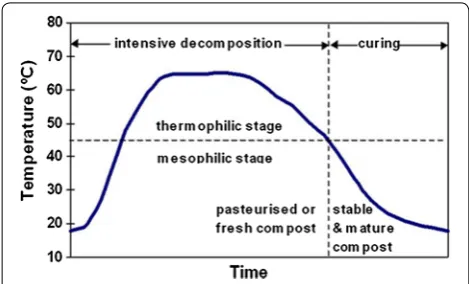
Generally, the composting process is optimised by having the starting carbon to nitrogen ratio in the range of 30:1 and the moisture and oxygen levels and temperatures that are closely managed and monitored [58]. Three cat-egories of microorganisms, namely, bacteria, actinomy-cetes and fungi are involved in the composting process. In the initial phase of composting, mesophilic microor-ganisms such as bacteria, Bacillus, Clostridium, Alcali-genes, Serratia and Pseudomonas, degrade biomass. This is accompanied by the generation of heat owing to their metabolic activities, causing the ensuing rise in tempera-ture (≥45 °C) in the composting heap. This gives way to the second phase, whereby thermophiles take over the composting process. Thermophilic fungi such as Asper-gillus fumigates, Humicola sp, sporotrichum thermophile and Myriococcum thermophilum, and Streptomycetes thermofuscus, S. Rectus, Nocardia sp and Thermoactino-myces sp continue with the process until the temperature of ≥50 °C is reached above which most of them are either inhibited or remain dormant as spores. Above 50 °C the-mophilic bacteria belonging to such genera as Bacillus (Bacillus stearothermophilus), Thermus, Clostridium con-tinue with the process to temperatures ranging from 60 to as high as 65 °C (Fig. 9) and then starts to fall within a couple of months [152]. This sets in the third and final phase of the composting process. During this final stage, the actinomycetes, initially, followed later by fungi pro-ceed with the composting process until the temperature falls to mesophilic range, after which both mesophilic fungi and bacteria re-colonise the compost heap to com-plete the process.
The mechanism of heat transfer has been described by Shaw and Stentiford [151]; Themeli [161] and Tucker [165] and involves convection and conduction, with radi-ation effects being assumed negligible. There are three components of energy balance namely; energy trans-fers into, within and out of a composting system which together equate to the change in energy stored within the
system that ultimately dictates the temperature within the composting substrate. A study by Smith and Aber [154] reported an operational system capturing thermal energy in the hot air generated by the composting pro-cess, installed at the research farm of University of New Hampshire (UNH) in the United States.
The system consists of an aerated static pile (ASP) of biomass or compost housed in a concrete insulated com-post bay (Fig. 10). The hot vapour from the ASP is col-lected through PVC pipes that passes through manifold and connects to the heat exchange system. The conden-sate from the manifold and heat exchange system is col-lected through condensate sump and ultimately pumped back to the ASP in the compost bay. The heat exchange system operates by blowing hot compost vapour (110– 170 °F), against an array of two-phase super-thermal conductor heat pipes termed as Isobars. These Isobars are 30 ft long containing within 24-in. diameter vapour duct and housed inside a 295-gallon water tank. Isobars provide thermal uniformity across the entire length of the pipe, thus heat energy is evenly distributed across the entire length of the pipe [2]. When compost heated vapour is applied to the evaporator side of the pipe (por-tion contained within the 24-in. diameter pipe), the refrigerant inside the Isobar heats up and vapourises. The vapour stream within the Isobar travels up the pipe, con-densing on the cooler side, releasing its energy in the bulk storage water tank through the latent heat of condensa-tion. After condensing, the refrigerant is returned to the warm end of the pipe through gravity, repeating the pro-cess without any moving parts.
The system captures the metabolic heat produced by microorganisms during aerobic composting, through a negatively aerated fan system, and blows the hot compost vapour (110–170 °F) against the heat exchange system to heat water for radiant floor heating, feed preparation and sanitation of equipment. However, the success in appli-cation of composting technology to generate thermal energy has been scantily reported elsewhere in the world. Moreover, composting of mixed wastes generates low quality compost which can introduce heavy metals into human food chain.
Bioethanol fermentation
Ethanol produced from different renewable feedstock constitutes an alternative fuel for spark ignition engines [179]. This ethanol is considered as biofuel due to the vegetative origin of its carbon and, therefore, when it is released during the combustion process, it will not con-tribute to the increase in CO2 emissions [76, 88]. The most suitable feedstock for ethanol production are high sugar-content crops such as sugarcane, sugar beets and fruits, since they majorly contain simple sugars such as
glucose and fructose, that can be readily converted into ethanol by alcohol-fermenting microorganisms [56]. Two groups of microbes: saccharolytic and ethanologenic, are important in ethanol production. These groups oper-ate on the principle of co-metabolism, whereby, when saccharolytic microbes break down complex polymeric carbohydrates (starch, cellulose, hemicelluloses, etc.) to simpler utilisable forms the ethanologenic converts them to ethanol. Many promising saccharolytic and etha-nologenic microbes fall within, respectively, the phyla Neocallimastigomycota and Ascomycota, for fungi, Pro-teobacteria and Fibrobacteres, for bacteria. Notably, Sac-charomyces cerevisiae. (Ascomycota) and Zymomonas mobilis (Proteobacteria) are the only microbes naturally capable of producing ethanol close to theoretical maxi-mum, with Saccharomyces cerevisiae predominant for current ethanol production based on starch and sugar feedstocks.
To enable cellulosic ethanol technologies, microbial capability and efficiency must be enhanced by appro-priately designed mixed‐culture systems and/or geneti-cally modified microbes. Since banana-associated residual biomass are generally starchy (amylaceous) and lignocellulosic materials; they can give high yields of glucose after successful hydrolysis which may further be fermented to produce ethanol. The conversion of
starch-based crops such as corn, grains and potatoes, among others, involves the enzymatic breakdown of strong 1,6 glycosidic bonds in starch into simple sugars (glucose) prior fermentation into ethanol [150]. On the other hand, lignocellulosic feedstock such as banana fruit-bunch-stem contains cellulose, hemicellulose and lignin which are more difficult to breakdown than starch and may require concerted efforts involving con-sortia of microorganism. While one consortium may breakdown the lignin wall, another may be required to hydrolyse the polymer into simpler units for the next consortium. Details of the interplay of these microbial consortia are covered below under the pre-treatment options. Nevertheless, the application of bioethanol fermentation as a waste-to-energy approach has limita-tions. For instance, conversion of biomass into bioetha-nol generates other forms of highly polluting wastes such as distillery slope that cannot be directly applied to the fields as biofertiliser or bioslurry. Moreover, the use of bioethanol as engine fuel for generating electric-ity negatively affects the electric fuel pumps by increas-ing internal wear and undesirable spark generation. In addition, ethanol is hygroscopic a property that makes it absorb water from air leading to high corrosion progression of energy generating engines and power machines [107].
Anaerobic digestion
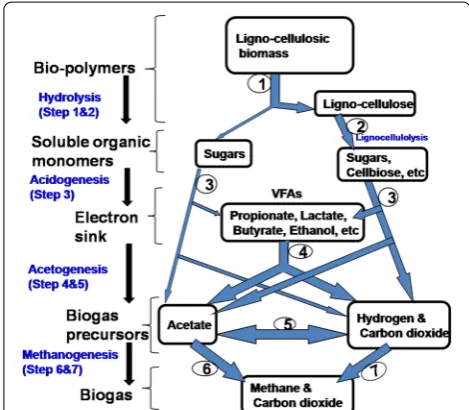
Biochemical and microbial fundamentals of anaerobic digestion (AD) Anaerobic digestion (AD) is the anoxic biological decomposition of organic matter by a complex microbial ecosystem through parallel sequences of meta-bolic pathways involving different kinds of synergistic microbial trophic groups leading to the formation of meth-ane and carbon dioxide [66]. The mixture of methane and carbon dioxide is referred to as biogas [42, 43]. Anaero-bic digestion offers the opportunity to produce renewable energy and a higher quality of treatment for agro-waste. The technology has recently become an attractive method in Europe for the biodegradation of organic fractions derived from municipal solid waste [145]. The AD process is driven by concerted action of highly varied microbial population, consisting of several groups of both strict and facultative bacterial strains. The process is carried out in well-designed vessel referred to as anaerobic digester/ anaerobic bioreactor. The entire system consisting of the feedstock, digester, biogas holder and digestate reservoir is called a biogas plant. The complete AD process of a lignocellulose-rich substrate such as banana waste can be divided into four main stages (Fig. 11) namely: hydrolysis, acidogenesis (or fermentation), acetogenesis and metha-nogenesis.
(a) Stage one: Hydrolysis
During hydrolysis, the insoluble complex biopolymers such as polysaccharides, proteins and lipids are broken down into simple soluble monomeric biomolecules such
as sugars, amino acids, fatty acids and glycerol. It should be noted that organic wastes are a complex mixture of mainly carbohydrates (starch cellulose, hemicellulose), proteins and lipids; with their relative concentrations being dependent on the nature and origin of the waste. Owing to their structural complexity, the biopolymers are not only too large for microbial uptake through the cell membrane for the subsequent intracellular biotrans-formation steps, they are also either sparingly soluble or completely insoluble in aqueous medium. Therefore, in order to utilise these biopolymeric organics, uptake must hydrolyse them to smaller units and solubilised, to enable membrane uptake and their availability to further meta-bolic degradation.
Biopolymer hydrolysis is accomplished by means of extracellular hydrolytic enzymes such as laccase, cel-lulases, amylases, proteases and lipases, which may be either secreted into the environment or secreted but remain bound to cell membrane as protuberances [108,
114, 115, 130]. In the digester system, both mesophilic and thermophilic microbes work synergistically to hydro-lyse the biopolymers into simple units (oligomers and monomers). For instance, after the pre-treatment step, the lignin layer would have been removed thereby expos-ing cellulose, which is a substrate to a number of bacterial genera in the digester. Clostridium Acetivibrio, Bacte-roides, Selenomonas and Ruminococcus are some of the most common hydrolytic bacteria in the anaerobic bio-reactors [16, 17]. In the rumen, the most similar natural environment to biodigesters, Ruminococcus albus and R. flavefaciens are the predominant gram-positive, fibre-degrading bacteria, while Fibrobacter succinogenes is the most abundant gram-negative [180]. Typically, hydro-lytic bacteria adhere to the substrate particles, which subsequently induce the production and secretion of the specific hydrolytic enzymes. Starch is broken down by a mixture of amylolytic enzymes that hydrolyse the α-1,4 and α-1,6 glucosidic bonds of amylose and amylopectin. This enzyme mixture includes α- and β-amylase, which exhibit specificity to α-1,4 glycosidic bonds, and glu-coamylase (amyloglucosidase), which exhibit specificity to both the α-1,4 and α-1,6 glucosidic bonds [29, 100]. Starch hydrolysis releases a mixture of sugars; notably maltose and glucose. On the other hand, cellulases which are sub-divided into three main groups namely: endocel-lulase or endo-β-1,4-d-glucanase, (EC 3.2.1.4), exocel-lulase or exo-β-glucanase, also called cellobiohydrolase (EC 3.2.1.91) and β-glucosidases (EC3.2.7.21), are also secreted by microorganisms in the digester. The degra-dation of cellulose is effected by the cooperative action of both endocellulase and exocellulases, whereby, the endocellulases randomly hydrolyse internal glycosidic linkages, which are accompanied by a rapid decrease
in polymer length and gradual increase in the reducing sugar concentration, while the exocellulases hydrolyse the oligosaccharides released by the endocellulases to produce cellobiose from a non-reducing end. Completed hydrolysis is achieved when β-glucosidase hydrolyses cellobiose to glucose monomers [75, 102]. The cellulase enzyme system is enclosed in a cellulose-binding mul-ticellulase-containing protein complex called a cellulo-some. The cellulosome is responsible for the adherence of the bacterial cell to cellulose and to hydrolyse the cel-lulose thereafter. It should also be noted that the cellulo-some complex retains the ability to bind to and hydrolyse cellulose when present in the extracellular medium as it does when it is cell bound [22, 23]. Similar surface struc-tures exist among different cellulolytic bacteria. Typi-cal examples include: (a) glycoTypi-calyses, which have been observed in rumen bacteria, (b) fibrous and membranous structures of Bacteroides succinogenes and (c) spherical bodies, vesicular structures, lobes and tubelike append-ages, which have been observed in Ruminococcus albus. The presence of these structures strongly supports the widely held view that a single enzyme is incapable of extensive solubilisation of complex substrates, but rather, multiple enzyme system that act synergistically are required (113). Microorganisms produce both intracel-lular and extracelintracel-lular proteases contemporaneously [71]. As with other classes of enzymes, proteases likewise, play major roles in microbial physiology and as such, their production is highly regulated to suit particular needs. The synthesis of extracellular proteases, for example, is also tightly regulated. Their production has been linked to their participation in physiological activities such as sporulation [138], cell wall turnover and autolysis [157], nutrition and overall protein turnover [105]. Lipases (tri-acylglycerol acylhydrolase; EC.3.1.1.3) hydrolyse lipids or triacylglycerols to diacylglycerides, monoacylglycer-ols, fatty acids and glycerol. In comparison, hydrolysis of proteins and lipids is faster [128]. Proteins are generally hydrolysed to amino acids by proteases. Microorganisms that are responsible of this reaction include species of the genera Bacteroides, Butyrivibrio, Clostridium, Fusobacte-rium, Selenomonas and Streptococcus [8].
(b) Stage two: Acidogenesis
In acidogenesis, soluble monomers: simple sugars, amino acids, glycerol and fatty acids released from the hydrolysis stage, are biodegraded by fermentative organ-isms and anaerobic oxidisers (β-oxidisers) to produce different organic acids. Representatives of domain Bac-teria, especially microbial genera inhabiting the rumen: Clostridium, Eubacterium and Bacteroides, are largely responsible for acid generation. Fermentative species
typical of the rumen include species of Clostridium and R. Albus [49, 153], while Streptococcus sp., Lactobacillus sp. and Propionibacterium are also fermentative microor-ganisms associated with the biodigesters, probably origi-nating from the environment. Their degradative products of metabolism include acetate, lactate, ethanol, CO2 and H2 [81]. On the other hand, the deamination process in the degradation of amino acids also produces ammo-nia. Microbial fermentation of glucose and 5-carbon atom sugars such as xylose and ribose mainly proceed through Embden–Meyerhof Pathways (EMP), generating pyruvate as an intermediate pathway product. However, the formation of pyruvate depends on the conditions prevailing in the bioreactors and the microbial species present. Pyruvate is a central molecule in terms of bio-chemical interconversions and can be converted into dif-ferent compounds such as acetate, propionate, butyrate, formate, lactate, alcohols, ketones and aldehydes [133]. The amino acids originating from protein hydrolysis can be degraded either through fermentation follow-ing either stickland reactions or via anaerobic oxidation linked to hydrogen production. The protein biodegrada-tion products are volatile fatty acids (VFAs), ammonia, sulphide, carbon dioxide and hydrogen depending on the amino acid present, microbial diversity and the pathway. Butyrate and valerate are typical products of valine and leucine amino acid biodegradation [33, 109, 125]. The acidogenic microbial population can constitute upto 90% of the total microbial populations present in the anaero-bic digesters [134]. These microbes have a short doubling time that makes acidogenesis not regarded as a limiting step in the process of anaerobic digestion.
(c) Stage three: Acetogenesis
Acetogenesis is the degradation of reduced fermenta-tion intermediates (electron ‘sink’) from the previous stage, i.e. volatile fatty acids (VFAs) such as propionate and butyrate to acetate, carbon dioxide and hydrogen by obligate hydrogen-producing acetogens (OHPA). This intermediate bioconversion is a crucial process for the successful production of biogas, since these compounds cannot be utilised directly by methanogens. However, the acetogenic reactions (Table 3) are not energetically fea-sible under standard conditions because the reactions are energy consuming (endothermic; +ve values of ΔG). Therefore, a syntrophic microbial interdependency is required for the reactions to proceed.
yield energy required to move the reaction forward [27]. This low (PH2) is achieved by the syntrophic associa-tion of obligate hydrogen-producing acetogens (OHPAs) with hydrogen-consuming bacteria (hydrogen scaven-gers) such as the hydrogenotrophic methanogens [147]. However, the thermodynamic feasibility of acetogenic reactions is inversely proportional to that of methano-genic reactions. This means that hydrogen-producing acetogenic reactions become more favourable at low PH2 (Fig. 12) whereas hydrogen-consuming methanogenic reactions become less favourable at the same PH2. Thus, syntrophic reactions occur within a narrow range of very low PH2 (between 10−4 and 10−5 atm).
Syntrophic acetogenic bacteria include (a) the butyrate-degrading acetogenic bacteria such as Syntrophomonas wolfei, Syntrophomonas sapovorans and Syntrophomonas bryantii; (b) the propionate-degrading acetogenic bac-teria such as Syntrophobacter wolinii, Syntrophobacter
phenigii [42]; (c) the primary alcohol-degrading bacteria encompassing such species as: Syntrophobacter fumar-oxidans, Desulfovibrio vulgaris, Thermoanaerobacterium brockii and Pelobacter venetianus; and (d) homoace-togenic bacteria (hydrogen utilising acetogens such as strain AOR) which are responsible for converting acetic acid into hydrogen and carbon dioxide. Acetogenesis is a low energy-yielding anaerobic biodegradation step. This makes acetogenic microbes very slow growing and sen-sitive to changes in organic loads, flow rate and environ-mental conditions [186]. Acetogenic bacteria, therefore, require long periods to adapt to new environmental con-ditions in order to optimise acetogenesis in the bioreactor.
(d) Stage four: Methanogenesis
Methanogenesis is the biomethanisation step in which organic substrates: acetate, H2/CO2, methanol and for-mate, the end products of the acetogenesis, are con-verted into methane [65]. Unlike in the previous stages, the microorganisms responsible for the methanogenic stage belong to the domain archaea and they produce methane via two major pathways: acetotrophic (or ace-toclastic) and hydrogenotrophic methanogenic path-ways (Table 3). It has been estimated from stoichiometric reactions that about 70% of the methane is produced via the acetotrophic pathway [97]. Nevertheless, very few known species can perform acetotrophic methanogen-esis, whereas nearly all known methanogenic species are hydrogenotrophic methanogens [27]. Bioenergetically, hydrogenotrophic methanogenic reactions are more favourable (ΔG0′
= −131.01 kJ/mol for H2/CO2 and ΔG0′
= −135.6 kJ/mol for H2/HCO3), while acetoclastic (acetotrophic) methanogenic reactions are least favour-able (ΔG0′
= −31.0 kJ/mol for CH3COOH) as shown in Table 1. The hydrogenotrophic methanogenic pathway
Table 3 Free energy values of key acetogenic and methanogenic reactions of anaerobic digestion (Adapted from [42,
108])
* Temperature 298 K, pH 7, 1 M for solutes and 1 atm for gases
AD step Reaction ∆G0 (kJ mol−1)*
Acetogenesis
Propionate → Acetate CH3CH2COO−+3H2O→CH3COO−+H+
+HCO−
3 +3H2 +76.1
Butyrate → Acetate CH3CH2CH2COO− + 2H2O → 2CH3COO− + H+ + 2H2 +48.1
Ethanol → Acetate CH3CH2OH + H2O → CH3COO− + H+ + 2H2 +9.6
Lactate → Acetate CH3CHOHCOO−
+2H2O→CH3COO−+H+
+HCO−
3 +2H2 −4.2
Formate → Acetate 2HCO−
3 +4H2O+H+
→CH3COO−+4H2O −104.6
Methanogenesis
Acetate → Methane CH3COO−+H2O→HCO−3 +CH4 −31.0
H2/CO2 → Methane 4H2 + CO2 → CH4 + 2H2O −131.0
Formate → Methane HCO−
3 +4H2+H+→CH4+3H2O −135.6
is more energy yielding than acetotrophic methanogenic pathway and is normally not rate limiting but rather fun-damentally important in keeping the PH2 low in bioreac-tor system, allowing syntrophic acetogenesis to proceed. Hydrogen is recognised as the controlling parameter in the overall scheme of waste biodegradation but rarely detected in well-functioning methanogenic biodigest-ers [14, 27]. Unlike the acetoclastic methanogens, the hydrogenotrophic methanogens are among the fastest-growing organisms in the anaerobic biodegradation pro-cess and the accumulation of hydrogen may only occur during process overloads or toxic microbial inhibition. The minimum doubling time for the hydrogenotrophic methanogens has been estimated to be 6 h compared to 62.4 h (2.6 days) for the slow-growing acetoclastic metha-nogens [27]. Furthermore, hydrogenotrophic methano-gens are more resistant to environmental changes while acetoclastic methanogens are more sensitive which makes their reactions more rate limiting in several cases of anaerobic digestion of organic wastes [27]. The gen-era Methanosaeta and Methanosarcina are the only two groups known to carry out the acetotrophic methano-genesis [61]. The microorganisms of the genus Metha-nosaeta have a lower maximum growth rate than those
belonging to the genus Methanosarcina hence the former dominates the bioreactor at high acetate concentrations and the latter at low acetate concentrations. Other meth-anogenic groups include methylotrophic methanogens, which utilise methane-containing compounds such as methanol, methylamine and dimethylsulphides [52].
Products from anaerobic digestion In AD, organic waste is fed to the process as feedstock and acted upon by microorganisms in the absence of oxygen [9, 53, 79, 80] to produce biogas and bioslurry. The digestate (bioslurry) can be dewatered and converted through thermal con-version technologies into other forms of fuel including refuse-derived fuel (Fig. 13). The remaining inorganic and the inert waste are either incinerated or gasified to generate more energy. Apart from energy generation, the bioslurry can safely be used as biofertiliser in agri-cultural production as well as animal feed especially for piggery, fisheries and aquaculture. This makes anaerobic digestion as one of the best waste-to-energy technologies with superior advantage of coupling energy generation with the generation of valuable bi-products such as plant organic fertiliser (bioslurry) at minimal net operational energy requirement. Furthermore, a study by Tock et al.
[163] reported that AD is usually a preferred WtE tech-nology for biomass with high water content (including banana waste). It is a low-temperature process that can process wet or dry feeds (with added water) economically at a variety of scales. Results from previous studies on AD of banana peels [44] suggest the high potential and suit-ability of banana waste as a feedstock for economically viable waste treatment technology like anaerobic diges-tion for the purpose of energy generadiges-tion in the form of methane [163]. The composition of the gas produced is primarily carbon dioxide and methane with small traces of hydrogen sulphide.
Besides, the AD of banana waste also reduces global warming and air pollution since the methane produced is considered a clean gas with a zero carbon cycle. Notably, the banana biogas has been proven as a perfectly feasible option to run tractors, farm machinery and vehicles [26], thus off-setting the industrial energy needs. Other advantages of AD process are: reduction in wastes’ pathogens, smaller land suitability and decrease in waste’s pollution potential to lev-els that are non-toxic to the environment [113].
Challenges of using lignocellulosic biomass as feedstocks for anaerobic digestion Anaerobic digestion of plant biomass as digester feedstocks can be limited by three typical challenges, namely: limited microbial hydrolysis of lignocellulosic biomass, floatation of feed slurry, as well as unbalanced C:N ratio. Limited microbial hydrolysis is one of the major hindrances to AD of lignocellulosic plant biomass such as banana waste, whereby, as much as 50% of the feed substrate could be left undigested.
Lignocellulosic substrates are complex polymeric sub-stances that are insoluble and too large to be taken up by microbial cells for the subsequent intracellular anaero-bic degradation steps. Moreover, lignin degradation is primarily an aerobic process, and in an anaerobic envi-ronment lignin can persist for very long periods [176]. Therefore to use these lignocellulosic biopolymers as substrates for anaerobic digestion, they must undergo prior solubilisation under aerobic environment. Since biogas digesters are anaerobic, lignocellulosic feedstocks have to first be degraded through pre-treatment stages such as biological hydrolysis under aerobic conditions prior to anaerobic digestion. A research by Mshandete et al. [119] reported that lignocellulosic-rich wastes such as solid sisal residues have high suitability as feedstock for biogas production, after effective hydrolysis. The microbial hydrolysis of lignocellulosic biomass involves several steps, including enzyme production, diffusion, adsorption, reaction and enzyme deactivation step [20]. Hydrolytic enzymes include laccase, cellulase, xylanase and amylase for degrading lignin, cellulose, xylan and
starch into oligosaccharides and simple sugars; protease for degrading protein into amino acids, and lipase for degrading lipid into glycerol and long-chain fatty acids [130]. The overall hydrolysis rate depends on organic material size, shape, surface area, enzyme production and adsorption [21]. Moreover, competitive adsorp-tion of enzyme on the inert substrate like lignin can also decrease hydrolysis efficiency [46]. Hydrolysis has been shown to be a rate-limiting step for the digestion of high particulate substrate like agro-industrial residues, munic-ipal solid wastes, swine waste, cattle manure and sewage sludge while methanogenesis is the rate-limiting step for readily degradable substrate, due to the inherent slow growth nature of methanogens (see later) [28].
Floatation of feed slurry in bioreactors digesting the plant biomass is another challenge limiting the use of lignocellulosic material as feedstocks for biogas pro-duction. The anaerobic digestion of biomass from plant origin in conventional reactors including the high-rate reactors is generally nuisance and problematic due to the physical nature of the biomass, since these fibre-rich plant biomass materials tend to build up a per-sistent float layer. The floatation of the feed substrate leads to wash out of active biomass (inocula seeding) that results in digester failure. When feed substrates are discharged early from the reactor, the active flora adsorbed on to the biocarrier gets lost as well, further reducing the efficiency [63]. This has limited the appli-cation of high-rate digesters such as upflow anaerobic sludge blanket (UASB) and expanded granular sludge bed (EGSB) reactors, in the treatment of buoyant waste biomass from plant origin and lipid-rich wastes such as fish processing and slaughter house effluents [34,
77, 134]). In order to prevent flotation, intensified agi-tation and stirring have been recommended and this can demand up to 10% of the electric energy produced after the conversion of the produced biogas into elec-tricity. Intensive mixing can also negatively affect the substrate decomposition process by inhibiting micro-bial flocculation and adsorption apart from taking up a considerable amount of energy that makes the system economically unattractive. Generally typical biogas digesters in use today cannot efficiently digest ligno-cellulosic biomass from plant origin such as energy crops without modifications [Leibniz Institute for Agri-cultural Engineering Potsdam-Bornim (ATB)]. Other research studies reported that AD can proceed at high rate when carried out in appropriately designed biore-actor system with fully optimised environmental and operational parameters [25, 121].
lignocellulosic feedstocks from plant biomass. Hydroly-sis of lignocellulosic plant biomass mainly releases a lot of sugars comprising simple sugars and oligomers such as multitrioses, with limited nitrogen-rich biomolecules such as amino acids. This implies that there is a high C:N ratio in lignocellulosic plant biomass which can lead to acidic and inhibitory growth conditions for methano-genic bacteria in anaerobic digesters. Successful hydroly-sis of lignocellulosic feedstocks such as banana waste can yield a lot of sugars which if converted into organic acids by the acidogenic bacteria, results into bioreactor acidifi-cation and inhibition of methanogenesis step. Therefore, before one uses lignocellulosic biomass such as banana waste as a feedstock for biogas production, such apparent challenges ought to be overcome.
Options for enhancement of AD of lignocellulosic feed-stock The AD process is influenced by a number of fac-tors leading to varying rates of methane production from a feedstock. The total methane yield and the rate of pro-duction, which are a measure of the degree of feedstock microbial digestion, is affected by factors namely: physi-cal–chemical composition of feedstock (feedstock par-ticulate nature), C:N ratio, operating temperature, reten-tion time, inhibitors, agitareten-tion (rate of stirring), loading rate and bioreactor configuration. Hence, the AD of plant biomass feedstock such as banana waste can be enhanced through the optimisation of: (a) feedstock pre-treatment, (b) C:N ratio by co-digestion; (c) bioreactor design; and (d) environmental and operational parameters.
(a) Feedstock pre-treatment
Pre-treatment is generally feedstock deformation to increase its ability for hydrolysis and absorption by liv-ing cells. For lignocellulosic feedstock, an ideal pre-treat-ment method would increase surface area and reduce lignin content and crystallinity of cellulose [57]. Ligno-cellulosic biopolymer pre-treatment can be divided into three categories (Table 4) namely: (a) physical methods such as mechanical (milling and grinding), irradiation, steam explosion and hydrothermolysis; (b) thermo-chemical methods (treatment with alkali, dilute acid, oxidising agents, organic solvents and wet oxidation); and (c) biological methods such as whole microbial pre-treatment, enzymatic hydrolysis and bioaugmentation ([119, 120]; Björnsson et al. 2005). Physical/mechanical and chemical pre-treatment methods have been quite intensively studied with the aim of improving the hydrol-ysis of lignocellulosic substrates. However, these methods have the disadvantages of being either energy intensive or costly and resulting into residual disposal problems [159]. Nevertheless, many researchers have reported that
feedstock particle size directly affects the performance of anaerobic bioreactor operating on solid wastes, espe-cially those with a high fibre content [129, 144, 166, 187]. The mechanical size reduction of the particles and the resulting increase in the available surface area represent an option for increasing biodegradation yields and accel-erating the AD of substrates that have high fibre content such as banana waste, sisal fibres and straw [11, 68, 119]. A research study by Mshandete et al. [119] demonstrated that feedstocks with high content of fibres such as hay, seeds and leaves give improved digester gas production after mechanical pre-treatment. This leads to a decrease in the amount of residues to be disposed of, and to an increase in quantity of useful digester gas. Therefore it is imperative to pulverise fibrous feedstocks prior to other pre-treatment methods and subsequently anaerobic digestion.
polymer, the initial steps in its biodegradation must be extracellular. Many enzymes are involved in the oxidative degradation of lignin, including lignin peroxidases (LiP), manganese peroxidase (MnP) and laccase [158].
(b) Substrate co-digestion
Co-digestion is the anaerobic treatment of a mixture of at least two different nutrient-complementary substrates
Table 4 Some common pre-treatment methods for lignocellulosic biomass (Adapted from [7, 91, 106, 160, 191])
Pre‑treatment method Advantages Disadvantages
Physical
Mechanical: Physical reduction in substrate
particle size by grinding, milling, etc. Reduced cellulose crystallinity and degree of polymerization Usually negative energy balance Increased surface area
Irradiation: Biomass undergoes high-energy radiation (i.e. γ-ray, ultrasound, electron beam, pulsed electrical field, UV, microwave heating)
Results in one or more changes to biomass Slow
Increased surface area Energy intensive Reduced cellulose crystallinity and
polymeriza-tion Prohibitively expensive
Partial depolymerization of lignin Steam explosion: Substrate particles rapidly
heated by high-pressure saturated stream. Explosive decompression caused by quick release of pressure acids released aid in hemi-cellulose hydrolysis
Causes hemicellulose solubilization and lignin
transformation Destruction of a portion of the xylan fraction Cost-effective Generation of toxin compounds
Hydrothermal: Substrate is subject to
high-temperature/high-pressure water Hemicellulose solubilizationPartial delignification High water and energy demand Chemical
Alkaline: Addition of base causes swelling, increasing internal surface of cellulose which provokes lignin structure disruption (NaOH, KOH, Lime, Mg(OH)2, NH4OH)
Lignin solubilization Relatively long residence times required Reduced cellulose crystallinity and degree of
polymerization Irrecoverable salts formed and incorporated into biomass Increased surface area
Can be done at ambient temperature Relatively inexpensive
Acid: Addition of dilute or concentrated acid solutions result in hemicellulose hydrolysis (H2SO4, HCl, HNO3, H3PO4)
Hemicellulose hydrolysis and converted to
fermentable sugars Relatively expensive Alters lignin structure Corrosive
With high acid concentration can be done at
room temp. High operational and maintenance costsSome inhibitory compounds formed Catalysed stream explosion: Similar to steam
explosion with addition of acid catalyst (SO2,
H2SO4, CO2, oxalic acid)
Hemicellulose solubilization Some inhibitory compounds formed Portion of xylan fraction lost
Incomplete disruption of lignin-carbohydrate matrix
Ammonia fibre explosion (AFEX): Substrate is exposed to hot liquid ammonia under high pressure. Pressure is released suddenly break-ing open biomass structure
Delignification Hemicellulose not significantly removed Increases surface area Very high-pressure requirements Reduced cellulose crystallinity Expensive
Low formation of inhibitors Wet oxidation: Dissolved oxygen oxidises
substrate Efficient removal of ligninLow formation of inhibitors High cost of oxygen and alkaline catalystHigh temps and pressures Exothermic
Organo-solvent extraction: Organic solvents are applied, with or without addition of an acid or alkali catalyst to degrade internal lignin and hemicelluloses bonds
Delignification Solvent removal is necessary Some hemicellulose solubilization Relatively expensive Recovery of relatively pure lignin as by-product
Biological
Fungi and actinomycetes: Microorganisms degrade/alter biomass structure (white-, brown-, soft-rot fungi )
![Fig. 1 A scheme of green processing technologies for waste valorisa-tion [13]](https://thumb-us.123doks.com/thumbv2/123dok_us/451330.2043215/3.595.306.539.478.698/fig-scheme-green-processing-technologies-waste-valorisa-tion.webp)
![Fig. 2 Algorithm for convenient WtE technology selection [156]](https://thumb-us.123doks.com/thumbv2/123dok_us/451330.2043215/5.595.58.538.84.377/fig-algorithm-convenient-wte-technology-selection.webp)
![Fig. 3 Potential WtE technologies for valorisation of banana waste [30]](https://thumb-us.123doks.com/thumbv2/123dok_us/451330.2043215/6.595.58.290.478.544/fig-potential-wte-technologies-valorisation-banana-waste.webp)
![Fig. 8 A flow scheme of an integrated torrefaction process based on [19]](https://thumb-us.123doks.com/thumbv2/123dok_us/451330.2043215/9.595.58.538.411.716/fig-flow-scheme-integrated-torrefaction-process-based.webp)
![Table 2 Advantages and disadvantages of different WtE technologies [90]](https://thumb-us.123doks.com/thumbv2/123dok_us/451330.2043215/10.595.59.535.317.725/table-advantages-and-disadvantages-of-different-wte-technologies.webp)
![Fig. 10 Flow diagram of UNH heat recovery system [154]](https://thumb-us.123doks.com/thumbv2/123dok_us/451330.2043215/12.595.56.540.86.367/fig-flow-diagram-unh-heat-recovery.webp)