Doctor of Nursing Practice (DNP) Projects Theses, Dissertations, Capstones and Projects
2009
The Experience of African American Hospice
Patient/Family with Board Certified Music
Therapy as a Component of their Plan of Care
Elizabeth Joy Gifford
University of San Francisco, [email protected]
Follow this and additional works at:https://repository.usfca.edu/dnp Part of theNursing Commons
This Project is brought to you for free and open access by the Theses, Dissertations, Capstones and Projects at USF Scholarship: a digital repository @ Gleeson Library | Geschke Center. It has been accepted for inclusion in Doctor of Nursing Practice (DNP) Projects by an authorized administrator of USF Scholarship: a digital repository @ Gleeson Library | Geschke Center. For more information, please [email protected].
Recommended Citation
Gifford, Elizabeth Joy, "The Experience of African American Hospice Patient/Family with Board Certified Music Therapy as a Component of their Plan of Care" (2009).Doctor of Nursing Practice (DNP) Projects. 14.
Section I: Introduction
Statement of the Problem
Although 60% of African Americans in the United States have stated that they would want
hospice care when they are dying (AARP, 2003), they only comprise 8% of all hospice enrollees
(NHPCO, 2007), despite the fact that they represent 13% of the total population in this country
(U.S. Census Bureau, 2008). In fact, hospice care in this nation has always been underutilized by
African Americans (Connor, Elwert, Spence, & Christakis, 2008).
In the San Francisco Bay Area, among Medicare-certified hospice agencies that submit data
to the State of California, only 2% of all the hospice enrollees in 2007 were African American
(OSHPD, 2008). In the Oakland Bay Area, African Americans represent 36% of the general
population, yet only 15% of the patients of Pathways Hospice, which serves the Oakland
population (Allscripts Home Care, 2009). Even among those African Americans who are
enrolled in hospice care, there is a significantly higher rate of withdrawal than there is among
other ethnic groups (Johnson, Kuchibhatala, Tanis, & Tulsky, 2008).
One of the reasons that African Americans avoid hospice care—and tend to avoid medical
care of any kind, for that matter—is the distrust they have toward the health-care system in
general because of its historical abuses of them in this nation. For example, the Tuskegee
experiments in the 1960s, testing the progression of syphilis, let the disease take its course in
African American men without the intervention of penicillin, which was readily available. Even
as recently as 2000, the Pfizer Corporation, a huge pharmaceutical company, used Nigerian
children or their parents (Abdullah v. Pfizer Inc., 2003). Thus, the skepticism of the African
American population toward the American health-care system has objective foundations. In fact,
this skepticism has even deeper roots in the whole history of racism in this nation, including
slavery and economic exploitation (Searight & Gaffrod, 2005).
When it comes to hospice care, many African Americans avoid it for two contradictory
reasons: (1) it does too little; and (2) it does too much. Hospice care does too little, in this view,
because it only treats symptoms of illness—in particular, pain—rather than causes (Miller,
2008).Thus, grandma is made to feel as comfortable as possible in her last days, but nothing
more is done to prolong her life. On the other hand, for some African Americans, hospice care
does too much, in the sense that it alleviates pain when the whole point of life is the nobility of
suffering (Omonzejele, 2008). Many African Americans have, in fact, coped with the injustices
perpetrated against them over the centuries by believing that there is nobility in suffering (Born,
Greiner, Butler, & Ahluwalia, 2004; Fife, 2009).
Yet another reason that African Americans underutilize hospice care is that they have little
knowledge of the wide range of services offered by hospice agencies, especially since there have
been so few efforts to market hospice care to this community (Fife, 2009). For example, most
African Americans—perhaps as many as 85%—are unaware that Medicare covers the cost of
hospice care (AARP, 2003). In other words, African Americans are already partly paying for
hospice care as taxpayers, but are not receiving its benefits in equal proportion.
Significance of the Problem
There is a huge amount of unnecessary suffering by African Americans who avoid hospice
prolong their own dying, with all the physical, mental, and financial suffering that that entails.
Second, those who decline both hospital care and hospice care tend to experience pain and
suffering that could be alleviated. On a purely humanitarian level, therefore, it is socially
desirable to prevent human suffering. Furthermore, underutilization of hospice care and
overutilization of hospital services drive up health-care costs unnecessarily.
Statement of Purpose
Dame Cecily Saunders, the founder of the modern hospice movement, saw the need to bring
together the best possible medical care with the best possible spiritual care to meet the needs of
humans living with expected terminality. Her goal was not only to help persons to die peacefully,
but to live right up until death (Chochinov, 2006; Zahovaeva, 2007). The broad purpose of the
present project was to increase the percentage of African Americans who utilize hospice care in
this country. The narrow purpose of this project was to attempt to effect such an increase at one
hospice care agency in an area with a sizable African American population. This writer’s
inspiration, based on her past nursing experiences, was that the most likely magnet to attract this
population to hospice care would be music—specifically music therapy administered by
board-certified music therapists.
After some contemplation about how to design the project, the writer decided to approach the
Pathways Hospice Agency, a 501(c) not-for-profit organization operating in Oakland, California,
with a four-month community outreach pilot study, from February 1, 2009, through May 31,
2009. The success of the project would be measured both quantitatively and qualitatively. The
quantitative measurement would come from raising the percentage of Pathways’ African
come from surveying relatives of the patients about their own and the patients’ experience of the
music therapy.
Abbreviated Literature Review
The writer begins the following section by defining music therapy and outlining a brief
history of it, from its antecedents in ancient times to its professionalization in the 1940s. Then
she reviews how music works as therapy, both in physiological and psychological terms. She
concludes the section with a discussion of the economics of music therapy. Drawing on her
decades of experience as a hospice care administrator, she has found ways to make music
Section II: Review of the Evidence
The Definition and History of Music Therapy
Music therapy is not the simple playing of music—either live or recorded—to and for
patients. According to the American Music Therapy Association (2005), music therapy is “the
clinical and evidence-based use of music interventions to accomplish individualized goals within
a therapeutic relationship by a credentialed professional who has completed an approved music
therapy program” (¶ 1).Music therapy is a studied, learned, credentialed behavioral intervention.
It is specific, prescribed, and delivered therapeutically. The body of its activity is evaluated and
organized. Its knowledge is collected, reviewed, promoted, guarded, and delivered in accordance
with defined principles (Hanser, 1985). In our scientific age, music therapy has been
professionalized, with the first undergraduate degree issued in 1944 from Michigan State
University, and the first graduate degree issued by the University of Kansas in the same year.
Today, there are more than 70 institutions in the United States that provide baccalaureate,
master’s, and doctoral degrees in music therapy. A board-certified music therapist has completed
four years of university study, is competent in at least two instruments, has completed over two
thousand hours of internship, and has passed a national certification exam.
Less formally, music has been used for therapeutic purposes for millennia. For example,
there is a passage in the Old Testament that describes the future King David, still a boy, as a
music therapist with his lyre for the ailing King Saul:
in playing the lyre; and when the evil spirit from God is upon you, he will play it, and you will be well….” And David came to Saul, and entered his service…. And whenever the evil spirit from God was upon Saul, David took the lyre and played it with his hand; so Saul was refreshed, and was well. (1 Samuel 16; 14–23)
Or as Confucius (ca. 500 B.C.) said, “Music produces a kind of pleasure which human nature
cannot do without.”
In the 8th century A.D., in Persian and Egyptian institutions for the mentally ill, professional
musicians, in addition to baths and drugs, were used to treat patients (Syed, 2007).
In the 9th century A.D., Abu Al-Nasr Al-Farabi (870–950 A.D.), the famous Turkistani
Muslim philosopher and scientist, wrote that, “Music promotes good mood, moral education,
emotional steadiness, and spiritual development. It is useful for physical health. When the soul is
not in health, the body is also ill. Good music, which cures the soul, restores the body to good
health” (quoted here from Alakbarov, 2003, p. 1).
Other examples of informal music therapy could be cited from different times and places.
The point is that people have known for ages that music, as William Congreve (1697) said,
“soothes the savage breast.”
How Music Works As Therapy
The Physiology of Music Therapy
We know from experience that music engages people’s attention, calms them down, and
distracts them from their pain and suffering. But what is the physiological basis for this—for, as
Myer (1956) noted, decades ago, psychological responses cannot be separated from
physiological ones.
pressure in two ways: (a) by inhibiting the sympathetic adrenal circuit; and (b) by interfering
with receptor response to dopamine, epinephrine, and norepinephrine, known as catecholamines
(Hirokawa & Ohira, 2003; Knight & Richard, 2001; Sloboda, 1991; Takahashi & Matsushita,
2006).
Music can also increase the production of salivary immunoglobulin, which fights off
bacterial infection in and inflammation of the mucosa of the bronchial, gastrointestinal, and
urinary tracts (Hirokawa & Ohira, 2003; Knight & Richard, 2001; Kuhn, 2002).
Furthermore, music can stimulate an increase in two kinds of lymphocytes, both of which
defend the body against tumor cells and virus-infected cells. Music directly stimulates the
production of large granular lymphocytes, also known as natural killer cells. It indirectly
stimulates the production of B-lymphocytes, first by increasing T-lymphocyte production, which
in turn contributes to cytokine production, which then leads to the production of B-lymphocytes
(Taylor,1997)
One of the great advantages of music is that it can affect people without the need to
communicate with them logically via the cerebral cortex. In fact, music is received directly by
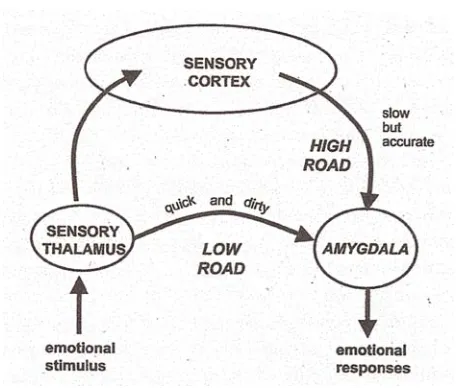
the thalamus and sent on to the amygdala (Carlson, 1992; Taylor, 1997). Thus, music takes what
LeDoux (2002) calls the “low road” through the limbic system, instead of the “high road”
through the sensory cortex. This spares the individual the need to analyze and evaluate the
stimuli. The therapeutic effect of this, insofar as hospice care is concerned, is that a music
therapist can access patients’ previous rewards and pleasures, which are still retained despite
Figure 1: The “Low Road” SOURCE: LeDoux (2002) p. 123
A minor benefit of music taking the “low road” is that it can cause chills to run up and down
one’s back, or what Huron (2007) calls “frisson,” from the French word for “chills.” This leads
to piloerection, or the raising of the hair follicles, which allows the music therapist to observe,
even in comatose patients, that the music is having an effect. Sloboda (1991) found that chills or
shivers correlated with sudden changes of harmony or loudness. He also found that tears or a
lump in the throat correlated with melodic appoggiaturas and sometimes harmonic sequences.
Blood and Zatorre (2001) reported elevated activity in the thalamus and anterior cinguli,
concurrent with the frisson phenomenon.
The Psychology of Music Therapy
The amygdala is a small almond-shaped cluster of neurons, deep in the temporal lobe, which
has become recognized by neuroscientists as the seat of the emotions. It is located right next to
the hippocampus, the current accepted specific brain tissue involved with memory. The
and autonomic stimuli, responses, and transmission. Although music can be responded to
rationally by the cerebral cortex, it is the emotional responses, primarily by the integration
function of the amygdala and the surrounding neurological structures, that can be used for
therapeutic purposes (LeDoux, 2002; Restek, 2003).
Music can be a wonderful bridge from physiological to psychological responses. As Itzkoff
(2005) noted, music is “probably the most paradigmatic searchlight into the relationship between
our biological energies and their transformation into symbolic meaning” (p. 3).
If music is applied therapeutically in the hands of a knowledgeable practitioner, during or
before a fearful or painful situation, the amygdala and the involved neurological structures can
be conditioned to associate the experience with positive associations and decreased pain, while
training the patient to avoid autonomic avoidance behaviors, such as “fight or flight” responses
and their attendant hormonal secretions, such as adrenaline production (Hilliard, 2003; Taylor,
1997). In fact, there is no difference in this anxiolytic effect of music for either gender (Knight &
Richard, 2001).
Music therapy can be effective not only in treating pain and anxiety, but also in counteracting
depression and grief (Aldridge, 1995). Frampton (1986) recommended using all the arts to help
people find meaning and purpose in what he called the “dying part of living.” Creative
expression of any kind, noted Daykin, McClean, and Bunt (2007), can assist people to cope with
loss, as well as with confused identity in the face of loss. Music can be especially effective in this
connection. Dr. Mitchell Gaynor (2004), a prominent oncologist, stated that he has “never found
anything more powerful than sound, voice, and music in allowing people to move to what I call
‘their own inner harmony, their own core, their own soul’” (p. 85), or what the present writer
who have been “done to” and “done at” (Bradshaw, 1995), is to engage their emotional world to
help them to live to the end.
Levitin (2007) sees an essential connection between music and memory. The latter, he says,
“affects the music-listening experience so profoundly that it would not be hyperbole to say that
without memory there would be no music” (pp. 166–167). Music therapy works the other way
around, using music to stimulate memories. The present writer witnessed a profound instance of
this with a hospice patient who was in her eighties. This particular woman was almost entirely
nonverbal and withdrawn as she spent her final days coping with cancer, schizophrenia, and
dementia. One day, when her daughter was present, a music therapist who was assigned to her
came into the room and, at the suggestion of the daughter, began to sing “Amazing Grace,”
accompanying herself on her guitar. Within seconds, the usually silent old woman began to sing
along. At the end of the song, the daughter said, “I didn’t know you knew how to sing, Mama.”
To which, the old woman replied, “There’s a lot you don’t know about your Mama.”
The connection between music and memory, Levitin argues, derives from the fact that music
is based on repetition. “Music,” he says, “works because we remember the tones we have just
heard and are relating them to the ones that are just now being played” (p. 167). Furthermore,
memory is intimately related to our emotional system, both of which involve the amygdala.
However, interestingly enough, whenever Levitin has conducted neuroimaging studies of the
amygdala, he has found that it is invariably activated by music, but not by random sounds or
musical tones.
The repetitive quality of music gives it a certain predictability. In fact, Taylor (1997)
maintains that “musically activated neurophysiological responses are observable, measurable,
on patients” (p. 34). What this means for music therapy is that music can be used in
therapeutically predictable ways. For example, Spintge (1989), in a study of perioperative
patients who received local and regional anesthetics, found that those individuals who also
received music therapy had a measurable rise in their pain threshold, increased pain tolerance,
and a 50% reduction in their usual dosage of sedative and analgesic drugs. This last point was
confirmed in the context of hospice care by Romo and Gifford (2007), who similarly identified a
significant decrease in the use of pharmacological agents among hospice patients who received
music therapy, compared to those who did not.
Also in the specific context of hospice care, music therapy has been shown to decrease
agitated behaviors in patients, help them to get along better with their family members (Lou,
2001; Sellick & Zaza, 1998), and improve their mood, affective awareness, motivation, and
sense of control and self-esteem (Nayak, Wheeler, Shiflett, & Agostinelli, 2000; Ruud, 1997).
One would expect music therapy to be especially effective with the African American
population because music has long been an essential construct of the African American
community. Gospel, blues, jazz, soul, Dixieland, Motown, hip-hop, and rap all sing and play out
the history of an oppressed minority asserting their authenticity as human beings. Music has
enabled a resilience in African Americans that began hundreds of years ago and continues to be
relevant to this day (Jackson & Tucker, 2008). Spirituality and church community, with
ever-present song, are the root and the branch used by African Americans to address their concerns
about life, death, oppression, and demoralization (Doka & Tucci, 2009, Burrs, Ervin, & Harper,
The Economics of Music Therapy
Hilliard (2005), who surveyed hospice administrators about the desirability of incorporating
music therapy into the care programs, discovered that the vast majority of them were interested
in the idea, but argued that the current Medicare reimbursement structure does not pay for it, just
as it does not pay for any of the other so-called complementary or alternative therapies.
However, the present writer has found two ways that music therapy in the context of hospice
care can pay for itself: (a) if pharmacological usage decreases as the use of music therapists
increases, as was just indicated above with the Romo and Gifford (2007) study, then costs go
down accordingly; and (b) when music therapy is offered by hospice agencies, their enrollment
goes up, which means their revenue increases.
Both of these points have been substantiated by the experience of the present writer, who has
been actively engaged in the administration of hospice care for more than 20 years. For example,
to illustrate the first point above, when this writer was the administrator of a hospice care agency
in the San Francisco Bay Area, she was given approximately $200 per day per patient by
Medicare. Of this, she had to spend an average of $10 per day per patient on pharmaceuticals.
When she introduced music therapy into the program, the daily cost of the pharmaceuticals per
patient went down to $6. At the same time, she paid the music therapist ($50 per hour for one
hour per patient per week, which averaged a cost of $6.60 per day ($200/mnth divided by 30
days per month. Thus, a pharmaceutical cost savings of $28 per week ($4 per day) only cost her
$ .88 cents per day. The increase revenue related to the market differentiator effect, covered this
cost. Other cost savings occurred with decreased nursing visits for patients with music therapy.
As for the second point, during the three years that this writer was the administrator of the
Without a doubt, her ability to offer music therapy as a component of the plan of care was the
most significant market differentiator in building this census. Furthermore, when this writer
worked as a marketing community outreach nurse for another hospice care agency, she similarly
Section III: Implementation Plan
Overview
The researcher recruited family members of African American hospice patients associated
with a San Francisco Bay Area hospice care agency to evaluate the impact of music therapy on
the quality of life of the hospice patients.
Pre-Study Demonstration Project
Prior to conceiving the qualitative component of the present study, this writer was working as
the Community Liaison Outreach nurse for Pathways Hospice Agency, in Oakland, California,
and came up with the idea that music therapy would be an excellent vehicle for recruiting
African Americans to the hospice benefit. She then named this outreach project “Umoja,” from
the first principle of Kwanzaa, which stands for unity and means to strive for unity in race,
nation, community, and family (Karenga, 2009).
Next, she placed a notice on Craigslist, seeking music therapists who were board-certified by
the American Association of Music Therapists, who would be willing to work for pay with
hospice patients. Eight individuals responded to this notice, of whom, after interviews, the writer
selected four. The writer then engaged these four individuals for four months, from February 1,
2009, through May 31, 2009.
With the music therapists in place and Pathways’ approval to proceed assured, the writer then
informed referral sources throughout the East Bay area about this unique outreach to an
underserved minority population. The referral sources included hospital case managers and
individuals warmly welcomed the strategy, since their experience had been that African
Americans tend to decline hospice care. Ultimately, the music therapy program worked so well
at Pathways that this writer decided to construct an academic project around it, which led to the
present study.
Participants
The 10 participants in the qualitative part of this study were relatives of recently deceased
African American hospice patients at Pathways, who had received music therapy through the
agency as part of the Umoja Project.
Instruments
Four instruments were used in this study: (a) an application to the University of San
Francisco’s Institutional Review Board (IRB) for the Protection of Human Subjects, requesting
permission to conduct the study (see Appendix A); (b) a consent form to be signed by the
participants (part of Appendix A); (c) a written survey to be filled out by the participants (part of
Appendix A); and (d) an interview with the participants (see Appendix B).
The written survey asked the participants to evaluate the following 10 statements, using a
5-point Likert scale (1 = Strongly Disagree; 2 = Disagree; 3 = Neutral; 4 = Agree; 5 = Strongly
Agree):
1. Board-certified music therapy enhanced the life experience.
2. The personal, active presence of a board-certified music therapist enhanced the experience of the music more than mechanically played music.
4. The use of board-certified music therapy would influence my recommendation to others to use Pathways Hospice Agency.
5. The board-certified music therapy assisted the connection of family to patient.
6. The board-certified music therapy increased pleasant reminiscence.
7. The board-certified music therapy added a personal dimension not available through other disciplines.
8. The board-certified music therapist’s services were not beneficial.
9. The board-certified music therapist benefited the family more than the patient.
10. The board-certified music therapist benefited the patient more than the family.
The interview, which lasted for half an hour, was unstructured and open-ended, but contained
three basic questions:
1. How did the music therapy affect the quality of life for the patient and the family?
2. How did the music therapy affect the quality of death for the patient and the family?
3. Would you recommend hospice care with music therapy versus hospice care without music therapy, and why?
Procedures
After receiving permission from the IRB to proceed with the study, the researcher obtained
10 participants in the following way. At the onset of the study, Pathways had 33 African
American patients, 23 of whom had chosen to have music therapy. The researcher wrote to the
primary relative of each of these 23 patients, asking if that person would like to participate in a
study evaluating the efficacy of music therapy in the context of hospice care. Eventually, 10
The researcher met in person at the homes of the seven participants who resided in the San
Francisco Bay Area, and talked with the other three by phone. In all 10 cases, the session began
with the family member answering the 10 survey questions. The in-person participants filled out
a written questionnaire, and the researcher filled out the same form for the three participants who
spoke to her by phone. This part of the session lasted approximately five minutes for all of the
parties.
The remaining 25 minutes of the sessions were devoted to the interviews. These began with
the researcher asking if the participants would agree to having the interview tape-recorded. Three
of them agreed to this, and seven declined. With her three basic questions in front of her, typed
on a piece of paper, the researcher began all 10 interviews by asking the first question: “How did
the music therapy affect the quality of life for the patient and the family?” In the course of the
conversations, the researcher asked the other two questions in any order that seemed appropriate
and comfortable for the participants.
When the 10 interviews were completed, the researcher transcribed the three recorded
interviews (see Appendix B), using fictitious names to protect the confidentiality of the
participants.
Expected Outcomes
The writer expected the participants to be positive about music therapy in the context of
hospice care, but she did not know how positive they would be, nor did she know specifically
Section IV: Evaluation
Impact on Patient Outcomes
Increasing the Percentage of African American Patients in Hospice Care
The Umoja Project worked exceedingly well. That is, the utilization of board-certified music
therapists drew significant numbers of African American patients into hospice care. In fact, the
researcher’s desire to increase the percentage of African American patients at Pathways by five
percentage points—namely, from 15% to 20%—was actually exceeded. By the end of the
project’s four-month trial, the percentage of African American patients at Pathways was 25%—
an increase of 10 percentage points.
Furthermore, when this pilot project came to an end, and music therapy was no longer
offered as part of the care plan, the percentage of African Americans at Pathways returned to
17%. Clearly, since no other strategy to attract African Americans to Pathways was employed
during this period, it must have been the option of music therapy that made the difference.
By implementing this strategy, Pathways not only increased the numbers of its patients, but
also the size of its revenues. Prior to the implementation of the Umoja Project, the average daily
census (ADC) at Pathways was 75 patients. At the conclusion of the project, the ADC was 93.
The accepted method of projecting revenue in the hospice industry is to multiply number of
patient days by average length of stay (ALOS). During the four months of the Umoja Project, the
75 x 51.98 = 3,899
93 x 51.98 = 4,834
The intervention therefore yielded 935 additional patient days:
4,834 – 3,899 = 935
At approximately $200 per day of Medicare payments, additional revenue of $187,000 was
generated over the four-month period:
935 x $200 = $187,000
On an annual basis, this would have generated more than half a million dollars of additional
revenue:
$187,000 x 3 = $561,000
Evaluating the Interviews
Four primary themes emerged from the interviews: (a) the music therapy gave the patients
something to look forward to; (b) the music therapy gave the family members insights into the
patient’s current mood; (c) the music therapy helped the family members to learn things about
the patient that they did not previously know; and (d) live music was far preferred to taped
Something to Look Forward to. Of the 10 relatives whom the researcher interviewed, six
voluntarily reported that their patient-relative had “looked forward to” the music therapy sessions
with great enthusiasm. The other four relatives reported the same thing when they were asked
about their relative’s response.
A daughter of one of the patients told this researcher that her father had not had a whole lot
to look forward to in the last year of his life. In fact, before the music therapy, she said, family
dinners, especially when the grandchildren came, were the only thing that gave him any pleasure
at all. Once the music therapist came into the picture, the patient took great joy in having the
therapist sing Broadway show tunes to him, sometimes accompanying her on a drum that she
provided. Later, when his physical condition worsened, the patient asked the therapist to sing
hymns that he had sung as a boy in church with his family, and that, as a parent, he had sung in
church with his own children. Incidentally, all the music therapists played a guitar and a
keyboard instrument, which they did not pass around, and also allowed the patients to play small
drums, a triangle, and maracas, which, for infection control, are easy to wipe down hygienically
between uses.
In another example of a patient having something to look forward to, the surviving husband
told this researcher that he and his wife had often sung together in past year, but she had been too
weak to accompany him during the hospice experience. However, she had loved to listen to him
sing along with the music therapist. In fact, he soon brought in songs to sing that he had himself
composed years before for his wife. One of these was entitled “Lord, Don’t Let Me Walk This
Road Alone.” These weekly sessions brought great pleasure to the patient, who, when talking to
her family, would refer to the therapist as “my musician.” This was true of two other patients as
Having something to look forward to at a time when almost everything of importance to the
patient has been lost is a powerful recommendation for this type of therapy. Being able to feel
that something is “mine” helps the patients to live right up to the end.
Insights into the Patient’s Current Mood. Since the music, or at least the genre of music,
played by the therapist was usually chosen by the patient, these choices revealed something
about the patient’s emotional state at the time. The family members were present at 32 of the 79
Umoja sessions that occurred during the four-month trial, so these individuals were able to report
that they felt the patients were choosing music specifically to communicate messages to them
that were too difficult for the patients to convey conversationally. According to these reports,
two pieces were chosen more than any other: the church hymn “Amazing Grace” and Frank
Sinatra’s song “My Way.” The first of these contains a somewhat apologetic message, whereas
the second is more self-assertive:
“Amazing Grace”
Amazing Grace, how sweet the sound, That saved a wretch like me….
I once was lost but now am found, Was blind, but now, I see.
T’was Grace that taught… my heart to fear.
And Grace, my fears relieved.
How precious did that Grace appear… the hour I first believed.
Through many dangers, toils and snares… we have already come.
T’was Grace that brought us safe thus far… and Grace will lead us home.
He will my shield and portion be… as long as life endures.
When we’ve been here ten thousand years… bright shining as the sun.
We’ve no less days to sing God’s praise… than when we’ve first begun.
Amazing Grace, how sweet the sound, That saved a wretch like me….
I once was lost but now am found,
Was blind, but now, I see. (John Newton, 1725–1807)
“My Way”
And now the end is near And so I face the final curtain My friend I’ll say it clear
I’ll state my case of which I’m certain I’ve lived a life that’s full
I traveled each and every highway And more, much more than this I did it my way (Anka, 1967)
Learned Things About the Patient. As was noted above in the physiological and
psychological discussion of music, it often has associations in people’s minds with specific
events or experiences in their past. Thus, hearing a piece of music can trigger memories. In the
case of the hospice patients, this triggering often led to them revealing aspects of their personal
history that their relatives were not familiar with. All 10 interviewees in this study reported this
phenomenon, adding that they could not think of any other way that this could have been
accomplished.
Preference for Live Music. All 10 family members expressed the opinion, in one way or
another, that the personal touch involved in having a musician right in the room with the patient
Evaluating the Written Surveys
The written surveys essentially confirmed in more quantitative terms what the relatives stated
orally in the interviews. On a 5-point Likert scale (1 = Strongly Disagree; 2 = Disagree;
3 = Neutral; 4 = Agree; 5 = Strongly Agree), the results for the 10 questions were as follows.
Question 1: Board-certified music therapy enhanced the life experience. Nine of the
participants strongly agreed with this statement, and one agreed.
Question 2: The personal, active presence of a board-certified music therapist enhanced the
experience of the music more than mechanically played music. Eight of the participants strongly
agreed with this statement, one agreed, and one was neutral.
Question 3: Board-certified music therapy should be available to all hospice patients and
families. All 10 of the participants strongly agreed with this statement.
Question 4: The use of board-certified music therapy would influence my recommendation to
others to use Pathways Hospice. Nine of the participants strongly agreed with this statement, and
one agreed.
Question 5: The board-certified music therapy assisted the connection of the family to the
patient. Seven of the participants strongly agreed with this statement, two agreed, and one was
neutral.
Question 6: The board-certified music therapy increased pleasant reminiscence. Eight of the
participants strongly agreed with this statement, one agreed, and one was neutral.
Question 7: The board-certified music therapy added a personal dimension not available
through other disciplines. Eight of the participants strongly agreed with this statement, and two
Question 8: The board-certified music therapists’ services were NOT beneficial. All 10 of the
participants strongly disagreed with this statement.
Question 9: The board-certified music therapist benefited the family more than the patient.
Five of the participants strongly agreed with this statement, two agreed, and two were neutral,
and one strongly disagreed.
Question 10: The board-certified music therapist benefited the patient more than the family.
Eight of the participants strongly agreed with this statement, and two agreed.
The only confusion in these responses appears in the apparent contradiction between the
answers to questions 9 and 10. To be totally consistent, the eight individuals who strongly agreed
that the therapy benefited the patient more than the family should have strongly disagreed that
the therapy benefited the family more than the patient. And the same logic should have applied
to the other two family members who agreed that the therapy benefited the patient more than the
family. The researcher can only conclude from the actual responses that many of the family
members misread question 9.
Impact on the Health-Care Environment
As was just demonstrated, the patients and their relatives were highly satisfied with music
therapy’s ability to enhance the end-of-life experience. Furthermore, as was demonstrated earlier,
as the amount of music therapy goes up, the cost of medications goes down. Also, thanks to
increased enrollments, the revenues go up. In addition, as Romo and Gifford (2007)
demonstrated, the use of music therapy leads to fewer visits by nurses, thus further reducing
costs to the hospice agencies. Precisely why nursing visits decrease when music therapy is part
study in the future.
Finally, in the facts and figures recently published by the National Hospice and Palliative
Care Organization (2009), it was reported that 75.4% of family members rated hospice care as
“Excellent.” This means that nearly one in four relatives rated hospice care as less than excellent.
In the survey and interviews conducted by the present writer, 100% of the family members
agreed that board-certified music therapy should be available to all hospice patients and families.
Thus, it is this writer’s contention that the way to raise family satisfaction to a level of 100%
“Excellent” would be to introduce music therapy into all the hospice programs throughout the
Section V: Continuous Quality Improvement Process
Feasibility and Cost-Effectiveness
Given the cost-effectiveness of music therapy and its positive reception by both patients and
their families, making music therapy an integral part of all hospice care programs is totally
feasible.
Intraprofessional Impact
When it becomes widely known in the nursing profession, thanks to studies like the present
one, how effective and desirable music therapy is as a component of hospice care, nurse-leaders
will embrace it on an ever wider scale. In the meantime, it would be useful to conduct studies of
Section VI: Implications for Advanced Nursing Practice or
Systems Leadership
Summary of Process
In a nutshell, nursing administrators must first recognize the value of music therapy as an
adjunct to nursing care in the hospice setting. Once they realize how effective music therapy is,
both physically and psychologically, as has been demonstrated by numerous scientific studies,
nursing administrators will have little difficulty finding highly trained music therapists with
whom to collaborate. Once the music therapists are in place, the process tends to run fairly
spontaneously, with the patients selecting the music they want to hear, and the therapists
providing it.
Lessons Learned
Before conducting this research, the writer had a hunch that music somehow reaches the
“person in the patient” in a way that nothing else in hospice care can match. From the
neuroscientific literature, especially the writings of Joseph LeDoux (1996, 1999, 2002), she
learned that music beats a path straight to the amygdala, taking the so-called “low road,” without
the intercession of the cerebral cortex. This helps to explain the impact of music even on
seriously demented patients.
From the interviews and the surveys the researcher conducted for this study, she learned two
primary lessons: (a) how enthusiastically the patients looked forward to the visits of the music
response of the patient to the music therapy.
Dissemination Plan
The positive results of the Umoja Project and the recommendations made here for further
study will be submitted, in the form of articles, to journals devoted to hospice and palliative care,
nursing innovations, the cost-effective use of medical resources, and music therapy. The writer
will also present her findings and recommendations in speeches and presentations to
professional, religious, political, academic, and business organizations.
Although the writer would like music therapy to be included in hospice care programs for all
populations, she is especially dedicated to finding ways to using music therapy to make hospice
References
Abdullah v. Pfizer Inc. (2003). No. 02–9223, 2nd Cir. 10/08/2003.
Alakbarov, F. (2003). Music therapy: What doctors knew centuries ago. Azerbaijan International Autumn, 11(3), 1–3.
Aldridge, D. (1995). Spirituality, hope, and music therapy in palliative care. The Arts in Psychotherapy, 22(2), 103–109.
Aldridge, D. (1998). Life as jazz: Hope, meaning, and music therapy in treatment of life-threatening illness. Advances in Mind-Body Medicine, 14, 211–282.
Allscripts Home Care. (2009). Version 5.0.1 as licensed to Pathways HomeHealth, Hospice and Private Duty. Pathways East Bay Demographics Report. Retrieved on July 1, 2009.
American Association of Colleges of Nursing (AACN). (2004). DNP position statement. Retrieved on August 1, 2009, from
http://www.aacn.nche.edu/DNP/DNPPositionStatement.htm/
American Hospital Association. (2005) Covenant of churches: Saint Barnabas Hospice and Palliative Care Center. Retrieved on October 17, 2009, from http://www.aha.org/aha/news-center/awards/circle-of-life/awardees.html/
American Music Therapy Association. (2009). Quotes about music therapy. Retrieved on October 29, 2009, from http://www.musictherapy.org/quotes.html/
Angelou, M. (1978). And still I rise. New York: Random House.
Anka, P. (1967). Lyrics to “My way” (song). Retrieved on June 6, 2009, from http://www.elyrics.
net/read/f/frank-sinatra-lyrics/my-way-lyrics.html/
Athar, S. (2007). Medical ethics: An Islamic perspective. Retrieved on October 16, 2007, from http://www.islam–usa. com/e2.html/
Blood, A. J., & Zatorre, R. J. (2001). Intensely pleasurable responses to music correlate with activity in brain regions implicated in reward and emotion. Proceedings of the National Academy of Sciences, 98(11), 818–823.
Bradshaw, A. (1995). What are nurses doing to patients? A review of theories of nursing, past and present. Journal of Clinical Nursing, 4, 81–92.
Buerhaus, P. I. (2007). Hopes and threats for nursing’s future: An interview. Nursing Economic$, 25(3), 183–185.
Burrs, F. A., Ervin, M. G., & Harper, B. C. (2006). The future of hospice care for African
Americans: Clinical, policy, and caregiver perspectives. Retrieved on August 19, 2008, from http://www.iceol.duke. edu/respurces/lastmiles/papers/08.html/
Byock, I. (1997). Dying well. New York: Berkeley Publishing Group.
Canter, P. H., Coon, J. T., & Ernst, E. (2006, December). Cost-effectiveness of complementary therapies in the United Kingdom—A systematic review. Evidence-Based Complementary Alternative Medicine, 3(4), 425–432.
Carlson, N. R. (1996). Foundations of Physiological Psychology. Boston: Allyn & Bacon.
Cepeda, M. S., Carr, D. B., Lau, J., & Alvarez, H. (2006). Music for pain relief. Cochrane Database of Systematic Reviews, Issue 2, Article Number CD004843. DOI:10.1002/ 14651858. CD004843. pub 2.
Chiappelli, F., Prolo, P., Rosenblum, M., Edgerton, M., & Cajulis, O. S. (2006, March). Evidence-based research in complementary and alternative medicine, II: The process of evidence-based research. Evidence-Based Complementary Alternative Medicine, 3(1), 3–12.
Chochinov, H. M. (2006). Dying, dignity, and new horizons in palliative end-of-life care. Cancer Journal for Clinicians, 56, 84–103.
Cody. (2007). Theory of human becoming: A brief introduction. Retrieved on November 12, 2007, from http://www.humanbecoming.org/site/theory.html/
Confucius. (ca. 500 B.C.). The book of rites, chap. 17. In H. L. Mencken (Ed.), (1966), A new
dictionary of quotations on historical principles from ancient and modern sources. New York: Knopf.
Congreve, W. (1697). The mourning bride. In H. L. Mencken, (Ed.), (1966), A new dictionary of quotations on historical principles from ancient and modern sources. New York: Knopf.
Connor, S. R., Elwert, F., Spence, C. & Christakis, N. A. (2008). Racial disparity in hospice use in the United States in 2002. Palliative Medicine, 22, 205–213.
Daykin, N., McClean, S., & Bunt, L. (2007). Creativity, identity, and healing: Participants’ accounts of music therapy in cancer care. Health: An Interdisciplinary Journal for the Social Study of Health, Illness, and Medicine, 11(3), 349–370.
DeMarco, R. (2009). Doctorate in nursing practice: A survey of Massachusetts nurses. Retrieved on June 2, 2009, from http://www.sciencedirect.com. ignacio.usfca.edu/science?www.
sciencedirect.com.ignacio.usfca.edu/science?_ob=articleURL&_udi=B6WK/
Doka, K. J., & Tucci, A. S. (Eds.). (2009). Living with grief: Diversity and end-of-life care. Washington, DC: Hospice Foundation of America.
Evans, D. (2001). Evidence-based practices information sheet for professionals: Music as an intervention in hospitals. Best Practices of Joanna Briggs Institute for Evidence-Based Nursing and Midwifery, 5(4) 1–6.
Fife, R. B. (2009). Diversity and access to hospice care. In K. Doka & A. S. Tucci (Eds.), Diversity and end-of-life care (pp. 49–62). Washington, DC: Hospice Foundation of America.
Frampton, D. (1986, December 20–27). Restoring creativity to the dying patient. British Medical Journal, 293, 1593–95.
Franklin, M. D., Schlundt, D. G., & Walleston, K. A. (2008). Development and validation of a religious health fatalism measure for the African American faith community. Journal of Health Psychology, 13(3), 323–335.
Gaston, E. T. (1964). The aesthetic experience and biological man. Journal of Music Therapy, 1, 1–7.
Gaynor, M. (2004). One oncologist’s view of integrative care. Keynote address at the
Comprehensive Cancer Conference, April 2003. Integrative Cancer Therapies, 3(1), 82–87.
Gerdner, L. A., Tripp-Reimer, T., & Simpson, H. C. (2007). Hard lives, God’s help, and struggling through: Caregiving in the Arkansas Delta. Journal of Cross Cultural Gerontology, 22, 355–374.
Grewe, O., Nagel, F., Kopiez, R., & Altenmüller, E. (2007, February). Listening to music as a re-creative process: Physiological, psychological, and psychoacoustical correlates of chills and strong emotions. Retrieved on November 7, 2009, from http://0–
proquest.umi.com.ignacio.
usfca.edu/pqdweb?index=2&sid…pe=PQD&rqt=30&TS=1257616340&clientid=16131&cc= 1&TS=1257616340/
Hanser, S. B. (1985). Music therapy and stress reduction research. Journal of Music Therapy, 22, 193–206.
Hathaway, D., Jacob, S., Stegbauer, C., Thompson, C., & Graff, C. (2006). The practice doctorate: Perspectives of early adopters. Journal of Nursing Education, 45, 487–496.
Hawkins, R., & Nezat, G. (2009). Doctoral education: Which degree to pursue? Retrieved on June 30, 2009, from http://www.aana.com/aanajournal.aspx/
Hilliard, R. E. (2003). The effects of music therapy on the quality and length of life of people diagnosed with terminal cancer. Journal of Music Therapy, 40(2), 113–137.
Hilliard, R. E. (2005, June). Music therapy in hospice and palliative care: A review of the empirical data. Evidence-based complementary alternative medicine, 2(2), 173–178.
Hirokawa, E., & Ohira, H. (2003). The effects of music listening after stressful tasks on immune functions, neuroendocrine responses. and emotional states in college students. Journal of Music Therapy, 40(3), 189–211.
Horne-Thompson, A., Daveson, B., & Hogan, B. (2007). A project investigating music therapy referral trends within palliative care: An Australian perspective. Journal of Music Therapy, 44(2), 139–155.
Hospital Council of Northern and Central California. (2007, August). Select health indicators for cities in Alameda County, 2007. The Alameda County Public Health department, Office of the Director Community Assessment, Planning, and Education (CAPE) Unit. Oakland, CA: Alameda Public Health Department.
Huron, D. (2007). Sweet anticipation: Music and the psychology of expectation. Cambridge, MA: MIT Press.
Itzkoff, S. W.(2005, Fall). Art, intelligence, and the limbic system. Mankind Quarterly, 46(1), 99–115.
Jackson, F. (2008). African American perspectives on pain and palliative care. Retrieved on May, 16, 2008, from http://www.iceol.duke.edu/resources/lastmiles/papers/02.html/
Jackson, T. A., & Tucker, M. (2008, June 29). Jazz: Grove music online. Retrieved on June 29, 2008, from http://o-www.oxfordaass.com.ignacio. usfca.edu/article/grove/795144?hi=04 highlight=IE/
James, G. O. (2009, November 2). Our lord will be our strength through all of life. Homily at Beth Eden Church, Oakland, CA.
Johnson, K. S., Kuchibhatla, M., Tanis, D., & Tulsky, J. A. (2007). Racial differences in growth of non-cancer diagnoses among hospice enrollees. Journal of Pain and Symptom
Johnson, K. S., Kuchibhatla, M., Tanis, D., and Tulsky, J. A., (2008). Racial differences in hospice revocation to pursue aggressive care. Archives of Internal Medicine, 168(20), 218– 224.
Johnson, K. S., Kuchibhatala, M., Sloane, R. J., Tanis, D., Galanos, A. N., & Tulsky, J. A. (2005). Ethnic differences in the place of death of elderly hospice enrollees. Journal of American Geriatric Society, 53, 2209–15.
Jones, J. D. (2006). The use of control groups in music therapy research: A content analysis of articles in the Journal of Music Therapy. Journal of Music Therapy, 43(4), 334–355.
Kuhn, D. (2002). The effects of active and passive participation in musical activity on the immune system as measured by salivary immunoglobulin A (SigA). Journal of Music Therapy, 39(1), 30–39.
Latson, S. R., & Ramsey, G. (2004). Advanced care planning: An overview. In Topics on end-of-life care (conference monograph). Washington, DC: Care for African Americans National Conference.
LeDoux, J. (1996). The emotional brain. New York: Simon & Schuster.
LeDoux, J. (1999). The power of emotions. In R. Conlan (Ed.), States of mind: New discoveries about how our brains make us who we are (pp. 123–149). New York: John Wiley.
LeDoux, J. (2002). Synaptic self: How our brains become who we are. New York: Penguin.
Levitin, D. J. (2006). This is your brain on music: The science of a human obsession. New York: Penguin.
Lou, M. F. (2001). The use of music to decrease agitated behaviour of the demented elderly: The state of the science. Scandinavian Journal of Caring Science, 15, 165–173.
Mackay, T. (2008). Practice value and worth of a DNP. Clinical Scholars Review, 2(1), 8–9.
Miller, A. (2008, May/June). Issues related to utilization of health care at end of life. Medicare Patient Management, pp. 27–30.
National Hospice and Palliative Care Organization (NHPCO). (2007). Facts and figures: Hospice care in America. Retrieved on October 30, 2009, from http://www. nhpco.org/nds/
National Hospice and Palliative Care Organization (NHPCO). (2008). Facts and figures: Hospice care in America. Retrieved on October 10, 2008, from http://www. nhpco.org/nds/
Nayak, S., Wheeler, B. L., Shiflett, S. C., & Agostinelli, S. (2000). Effect of music therapy on the mood and social interaction among individuals with acute traumatic brain injury and stroke. Rehabilitation Psychology, 45(3), 274–283.
Newton, J. (1725–1807). Amazing grace (hymn). Retrieved on July 5, 2009, from http://www. constitution.org/col/amazing_grace.htm/
Omonzejele, P. F. (2008, March/April). African concept of health, disease, and treatment: An ethical inquiry. Explore, 4(2), 120–126.
Office of Statewide Health Planning and Development (OSHPD). (2008). Data alerts. Retrieved on July 1, 2009 from https://www.alerts.oshpd.ca.gov/crudutilreport.spx?pmode=2&psd= 35267&pfid=4872/
Payne, R. (2006). Team customizes and pilots end-of-life curriculum for African American health-care professionals. Retrieved on July 28, 2009, from http://www.rwjf.
org/pr/product.jsp?id= 16763/
Phipps, E., True, G., & Harris, D. (2003). Approaching the end of life: Attributes, preferences of African Americans working with white patients and their family caregivers. Journal of Clinical Oncology, 21, 549–554.
Pietroburgo, J. (2004). Joining forces, joining futures: Hospice at the crossroads. American Journal of Hospice & Palliative Care, 21(3), 209–215.
Pilkington, F. B., & Lee, O. J. (1999). Practice with persons living their dying. A human becoming perspective. Nursing Science Quarterly, 12(4), 324–328.
Prion, S. (2009, September 24). MS generalist to DNP: Emphasis—Healthcare systems leadership. Retrieved on November 11, 2009, from
http://www.usfca.edu/nursing/programs_of_study/dnp_ program_for_msn_hcsl.html/
Restek, R. (2003). The new brain: How the modern age is rewiring your mind. Gordonsville, VA: Holtzbrinck publishers.
Romo, R., & Gifford, L. (2007). A cost benefit analysis of music therapy in a home hospice. Nursing Economic$, 25(6), 353–358.
Ruud, E. (1997). Music and the quality of life. Nordic Journal of Music Therapy, 6(2), 86–97.
Searight, R. H., & Gaffrod, J. (2005). Cultural diversity at the end of life: Issues and guidelines for family physicians. Retrieved on July 12, 2008, from
http://www.aafp.org/afp/20050201/515. html/
Sellick, S. M., & Zaza, C. (1998). Critical review of five nonpharmacological strategies for managing cancer pain. Cancer Prevention & Control, 2(1), 7–14.
Sloboda, J. A. (1991). Music structure and emotional response: Some empirical findings. Psychology of Music, 19(2), 110–120.
Spintge, R. K. W. (1989). The anxiolytic effects of music. In M. H. M. Lee (Ed.), Rehabilitation, music, and human well-being (pp. 82–97). St. Louis: MMB Music.
Straw, G., & Cummins, R. (2003). American Association of Retired Persons North Carolina end-of-life care survey: Knowledge management. In Topics on end-of-life care (conference monograph). Washington, DC: Care for African Americans National Conference.
Syed, I. B. (2007). Music therapy. Retrieved on October 16, 2007, from http://www.IRFI.org/ articles/
Takahashi, T., & Matsushita, H. (2006). Long-term effects of music therapy on elderly with moderate/severe dementia. Journal of Music Therapy, 43(4), 317–333.
Taylor, D. B. (1997). Biomedical foundations of music as therapy. St. Louis: MMB Music.
Turner, J. (2004). Music therapy, description, origins. Retrieved on October 16, 2007, from http://www.vhi.ie/topic100587171/
U.S. Census Bureau. (2009). Fact sheet. Retrieved on July 5, 2009, from http://factfinder.census. gov/servjet/acssafffacts?_event=search&geo_id=0500045060001&_gescontext=0100045%7 c04000/
Vink, A. C., Birks, J. S., Bruinama, M. S., & Scholten, R. J. P. M. (2003). Music therapy for people with dementia. Cochrane Database of Systematic Reviews, Issue 4, Article Number CD003477.DOI:10.1002/14651858.CD003477.pub2.
Wlodarczyk, N. (2007). The effect of music therapy on the spirituality of persons in an in-patient hospice unit as measured by self-report. Journal of Music Therapy, 44(2), 113–122.
Appendix A: IRB Approval Form
IRBPHS INITIAL APPLICATION
Name of Applicant: Elizabeth Joy “Lisa “ Gifford USF ID #: 11311493
School: USF School of Nursing
Department: DNP Health Systems Leadership Home address: “Oak Perch”
748 B Street
Hayward, Ca 94541
Home phone: 510-881-2939 Work phone: 510-385-3515 Cell phone: 408-834-3484 Email: [email protected]
Other Investigators: 0
Faculty Advisor: Marjorie Barter RN EdD
Professor Health Systems Leadership, DNP Campus address: Cowell School of Nursing
Email: [email protected]
Date: June 15, 2009
1. Background and Rationale
Pathways Hospice Foundation, a 501(c) not for profit organization operating in the San Francisco Bay Area, exists to ensure that all who need hospice care can be served. The
recognized problem is under utilization of the Hospice benefit by African Americans (AA). AA persons represent 8% of hospice enrollees according to the National Hospice and Palliative Care Organization (NHPCO,2007). African Americans represent 13% of the total population in the United States (U.S. Census Bureau 2008). In the San Francisco Bay Area, among all Medicare certified hospice submit data to the state, 2007 reports indicate that only 2% of all the hospice participants are AA (OSHPD 2008). In the Oakland Bay Area there is a 35% AA population and the Pathways East Bay agency serving the same area that reports 15% of their census is AA patients (Allscripts 2009). AA have a significantly higher revocation of the hospice program even when they are enrolled. In the Pathways East Bay office 20% of persons revoking are AA (Allscripts 2009). Themes of mistrust and cultural fatalism are significant obstacles to utilization of hospice (Franklin, Schlundt & Wallston, 2008). The mistrust is tied to a legacy of slavery, abuses in medical experimentation, and economic injustices real and perceived. Without hospice, terminally ill patients are less likely to have pain and symptom management, psychosocial support, nursing care and bereavement support...all provided by the Hospice interdisciplinary team. (Johnson, Kuchibhatla, Tanis & Tulsky, 2007). Therefore, The Umoja project will build trust, increase awareness and improve the health of AA patients.
“Umoja” from the first principle of Kwanzaa stands for unity and means “to strive for and maintain unity in family, community, nation and race (Karenga 2009). The Umoja Project proposes two strategies: outreach to church communities and board certified music therapy to meet the needs of dying AA patients/families. The Umoja project recognizes the deep connection of music in the AA population. The Umoja project honors and recognizes the importance of music to the health of AA communities. The Umoja project develops essential connection based on recognition of value in the AA culture itself, instead of viewing the population as a group in process of assimilating into the dominant culture. Umoja will work within the community of a unique religious and spiritual culture to: (1) reduce distrust, (2) improve hospice utilization. As scientific understanding of neuronal circuitry develops, it is imperative that professional nursing strive to understand and activate complementary integrative therapies that reduce suffering, meet professional criteria, collaborate with other disciplines, and further honor humanity in all of its splendor and complexity.
“We gave them seeds, they gave us cotton. We gave them sorrow, they gave us song!”
2. Description of Sample
a. The subject sample consists of persons self identified as African American, who were patients and patient families of Pathways East Bay Hospice during the days from February 1, 2009 thru May 31, 2009, who were offered Board Certified Music Therapy, adjunctive to their Hospice plan of care. Of the total 33 subjects who met criteria, 23 subjects were able or chose to use the intervention, all over the age of 65, and all utilizing their Medicare Hospice benefit or MediCal Hospice benefit. Some subjects were
utilizing their Medical Long Term Care benefit in addition to the Hospice benefit; i.e., MediCal was covering room and board in a skilled nursing facility (SNF). All subjects had Certification of Terminal illness by two physicians, the primary care physician and the medical director of Pathways Hospice.
b. The subjects with terminal conditions voluntarily chose the hospice benefit and signed consents for treatment. The Umoja opportunity was presented as a pilot project that was being offered at no cost to them or the agency. The Board Certified Music Therapists were engaged after they completed the Pathways Volunteer Process and administered the intervention, with relevant documentation, as volunteer notes, meeting the requirements of Medicare Conditions of Participation. The researcher intends to contact patients/families who utilized the intervention. The contact will be made by phone or letter r
equesting their participation in the qualitative 30 minute interview, in which
participants will be asked the following questions: 1) How did the music therapy affect quality of life for the patient and family 2) How did the music therapy affect quality of death for the patient and the family and 3) Would you recommend hospice care with music therapy versus hospice care without music therapy, and why. A letter of Pathways support for this research accompanies this IRB Initial Application. The researchers letter to the potential interviewees also accompanies this application.
c. The patients are all voluntary participants in the Umoja Project free music therapy program through Pathways.
3. Recruitment Procedure
a. The researcher intends to gain access to subjects, through first calling families and patients, mailing letters, then arranging a meeting in person to obtain informed consent for interviews. If patients are alive, their current hospice case manager will present them with the informed consent form and request their participation.
b. Three attempts at contact will be made with potential participants through 1 letter and 2 phone calls.
c. Recruitment materials include: A cover letter and letter of informed consent (included).
4. Subject Consent Process
will receive a letter of informed consent.
c. Patients who complete a survey will have signed and understood an informed consent letter that encompasses both the survey and the interviews.
5. Procedure
a. The participants will experience a letter, a phone call and second phone call as needed, if they choose to participate an introduction to the researcher, information about the digital recording process, they will be interviewed and recorded, they will complete a survey and they will receive a final report of the findings. Data will be analyzed using three procedures: Descriptive coding will permit
identification and categorization of common themes. Interpretive coding will be utilized if participant responses contain statements from which meaning may be derived. Explanatory codes will be developed if theoretical ideas or connections begin to emerge. The values obtained from each item in the Likert instrument will be summed to obtain a single score. Scores will be analyzed relative to their ordinal-level and/or interval-level.
b. Copies of the survey and interview questions are included, interview will be taped and reviewed.
POTENTIAL RISKS TO SUBJECTS
1Interviewees might experience renewal or reconnection with the grief associated with the loss of the family who was in hospice care. Because this research is taking place within 12 months of the death of the patient, the effect of renewed grief will be minimized. Due to this timeline, patients will still currently be enrolled in the free MediCare bereavement counseling program. The researcher will consult with the bereavement coordinator to ensure that potential participants experiencing grief will not be at risk by an invitation to be interviewed, or an interview.
2Potential benefits to the participants include: personal reward from knowledge of contributing to evidence based, enhanced services for others who share similar experiences.
3There are no costs of any kind to the participants of this study.
4There will be no reimbursements or payments to participants in this study.
5All records will be kept confidential, and no identifying information will be disclosed. No names of any kind, pseudonyms or otherwise, will be used in the final report.
INFORMED CONSENT
“The experience of African American Hospice patient/family with Board Certified Music Therapy as a component of their Plan of Care.”
My name is Elizabeth Gifford, and I am a graduate student at the University of San Francisco in the Doctorate of Nursing Practice, Health Systems Leadership program, conducting a project for my doctoral capstone project. You were selected as a possible participant in this study because you or your family member are currently receiving, or recently have received music therapy services as part of your hospice care.
The purpose of this research is to better understand the experiences of those involved in music therapy as part of hospice care. If you agree to participate, you will be asked to take part in a 30 minute interview which will also be audio-recorded. Your participation in this study will involve a thirty minute block of time which will be scheduled at your convenience.
There are some possible risks involved for participants in this study. It is possible you may have some questions or experience some feelings about being interviewed. You may or may not experience personal benefits from participating in this research project. Your participation contributes to the
researcher’s understanding of the experiences people have in hospice music therapy sessions. This could lead to more effective services being provided to others.
If you have any questions about the research at any time, please call me at 408-834-3484 or my instructor, Dr. Marjorie Barter at the School of Nursing University of San Francisco, 415-422-6792. If you have any questions about your rights as a participant in a research project, please call the IRB Administrator, University of San Francisco (415) 422-6091.
In order to ensure that appropriate music therapy treatment was provided, you or your relative’s medical record will be accessed during the course of this study. Information about you that is reviewed in connection with this study will remain confidential. Names or any other identifying information will not be disclosed to anyone.
Participation in this project is entirely voluntary and if you become tired or uncomfortable, you may end the interview at any time and reschedule for a later date. Or you may choose not to participate in the study. Or you may choose not to participate in the study any further.
Your signature below indicates that, 1) you have read and understand the information provided above, 2) you willingly agree to participate in this study, 3) you understand that you may withdraw your consent and discontinue participation at any time without loss of services , and 4) that the related medical record may be reviewed. You will receive a copy of this form for reference.
Results of this study will be published and located in the University of San Francisco, San Francisco, California
Signature and relationship Date
____________________________________ ________________________
INTERVIEW QUESTIONS AND SURVEY
“The UMOJA Project: Use of board certified music therapy as a tool to minimize disparities, and encouraging utilization of hospice care by African Americans.”
Interview Questions
To be asked during 30 minute interviews with informed, consenting patients.
1) How did the music therapy affect quality of life for the patient and family
2) How did the music therapy affect quality of death for the patient and the family and