Geschke Center
Doctor of Nursing Practice (DNP) Projects Theses, Dissertations, Capstones and Projects
Fall 12-7-2012
Recognition of Compassion Fatigue among
Medical-Surgical Nurses: The Provision of
Education to Manage the Effects
Kandace Woodruff
Follow this and additional works at:https://repository.usfca.edu/dnp Part of theNursing Commons
This Project is brought to you for free and open access by the Theses, Dissertations, Capstones and Projects at USF Scholarship: a digital repository @ Gleeson Library | Geschke Center. It has been accepted for inclusion in Doctor of Nursing Practice (DNP) Projects by an authorized administrator of USF Scholarship: a digital repository @ Gleeson Library | Geschke Center. For more information, please [email protected].
Recommended Citation
Woodruff, Kandace, "Recognition of Compassion Fatigue among Medical-Surgical Nurses: The Provision of Education to Manage the Effects" (2012).Doctor of Nursing Practice (DNP) Projects. 112.
Recognition of Compassion Fatigue among Medical-Surgical Nurses:
The Provision of Education to Manage the Effects
Kandace Woodruff DNPc, MSN, RN
DNP Project submitted to the faculty of the University of San Francisco in partial fulfillment of the requirements for the degree of Doctorate of Nursing Practice in Healthcare Systems Leadership
December 2012
1
This project is dedicated to my loving parents, it is through your example that I learned the meaning of compassion, empathy and respect for others. I have the deepest appreciation for your support and encouragement to pursue my dreams.
ACKNOWLEGEMENTS
To Dr. Nichols, Dr. Waxman, Dr. Prion, Dr. Van Leuven, Dr. Lambton and Dr. Buccheri, I owe each of you a very special thanks for being extraordinary mentors. Your knowledge, wisdom, and encouragement have provided me with the strength and direction needed, in order to achieve my academic endeavors.
To Dr. Norman Banks, my heartfelt thanks for your guidance and support, it was very valuable throughout the completion of my project. You gave me the power and motivation to pursue my project interest, as well to persevere when the task seemed daunting.
To Kathi Palange, Chief Administrative Officer, thanks for all of your words of encouragement and support. A special thanks for giving me the flexibility to pursue my academic endeavor, without your generosity, my journey would not have been possible.
ABSTRACT
The Institute of Medicine (IOM) (2010) recommends that healthcare organizations make the “recruitment and retention of qualified nurses a priority”. The ability to comply with the recommendation is fraught with challenges. Nurses are required to care for patients across the age span with varying medical complexities. There are work related stressors which are inherent to the care of a more acutely ill patient population. The tenuousness produced by this type of environment can predispose the nurse to a stress induced phenomenon known as, Compassion Fatigue. The literature is abounding with information related to compassion fatigue among various nursing specialties. However, previous discussions have effectively disregarded this discussion in the context of medical-surgical nurses. The following is a description of a Compassion Fatigue project with an emphasis on the medical-surgical nurse. The project demonstrated a correlation between work-related stressors and compassion fatigue among medical-surgical nurses. It also revealed that medical-surgical nurses are challenged by numerous encounters precipitated by their hectic work environment. Many nurses have the fortitude to overcome environmental stressors, thereby, affording them a deep sense of
satisfaction. Conversely, unsuccessful coping can lead to dissatisfaction and an exodus from the profession. The project shed light on the significance of understanding the prevalence of
TABLE OF CONTENTS
Acknowledgements……….2
Abstract ….…….……….………3
Section I Table of Content………4
Introduction ………….………...8
Significance of the Problem………...9
……..……… Scope of the Problem ……..………10
Relevance ……...……….10
Theoretical Framework………13
………... Figley’s Compassion Fatigue Model………..13
Project Goals/Outcome………15 ………... Operational Definition……….15 ……….. Assumptions ………16 Limitations Section II Criterion for Evidence Search…...….……….17
Literature Review………....18
…..………. Compassion Fatigue ……….18
Burnout ……….19
Empathy ………... 20
Empirical Studies ………20
Compassion Fatigue ………..20
Project Intervention………..30 Section III Design ….………..………..31 Methodology……….………...31 …….. Sample ………32
Protection of Human Subjects ...……….33
Instrumentation………...……….34
Procedure …..………..36
Results …..………...37
Section IV Project Evaluation..….……….42
Patient Impact ……..………..42
Clinical Impact ………...43
Section V
Project Summary ..………51
Implications for Nursing ………..60
Future Recommendations……….62
Conclusion ..……….62
References……….64
Appendices Appendix A: PICO Worksheet………68
Appendix B: Evidenced Based Evaluation Tool………..70
Appendix C: IRB Approval Letter………...77
Appendix D: USF IRB Approval Letter………...78
Appendix E: Hospital A Approval Letter……….79
Appendix F: Hospital B Approval Letter………..80
Appendix G: Recruitment Letter………...81
Appendix H: Research Information Statement………...82
Appendix I: Online Questionnaire………....84
Appendix J: Demographic Profile……….85
Appendix K: Figley’s Compassion Fatigue Self Test………86
Appendix L: Consent……….88
List of Tables
Table 1: Description of Project Participants………..91
Table 2: Participants Educational Level………93
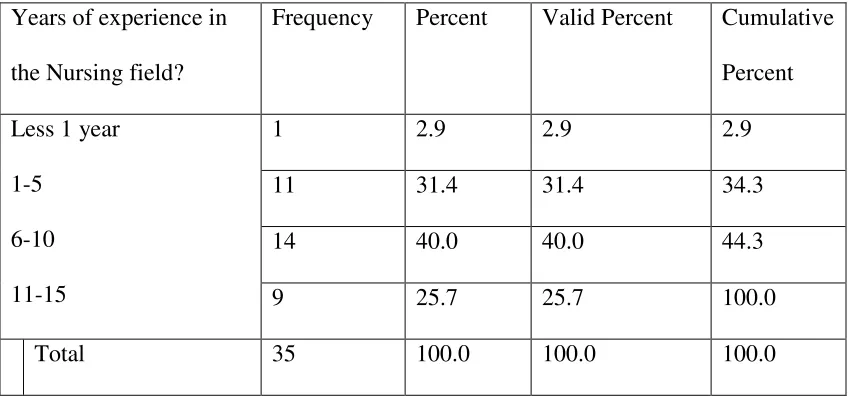
. Table 3: Participants Years of Experience……….94
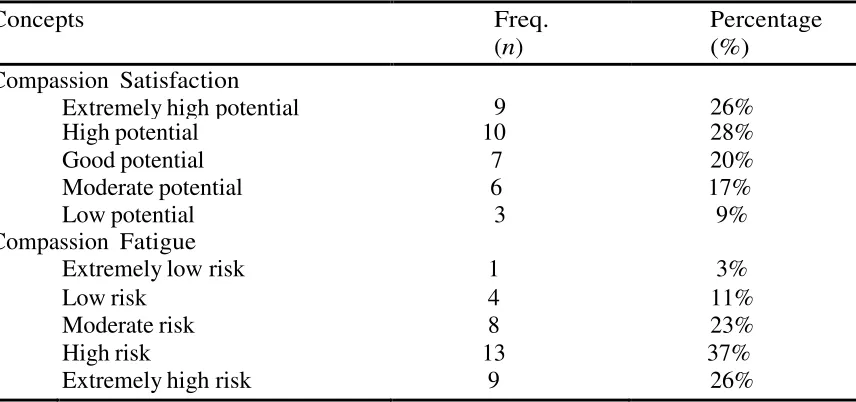
Table 4: Compassion Fatigue Self Test Results………95
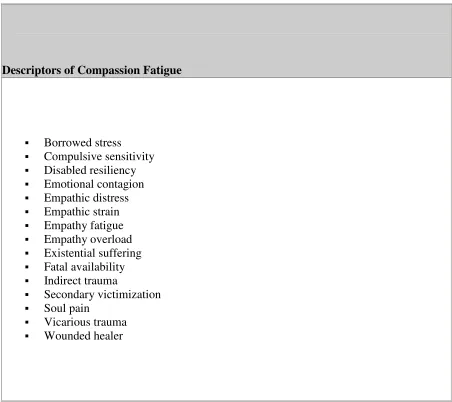
Table 5: Compassion Fatigue Descriptors……….96
Table 6: Manisfestations of Compassion Fatigue………..97
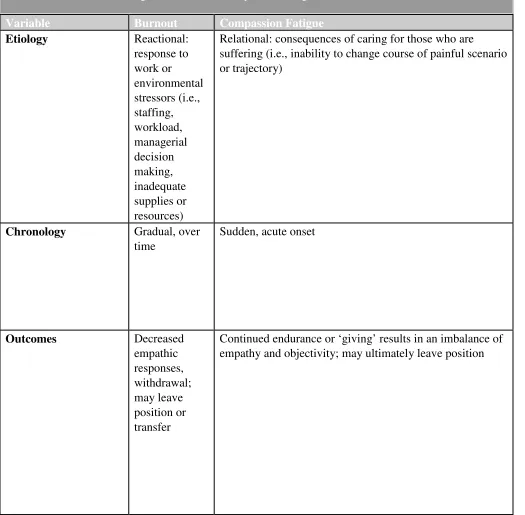
Table 7: Compassion Fatigue Differentiation………98
List of Figures
Figure 1: Figley’s Compassion Fatigue Process………99
Section I
Introduction
There are approximately 2.9 million registered nurses employed in the United States. This represents the largest segment of the healthcare workforce (US Bureau of Healthcare Statistics, 2010). Unfortunately, this number is not adequate to ensure the country’s projected health care needs. Hospitals are becoming increasingly complex environments due to
developments in medical technology, more sophisticated treatments, and an aging, dependent
population of patients. Advances in medicine and technology have enabled organizations to
accommodate patients with more complex medical issues, co-morbidities and chronic illnesses.
All of these factors contribute to the vital role of nurses in healthcare.
Significance
Nurses have an unenviable position of witnessing the patient’s personal battle with acute illness. They often experience negative repercussions when caring for the ill, which predisposes them to the effects of the patients' physical or psychological distress (Sabo, 2006). The human cost of caring can produce a toll such as, the development of “Compassion Fatigue”, which is a negative empathetic response that is insidiously compared to “Burn Out”. The victims of compassion fatigue have a perception of helplessness and hopelessness regarding their ability to provide care.
Nurses who inherently demonstrate compassion and express empathy are at the greatest risk for compassion fatigue (Figley, 2002). According to Schwam (1998) nurses often become physically and emotionally overloaded when witnessing conditions associated with daily
exposure to intense human misery. Nurses share their compassion with the suffering which may lead to unmanageable emotions. The toll of unmanaged stress and the effects of compassion fatigue are identified by Schwam (1998) as leaving a mark on nurses' personal lives. Some of the effects that are documented include substance abuse, divorce, dysfunctional relationships,
anxiety and more importantly a loss of compassion.
A nurse with compassion fatigue may lose effectiveness in the provision of care because his/her own symptoms interfere with optimal care delivery (Dominguez-Gomez & Rutledge, 2009). There are prevalent factors commonly associated to the development of compassion fatigue among nurses such as inadequate professional training; low staffing; and an
tendency to undergo small but noticeable changes. Eventually, the extra stressors can lead to an overall decline in general health (Schwam, 1998).
Scope
Nurses who care for patients in any setting face the challenges of confronting situations of life and death and are exposed to humanity in its most vulnerable state. According to Boyle (2006) nurses often enter the lives of patients at a very critical juncture and become a partner throughout the healthcare journey. They develop an empathic engagement with patients and families. This accompanied by the experience of grief, positions them at the epicenter of an environment often characterized by sadness and loss (Boyle, 2006). It is this very interaction which may negatively influence their professional quality of life. Stamm (2009) defines
professional quality of life as the quality one feels in relation to his or her work as a helper. Both the positive and negative aspects of doing one's job can influence professional quality of life.
In their professional practice, nurses frequently face a side of life that those not involved in healthcare only see very occasionally. While the average person faces several traumas or tragic events over the course of a lifetime, the nurse witness’ countless tragedies over the course of a professional career.
Relevance
predisposes nurses to vacate the profession. This produces a rippling effect causing experienced nurses to leave the bedside, which adds to an already strained health care system. The national average cost of replacing one nurse is estimated at approximately $88,000 (US Bureau of Labor Statistics, 2011).
The psychological costs to the nurse who leaves nursing because of compassion fatigue and the financial costs to the health care agency of losing a valued employee are significant. The nurses' quality of life is influenced by their high levels of exposure to patient illness episodes and research has demonstrated that this exposure is related to higher levels of mental health risk (Cicoganani et al., 2009). The nursing profession requires nurses to extend themselves physically, psychologically and emotionally while caring for others. There are competing priorities for nurses in the fulfillment of patient needs, which can place them at risk for work related stress. The overall threat of which could lead nurses to an eventual exodus from the field.
The fragile nature of the medical-surgical environment is a medium which can affect the nurse’s ability to cope. The environment is one filled with morbidity associated with diseases and the mortality of death. Medical-surgical nurses often have an inability to relax which is coupled by the emotionally draining experiences associated with their work. The degree to which medical-surgical nurses are emotionally healthy affects the extent to which they can satisfy job expectations. The care of patients and families experiencing progressive illness, death and bereavement can increase the nurse's awareness of their own vulnerability ultimately raising stress and anxiety.
Repar & Patton (2007) suggests ongoing stressors can make the practice of nursing too difficult for a caring professional to sustain long term. Since compassion fatigue has not formally been defined within nursing practice, the phenomenon has not been explored, described, or explained in a manner that would allow nurses to identify and combat compassion fatigue effectively (Coetzee & Klopper, 2010).
Theoretical Framework
Figley’s (2002) Compassion Fatigue Model is the theoretical framework used by this project (figure 2). Figley defined compassion fatigue as “a state of exhaustion resulting from exposure to compassion stress”. He acknowledged the tendency of healthcare professionals to disregard their own self-care needs while focusing on the needs of their patients and asserted “healthcare professionals must be objective in evaluating their patient’s needs”. This type of objectivity can facilitate the selection and administration of the best treatment practices for patients. In addition to being objective, healthcare professionals need compassion and empathy toward their patients which can “enable them to perceive the world through the patients eyes; thereby, enabling the adjustment for the most appropriate services” (Figley, 2002).
The model developed by Figley (2002) and subsequently revised over the years was established on the premise that “empathy and emotional energy are interrelated and together work to effectively end suffering, while maintaining a therapeutic relationship”. Figley (2002) further suggests that in viewing the world through the patient’s eyes, healthcare professionals also experience some of the suffering. He recognized that compassion fatigue is associated with a sense of helplessness and confusion in addition to feelings of isolation.
compassion stress.
Empathic ability is defined as the ability to notice the pain of others which is linked to the capacity to experience the feelings of the patient as a result of the exposure. This notion is equated as having similarity to a feeling of being “swept up” in the emotion of the patient (Figley, 2002). Empathic concern is linked to the motivation to care and, without it, the healthcare professional would be unable to assist the patient despite their good intentions. Exposure to the patient involves experiencing what the patient is feeling through direct contact. As a result of empathic ability, empathic concern, and exposure, the healthcare professional is able to elicit an empathic response, which is the degree to which attempts are made understand the patient’s feelings and perspective (Figley, 2002).
The concepts of disengagement and sense of satisfaction are used as ways to prevent compassion fatigue. Disengagement is seen as a healthy way for the nurse to focus on self-care by letting go of feelings associated with the patient and concentrating on his/her own life (Figley, 2002). The degree to which the healthcare professional is satisfied with his/her efforts and the degree to which the healthcare professional can distance himself/herself from the victim’s suffering explains how much the healthcare professional experiences compassion stress Figley (2002). In other words if compassion stress was allowed to continue without relief, then the outcome of compassion fatigue would be realized.
Three additional variables play a pivotal role in the development of compassion fatigue: prolonged exposure, traumatic recollections, and life disruption. Prolonged exposure occurs when the healthcare professional experiences a constant feeling of responsibility for the care of the patient over an extended period of time and, at the same time, the healthcare
memories that can trigger symptoms of anxiety whether it is from painful childhood memories or memories from working with a patient that was especially traumatic (Figley, 2002). Work-related stressors can also add to the probability of the development of compassion fatigue. These factors combined with unsuccessful coping techniques can increase the likelihood of the development of compassion fatigue. Figley’s (2002) Model is descriptive of the effects of compassion fatigue from both the healthcare professional and the patient.
Statement of Project Goals and Outcome
The purpose of this project is two fold; 1) To acquire recognition of the effects of compassion fatigue among medical-surgical nurses and 2) To provide education with
interventional strategies to preserve the nurse’s highest level of functioning. This is of critical importance in order to achieve the recommendation by the IOM to maintain a stable nursing work force.
Project Questions
In this project, the following questions were addressed:
1. What is the nature of the medical-surgical nurse’s experience with Compassion Fatigue?
2. How does a negative empathic response such as Compassion Fatigue
interfere with the medical-surgical nurse’s ability to provide patient care?
Operational Definitions
The following definitions have been operationalized for the purpose of understanding this project:
• Medical-surgical nurse: a graduate of an accredited school of nursing; passed the state board examination for Registered Nursing; currently employed in a Medical-Surgical environment.
Assumptions
Polit and Beck (2004) defined assumption as “a basic principle that is accepted as being true based on logic or reason, but without proof or verification”. The basic assumptions of this project included:
1. The medical-surgical nurse participants in this project were at risk for suffering from compassion fatigue.
2. Medical-Surgical nurses have an interest in knowing their risk for compassion fatigue.
3. The experience with work-related stress is perceived differently by each individual, despite the individual’s self awareness which may similarly resonate.
4. Each Medical-Surgical nurse that participates in this project will complete the survey activities in an open and honest manner.
Limitations
Section II:
Criterion for Evidence Review
The research criterion was based on use of select research journals, case studies, and other scholarly resources. The informational constructs assisted in the selection of the ten sources and contained the necessary features for answering the clinical question. The strategy used to identify the ten sources for the literature review included, an extrapolation of the variables associated with compassion fatigue.
The culmination of variables facilitated the key word search for: compassion fatigue, burnout, empathy and vicarious traumatization. The search for suitable article selections was sought from a conglomerate of scholarly data bases. The majority of the sources were extracted from CINAHL, Medline, Cochrane Review and Pub-Med. Critical judgment was utilized in order to obtain reliable and informative articles. As with any review publication, a retrieval biases can limit the validity of the results. An attempt was made to control for retrieval bias by using well-defined searches and comparing the retrievals with other reviews. There are a number of quality research studies on compassion fatigue, however, studies related to medical-surgical nurses is very minimal.
empirical research has been published which exclusively addresses measurable outcomes associated to the study of medical-surgical nurses (Appendix A).
Literature Review
This chapter contains a review of the literature, which is organized under two headings: Theoretical concepts based upon theories and empirical studies upon which
experiments and observations were the basis. The theoretical literature reviewed includes: The Compassion Fatigue Model. Literature review in the area of empirical studies includes: Compassion Fatigue in nursing and other disciplines.
Theoretical Concepts
“Compassion Fatigue” is a term widely used in the discussion of traumatic stress. The term compassion fatigue was initially used to identify work related stress derived from working with the mentally or chronically ill patient populations. The term is more
commonly used to describe the impact of work related stress incurred by healthcare professionals. Joinson (1992) was the first investigator to identify the sensation of “burn out” among nurses and was the first to initiate the use of the descriptor “Compassion Fatigue”.
Compassion fatigue is defined as “a state of exhaustion and dysfunction as a result of prolonged exposure to compassion stress and all that it evokes” (Figley, 2002). Rudolph, Stamm, and Stamm (2009) described compassion fatigue as the direct result of the health professional’s response to the patient’s experiences. The inability to counteract or reject compassion fatigue renders a healthcare professional powerless to successfully perform their ascribed tasks. This encourages the healthcare professional to denounce the patient’s
contemptuous behavior which negatively impacts the person’s cognition and judgment. A healthcare professional affected by compassion fatigue will be unable to deliver effective and professional healthcare services. The care then ultimately becomes devoid of empathy and objectivity (Stamm, 1997).
Burnout
“Burnout” has been defined as “a state of physical, emotional, and mental exhaustion caused by long term involvement in emotionally demanding situations” (Figly, 2002). Compassion fatigue is often compared to burnout because it also manifests as physical, emotional, and spiritual exhaustion (Pfifferling & Gilley, 2000). Compassion fatigue, like burnout, can test the nurse’s ability to provide effective care and to maintain therapeutic relationships. Although these concepts appear to be similar, there are differences. The onset of compassion fatigue is sudden and acute, while the onset of burnout is a gradual erosion of the nurse’s management of duties (Figley, 2002). While different from compassion fatigue, many view burnout as an important risk factor or precursor to compassion fatigue.
The work on a Medical-Surgical unit is often chaotic and hectic which prevents the nurse’s ability to reconcile the difficulties encountered during their shift and can lead to a perceived loss of control. Medical-Surgical nurses often encounter patients who are seriously medically ill. This can cause them to lose their ability to empathize which is a quality critical in establishing therapeutic relationships with patients and families.
Nurses suffering from burnout display a variety of symptoms such as “reduced self-esteem, lack of confidence and inability to keep things in perspective”.
exhaustion of the nursing staff. The researchers concluded that the effects of stress and burnout have far reaching implications for clinical practice and life in general.
Empathy
Another concept closely related to compassion fatigue is empathy. It is an ability to understand the feelings or difficulty of someone else (Figley, 2002). Empathy from a nursing perspective involves assuming another person’s suffering through the act of caring. A
correlation exists between the nurse’s empathy and the quality of care they provide (Bellet & Maloney, 1991). It has been suggested that a vulnerability to compassion fatigue is due to the use of empathy. The ability to balance empathy and objectivity is an important component in maintaining a therapeutic relationship.
Empirical Studies
Potter et al, (2010) introduced a descriptive, cross-sectional study with a purpose to assess for compassion fatigue from a cross section of hospital employees. The survey was conducted in inpatient nursing units and outpatient clinics in a cancer center. The sample consisted of 153 healthcare providers including RNs, Medical Assistants, and Radiology staff. The 30-item Professional Quality of Life (ProQOL R-IV) scale was used for measuring
“compassion fatigue”, “compassion satisfaction” and “burnout”. A series of analyses examined the relationship between participant demographics and the ProQOL R-IV subscales.
The results were tabulated from a rate of 34% of the 153-person sample size. The
6.6). The statistical analysis demonstrated the risk associated with each of the ProQOL R-IV subscales based on cut scores. These were compared with the study variables, including the participants’ workplace setting (inpatient versus outpatient), years of healthcare experience, and years of oncology experience, age, and level of education.
The findings were statistically significant for the relationship between compassion satisfaction and work setting (p = 0.008). Staff working on inpatient nursing units had the highest percentage of high-risk compassion satisfaction scores. Interestingly, the percentages of high-risk scores for compassion fatigue were relatively equal among inpatient and
outpatient staff, with 37% and 35%, respectively. Although 44% of inpatient staff scored at high risk for burnout compared to 33% for outpatient staff, the difference was not statistically significant.
A significant relationship was not found between years of general healthcare experience and the three ProQOL R-IV subscales. However, staff with 6–10 years of experience had the highest percentage of high-risk burnout and low compassion satisfaction scores. The staff with 11–20 years of general healthcare experience had the highest percentage of high-risk
compassion fatigue scores, followed by those with 6–10 years of experience. No statistically significant relationships were found between oncology experience and the three ProQOL R-IV subscales; however, an interesting trend was noted that staff with 11–20 years of oncology experience had the highest percentage of high-risk scores for all three ProQOL R-IV.
data was based on a survey of social workers with a Master’s Degree in Social Work or higher who were current members of the National Association of Social Workers (NASW). From the membership list, 600 members with New York City mailing addresses were randomly selected and were mailed a questionnaire. A second questionnaire was mailed 2 weeks later and a follow-up letter was sent 2 weeks after that as a reminder to return the survey. Those respondents not engaged in direct practice were asked to indicate this on the survey.
In all, 236 clinically active social workers returned the completed surveys and 38 returned the surveys indicating that they were not working directly with patients and were excluded from the analyses. The overall completion rate was 46% (236+38/600). This project focused on two main outcome measurements: compassion fatigue and job burnout. The items for these scales were derived from the 30-item Compassion Fatigue Scale-Revised. This scale asked respondents to rate each item as it related to their “work/life situation” using a 10-point Likert scale.
Utilizing the sample of social work practitioners, the researchers first assessed the psychometric properties of this scale and found that the original 30-item scale measured seven underlying factors. The advantage of using separate scales is that they contained fewer items overall while they remained highly correlated with the original 30- item compassion fatigue scale. The initial study supported the notion that compassion fatigue is a unique feature of the workplace environment.
The regression findings indicated that the compassion fatigue 30-item (CF-30) was a good predictor of psychological distress. In this study, the researcher used the ST-5 scale items (Cronbach’s alpha = .80; mean = 4.80, SD = 5.54. The analyses contained three
The researchers also included four stress- related variables in the analyses.
This survey had 13-items relating to different ways of helping those affected by the September 11 attacks using an ordinal scale: no/little involvement (0-1 ways = 1), low involvement (2 ways = 2), moderate involvement (3 ways = 3), high involvement (4 ways = 4), and very high involvement (5 or more ways = 5). The survey also had seven questions about counseling people, categorized as yes vs. no, in order to measure exposure to other traumatized patients, the researchers also asked participants what percentage of their patients were survivors of violence.
Respondents were divided into low exposure, if less than 20% of their patients were victims of violence, and high exposure, if 20% or more of their patients were victims. The researchers also asked about personal experiences with trauma which used an ordinal scale: no traumatic events = 1, one traumatic event (low = 2), two traumatic events (moderate = 2), three traumatic events (high = 4), and four or more traumatic events (very high = 5). The researchers also assessed an important dimension of the work environment: having
information to work effectively with patients, which was the sum of two items on the survey. The response options available were based on a 5-point Likert scale where a higher score indicated a more supportive work situation.
defined cut-off point. All p-values were based on two-tailed tests.
The demographic information indicated that most of the sample was female, white, and over 50 years old. Also, more than 50% reported being exposed to two or more traumatic events in their lifetime and 19% were currently seeing a substantial number of patients who were victims of violence. Additionally, 38% were extensively, involved with the WTC recovery efforts and 67% were extensively, involved with counseling persons affected by the WTC disaster. The major finding was that compassion fatigue among WTC counselors was significant (p<.05).
This research supported the concept that a group of mental health professionals working with traumatized victims were at greater risk for compassion fatigue. The researchers also suggested that the important variables in predicting compassion fatigue include degree of exposure, personal history, social support, and environmental factors. As was shown in this project, the work environment appears to have an impact on the outcome. This was the first project to validate the concept of compassion fatigue.
In a study by Hooper 2010 the concepts of compassion satisfaction, burnout, and
The results found that approximately 82% of emergency nurses had moderate to high levels of burnout, and nearly 86% had moderate to high levels of compassion fatigue.
Differences between emergency nurses and those working in the Oncology, Nephrology, and Intensive Care, on the subscales for compassion satisfaction, burnout, or compassion fatigue did not reach the level of statistical significance. However, the scores of emergency nurses evidenced a risk for less compassion satisfaction, while intensive care nurses demonstrated a higher risk for burnout and oncology nurses reflected a risk for higher compassion fatigue.
Dominquez & Rutledge (2010) chose a descriptive-survey design for their study of Emergency Department (ED) nurses and doctor’s attitudes and experiences of stress in the workplace. A questionnaire was devised and copies were sent to 150 ED nurses and doctors working in three EDs. The mean age of the 103 respondents was 33.4 years. The number of years’ experience since respondents’ first professional qualifications ranged between one and 35 years, with a mean of 11.4 years, while the number of years’ experience working in the ED ranged between three months and 26 years, with a mean of 6.9 years.
Thirteen per cent of respondents were doctors (n=13), of whom 62 per cent (n=8) were male. Nine per cent (n=8) of the nurses were male. The typical respondent was a female registered nurse (n=90, 87 per cent) aged between 23 and 59, who worked full time and had been married or in a relationship for a long time.
managerial skills. Other commonly identified stressors included aggression and violence from patients, and the death or resuscitation of a young person or child.
Bride (2007) studied the prevalence of secondary traumatic stress among a group of 282 Social Workers in the Southern United States. The study focused on the rate and degree of secondary traumatic stress symptoms as well as the rates of Post-Traumatic Stress Disorder (PTSD) among the target population. A questionnaire was administered to each of the participants, which contained clusters of symptoms which are indicative of PTSD.
It was found that 70.2% of the Social Workers experienced at least one symptom of secondary traumatic stress, 55% met the criteria for at least one of the core symptom clusters, and 15.2% met the core criteria for a diagnosis of PTSD. The study demonstrated that the
intrusion criteria were endorsed by nearly half of the respondents and most reported symptoms of intrusive thoughts, avoidance of reminders of clients, and numbing responses. Due to these findings, a description could be formulated about secondary traumatic stress as a significant occupational hazard for social workers that work directly with clients exposed to trauma. Social
Workers in child welfare engage primarily with children and thus are exposed to
Due to the nature of the work, social workers often experience chronic exposure to trauma and a high number of trauma related clients on their caseloads. Additional stressors such as excessively large caseloads, contentious client interactions, limited resources, and difficult working environments only further complicate the experience of social workers in the child welfare system and increase their vulnerability for distress and emotional difficulties (Siegfried, 2008). Bride went on to state a belief that “the experience of secondary trauma is one reason why many child welfare professionals leave the field prematurely”.
Blomberg & Sahlberg 2007 study was interested in understanding how care team members caring for patients with advanced cancer handle difficult circumstances arising from their daily work. The sample size was 77, which included Nurses, Nurse Assistants,
Psychologists and Occupational Therapists. The chosen setting included: the Oncology, Palliative Care and Outpatient departments. The study was conducted utilizing 16 focus group discussions with the care team members. The procedure for data analysis was inspired by the phenomenological method.
The results demonstrated that the care team members handled difficult situations by balancing between being close and distancing themselves. In most situations their choice of strategy seemed spontaneous rather than being a conscious decision, although it was sometimes described as a more conscious approach. Variations of closeness and distance that were
identified were Identity, Meaning, Limit-setting and touching, Prioritization, the Team and the Organization. These could also be seen as tools that could facilitate or impede the use of closeness and distance.
unresolved, it is apparent that it can lead to distress, burnout and most importantly a lack of optimal care. It is well established that nursing can be a stressful occupation. Pediatric oncology, as a setting, is perceived as both personally and professionally demanding, due to additional stressors that are unique to its specialty. The additional stressors that are specific to the pediatric oncology field include, grief, loss, ethical dilemmas regarding treatment and the management of professional boundaries in regard to relationships with patients and their families.
The study’s intent was to determine if there were strategies in use, which promoted resiliency with work, related stressors. These findings highlight the possibility of resilience being present among pediatric oncology nurses. However, the literature fails to explore the concept of resilience among pediatric oncology nurses at this time. Blomberg & Sahlberg (2007) assisted in the understanding of how nurses currently cope. They are in favor of the development of strategies, which can enhance coping ability. Abendroth, (2006) conducted a study in order to 1) understand the complex relationships among Compassion Satisfaction, Compassion Fatigue and Burnout within the hospice and palliative care workforce and 2) explore how key practice characteristics, practice status, professional affiliation, and principal institution interact with the measured constructs of Compassion Satisfaction, Compassion Fatigue and Burnout.
The study utilized measures of “Self - Report” of Compassion Satisfaction, Compassion Fatigue and Burnout, using validated scales. The study also administered a survey
questionnaire to describe socio-demographic profiles and key practice characteristics. The participants were healthcare professionals comprising clinical, administrative, allied health workers and volunteers. The total number of participants was 630 (n = 630). The
home care.
The study results indicate a significant negative correlation between Compassion Satisfaction and Burnout (r = -0.531, p < 0.001) and between Compassion Satisfaction and Compassion Fatigue (r = -0.208, p < 0.001), and a significant positive correlation between Burnout and Compassion Fatigue (r = 0.532, p < 0.001). Variations in self-reported levels of the above constructs were noted by key practice characteristics. Levels of all three constructs are significantly, but differentially, affected by type of service provided, principal institution, practice status and professional affiliation. The results further indicate the impact health care systems could have on increasing the prevalence of Compassion Satisfaction through
engagement in policy changes and through development of supportive programs for their healthcare professionals (Appendix B).
Summary
The literature provides support for the notion that a stressful environment produces varying effects on people. There are some that escape the impact and others in which the impact produces psychological or physical problems which are severe. Stamm (1999) argued that there are healthcare professionals that suffer varying degrees of impact which is related in part to the motivation that drives their satisfaction for helping others. The act of demonstrating compassion for the traumatized can have harmful effects among the care givers (Figley, 2002).
explore compassion fatigue among Medical-Surgical nurses. The discussion will include the project design, sample, and instrumentation, protection of human subjects, procedure, and data analysis.
Project Intervention
An aim of this project was to assess compassion fatigue among medical-surgical nurses. The planned intervention consists of the development of an educational program, which has been implemented. It involved the initial training of the Nurse Educator as the future facilitator of Compassion Fatigue education for the staff within healthcare organization A. The first of four series was initiated and included a 45-minute training session, which was designed to assist RNs to recognize compassion fatigue and to develop a self care plan. The program was presented to a group of RNs at both of the facilities, which were involved in the project.
Section III:
Project Implementation
Design
The project utilized a quantitative exploratory format designed to elicit information about a relatively sparsely studied topic. In fact, few studies have looked at the experience of the medical-surgical nurse, rather, most have focused on the experiences of Intensive Care, Hospice, Oncology and Emergency Room nurses. Subsequently, the data gathered can provide a basis for further study and the need for intervention techniques. The focus of the project will delve into the precipitating factors of compassion fatigue.
According to Polit and Beck (2004), the goal of most studies is to “develop a rich understanding of a phenomenon as it exists in the world and as it is constructed in the context of that world”. The type of design construct used for the purpose of this project was
appropriate as a means to adequately support the discovery and meaning of the Medical-Surgical nurses’ experience with compassion fatigue. Inclusion criteria Medical Medical-Surgical nurses whom fit the criteria.
Methodology
The project contends that knowledge concerning the symptoms of Compassion Fatigue may inspire the development of interventions to prevent or deter its existence. The impetus for this project arose from an observation of a chronic display of apathy in the performance of providing care to the patient and their families in the medical-surgical department.
the project will be referred to as Hospital A. It is located within 10 miles of the second hospital. It is a 16 bed acute care hospital with an Ambulatory Care Center and Physiatry services. Hospital A is located in a Northern California community with a total population of approximately 32,148 of which approximately 4.8% of the residents are African-American, 70.2 % are Caucasian, and 25% are of other ethnic or racial origin (U.S. Census Bureau, 2011).
The second hospital selected for the project, which will be referred to, as hospital B is also located in a Northern California city. The population of the community is approximately 21,158 and approximately 1% of the residents are African-American, 76 % are Caucasian, and 23.1% are of other ethnic or racial origin (U.S. Census Bureau, 2011). Hospital B is a 450-bed acute care hospital, which was selected for the project due to its high volume of patients treated in the medical-surgical units. The researcher contends that the large patient volume increases the exposure to work related stressors, creating a predisposition for Compassion Fatigue. This hospital was also selected, as it was the only other acute care hospital in the area which is owned by the targeted healthcare organization.
Sample
The participant populations were selected from the two targeted acute care hospitals. A total of 50 Medical-Surgical registered nurses were recruited for participation in the project. Approximately 35 participated in the project. The participant population consisted of all Registered Nurses (RNs). The registered nurse participant’s met the following inclusion criteria: a) Graduates of a school of nursing and having passed the board of registered nursing examination as a registered nurse, and b) at least 18 years of age or older, b) currently
Protection of Human Subjects
An application was completed and submitted to the IRBPHS Research Institute
governing the target hospitals. An approval was received by the Research Institutional Review Board governing the corporation of the two target hospitals (Appendix C). An application to the Institutional Review Board Protection of Human Subjects (IRBPHS) was completed and
submitted to the University of San Francisco IRBPHS prior to initiation of data collection. An exemption was received in the implementation of this project from the University of San Francisco Institutional Review Board (Appendix D).
An approval letter was received from the Chief Nursing Officer of organization A
(Appendix E) and the Vice President of Patient Care Services from organization B (Appendix F). Project participants were recruited through a letter distributed online through the nurses secure work web mail address (Appendix G). There was no scripting by this researcher, in order to limit any inconsistencies that could be created by any impromptu presentation to the nurses prior to completion of the project.
described as a potential self-awareness and opportunity to help nurses to relieve their suffering from CF, through the sharing of experiences.
The IS explained the confidentiality process in which there would be no personal identifiers associated with participation in the project, therefore, the identity or information would remain strictly confidential. Data collection in this project would be managed and stored on the secure encrypted desktop computer in the researchers locked office. All documents pertinent to the project would be destroyed no later than May 31, 2013.
Instrumentation
Validity – An extensive review of research did yield quantitative surveys addressing compassion fatigue, however, it was not specific to medical-surgical nurses. The survey instruments utilized for this project were validated instruments. The project yielded a minimal threat to internal validity because the project was completely devoid of personal contact by the researcher. The contact with the participants was avoided in order to not lose objectivity.
Reliability – All of the participants in this project were at risk for or have already developed compassion fatigue. All of the participants in this project indicated this was the first survey they’ve taken targeted to Compassion Fatigue; however, if the group took the survey a second time the measurements could yield the similar results, therefore demonstrating test-retest reliability.
tool of current employment status (Appendix I). It consists of a series of 9 questions
designed to elicit each nurse’s individual experience with CF and work-related stress. Since many nurses are not familiar with the term CF, the questions were formatted with a series of choices in which to guide the sharing of experiences related to CF. Each of the 9 questions offers a choice from multiple answer selections. The purpose of the questionnaire was to determine whether there are any links between factors such as income and the development of compassion fatigue.
The second tool selected for use was the Demographic Profile (Appendix J). The demographic Profile assists to identify any pattern or trend, which exists that, can create a predisposition for compassion fatigue. There were 13 questions in the Demographic Profile with multiple-choice answers. The data was collected from three tools because according to Polit and Beck (2004) it is preferable to use data from multiple sources in order to be able to validate the conclusions and enhance the credibility of the results obtained and a 5-point Likert scale was used.
The final tool selected for use was the Compassion Satisfaction/Fatigue Self-Test for Helpers was developed by Dr. C. Figley and Dr. B.H. Stamm (1996) (Appendix K). This is a 25-question tool with scoring on a 0 to 5-likert scale. The lowest score selection a “1” represents a response of “never” and the highest score selection a “ 5” represents a response of “very often”. The purpose of the Compassion Satisfaction/Fatigue Self -Test for
Procedure
This project involved the recruitment of Medical-Surgical nurses to participate in a survey designed to facilitate articulation of their feelings and experiences with CF. Upon receipt of permissions from the respective Institutional Review Boards for the Protection of Human Subjects the project commenced. A letter was e-mailed to the Vice President of Clinical Services and the Chief Nursing Officer of the targeted hospitals, to explain the purpose of the project as well as to ascertain agreement for nursing participation.
Upon confirming the agreement, the next step was preparation of Survey Monkey, a secured, encrypted website to serve as the survey engine. A consent outlining the rights of the participant as a subject of the project was uploaded to Survey Monkey. Next the Online Questionnaire, Demographic Profile and the Compassion Satisfaction/Fatigue Self-Test for Helpers accompanied by answer choices were uploaded
Consent to participate in the project was implied as soon as the participant logged on to the confidential website to participate in the survey activities. The recruitment letter contained the Information Statement (IS) outlining the rights of the individual participant with an emphasis placed on the protection of the participant’s identity. This was a means to facilitate the candid expression of each participant’s experience with CF and work-related stress.
The time parameters were also explained in the IS and were estimated to be
approximately 20 minutes.
Upon completion of all survey activities, the data was initially complied through Survey Monkey. The data was analyzed and the results maintained on the secure encrypted computer locked in the researcher’s office. The researcher and the researcher’s committee members are the only persons who will have access to the results of the project. The comments made by the project participants will allow the researcher to fully capture the experiences with CF and work-related stress.
On October 13, 2012 a lecture was given on the concept of CF which included the Nurse Educator who will host future trainings. The lecture was held during the hospital wide “Competency Day” in order to educate the entire nursing staff. Interventional Strategies, which have been designed by the researcher, were given as an aspect of promoting self-care among the entire hospital staff.
On October 19, 2012 the strategies designed to prevent or reduce the effects of CF were fully implemented to include additional mandatory training which will include a four series training initially and will be hosted twice a year, thereafter. The training will serve as a forum for the nurses to talk about stress reduction strategies and the challenges faced in provision of quality care. The data collected through the successful implementation of this program will demonstrate its usefulness in averting combat fatigue. There will be
recommendations made based on this success to offer the training corporate wide to all staff.
Results
nurse, number of years working in the medical-surgical area and educational background. Although Figley (2002) recommended reporting summed scores for the subscales, this researcher preferred to rely on the raw scores to indicate relative risks.
The project response rate was a total of 35 nurses for a rate of 70%. The majority of respondents were female RNs (see Table 1). The average compassion satisfaction score among all study participants was 20, which were lower in comparison to an average score of 22 reported by Stamm (2009). Conversely, the average compassion fatigue score among participants was 22, which were higher in comparison to the average score of 13 reported by Stamm (2009). Figley’s Compassion Stress and Fatigue Model (2002) was the framework, which directed and assisted to conceptualize the project. The sample of nurses included full time, part time, and per diem nurses. A triangulation was produced by the quantitative data from Figley’s Compassion Satisfaction/Fatigue Self-Test for Helpers and assisted to confirm the project’s objective.
The number of nurses who reported being married was 51% (n= 18); reported a divorce, 26% (n =9); were single 14% (n=5), and separated from their spouses 9% (n =3). Nurses with four children living at home, 3% (n=1); had 3 children living at home, 17% (n
=6); had two children living at home, 20% (n = 7); had one child living at home 17% (n=6); had no children at home 43% (n=15). Sixty nine percent (n =24) received an associate’s degree in nursing, 17% (n=6) received a bachelor’s degree in nursing, and 14% (n =5) had a Master’s degree in nursing (Table 2). There were 31% (n =11) of nurses who earned a yearly income of $70-80,000 8%; Nurses who earned a yearly income of $81-90,000 were 49% (n
=17); Nurses who earned a yearly income above $90,000 was 20% (n =7).
34 years with the mean number of years of experience as a registered nurse of 17 years. The number of years of worked in the Medical-Surgical ranged from 0 years to 23 years with the mean number of years worked in the Medical-Surgical of sixteen years (Table 3). Fifty-four percent (n = 19) were employed full time at the current facility and 46% (n = 16) were employed on a part-time basis. Forty-six percent (n = 16) worked day shift (7 am to 7 pm), 28% (n = 10) worked night shift (7 pm to 7 am), and 26% (n =9) worked variable hours to include both day and night hours. The mean number of hours worked per week was 37.5 hours. Eighty-two percent (n = 29) did not work in another facility and 17%, (n=6) indicated they worked at other areas/facilities, which includes Medical-Surgical and long term care. Analysis showed no
significant correlations between age, gender, marital status, employments status, number of years as a nurse, education level and/or previous medical-surgical nursing experience.
Compassion Satisfaction/Fatigue Self-Test for Helpers results were compared to the quantitative data obtained from the online survey questionnaire. Figley’s Compassion Satisfaction/Fatigue Self-Test for Helpers evaluates compassion status. It is a tool, which measures the risk for developing compassion fatigue as well as measure level of satisfaction with helping others. The scores are broken down into two sections: potential for compassion satisfaction and risk for compassion fatigue.
The scores indicated that 26% (n =9) of the project participants had an
extremely high potential for compassion satisfaction; 28% (n = 10) had a high potential for compassion satisfaction; 20% (n = 7) had a good potential for compassion satisfaction; 17% (n
developing compassion fatigue; those with a mod risk were 23% (n = 8) those with a high risk for developing compassion fatigue; and 37% (n = 13); those with an extremely high risk for developing compassion fatigue were 26% (n=9) (Table 4).
The results of these scores validate the number of nurses with compassion fatigue experiences. The scores indicated that more than half of the project participants had a high to extremely high risk for developing compassion fatigue. The responses given by the project participants’ provides evidence that work-related stressors cam affect the nurse’s ability to cope and to provide the compassionate care that the patient deserves.
The coping measures indicated in the responses demonstrated that the project participants are attempting to be mindful regarding their own self-care. Further
exploration is needed in order to understand how the work stress specifically impacts the ability to provide care. While the scores indicated that a greater number of the project participants were at risk for developing compassion fatigue, the scores also indicated that a majority of the project participants had an excellent chance for developing compassion satisfaction.
Stamm (2002) indicates that caregivers can derive compassion satisfaction while simultaneously being at risk for compassion fatigue. This explanation is evident throughout the project participants’ responses to the relationship of their sense of accomplishment and a stressful work environment. Many of the project participants demonstrated that they have a sometimes overwhelmingly stressful workload and environment.
Section IV:
Project Evaluation
The project on compassion fatigue was evaluated through review of objective and subjective measures which impacts: the patient; clinical environment and healthcare. Patient Impact
Objective measure
The Online Questionnaire was the objective measurement regarding the nurse’s experience with compassion fatigue and the affect on the ability to care for the patient. Item number six on the questionnaire was designed to elicit a description from the project participants in terms of how their experiences with compassion fatigue interfere with the ability to provide care (Table 5).
Subjective measure
The responses from the questionnaire offered emergent themes, which were that of anger, lack of care and lack of time.
Anger sseemed to be pervasive among the participants as they responded regarding the effect of stressors. Many of the respondents seem to lack a sense of support and are seemingly angered by that notion. Many of the participants have managed to identify angry feelings and use
appropriate coping instead of projecting their feelings onto the patient.
understanding of the negative influences on the environment when there are work related stressors.
Lack of time spent in patient care was a common theme that seemed to produce the greatest amount of frustration among the project participants. The lack of time spent with patients is a delicate subject and a perception which if allowed to continue can lead to mounting
disappointment and feelings of defeat. This can also produce barriers, which threaten the
delivery of quality and safe care. If left unattended, it is a factor, which can ultimately lead to an increase in errors of judgment which can be catastrophic to an organization.
ClinicalEnvironment Impact
Objective Measure
The Online Questionnaire was the objective measure used to establish the existence of compassion fatigue among Medical-Surgical nurses’ and the impact to the clinical environment. Online questions one through five and seven through nine were purposed to direct the project participants in their familiarity with descriptors regarding compassion fatigue. There were consistent themes noted in the results related to the experience working in the medical-surgical clinical environment (Table 6).
Subjective Measures
The participant’s responses were the subjective measures. The project
Medical-Surgical clinical setting can be extremely taxing and therefore in need of processes and systems with which to manage work responsibilities and avert patient safety issues.
Some of the participants were acutely aware of the contributing factors of their compassion fatigue, yet, indicated an inability to mange the effects while delivering responsible care. The demands of the job seem to produce a sense of helplessness which resulted in the nurse becoming out of balance. As was mentioned previously, Medical-Surgical nurses need balance in order to effectively and efficiently provide quality care. They need a capacity to multi-task, however, the issues with loss of control can undermine the confidence to maintain.
Disempowerment was a re-occurring theme throughout the responses regarding the effect of work-related stressors. Feeling disempowered often occurs when not feeling like the resources are available to accomplish the work load. These nurses are in a precarious situation as the lack of empowerment disallows them to independently address conditions, which precipitate safety issues. The participants responses demonstrated how difficult it is for them achieve the mission within the Medical-Surgical area, given a perceived lack of support and scant resources.
Dissatisfaction was another theme used to define the feelings associated with the clinical environment. The project participants seem to recognize the impact of their dissatisfaction on their ability to provide therapeutic care.
welfare of the patient, which compounds the nurse’s feelings (Table 7).
There are continuous quality improvement measures in place at each hospital to thwart issues that impact the medical-surgical environment. This includes regularly scheduled monthly meetings, which facilitates a discussion with and between the nurses regarding topics which affect their practice. An example can be noted at hospital A in which there are in-services which focus on working with Breast Cancer patients.
There are also activities, which are scheduled routinely which elicit knowledge pertinent to care, while simultaneously promoting team work. The managers and supervisory personnel also engage in the activities in order to demonstrate solidarity with the staff since the influence of the environment starts with the leadership. These are worthy measures, however, a
continuous quality improvement project such as the education regarding compassion fatigue and its control cannot be over emphasized.
Over time the most effective measures are those, which impact positive change in the
environment. If the nurses aren’t feeling comfortable to adequately and safely perform it is a subject, which must be broached. Education is not the only method to address compassion fatigue however; it extends far beyond most interventions which influence change.
Healthcare Impact: Objective measures
The information that seems to have the most profound effect on healthcare globally is the discussion of encounters with work-related stressors. The project
Subjective measures
In their discussion of strategies used to cope with work-related stressors, the project participants focused on the themes of interaction with support systems, self resolve and internal control measures. The type of interaction with support systems seems to impact the nurse’s ability to cope. Each project participant’s responses were indicative of some form of angst when dealing with daily stressors. Many indicated a choice to take a time out as a method to counter their anxiety, while others indicate suppression of their anxiety in order to complete their usual tasks without incident. Some of the project participants indicated that they share their work related difficulties with close family members and friends as an outlet. Other project participants indicated they leave their difficulties at the work place while still others used coping measures not listed in their choices as a means to manage a stressful day.
Internal control measures were utilized by some of the participants such asactivities at work or outside work in order to cope with the stress. One of the most stunning aspects were those participants that seemed to rely on unhealthy choices such as, drinking or smoking to counter a stressful day. There were some participants that use exercise or relaxation as an outlet after completing a stress filled day at work. The use of internal control measures was a more positive method by which participants coped with work related stressors. Finally, and not surprisingly, most of the project participants utilized a sense of accomplishment, which was vital to raising a level of satisfaction for the work they perform.
to safe and responsible care.
One such initiative utilized by hospital A is the participation in the Collaborative Alliance for Nursing Outcomes (CALNOC). They are providers of information and research on nursing sensitive quality indicators. CALNOC’s database registry of nursing sensitive indicators converts the reported outcome data into information which the hospital administration uses to guide decisions that advance patient care.
The imperative for quality patient care has never been stronger. With nursing sensitive indicators linked to reimbursement, there is now a direct effect on the impetus to change issues in the environment, which have a global impact on care. Each hospital participates in
continuous quality improvement through participation in a national patient satisfaction database (PRESS GANEY), which gathers data regarding the patient’s perception of their overall
experience. To evaluate and improve the quality of care provided is of vital importance in the context of nursing care. Patient satisfaction is a significant indicator of the quality of care. Consequently, there are processes that provide information from the patient’s perspective on whether quality is being performed. It also maps out patient satisfaction with nursing care.
To improve the quality of nursing care, the nurse needs to know what factors influence patient satisfaction. Each hospital has an interest in the survey items which specifically address the patient’s perception of their care and of their care providers. The feedback from the survey has a powerful influence. Upon identifying a concern continuous quality improvement efforts such as performance improvement teams are established in order to determine which
awareness and impact of compassion fatigue has not been fully realized. Education regarding the condition and prevention will assist to ensure that patients desires to have their needs met adequately and compassionately are fulfilled.
The Compassion Fatigue project was executed under the premise of the quality tool of FOCUS-Plan-Do-Check-Act (PDCA). This is a research-based structure model which provides the tools to continually self monitor. The key steps of FOCUS-PDCA were implemented to first identify the profound impact of compassion fatigue on patient care as well as the recruitment and retention of nursing personnel. The compassion fatigue project proved to be meaningful in the discovery of an opportunity to improve the phenomenon. Compassion fatigue is a troubling concept with implications for provision of quality care. A plan to alter this disturbance clearly involves the collaboration of an organized team of nurses, administration and other key
stakeholders whom are the closest to and have ownership of the problem. The clarification needed for process improvement will include education regarding the information pertinent to understanding compassion fatigue. Facilitating an understanding will essentially provide a framework for understanding how compassion fatigue interferes with care practices. The “Plan” was accomplished through writing the education plan, data collection and the vital few opportunities for improvement identified in the process of conducting the
Sustainability
The sustainability of methods to mitigate or reduce compassion fatigue was designed to assist the nurse to implement and maintain strategies of functioning that have been compromised due to Compassion Fatigue. The proposed education program as an intervention would include an integrated approach to self-care in order to enhance resiliency to compassion fatigue. In addition to addressing the deficits, which prevent the nurse from performing at an optimal level, there will be the opportunity to learn, by experiential participation, steps that can also be utilized by the patient. Compassion Fatigue has an ability to deter the nurse’s sense of well being,
purpose, identity and empowerment, all of which are important qualities. The education program will strive to instill a sense of hope in the nurses professional and person life.
The educational program protocol is designed in four series and will be directed to assist the nurse with the achievement of the following major objectives; Identify and understand the experiences which trigger symptoms of compassion fatigue in their lives; Review of present personal methodologies of addressing these difficulties; develop a maintenance self-care plan which incorporates: specific skills and a connection with others. The purpose of this is to enable the nurse to identify resources (external and internal) to assist with resiliency to compassion fatigue. The program will also assist in boundary-setting and conflict resolution.
Series Two will include an introduction of a variety of relaxation technique taught by the Nurse Educator including safe place visualization. The intent would be to relax the nurse in order to inspire the same hope and empowerment created at the beginning of the nursing career
Series Three is to develop professional and personal goals and to start reframing the nursing experience. There will also be a review of situations, which are difficult, accompanied by a review of strategies for modulating feelings.
Series Four: The nurse will be assisted to identify new skills to practice and master boundaries and self care which will include and a review of the goals of the compassion fatigue program.
Options for Further Work
Section V
Project Summary
The occurrence of compassion fatigue within the health care professions has undergone significant investigation. However, the prevalence of compassion fatigue among Medical-Surgical nurses has gone practically unnoticed. Work in the Medical-Medical-Surgical is often described as a “death zone” (Badger, 2001). Medical-Surgical nurses endure numerous work-related stressors as a result of their work environment. These nurses are at risk for developing compassion fatigue as a consequence of the stressors that they encounter.
The intent of this project was to assist the Medical-Surgical nurse with recognition of compassion fatigue and work-related stress and its impact on patient care. An understanding of this phenomenon will allow others such as those in administration to become more acutely aware of the detrimental effects of compassion fatigue. It will also facilitate the nurse’s ability to plan for self-care as a means to improve patient care and safety.
Medical-Surgical nurses encounter numerous work-related stressors as a result of their hectic work environment. These nurses must adapt to the demands produced by a high patient acuity. These are circumstances which predispose the Nurse to conditions which compromise the health and safety of patients. The responses to the survey questions are not a surprise as they allude to the frustration associated with feelings of loss of control.
nurses are simply overwhelmed when there is high acuity because they believe it disallows their time spent providing patient care. When nurses lack control in their environment it has a tendency to diminish their self-confidence and ability to perform their duties.
A loss of control is tantamount to feelings of disempowerment in the work setting. Medical-Surgical nurses view the lack of time available to spend with patients as
disempowerment. High acuity patients or those with a severe episode of illness, require more nursing time thus taking away from the care needed by other patients. Nurses have a tendency to want to be all things to all people. There is a tendency to become easily upset and short tempered which can be taken out on the patient. The participants in the project demonstrated varying degrees to which they manage their feelings when the workload is perceived as burdensome. In their descriptions a recurring theme seemed to relate to the amount of workload and lack of support. The trend in increased patient volume, high patient acuity, and lack of adequately trained nursing staff seemed to also factor into the stress.
The lack of support from management, hospital nursing staff, and co-workers was perceived as a work-related stressor. These nurses had perceived feelings that the department managers were not aware of nor understood the stressors they face. Teamwork is essential within the Medical-Surgical because of the enormous work load. Lack of support from co-workers who do not complete their share of the work was also perceived as a work-related stressor.