CHANGES IN HEART RATE VARIABILITY AFTER A SIX MONTH LONG
AEROBIC DANCE OR STEP-DANCE PROGRAMME
IN WOMEN 40–65 YEARS OLD: THE INFLUENCE OF DIFFERENT DEGREES
OF ADHERENCE, INTENSITY AND INITIAL LEVELS
Aleš Jakubec, Pavel Stejskal, Liběna Kováčová, Milan Elfmark,
Iva Řehová, Michal Botek, Milan Petr
Faculty of Physical Culture, Palacký University, Olomouc, Czech Republic
Submitted in August, 2008
The aim of the present study was to investigate how changes in heart rate variability (HRV) after a 6 month long aerobic dance or step-dance programme are related to adherence, to exercise intensity and to the initial level of HRV. The experimental group consisted of 44 women aged 47.3 ± 5.4 years. Methods used were the spectral analysis of short term recordings of R–R intervals and the incremental uphillwalk jog test till maximum on the treadmill. Interven-tion consisted ofa group aerobic exercise, done for a period of six months, three times per week, for 40–45 minutes. Exercise intensity was monitored and followed using monitors of heart rate.
There were great differences among the women in the realised training units (9–73). The average weight decrease which occurred measured from 72.1 ± 12.9 kg to 71.1 ± 11.8 kg and the average VO2max increase measured from 33.3 ± 5.7 ml.kg–1.min–1 to 37.0 ± 5.1 ml.kg–1.min–1. The exercise programme did not cause any statistically significant
changes in the monitored parameters of HRV. Only two characteristics of exercise intervention (total duration of the aerobic part of the exercise and the average intensity of the exercise) correlated with changes in HRV. A negative cor-relation was found between most monitored parameters of HRV and their changes. Corcor-relation analyses suggested that the shift of spectral power from sympathetic to parasympathetic happened in the women with a higher adherence to the programme, but it was shown that the influence of volume and quality of exercise were suppressed by the initial level of each parameter of HRV. The lower or worse the initial values of these parameters were before starting the programme, the greater were their increases in a half a year. With regards to the relationship between aerobic power and ANS activity, it is possible to state that in light of its impact on ANS activity, aerobic dance or step-dance could serve as a suitable exercise activity more for subjects with lower aerobic power.
Keywords:Heart rate variability, adherence, initial values, aerobic dance and step-dance.
INTRODUCTION
A regular physical activity leads to considerable changes demonstrated in the increase of health related fitness and in the decrease of the risk factors developing a number of disabling medical conditions which occur in people who are inactive (Physical Activity Guidelines Advisory Committee, 2008). We can postulate that for the lifelong lasting realization of a regular physical activ-ity, the right choice of its kind is important. One of the most desired and desirable physical activities for women is aerobic dance, which can have a positive influence on aerobic power similarly to walking or jogging (Garber, McKinney, & Carleton, 1992). Aerobic dance can have a similar effect to running, especially if the intensity of the exercise, frequency and duration is the same (Mil-burn & Butts, 1983).
Our intention was to identify comprehensively every aspect connected to the six month long regular exercise
programme of aerobic dance and step-dance. Namely these are changes in aerobic power (already published in a work by Stejskal et al., 2007), in body composition, in psychological and social factors which predetermine adherence and, last but not least, in the changes in the autonomic control of heart rate.
(Aubert, Beckers, & Ramaekers, 2001; Carter, Banister, & Blaber, 2003; Lee, Wood, & Welsch, 2003).
The aim of the study was to investigate changes in HRV after a six month long regular (3 times per week) realization of an aerobic dance and step-dance pro-gramme among middle aged and older women (rang-ing from 40 to 65 years). The next aim was to assess whether potential changes in HRV are related to exercise intervention adherence, to exercise intensity and to the initial level of HRV.
METHODS Subjects
A group of 44 women aged between 40–65 years old (47.30 ± 5.42 years) volunteered to participate in the study. Entrance criteria were an interest in exercise, a sedentary lifestyle, age from 40 to 65 years, the health state enabling participation in the exercise programme as much and as often as possible, and the willingness to undergo initial and final laboratory testing. Each subject signed an informed consent form before entering the study.
As a reaction to leaflet promotion, 75 women re-sponded, 53 of whom underwent an entrance inves-tigation. The medical check up excluded 4 of them; therefore the programme started with 49 and ended with 47 women. It was not possible to calculate HRV from the ECG record in three women before or after the realization of the intervention programme (there was a relatively high incidence of arrhythmia).
Laboratory tests
The investigations were carried out under relatively standard conditions (temperature 19–21 °C, humidity 40–50%) in the laboratory of the Faculty of Physical Culture at Palacký University in Olomouc, the Czech Republic. The women were asked to come with an emp-ty stomach and to abstain from drinking coffee, alcohol and hard physical activities for 24 hours before entering the laboratory. First of all their weight and the height were measured and their body mass index (BMI) was calculated. All the tests were realised in one session one or two weeks before the start of the programme (pre-test) and than one or two weeks after the cessation of the programme (post-test).
Examination of the activity of the autonomic nervous system by means of the spectral analysis of heart rate variability
During a standardized ortho-clinostatic maneuver (supine–standing–supine) there was a short term ECG record (300 heart beats and 5 min.), which was col-lected for each position by means of the microcom-puter diagnostics system Varia Cardio TF 4 (Salinger & Gwozdziewicz, 2008; Salinger et al., 1998). The sub-jects closed their eyes and were listening to relaxation music from headphones during the whole test. Only the ECG record from the third (second supine) position was analysed. Frequency domain analyses of conse-quent R–R intervals were performed according to the methods described by Salinger et al. (1998). The ampli-tude density of the collected signal was estimated using the fast Fourier transformation method with a partly modified coarse-graining spectral analyses algorithm (Yamamoto & Hughson, 1991). Transformation of the time data results ranged across a total power spectrum from 0.02 to 0.50 Hz (TP) which was divided into power of high frequency (PHF) (0.15–0.50 Hz), power of low frequency (PLF) (0.05–0.15 Hz) and power of very low frequency (PVLF) (0.02–0.05 Hz) (Salinger & Gwozdzie-wicz, 2008). Further analysed parameters were the ra-tions of particular spectral powers (VLF/HF, LF/HF, VLF/LF), the percentage of particular spectral powers from TP (% VLF, % LF, % HF), the mean duration of R–R intervals [ms] and MSSD (mean squared succes-sive differences) [ms2].
The incremental uphill walk jog test was carried out on the treadmill (Technogym runrace HC 1200, Italy) with the use of the Bruce protocol (Maud & Foster, 1995) based on the increment of each load in three minute long intervals to the point of exhaustion. The speeds and elevation of the intervals were: 1) 2.7 km.h–1
and 10%, 2) 4.0 km.h–1 and 12%, 3) 5.5 km.h–1 and 14%,
4) 6.8 km.h–1 a 16%. Oxygen consumption (as well as
the other not mentioned ventilation parameters) was measured using a gas analyser (Jaeger Oxycon Delta, Germany) and heart rate with a telemetric monitor (Po-lar Electro S810i, Finland).
Aerobic classes
in-tervention was not limited with any nutrition restriction or modification.
Aerobic dance is based on walking and step varia-tions, knee bends, lunges (low impact aerobics – LIA), running, skipping and hopping (high impact – HIA) and their combination (low-high impact); this exercise is accompanied by the controlled movement of the arms. Step-dance aerobics is based on stepping up and step-ping down with the use of two steps (10 and 13 cm), combined with step variations on the steps and apart from them as well. Every movement was planned and put together in order to create a composition (chore-ography) which was modified after a month. The cho-reographies followed didactical methods and learning techniques which are called learning patterns (Brockie, 2006).
There were three training units for both groups each week. It was possible to perform a maximum of 76 train-ing units in a half a year. Each traintrain-ing unit lasted for 60 minutes and consisted of a) an initial part (warming up and stretching), b) the main (aerobic) part, c) pow-erening d) the final part (cooling down, stretching). The initial and main part lasted for 40–45 minutes, poweren-ing and final part took 15 minutes.
The intensity of the exercise was monitored using a heart rate monitor (Polar A3, Finland). Each woman switched on the monitor at the beginning of the aerobic part and switched it off at the end. Exercise intensity was set up in the range (10 beats.min–1) when the high
limit corresponded to the anaerobic threshold evaluated by means of the V-slope method; if there were difficul-ties in using the above-mentioned method, the optimal heart rate (HRopt) within the range of ± 5 beats.min–1
was calculated according to the modified Karvonen for-mula (Karvonen, Kentala, & Mustala, 1957): HRopt = {[(VO2max/350) + 0.6]. (HRmax – HRrest)} + HRrest, in which VO2max meant maximum oxygen consumption (ml.kg–1.min–1), HRmax – maximum HR, and TFrest –
resting HR.
Exercise intensity was also influenced by the pace of the music (beats.min–1) which was different within
each part of the training unit as well as according to the kind of aerobics (LIA 130–145 beats.min–1, HIA
150–160 beats.min–1, step-dance aerobics 125–135 beats.
min–1). During the first month of the intervention
pro-gramme, the pace of music was slower (the average was 126–130 beats.min–1) then it was gradually increased (in
the last month, the average was 135–142 beats.min–1).
The duration of the aerobic part of the training unit, the duration of exercise in the optimal range of HR and average exercise intensity were transferred from heart rate monitors into individual record sheets. These pa-rameters together with the number or realised training units represented adherence to an exercise programme (TABLE 1).
Statistical analysis
The software Statistica 6.0 was used for data analy-sis. Baseline characteristics of the study group are pre-sented as a means of ± standard deviations and ranges. The paired t-test was used to compare the values before and after the exercise intervention. A change of each parameter is expressed as a difference (after–before). Pearson’s correlation coefficient (rp) was calculated to determine the correlation between the change of each HRV parameter and the qualitative and the quantita-tive parameters of exercise intervention; this was also used to estimate the dependence of the change of each HRV parameter on its initial value. In all analyses the differences were considered significant at p ≤ 0.05, 0.01 and 0.001.
RESULTS
From TABLE 1 it is clear that big differences among the women were in both the number of training units they participated in (9–73 from a maximum of 76) and in the total duration of every aerobic part of those train-ing units (383–3178 min.). A high degree of variability was also seen in the duration of each exercise within the optimal range of HR (130–2449 min.) and within the exercise intensity range (49–90% MHRR) as well. On the contrary, the duration times of the aerobic or main parts of the exercise (40–44 min.) were relatively homogenous.
The style of aerobics (dance and step-dance) did not influence any of the monitored parameters signifi-cantly.
This exercise intervention caused a statistically but not logically significant reduction of weight from an av-erage of 72.1 to 71.1 kg. Aerobic fitness expressed as VO2max significantly increased from the average of 33.3 to 37.0 ml.kg–1.min–1 (TABLE 2).
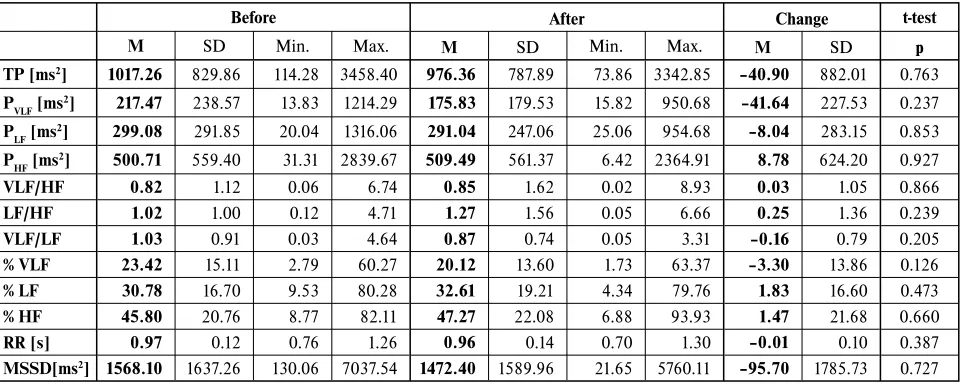
TABLE 3 shows that the exercise intervention used did not cause any statistically significant changes to the monitored parameters of HRV.
Of all the characteristics of the exercise interven-tion listed in TABLE 1 there was a correlainterven-tion with the change in some of the HRV parameters (including the difference before and after exercise intervention) only in the case of the total duration of all of the aerobic parts of the training units (tEX) and the average intensity of the exercise (% MHRR). These were mostly very low negative correlations between tEX and the changes in LF/HF, VLF/HF, PVLF and between % MHRR and the changes of VLF/LF, PVLF a % VLF (TABLE 4).
TABLE 1
Qualitative and quantitative parameters of exercise intervention and maximal and resting heart rate
nTR tEX tTR HRmax HRrest HRX % MHRR ttHRopt tHRopt
M 53.17 2284.07 42.92 176.25 63.43 133.30 62.60 1009.93 18.68
SD 13.26 577.66 0.77 13.41 7.35 9.64 7.24 466.10 6.40
Min. 9 383.03 40.31 108 48 103.40 49.26 130.75 6.23
Max. 73 3178.82 44.37 198 76 151.80 90.00 2448.97 42.96
Legend: nTR – the number of training units, tEX – total duration of all aerobic parts of training units (min), tTR – duration of the aerobic part of the training unit (min), HRmax – maximum heart rate, HRrest – resting hear rate, HRx – average heart rate in the aerobic part of training unit (min), % MHRR – average exercise intensity in % of maximum heart rate reserve, ttHRopt – total duration of exercise in optimal HR (min), tHRopt – duration of exercise in optimal HR, M – arithmetic mean, SD – standard deviation, Min. – minimum value, Max. – maximum value.
TABLE 2
Weight, BMI and maximal oxygen consumption (VO2max) before and after the exercise intervention
Before After Change t-test
M SD Min. Max. M SD Min. Max. M SD p
Weight [kg] 72.08 12.93 54.00 115.00 71.05 11.76 53.00 109.00 –1.19 3.7 0.021
BMI [kg.m–2] 26.18 4.30 19.69 37.98 25.80 3.93 19.38 36.00 –0.37 1.03 0.020
VO2max [l.min–1] 2.38 0.42 1.64 3.22 2.60 0.42 1.78 3.50 0.23 0.23 0.000
VO2max [ml.kg–1.min–1] 33.32 5.66 22.30 46.40 36.99 5.08 26.70 47.90 3.67 3.12 0.000
Legend: M – arithmetic mean, SD – standard deviation, Min. – minimum value, Max. – maximum value, Change – difference between value after and before exercise intervention, p – level of statistical significance (paired t-test).
TABLE 3
Selected parameters of HRV in the second supine position of supine-standing-supine test before and after exercise intervention
Before After Change t-test
M SD Min. Max. M SD Min. Max. M SD p
TP [ms2] 1017.26 829.86 114.28 3458.40 976.36 787.89 73.86 3342.85 –40.90 882.01 0.763
PVLF [ms2] 217.47 238.57 13.83 1214.29 175.83 179.53 15.82 950.68 –41.64 227.53 0.237
PLF [ms2] 299.08 291.85 20.04 1316.06 291.04 247.06 25.06 954.68 –8.04 283.15 0.853
PHF [ms2] 500.71 559.40 31.31 2839.67 509.49 561.37 6.42 2364.91 8.78 624.20 0.927
VLF/HF 0.82 1.12 0.06 6.74 0.85 1.62 0.02 8.93 0.03 1.05 0.866
LF/HF 1.02 1.00 0.12 4.71 1.27 1.56 0.05 6.66 0.25 1.36 0.239
VLF/LF 1.03 0.91 0.03 4.64 0.87 0.74 0.05 3.31 –0.16 0.79 0.205
% VLF 23.42 15.11 2.79 60.27 20.12 13.60 1.73 63.37 –3.30 13.86 0.126
% LF 30.78 16.70 9.53 80.28 32.61 19.21 4.34 79.76 1.83 16.60 0.473
% HF 45.80 20.76 8.77 82.11 47.27 22.08 6.88 93.93 1.47 21.68 0.660
RR [s] 0.97 0.12 0.76 1.26 0.96 0.14 0.70 1.30 –0.01 0.10 0.387
MSSD[ms2] 1568.10 1637.26 130.06 7037.54 1472.40 1589.96 21.65 5760.11 –95.70 1785.73 0.727
TABLE 4
Correlation between selected statistical characteristics of exercise intervention (parameters of adherence to exercise) and the changes in monitored HRV parameters
tEX % MTR
rp P rp p
RTP [ms2] –0.20 0.208 –0.15 0.331
RPVLF [ms2] –0.30 0.050 –0.33 0.036
RPLF [ms2] –0.22 0.162 –0.07 0.678 RPHF [ms2] –0.07 0.662 –0.07 0.666
RVLF/HF –0.39 0.011 –0.21 0.174
RLF/HF –0.51 0.001 –0.08 0.609
RVLF/LF 0.02 0.914 –0.49 0.001
R %VLF –0.23 0.145 –0.34 0.026
R %LF –0.20 0.214 0.04 0.815
R %HF 0.30 0.057 0.19 0.225
RR [s] 0.02 0.904 –0.01 0.941
MSSD [ms2] 0.05 0.766 –0.16 0.321
Legend: R – change (difference of the value after and before exercise intervention), tEX – total duration of all aerobic parts of training units, % MHRR – average intensity of the exercise, rp – Pearson’s correlation coefficient, p – level of statistical significance.
TABLE 5
Correlation of changes in HRV parameters with their initial values
rp p
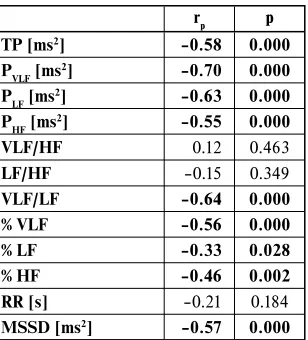
TP [ms2] –0.58 0.000
PVLF [ms2] –0.70 0.000
PLF [ms2] –0.63 0.000
PHF [ms2] –0.55 0.000
VLF/HF 0.12 0.463
LF/HF –0.15 0.349
VLF/LF –0.64 0.000
% VLF –0.56 0.000
% LF –0.33 0.028
% HF –0.46 0.002
RR [s] –0.21 0.184
MSSD [ms2] –0.57 0.000
Legend: rp – Pearson’s correlation coefficient, p – level of statistical significance.
DISCUSSION
The main aim of this exercise intervention was not reduction of weight (the initial values of BMI were 26.2 ± 4.3 kg.m–2and in most women, under 25 kg.m–2),
therefore a statically but not logically significant decline on the average of 1 kg occurred. However, the average value of the BMI of the whole tested group persisted in the overweight range (25.8 ± 3.93 kg.m–2). These
chang-es in body weight were accompanied by a statically sig-nificant increase in aerobic fitness expressed by the use of VO2max, namely almost about 3.5 ml.kg–1.min–1, that
is by about 1 MET. A more detailed analysis of changes
in weight and other morphological and functional pa-rameters are not included in this paper.
The main aim of the study was to assess how changes in HRV are possibly related to exercise intervention ad-herence. That is why exercise attendance was not in-fluenced in any way and the frequency of exercise was absolutely up to the women’s will. We hypothesized that big differences in adherence will help to identify its ef-fect better.
at-mosphere, persistent personal features (self-discipline, self-control, resolution, diligence, ambitions, competi-tion, ability to concentrate, pride in achievement, etc.), satisfaction with the stated aims of the exercise (im-provement of health or fitness, reduction of body mass, body shaping, etc.), further satisfaction with group co-hesiveness, with sport medical histories, etc. However, an analysis of these factors is not the aim of this study. Illness, work and family problems influenced their ad-herence as well as the above- mentioned psychological factors.
Other reasons which could influence the changes in HRV after the exercise intervention could be the age and initial fitness of the women. That is why there is such a relatively extensive range of age in the study (25 years) and it could be one of the reasons for the low degree of homogeneity from the point of view of aerobic power (the maximum difference in VO2max was 24.1 ml.kg–1.min–1). However, our correlation analysis
did not prove any significant relation between the age of our subjects and the parameters of HRV nor their changes after program. The results of other studies are not the same from this point of view. According to some authors, aerobic training positively improves HRV similarly both in younger and in older persons (Stein et al., 1999). Other authors say that the impact of aerobic training is augmented in younger people as compared to older people (Carter, Banister, & Blaber, 2003), but opposing evidence exists as well (Leicht, Allen, & Hoey, 2003; Levy et al., 1998).
The average exercise intensity of subjects in the aerobic part of the exercise program was relatively low (62.6 ± 7.3% MHRR). This exercise intervention caused an increase in aerobic power, but did not influence any of the monitored parameters of HRV significantly. The results do not correspond to the studies showing that regular aerobic training increases the vagal modulation of the heart already in a few weeks or months (Esperer, 2006; Hottenrott, Hoos, & Levy et al., 1998; Lee, Wood, & Welsch, 2003). On the contrary, other studies did not confirm any positive effect of aerobic training on HRV (Boutcher & Stein, 1995; Davy, Willis, & Seals, 1997; Degeus et al., 1996; Maciel et al., 1985). A fundamen-tal difference among the quoted studies is the exercise intensity used. The studies which illustrated an increase in vagal modulation have mostly used a higher exercise intensity (at about 80% MHRR) (Lee, Wood, & Welsch, 2003). On the contrary, the studies showing no effect of exercise on the functional state of the autonomic nerv-ous system have used a lower intensity (at about 60% MHRR). For example, Boutcher and Stein (1995,) after three months of a mild aerobic exercise (20–30 min., 60% MHRR, 3 times per week, 24 training units), found increased aerobic power, however no change in HRV. Similar evidence is given by other authors who
prescribed an aerobic exercise of mild intensity with a duration of from eight to twelve weeks (Davy, Willis, & Seals, 1997; Maciel et al., 1985) or a few months of mild intensity (Degeus et al., 1996) to people with a sedentary lifestyle.
It seems that, apart from the others, the positive effect of a long term exercise on ANS depends on the ex-ercise intensity, but it is not possible to set up a uniform level of the exercise intensity which might influence the activity of ANS as it was shown in the literature. People with lower aerobic stength can achieve positive effects using relatively and absolutely lower exercise intensity than people with higher aerobic power. This means that the exercise intensity which is good for people with lower aerobic power is ineffective for those with higher aerobic power.
Aerobically trained individuals with higher aerobic power usually have higher vagal activity, which means higher ANS activity (DeMeersman, 1993; Leicht, Allen, & Hoey, 2003). On the contrary, those with a sedentary lifestyle (consequently with lower aerobic power) have lower ANS activity (Dixon, Kamath, McKartney, & Fall-en, 1992). Among the people with lower aerobic power, a low exercise intensity is more effective in influencing ANS than among people with higher aerobic power, thus the so called law of “initial values” (Sandercock, Bromley, & Brodie, 2005) should be valid for exercise intervention with a relatively low intensity: the lower the initial activity of ANS, the greater its increase.
This consideration was confirmed in the tested group with the use of a correlation between the initial values of HRV parameters and differences between the terminal and initial values of these parameters. All of the correlation coefficients were negative and most of them confirmed the supposed relationship. It is obvious that exercise intervention in the women with the low-est ANS activity caused the increase in spectral power, especially in the lower part of the spectrum. Inversely, women with higher initial values of HRV parameters displayed a lower increase and even a decrease of the parameters.
last training session, it is not possible to exclude that the result of ANS measurement was not influenced by this fact. The parameters of HRV representing vagal activity show a slower gradual restoration after the cessation of exercise than parameters representing sympathetic activ-ity or, better said, a sympatho-vagal balance (Jakubec, 2005). Sympathetic activity predominates over vagal activity during the time of recovery after the exercise. It is not possible to exclude that a later measurement (one or two days later) would show higher values of PHF, especially in women with low initial values. This would cause a change in spectral power on behalf of vagal activity.
Taking into account great differences in adherence to the exercise intervention program, we expected that the relationship between the volume of exercise and/or the quality of exercise and changes in HRV parameters would be clearly confirmed, but of all the monitored qualitative and quantitative parameters of exercise in-tervention, only tEX (total duration of all the aerobic part of the training units) and % of MHRR (average exercise intensity) correlated with the changes of some of the HRV parameters. The values of the correlation coefficients were much lower than those for the initial values and changes in the parameters of HRV. All sig-nificant correlations were negative and were found in the spectral power of VLF and in ratios. It follows from these analyses that, in women with higher adherence to the programme, the values of PVLF, VLF/HF and LF/HF were more likely to decrease, while in women with lower adherence they were more likely to increase. The women with higher exercise intensity during aerobics were more likely to show a decrease in PVLF, % VLF and VLF/HF; in the women with lower exercise intensity the converse was true. From these results it seems that the volume and the quality of the exercise were more likely to be dis-played in changes of the distribution of spectral power than in its volume. These changes can be indicated as positive because they show a shift in the direction of spectral power towards the parasympathetic.
From the comparison of levels of correlation coeffi-cients for the impact of exercise intervention and for the impact of the initial level of HRV parameters, it is clear that the impact of the volume and the quality of the exer-cise intervention were strongly suppressed by the impact of the initial level of ANS activity. This results of corre-lation analyses should be taken into consideration both while comparing the effects of different kinds of exercise and while searching for optimal exercise intervention programmes. If the exercise is to have a positive effect on ANS activity, then its intensity should be adapted to the aerobic power of each subject. It can not be expected that exercise intervention with lower exercise intensity will cause an increase of their ANS activity in subjects with markedly higher aerobic power.
From this point of view, using dance or step-dance aerobics is problematic, because a higher intensity of the exercise is suppressed mostly by poor technique, be-cause of frequent changes of choreography and in many cases by a poor ability to carry out an intensive dance performance. That is why dance or step-dance aerobics should serve as a suitable exercise activity rather for subjects with lower aerobic power. For subjects with higher aerobic power or with higher endurance ability it might serve as an optimal exercise activity after some time, but not until the technique problems are removed and identification with the pace and rhythm of the mu-sic is presented. It seems that the necessary time period of time for middle aged and younger women is longer than six months.
CONCLUSIONS
Great differences in adherence to the six month training period of dance and step-dance aerobics were not significantly displayed in the activity of the autonom-ic nervous system assessed with the use of the spectral analysis method of heart rate variability. Correlation analyses suggested that the shift of spectral power from sympathetic to parasympathetic happened in the women with a higher adherence to the programme. But it was shown that the influence of the volume and quality of exercise were suppressed by the initial level of each pa-rameter of HRV. The lower (worse) the initial values of these parameters were before starting the programme, the greater were their increases in half a year’s time. With regards to the relationship between aerobic power and ANS activity, it is possible to state that, in light of the impact on ANS activity, dance or step-dance aero-bics could serve as a suitable exercise activity more for subjects with lower aerobic power. A necessary condi-tion for the general use of aerobics is to master tech-nique connected with frequent changes of choreography and with the ability to manifest the rhythm of the music by dancing. Under these conditions it is possible to in-crease the exercise intensity and thus to extend the spec-trum of subjects for whom this exercise will increase the activity of their ANS.
ACKNOWLEDGMENT
REFERENCES
Akselrod, S., Gordon, D., Ubel, F. A., Shannon, D. C., Berger, A. C., & Cohen, R. J. (1981). Power spec-trum analysis of heart rate fluctuation: A quantitative probe of beat to beat cardiovascular control. Science, 213(4504), 220–222.
Aubert, A. E., Beckers, F., & Ramaekers, D. (2001). Short term heart rate variability in young athletes. Journal of Cardiology, 37(1), 85–88.
Boutcher, S. H., & Stein, P. (1995). Association between heart rate variability and training response in sed-entary middle aged men. European Journal of Ap-plied Physiology and Occupational Physiology, 70(1), 75–80.
Brockie, J. (2006). Exercise for women in the early post-menopausal years. Journal of the British Menopause Society, 12, 126–127.
Carter, J. B., Banister, E. W., & Blaber, A. P. (2003). The effect of age and gender on heart rate variabil-ity after endurance training. Medicine and Science in Sport and Exercise, 35(8), 1333–1340.
Cowan, M. J. (1995). Measurement of heart rate vari-ability. Western Journal of Nursing Research, 17(1), 32–48.
Davy, K. P., Willis, W. L., & Seals, D. R. (1997). Influ-ence of exercise training on heart rate variability in post-menopausal women with elevated arterial blood pressure. Clinical Physiology,17(1), 31–40.
Degeus, E. J. C., Karsdorp, R., Boer, B., Deregt, G., Or-lebeke, J. F., & Vandoornen, L. J. P. (1996). Effect of aerobic fitness training on heart rate variability and cardiac baroreflex sensitivity. Homeostasis in Health and Disease, 37, 28–51.
DeMeersman, R. E. (1993). Heart rate variability and aer-obic fitness. American Heart Journal, 125, 726–731. Dixon, M., Kamath, V., McKartney, N., & Fallen, L.
(1992). Neural regulation of heart rate variability in endurance athletes and sedentary controls. Cardio-vascular Research, 26(7), 713–719.
Garber, C. E., McKinney, J. S., & Carleton, R. A. (1992). Is aerobic dance as effective as walk-jog exer-cise training? Journal of Sports Medicine and Physical Fitness,32, 136–141.
Hottenrott, K., Hoos, O., & Esperer, H. D. (2006). Heart rate variability and physical exercise. Current status. Herz, 31(6), 544–552.
Lackschewitz, H., Hüther, G., & Kröner-Herwig, B. (2008). Physiological and psychological stress re-sponses in adults with attention-deficit/hyperactivity disorder (ADHD). Psychoneuroendocrinology, 33(5), 612–624.
Jakubec, A. (2005). Spectral analysis of heart rate vari-ability during recovery after dynamic exercise. Disser-tation thesis, Palacký University, Faculty of Physical Culture, Olomouc.
Karvonen, M. J., Kentala, E., & Mustala, O. (1957). The effects of training heart rate: A longitudinal study. Annales Medicinae Experimentalis et Biologiae Fen-niae,35, 307–315.
Lee, C. M., Wood, R. H., & Welsch, M. A. (2003). Influ-ence of short term endurance exercise training on heart rate variability. Medicine and Science in Sport and Exercise,35(6), 961–969.
Leicht, S. A., Allen, D. G., & Hoey, J. A. (2003). Influ-ence of age and moderate intensity exercise train-ing on heart rate variability in young and mature adults. Canadian Journal of Applied Physiology, 28(3), 446–461.
Levy, W. C. et al. (1998) Effect of endurance exercise training on heart rate variability at rest in healthy young and older men. TheAmerican Journal of Car-diology, 82(10), 1236–1241.
Maciel, B. C., Gallo, L., Jr., Marin Neto, J. A., Lima Filho, E. C., Terra Filho, J., & Manco, J. C. (1985). Parasympathetic contribution to bradycardia in-duced by endurance training in men. Cardiovascular Research, 19(10), 642–648.
Maud, P. J., & Foster, C. (1995). Physiological assessment of human fitness. Champaign, IL: Human Kinetics. Milburn, S., & Butts, N. K. (1983). A comparison of the
training responses to aerobic dance and jogging in college females. Medicine and Science in Sports and Exercise,15, 510–513.
Migliaro, E. R. et al. (2001). The relative influence of age, resting heart rate and sedentary life style in the short term analysis of heart rate variability. Brazilian Journal of Medical and Biological Research, 34(4), 493–500.
Molgaard, H., Sorensen, K. E., & Bjerregaard, P. (1991). Attenuated 24hr heart rate variability in appar-ently healthy subjects, subsequappar-ently suffering sud-den cardiac death. Clinical Autonomic Research, 1, 233–237.
Physical Activity Guidelines Advisory Committee (2008). Physical Activity Guidelines Advisory Com-mittee Report, 2008. Washington.
Salinger, J., & Gwozdziewicz, M. (2008). Systémy po-užívané pro vyšetření krátkodobé variability srdeční frekvence. In K. Javorka (Ed.), Variabilita frekven-cie srdca: mechanismy, hodnotenie, klinické využitie. (pp. 57–60). Martin (SK): Osveta.
Salinger, J., Opavský, J., Stejskal, P., Vychodil, R., Ol-šák, S., & Janura, M. (1998). The evaluation of heart rate variability in physical exercise by using the tel-emetric VariaPulse TF3 system. Acta Universitatis Palackianae Olomucensis. Gymnica, 28, 13–23. Sandercock, G. R., Bromley, P. D., & Brodie, D. A.
Singh, J. P., Larson, M. G., O’Donnel, C. J., Tsuji, H., Evans, J. C., & Levy, D. (1999). Heritability of heart rate variability: The Framingham heart study. Circu-lation, 99(17), 2251–2254.
Stein, P. K., Ehsani, A. A., Domitrovich, P. P., Kleiger, R. E., & Rottman, J. N. (1999). Effects of exercise training on heart rate variability in healthy older adults. American Heart Journal, 138, 567–576. Stejskal, P., & Salinger, J. (1996). Spektrální analýza
variability srdeční frekvence – základy metodiky a li-terární přehled o jejím klinickém využití. Medicina Sportiva Bohemica et Slovaca, 5(2), 33–42.
Stejskal, P., Jakubec, A., Kováčová, L., Elfmark, M., Řehová, I., Petr, M., & Cipryan, L. (2007). Influ-ence of different adherInflu-ence to the six month aerobic dance or step-dance program on aerobic fitness. Me-dicina Sportiva Bohemica et Slovaca, 16(1), 14–25. Task Force of the European Society of Cardiology and
the North American Society of Pacing and Electro-physiology (1996). Heart rate variability: Standards of measurement, physiological interpretation, and clinical use (special report). Circulation, 93(5), 1043–1065.
Yamamoto, Y., & Hughson, R. L. (1991). Coarse-grain-ing spectral analysis: New method for studyCoarse-grain-ing heart rate variability. Journal of Applied Physiology, 71(3), 1143–1150.
ZMĚNY VARIABILITY SRDEČNÍ FREKVENCE PO ŠESTIMĚSÍČNÍM PROGRAMU TANEČNÍHO A STEP AEROBIKU U ŽEN
VE VĚKU 40–65 LET:
VLIV ROZDÍLNÉ ADHERENCE, INTENZITY A INICIÁLNÍCH ÚROVNÍ
(Souhrn anglického textu)
Cílem předkládané studie bylo zjistit, jak jsou změny variability srdeční frekvence (HRV) po šestiměsíčním programu tanečního a step aerobiku ovlivněny adheren-cí, intenzitou zatížení a vstupní úrovní HRV. Testovanou skupinu tvořilo 44 žen ve věku 47,35 ± 5,4 let. Použité metody byly spektrální analýza krátkodobých záznamů R–R intervalů a chodecký/běžecký test do maxima na běžeckém pásu s postupně narůstajícím sklonem. Inter-vence: skupinové cvičení aerobiku, šest měsíců, třikrát týdně, 40–45 minut. Intenzita zatížení byla monitoro-vána pomocí monitorů srdeční frekvence. Výsledky: velké rozdíly mezi ženami byly v počtu absolvovaných cvičebních jednotek (9–73). Průměrná hmotnost pro-bandek se snížila z 72,1 ± 12,9 kg na 71,1 ± 11,8 kg a prů-měrná VO2max se zvýšila z 33,3 ± 5,7 ml.kg–1.min–1 na
37,0 ± 5,1 ml.kg–1.min–1. Pohybová intervence nevedla
k žádným statisticky významným změnám sledovaných ukazatelů HRV. Pouze dvě charakteristiky pohybové
intervence (celkové trvání aerobních částí cvičebních jednotek a průměrná intenzita zatížení) korelovaly se změnami HRV. Negativní korelace byla zjištěna mezi většinou sledovaných ukazatelů HRV a jejich změnami. Korelační analýza u žen s vyšší adherencí k programu naznačila mírný posun spektrálního výkonu směrem od sympatiku k parasympatiku. Ukázalo se však, že vliv objemu a kvality cvičení byl výrazně potlačen vlivem vstupní úrovně jednotlivých ukazatelů HRV. Čím nižší (horší) byly hodnoty těchto ukazatelů před pohybovou intervencí, tím větší byl jejich vzestup (zlepšení) za půl roku. Vzhledem ke vztahu mezi aerobní kapacitou a aktivitou ANS lze konstatovat, že z hlediska vlivu na aktivitu ANS je aerobik vhodnou pohybovou aktivitou spíše pro osoby s nižší aerobní kapacitou.
Klíčová slova: variabilita srdeční frekvence, adherence, ini-ciální hodnoty, taneční a step aerobik.
RNDr. Aleš Jakubec, Ph.D.
Education and previous work experience
Since 2005 – member of the Centre of Kinanthropology Research, Palacký University, Olomouc.
Since 2003 – lecturer at Faculty of Physical Culture, Palacký University, Olomouc.
2005 – RNDr. program at Faculty of Science, Palacký University, Olomouc.
2005 – Ph.D. program at Faculty of Physical Culture, Palacký University, Olomouc.
2001 – European Master in Adapted Physical Activ-ity at Faculty of Physical Education and Physiotherapy, Catholic University, Leuven, Belgium.
1999 – Master study at Faculty of Physical Culture, Pal-acký University, Olomouc.
First-line publications
Jakubec, A., Stejskal, P., Kováčová, L., Elfmark, M., Řehová, I., Petr, M., & Botek. M. (2007). Changes in aerobic fitness and in hart rate variability after a six month long aerobic dance program in women. Contri-bution to Research day of Faculty of Sport, Health and Social Care, University of Gloucestershire, Gloucester, United Kingdom.
Lehnert, M., Janura, M., Jakubec, A., Stejskal, P., & Stel-zer, J. (2007). Reaction of volleyball players to the
Palacký University, Olomouc Faculty of Physical Culture tř. Míru 115
training microcycle with an increased strength train-ing volume. International Journal of Volleyball Re-search, 9(1), 11–18.
Stejskal, P., Jakubec, A., Kováčová, L., Elfmark, M., Ře-hová, I., Petr, M., & Cipryan, L. (2007). Influence of different adherence to the six month aerobic dance or step-dance program on aerobic fitness. Medicina Sportiva Bohemica et Slovaca, 16(1), 14–25.
Jakubec, A., Stejskal, P., Kováčová, L., Elfmark, M., Bo-tek, M., Řehová, I., & Petr, M. (2007). The changes of heart rate variability after a six month long aerobic
dance or step-dance program in women 40–65 years old [Abstract]. Medicina Sportiva Bohemica et Slo-vaca, 16(3), 32.
Jakubec, A., Stejskal, P., Botek, M., Salinger, J., Ře-hová, I., Žujová, E., & Pavlík, F. (2004). Spectral analysis of heart rate variability during exercise in steady state. Medicina Sportiva Bohemica et Slovaca, 13(3), 121–129.