Journal of Pharmaceutical Technology, Research and Management Vol 4, No. 2, November 2016 pp. 103–127 DOI: 10.15415/jptrm.2016.42007
Self-medication in Developing Countries a
Systematic Review
MEENA PARULEKAR, NANDAKUMAR MEKOTH, C.M. RAMESH, AJIT PARULEKAR
Goa Institute of Management Sanquelim, Poriem –Sattari, Goa
Email: mail:[email protected]
Received: June 7, 2016 | Revised: July 11, 2016 | Accepted: Sept. 5, 2016 Published online: November 02, 2016
The Author(s) 2016. This article is published with open access at www.chitkara.edu.in/publications
Abstract: Self-medication is common in developing countries where it has both economic and social implications. On the one hand, it is viewed as a large component of self-care, which relies heavily on the consumer’s expertise in terms of experience of the consumer, when it comes to medication use. On the other hand, if not practiced correctly it can lead to multiple issues including abuse and drug resistance. Across surveys conducted in developing countries the reasons why people self-medicate has been studied, to understand the
determinants of self-medication and to explain the influence of knowledge and
information on self-medication practices. To understand the same a detailed
systematic literature review based on survey findings on self-medication in
developing countries was carried out. From a total of 52 survey articles, 25 surveys were selected for the present review. From the survey outcomes it was found that the cost, time and past experience with the medicine and symptom were key determinants while healthcare professionals emerged to be the primary sources of information and knowledge for self-medication practices. The prevalence of self-medication as a phenomenon is high and it has both
potential benefits and associated risks with it. To ensure that the risks and benefits of medicine usage are known by consumers, we really need to look
at and design suitable interventions to promote responsible self-medication and in turn, rational drug use in the developing world.
Parulekar, M Mekoth, NK Ramesh, CM Parulekar, A
1. INTRODUCTION
‘Self-medication’ is a global phenomenon. On the one hand, it is viewed as a large component of self-care, which relies heavily on the consumer’s expertise in terms of experience of the consumer, when it comes to medication use. On the other hand, if not practiced correctly it can lead to multiple issues including abuse and drug resistance.
Across the world, a consumer on an average suffers from at least one aspect of un-wellness in a 4-week period. Accordingly, 50% of people wait for the symptoms to subside, 25% take resort of prescription medicines while the remaining 25% turn to OTC (over-the-counter) medicines for relief. The graph below shows percentage of conditions treated with OTC’s by consumers in 10 nations. US and South Africa has the highest percentages of self-medication, only the reasons differ. While in the US it is more of a cost and time saving alternative, in South Africa it is high due to lower levels of infrastructure and professional staff. (wsmibro.pdf, 2005)
The WHO guidelines 2000 define self- medication as the use of medication
by a patient on his own initiative or on the advice of a pharmacist or a lay person instead of consulting a medical practitioner. While in most of the developed world, it is synonymous with use of over-the-counter medications (responsible self-medication); the developing world faces a vast plethora of issues around
Self- medication in Developing Countries a Systematic Review the phenomenon. Some of these issues could be highlighted as self-medication
with prescription drugs, misuse of antibiotics, overuse of injections, overuse of relatively safe medicines and unsafe use of herbal medicines (Hardon Anita et al, 2001).
Accordingly, the following two types of self-medication are commonly practiced worldwide and can be represented thus:
Self –medication in developing countries can be better understood as a phenomenon within the following two contexts (Geest Van Der Sjaak et al, 1990): 1. Economic-Infrastructural context: Accessibility to primary healthcare,
Cost of medicines and development of alternative system of treatment are major concerns. For example: In rural areas in many developing countries like Cameroon for example, the public health system does not function properly, hence an alternative system develops.
2. Cultural-Cognitive beliefs: There are underlying beliefs that individuals
hold when it comes to medicine use and are specific to communities and
regions around the world. For example, Guatemalan villager’s categorized
medicines as hot or cold based on their own classification system.
According to a survey conducted on 20, 000 consumers in 10 cities in India by Lybrate (doctor- patient –end-to-end communication platform)), it was found that over 52 % Indians indulge in self-medication practices (The Hindu, New Delhi, April 2015). Most studies reporting prevalence of self-medication
are very specific (with respect to regional and cultural contexts). As reported
(Sandeep A et al, 2013) prevalence rates are high, 68% in European countries and as high as 92% for adolescents in India. Such high prevalence rates are a
Table 1: Self-medication (worldwide)*.
Responsible Self-medication Irresponsible self-medication Wide acceptance and
availability of OTC products Wide acceptance and availability of both OTC and prescription products Careful use of OTC
products, reading the label Irrational use of OTC and prescription products (for example, self-prescription, use of prescription products on recommendation, non-medical use of a prescription drug
OTC products usage as safe and effective when compared to prescription products
Probability of Drug-Drug interactions higher due to improper use of different systems of medicine, combined use of OTC and prescription drugs.
Parulekar, M Mekoth, NK Ramesh, CM Parulekar, A
cause of concern in a developing country especially when responsible self-medication is already a huge challenge. As reported in the book, Advances in Drug research and application, though there is a vast amount of research being done to measure self-medication practices including in children, there is sparse epidemiological data available worldwide (Ashton Acton, 2011).
According to World Drug Report 2010, the misuse of prescription drugs including opioids, benzodiazepines and synthetic prescription stimulants is a growing health problem in both developing and developed countries. In their study (Ruiz et al, 2010) the authors have highlighted the dangers of self-medication including polypharmacy, dependence and drug interactions. Thus, it becomes important to understand the various dimensions of this phenomenon
including risks and benefits so that appropriate health interventions can be
designed to promote rational drug use in the country. 2. OBJECTIVE
The main objective of this systematic review on self-medication is:
1. To identify the determinants of self-medication practices in developing countries.
2. To study the influence of knowledge and information on self-medication in
developing countries. 3. METHODOLOGY
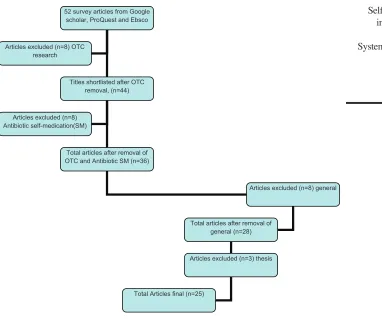
A manual search strategy was adopted to obtain research papers on Self-medication in developing countries. The search was primarily carried out using PUBMED, Ebsco, Proquest and Google scholar search engines and the key words used for the search were self-medication, reasons and determinants. A total of 52 survey articles were thus obtained.
See Figure 1 for flowchart of the articles selected for this review: 3.1 Inclusion and exclusion criteria
Articles are included based on types of surveys conducted, sample size, research
methodology adopted and findings. Surveys conducted in the developed
countries in the west were deliberately not included to take into account the economic and infra structural contexts unique to developing countries.
Self- medication in Developing Countries a Systematic Review
1. Studies included a population of both young and elderly. Because self –medication is being increasingly practiced by the young, which has its own, associated risks, it is necessary to understand the determinants
and influence of information across these varying segments of the
population.
2. Studies necessarily had information about the reasons or factors that promote or lead to an increase in the self-medication habits in consumers. 3. Surveys had a sample size of over 100 respondents
4. Surveys on children, pregnant women were excluded from the review. The 25 survey articles selected for the review were then read and information
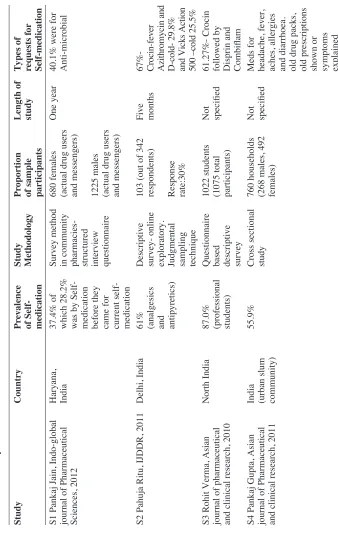
obtained from them was used for analysis. Table II lists the summary of these
selected studies.
Figure 1: Flow chart showing the selection of articles for review. 52 survey articles from Google
scholar, ProQuest and Ebsco
Titles shortlisted after OTC removal, (n=44)
Total articles after removal of OTC and Antibiotic SM (n=36) Articles excluded (n=8)
Antibiotic self-medication(SM) Articles excluded (n=8) OTC
research
Articles excluded (n=8) general
Total articles after removal of general (n=28)
Articles excluded (n=3) thesis
Parulekar, M Mekoth, NK Ramesh, CM Parulekar, A
Table 2:
Summary of included studies.
Study
Country
Pr
ev
alence
of Self- medication Study Methodology
Pr
oportion
of sample participants Length of study
T
ypes of
requests f
or
Self-medication
S1 Pankaj Jain, Indo-global journal of Pharmaceutical Sciences, 2012 Haryana, India
37.4% of which 28.2% was by Self- medication before they came for current self- medication Survey method in community pharmacies- structured interview questionnaire 680 females (actual drug users and messengers) 1225 males (actual drug users and messengers)
One year
40.1% were for Anti-microbial
S2 Pahuja Ritu, IJDDR, 2011
Delhi, India
61% (analgesics and antipyretics) Descriptive survey- online exploratory. Judgmental sampling technique 103 (out of 342 respondents) Response rate:30% Five months
67%- Crocin-fever Azithromycin and D-cold- 29.8% and Vicks Action 500 –cold 25.5%
S3 Rohit Verma, Asian journal of pharmaceutical and clinical research, 2010
North India
87.0% (professional students) Questionnaire based descriptive survey 1022 students (1075 total participants) Not specified
61.27%- Crocin followed by Disprin and Combiflam
S4 Pankaj Gupta, Asian journal of Pharmaceutical and clinical research, 2011 India (urban slum community)
55.9%
Cross sectional study 760 households (268 males, 492 females) Not specified
Self- medication in Developing Countries a Systematic Review
S5 Malvi Ritesh, IRJP 2011
Bhopal, India
77.3%
Questionnaire based survey 116 people (58.6%- male, 41.3%- female) Not specified
Fever and pain categories. Paracetamol, Disprin, Combiflam and Ciprofloxacin. OTC were used for SM
S6 Zafar Syed, Journal of Pak Med Assoc., 2008 Karachi, Pakistan
76%
Cross sectional survey
572 participants (Male: female ratio 1:1.5) 295 medical students and 277 were non-medical students. Response rate 95.3% Jan-Feb 2007
Headaches, fever and flu like symptoms
S7 Sontakke SD, Int. journal of Biological and Medical Research, 2011
Nagpur, India
77.98%- 1
st
year, 74.71%- 3rd year
Comparative study between first year and third year medical students. Cross- sectional study, pre-validated questionnaire.
159 – 1
st year (89
men, 70 women) 178- 3 rd year (106
men, 72 women)
Not specified
Analgesics and antipyretics followed by anti- histaminics and antimicrobials
S8 Husain et al, African journal of Pharmacy and Pharmacology, 2011
Pakistan
15.7 % in urban areas To 8.3% in rural areas. Randomized cross sectional multi-center study 1850 houses, 550 rural and 1300 urban. Response rate 1850/2100- 88.10% June 2009- May 2010
Parulekar, M Mekoth, NK Ramesh, CM Parulekar, A
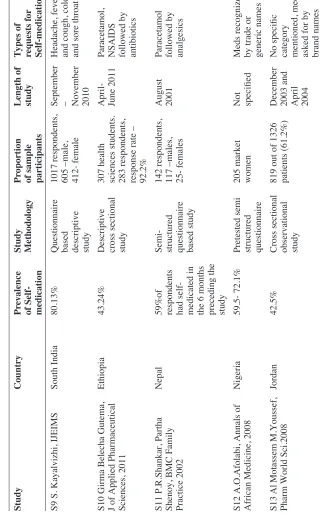
S9 S. Kayalvizhi, IJEIMS
South India
80.13%
Questionnaire based descriptive study 1017 respondents, 605 –male, 412- female September – November 2010 Headache, fever and cough, cold and sore throat.
S10 Girma Belecha Gutema, J of Applied Pharmaceutical Sciences, 2011
Ethiopia
43.24%
Descriptive cross sectional study 307 health sciences students. 283 respondents, response rate – 92.2% April- June 2011 Paracetamol, NSAIDS followed by antibiotics
S11 P.R.Shankar, Partha Shenoy, BMC Family Practice 2002
Nepal
59%of respondents had self- medicated in the 6 months preceding the study Semi- structured questionnaire based study 142 respondents, 117 –males, 25- females August 2001 Paracetamol followed by analgesics
S12 A.O.Afolabi, Annals of African Medicine, 2008
Nigeria
59.5- 72.1%
Pretested semi structured questionnaire 205 market women Not specified
Meds recognized by trade or generic names
S13 Al Motassem M.Youssef, Pharm World Sci.2008
Jordan
42.5%
Cross sectional observational study 819 out of 1326 patients (61.2%) December 2003 and April 2004
No specific category mentioned, meds asked for by brand names
Table 2:
Continued
Study
Country
Pr
ev
alence
of Self- medication Study Methodology
Pr
oportion
of sample participants Length of study
T
ypes of
requests f
or
Self- medication in Developing Countries a Systematic Review
S14 Henry James, Med Princ. Pract, 2006
Bahrain
44.8%
Questionnaire based descriptive study 153 students, 43 males and 91 females November 2004 Headache, cough and cold, sore throat
S15 Pushpa R Wijesinghe, WHO South-East Asia Journal of Public Health, 2012
Sri Lanka
33.9%- urban, 35.3%- rural Community based cross- sectional study 1800 respondents, 94.9% response rate
2010
No specific category mentioned
S16 Husain S.Mallik, Self- med behavior in Pakistan, Southern Med Review 2010
Pakistan
7.1%- rural, 2.6%- urban Randomized cross sectional questionnaire based study
1346 households
January 2007- July 2008 Antibiotics, analgesics, vitamins and minerals
S17 Balamurugan E, BJMP, 2011
South India
71%
Cross sectional survey
200 participants
6 months in 2009 Headache, stomach ache, cough and fever
S18 Fernando Ruiz,” SM in older people”, Drugs Aging 2009
Mexico
50% and more Observational, descriptive, cross sectional study 245 older adults (152 women and 93 men ) September and October 2006 Muscle and joint pain, upper respiratory tract and cough
S19 Sonia et al,”Conditions, frequencies and socio demographic factors leading to self-medication in Sargodha, Pakistan, 2013
Pakistan
83%
Parulekar, M Mekoth, NK Ramesh, CM Parulekar, A
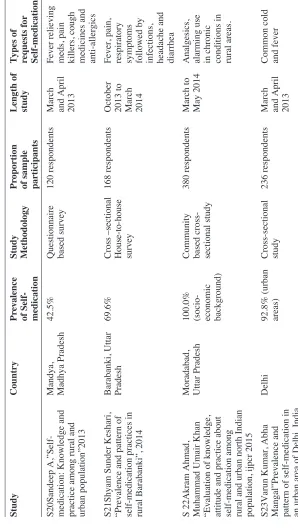
S20Sandeep A,”Self- medication: Knowledge and practice among rural and urban population”2013 Mandya, Madhya Pradesh
42.5%
Questionnaire based survey
120 respondents
March and April 2013 Fever relieving meds, pain killers, cough medicines and anti-allergics
S21Shyam Sunder Keshari, “Prevalence and pattern of self-medication practices in rural Barabanki”, 2014 Barabanki, Uttar Pradesh
69.6%
Cross –sectional House-to-house survey
168 respondents
October 2013 to March 2014 Fever, pain, respiratory symptoms followed by infections, headache and diarrhea
S 22Akram Ahmad, Muhammad Umair Khan “Evaluation of knowledge, attitude and practice about self-medication among rural and urban north Indian population, ijpcr 2015 Moradabad, Uttar Pradesh
100.0% (socio- economic background) Community based cross- sectional study
380 respondents
March to May 2014 Analgesics, alarming use in chronic conditions in rural areas.
S23Varun Kumar, Abha Mangal”Prevalence and pattern of self-medication in an urban area of Delhi, India 2015
Delhi
92.8% (urban areas) Cross-sectional study
236 respondents
March and April 2013 Common cold and fever
Table 2:
Continued
Study
Country
Pr
ev
alence
of Self- medication Study Methodology
Pr
oportion
of sample participants Length of study
T
ypes of
requests f
or
Self- medication in Developing Countries a Systematic Review
S24Nagarajaiah BH,”Prevalence and pattern of self-medication practices among population of three districts of South Karnataka, 2016
Karnataka
78.63%
Questionnaire based study
5489 respondents
2016
Joint pains, gastric symptoms, headache, fever
S25Aravamuthan Anandhasayanam,” Assessment of self- medication practices, consumers drug knowledge and consumption patterns at Tirur city, Kerala, 2016
Kerala, India
62.2%
Questionnaire based survey
500 respondents
Parulekar, M Mekoth, NK Ramesh, CM Parulekar, A
4. RESULTS
The surveys selected were mainly of descriptive, cross –sectional, questionnaire type and the duration of the study ranged from two months to one year. Total number of respondents studied was 19, 973 across the 25 surveys. These surveys were carried out independently in the countries during the period 2000-2016. The respondents included young students in colleges with both a medical and non-medical background and adults among others. Many of the surveys were conducted in Asia of which fourteen were in India, three in Pakistan and one was conducted in Sri Lanka.
5. DISCUSSION
5.1 Self-medication prevalence
The overall prevalence of self-medication ranged from 8.3% (Husain et al,
2011) in the sample population studied to 87% (Husain S, 2010) across the
25 surveys selected for the review. S22 (socio-economic background of sample) and S23 (only urban areas) had higher prevalence rates but the data on prevalence was not considered due to limitations of the samples. In some studies, self-medication prevalence was higher in females, 59.8% vs 48.9%in males (Gupta Pankaj et al, 2011, Balamurugan E, 2011)
5.2 Determinants of self-medication practices
Across the surveys, lack of time, cost saving and mildness of disease/ symptoms were cited as the major reasons for self-medication.(Verma Rohit,
2010, Sontakke SD, 2011, Balamurugan E, 2011, Malvi Reetesh, 2011)
Socio-economic conditions, prior experience with the medicine and emergency use were the other key determinants.( Pahuja Ritu, 2011, Gupta Pankaj, 2011, S.Kayalvizhi, 2010, James Henry, 2006). Expected self-medication was higher in urban areas than in rural areas ( Wijesinghe Pushpa, 2012). No major differences were noticed in self-medication patterns in men and women. Categories of medicines that were utilized for self-medication range from analgesics, anti-microbials, anti- pyretics and antibiotics. Vitamins and minerals are also common categories used for self-medication by consumers. (Husain S, 2010). It was interesting to note that selection of products for self-medication was based on previous experience with the similar medicine or disease symptoms. (Al Motassem, 2008, Zafar Syed, 2008, Afolabi A.O., 2008).
There is an emerging trend of increasing self-medication in the past five
Self- medication in Developing Countries a Systematic Review sympathy for ill relatives and friends, unavailability of healthcare services in
rural areas, unawareness, misbeliefs and advertisements by pharmaceutical companies( Akram Ahmad, 2015). It was interesting to note that though self-medication has increased among the common population, many of the people consuming drugs by self-medication do not follow instructions regarding dose, duration and instruction for use with many non-prescription drugs thus making them vulnerable to side effects.
The rural areas in India are fast catching up with self-medication practices with reportedly higher percentages of use for analgesics and antipyretics (Akram Ahmad, 2015). In addition, the usage of products by self-medication in chronic conditions is increasing among the rural population, which is an area of concern.
Many of the classes of drugs used by self-medication in developing countries consist of drugs under Schedule H (Drugs and Cosmetics Act, 1940). However; they inevitably are consumed by self-medication without the consumer many times being unaware of their side effects in the dosage consumed. For example in the survey (Malvi Reetesh, 2011) 16 participants (13.7%) used Diclofenac among the analgesics category and 10 participants,
(8.6%) used Ciprofloxacin as an antibiotic for self-medication (Total Sample
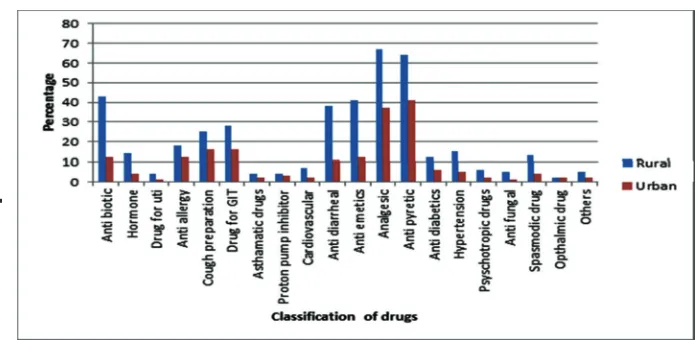
size: 116 participants). In a study (Akram Ahmad, 2015) on rural and urban self-medication pattern in North India, it was found that respondents (380) self-medicated across a wide range of therapeutic categories as shown below:
The above graph clearly indicates that there a lot of drug categories which are being misused by self-medication and the trend is increasing in the rural areas. Most of these drugs have harmful side effects and are known to cause drug-drug interactions when not used carefully with other drugs or drug combinations.
5.3 Influence of knowledge/ information on self-medication
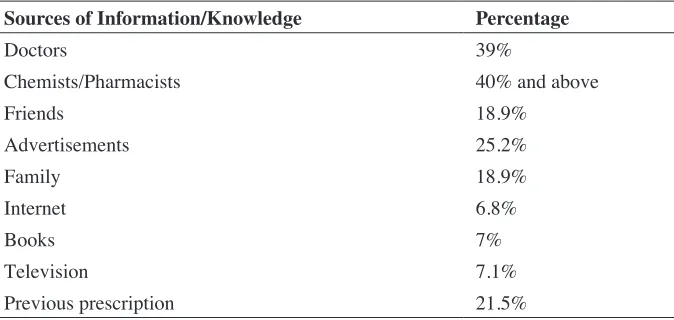
These could be categorized depending on the sources of information and knowledge. Some of the common sources of information are listed below.
The percentages listed are specific to particular studies but a pattern could be
Parulekar, M Mekoth, NK Ramesh, CM Parulekar, A
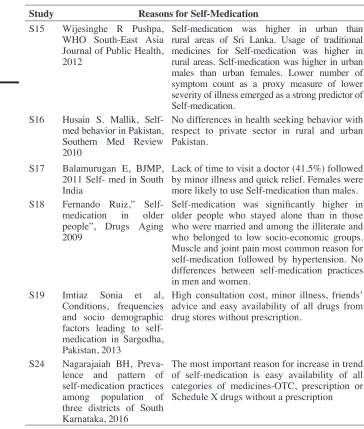
Table 3: Determinants of Self-Medication practices.
Study Reference Reasons for Self-Medication
S1 Jain Pankaj, 2012 Emergency use, disease not serious, prevention of diseases, prior experience about the drug, less expensive in terms of time and money.
S2 Pahuja Ritu, 2011 Did not feel the need to consult a doctor for minor illness, unavailability of medical practitioner in nearby community and economical.
S3 Verma Rohit, Asian journal of pharmaceutical and clinical research, 2010
Time saving, did not need advice for minor illness, economic, fear from crowd at clinic.
S4 Pankaj Gupta, Asian journal of Pharmaceutical and clinical research, 2011
No time /could not afford to miss work, mild illness, doctor’s clinic too far, monetary constraints, previous good experience with the drug, Not one student had knowledge about
complete profile of the drug being consumed by
self- medication.
S5 Malvi Ritesh, IRJP 2011 Time saving, did not need advice for minor illness, economic, fear from crowd at clinic. S6 Zafar Syed, Journal of
Pak Med Assoc., 2008 43% alter regimen of prescribed meds, 61.9% stop taking prescribed medicine without consulting a doctor 82.5% felt that it is necessary to consult a doctor before taking a new medicine. Previous experience, problem too trivial, urgency of problem, advice from friend was enough, convenience, lack of time, cost of consultation, availability of transport.
Self- medication in Developing Countries a Systematic Review
S7 Sontakke SD, Int.
Journal of Biological and Medical Research, 2011
Time saving, easy availability, convenient and economical.
S8 Husain et al, African Journal of Pharmacy and Pharmacology, 2011
Age, gender, education, family, society, law, availability of drugs, exposure to ads and nature of illness. Self-medication leads to inadequate drug utilization patterns.
S9 S. Kayalvizhi, IJEIMS Mild illness, previous experience of treating similar illness, economic considerations and a lack of availability of health personnel.
S10 Girma Belecha Gutema, J of Applied Pharmaceutical Sciences, 2011
Confidence in time in relation to self-treatment.
People’s belief that only safe medicines are sold without prescription and that OTC medicines do not usually have side effects
S11 P.R.Shankar, Partha Shenoy, BMC Family Practice, 2002
Alternative medicine- Herbs and medicinal plants- Self-medication. Self-medication was started once fever, headache did not subside in 24 hours. Illness was mild, did not require services of the doctor. Previous experience of similar illness, even if they go they will be prescribed the same medicine.
Patient’s satisfaction with healthcare provider, cost of drugs, educational level, socioeconomic factors, age, and gender.
S12 A.O.Afolabi, Annals of
African Medicine, 2008 118 respondents felt it cured their ailment and saved their time and money. 15 felt they had the independence to take care of themselves. For all age groups, respondents used medicines in combination than single doses. Most of the respondents recognized medicines by their trade or generic names.
S13 Al Motassem M.Youssef,
Pharm World Sci.2008 Patients select products based on previous experience with similar products or similar diseases.
Non-prescription drug supply pattern is of three kinds-by prescription, by direct Self-medication (OTC’s) and indirect Self-medication –sought advice of pharmacy staff before buying the medicine.
S14 Henry James, Med Princ.
Parulekar, M Mekoth, NK Ramesh, CM
Parulekar, A S15 Wijesinghe R Pushpa, WHO South-East Asia Journal of Public Health, 2012
Self-medication was higher in urban than rural areas of Sri Lanka. Usage of traditional medicines for Self-medication was higher in rural areas. Self-medication was higher in urban males than urban females. Lower number of symptom count as a proxy measure of lower severity of illness emerged as a strong predictor of Self-medication.
S16 Husain S. Mallik, Self-med behavior in Pakistan, Southern Med Review 2010
No differences in health seeking behavior with respect to private sector in rural and urban Pakistan.
S17 Balamurugan E, BJMP, 2011 Self- med in South India
Lack of time to visit a doctor (41.5%) followed by minor illness and quick relief. Females were more likely to use Self-medication than males. S18 Fernando Ruiz,”
Self-medication in older people”, Drugs Aging 2009
Self-medication was significantly higher in
older people who stayed alone than in those who were married and among the illiterate and who belonged to low socio-economic groups. Muscle and joint pain most common reason for self-medication followed by hypertension. No differences between self-medication practices in men and women.
S19 Imtiaz Sonia et al, Conditions, frequencies and socio demographic factors leading to self-medication in Sargodha, Pakistan, 2013
High consultation cost, minor illness, friends’ advice and easy availability of all drugs from drug stores without prescription.
S24 Nagarajaiah BH, Preva-lence and pattern of self-medication practices among population of three districts of South Karnataka, 2016
The most important reason for increase in trend of self-medication is easy availability of all categories of medicines-OTC, prescription or Schedule X drugs without a prescription
TABLE III: Continued
Study Reasons for Self-Medication
2008). Some of the respondents also did not check the expiry date of the medicine before consuming it by self-medication (Gupta Pankaj, 2011). For non-prescription medicines, the physician and pharmacist was the most
important source of information for self-medication. Table IV lists this
Self- medication in Developing Countries a Systematic Review 7. CONCLUSION
As per the guiding principles in self-medication (WSMI, 1998) “the first
key to developing a drug policy which includes self-medication is to draw a distinction between those products which require more active involvement
by a doctor or other qualified health professional for safe and effective
use-prescription medicines, and those products which are safe and effective for use by consumers on the basis of their marketing authorization and labeling-nonprescription medicines”.
Accordingly, some of the major challenges that can be seen for a developing country with respect to self-medication could be literacy levels in the common population, Affordability of medicines and lack of accessibility to primary healthcare. Easy availability of medicines at pharmacies and convenience stores compounds the problem thus making the consumer vulnerable to risks of self-medication.
It is hence necessary to design interventions to tackle the growing problems
associated with self-medication practices. The first step towards achieving
this is through educating the masses about the dangers and side effects about the drugs used by self-medication. These programs have to be initiated at the grassroots level in rural areas where there are many consumers who do not hesitate to spend on healthcare and are not at all aware about risks and
benefits of drugs being used by self-medication (Wijesinghe Pushpa, 2012,
Gupta Pankaj, 2012). The second mechanism in a country like ours would be through active involvement of the pharmacist in patient interactions over-the-counter (Jain Pankaj et al, 2012, Malvi Reetesh, 2011). This is probably the best interface where a healthcare professional can consult the consumer
Table 4: Influence of Knowledge/ Information on self-medication.
Sources of Information/Knowledge Percentage
Doctors 39%
Chemists/Pharmacists 40% and above
Friends 18.9%
Advertisements 25.2%
Family 18.9%
Internet 6.8%
Books 7%
Television 7.1%
Parulekar, M Mekoth, NK Ramesh, CM Parulekar, A
T
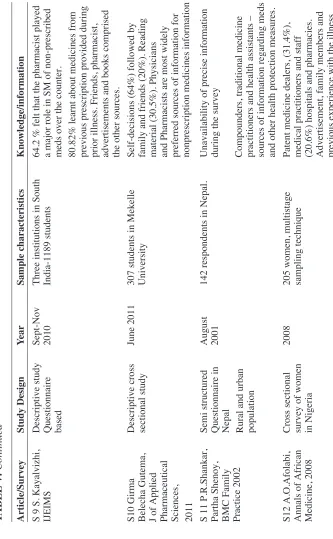
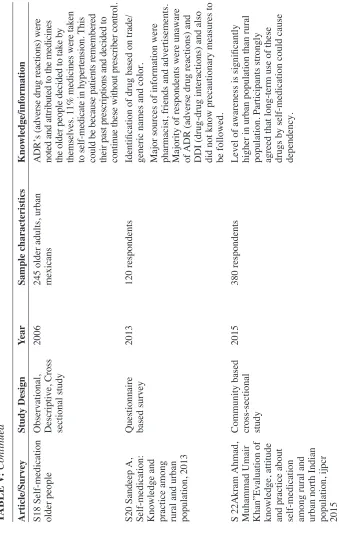
ABLE V
:
Knowledge/Information and self-medication.
Article/Sur
vey
Study Design
Y
ear
Sample characteristics
Kno
wledge/inf
ormation
S1 Jain Pankaj, 2012
Survey method, structured interview schedule Socio demographic characteristics and prospective SM May 2009 – June 2010
Haryana –community pharmacies Consumers purchasing drugs without prescription. 1905 responses from 2000 Q in 60 community pharmacies 39%- health professionals, 24%- advice from friends and family 15%- pharmacist 14%-read product information on pack/label
S2 Pahuja Ritu, IJDDR, 2011
Exploratory
simple
Questionnaire survey. Feb-June 2011 103 pharmacy students, Judgmental sampling method. Online survey Information about meds from pharmacies (39.2%). 24.7%- learned SM from past prescriptions of doctors. Friends, advertisements and books were other sources
S3 Verma Rohit, Asian journal of pharmaceutical and clinical research, 2010
Descriptive survey
Jan- march 2010 Adolescent behavior 1022 students, 2 institutions UP technical University Doctors – 80.82% (prior illness) Friends-36.98% Pharmacists-31.2% Advertisements-13.2% Books-7%
S4 Gupta Pankaj, Asian journal of Pharmaceutical and clinical research, 2011 Cross sectional based study
2011
Urban slum community- Malawi in Mumbai. Semi structured Q 760 families
Self- medication in Developing Countries a Systematic Review
S5 Malvi Ritesh, IRJP 2011 Questionnaire based survey
2011
Descriptive survey, 116 respondents in Bhopal
Chemist- 56.8% Advertisements-25.2% Friends –18.9% Family –18.9% Internet-6.8% SM(self-medication)- most prevalent in young males, preference for allopathic drugs
S6 Zafar Syed, Journal of Pak Med Assoc., 2008 Cross sectional survey Jan-Feb 2007 Convenience sample, students in Karachi 572 students Students stated that they knew it is harmful to self-medicate but they lacked complete knowledge. No significant differences between SM practices of medical and non-medical students
S7 Sontakke, Comparative study Cross sectional survey
2011
339 students
Awareness of OTC and advts.disadvts. studied SM – no advts.analgesics and antipyretics common categories. Higher use among seniors because they are more aware of side effects
S 8 Husain et al, African journal of Pharmacy and Pharmacology, 2011 Cross sectional study multi centre in five cities of Pakistan
2011
Parulekar, M Mekoth, NK Ramesh, CM Parulekar, A
S 9 S. Kayalvizhi, IJEIMS Descriptive study Questionnaire based Sept-Nov 2010 Three institutions in South India-1189 students
64.2 % felt that the pharmacist played a major role in SM of non-prescribed meds over the counter. 80.82% learnt about medicines from previous prescription provided during prior illness. Friends, pharmacist, advertisements and books comprised the other sources.
S10 Girma Belecha Gutema, J of Applied Pharmaceutical Sciences, 2011 Descriptive cross sectional study
June 2011
307 students in Mekelle University
Self-decisions (64%) followed by family and friends (20%). Reading material (30.5%). Physicians and Pharmacists are most widely preferred sources of information for nonprescription
medicines
information
S 11 P.R.Shankar, Partha Shenoy, BMC Family Practice 2002 Semi structured Questionnaire in Nepal Rural and urban population August 2001
142 respondents in Nepal.
Unavailability of precise information during the survey Compounders, traditional medicine practitioners and health assistants – sources of information regarding meds and other health protection measures.
S12 A.O.Afolabi, Annals of African Medicine, 2008 Cross sectional survey of women in Nigeria
2008
205 women, multistage sampling technique Patent medicine dealers, (31.4%), medical practitioners and staff (20.6%) hospitals and pharmacies. Advertisement, family members and previous experience with the illness
T
ABLE V
:
Continued
Article/Sur
vey
Study Design
Y
ear
Sample characteristics
Kno
wledge/inf
Self- medication in Developing Countries a Systematic Review
S13 Al Motassem M.Youssef, Pharm World Sci.2008 Cross sectional observational study December 2003- April 2004
800 customers
People tend to select medicines based on advice received from pharmacy staff, friends /neighbors, informal advice from doctors, nurses
S14 Henry James, Med Princ .Pract, 2006 Questionnaire based descriptive study November 2004 134 students, self-developed pre validated Q Influence of knowledge on attitude towards self-medication- it makes them more careful. Knowledge about benefits and risks of SM was adequate.
S15 Wijesinghe R Pushpa, WHO South-East Asia Journal of Public Health, 2012 Community based cross sectional study
2012
1692 –sample size, rural and urban areas of Sri Lanka
Higher satisfaction with technical competence of pharmacy staff increased the likelihood of SM. In rural areas, respondents highly satisfied with affordability of medical services and concern for the clients were less likely to SM.
S 16 Self-med behavior in Pakistan Cross sectional study July 2007- January 2008 Stratified random sample of 1346 households in Pakistan
Drug sources are chemist shops, public health facilities, and GP’s and lady health workers. Knowledge about medicines needs to increase through educational interventions.
S17 Balamurugan E, BJMP, 2011Self- med in South India Cross sectional study
2009
Parulekar, M Mekoth, NK Ramesh, CM Parulekar, A
S18 Self-medication older people Observational, Descriptive, Cross sectional study
2006
245 older adults, urban mexicans
ADR’s (adverse drug reactions) were noted and attributed to the medicines the older people decided to take by themselves. 11% medicines were taken to self-medicate in hypertension. This could be because patients remembered their past prescriptions and decided to continue these without prescriber control.
S20 Sandeep A, Self-medication: Knowledge and practice among rural and urban population, 2013 Questionnaire based survey
2013
120 respondents
Identification of drug based on trade/ generic names and color. Major sources of information were pharmacist, friends and advertisements. Majority of respondents were unaware of ADR (adverse drug reactions) and DDI (drug-drug interactions) and also did not know precautionary measures to be followed.
S 22Akram Ahmad, Muhammad Umair Khan”Evaluation of knowledge, attitude and practice about self-medication among rural and urban north Indian population, ijpcr 2015 Community based cross-sectional study
2015
380 respondents
Level of awareness is significantly higher in urban population than rural population. Participants strongly agreed that long-term use of these drugs by self-medication could cause dependency.
T
ABLE V
:
Continued
Article/Sur
vey
Study Design
Y
ear
Sample characteristics
Kno
wledge/inf
Self- medication in Developing Countries a Systematic Review
on various aspects of drug safety and efficacy. There are already a number of
positive changes initiated in this direction, for example GPP (Good Pharmacy Practices, FIP/WHO guidelines, 2011).
From the provider perspective, especially in a country like India, there are two major issues or challenges one can observe with respect to self-medication
practices in the society. One is we do not have a specific OTC listing of drugs
(Jain Pankaj, 2012) so in practice a lot of prescription drugs get used over-the-counter. In addition, there are diverse medicine systems in practice (Malvi Reetesh, 2011) and there is no mechanism to gather discrete information on self-medication across various medicine categories (freely available) being used by consumers. These are a larger set of issues and will need policy interventions from the government in the future.
Amidst this, self-medication practices can pose serious challenges if medicines either prescription or over-the –counter get misused, over used or
underutilized. To ensure that the risks and benefits of medicine usage are known
by consumers, we really need to look at and design interventions to promote healthy self-medication and in turn, rational drug use in the developing world. REFERENCES
[1] A Sandeep et al. (2013). Self-medication: Knowledge and practice among rural and urban
population. International Journal of Pharmaceutical and Biological Archives 4(3): 488–492
[2] Afolabi A.O. (2008). Factors influencing the pattern of self-medication in an adult nigerian
population, Annals of African Medicine, 7(3):120–127. DOI: 10.4103/1596-3519.55666
[3] Ahmad Akram, Khan Umair Muhammad (2015).Evaluation of knowledge, attitude and practice about self-medication among rural and urban north indian population. Indian
Journal of Pharmaceutical and Clinical Research, 7(5): 326–332
[4] Al Motassem M., Yousef, Amal G., Al Bakri (2008). Self-medication patterns in Amman,
Jordan.Pharm World Sci. 30: 24–30. DOI: 10.1007/s11096-007-9135-x
[5] Aravumuthan, Anandhasayanam, Fayis K.P. (2016). Assessment of self-medication practices, consumers drug knowledge and consumption patterns at Tirur city, Kerala. Int.
J.Pharm.Sci.Rev.Res. 40(1): 78–83
[6] Balamurugan E, Ganesh K (2011). Prevalence and pattern of self-medication use in coastal
regions of South India. British Journal of medical practitioners 4(3): a428
[7] Balbuena Ruiz Fernando, Aronda Briones Alfredo (2009). Self-medication in older urban
mexicans. Drugs Aging, 26(1): 51–60. DOI: 10.2165/0002512-200926010-00004
[8] Bolanos Hector (2005). Responsible self-medication in Latin America. Drug Information
Journal 39: 99–107
[9] Geest Van De Sjaak, Hardon Anita (1990). Self-medication in developing countries.
Journal of Social and Administrative Pharmacy 7(4).
[10] Grahn L. Joyce (1983).Relationship of consumers’ perceptions of drugs to drug use. Public
Parulekar, M Mekoth, NK Ramesh, CM Parulekar, A
[11] Gupta Pankaj, Bobhate S. Pradeep (2011) Determinants of self-medication practices in an
urban slum community. Asian Journal of Pharmaceutical and Clinical Research 4(3): 54–57
[12] Gutema Belachew Girma, Diriba Alemayehu Gadisa (2011). Self-medication practices among health sciences students: The case of Mekelle University. Journal of Applied
Pharmaceutical Science, 01(10):183-189
[13] Hussain S., Mallik F. (2010).Exploring health seeking behavior, medicine use and self-
medication in urban and rural Pakistan. Southern Med Review, 3(2): 32–34
[14] Husain Shahzad et al. (2011). Prevalence of self-medication and health seeking behavior
in a developing country. African journal of Pharmacy and Pharmacology 5(7): 972–978.
DOI: 10.5897
[15] Imtiaz Sonia et al. (2013).Conditions, frequencies and socio demographic factors leading
to self- medication in Sargodha, Pakistan. Journal of Applied Pharmacy 5(4): 819–826
[16] Jain Pankaj, Sachan Ajay (2012) Statistical Study on Self-medication pattern in Haryana,
India. Indo-global journal of Pharmaceutical Sciences 2(1): 21–35
[17] James Henry, Handu S. Shailendra (2006). Evaluation of the knowledge, attitude and
practice of self-medication among first year medical students. Medical principles and
practice. 15: 270–275. DOI:10.1159/000092989
[18] Keshari Shyam Sunder, Kesarwani Priyanka (2014). Prevalence and pattern of self-
medication practices in rural Barabanki. Indian Journal of Clinical Practice 25(7).
[19] Kumar Varun, Mangal Abha (2015). Prevalence and pattern of self-medication in an urban
area of Delhi, India. Medical Journal of Dr. D.Y.Patil University 8(1). DOI:
10.4103/0975-2870.148828
[20] Malvi Reetesh, Papiya Bigoniya (2011). A study of self-medication among the people of
Bhopal region, India. International Research Journal of Pharmacy 2(12): 163–165
[21] Nagarajaiah BH et al. (2016).Prevalence and pattern of self-medication practices among
population of three districts of South Karnataka. National Journal of Physiology, Pharmacy
and Pharmacology 6(4): 296–300. DOI: 10.5455/njppp.2016.6.02022016126
[22] Pahuja Ritu, Singh Himmat (2011). Online exploratory study of self-medication practices among pharmacy graduates in India. International journal of Drug Development and
Research, 3(4) 200–207
[23] Partha P., Shankar PR and Shenoy N. (2002). Self-medication and non-doctor prescription
practices in Pokhara valley, Western Nepal. Bio Med Central Family Practice 3. DOI:
10.1186/1471-2296-3-17
[24] S. Kayalvizhi and R. Senapathi (2010).Evaluation of the perception, attitude and practice of self-medication among business students in three select cities, South India. International
Journal of Enterprise and Innovation Management Studies 1(3).
[25] Sontakke SD, Bajait CS (2011).Comparative study of evaluation of self-medication
practices in first year and third year medical students. Int. Journal of Biological and
Medical Research. 2(2): 561–564
[26] Verma Rohit, Evaluation of self-medication among professional students in North India
(2010).Asian Journal of Pharmaceutical and Clinical Research 3(1).
[27] Wazaify M., Shields E., Hughes C. M., and McElnay, J. C. (2005). Societal perspectives
on over-the-counter (OTC) medicines. Family Practice.22(2), 170–176. DOI: 10.1093/
Self- medication in Developing Countries a Systematic Review [28] Wijesinghe R Pushpa, Jayakody L Ravindra (2012) Prevalence and Predictors of self-
medication in a selected urban and rural district of Sri Lanka. WHO South East Asia
Journal of Public Health, 1(1): 28–41.
[29] World Health Organization (2010). Responsible self-care and self-medication: A worldwide review of consumers’ surveys.
[30] WHO/FIP guidelines (2011), Good Pharmacy Practice
[31] Zafar Nabeel Syed, Syed Reema (2008).Self-medication among university students of