
Scientia
Pharmaceutica
Review
Recent Approaches for Solid Dose Vaccine Delivery
Nishat Jahan1,* , Sabrina Rahman Archie2, Abdullah Al Shoyaib2, Nadia Kabir1and Karmen Cheung3
1 Department of Pharmacy, University of Asia Pacific, Dhaka 1205, Bangladesh; [email protected] 2 Department of Pharmaceutical Technology, University of Dhaka, Dhaka 1000, Bangladesh;
[email protected] (S.R.A.); [email protected] (A.A.S.)
3 Department of Chemical Engineering, Loughborough University, Loughborough LE11 3TU, UK; [email protected]
* Correspondence: [email protected]
Received: 10 August 2019; Accepted: 18 September 2019; Published: 14 October 2019
Abstract: Recent studies on vaccine delivery systems are exploring the possibility of replacing liquid vaccines with solid dose vaccines due to the many advantages that solid dose vaccines can offer. These include the prospect of a needle-free vaccine delivery system leading to better patient compliance, cold chain storage, less-trained vaccinators and fewer chances for needle stick injury hazards. Some studies also indicate that vaccines in a solid dosage form can result in a higher level of immunogenicity compared to the liquid form, thus providing a dose-sparing effect. This review outlines the different approaches in solid vaccine delivery using various routes of administration including, oral, pulmonary, intranasal, buccal, sublingual, and transdermal routes. The various techniques and their current advancements will provide a knowledge base for future work to be carried out in this arena.
Keywords: vaccine; solid dose; dose-sparing; microneedle
1. Introduction
In 1798 Edward Jenner first demonstrated the idea of vaccination [1], and ever since then, it has become an essential entity of human health protection. Vaccination has provided people respite from various life-threatening diseases, like small pox and tetanus, that used to kill millions of people before the discovery of vaccine. New vaccines are still being investigated for many diseases that are yet unbeatable by today’s medical advancement. There is also a growing demand for a safer, more compatible and cost-effective vaccine delivery system, as vaccine production, preservation and immunisation programmes are extremely expensive. Most vaccines are still being administered parenterally through injection either via intramuscular or subcutaneous routes, which have been proven to initiate effective systemic immunisation [2]. However, recent studies on vaccines suggest that vaccines administered in solid dosage forms have a potential advantage over liquid dosage forms, as they provide a higher level of immunogenicity, thus leading to a dose-sparing effect [3]. Solid dosage forms also have many other advantages over liquid dosage forms in terms of avoiding the need for cold chain storage, less training for vaccinators and a lower cost [4,5]. If these solid dosage forms can be made needle-free this will also minimise the chance of disease transmission from needle-stick injury and increase patient compliance, as it would be pain-free. This review will summarise the current approaches undertaken by several research organisations to successfully develop a solid-dose vaccine delivery system and its potential to exhibit a dose-sparing effect. Additionally, it will explore the various solid vaccine dosage forms that have been designed for the different delivery routes (oral, transdermal, pulmonary, nasal, buccal and sublingual) and compare their limitations and benefits.
Sci. Pharm.2019,87, 27 2 of 27
The benefits, juxtaposed with the drawbacks, will provide researchers and scientists a clear overview for their forthcoming work on vaccine delivery.
1.1. Rationale for Solid Dosage Form of Vaccine
According to the World Health Organization (WHO), the term ‘vaccine’ refers to a biological preparation that improves immunity to a particular disease. It is typically made up of weakened or killed forms of the disease-causing microbe, its toxins or one of its surface proteins, that, when introduced in the body at sufficient amount will elicit immunogenicity, preparing the body for any future invasion by the same organism. Vaccines can be prophylactic (prevent infectious disease; e.g., tetanus or influenza vaccines) or therapeutic (cancer vaccines) [6].
Although vaccines are widely delivered in liquid form using needles, this form of vaccine delivery faces some limitations, like needle-stick injuries, poor patient compliance, cold chain storage and a lack of T-cell mediated immunity and mucosal protection [7]. A solid vaccine delivery system, on the other hand, comes with some inherent advantages, including, no needle-stick injuries, less extensive purification requirement, better patient compliance and improved shelf-life [8]. Additionally, vaccines are thought to show more immunogenicity when delivered in solid form, due to dose-sparing [3]. Due to these advantages, many companies are steering their research towards solid dose vaccine delivery. Vaccine solid dosage forms include the forms of vaccines that are prepared, stored and delivered in the solid state, which can occur either as amorphous powders or as crystals of various morphologic structures, fabricated into different dosage forms, such as various types of tablets, capsules, granules, sachets, reconstitutable powders, powders, dry-powder inhalers, chewables, injectors, microneedles, films and others [9,10]. For example, Vivotif for typhoid [11] and Flumist for influenza [12]. On the other hand, the vaccines which are found in the forms of solutions, suspensions or emulsions, can be termed liquid dose vaccines. For example, Rotarix Vaccine for Rota virus [13].
1.2. Dose-Sparing and Cost-Effectiveness
When the same dose of antigen or a lower dose gives a higher antibody titre, it provides a dose-sparing effect, which, in turn, can make vaccines more cost-effective [14]. Several solid vaccine formulations have been shown to produce dose-sparing effects; for instance, influenza vaccine dry-powder for inhalation has been shown to a produce higher IgG titre compared to the intramuscular liquid influenza vaccine in mice at a same dose of 5µg surface glycoprotein haemagglutinin (HA). The dry powder might have resulted in increased local viscosity due to dissolution of the powders, leading to reduced mucociliary clearance and higher antigen uptake [15]. This enhanced immunity could also be due to activation of both systemic and mucosal humoral immunity by the inhaled solid vaccine powder [16]. Formation of more doses from the same batch of vaccine is particularly important when vaccine demand increases, such as during a pandemic influenza outbreak [14]. Unforseen events can also cause an increase in demand, such as the loss due to contamination of half of the U.S. supply of influenza vaccine, creating a critical shortage and incomplete vaccine coverage [17]. Various emergency measures were considered to either increase the supply of vaccines by reducing the intramuscular doses or importing doses from manufacturers that do not supply the United States [17]. There is a also a tenency for pharmaceutical companies to invest in a frequently used drug rather than preventive treatments like vaccines due to low profit opportunities from drugs for preventive treatments [18].
1.3. Cold-Chain
stored in a freezer between−50◦C and−15◦C [20]. However, maintaining cold storage facilities, cold transportation and cold boxes makes vaccine programs expensive, and hinder the easy and proper distribution of vaccines, especially for the small cities and villages of developing countries. Solid dosage form vaccines, like microneedle patches, have the potential of eliminating the need for cold chain vaccines [14]. Although the currently available lyophilised forms of vaccines that need to be reconstituted before injection are required to be refrigerated, they have relatively better stability than the liquid dosage form; however, it still complicates the vaccine administration process because of the additional reconstitution steps, making the process more time-consuming. Additionally, a vial consisting of water (diluent) needs to be provided for reconstitution, which further adds cost to the overall procedure [14]. Moreover, vaccine tableting circumvents the need for the expensive sterile fill and finishing method that would normally be required by injected vaccines [21].
1.4. Safety
The traditional way of administering vaccines can be associated with a risk of spread of infectious diseases between patients and healthcare providers due to needle-stick injuries, especially in developing countries, or during a bioterrorism emergency or a natural pandemic. Improper use of needles and syringes include use without sterilisation between patients and improper disposal of needles and syringes which may otherwise put the whole community at risk of needle-stick injuries (sharp hazard) [19].
1.5. Compliance
Needles and syringes also result in poor compliance with vaccine schedules due to parental concerns about the number of vaccine administrations, and needle-phobia [19]. The discomfort needles cause can give rise to incomplete vaccination coverage [22]. Although combination vaccines can be used, the immunogenicity is sometimes compromised. Combination vaccines administered mucosally have shown to be effective without compromising immunogenicity of vaccines [19].
1.6. The Training of Vaccinators
Needle-free delivery systems will make it easier for mass vaccination programs to be carried out, as less healthcare training will be required. This will also increase the speed of vaccine delivery [19].
1.7. Rapid Distribution
Solid vaccine dosage forms, for instance as tablets, or releasable solid coatings with microneedle technology [3], will ease the method of distribution. For instance, during the influenza pandemic in 2009, the supply of vaccines was limited, and in Los Angeles County, California, 247 people per hour were in the queue for immunisation, and the rate of immunisation was about 239 people per hour at each distribution point. This indicates that in a city of 9 million people, it would take 60 days to complete the immunisation campaign [21]. However, if vaccine tablets were available (which is undergoing research now), the entire city could have been immunised in one day. And since people would not need to wait in line, it would evade the exposure of individuals to the growing outbreak [21].
2. Types of Solid Dose Vaccine Delivery System
2.1. Mucosal Routes
Sci. Pharm.2019,87, 27 4 of 27
provides the first line of protection for infections that initiate at the mucosal surface [25]. Mucosal routes mostly have special microfold (M) cells that are present in the epithelium covering the follicles of mucosal tissues. These M cells are responsible for the antigen transport to mucosa associated lymphoid tissues (MALT). The Peyer’s patch in the gastrointestinal route, the nasopharynx associated lymphoid tissues (NALT) in the nasal route and the bronchus-associated lymphoid tissue (BALT), are important for the induction of mucosal immunity following vaccination. Moreover, the mucosal route has the added advantage of making vaccine delivery simpler and safer than parenteral routes, which is particularly important for mass immunisation. However, rapid removal of the vaccine’s antigens by body fluids and enzymes is one of the biggest challenges mucosal immunity has to combat [23].
2.1.1. The Oral Route
Pain free delivery, safety and absence of risk of contamination via blood have always made the oral route the most preferred choice of delivery for most drugs, but the biggest challenge has been to protect the orally administered product from acidic and proteolytic degradation in the gastrointestinal tract. This can cause in a decline of the biological activity or cause adverse immunogenicity [26]. Several efforts have been made to overcome these challenges and explore the oral route for solid dose vaccine delivery.
The vaccines that are currently available through oral route are rotavirus, typhoid, cholera and some poliovirus vaccines. These usually require multiple preparatory steps that increase the chances of mistakes, thus affecting vaccine potency. Additionally, some vaccines are available in glass vials that need to be reconstituted with diluents using needles and syringes prior to administration. Antacid buffer is also sometimes provided in vials to neutralise the effect of the low pH of stomach acid, thus augmenting the problem of the cold chain [27]. An oral solid dose vaccine in the form of a tablet would undoubtedly be a very convenient option and investigations in this area are encouraged. Currently live attenuated typhoid vaccine, marketed as Vivotif, is available on the market as orally administered, enteric-coated capsules that can be swallowed without the need for additional buffering [27]. They contain an attenuated strain of the bacteriaSalmonella typhi, Ty21a. The manufacturing of the vaccine involves several steps. First, the vaccine is mixed with sucrose (stabilizer), ascorbic acid and amino acids, and lyophilised. Next the lyophilised preparation is mixed with lactose and magnesium stearate and packed into gelatine capsules which are then enteric-coated to protect the vaccine from stomach acid. The capsules are finally packaged in blisters for distribution [11].
and enteric-coated tablets containing inactivated cholera vaccines in an attempt to improve the immune response by shielding the vaccine from gastric acidity. However, no significant differences were found in terms of immunogenicity between the two types of tablets. The underlying reason can also be attributed to the fact that intraduodenal inoculation model in rabbits used did not allow proper evaluation of acid resistances for the two types of tablet formulations in vivo. Clinical studies might help to examine this further, and explain the situation; nonetheless, enteric coated tablets could be a possible pharmaceutical product for cholera vaccine [29].
A similar study was carried out by Lopez et al. where the immunogenicity effect induced on Sprague–Dawley rats by enteric coated and uncoated oral tablets of an inactivated cholera vaccine and any toxicity produced were compared. Tablets were dispersed in 2 mL drinking water for each dose and were administered to the rat orally using cannula. No significant difference in immunogenicity was found between the responses to either coated or uncoated tablets, and the tablets also did not show any toxicity to the rats [30].
However, a major drawback for oral tablets is the difficulty of swallowing, especially for children, although this can be overcome by microencapsulation with enteric polymers [29]. In addition to that, several studies have shown the effect of vitamin A deficiency and microbiota on the immune response to vaccination [31,32]. It has been found that vitamin-A deficiency disrupts the retinoic acid dependent upregulation of mucosal integrins and the trafficking of antigen specific T lymphocytes to the gastrointestinal tract, thus hampers the vaccine-mediated gastrointestinal immunity [33].
To overcome the problems of swallowing in children and elderly subjects, fast dissolving tablets (FDT) that readily dissolve in the mouth can be a plausible choice for vaccine administration. Moreover, it can also circumvent the risk of choking in patients, thus improving patient compliance. One such FDT tablet formulation has been proposed by Lal et al., where freeze-drying technique was used to produce oral tablet directly in compact blister sheet using the trivalent live attenuated vaccine (ACE527) for prevention of diarrhoea evoked by enterotoxigenicEscherichia colias the model vaccine. Ten different formulations were prepared and examined for their structural integrity, dissolution time, moisture content and glass transition temperature. Bacterial viabilities were also assessed by CFU (colony-forming units) assays. The optimised formulation consisted of cryoprotectants (sucrose and trehalose), buffers and stabilizers (phosphate and glutamate salts), and binders (Natrosol®, polyvinylpyrrolidone and mannitol). Bacterial viability-loss during freeze drying was less than 0.3log10
(50% recovery), and during storage (at 2–8◦C for at least 12 months) was less than 0.4log10 (40%
recovery). However, a higher process loss was observed when stored at higher temperature, like 25◦C or 37◦C, probably due to the low glass transition temperature that was insufficient for maintaining the amorphous glassy state. Further work is required to enhance the thermostability of the vaccines, which is crucial for avoiding the cold chain. Other than freeze-drying, most processes for producing FDT, like direct compression or mass extrusion, involve high compression and the use of shear force, which may prove to be harsh for vulnerable biological material [27]. A proprietary FDT formulation, Zydis®for olanzapine, an antipsychotic drug, has been produced by Catalent Pharma Solutions using their patented freeze-drying technology [34], but none is still available for vaccines [17]. Besides, to overcome the vitamin-A deficiency it is recommended to give vitamin-A supplements during the vaccination process, though the actual dose needs to be determined in human studies [35].
Sci. Pharm.2019,87, 27 6 of 27
room temperature for more than 270 days, which makes this approach feasible and encouraging [21]. It seems to be a promising technology for oral vaccine delivery in solid dosage form; however, there has not been any mention of a dose-sparing effect in this technology.
2.1.2. Pulmonary Route
The respiratory tract is the portal of entry for many pathogens and is thus equipped with well-established immunity. The lung provides a large surface area for interaction with antigens. The mucosal layer of the lung contains dendritic cells; and the lung parenchyma is lined with many epithelial cells, and antigen-presenting cells, like dendritic cells and alveolar macrophages [36]. The pulmonary delivery of vaccines can induce both systemic and local immunity. Local immunity is induced by secreted IgA, the production of which is evoked by bronchoalveolar lymphoid tissue. Besides liquid aerosols, vaccines can be administered through the pulmonary route as dry-powder aerosols as well, and these can be presented in live attenuated, inactivated, subunit, toxoid or adjuvanted forms [36]. For instance, the dry-powder of a subunit influenza vaccine was produced by spray-freeze drying (SFD) using the oligosaccharide inulin as the stabilizer. It showed that the pulmonary administration of dry-powder formulation in BALB/c mice led to higher serum IgG titres than the droplets of an aqueous solution of the subunit vaccine, the immunogenicity result of which was comparable to the intramuscular vaccination. All the vaccines were presented without adjuvants. The aerodynamic particle size of the dry-powder aerosols was 5.3µm, and that of the droplets was 25 µm. The higher titre values can be attributed to the smaller particle size of the dry-powder aerosols, which resulted in deeper penetration of the particles into the lung [16]. However, another study using a dry-powder measles vaccine on macaques suggests the contrary. The results of the study showed that the immune response generated in animals by dry-powder aerosol was lower compared to the intramuscular injection of the vaccine. It was concluded that an improvement in either the formulation or the delivery method could give better results [37]. On the other hand, some other studies with a dry-powder measles vaccine did show some promising results. For instance, Kisich et al. used a stable and high potency dry-powder measles vaccine with a particle size distribution that was appropriate for inhalation. It was manufactured by CO2-assisted nebulization with a Bubble Dryer®(CAN-BD),
processed from a bulk, liquid, Edmonston–Zagreb, live attenuated measles virus vaccine supplied by the Serum Institute of India. PuffHaler®, a novel dry-powder inhaler (Figure1), was used, and the vaccine was administered into cotton rats. The deposition of vaccine in their lungs and successive viral replication was monitored by measles-specific RT-PCR. The immunity in response to dry-powder inhalation was similar to that by injection [38].
Sci. Pharm. 2019, 87, 27 6 of 26
with microcrystalline cellulose and starch. The results showed that the oral vaccine was able to elicit antibody responses to influenza in more than 90% of participants. The tablets demonstrated stability at room temperature for more than 270 days, which makes this approach feasible and encouraging [21]. It seems to be a promising technology for oral vaccine delivery in solid dosage form; however, there has not been any mention of a dose-sparing effect in this technology.
2.1.2. Pulmonary Route
The respiratory tract is the portal of entry for many pathogens and is thus equipped with well-established immunity. The lung provides a large surface area for interaction with antigens. The mucosal layer of the lung contains dendritic cells; and the lung parenchyma is lined with many epithelial cells, and antigen-presenting cells, like dendritic cells and alveolar macrophages [36]. The pulmonary delivery of vaccines can induce both systemic and local immunity. Local immunity is induced by secreted IgA, the production of which is evoked by bronchoalveolar lymphoid tissue . Besides liquid aerosols, vaccines can be administered through the pulmonary route as dry-powder aerosols as well, and these can be presented in live attenuated, inactivated, subunit, toxoid or adjuvanted forms [36]. For instance, the dry-powder of a subunit influenza vaccine was produced by spray-freeze drying (SFD) using the oligosaccharide inulin as the stabilizer. It showed that the pulmonary administration of dry-powder formulation in BALB/c mice led to higher serum IgG titres than the droplets of an aqueous solution of the subunit vaccine, the immunogenicity result of which was comparable to the intramuscular vaccination. All the vaccines were presented without adjuvants. The aerodynamic particle size of the dry-powder aerosols was 5.3 µm, and that of the droplets was 25 µm. The higher titre values can be attributed to the smaller particle size of the dry-powder aerosols, which resulted in deeper penetration of the particles into the lung [16]. However, another study using a dry-powder measles vaccine on macaques suggests the contrary. The results of the study showed that the immune response generated in animals by dry-powder aerosol was lower compared to the intramuscular injection of the vaccine. It was concluded that an improvement in either the formulation or the delivery method could give better results [37]. On the other hand, some other studies with a dry-powder measles vaccine did show some promising results. For instance, Kisich et al. used a stable and high potency dry-powder measles vaccine with a particle size distribution that
was appropriate for inhalation. It was manufactured by CO2-assisted nebulization with a Bubble
Dryer® (CAN-BD), processed from a bulk, liquid, Edmonston–Zagreb, live attenuated measles virus
vaccine supplied by the Serum Institute of India. PuffHaler®, a novel dry-powder inhaler (Figure 1), was used, and the vaccine was administered into cotton rats. The deposition of vaccine in their lungs and successive viral replication was monitored by measles-specific RT-PCR. The immunity in response to dry-powder inhalation was similar to that by injection [38].
Figure 1. Design and use of the PuffHaler dry-powder inhaler [38].
One particular study has reported three elementary steps for the preparation of dry-powder blends for administration through inhalation. First, the mass median diameter of the particles needs
Figure 1.Design and use of the PuffHaler dry-powder inhaler [38].
needs to be reduced to 1 to 5 µm. The size reduction can be achieved by different procedures, like spray drying, precipitation from supercritical fluids, and jet milling or micronisation. After this, the micronised particles need to be blended with an excipient, usually lactose. These carrier particles facilitate the distribution of the small particles and allow correct filling into the inhaler storage system in a reproducible fashion. The final step is to fill the blend into the storage systems [39]. Dura Pharmaceuticals developed a powder formulation of a measles vaccine for aerosol delivery, where they used jet milling for size reduction to generate particles (1–5µm) suitable for pulmonary delivery. They were able to show that size reduction by jet milling did not cause any significant physical changes and the potency of live attenuated measles vaccine was preserved [40]. They also developed a unique breath actuated inhaler Spiros®that uses electromechanical energy to aerosolise and deliver a constant dose at different flow rates. It has a powder storage platform where it can store moisture or photo-sensitive compounds and eliminates the need for powder reconstitution. Additionally, it is environmentally safe, since, being breath-actuated, it does not require the need for propellants [39].
2.1.3. Intranasal Route
The nasal route is one of the suitable routes for vaccine administration, among other mucosal routes [41]. It has been found that, vaccination through this route elicits both systemic and mucosal immunity in human and animal models [42–45]. Intranasal vaccination is beneficial to children and elderly patients, because of its patient compliance. It is needle free and self administration is possible. Moreover, this route is non-invasive and only needs a small antigenic dose. The induction of mucosal and systemic immune responses makes this route different from the parenteral route, as the parenteral route only induces systemic immunity [46]. In contrast, rapid clearance, inefficient uptake of drugs and the lack of a human compatible adjuvant are some drawbacks of intranasal route [41]. Figure2 demonstrates the basic feature of the intranasal administration of solid dose vaccine.
Sci. Pharm. 2019, 87, 27 7 of 26
to be reduced to 1 to 5 µm. The size reduction can be achieved by different procedures, like spray drying, precipitation from supercritical fluids, and jet milling or micronisation. After this, the micronised particles need to be blended with an excipient, usually lactose. These carrier particles facilitate the distribution of the small particles and allow correct filling into the inhaler storage system in a reproducible fashion. The final step is to fill the blend into the storage systems [39]. Dura Pharmaceuticals developed a powder formulation of a measles vaccine for aerosol delivery, where they used jet milling for size reduction to generate particles (1–5 µm) suitable for pulmonary delivery. They were able to show that size reduction by jet milling did not cause any significant physical changes and the potency of live attenuated measles vaccine was preserved [40]. They also developed a unique breath actuated inhaler Spiros® that uses electromechanical energy to aerosolise and deliver a constant dose at different flow rates. It has a powder storage platform where it can store moisture or photo-sensitive compounds and eliminates the need for powder reconstitution. Additionally, it is environmentally safe, since, being breath-actuated, it does not require the need for propellants [39].
2.1.3. Intranasal Route
The nasal route is one of the suitable routes for vaccine administration, among other mucosal routes [41]. It has been found that, vaccination through this route elicits both systemic and mucosal immunity in human and animal models [42–45]. Intranasal vaccination is beneficial to children and elderly patients, because of its patient compliance. It is needle freeand self administration is possible. Moreover, this route is non-invasive and only needs a small antigenic dose. The induction of mucosal and systemic immune responses makes this route different from the parenteral route, as the parenteral route only induces systemic immunity [46]
.
In contrast, rapid clearance, inefficient uptake
of drugs and the lack of a human compatible adjuvant are some drawbacks of intranasal route [41]. Figure 2 demonstrates the basic feature of the intranasal administration of solid dose vaccine.Figure 2. Intranasal administration of a solid dose vaccine [47].
In rodents, nasal-associated lymphoid tissue (NALT) is the prime inductive site for mucosal immunity in the nasopharyngeal tract [48–50]. In human, Waldeyer’s ring, the lymphoid tissues or tonsils, is considered as the equivalent to NALT [51]. Mucosal surface protection depends on the secretory immunoglobulin-A (sIgA) and other innate defence mechanisms to protect it from pathogens [52]. Research with varying animals indicates the human immunology. Though human immunity mechanisms and biological combinations differ from animal models, appropriate in vitro studies have to be conducted before performing human trials of the intranasal vaccines [41]. Therefore, phenotypic and physiological features of NALT can be simulated to the appropriate in vitro models for the development of an intranasal vaccine [53]. Some strategies for the intranasal delivery of solid vaccine have been mentioned below:
Live attenuated vaccines: The first trivalent vaccine by intranasal route for seasonal influenza is FluMist, manufactured by MedImmune [54,55]. FluMist is advantageous over injectable trivalent
Figure 2.Intranasal administration of a solid dose vaccine [47].
Sci. Pharm.2019,87, 27 8 of 27
Live attenuated vaccines: The first trivalent vaccine by intranasal route for seasonal influenza is FluMist, manufactured by MedImmune [54,55]. FluMist is advantageous over injectable trivalent vaccines for seasonal influenza because of a longer period of protection, better cross-protection, increased efficacy, and both mucosal and systemic immunity can be achieved. However, few drawbacks have been found in case of FluMist, as it causes adverse side effects, which become a safety concern, for allergy and asthma patients. Furthermore, irregular side effects like Bell’s palsy has also been noted [54].
Mucoadhesion enhancement: As most of the antigens tend to be removed easily by mucociliary clearance due to their little or no affinity towards nasal epithelium cells, mucoadhesives are co-administered with the antigens to increase the absorption rate, as well as residence time. Different polymers, for instance, polylactide-co-glycolide (PLGA), carbopol, chitosan and alginate have been used as mucoadhesives for intranasal vaccine delivery [56], as shown in Table1. Sodium alginate and carbopol are hydrophilic polymers, and therefore, these polymers can form hydrogen bonds and be absorbed to the mucus. As a result, these hydrophilic polymers increase nasal residence time [57,58].
Table 1. Comparative studies among different polymers used for mucoadhesives intranasal solid vaccine delivery.
Name of the Polymer Property Advantages
Sodium Alginate
• Linear copolymer • Consists of 1–4 linked
β-d-mannuronic acid and 1–4 linkedα-l-guluronic acid residues
• Good biocompatibility • Low cost
• Ease of preparation [59]
Carbopol
• Cross-linked polyacrylic acid
polymer [60]
• Gels can be used for small protein
delivery [61]
Chitosan
• Cationic polymer [41] • Linear polysaccharide
produced by chitin deacetylation [62]
• Non-toxic [41]
• Decreased mucociliary clearance [63,64] • Prolonged contact period between the
chitosan-antigen complex and NALT [65,66]
• Have adjuvant properties which
increase humoral and cellular immune response [63,64]
• Controlled vaccine release [41]
Particulate delivery system: Liposomes, virosomes and ISCOMs (immune-stimulating complexes) are particulates that act as vaccines which are administered through the nasal drug delivery system [67–69]. Liposomes are mainly made up of various ratios of cholesterol and lipids, which enclose an aqueous core. This structure allows the incorporation of wide-ranging of antigens [68,70]. The composition of virosomes includes extracted glycoproteins, which come from virus particles and mimic viral compounds. It has been found that various antigens, such as DNA [71], influenza [72,73] and HIV proteins [74] can be incorporated through the nasal route by virosomes efficiently. ISCOMS are composed of saponins, lipids and an antigen, where saponin is used as an adjuvant. Hydrophobic bonding is present among the components which enables them to be held together. Cholesterol and saponins are the main constituents of ISCOMs [75]. A particulate delivery system confers a depot effect and prevents antigen degradation. Further research needs to be conducted on the physical and chemical properties of the particulates to develop nasal drug delivery system.
lipopeptide-based delivery system. Moreover, this system nullifies the requirement of adjuvants, generates cellular as well as antibody responses, and induces both mucosal and systemic immune responses [76]. Recently, bioengineered antigen coated spherical polyhydroxyalkanoate (PHA) beads have been found to be a potential substitute to subunit vaccines, because of their unique design space, as well as their physicochemical and immunological properties, which lead to the development of safe particulate vaccine delivery [77].
Mucosal Adjuvants: Mucosal adjuvants can be used as delivery vehicles, as well as immunostimulatory molecules [78]. Usually, peptide and protein antigens need adjuvants, as these antigens show poor immunogenicity. However, it is a challenge to achieve a potent effect from adjuvants without causing toxicity. As mucosal surfaces get exposed to wide range of foreign particles, the mucosal system has to be very specific to antigens, which can in turn prevent unwanted responses and activation of immune system. Therefore, novel approaches and more research needs to be conducted for developing appropriate and potent mucosal adjuvants [41]. During selection of the device for a solid vaccine, some factors need to be considered; for instance, administration volume, spray performance and protection during transportation and storage [46].
Solid vaccines can be delivered through unit dose and the bidose nasal powder delivery system. Unitdose nasal powder delivery system is an active technology delivering a single dose of nasal powder vaccine. The maximum filling volume is 140 mm3or 20–50 mg. The filling technology is conventional, in other words, like capsule filling. In case of the unitdose nasal powder delivery system, coordination of actuation with inhalation is not needed. The bidose nasal powder delivery system is a passive technology. Because of its special blister lamination or foil, it provides optimum protection to a solid powder vaccine. In case of this system, the maximum filling volume of the device is 190 mm3or 50–100 mg, followed by automated filling and assembling technology [46].
Importantly, relative humidity plays a crucial role for maintaining the stability of dry-powder vaccines by affecting inter-particulate forces [79,80]. It is recommended to store the dry-powder inhaler under 40%–45% relative humidity [81]. Since most of the developing countries have higher relative humidity, it is crucial to take this factor into consideration during the formulation and packaging of the dry-powder vaccine formulation [82].
2.1.4. The Buccal and Sublingual Routes
Sci. Pharm.2019,87, 27 10 of 27
challenge in this route is to overcome the ‘salivary washout’ effect which might dilute the antigen and cause swallowing of the dosage [23].
Sci. Pharm. 2019, 87, 27 10 of 26
investigate the effect of different rates of the release of the same antigen from tablet formulation on immune responses after sublingual immunisation. Fast release and extended release (ER) tablets were prepared to compare the respective immune responses. ER tablets are usually based on gelling hydrophilic polymers, called hydrophilic matrix tablets. The polymers form a gel layer around the tablet when they come into contact with water. The release rate will be regulated by the overall swelling and erosion [84]. The ER tablets for model antigen ovalbumin in this study were made of two-layer tablets, comprising of a mucoadhesive layer (composed of carbopol) and a controlled release layer. Since the tablets could not stick to the floor of the mouth in mice, they were applied on the ventral side of the tongue, resulting in the release of the antigen in the sublingual region. The tablets contained 250 µg of ovalbumin, directly followed by a 1 µg/mL CT solution as an adjuvant. It was found that immunisations by fast releasing tablets had higher immune responses than extended release formulations and were comparable to the reference solution (ovalbumin and CT of the same doses). ER tablets were thought to provoke a higher immune response due to the longer exposure to the immune system. But the result of the investigation was to the contrary. One of the explanations could be the continuous release of the antigen resulted in a lower dose being presented to the immune system that was insufficient to provoke a strong immune response. The amount of salivation and chewing movements can also affect the dissolution of the tablets. Thus, it was concluded that a fast-release sublingual tablet can be a possible vaccine delivery system, but the immunisation potential of ER tablets needs to be investigated further [2]. The study also evaluated the stabilizing potential of
different excipients during freeze-drying of a model vaccine, killed whole-cell Vibrio cholera, that
causes enteric infections. Sucrose was found to maintain the immunogenicity of the bacteria and proved to be useful for producing a complete immunogenic formulation of the commercially
available oral cholera vaccine DukoralTM [10].
Figure 3. Graphical representation of buccal and sublingual vaccine delivery routes [23].
A recent research effort has been conducted to design wafer formulation using several excipient combinations for the delivery of wafers containing HPV vaccine via sublingual vaccination. One of the fast-disintegrating formulations for producing wafers was found to possess a diameter of 4 mm that had a dissolution time of less than 25 seconds (in 3 mL at 37 °C). The formulation was comprised of approximately 65% (w/w) myo-inositol (the placebo HPV powder) and 35% microcrystalline cellulose (MCC) [85].
2.2. Transdermal Route
Figure 3.Graphical representation of buccal and sublingual vaccine delivery routes [23].
A recent research effort has been conducted to design wafer formulation using several excipient combinations for the delivery of wafers containing HPV vaccine via sublingual vaccination. One of the fast-disintegrating formulations for producing wafers was found to possess a diameter of 4 mm that had a dissolution time of less than 25 seconds (in 3 mL at 37◦C). The formulation was comprised of approximately 65% (w/w) myo-inositol (the placebo HPV powder) and 35% microcrystalline cellulose (MCC) [85].
2.2. Transdermal Route
2.2.1. Microneedle Delivery System
This type of delivery system is a promising way of delivery of vaccines. It mainly possesses short needles (less than 1 mm; can vary between 25–1000µm in length) formed into arrays to penetrate the stratum corneum and access the epidermis or dermis.
Results from different studies show that breaching the epidermal layer with microneedles causes less microbial penetration compared to hypodermic needles [86]. Preliminary clinical studies in humans have shown that no pain and minimal sensation from microneedles arrays are felt, most likely because, although the microneedles are long enough to pierce through stratum corneum (10 to 15µm deep), they are short enough to avoid the nerves located in deeper tissues [19].
There are four different, main types of microneedle: solid microneedles, that are used to pre-treat the skin before administration of the active ingredients; drug-coated solid microneedles, that function by drug dissolution in the skin; hollow microneedles—these are used for injections; and dissolving microneedles, that are produced from a polymer which contains the active ingredient in its matrix, and can serve as controlled or rapid release systems [86], as illustrated in Figure4.
Sci. Pharm. 2019, 87, 27 11 of 26
2.2.1. Microneedle Delivery System
This type of delivery system is a promising way of delivery of vaccines. It mainly possesses short needles (less than 1 mm; can vary between 25–1000 µm in length) formed into arrays to penetrate the stratum corneum and access the epidermis or dermis.
Results from different studies show that breaching the epidermal layer with microneedles causes less microbial penetration compared to hypodermic needles [86]. Preliminary clinical studies in humans have shown that no pain and minimal sensation from microneedles arrays are felt, most likely because, although the microneedles are long enough to pierce through stratum corneum (10 to 15 µm deep), they are short enough to avoid the nerves located in deeper tissues [19].
There are four different, main types of microneedle: solid microneedles, that are used to pre-treat the skin before administration of the active ingredients; drug-coated solid microneedles, that function by drug dissolution in the skin; hollow microneedles—these are used for injections; and dissolving microneedles, that are produced from a polymer which contains the active ingredient in its matrix, and can serve as controlled or rapid release systems [86], as illustrated in Figure 4.
Figure 4. Methods of drug delivery to the skin using microneedles (MN) [87].
The tough barrier of stratum corneum limits access to drugs that are hydrophobic, low molecular weight and potent. Microneedles have been found to successfully deliver a variety of large and hydrophilic compounds into the skin, such as proteins and DNA. In vivo delivery has been carried out for peptides (insulin and desmopressin), plasmid DNA, oligonucleotides, hepatitis B, anthrax and Japanese encephalitis vaccines [88].
Several companies, such as Biovalv Technologies, Inc. (Westborough, MA), are working on developing this method of vaccine delivery and attaining FDA approval for the products. In a study,
the Macroflux® microprojection array system (ALZA Corp., Mountain View, CA) was used to
evaluate the ability of microneedles to deliver vaccines. The skin of hairless guinea pigs was penetrated by 330 µm long microneedles (coated with dry film of ovalbumin antigen), with 190 microprojections per cm2 administered on a 1 or 2 cm2 patch [19].
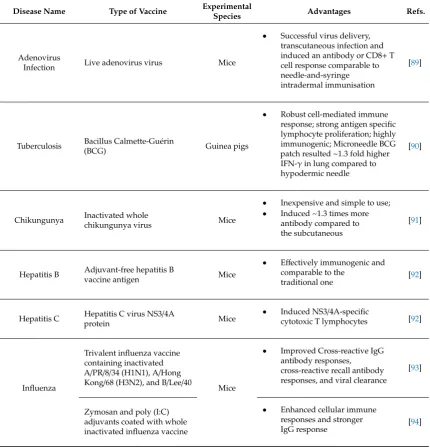
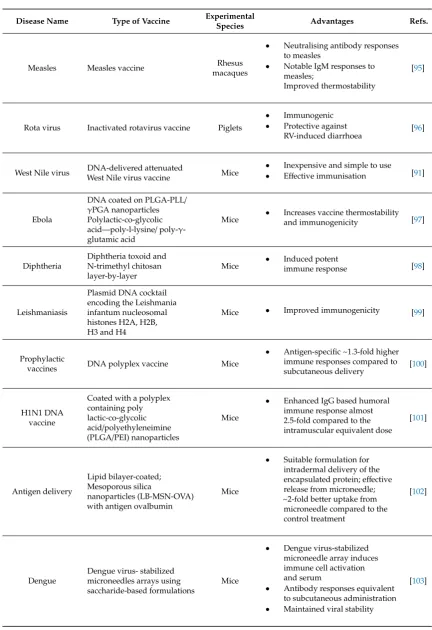
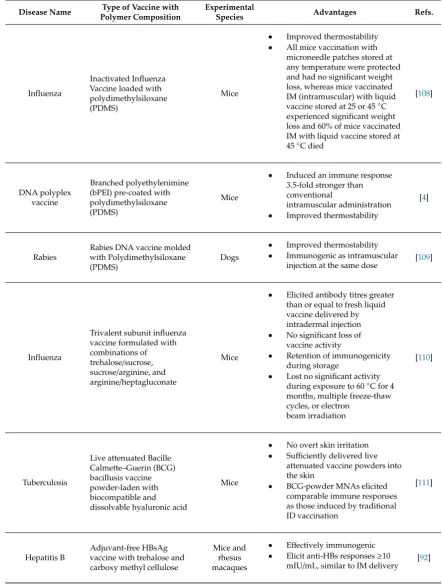
A multitude of studies have been carried out on solid microneedles in an attempt to deliver vaccines in solid dosage form. Some of the investigations regarding coating and dissolving microneedles in the last 10 years have been summarised in Tables 2 and 3. Figures 5 and 6 show the scanning electron microscopy images of a coated and dissolving microneedle patch to provide a clear understanding of the microneedle fabrication.
Table 2. A summary of studies on the delivery of vaccines using coated microneedles. Figure 4.Methods of drug delivery to the skin using microneedles (MN). Microneedles are first applied to the skin (A) and then used for drug delivery (B) [87].
The tough barrier of stratum corneum limits access to drugs that are hydrophobic, low molecular weight and potent. Microneedles have been found to successfully deliver a variety of large and hydrophilic compounds into the skin, such as proteins and DNA. In vivo delivery has been carried out for peptides (insulin and desmopressin), plasmid DNA, oligonucleotides, hepatitis B, anthrax and Japanese encephalitis vaccines [88].
Sci. Pharm.2019,87, 27 12 of 27
the Macroflux®microprojection array system (ALZA Corp., Mountain View, CA) was used to evaluate the ability of microneedles to deliver vaccines. The skin of hairless guinea pigs was penetrated by 330 µm long microneedles (coated with dry film of ovalbumin antigen), with 190 microprojections per cm2 administered on a 1 or 2 cm2patch [19].
A multitude of studies have been carried out on solid microneedles in an attempt to deliver vaccines in solid dosage form. Some of the investigations regarding coating and dissolving microneedles in the last 10 years have been summarised in Tables2and3. Figures5and6show the scanning electron microscopy images of a coated and dissolving microneedle patch to provide a clear understanding of the microneedle fabrication.
Table 2.A summary of studies on the delivery of vaccines using coated microneedles.
Disease Name Type of Vaccine Experimental
Species Advantages Refs.
Adenovirus
Infection Live adenovirus virus Mice
• Successful virus delivery,
transcutaneous infection and induced an antibody or CD8+T cell response comparable to needle-and-syringe intradermal immunisation
[89]
Tuberculosis Bacillus Calmette-Guérin
(BCG) Guinea pigs
• Robust cell-mediated immune
response; strong antigen specific lymphocyte proliferation; highly immunogenic; Microneedle BCG patch resulted ~1.3 fold higher IFN-γin lung compared to hypodermic needle
[90]
Chikungunya Inactivated whole
chikungunya virus Mice
• Inexpensive and simple to use;
• Induced ~1.3 times more
antibody compared to the subcutaneous
[91]
Hepatitis B Adjuvant-free hepatitis B
vaccine antigen Mice
• Effectively immunogenic and
comparable to the
traditional one [92]
Hepatitis C Hepatitis C virus NS3/4A
protein Mice
• Induced NS3/4A-specific
cytotoxic T lymphocytes [92]
Influenza
Trivalent influenza vaccine containing inactivated A/PR/8/34 (H1N1), A/Hong Kong/68 (H3N2), and B/Lee/40
Mice
• Improved Cross-reactive IgG
antibody responses, cross-reactive recall antibody responses, and viral clearance
[93]
Zymosan and poly (I:C) adjuvants coated with whole inactivated influenza vaccine
• Enhanced cellular immune
responses and stronger
Table 2.Cont.
Disease Name Type of Vaccine Experimental
Species Advantages Refs.
Measles Measles vaccine Rhesus macaques
• Neutralising antibody responses
to measles
• Notable IgM responses to
measles;
Improved thermostability
[95]
Rota virus Inactivated rotavirus vaccine Piglets
• Immunogenic • Protective against
RV-induced diarrhoea [96]
West Nile virus DNA-delivered attenuated
West Nile virus vaccine Mice
• Inexpensive and simple to use
• Effective immunisation [91]
Ebola
DNA coated on PLGA-PLL/
γPGA nanoparticles Polylactic-co-glycolic acid—poly-l-lysine/poly-γ -glutamic acid
Mice
• Increases vaccine thermostability
and immunogenicity [97]
Diphtheria
Diphtheria toxoid and N-trimethyl chitosan layer-by-layer
Mice
• Induced potent
immune response [98]
Leishmaniasis
Plasmid DNA cocktail encoding the Leishmania infantum nucleosomal histones H2A, H2B, H3 and H4
Mice • Improved immunogenicity [99]
Prophylactic
vaccines DNA polyplex vaccine Mice
• Antigen-specific ~1.3-fold higher
immune responses compared to subcutaneous delivery [100]
H1N1 DNA vaccine
Coated with a polyplex containing poly lactic-co-glycolic acid/polyethyleneimine (PLGA/PEI) nanoparticles
Mice
• Enhanced IgG based humoral
immune response almost 2.5-fold compared to the intramuscular equivalent dose
[101]
Antigen delivery
Lipid bilayer-coated; Mesoporous silica
nanoparticles (LB-MSN-OVA) with antigen ovalbumin
Mice
• Suitable formulation for
intradermal delivery of the encapsulated protein; effective release from microneedle; ~2-fold better uptake from microneedle compared to the control treatment
[102]
Dengue
Dengue virus- stabilized microneedles arrays using saccharide-based formulations
Mice
• Dengue virus-stabilized
microneedle array induces immune cell activation and serum
• Antibody responses equivalent
to subcutaneous administration
• Maintained viral stability
Sci. Pharm.2019,87, 27 14 of 27
Table 3.A summary of studies on the delivery of vaccines using dissolving microneedles.
Disease Name Type of Vaccine with
Polymer Composition
Experimental
Species Advantages Refs.
Adenovirus Infection
Live recombinant human adenovirus type 5 (rAdHu5) with silicone template
Mice
• Induced potent multifunctional
CD8+T-cell responses, maintains thermostability and bioactivity, enables facile skin delivery, and evokes
multifunctional, cytolytic CD8+ T-cell responses equipotent to that evoked by conventional needle delivery and ~2.3 fold more in spleen
[104]
Diphtheria Diptheria toxoid (DT) with
Sodium hyaluronate Mice
• Increased anti-DT IgG titre ~1.2
fold following
microneedle vaccination [105]
HIV
Recombinant human adenovirus type 5 vector (AdHu5) encoding HIV-1 gag with sodium carboxymethylcellulose (Na-CMC)
Mice
• Generated long-lived HIV
specific CD8+T cells [106]
Malaria
SE36 recombinant molecule (malaria vaccine) with Sodium hyaluronate
Mice
• Increases in toxoid specific
IgG levels
• Increased toxin-neutralizing
antibody titre; 2µg SE36 in microneedle produce equivalent amount of IgG as 5µg SE36 in subcutaneous
[105]
Poliovirus
Inactivated polio vaccine (IPV) with maltodextrin and D-sorbitol
N/A
• Improved thermostability
compared to commercial
liquid vaccines [5]
Tetanus
Unadjuvanted tetanus toxoid with polyvinyl alcohol (PVA), sucrose and CMC
Pregnant mice
• Reduce the incidences of
maternal and neonatal tetanus
• Dissolving MNP (microneedle
patch) induced a significantly more robust immune response as well as higher protection to tetanus toxin challenge compared to
intramuscular vaccination
• Mice born to MNP-vaccinated
mothers showed detectable tetanus–specific IgG antibodies up to 12 weeks of age and complete protection to tetanus toxin challenge up at 6 weeks of age. None of the 6-week old mice born to intramuscularly vaccinated mothers
survived challenge
Table 3.Cont.
Disease Name Type of Vaccine with
Polymer Composition
Experimental
Species Advantages Refs.
Influenza
Inactivated Influenza Vaccine loaded with polydimethylsiloxane (PDMS)
Mice
• Improved thermostability • All mice vaccination with
microneedle patches stored at any temperature were protected and had no significant weight loss, whereas mice vaccinated IM (intramuscular) with liquid vaccine stored at 25 or 45◦C experienced significant weight loss and 60% of mice vaccinated IM with liquid vaccine stored at 45◦C died
[108]
DNA polyplex vaccine
Branched polyethylenimine (bPEI) pre-coated with polydimethylsiloxane (PDMS)
Mice
• Induced an immune response
3.5-fold stronger than conventional
intramuscular administration
• Improved thermostability
[4]
Rabies
Rabies DNA vaccine molded with Polydimethylsiloxane (PDMS)
Dogs
• Improved thermostability • Immunogenic as intramuscular
injection at the same dose
[109]
Influenza
Trivalent subunit influenza vaccine formulated with combinations of trehalose/sucrose, sucrose/arginine, and arginine/heptagluconate
Mice
• Elicited antibody titres greater
than or equal to fresh liquid vaccine delivered by intradermal injection
• No significant loss of
vaccine activity
• Retention of immunogenicity
during storage
• Lost no significant activity
during exposure to 60◦C for 4 months, multiple freeze-thaw cycles, or electron
beam irradiation
[110]
Tuberculosis
Live attenuated Bacille Calmette–Guerin (BCG) bacillusis vaccine powder-laden with biocompatible and dissolvable hyaluronic acid
Mice
• No overt skin irritation • Sufficiently delivered live
attenuated vaccine powders into the skin
• BCG-powder MNAs elicited
comparable immune responses as those induced by traditional ID vaccination
[111]
Hepatitis B
Adjuvant-free HBsAg vaccine with trehalose and carboxy methyl cellulose
Mice and rhesus macaques
• Effectively immunogenic • Elicit anti-HBs responses≥10
Sci. Pharm.2019,87, 27 16 of 27
Sci. Pharm.2019, 87, 27 13 of 26
H1N1 DNA vaccine
Coated with a polyplex containing poly lactic-co-glycolic
acid/polyethyleneimine (PLGA/PEI)
nanoparticles
Mice
• Enhanced IgG based humoral immune response almost 2.5-fold compared to the intramuscular equivalent dose [101] Antigen delivery Lipid bilayer-coated; Mesoporous silica nanoparticles (LB-MSN-OVA) with antigen ovalbumin
Mice
• Suitable formulation for intradermal delivery of the encapsulated protein; effective release from microneedle; ~2-fold better uptake from microneedle compared to the control treatment
[102]
Dengue
Dengue virus- stabilized microneedles arrays using saccharide-based formulations
Mice
• Dengue virus-stabilized
microneedle array induces immune cell activation and serum
• Antibody responses equivalent to subcutaneous administration
• Maintained viral stability
[103]
Figure 5. Scanning electron microscopy imaging of DT/TMC (Diphtheria toxoid/N-trimethyl chitosan) coated microneedle arrays [98].
Table 3. A summary of studies on the delivery of vaccines using dissolving microneedles.
Disease Name
Type of Vaccine with Polymer Composition
Experimental
Species Advantages Refs.
Adenoviru s Infection
Live recombinant human adenovirus type 5 (rAdHu5) with silicone template
Mice
• Induced potent multifunctional CD8+ T-cell responses, maintains
thermostability and bioactivity, enables facile skin delivery, and evokes multifunctional, cytolytic CD8+ T-cell responses equipotent to that evoked by conventional needle delivery and ~2.3 fold more in spleen
[104]
Diphtheria Diptheria toxoid (DT)
with Sodium hyaluronate Mice
• Increased anti-DT IgG titre ~1.2 fold
following microneedle vaccination [105]
HIV
Recombinant human adenovirus type 5 vector (AdHu5) encoding HIV-1 gag with sodium
Mice • Generated long-lived HIV specific
CD8+ T cells [106]
Figure 5.Scanning electron microscopy imaging of DT/TMC (Diphtheria toxoid/N-trimethyl chitosan) coated microneedle arrays [98].
Sci. Pharm.2019, 87, 27 15 of 26
multiple freeze-thaw cycles, or electron beam irradiation
Tuberculos is
Live attenuated Bacille Calmette–Guerin (BCG) bacillusis vaccine powder-laden with biocompatible and dissolvable hyaluronic acid Mice
• No overt skin irritation
• Sufficiently delivered live
attenuated vaccine powders into the skin
• BCG-powder MNAs elicited comparable immune responses as those induced by traditional ID vaccination
[111]
Hepatitis B
Adjuvant-free HBsAg vaccine with trehalose and carboxy methyl cellulose
Mice and rhesus macaques
• Effectively immunogenic
• Elicit anti-HBs responses ≥10 mIU/mL, similar to IM delivery
[92]
Figure 6. Scanning electron microscopy image of dissolving microneedles (MNs) containing DNA Polyplex Vaccine [4].
2.2.2. Jet Injectors and Solid Dose Injectors
Different approaches have been made to deliver vaccines in a needle-free delivery system. Jet
injectors were designed to deliver liquid vaccine through a nozzle using high pressure, in which case
the high-speed narrow stream penetrates into the skin. It can be targeted for intradermal,
subcutaneous or intramuscular tissue depending on the fluid stream. Powder jet injectors for vaccines
have also been under development (PowderJect Pharmaceuticals PLC, Oxford, UK). They deliver
vaccines to the epidermis [19]. Although jet injectors have been proven to show higher antibody titres
and avoid cold chain, the pain and severity of local reactions and bleeding were found to be similar
to needle and syringes. The PowderJect technology (currently owned by Pfizer) fires powders into
the skin that contain antigen. It has shown promising results for the delivery of DNA vaccines that
were coated onto gold carrier particles. But the system has the problems of controlled delivery and
specific penetration depth in different skin types and locations on the body. Additionally, the use of
compressed gas and explosives make this device complicated, expensive, and potentially dangerous
[14].
Former Glide Pharma has designed another solid dose injector which contains an actuator and
a cassette that contains the drug with the vaccine in the form of a needle that has a pointed end. When
the pre-set spring force is achieved, the actuator triggers and automatically delivers the drug. The
pushing action is important as it delivers the drug in a controlled way at the depth of skin every time,
regardless of the skin type and location. However, in Powderject technology, it was difficult to set a
particular velocity that would work accurately and reliably for all patients. The actuator can be
designed as disposable or reusable units when multiple doses are required. The cassettes can be
Figure 6. Scanning electron microscopy image of dissolving microneedles (MNs) containing DNA Polyplex Vaccine [4].
2.2.2. Jet Injectors and Solid Dose Injectors
Different approaches have been made to deliver vaccines in a needle-free delivery system. Jet injectors were designed to deliver liquid vaccine through a nozzle using high pressure, in which case the high-speed narrow stream penetrates into the skin. It can be targeted for intradermal, subcutaneous or intramuscular tissue depending on the fluid stream. Powder jet injectors for vaccines have also been under development (PowderJect Pharmaceuticals PLC, Oxford, UK). They deliver vaccines to the epidermis [19]. Although jet injectors have been proven to show higher antibody titres and avoid cold chain, the pain and severity of local reactions and bleeding were found to be similar to needle and syringes. The PowderJect technology (currently owned by Pfizer) fires powders into the skin that contain antigen. It has shown promising results for the delivery of DNA vaccines that were coated onto gold carrier particles. But the system has the problems of controlled delivery and specific penetration depth in different skin types and locations on the body. Additionally, the use of compressed gas and explosives make this device complicated, expensive, and potentially dangerous [14].
The pushing action is important as it delivers the drug in a controlled way at the depth of skin every time, regardless of the skin type and location. However, in Powderject technology, it was difficult to set a particular velocity that would work accurately and reliably for all patients. The actuator can be designed as disposable or reusable units when multiple doses are required. The cassettes can be removed from the actuator and the actuator resets for reuse. One of the other advantages of Glide Pharma’s solid dose injector over Powderject is that it can be self-administered, whereas the latter requires trained healthcare professionals for its implementation [112,113].
Nemaura Pharma has also developed a prototype solid dose injector for delivering vaccines transdermally. The basic mechanism is the insertion of a super sharp stainless-steel needle to breach the tough outer barrier of skin, the stratum corneum, which is followed by the delivery of a solid dose vaccine formulation wrapped around the needle, as shown in Figure7. The result of the in vivo proof of concept study that they carried out in mice using DTaP vaccine, demonstrates that this technology does have potential for developing a low cost, self-administered, solid dose vaccine delivery system [3].
Sci. Pharm.2019, 87, 27 16 of 26
removed from the actuator and the actuator resets for reuse. One of the other advantages of Glide
Pharma’s solid dose injector over Powderject is that it can be self-administered, whereas the latter
requires trained healthcare professionals for its implementation [112,113].
Nemaura Pharma has also developed a prototype solid dose injector for delivering vaccines
transdermally. The basic mechanism is the insertion of a super sharp stainless-steel needle to breach
the tough outer barrier of skin, the stratum corneum, which is followed by the delivery of a solid dose
vaccine formulation wrapped around the needle, as shown in Figure 7. The result of the in vivo proof
of concept study that they carried out in mice using DTaP vaccine, demonstrates that this technology
does have potential for developing a low cost, self-administered, solid dose vaccine delivery system
[3].
Figure 7. Delivery using the Nemaura solid dose delivery system (Modified from Fig. 2 of Reference [3] with permission from Nemaura Pharma Ltd, Loughborough, UK).
2.2.3. Epidermal Powder Immunisation (EPI)
Epidermal powder immunisation or EPI delivers solid powder vaccines to the epidermis with
the help of needle free powder-delivery technology. As the epidermis contains a lot of Langerhans
cells (LC) but lacks blood vessels and sensory nerve endings, it becomes an important target site for
needle free drug delivery [114]. It has been found from pre-clinical studies, that the production of
different types of cytokines, like TNF-
α
and IL-12, was increased by EPI with the help of epidermal
LCs and keratinocytes, which in turn increased the immune response in mice [115,116]. Epidermal
powder immunisation is advantageous over parenteral needle injection in many ways, such as the
improved immune response; decreased antigen dose requirement; enhanced safety, as it avoids
injury by needle injection and the risk of blood borne diseases transmission; painlessness; the
elimination of needle phobia; and high temperature storage stability, eliminating the requirement for
an intact cold chain [114].
The EPI delivery system is similar to a particle mediated DNA vaccine delivery system, for
which ND devices, Helios™, gene gun, PowderJect XRR and AccellR are used [117,118]. In case of
epidermal delivery system, powder formulation is delivered to the epidermis by the motive force of
a small volume (5 mL or less) of compressed helium gas. PowderJect ND device consists of a
disposable and single use helium gas canister which eliminates the chance of patient to patient
contamination [119,120]. Probable degradation in the performance of this device with excessive use
can also be overcome [114]. Figure 8 shows a schematic diagram of a PowderJect ND5.2, a prototype
single-use delivery device for epidermal powder immunisation.
Figure 7.Delivery using the Nemaura solid dose delivery system (Modified from Fig. 2 of Reference [3] with permission from Nemaura Pharma Ltd, Loughborough, UK).
2.2.3. Epidermal Powder Immunisation (EPI)
Epidermal powder immunisation or EPI delivers solid powder vaccines to the epidermis with the help of needle free powder-delivery technology. As the epidermis contains a lot of Langerhans cells (LC) but lacks blood vessels and sensory nerve endings, it becomes an important target site for needle free drug delivery [114]. It has been found from pre-clinical studies, that the production of different types of cytokines, like TNF-αand IL-12, was increased by EPI with the help of epidermal LCs and keratinocytes, which in turn increased the immune response in mice [115,116]. Epidermal powder immunisation is advantageous over parenteral needle injection in many ways, such as the improved immune response; decreased antigen dose requirement; enhanced safety, as it avoids injury by needle injection and the risk of blood borne diseases transmission; painlessness; the elimination of needle phobia; and high temperature storage stability, eliminating the requirement for an intact cold chain [114].
Sci. Pharm.2019,87, 27 18 of 27
single use helium gas canister which eliminates the chance of patient to patient contamination [119,120]. Probable degradation in the performance of this device with excessive use can also be overcome [114]. Figure8shows a schematic diagram of a PowderJect ND5.2, a prototype single-use delivery device for epidermal powder immunisation.
Sci. Pharm.2019, 87, 27 17 of 26
Figure 8. PowderJect ND5.2, a prototype single-use delivery device for epidermal powder immunisation [121].
Various particle characteristics need to be considered during powder formulation for epidermal
powder immunisation (EPI), such as particle size, particle shape, density, powder flow properties,
particle integrity, and physical and chemical stability. Gold micro-particles and sugar excipient
formulations are two different types of powder formulation used in epidermal powder immunisation
technology [114].
Epidermal powder immunisation is applied in disease control because of its potency and
effectiveness. Serum antibodies are important as prophylactics for immunisation against infections
caused by different extracellular bacteria and viruses, and these antibodies can be increased by EPI.
Besides that, EPI can also have potential immunological activity against chronic infections, caused by
intracellular bacteria and viruses. It has also been found that, adjuvants that are used in EPI cause
low systemic bioavailability, which in turn decreases the risk of systemic toxicity [114]. EPI has great
significance in cancer immunotherapy as well. Epidermal powder immunisation eliminates the
necessity for ex vivo cultures of dendritic cells (DC), unlike DC-based cancer immunotherapy. A gold
formulation of EPI is used in cancer immunotherapy, which results in DC activation and the loading
effect. Furthermore, it has been found that EPI is compatible with tumour cell lysates’ delivery,
immunostimulatory agents, pure antigens and adjuvants [114].
Different studies on animal models have demonstrated that, epidermal powder immunisation
technology may play a great role in effective allergy immunotherapy using an antigen and suitable
adjuvant, by promoting strong Th1 responses. As EPI can elicit mucosal responses, it can be said that
EPI can both cause an effect systemically and in the skin [114]. An influenza vaccine has been
developed for use in EPI. However, more preclinical and clinical studies need to be conducted for
appropriate product development for EPI. Additionally, these administration tools (injectors,
cartridges, etc), as shown in Figure 9, can add cost to vaccinating, which may not be tenable in
low-resource settings.
Figure 8. PowderJect ND5.2, a prototype single-use delivery device for epidermal powder immunisation [121].
Various particle characteristics need to be considered during powder formulation for epidermal powder immunisation (EPI), such as particle size, particle shape, density, powder flow properties, particle integrity, and physical and chemical stability. Gold micro-particles and sugar excipient formulations are two different types of powder formulation used in epidermal powder immunisation technology [114].
Epidermal powder immunisation is applied in disease control because of its potency and effectiveness. Serum antibodies are important as prophylactics for immunisation against infections caused by different extracellular bacteria and viruses, and these antibodies can be increased by EPI. Besides that, EPI can also have potential immunological activity against chronic infections, caused by intracellular bacteria and viruses. It has also been found that, adjuvants that are used in EPI cause low systemic bioavailability, which in turn decreases the risk of systemic toxicity [114]. EPI has great significance in cancer immunotherapy as well. Epidermal powder immunisation eliminates the necessity for ex vivo cultures of dendritic cells (DC), unlike DC-based cancer immunotherapy. A gold formulation of EPI is used in cancer immunotherapy, which results in DC activation and the loading effect. Furthermore, it has been found that EPI is compatible with tumour cell lysates’ delivery, immunostimulatory agents, pure antigens and adjuvants [114].
Sci. Pharm.2019, 87, 27 18 of 26
Figure 9. A schematic diagram showing the different types of skin vaccination methods [122].
Table 4. Summary of the different routes of administration for solid dose vaccine delivery and the associated challenges.
Route of
Administration Type of Vaccine
Current
Status Challenges Ref.
Oral
Vivotif- enteric coated capsules-vaccine for typhoid
Market available
• Difficult to swallow for children; pH changes within the body causing degradation to drugs, enzymatic activity, variable transit time, first-pass metabolism [123]
[27]
Enteric coated and uncoated oral tablets of inactivated cholera vaccine
Preclinical
study [30]
Vaxart Inc. an oral recombinant adenovirus (rAd5) based vaccine to influenza A H1N1
Phase I [21]
Pulmonary Route
Influenza vaccine by spray-freeze drying (SFD) using the oligosaccharide inulin as stabilizer
Preclinical
study • Size reduction of powder, formulation development and delivery method
[16]
Powder formulation of measles vaccine by Dura Pharmaceuticals
Preclinical
study [40]
Intranasal Route
FluMist, manufactured by Astra-Zeneca
Market product
• Safety concern for allergy and asthma patients
• Rapid clearance
• Non-invasive
• Inefficient uptake
• Small antigenic dose
• Lack of human compatible mucosal adjuvant [54– 56] Buccal and Sublingual Route
Ovalbumin (OVA) in combination with the adjuvant cholera toxin (CT)
Preclinical
• To overcome the ‘salivary washout’ effect
[41]
Two layered ER tablet containing ovalbumin,
Preclinical
study [42]
Figure 9.A schematic diagram showing the different types of skin vaccination methods [122].
3. Discussion
Immunisation with a vaccine not only protect vaccinated individual but also protects the surrounding community indirectly by generating herd immunity [124]. Despite multiple successful campaigns for vaccination, death caused by infections remains the second leading cause of death worldwide, and this statistic is even worse in the low income countries [125]. It is indicated that about 20% of these deaths can be prevented with proper vaccination of currently available vaccines, indicating the need for substantial improvements in vaccine distribution, administration and vaccine technology in order to make vaccination more easily accessible [126]. One of the ways of combating these burdens could be the use of solid vaccines, as this can reduce the costs of vaccination, and increase vaccine efficiency by inducing mucosal, as well as systemic immunity.
![Figure 1. Figure 1. Design and use of the PuDesign and use of the PuffHaler dry-powder inhaler [38]](https://thumb-us.123doks.com/thumbv2/123dok_us/9712781.1498781/6.595.150.444.555.706/figure-figure-design-use-pudesign-puffhaler-powder-inhaler.webp)
![Figure 2.Figure 2. Intranasal administration of a solid dose vaccine [Intranasal administration of a solid dose vaccine [47]](https://thumb-us.123doks.com/thumbv2/123dok_us/9712781.1498781/7.595.115.490.432.590/figure-figure-intranasal-administration-vaccine-intranasal-administration-vaccine.webp)

![Figure 3.Figure 3. Graphical representation of buccal and sublingual vaccine delivery routes [Graphical representation of buccal and sublingual vaccine delivery routes [23]](https://thumb-us.123doks.com/thumbv2/123dok_us/9712781.1498781/10.595.129.465.132.349/graphical-representation-sublingual-delivery-graphical-representation-sublingual-delivery.webp)


![Figure 5.].macaques Figure 5.cellulose coated microneedle arrays [ Scanning electron microscopy imaging of DT Scanning electron microscopy imaging of DT/TMC (Diphtheria toxoid/N-trimethyl 98/TMC (Diphtheria toxoidmIU/mL, similar to IM delivery /N-trimethyl chitosan)](https://thumb-us.123doks.com/thumbv2/123dok_us/9712781.1498781/16.595.201.395.95.278/cellulose-microneedle-microscopy-microscopy-diphtheria-trimethyl-diphtheria-toxoidmiu.webp)
