A Combination Approach of Two Metaheuristic Algorithm for
Optimal Feature Selection: Case Study Email Spam Detection
Hekmat Mohmmadzadeh
Department of Computer Engineering, Urmia Branch, Islamic Azad University, Urmia, Iran
Corresponding Author
*{[email protected]}
Abstract
Selecting a feature in data mining is one of the most challenging and important activities in pattern recognition. The issue of feature selection is to find the most important subset of the main features in a specific domain, the main purpose of which is to remove additional or unrelated features and ultimately improve the accuracy of the categorization algorithms. As a result, the issue of feature selection can be considered as an optimization problem and to solve it, meta-innovative algorithms can be used. In this paper, a new hybrid model with a combination of whale optimization algorithms and flower pollination algorithms is presented to address the problem of feature selection based on the concept of opposition-based learning. In the proposed method, we tried to solve the problem of optimization of feature selection by using natural processes of whale optimization and flower pollination algorithms, and on the other hand, we used opposition-based learning method to ensure the convergence speed and accuracy of the proposed algorithm. In fact, in the proposed method, the whale optimization algorithm uses the bait siege process, bubble attack method and bait search, creates solutions in its search space and tries to improve the solutions to the feature selection problem, and along with this algorithm, Flower pollination algorithm with two national and local search processes improves the solution of the problem selection feature in contrasting solutions with the whale optimization algorithm. In fact, we used both search space solutions and contrasting search space solutions, all possible solutions to the feature selection problem. To evaluate the performance of the proposed algorithm, experiments are performed in two stages. In the first phase, experiments were performed on 10 sets of data selection features from the UCI data repository. In the second step, we tried to test the performance of the proposed algorithm by detecting spam emails. The results obtained from the first step show that the proposed algorithm, by running on 10 UCI data sets, has been able to be more successful in terms of average selection size and classification accuracy than other basic meta-heuristic algorithms. Also, the results obtained from the second step show that the proposed algorithm has been able to perform spam emails more accurately than other similar algorithms in terms of accuracy by detecting spam emails.
Keywords:
Classification, Hybrid, Whale Optimization Algorithm, Email Spam.
1.
Introduction
that two features overlap is acceptable to many researchers if their values are completely correlated, but at the same time it may not be easy to recognize the excess of features when a feature is associated with a set of features. According to the definition provided by John and Kohawi, a property is redundant if it is to be removed, so that it is weakly related and has a Markov blanket within the set of current properties. Because unrelated features need to be removed from all sides, they are cleared according to this definition. The existence of thousands of programs of information systems has complicated the role of extracting useful information from the collected data [1]. Feature selection (FS) is one of the most important steps in pre-processing because its purpose is to eliminate redundant and irrelevant variables in a data set. Feature selection methods are classified as packaging and filter [2, 3]. A number of approaches proposed for FS can be broadly classified into the following three categories: packaging, filter, and hybrid. In the packing method, a predetermined learning model is assumed, in which features are selected that justify the learning performance of a particular learning model, while in the filtering method, statistical analysis of the set of characteristics, no learning model is required. Schematic diagrams show how to find packing approaches and filter outstanding features in Figure 1. The combined approach tries to take advantage of the complementary strengths of packaging and filtering approaches [6, 7].
Fig. 1. Schematic diagrams of (a) wrapper approach and (b) filter approach[7].
Flame worm algorithm (FA) [15], Whale Optimization Algorithm (WOA) [16], Genetic Algorithm [17], Flow Pollution Algorithm (FPA) [18] and other metaphorical algorithms are used. Characteristics Selection Several previous studies have used hybrid algorithms for the problem of feature selection. In Section 2, we will describe hybrid algorithms for combining features.
The rest of this document is organized as follows: Section 2 provides related work. The basic concepts of the WOA and FPA algorithms are presented in Section 3. Section 4 details the proposed method. In Section 5, the experimental results are presented and the results are analyzed. Finally, in Section 6, conclusions and subsequent work are given.
2.
Related Works
In recent years, the metaheuristic hybrid has been used by many researchers in the field of optimization. In the feature selection domain, many successful hybrid metaheuristic algorithms have been proposed [2, 7, 10, 19-21].
The first hybrid method for the selection of characteristics belongs to Oh et al. [22] incorporating local search operations that are Forward Sequential Search (SFS), Floating Forward Sequential Search (SFFS), and Polynomial Time Approach (PTA) in GA to fine-tune the search process. Hybrid GA shows better convergence property over standard GA in experiments performed on various UCI repository data sets, including Glass, Wovel, Wine, Letter, Vehicle, Segmentation, WDBC, Ionosphere, Satellite, and Sonar. Khushaba et al. [23] combined ACO and DE for feature selection, where DE was used to search for the optimal feature subset based on the solutions obtained by ACO. Olabiyisi et al [24] develop another novel hybrid algorithm that includes GA and SA metaheuristic to extract characteristics for timing problems. In the proposed algorithm, the SA selection process is used instead of the GA selection process to avoid a local optimum. Experimental results show that SA performs better than GA and GA-SA hybrid in terms of optimization and runtime; however, GA and SA execution times are higher than those of the hybrid method. Due to the runtime performance, it is concluded that the hybrid algorithm is more applicable compared to GA and SA. In [25], a filter measurement (Pearson correlation measure) and an envelope measure (classification precision) were combined to form a single fitness function in an AG for the selection of characteristics to take advantage of each measurement. Akila [26] constructs a hybrid envelope and filter characteristics selection algorithm for classification problems using a combination of GA and local search (LS) technique. In the hybrid method, first, LS is applied by using correlation-based filter methods that include discretization, classification, and redundancy elimination with a measure of symmetric uncertainty for subsets of features; and then standard GA operators are applied to these subsets. Experimental analysis performed on the DNA gene analysis data set obtained from the UCI deposit shows that the hybrid method has the best performance. Babatunde et al. [27] propose another hybrid algorithm based on ACO and GA for the selection of characteristics. In this new algorithm, selected entity subsets are evaluated using the SVM classifier. The proposed algorithm is tested on the face detection dataset and compared to standard ACO and GA. The results demonstrate that the new hybrid technique outperforms ACO and GA.
Hasani et al. [28] developed a combination of Linear Genetic Programming (LPG) and Bee Algorithm (BA) for feature selection in Intrusion Detection Systems (IDS). In the proposed algorithm, LPG is used to generate solutions of feature subsets, then the BA neighborhood search process is applied to these solutions; and finally, SVM is used to evaluate subsets of features. Experimental results demonstrate that the LPGBA method increases the accuracy of the classification and is more efficient than the basic LPG and BA. In [29] Liao et. to the. It proposes a new feature selection algorithm based on Ant Colony Optimization (ACO), called Advanced Binary ACO (ABACO), and it is introduced. The simulation results verify that the algorithm provides a suitable subset of features with good classification accuracy using a smaller feature set than the competitive feature selection methods.
Clonal Pollination Algorithm of Flowers (BCFA) to solve the problem of selection of characteristics. The precision of the OPF classifier was used as an objective function to maximize.
The experiments were performed on three mass data sets in the UCI machine learning tank. The results showed that BCFA can achieve the best classification quality using the minimum number of properties selected in a short period of time. Khoshaba et al. [5] A new hybrid approach has been proposed that combines the artificial colony optimization method of artificial bees with a differential evolutionary algorithm for selecting classification tasks. The developed hybrid method is evaluated using fifteen sets of data from the UCI repository, which is widely used in classification problems. The experimental results of this study show that our developed combined method is able to select good features for classification works to improve the working time and accuracy of the classifier.
In [2] Mafarja et al. Suggest the use of two separate hybrid models in the development of different feature selection methods based on the KIT optimization algorithm (WOA). The effectiveness of the proposed methods in a database of 18 standard criteria in the UCI warehouse is evaluated and compared with the methods of selecting the three known packaging features in the literature. Experimental results confirm the effectiveness of the proposed methods in increasing the accuracy of classification compared to other packaging algorithms. Hassani et al. [21] Introduces a new blending algorithm based on the new Swarm AC-ABC, which uses the ant colony algorithms of ants and artificial bee colonies (ABC) to optimize the selection of features. Thirteen UCI standard databases (University of California, Irvine) were used to evaluate the proposed algorithm. Experimental results show promising behaviors in increasing the accuracy of classification of the proposed method and in the optimal selection of features. To increase the accuracy of the classification, Liao et al. Creates five discrete search algorithms (SOS) search algorithms to optimize the properties and adjacent dimensions of the neighboring k-close model at the same time. Using the adjacent K-close classification model, the performance of these algorithms in terms of classification error and calculation time is evaluated based on the validation of the K-class classified cross using 11 data sets [19].
Hassani et al. [1] Spatial optimization methods for the dynamics of the existing evolutionary population and the problems of feature selection. Suggested methods are used to solve a variety of selection tasks. The proposed approaches are compared in the UCI 22 data set. Comparative experiments show the superiority of the proposed approaches over other similar methods in the literature. Khoshaba et al. [20] To solve the feature selection problems, introduce a new binary combination of bats and an algorithm corresponding to advanced particles. The proposed algorithm has been compared with the main optimizers and other optimizers used in the selection of features in the past. A set of evaluation indicators are used to evaluate and compare different optimizers in 20 standard data sets from the UCI repository. The results show the ability of the proposed algorithm to search for field properties to combine optimal features.
3.
Material and Methods
Optimal whale and flower pollination algorithms are two examples of meta-heuristic algorithms that have been used in combination to select features based on case-based learning and case studies on spam email detection. In the following discussion, we will describe and examine each of these algorithms.
3.1. Whale Optimization Algorithm
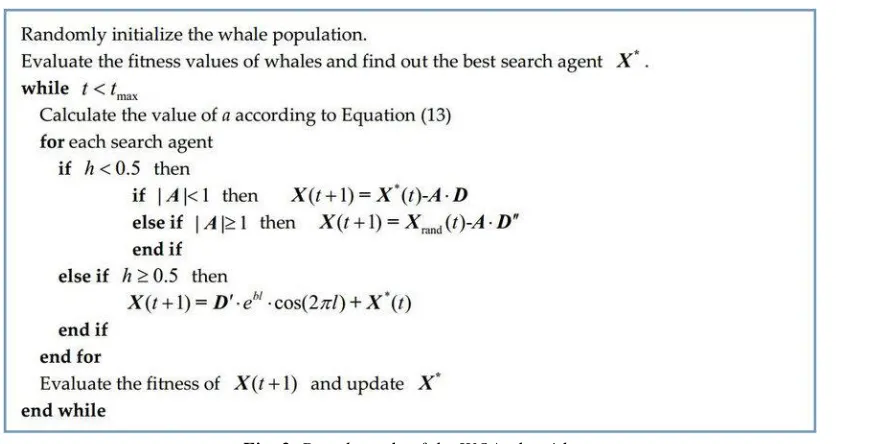
Fig.2. Bubble-net feeding behavior of humpback whales [31].
The mathematical model of encircling prey, spiral bubble-net foraging maneuver and search for prey is described in the following section:
3.1.1. Encircling prey
Humpback whales encircle the prey and update their position towards the best search agent with the increasing number of iterations from start to a maximum number of iterations. This behavior is mathematically formulated as:
𝐷⃑⃑ 𝑖= |𝐶 . 𝑋 ∗(𝑡) − 𝑋 (𝑡)| (1)
𝑋 (𝑡 + 1) = 𝑋 ∗(𝑡) − 𝐴 . 𝐷⃑⃑ (2)
Where 𝐴 and 𝐶 are the coefficient vectors, t indicates the current iteration, X* is the position vector of the best solution obtained so far, 𝑋 is the position vector, ││ is the absolute value and. Is an element-by-element multiplication.The vectors 𝐴 and 𝐶 are calculated as follows:
𝐴 = 2𝑎 . 𝑟 − 𝑎 (3)
𝐶 = 2. 𝑟 (4)
3.1.2. Bubble-net attacking method
The following two methods have been developed for mathematical modeling of pure bubble whale movement: 1. Decreased environmental mechanism: This behavior is achieved by lowering the E value from 2 to 0. (3) During repetition. The new location of the search agency can be determined anywhere between the original state of the agent and the location of the best agent by assigning random values to [-1, 1].
2. Spiral repositioning position: To simulate whale movement, the spiral equation between prey and whale position is as follows:
𝑋 (𝑡 + 1) = 𝐷⃑⃑ ′. 𝑒𝑏𝑙. cos(2𝜋𝑙) + 𝑋 ∗(𝑡) (5)
Fig. 3. Pseudo-code of the WOA algorithm.
It should be noted that scrubber whales swim in a shorter frame around the prey and along the spiral path. Therefore, we estimate a 50% probability of choosing a short rotation method or a spiral model to update the position of the whales to model this behavior. The mathematical model is as follows:
𝑋 (𝑡 + 1) = {𝑋 ∗(𝑡) − 𝐴 . 𝐷⃑⃑ } 𝑖𝑓 𝑝 ≤ 0.5 (6)
{𝐷⃑⃑ ′. 𝑒𝑏𝑙. cos(2𝜋𝑙) + 𝑋 ∗(𝑣)} 𝑖𝑓 𝑝 ≥ 0.5
where 𝐷′= |𝑋 ∗− 𝑋 (𝑡)| and indicates the distance of the ith whale to the prey (the best solution obtained so far), b is
constant for defining the shape of the logarithmic spiral, l is a random number in[-1, 1] andprepresents a random number in [0, 1].
3.1.3. Search for prey (exploration phase)
The variation of 𝐴 vector can be utilized to search for prey, i.e., exploration phase. Therefore, 𝐴 can be used with the random values greater than 1 or less than -1 to force search agents to move away from a reference whale. The mathematical model for this phase is as follows:
𝐷⃑⃑ = |𝐶 𝑋 𝑟𝑎𝑛𝑑− 𝑋 | (7)
𝑋 (𝑡 + 1) = 𝑋 𝑟𝑎𝑛𝑑− 𝐴 . 𝐷⃑⃑ (8)
Where 𝑋 𝑟𝑎𝑛𝑑 is a random position vector (a random whale) chosen from the current population .
3.2. Flower Pollination Algorithm
The Flower Pollution Algorithm was introduced in 2012 by computer scientist Zing Xi Yang, who has developed various algorithms such as Shabbat Cream, Bats and Coco.
availability of pollinators, pollination can also be defined as spontaneous and reciprocal pollination. In self-pollination, there is no reliable pollination, and during cross-pollination, pollutants such as bees, birds, and bats fly long distances, causing global pollination [34]. In [35], Young simulates the process of biological pollination using the following four laws of idealization:
A) Environmental pollination and pollination is a global pollination with a pollinator that performs Levi's flight. B) Living and self-pollination are considered local pollination.
C) The persistence of flowers can be considered as a possibility of reproduction. It is suitable for two flowers. D) Local pollination and global pollination are managed with the possibility of P [0, 1] transmission. Due to other factors such as physical proximity and wind, local pollination can play an important role in overall pollination activities.
To shape up-to-date formulas, we need to translate the above rules into updated equations. For example, in the global pollination stage, pollen gametes are carried by pollinators such as insects, and pollen can travel long distances because insects can often fly and travel much longer distances. Therefore, Rule 1 and the stability of flowers can be expressed mathematically as follows:
(9)
Where is pollen i or solution vector Xi at iteration t, and B is the current best solution found among all solutions at the current generation/iteration. Here γ is a scaling factor to control the step size. In addition, L (λ) is the parameter that corresponds to the strength of the pollination, which essentially is also the step size. Since insects may move over a long distance with various distance steps, we can use a Lévy flight to imitate this characteristic efficiently. That is, we draw L > 0 from a Levy distribution:
(10)
Here, Γ (λ) is the standard gamma function, and this distribution is valid for large steps s > 0. Then, to model the local pollination, both Rule 2 and Rule 3 can be represented as:
(11)
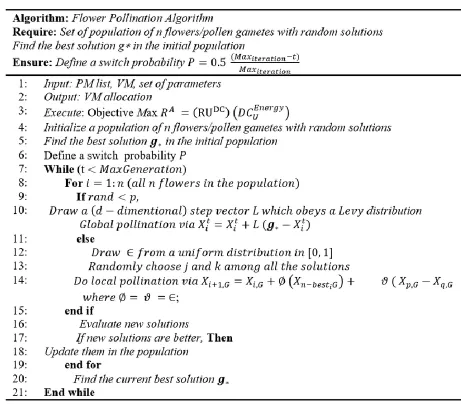
Here from and from are pollinated from different flowers of similar plant species. This is actually an imitation of the permanence of flowers in a limited neighborhood. If mathematically, if 𝑥𝑗𝑡 and of are of the same species or are selected from the same population, we obtain U from the equal distribution [0, 1], which can be a local random walk. Although flower pollination measures are carried out on a global and global scale, flower patches or adjacent flowers near local pollen are pollinated farther away. To mimic this, we can effectively use the law of 4 or p to use global public pollination to severe local pollination such as the possibility of proximity. To get started, we can use the simple value p = 0.5 as the initial value. The initial parameter 0.8 = p showed that it could perform better for most applications [35]. Figure 4 shows the fake code of the flower pollination algorithm.
Fig. 4. Pseudo-Code Flower Pollination Algorithm.
The secondary flower pollination algorithm is provided by [36], in which the search area is designed as a two-dimensional bovine network in which solutions are updated in the corners of the mushroom cloud. The problem with selecting properties is whether or not you select a particular attribute, so the solution is presented in the form of a binary vector, where 1 indicates the property selected to create a new data set, and so on. The sigmoid function is used to construct this binary vector using the following equation:
(12)
Thus, Eq. (9) and Eq. (11) will be replaced by the following equation:
(13)
Fig. 5. Pseudo-code of Binary Flower Pollination Algorithm [36].
3.3. Opposition Based Learning
The first concept of opposition was first expressed in ancient Chinese philosophy in the symbol of Yin Yang (Figure 6). This symbolizes the concept of a pair of black and white yin (receiving power, subtle, dark, passive) and yang (creative, masculine, light and active power). He also described the classical Greek elements of the patterns of nature (Figure 7) as contradictory concepts such as fire (hot and dry) and water (cold and wet), earth (cold and dry) and air (hot and humid). The nature of cold, hot, humid and dry and opposites shows them [37].
Fig. 6. Early opposite concept was mentioned in the Yin-Yang symbol [37]
Def 1: Training based on the opposition of Rahnamayan et al. [39] This changes the existing search to a new search. If 𝑥 a solution exists in a search field, where. ∈ [𝐿,.], Then yangi * in the modified space according to the opposite learning model, the new solution is as follows.
𝑥∗ = 𝐿 + 𝑈 − 𝑥 (14)
Fig. 7. The Greek classical elements to explain patterns in the nature[37]
4.
Proposed Approach
In this section, the proposed method is described, which includes a combination of whale optimization algorithms and flower pollination. In the proposed method, we have used the binary version of the whale optimization algorithms [2] and flower pollination [36] to select the feature. In the proposed method, we also used the concept of opposition-based learning to contrast the search space and create better and newer solutions to improve the hybrid algorithm. In this section, we first describe the objective function selection function for the proposed algorithm and other meta-innovative algorithms in this paper. This is because feature selection can be considered as a multi-objective optimization problem in which two conflicting goals are achieved, which include the minimum number of selected features and higher category accuracy. Therefore, we need a categorization algorithm to define the objective function of the property selection problem, and since most researchers [1, 2, 10, 16, 19] use the simplest classification method, the KNN categorizer [40]. Benefiting, we also used this category to define the target function of the feature selection problem.
As a result, in the proposed method, we used the KNN classifier to more accurately evaluate the features selected by the proposed algorithm and other algorithms. Each solution is evaluated based on the proposed multi-objective function, which depends on the KNN categorizer. In the proposed multi-objective function, in order to balance between the number of features selected in each solution (minimum) and the accuracy of the classification (maximum), the fit function in Equation (15) is used to evaluate a solution in each meta-heuristic algorithm.
𝐹𝑖𝑡𝑛𝑒𝑠𝑠 = 𝛼𝛾𝑅(𝐷) + 𝛽
|𝑅|
|𝑁| (15)
Where 𝛼𝛾
𝑅(𝐷) shows the classification error rate of a category and also | R | The multi-line subsystem isFig. 8. Opposition-Based Hybrid Whale Optimization Algorithm.
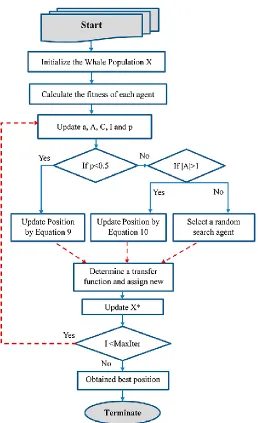
After defining the objective function, we first used the combined method of whale optimization and flower pollination algorithms and then the proposed method of opposition-based learning concept to improve the hybrid algorithm, which we will discuss as the proposed method in this article. The main purpose of combining metaheuristic algorithms is to make more use of the natural process of two different algorithms to better solve all kinds of optimization and difficult problems. When combining meta-heuristic algorithms, the hybrid algorithm maintains the balance and performance of the hybrid algorithm by maintaining a balance between exploration and productivity. The whale optimization algorithm is a recently introduced optimization algorithm that shows very good results in solving many optimization problems. However, exploration in the standard WOA algorithm (Equation (8)) depends on changing the position of each search agent based on a randomly selected solution. It also gives us a glimpse into the productivity of the flower pollination algorithm to better improve the WOA algorithm in the feature selection problem.
solution, in fact, by using a population and the opposite of that population in meta-heuristic algorithms, great potential is created to accelerate convergence and improve accuracy in these algorithms. As a result, we have ensured the convergence and accuracy of the proposed algorithm by adding the concept of learning based on opposition to our combined algorithm. Figure 8 shows how the combination of whale optimization algorithms and flower pollination based on opposition-based learning is proposed.
As a result, in our proposed method, we tried to solve the problem of optimization of feature selection by using natural processes of whale optimization and flower pollination algorithms. We used opposition. In the proposed method, whale optimization algorithms use the bait siege process, bubble attack method and bait search, create solutions in their search space and try to improve it, and along with this algorithm, flower pollination algorithm by creating a way. Opposite solutions The whale optimization algorithm operates on the principle of opposition-based learning. In fact, in continuation of the flower pollination algorithm with two global and local search processes, the solutions created in the contrasting space will improve the solutions of the whale optimization algorithm. Also, at the end of each generation of the proposed algorithm, the population of the whale optimization algorithm population is combined with its opposite population, i.e. the population of the pollen pollination algorithm, and only solutions for the next generation are selected that are more optimal in terms of objective function. Thus, by combining two optimization algorithms and using contrasting search space, we were able to provide a powerful algorithm with high convergence and accuracy in this article. The simulation results in Section (5) confirm the proposed algorithm and convergence speed and accuracy of the proposed algorithm with various experiments.
5.
The experiment results
The experiments were carried out using a PC Intel(R) Core(TM) i5-2430M CPU 2.40 GHz with 6GB RAM, Windows 10 operating system. The implementation of the proposed algorithm is done using Matlab.
To evaluate the performance of the proposed algorithm in this section, experiments are performed in two stages. In both cases, a binary version of the comparison algorithm is used. In the first phase, experiments were performed on 10 sets of data selection features from the UCI data repository
Be. In Section 5.1, we provide a complete overview of the first stage experiments, along with the name and features of the UCI data set, and the initial settings and results of the proposed algorithm on the UCI data set.
In the second step, we tried to test the performance of the proposed algorithm by detecting spam emails. In Section (5.2), the experiments related to the second stage, along with the name and characteristics of the spam email data set and the initial settings and the results of the proposed algorithm, are fully listed on the spam email data set. The results obtained from the first step show that the proposed algorithm, by running on 10 UCI data sets, has been able to perform more successfully than other algorithms in terms of average selection number of features and classification accuracy. Also, the results obtained from the second step show that the proposed algorithm has been able to perform spam emails more accurately than other similar algorithms in terms of accuracy.
5.1. UCI Datasets
Table 1: List of Datasets Used in the Experiments.
NO Dataset No. of attributes No. of objects
1. Boold 4 748
2. BreastEW 30 569
3. CMC 9 1473
4. Glass 10 214
5. Heart 13 270
6. Ionosphere 34 350
7. lymphography 18 148
8. Spect 22 267
9. Wine 13 178
10. Zoo 16 101
5.1.1. Comparison of WOA, FPA and HWOAFPA
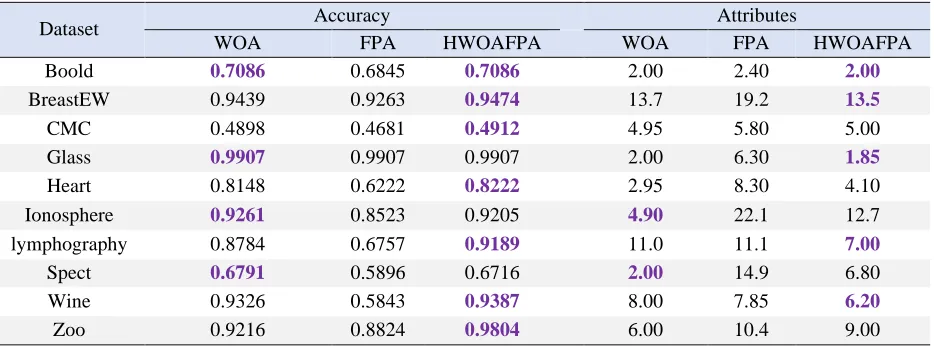
The performance of WOA, FPA and HWOAFPA in terms of average selection criteria and category accuracy are discussed in this section. In the first experiment in this section, the parameters are set as follows. The maximum number of repetitions is 25 and the population size is 20. The results of WOA, FPA and HWOAFPA are shown in Table (2).
Table 2: Classification accuracy and average selected attributes obtained fromin test1 with 25 iteration
Attributes Accuracy Dataset HWOAFPA FPA WOA HWOAFPA FPA WOA 2.00 2.40 2.00 0.7086 0.6845 0.7086 Boold 13.5 19.2 13.7 0.9474 0.9263 0.9439 BreastEW 5.00 5.80 4.95 0.4912 0.4681 0.4898 CMC 1.85 6.30 2.00 0.9907 0.9907 0.9907 Glass 4.10 8.30 2.95 0.8222 0.6222 0.8148 Heart 12.7 22.1 4.90 0.9205 0.8523 0.9261 Ionosphere 7.00 11.1 11.0 0.9189 0.6757 0.8784 lymphography 6.80 14.9 2.00 0.6716 0.5896 0.6791 Spect 6.20 7.85 8.00 0.9387 0.5843 0.9326 Wine 9.00 10.4 6.00 0.9804 0.8824 0.9216 Zoo
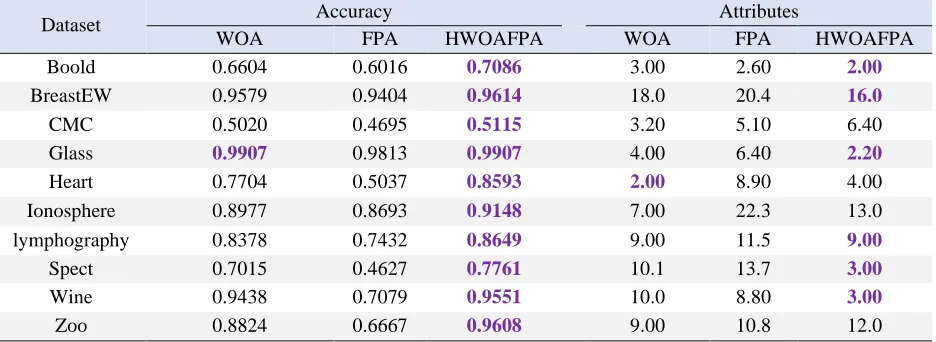
proposed approach with a maximum number of iterations of 50 and a population size of 10. The results of the proposed algorithm with a higher number of iterations are shown in Table (3).
Table 3: Classification accuracy and average selected attributes obtained fromin test2 with 50 iteration
Attributes Accuracy Dataset HWOAFPA FPA WOA HWOAFPA FPA WOA 2.00 2.60 3.00 0.7086 0.6016 0.6604 Boold 16.0 20.4 18.0 0.9614 0.9404 0.9579 BreastEW 6.40 5.10 3.20 0.5115 0.4695 0.5020 CMC 2.20 6.40 4.00 0.9907 0.9813 0.9907 Glass 4.00 8.90 2.00 0.8593 0.5037 0.7704 Heart 13.0 22.3 7.00 0.9148
0.8693 0.8977 Ionosphere 9.00 11.5 9.00 0.8649 0.7432 0.8378 lymphography 3.00 13.7 10.1 0.7761 0.4627 0.7015 Spect 3.00 8.80 10.0 0.9551 0.7079 0.9438 Wine 12.0 10.8 9.00 0.9608 0.6667 0.8824 Zoo
Examining Table 3, it is clear that as the number of repetitions increases, the proposed algorithm of Whale Optimization and Flower Pollution Algorithms works much better to achieve the two main objectives, which include classification accuracy and the number of selected features. Slow down. In particular, this experiment shows that in order to accurately categorize, the proposed algorithm out of 10 UCI data sets, in all data sets, perform better than whale optimization and flower pollination algorithms, and also the proposed algorithm in terms of the number of selection features in 7 Data sets work better than whale optimization and flower pollination algorithms. From the results reported in this experiment, according to Table (3), it can be concluded that the hybrid model has greatly increased the performance of whale optimization algorithms and flower pollination in terms of convergence and accuracy by using opposition-based learning methods. Since the opposition-based learning method is located between the repetition of the whale optimization algorithms and the pollination of the flowers, it can be seen that by increasing the number of repetitions, better results have been obtained for the proposed algorithm.
From the results reported in the two experiments performed in this section, it can be concluded that the proposed algorithm has solved the problem of optimizing the selection of features well, and also in the last experiment, considering the success of the algorithm in all data sets, convergence speed and algorithm accuracy. The proposal is guaranteed by the use of opposition-based learning methods. In the next section, we will try to compare the proposed algorithm with other basic algorithmic algorithms for further evaluation.
5.1.2. Comparison with the State-of-the-Art Approaches
Table 4: Comparison between the proposed approaches and the state-of-the-art approaches in terms of classification accuracy. HWOAFPA FPA WOA PSO GA BAT Dataset 0.7406 0.6791 0.7406 0.7406 0.7406 0.6658 Boold 0.9649 0.9509 0.9614 0.9684 0.9719 0.9439 BreastEW 0.5061 0.4668 0.4980 0.4980 0.4858 0.3948 CMC 0.9813 0.9720 0.9813 0.9813 0.9813 0.9720 Glass 0.7852 0.5704 0.7852 0.7852 0.8074 0.6667 Heart 0.9318 0.8523 0.9091 0.9261 0.9261 0.8466 Ionosphere 0.8378 0.6351 0.8108 0.8378 0.8378 0.5946 lymphography 0.7463 0.5970 0.7687 0.6866 0.7761 0.6045 Spect 0.9488 0.6742 0.9663 0.9551 0.9438 0.8090 Wine 0.9412 0.8235 0.9216 0.9412 0.9117 0.8627 Zoo
As shown in Table 4 results, the proposed algorithm is highly functional in terms of accuracy. In addition, the proposed algorithm performs better than all other methods in all data sets, except for three data sets, in which GA and other methods perform slightly better than the proposed method, and the proposed method ranks second. has it. Table 5 shows the results of comparing the proposed method with the optimized algorithms of whale, genetics, particle density, bat and flower spraying in terms of average selected features.
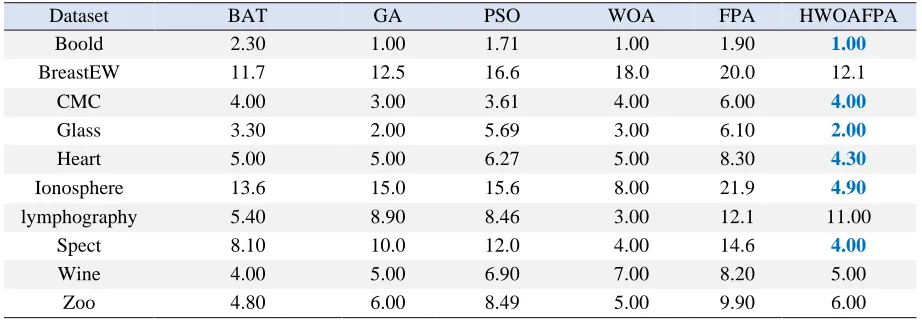
Table 5: Comparison between the proposed approaches and the state-of-the-art approaches interms of average number of selected attributes.
HWOAFPA FPA WOA PSO GA BAT Dataset 1.00 1.90 1.00 1.71 1.00 2.30 Boold 12.1 20.0 18.0 16.6 12.5 11.7 BreastEW 4.00 6.00 4.00 3.61 3.00 4.00 CMC 2.00 6.10 3.00 5.69 2.00 3.30 Glass 4.30 8.30 5.00 6.27 5.00 5.00 Heart 4.90 21.9 8.00 15.6 15.0 13.6 Ionosphere 11.00 12.1 3.00 8.46 8.90 5.40 lymphography 4.00 14.6 4.00 12.0 10.0 8.10 Spect 5.00 8.20 7.00 6.90 5.00 4.00 Wine 6.00 9.90 5.00 8.49 6.00 4.80 Zoo
As shown in the results of Table (5), the proposed algorithm has a good performance in terms of the average of the selected features compared to other advanced super-innovative algorithms. In addition, the proposed algorithm performs better than all other methods in most data sets, except for a few data sets in which other methods perform better with a small difference from the proposed method, and the proposed method is in second place.
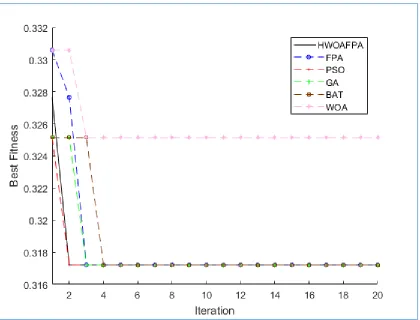
Fig. 9. Comparison between the proposed approaches and the state-of-the-art approaches in terms of
convergence-Dataset Boold
BreastEW data set.
Fig. 10. Comparison between the proposed approaches and the state-of-the-art approaches in terms of
convergence-Dataset BreastEW
Fig. 11. Comparison between the proposed approaches and the state-of-the-art approaches in terms of
convergence-Dataset CMC
Fig. 12. Comparison between the proposed approaches and the state-of-the-art approaches in terms of
convergence-Dataset Glass
Fig. 13. Comparison between the proposed approaches and the state-of-the-art approaches in terms of
convergence-Dataset Heart
Fig. 14. Comparison between the proposed approaches and the state-of-the-art approaches in terms of
convergence-Dataset Ionosphere
As shown in Figure 14, the proposed algorithm and the ratio of other comparative algorithms have had a high performance in the convergence of the objective function, which is the high performance of the proposed algorithm because the Ionosphere data set has more features. Each time the proposed algorithm has been able to use the opposite space, the solutions are much stronger than other algorithms. Therefore, the results of Ionosphere data collection by the proposed method and the optimized algorithms of whales, genetics, particle density, bats and flower spraying show that due to the large data set, comparative algorithms have reduced their efficiency but the proposed algorithm Due to According to the results reported in these two sub-sections (5.1.1) and (5.1.2), a significant advantage of the proposed algorithm in selecting fewer features and high classification accuracy and convergence of the objective function compared to other meta-heuristic algorithms in comparison. It was found. Because we managed to provide a powerful algorithm with convergence speed and high accuracy to solve the problem of optimizing feature selection by creating a combination and using a learning method based on opposition.
5.2. Email Spam Detection
Let's have comparisons in this section. We also divided the spam data set into two parts, training and testing, for testing in this section.
• 70% of the entire dataset was used for training and construction of the proposed implementation model • 30% of the remaining dataset was used for testing and validating the model.
5.2.1. Spam base dataset analysis
The Corpus bench brand is emailed from the spam database. At the time of receiving this spam message, it contained 4,601 messages, of which 1,813 (39%) were known as spam messages and 2,788 (61%) were known and purchased as non-spam messages. Were [44-49]. The command helped the non-spam message. This is taken from a single mailbox. Unlike most failures in their raw form, the purchase of this carcass has already been pre-processed. Accidents or characteristics are presented as 58-dimensional vectors. In a set of 57 attributes, 48 of the 48 attributes are displayed with words that consist of the main messages, which have no pause or stop list, and are placed in the list of the most unbalanced words for the class spam. The remaining 6 attributes are the percentage of specific characters ";", "" ("" "" "" "" "!", "$" And "#", which allows spam or non-spam to be transmitted through agencies 1 and 0 All data, including the database, is a good test bed.
5.2.2. Experimental results and discussion
In this section, we will show the results of the implementation of the proposed algorithm and other comparative algorithms on the data set of spam emails, and then we will discuss the results obtained. We divided the spam email data collection into test data set (30%) and training (70%), and in both test and training data sets, spam and non-spam emails are placed to better evaluate the performance and efficiency of the algorithm. We have suggestions and other comparative algorithms in this section. We also considered the initial population of all algorithms to be 10 and the number of iterations to be 100-1. In this section, we will first test the proposed algorithm with the WOA, FPA algorithm in terms of classification accuracy and average classification accuracy with different repetitions, and then in the next step we will propose the proposed algorithm and other comparative algorithms on the data set of spam emails from in terms of classification accuracy, we experiment with different iterations.
In the first experiment of this sub-section, the performance of WOA, FPA and HWOAFPA in terms of accuracy of detecting spam emails is shown. The parameters are set to a maximum number of repetitions of 1-100 and a population size of 10.
The results of the first experiment in this subsection, show that the proposed algorithm has achieved much better results and accuracy than whale optimization and flower spraying algorithms in email detection by increasing the number of iterations. The proposed algorithm works in the first repetitions like other powerful algorithms, but as the number of repetitions in increases, it can be seen that it has been able to excel due to its greater use of opposition-based learning methods to create solutions in the opposite search space. Show the ratio of whale optimization algorithms and flower pollination.
For further testing in this section, in addition to the experimental accuracy classification, we examined the proposed algorithm in terms of the average accuracy of spam email detection, which includes the entire population of the proposed algorithms and WOA and FPA. Therefore, the WOA, FPA and HWOAFPA algorithms are shown in terms of the average accuracy of spam email detection. The parameters are set to a maximum number of repetitions of 1-100 and a population size of 10.
The results of the third experiment in this subsection, show that the proposed algorithm has stronger results than comparative algorithms such as genetic algorithms, particle density, bat, whale optimization and flower pollination in terms of accuracy in detecting spam emails. Has achieved. The results of these three experiments in the discussion of spam email detection proved that the combination was well done in the proposed method. Using the opposition-based learning method in the combined mode, we were able to provide a powerful algorithm for detecting spam emails.
6.
Conclusion
A feature selection method should search for the best subset of features among all possible subsets in the data set and extract these properties based on a specific evaluation criterion. Applying feature selection in the data set before the learning process plays an essential role in improving the efficiency of the categorization process. Finding this optimal subset can be considered as an optimization problem and using random, innovative and meta-innovative search methods to find these optimal or semi-optimal subsets. The important point is that when the search space is large, choosing a subset of features using traditional and innovative optimization methods is not effective and efficient, and meta-innovative algorithms as the most suitable option to solve this problem by many researchers so far. Provided. Innovative algorithms may also be combined to increase the convergence rate and accuracy of the production solution. In this paper, we have tried to solve the problem of optimization of feature selection using the natural processes of whale optimization and flower pollination algorithms, and on the other hand, we have used the opposition-based learning method to ensure the convergence speed and accuracy of the proposed algorithm. In fact, in the proposed method, whale optimization algorithms use the bait siege process, bubble attack method and bait search to create solutions in their search space and try to improve the solutions to the feature selection problem, along with this algorithm. The pollen pollination algorithm with two global and local search processes improves the problem-solving feature in contrasting solutions with the whale optimization algorithm. In fact, we used both search space solutions and contrasting search space solutions, all possible solutions to the feature selection problem. To evaluate the performance of the proposed algorithm, we performed the experiments in two stages. In the first phase, experiments were performed on 10 sets of data selection features from the UCI data repository. In the second step, we tried to test the performance of the proposed algorithm by detecting spam emails. The results obtained from the first step show that the proposed algorithm, by running on 10 UCI data sets, has been able to be more successful in terms of average selection size and classification accuracy than other basic meta-heuristic algorithms. Also, the results obtained from the second step show that the proposed algorithm has been able to perform spam emails more accurately than other modern meta-heuristic algorithms in terms of accuracy.
7.
References
1. Mafarja, M., et al., Evolutionary Population Dynamics and Grasshopper Optimization Approaches for Feature Selection Problems. Knowledge-Based Systems, 2017.
2. Mafarja, M.M. and S. Mirjalili, Hybrid Whale Optimization Algorithm with simulated annealing for feature selection. Neurocomputing, 2017. 260: p. 302-312.
3. Han, J., J. Pei, and M. Kamber, Data mining: concepts and techniques. 2011: Elsevier.
4. Aghdam, M.H., N. Ghasem-Aghaee, and M.E. Basiri, Text feature selection using ant colony optimization.
Expert systems with applications, 2009. 36(3): p. 6843-6853.
5. Zorarpacı, E. and S.A. Özel, A hybrid approach of differential evolution and artificial bee colony for feature selection. Expert Systems with Applications, 2016. 62: p. 91-103.
6. Huang, J., Y. Cai, and X. Xu, A hybrid genetic algorithm for feature selection wrapper based on mutual information. Pattern Recognition Letters, 2007. 28(13): p. 1825-1844.
7. Kabir, M.M., M. Shahjahan, and K. Murase, A new hybrid ant colony optimization algorithm for feature selection. Expert Systems with Applications, 2012. 39(3): p. 3747-3763.
9. Xue, B., et al., A survey on evolutionary computation approaches to feature selection. IEEE Transactions on Evolutionary Computation, 2016. 20(4): p. 606-626.
10. Rajamohana, S. and K. Umamaheswari, Hybrid approach of improved binary particle swarm optimization and shuffled frog leaping for feature selection. Computers & Electrical Engineering, 2018.
11. Xue, B., M. Zhang, and W.N. Browne, Particle swarm optimisation for feature selection in classification: Novel initialisation and updating mechanisms. Applied Soft Computing, 2014. 18: p. 261-276.
12. Wang, Z., M. Li, and J. Li, A multi-objective evolutionary algorithm for feature selection based on mutual information with a new redundancy measure. Information Sciences, 2015. 307: p. 73-88.
13. Emary, E., H.M. Zawbaa, and A.E. Hassanien, Binary ant lion approaches for feature selection.
Neurocomputing, 2016. 213: p. 54-65.
14. Nakamura, R.Y.M., et al., Binary bat algorithm for feature selection, in Swarm Intelligence and Bio-Inspired Computation. 2013, Elsevier. p. 225-237.
15. Zhang, L., et al., Feature selection using firefly optimization for classification and regression models.
Decision Support Systems, 2017.
16. Mafarja, M. and S. Mirjalili, Whale optimization approaches for wrapper feature selection. Applied Soft Computing, 2018. 62: p. 441-453.
17. Kabir, M.M., M. Shahjahan, and K. Murase, A new local search based hybrid genetic algorithm for feature selection. Neurocomputing, 2011. 74(17): p. 2914-2928.
18. Sayed, S.A.-F., E. Nabil, and A. Badr, A binary clonal flower pollination algorithm for feature selection.
Pattern Recognition Letters, 2016. 77: p. 21-27.
19. Liao, T. and R. Kuo, Five Discrete Symbiotic Organisms Search Algorithms for Simultaneous Optimization of Feature Subset and Neighborhood Size of KNN Classification Models. Applied Soft Computing, 2017. 20. Tawhid, M.A. and K.B. Dsouza, Hybrid Binary Bat Enhanced Particle Swarm Optimization Algorithm for
solving feature selection problems. Applied Computing and Informatics, 2018.
21. Shunmugapriya, P. and S. Kanmani, A hybrid algorithm using ant and bee colony optimization for feature selection and classification (AC-ABC Hybrid). Swarm and Evolutionary Computation, 2017. 36: p. 27-36. 22. Oh, I.-S., J.-S. Lee, and B.-R. Moon, Hybrid genetic algorithms for feature selection. IEEE Transactions on
pattern analysis and machine intelligence, 2004. 26(11): p. 1424-1437.
23. Khushaba, R.N., et al. A combined ant colony and differential evolution feature selection algorithm. in
International Conference on Ant Colony Optimization and Swarm Intelligence. 2008. Springer.
24. Olabiyisi, S., et al., Hybrid metaheuristic feature extraction technique for solving timetabling problem. Int. J. Sci. Eng. Res, 2012. 3(8): p. 1-6.
25. Canuto, A.M. and D.S. Nascimento. A genetic-based approach to features selection for ensembles using a hybrid and adaptive fitness function. in Neural Networks (IJCNN), The 2012 International Joint Conference on. 2012. IEEE.
26. Akila, M.M., Hybrid local feature selection in DNA analysis based cancer classification. Indian Journal of Computer Science and Engineering, 2012. 3(3): p. 470-475.
27. Babatunde, R., S. Olabiyisi, and E. Omidiora, Feature dimensionality reduction using a dual level metaheuristic algorithm. optimization, 2014. 7(1).
28. Hasani, S.R., Z.A. Othman, and S.M.M. Kahaki, Hybrid feature selection algorithm for intrusion detection system. Journal of Computer Science, 2014. 10(6): p. 1015.
29. Kashef, S. and H. Nezamabadi-pour, An advanced ACO algorithm for feature subset selection.
Neurocomputing, 2015. 147: p. 271-279.
30. Nekkaa, M. and D. Boughaci, Hybrid harmony search combined with stochastic local search for feature selection. Neural Processing Letters, 2016. 44(1): p. 199-220.
31. Mirjalili, S. and A. Lewis, The whale optimization algorithm. Advances in Engineering Software, 2016. 95: p. 51-67.
33. Waser, N.M., Flower constancy: definition, cause, and measurement. The American Naturalist, 1986.
127(5): p. 593-603.
34. Pavlyukevich, I., Lévy flights, non-local search and simulated annealing. Journal of Computational Physics, 2007. 226(2): p. 1830-1844.
35. Yang, X.-S. Flower pollination algorithm for global optimization. in International conference on unconventional computing and natural computation. 2012. Springer.
36. Rodrigues, D., et al., Binary flower pollination algorithm and its application to feature selection, in Recent advances in swarm intelligence and evolutionary computation. 2015, Springer. p. 85-100.
37. Rahnamayan, S., H.R. Tizhoosh, and M.M. Salama, Opposition-based differential evolution. IEEE Transactions on Evolutionary computation, 2008. 12(1): p. 64-79.
38. Shaw, B., V. Mukherjee, and S. Ghoshal, A novel opposition-based gravitational search algorithm for combined economic and emission dispatch problems of power systems. International Journal of Electrical Power & Energy Systems, 2012. 35(1): p. 21-33.
39. Rahnamayan, S., H.R. Tizhoosh, and M.M. Salama, Opposition versus randomness in soft computing techniques. Applied Soft Computing, 2008. 8(2): p. 906-918.
40. Altman, N.S., An introduction to kernel and nearest-neighbor nonparametric regression. The American Statistician, 1992. 46(3): p. 175-185.
41. Mabodi, K., Yusefi, M., Zandiyan, S., Irankhah, L., & Fotohi, R. (2020). Multi-level trust-based intelligence schema for securing of internet of things (IoT) against security threats using cryptographic authentication. The Journal of Supercomputing, 1-25.
42. Seyedi, B., & Fotohi, R. (2020). NIASHPT: a novel intelligent agent-based strategy using hello packet table (HPT) function for trust Internet of Things. The Journal of Supercomputing, 1-24.
43. Fotohi, R. (2020). Securing of Unmanned Aerial Systems (UAS) against security threats using human immune system. Reliability Engineering & System Safety, 193, 106675.
44. Fotohi, R., Firoozi Bari, S., & Yusefi, M. (2020). Securing Wireless Sensor Networks Against Denial‐of‐Sleep Attacks Using RSA Cryptography Algorithm and Interlock Protocol. International Journal of Communication Systems, 33(4), e4234.
45. Asuncion, A. and D. Newman, UCI machine learning repository. 2007.
46. Merz, C.J. and P.M. Murphy, {UCI} Repository of machine learning databases. 1998.
47. Friedman, J., T. Hastie, and R. Tibshirani, The elements of statistical learning. Vol. 1. 2001: Springer series in statistics New York.
48. Mark Hopkins, E.R., George Forman, Jaap Suermondt UCI Machine Learning Repository: Spambase Data Set, in Hewlett-Packard Labs. 1999.
![Fig. 1. Schematic diagrams of (a) wrapper approach and (b) filter approach[7].](https://thumb-us.123doks.com/thumbv2/123dok_us/1040253.1604286/2.612.78.541.284.482/fig-schematic-diagrams-wrapper-approach-b-filter-approach.webp)
![Fig. 5. Pseudo-code of Binary Flower Pollination Algorithm [36].](https://thumb-us.123doks.com/thumbv2/123dok_us/1040253.1604286/9.612.241.372.461.613/fig-pseudo-code-binary-flower-pollination-algorithm.webp)
![Fig. 7 . The Greek classical elements to explain patterns in the nature[37]](https://thumb-us.123doks.com/thumbv2/123dok_us/1040253.1604286/10.612.251.358.140.243/fig-greek-classical-elements-explain-patterns-nature.webp)