Review
1
Pathogen at the Gates: HCMV Entry and Cell
2
Tropism.
3
Christopher C. Nguyen1 and Jeremy P. Kamil1.#
4
1Department of Microbiology and Immunology, Louisiana State University Health Sciences Center,
5
Shreveport, Louisiana, USA
6
Address correspondence to Jeremy P. Kamil, [email protected]; 1501 Kings Highway, Shreveport, Louisiana
7
71103
8
9
ABSTRACT: The past few years have brought substantial progress toward understanding how
10
human cytomegalovirus (HCMV) enters the remarkably wide spectrum of cell types and tissues
11
that the virus is observed to infect. Neuropilin-2 and platelet-derived growth factor receptor alpha
12
(PDGFR) were identified as receptors, respectively, for the trimeric and pentameric glycoprotein
13
H / glycoprotein L (gH/gL) complexes that in large part govern HCMV cell tropism, while CD90
14
and CD147 were also found to play roles during entry. X-ray crystal structures for the proximal
15
viral fusogen, glycoprotein B (gB), and for the pentameric gH/gL complex (pentamer) were solved.
16
A novel virion gH complex consisting of gH bound to UL116 instead of gL was described, and
17
findings supporting the existence of a stable complex between gH/gL and gB were reported.
18
Additional work indicates that the pentamer promotes a mode of cell-associated spread that resists
19
antibody neutralization, as opposed to the trimeric gH/gL complex (trimer), which appears to be
20
broadly required for the infectivity of cell-free virions. Finally, viral factors such as UL148 and
21
US16 were identified that can influence the incorporation of the alternative gH/gL complexes into
22
virions. We will review these advances and their implications for understanding HCMV entry and
23
cell tropism.
24
KEYWORDS: Viral entry; viral glycoproteins; virus receptors; UL148; US16; UL128-131; gB; gO;
25
PDGFR, integrins; Nrp2; gH/gL; cytomegalovirus; herpesviruses; HCMV; CMV; pentamer; trimer;
26
glycoprotein H; glycoprotein L; glycoprotein O; glycoprotein B; UL128; UL130; UL131A; UL131
27
28
HCMV exhibits a broad cell tropism that is reflected in the multifarious tissues and organs in
29
which the virus is observed to cause clinical disease. Despite evidence that the virus alters its gH/gL
30
complexes in a manner that depends on the cell type producing virus [1], the regulation of HCMV
31
cell tropism is poorly understood. This review will focus on HCMV cell tropism as it relates to the
32
viral entry machinery found in the virion envelope. Over the last several years, substantial progress
33
has been made in this area. A number of new cellular receptors have been identified, and in two
34
key examples, the newly identified cellular receptor is matched to a specific gH/gL complex.
35
Furthermore, a new gH complex has been characterized, and a number of viral factors that contribute
36
to strain-specific differences in cell tropism have been described. Although there remain important
37
unresolved questions, these advances provide a new level of clarity for understanding HCMV cell
38
tropism, and suggest new models to explain how HCMV enters cells and spreads within tissues.
39
Viral envelope glycoprotein complexes and receptors
40
Before the first complete HCMV genome sequence was published in 1990 [2], three major
41
disulfide-linked viral envelope glycoprotein complexes had been described [3-5]. These complexes,
42
originally designated as gC-I, gC-II, and gC-III, have turned out to play crucial roles in HCMV entry.
43
The viral genes encoding the constituents of each complex are now known, as are the relationships
44
to the conserved entry machinery shared among all herpesviruses. Therefore, the complexes are
45
increasingly referred to by the terms shared across the Herpesviridae, e.g., glycoprotein H /
46
glycoprotein L (gH/gL), glycoprotein B (gB), glycoprotein M / glycoprotein N (gM/gN). In certain
47
examples in which a gene product is found only among beta-herpesviruses or is unique to HCMV,
48
the name of that product is often used, e.g. gO (UL74) in the case of gH/gL/gO for trimer, or UL116
49
in the case of gH/UL116, the newly discovered gH complex with UL116 [6].
50
gB
51
gC-I is made up of homotrimers of glycoprotein B (gB), a pan-Herpesviridae conserved
52
glycoprotein that is posited to serve as the proximal mediator of membrane fusion events during viral
53
entry. The three-dimensional structures of post-fusion gB from herpes simplex, HCMV, and the
54
Epstein-Barr virus resemble those of glycoprotein G from the rhabdovirus vesicular stomatitis virus
55
(VSV G), and of gp64 from the Autographa californica nuclear polyhedrosis virus, a baculovirus [7,8].
56
Together, VSV G, gp64, and gB comprise the class III membrane fusogens [9]. Based on inferences
57
from the prefusion structure of VSV G, gB is thought to dramatically rearrange during membrane
58
fusion. The pre-fusion gB is posited to be a relatively flattened conformer, in which the fusion loops
59
are positioned at the base of the homotrimer, close to the viral membrane and hence tucked away
60
from the target membrane and set apart from one another. In the prevailing model, fusion occurs
61
via a transitory intermediate in which the fusion loops reach out to the target membrane [9]. In the
62
post-fusion configuration, three central helices line up at the core of the homotrimer, elongating the
63
structure, causing the fusion loops to cluster closer together at the side of the homotrimer opposite
64
from where they began [10].
65
HCMV gB, which is encoded by UL55, is synthesized as a 160-kD precursor that undergoes furin
66
cleavage in the Golgi, resulting in 116 kD and 55 kD fragments that remain disulfide-linked to each
67
other [11]. In 2015, two crystal structures for HCMV gB ectodomain were published, one at 3.8 Å
68
resolution, and another at 3.6 Å, in which the ectodomain is bound to the Fab portion of a neutralizing
69
antibody [8,12]. A number of cell surface proteins have been reported or implicated as receptors for
70
gB, including the epidermal growth factor receptor (EGFR)[13], the platelet-derived growth factor
71
receptor alpha (PDGFR)[14], and, as discussed further below, integrins [15,16]. On the other hand,
72
it has also been suggested that gB functions as a viral fusogen that does not bind cellular receptors
73
[17]. In light of the latter, attempts to visualize interactions between gB and its putative receptors
74
by approaches such as cryo-electron microscopy (cryo-EM) would seem warranted.
75
gM/gN
76
gC-II is comprised of a disulfide linked heterodimer of glycoproteins M (gM) and N (gN), which
77
are encoded by UL100 and UL73, respectively [18,19]. gM/gN is the most abundant glycoprotein
78
complex on virions [20,21], and is essential in HCMV, as null mutants are non-viable. The gM/gN
79
complex plays key roles during attachment to host cells, likely by mediating interactions with
80
heparan sulfate proteoglycans on the cell surface [22]. Notably, gM/gN also plays intracellular roles
81
during viral replication that are independent of its roles in attachment [23,24]. gM is an
N-82
glycosylated 48-kD type III transmembrane (TM) glycoprotein with seven predicted TM helices,
83
while gN is single-pass type I TM protein that is extensively O-glycosylated. The unmodified 138
84
amino acid gN polypeptide in strain AD169 specifies a molecular weight of approximately 18-kD
85
when expressed on its own, however the fully glycosylated (mature) form detected from virion
86
lysates migrates at ~65-kD in sodium dodecyl sulfate polyacrylamide gel electrophoresis [18,19].
87
Motifs in the gM cytoplasmic tail are required for trafficking during virion assembly [23], and the
88
cytoplasmic tail of gN, which is palmitoylated at two different cysteine residues, is required for
89
secondary envelopment [24]. The gN coding sequence varies remarkably across HCMV strains
90
[25,26], consistent with the observation that gM/gN is an important target for humoral immune
91
responses [27].
92
The Trimeric gH/gL Complex and Its Receptors
gC-III, now frequently referred to as “the trimer” or “gH/gL/gO,” is a heterotrimeric complex in
94
which the heterodimer of gH (UL75) and gL (UL115) is disulfide linked to glycoprotein O (gO), a
95
heavily N-glycosylated polypeptide encoded by UL74 [28-30]. All herpesviruses encode gH/gL
96
complexes, as gH/gL and gB together comprise the “core” herpesvirus membrane fusion machinery.
97
Homologs of gO, in contrast, are found only among betaherpesviruses. The emerging consensus is
98
that gO, in the context of the trimer, is absolutely required for the infectivity of cell-free virions [31,32].
99
The platelet-derived growth factor receptor alpha (PDGFR) was identified in three different
100
independent studies to function as a cellular receptor for the trimer [33-35]. This finding has
101
continued to find support in the literature [36,37].
102
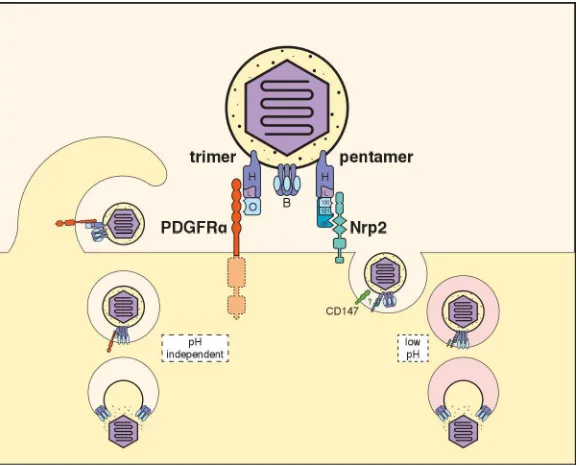
The latest data suggest that tyrosine kinase activity of PDGFR is dispensable for its role in
103
HCMV entry [34,36]. The severely defective phenotypes observed during infection of fibroblasts
104
lacking PDGFR phenocopy those seen with gO-null mutant viruses, with the residual low-level
105
infectivity being pentamer-dependent [31,34-36,38]. Thus, a role for PDGFR in trimer-dependent
106
entry may explain why the trimer is required for cell-free HCMV virions to infect fibroblasts, which
107
ordinarily express PDGFR. However, why gO is required for cell-free virions to infect epithelial
108
or endothelial cells remains unclear, since these cell types either do not express PDGFR [34] or
109
express it in only low amounts that are not required for soluble recombinant trimer to bind to cells
110
[39]. Additional hitherto unidentified cellular receptors, or perhaps, receptor-independent roles in
111
membrane fusion may explain why the trimer is required for the infectivity of cell-free virions in cells
112
that lack PDGFR.
113
The Pentameric gH/gL Complex and Its Receptors
114
In 2005, a second HCMV gH/gL complex, now often referred to as “pentamer,” was discovered
115
after the repair of a frame-shift mutation in UL131 (UL131A) dramatically expanded the cell tropism
116
of the laboratory-adapted HCMV strain AD169, restoring its infectivity for epithelial and endothelial
117
cells [40,41]. The pentamer is composed of a gH/gL heterodimer bound to a trio of small
118
glycoproteins encoded by UL128, UL130, and UL131 (or as some refer to it, UL131A) [28,41-43]. The
119
UL128-131 locus was observed to be (i) unstable during HCMV passage in fibroblasts [44], and (ii)
120
required for infection of leukocytes, dendritic cells, and endothelial cells [45-48]. The latter
121
observations may have also hastened the discovery of the pentamer.
122
In 2015, a group from GSK Vaccines further defined the assembly of the pentamer. These
123
investigators identified that the cysteine at amino acid position 144 (Cys144) of the gL polypeptide
124
chain forms a disulfide bond to either Cys162 of UL128 or Cys351 of gO [28]. This finding explains
125
why the two gH/gL complexes are mutually exclusive. The same study provided low resolution
126
cryo-EM images of recombinant pentamer and trimer bound to gH antibodies. Similar cryo-EM
127
approaches were taken to characterize neutralizing antibody binding sites [49].
128
In 2017, x-ray crystal structures for the pentamer bound to two different neutralizing antibodies
129
were reported at 3.0 Å and 5.9 Å [43]. Several aspects of the gH domain structure closely resemble
130
Epstein Barr virus (EBV) gH, while the overall structure is nonetheless described as an intermediate
131
between the “rod-like” conformation of herpes simplex virus-2 gH/gL and the “boot-like” one seen
132
for EBV gH/gL. Two disulfide bonds connect the N-termini of gH and gL to each other: gH Cys59 to
133
gL Cys54, and gH Cys95 to gL Cys47. As predicted from the literature [44,45,50-53], UL128, UL130
134
and a C-terminal region of gL adopt chemokine folds; of the CC type for gL and UL128, and of the
135
C- type for UL130. This observation suggests that the ancestral cytomegalovirus “pirated” host
136
chemokine genes on multiple occasions. Of course, integration of chemokines into the viral cell
137
entry machinery could provide receptor binding and signaling properties that could be immediately
138
advantageous to the virus, although some of these features may ultimately be lost or modified during
139
evolution.
140
Another striking aspect of the pentamer structure is how UL128 connects to gL. A ~40 amino
141
acid region of UL128, comprising residues 123 to 162 of the primary sequence, forms a surprisingly
142
long (~50 Å) flexible linker that stretches across UL130 and UL131 to reach gL, at which point it makes
143
three alpha helical turns and presents Cys162 to form its disulfide linkage to Cys144 of gL [43]. It is
fascinating to consider in what order the subunits of pentamer must assemble for UL128 to adopt this
145
peculiar final conformation.
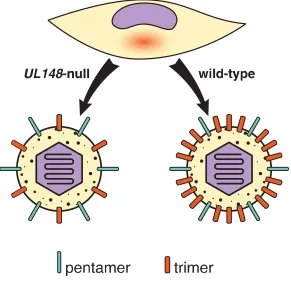
146
Earlier this year, neuropilin-2 (Nrp2) was convincingly identified as a functional cell entry
147
receptor for the pentamer [37]. To identify Nrp2, the study made use of a high-throughput
“avidity-148
based extracellular interaction screen” (AVEXIS), in which recombinant single-pass transmembrane
149
proteins were monitored in vitro for interactions with recombinant trimer and pentamer. After
150
identifying a high-affinity interaction between Nrp2 and pentamer, the investigators demonstrated
151
that Nrp2 is essential for pentamer-dependent HCMV infection of endothelial and epithelial cells.
152
The screen also identified interactions of trimer and pentamer with other cellular molecules that may
153
represent additional receptors. For trimer, the additional hits included transforming growth factor
154
beta receptor type 3 (TGFRIII) and neuregulin-2 (NRG2). For pentamer, the additional
high-155
affinity interaction hits were thrombomodulin (THBD), leukocyte immunoglobulin-like receptor
156
subfamily B member 3 (LILRB3) the immunoglobulin alpha Fc receptor (FCAR). Another hit for
157
pentamer, though of lower affinity, was CD46. Although the biological relevance for these other
158
hits remains to be established, it seems likely that at least some of the molecules will turn out to play
159
roles during natural infection.
160
Additional Receptors
161
CD147 was recently shown to be required for pentamer-dependent entry into epithelial cells,
162
however, in a manner that does not involve a direct interaction with the pentamer [54]. Entry of
163
Lujo virus, an arenavirus, requires Nrp2 as a surface receptor but also requires CD63, a tetraspannin
164
protein, as an intracellular factor for entry [55]. Notably, another tetraspannin, CD151, was also
165
recently reported to play roles during HCMV entry [56]. By analogy, it seems plausible that Nrp2
166
functions as the proximal cell surface receptor for the pentamer, while other molecules, such as
167
CD147 or CD151, are required as co-receptors that act later— perhaps at a post-internalization step,
168
during entry.
169
Another cellular molecule recently implicated as an HCMV receptor is THY-1 (CD90), which
170
reportedly interacts with both gH and gB [57,58]. THY-1 engages V3 integrins and recruits the
171
signaling adaptor molecule paxillin during signaling. The V3 integrins reportedly function
gH-172
dependent co-receptors during entry [59], and paxillin has been found to be important during entry
173
into monocytes [60]. Notably, integrins 2, 6, and 1 are also reported to play roles during HCMV
174
entry at a post-attachment step [15,16]. The interactions with integrins are thought to involve a
175
“disintegrin-like” gB motif that resembles motifs found in the integrin binding domain of cellular
176
proteins of the “a disintegrin and a metalloproteinase” (ADAM) family. Nonetheless, the
177
disintegrin-like motif is mostly buried in the post-fusion gB structure [12]. A pre-fusion gB structure
178
would help to shed further light on the role of this motif in entry.
179
Many are called, few are chosen?
180
Over the years, a great many different cell surface proteins have been reported to function as
181
HCMV entry receptors. Considering the plethora of different cell types that the virus infects, it
182
seems plausible that many if not all of these molecules play bona fide roles in early events during
183
infection. That said, it does seem likely that certain cell surface molecules serve as the “primary
184
receptors” that are required for the proximal events that drive physiologically default modes of entry,
185
even though these default modes of entry appear to differ between different types of target cells.
186
PDGFR can likely be considered a primary receptor for trimer-dependent entry into fibroblasts,
187
since wild-type virus is profoundly defective for entry into fibroblasts under conditions where
188
PDGFR is absent or unavailable, and pentamer-null virus shows a more severe, virtually absolute
189
entry defect in these settings[33-36]. Based on the evidence, Nrp2, too, should be considered
190
primary receptor for pentamer-dependent entry into epithelial and endothelial cells [37].
191
Receptors and co-receptors for viral entry often function at steps that are both temporally and
192
spatially distinct from each other [61]. For instance, a given receptor may interact with a viral
193
glycoprotein complex at the cell surface to promote endocytosis of virions, while another cellular
factor may be required for membrane fusion and escape from the endocytic compartment. Thus,
195
although the evidence for co-receptors is less straightforward, other cellular factors may turn out to
196
absolutely required for downstream events during entry, or may serve in secondary or tertiary roles,
197
in which one of any number of different cellular molecules could substitute. It also seems likely that
198
certain cell surface proteins increase the efficiency of entry but are not required for infection to occur.
199
Of course, the cell type being infected has important implications for the mechanistic details at
200
play. Trimer-dependent entry into fibroblasts is rapid, does not require clathrin, and is
pH-201
independent, which suggested this mode of entry involved fusion at plasma membrane [62,63] (FIG
202
1). According to the latest data, however, trimer-dependent into fibroblasts occurs through a rapid
203
macropinocytosis [64]. Pentamer-dependent entry into epithelial and endothelial cells, on the other
204
hand, requires low pH, and presumably involves a more prolonged form of endocytosis [63].
205
The literature has made clear that pentamer and trimer drive entry into different cell types via
206
distinct cell surface receptors, which strongly suggests that are at least two major modes of HCMV
207
entry: pentamer-dependent and trimer-dependent [33,34,37,65]. Each mode likely involves a unique
208
set of cellular proteins that play roles as receptors, co-receptors, or as accessory factors that enhance
209
infection, and the details for a single mode of entry may differ somewhat between cell-type, for
210
instance pentamer-dependent entry into epithelial cells versus endothelial cells may rely on distinct
211
co-receptors, even if Nrp2 is a primary receptor in both settings.
212
213
FIGURE 1. Receptors for HCMV gH/gL complexes. The trimeric gH/gL/gO complex interacts
214
with PDGFR to drive a pH-independent mode of entry that involves macropinocytosis. The
215
pentameric gH/gL/UL128-131 complex interacts with Nrp2 to access a mode of entry that involves
216
endocytosis and a decrease in pH. CD147 has been identified as a co-factor for this mode of entry.
217
Note: gB is depicted as a homotrimer labeled as “B”. See text for additional details.
218
How do gH/gL complexes regulate membrane fusion?
219
It is assumed that upon recognition of the appropriate cell surface receptor, gH/gL complexes
220
trigger gB to fuse virion and target cell membranes. Precisely how gH/gL complexes regulate the
221
gB fusogen is nevertheless unclear. Data suggesting a physical interaction between gH/gL and gB
222
come mainly from experiments with herpes simplex virus [66-68]. A recent HCMV study, however,
223
reported co-immunoprecipitation (co-IP) results which suggest a stable complex between gB and
224
gH/gL occurs in infected cells and in virions [69]. Future studies leveraging structural and
225
biophysical approaches will be needed to illustrate how gB is regulated in response to gH/gL
226
interactions with cellular receptors. Regardless, since the trimer is observed to be indispensable for
infection all cell types, it has been argued that pentamer may stimulate endocytosis of virions, while
228
the actual membrane fusion may require the trimer to activate gB [32].
229
Cell-associated versus cell free spread
230
HCMV is thought to disseminate within the host primarily through cell-to-cell spread rather
231
than via release of extracellular “cell-free” virions that would be susceptible to antibody responses.
232
Most of the infectious virus in the blood of seropositive and acutely infected patients is found in the
233
leukocyte compartment rather than plasma or serum [70-72]. Furthermore, clinical isolates of
234
HCMV spread in a highly cell-associated manner during initial tissue culture passages [73,74], and
235
the progressive loss of this cell-associated phenotype correlates with disruption of several elements
236
within the viral genome [73,75]. We consider the major viral genes known to impact cell-associated
237
vs cell-free spread below.
238
RL13
239
RL13, which encodes a virion envelope glycoprotein, is among the viral genes that most rapidly
240
mutate during tissue culture propagation of the virus, often acquiring nonsense or frameshift
241
mutations after one to four passages on fibroblasts, endothelial cells, or epithelial cells [75,76].
242
Cultured fibroblasts infected with HCMV harboring repaired RL13 and UL128-131 loci produce
243
remarkably small amounts of cell-free infectious virus until several weeks post-infection [75,76].
244
These observations may suggest a function of RL13 in the dampening of HCMV spread in vivo,
245
perhaps to promote long-term persistence, or alternatively, may reflect a mode of selection peculiar
246
to laboratory tissue culture conditions. Unfortunately, little is known about the function of RL13.
247
Ectopically expressed RL13 has been shown to traffic to the cell surface and bind the FC domain of
248
IgG1 and IgG2 antibodies, followed by internalization [77]. These findings may be taken to imply an
249
immune-evasive function for RL13, though RL13-dependent internalization of IgG has to date not
250
been demonstrated in the context of the infected cell. RL13 has also been shown to strongly suppress
251
the contribution of gO to cell-free spread in a UL128-null Merlin background [78]. Although these
252
findings shed light on the potential interactions of RL13 with cellular and viral factors, they do not
253
readily explain the pronounced instability of RL13 during tissue culture propagation of HCMV.
254
gH/gL complexes and cell tropism
255
The literature suggests that cell-free versus cell-associated modes of spread are governed in large
256
part by the composition of gH/gL complexes expressed in the virion envelope. Repair of the
257
pentamer was observed to increase the cell-associated nature of the virus [46], and a more recent
258
study showed that the pentamer drives a mode of direct cell-to-cell spread that resists neutralization
259
by antibodies [79]. Accordingly, repair of the pentamer in strain AD169 promotes the formation of
260
syncytia during in vitro cultivation of the virus [40]. On the other hand, the trimer is required for
261
the infectivity of cell-free virions [31,38]. Although one might assert that the pentamer promotes
262
cell-associated modes of spread and that the trimer enhances cell-free spread, the pentamer is
263
nonetheless required for cell-free virions to efficiently infect endothelial and epithelial cells, as well
264
as monocytes. Another observation that would confound generalizing the trimer and pentamer into
265
respective roles in “cell-free” versus “cell-to-cell spread” roles is that HCMV strain AD169 deleted
266
for the essential tegument protein pp28 (UL99) was found to spread efficiently in cultured fibroblasts
267
[80]. Because strain AD169 harbors a frameshift in UL131 that renders it unable to express pentamer,
268
the efficient spread observed for the pp28-null virus has led some to argue that the trimer may suffice
269
to drive cell-to-cell spread in fibroblasts [36].
270
Viral genes and polymorphisms that impact HCMV cell tropism
271
HCMV strains show large differences in the relative levels of pentamer and trimer incorporated
272
into virions, and these differences correlate with cell tropism differences between strains [32,81]. A
273
number of HCMV genes have the capacity to influence viral cell tropism at the stage of entry, and
most of these presumably act via effects on the composition of gH/gL complexes that are incorporated
275
in virions. Certain HCMV strains that maintain intact or largely-intact ULb’ regions express the
276
pentamer at low levels. Examples include viruses derived from BAC-clones of strains TR [82],
277
TB40/E [83] and VR1814 /FIX [84]. These strains, at least when reconstituted on fibroblasts, express
278
high levels of gH/gL/gO (trimer) and low levels of gH/gL/UL128-131 (pentamer). Although a
279
mutation in an intron of UL128 has been identified to limit pentamer expression in strain TB40/E [85],
280
why FIX and TR express similarly low levels of pentamer is unknown. Given their low levels of
281
pentamer expression, it is perhaps unsurprising that these HCMV strains replicate inefficiently on
282
epithelial cells [40]. On the other hand, the highly passaged strain AD169, which carries a ULb’
283
region that has undergone rearrangements and deletions leading to loss of ~12 kbp of coding content,
284
replicates robustly on epithelial cells when pentamer expression is restored [40].
285
Intriguingly, ablation of UL148, a gene within the ULb’, enhances the ability of FIX, TR, and
286
TB40/E to replicate to high levels on ARPE-19 epithelial cells, and leads to a striking reduction in
287
overall levels of gH/gL and of trimer in virions [[86,87] and Siddiquey, M. and Kamil J.P. unpublished
288
results] (FIG. 2). The UL148-null phenotype in these strains is accompanied by markedly reduced
289
expression of gO, which likely explains why the UL148-null mutants express low levels of trimer.
290
Nonetheless, the increase in epithelial cell tropism does not appear to involve enhanced levels of
291
pentamer expression.
292
293
FIGURE 2. Regulation of alternative gH/gL complexes by UL148. UL148, a viral endoplasmic
294
reticulum (ER)-resident glycoprotein, promotes high level expression of the trimer during infection
295
(UL148+) by stabilizing gO within the endoplasmic reticulum, resulting in the production of
trimer-296
rich progeny virions. In UL148-null infections (UL148-), virions with lower levels of trimer are
297
produced, which are observed to more efficiently infect and replicate in epithelial cells. See text for
298
additional details.
299
300
We recently reported that gO, but not other viral glycoproteins, is intrinsically unstable within
301
the ER and is constitutively targeted for ER-associated degradation (ERAD) during infection [87].
UL148 appears to reduce the rate at which gO is degraded, possibly by interacting with SEL1L, a core
303
component of the ERAD machinery. The observation that gO behaves as a constitutive ERAD
304
substrate suggests that modulation of ERAD could provide a platform for viral regulation of cell
305
tropism in HCMV and perhaps other betaherpesviruses. Nonetheless, whether UL148 is somehow
306
regulated to stabilize gO in a cell-type specific manner remains to be seen.
307
Interestingly, UL148 was also recently identified to prevent surface presentation of CD58
(LFA-308
3), a co-stimulatory ligand for natural killer cells and T-cells [88], and to strongly contribute to the
309
induction of the unfolded protein response (UPR) during infection [89]. It is not yet clear how roles
310
for UL148 in CD58 retention or stabilization of gO relate to the mechanism by which it activates the
311
UPR. However, pharmacologic and short interfering RNA treatments that inhibit or deplete the
312
ERAD machinery stabilize gO expression [87]. Since blockade of ERAD would also be expected to
313
activate the UPR, it seems reasonable to hypothesize that UL148 functions in part by inhibiting ERAD.
314
US16 is another viral factor that was recently identified to impact the composition of gH/gL
315
complexes in HCMV virions [90]. US16-null mutant viruses fail to incorporate pentamer into
316
progeny virions, and accordingly, are unable to efficiently infect epithelial cells or endothelial cells.
317
Unlike UL148, which resides in the ER, US16 localizes to the cytoplasmic viral assembly compartment
318
(cVAC), where virions acquire their infectious envelope. How US16 promotes pentamer
319
incorporation is unclear, but co-immunoprecipitation results suggest that US16 interacts with the
320
pentamer subunit UL130. The observation that US16 localizes to – and presumably functions at the
321
cVAC may suggest that the trans-Golgi network-derived vesicles that provide virion envelopes are
322
heterogeneous. Alternatively, US16 may regulate processes by which lysosomes that localize to the
323
cVAC during infection degrade pentamer complexes, or otherwise make them unavailable for
324
incorporation into virions.
325
It is intriguing to speculate that gene products like US16 and UL148 might play tissue specific
326
roles in modulating the composition of viral gH/gL complexes in vivo. Since production of
327
pentamer-rich pools of gH/gL might favor cell-associated modes of spread that evade humoral
328
immunity, while trimer-rich particles could provide a fitness advantage during horizontal shedding,
329
it would be crucial to identify how viral modulators of these complexes might be regulated. It would
330
be helpful to know, for instance, whether virions with increased levels of trimer are produced in
331
saliva or breast milk during natural infection.
332
In the example of EBV, a viral tropism switch that drives alternating cycles of viral replication
333
in B-cells and epithelial cells depends on the cell type producing virus to regulate the levels in
334
progeny virions of gH/gL and gH/gL/gp42, the latter being required for infection of B-cells [91].
335
Although there is at least one report that gH/gL composition and that the degree of heterogeneity in
336
the cell tropism of progeny virions depends on the cell type producing virus [1], additional research
337
is this area is certainly warranted. Regardless, if one or more bona fide tropism switches exists in
338
HCMV, the mechanisms are likely to differ from those found in EBV.
339
Conclusion and Outlook.
340
Although the processes by which HCMV enters human cells and navigates through the human
341
body remain to be fully understood, crucial new information on the cellular receptors and viral entry
342
machinery has shed new light on HCMV entry and cell tropism. It is hoped that the coming decade
343
will see investigators leverage these advances to develop new therapies to limit disease, as well as to
344
reveal how HCMV spreads through the host to establish infection at sites of latency, long-term
345
persistence, and horizontal shedding.
346
ACKNOWLEDGEMENTS: Research in the Kamil Laboratory is supported by grants R01-AI116851 and
P30-347
GM110703 from the National Institutes of Health. This content is solely the responsibility of the authors and
348
does not necessarily represent the official views of the National Institutes of Health. C.C.N. is supported by a
349
Malcolm Feist Fellowship in the Cardiovascular Sciences.
350
351
REFERENCES.
1. Scrivano, L.; Sinzger, C.; Nitschko, H.; Koszinowski, U.H.; Adler, B. HCMV spread and cell tropism are
353
determined by distinct virus populations. PLoS Pathog. 2011, 7, e1001256.
354
2. Chee, M.S.; Bankier, A.T.; Beck, S.; Bohni, R.; Brown, C.M.; Cerny, R.; Horsnell, T.; Hutchison, C.A., 3rd;
355
Kouzarides, T.; Martignetti, J.A., et al. Analysis of the protein-coding content of the sequence of human
356
cytomegalovirus strain AD169. Curr. Top. Microbiol. Immunol. 1990, 154, 125-169.
357
3. Britt, W.J. Neutralizing antibodies detect a disulfide-linked glycoprotein complex within the envelope of
358
human cytomegalovirus. Virology 1984, 135, 369-378.
359
4. Gretch, D.R.; Kari, B.; Rasmussen, L.; Gehrz, R.C.; Stinski, M.F. Identification and characterization of three
360
distinct families of glycoprotein complexes in the envelopes of human cytomegalovirus. J. Virol. 1988, 62,
361
875-881.
362
5. Gretch, D.R.; Gehrz, R.C.; Stinski, M.F. Characterization of a human cytomegalovirus glycoprotein complex
363
(gcI). J. Gen. Virol. 1988, 69 ( Pt 6), 1205-1215.
364
6. Calo, S.; Cortese, M.; Ciferri, C.; Bruno, L.; Gerrein, R.; Benucci, B.; Monda, G.; Gentile, M.; Kessler, T.;
365
Uematsu, Y., et al. The Human Cytomegalovirus UL116 Gene Encodes an Envelope Glycoprotein Forming
366
a Complex with gH Independently from gL. J. Virol. 2016, 90, 4926-4938.
367
7. Heldwein, E.E.; Lou, H.; Bender, F.C.; Cohen, G.H.; Eisenberg, R.J.; Harrison, S.C. Crystal structure of
368
glycoprotein B from herpes simplex virus 1. Science 2006, 313, 217-220.
369
8. Chandramouli, S.; Ciferri, C.; Nikitin, P.A.; Calo, S.; Gerrein, R.; Balabanis, K.; Monroe, J.; Hebner, C.; Lilja,
370
A.E.; Settembre, E.C., et al. Structure of HCMV glycoprotein B in the postfusion conformation bound to a
371
neutralizing human antibody. Nat Commun 2015, 6, 8176.
372
9. Harrison, S.C. Viral membrane fusion. Virology 2015, 479-480, 498-507.
373
10. Roche, S.; Albertini, A.A.; Lepault, J.; Bressanelli, S.; Gaudin, Y. Structures of vesicular stomatitis virus
374
glycoprotein: membrane fusion revisited. Cell. Mol. Life Sci. 2008, 65, 1716-1728.
375
11. Britt, W.J.; Auger, D. Synthesis and processing of the envelope gp55-116 complex of human
376
cytomegalovirus. J. Virol. 1986, 58, 185-191.
377
12. Burke, H.G.; Heldwein, E.E. Crystal Structure of the Human Cytomegalovirus Glycoprotein B. PLoS Pathog.
378
2015, 11, e1005227.
379
13. Wang, X.; Huong, S.M.; Chiu, M.L.; Raab-Traub, N.; Huang, E.S. Epidermal growth factor receptor is a
380
cellular receptor for human cytomegalovirus. Nature 2003, 424, 456-461.
381
14. Soroceanu, L.; Akhavan, A.; Cobbs, C.S. Platelet-derived growth factor-alpha receptor activation is
382
required for human cytomegalovirus infection. Nature 2008, 455, 391-395.
383
15. Feire, A.L.; Roy, R.M.; Manley, K.; Compton, T. The glycoprotein B disintegrin-like domain binds beta 1
384
integrin to mediate cytomegalovirus entry. J. Virol. 2010, 84, 10026-10037.
385
16. Feire, A.L.; Koss, H.; Compton, T. Cellular integrins function as entry receptors for human cytomegalovirus
386
via a highly conserved disintegrin-like domain. Proc. Natl. Acad. Sci. U. S. A. 2004, 101, 15470-15475.
387
17. Wille, P.T.; Wisner, T.W.; Ryckman, B.; Johnson, D.C. Human cytomegalovirus (HCMV) glycoprotein gB
388
promotes virus entry in trans acting as the viral fusion protein rather than as a receptor-binding protein.
389
MBio 2013, 4, e00332-00313.
390
18. Mach, M.; Kropff, B.; Dal Monte, P.; Britt, W. Complex formation by human cytomegalovirus glycoproteins
391
M (gpUL100) and N (gpUL73). J. Virol. 2000, 74, 11881-11892.
392
19. Mach, M.; Kropff, B.; Kryzaniak, M.; Britt, W. Complex formation by glycoproteins M and N of human
393
cytomegalovirus: structural and functional aspects. J. Virol. 2005, 79, 2160-2170.
394
20. Kropff, B.; Burkhardt, C.; Schott, J.; Nentwich, J.; Fisch, T.; Britt, W.; Mach, M. Glycoprotein N of human
395
cytomegalovirus protects the virus from neutralizing antibodies. PLoS Pathog. 2012, 8, e1002999.
396
21. Varnum, S.M.; Streblow, D.N.; Monroe, M.E.; Smith, P.; Auberry, K.J.; Pasa-Tolic, L.; Wang, D.; Camp, D.G.,
397
2nd; Rodland, K.; Wiley, S., et al. Identification of proteins in human cytomegalovirus (HCMV) particles:
398
the HCMV proteome. J. Virol. 2004, 78, 10960-10966.
399
22. Kari, B.; Gehrz, R. A human cytomegalovirus glycoprotein complex designated gC-II is a major
heparin-400
binding component of the envelope. J. Virol. 1992, 66, 1761-1764.
401
23. Krzyzaniak, M.; Mach, M.; Britt, W.J. The cytoplasmic tail of glycoprotein M (gpUL100) expresses
402
trafficking signals required for human cytomegalovirus assembly and replication. J. Virol. 2007, 81,
10316-403
10328.
24. Mach, M.; Osinski, K.; Kropff, B.; Schloetzer-Schrehardt, U.; Krzyzaniak, M.; Britt, W. The carboxy-terminal
405
domain of glycoprotein N of human cytomegalovirus is required for virion morphogenesis. J. Virol. 2007,
406
81, 5212-5224.
407
25. Renzette, N.; Bhattacharjee, B.; Jensen, J.D.; Gibson, L.; Kowalik, T.F. Extensive genome-wide variability of
408
human cytomegalovirus in congenitally infected infants. PLoS Pathog. 2011, 7, e1001344.
409
26. Pignatelli, S.; Dal Monte, P.; Rossini, G.; Chou, S.; Gojobori, T.; Hanada, K.; Guo, J.J.; Rawlinson, W.; Britt,
410
W.; Mach, M., et al. Human cytomegalovirus glycoprotein N (gpUL73-gN) genomic variants: identification
411
of a novel subgroup, geographical distribution and evidence of positive selective pressure. J. Gen. Virol.
412
2003, 84, 647-655.
413
27. Shimamura, M.; Mach, M.; Britt, W.J. Human cytomegalovirus infection elicits a glycoprotein M
(gM)/gN-414
specific virus-neutralizing antibody response. J. Virol. 2006, 80, 4591-4600.
415
28. Ciferri, C.; Chandramouli, S.; Donnarumma, D.; Nikitin, P.A.; Cianfrocco, M.A.; Gerrein, R.; Feire, A.L.;
416
Barnett, S.W.; Lilja, A.E.; Rappuoli, R., et al. Structural and biochemical studies of HCMV gH/gL/gO and
417
Pentamer reveal mutually exclusive cell entry complexes. Proc. Natl. Acad. Sci. U. S. A. 2015,
418
10.1073/pnas.1424818112.
419
29. Huber, M.T.; Compton, T. Characterization of a novel third member of the human cytomegalovirus
420
glycoprotein H-glycoprotein L complex. J. Virol. 1997, 71, 5391-5398.
421
30. Huber, M.T.; Compton, T. The human cytomegalovirus UL74 gene encodes the third component of the
422
glycoprotein H-glycoprotein L-containing envelope complex. J. Virol. 1998, 72, 8191-8197.
423
31. Jiang, X.J.; Adler, B.; Sampaio, K.L.; Digel, M.; Jahn, G.; Ettischer, N.; Stierhof, Y.D.; Scrivano, L.;
424
Koszinowski, U.; Mach, M., et al. UL74 of human cytomegalovirus contributes to virus release by
425
promoting secondary envelopment of virions. J. Virol. 2008, 82, 2802-2812.
426
32. Zhou, M.; Lanchy, J.M.; Ryckman, B.J. Human Cytomegalovirus gH/gL/gO Promotes the Fusion Step of
427
Entry into All Cell Types, whereas gH/gL/UL128-131 Broadens Virus Tropism through a Distinct
428
Mechanism. J. Virol. 2015, 89, 8999-9009.
429
33. Kabanova, A.; Marcandalli, J.; Zhou, T.; Bianchi, S.; Baxa, U.; Tsybovsky, Y.; Lilleri, D.; Silacci-Fregni, C.;
430
Foglierini, M.; Fernandez-Rodriguez, B.M., et al. Platelet-derived growth factor-alpha receptor is the
431
cellular receptor for human cytomegalovirus gHgLgO trimer. Nat Microbiol 2016, 1, 16082.
432
34. Wu, Y.; Prager, A.; Boos, S.; Resch, M.; Brizic, I.; Mach, M.; Wildner, S.; Scrivano, L.; Adler, B. Human
433
cytomegalovirus glycoprotein complex gH/gL/gO uses PDGFR-alpha as a key for entry. PLoS Pathog. 2017,
434
13, e1006281.
435
35. Stegmann, C.; Hochdorfer, D.; Lieber, D.; Subramanian, N.; Stohr, D.; Laib Sampaio, K.; Sinzger, C. A
436
derivative of platelet-derived growth factor receptor alpha binds to the trimer of human cytomegalovirus
437
and inhibits entry into fibroblasts and endothelial cells. PLoS Pathog. 2017, 13, e1006273.
438
36. Wu, K.; Oberstein, A.; Wang, W.; Shenk, T. Role of PDGF receptor-alpha during human cytomegalovirus
439
entry into fibroblasts. Proc. Natl. Acad. Sci. U. S. A. 2018, 10.1073/pnas.1806305115.
440
37. Martinez-Martin, N.; Marcandalli, J.; Huang, C.S.; Arthur, C.P.; Perotti, M.; Foglierini, M.; Ho, H.; Dosey,
441
A.M.; Shriver, S.; Payandeh, J., et al. An Unbiased Screen for Human Cytomegalovirus Identifies
442
Neuropilin-2 as a Central Viral Receptor. Cell 2018, 174, 1158-1171 e1119.
443
38. Wille, P.T.; Knoche, A.J.; Nelson, J.A.; Jarvis, M.A.; Johnson, D.C. A human cytomegalovirus gO-null
444
mutant fails to incorporate gH/gL into the virion envelope and is unable to enter fibroblasts and epithelial
445
and endothelial cells. J. Virol. 2010, 84, 2585-2596.
446
39. Liu, J.; Jardetzky, T.S.; Chin, A.L.; Johnson, D.C.; Vanarsdall, A.L. The human cytomegalovirus trimer and
447
pentamer promote sequential steps in entry into epithelial and endothelial cells at cell surfaces and
448
endosomes. J. Virol. 2018, 10.1128/JVI.01336-18.
449
40. Wang, D.; Shenk, T. Human cytomegalovirus UL131 open reading frame is required for epithelial cell
450
tropism. J. Virol. 2005, 79, 10330-10338.
451
41. Wang, D.; Shenk, T. Human cytomegalovirus virion protein complex required for epithelial and
452
endothelial cell tropism. Proc. Natl. Acad. Sci. U. S. A. 2005, 102, 18153-18158.
453
42. Ryckman, B.J.; Rainish, B.L.; Chase, M.C.; Borton, J.A.; Nelson, J.A.; Jarvis, M.A.; Johnson, D.C.
454
Characterization of the human cytomegalovirus gH/gL/UL128-131 complex that mediates entry into
455
epithelial and endothelial cells. J. Virol. 2008, 82, 60-70.
43. Chandramouli, S.; Malito, E.; Nguyen, T.; Luisi, K.; Donnarumma, D.; Xing, Y.; Norais, N.; Yu, D.; Carfi, A.
457
Structural basis for potent antibody-mediated neutralization of human cytomegalovirus. Sci Immunol 2017,
458
2.
459
44. Akter, P.; Cunningham, C.; McSharry, B.P.; Dolan, A.; Addison, C.; Dargan, D.J.; Hassan-Walker, A.F.;
460
Emery, V.C.; Griffiths, P.D.; Wilkinson, G.W., et al. Two novel spliced genes in human cytomegalovirus. J.
461
Gen. Virol. 2003, 84, 1117-1122.
462
45. Hahn, G.; Revello, M.G.; Patrone, M.; Percivalle, E.; Campanini, G.; Sarasini, A.; Wagner, M.; Gallina, A.;
463
Milanesi, G.; Koszinowski, U., et al. Human cytomegalovirus UL131-128 genes are indispensable for virus
464
growth in endothelial cells and virus transfer to leukocytes. J. Virol. 2004, 78, 10023-10033.
465
46. Adler, B.; Scrivano, L.; Ruzcics, Z.; Rupp, B.; Sinzger, C.; Koszinowski, U. Role of human cytomegalovirus
466
UL131A in cell type-specific virus entry and release. J. Gen. Virol. 2006, 87, 2451-2460.
467
47. Patrone, M.; Secchi, M.; Fiorina, L.; Ierardi, M.; Milanesi, G.; Gallina, A. Human cytomegalovirus UL130
468
protein promotes endothelial cell infection through a producer cell modification of the virion. J. Virol. 2005,
469
79, 8361-8373.
470
48. Gerna, G.; Percivalle, E.; Lilleri, D.; Lozza, L.; Fornara, C.; Hahn, G.; Baldanti, F.; Revello, M.G.
Dendritic-471
cell infection by human cytomegalovirus is restricted to strains carrying functional UL131-128 genes and
472
mediates efficient viral antigen presentation to CD8+ T cells. J. Gen. Virol. 2005, 86, 275-284.
473
49. Ciferri, C.; Chandramouli, S.; Leitner, A.; Donnarumma, D.; Cianfrocco, M.A.; Gerrein, R.; Friedrich, K.;
474
Aggarwal, Y.; Palladino, G.; Aebersold, R., et al. Antigenic Characterization of the HCMV gH/gL/gO and
475
Pentamer Cell Entry Complexes Reveals Binding Sites for Potently Neutralizing Human Antibodies. PLoS
476
Pathog. 2015, 11, e1005230.
477
50. Malkowska, M.; Kokoszynska, K.; Dymecka, M.; Rychlewski, L.; Wyrwicz, L.S. Alphaherpesvirinae and
478
Gammaherpesvirinae glycoprotein L and CMV UL130 originate from chemokines. Virol J. 2013, 10, 1.
479
51. Stampfer, S.D.; Heldwein, E.E. Stuck in the middle: structural insights into the role of the gH/gL
480
heterodimer in herpesvirus entry. Curr. Opin. Virol. 2013, 3, 13-19.
481
52. Baldanti, F.; Paolucci, S.; Campanini, G.; Sarasini, A.; Percivalle, E.; Revello, M.G.; Gerna, G. Human
482
cytomegalovirus UL131A, UL130 and UL128 genes are highly conserved among field isolates. Arch. Virol.
483
2006, 151, 1225-1233.
484
53. Novotny, J.; Rigoutsos, I.; Coleman, D.; Shenk, T. In silico structural and functional analysis of the human
485
cytomegalovirus (HHV5) genome. J. Mol. Biol. 2001, 310, 1151-1166.
486
54. Vanarsdall, A.L.; Pritchard, S.R.; Wisner, T.W.; Liu, J.; Jardetzky, T.S.; Johnson, D.C. CD147 Promotes Entry
487
of Pentamer-Expressing Human Cytomegalovirus into Epithelial and Endothelial Cells. MBio 2018, 9.
488
55. Raaben, M.; Jae, L.T.; Herbert, A.S.; Kuehne, A.I.; Stubbs, S.H.; Chou, Y.Y.; Blomen, V.A.; Kirchhausen, T.;
489
Dye, J.M.; Brummelkamp, T.R., et al. NRP2 and CD63 Are Host Factors for Lujo Virus Cell Entry. Cell Host
490
Microbe 2017, 22, 688-696 e685.
491
56. Hochdorfer, D.; Florin, L.; Sinzger, C.; Lieber, D. Tetraspanin CD151 Promotes Initial Events in Human
492
Cytomegalovirus Infection. J. Virol. 2016, 90, 6430-6442.
493
57. Li, Q.; Wilkie, A.R.; Weller, M.; Liu, X.; Cohen, J.I. THY-1 Cell Surface Antigen (CD90) Has an Important
494
Role in the Initial Stage of Human Cytomegalovirus Infection. PLoS Pathog. 2015, 11, e1004999.
495
58. Li, Q.; Fischer, E.; Cohen, J.I. Cell Surface THY-1 Contributes to Human Cytomegalovirus Entry via a
496
Macropinocytosis-Like Process. J. Virol. 2016, 90, 9766-9781.
497
59. Wang, X.; Huang, D.Y.; Huong, S.M.; Huang, E.S. Integrin alphavbeta3 is a coreceptor for human
498
cytomegalovirus. Nat. Med. 2005, 11, 515-521.
499
60. Nogalski, M.T.; Chan, G.; Stevenson, E.V.; Gray, S.; Yurochko, A.D. Human cytomegalovirus-regulated
500
paxillin in monocytes links cellular pathogenic motility to the process of viral entry. J. Virol. 2011, 85,
1360-501
1369.
502
61. Grove, J.; Marsh, M. The cell biology of receptor-mediated virus entry. J. Cell Biol. 2011, 195, 1071-1082.
503
62. Compton, T.; Nepomuceno, R.R.; Nowlin, D.M. Human cytomegalovirus penetrates host cells by
pH-504
independent fusion at the cell surface. Virology 1992, 191, 387-395.
505
63. Ryckman, B.J.; Jarvis, M.A.; Drummond, D.D.; Nelson, J.A.; Johnson, D.C. Human cytomegalovirus entry
506
into epithelial and endothelial cells depends on genes UL128 to UL150 and occurs by endocytosis and
low-507
pH fusion. J. Virol. 2006, 80, 710-722.
508
64. Hetzenecker, S.; Helenius, A.; Krzyzaniak, M.A. HCMV Induces Macropinocytosis for Host Cell Entry in
509
Fibroblasts. Traffic 2016, 17, 351-368.
65. Nogalski, M.T.; Chan, G.C.; Stevenson, E.V.; Collins-McMillen, D.K.; Yurochko, A.D. The HCMV
511
gH/gL/UL128-131 complex triggers the specific cellular activation required for efficient viral internalization
512
into target monocytes. PLoS Pathog. 2013, 9, e1003463.
513
66. Atanasiu, D.; Whitbeck, J.C.; de Leon, M.P.; Lou, H.; Hannah, B.P.; Cohen, G.H.; Eisenberg, R.J. Bimolecular
514
complementation defines functional regions of Herpes simplex virus gB that are involved with gH/gL as a
515
necessary step leading to cell fusion. J. Virol. 2010, 84, 3825-3834.
516
67. Avitabile, E.; Forghieri, C.; Campadelli-Fiume, G. Complexes between herpes simplex virus glycoproteins
517
gD, gB, and gH detected in cells by complementation of split enhanced green fluorescent protein. J. Virol.
518
2007, 81, 11532-11537.
519
68. Cairns, T.M.; Whitbeck, J.C.; Lou, H.; Heldwein, E.E.; Chowdary, T.K.; Eisenberg, R.J.; Cohen, G.H.
520
Capturing the herpes simplex virus core fusion complex (gB-gH/gL) in an acidic environment. J. Virol. 2011,
521
85, 6175-6184.
522
69. Vanarsdall, A.L.; Howard, P.W.; Wisner, T.W.; Johnson, D.C. Human Cytomegalovirus gH/gL Forms a
523
Stable Complex with the Fusion Protein gB in Virions. PLoS Pathog. 2016, 12, e1005564.
524
70. Bowden, R.A.; Slichter, S.J.; Sayers, M.; Weisdorf, D.; Cays, M.; Schoch, G.; Banaji, M.; Haake, R.; Welk, K.;
525
Fisher, L., et al. A comparison of filtered leukocyte-reduced and cytomegalovirus (CMV) seronegative
526
blood products for the prevention of transfusion-associated CMV infection after marrow transplant. Blood
527
1995, 86, 3598-3603.
528
71. Lipson, S.M.; Shepp, D.H.; Match, M.E.; Axelrod, F.B.; Whitbread, J.A. Cytomegalovirus infectivity in
529
whole blood following leukocyte reduction by filtration. Am. J. Clin. Pathol. 2001, 116, 52-55.
530
72. Spector, S.A.; Hsia, K.; Crager, M.; Pilcher, M.; Cabral, S.; Stempien, M.J. Cytomegalovirus (CMV) DNA
531
load is an independent predictor of CMV disease and survival in advanced AIDS. J. Virol. 1999, 73,
7027-532
7030.
533
73. Sinzger, C.; Schmidt, K.; Knapp, J.; Kahl, M.; Beck, R.; Waldman, J.; Hebart, H.; Einsele, H.; Jahn, G.
534
Modification of human cytomegalovirus tropism through propagation in vitro is associated with changes
535
in the viral genome. The Journal of general virology 1999, 80 ( Pt 11), 2867-2877.
536
74. Yamane, Y.; Furukawa, T.; Plotkin, S.A. Supernatant virus release as a differentiating marker between low
537
passage and vaccine strains of human cytomegalovirus. Vaccine 1983, 1, 23-25.
538
75. Dargan, D.J.; Douglas, E.; Cunningham, C.; Jamieson, F.; Stanton, R.J.; Baluchova, K.; McSharry, B.P.;
539
Tomasec, P.; Emery, V.C.; Percivalle, E., et al. Sequential mutations associated with adaptation of human
540
cytomegalovirus to growth in cell culture. J. Gen. Virol. 2010, 91, 1535-1546.
541
76. Stanton, R.J.; Baluchova, K.; Dargan, D.J.; Cunningham, C.; Sheehy, O.; Seirafian, S.; McSharry, B.P.; Neale,
542
M.L.; Davies, J.A.; Tomasec, P., et al. Reconstruction of the complete human cytomegalovirus genome in a
543
BAC reveals RL13 to be a potent inhibitor of replication. J. Clin. Invest. 2010, 120, 3191-3208.
544
77. Cortese, M.; Calo, S.; D'Aurizio, R.; Lilja, A.; Pacchiani, N.; Merola, M. Recombinant human
545
cytomegalovirus (HCMV) RL13 binds human immunoglobulin G Fc. PLoS One 2012, 7, e50166.
546
78. Laib Sampaio, K.; Stegmann, C.; Brizic, I.; Adler, B.; Stanton, R.J.; Sinzger, C. The contribution of pUL74 to
547
growth of human cytomegalovirus is masked in the presence of RL13 and UL128 expression. The Journal of
548
general virology 2016, 97, 1917-1927.
549
79. Murrell, I.; Bedford, C.; Ladell, K.; Miners, K.L.; Price, D.A.; Tomasec, P.; Wilkinson, G.W.G.; Stanton, R.J.
550
The pentameric complex drives immunologically covert cell-cell transmission of wild-type human
551
cytomegalovirus. Proc. Natl. Acad. Sci. U. S. A. 2017, 114, 6104-6109.
552
80. Silva, M.C.; Schroer, J.; Shenk, T. Human cytomegalovirus cell-to-cell spread in the absence of an essential
553
assembly protein. Proc. Natl. Acad. Sci. U. S. A. 2005, 102, 2081-2086.
554
81. Zhou, M.; Yu, Q.; Wechsler, A.; Ryckman, B.J. Comparative analysis of gO isoforms reveals that strains of
555
human cytomegalovirus differ in the ratio of gH/gL/gO and gH/gL/UL128-131 in the virion envelope. J.
556
Virol. 2013, 87, 9680-9690.
557
82. Murphy, E.; Yu, D.; Grimwood, J.; Schmutz, J.; Dickson, M.; Jarvis, M.A.; Hahn, G.; Nelson, J.A.; Myers,
558
R.M.; Shenk, T.E. Coding potential of laboratory and clinical strains of human cytomegalovirus. Proc. Natl.
559
Acad. Sci. U. S. A. 2003, 100, 14976-14981.
560
83. Sinzger, C.; Hahn, G.; Digel, M.; Katona, R.; Sampaio, K.L.; Messerle, M.; Hengel, H.; Koszinowski, U.;
561
Brune, W.; Adler, B. Cloning and sequencing of a highly productive, endotheliotropic virus strain derived
562
from human cytomegalovirus TB40/E. J. Gen. Virol. 2008, 89, 359-368.
84. Hahn, G.; Khan, H.; Baldanti, F.; Koszinowski, U.H.; Revello, M.G.; Gerna, G. The human cytomegalovirus
564
ribonucleotide reductase homolog UL45 is dispensable for growth in endothelial cells, as determined by a
565
BAC-cloned clinical isolate of human cytomegalovirus with preserved wild-type characteristics. J. Virol.
566
2002, 76, 9551-9555.
567
85. Murrell, I.; Tomasec, P.; Wilkie, G.S.; Dargan, D.J.; Davison, A.J.; Stanton, R.J. Impact of sequence variation
568
in the UL128 locus on production of human cytomegalovirus in fibroblast and epithelial cells. J. Virol. 2013,
569
87, 10489-10500.
570
86. Li, G.; Nguyen, C.C.; Ryckman, B.J.; Britt, W.J.; Kamil, J.P. A viral regulator of glycoprotein complexes
571
contributes to human cytomegalovirus cell tropism. Proc. Natl. Acad. Sci. U. S. A. 2015, 112, 4471-4476.
572
87. Nguyen, C.C.; Siddiquey, M.N.A.; Zhang, H.; Li, G.; Kamil, J.P. Human Cytomegalovirus Tropism
573
Modulator UL148 Interacts with SEL1L, a Cellular Factor That Governs Endoplasmic
Reticulum-574
Associated Degradation of the Viral Envelope Glycoprotein gO. J. Virol. 2018, 92.
575
88. Wang, E.C.Y.; Pjechova, M.; Nightingale, K.; Vlahava, V.M.; Patel, M.; Ruckova, E.; Forbes, S.K.; Nobre, L.;
576
Antrobus, R.; Roberts, D., et al. Suppression of costimulation by human cytomegalovirus promotes evasion
577
of cellular immune defenses. Proc. Natl. Acad. Sci. U. S. A. 2018, 115, 4998-5003.
578
89. Siddiquey, M.N.A.; Zhang, H.; Nguyen, C.C.; Domma, A.J.; Kamil, J.P. The Human Cytomegalovirus
579
Endoplasmic Reticulum-Resident Glycoprotein UL148 Activates the Unfolded Protein Response. J. Virol.
580
2018, 92.
581
90. Luganini, A.; Cavaletto, N.; Raimondo, S.; Geuna, S.; Gribaudo, G. Loss of the Human Cytomegalovirus
582
US16 Protein Abrogates Virus Entry into Endothelial and Epithelial Cells by Reducing the Virion Content
583
of the Pentamer. J. Virol. 2017, 91.
584
91. Borza, C.M.; Hutt-Fletcher, L.M. Alternate replication in B cells and epithelial cells switches tropism of
585
Epstein-Barr virus. Nat. Med. 2002, 8, 594-599.