Design Of Controller Techniques And Optimization
For Nonlinear Chemical Process
Marshiana.D, Vinothkumar.C, Ramadevi. R, Ajit.G
ABSTRACT: The design of controllers in industries is a major task to control the process parameters. The main aim of the design is due to control the level of the nonlinear which is used for major chemical industrial applications. Nonlinear process considered for the study of control parameters is conical tank. To control the level in the tank conventional PI controllers are used in a closed loop system. The evolutionary algorithm is introduced in this paper for nonlinear optimization. To optimize the value of PI controller different optimization techniques are used such genetic algorithm, EBFO algorithm, PSO algorithm and CSO algorithm. Application of projected algorithms to for some standard functions and its real problem has confirmed by its capability to deal with difficult optimization problems. Simulation results can be evidence for the proposed PI controller outperforms with its optimization.
Keywords: Nonlinear Process, FOPDT, Controller Tuning, Genetic algorithm, EBFO algorithm, PSO algorithm and CSO algorithm
————————————————————
1.
INTRODUCTION
In reason days control of level in the various process is an important factor which provides a major role in larger industries. The raw materials may vary due to the easy flow of raw materials the conical tank process are generally used. Owing its shape in conical tank the raw resources can be disposed easily and quickly The raw material may include solvents, slurries, viscous and solids. To avoid the overflow or spillage of important materials, control of level is a necessary factor. Not only to dispose the materials but also to provide a hygienic and fast cleaning is easy using a conical tank system, which will avoid the rusting of materials. The majority of the pollution happening occurs due to spillage, overcapacity of tanks, reduced practice and poor treatment facilities. In the highly industrialized countries, to improve the process safety and efficiently utilize resources can be made by controlling of level. In the developing countries, the main venture is the production of products should be fast for developing process automation. The furthest requirement in the process automation is used in many industries like the petrochemical industry, chemical industry, Pharmaceutical industry and power generating engineering. The significance of automation knowledge provides a tremendous to increase in the process industries. The level control in tanks is a vital issue in the development of process industries without providing wastage of the materials used. However the automation provides more difficulties due to the nonlinearity behavior of the conical tank system. The nonlinearity is due to its shape because the area of cross section is nonuniform. A controller can be designed for a nonlinear process, but it is difficult and terribly hard to realize it. The principal assignment of the controller design is to accomplish the ideal working conditions and to design the controller to attain its most favorable execution performance. A nonlinear process, whose process variable changes the parameters which are considered in the conical tank level process. The desired setpoint level is maintained with a fixed and controlled outlet flow rate. The process gain and time constant are the important precipitates which vary as a function of level in the chosen process. In 2011V.R.Ravi et al. determines that there is a need to control a Level for the reason that if the level becomes very high which may disturb the reaction stability of the total process in which it may spoil the apparatus, or cause in wastage of expensive or perilous substance from process. If the level is very low, it might provide dreadful consequences for the chronological function carried out by the process.In 2005. Anandanatarajan.R et al.
done work in a nonlinear conical system which find extensive application in a process industry. In 2010 S.Nithya et al did work on the nonlinearity which is due to its change in shape. Their shape assures optimal stirring and mixing of ingredients and provides a fast and hygienic cleaning.
2.
E
XPERIMENTALS
ETUP2.1 System Identification
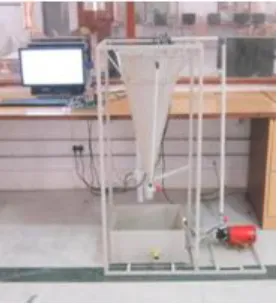
The system identification is made by considering open loop response of the experimental setup consists of a conical tank, interfacing module and a personal computer whose specification is given below.
Figure 1. Laboratory setup for a conical tank system
Table 1: Specification of Experimental setup
Specification Details
Reservoir Tank Capacity 35 litres Conical Tank Capacity 22 litres Conical Tank Height 700 mm Conical Tank Top diameter 350mm Conical Tank Bottom diameter 25mm
Level Transmitter Type Piezoelectric type
409 By considering the input variable and output responses of the
process first order process with dead time (FOPDT) is calculated and its transfer function is given by
2.2 Controller Tuning Methods
Based on the open loop transfer function different tuning methods have been introduced. In general the PI controller is very commonly used for various engineering control applications. To determine the parameters proportional(P) and integral(I) of the process, various tuning benchmark rules are introduced in the nonlinear process. By tuning these two parameters in the PI control algorithm the controller can provide the desired action designed for specific process requirement. Tuning techniques are carried out for different methods like Internal model control (IMC) method, Ziegler Nichols(ZN) tuning Method, Fractional order PI(FOPI) tuning Technique, Tyreus Luyben(TY) Method and Shinskey Tuning Constant(STC) Method. The figure shows the general block diagram of a closed loop control system.
Figure 2. General Block Diagram of a Closed-loop Control System
Table 2: Controller Tuning Methods Formulae
Methods Kp τI
IMC
ZN
FOPI
TL
STC
In this table 2 shows the formulae for various controller tuning methods and table3 represents the tuning values of various methods which has been calculated based on the transfer function obtained from the open loop response of the experimental setup
Table 3:Values of different Controller Tuning Methods
Methods Kp KI
IMC 98.9 5.055
ZN 114.857 7.3206
FOPI 122.2 0.4821
TL 78.964 2.77297
STC 126.3421 13.421
2.3 Optimization Algorithms
Optimization techniques are the selection of a better value from the set of available alternatives. In simple it is used for maximizing or minimizing the real functions by choosing its input values within the allowed set of data’s to obtain the best value. It has the characteristics of multimodal function which can able to produce multiple good solutions. It can able to mix the data’s of both globally good, and locally good solutions, hence it is said as multimodal optimizer. For providing a multimodal approach than classical optimization techniques, evolutionary algorithms are used. In this paper, the algorithms are used to find out the best values of proportional and integral term to determine the control of a nonlinear conical tank system.
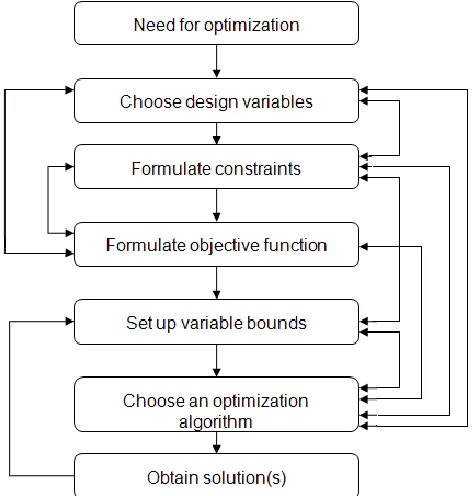
Figure 3. Flowchart of an Optimization Algorithm Design Procedure
2.3.1 Genetic Algorithm(GA)
population. A new population is created from the solution to provide a better output.
2.3.2 Enhanced Bacteria Foraging optimization (EBFO) Algorithm
Enhanced Bacteria foraging optimization algorithm is a new dissection of metaheuristic algorithm. It is based on the optimization technique developed by inspiring the foraging manners of the population of E.coli bacteria The basic operations of EBFO algorithm are based on chemotaxis, swarming, reproduction, elimination-dispersal of the Escherichia coli bacteria.
2.3.3 Particle Swarm optimization (PSO)Algorithm Particle Swarm Optimization (PSO) is an optimization technique to improve the quality of candidate solution by iteratively trying to use computational method. The problem can be solved using the swarm movement and its move around the search space by having a population of candidate solutions, based on simple mathematical formulae over the particle's position and velocity. Each particle's movement is subjective by their local best-known positions which are updated as better positions are found by other particles. This is expected that the swarm can move to better solutions.
2.3.2 Cuckoo Search optimization (CSO) Algorithm Cuckoo search optimization algorithm is based on the breeding habits of the bird cuckoo which has the habit of laying eggs in the alien birds nest. The cuckoo female bird will mimicry the color and pattern eggs of another host in which they lay the eggs so that the host bird cannot able to identify their eggs. Cuckoo search idealized such breeding behavior, and thus can be applied to various optimization problems. It seems that it can outperform other metaheuristic algorithms in applications.
Table 4: Values of different optimization Techniques
Methods Kp KI
GA 49.91 0.315
EBFO 61.74 0.62
PSO 64.806 0.23481
CSO 499.6433 102.0409
2.4 Performance Indices
The performance indices are to optimize the performances of a closed loop system by reducing the error and obtaining the best value. It can be used for controller tuning and also for different optimization techniques. Different performances indices are
Integral of squared error
Integral of Absolute value of error
Integral of the time weighted absolute error
3.
RESULTS AND DISCUSSIONSThe response of a conical tank system is determined by comparing various controller tuning method with the different optimization techniques using MATLAB and tested for various nominal heights of the tank. The comparison is based on the servo and regulatory response of the different methods. Performance indices and time domain analysis are determined to find out the better performance of different methods which are implemented. The optimization results are determined by using various iterations, providing the values of the PI controller based on its own parameters required for each optimization method. Tuning methods are used based on the formulae provided.
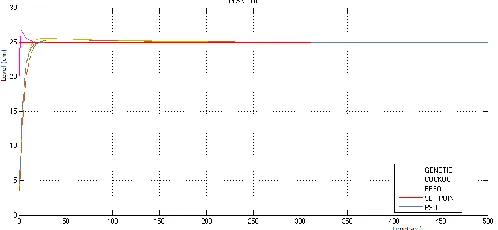
Figure 4. Output Response of optimization techniques
Figure 5.Regulatory Response of optimization techniques
411 Figure 7.Servo and Regulatory Response of optimization
techniques
Figure 8. Output Response of Tuning techniques
Figure 9. Regulatory Response of tuning techniques
Figure 10. Servo Response of tuning techniques
Figure 11. Servo and Regulatory Response of Tuning techniques
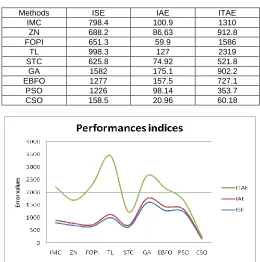
Table 5 :Time domain analysis of Tuning methods and optimization Techniques
Methods ISE IAE ITAE
IMC 798.4 100.9 1310
ZN 688.2 86.63 912.8
FOPI 651.3 59.9 1586
TL 998.3 127 2319
STC 625.8 74.92 521.8
GA 1582 175.1 902.2
EBFO 1277 157.5 727.1
PSO 1226 98.14 353.7
CSO 158.5 20.96 60.18
Figure 12.Graphical representation of the performance indices
Table 6 :Performance indices analysis of Tuning methods and optimization Techniques
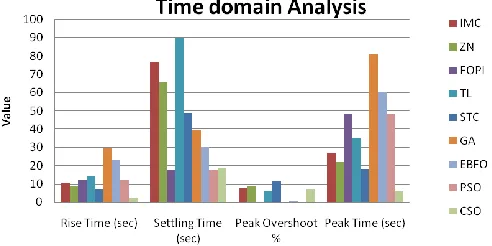
Methods Rise Time (sec)
Settling Time (sec)
Peak Overshoot
%
Peak Time (sec)
IMC 10.6090 76.4821 7.7639 27
ZN 8.9280 65.7530 8.4481 22
FOPI 12.2688 17.2750 0.0278 48
TL 14.0677 90.0555 6.1705 35
STC 7.2736 48.6526 11.7131 18
GA 29.5687 39.3977 0 81
EBFO 23.0751 30.0746 0.8424 60
PSO 12.2688 17.2750 0.0278 48
Figure 13. Graphical representation of the Time domain Analysis
4.
C
ONCLUSIONIn this paper, Tuning techniques and optimization techniques are implemented for level control of a conical tank system using PI controller. Its performance is measured to compare and analysis the best controller in a conical tank system. From the above results it is determined that the Cuckoo search algorithm can provide a better optimization value for the control of the level. In tuning of a controller, FOPI provides a better result with less settling time for the given process. .
REFERENCES
[1]. Anandanatarajan, R., M. Chidambaram, and T.
Jayasingh. "Design of controller using variable
transformations for a nonlinear process with dead time." ISA transactions 44.1 (2005): 81-91.
[2]. Nithya.S et.al 2008 Design of Intelligent controllers for nonlinear processes. AJAPS : 33-45.
[3]. Nithya S et al 2010 Soft computing based controllers
Implementation for non-linear process in real time. Proceedings of the world Congress on Engineering and Computer Science. Vol. 2. 2010: 126-131.
[4]. Marshiana D and P Thirusakthimurugan 2014 Fractional order PI controller for nonlinear systems Control, Instrumentation, Communication and Computational Technologies (ICCICCT). International Conference on. IEEE, 2014: 322-326.
[5]. Anandanatarajan R, Chidambaram M and T.
Jayasingh.2006 Limitations of a PI controller for a first-order nonlinear process with dead time." ISA transactions 45.2: 185-199
[6]. Ravi, V. R., and T. Thyagarajan. "Application of adaptive
control technique to interacting Non Linear
Systems." Electronics Computer Technology (ICECT), 2011 3rd International Conference on. Vol. 2. IEEE, 2011.
[7]. Francis, Bruce A., and W. Murray Wonham. "The internal
model principle of control theory." Automatica 12.5 (1976): 457-465.
[8]. Calvet, Jean Paul, and Yaman Arkun. "Feedforward and
feedback linearization of nonlinear system and its
implementation using internal model control
(IMC)." Industrial & engineering chemistry research 27.10 (1988): 1822-1831.
[9]. Bakwad, K. M., et al. "Bacterial foraging optimization
technique cascaded with adaptive filter to enhance peak signal to noise ratio from single image."IETE Journal of Research 55.4 (2009): 173-179.
[10]. Mudi, Rajani K., and Nikhil R. Pal. "A self-tuning fuzzy PD
controller." IETE journal of research 44.4-5 (1998): 177-189.
[11]. X.-S. Yang; S. Deb (December 2009). Cuckoo search via
Lévy flights. World Congress on Nature & Biologically Inspired Computing (NaBIC 2009). IEEE Publications. pp. 210–214.
[12]. Yang, Xin-She, and Suash Deb. "Cuckoo search via Lévy
flights." In Nature & Biologically Inspired Computing, 2009. NaBIC 2009. World Congress on, pp. 210-214. IEEE, 2009.
[13]. Rajabioun, Ramin. "Cuckoo optimization
algorithm." Applied soft computing11.8 (2011): 5508-5518.
[14]. Saini, J. S., M. Gopal, and A. P. Mittal. "Evolving optimal
Fuzzy Logic controllers by genetic algorithms." IETE journal of research 50.3 (2004): 179-190.
[15]. Madhubala, T. K., et al. "Development and tuning of fuzzy
controller for a conical level system." Intelligent Sensing and Information Processing, 2004. Proceedings of International Conference on. IEEE, 2004.
[16]. Aravind, P., M. Valluvan, and S. Ranganathan.
"Modelling and Simulation of Non Linear
Tank." International Journal of Advanced Research in
Electrical, Electronics and Instrumentation
Engineering 2.2 (2013): 842-849.
[17]. Visioli, Antonio. "A new design for a PID plus feedforward
controller." Journal of Process Control 14.4 (2004): 457-463.
[18].M. Männle, ―FTSM-fast Takagi-Sugeno fuzzy modeling,‖ in Proceedings of the Fault Detection, Supervision and Safety for Technical Processes (SAFEPROCESS '00), pp. 663–668, Budapest, Romaina, June 2000.
[19].Y.-C. Chiou and L. W. Lan, ―Genetic fuzzy logic controller: an iterative evolution algorithm with new encoding method,‖ Fuzzy Sets and Systems, vol. 152, no. 3, pp. 617–635, 2005.
[20].G. Leng, T. M. McGinnity, and G. Prasad, ―Design for self-organizing fuzzy neural networks based on genetic algorithms,‖ IEEE Transactions on Fuzzy Systems, vol. 14, no. 6, pp. 755–765, 2006.
[21].M. Montazeri-Gh and A. Safari, ―Tuning of fuzzy fuel controller for aero-engine thrust regulation and safety considerations using genetic algorithm,‖ Aerospace Science and Technology, vol. 15, no. 3, pp. 183–192, 2011.
[22].H. Pan, H. Wong, V. Kapila, and M. S. de Queiroz, ―Experimental validation of a nonlinear backstepping liquid level controller for a state coupled two tank system,‖ Control Engineering Practice, vol. 13, no. 1, pp. 27–40, 2005.
[23].Visioli, ―A new design for a PID plus feedforward controller,‖ Journal of Process Control, vol. 14, no. 4, pp. 457–463, 2004.
[24].D. J. Murray-Smith, J. Kocijan, and M. Gong, ―A signal convolution method for estimation of controller parameter sensitivity functions for tuning of feedback control systems by an iterative process,‖ Control Engineering Practice, vol. 11, no. 9, pp. 1087–1094, 2003.
413 [26].K.-L. Wu, C.-C. Yu, and Y.-C. Cheng, ―A two degree of
freedom level control,‖ Journal of Process Control, vol. 11, pp. 311–319, 2001
[27].Thangaraj, Radha, et al. "Optimal gain tuning of PI speed controller in induction motor drives using particle swarm optimization." Logic Journal of IGPL (2010): jzq031. [28].Roy, Prasanta, et al. "Level control of two tank system by
fractional order integral state feedback controller tuned by PSO with experimental validation." 2016 IEEE First International Conference on Control, Measurement and Instrumentation (CMI). IEEE, 2016.
[29].K. E. Kwok, M. C. Ping, and P. Li, ―Model-based augmented PID algorithm,‖ Journal of Process Control, vol. 10, no. 1, pp. 9–18, 2000.
[30].R. Roy, and T. Kailath, ―ESPRIT _ estimation of signal parameters via rotational invariance techniques,‖ IEEE Trans. Acoust. Speech Signal Process, Vol. 37, no. 7, pp. 984_95, Jul. 1989.
[31].V. Wowk, Machinery Vibration, Measurement and Analysis. New York: McGraw-Hill, 1991.
[32]. Vinothkumar. C Marshiana. D, Balasankar Karavadi, An Automated Process of Monitoring and Control on Multivariable Non-Linear Greenhouse Environment‖, International Journal of Recent Technology and Engineering, Vol.7(6), March.2019, pp.1914-1917. [33].B. Li, M.-Y. Chow, Y. Tipsuwan, and J. C. Hung, ―Neural