574
Design And Development Of Cluster Based Stretch
And Shrink Scheme For Topology Stability And
Load Balancing In Mobile Ad Hoc Network Using
Weighted Clustering Algorithm
Ramalingam. M
Abstract: The Mobile Ad hoc Network (MANET) does not have a stable state and it is constantly changing its structure, so need a good self-regulating technique. There is another problem with this network, namely the problem of information exchange because the network is cons tantly changing and the communication is complicated. Clustering technology is a good best technique that has been repeatedly tested by many researchers and has been talked about in many research articles. Using this self-regulating method, it build a good topology in the MANET network. In this clustering method, the network is divided into several groups, where each cluster head is elected. The simplest technique of clustering is to ensure the consis tency of the MANET network topology as much as possible. Therefore, the use of clustering method in this mobile ad hoc networ k is simplified to facilitate the communication of various types of algorithms and techniques. Communication using this cluster method on the MANET network takes place in two stages. I n the first case, information is only transmitted to individuals within a group. In the second case, information is transmitted from one group to another, that is, to all groups in the network. The clustering group is chosen to maintain the information that is good for this clustering team and send it to the appropriate forecasts. Each cluster head is selected for each group and select this cluster head is based on the WCA (Weighted Cluster Algorithm). Comprise of Cluster based Stretch & Shrink method and the new strategy is dealt with in this research paper, which can confirm its topology stability and the network's load. This new method can reduce the instability of the network and increase its stability. Whenever the clustering load balance is increased, the group is split into two group is called shrink method. At the same time clustering balance density decreases, this group is merged together with a similar low density group known as stretch method.Thus when the density in the cluster decreases or increases, the balance of the group is controlled by the thr eshold value to ensure the stability of the network. The stretch & shrink method has been compared with the bench mark algorithm and the significant res ult has produced.
Keyword: MANET, Stretch and shrink, WCA Clustering algorithm and Load Balance.
—————————— ——————————
I. INTRODUCTION
Analysis of cluster based mobile ad hoc network and proposes an stretch and shrink algorithm to increase the topology stability in MANET based on weighted clustering algorithm (WCA) in order to facilitate and improve the effectiveness in MANET topology stability. A Mobile Ad-hoc Wireless Network (MANET) is a number of autonomous wireless nodes that communicate with each other dynamically and forms the ad hoc network to exchange the node self data as well as information. In ad hoc network, the nodes are acts not only as a host or receiver but also as a router by making routing and routing the formation or self-data for each other nodes in MANET and also it provides pervasive computing environment that support users in accomplishing their tasks, accessing data and establish the communication anytime, anywhere and from any device. The scheme of paper also deals some important problems that occurred when implementing the WCA-cluster (STRETCH & SHRINK) scheme and clearly reads a variety of cluster technologies and transmits information on this network based on the Weighted Clustering Algorithm. The results of this stretch & shrink method show that this new system has made significant improvements compared with existing algorithms. This new scheme will ensure the sustainability of the network as much as possible. Managing sustainability with Clustering method as stable as and the new scheme has improved with existing WCA algorithm.
II.CLUSTER HEAD (CH) SELECTION
The state of this network is affected by spontaneous moving computers, which is why it use cluster method. In this non-stationary network, getting information at the right time and in the right place at the right time is considered important. How the threshold factor is determined is the area of the network and the total number of node participated. A common threshold number is used to balance the denser cluster in this way. Clustering method is used and Cluster Head (CH) is selected from each group. In the new method of clustering using WCA algorithm and divided into several groups based on the density of the
__________________________
clustering to ensure the stability of the network. So far, many types of clustering technology have been introduced, each type of technology having every kind of advantage, ensuring the consistency of this network in every good way. This clustering technology gives us some assurance that when it use this technology in the network, the information will be on the right node at the right time and this will ensure the stability of the network as much as possible. Clustering technology is used in this network and the main reason for using it is that it promotes the basic functions of networking and makes the network's usage and the information sent to it better and the network running better. This network is a non-stationary one, so it is a bit more difficult to maneuver through it using cluster technology to ensure maximum stability.
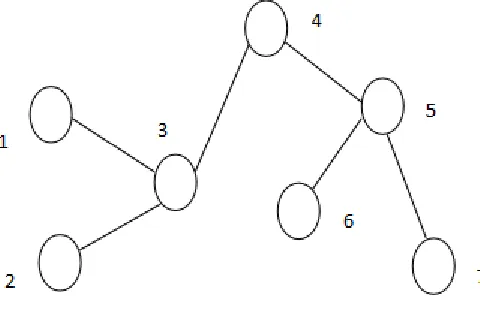
Figure 2. Plane topology architecture for MANET
III. LOAD BALANCE
Threshold value to the clustering load balance, thereby controlling the balance of the cluster. When the clustering density increases and crosses the maximum number, the group is split into two. Similarly, when the density decreases in this cluster and the minimum number touches, the group is joined to another similar group. A Cluster head is elected in each group to monitor and streamline those groups. In this clustering technology, the cluster head will perform two important tasks when the weight of that group decreases, that is, the weight of the group in which the particular group touches the minimum number of the group. When the weight gain then the group is divided into two groups in
which the group leader stays the same as the old group. The new head will be elected to the new committee and will perform important tasks for the communication of the committee. This technique uses two logic: one maximum threshold number and one minimum threshold number. The weight of a group must not exceed the maximum index and not less than the minimum index. The stability of the MANET network is protected by these two strategies. If we look at how this minimum and maximum code is determined in this network.This maximum minimum code is calculated based on the area of the network and its number and performance. A formula is given below so that we can calculate this maximum and minimum index correctly.
2
(
)
c
i i
n
LBF
x
Where,
(
c)
cN
n
n
where
No.Of Cluster Head (CH) = nc;
Cardinality of each cluster from i=1,2,3.... = xi ;
μ = (N −nc)/nc;
N= No.of Nodes in the MANET boundary
Clearly, a value of LBF signifies a better load distribution
and it leads to infinity for a better balanced system. The
each CH balance the node based on the threshold value
and the the number of nodes supported by it. A clusterhead,
apart from supporting its members with the radio resources,
has also to route messages for other nodes belonging to
different clusters.
Step 1: Calculate the degree deference for each node v
Step 2: Calculate average of speed for every node in the MANET until time T
Step 3:
Compute the cumulative time Pv
Pv --> Consumption of battery power for nodes in the network
Step 4: Compute and Calculate the combined weight of Wv
Step 6: Repeat the step 1 to 5 until all nodes in the metwork selected as a clusterhead (CH) or assigned to any one of the cluster.
Figure 1.6 Algorithm for clusterhead selection
IV. WCA BASED STRETCH AND SHRINK
SCHEME
In the stretch and shrink scheme, the WCA based CH selection method is used to minimize the topology alteration in the MANET-dominant set environment. Δv is computed for all the nodes in the network (Δv is degree difference) and
the degree computation is possible only after creation of the neighbors list. The degree difference list can be distributed to all CH in the MANET.
Dv= sum of each neighbor node distance in the boundary.
After completion of the degree difference, the mobility
speed and total time can be calculated and it is indicated as
Mv, Tv receptively. The values are calculated and
normalized, which means the network is ready to simulate in
the predefined boundary.
All the weights w1, w2, w3 or w4 are fixed for a simulated
system. The weighing factors also give the flexibility of
adjusting the effective contribution of each of the
parameters in calculating the combined weight Wv.
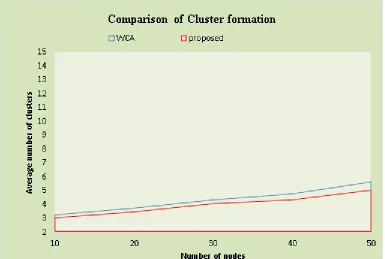
Figure 1.11 Average number of cluster formation ranging from 10 nodes to 50 nodes and the proposed stretch and shrink scheme
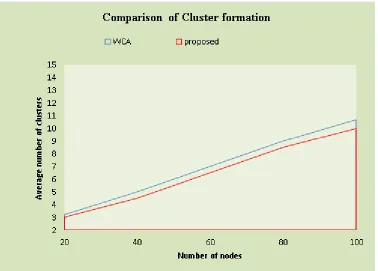
Figure 1.12 Average number of cluster formation by varying from 20 nodes to 100 nodes and the proposed stretch and shrink
scheme is compared with WCA Comparison of cluster formation.
V.CONCLUSION
A WCA based Stretch and Shrink scheme has been designed and developed for maintain the topology stability in MANET. The system is implemented as a collection of mobile nodes, cluster formation and cluster head selection based on rules. The algorithm starts with each node begin in its own unique id and then explores the network to produce desired cluster formation. The overall procedure totally comprise of six steps to form a clustered MANET. It is starts from loading the network into the fixed boundary and set the transmission range. After cluster formation the WCA based cluster head selection procedure is calling to select a CH. The pre-defined rules are applied to the MANET for balancing the load in each cluster. The developed scheme has two procedure namely stretch procedure and shrink procedure. Both the procedures has been developed to maintain the optimal load in clusters. The stretch procedure is developed for merge the clusters when the cluster size reaches the under threshold value. The shrink procedure is used to split the cluster when the cluster size reaches the upper threshold value. The three rules are formed to manage the cluster load balanced such as rule 1, rule 2 and rule 3. The rule 1 is for adding nodes into cluster and rule 2 is applied when the CH is getting over loaded. The rule 3 is applied when the cluster size reaches the under threshold value. Cluster formation with CH selection, cluster maintenance and end with load balanced clusters. To evaluate the scheme is compare with the WCA. The developed stretch and shrink scheme is based on the weighted clustering algorithm to form load balanced clusters.
REFERENCE:
[1] Marco Aurelio Spohn and Garcia-Luna-Aceves J.J., [2007], ―Bounded-distance multi-clusterhead formation in wireless ad hoc networks‖, Ad Hoc Networks 5(2007), 1570- 8705/$ - see front matter - 2006 Elsevier B.V. All rights reserved. doi:10.1016/j.adhoc.2006.01.005. pp. 504 – 530. [2] Marco Conti, Silvia Giordano, Gaia Maselli, and
Giovanni Turi., [2004], ―Mobile metropolitan ad hoc networks‖, in Proceedings of the 8th International IFIP-TC6 Conference, Lecture Notes in Computer Science, LNCS - 2775, pp.194–205.
[3] Luc Hogie., [2007], ―Mobile Ad Hoc Networks: Modelling, Simulation and Broadcast-based Applications‖, University of Le Havre, University of Luxembourg.
[4] John Sucec and Ivan Marsic., [2002], ―Clustering Overhead for Hierarchical Routing in Mobile Ad hoc Networks‖, Rutgers University, U.S. Army CECOM contract number DAAB07-00-D-G505, IEEE 0-7803-7476-2/02.
[5] Chiang. C.C., Gerla. M and Zhang. L., [1997], ―Routing in Clustered Multihop Mobile Wireless Networks with Fading Channel‖, in proceedings of IEEE, SICON, Kent Ridge, Singapore, pp. 197–211.
INSNA, National Institute of Technology, Rourkela.
[7] Yu Hongyi., [2005], ―Mobile Ad Hoc Wireless Networks‖, Version 1, Posts & Telecom press, Beijing.
[8] Suchismita Chinara., [2011], ―Analysis and Design of Protocols for Clustering in Mobile Ad Hoc Networks‖, National Institute of Technology, Rourkela, India.
[9] Ali Hilal Al-Bayatti., [2009], ―Security Management for Mobile Ad hoc Network of Networks
(MANoN)‖, De Montfort University.
[10]Yao Ye., [2011], ―Ad Hoc Networks Measurement Model and Methods Based on Network
Tomography‖, Ph.D, Belfort Montbéliard University. [11]Tomoyuki Ohta., Naoyoshi Murakami and Yoshiaki Kakuda.,[2007], ―Performance Evaluation of Autonomous Clustering for Hierarchical Routing Protocols in Mobile Ad Hoc Networks‖, 27th International Conference on Distributed Computing Systems Workshops (ICDCSW'07), 0-7695-2838-4/07 $20.00 © 2007, IEEE.
[12]Yi Xu and Wenye Wang., [2006], ―MEACA: Mobility and Energy Aware Clustering Algorithm for Constructing Stable MANETs‖, Department of Electrical and Computer Engineering, North Carolina State University, Raleigh, IEEE, NC 27606.
[13]Ghosh R. and Basagni S.,[2005], ―Limiting the impact of mobility on ad hoc clustering‖, in Proceedings of ACM PE-WASUN, pp. 197–204. [14]Perkins. C., and Bhagwat. P., [1994], ―Highly
dynamic destination-sequenced distance-vector routing (DSDV) for mobile computers‖, in Proc, ACM Conf. on Communications Architectures, Protocols and Applications, pp. 234 – 244.
[15]Abdel Rahman H., Hussein, Sufian Yousef and Omar Arabiyat., [2006], ―A Load- Balancing and Weighted Clustering Algorithm in Mobile Ad-Hoc Network‖, Faculty of Science & Technology, Anglia Ruskin University, UK.
[16]Amis A., Prakash R., Vuong T., and Huynh D.T., [1999], ―Max-Min D-Cluster Formation in Wireless Ad Hoc Networks‖, in Proceedings of IEEE INFOCOM, March, 1999.
[17]Alan D., Amis and Ravi Prakash., [1998], ―Load-Balancing Clusters in Wireless Ad Hoc Networks‖, Department of Computer Science, University of Texas at Dallas, Richardson, Texas 75083-0688.
[18]Anupama M. and Bachala Sathyanarayana., [2011], ―Survey of Cluster Based Routing Protocols in Mobile Ad hoc Networks‖, International Journal of Computer Theory and Engineering, Vol. 3, No. 6, pp.806 – 815.
[19]Basagni. S., [1999], ―Distributed and Mobility-Adaptive Clustering for Multimedia Support in Multi-Hop Wireless Networks‖, in Proceedings of VTC, IEEE Vehicular Technology Conference, pp. 889-893.
[20]Das. S. R., Perkins. C. E., Royer. E. M. and M. K. Marina.,[2001], ―Performance Comparison of Two On-demand Routing Protocols for Ad Hoc Networks‖, in IEEE Personal Communications Magazine, special issue on Mobile Ad Hoc Networks, Vol. 8, No. 1, pp. 16-29.
[21]Gerla M., and Tsai J.TC.,[1995], ―Multicluster, Mobile, Multimedia Radio Network Wireless Networks‖, pp. 255-265.
[22]Tomoyuki Ohta., Naoyoshi Murakami and Yoshiaki Kakuda.,[2007], ―Performance Evaluation of Autonomous Clustering for Hierarchical Routing Protocols in Mobile Ad Hoc Networks‖, 27th International Conference on Distributed Computing Systems Workshops (ICDCSW'07), 0-7695-2838-4/07 $20.00 © 2007, IEEE.
[23]Ramalingam. M., Thiagarasu.V., [2014], ―Identified the Cluster Based Stretch and Shrink Method Based on Load Balancing Algorithm for Ad Hoc Network Topology Stability‖, International Journal on Recent and Innovation Trends in Computing and Communication, ISSN: 2321-8169, Vol. 2,No.9, pp.92631–2635.