SECURED SMART HOME AUTOMATION SYSTEM BASED ON USER BEHAVIOUR
USING INTERNET OF THINGS
Kiruthiga N1, Lokitha Karthi R2, Ramya B3
Department of Computer Science and Engineering, Sri Krishna College of Technology,Coimbatore-641042, Tamilnadu, India. [email protected] ,[email protected]2 ,[email protected]3
Article received 8.3.2018, Revised 5.6.2018, Accepted 13.6.2018
ABSTRACT
The “Smart Home” can be defined as the idea of what a home could be that is not under the control of human beings over the electrical appliances all the time. In earlier days, home automation technology was considered to be extremely expensive but in the past few years the cost has been reduced and the demand has increased. The significant outcome is that there is danger in connecting anything to the internet, hence this results in lack of security in the automation system. Our approach is to meet the security issues in home automation by creating a smart home automation system where the data about the devices inside a home are collected and the collected data will be secured using privacy preserving algorithms that includes User behavior algorithm and blow fish algorithm. Therefore, the system can allow the appliances to get turned on or off automatically.
KEYWORDS: Internet of Things (IOT); Liquid Crystal Display (LCD); Resistor (RS); Light Dependant Resistor (LDR); Power Line Communication (PLC); Personal Computer (PC);
I. INTRODUCTION
The realm of smart home atmosphere is consi-dered as the pivot element of the fore coming days and with the help of Internet of Things many homes are being converted into smarter homes that helps us to achieve home security, to make use of the energy efficiently and most importantly to provide the comfort zone. Consequently, the IoT environment has been identified as one of the important reason for the explosion of the smart home in current days.
Due to the security issues that occur in smart home automation system pave a path towards the secured smart homes. This is achieved by using privacy algorithms that is induced within the whole entire smart home devices. Most of the importance is given to the security issues, security solutions, privacy issues and privacy solutions. These focuses over the risk analysis of the system. The digital assets must be protected from the third party persons. In the risk analysis, you have to find the reason for it and also provide the solution to the same. In order to find the reason, the system must be equipped with the smarter devices that can be controlled on its own as per the surround-ing atmosphere. The Internet of Thsurround-ings can be def-ined as the chain of the materialistic objects or ingrained with sensors, camcorders, software and network connectivity (Shweta Singh, 2016). All these enable us to gather the data and transfer them. With the help of Internet of Things, the obj-ects can be sensed and also that existing remote network infrastructure can be controlled. Hence the computer systems can be connected with the existing physical world resulting in improved
eff-iciency, accuracy and economic benefit. All these helps in operating over the internet infrastructure.
Building automation for a home is called as the smart home. It is mainly used to control the devi-ces in the home which includes light, electric fans or any other electric appliances. These are the monitored with the help of the internet infrastruc- ture which is the most important constituent of the Internet of Things. It plays a major role in the
pre-sent smart homes.
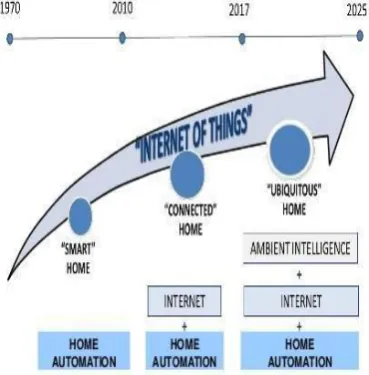
Figure 1. Smart Home automation
smart home automation made the human’s life easier to live by reducing the work of the humans. It allows the humans to operate the home appli-ances from anywhere in the world with the help of the internet systems.
All these enable the humans to perform their work with the systems rather than performing manual work (Vinay sagar, 2015). In today’s world, the Internet of things is growing day by day with large scalability enabling the transfer of information in an easier way in comparison to the olden days.
2. LITERATURE SURVEY
Integrated System of Face Recognition and Sound Localization for a Smart Door Phone -proposes a system that makes use of the face recognition and sound localisation algorithms in order to identify,analyse the foreign faces and to locate their positions with the help of the door phones.It should be noted that the foreign person’s voice is used to find the position of the person (Taewan Kim et al., 2013).The information that have been got is then used to set the camera
posi-tions over the door so that the person can be
viewed in authentic way.
An Enhanced Fall Detection System for Elderly Person Monitoring using Consumer Home Net-works-proposes a system that is used to monitor the elderly persons. The system makes use of smart sensors that has to be worn over the body and then the operation are performed with the help of consumer home network (Jinsoo Han, et al., 2014). Thus, the fall of the elderly person in the home can be detected easily. From the devices of accelerometer, cardiotachometer and smart sens-ors, the information ids gathered. The brunts of the falls can be differentiated from normal daily activities with the help of the proposed system.
Smart Home Energy Management System Incl-uding Renewable Energy Based on ZigBee and
PLC- proposes a Home Energy Management
System architecture that is onvolved in energy consumption and generation simultaneously. The sysytem uses ZigBee based energy analysis pro-grams.This helps to monitor the energy that is being consumed by the electrical appliances in the home. The system also uses PLC based renewable energy gateway which in turn helps in monitoring the energy that is being generated by the rene-wable energies (Jinsoo Han, et al., 2014). The home server will get alll the information and works in order to reduce the cost of the energy. The remote energy management makes the anal-ysis of the energy consumption after aggregating all the information from different parts of servers.
Degradation Diagnosis System of Photovoltaic Panels with Mobile: Application-proposes a deg-radation diagnosis system that can be used for the Photovoltaic panels to help the household cons-umers .In addition to it, a home gateway which is mobile baesd is included to manage the various applications. With the help of the proposed sys-tem, the consumers will be able to monitor the degradation of the PV system. It also helps in analysing the efficiency of the PV panels (Beom-seok Lee, 2014). Therfore the energy can be saved at home.
Home Appliance Load Disaggregation Using Cepstrum-Smoothing-Based Method-presents a load disaggregation method which is cepstrum-smoothing-based. The system deals effectively with the continous on/off operations of multiple electronic appliances (Seongbae Kong, 2015). Additionally , to get the characteristic signals of home appliances,a data acquistition system is used. It can filter the noise that comes from the
power supply.
2.1 EXISTING SYSTEM
By de-identifying data at the home level, the home controller protects personal data in the household and forms the basis of overall privacy protection. The community broker provides privacy protec-tion in community and home levels through data separation, aggregation, and fusion.Furthermore, by integrating the environmental and geographical attributes of the vicinity, including the subsystems of buildings and community surroundings (e.g., central monitor and control, surveillance, vehicle charging, and digital signage systems), the comm-unity broker enriches the implications of data analytics and achieves community profile
2.1.1 Drawbacks of the exisisting system: The users are not provided with a graphical user inter-face (GUI), users have to especially remember an access code, and they also have to remember which buttons to press for the control of connected devices of the system.An intrusive and expensive wired installation and the use of a high end PC is required by the system.
3. PROPOSED SYSTEM
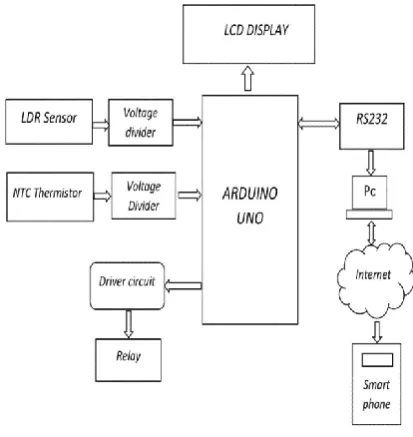
for each the surrounding conditions without the interference of person. Figure 2 depicts the work glide of the system.
Figure 2. Block diagram of the proposed system
4. IMPLEMENTATION
An attempt to design the smart home automation system has the following components. The hard-ware and softhard-ware design is explained in this session:
Hardware Design: The hardware components that are required to make smart home automation inc-ludes Arduino Board, Amplifier, Driver Circuit, Liquid Crystal Display, Light Dependant Resistor, Relay, RS232 and Temperature Sensor that inclu-des thermistors. The hardware kit consists of the above-mentioned components.
Arduino Board: It is a board that has a program-mable circuit board which can be referred to as a microcontroller and a collection of program or Integrated Development Environment which is nothing but the built-in development structure. It runs for the systems, laptop devices and also that the laptop code can be entered to the physical board. Analog input/output (I/O) pins are present in the board that can be connected with the other circuit boards. The board can also be connected with the USB for the connection with the personal computers.
Amplifier: It can be defined as a gadget that is used to increase the vigor of a signal. It makes this possible by means of taking the energy from a vigor supply and the output is controlled to sync with the enter sign form but with a higher ampli-tude. Hence, an amplifier can be seen as modula-ting the output of the vigor give. Here we use inverting amplifier as a achieve amplifier. We are
able to trade the achieve by way of adjusting the worth of suggestions resistance value. Because the open loop DC obtain of an operational amplifier is totally excessive we are able to have enough money to lose some of this acquire by way of connecting a suitable resistor across the amplifier from the output terminal again to the inverting enter terminal to both slash and control the total attain of the amplifier. It creates and effect which is known as a rule as terrible feedback and for that reason produces a very stable Operational Ampli-fier procedure. Negative feedback is the procedure of "feeding back" one of the crucial output sign back to the center, but to make the suggestions terrible we have got to feed it again to the "poor input" terminal making use of an outside feedback Resistor called Rf. A closed loop circuit is produ-ced by the connection between the output and the inverting enter terminal which will result within the gain of the amplifier now being called its Closed-loop attain.
Driver circuit: It is an electrical circuit or elect-ronic component that mainly involves in contro-lling the other electronic circuit or electronic com-ponents. The other electronic components may be a transistor that is powered to high. The driver circuit is mainly used for the AC-to-DC voltage converters. It should be noted that the loudspea-kers can have the amplifiers as its drivers. It can also be used to maintain a constant voltage circuit that helps the component or device that is being attached to operate inside a larger range of input
voltages. The driver circuit will grant us to drive
approximately of about 12V relay with the help of the logic voltage, if suppose the input is of 4V or greater then it would trip the relay. The driver circuits have 12V of the power supply on its own. This will make it to be self-contained, if suppose an external supply used then the electric or the power supply will leave. The circuit will produce an output and that is used to power from another device. It should also be noted that if the supply is unregulated and will not produce particular powerful output. The output of 12V direct current can be used to power LEDs or any other low volt-age bulbs or lights. The circuit must not be used to power other electronic boards or motors.
them. The internal surface of the glass plates is coated with obvious electrodes which outline the persona, symbols or patterns to be displayed polymeric layers that are found to be seen in between the electrodes and the liquid crystal, which makes the liquid crystal molecules to insist a clear orientation angle.
Light Dependent Resistor: It's a kind of sensor whose resistance varies depending on the quantity of sunshine falling on its surface to sense the presence of sunshine. For example, when the LDR is in darkness then it may be used to turn on a light or to turn OFF a mild when it's in the mild.
Personal Computer: It can be defined as any general purpose computer which has more effect-iveness based on processors used in it. It is used by individuals for their personal use, business purposes etc., thereby it is very much useful to all the individuals. It is intended to be operated directly by an end user with no intervening comp-uter operator. Some of the personal compcomp-uters include a laptop, desktop computer, a tablet PC, palmtop. The commonly used microprocessors in personal computers includes x86-compatible
CPUs.
Relay: A relay, in simple words it can be descri-bed as a switch that is operated electronically. A magnetic field will be created when the current is made to flow over the coil. This will be used to attract the lever and the switch contacts will get changed. The current flowing through the coil can be turned on or off such that relays have two switch positions. These switches are called as the changeover switches or the double throw switch. Relays helps in allowing a circuit to get switched to another circuit. The second circuit can be completely different from the first. For instance, a circuit with low voltage battery makes use of a relay to get switched with a 230V AC mains cir-cuit. It should be noted that there is no electrical connection within the relay between the two circu-its and also that the link is magnetic and mecha-nical.
RS232: RS-232 can be described as a touchstone for all the serialized dual data interconnection between a DTE (Data mortal equipment) and a DCE (Data Circuit-terminating Equipment). It is regularly second-hand in PC sequential ports. The Electronic Industries Alliance (EIA) pennant RS-232-C as of 1969 defines:
• Electrical hint at characteristics such as
volt-age levels, signaling rate, timing and slew-rate of signals, voltage hold up level, short-circuit behaviour, most stray capacitance and cable duration
• Interface mechanical characteristics,
plug-able connectors and join identification
• Functions of all tour in the crossing point
connector
• Standard subsets of crossing point circuits for
chosen telecom applications
Temperature Sensor: Thermistors are called the thermally touchy resistors. Their function is to show off enormous, predictable and definite change in electrical resistance when subjected to a corresponding alternate in an environment. Bad Temperature Coefficient (NTC) thermistors show-case a shrink in electrical resistance when subj-ected to an expand in an environment and opti-mistic Temperature Coefficient (PTC) thermistors show off an develop in electrical resistance when subjected to an broaden in an atmosphere.
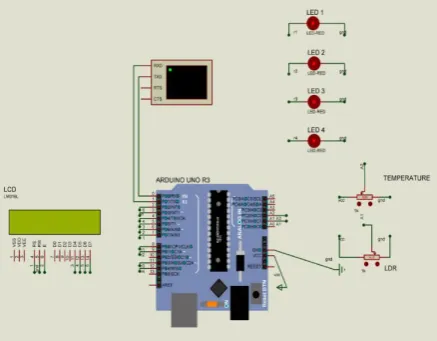
4.1 Hardware Assembly: The hardware connec-tion is situated with the aid of the hardware ace-ssories which can be stated above. Figure 3 depicts the implementation of the house automa-tion process.
Figure 4.1. Implementation of the system
Figure 4.1.1 Simulation of the system
4.2.1User Behavior Algorithm: The Behavioural analytics can be predicted as the recent advance-ment in case of industry. The rapid develop within the volume of uncooked occasion data generated by using the digital world allows for methods that go past average analysis via demographics and different normal metrics that tell us what kind of individuals took what movements up to now. Behavioural analysis makes a speciality of figure-ing out how purchasers act and why, enablfigure-ing cor-rect predictions about how they are doubtless to behave sooner or later. Figure 4.2.1 depicts the flow chart of the user behaviour algorithm.
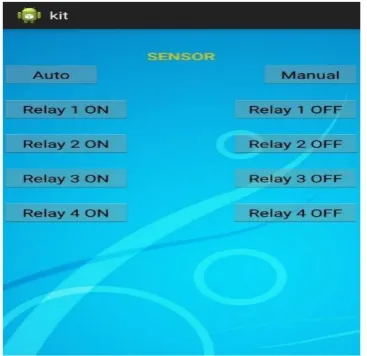
Figure 4.2.1 User Behaviour algorithm 4.2.1.1User behavior in Android app: Inorder to avoid the human interface, a user behavioral model is applied by means of creating an android application by using Android Studio. These are the steps of creating an android application to predict the user action at that particular instance.
1. The app consists of two modes that
inclu-des auto mode and manual mode.
2. Based on the mode the app will work.
3. The app consists of 10 buttons that
inclu-des relays that can be turned on and off.
4. The android app is shown in figure 4.2.1.1
If suppose the auto mode is switched on the all the other buttons will be disabled. If the manual mode is turned on then the person handling the app must click the relay buttons one by one so that the value of the device gets integrated with the system.
Figure 4.2.1.1 Android app
4.2.2Blowfish Algorith: Itis a symmetric-key bar code which is incorporated in a portly digit of symbols suites and encryption products. Blowfish provides a pleasant encryption perce-ntage in software and no helpful cryptanalysis of it. At the time when Blowfish was released, lots of other designs were in proprietary, which were full of patents or were business-related or authority secrets. A reduced-round variant of Blowfish is common to be suscep-tible to known-plaintext attacks on reflectively weak keys. Blowfish implementations operat-ion 16 rounds of encryptoperat-ion and are not incli-ned to this assault.
Encryption and decryption using blowfish algorithm
➢ Encryption is the process of encoding a message or information in such a way that only authorized parties can access it and those who are not authorized cannot.
➢ Encryption does not itself prevent interference
but denies the intelligible content to a would-be interceptor.
➢ Blowfish is a Feistel network consisting of 16
rounds. The input is a 64-bit data element, x
Algorithm
Divide x into two 32-bit halves: xL, xR
For i = 1to 16:
xL = XL XOR Pi
xR = F(XL) XOR xR
Swap XL and xR
Swap XL and xR (Undo the last swap.)
xR = xR XOR P17
xL = xL XOR P18
Recombine xL and xR
➢ Decryption is the process of transforming data that has been rendered unreadable through encryption back to its unencrypted form. In decryption, the system extracts and converts the garbled data and transforms it to texts and images that are easily understandable not only by the reader but also by the system.
Algorithm: Decryption is exactly the same as
encryption, except that P1, P2 ... P18 are used in the reverse order.
5. RESULT AND OUTPUT
The sensor data which is collected from the smart home with the help of an android application is displayed in the pc using GUI (Graphical User Interface) and from which the data is being encrypted and decrypted. The encrypted and the decrypted value of the sensors will be stored in the private cloud in order to secure the data from the third parties. The output of the proposed system is depicted in the Figure 5.
Figure 5 Output of the system
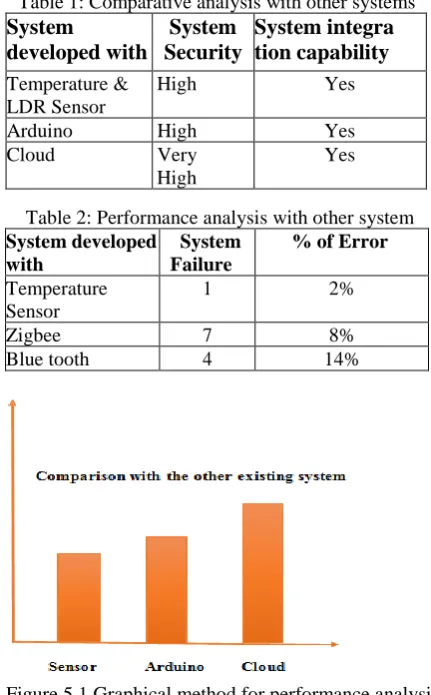
Table 1: Comparative analysis with other systems System
developed with
System Security
System integra tion capability Temperature &
LDR Sensor
High Yes
Arduino High Yes
Cloud Very
High
Yes
Table 2: Performance analysis with other system System developed
with
System Failure
% of Error Temperature
Sensor
1 2%
Zigbee 7 8%
Blue tooth 4 14%
Figure 5.1 Graphical method for performance analysis
6. CONCLUSION AND FUTURE SCOPE
Protection is fitting fundamental in all form of application. This assignment is geared towards improving the protection degree. Because the procedure helps in protecting the information of the dwelling home equipment within the home with the help of the private keeping algorithms, it helps in terms of both security and automated on or off of the appliances.
The upcoming developments that could be expec-ted is the usage of temperature sensor component to calculate the room temperature which enables to switch on or off the home appliances automa-tically without human’s intervention in a larger infrastructure. Future research needs to be directed towards the development of a cloud computing-based service for registering a new installed home appliance which is not included in this proposed system. This helps in reducing the storage of the applied system.
REFERENCES
Chirag Atha, Kshitij Baranwal, Varad Desai, Sunil
Wankhade, Review Paper on Home
Automation System using Raspberry PI.
International Journal on Recent and
Innovation Trends in Computing and Communication 4(10): 168-172 (2016) Dhakad Kunal, Dhake Tushar, Undegaonkar
Pooja, Zope Vaibhav, Vinay Lodh, Smart Home Automation using IOT. International Journal of Advanced Research in Computer
and Communication Engineering 5(2):
February (2016)
Jin Wang, Member, Zhongqi Zhang, Bin Li,
Sungyoung Lee, and R. Simon Sherratt,
Fellow, An Enhanced Fall Detection System
for Elderly Person Monitoring using
Consumer Home Networks. IEEE
Transactions on Consumer Electronics 60(1): February (2014)
Jinsoo Han, Chang-Sic Choi, Wan-Ki Park, Ilwoo Lee and Sang-Ha Kim, Smart Home Energy Management System Including Renewable Energy Based on ZigBee and PLC. IEEE Transactions on Consumer Electronics 60(2): May (2014)
Jinsoo Han, Chang-Sic Choi, Wan-Ki Park, Ilwoo Lee and Sang-Ha Kim, PLC-Based Photo-voltaic System Management for Smart Home Energy Management System. IEEE Transact-ions on Consumer Electronic 60(2): May (2014)
Lina Rose and M.X. Anitha, Wireless water level
manage-ment using aurdino. Pak. J.
Biotechnol. (special issue on Innovations in information Embedded and Communication Systems) 13: 270-273 (2016)
Pawan Singh, Krupa Chotalia, Sanket Pingale, Sandhya Kadam, A Review Paper on Smart GSM Based Home Automation System. International Research Journal of Enginee-ring and Technology 3(4) April (2016)
Radha R, Sasikal E, Gayathri M. and S. Sharanya, Device Power Consumption avoidance using Image Processing. Pak.J. Biotechnol, 14(4): 607 - 613 (2017).
Saptarshi Bhowmik, Sudipa Biswas, Karan Vishwakarma, Subhankar Chattoraj, Parami Roy, Home Automation System Using Android Application. International Journal of Scientific and Research Publications 6(12): December (2016)
Seongbae Kong, Youngwook Kim, Rakkyung Ko and Sung-Kwan Joo, Home Appliance Load Disaggregation Using Cepstrum-Smoothing-Based Method. IEEE Transactions on Consumer Electronics 61(1): (2015)
Shweta Singh, Kishore Kumar Ray, Home Automation System Using Internet of Things. International Journal of Computer Engineering and Applications 9: (2016) Supriya Sonar, Mayuri Mujmule, Tejaswini
Mangalgire and B.R. Thawali, Home
Automation using Internet of Things.
International Journal of Engineering Science and Computing (2016)
Taewan Kim, Hyungsoo Park, Sang Hoon Hong and Yunmo Chung, Integrated System of Face Recognition and Sound Localization for a Smart Door Phone. IEEE Transactions on Consumer Electronics 59(3): (2013)
Vaishnavi S. Gunge, Pratibha S. Yalagi Smart Home Automation: A Literature Review.
International Journal of Computer
Applications (0975 – 8887) National Seminar on Recent Trends in Data Mining (2016) Vinay sagar K. and S. Kusuma, Home Automation
Using Internet of Things. International Research Journal of Engineering and Technology 2(3): (2015)