Original Research Article
Epidemiological profile of ocular morbidities in age group of 20 year
and above at field practice area of rural health training center:
a cross sectional study
Rupali R. Rajput
1*, Shashikant R. Pawar
2INTRODUCTION
Ocular morbid conditions are responsible for partial or total blindness. Blindness due to ocular morbidities with its economic and social consequences represents a serious public health problem in different region of the world.1 According to the World Health Organization; 285 million people are estimated to be visually impaired worldwide: 39 million are blind and 246 million have low vision.
Approximately 90% of visually impaired people live in developing countries. About 65% of all people who are visually impaired are aged 50 and older, also 82% of people living with blindness are aged 50 and above. This age group comprises about 20% of the world's population. With an increasing elderly population in many countries, more people will be at risk of visual impairment due to chronic eye diseases and ageing processes.2 As per National Programme for Control of Blindness Survey done in India 2001-02; prevalence of
ABSTRACT
Background: Ocular morbid conditions are responsible for partial or total blindness. Blindness due to ocular morbidities with its economic and social consequences represents a serious public health problem in different region of the world. According to the World Health Organization; 285 million people are estimated to be visually impaired worldwide: 39 million are blind and 246 million have low vision. The study has to be done to determine the prevalence of blindness and common ocular morbidities in age groups of 20 years and above and to study the distribution patterns of ocular morbidities among different socio-demographic conditions.
Methods: The present cross-sectional study was conducted to find the prevalence of blindness and other ocular morbidities among adult population of 20 years and above, and also to study determinants of ocular morbidities.
Results: Prevalence of blindness was found to be (2.33%) and prevalence for ocular morbidities was found to be (36.84%) in the population with a marginal higher prevalence in females (38.72%) as compared to the males (34.98%).In present study, out of 600 study subject, 221 (36.84%) suffered ocular morbidities. The major cause of morbidities was refractive errors (53.39%), followed by cataract (35.74%), conjunctivitis (1.80%). The prevalence of ocular morbidities in the age group 20-29 year was 11.12%, then it increases significantly (p<0.01) with advancing age to 74.21% in the age group of ≥60 years.
Conclusions: Increasing age showed increasing prevalence of ocular morbidity. Widows/widower, Hindu religion, Individuals from nuclear family, skilled worker showed higher prevalence of ocular morbidity.
Keywords: Ocular morbidities, Visual impairment, Socio-demographic
Department of Community Medicine, 1Lokmanya Tilak Municipal Medical College and General Hospital, Sion, Mumbai, 2Dr. V. M. Government Medical College, Solapur, Maharashtra, India
Received: 05 January 2018
Revised: 10 February 2018
Accepted: 19 February 2018
*Correspondence:
Dr. Rupali R. Rajput,
E-mail: [email protected]
Copyright: © the author(s), publisher and licensee Medip Academy. This is an open-access article distributed under the terms of the Creative Commons Attribution Non-Commercial License, which permits unrestricted non-commercial use, distribution, and reproduction in any medium, provided the original work is properly cited.
blindness is estimated to be 1.1%. Main causes of blindness are as follows: cataract (62.6%), refractive error (19.70%), corneal blindness (0.90%), glaucoma (5.80%), surgical complication (1.20%), posterior capsular opacification (0.90%), posterior segment disorders (4.70%) and others (4.19%). Visual impairment can limit people’s ability to perform everyday tasks and can affect their quality of life and ability to interact with the surrounding world.3 So, the present study has been done in rural population to know there eye morbidity status and to spread awareness about the eye problems.
Aims and objective
1) To determine the prevalence of blindness and common ocular morbidities in age groups of 20 years and above.
2) To study the distribution patterns of ocular morbidities among different socio-demographic conditions.
METHODS
The present cross-sectional study was conducted to find the prevalence of blindness and other ocular morbidities among adult population of 20 years and above, and also to study determinants of ocular morbidities for example cataract, refractive errors, glaucoma, corneal opacities and conjunctivitis.
Study population and sampling techniques
Sample size
As per Survey in 2001-02, prevalence of blindness was estimated to be 1.1%. Rapid survey on avoidable blindness conducted under NPCB during 2006-07 showed reduction in the prevalence of blindness from 1.1% (2001-02) to 1% (2006-07).4 With allowable error of 1% and at 99% confidence interval. The required sample size is (N=Z2 1-α (p.q)/ (L)2) 659. Out of total 4289 households in study area 220 households were selected in sample (5.12% of sample by SRS). However 59 study subjects after interview refused for examination even after counselling, therefore examination of these individuals was not carried out; hence these 59 study subjects were excluded from the study, and we were left with the sample size of 600
The sampling frame
Consisted of total inhabited households 4289 in the village under Rural Health Training Centre of the Department of Community Medicine Government Medical College.
Sampling unit
Was the Households having adult with an age ≥20 of years. To cover the study population, taking average family members of five and considering three adults
above the age 20 years, the number of families to be studied turned out to be 220. Out of total 4289 inhabited households, 220 households were selected in sample by systematic random sampling method i.e. every twentieth household was selected in the study sample. After identifying the household, individuals of and above 20 years of age was selected in study sample by systematic random sampling.
Period of study
The period of study was from January 2015 to June 2016.
Data collection
examination of these individuals was not carried out; hence these 59 study subjects were excluded from the study, and we were left with the sample size of 600 from the total population.
The age of individuals was entered on study proforma in completed years. The household head was enquired for history of ocular morbidities in the family members, if individuals did not know ocular morbidities he/she was further enquired about it in local language as was there any difficulty in watching television or reading newspaper or cleaning grains or any discomfort in their eyes. The Individuals were labelled ocular morbid only when they showed the signs and symptoms, reports and evidence of medication or previous medical examination reports.
Statistical methods
Chi-square test has been used to show statistical association and significance.
RESULTS
The prevalence of ocular morbidities according to marital status was significantly more in widow/widower group (64.44%) and minimum (16.90%) in unmarried. The prevalence of ocular morbidities was maximum (43.38%) in class III socio-economic group as compared to other groups and the result was statistically not significant. In the present study there was highly significance (p<0.001) difference in the prevalence of ocular morbidities in relation to the educational status. Similarly, there was no significant (p>0.05) relation between the ocular morbidities and the occupation of the individuals as revealed in. Ocular morbidities were more (40.78%) in nuclear families as compared to joint families (32.84%). This difference in the prevalence of ocular morbidities in relation to family type was found to be statistically not significant (p>0.05). The prevalence of ocular morbidities was found significantly higher among Hindus (41.20%) in comparison to Muslims (21.05%) (Table 1).
Table 1: Prevalence of ocular morbidities according to socio-demographic factors.
Socio-demographic factor Ocular morbidities (%) Population Test
Age groups in years 2=185.405, df=5,
20-29 19 (11.12) 171
p<0.001; highly significant
30-39 19 (13.86) 137
40-49 46 (45.10) 102
50-59 42 (67.74) 62
≥60 95 (74.21) 128
Gender
Male 106 (34.98) 303 2=0.900, df= 1, p>0.05; not
Significant
Female 115 (38.72) 297
Marital status
Unmarried 12 (16.90) 71
2=16.2, df=2, p<0.01; highly
significant
Married 179 (37.06) 483
Divorced* 1 (100) 1
Widow/widower 29 (64.44) 45
Socioeconomic Status
Class I 20 (37.04) 54
2=2.12, df=4, p>0.05; not
significant
Class II 26 (32.92) 79
Class III 36 (43.38) 83
Class IV 98 (36.30) 270
Class V 41 (35.96) 114
Education
Illiterate 74 (50) 148
2
=30.1, df=4, p<0.001; highly significant
Primary 34 (54.84) 62
Secondary 68 (28.58) 238
High secondary 22 (29.34) 75
Graduate/PG 23 (29.88) 77
Occupation
Unemployed 98 (37.12) 264 2=4.06, df=5, p>0.05; not
significant
Un skilled worker 30 (32.96) 91
Semi-skilled worker 2 (16.66) 12
Skilled worker 46 (41.44) 111
Clerk/shop owner 36 (38.30) 94
Socio-demographic factor Ocular morbidities (%) Population Test Family type
Joint 44 (32.84) 134 2
=3.08, df=2, p>0.05; not significant
Nuclear 104 (40.78) 255
Three generation 73 (34.60) 211
Religion
Hindu 185 (41.20) 449
2=16.2, df=2, p<0.01; highly
significant
Muslim 24 (21.05) 114
Buddhist 10 (29.42) 34
Others# 2 (66.66) 3
*The number of Divorced was 1 and hence it was not considered for this table. #The number of Others religion was 3 and hence it was not considered for this table. #The number of children below the age group of 14 years was 397 and hence they were not considered for this table. Out of them, 52 had ocular morbidities.
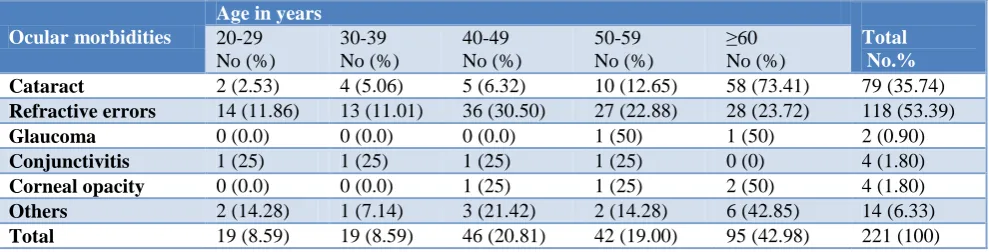
Table 2: Distribution of respondents with eye diseases by age.
Ocular morbidities
Age in years
Total No.%
20-29 No (%)
30-39 No (%)
40-49 No (%)
50-59 No (%)
≥60 No (%)
Cataract 2 (2.53) 4 (5.06) 5 (6.32) 10 (12.65) 58 (73.41) 79 (35.74)
Refractive errors 14 (11.86) 13 (11.01) 36 (30.50) 27 (22.88) 28 (23.72) 118 (53.39)
Glaucoma 0 (0.0) 0 (0.0) 0 (0.0) 1 (50) 1 (50) 2 (0.90)
Conjunctivitis 1 (25) 1 (25) 1 (25) 1 (25) 0 (0) 4 (1.80)
Corneal opacity 0 (0.0) 0 (0.0) 1 (25) 1 (25) 2 (50) 4 (1.80)
Others 2 (14.28) 1 (7.14) 3 (21.42) 2 (14.28) 6 (42.85) 14 (6.33)
Total 19 (8.59) 19 (8.59) 46 (20.81) 42 (19.00) 95 (42.98) 221 (100)
Table 3: Age and sex wise distribution ocular morbidities.
Age groups Males Females Total
With
morbidity (%) Population
With
morbidity (%) Population
With
morbidity Population
Percentage (%)
20-29 12 (13.48) 89 7 (8.53) 82 19 171 11.11
30-39 10 (15.62) 64 9 (12.32) 73 19 137 13.86
40-49 19 (33.92) 56 27 (58.69) 46 46 102 45.09
50-59 17 (58.62) 29 25 (75.75) 33 42 62 67.74
≥60 48 (73.84) 65 47 (74.60) 63 95 128 74.21
Total 106 (34.98) 303 115 (38.72) 297 221 600 36.84
Table 4: Association of ocular morbidities with gender.
Ocular morbidities Gender Total No (%)
Male No (%) Female No (%)
Cataract 36 (45.56) 43 (54.44) 79 (35.74)
Refractive errors 61 (51.70) 57 (48.30) 118 (53.39)
Glaucoma 1 (50) 1 (50) 2 (0.90)
Conjunctivitis 2 (50) 2 (50) 4 (1.80)
Corneal opacity 1 (25) 3 (75) 4 (1.80)
Others 5 (35.72) 9 (64.28) 14 (6.33)
Total 106 (47.96) 115 (52.04) 221 (100)
X2=2.56, df=5, p>0.05.
In present study, out of 600 study subject, 221 (36.84%) suffered ocular morbidities. The major cause of morbidities was refractive errors (53.39%), followed by cataract (35.74%), conjunctivitis (1.80%), corneal opacity (1.80%), glaucoma (0.90%) and other ocular morbidities
like pterygium and squint which comprised (6.33%) (Figure 1).
significantly (p<0.01) with advancing age to 74.21% in the age group of ≥60 years (Table 2 and 3).
Figure 1: Prevalence of various ocular morbidities.
Prevalence of ocular morbidities was high in female (52.04%) as compare to male (47.96%).
Morbidities like cataract 54.44% followed by other (64.28) like pterygium and squint. There is no significant association found between the gender and ocular morbidities of children. (X2=2.56, df=5, p>0.05) (Table 4).
DISCUSSION
In this study, the prevalence of ocular morbidities was found to be 36.84%, which is comparable to 32.11% reported by Shrote et al.5 In the present study, the prevalence of ocular morbidities was found to be significantly associated with age being minimum (11.12%) in 20-29 years’ age group and maximum (74.21%) in ≥60 years old. Similar patterns of results were observed by Singh et al, Haq et al.6,7
Ocular morbidities were found to be higher in females (52.04%) than in males (47.96%), but the relation was not statistically significant in both genders. Similar marginal difference was observed by Singh et al in Allahabad, Chadha et al also reported (52.4%) among females and (47.8%) in males, however Khurana et al reported significantly higher prevalence of ocular morbidities in females (73.5%) as compared to males (49.4%) in Haryana.6,8,9 Refractive errors were the major causes of morbidities in all the ages i.e. (19.66%). Similar results were obtained by Singh et al(21.59%) and also by Haq et al(23.1%).6,7
In this study widows/widower had the maximum prevalence of ocular morbidities (64.44%) while unmarried people had the least prevalence (16.90%) and this association was highly significant (p<0.01). Similarly Agrawal et al reported higher prevalence of (96%) among widow/widower and minimum (29.7%) among unmarried study subjects.10
There was no significant association of ocular morbidities with socio-economic status being highest (43.38%) in the
class III socio-economic group and lowest (32.92%) in the class II socio- economic status. Similarly Shrote et al Yavatmal, reported higher prevalence of (55%) among individuals from lower middle socio-economic status and minimum (30.07%) among higher socio- economic status.11
In this study there was highly statistically significant association in the prevalence of ocular morbidities with literacy status (p<0.01) similarly Singh et al and Chadha et al observed maximum prevalence of ocular morbidity among illiterate individuals than literate ones.6,8 Maximum prevalence of (41.44%) among skilled workers and minimum (16.66%) among semi-skilled workers and the difference was not found to be statistically significant (p>0.05), however Agrawal et al reported maximum prevalence of (69.0%) among clerk/shop owners and minimum (48.1%) among semiprofessionals.10 Result showed that maximum prevalence of Ocular morbidities was among nuclear families (40.78%) and minimum (32.84%) among individuals from joint family, the difference was not found to be statistically significant, however Chadha et al reported maximum prevalence of (56.3%) among individuals from joint family as compared to (40.7%) among individuals from nuclear family.8 Maximum (66.66%) prevalence of ocular morbidity was observed in Jain religion but there were only three individuals from Jain religion apart from that maximum (41.20%) prevalence of ocular morbidity was observed in Hindus and minimum (21.05%) in Muslims which was found to be highly significant (p<0.01). Similarly to the findings Khadse et al reported higher prevalence of (50.28%) among Hindus and minimum (12.95%) among Muslims.11
CONCLUSION
In the present study the out of total 600 study subjects (50.5%) were male and (49.5%) were female. Prevalence of blindness was found to be (2.33%) and prevalence for ocular morbidities was found to be (36.84%) in the population with a marginal higher prevalence in females (38.72%) as compared to the males (34.98%). The most common cause of ocular morbidity was refractive errors (53.39%) followed by cataract (35.74%), conjunctivitis (1.80%), corneal opacity (1.80%) and glaucoma (0.90%). Increasing age showed increasing prevalence of ocular morbidity. Widows/ widower, Hindu religion, Individuals from nuclear family, skilled worker showed higher prevalence of ocular morbidity.
Recommendations
People should be educated about the risk of developing ocular morbidity, causes, preventive measures, and appropriate treatment. Health education programs should target specifically older age groups who are at risk of developing ocular morbidity. Prevalence of ocular morbidities was observed with greater predominance among old age, females, widows and individuals from
Refractive errors
53% Cataract
36%
Conjunctivit is 2%
Corneal opacity
2% Glaucoma 1%
Pterygium and squint which comprised
lower socioeconomic strata. Health programs should be targeted specifically towards these groups who are at higher risk of developing ocular morbidity.
ACKNOWLEDGEMENTS
Authors would like to thank all the study subjects and college authorities for co-operating toward health appraisal. We would like to acknowledge all the interns and post-graduates in the Department of Community Medicine for conducting in study.
Funding: No funding sources Conflict of interest: None declared
Ethical approval: The study was approved by the Institutional Ethics Committee
REFERENCES
1. Segre L, Bagi S. Eye Anatomy: Parts of the Eye, All about vision. California, America, AAV Media, LLC, 1010 Turquoise Street, Suite 275, San Diego, California, 2016, [About 1 screen]. Available at: http://www.allaboutvision.com/resources/anatomy.h tm. Accessed on 10 September 2016.
2. Thylefors B. Avoidable blindness.World Health Organization, Geneva, Switzerland: World Health Organization. Director Disability, Injury Prevention and Rehabilitation, World Health Organization; 1999;77(6):453.
3. Causes of blindness and visual impairment.
Prevention of Blindness and Visual
Impairment/part; Bull World Health Organ, Geneva Switzerland: World Health Organization; 2016. Available at: http://www.who.int/topics/blindness/ en/. Accessed on 15 June 2015.
4. Kishore J. National Programme for Control of Blindness. 4th ed. Century Publications; National
Health Programmes of India, New Delhi; 2002: 168-175.
5. Shrote VK, Thakre SS, Thakre SB, Brahmapurkar KP, Giri VC. Study of Some Epidemiological Determinants of Ocular Morbid Conditions in The Rural Area Of Central India. IOSR J Dental Med Sci. 2012;2(1):34-8.
6. Singh A, Dwivedi S, Dabral SB, Bihari V, Rastogi AK, Kumar D. Ocular morbidity in rural areas of
Allahabad, India. Nepal J Ophthalmol.
2012;4(7):49-53.
7. Haq I, Khan Z, Khalique N, Amir A, Jilani FA,
Zaidi M. Prevalence of Common Ocular
Morbidities in Adult Population of Aligarh. Indian J Community Med. 2009;34(3):195-201.
8. Chadha S, Kumar S, Singh JV, Sehgal S, Baijal V, Raghav SK. Prevalence of Ocular Morbidities and its Socio-demographic correlates in an urban slum of western Uttar Pradesh, India. Indian J Community Health. 2016;28(2):174-8.
9. Khurana AK, Sikka KL, Parmar IP, Aggarwal SK. Ocular morbidity among school children in Rohtak City. Indian J Public Health. 1984;28(4):217-20.
10. Agrawal D, Singh JV, Garg SK, Chopra H, Roy R,
Chaturvedi M. Current trends in eye diseases and its correlates in an urban population. Indian J Community Health. 2015;27(1):41-5.
11. Khadse A, Narlawar U, Humne A, Ughade S, Dhanorkar A, Wankhede K. Prevalence of ocular morbidities and its correlates in an urban slum of central India. Health sciences: An Int J. 2014;4(1):6-12.
Cite this article as: Rajput RR, Pawar SR.