Adaptive e-Learning Multi-Agent Systems with Swarm
Intelligence
Manuj Darbari
Department of Computer Science, BBD University, Lucknow, India.
Priya Sahai
Department of Computer Science, BBD University , Lucknow , India.
Abstract
In this paper we propose a multi-agent approach to the problem of recommending relevant and adequate study material to the learner in E-learning environment. It illustrates swarm intelligence of bee-colony optimization that enables agents to recommend learner most appropriate data content in real –time which stored in the form of case-sets. A flexibility, adaptability and interactiveness is achieved through agents that autonomously and intelligently uses swarm intelligent algorithms to recommend course structure to learners .Secondly we have suggested construction of a cache knowledge base which will be updated by swarm intelligent agents by analysing various parameters such as learners feedbacks, their educational records and other parameters.
Keywords:
E-learning, swarm intelligence , multi-agent system, cache, Baye’s theorem.1. INTRODUCTION
There are number of E-learning methodologies developed so far, but none of the models are able to deal with the interactiveness where the system can intelligently recommend most appropriate course content to the user based on his educational records , feedbacks in real –time.
E-Learning, the new technology of supporting education and training, recently has been gaining a lot of attention. Content retrieval in e-learning refers to the process by which the learning content is provided by means of an electronic medium. It is an effective web-based learning paradigm, where many agents can be assigned with unique responsibilities to cope-up with the content retrieval and content delivery to various users. Multi- Agent based system[7,8,9] can manage the information stored in the e-learning environment, access permissions and granting access to various data content. Each tasks are carried out by an autonomous agent and various such agents are grouped to form a multi-agent based system.
To allow a better educational experience it is necessary to develop systems which have the capability to offer specific and personalized contents to the students in an intelligent way[10], i.e. systems capable of making decisions about which is the most suitable educational content at every time for eachlearner.
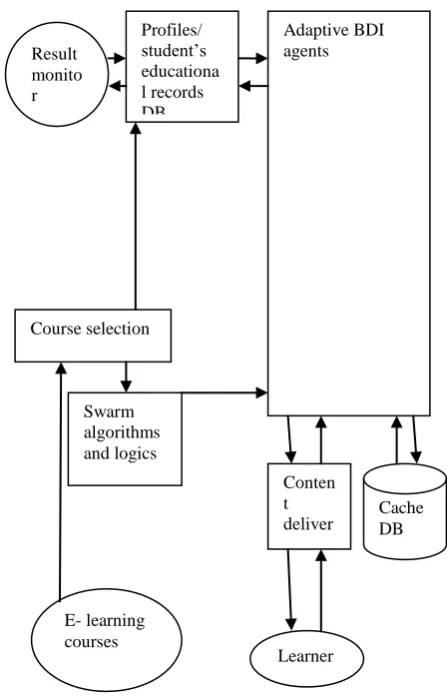
Figure 1: Basic framework for adaptive e-learning agent
Swarm intelligence can be stated as ,” the emergence of coherent functional global patterns from the collective behaviours of entities interacting locally with their environment”[1]. Swarm intelligence is mostly used to solve computationally hard problems like NP-hard problems. There is certain level of abstraction at which solving of such problems can be modelled using distributed computational systems consisting interacting artificial entities [2].
In order to provide our solution in real –time we are using bee- colony optimization technique of swarm intelligence in our recommender system framework that ensures task – allocation among cooperative agents.
2. RELATED WORK
We are motivated by the work of Priya Sahai, Manuj Darbari on Adaptive e-learning using Granulerised Agent framework [3]. This paper illustrates a multi-agent system using a
Result monito r
Profiles/ student’s educationa l records DB
Adaptive BDI agents
Swarm algorithms and logics
Conten t deliver y Course selection
E- learning courses
Learner
granulerised approach for solving the problem of recommendation overload to provide relevant courses to users in real time. It proposed dynamic binding of clusters to form granules ensuring right course delivery to the student based on his educational record, choices and helps setting his learning pace too.
The work by Sorin Ilie, Costin Badica ,Multi-agent distributed framework for swarm intelligence[4]. It presents a multi-agent distributed framework for swarm intelligence .Their framework could solve graph search problems on a computer network, they have compared the results of the distributed implementations bee-colony and ant –colony algorithms to conclude that ACS algorithm is faster than BCO.
We used CASIS ,case-based recommender system from Task allocation in Case-based Recommender Systems [5]. CASIS, combines the use of swarm intelligence in the task allocation among cooperative agents applied to a case-based recommender system to help the user to plan a trip.
We have used the concept of Intuitive Bayes Theorem from Mario F. Triola by her work on Baye’s Theorem [6].Her work contributes that when calculation is complicated enough to create an abundance of opportunities for errors and/or incorrect substitution of the involved probability values. Fortunately there is another approach that is much more intuitive and easier called Intuitive Baye’s theorem. It states that: “Assume some convenient value for the total of all items involved, then construct a table of rows and columns with the individual cell frequencies based on the known probabilities.”
3. PROPOSED WORK
In order to provide course structure to learner in real time we have used Bee- colony optimization technique in our recommender system .It’s key features are updating the best known solution for a particular query and secondly, saving it in the form of case sets at the server website.
Whenever a learner enters it’s queries the agent responsible for the content retrieval will check all the existing case –sets to derive the best known course set that should be recommended to the user. In case no previous saved case-sets matches the user query for a particular request then agent will select randomly the best solution by matching the query for the particular request leading to content delivery.
Algorithm for Basic Bee-colony implementation in our framework can be stated as follows:
AGENT_INIT()
1.V MANAGED_DATASETS()
2. for v CV do
3. CREATE_ENTITY(V)
ADJUST_ATTRIBUTES(entity)
1.if RECOMMENDATION_COMPLETED(entity) then
2. DATABASE_SEARCH(entity)
3. BROADCAST_SOLUTION(entity)
4. INITIALIZE(entity)
BEST_DATASET(entity)
1.best_dataset =RANDOM_CHOICEMATCH( )
2.ADD_to_BESTSOLUTION(best_dataset,entity)
3. return best_dataset.
HANDLE_DATABASE(entity)
1.UPDATE_BESTSOLUTION(entity).
Entity here can refer to the message transfer between agents searching for BEST_RECOMMENDER_SOLUTION.
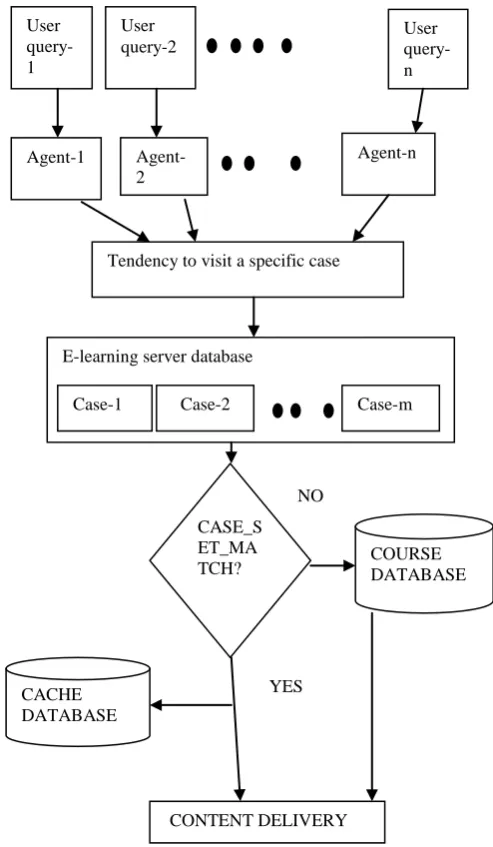
Figure 2: Architecture for swarm intelligent adaptive E-learning system
User query-1
E-learning server database
CONTENT DELIVERY
User query-n User
query-2
Tendency to visit a specific case
Agent-n
Agent-2 Agent-1
Case-m Case-2
Case-1
CASE_S ET_MA
TCH? COURSE DATABASE
CACHE DATABASE
NO
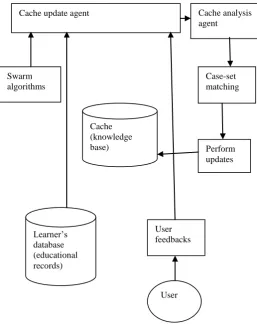
Figure 3: Cache update system
The multi-agent system will maintain a cache ,this cache contains all the best-known solutions. Whenever a user query is checked –in the content retrieval agent will search the cache for the best match solutions .In case if no solution is found then the query is forwarded to the next agent that will retrieve the best course data set to the learner.
An agent is also responsible for the database update in cache. This updation process is completed by analysing data from three sources:-
Feedback from user/learner.
User results from his saved educational record.
Performance measures for swarm algorithms.
We are using Camazine and Sneyd model [7] to finally derive an algorithm for the adaptive recommender system in e-learning environment. Data-sets or case-sets here refers to the chapter or clusters of course chapters belonging to a particular domain. Various variables used in algorithm can be stated as following:
fa d
: probability of selecting a case-set A for the query fbd:probability of selecting a case-set B for the query
fxa: probability of abandoning case set A and moving ton next case set.
Fxb: probability of abandoning case set B and moving ton next case set.
A(f1a): probability of selecting case set A from cache to recommend
B(f1b): probability of selecting case set B from cache to recommend
For updation process of the cache knowledge base in recommendation system we have used the following variables:
And
Where:
A,B: Case-sets
Da and Db: number of user preferences from feedback given by them.
da and db: most recommended case sets or most hits/favoured cases.
Educational record of the learner is analysed by the agent and their parameters discussed above are used to recommend and update the database and cache.
Probability of selecting a particular case set uses following levels or grades appointed to them through various sources illustrated earlier. The grades ranges from :-
Poor
Satisfactory
Above average
Good
Excellent or best.
Now, for algorithm a term that is most commonly used is Tendency(T). It is the probability to visit a specific case[5].Instead of visiting all cases from the case-base the agent will visit a case stored in the case base according to the tendency associated to that case. Then further analysis of that case set is done to decide whether it should be recommended to the user or not.
Cache update agent
User feedbacks Swarm
algorithms
Cache (knowledge base)
Learner’s database (educational records)
Case-set matching Cache analysis agent
Perform updates
where Sij is the stimulus associated with case-set(i) and demand (j) of user. refers to answer threshold with case i and demand j. and Sij are updated as following:
Case-1: If the agent selects a certain case that it visited for recommendation
Case-2: If the agent does not selects or ejects a particular case from visiting.
and Sij are working as a reinforcement to the cases[5] that are most suitable for the user query, ensuring that the agent does not visit any case which is not relevant to the demand or query that is being handled. According to the recommendation algorithm , when user inputs his preferences the agents are stimulated.
Recommendation algorithm :
Cb: Case-base (c1,c2... Cn)
Db: demand base (d1,d2...dn)
For b=1,2,3...n do
d1=random(DB)
c1=random(CB)
If (Tij met ) then
begin
repeat
pxcij=Euclidean distance(q,C ij)
if ((pxcij) not met ) then begin
pD C
ij=1- px c
ij
if (pDCij met ) then begin
End
else keep searching
end if
end
else begin
Repeat
PFCxj=
If (PFCxj met) then
Ci=Cx
End if
Until (Ci=Cx)
End
End if
Until( agent visiting case set i and user query j matches or fulfils parameters, set criteria for recommendation to the demand j of the learner)
End
End if
End for
Return highest level matching case-set.
4
.
ANALYSIS
In order to select the best course material for the user we have used intuitive Baye’s theorem. We are going to use Intuitive Baye’s Theorem to illustrate our swarm intelligent agents activities in recommendation process and content extraction. Sometimes in artificial intelligent systems calculations is complicated enough to create an abundance of opportunities for errors and/or incorrect substitution of the involved probability values[6] . Thus, we use this much more easier and intuitive approach.
According to Intuitive Baye’s theorem we assume some convenient values for the total of all items, then we construct a table of rows and columns with the individual cell frequencies based on the known probabilities.
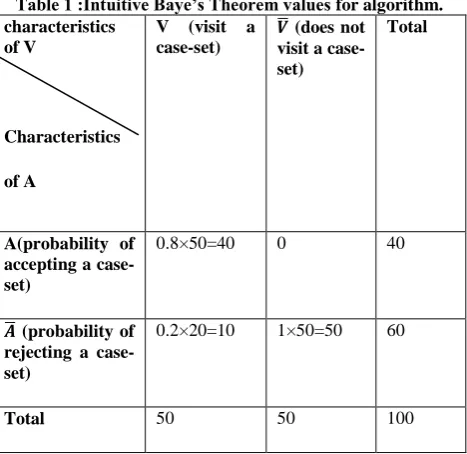
Assuming that some values for the number of requests being entered in the e-learning system, is 100 and the probability of rejecting a case-set and not visiting at all is 50% (table-1). Thereby, visiting a case-set probability is taken as 50%. When an agent rejects a particular case-set from visiting at all it chooses a new random case-set to visit then which is further selectedbased on the given calculations:
PFCxj=
where, is already calculated by the cache update analysis agent.
Agent will visit any case-set or data set only if the calculated value of PFCxj is ≥ 0.8. It’s an algorithm parameter that accounts for the efficiency of the recommendation system and ensuring that suggested course content is apt for user’s demands.
Now assuming that for any demand is 8 and is 9 then, on rounding off we get the value of PFCxj as 0.89. In case if PF
C
xj<8 then the entire process of searching restarts for another case-set.
Table 1 :Intuitive Baye’s Theorem values for algorithm. characteristics
of V
Characteristics of A
V (visit a case-set)
(does not visit a case-set)
Total
A(probability of accepting a case-set)
0.8×50=40 0 40
(probability of rejecting a case-set)
0.2×20=10 1×50=50 60
Total 50 50 100
We can easily address the question that what is the probability of our algorithm successfully giving the course content to the user when a case-set is visited. Restrict the table to the column of visit a case –set , then we can find the probability of accepting the case-set in that column. Among the 50 case-sets visited there are 40 accepted , so the probability we seek is
That is, P(
The above value(0.8) satisfies our parameter value generated from our algorithm is efficient enough to suggest a course-set to the user in real-time mode.
5. CONCLUSION
The analysis brings to a conclusion by proposing a recommendation swarm algorithm for a multi-agent e-learning system that is adaptable , interactive ,flexible and highly intelligent . We also stated that our given algorithm satisfies the given two necessary qualities in an e-learning environment:
(1) It’s adoptive nature. (2) High accuracy value.
6. REFERENCES
[1] A.P.Englebrecht, Fundamentals of computational swarm intelligence, Wiley, 2005.
[2] S. Ilie, C. B˘adic˘a, Multi-agent approach to distributed ant colony optimization, Science of Computer Programming.
[3] Sorin Iliea, Costin B˘adic˘ aa, 2003. Multi-agent
distributed framework for swarm
intelligence,International Conference on Computational Science, ICCS.
[4] Priya Sahai, Manuj Darbari,,2014 .Adaptive e-learning using Granulerised Agent Framework, international Journal of Scientific & Engineering Research, Volume 5, Issue 2, February,ISSN 2229-5518.
[5] Task allocation in Case-based Recommender Systems: A swarm intelligence approach by Fabiana Lorenzi, Daniela Scherer dos Santos, Denise de Oleviera and Ana L.C. Bazzan,2007.
[6] Mario F. Triola, Baye’s Theorem, pearson education,2010.
[7] M Darbari, N Dhanda , Applying Constraints in Model Driven Knowledge Representation Framework,2010. International Journal of Hybrid Information Technology 3 (3)4.
[8] M Darbari, S Medhavi, AK Srivastava Development of effective Urban Road Traffic Management using workflow wechniques for upcoming metro cities like Lucknow (India Development 2 (2),4,2008.
[9] N Dhanda, M Darbari, NJ Ahuja,,2012 Development of Multi Agent Activity Theory e-Learning (MATeL) Framework Focusing on Indian Scenario International Review on Computers & Software 7 (4),2.