Chorioamnionitis and Neonatal Sepsis
WHAT’S KNOWN ON THIS SUBJECT: Chorioamnionitis (CAM) is a major risk factor for early-onset neonatal sepsis. The Committee on the Fetus and Newborn recommends extending the duration of antimi-crobial therapy in neonates exposed to CAM and intrapartum antibi-otics if laboratory data are abnormal, even if culture results are sterile.
WHAT THIS STUDY ADDS: When managed by using a strategy similar to recent Committee on the Fetus and Newborn guidelines, a large number of term and late-preterm infants exposed to CAM who had sterile blood culturefindings were treated with prolonged antibiotic therapy, subjected to additional invasive procedures, and had prolonged hospitalization.
abstract
BACKGROUND AND OBJECTIVE:Chorioamnionitis (CAM) is a major risk factor for neonatal sepsis. At our institution, neonates exposed to CAM and intrapartum antibiotics are treated with prolonged antimicrobial therapy if laboratory values are abnormal despite a sterile blood cul-ture. Recently, the Committee on the Fetus and Newborn (COFN) rec-ommended a similar strategy for treating neonates exposed to CAM. Our objective was to determine the frequency of abnormal laboratory parameters in term and late-preterm neonates exposed to CAM and evaluate the implication of recent COFN guidelines.
METHODS:This retrospective data analysis included late-preterm and term neonates exposed to CAM. Laboratory parameters, clinical symptoms and the number of infants treated with prolonged antibiotics were determined.
RESULTS:A total of 554 infants met the inclusion criteria. Eighty-three infants (14.9%) had an abnormal immature to total neutrophil ratio (.0.2) and 121 infants (22%) had an abnormal C-reactive protein level (.1 mg/dL) at 12 hours of age. A total of 153 infants (27.6%) had an abnormal immature to total neutrophil ratio and/or abnormal C-reactive protein level at 12 hours of age. Only 4 (0.7%) of 554 infants had a positive blood culture result. A total of 134 (24.2%) infants were treated with prolonged antibiotics (112 [20.2%] were treated solely based on abnormal laboratory data). Lumbar puncture was performed in 120 (21.6%) infants.
CONCLUSIONS: When managed by using a strategy similar to recent COFN guidelines, a large number of term and late-preterm infants exposed to CAM who had sterile blood culture findings were treated with prolonged antibiotic therapy due to abnormal laboratory findings. They were also subjected to additional invasive procedures and had a longer duration of hospitalization.Pediatrics2014;133:992–998
AUTHORS:Courtney Kiser, MD, Ursula Nawab, MD, Kristin McKenna, MD, and Zubair H. Aghai, MD
Pediatrics/Neonatology, Thomas Jefferson University/Nemours, Philadelphia, Pennsylvania
KEY WORDS
bacteremia, duration of antibiotics, infection, IT ratio, neonates ABBREVIATIONS
CBC—complete blood cell count CAM—chorioamnionitis
CDC—Centers for Disease Control and Prevention COFN—Committee on the Fetus and Newborn CRP—C-reactive protein
CSF—cerebrospinalfluid IT—immature to total neutrophil WBC—white blood cell count
Dr Kiser conceptualized the study, searched literature, collected and analyzed data, and drafted the initial manuscript; Dr Nawab extracted and analyzed the data, and critically reviewed and revised the manuscript; Dr McKenna collected and analyzed data, and reviewed and revised the manuscript; Dr Aghai conceptualized and designed the study, analyzed data, and critically reviewed and revised the manuscript; and all authors approved thefinal manuscript as submitted.
This research was presented in part at the annual meeting of the Pediatric Academic Societies; May 4–7, 2013; Washington, DC. www.pediatrics.org/cgi/doi/10.1542/peds.2013-2927
doi:10.1542/peds.2013-2927
Accepted for publication Mar 4, 2014
Address correspondence to Zubair H. Aghai, MD, Division of Neonatology, Thomas Jefferson University/Nemours, 833 Chestnut St, Suite 1237, Philadelphia, PA 19107. E-mail: zaghai@nemours. org
PEDIATRICS (ISSN Numbers: Print, 0031-4005; Online, 1098-4275).
Copyright © 2014 by the American Academy of Pediatrics
FINANCIAL DISCLOSURE:The authors have indicated they have nofinancial relationships relevant to this article to disclose. FUNDING:No external funding.
Chorioamnionitis (CAM) is a major risk factor for early-onset neonatal sepsis, and it complicates 1% to 10% of all pregnancies.1,2The incidence of
early-onset neonatal sepsis is significantly increased in neonates exposed to CAM.3,4
The risk of early-onset neonatal sepsis is reduced with administration of anti-biotics during labor and delivery to mothers who have CAM.5,6However, the
use of intrapartum antibiotics reduces the sensitivity of postnatal blood cul-tures in neonates.7 Management of
neonates exposed to CAM and intra-partum antibiotics can be challenging for clinicians. If neonates are exposed to CAM, the Committee on the Fetus and Newborn (COFN) recommends evalua-tion of these neonates with a blood culture at birth and complete blood cell count (CBC) with differential count and/ or C-reactive protein (CRP) at 6 to 12 hours of life.8 The recommendation
also includes empiric treatment with broad-spectrum antibiotics even in asymptomatic infants. Antibiotics are discontinued after 48 hours if the blood culture result is negative, the infant remains asymptomatic, and laboratory studyfindings are normal. However, if laboratory test results are abnormal and the mother received intrapartum antibiotics, COFN recommends treating asymptomatic neonates with prolonged antibiotics despite a sterile blood cul-turefinding.8,9
Standard laboratory findings used to evaluate sepsis in neonates such as leukocytosis, leukopenia, absolute band counts, absolute neutrophil counts, im-mature to total neutrophil (IT) ratio, and elevated CRP level have limited positive predictive values.4,10,11
De-spite the limited value of hematologic parameters to diagnose true sepsis, the most recent COFN statement rec-ommends extending antimicrobial therapy in asymptomatic neonates exposed to CAM if laboratory param-eters are abnormal, even with sterile
blood culture findings and particu-larly if intrapartum antibiotics were administered.8,9At our institution,
sim-ilar guidelines of treating such neo-nates with prolonged antibiotics were routinely practiced before the current COFN recommendations. The objective of the present review was to determine the frequency of abnormal laboratory parameters in term and late-preterm neonates exposed to CAM and to eval-uate the implications of recent COFN guidelines on their management.
METHODS
This retrospective study was conducted in neonates (gestational age$35 weeks) born between November 2006 and Sep-tember 2012 and admitted to a level III NICU. The institutional review committee at Thomas Jefferson University Hospital approved this study. The infants exposed to CAM during the study periods were identified from a neonatal database (Neodata, Isoprime Corporation, Lisle, IL). Relevant demographic, clinical, and lab-oratory data were collected from the database and medical records. The di-agnosis of CAM was made by the obste-trician based on intrapartum fever (temperature $38°C) alone or in con-junction with maternal leukocytosis, uterine tenderness, foul-smelling amni-otic fluid, and maternal and/or fetal tachycardia. At our institution, all neo-nates born to a mother with a clinical diagnosis of CAM are admitted to the NICU. Blood culture is obtained on ad-mission, and empiric antibiotic therapy with ampicillin and gentamicin is initi-ated. CBC with differential and CRP are performed on admission and at 12 hours of age. The total white blood cell (WBC) count is measured by using a Sysmex XE-5000 (Sysmex Corporation, Kobe, Japan), and differential count is performed by trained technicians and confirmed by a hematologist. Antibiotics are dis-continued if infants are asymptomatic, laboratory parameters are normal, and
blood culture results are negative for 48 hours. Lumbar puncture is per-formed in infants with clinical signs of sepsis, persistent abnormal laboratory parameters (IT ratio.0.2 and/or CRP
.1 mg/dL at 12 hours of age), or a pos-itive blood culture result. These infants are treated with prolonged antibiotics. The IT ratio is calculated as described by Manroe et al,12and a value$0.2 is
con-sidered elevated. Similarly, a CRP level
.1 mg/dL was considered abnormal. Statistical analyses were performed by using the SigmaStat 3.1 for Windows statistical package (Systat Software Inc, Point Richmond, CA). Compar-isons between the 2 groups were performed by using Student’s t test and the Mann-Whitney rank-sum test for continuous data and the x2 or Fisher’s exact test for categorical data. Statistical significance was set aP,.05.
RESULTS
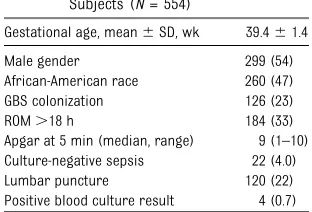
A total of 12 121 infants were born during the study period, and 554 (4.6%) were exposed to CAM. Demographic and clinical characteristics are pre-sented in Table 1. Four infants (0.7%) had a positive blood culture result. An additional 22 infants (4%) were treated for sepsis based on clinical signs and symptoms (respiratory distress re-quiring prolonged respiratory support, hypothermia, and hypoglycemia).
TABLE 1 Demographic and Clinical Characteristics of the Study Subjects (N= 554)
Gestational age, mean6SD, wk 39.461.4
Male gender 299 (54)
African-American race 260 (47)
GBS colonization 126 (23)
ROM.18 h 184 (33)
Apgar at 5 min (median, range) 9 (1–10) Culture-negative sepsis 22 (4.0)
Lumbar puncture 120 (22)
Positive blood culture result 4 (0.7)
Unless otherwise indicated, data are presented asn(%). GBS, group B streptococcus; ROM, rupture of membranes.
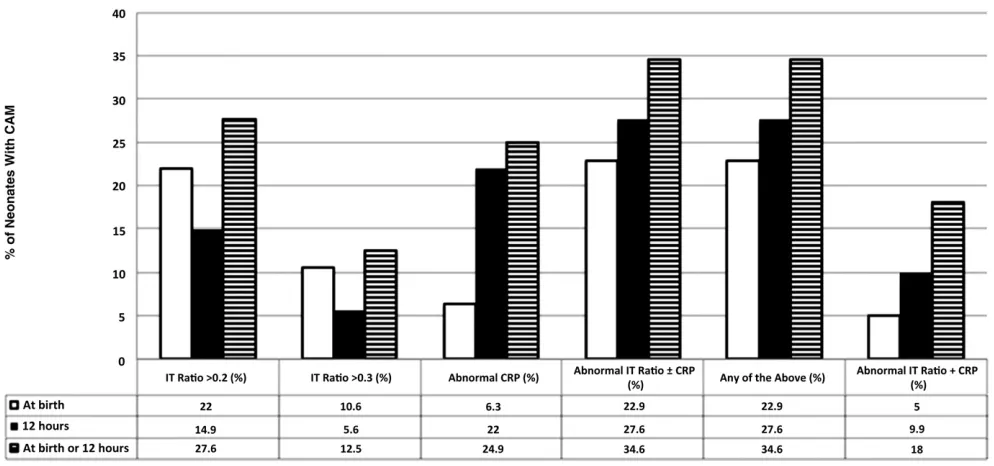
12 hours of age, 153 infants (27.6%) had an abnormal IT ratio and/or ab-normal CRP level, but only 55 infants (9.9%) had an abnormal IT ratio and an elevated CRP level.
In total, 134 (24.2%) infants were treated with prolonged antibiotics ($7 days) and 420 (75.8%) with a shorter course (48–72 hours). A total of 112 infants (20.2%) were treated with prolonged antibiotics based solely on abnormal laboratory data. More infants were symptomatic and had abnormal lab-oratory parameters in the group treated with prolonged antibiotics (Table 2).
Lumbar puncture was performed in 120 infants (22%) due to signs and symptoms of infection, positive blood culture results, or abnormal labora-tory parameters. Cerebrospinal fluid (CSF) culture results were negative in all 120 infants. Only 1 infant was treated with 14 days of antibiotics for presumed meningitis secondary to an abnormal cor-rected WBC count on a traumatic lumbar puncture. This infant was asymptomatic,
because of a high ITratio (0.3) at 12 hours of age.
Only 4 (0.7%) of 554 infants had a posi-tive blood culture result (Table 3). One infant had unexplained respiratory distress requiring mechanical ventila-tion for 2 days. The other 3 infants were depressed at birth; 2 required positive pressure ventilation and 1 required continuous positive airway pressure in the delivery room, but symptoms resolved by NICU admission. All 4 infants had an IT ratio.0.3 at birth; 3 of 4 infants had an IT ratio.0.2 at 12 hours. The CRP was normal at birth but increased at 12 hours of life in all 4 infants. CSF culture results were negative, and WBC, protein, and glu-cose levels were normal in all 4 infants. In the 22 symptomatic neo-nates treated for culture-negative sepsis, the IT ratio was normal in 10 (46%) and CRP was normal in 7 (32%) at 12 hours of life. Four neonates (18%) with culture-negative sepsis had no abnormalities of the IT ratio or CRP at 12 hours of life.
Recently, COFN recommended extend-ing the course of antibiotics in asymp-tomatic, CAM-exposed neonates with abnormal screening laboratory data if intrapartum antibiotics were adminis-tered, even with sterile blood culture
findings.8 Because the use of
intra-partum antibiotics may alter the re-liability of blood cultures in neonates, the COFN recommends using labora-tory data (CBC 6 CRP) to guide the duration of antibiotic therapy.7At our
institution, even before the COFN rec-ommendation, asymptomatic neonates exposed to CAM and intrapartum anti-biotics were treated with prolonged antibiotics if the IT ratio and/or CRP were abnormal. We found that 27.6% of infants exposed to CAM had an abnor-mal IT ratio and/or CRP at 12 hours of age. By following current COFN guide-lines, ∼28% of neonates exposed to CAM would be treated with prolonged antibiotics.
The COFN recommends CBC with dif-ferential count and/or CRP at 6 to 12 hours of age in neonates exposed to CAM, noting the mediocre positive
FIGURE 1
predictive value of these tests.8For
in-terpretation of CBC, the COFN guide-lines rely on data from a study by Manroe et al,12which is .3 decades
old and has a small sample size of convenience with only a few infants with culture-proven sepsis. In a study by Jackson et al,13 99% of infants
ex-posed to CAM had at least 1 abnormal
finding on the CBC during the first 24 hours of life. In a cohort of 3154 neonates, Murphy et al14 found that
∼50% of infants had an abnormal IT ratio during thefirst 24 hours of life. Both the IT ratio and CRP have a high negative predictive value for neonatal
infections.4,10,11,15,16Therefore, if either
the IT ratio or CRP is normal at 6 to 12 hours of life, the likelihood of having an infection is very low. In our cohort, 14.9% of infants had an abnormal IT ratio and 22% of infants had an ab-normal CRPfinding at 12 hours of age. Moreover, 27.6% of infants had an ab-normal laboratory finding (abnormal IT ratio and/or abnormal CRP) at 12 hours of life, which according to cur-rent COFN guidelines , would require prolonged antibiotics. Recently, Mikhael et al17described the use of a neutrophil
value score, which evaluates 9 neutro-phil indices corrected for postnatal age.
They found the reliability to be.80% when .6 or 7 indices were normal, which could have reduced those treated for suspected sepsis by 22% or 43%, respectively.
The management of infants born to mothers with CAM and treated with intrapartum antibiotics can be chal-lenging. For neonates exposed to CAM, the Centers for Disease Control and Prevention (CDC) recommends an evaluation with blood culture at birth, CBC (including differential and plate-lets) at 6 to 12 hours of life, and treat-ment with broad-spectrum antibiotics.2
However, the CDC does not comment on duration of antibiotic therapy. The COFN has similar recommendations for managing neonates exposed to CAM with the option of performing a CRP at age 6 to 12 hours.8In addition, the
COFN made recommendations regarding prolonging antibiotic therapy in this population. Per COFN guidelines, antibi-otic therapy should be extended in neo-nates exposed to CAM if the mother received intrapartum antibiotics, even if the infant appears well with a sterile blood culture result but has abnormal laboratory data. No recommendation is TABLE 2 Infants Treated With Short Course Versus Longer Course of Antibiotics
Variable Short Course (n= 420) Longer Course (n= 134) P
Gestational age, mean6SD, wk 39.461.3 39.261.6 .2
Male gender 232 (55) 67 (50) .3
African-American race 193 (46) 67 (50) .5
GBS colonization 107 (25) 19 (14) .01
ROM.18 h 136 (32) 48 (36) .5
Apgar at 5 min (median, range) 9 (1–10) 9 (1–9) ,.001
Signs and symptoms suggestive of sepsis 0 22 (16) ,.001
Abnormal IT ratio at 12 h 13 (3.1) 70 (52.2) ,.001
Abnormal CRP at 12 h 26 (6.2) 95 (70.9) ,.001
Abnormal CRP6IT ratio at 12 h 35 (8.3) 118 (88.1) ,.001
Abnormal CRP + IT ratio at 12 h 3 (0.7) 52 (38.8) ,.001
Lumbar puncture 17 (4) 103 (77) ,.001
Days of hospitalization, mean6SD 3.562.5 9.168.1 ,.001
Unless otherwise indicated, data are presented asn(%). GBS, group B streptococcus; ROM, rupture of membranes.
TABLE 3 Infants With Positive Blood Culture Results
Variable Infant 1 Infant 2 Infant 3 Infant 4
Organism Escherichia coli GBS a-HemolyticStreptococcus Streptococcus intermedius
Gestational age, wk 39 38 39 40
Birth weight 2800 3190 3929 3905
GBS colonization No No No No
ROM, h 23 17 27 45
Criteria met for CAM Fever 102.7°F, foul smelling amnioticfluid
Fever 103.4°F, fetal tachycardia
Fever 102.3°F, fetal tachycardia Fever 101.4°F
Antepartum antibiotics Ampicillin/sulbactam 1 h PTD Ampicillin/sulbactam 1 h PTD Ampicillin/sulbactam 40 min PTD Ampicillin, gentamicin 3 h PTD
Apgar (1, 5 min) 5,8 1, 6 1, 7 8, 9
Symptoms CPAP in DR for poor respiratory effort; well appearing at 6–8 h
Depressed in DR; required intubation and PPV. Well appearing at 6–8 h
Depressed at birth; required PPV via mask. Well appearing at 6–8 h
Respiratory distress required mechanical ventilation for 2 d
IT ratio
Birth 0.38 0.36 0.34 0.35
12 h 0.13 0.36 0.36 0.34
CRP
Birth 0.24 ,0.1 ,0.2 ,0.2
12 h 7.6 2.0 5.0 1.2
CSF culture Negative Negative Negative Negative
Duration of antibiotics, d 10 7 7 7
CPAP, continuous positive airway pressure; DR, delivery room; GBS, group B streptococcus; PPV, positive pressure ventilation; PTD, preterm delivery; ROM, rupture of membranes.
these infants are treated with broad-spectrum antibiotics for 7 days. Follow-ing guidelines similar to recent COFN recommendations, 24.2% of late-preterm and term infants exposed to CAM were treated with extended courses of anti-biotics ($7 days), and 20% of infants were treated with prolonged antibiotics solely on the basis of abnormal labora-tory data. In addition, they were sub-jected to invasive procedures (lumbar puncture, peripheral and/or central in-travenous lines, and umbilical venous catheterization) and had a longer dura-tion of hospitalizadura-tion. Some experts ar-gue that if a mother is treated with systemic antibiotics and the infant is asymptomatic and has a negative culture result, the infant is “cured.” No agree-ment exists on what constitutes a“cure” because of the lack of data to support this opinion. A massive sample size would be needed to prove that these infants do not require further treatment. Jackson et al13reported follow-up data
on 98 asymptomatic infants with an ab-normal IT ratio at 12 or 24 hours of life. These infants were discharged from the hospital with negative blood culture results after receiving antibiotics for 48 hours. Telephone follow-up by parent report was performed 10 and 21days after discharge. None of these infants had presumed or proven sepsis at follow-up. The authors concluded that extended antibiotic therapy should be reserved for neonates with clinical signs of infection and/or who have a positive blood culture result. In their study, only 38 (4.4%) of 856 infants met the criteria for extended antibiotic therapy (4–7 days). If we used similar criteria for extending antibiotics in our cohort, only 26 (4%) of 554 infants would have been treated with a longer duration of anti-biotics. This method would not only reduce duration of hospitalization, health care costs, and chance of com-plications related to lumbar puncture
from their mothers. Moreover, extended use of antibiotics may also have adverse effects. Gentamicin, commonly used to treat early-onset sepsis in neonates, has potential renal and ototoxicity.18
Prolonged use of antibiotics in neonates can affect the bacterial balance of the intestinal microbiome, increasing the risk of subsequent infection with resistant bacteria, invasive candidia-sis, and affecting early immune pro-gramming.19,20 In addition, treatment
with antibiotics in the neonatal period is an independent risk factor for wheez-ing requirwheez-ing inhaled corticosteroids.21In
preterm infants, prolonged antibiotics is associated with increased mortality and necrotizing enterocolitis.22,23
After publication of the COFN statement on the management of neonates with suspected or proven early-onset bac-terial sepsis,8 several experts raised
concerns regarding extending the an-timicrobial course in asymptomatic neonates exposed to CAM and intra-partum antibiotics with abnormal lab-oratory data and sterile blood culture results.24,25 Responding to these
con-cerns, the COFN stated that they would not treat well-appearing, asymptom-atic term infants (exposed to CAM and intrapartum antibiotics) who had a negative blood culture result for longer than 48 to 72 hours even when labo-ratory data are abnormal, indicating that revised algorithms were being submitted toPediatricsas an erratum to the clinical report.26However, in the
most recent commentary clarifying their 2012 policy statement, the COFN did not comment or change the algo-rithm (Fig 1 and Fig 2 in the 2012 policy statement) recommending extension of antibiotic course in such cases.9
Replying to experts’concern, the COFN cited the study by Jackson et al, in which only 13% of asymptomatic infants had an elevated IT ratio at 12 hours,
However, they continue to include the option of CRP analysis at 6 to 12 hours of life. Although ourfindings were sim-ilar regarding an abnormal IT ratio (14.9%) at 12 hours in neonates exposed to CAM, the addition of an abnormal CRP (22%) or abnormal CRP and/or IT ratio (27.6%) markedly increases the number of infants requiring prolonged anti-biotics. According to current COFN recommendations, ∼28% of neonates exposed to CAM and intrapartum anti-biotics despite sterile blood culture
findings would require prolonged broad-spectrum antibiotics.8 By using
elevated CRP combined with a high IT ratio, the number of infants treated with an extended course of antibiotics would be reduced. Perhaps reevaluat-ing how we define an abnormal labo-ratoryfinding by using a scoring system such as the neutrophil value score may be warranted to decrease unnecessary prolonged antibiotic use.
Only 0.7% (4 of 554) of the study infants had a positive blood culture result. This low incidence of positive results is likely due to use of intrapartum antibiotics and is consistent with the literature.13
Clinical signs of sepsis have been found to be a more sensitive indicator of early-onset neonatal sepsis than he-matologic parameters.4 In our cohort
of 4 infants with a positive blood cul-ture result, 3 infants were depressed at birth (2 required intubation and posi-tive pressure ventilation, and 1 re-quired continuous positive airway pressure) in the delivery room. How-ever, all 3 infants were well appearing by 6 to 8 hours of life. Only 1 infant had respiratory distress requiring mechanical ventilation for 2 days. At 12 hours of age, 1 of 4 infants with a positive blood culture had an IT ratio
would identify all 4 infants, but the CDC guidelines (without CRP) would poten-tially miss 1 in 4 infants with positive blood culture results. However, a signif-icant number of symptomatic infants with culture-negative sepsis had a nor-mal IT ratio (46%) or CRP (32%) at 12 hours of life. Overall, 18% of infants with culture-negative sepsis had a normal IT ratio as well as normal CRP at 12 hours of age. In the study by Jackson et al,133
of 4 infants with positive blood culture results had no signs and symptoms of sepsis, and all 4 infants with positive blood culture results had an IT ratio
,0.2 at age 12 hours.
Meningitis is common in neonates with early-onset sepsis.27,28 Blood culture
results can be negative in as many as 38% of infants with meningitis, and clinical signs suggestive of meningitis may be lacking in neonates.29,30 Both
COFN and CDC guidelines are ambigu-ous regarding lumbar puncture in asymptomatic late-preterm and term infants exposed to CAM and intra-partum antibiotics with abnormal laboratory and negative blood culture
findings.2,8 The COFN recommends
extending the antibiotic course without making a recommendation on lumbar puncture. According to the COFN,
“lumbar puncture should be per-formed for infants with signs of sepsis who can safely undergo procedure, for infants with positive blood culture, for
infants likely to be bacteremic (on the basis of laboratory data), and infants who do not respond to antimicrobial therapy in expected manner.”8
Asymp-tomatic neonates exposed to CAM and intrapartum antibiotics with abnormal laboratory values may be bacteremic, but blood cultures can be sterile due to the use of antibiotics during labor and delivery. The COFN recommends extending the antibiotic course is these infants because they are likely to be bacteremic, as indicated by abnormal laboratory data. At our institution, a lumbar puncture is performed in all infants receiving an extended course of antibiotics to determine length of treatment. A CSF culture may not be reliable due to use of intrapartum and postnatal antibiotics, but the course of antibiotics can be extended to 14 to 21 days in the presence of pleocytosis or biochemical abnormalities (low glu-cose, high protein). In our cohort, lum-bar puncture was performed in 22% of infants; none had a positive CSF culture result. In 1 infant, the course of antimi-crobial therapy was extended to 14 days due to CSF pleocytosis.
Our study has important limitations. This study was a retrospective trial, from a single center including only late-preterm and term infants ex-posed to CAM and evaluated for early-onset sepsis. Results from this study may not be applicable to premature
neonates with early-onset sepsis and infants with late-onset sepsis. The strength of the study is the large of number of neonates exposed to CAM and managed by using guidelines similar to the recent COFN recom-mendations.
CONCLUSIONS
When managed by using guidelines similar to the recent COFN statement, a large number of term and late-preterm infants exposed to CAM who had sterile blood culture findings were treated with prolonged antibiotics due to ab-normal laboratoryfindings. They were also subjected to additional invasive procedures and had a longer hospital stay. The health care costs and risks associated with an extended course of antibiotics, prolonged hospitalization, lumbar puncture, intravenous access, and separation of infant from mother may be too high to justify such treatment. The COFN should consider changing their recommendation on extending the course of antimicrobial therapy in asymptomatic late-preterm and term neonates exposed to CAM and intra-partum antibiotics with abnormal lab-oratory data and negative blood culture results. A more specific test or tool, such as the neutrophil value score, is needed to guide therapy in asymp-tomatic neonates exposed to CAM and sterile blood culturefindings.
REFERENCES
1. Volante E, Moretti S, Pisani F, Bevilacqua G.
Early diagnosis of bacterial infection in the neonate. J Matern Fetal Neonatal Med. 2004;16(suppl 2):13–16
2. Verani JR, McGee L, Schrag SJ; Division of Bacterial Diseases, National Center for
Immu-nization and Respiratory Diseases, Centers for
Disease Control and Prevention (CDC). Pre-vention of perinatal group B streptococcal
disease—revised guidelines from CDC, 2010.
MMWR Recomm Rep. 2010;59(RR-10):1–36
3. Alexander JM, McIntire DM, Leveno KJ.
Chorioamnionitis and the prognosis for term infants. Obstet Gynecol. 1999;94(2): 274–278
4. Escobar GJ, Li DK, Armstrong MA, et al.
Neo-natal sepsis workups in infants./=2000 grams at birth: a population-based study.Pediatrics. 2000;106(2 pt 1):256–263
5. Gibbs RS, Dinsmoor MJ, Newton ER, Ramamurthy RS. A randomized trial of
intrapartum versus immediate postpartum
treatment of women with intra-amniotic
in-fection.Obstet Gynecol. 1988;72(6):823–828 6. Sperling RS, Ramamurthy RS, Gibbs RS. A
comparison of intrapartum versus im-mediate postpartum treatment of
intra-amniotic infection. Obstet Gynecol. 1987; 70(6):861–865
7. Hsu KK, Pelton SI, Shapiro DS. Detection
of group B streptococcal bacteremia in sim-ulated intrapartum antimicrobial prophylaxis.
Diagn Microbiol Infect Dis. 2003;45(1):23–27
proven early-onset bacterial sepsis.Pediatrics. 2012;129(5):1006–1015
9. Brady MT, Polin RA. Prevention and man-agement of infants with suspected or proven neonatal sepsis.Pediatrics. 2013; 132(1):166–168
10. Gerdes JS, Polin RA. Sepsis screen in neo-nates with evaluation of plasma fi bronec-tin.Pediatr Infect Dis J. 1987;6(5):443–446 11. Benitz WE, Han MY, Madan A, Ramachandra
P. Serial serum C-reactive protein levels in the diagnosis of neonatal infection. Pedi-atrics. 1998;102(4). Available at: www.pedi-atrics.org/cgi/content/full/102/4/e41
12. Manroe BL, Weinberg AG, Rosenfeld CR, Browne R. The neonatal blood count in health and disease. I. Reference values for neutrophilic cells.J Pediatr. 1979;95(1):89–98 13. Jackson GL, Engle WD, Sendelbach DM, et al. Are complete blood cell counts useful in the evaluation of asymptomatic neonates exposed to suspected chorioamnionitis?
Pediatrics. 2004;113(5):1173–1180 14. Murphy K, Weiner J. Use of leukocyte
counts in evaluation of early-onset neo-natal sepsis.Pediatr Infect Dis J. 2012;31 (1):16–19
15. Ottolini MC, Lundgren K, Mirkinson LJ, Cason S, Ottolini MG. Utility of complete blood count and blood culture screening to diagnose neonatal sepsis in the asymptomatic at risk newborn.Pediatr Infect Dis J. 2003;22 (5):430–434
ing for group B streptococcal sepsis.Pediatr Infect Dis J. 1990;9(12):886–889
17. Mikhael M, Brown LS, Rosenfeld CR. Serial neutrophil values facilitate predicting the absence of neonatal early-onset sepsis.
J Pediatr. 2014;164(3):522–528.e3 18. McCracken GH Jr. Aminoglycoside toxicity
in infants and children.Am J Me.1986;80 (6B):172–178
19. Madan JC, Farzan SF, Hibberd PL, Karagas MR. Normal neonatal microbiome variation in relation to environmental factors, in-fection and allergy.Curr Opin Pediatr. 2012; 24(6):753–759
20. Madan JC, Salari RC, Saxena D, et al. Gut
microbial colonisation in premature neo-nates predicts neonatal sepsis. Arch Dis Child Fetal Neonatal Ed. 2012;97(6):F456– F462
21. Alm B, Erdes L, Möllborg P, et al. Neonatal
antibiotic treatment is a risk factor for early wheezing.Pediatrics. 2008;121(4):697–702 22. Cotton CM. Early, prolonged use of
post-natal antibiotics increased the risk of necrotising enterocolitis. Arch Dis Child Educ Pract Ed. 2010;95(3):94
23. Alexander VN, Northrup V, Bizzarro MJ.
Antibiotic exposure in the newborn in-tensive care unit and the risk of necrotizing enterocolitis.J Pediatr. 2011;159(3):392–397 24. Cotten CM, Benjamin DK Jr, Smith PB, Stoll BJ, Spitzer AR, Clark RH. Empirical
antibi-Available at: www.pediatrics.org/cgi/con-tent/full/130/4/e1052
25. Puopolo KM. Response to the American Academy of Pediatrics, Committee on the Fetus and Newborn statement, “ manage-ment of neonates with suspected or proven early-onset bacterial sepsis”. Pediatrics. 2012;130(4). Available at: www.pediatrics. org/cgi/content/full/130/4/e1054
26. Polin RA. In reply, clinical report: manage-ment of neonates with suspected or proven early-onset bacterial sepsis.Pediatrics. 2012;130(4). Available at: www.pediatrics. org/cgi/content/full/130/4/e1055
27. May M, Daley AJ, Donath S, Isaacs D; Australasian Study Group for Neonatal In-fections. Early onset neonatal meningitis in Australia and New Zealand, 1992-2002.Arch Dis Child Fetal Neonatal Ed. 2005;90(4):F324– F327
28. Isaacs D, Barfield CP, Grimwood K, McPhee AJ, Minutillo C, Tudehope DI; Australian Study Group for Neonatal Infections. Sys-temic bacterial and fungal infections in infants in Australian neonatal units.Med J Aust. 1995;162(4):198–201
29. Stoll BJ, Hansen N, Fanaroff AA, et al. To tap or not to tap: high likelihood of meningitis without sepsis among very low birth weight infants.Pediatrics. 2004;113(5):1181–1186 30. Baker MD. Evaluation and management of
DOI: 10.1542/peds.2013-2927 originally published online May 5, 2014;
2014;133;992
Pediatrics
Courtney Kiser, Ursula Nawab, Kristin McKenna and Zubair H. Aghai
Sepsis
Role of Guidelines on Length of Therapy in Chorioamnionitis and Neonatal
Services
Updated Information &
http://pediatrics.aappublications.org/content/133/6/992 including high resolution figures, can be found at:
References
http://pediatrics.aappublications.org/content/133/6/992#BIBL This article cites 28 articles, 11 of which you can access for free at:
Subspecialty Collections
http://www.aappublications.org/cgi/collection/toxicology_sub Toxicology
http://www.aappublications.org/cgi/collection/blood_disorders_sub Blood Disorders
http://www.aappublications.org/cgi/collection/neonatology_sub Neonatology
following collection(s):
This article, along with others on similar topics, appears in the
Permissions & Licensing
http://www.aappublications.org/site/misc/Permissions.xhtml in its entirety can be found online at:
Information about reproducing this article in parts (figures, tables) or
Reprints
DOI: 10.1542/peds.2013-2927 originally published online May 5, 2014;
2014;133;992
Pediatrics
Courtney Kiser, Ursula Nawab, Kristin McKenna and Zubair H. Aghai
http://pediatrics.aappublications.org/content/133/6/992
located on the World Wide Web at:
The online version of this article, along with updated information and services, is
by the American Academy of Pediatrics. All rights reserved. Print ISSN: 1073-0397.