296
Pakistan Veterinary Journal
ISSN: 0253-8318 (PRINT), 2074-7764 (ONLINE)
DOI: 10.29261/pakvetj/2018.068
Effect of Flavonoids from Eupatorium odoratum L. on Immunoglobulins and Cecal Microflora
in Broilers
Qiao-Hui Zhang1§, Fang-Hong Nie2§, Xiao-Ning Wang1, Hong-Ying Lin1, Hwa-Chain Robert Wang3, Ravi Gooneratne4*
and Jin-Jun Chen1*
1Department of Veterinary Medicine, College of Agricultural Sciences; 2Department of Food Safety, College of Food
Science and Technology, Guangdong Ocean University, Zhanjiang, Guangdong 524088, China; 3Department of
Biomedical and Diagnostic Sciences, The College of Veterinary Medicine, University of Tennessee, Knoxville, TN 37996, USA; 4Department of Wine, Food and Molecular Biosciences, Faculty of Agriculture and Life Sciences, Lincoln
University, Lincoln 7647, New Zealand
*Corresponding author: [email protected] (JJC); [email protected] (RG)
ARTICLE HISTORY (18-131) A B S T R A C T
Received: Revised: Accepted: Published online:
April 05, 2018 May 14, 2018 May 15, 2018 August 06, 2018
The effects of total flavonoids from Eupatorium odoratum L. (TFEO) on serum (IgM, IgG) and duodenal mucosa (Secretory IgA–SIgA) immunoglobulins and cecal microflora composition in broiler chicken were investigated. Test groups received diets supplemented with 100, 200, or 400 mg/kg TFEO for 21 and 42d. At 21d, IgM levels were higher in the 200 and 400 mg/kg groups compared to control group. IgG and SIgA levels were increased in all test groups (P<0.05). At 42d, IgG content in all test groups were higher (P<0.05), IgM in all test groups was higher (P>0.05). SIgA in all test groups increased at 200 and 400 mg/kg (P<0.01) >100 mg/kg (P<0.05) compared to the controls. Significant increases (P<0.05) in Firmicutes phylum and
Bifidobacterium, Lactobacillus and Lachnospira genera gut microbes and significant
decreases in pathogenic Escherichia and Clostridium of the test groups were observed at 21 and/or 42d. TFEO flavonoids are suggested for use as a feed additive for broilers to improve cecal microflora and humoral immunity.
©2018 PVJ. All rights reserved
Key words:
Broiler
Cecal microflora
Eupatorium odoratum L.
Immunoglobulin Total flavonoids
To Cite This Article: Zhang QH, Nie FH, Wang XN, Lin HY, Wang HCR, Gooneratne R and Chen JJ, 2018. Effect of flavonoids from Eupatorium odoratum L. on immunoglobulins and cecal microflora in broilers. Pak Vet J, 38(3): 296-300. http://dx.doi.org/10.29261/pakvetj/2018.068
INTRODUCTION
Eupatorium odoratum L., Asteraceae, commonly
called “Siam weed”, is native to the Andes Mountains. It was officially recorded in China in southern Yunnan Province in 1934 (Omokhua et al., 2016), and was listed as an invasive species in 2003 (Ge, 2003). E. odoratum
has been used as a Chinese medicinal herb for over 2000 years and many active components have been identified, such as flavonoids, alkaloids, terpene, phenols, quinonoids and phytosterols (Omokhua et al., 2016). The total flavonoids from E. odoratum (TFEO) have been identified as kaempferol-3-methoxy (I), rhamnetin (II), tamarixetin (III), quercetin (IV), kaempferol (V), apigenin (VI), luteolin (VII) and dihydrokaempferide (VIII) (Yuan
et al., 2007). Pharmacologically, TFEO have a wide range
of biological properties including anti-inflammatory, antibacterial, antioxidant, anticonvulsant, and cardiovascular and neurological functions (Yuan, 2007).
§These authors contributed equally to this work.
The intestinal microbial flora of broilers plays an important role in growth performance and health of birds (Porras, 2015). It is generally assumed that flavonoids are poorly absorbed from the gastrointestinal tract in its native form and must be hydrolyzed by intestinal microflora to its aglycones (Hollman, 2004). Serum immunoglobulins (IgM, IgG) are the main immunoglobulins in broiler serum. Secretory IgA (SIgA) produced by B cells is the main immunoglobulins in broiler gut and secreted to the surface of the intestinal mucosa (Song, 1983). Additives are widely used in animal production to improve feed quality, promote animal growth, break down anti-nutritional factors, absorb toxins and alleviate anti-nutritional deficiencies (Mendel et al., 2017). However, the effect of TFEO on animals has not been reported. This study investigated the effects of TFEO on humoral immunity [IgM and IgG in serum and secretory immunoglobulin A (SIgA) in duodenal mucosa], and cecal microflora in broilers.
extraction: E. odoratum was dried at room temperature, made into a powder, packed in vacuum polyethylene bags and stored at 4oC. TFEO was extracted and quantified as
described by Zheng et al. (2015) and stored at 4oC until
use.
Broiler grouping and diet: One-day-old Arbor Acre chickens (n=96) were allotted to a control and 3 treatment groups of 24 birds each (equal numbers of males and females). Broilers in Group 1 (control) were fed with a basal diet, and for the experimental groups 2, 3 and 4, 100, 200 and 400 mg/kg TFEO were added, respectively. Samples from the broilers were collected on days 21 (stage A) and 42 (stage B).
Immunoglobulin analysis – Serum IgM and IgG and duodenal Secretory IgA: On days 21 and 42, respectively, blood samples were collected via the brachial vein of 8 broiler chickens per group, centrifuged at 2×1000g for 15 min at 4°C and serum was stored at −20oC (Daneshmand et al., 2017). Serum IgM and IgG
were determined using an ELISA kit (Jimian Biotechnology Co., Shanghai, China).
The SIgA level was determined according to the method of Zhu et al. (2017). Briefly, the duodenum was collected and washed three times with ice-cold phosphate-buffered saline (PBS) to remove mucus and digesta. The duodenal mucosa was gently scraped with a glass slide, snap-frozen in liquid nitrogen, and stored at – 80°C until analyses. The SIgA was determined using an ELISA kit (Jimian Biotechnology Co.).
Cecal microflora total DNA preparation: Cecal contents were collected from 4 broiler chickens per group. The cecal contents were washed, centrifuged with PBS, and stored at −80°C till further analysis. Total DNA of cecal microflora was extracted by E.Z.N.A Soil DNA Kit (OMEGA, USA) according to the manufacturer’s instructions. DNA was stored at −20 oC until use.
PCR amplification and Miseq sequencing: For total
DNA, universal primers 338F
ACTCCTACGGGAGGCAGCAG-3’) and 806R (5’-GGACTACHVGGGTWTCTAAT-3’) were used (Dennis
et al., 2013), The PCR conditions were: initial denaturation
at 95°C for 3 min 30 s, annealing at 55°C for 30 s, followed by 27-cycle extension at 72°C for 45 s, with a final extension phase at 72°C for 10 min. PCR product was assessed by 2% agarose gel electrophoresis and recycled by an AxyPrep DNA gel Recovery Kit (AXYGEN, USA). The end products were sequenced through Miseq PE300 at the Shanghai Major Biopharmaceutical Technology Co. (http://www. majorbio. com).
Bioinformatics: This was carried out in 3 steps. Step 1: Miseq sequencing data were subjected to 2-terminal sequencing according to the overlap relationship between paired-end reads, and pairing reads were spliced and merged into a sequence and quality control filtration conducted. Valid sequences were obtained according to
optimized sequence of step 1 was extracted, a single sequence removed, and clustering performed to <97% similarity to obtain Operational Taxonomic Unit sequences. Step 3: Taxonomy was conducted using a Bayesian-algorithm, and the microbial community composition of samples was determined at phylum and genus levels (Cole et al., 2009).
Statistical analysis: Immunoglobulin content data were analyzed using SPSS Statistics v. 19.0 (SPSS Inc., Chicago, IL, USA). Values are expressed as means ± S.E. The data on cecal microflora composition were based on individual broilers. Rarefaction analysis of Operational Taxonomic Units was conducted using Mothur, version v.1.30.1 (Schloss et al., 2011). Ribosomal Database Project (RDP), one of the most widely used tools to classify 16S rRNA sequences. RDP classifier Bayes algorithm was used in cluster analysis and the Bray−Curtis distance algorithm was used to measure community differences. Statistical significance was set at P<0.05.
Ethical considerations: All broilers were housed in as 4 groups in an environmentally-controlled environment. The broilers were given free access to feed and water during the 42-day experiment. The broiler research carried out in this study was approved by the Animal Ethics Committee of Guangdong Ocean University (Approval No: NXY2015003). The Animal Research: Reporting of In Vivo Experiment (ARRIVE) guidelines were adhered to.
RESULTS
Effects of TFEO on immunoglobulin: At day 21, IgM concentration was increased significantly in the 200 and 400 mg/kg groups compared with the control group, but this was not evident at 42 days (Table 1). At day 21, IgG concentration increased significantly in all experimental groups, and at day 42, a significant (P<0.05) increase was also observed in all test groups. SIgA was also increased significantly (P<0.05) in test groups at day 21 but at 42 days increases were particularly significant for the 200 and 400 mg/kg groups (P<0.01) >100 mg/kg group (P<0.05) compared with the control (Table 1).
Table 1: Immunoglobulin concentrations (µg/mL) in broilers fed total
flavonoids from Eupatorium odoratum L. (TFEO) for 21 (stage A) and 42 days (stage B). IgM and IgG refer to the respective serum immunoglobulin, and SIgA to secretory immunoglobulin in cecal mucosa. ‘*’ P<0.05, ‘**’ (P<0.01). Group 1 refers to the control group (fed a corn–soybean basal diet), and Groups 2, 3 and 4 are test groups fed basal diets supplemented with 100, 200, and 400 mg/kg TFEO, respectively
Stage
Immuno-globulin Group 1 Group 2 Group 3 Group 4 A IgM 236.50±10.34 248.67±9.87 276.67±9.45* 281.34±10.52*
IgG 254.75±10.37 334.92±9.49* 344.42±11.82* 369.25±9.53* SIgA 14.76±0.35 18.35±0.40* 19.23±0.39* 20.98±0.42* B IgM 162.38±11.34 165.11±10.98 172.37±11.23 179.36±9.53
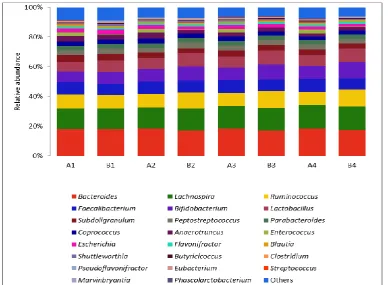
Fig. 1: Effect of total flavonoids of Eupatorium odoratum L. (TFEO) on microbial phyla composition in the cecum of broiler chickens on days 21 (stage A) and 42 (stage B). A1 and B1 (controls); A2 and B2 (100 mg/kg), A3 and B3 (200 mg/kg), A4 and B4 (400 mg/kg) are test groups supplemented with TFEO.
Fig. 2: Effect of total flavonoids of Eupatorium odoratum L. (TFEO) on microbial genera composition in the cecum of broiler chickens on days 21 (stage
A) and 42 (stage B). A1 and B1 (controls); A2 and B2 (100 mg/kg), A3 and B3 (200 mg/kg) and A4 and B4 (400 mg/kg) are test groups supplemented with TFEO.
Effects of TFEO on cecal microflora: The
Firmicutes>Bacteroidetes>Proteobacteria phyla were
dominant in the broiler cecal microbial community (Fig. 1). At 21 and 42 days, the Firmicutes of the test groups increased compared with the controls (P>0.05).
At days 21 and 42 (Fig. 2), Bifidobacterium and
Lactobacillus in test groups increased significantly
(P<0.05) compared with the control group. At day 42,
Lachnospira in test groups increased while Escherichia
and Clostridium decreased significantly (P<0.05)
compared with the control group (Fig. 2).
DISCUSSION
of SIgA are inhibition of polymer absorption and inflammatory response of other immunoglobulins and the binding of allergens to mucosal target cells (Zhao et al., 2016). It has been reported that 7-day-old chickens have few SIgA cells and that cell numbers gradually increase over time and peak at around 49-50 days (Lammers et al., 2010). The SIgA numbers in test groups were significantly elevated compared with the control group at both 21 and 42 days. It is presumed that the increase in SIgA on exposure to TFEO improves broiler intestinal health. However, it is not known how the flavonoids affect SIgA.
Immunoglobulin M (IgM), the largest pentameric immunoglobulin, is used as a marker of recent primary infection and IgM provides a crucial first line of defense for the immune system, and its ability to agglutinate pathogens enhances phagocytosis and clearance (Padmalatha and Ronald., 1999). IgG is the main immunoglobulin in poultry serum and the concentration in adult poultry serum varies from 4.1 to 7.3 mg/mL (Warner
et al., 1969). Effects of flavonoids from different sources
on IgM and IgG have been reported. Fan et al. (2014) showed that propolis flavone microemulsion (flavone is one of the most important pharmacologically active constituents in propolis and is thought to be responsible for many of its biological and pharmacological activities) significantly promoted splenocyte proliferation in the mouse and secretion of IL-2 and IFN-γ in vitro, while at high and medium doses in vivo, it significantly increased the thymic and splenic indices, enhanced splenocyte activity and improved the serum IgG and IgM content.
Liu et al. (2013) found that mice exposed to high doses of
total flavonoids from leaves of Choerospondias axillaris
exhibited enhanced immune function, with improvement in phagocytic function of the mononuclear macrophage, cellular immunity, and humoral immunity. Our results agree with all of the above literature in that flavonoids increase the content of immunoglobulins in animals. Our results in general showed that the IgM in broiler groups given mid and high-doses of TFEO increased significantly compared with the control group. Overall, the results showed positive effects of TFEO on immunoglobulin synthesis, which is similar with Fan et al. (2014) and Liu
et al. (2013) research. However, the content of IgM
decreased at 42 days compared with that at 21 days, which is puzzling; but the IgG concentration was significantly higher than the control group at 42 days. We believe that this may due to an adaptation by the immune system and the dominance of IgG beyond early stages of life. IgM is one of the dominant antibodies produced in early life and reaches a peak at around 4–8 days and declines thereafter (Song, 1983). IgM increased indicating a positive effect of TFEO at 21d > 42d.
TFEO and intestinal microflora: The gut microflora play an important role in the absorption, distribution, metabolism, and excretion of flavonoids have the ability to modify the gut microbial balance acting in a prebiotic capacity (Porras, 2015). The microflora of broilers was mostly from the Firmicutes and Bacteroidetes phyla
Enterococcus and Lachnospira all of which play a role in
the metabolism of dietary flavonoids. In our experiment,
Firmicutes increased significantly in broilers
supplemented with 100, 200, 400 mg/kg TFEO for 42days which may be related to an increase in Lactobacillus and
Lachnospira. However, this was not apparent at 21 days
possibly because the gut microflora in the intestine and cecum takes at least 4–6 weeks to respond and stabilize following dietary changes (Daniele, 2012).
Our results showed that Lactobacilli and
Bifidobacteria increased significantly at 21 and 42 days.
Lactobacilli and Bifidobacteria are beneficial bacteria in
the broiler cecum that can improve the health and growth of broilers and are increased on supplementation of the diet with probiotics such as L. acidophilus LAP5, L. casei
L21, L. fermentum P2 and P. acidilactici LS) (Yu, 2015). Hence TFEO may improve the composition of gut microflora by increasing probiotics. Moreover, Amaretti
et al. (2015) observed that Lactobacilli and Bifidobacteria
can also metabolize flavonoids. Yang et al. (2014) found that black berry juice rich in flavonoids mostly contained anthocyanins, proanthocyanidins, all of which promoted the growth of Lactobacilli strains confirming the capability of the flavonoids to increase Lactobacilli and improve the intestinal microflora community. Serra et al. (2006) showed that the tea flavonoids contained epicatechin, catechin, 3-O-methyl gallic acid which can suppress the growth of pathogenic bacteria including
Clostridium perfringens, Clostridium difficile and
Bacteroides spp. in humans. Clostridium perfringens is
the main etiological agent of necrotic enteritis in broilers
(Li et al., 2018). The Clostridia decreased in broilers
given feed supplemented with TFEO at 100, 200 and 400 mg/kg compared with the control group at 21 days, and significantly decreased at 42 days, which shows that TFEO can inhibit the Clostridia in broiler cecum, and thereby prevent diseases such as necrotic enteritis.
Escherichia decreased in test groups supplemented
with 100, 200 and 400 mg/kg TFEO compared with the control group on day 21 and significantly decreased at 42 days. Escherichia is a genus of Gram-negative, non-spore-forming, facultative anaerobic, rod-shaped bacteria belonging to the family Enterobacteriaceae. They are common inhabitants of the gastrointestinal tract of warm-blooded animals. However, a number of species of
Escherichia are pathogenic (Hogan, 2010). Lee et al.
(2010) noted that flavonoids (quercetin and naringenin) can inhibit the growth of E. coli. Our study has shown that TFEO may be acting as an antimicrobial feed additive that promotes the growth of beneficial probiotics and inhibit harmful bacteria in the gut, thereby improving the gut microflora community and promoting health effects.
by suppressing the growth of pathogenic bacteria, the mechanism of which has still not been clearly established.
Conclusions: Supplementing the Arbor Acre broiler diet with TFEO increased the serum IgM and IgG and the duodenal SIgA. TFEO improved the composition of the intestinal microflora community in broilers and hence could be used as an herb-resourced feed additive for broilers.
Acknowledgements: This research was supported by a Special Competitive Allocation Project (No. 2013A302-7) of Guangdong Province Zhanjiang Programs for Financial Foundation of Science and Technology.
Authors contribution: Q-HZ, F-HN, J-JC and RG designed the study and interpreted the results and revised the paper. Q-HZ, F-HN and X-NW carried out the experiments and wrote the original manuscript. F-HN and X-NW also took part in the experiment and collected the test data. H-YL and H-CRW performed the data analyses. Q-HZ, J-JC and RG interpreted the results and edited the manuscript.
REFERENCES
Amaretti A, Raimondi S, Leonardi A, et al., 2015. Hydrolysis of the rutinose-conjugates flavonoids rutin and hesperidin by the gut microbiota and Bifidobacteria. Nutrients 7:2788-800.
Brandtzaeg P, 2009. Mucosal immunity: induction, dissemination and effector functions. Scand J Immunol 70:505-15.
Braune A and Blaut M, 2016. Bacterial species involved in the conversion of dietary flavonoids in the human gut. Gut Microbes 7:216-34.
Daneshmand A, Kermanshahi H, Mesgaran MD, et al., 2017. Combination of purine and pyrimidine nucleosides influences growth performance, gut morphology, digestive enzymes, serum biochemical indices and immune functions in broiler chickens. Anim Feed Sci Technol 228:186-93.
Daniele M, 2012. Understanding and managing poultry gut microflora safely. Int Poult Prod 20:11-12.
Dennis KL, Wang Y, Blatner NR, et al., 2013. Adenomatous polyps are driven by microbe-instigated focal inflammation and are controlled by IL-10–producing T cells. Cancer Res 73:5905.
Fan YP, Ma L, Zhang WM, et al., 2014. The design of propolis flavone microemulsion and its effect on enhancing the immunity and antioxidant activity in mice. Int J Biol Macromol 65:200-7. Ge SY, 2003. State Environmental protection administration announced
the first list of alien invasive species. Shanghai Environ Sci 5:352. Gutjahr A, Tiraby G, Perouzel E, et al., 2016. Triggering intracellular
receptors for vaccine adjuvantation. Trends Immunol 37:573-87. Hogan CM, 2010. Bacteria. In: Encyclopedia of Earth (Draggan S and
Cleveland CJ, eds): National Council for Science and the Environment, Washington DC.
Hollman PCH, 2004. Absorption, bioavailability, and metabolism of flavonoids. Pharm Biol 42:74-83.
Kong XF, Hu YL, Rui R, et al., 2004. Effects of Chinese herbal medicine ingredients on peripheral lymphocyte proliferation and serum antibody titer after vaccination in chicken. Int Immunopharmacol 4:975-82.
Lammers A, Wieland WH, Kruijt L, et al., 2010. Successive immunoglobulin and cytokine expression in the small intestine of juvenile chicken. Dev Comp Immunol 34:1254-62.
Lee K, Moon SH, Kim K, et al., 2010. Antimicrobial effects of various flavonoids on Escherichia coli O157: H7 cell growth and lipopolysaccharide production. Food Sci Biotechnol 19:257-61. Li Z, Wang WW, Liu D, et al., 2018. Effects of Lactobacillus acidophilus
on the growth performance and intestinal health of broilers challenged with Clostridium perfringens. J Anim Sci Biotechno 9: 10.1186/s40104-018-0243-3.
Liu XY, Yang YM, Han F, et al., 2013. Immunological effects of total flavones from leaves of Choerospondias axillaris on mice. Chin Herb Med 5:121-4.
Mendel M, Chlopecka M and Dziekan N, 2017. Phytogenic feed additives as potential gut contractility modifiers. Anim Feed Sci Technol 230:30-46.
Oakley BB, Morales CA, Line J, et al., 2013. The poultry-associated microbiome: network analysis and farm-to-fork characterizations. PLos One 8:e57190.
Omokhua AG, McGaw LJ, Finnie JF, et al., 2016. Chromolaena odorata
(L.) RM King & H Rob (Asteraceae) in sub-Saharan Africa: A synthesis and review of its medicinal potential. J Ethnopharmacol 183:112-22.
Padmalatha SR and Ronald BC, 1999. The contribution of ER quality control to the biologic functions of secretory IgM. Immunol Today 12:582-8.
Porras D, Nistal E, Martínez-Flórez S, et al., 2017. Protective effect of quercetin on high-fat diet-induced non-alcoholic fatty liver disease in mice is mediated by modulating intestinal microbiota imbalance and related gut-liver axis activation. Free Radical Bio Med 102:108-202.
Qin CB, Gong L, Zhang XP, et al., 2018. Effect of Saccharomyces boulardii
and Bacillus subtilis B10 on gut microbiota modulation in broilers. https://doi.org/10.1016/j.aninu.2018.03.004.
Schloss PD, Dirk G and Westcott SL, 2011. Reducing the effects of PCR amplification and sequencing artifacts on 16S rRNA-based studies. PloS One 6:27-31.
Serra A, Macià A, Romero MP, et al., 2006. Metabolic pathways of the colonic metabolism of flavonoids (flavonols, flavones and flavanones) and phenolic acids. Food Chem 130:383-93.
Song YB, 1983. Types and characteristics of immunoglobulin in poultry. J SW China Inst Nat 1:49-55.
Warner NL, Moore MAS and Metcalf D, 1969. A transplantable myelomonocytic leukemia in BALB/c mice: Cytology, karyotype and muramidase content. J Natl Cancer Inst 43:963-82.
Yang H, Hewes D, Salaheen S, et al., 2014. Effects of blackberry juice on growth inhibition of foodborne pathogens and growth promotion of Lactobacillus. Food Control 37:15-20.
Yu B, Chang CH, Lee TT, et al., 2015. Effects of the probiotics supplementation in diet on intestinal microflora ecosystem in broilers. J Adv Agric Tech 2:138-42.
Yuan JQ, Yang JS and Miao JH, 2007. Studies on flavonoids of Eupatorium
odoratum L. J Chin Med Mat 30:657-60.
Yuan JQ, Yang JS and Miao JH, 2007. Studies on flavonoids of Eupatorium odoratum L. Zhong Yao Cai 30:657-60.
Zhao K, Rong G, Hao Y, et al., 2016. IgA response and protection following nasal vaccination of chickens with Newcastle disease virus DNA vaccine nanoencapsulated with Ag@SiO2 hollow nanoparticles. Sci Rep 6:25720.
Zheng JQ, Wang XN, Yue J, et al., 2015. Antibacterial activity of total flavonoids of Eupatorium odoratumin vitro and its effect on anti
Escherichia coli infection in vivo. J Guangdong Ocean Univ 35:53-7.
Zhu C, Wang L, Wei SY, et al., 2017. Effect of yeast Saccharomyces
cerevisiae supplementation on serum antioxidant capacity, mucosal