R E S E A R C H A R T I C L E
Open Access
Effects of and satisfaction with short message
service reminders for patient medication
adherence: a randomized controlled study
Hsiu-Ling Huang
1,2, Yu-Chuan Jack Li
3, Yueh-Ching Chou
4, Yow-Wen Hsieh
5, Frank Kuo
6, Wen-Chen Tsai
1*,
Sinkuo Daniel Chai
1, Blossom Yen-Ju Lin
1, Pei-Tseng Kung
7and Chia-Jung Chuang
1Abstract
Background:Medication adherence is critical for patient treatment. This study involved evaluating how
implementing Short Message Service (SMS) reminders affected patient medication adherence and related factors. Methods:We used a structured questionnaire to survey outpatients at three medical centers. Patients aged 20 years and older who were prescribed more than 7 days of a prescription medication were randomized into SMS intervention or control groups. The intervention group received daily messages reminding them of aspects
regarding taking their medication; the control group received no messages. A phone follow-up was performed to assess outcomes after 8 days. Data were collected from 763 participants in the intervention group and 435 participants in the control group.
Results:After participants in the intervention group received SMS reminders to take medication or those in the control group received no messages, incidences of delayed doses were decreased by 46.4 and 78.8% for those in the control and intervention groups, respectively. The rate of missed doses was decreased by 90.1% for participants in the intervention group and 61.1% for those in the control group. We applied logistic regression analysis and determined that participants in the intervention group had a 3.2-fold higher probability of having a decrease in delayed doses compared with participants in the control group. Participants in the intervention group also showed a 2.2-fold higher probability of having a decrease in missed doses compared with participants in the control group. Conclusions:Use of SMS significantly affected the rates of taking medicine on schedule. Therefore, daily SMS could be useful for reminding patients to take their medicine on schedule.
Keywords:Short message service (SMS), Medication reminders, Personal medication platform, Patient compliance
Background
Poorly treated chronic diseases both increase health care costs and reduce patient quality of life [1]. A report pub-lished by the World Health Organization (WHO) in 2003 indicated that effective and innovative strategies for im-proving medication adherence can more significantly in-fluence human health compared with advancements in medical techniques [2].
Patients often forget or delay their consumption of medi-cation or neglect the instructions of healthcare providers.
According to a literature review, an average of 48–80% of patients with chronic psychiatric diseases adhered to their prescribed treatment [3]. An average of 25% of diabetes pa-tients and 53% of hypertensive papa-tients adhered to their prescribed treatment for 6 months [4]. Such low medica-tion adherence by various patient groups with chronic diseases has compelled the worldwide medical commu-nity to increasingly focus on applying technology to remedy this situation.
Regarding case management, using phone follow-ups improves the clinical symptoms of patients, facilitating the early identification of complications and enhancing patient adoption of healthy lifestyles [5]. The WHO rec-ommended implementing an innovative service model * Correspondence:[email protected]
1
Department of Health Services Administration, China Medical University, 91, Hsueh-Shih Road, Taichung 40402, Taiwan
Full list of author information is available at the end of the article
not limited to face-to-face services to manage chronic dis-eases; they recommended that cell phones be used to pro-vide timely services [6]. In developed countries, healthcare institutions often use communication technology to remind patients of follow-up appointments, generating a positive image of the healthcare institution and strengthening pa-tient loyalty. Text messaging, also known as Short Message Service (SMS), is a simple and cost-effective tool for provid-ing medication reminders that has been employed by sev-eral healthcare services [7,8]. Studies have noted positive changes when an SMS reminder was used to increase adherence to treatment programs [8-10]. Other studies showed positive effects on health-related behaviors regard-ing SMS interventions [1,11].
We studied the effectiveness of SMS reminders as an intervention to determine whether they improved patient medication adherence. The primary aim was to determine how SMS medication reminders reduced delayed and missed medications doses; the secondary aim included de-termining patient satisfaction with and demand for SMS-based interventions.
Methods Study design
The study was conducted between November 1, 2010 and October 31, 2011. After we obtained approval from the In-stitutional Review Boards of the study hospitals (T.V.G.H., 201006021IC; C.M.U.H., 98–08–01A; and W.H., 100008), hospital pharmacists randomly assigned two patients to the intervention group and one to the control group when pa-tients met the inclusion criteria. We used the systematic sampling method to assign qualified patients to each group. Odd-numbered or even-numbered patients from the phar-macy department registration were assigned to each group. Subsequently, trained interviewers conducted one-on-one interviews with the potential participants, explaining the research purpose and methods in outpatient settings such as the outpatient dispensary waiting area. After agree-ing to participate in the study, the patients completed a questionnaire-based pretest.
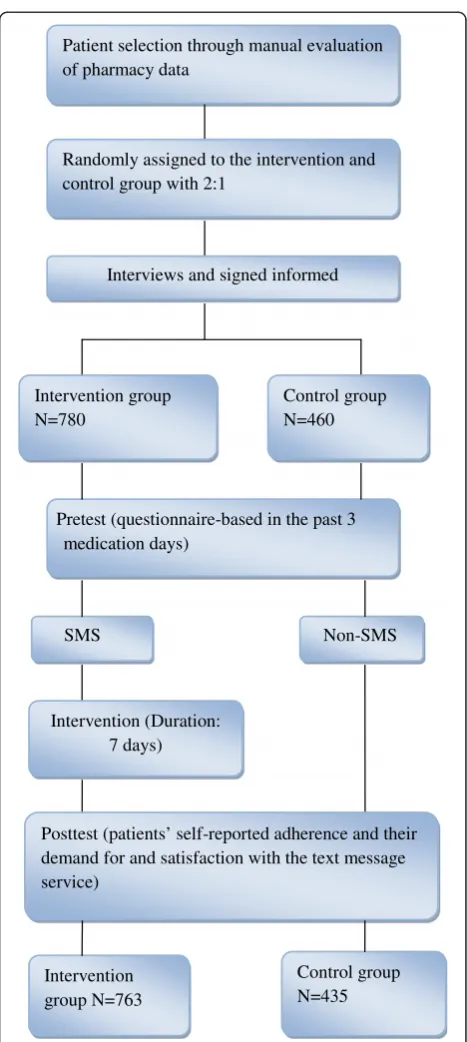
Patients in the intervention group received SMS re-minders reminding them to take their medication at spe-cific times for 7 days beginning on the second day of enrollment, and could not choose the times the re-minders were sent. On the eighth day after completing the intervention we conducted a phone-based survey to assess patient medication compliance and demand for and satisfaction with the “text message medication reminder service.”Figure 1 shows the study screening flowchart.
Participants
Inclusion criteria for participants were: (a) literate pa-tients aged 20 years or older able to communicate with the investigators; (b) having a prescription longer than
7 days; (c) possessing a cell phone and knowing how to re-ceive text messages; (d) and having at least one medication nonadherence (delayed or missed dose) experience in the past 3 days of taking medicine.
We recruited participants from three medical centers based on the large outpatient volume in each hospital. Because we focused on the effect of using SMS in the intervention group, we deliberately increased the sample
Randomly assigned to the intervention and control group with 2:1
Intervention group N=763
Control group N=435 Interviews and signed informed
Pretest (questionnaire-based in the past 3 medication days)
Intervention (Duration: 7 days) Intervention group N=780
Control group N=460
SMS Non-SMS
Posttest (patients’ self-reported adherence and their demand for and satisfaction with the text message service)
Patient selection through manual evaluation of pharmacy data
size of this group. The sample sizes of the intervention and control groups were allocated at a ratio of 2:1.
Intervention
After patients signed and submitted informed consent forms, they completed a questionnaire-based pretest. We then collected patients’ cell phone numbers to facilitate convenient post-test phone interviews. Patients’identities were recognized using hospital information system (HIS) databases; their prescriptions were obtained from the clinical department they visited during recruitment and exported to the SMS system for sending reminders. Be-ginning on the following day, medication reminders were sent to participants by using the SMS system; text messages were sent only to participants in the interven-tion group.
The SMS content depended on participants’medication and frequency of medication use. If a participant used mul-tiple medications, he or she received reminders for each. The messages comprised varying content such as visitation date, hospital name, medication name, dosing frequency, dose, and administration methods. The first message con-tained complete medication information. For example,“A warm reminder! You visited the xx clinic at xx Hospital on 2010/3/15. We would like to remind you to take your pre-scription, which includes Panadol® (one tablet per day for 7 days), Lasix® (0.5 tablet per day immediately following a meal for 7 days), and Lontex® (0.5 tablet once per day for 7 days). Please remember to take this medication on time. We wish you a prompt recovery.”The second and subsequent messages contained only simple medication reminders.
Measurements
The research tools comprised an investigator-designed questionnaire that involved a pretest and post-test. The pretest comprised basic demographic questions (e.g., sex, age, and education level), medical conditions, and self-reported medication use experiences (frequency of daily medication use, delayed doses, or missed doses during the previous 3 days). If participants did not take medicine and passed more than a half-period of time between two doses, we defined it as a “missed dose.” For example, if participants needed to take medicine twice a day (i.e., once every 12 hours), and took medicine more than 6 hours late, it qualified as a missed dose. If participants did not take medication as prescribed regarding timing or dosage, but took the medicine within 6 hours, we defined it as a “delayed dose.”
The post-test questionnaire was conducted by phone interview on the eighth day after the study. The post-test questions comprised structured items for the participants’ self-reported adherence to medication during the previous 3 days and their demand for and satisfaction with the
SMS medication reminder service. Open-ended questions were also included to obtain participants’ recommenda-tions regarding the service. The interviewers also asked the participants whether they would recommend the ser-vice to their family or friends.
To verify the validity of the questionnaire, five experts performed a content validity test, evaluating whether the questionnaire items conformed to the study topic. The average content validity index (CVI) obtained was 0.9. Regarding reliability, the Cronbach’sα coefficient for in-ternal consistency reliability was 0.9, indicating good questionnaire reliability.
Data analysis
We used SAS statistical software to manage and analyze the data obtained from the questionnaires and descrip-tive statistics to determine the frequency, percentage, and mean values of each demographic variable. Regard-ing inferential statistics, we performed chi-square tests to identify differences between the groups regarding im-provements in medication adherence and the demand for and satisfaction with the SMS medication reminder service. We used McNemar’s test to compare the pretest and post-test data within each group to examine distinct decreases in the incidence of delayed or missed medica-tion doses before and after the intervenmedica-tion. Because the number of participants recruited from the three study hospitals differed and the management context and ser-vice model of the hospital at which most participants were recruited could affect the results of the intervention, we used weighted logistic regression to examine the fac-tors that influenced improvements in the incidence of delayed or missed doses. We used odds ratios (OR) to de-scribe the effect sizes.
Results Baseline data
The intervention group and control group comprised 780 and 460 participants at the time of the pretest, re-spectively. The number of valid participants who com-pleted both surveys was 763 in the intervention group and 435 in the control group. We obtained 1,198 total questionnaires from the three study hospitals. In each hospital, we collected 188, 225, and 350 questionnaires for the intervention group and 117, 118, and 200 ques-tionnaires for the control group.
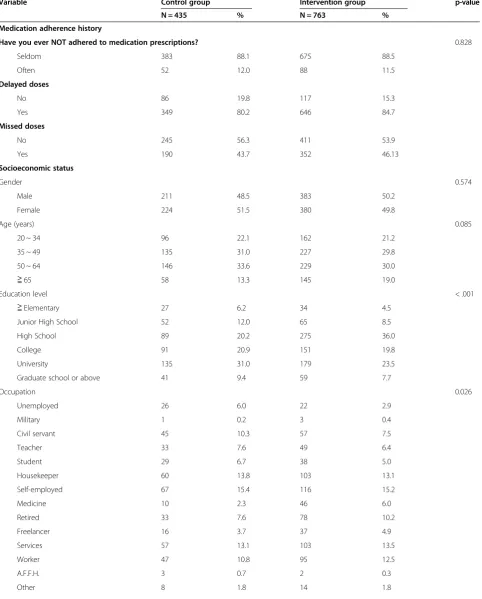
Table 1 Descriptive statistics of patient demographics and personal information
Variable Control group Intervention group p-value
N = 435 % N = 763 %
Medication adherence history
Have you ever NOT adhered to medication prescriptions? 0.828
Seldom 383 88.1 675 88.5
Often 52 12.0 88 11.5
Delayed doses
No 86 19.8 117 15.3
Yes 349 80.2 646 84.7
Missed doses
No 245 56.3 411 53.9
Yes 190 43.7 352 46.13
Socioeconomic status
Gender 0.574
Male 211 48.5 383 50.2
Female 224 51.5 380 49.8
Age (years) 0.085
20 ~ 34 96 22.1 162 21.2
35 ~ 49 135 31.0 227 29.8
50 ~ 64 146 33.6 229 30.0
≧65 58 13.3 145 19.0
Education level < .001
≧Elementary 27 6.2 34 4.5
Junior High School 52 12.0 65 8.5
High School 89 20.2 275 36.0
College 91 20.9 151 19.8
University 135 31.0 179 23.5
Graduate school or above 41 9.4 59 7.7
Occupation 0.026
Unemployed 26 6.0 22 2.9
Military 1 0.2 3 0.4
Civil servant 45 10.3 57 7.5
Teacher 33 7.6 49 6.4
Student 29 6.7 38 5.0
Housekeeper 60 13.8 103 13.1
Self-employed 67 15.4 116 15.2
Medicine 10 2.3 46 6.0
Retired 33 7.6 78 10.2
Freelancer 16 3.7 37 4.9
Services 57 13.1 103 13.5
Worker 47 10.8 95 12.5
A.F.F.H. 3 0.7 2 0.3
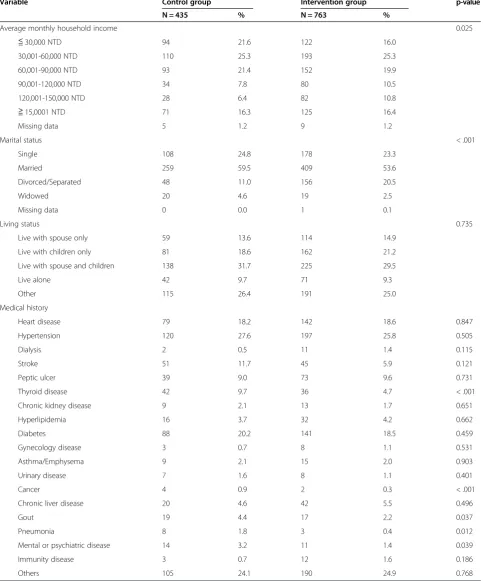
Table 1 Descriptive statistics of patient demographics and personal information(Continued)
Variable Control group Intervention group p-value
N = 435 % N = 763 %
Average monthly household income 0.025
≦30,000 NTD 94 21.6 122 16.0
30,001-60,000 NTD 110 25.3 193 25.3
60,001-90,000 NTD 93 21.4 152 19.9
90,001-120,000 NTD 34 7.8 80 10.5
120,001-150,000 NTD 28 6.4 82 10.8
≧15,0001 NTD 71 16.3 125 16.4
Missing data 5 1.2 9 1.2
Marital status < .001
Single 108 24.8 178 23.3
Married 259 59.5 409 53.6
Divorced/Separated 48 11.0 156 20.5
Widowed 20 4.6 19 2.5
Missing data 0 0.0 1 0.1
Living status 0.735
Live with spouse only 59 13.6 114 14.9
Live with children only 81 18.6 162 21.2
Live with spouse and children 138 31.7 225 29.5
Live alone 42 9.7 71 9.3
Other 115 26.4 191 25.0
Medical history
Heart disease 79 18.2 142 18.6 0.847
Hypertension 120 27.6 197 25.8 0.505
Dialysis 2 0.5 11 1.4 0.115
Stroke 51 11.7 45 5.9 0.121
Peptic ulcer 39 9.0 73 9.6 0.731
Thyroid disease 42 9.7 36 4.7 < .001
Chronic kidney disease 9 2.1 13 1.7 0.651
Hyperlipidemia 16 3.7 32 4.2 0.662
Diabetes 88 20.2 141 18.5 0.459
Gynecology disease 3 0.7 8 1.1 0.531
Asthma/Emphysema 9 2.1 15 2.0 0.903
Urinary disease 7 1.6 8 1.1 0.401
Cancer 4 0.9 2 0.3 < .001
Chronic liver disease 20 4.6 42 5.5 0.496
Gout 19 4.4 17 2.2 0.037
Pneumonia 8 1.8 3 0.4 0.012
Mental or psychiatric disease 14 3.2 11 1.4 0.039
Immunity disease 3 0.7 12 1.6 0.186
Others 105 24.1 190 24.9 0.768
The proportion of patients who previously missed a dose was 43.7 and 46.1%, for the control and intervention groups, respectively. The pretest showed no significant dif-ferences regarding medication use experience between the groups (P > 0.05). Regarding basic demographic character-istics, sex, age, and living status did not significantly differ between the groups (P > 0.05). Regarding chronic diseases, heart disease, diabetes, and hypertension were the most common conditions for patients in both groups. Most of the chronic diseases listed in Table 1 demonstrated similar distribution in both groups.
The link between the SMS intervention and medication adherence
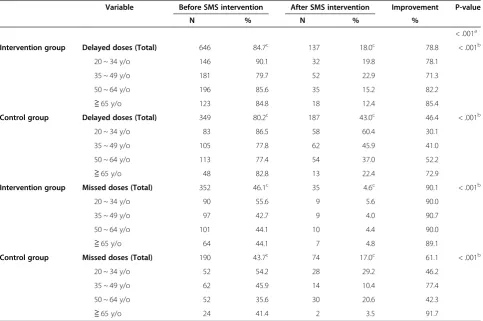
Comparing results before and after the SMS intervention (Table 2) shows that 78.8% of the participants in the intervention group had a decreased (i.e., no delayed doses) incidence of delayed doses; this figure was 46.4% for the control group. The differences between the pretest and post-test were significant for both groups (P < 0.05). Re-garding missed doses, 90.1% of the participants in the in-tervention group showed a decrease (i.e., no missed doses), whereas only 61.1% of the participants in the control group showed a decrease between the pretest and post-test
(P < 0.05 for both groups). Evaluating improvement regard-ing decreases in the frequency of delayed doses showed that 91.5 and 67.3% of participants in the intervention and control groups, respectively, who previously experienced delayed doses, demonstrated medication adherence im-provement. Regarding decreases in the frequency of missed doses, 96.0 and 84.7% of participants who previously expe-rienced missed doses, in the intervention and control groups, respectively, demonstrated medication adherence improvement (results not shown in the table). These find-ings suggest that SMS medication reminders effectively de-creased the incidence of delayed and missed doses and enhanced patient adherence to medication.
Factors that influence decreases in the incidence of delayed doses
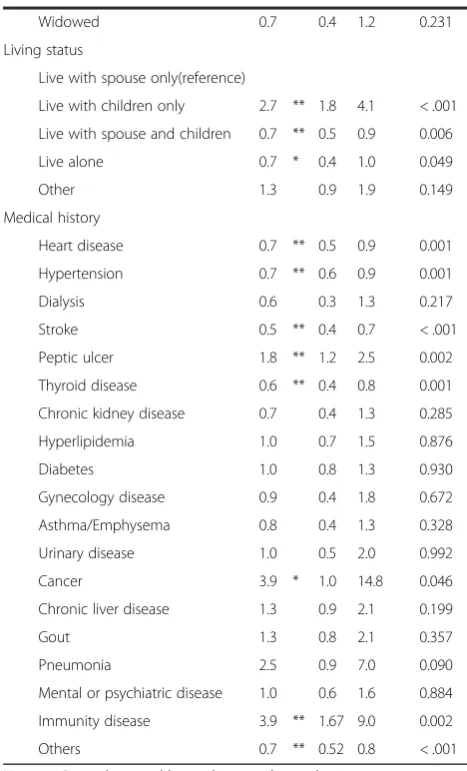
We used weighted logistic regression to identify the fac-tors that affected the decrease in the incidence of delayed doses. Table 3 shows that participants in the intervention group had a 3.2 times (95% CI = 2.7–3.7) higher chance of a decrease in the incidence of delayed doses compared with participants in the control group.
Regarding medical history, participants with heart dis-ease, hypertension, stroke, and thyroid disorder were less
Table 2 Comparing the results before and after the SMS intervention
Variable Before SMS intervention After SMS intervention Improvement P-value
N % N % %
< .001a
Intervention group Delayed doses (Total) 646 84.7c 137 18.0c 78.8 < .001b
20 ~ 34 y/o 146 90.1 32 19.8 78.1
35 ~ 49 y/o 181 79.7 52 22.9 71.3
50 ~ 64 y/o 196 85.6 35 15.2 82.2
≧65 y/o 123 84.8 18 12.4 85.4
Control group Delayed doses (Total) 349 80.2c 187 43.0c 46.4 < .001b
20 ~ 34 y/o 83 86.5 58 60.4 30.1
35 ~ 49 y/o 105 77.8 62 45.9 41.0
50 ~ 64 y/o 113 77.4 54 37.0 52.2
≧65 y/o 48 82.8 13 22.4 72.9
Intervention group Missed doses (Total) 352 46.1c 35 4.6c 90.1 < .001b
20 ~ 34 y/o 90 55.6 9 5.6 90.0
35 ~ 49 y/o 97 42.7 9 4.0 90.7
50 ~ 64 y/o 101 44.1 10 4.4 90.0
≧65 y/o 64 44.1 7 4.8 89.1
Control group Missed doses (Total) 190 43.7c 74 17.0c 61.1 < .001b
20 ~ 34 y/o 52 54.2 28 29.2 46.2
35 ~ 49 y/o 62 45.9 14 10.4 77.4
50 ~ 64 y/o 52 35.6 30 20.6 42.3
≧65 y/o 24 41.4 2 3.5 91.7
likely to have a decreased incidence of delayed doses compared with participants who lacked such diseases. However, participants with peptic ulcers, cancer, or im-munological diseases were significantly more likely to experience a decrease in the incidence of delayed doses compared with participants who lacked such diseases.
Factors that influence reduced incidence of missed doses
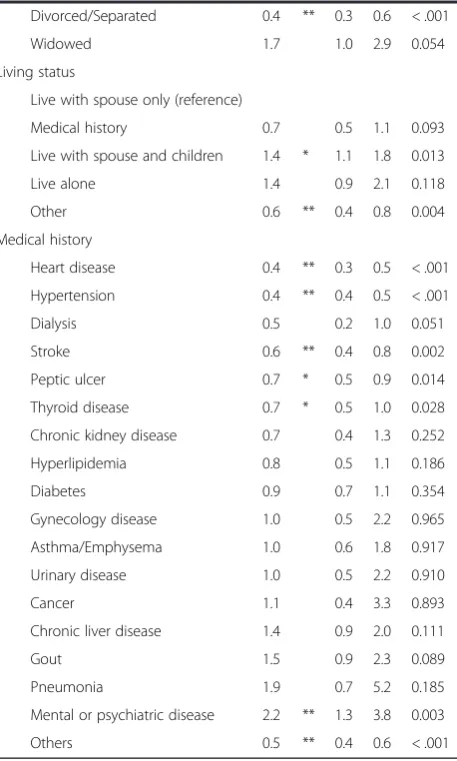
The weighted logistic regression results for factors that influenced the decrease in the incidence of missed doses showed that participants in the intervention group had a 2.2-fold (95% CI = 1.9–2.6) higher likelihood of experien-cing a decrease compared with participants in the control group (Table 4). Additionally, women were significantly more likely to demonstrate improvement compared with Table 3 Weighted logistic regression of SMS on
decreasing delayed doses
Variable OR 95% CI P-value
After SMS intervention
No (reference)
Yes 3.2 ** 2.7 3.7 < .001
Socioeconomic status
Gender
Male (reference)
Female 0.9 0.7 1.1 0.197
Age (years)
20 ~ 34 (reference)
35 ~ 49 0.6 ** 0.4 0.8 0.001
50 ~ 64 0.9 0.6 1.2 0.419
≧65 1.0 0.6 1.5 0.955
Education level
Elementary or less (reference)
Junior High School 1.1 0.7 1.7 0.641
High School 2.1 ** 1.4 3.2 < .001
College 1.3 0.8 1.9 0.288
University 0.9 0.6 1.5 0.782
Graduate school or above 0.6 0.4 1.1 0.076 Occupation
Unemployed (reference)
Military 1.4 0.4 5.3 0.582
Civil servant 0.9 0.5 1.4 0.579
Teacher 2.1 * 1.2 3.6 0.011
Student 1.0 0.6 1.7 0.938
Housekeeper 0.6 * 0.4 0.9 0.023
Self-employed 0.9 0.6 1.4 0.611
Medicine 1.8 1.0 3.5 0.064
Retired 0.7 0.4 1.1 0.145
Freelancer 0.7 0.4 1.2 0.234
Services 1.2 0.8 1.8 0.418
Worker 0.7 0.4 1.1 0.078
A.F.F.H. 2.7 0.8 9.7 0.127
Other 1.1 0.5 2.1 0.881
≦30,000 NTD (reference)
30,001-60,000 NTD 0.8 * 0.6 1.0 0.043
60,001-90,000 NTD 1.6 ** 1.2 2.1 0.001
90,001-120,000 NTD 0.8 0.6 1.2 0.254
120,001-150,000 NTD 0.7 0.5 1.0 0.062
≧150,001 NTD 2.1 ** 1.5 3.0 < .001 Marital status
Single (reference)
Married 1.7 ** 1.2 2.4 0.005
Divorced/Separated 0.7 0.5 1.1 0.143
Table 3 Weighted logistic regression of SMS on decreasing delayed doses(Continued)
Widowed 0.7 0.4 1.2 0.231
Living status
Live with spouse only(reference)
Live with children only 2.7 ** 1.8 4.1 < .001
Live with spouse and children 0.7 ** 0.5 0.9 0.006
Live alone 0.7 * 0.4 1.0 0.049
Other 1.3 0.9 1.9 0.149
Medical history
Heart disease 0.7 ** 0.5 0.9 0.001
Hypertension 0.7 ** 0.6 0.9 0.001
Dialysis 0.6 0.3 1.3 0.217
Stroke 0.5 ** 0.4 0.7 < .001
Peptic ulcer 1.8 ** 1.2 2.5 0.002
Thyroid disease 0.6 ** 0.4 0.8 0.001
Chronic kidney disease 0.7 0.4 1.3 0.285
Hyperlipidemia 1.0 0.7 1.5 0.876
Diabetes 1.0 0.8 1.3 0.930
Gynecology disease 0.9 0.4 1.8 0.672
Asthma/Emphysema 0.8 0.4 1.3 0.328
Urinary disease 1.0 0.5 2.0 0.992
Cancer 3.9 * 1.0 14.8 0.046
Chronic liver disease 1.3 0.9 2.1 0.199
Gout 1.3 0.8 2.1 0.357
Pneumonia 2.5 0.9 7.0 0.090
Mental or psychiatric disease 1.0 0.6 1.6 0.884
Immunity disease 3.9 ** 1.67 9.0 0.002
Others 0.7 ** 0.52 0.8 < .001
men (OR = 2.1; 95% CI = 1.8–2.6). Participants with heart disease, hypertension, stroke, peptic ulcers, and thyroid disorder were less likely to show a decrease in the inci-dence of missed doses compared with participants who lacked such diseases. However, participants with psychi-atric disorders (OR = 2.2, 95% CI = 1.3–3.8) were more likely to have a decrease in the incidence of delayed doses compared with participants who lacked such disorders.
Impression of and satisfaction with the SMS intervention
Table 5 shows participants’ satisfaction with the SMS intervention; the mean satisfaction score was 4.3 out of 5. All satisfaction items scored at least 3 points, and the items “precision of wording,” “understandability of the Table 4 Weighted logistic regression of SMS on
decreasing missed doses
Variable OR 95% CI P-value
After SMS intervention
No (reference)
Yes 2.2 ** 1.9 2.6 < .001
Socioeconomic status
Gender
Male (reference)
Female 2.1 ** 1.8 2.6 < .001
Age (years)
20~34 (reference)
35~49 0.7 * 0.5 1.0 0.024
50~64 0.7 * 0.5 0.9 0.014
≧65 0.6 ** 0.4 0.9 0.009
Education level
Elementary or less (reference)
Junior High School 1.3 0.8 2.0 0.244
High School 0.7 0.5 1.1 0.138
College 0.7 0.5 1.1 0.100
University 0.7 0.4 1.0 0.058
Graduate school or above 0.6 * 0.4 1.0 0.034
Occupation
Unemployed (reference)
Military 0.1 ** 0.0 0.3 < .001
Civil servant 0.4 ** 0.2 0.6 < .001
Teacher 0.4 ** 0.2 0.7 < .001
Student 0.5 ** 0.3 0.8 0.005
Housekeeper 0.7 0.4 1.0 0.062
Self-employed 0.7 0.5 1.1 0.136
Medicine 0.7 0.4 1.3 0.277
Retired 0.7 0.5 1.1 0.164
Freelancer 0.9 0.6 1.5 0.711
Services 0.9 0.6 1.4 0.753
Worker 1.3 0.8 2.0 0.278
A.F.F.H. 2.3 0.7 7.9 0.190
Other 1.1 0.6 2.1 0.868
Average monthly household income
≦30,000 NTD(reference)
30,001-60,000 NTD 1.2 1.0 1.5 0.099
60,001-90,000 NTD 1.5 ** 1.1 1.9 0.006
90,001-120,000 NTD 1.1 0.8 1.5 0.668
120,001-150,000 NTD 2.2 ** 1.5 3.2 < .001
≧150,001 NTD 4.8 ** 3.4 6.8 < .001 Marital status
Single (reference)
Married 1.4 1.0 1.9 0.065
Table 4 Weighted logistic regression of SMS on decreasing missed doses(Continued)
Divorced/Separated 0.4 ** 0.3 0.6 < .001
Widowed 1.7 1.0 2.9 0.054
Living status
Live with spouse only (reference)
Medical history 0.7 0.5 1.1 0.093
Live with spouse and children 1.4 * 1.1 1.8 0.013
Live alone 1.4 0.9 2.1 0.118
Other 0.6 ** 0.4 0.8 0.004
Medical history
Heart disease 0.4 ** 0.3 0.5 < .001
Hypertension 0.4 ** 0.4 0.5 < .001
Dialysis 0.5 0.2 1.0 0.051
Stroke 0.6 ** 0.4 0.8 0.002
Peptic ulcer 0.7 * 0.5 0.9 0.014
Thyroid disease 0.7 * 0.5 1.0 0.028
Chronic kidney disease 0.7 0.4 1.3 0.252
Hyperlipidemia 0.8 0.5 1.1 0.186
Diabetes 0.9 0.7 1.1 0.354
Gynecology disease 1.0 0.5 2.2 0.965
Asthma/Emphysema 1.0 0.6 1.8 0.917
Urinary disease 1.0 0.5 2.2 0.910
Cancer 1.1 0.4 3.3 0.893
Chronic liver disease 1.4 0.9 2.0 0.111
Gout 1.5 0.9 2.3 0.089
Pneumonia 1.9 0.7 5.2 0.185
Mental or psychiatric disease 2.2 ** 1.3 3.8 0.003
Others 0.5 ** 0.4 0.6 < .001
content,”and “medication use privacy” scored more than 4 points. Regarding participant demand for the SMS inter-vention,“clearly displaying the medication dose”received the highest score, followed by “clearly displaying the fre-quency of dose.”
Of the participants who received SMS reminders (Table 6), 93.7% of the participants considered it un-necessary for a reminder to be resent after the time at which the medication should have been consumed. Add-itionally, 91.6% of participants in the intervention group reported a willingness to recommend the SMS service to their family and friends. In the intervention group, 83.1% of participants believed that the SMS intervention was helpful for preventing missed or delayed doses, and
73.7% of participants considered the service beneficial for disease management. However, 7.1% (N = 54) of partici-pants indicated that the SMS did not help reduce delayed or missed doses; thus, we performed a subgroup analysis and determined that most of these participants were women (N = 39, 72.2%), married, and housekeepers.
Discussion
The study intervention involved using SMS to remind patients to consume their medication. We evaluated pa-tients’medication adherence behavior and satisfaction with and demand for an SMS reminder service after the inter-vention. The SMS intervention significantly decreased the incidence of delayed and missed doses among participants Table 5 Satisfaction with and demand for the SMS content
Satisfaction with SMS content (N = 763) Weighted mean SD
The SMS clearly describes the frequency of medication use. 3.8 0.7
The SMS clearly describes the method of medication use. 3.8 0.7
Frequency of SMSs received 3.1 1.0
Satisfaction with the precision of wording in the SMS 4.2 0.9
Satisfaction with the understandability of the content of the SMS 4.2 0.8
Satisfaction with medication use privacy in the SMS 4.2 0.9
Overall satisfaction with the SMS 4.3 0.7
Demand for SMS content (N = 763) Weighted mean SD
Demand for SMS clearly displaying the frequency of medication 2.8 1.0
Demand for SMS clearly showing method of medication 2.5 0.9
Demand for SMS clearly displaying the medication dose 2.9 0.9
Frequency of SMSs received 2.7 0.9
SMS: Short message service.
A 5-point Likert scale, ranging from 1,not at all necessary/extremely unsatisfied, to 5,highly necessary/extremely satisfied.
Table 6 Demand for SMS reminders
Variable N = 763 % Variable N = 763 %
Preferring time to receive text messages before medication taken
Helpfulness of the text message medication reminder in improving the incidence of delayed or missed doses
10 minutes 262 34.3 Very unhelpful 13 1.7
15 minutes 65 8.5 Unhelpful 41 5.4
30 minutes 337 44.2 Neutral 75 9.8
60 minutes 71 9.3 Helpful 401 52.6
others 28 3.7 Very helpful 233 30.5
Necessity of receiving text messages after the time medication should be consumed
Benefits of text message medication reminders for disease control
Yes 48 6.3 Very unhelpful 14 1.8
No 715 93.7 Unhelpful 55 7.2
Willingness to recommend the text message service to family and friends
Neutral 132 17.3
Yes 699 91.6 Helpful 373 48.9
in the intervention group, who showed a 29.0% decrease in the incidence regarding missed doses and 32.4% for the de-crease in the incidence of delayed doses. These findings were similar to those reported by da Costa [8], who evalu-ated the effectiveness of and patient satisfaction with an SMS service that reminded women in Brazil who were di-agnosed with AIDS to consume anti-viral drugs. Other studies have reported similar results, indicating that SMS reminders help patients consume their medications on time and reduce the incidence of delayed doses [12,13].
In the current study, the rates for the decreases in the incidence of delayed doses for the participants in the control and intervention groups were 46.4 and 78.8%, respectively; these figures were 61.1 and 90.1%, respect-ively, for decreases in the incidence of missed doses. This indicates that participants in the control group also experienced significant improvement in medication adher-ence. This could result from the Hawthorne effect or increased efficacy in self-managing their illnesses [14]. Previous studies have shown that in the healthcare field text message reminders were effective in increasing pa-tient attention to treatment, decreasing the incidence of missed doses, and enhancing medication adherence [8,15]. We followed up with participants after only 7 days; how-ever, long-term adherence is more difficult to maintain than is short-term adherence. Hanauer et al. used e-mail and SMS reminders to support diabetes management and iden-tified decreases in SMS use after 2 months and 3 months [16]. Another study of SMS in adults with diabetes showed no change in blood glucose measurement activity through-out the 1-year study period [17]. Therefore, SMS messaging may be more appropriate for use with medications, such as some antibiotics, taken in the short term, compared with long-term medications used to treat chronic diseases.
SMS improves medication adherence
We used weighted logistic regression to examine the fac-tors that influence improvement in the incidence of de-layed and missed medication doses. The results showed that the SMS intervention significantly decreased the incidence of delayed and missed doses. This was consist-ent with a previous finding that indicated SMS interven-tions enabled patients to consume their medication on time [18]. Regarding age (Table 4), participants aged 65 years or older were significantly less likely to experience decreases in the incidence of missed doses compared with those aged 20–34 years (OR = 0.6, 95% CI = 0.4–0.9). According to re-lated literature, senior patients are often more resistant to behavioral change and are likely to stop taking medication based on personal decisions [19]. In addition, senior patient may be less familiar with cell phones compared with youn-ger patients, increasing their likelihood of ignoring text message reminders, thus limiting decreases in the incidence of missed doses. However, comparing Tables 3 and 4 shows
that when senior participants neglected or delayed taking medication, after they received SMS reminders they had a higher likelihood of taking medication than did those who missed taking the medication. This suggests that if senior participants delayed taking medication, when they received reminders they had a higher likelihood of improving their adherence than did those who lacked a strong intention to take their medication and missed taking it despite the re-minder. Military personnel, civil servants, teachers, and stu-dents demonstrated similar behaviors. These results were similar with those of a previous study [20].
Regarding occupation, military personnel, civil servants, teachers, and students were less likely to experience de-creases in the incidence of missed doses compared with unemployed participants. This could be because the mili-tary personnel, civil servants, teachers, and students in our study were typically young or middle-aged adults who demonstrated relatively better health compared with un-employed participants; therefore, these participants might consider long-term medication use unnecessary.
Regarding medical history, participants with hyperten-sion, heart disease, stroke, or thyroid disease were less likely to experience decreases in the incidence of delayed or missed doses compared with participants who lacked such diseases. This finding was consistent with that re-ported by a previous study [20]. This study indicated that hypertensive patients tended to have confidence in their ability at self-control and were likely to adjust their medication consumption behavior arbitrarily, leading to poor adherence [20]. Therefore, SMS interventions may not reduce the incidence of delayed or missed doses among specific patient groups. A previous study also emphasized that patients with chronic diseases may have less motivation to consume medication regularly if their condition did not seem to improve, was incurable, or yielded side effects because of long-term medication use [21]. Thus, SMS interventions may fail to significantly alter the medication consumption behavior of patients with chronic diseases.
Satisfaction with and demand for the SMS intervention
to receive a reminder 30 minutes before the time medica-tion should be consumed (Table 5). However, 93.2% of par-ticipants disliked when a message was resent after the time medication should be consumed to ensure that they would immediately consume a missed dose. Approximately 91.6% of the participants were willing to recommend the SMS intervention to their family and friends, suggesting that the SMS reminder intervention was effective. Of the partici-pants who stated that the SMS reminders did not reduce delays or missed doses, most were women (72.2%), mar-ried, and housekeepers. We speculate that because these participants had more flexible time to care for themselves and may already have been adhering to their medication satisfactorily, they did not perceive that the SMS interven-tion enhanced their medicainterven-tion adherence.
Previous studies that have adopted SMS interventions for increasing medication adherence all showed that patients in the intervention group experienced higher treatment effect-iveness compared with control groups. This could be be-cause SMSs pose a minimal interruption to patients’lives and are low in cost [8]. Compared with other approaches, SMS is simpler and more satisfying for users. Additionally, because the SMS reminder service can prompt patients to be responsible for their own health, it serves a vital function in healthcare services.
Limitations
Medication adherence problems are typically related to use of long-term medications for chronic diseases. In the current study, participants were monitored for only 7 days. Such a short-term follow-up might not properly interro-gate the relationship between long-term medication ad-herence and use of SMS. Because we did not design the study to specify the medications used by participants, we could not evaluate the effects and outcome of their medi-cation treatment. Additionally, the daily SMS system sent more than one reminder to participants who took several kinds of medications based on various medication sched-ules, which resulted in inconveniencing these participants. Many studies have shown that medication adherence outcome data that are purely reliant on self-reporting have a high likelihood of reporting bias [26,27]. Because overstimulation might exist in both the intervention and control groups, the current study included two groups (intervention vs. control) that completed pretests and post-tests to reduce the effects of reporting bias.
Conclusions
This controlled study showed that SMS intervention en-hanced patients’ medication adherence. After the 7-day SMS intervention, patients in the experimental group showed greater decreases in the incidences of both delayed and missed doses compared with the control group pa-tients. The findings of this study and those of previous
studies show that use of SMS can effectively improve pa-tient medication adherence, prompting most papa-tients to respond favorably to such services. Therefore, an SMS reminder system is a simple, effective, and inexpensive strategy [28,29]. Future implementation of SMS in Chinese-language settings could contain pictures and both Chinese and English drugs names, enabling patients to verify their use, thereby decreasing the incidence of delayed and missed doses.
Abbreviations
SMS:Short message service; PMP: Personal medication management platform; WHO: World Health Organization; HIS: Hospital information system; NTD: New TAIWAN Dollar; AIDS: Acquired immunodeficiency syndrome.
Competing interests
The authors declare that they have no competing interests.
Authors’contributions
HLH and WCT drafted the manuscript. WCT and YCL designed the study. YCC, YWH, FK, PTK and CJC collected data. SDC, PTK and BYJL were responsible for study conceptualization and developing the analytical plan. All authors read and approved the final manuscript.
Acknowledgments
This research was supported by the grants (CMU99-ASIA-18, NSC 97– 3114-E-010) from China Medical University, Asia University, and the National Science Council of Taiwan, ROC. The authors thank the SMS team at China Medical University Hospital, Taipei Veterans General Hospital, and Wanfang Hospital for their technical support. We would especially like to thank Dr. Yu-Chuan (Jack) Li as the main contributor to this project.
Author details
1
Department of Health Services Administration, China Medical University, 91, Hsueh-Shih Road, Taichung 40402, Taiwan.2Hospital Administration Commission, Department of Health, Executive Yuan, Taipei, Taiwan. 3Department of Graduate Institute of Biomedical Informatics, Taipei Medical University, Taipei, Taiwan.4Department of Pharmaceutical Service, Taipei Veterans General Hospital, Taipei, Taiwan.5Department of Pharmaceutical Service, China Medical University Hospital, Taichung, Taiwan.6Department of Information Management, National Taiwan University, Taipei, Taiwan. 7
Department of Healthcare Administration, Asia University, Taichung, Taiwan.
Received: 1 March 2013 Accepted: 13 November 2013 Published: 16 November 2013
References
1. Simpson SH, Eurich DT, Majumdar SR, Padwal RS, Tsuyuki RT, Varney J, Johnson JA:A meta-analysis of the association between adherence to drug therapy and mortality.BMJ2006,333(7557):15.
2. WHO:Adherence to long-term therapies.Geneva: Organisation wH; 2003. 3. Julius RJ, Novitsky MA Jr, Dubin WR:Medication adherence: a review of
the literature and implications for clinical practice.J Psychiatr Pract2009,
15(1):34–44.
4. McDonald HP, Garg AX, Haynes RB:Interventions to enhance patient adherence to medication prescriptions: scientific review.JAMA2002,
288(22):2868–2879.
5. Norris SL, Nichols PJ, Caspersen CJ, Glasgow RE, Engelgau MM, Jack L Jr, Isham G, Snyder SR, Carande-Kulis VG, Garfield S:The effectiveness of disease and case management for people with diabetes: a systematic review.Am J Prev Med2002,22(4):15–38.
6. Gentles SJ, Lokker C, McKibbon KA:Health information technology to facilitate communication involving health care providers, caregivers, and pediatric patients: a scoping review.J Med Internet Res2010,12(2):e22. 7. Cocosila M, Archer N, Brian Haynes R, Yuan Y:Can wireless text messaging
improve adherence to preventive activities? Results of a randomised controlled trial.Int J Med Inform2009,78(4):230–238.
intervention on treatment adherence in HIV/AIDS-infected Brazilian women and impressions and satisfaction with respect to incoming messages.Int J Med Inform2012,81(4):257–269.
9. Vervloet M, Linn AJ, van Weert JC, de Bakker DH, Bouvy ML, van Dijk L:
The effectiveness of interventions using electronic reminders to improve adherence to chronic medication: a systematic review of the literature. J Am Med Inform Assoc2012,19(5):696–704.
10. Lester RT, Ritvo P, Mills EJ, Kariri A, Karanja S, Chung MH, Jack W, Habyarimana J, Sadatsafavi M, Najafzadeh M:Effects of a mobile phone short message service on antiretroviral treatment adherence in Kenya (WelTel Kenya1): a randomised trial.Lancet2010,376(9755):1838–1845. 11. Suffoletto B, Calabria J, Ross A, Callaway C, Yealy DM:A mobile phone text
message program to measure oral antibiotic use and provide feedback on adherence to patients discharged from the emergency department. Acad Emerg Med2012,19(8):949–958.
12. Zygmunt A, Olfson M, Boyer CA, Mechanic D:Interventions to improve medication adherence in schizophrenia.Am J Psychiatry2002,
159(10):1653–1664.
13. Strandbygaard U, Thomsen SF, Backer V:A daily SMS reminder increases adherence to asthma treatment: a three-month follow-up study. Respir Med2010,104(2):166–171.
14. Jones G, Hawkins K, Mullin R, Nepusz T, Naughton DP, Sheeran P, Petroczi A:
Understanding how adherence goals promote adherence behaviours: a repeated measure observational study with HIV seropositive patients. BMC Public Health2012,12:587.
15. Vervloet M, van Dijk L, Santen-Reestman J, Van Vlijmen B, Van Wingerden P, Bouvy ML, de Bakker DH:SMS reminders improve adherence to oral medication in type 2 diabetes patients who are real time electronically monitored.Int J Med Inform2012,81(9):594–604.
16. Hanauer DA, Wentzell K, Laffel N, Laffel LM:Computerized Automated Reminder Diabetes System (CARDS): e-mail and SMS cell phone text messaging reminders to support diabetes management.
Diabetes Technol Therap2009,11(2):99–106.
17. Vähätalo M, Virtamo H, Viikari J, Rönnemaa T:Cellular phone transferred self blood glucose monitoring: prerequisites for positive outcome. Pract Diabetes Int2004,21(5):192–194.
18. Ollivier L, Romand O, Marimoutou C, Michel R, Pognant C, Todesco A, Migliani R, Baudon D, Boutin J-P:Use of short message service (SMS) to improve malaria chemoprophylaxis compliance after returning from a malaria endemic area.Malar J2009,8(236):1475–2875.
19. Yu-Pei Lin Y-HH, Yi-Ching Y, Jin-Shang W, Chih-Jen C, Feng-Hwa L:
Adherence to antihypertensive medications among the elderly: a community-based survey in Tainan City, Southern Taiwan. Taiwan Geriatr Gerontol2007,2(3):176–189.
20. Banning M:A review of interventions used to improve adherence with medication in older people.Int J Nurs Stud2009,46(11):1505–1515. 21. Haynes RB AE, Ackloo E, Sahota N, McDonald HP, Yao X:Interventions for
enhancing medication adherence.Cochrane Database Syst Rev2008,2:2. 22. Krampera M, Venturini F, Benedetti F, Oliani A, Carolei S, Visco C, Aqel H,
Pizzolo G, Scroccaro G:Computer-based drug management in a bone marrow transplant unit: a suitable tool for multiple prescriptions even in critical conditions.Br J Haematol2004,125(1):50–57.
23. Lee F, Teich JM, Spurr CD, Bates DW:Implementation of physician order entry: user satisfaction and self-reported usage patterns.
J Am Med Inform Assoc1996,3(1):42–55.
24. Murff HJ, Kannry J:Physician satisfaction with two order entry systems. J Am Med Inform Assoc2001,8(5):499–509.
25. Wilson JP, Bulatao PT, Rascati KL:Satisfaction with a computerized practitioner order-entry system at two military health care facilities. Am J Health Syst Pharm2000,57(23):2188–2195.
26. Leroux J, Rizzo JA, Sickles R:The role of self-reporting bias in health, mental health and labor force participation: a descriptive analysis. Empir Econ2012,43(2):525–536.
27. Harrison L:The validity of self-reported drug use in survey research: an overview and critique of research methods.NIDA Res Monogr1997,
167:17–36.
28. Da Costa TM, Salomão PL, Martha AS, Pisa IT, Sigulem D:The impact of short message service text messages sent as appointment reminders to patients’cell phones at outpatient clinics in Sao Paulo, Brazil. Int J Med Inform2010,79(1):65–70.
29. Geraghty M, Glynn F, Amin M, Kinsella J:Patient mobile telephone
‘text’reminder: a novel way to reduce non-attendance at the ENT out-patient clinic.J Laryngol Otol2008,122(03):296–298.
doi:10.1186/1472-6947-13-127
Cite this article as:Huanget al.:Effects of and satisfaction with short message service reminders for patient medication adherence: a randomized controlled study.BMC Medical Informatics and Decision Making201313:127.
Submit your next manuscript to BioMed Central and take full advantage of:
• Convenient online submission
• Thorough peer review
• No space constraints or color figure charges
• Immediate publication on acceptance
• Inclusion in PubMed, CAS, Scopus and Google Scholar
• Research which is freely available for redistribution