Available online on 25.08.2019 at http://jddtonline.info
Journal of Drug Delivery and Therapeutics
Open Access to Pharmaceutical and Medical Research© 2011-18, publisher and licensee JDDT, This is an Open Access article which permits unrestricted non-commercial use, provided the original work is properly cited
Open Access
Research Article
Design and Optimization of Mefenamic acid Fast Dissolving Tablets
Employing Modified Starch by 2
3Factorial Design
R. Santosh Kumar and A. Suresh
GITAM Institute of Pharmacy, GITAM (Deemed To Be University) Rushikonda, Visakhapatnam-530045, Andhra Pradesh, India.
ABSTRACT
Latest developments in the technology have promoted viable dosage alternatives through oral route for pediatrics, bed ridden, and nauseous patients. Patient preference is one of the most important aspects in pharmacy practice. Now a day’s pharmacy companies are coming up with innovative drug delivery systems to deliver the drugs efficiently and with less side effects. This innovation led to the introduction of the concept of fast dissolving tablets. Though, a wide range of superdisintegrant is available for formulation of fast dissolving tablets. Still there is continuous need of development of superdisintegrants. Therefore in the present investigation, starch based superdisintegrant was prepared and evaluated for its application in the design of fast dissolving dosage forms.
Keywords: Fast Dissolving Tablets, Superdisintegrant, Modified Starch, Mefenamic acid.
Article Info: Received 27 June 2019; Review Completed 05 Aug 2019; Accepted 12 Aug 2019; Available online 25 August 2019 Cite this article as:
Santosh Kumar R, Suresh A, Design and Optimization of Mefenamic acid Fast Dissolving Tablets Employing Modified Starch by 23 Factorial Design, Journal of Drug Delivery and Therapeutics. 2019; 9(4-s):933-944
http://dx.doi.org/10.22270/jddt.v9i4-s.3622
*Address for Correspondence:
R. Santosh Kumar, GITAM Institute of Pharmacy, GITAM (Deemed to be University), Gandhinagar, Visakhapatnam-530045, Andhra Pradesh, INDIA.
INTRODUCTION:
Fast dissolving tablets are solid dosage forms containing medicinal substances which disintegrate rapidly, usually within few seconds when placed upon tongue requiring no additional water, to facilitate swallowing. Various techniques can be used to formulate fast dissolving tablets. Direct compression method, one of most oldest and convenient method of formulating tablets. Direct compression method needs only the cheaper excipients. Therefore the dosage forms which were formulated by direct compression method will be cheaper than the dosage forms formulated by other methods. The aim of the work was to formulate and evaluate fast dissolving tablets of mefenamic acid employing modified starch as a superdisintegrant for rapid dissolution and absorption of drugs, which may produce the drug rapid onset of action. Optimization technique
Optimization techniques provide both a depth of understanding and an ability to explore and define ranges for formulation and processing factors with a rational approach to for the selection of several experimental and
The present study deals with the investigation for optimization of mefenamic acid fast dissolving tablets employing modified starch, crosscarmellose sodium and crospovidone as superdisintegrants. A 23factorial design was
applied to investigate the main and interaction effects of the three formulation variables that is, modified starch, crosscarmellose sodium (B) and crospovidone (C) in each case to find the formulation with less disintegration time and more dissolution efficiency 1 min and permit and arbitrary detection of tablets with immediate release of drug within five minutes. The resulting of formulation, optimization and evaluation of mefenamic acid is fast dissolving is described in this chapter.
MATERIALS & METHODS
1. Mefenamic acid (Yarrow chemicals, Mumbai) 2. Modified starch prepared in the laboratory used. 3. Crosscarmellose sodium (Yarrow chemicals, Mumbai) 4. Crospovidone(Yarrow chemicals, Mumbai)
5. Mannitol ( Yarrow chemicals, Mumbai)
6. Microcrystalline cellulose (Qualigens fine chemicals, Mumbai)
Preparation of modified starch acid:
Initially10 grams of glutaric acid was dissolved in distilled water and the pH was adjusted to 3.5 using 10M sodium
hydroxide and finally made up to 25 ml. To the above mixture 25 grams potato starch was added and conditioned for 16 hrs at room temperature, later the product was kept in oven at 600C for 6 hrs, the mass was washed to remove un
reacted glutaric acid. After washing the product was dried at 600C. The product obtained was ground and sieved (# 100).
Preparation of Mefenamic acid Fast Dissolving Tablets: The tablets were prepared by direct compression method. The composition of formulations of mefenamic acid fast dissolving tablets is shown in table no 1. For uniformity in particle size each ingredient was passed through # 100 mesh sized screen before mixing. Modified starch, croscarmellose sodium, crospovidone, mannitol, microcrystalline cellulose, were accurately weighed and mixed using motor and pestle, and then added to Mefenamic acid. Finally talc and magnesium stearate were added to the powder. Finally mixed blend was compressed by using eight station rotator press (Shakthi Machinineries Pvt. Ltd., Ahmadabad). Evaluation of Mefenamic acid Fast Dissolving Tablets: Hardness: [1]
The tablet hardness which is the force required to break a tablet in a diametric compression force. The hardness tester used in the study was Monsanto hardness tester, which applies force to the tablet diametrically with the help of an inbuilt spring and expressed in kg/cm2.
Uniformity of Weight: [1]
Weight variation test was done with 20 tablets. It is the individual variation of tablet weight form the average weight of 20 tablets.
Average weight of tablet % Deviations
80 mg or less ±10
More than 80 mg or less than
250 mg ±7.5
More than 250 mg ± 5
Friability[1]:
The friability of tablets was measured using a Roche friabilator. Tablets were rotated at 25 rpm for 4 minutes or u to 100 revolutions. The tablets were then reweighed after removal of fines and the percentage of weight of weight loss was calculated. –
Content Uniformity: [2]
For content uniformity test, ten tablets were weighed and powdered. A quantity of powder equivalent to 100 mg of mefenamic acid was extracted into tris buffer and filtered. The Mefenamic acid content was determined by measuring the absorbance spectrophotometrically at 256 nm after appropriate dilution with tris buffer. The drug content was calculated using the standard calibration curve. The mean percentage drug content was calculated as an average of three determinations.
Wetting Time: [3].
The wetting time of the tablet was noted as the time taken by when the water to reache the upper surface of the tablet, when the tablet is placed in water. The wetting time of the tablets was measured using a very simple process. Five
circular tissue papers were placed in a petridish with a 10 cm diameter. Ten milliliters of water containing soluble dye (Amaranth) was added to the petridish and a fast dissolving tablet was carefully placed on the surface of paper. The time taken by to tablet to become red is noted as wetting time. Water Absorption Ratio: [4].
Initially the fast dissolving tablet was weighed. Then tablet was put on the tissue paper which was folded twice a small petridish a containing 6 ml of water, and allowed to wet completely. The wetted tablet was then weighted. Water absorption ration, R was determined using following equation.
Where W1 = weight of tablet after water absorption
W2 = weight of tablet before water absorption
In vitro Disintegration Time: [5].
Disintegration time for FDTs was determined using USP disintegration apparatus with tris buffer. The volume of medium was 900 ml and temperature was 37±0.20C. The
time in seconds taken for complete disintegration of the tablet with no palatable mass remaining in the apparatus was measured.
In Vitro Dissolution Rate Studies: [5].
The in vitro dissolution rate study of mefenamic acid fast dissolving tablets was performed using 8 station dissolution test apparatus (Electro lab TDT- 08L) fitted with paddles (50 RPM) at 37 ± 0.50 C, using tris buffer (900 ml) as a
dissolution media. At the predetermined time intervals 5 ml sample was withdrawn, filtered through 0.45 µ membrane filter, diluted and assayed at 256 nm using a Analytical technology Elico SL191 UV/Visible Double beam spectrophotometer. Cumulative percentage drug release was calculated using standard absorbance from the calibration curve. All the dissolution experiments were conducted in triplicate (n=3).
Optimization:
The percentages of modified starch (A), croscarmellose sodium (B) and crospovidone (C) were selected as independent variables. The dissolution efficiency in 5 minutes was selected as dependent variable. The resulting data was fitted into Stat Ease, Inc. (Minneapolis, MN) Design Expert 11 Version software and analyzed statistically using analysis of Variance (ANOVA). The data were also subjected to 3-D response surface methodology to determine the influence of modified starch, croscarmellose sodium, crospovidone and interactions between them on dependent variable.
Comparison of Optimized formula with the Marketed Sample:
The optimized formula will be compared with the marketed formula for all its physical properties and dissolution parameters. The marketed sample available in the local market was
Mefenamic acid 250 Mg ( MEFTAL -250) B.NO. HMT1628
Table 1: Formulation of Mefenamic acid Fast Dissolving Tablets Employing Modified starch Ingredients
(mg/tablet) F1 F2 F3 F4 F5 F6 F7 F8
Mefenamic acid 200 200 200 200 200 200 200 200
Modified starch - 25 - 25 - 25 - 25
Croscarmellose sodium - - 25 25 - - 25 25
Crospovidone - - - - 25 25 25 25
Mannitol 80 55 55 30 55 30 30 5
Micro crystalline cellulose 200 200 200 200 200 200 200 200
Talc 10 10 10 10 10 10 10 10
Magnesium stearate 10 10 10 10 10 10 10 10
Total weight 500 500 500 500 500 500 500 500
Table 2: Physical properties: Hardness, Friability, Drug Content, Wetting Time, Water Absorption Ratio of Mefenamic acid Fast Dissolving Tablets.
Formul-ation
code
Hardness (Kg/Cm2)
±S.D
Friability (%)±S.D
Drug Content±S.D
Disintegration Time (S)±S.D
Wetting Time (sec)±S.D
Water Absorption Ratio(%)±S.D
F1 3.8±0.01 0.13±0.015 197.58±0.17 3620±0.3 256±0.5 0.18±0.2
F2 3.7±0.03 0.14±0.013 198.12±0.79 25±0.6 19±0.22 1.54±0.14
F3 3.7±0.02 0.12±0.014 195.61±0.63 160±0.03 350 ±0.39 0.41±0.13
F4 3.7±0.04 0.14±0.014 198.56±0.36 142±0.01 280±0.21 0.12±0.12
F5 3.7±0.01 0.13±0.013 199.83±0.56 35±0.02 125±0.01 0.74±0.11
F6 3.7±0.03 0.14±0.012 199.34±0.18 40±0.05 57±0.19 0.92±0.13
F7 3.8±0.04 0.12±0.013 199.56±0.57 30±0.04 26±0.13 1.14±0.12
F8 3.9±0.03 0.15±0.014 99.27±0.11 41± 0.01 39±0.02 1.08±0.23
*SD standard deviation from mean, n=3, mean±SD.
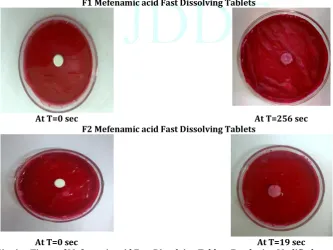
F1 Mefenamic acid Fast Dissolving Tablets
At T=0 sec At T=256 sec
F2 Mefenamic acid Fast Dissolving Tablets
At T=0 sec At T=19 sec Fig: 1(a) Wetting Times of Mefenamic acid Fast Dissolving Tablets Employing Modified starch (A Novel
F3 Mefenamic acid Fast Dissolving Tablets
At T=0 sec At T=350 sec
F4 Mefenamic acid Fast Dissolving Tablets
At T=0sec At T=280 sec F5 Mefenamic acid Fast Dissolving Tablets
At T=0 sec At T=125 sec
F6 Mefenamic acid Fast Dissolving Tablets
At T=0 sec At T=57 sec F7 Mefenamic acid Fast Dissolving Tablets
At T=0 sec At T=26 sec
F8 Mefenamic acid Fast Dissolving Tablets
At T=0 sec At T=39sec
Table: 3. Dissolution Data of Mefenamic acid Fast Dissolving Tablets Employing Modified starch Mefenamic acid Percent Dissolved from Fast Dissolving Tablets Employing Modified starch Time
(Min)
F1 F2 F3 F4 F5 F6 F7 F8
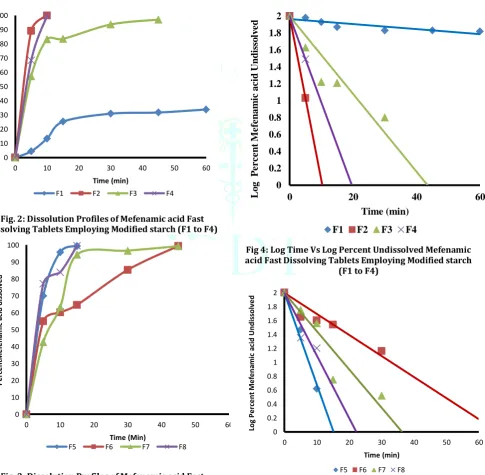
5 4.4±0.74 89.12±0.74 57.16±0.8 68.40±0.82 69.96±0.21 54.87±0.75 42.57±0.43 77.20±0.36
10 13.43±0.78 99.94±0.41 83.55±0.99 99.84±0.84 95.79±0.12 60.11±0.09 63.24±0.52 83.87±0.27
15 25.26±0.38 - 83.49±0.16 - 99.36±0.63 64.57±0.12 94.32±0.18 99.56±0.14
30 30.89±0.32 - 93.65±0.09 - _ 85.29±0.32 96.64±0.23 -
45 31.69±0.15 - 97.07±0.21 - _ 99.40±0.16 99.31±0.56 -
60 33.83±0.24 - _ - _ _ _ -
*SD standard deviation from mean, n=3, mean±SD.
Fig. 2: Dissolution Profiles of Mefenamic acid Fast Dissolving Tablets Employing Modified starch (F1 to F4)
Fig. 3: Dissolution Profiles of Mefenamic acid Fast Dissolving Tablets Employing Modified starch (F5 to F8)
Fig 4: Log Time Vs Log Percent Undissolved Mefenamic acid Fast Dissolving Tablets Employing Modified starch
(F1 to F4)
Fig 5: Log Time Vs Log Percent Undissolved Mefenamic acid Fast Dissolving Tablets Employing Modified starch
(F5 to F8) 0 10 20 30 40 50 60 70 80 90 100
0 10 20 30 40 50 60
P e rc e n t M e fe n am ic D is so lv e d Time (min)
F1 F2 F3 F4
0 10 20 30 40 50 60 70 80 90 100
0 10 20 30 40 50 60
P e rc e n tM e fe n am ic a ci d d is so lv e d Time (Min)
F5 F6 F7 F8
0
0.2
0.4
0.6
0.8
1
1.2
1.4
1.6
1.8
2
0
20
40
60
Lo
g
P
e
r
c
e
n
t
M
e
fe
n
am
ic
ac
id
U
n
d
is
so
lv
e
d
Time (min)
F1
F2
F3
F4
0 0.2 0.4 0.6 0.8 1 1.2 1.4 1.6 1.8 2
0 10 20 30 40 50 60
Lo g P e rc e n t Me fe n amic a ci d U n d is so lv e d Time (min)
Table 4: Dissolution Parameters of Mefenamic acid Fast Dissolving Tablets Formulated Employing Modified starch
Parameters F1 F2 F3 F4 F5 F6 F7 F8
PD5 4.4±0.74 89.12±0.74 57.16±0.8 68.40±0.82 69.96±0.21 54.87±0.75 42.57±0.43 77.20±0.36
DE5 (%) 3±0.1 88.1±0.2 55.6±0.3 65.1±0.1 62.5±0.2 52.5±0.3 73.2±0.2 76.13±0.2
Increase in DE5
(%) No. of folds
- 29.36 18.53 21.7 20.83 17.5 24.4 25.37
K1 (min-1) 0.01±0.01 0.3915±0.03 0.184±0.003 0.322±0.01 0.414±0.01 0.045±0.02 0.01±0.01 0.09±0.02
Increase in K1
(min-1) No. of
folds
- 39.15 39.15 53.6 237.8 184.2 127.8 92.1
*SD standard deviation from mean, n=3, mean±SD, PD5-Percent dissolved in 5 min., DE5%-Dissolution efficiency in 5 min., K1
=First order rate constant
RESULTS AND DISCUSSION
Fast dissolving tablets each containing 200 mg of mefenamic acid could be prepared by employing modified starch and other known superdisintegrants, croscarmellose sodium and crospovidone by direct compression method. Hardness of the tablets was in range of 3.7-3.9kg/sq.cm. It indicates good strength with a capability to resist physical and prefunctionary stress condition during handling. Weight loss on the friability test was less than 0.16% in all cases. All the fast dissolving tablets prepared containing mefenamic acid with in 100±5% of the labeled claim. As such the prepared tablets were of good quality with respect to drug content, hardness and friability. The disintegration time of all formulated tablets was found to be in the range of 25±0.6 to 3620±0.3 seconds as indicated in the table: 2. The F2
formulation containing 5% novel superdisintegrant i.e. modified starch disintegrated rapidly.
The results in-vitro wetting time and water absorption ratio were found to be within prescribed limits and satisfy the
criteria of fast dissolving tablets (Fig.5). The in-vitro wetting time was decreased when the novel superdisintegrant was used. In the case of formulation F2 modified starch, the wetting item found to be 19±0.22sec, indicating the suitability of modified starch as novel superdisintegrant. To evaluate the individual and combined effects of the factors involved, fast dissolving tablets were formulated employing selected combination of the factors as per 23-
factorial design. The disintegration wetting time and release parameters (percent drug dissolved in 10 min and dissolution efficiency in 5 min) of the fast dissolving tablets formulated were analyzed as per ANOVA of 23- factorial
design indicated that the individual, effects of modified starch (A), croscarmellose sodium (B), and crospovidone (C) as well as the combined effect of AB, AC, BC and (ABC) factors were significant on all the parameters analyzed. Within 25±0.6seconds indicating the suitability of modified starch as superdisintegrants.
TABLE-5 ANOVA of Disintegration Time of Mefenamic acid Fast Dissolving Tablets
*SD Standard Deviation from mean, n=3, P<0.05 indicate significance; P>0.05 indicate non-significance, d. f–Degree of Freedom *S. S–Sum of Square *M. S. S–Mean Sum of Squares, ANOVA= Analysis of Variance
Source of Variation
d. f S.S M.S.S Variance
ratio
Result
W 2 6968.62 3484.31 0.013
Treatments 7 33832688.67 4833241.23 19.15
Modified starch(A) 1 1228085.04 1228085.04 4.86
Croscarmellose sodium (B) 1 10159509.38 10159509.38 40.21
Modified starch x Croscarmellose sodium (AB)
1 1248984.37 1248984.37 4.95
Crospovidone (C) 1 5541126 5541126 21.96
Modified starch x Crospovidone (AC)
1 1259042.04 1259042.04 4.98
Croscarmellose sodium x crospovidone (BC)
1 10159509.38 10159509.38 40.26
Modified starch x Croscarmellose sodium x Crospovidone (ABC)
1 1248984.37 1248984.37 4.9
Error 14 3532408.29 252314.87 --- ---
TABLE-6 ANOVA of Water Absorption Ratio of Mefenamic acid Fast Dissolving Tablets Source of
Variation
d. f S.S M.S.S Variance
ratio
Result
Replicates 2 18.08 9.0416 0.3677261
Treatments 7 363582.291 51940.327 2112.400
Modified starch(A) 1 55392.041 55392.041 2252.78
Croscarmellose sodium (B) 1 83662.041 83662.041 3402.51
Modified starch x Croscarmellose sodium (AB)
1 17985.37 17985.37 731.46
Crospovidone (C) 1 161868.37 161868.37 6583.22
Modified starch x Crospovidone (AC)
1 18872.041 18872.041 767.5305
Croscarmellose sodium x Crospovidone (BC)
1 21182.041 21182.041 882.58
Modified starch x Croscarmellose sodium x Crospovidone (ABC)
1 4620.375 4620.375 192.51
Error 14 24.5883 1.756307 --- ---
Total 23 363624.9583 15809.7808 --- ---
*SD Standard Deviation from mean, n=3, P<0.05 indicate significance; P>0.05 indicate non-significance, d. f–Degree of Freedom *S. S–Sum of Square *M. S. S–Mean Sum of Squares, ANOVA= Analysis of Variance
TABLE-7 ANOVA of Percent Drug Dissolved in 5 Minutes of Mefenamic acid Fast Dissolving Tablets
Source of
Variation d. f S.S M.S.S Variance ratio Result
Replicates 2 46.47 23.23 10.70
Treatments 7 13172.73 1881.8 867.18
Modified starch (A) 1 20047.93 20047.93 9238.6
Croscarmellose sodium (B) 1 233.68 233.68 107.68
Modified starch x Croscarmellose sodium (AB) 1 3465.84 3465.84 1597.18
Crospovidone (C) 1 308.81 308.81 142.30
Modified starch x Crospovidone (AC) 1 13792.81 13792.81 6356.13
Croscarmellose sodium x Crospovidone (BC) 1 470.90 470.90 217.00
Modified starch x Croscarmellose sodium x
Crospovidone (ABC) 1 0.73 0.73 0.33
Error 14 30.44 2.17 --- ---
Total 23 13249.64 576.07 --- ---
*SD Standard Deviation from mean, n=3, P<0.05 indicate significance; P>0.05 indicate non-significance, d. f–Degree of Freedom *S. S–Sum of Square *M. S. S–Mean Sum of Squares, ANOVA= Analysis of Variance
TABLE-8 ANOVA of Drug Dissolution Efficiency in 5 Min Mefenamic acid Fast Dissolving Tablets
Source of variation d. f S.S M.S.S Variance
ratio
Result
Replicates 2 44.56 22.28 10.9
Treatments 7 19102.38 2728.9 1344.28
Modified starch (A) 1 181.5 181.5 89.40
Croscarmellose sodium (B) 1 8588.16 8588.16 4230.62
Modified starch x Croscarmellose sodium (AB)
1 185.92 185.92 91.58
Crospovidone (C) 1 7833.76 7833.76 3858.99
Modified starch x Crospovidone (AC) 1 181.5 181.5 89.40
Croscarmellose sodium x Crospovidone (BC) 1 2308.88 2308.88 1137.37
Modified starch x Croscarmellose sodium x Crospovidone (ABC)
1 2.80 2.80 1.03
Error 14 28.55 2.03 --- ---
Total 23 19175.49 833.71 --- ---
ANOVA of disintegration time, wetting time, percent drug dissolved and dissolution efficiency in 5 min (Table:5,6,7 and8) indicated that the individual effect as well as combined effects of the three factors (i.e. modified starch, croscarmellose sodium and crospovidone) were all significant (p<0.05). The ANOVA results, thus indicated that the three factors have significantly influence the disintegration time, wetting time, percent dissolved in 10 min and dissolution efficiency in 5min.
Mefenamic acid fast dissolving tablets (F2) formulated
employing modified starch (5%), as novel superdisintegrant exhibited good disintegration and dissolution efficiency in 5 min. Formulation F2 gave release of 99.89±12% in 10 min
fulfilling the official specification, based on disintegration on time and dissolution efficiency in 5 min,. F2 is considered as a good fast dissolving tablet formulation of mefenamic acid. A polynomial regression algorithm was used to relate the independent variables to the response variables. The general second order model equation that could be constructed from 2n experimental design is in indicated in equation (1).
Y= β0 + β1A + β2B + β3C + β1β2 AB + β1 β3 AC + β2β3 BC + β1β2
β3 ABC ---- Eq(1).
Where Y is the measured response, β0 is the arithmetic mean
response of 8 runs , β1, β2, β3, β1β2, β1 β3, β2β3, β1β2 β3 are the
coefficients for the corresponding factors, and A, B, C, AB, AC, BC and ABC are the percentages of modified starch (A) , croscarmellose sodium (B) and crospovidone (C) and interaction terms respectively. The co-efficients were calculated according to the general formula given in equation 27.
β = Σ XY/2n ----Eq (2)
where β is the coefficient, X is the corresponding variable (A,B,C) and Y is the response value (dissolution efficiency in 5 minutes) and n is the level.
The two levels of the three factors employed in the experimental design are indicated in Table 9 and transformed design for analysis of responses of mefenamic acid fast dissolving tablets is shown in Table 10.
Table 9: Levels of the three factors used in the experimental design
Factors Levels
Ingredient Code L1 L2
Modified Starch A 0 5
Croscarmellose sodium B 0 5
Crospovidone C 0 5
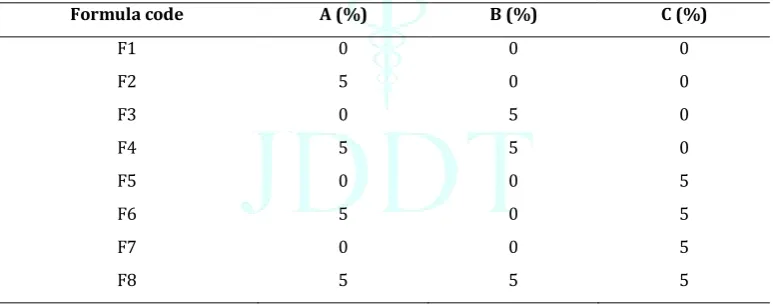
Table 10: Transformed design for analysis of responses of Mefenamic acid Fast Dissolving Tablets
Formula code A (%) B (%) C (%)
F1 0 0 0
F2 5 0 0
F3 0 5 0
F4 5 5 0
F5 0 0 5
F6 5 0 5
F7 0 0 5
F8 5 5 5
The dissolution efficiency in 5 minutes, dissolution data clearly indicate that the dependent variables are strongly dependent on the independent variables. The fitted equations relating the response dissolution efficiency in 5 minutes to the transformed factor are shown in equations 3 & 4.
Final Equation in Terms of Coded Factors: Dissolution efficiency in 5 minutes =
+59.52+10.94A+7.99B+6.57C-7.83AB-12.71AC+
0.5913BC+11.07ABC (R2 = 1.000) ---Eq (3)
The value of the R2 indicates a good fit. The polynomial
equations can be used to draw a conclusion after considering the magnitude of coefficient and the mathematical sign it carries (positive or negative).
From the polynomial equations, one can easily deduce that the effect of interactions between modified starch and croscarmellose sodium (AB) ; modified starch and
crospovidone (AC); croscarmellose sodium and
crospovidone (BC) are significant on the dissolution efficiency in 5 minutes. On the contrary, the magnitudes of coefficients of modified starch (A), croscarmellose sodium (B), crospovidone (C) and interaction between modified starch, croscarmellose sodium and crospovidone (ABC) are larger and positive, showing that the dissolution efficiency in 5 minutes of mefenamic acid fast dissolving tablets is affected by all A, B, C and ABC. The equation for dissolution efficiency in 5 minutes suggests that the factor A has more significant effect on dissolution efficiency in 5 minutes followed by factor B, C and interaction term ABC.
(A) Response Surface Plot
(B) Contour Plot
Fig.6: (A) Response Surface Plot (B) Contour Plot of Mefenamic acid Fast dissolving tablets. (effect of Modified starch and Croscarmellose sodium on Dissolution efficiency in 5 minutes).
(A) Response Surface Plot
(A) Response Surface Plot
(B) Contour Plot
(C) Fig.8: (A) Response Surface Plot (B) Contour Plot of Mefenamic acid Fast dissolving tablets. (effect of Crospovidone and Croscarmellose sodium on Dissolution efficiency in 5 minutes)
The response surface plots and contour plots reveal that as the concentration of modified starch (A) increases, dissolution efficiency in 5 minutes increases. The other two variables also croscarmellose sodium (B) and crospovidone (C) have a positive effect on dissolution efficiency in 5 minutes i.e., as the concentrations of B and C increases, dissolution efficiency in 5 minutes also increases. The effects of A and B on dissolution efficiency in 5 minutes are shown in Fig 6. The contour plots were found to be almost linear indicating a linear relationship between A and B on dissolution efficiency in 5 minutes. It was determined from the contour plot (Fig 6 B), that a higher dissolution efficiency in 5 minutes can be obtained with an A level range between 4 to 5 %, and a B level range from 4-5 %. It is evident from contour plot that the high levels of A and high levels of B favors dissolution efficiency in 5 minutes of mefenamic acid fast dissolving tablets. The effects of A and C on dissolution efficiency in 5 minutes are shown in Fig 7. The contour plots were found to be linear indicating a linear relationship between A and C on dissolution efficiency in 5 minutes. It was determined from the contour plot (Fig. 7 B), that a higher dissolution efficiency in 5 minutes can be obtained with an A level range between 4 to 5 %, and a C level range
from 4 – 5 %. It is evident from contour plot that the low levels of A and high levels of C favors dissolution efficiency in 5 minutes of mefenamic acid fast dissolving tablets. The effects of B and C on dissolution efficiency in 5 minutes are shown in Fig 8. The contour plots were found to be linear indicating a linear relationship between B and C on dissolution efficiency in 5 minutes. It was determined from the contour plot (Fig. 8. B) that higher dissolution efficiency in 5 minutes can be obtained with a B level range between 4 to 5 %, and a C level range from 4-5 %. It is evident from contour plot that the high levels of B and C favors dissolution efficiency in 5 minutes of mefenamic acid fast dissolving tablets.
Comparison of Optimized Mefenamic acid Fast Dissolving Tablet (F2) with the Marketed Sample (Meftal 250):
The optimized formula was compared with the marketed formula (MEFTAL -250). The physical properties of optimized mefenamic acid fast dissolving tablets (F2) and the marketed formulation (MEFTAL 250) were almost similar.
Table 11: Physical properties: Hardness, Friability, Drug Content, Wetting Time, Water Absorption Ratio of Optimized Mefenamic acid Fast Dissolving Tablet (F2) employing modifies starch and Marketed Formulation (Meftal 250).
Formul-ation
code
Hardness (Kg/Cm2)
±S.D Friability (%)±S.D Drug Content±S.D Disintegration Time (S)±S.D Wetting Time (sec)±S.D Water Absorption Ratio(%)±S.D
Meftal 250 3.9±0.02 0.13±0.012 196.23±0.13 23±0.1 17±0.2 1.42±0.1
F2 3.7±0.03 0.14±0.013 198.12±0.79 25±0.6 19±0.22 1.54±0.14
*SD standard deviation from mean, n=3, mean±SD.
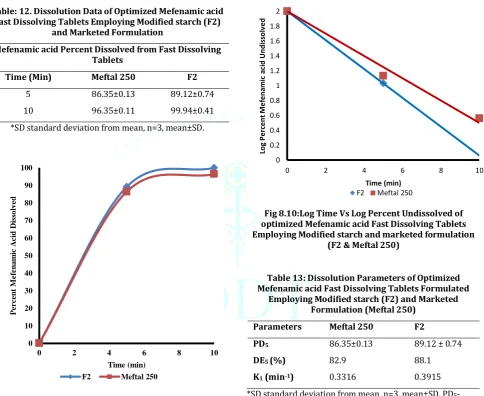
Table: 12. Dissolution Data of Optimized Mefenamic acid Fast Dissolving Tablets Employing Modified starch (F2)
and Marketed Formulation
Mefenamic acid Percent Dissolved from Fast Dissolving Tablets
Time (Min) Meftal 250 F2
5 86.35±0.13 89.12±0.74
10 96.35±0.11 99.94±0.41
*SD standard deviation from mean, n=3, mean±SD.
Fig. 9: Dissolution Profiles of Optimized Mefenamic acid Fast Dissolving Tablets Employing Modified starch and
Marketed Formulation. (F & Meftal 250)
Fig 8.10:Log Time Vs Log Percent Undissolved of optimized Mefenamic acid Fast Dissolving Tablets Employing Modified starch and marketed formulation
(F2 & Meftal 250)
Table 13: Dissolution Parameters of Optimized Mefenamic acid Fast Dissolving Tablets Formulated
Employing Modified starch (F2) and Marketed Formulation (Meftal 250)
Parameters Meftal 250 F2
PD5 86.35±0.13 89.12 ± 0.74
DE5 (%) 82.9 88.1
K1 (min-1) 0.3316 0.3915
*SD standard deviation from mean, n=3, mean±SD, PD5
-Percent dissolved in 5 min., DE5%-Dissolution efficiency in 5
min., K1 =First order rate constant
0 10 20 30 40 50 60 70 80 90 100
0 2 4 6 8 10
P e r c e n t M e fe n a m ic A c id D is so lv e d Time (min)
F2 Meftal 250
0 0.2 0.4 0.6 0.8 1 1.2 1.4 1.6 1.8 2
0 2 4 6 8 10
Lo g P e rc e n t M e fe n am ic a ci d U n d is so lv e d Time (min)
Mefenamic acid Fast Dissolving Tablets (Meftal 250)
At T=0 sec At T=256 sec
F2 Mefenamic acid Fast Dissolving Tablets
Fig: 11 Wetting Times of Optimized Mefenamic acid Fast Dissolving Tablets Employing Modified starch and marketed formulation (F2 & Meftal 250)
CONCLUSION:
Modified starch is an efficient superdisintegrant for fast dissolving tablets. Drug release from the prepared tablets was rapid and is with in 10min and depended on the composition of the tablet i.e., concentration of modified starch, croscarmellose sodium and crospovidone. Based on the results obtained from polynomial equations and response surface methodology, the individual effects of modified starch (A), croscarmellose sodium (B) and crospovidone (C) and interaction between ABC are more significant and positive effect on dissolution efficiency in 5 minutes response surface plots and contour plots indicated that the dissolution efficiency in 5 minutes of mefenamic acid fast dissolving tablets is influenced mostly by modified satrch, followed by croscarmellose sodium and crospovidone. Fast dissolving tablets (F2) formulated employing modified starch (5%), croscarmellose sodium (0%) and crospovidone (0%) exhibited rapid disintegration and fast release of drug within 10 minutes.
Optimization of mefenamic acid fast dissolving tablets is a
complex process when a new starch based
superdisintegrant; modified starch is used as a superdisintegrant, which requires considering a large number of variables and their interactions with each other. The present study conclusively demonstrates the use of 23 –
factorial design in optimization of mefenamic acid fast dissolving tablets. The derived polynomial equations and contour plots aid in predicting the values of selected independent variables for preparation of mefenamic acid fast dissolving tablets with desired properties.
The optimized formulation (F2) gives the best result in terms of the required disintegration time, dissolution efficiency in 5 minutes, and drug release was in accordance with the USP dissolution criteria for conventional tablet of mefenamic acid. It is thus concluded that by adopting systematic approach, an optimum point can be reached in shortest time with minimum efforts when modified starch, is used as a superdisintegrant for achieving fast dissolving formulations.
REFERENCES
1. Bankers GS, Anderson NR, Tablets, Lachman L, Lieberman HA, Kanig JL, The Theory and Practice of Industrial Pharmacy,3rd
edition, 1987.
2. Indian pharmacopoeia, government of india ministry of health & fami78ly welfare, the indian pharmacopoeia commission central Indian pharmacopoeia laboratory govt. Of india, ministry of health & family welfare sector-23,raj nagar, ghaziabad-201002,Volume. 1, 31st March, pp. 735, 1996. 3. Chaudhari PD, chaudhari SP, Kolhe SR, Davekv, More DM.
Formulation and Evaluation of Fast Dissolving Tablets of Piroxicam, Indian Drugs, 2005; 42(10):641-9.
4. Bi Yx, Sunada H, Yonezawa Y, Danjo K, Evaluation of Rapidly Disintegration Tablets by Direct Compression Method Drug Delivery Indian Pharm, 1999; 25(5):571-98.