Published online November 20, 2014 (http://www.sciencepublishinggroup.com/j/jgo) doi: 10.11648/j.jgo.20140206.16
Comparison between micro-dose GnRH agonist and GnRH
antagonist protocol in poor responders undergoing
intracytoplasmic sperm injection with embryo transfer
Moez Kdous, Ghaya Merdassi
*, Fethi Zhioua
Aziza Othmana Hospital, Department of Obstetrics and Gynecology, IVF Center, 1008, Tunis, Tunisia
Email address:
[email protected] (M. Kdous), [email protected] (G. Merdassi), [email protected] (F. Zhioua)
To cite this article:
Moez Kdous, Ghaya Merdassi, Fethi Zhioua. Comparison between Micro-Dose GnRH Agonist and GnRH Antagonist Protocol in Poor Responders Undergoing Intracytoplasmic Sperm Injection with Embryo Transfer. Journal of Gynecology and Obstetrics.
Vol. 2, No. 6, 2014, pp. 106-111. doi: 10.11648/j.jgo.20140206.16
Abstract:
Objective: To compare the effect of the multiple-dose GnRH antagonist protocol with the microdose GnRH agonist flare-up (MF) protocol in poor ovarian responders for ICSI. Design: Retrospective, Clinical study. Setting:IVF center. Patient(s): Two hundred eighty-six poor responder patients undergoing ICSI-embryo transfer cycle. Intervention(s): one hundred Forty four patients (144 cycles) included in group 1 (microdose GnRH-a flare-up protocol) and one hundred fourty two patients (42 cycles) included in group 2 (multiple dose GnRH antagonist protocol). Main Outcome Measure(s): Serum E2 levels, number of growing follicles and mature oocytes, embryo quality, dose of gonadotropin used, cancellation, fertilization, implantation rate, pregnancy rate (PR) and live birth rate (LR). Results: Total gonadotropin dose used was significantly lower (2730±235,45 vs 3189±317,81; P<0.05), duration of stimulation was significantly longer and E2 level was significantly higher in group 1. The mean number of oocytes retrived, mature oocytes retrived, embryos transferred and the rate of at least one top-quality embryo transferred was similar in the two groups. The implantation rate was significantly higher in the microdose flare-up groflare-up than in the multiple-dose antagonist groflare-up (18.79% vs 8.28%; P<.001). Clinical pregnancy and live birth rates were similar in the two groups. Conclusion(s): We achieved comparable pregnancy and live birth rates in poor responders with the use of either GnRH antagonist or flare protocol. However, a significantly higher gonadotropin dose used and lower implantation rate in the antagonist group tips the balance in favor of the flare-up protocol.Keywords:
Cetrorelix, GnRH Antagonist, IVF, Embryo, Micro-Dose GnRH Agonist Flare-Up, Poor Ovarian Response1. Background
Despite considerable advances in assisted reproductive techniques (ART), management of poorresponder patients is still a challenge. Although there is lack of uniform definitions, poor response to controlled ovarian hyperstimulation (COH) can be generally defined as unsatisfactory ovarian response in terms of low number of follicles developed, low serum E2
levels, and low number of oocytes retrieved despite adequate ovarian stimulation. During the ESHRE Campus Workshop, recently held in Bologna (Italy) on March 2010 [1] to discuss the definition and the diagnosis of poor responders, consensus criteria were established under the term of “Bologna Criteria”. According to this consensus, the definition of poor responders lies on two of the following three criteria:
Advanced age ≥ 40 years or other risk factors of poor
ovary response (Genetic anomalies, pelvic infection and surgery, endometriosis and chemotherapy). Poor ovary reserve (AFC <5-7 follicle or AMH <0.5– 1.1 ng/ml).
A history of poor ovarian response to stimulation (≤ 3 oocytes with a conventional stimulation protocol) Many treatment modalities have been suggested to improve ART outcomes in poorresponders. At present, two protocols are popular: microdose GnRH-a flare-up and multiple dose GnRH antagonist protocols [2].
2. Material and Methods
2.1. Patients and Study Design
A total of 286 patients, who were recognized as poorresponders, were enrolled from our computerized IVF database during the time period from July 2008 to December 2010.
Inclusion criteria: two of the following three criteria inspired from "bologna criteria":
Age ≥ 40 years
Antral Follicle Count (AFC) ≤ 5 for the two ovaries. Failure of anterior ovarian stimulation: cycle cancellation (average gonadotrophins dose ≥ 225 UI/day); or less than 3 oocytes collected during an anterior cycle.
Exclusion criteria:
Polycystic ovary syndrome (PCOS) diagnosed according to the criteria set by the Rotterdam Conference 2003 [3],
Stage III–IV endometriosis according to the revised American Fertility Society classification (1985), Inflammatory, autoimmune, or chromosomal disorders Endocrine or metabolic disease, including hyperprolactinemia
Unique ovary.
During the same time interval, 144 patients (144 ICSI cycles) underwent controlled ovarian hyperstimulation (COH) using the microdose GnRH-a flare-up protocol, and 142 patients (142 ICSI cycles) underwent COH using the multiple dose GnRH antagonist protocol. The assignment of the patients to the microdose flare-up or multiple-dose antagonist protocols was made on the physician's preference.
2.2. Ovarian Stimulation and Patient Procedures
The first group (group 1) consisted of 144 patients in 144 cycles in whom triptorelin (Decapeptyl, 0.05 mg; Ipsen, Paris, France) was initiated on the 1st day of menstruation, followed by exogenous gonadotropins administered from the 2nd day of menstruation. The second group (group 2) consisted of 142 poor responders in 142 cycles in whom the exogenous gonadotropins were started on the first day of menstrual cycle, and later cetrorelix 0.25 mg (Cetrotide, Serono,UK) was administered daily until the hCG injection once the leading follicle reached 14 mm in diameter. No oral contraceptive pretreatment was employed in all cases.
In both stimulation regimens, at least 300 IU of starting daily gonadotropins recombinant FSH (Gonal-F; Serono) was administered to all patients, with individual adjustments performed based on ovarian response. When the leading follicle reached 19 to 20 mm in diameter, 10,000 IU of hCG was administered; ultrasound-guided transvaginal oocyte retrieval was performed 36 hours later. ICSI was performed for all metaphase II oocytes according to our clinical policy, and ET for good-quality embryos was performed on day 3 for all patients. Luteal phase supplementation was performed
in both groups by administering 600 mg/day of intravaginal micronized progesterone. Supplementation with progesterone was continued for at least 2 weeks. Pregnancy test was done 2 weeks after embryo transfer and ultrasound scan to confirm the number of sacs and fetal viability was performed at 6 weeks gestation.
2.3. Outcome Measures
The main outcome measure in this study was the number of oocytes retrived. Other outcome measures were Number of mature oocytes retrieved, number of fertilized oocytes, number of embryos transferred, stimulation duration (days), total dose of gonadotrophin IU, estradiol concentration and endometrial thickness on the day of hCG administration, cycle cancellation rate, fertilization rates (%) (Ratio of number of two pronuclear oocytes to number of cumulus-oocytes complexes), implantation rate (%) (Ratio of number of gestational sacs to number of embryos transferred), and clinical pregnancy rate (PR) per cycle and per ET (clinical pregnancy was diagnosed by the visualization of fetal cardiac activity on ultrasound scan).
2.4. Statistical Analysis
Data are expressed as the mean ± SD or percentages. The
χ2-test, Fisher's exact test, and Student's t-test were used for statistical analysis with SPSS software, version 15.0 for Windows (SPSS, Inc, Chicago, IL, USA). P<.05 was considered statistically significant
3. Results
The baseline cycle characteristics for the two study groups are presented in Table 1. The groups were similar in respect to age, BMI, duration of infertility, basal FSH levels, basal E2 levels and AFC
No statistically significant differences between the protocol types were noted with respect to, cycle cancellation rates. In group 1, a total of 16 cycles were cancelled (4 cycles owing to premature LH surge, 8 to poor folliculogenesis, and 4 to fertilization failure), while in the multiple-dose antagonist group a total of 12 cycles were cancelled (4 cycles owing to arrested embryo development and 8 to poor folliculogenesis)
In group 1, total gonadotropin dose used was significantly lower (2730±235,45 vs 3189±317,81; P<0.05) , the duration of stimulation was significantly longer than in group 2 (11,39±0,79 vs 9,64±0,49 days; P<.001) and E2 level on the day of hCG administration was significantly higher (1534,27±1034,34vs 876.08±519; P<.001). The mean number of oocytes retrived, mature oocytes retrived, embryos transferred and the rate of at least one top-quality embryo (Less than 15% fragmentation, blastomere number
Table 1. The baseline characteristics of of the two study groups.
GnRH agonist flare GnRH antagonist P value
Number of cycles 144 142
Age (years) 40,09±6,59 41,04±1,71 NS
BMI (Kgm-2 ) 25,35±4,09 26.64±2,59 NS
Duration of infertility (years) 2.1 ± 2.5 3.1 ± 2.7 NS
Mean basal FSH (mIU/mL) 10,01±2,75 10,60±2,96 UI/L NS
Mean basal E2 (pg/mL) 51.3 ± 19.7 52.2 ± 18.7 NS
AFC 3,8±1,16 3,7±0,96 NS
Note: Values are means (±SD) unless otherwise indicated. NS = not significant
Table 2. Comparison of cycle characteristics and embryological data in the GnRH antagonist and GnRH agonist flare groups.
GnRH agonist flare GnRH antagonist P value
Number of cycles 144 142
Total gonadotropins used (UI) 2730±235,45 3189±317,81 <0.05
E2 level on the day of hCG administration, pg/mL 1534,27±1034,34 876.08±519 <0.001
Duration of stimulation (days) 11,39±0,79 9,64±0,49 <0.001
Endometrial thickness on the day of hCG administration, mm 11.1±2.8 11.5±2 NS
Number of oocytes retrieved 7,64±3,70 7,54±4,93 NS
No. of mature oocytes 5,88±4,38 5,41±4,10 NS
Number of embryos transferred 2.6± 2.3 2.4 ± 1.7 NS
Rate of at least one top-quality embryos transferred, % 49.6% 55.2% NS
Cycle cancellation, % 9,09% 7.01% NS
Note: Values are means (±SD) unless otherwise indicated. NS = not significant
Table 3. Fertilization, implantation, pregnancy and live birth rates in both groups of the study.
GnRH agonist flare GnRH antagonist P value
Number of cycles 144 142
Fertilization rate, % 85,71% 82.76% NS
Implantation rate, % 18.79% 8.28% <0.01
Clinical pregnancy/ET, % 26.60% 21.87% NS
Clinical pregnancy/cycle, % 18.18% 15.90 NS
Live birth rate % 11,36% 9,09% NS
NS = not significant
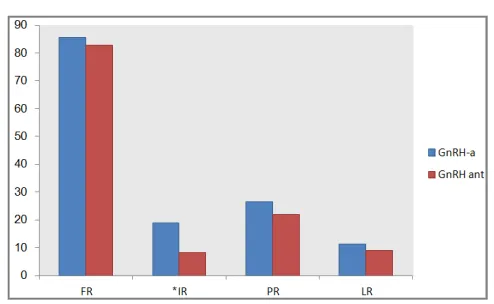
Figure 1. Fertilization (FR), implantation (IR), pregnancy (PR) and live
birth rates in GnRH-a and GnRH-antagonist groups. Blue bars, GnRH-a; Red bars, GnRH antagonist. *P<0.01
The fertilization rate was not significantly different between groups. Although the mean number and the quality of transferred embryos was similar in the two groups, the implantation rate was significantly higher in the microdose flare-up group than in the multiple-dose antagonist group (18.79% vs 8.28%; P<.001). However, the clinical pregnancy
and the live birth rates were similar in the two groups (Table 3, Fig 1)
4. Discussion
number of cancelled cycles. To our knowledge, there are only a few studies comparing flare-up versus the GnRH antagonist protocol in poorresponders [10], [11], [12], [13] , [14] and [15]. There is still controversy on the efficacy of these two regimens for poorresponders.
Deplacido and al [13] suggested that the antagonist protocol compared with the short GnRH-a protocol led to a significant improvement in the oocyte quality and maturation process, which in turn resulted in a significant increase in the mean number of mature oocytes. Conversely, no statistically significant difference in the total number of cumulus oocyte complexes (COCs) retrieved (6.79 ± 3.89 vs. 6.54 ± 3.08, respectively) was observed between groups. Schmidt and al [12] in a study comparing the effect of microdose leuprolide versus ganirelix revealed that there were no significant differences in the two ovarian stimulation protocols in terms of number of oocytes retrieved, fertilization and clinical pregnancy rates.
Akman and al. [10] reported a significant increase in the total number of oocyte retrieved and a non significant increase in the total gonadotropin dose used and fertilization and clinical pregnancy rates in the microdose flare-up group compared with the antagonist group. In addition, Malsumi and al. [11] supported the former study findings by reporting a significant increase in the total number of oocytes retrieved, the number of high-quality embryos, and a significant decrease in the total gonadotropin dose used in the flare-up group. Our data are well correlated with those of De placido and Shmidt, and in contrast with those of, Akman and Malsumi that found significant differences in the number of oocytes retrived.
We did not find a difference in terms of number of mature oocytes (5,88±4,38 vs 5,41±4,10 oocytes ; NS). Our results are confirmed by the meta analysis of Franco [16] (WMD:0.07, 95% CI de -0.38 à 0.53). Nevertheless, De Placido [13], in his prospective randomized study reported a significant increase in the mean number of mature oocytes with the antagonist protocol (6.09±3.36 vs 5.02 ± 1.86, P<0.05). The authors concluded that their results could be related to the LH supplementation in the GnRH antagonist protocol. The addition of LH in GnRH-ant cycles (where > 80% of LH release is abolished in the first 24 hours), could be crucial for sustaining E2 synthesis and paracrine
production of peptides that are necessary for oocyte differentiation, while, during the short flare-up protocol an excessive increase of LH may induce follicle degeneration.
In the present study, although the amount of ampules units of FSH administered were significantly (P<.005) higher in the GnRH antagonists than in the flare-up group, the serum E2 levels on day of hCG administration were significantly
higher (P<.005) in the flare-up than the GnRH-antagonist groups. Similar results are reported in some published studies [10], [17] and [18]. This can be easly explained by the fact that a flare-up regimen with GnRH agonist induces a greater additional gonadotropin stimulus consequently, a reduction in the number of FSH ampules. Our data are in contrast with those of Akman and al. [10] that found no significant
differences in the number of FSH ampules administered. However, in the last study, in the GnRH agonist regimen, an oral contraceptive was started on cycle day 1 of the previous cycle for 21 days. It is probable that this OP pituitary suppression prior to stimulation in a flare-up regimen may explain an increase in the number of FSH ampoules used.
We found that the duration of ovarian stimulation was significantly longer in the agonist group flare-up. Although this did not have an overall impact on the total gonadotropin dose used, we believe that it might be the reason for a significantly higher peak E2 in this group. This difference, however, is in agreement with previous findings [13] and [19] and is not unique to poorresponders [20].
A comparison of both groups in terms of fertilization rate showed no significant difference. This result is in agreement with previously reported data [10] and [12] except of Malmusi [21] who finds a significantly higher fertilization rate in the short protocol (84% vs 63%; p<0.01). However, a significant increase in the implantation rate was reported in our study with the microdose GnRH agonist group (18.79% vs 8.28%; P<0.01). To our knowledge this result has been showen in only 2 previous randomized study [22] and [23]. This high implantation rate that resulted from the microdose GnRH analogue used in the follicular phase may be explained by a reduction in endothelial nitric oxide synthase levels that may cause improvement in the implantation rates for poorresponders in IVF cycles. Furthermore, GnRH antagonists are a potent inhibitor of the cell cycle because they decrease the synthesis of locally produced growth factors in a dose-dependent manner ( [24], [25], [26] , [27], [28] and [29]). Binding sites for GnRH have been demonstrated in ovary, testis, uterus, and human endometrium of fertile patients ( [26], [27] and [30]). Given that the GnRH receptors are present in all these cells and tissues, an interaction between the GnRH antagonist and the GnRH receptor is possible and manifested as lower implantation rates [31]. The GnRH antagonist decreases the production of E2 by the granulosa compartment; hence, the circulating concentrations of this steroid may be insufficient to develop an ideal endometrium to maintain the life of the incipient human embryos [31]. These effects may explain the lower implantation and pregnancy rates in IVF cycles.
In the present study, similar cycle cancellation rates are showed in th two groups and a higher, but not significantly higher, clinical pregnancy and live birth rates were observed in the GnRH-a compared with GnRH-antagonist group. our findings appear to confirm the conclusion of some already-published reviews indicating lower pregnancy and live birth rates in GnRH-antagonist cycles as compared with GnRH-a cycles ( [32] and [33] [34]). However, in a retrospective analysis of poorresponders, the clinical pregnancy and implantation rates appeared higher after GnRH-antagonist treatment than with GnRH-a treatment, but these were not statistically significantly different [35], indicating an existing controversy in this topic.
physician preference. One of the limitations of our study was that the individual practitioners selected whether the GnRH-a flare or the antagonist protocol was used. Although the patients cannot be randomized in a retrospective analysis such as this, the two patient populations had similar baseline characteristics, which makes it possible to compare outcomes between the two groups. Our data in this study, we noted a significantly lower gonadotropin dose used, higher duration of stimulation, higher E2 level on the day of hCG administration and higher implantation rate with the microdose flare-up group.
5. Conclusion
In this study, we achieved comparable pregnancy and live birth rates in poor responders with the use of either GnRH antagonist or flare protocol. However, a significantly higher gonadotropin dose used and lower implantation rate in the antagonist group tips the balance in favor of the flare-up protocol. To our opinion, there is no one controlled ovarian hyper stimulation (COH) protocol which is best suited for all poor responders. Prediction of compromised response prior to cycle initiation by a thorough assessment of ovarian reserve as well as a careful review of past response should therefore allow for selection of the appropriate protocol for each individual patient. Furthermore, choosing the protocol should be also based on other practical considerations such as cost, ease of use, and ability to administer the GnRH antagonist in a timely fashion. Further prospective research is needed to assess the benefits of modifications in both GnRH antagonist and GnRH flare protocols in poor responders.
Authors' Contributions
MK carried out the statistic tests and drafted the manuscript. MG participated in the design of the study and helped to draft the manuscript. ZF participated in the design and the draft .All authors read and approved the final manuscript.
References
[1] Ferraretti AP, La Marca A, Fauser BC, Tarlatzis B, Nargund G, Gianaroli L; on behalf of the ESHRE working group on Poor Ovarian Response Definition. ESHRE consensus on the definition of 'poor response' to ovarian stimulation for in vitro fertilization: the Bologna criteria. Hum Reprod 2011; 26:1616-1624.
[2] Nikolaos P, Polyzos A, Paul D. A systematic review of randomized trials for the treatment of poor ovarian responders: is there any light at the end of the tunnel? Fertil Steril 2011;96:1058-1061.
[3] Revised 2003 consensus on diagnostic criteria and long-term health risks related to polycystic ovary syndrome.The Rotterdam ESHRE/ASRM-Sponsored PCOS Consensus Workshop Group. Fertil Steril 2004; 81:19-25.
[4] Detti L, Williams DB, Robins JC, Maxwell RA, Thomas MA.
A comparison of three downregulation approaches for poorresponders undergoing in vitro fertilization Fertil Steril 2005; 84: 1401–1405.
[5] Schoolcraft W, Schlenker T, Gee M, Stevens J, Wagley L. Improved controlled ovarian hyperstimulation in poorresponder in vitro fertilization patients with a microdose follicle-stimulating hormone flare, growth hormone protocol. Fertil Steril 1997; 67: 93–97.
[6] Scott RT, Navot D. Enhancement of ovarian responsiveness with microdoses of gonadotropin-releasing hormone agonist during ovulation induction for in vitro fertilization Fertil Steril 1994; 61: 880–885.
[7] Surrey ES, Bower J, Hill, Ramsey J, Surrey MW. Clinical and endocrine effects of a microdose GnRH agonist flare regimen administered to poorresponders who are undergoing in vitro fertilization Fertil Steril 1998; 69: 419–424.
[8] Kyrou D, Kolibianakis EM, Venetis CA, Papanikolaou EG, Bontis J, Tarlatzis BC. How to improve the probability of pregnancy in poor responders undergoing in vitro fertilization: a systematic review and meta-analysis. Fertil Steril 2009; 91:749-66.
[9] Alyaa E, Jessica SM, Lawrence E, John N, Claudio B. Luteal phase estradiol versus luteal phase estradiol and antagonist protocol for controlled ovarian stimulation before in vitro fertilization in poor responders. Fertil Steril 2011; 95: 324-326.
[10] Akman MA, Erden HF, Tosun SB, Bayazit N, Aksoy E, M. Bahceci. Comparison of agonistic flare-up-protocol and antagonistic multiple dose protocol in ovarian stimulation of poorresponders: results of a prospective randomized trial. Hum Reprod 2001 ; 16 : 868–870.
[11] S. Malmusi A. La Marca S. Giulini S. Xella D. Tagliasacchi, T. Marsella et al. Comparison of a gonadotropin-releasing hormone (GnRH) antagonist and GnRH agonist flare-up regimen in poorresponders undergoing ovarian stimulation. Fertil Steril 2005; 84: 402–406.
[12] Schmidt DW, T. Bremner, J.J. Orris, D.B. Maier, C.A. Benadiva, J.C. Nulsen. A randomized prospective study of microdose leuprolide versus ganirelix in in vitro fertilization cycles for poorresponders Fertil Steril 2005; 83: 1568–1571.
[13] G. De Placido, A. Mollo, R. Clarizia, I. Strina, S. Conforti, C. Alviggi. Gonadotropin-releasing hormone (GnRH) antagonist plus recombinant luteinizing hormone vs. a standard GnRH agonist short protocol in patients at risk for poor ovarian response. Fertil Steril 2006; 85: 247–250.
[14] S.J. Fasouliotis, N. Laufer, S. Sabbagh-Ehrlich, A. Lewin, A. Hurwitz, A. Simon. Gonadotropin-releasing hormone (GnRH)-antagonist versus GnRH-agonist in ovarian stimulation of poorresponders undergoing IVF. J Assist Reprod Genet 2003; 20: 455–460.
[15] Franco JR, Baruffi RLR, Mauri AL, Petersen CG, Felipe V, Cornicelli J, et al. GnRH agonist versus GnRH antagonist in poor ovarian responders: a meta-analysis. Reprod Biomed Online 2006;13:618–27.
[17] Lainas TG, Sfontouris IA, Papanikolaou EG, Zorzovilis JZ, Petsas GK, Lainas GT, Kolibianakis EM. Flexible GnRH antagonist versus flare-up GnRH agonist protocol in poor responders treated by IVF: a randomized controlled trial. Hum Reprod 2008;23:1355-8.
[18] Zakia Mahdy Ibrahim, Heba Younes Mohamed Youssef, Magda Moustafa Elbialy, Mohamed Mouselhy Farrag. Micro-dose flare-up gonadotrophin-releasing hormone (GnRH) agonist vs. flexible gonadotrophin-releasing hormone (GnRH) antagonist protocol in patient with poor ovarian reserve. Middle East Fertility Society Journal 2011; 16: 272-277.
[19] J. Garecia-Velasco, V. Isaza, C. Vidal, A. Landazabal, J. Remohi, C. Simon et al. Human ovarian steroid secretion in vivo: effects of GnRH agonist versus antagonist (cetrorelix). Hum Reprod 2001;16:2533–2539.
[20] Malmusi S, La Marca A, Giulini S, Xella S, Tagliasacchi D, Marsella T, et al. Comparison of a gonadotropin-releasing hormone (GnRH) antagonist and GnRH agonist flare-up regimen in poor responders undergoing ovarian stimulation. Fertil Steril 2005;84:402–6.
[21] Demirol A, Gurgan T.Comparison of microdose flare-up and antagonist multiple-dose protocols for poor-responder patients: a randomized study. . Fertil Steril 2009;92:481-5.
[22] Hakan yarali, İbrahim Esinler, Mehtap Polat, Gurkan Bozdag, Bulent Tiras. Antagonist/letrozole protocol in poor ovarian responders for intracytoplasmic sperm injection: a comparative study with the microdose flare-up protocol. Fertil Steril 2009;92:231-235.
[23] E.M. Casañ, F. Raga, M.L. Polan. GnRH mRNA and protein expression in human preimplantation embryos. Mol. Hum Reprod 1999;5:234–239.
[24] G. Emons, V. Muller, O. Ortmann, K.D. Schulz. Effects of LH-RH analogues on mitogenic signal transduction in cancer cells. J Steroid Biochem Mol Biol, 65 (1998), pp. 199–206
[25] W.J. Murdoch. Immunolocalization of a GnRH receptor site in murine endometrium that mediates apoptosis. Cell Tissue Res 1995;282:527–529.
[26] O. Ortmann, K. Diedrich. Pituitary and extrapituitary actions of gonadotrophin-releasing hormone and 1st analogues. Hum Reprod 1999;14:194–206.
[27] Yannis Prapas, Stamatios Petousis, Themistoklis Dagklis, Yannis Panagiotidis, Achilleas Papatheodorou, Iuliano Assunta, Nikos Prapas. GnRH antagonist versus long GnRH agonist protocol in poor IVFresponders: a randomized clinical trial. Eur J Obstet Gynecol Reprod Biol 2012;25:208-209.
[28] Robab Davar, Homa Oskouian, Shahnaz Ahmadi, Razieh Dehghani Firouzabad. GnRH Antagonist/Letrozole Versus Microdose GnRH Agonist Flare Protocol in Poor Responders Undergoing In Vitro Fertilization. Taiwanese J Obst Gynecol 2010;49:297-301
[29] D. Minaretzis, M. Jakubowski, J.F. Mortola, S.N. Pavlou. Gonadotrophin-releasing hormone receptor gene expression in human ovary and granulosa-lutein cells. J Clin Endocrinol Metab 1995;80:430–434.
[30] E.R. Hernandez. Embryo implantation and GnRH antagonists. Hum Reprod 2000;15:1211–1216.
[31] F. Olivennes, J.S. Cuhna-Filho, R. Fanchin, P. Bouchard, R. Frydman. The use of GnRH antagonists in ovarian stimulation. Hum Reprod Update 2002;8:279–290.
[32] B.C. Tarlatzis, L. Zepiridis, G. Grimbizis, J. Bontis. Clinical management of low ovarian response to stimulation for IVFa systematic review. Hum Reprod Update 2003;9:61–76.
[33] Inna Berin, Daniel E. Stein, Martin D. Keltz. A comparison of gonadotropin-releasing hormone (GnRH) antagonist and GnRH agonist flare protocols for poor responders undergoing in vitro fertilization. Fertil Steril 2010;93:360-363.