R E S E A R C H
Open Access
Gene Ontology consistent protein function
prediction: the FALCON algorithm applied to
six eukaryotic genomes
Yiannis AI Kourmpetis
1,3, Aalt DJ van Dijk
1,2and Cajo JF ter Braak
1*Abstract
Gene Ontology (GO) is a hierarchical vocabulary for the description of biological functions and locations, often employed by computational methods for protein function prediction. Due to the structure of GO, function predictions can be self- contradictory. For example, a protein may be predicted to belong to a detailed functional class, but not in a broader class that, due to the vocabulary structure, includes the predicted one.
We present a novel discrete optimization algorithm called Functional Annotation with Labeling CONsistency
(FALCON) that resolves such contradictions. The GO is modeled as a discrete Bayesian Network. For any given input of GO term membership probabilities, the algorithm returns the most probable GO term assignments that are in accordance with the Gene Ontology structure. The optimization is done using the Differential Evolution algorithm. Performance is evaluated on simulated and also real data fromArabidopsis thalianashowing improvement compared to related approaches. We finally applied the FALCON algorithm to obtain genome-wide function predictions for six eukaryotic species based on data provided by the CAFA (Critical Assessment of Function Annotation) project.
Keywords: Protein function prediction, Gene Ontology, Evolutionary optimization
Background
Central aim of computational protein function predic-tion methods is to provide reliable and interpretable results, in order to be useful for the biological commu-nity. For this reason, prediction methods often make use of the Gene Ontology (GO) controlled vocabulary [1] to describe functional properties of proteins. GO terms are organized in three separate domains that describe dif-ferent aspects of gene and protein function: Molecular Function (MF), Biological Process (BP) and Cellular Com-ponent (CC). Within each domain the terms are arranged in a Directed Acyclic Graph (DAG). Due to the hierarchi-cal structure of the GO-DAG, a protein that is assigned to a particular term is by definition assigned to all of its predecessors, which are more general GO terms. On the other hand, if a protein does not perform a particu-lar function, it is not assigned to the corresponding GO
*Correspondence: [email protected]
1Biometris, Wageningen University and Research Centre, 6700AC Wageningen, The Netherlands
Full list of author information is available at the end of the article
term, nor to any of the successors (more detailed terms) of that term. This constraint of the GO-DAG is referred to as the True Path Rule (TPR) and provides a frame-work to ensure that functional descriptions of proteins are not self-contradictory. Computational methods often neglect the TPR in their predictions, making their inter-pretations problematic. Taking the GO DAG (and thus TPR) into account in protein function prediction may lead to improvement of the performance and interpretation.
Violation of TPR can be described in a continuous or in a discrete manner. In the former, the probability (or con-fidence) of membership to a GO term does not decrease monotonically when moving from more general GO terms to the more detailed ones. Therefore the space of probabil-ity vectors (where a vector denotes the joint set of per-GO term probabilities of memberships) can be divided in two sets: one set (C) that contains the probability vectors that satisfy the monotonicity constraint and another set (V) that contains those that violate the constraint. The chal-lenge from the continuous point of view is, given a vector V to find an optimal corresponding vector inC, according to a criterion.
Obozinski et al. [2] developed different “reconciliation” approaches to infer consistent probability vectors from Support Vector Machines (SVM) outputs transformed to probabilities. Performance comparisons between meth-ods based on Belief Propagation, Kullback-Leibner min-imization and Isotonic Regression (IR), showed that the last outperformed the rest. In IR [3,4] predictors are the ranks in the ordering of terms in the GO-DAG from gen-eral to detailed and the responses are the membership probabilities. The aim is to identify the probability vector that minimizes the squared error with the original input vector and that is monotonic for the predictors and thus belongs toC.
In the discrete case, the interest is shifted from the prob-abilities of membership to the memberships themselves. The TPR violation can be evaluated by checking whether all dependencies are satisfied or not. Given an inconsis-tent probability vector, the aim is to find the most probable set of GO assignments that do not violate TPR. The task of inferring the most probable latent binary vector given the input probabilities is a decoding problem, which is well-studied in information theory when the underlying structure of constraints has a tree-like structure (including chains). The Viterbi algorithm [5] (also called min-sum [6]) performs such exact inference in tree-like struc-tures. Standard hierarchical classification is not a suitable approach to this problem due to the the DAG structure of GO and multi-functionality of proteins [7]. For instance, applying hierarchical classification to the DAG depicted in Figure 1A, one starts from the root (x1) and moves to eitherx2orx3. Regardless the outcome of this classifica-tion, it is not possible to give a positive prediction forx4 without violating the TPR (since exactly one of its parents will not be predicted). However, Vens et al. [8] proposed an hierarchical classification methodology adapted for the GO vocabulary. Other interesting approaches come from fuzzy classification [9]. Exact inference in DAG struc-tures is an NP-hard problem [10] that can be performed
by the Junction Tree algorithm [11] but the computa-tional cost is intractable for the size of graphs such as the GO. Barutcuoglu et al. [12] modeled the GO-DAG as a Bayesian Network and they combined SVM outputs per GO term in order to obtain GO assignments. In their case, exact inference was feasible because of the small size of the GO-DAG part used in the study (105 terms). Another related approach was developed by Sokolov and Ben-Hur [13] where SVM classifiers for structured spaces, such as the Gene Ontology, were developed. Valentini et al. [14] and Cesa-Bianchi et al. [15] developed ensemble algo-rithms that transfer the decisions between base (GO term) classifiers according to the GO DAG structure. Jiang et al. [10] first converted the GO DAG to a tree structure and then applied exact inference.
Here, we take a discrete approach to the problem of TPR violations and we develop an algorithm for the inference of most probable TPR consistent assignments using per-GO term probabilities as input. To the best of our knowledge there is no other algorithm for this task that is suitable for large DAGs. We model the GO DAG as a Bayesian Network and we infer the most probable assignments employing the global optimization method of Differential Evolution [16], which is adapted for discrete space. We test our algorithm on small graphs of size 6 and 15 nodes, for which we can perform exact inference. We show that our algorithm consistently finds the correct optimal con-figuration. Further we evaluate the performance of the algorithm on probabilistic outputs of Bayesian Markov Random Fields (BMRF) [17] as applied previously in Ara-bidopsis thaliana protein function prediction [18]. Our algorithm is applied to a graph that contains 1024 GO terms. We show that besides providing consistent pre-dictions, our algorithm improves the performance of the predictions compared to a supervised method used in a previous study. We finally applied our algorithm in large scale and we provide function predictions for 32,000 unannotated proteins from six eukaryotic species.
Materials and methods
The GO is a vocabulary that describes the functions and locations of genes and its terms are arranged in a DAG structure,i.e. every node has zero, one or more parents and children. A protein can be assigned to one or mul-tiple terms from each domain of GO [7]. The TPR of the GO-DAG implies that when a protein is known to be assigned to a particular GO term, it should also be assigned to all ancestor terms. In contrast, when a pro-tein is known not to be a member of a GO term, it should not be a member of any of all the successors of that term. By GO-DAG consistency we denote satisfac-tion of the TPR (also see Table 1). In terms of predicsatisfac-tion, given a probably inconsistent vector of input probabil-ities, one has to find the most probable multiple and consistent GO-DAG paths that the protein has to be annotated to.
Naturally, methods that treat GO terms independently and neglect the DAG structure of the GO can make predictions that are inconsistent. In particular for proba-bilistic methods those inconsistencies may appear in the form of pi > pj in which the term j is an ancestor of term i, and thus more general. In this study, we aim to find the most probable consistent GO term assignments, using such probability vectors as input. We first describe the general probabilistic setting, then derive two likeli-hood based objective functions and finally an evolutionary algorithm for the optimization.
Bayesian network modelling of GO
Consider a Directed Acyclic Graph (DAG) G = (V,E) with nodes V (denoting the set of GO terms) and E directed edges (the set of parent-child relationships). Vec-torθ denotes the input probability vector which is|V| -dimensional andxis the corresponding binary labeling, wherexg=1 denotes membership for a particular protein to theg-th GO term inVGO term.
We model the GO-DAG as a Bayesian Network, with density forx:
p(x|G,θ )=
|V|
g=1
pxg |xpa(g)
(1)
wherepa(g) denotes the parent set of nodeg andxpa(g) the set of labels that correspond to those parents.
Table 1 Parent-child relationship in a GO-DAG
Parent
1 0
Child 1 C V
0 C C
C denotes consistent configuration while V denotes violating configuration.
The probability p(xg|xpa(g)), under the DAG con-straints, is given using the Conditional Probability Table (CPT) of Table 2. The table shows that when min(xpa(g)) = 0 (i.e.at least one of the parents has label 0) thenxg =0 with probability 1. Otherwisexg =1 with probabilityθgandxg=0 with probability 1−θg. Note that all inconsistent labelings have zero probability.
Given equation 1 and conditional probability tables with parameters = (θ1,· · ·,θ|V|), one wishes to identify the most probable labelings vectorx. There are two challenges in this. The first is how to choose the parameter vec-torθ, discussed in this section, and the second is how to search for the most probable labelings vectorx, which is discussed in the next section.
Most computational methods for GO term prediction are developed under a multi-class classification frame-work, where each GO term denotes a class and for each protein the probability of being member of that class is evaluated by the method. Classes are arranged accord-ing to a DAG hierarchy and further each protein may belong to one or multiple classes. In GOStruct [13] a SVM approach was developed to perform multi-class clas-sification in a single step. However, the vast majority of the methods split the multi-class problem in mul-tiple binary classification ones (i.e. one versus all) and therefore act per GO term and disregard the GO hier-archy. GeneMANIA [19], Kernel Logistic Regression [20] and BMRF [17] propagate function information through networks of protein associations and this operation is per-formed per GO term. Blast2GO [21], GO-At [22] and Aranet [23] perform overrepresentation analysis for each GO term separately. Such methods do not return the conditional probabilities in the sense of equation 1. The membership probabilities that they return are perhaps best viewed as marginal probabilities,i.e. summed over all configurations for GO terms other than the specific termg. We might have tried to retrieveθ from the rela-tion between marginal and condirela-tional probabilities, but this is certainly not an easy way. We attempted other ways.
Methods such as BMRF return low probabilities for detailed GO terms and high ones for general terms. Pri-oritization of the proteins in a particular GO term can then be achieved by simply sorting them. By contrast, pri-oritization of GO terms for a particular protein (a more
Table 2 Conditional probability table, under the DAG constraints
min(xpa(g))
1 0
xg 1 θg 0
important task) is not simple as the sets of probabilities for different GO terms are not directly comparable. To make them comparable, the probabilities need to be calibrated. We derive two approaches.
The first, called DeltaL is based on the maximization of the difference of the likelihood and prior probability of the labelings as they are defined in equation (1). The second, called LogitR, is based on explicit calibration of the input probability vector.
For DeltaL, we modify the objective function of equation (1) by incorporating the prior probabilities of membershipθ∗. The prior probabilityθg∗depends on the generality of the GO termg(i.e.the class size) and is esti-mated as the fraction of the total proteins annotated to that GO term. We use the log ratio between the input probability and the prior,log(p(xg | θg)/p(xg | θg∗))as score function for the labeling of theg-th GO term. For xg =1 the score is equal tolog(θg/θg∗), while forxg=0 it takes the value oflog((1−θg)/(1−θg∗)). Whenθg > θg∗ thenxg =1 maximizes the function. In the opposite case xg = 0 gives the maximum. The extended function is given by the difference of the log likelihoods:
LX;θ,θ∗=
|V|
g=1
log p
xg|θg
pxg|θg∗
, (2)
giving
LX;θ,θ∗=log(p(X|θ ))−logpX|θ∗. (3)
Note that when the input probabilities are very close to the priors, the objective function of DeltaL becomes multimodal.
In LogitR optimization of equation 1 is performed on a calibrated input probability vector. The calibration is done as follows:
logitθcg=logitθg∗+αlogitθg−logitθg∗
(4)
whereθcg is the calibrated probability for nodegand can be calculated using the inverse of the logistic transforma-tion,θg∗is the prior probability of membership for nodeg andαa slope parameter. In this objective function, when the posterior probabilityθ = θ∗then the probability of membership is equal toθ∗(Figure 2A). Asθdeviates from the prior, the calibrated probabilityθcgchanges according to the logistic function givenθgandα(Figure 2B). Theα parameter was tuned usingSaccharomyces cerevisiaedata. In particular, for a range of α = 1, 1.5, 2.0, 2.5, 3.0 the LogitR approach was applied taking as input BMRF based predictions obtained from a previous study [17] before March 2010. The evaluation set consisted of 327 proteins that were annotated after March 2010, according to the GO annotation file of July 2011. The relevant part of GO
DAG contained 423 terms from Biological Process. For each value ofαthe prediction performance was measured using the F-score, which is the harmonic mean of preci-sion and recall. The largest F-score was obtained forα=2 and therefore we fixedαto that value.
Optimization by differential evolution: The FALCON algorithm
The DeltaL in equation(3) and LogitR in equation(4) approaches do not involve directly the TPR constraints. We develop an optimization algorithm inspired from Differential Evolution (DE) [16] that by construction is restricted to the subspace of consistent labelings. We call our algorithm Functional Annotation with Labeling CON-sistency (FALCON). In general, DE works by evolving a population of candidate solutions to explore the search space and retrieve the maximum. Because DE is derivative free, it has appealing global optimization properties. Also, it is suitable for optimization in discrete spaces (like the labelings space in our problem).
The graph representation of the labelings is helpful to explain how the algorithm works. Given the graphGand its corresponding labeling X, we define a reduced graph
R = (VR,ER) which contains the nodes with corre-sponding labels x = 1. If X is consistent, in the TPR sense, Rwill be a connected sub-graph of Gand main-taining the original structure for theVRnodes. Consider two labelings L1, L2 and their graphs R1, R2 respec-tively is given in Figure 3. Graph union R1∪R2 gives the expanded graphRunion = (VR1 ∪VR2,ER1 ∪ER2), while graph intersectionR1∩R2, gives the contracted one Rint = (V
R1 ∩VR2,ER1 ∩ER2). The nodes that will be
included in the resulting graph are given by set operations (i.e.(VR1∪VR2)and(VR1∩VR2)respectively), but also
equivalently by performing logical OR (for union),X1∨X2, and logical AND (for intersection),X1∧X2operations on the labelings directly. Table 3 and Figure 3 illustrate those operations.
Figure 2Calibration of posterior probabilities usingα=2.A.Calibrated probabilities (y-axis) against the posterior probabilities (x-axis) when the prior is equal to 0.2.B.Image plot, for the entire range of prior and posterior probabilities. The colors denote the calibrated probabilities.
i.e.R1...RN, withN = 2 | V |. The population is first initialized with consistent labelings (graphs) and evolved exploiting the graph-union and graph-intersection oper-ations between individuals. Through the generoper-ations, all the constructed labelings will be consistent due to the abovementioned property. In our optimization problem we used four strategies to propose a new candidate solu-tion (labelings) for thei-th graphRi, that is member of the population:
• S1: Global UnionRCand=R1∨R2∨e
• S2: Global IntersectionRCand=R1∧R2∨e
• S3: Local UnionRCand=Ri∨R1∨R2∨e
• S4: Local IntersectionRCand=Ri∧R1∨R2∨e
The first two types are called global because they do not involveRi while the latter two are local moves. Graphe is a random subgraph of the original full graph (i.e. GO-DAG), constructed by sampling a random node and all its
ancestors.eensures that all consistent configurations can be eventually proposed and reached.
Withf the objective functioni.e.being DeltaL or Log-itR, the scheme of the FALCON algorithm is as fol-lows:
InitializePopulationRof sizeN =2| V |by picking random consistent vectors (see below):
while Convergence or Maximum generations not reacheddo
fori=1 toNdo
Sample two labelings from the population
R1,R2=Ri
Construct RCand using the a randomly picked strategyS1,S2,S3,S4
iff(RCand) >f(Ri)then,Ri:=RCand
end for end while
Initialization of the population for DeltaL is done by random sampling GO terms according to their individual
Table 3 Logical operations OR and AND for all the combinations of labels
x1 x2 OR (x1∨x2) AND (x1∧x2)
0 0 0 0
1 0 1 0
0 1 1 0
1 1 1 1
In this exampleX1andX2are univariate.
score (log ratio of the input and prior probability), while LogitR by sampling from the binomial distribution with probability equal to the calibrated one. In both cases the nodes were up-propagated in order to construct a con-sistent labeling. The computation was terminated after 10,000 generations or after reaching a plateau (i.e.there is no improvement in the objective function for 100 genera-tions). Finally we point that a valid Markov Chain Monte Carlo algorithm cannot be derived using those proposal strategies because they do not represent reversible moves. The bitwise exclusive OR move proposed by Sterns in [24] is reversible but does not lead to consistent labelings. Implementation of the algorithm was done in R language for Statistical Computing and using the igraph R package [25].
Performance evaluation
We evaluated the performance of the FALCON algorithm on the DeltaL and LogitR objective function using Pre-cision, Recall and F-score. Precision is defined as the percentage of correct GO terms in the list of the GO predictions. Recall is equal to the percentage of the GO assignments that were identified and F-score is the geo-metric mean of the Precision and Recall.
Simulated data
First, we tested the capability of FALCON to retrieve the most probable graph using the full graphs in Figure 1 with hundred simulated probability vectors. The first con-tains six nodes and the second fifteen. Because the graphs are small, exhaustive search of the most probable labeling was computationally tractable. We generated a hundred random probability vectors, by sampling probabilities for each node from the uniform distribution. Then we iden-tified the most probable labeling for each simulated prob-ability vector and the one returned by FALCON using equation (1) as objective function. Performance measures were calculated by comparing the vectors obtained by FALCON with the most probable ones as calculated from the exhaustive search.
Real data
The performance of FALCON was further evaluated using as input the GO membership probabilities of the
Arabidopsis proteins as computed by BMRF in [18]. This method provides membership probabilities per GO term independently. We constructed two evaluation datasets from those data. First, we randomly picked 100 Arabidop-sis proteins that were already annotated at the time of computing the BMRF posterior probabilities. One con-straint was that they should have at least fifty annota-tions (after up-propagating their original annotaannota-tions). In this way we ensured that they were annotated in rather detailed GO terms, and therefore the attempt to get GO-DAG consistent predictions would be sensible. Although these proteins had a fixed labeling in the computations, BMRF can calculate membership probabilities for them, by reconstitution,i.e.as if they were unknown. The sec-ond dataset consisted of 387 proteins that were annotated later than the date of the BMRF computations. Thus, at the time of the computation the proteins were not annotated. We used this second set of proteins to evalu-ate the performance of FALCON in realistic conditions. In addition, we obtained a further list of predictions using the supervised approach proposed in [18]. In this approach, from the posterior probabilities of the anno-tated proteins, an F-score based optimal threshold was calculated per GO term. Using this approach, called maxF, we derived a set of predictions for each evaluation dataset. Note that those lists are not guaranteed to be GO-DAG consistent.
Results and discussion
Performance of FALCON on simulated data
We initially evaluated the performance of FALCON in the two small graphs of Figure 1. For each graph we simulated 100 probability vectors by drawing from the uniform. Because the graphs are small we could identify the most probable labeling by exhaustive searching. Using equation 1 as objective function and setting all the prior probabilities to 0.5, LogitR retrieved the 98/100 of the labelings for the 6-node graph and 92/100 of the labelings for the 15-node graph. The DeltaL approach also retrieved
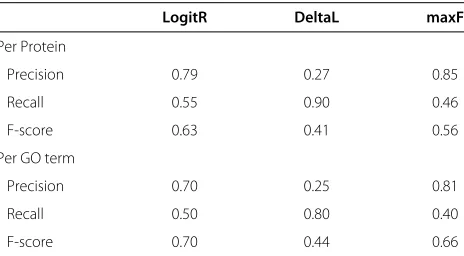
Table 4 Mean performance measures for the evaluation dataset consisting of 100 Arabidopsis proteins
LogitR DeltaL maxF
Per Protein
Precision 0.79 0.27 0.85
Recall 0.55 0.90 0.46
F-score 0.63 0.41 0.56
Per GO term
Precision 0.70 0.25 0.81
Recall 0.50 0.80 0.40
Figure 4Performance on the evaluation dataset for the methods LogitR (red), DeltaL (blue), maxF (yellow).ABC.F-score, Precision and Recall scores for different size of GO terms.DEF.The same scores against the number of annotations per protein. Smoothed splines in each subplot show fitted generalized additive models and using the R function smooth˙spline. Because a large number of points in the scatterplot coincided, we performed jittering by adding a small error term to each valuee∼N(0, 10−4), in order to make the maximum number of points visible.
98/100 labelings for the small graph (using priors = 0.5 for all the nodes).
Performance of FALCON on real data
To assess performance we used Arabidopsis proteins for which we previously calculated GO membership proba-bilities [18]. The true labelings of the proteins included in the evaluation datasets were known, so we were able to calculate performance metrics. Table 4 shows mean per-formance measures per protein and per GO term. The LogitR approach leads to the highest F-score, while maxF comes second and DeltaL comes last. We see that all three of them follow the precision-recall trade off (i.e.for larger precision there is lower recall and vice versa) with maxF being more precise but with reduced recall and the oppo-site for DeltaL. LogitR stays in the middle. In Figure 4 performance measures are shown in relation to the GO term level of detail and to the number of GO assign-ments per protein. Using the F-score to summarize the performance (Figure 4A) we see that for the GO terms that are rather general DeltaL (yellow) performs well, but for the more detailed ones its performance deteriorates. On the other hand LogitR and maxF perform well in detailed GO terms. In terms of Precision (Figure 4B) and
Recall (Figure 4C), the latter methods have similar perfor-mance but LogitR performs slightly better. On the other hand DeltaL predicts large numbers of terms and there-fore shows high recall but low precision, in particular for the detailed GO terms that are of real interest. Compar-ing the performance of predictCompar-ing the assignments per protein (Figure 4D-F), the LogitR approach performs con-sistently better than the others in terms of the proteins that need either small or large number of GO terms to be functionally described.
We further evaluated the performance of our approaches using a set of proteins that were annotated after obtaining the BMRF predictions (Table 5). From the
Table 5 Mean performance measures for the newly annotated proteins
Precision Recall Fscore Proteins
maxF 0.34 0.35 0.23 84
DeltaL 0.08 0.58 0.19 328
LogitR 0.26 0.50 0.27 147
total of 387 newly annotated proteins, maxF returned predictions for 84 of them, DeltaL for 328 proteins and LogitR for 147 proteins. Again, maxF and DeltaL show comparable performance while logitL returned an improved list in terms of F score. Further, the higher recall rates of DeltaL tend to give longer lists of predictions. Importantly however, DeltaL and LogitR return predic-tions that are consistent with GO-DAG and are therefore preferred because such predictions are biologically interpretable.
Novel predictions
We performed protein function predictions using the FALCON algorithm on the unannotated parts of the genomes of 6 eukaryotes (human, mouse, rat, slime mold, frog and arabidopsis). This dataset includes the eukary-otic targets used in the Critical Assessment of protein Function Annotation (CAFA) experiment of 2011 [26] and consists of 32,201 proteins. Function predictions were made for 1,917 GO terms from the Biological Process and Molecular Function compartments of Gene Ontology. The input probabilities were computed during CAFA’11 by BMRF integrating protein networks constructed from the STRING database [27] with orthology information obtained from ProgMap [28]. The BMRF and FALCON predictions are available in the BMRF website: http:// www.ab.wur.nl/bmrf_yk/FALCON_CAFA.tab.gz.
Conclusions
Overall, we examined the performance of FALCON for two objective functions, but FALCON is in principle suitable for optimization of a wide range of objective functions. The main purpose of FALCON is to provide GO DAG consistent predictions. We showed that this comes with no loss of the prediction performance. In fact LogitR outperforms the maxF method. The predic-tions of FALCON are GO-DAG consistent and therefore biologically much easier interpreted by the curators of protein function annotations. In this study an estimate of the calibration parameter α for LogitR was obtained using a yeast data set and the input probabilities were obtained from a semi-supervised method (BMRF), but, thereafter, FALCON is unsupervised; it infers the opti-mal GO term assignment using only the input probability vectors and the prior probabilities per GO term (com-puted from a set of predictions or using external Gene Ontology information). In contrast, in maxF, a training set is necessary in order to obtain the optimal cutoffs per GO term. In this study both approaches were applicable but the FALCON algorithm is expected to have broader applicability.
Competing interests
The authors declare that they have no competing interests.
Authors’ contributions
YK and CtB conceived the study and developed the algorithm. YK and ADJvD performed the BMRF analysis on the CAFA dataset. YK performed the analysis on FALCON and wrote the manuscript. CtB supervised the research and helped in writing the manuscript. All authors read and approved the final manuscript.
Acknowledgements
We thank Roeland van Ham, James Holzwarth and the two reviewers for constructive remarks on the manuscript. YK was supported by the Biorange grant SP3.2.1 from the Netherlands Bioinformatics Centre. ADJvD was supported by the transPLANT project (funded by the European Commission within its 7th Framework Programme under the thematic area ‘Infrastructures’, contract number 283496)
Author details
1Biometris, Wageningen University and Research Centre, 6700AC Wageningen, The Netherlands.2Applied Bioinformatics, Plant Research International, Wageningen University and Research Centre, 6700AC Wageningen, The Netherlands.3Current address: Functional Genomics, Nestlé Institute of Health Sciences, Campus EPFL, Quartier de l’Innovation, 1015 Lausanne, Switzerland.
Received: 10 August 2011 Accepted: 4 March 2013 Published: 27 March 2013
References
1. Ashburner M, Ball CA, Blake JA, Botstein D, Butler H, Cherry JM, Davis AP, Dolinski K, Dwight SS, Eppig JT, Harris MA, Hill DP, Issel-Tarver L, Kasarskis A, Lewis S, Matese JC, Richardson JE, Ringwald M, Rubin GM, Sherlock G:
Gene ontology: Tool for the unification of biology.Nat Genet2000,
25:25–29.
2. Obozinski G, Lanckriet G, Grant C, Jordan MI, Noble WS:Consistent probabilistic outputs for protein function prediction.Genome Biol
2008,9(Suppl 1):S2(SUPPL. 1).
3. Burdakov O, Grimvall A, Sysoev O:Data preordering in generalized PAV algorithm for monotonic regression.J Comput Math2006,
24(6):771–790.
4. Burdakov O, Sysoev O, Grimvall A, Hussian M:An O (n 2) algorithm for isotonic regression.Large-Scale Nonlinear Optimization2006,83:25–33. 5. Viterbi A, et al.:Error bounds for convolutional codes and an
asymptotically optimum decoding algorithm.IEEE Trans Inf Theory
1967,13(2):260–269.
6. MacKay DJC:Information Theory, Inference & Learning Algorithms. New York: Cambridge University Press; 2002.
7. Kourmpetis Y, van der Burgt A, Bink M, ter Braak C, van Ham R:The use of multiple hierarchically independent Gene Ontology terms in gene function prediction and genome annotation.In Silico Biol2007,
7(6):575–582.
8. Vens C, Struyf J, Schietgat L, Džeroski S, Blockeel H:Decision trees for hierarchical multi-label classification.Mach Learn2008,73(2):185–214. 9. Glez-Peña D, Álvarez R, Díaz F, Fdez-Riverola:DFP: A Bioconductor
package for fuzzy profile identification and gene reduction of microarray data.BMC Bioinformatics2009,10:37.
10. Jiang X, Nariai N, Steffen M, Kasif S, Kolaczyk E:Integration of relational and hierarchical network information for protein function prediction.BMC Bioinformatics2008,9:350.
11. Lauritzen S, Spiegelhalter D:Local computations with probabilities on graphical structures and their application to expert systems.J R Stat Soc Ser B (Methodological)1988,50(2):157–224.
12. Barutcuoglu Z, Schapire RE, Troyanskaya OG:Hierarchical multi-label prediction of gene function.Bioinformatics2006,22(7):830–836. 13. Sokolov A, Ben-Hur A:Hierarchical classification of gene ontology
terms using the Gostruct method.J Bioinformatics Comput Biol2010,
8(2):357–376.
14. Valentini G:True Path Rule hierarchical ensembles for genome-wide gene function prediction.Comput Biol Bioinformatics, IEEE/ACM Trans
2011,8(3):832–847.
16. Storn R, Price K:Differential evolution–a simple and efficient heuristic for global optimization over continuous spaces.J Glob Optimization
1997,11(4):341–359.
17. Kourmpetis Y, van Dijk A, Bink M, van Ham R, Ter Braak C:Bayesian Markov Random Field analysis for protein function prediction based on network data.PloS ONE2010,5(2):e9293.
18. Kourmpetis Y, van Dijk A, van Ham R, ter Braak C:Genome-wide computational function prediction of Arabidopsis proteins by integration of multiple data sources.Plant Physiol2011,155:271–281. 19. Mostafavi S, Ray D, Warde-Farley D, Grouios C, Morris Q:GeneMANIA: A
real-time multiple association network integration algorithm for predicting gene function.Genome Biol2008,9(Suppl 1):S4(SUPPL. 1). 20. Lee H, Tu Z, Deng M, Sun F, Chen T:Diffusion kernel-based logistic
regression models for protein function prediction.OMICS2006,
10:40–55.
21. Conesa A, Gotz S, Garcia-Gomez J, Terol J, Talón M, Robles M:Blast2GO: a universal tool for annotation, visualization and analysis in functional genomics research.Bioinformatics2005,21(18):3674. 22. Bradford J, Needham C, Tedder P, Care M, Bulpitt A, Westhead D:GO-At:
in silico prediction of gene function in Arabidopsis thaliana by combining heterogeneous data.Plant J2010,61(4):713–721. 23. Lee I, Ambaru B, Thakkar P, Marcotte E, Rhee S:Rational association of
genes with traits using a genome-scale gene network for Arabidopsis thaliana.Nat Biotechnol2010,28(2):149–156.
24. Strens M:Evolutionary MCMC sampling and optimization in discrete spaces.InProceedings of the Twentieth International Conference on
Machine Learning ICML; 2003. [http://www.aaai.org/Papers/ICML/2003/
ICML03-096.pdf]
25. Csardi G, Nepusz T:The igraph software package for complex network research.InterJournal2006,Complex Systems:1695. [http:// igraph.sf.net]
26. Radivojac P, Clark W, Oron T, Schnoes A, Wittkop T, Sokolov A, and others:
A large-scale evaluation of computational protein function prediction.Nature Methods2013,10:221–227.
27. Szklarczyk D, Franceschini A, Kuhn M, Simonovic M, Roth A, Minguez P, Doerks T, Stark M, Muller J, Bork P, et al.:The STRING database in 2011: functional interaction networks of proteins, globally integrated and scored.Nucleic Acids Res2011,39(suppl 1):D561—D568.
28. Kuzniar A, Lin K, He Y, Nijveen H, Pongor S, Leunissen J:ProGMap: an integrated annotation resource for protein orthology.Nucleic Acids Res2009,37(suppl 2):W428—W434.
doi:10.1186/1748-7188-8-10
Cite this article as: Kourmpetis et al.:Gene Ontology consistent pro-tein function prediction: the FALCON algorithm applied to six eukaryotic genomes.Algorithms for Molecular Biology20138:10.
Submit your next manuscript to BioMed Central and take full advantage of:
• Convenient online submission
• Thorough peer review
• No space constraints or color figure charges
• Immediate publication on acceptance
• Inclusion in PubMed, CAS, Scopus and Google Scholar
• Research which is freely available for redistribution