DEVELOPMENT OF HETEROATOM-CENTERED RADICAL APPROACHES TO SELECTIVE HYDROCARBON FUNCTIONALIZATION
Valerie Anne Schmidt
A dissertation submitted to the faculty of the University of North Carolina at Chapel Hill in partial fulfillment of the requirements for the degree of Doctor of Philosophy in the Department of Chemistry.
Chapel Hill 2013
©2013
ABSTRACT
VALERIE ANNE SCHMIDT: Development of Heteroatom-Centered Radical Approaches to Selective Hydrocarbon Functionalization
(Under the direction of Erik J. Alexanian)
I. Alkene Difunctionalizations
An overview of alkene difunctionalization reactions is presented. The current landscape of alkene dioxygenations, oxyaminations, and diaminations is discussed.
II. Aerobic Intramolecular Alkene Dioxygenations Using Hydroxamic Acids
In the presence of either oxygen or air as the sole oxidant and external oxygen-atom source, a variety of unsaturated hydroxamic acids afford cyclic hydroxamates that are readily converted into 1,2-diols, with the potential for high levels of reaction stereocontrol.
III. Aerobic Intermolecular Alkene Dioxygenations Using Hydroxamic Acids
the unique reactivity profile of hydroxamic acid derivatives in radial-mediated alkene addition processes.
IV. Aerobic Alkene Ketooxygenations Using Hydroxamic Acids
A radical-mediated alkene ketooxygenation is described. This four-electron alkene oxidation delivers α-oxyketones directly from simple alkenes with high levels of regio- and stereocontrol. V. Radical-Mediated Alkene Oxyaminations Using Hydroxamic Acids
VI. Radical-Mediated Alkene Carbooxygenations Using Hydroxamic Acids
A radical-mediated approach to alkene carbooxygenation using hydroxamic acids is described. These transformations represent rare examples of direct carbooxygenations, and deliver versatile functionality to the unsaturated substrate. Included in this study are alkene oxyallylation, oxycyanation, and formal oxyacylation processes.
VII. Heteroatom-Centered Radical Aliphatic C-H Halogenations
ACKNOWLEDGEMENTS
There are a number of individuals that deserve mention in the longest document I’ve prepared to date. Firstly, I have to thank my advisor Erik Alexanian. From the earliest days of getting the lab set up, to seeing the first of that original class graduate, Erik has been a constant source of support and guidance to me. He has always believed in me, even in moments when I was not able to do that for myself. Mere words on paper could never adequately express my gratitude for all of this, and my only hope is that a more fitting expression is that I can one day make him proud to have trained me, and prove that I was worth all the effort.
Much of the work that I’ve accomplished over the past five years is a result of the combined effort of my fellow group members. I’d like to thank Andrew Brusoe, Benjamin Giglio, and Ryan Quinn who I’ve had the privilege of directly working with on projects. I’d also like to thank all group members, past and present and wish them luck and success in all their future endeavors: Kayla Bloome-Le, Brendan Lainhart, Njamkou Noucti, Dr. Rahul Edwankar, Caitlin McMahon, and Alex Venning.
TABLE OF CONTENTS
LIST OF TABLES...xiii
LIST OF ILLUSTRATIONS………..xv
LIST OF ABBREVIATIONS AND SYMBOLS………..xix
CHAPTER 1 Alkene Difunctionalizations………..1
1.1 Introduction………...1
1.2 Background………...2
1.2.1 Dioxygenation………..2
1.2.2 Oxyaminations……….5
1.2.3 Diaminations………9
1.3 Summary and Outlook……….10
1.4 References………...11
CHAPTER 2 Aerobic Intramolecular Alkene Dioxygenations Using Hydroxamic Acids……….…….14
2.1 Introduction………...…..14
2.2 Background……….14
2.3 Reaction Development………14
2.3.1 Optimization………...18
2.3.2 Substrate Scope………..19
2.3.3 Post-Reaction Product Manipulation……….22
2.3.4 Proposed Mechanism……….23
2.4 Summary……….23
2.5.1 General Methods………..…24
2.5.2 Compound Preparation………...……….25
2.5.3 General Procedures for the Preparation of Hydroxamic Acids………...31
2.5.4 Dioxygenation Conditions………...36
2.6 References……….47
CHAPTER 3 Aerobic Intermolecular Alkene Dioxygenations Using Hydroxamic Acids……...50
3.1 Introduction………...50
3.2 Background………...50
3.3 Reaction Development………..51
3.3.1 Initial Studies………...52
3.3.2 Substrate Scope – Styrenes………..54
3.3.3 Substrate Scope – Non-Styrenes………..54
3.3.4 Post Reaction Modification………..55
3.3.5 Proposed Mechanism………...56
3.4 Summary………...56
3.5 Experimental……….56
3.5.1 General Methods………..56
3.5.2 Substrate Preparation………...57
3.5.3 General Dioxygenation Conditions………..60
3.6 References……….75
CHAPTER 4 Aerobic Alkene Ketooxygenations Using Hydroxamic Acids………...77
4.1 Introduction………...77
4.2 Background………...77
4.3.1 Substrate Scope – Intramolecular
Ketooxygenations………80
4.3.2 Substrate Scope – Intermolecular Ketooxygenations………82
4.3.3 Post-Ketooxygenation Modification………83
4.3.4 Proposed Mechanism………...83
4.4 Summary………...84
4.5 Experimental……….84
4.5.1 General Methods………..84
4.5.2 Substrate Preparation………...84
4.5.3 General Dioxygenation Conditions………..89
4.6 References………...102
CHAPTER 5 Radical-Mediated Alkene Oxyaminations Using Hydroxamic Acids……….104
5.1 Introduction……….104
5.2 Background……….104
5.3 Reaction Development………104
5.3.1 Substrate Scope – Acyclic Alkenes………...106
5.3.2 Substrate Scope – Cyclic Alkenes……….108
5.3.3 Radical Cascade Reactions………109
5.3.4 Post-Reaction Modifications………..110
5.4 Summary……….111
5.5 Experimental………...111
5.5.1 General Methods………111
5.5.2 General Oxyamination Conditions………118
5.5.3 Product Manipulations………...129
CHAPTER 6 Radical-Mediated Alkene
Carbooxygenations Using Hydroxamic Acids………...138
6.1 Introduction……….138
6.2 Background……….138
6.3 Reaction Development………140
6.3.1 Substrate Scope – Oxyallylations………..141
6.3.2 Substrate Scope – Oxycyanations and Oxyacylations………..144
6.3.3 Proposed Mechanism……….146
6.4 Summary……….146
6.5 Experimental………...147
6.5.1 General Methods………147
6.5.2 General Oxyallylation Conditions……….147
6.5.3 General Oxycyanation Conditions……….156
6.5.4 General Oxyacylation Conditions………..160
6.6 References………...165
CHAPTER 7 Heteroatom-Centered Radical Aliphatic C-H Halogenations………..168
7.1 Introduction……….168
7.2 Background……….168
7.2.1 C-H Functionalization – Hydroxylation………169
7.2.2 C-H Functionalization – Halogenation………..171
7.3 Reaction Development………174
7.3.1 Simple Substrates………...174
7.3.2 Identification of the Active H-Atom Abstracting Species………176
7.3.5 Complex Substrate Selectivity Studies………..183
7.4 Summary……….184
7.5 Experimental………...184
7.5.1 General Methods………184
7.5.2 Preparation of Amides………...184
7.5.3 Preparation of N-Bromoamides……….185
7.5.4 1H and 13C NMR Spectra………...…………190
LIST OF TABLES
Table 2-1 Initial Aerobic Dioxygenation Studies………..……19
Table 2-2 Aerobic Dioxygenations of Alkenyl N-Aryl Hydroxamic Acids………....…20
Table 2-3 Studies of Alkene Dioxygenation Stereoselectivity……….……22
Table 3-1 Optimization of Styrene Dioxygenation Using 17………52
Table 3-2 Aerobic Dioxygenation of Styrenyl Alkenes………53
Table 3-3 Aerobic Dioxygenation of a Variety of Unsaturated Hydrocarbons………55
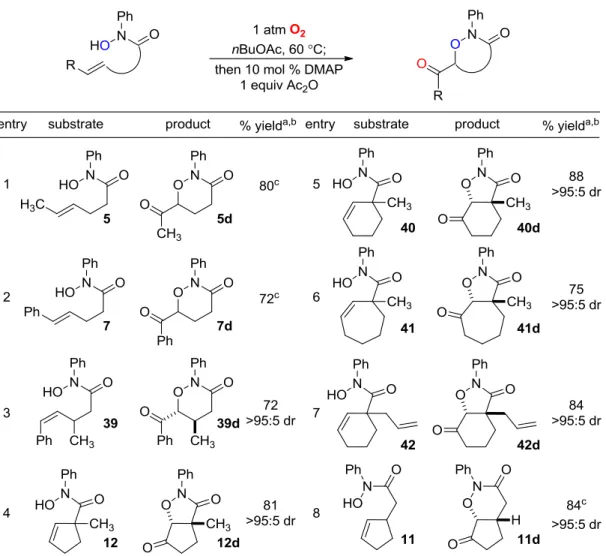
Table 4-1 Ketooxygenations of Unsaturated N-Aryl Hydroxamic Acids……….…...80
Table 4-2 Intermolecular Radical-Mediated Alkene Ketooxygenations……….………82
Table 5-1 Survey of Azodicarboxylates as N-Atom Sources in Alkene Oxyaminations……….…..105
Table 5-2 Oxyamination of Alkenyl N-Aryl Hydroxamic Acids………107
Table 5-3 Stereoselective Oxyaminations of Cycloalkenes………108
Table 6-1 Initial Oxyallylation Studies……….……..141
Table 6-2 Oxyallylation of Unsaturated Hydroxamic Acids………..…….143
Table 6-3 Oxycyanation of N-Aryl Unsaturated Hydroxamic Acids………..…144
Table 6-4 Oxyacylation of N-Aryl Hydroxamic Acids………..…….145
Table 7-1 Optimization Studies for the Bromination of Cyclohexane Using N-Bromoamides………..……175
Table 7-2 Bromination of Simple Cycloalkanes Using N-Bromoamide 50………..……….176
Table 7-3 Kinetic Isotope Studies of Cyclohexane Using N-Bromoamides……….……….177
Table 7-4 Halogenation of Methyl Cyclohexane: steric selectivity studies……….…….178
Table 7-6 Bromination of Methyl Hexanoate:
LIST OF ILLUSTRATIONS Figure 1-1 Os-Catalyzed Alkene Dihydroxylation:
the Upjohn process……….…….………2 Figure 1-2 Sharpless Asymmetric Dihydroxylation in Total
Synthesis………..…………..……….3 Figure 1-3 Enantioselective Pd-Catalyzed Alkene Dialkoxylation………..…3 Figure 1-4 Pd-Catalyzed Oxime Assisted Intramolecular
Dioxygenation………..………...4 Figure 1-5 Alkene Syn Dihydroxylation with Malonoyl Peroxides……….4 Figure 1-6 Organocatalytic Syn-Diacetoxylation of Alkenes ...5 Figure 1-7 Intramolecular Os-Catalyzed Aminohydroxylation
of Olefins………..………..5 Figure 1-8 Intramolecular Os-Catalyzed Aminohydroxylation
of Allylic Carbamates……….………...….6 Figure 1-9 Pd-Catalyzed Intramolecular Aminoacetoxylation
of Alkenes………..….6 Figure 1-10 Regioselective Intermolecular Pd-Catalyzed
Alkene Aminoacetoxylation………...7 Figure 1-11 Enantioselective Cu-Catalyzed Alkene Oxyamination………...7 Figure 1-12 Regioselective Alkene Aminooxygenation Using
Cu- or Fe-Catalysts………...8 Figure 1-13 Hypervalent Iodine-Mediated Alkene Oxyamination……...8 Figure 1-14 Nitrenium-Mediated Intramolecular Oxamidation……….……9 Figure 1-15 Pd-Catalyzed Alkene Diamination Using
N-Fluorobenzenesulfonamide………...9 Figure 1-16 Pd-Catalyzed Diamination Using Dialkyl Ureas……….…….10 Figure 2-1 Pioneering Organic Free-Radical Studies……….15 Figure 2-2 Proposed Approach to Aerobic Radical-Mediated
Figure 2-5 Unsaturated Hydroxamic Acid Dimerization
Initiated by Single-Electron Oxidants………...…17
Figure 2-6 Unique Example of Aerobic Amidoxyl Radical Alkene Dioxygenation……….….18
Figure 2-7 One-Pot Aerobic Alkene Dioxygenation………..…………23
Figure 2-8 Proposed Radical-Mediated Alkene Dioxygenation……….23
Figure 2-9 Synthesis of 2,2-Dimethylpent-4-enoic acid………..…………...26
Figure 2-10 Synthesis of (E)-5-phenylpent-4-enal………...26
Figure 2-11 Synthesis of 2-Allylpent-4-enal………....27
Figure 2-12 Synthesis of 5-Methyl-3-phenylhex-4-enal………..28
Figure 2-13 Synthesis of 3-(tert-butyldimethylsilyloxy)- 5-methylhex-4-enal………..……….29
Figure 2-14 Synthesis of 1-Methylcyclopent-2-enecarboxylic acid……….29
Figure 2-15 Synthesis of 2-(3-Methylcyclohex-2-enyl)acetaldehyde………..30
Figure 3-1 Aerobic Hydroxamic Acid-Mediated Alkene Dioxygenations……….50
Figure 3-2 Isomerization of Simple Hydroxamic Acids Under Dioxygenation Conditions……….…………51
Figure 3-3 One-Pot Dihydroxylation of α-Methyl Styrene Using 17………....56
Figure 3-4 Synthesis of 2-(4-(prop-1-en-2-yl)phenyl)ethanol………....57
Figure 3-5 One-Pot, Direct Dihydroxylation Procedure……….74
Figure 4-1 Alkene Difunctionalizations Using Hydroxamic Acids……….…..77
Figure 4-2 Mn-Promoted Alkene Ketooxygenations ………...78
Figure 4-3 Ru-Catalyzed Alkene Ketooxygenation………...78
Figure 4-4 Os-Catalyzed Ketooxygenation in the Total Synthesis of (+)-Saxitoxin……….……….…..79
Figure 4-5 Hydroperoxide Dehydration Promoted by Acetylation……….…...80
Figure 4-7 Regioselective Alkene Ketohydroxylation………...83
Figure 4-8 Proposed Radical-Mediated Aerobic Alkene Ketooxygenation………..…….83
Figure 4-9 Synthesis of 39………..……85
Figure 5-1 Anomalous Alkene Oxyazidation Result ………...106
Figure 5-2 Cascade Cyclization of Triene Substrate 47………...110
Figure 5-3 Selective Reduction of Difunctionalization Products……….111
Figure 5-4 Synthesis of Azodicarboxylates………..……112
Figure 5-5 Synthesis of 2,2,3-trimethylbut-3-enoic acid………..…112
Figure 5-6 Synthesis of 5-((tert-butyldiphenylsilyl)oxy)-2- methyl-2-vinylpentanoic acid……….……113
Figure 5-7 Synthesis of 45………115
Figure 5-8 Synthesis of 2-allyl-2-vinylpent-4-enoic acid……….116
Figure 5-9 Transformation of N-Phenyl amide via Boc-activation (unoptimized conditions)………....131
Figure 5-10 Direct N-O and N-N Cleavage Concomitant with γ-Lactone Formation………..……….133
Figure 6-1 Alkene Carbooxygenation: An Underdeveloped Class of Difunctionalization……….………..138
Figure 6-2 Diastereoselective Pd-Catalyzed Alkene Carboetherification……….…………139
Figure 6-3 Oxidative Alkene Formylation………...139
Figure 6-4 Radical-Mediated Alkene Oxytrifluoromethylation………..……….139
Figure 6-5 Proposed Alkene Oxyallylation, Oxycyanation, and Oxyacylations………..…….140
Figure 6-6 Proposed Radical-Mediated Mechanism for Carbooxygenation……….…146
Figure 7-3 Fe-Catalyzed Aliphatic C-H Oxidations………...170
Figure 7-4 Sterically Bulky Polyoxotungstate-Mediated C-H Hydroxylation……….……171
Figure 7-5 Mn-Porphyrin Catalyzed C-H Halogenations………...172
Figure 7-6 Electronically Selective Heteroatom-Centered Radical Brominations………..……172
Figure 7-7 1,3-Diol Synthesis via Neutral HLF-Type Reactions……….173
Figure 7-8 Sterically Selective Radical Chlorinations………..…174
Figure 7-9 Bromination of (+)-Sclareolide Using 50 ………...183
Figure 7-10 Spectra of N-trifluoroethyl-3-5-bis(trifluoromethyl) benzamide………...190
Figure 7-11 Spectra of 48………...191
Figure 7-12 Spectra of 49………...192
Figure 7-13 Spectra of 50………...193
Figure 7-14 Spectra of 51………...194
LIST OF ABBREVIATIONS AND SYMBOLS
μ micro
°C degrees Celsius
ΔfH° heat of formation
1
H NMR proton nuclear magnetic resonance spectroscopy 13
C NMR carbon nuclear magnetic resonance spectroscopy 4 Å MS 4 angstrom molecular sieves
Ac acetate
Ac2O acetic anhydride
acac acetylacetone
AcOH acetic acid
AD asymmetric dihydroxylation
atm atmospheres
Bn benzyl
br s broad singlet
BQ benzoquinone
Bu butyl
Bz benzoyl
C-H carbon-hydrogen bond cat. catalytic amount or catalyst
cm-1 wavenumbers
d doublet
dba dibenzylideneacetone
dd doublet of doublets
ddd doublet of doublet of doublets DLP dilauroyl peroxide
DME dimethoxyethane
DMF N,N-dimethylformamide
DMS dimethyl sulfide
DMSO dimethyl sulfoxide
dppp 1,3-bis(diphenylphosphino)propane
e- electron
ee enantiomeric excess
equiv equivalent(s)
ESI electrospray ionization
Et ethyl
Et2O diethyl ether et al. and others
etc. et cetera
EtNiPr2 N,N,N-diisopropyl-ethylamine
EtOAc ethyl acetate
h hours
HMPA hexamethylphosphoramide HRMS high resolution mass spectrometry
hν light
Hz hertz
i.e. in other words
IR infared spectroscopy
J coupling constant
kcal kilocalorie
k rate
LDA lithium diisopropylamide LDE lithium diethylamide
LRMS low resolution mass spectroscopy
m multiplet
Mbs 4-methoxybenzenesulfonyl
Me methyl
MeCN acetonitrile
MeOH methanol
MHz mega hertz
min minute(s)
mg milligram
mL milliliter
mmol millimole
modp bis(1-morpholinocarbamoyl-4,4-dimethyl-1,3-pentanedionato) NBS N-bromosuccinimide
nBuOAc butyl acetate
NHC N-heterocyclic carbene nPrOH butyl acetate
Ns 4-nitrobenezenesulfonyl
OTf triflate, trifluoromethanesulfonate
PPh3 triphenyl phosphine ppm parts per million
PTFE polytetrafluoroethylene, teflon
p-Tol 4-methyl phenyl
q quartet
qd quartet of doublets quant quantitative
R generic organic group
rt room temperature
s singlet
t triplet
TBAF tetrabutylammonium fluoride TBDPS tert-butyldiphenylsilyl TBS tert-butyldimethylsilyl
tBu tert-butyl
tBuOH tert-butanol td triplet of doublets
TEMPO tetramethylpiperidine-N-oxide TFA trifluoroacetic acid
THF tetrahydrofuran
TMSOTf trimethylsilyl trifluoromethanesulfonate TPP tetraphenylporphyrin
1.
CHAPTER ONE
Alkene Difunctionalizations
1.1 Introduction
Alkenes are a particularly attractive and versatile functional group for chemical synthesis. Simple alkenes are among the most widely available, naturally abundant, and diverse classes of starting materials for use in complex synthesis. They are excellent starting materials as they are derived from readily available chemical feedstocks and a plethora of synthetic methods exist for their selective preparation. Additionally, alkenes participate in a wide variety of different types of transformations including polar, radical, pericyclic, and organometallic pathways but remain unaffected by many harsh reaction conditions (i.e. strong bases, many oxidants, etc.). Synthetic methods that introduce useful functionality from readily available starting materials are extremely important to the development of new efficient pathways to materials, pharmaceuticals, and agrochemicals.
1.2 Background
The first alkene difunctionalization protocol was reported by Makowka in 1908.1 However, it was not until seminal work by Sharpless and coworkers nearly seventy years later that the utility of this type of transformation was realized. Vicinal diols, amino alcohols, and diamines are important motifs in synthetic chemistry, as they are found in a wide range of natural products and chiral reagents, and are used as intermediates in complex synthesis. Thus, developing efficient (high yielding, single step, atom economical, etc.) pathways to these prevalent motifs is highly valuable in chemical synthesis.
1.2.1 Dioxygenation
Alkene dioxygenation has been one of the most commonly developed classes of alkene difunctionalization. Dioxygenation is the addition of two oxygen based functional groups across a double bond, resulting in a formal two-electron oxidation of the alkene. However, alkene dioxygenation does not apply to epoxidation because two distinct oxygen-atom functionalities have not been added, and consequently is beyond the scope of the present discussion.
The formation of vicinal diols from simple starting materials like alkenes greatly facilitates the preparation of functionalized organic compounds. The discovery of the Upjohn process allowed for a catalytic amount of osmium tetroxide (OsO4) to be used in conjunction with N-methylmorpholine N -oxide (NMO) as the stoichiometric oxidant (Figure 1-1).2
Figure 1-1. Os-Catalyzed Alkene Dihydroxylation: the Upjohn process
discovery of the ligand acceleration effect pyridine has on enhancing the rate of difunctionalizations. This important observation led to the development of asymmetric dihydroxylation protocols using low loadings of K2OsO4 and the chiral cinchona alkaloid based-(DHQ)2PHAL ligand.2
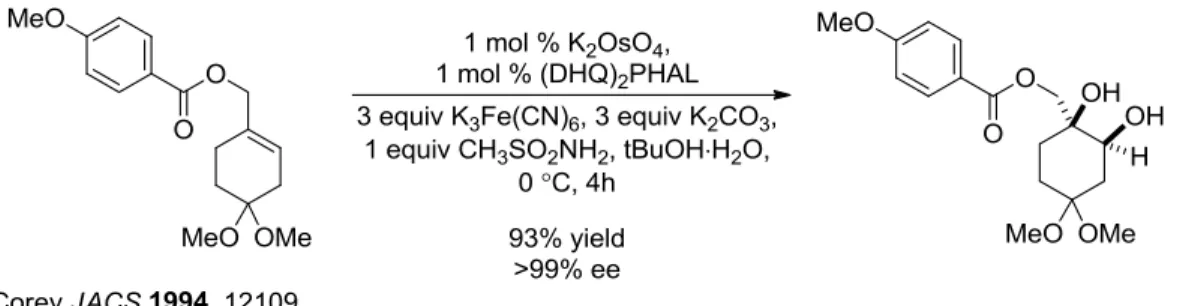
Commonly referred to as AD-mix-α or β (based on the chirality of the alkaloid ligand used), the Sharpless asymmetric dihydroxylation catalytic system has been applied in the synthesis of numerous important molecular targets, and serves as the benchmark from which all subsequent dioxygenations are measured (Figure 1-2).3
Figure 1-2. Sharpless Asymmetric Dihydroxylation in Total Synthesis
Although the Sharpless methods have proven general and robust, they rely on the use of expensive and highly toxic osmium salts that require removal and subsequent waste treatment. As a result, alternative methods have been explored and particular focus placed on the development of palladium catalysts for alkene dioxygenation. For example, Sigman and coworkers have developed a direct aerobic Pd(II)-catalyzed enantioselective dioxygenation of 2-propenylphenols using chiral quinoline oxazole ligands (Figure 1-3).4
substrates.5 These reactions take advantage of facile nucleopalladation and specifically designed substrates where undesired β-hydride elimination is not feasible (Figure 1-4).
Figure 1-4. Pd-Catalyzed Oxime Assisted Intramolecular Dioxygenation
Dioxygenations have also been developed that require no transition metals at all.6 Hypervalent iodine reagents are attractive because of the associated low toxicity, ready availability, and ease of handling. These reagents have received considerable attention in recent years and have found multiple uses in synthesis.7,8 In 2008, Dong and co-workers reported a Pd-catalyzed alkene dioxygenation using (diacetoxyiodo)benzene (PhI(OAc)2) as a stoichiometric oxidant.
9
Their proposed mechanism invokes a Pd(II)/(IV) pathway, promoted by PhI(OAc)2, but notes the importance of the cationic Pd-catalyst (Pd(dppp)(H2O)2(OTf)2). However, further studies by Gade indicate that this transformation is not catalyzed by palladium.10 Gade provides evidence for a protiocatalytic pathway where the Pd-salt serves to produce triflic acid (TfOH) at the beginning of the reaction, which acts as the active catalyst. The need to generate a strong acid, like triflic acid, in situ thus explains why Dong required the use of a Pd-catalyst containing triflate as the counter-ion.
Figure 1-5. Alkene Syn Dihydroxylation with Malonoyl Peroxides
levels of diastereoselectivity (Figure 1-5).11 Phthaloyl peroxides12–14 and inorganic peroxides such as Oxone15–17 have also been successful for alkene dioxygenation. Recent studies have used peracids in conjunction with tetrabutylammonium iodide and tert-butyl hydroperoxide as oxygen-atom sources for alkene dioxygenations.18 Meng and Li have developed an organocatalytic syn diacetoxylation of alkenes using readily available aryl iodides as catalysts (Figure 1-6).19
Figure 1-6. Organocatalytic Syn-Diacetoxylation of Alkenes
1.2.2 Oxyaminations
The oxyamination of alkenes is the most developed method of vicinal aminofunctionalization.20 Aminoalcohols are present in a wide array of biologically active molecules and natural products.21 Again, Sharpless pioneered this class of alkene difunctionalizations showing that a stoichiometric monoimido osmate complex could affect the aminohydroxylation of styrenes with high levels of regioselectivity with the amino group favoring addition at the terminal position. A catalytic variant was later developed using chloramine-T trihydrate as a nitrene-based oxidant that doubles as the nitrogen-atom source.22,23 An analogous asymmetric aminohydroxylation was finally reported in 1996 using chloramine-T and the Os-ligand combination used in the AD-mix reagent (Figure 1-7).24 Figure 1-7. Intramolecular Os-Catalyzed Aminohydroxylation of Olefins
plagued by low regioselectivities of internal alkenes. One effective approach to solving this regioselectivity issue is to tether the alkene to the nitrogen-atom source. This strategy was first implemented by Donohoe using allylic carbamates to access a variety of hydroxyl oxazolidinones in moderate yields and as single regioisomers (Figure 1-8).26, 27
Figure 1-8. Intramolecular Os-Catalyzed Aminohydroxylation of Alllylic Carbamates
Palladium-catalyzed alkene oxyaminations have also been developed that are proposed to proceed via a Pd(II)/(IV) mechanism.28–30 The use of Pd in alkene oxyamination reactions dates back to 1975 where stoichiometric Pd(II) compounds were used to activate the olefin towards nucleophilic attack by simple amines followed by oxidation of the C-Pd bond with lead tetraacetate.31 A significant advancement appeared in 2005 where a catalytic amount of simple Pd(OAc)2 was used in conjunction with stoichiometric PhI(OAc)2 to achieve the aminoacetoxylation of unsaturated N-tosyl-carbamates (Figure 1-9).28
The following year Stahl and coworkers used similar catalytic conditions to achieve an intermolecular alkene oxyamination using phthalimide as the nitrogen-atom source (Figure 1-10).29 Figure 1-10. Regioselective Intermolecular Pd-Catalyzed Alkene Aminoacetoxylation
While this method displays impressive regio- and diastereocontrol, the substrate scope is largely limited to terminal allylic ethers. Sanford subsequently reported another intramolecular variant of this chemistry using homoallylic alcohols and phthalimide.30
The first intramolecular Cu-catalyzed enantioselective oxyamination was reported in 2008 by Chemler and co-workers.32 This report uses catalytic copper(II) triflate and stoichiometric 2,2ʹ,6,6ʹ-tetramethylpiperidine (TEMPO) to achieve oxyamination of unsaturated sulfonamides. Here TEMPO acts as both the oxygen-atom source as well as oxidant. The inclusion of a chiral bisoxazoline ligand (Bis-Phbox) leads to protected vicinal amino-alcohols with good to excellent enantiomeric excesses (Figure 1-11).
Figure 1-11. Enantioselective Cu-Catalyzed Alkene Oxyamination
Figure 1-12. Regioselective Alkene Aminooxygenation Using Cu- or Fe-Catalysts
Similarly to alkene dioxygenation, there have been approaches to alkene oxyamination that do not require transition metals. An excellent example of intramolecular oxyamination comes from the Michael group where the oxidative cyclization of unsaturated sulfonylureas is mediated by iodosyl benzene and a Lewis or Brønsted acid (Figure 1-13).35
Figure 1-13. Hypervalent Iodine-Mediated Alkene Oxyamination
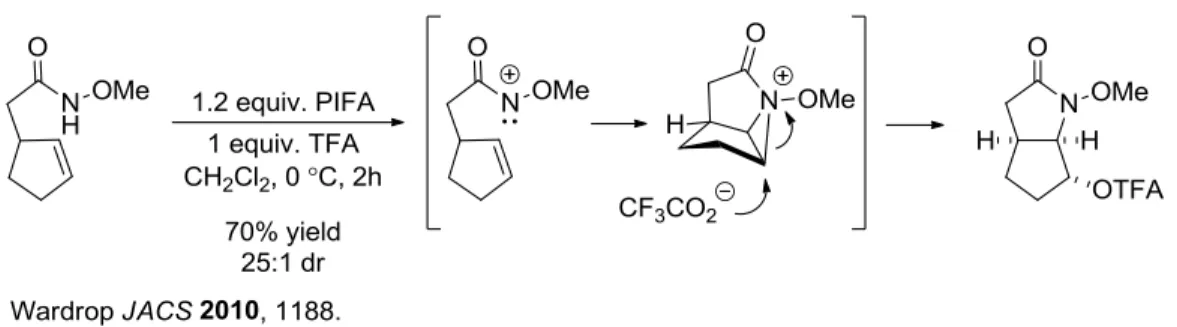
Figure 1-14. Nitrenium-Mediated Intramolecular Oxamidation
1.2.3 Diaminations
As with vicinal diols and amino-alcohols, vicinal diamines are ubiquitous in natural products, pharmaceutical agents, and organic reagents. The diamination of alkenes is the most direct and efficient approach to this important motif.
The earliest known examples of direct alkene diamination involve the addition reaction of nitrogen dioxide, providing di-nitro compounds that can be reduced to diamines.38,39 And while many methods have been developed since that do not require nitrogen dioxide,40 some of the most significant developments have surfaced over the last two decades.41–45 For example, Michael and co-workers reported an intramolecular diamination using N-fluorobenzenesulfonamide (NFBS) as an electrophilic aminating reagent (Figure 1-15).46 This is particularly interesting as NFBS is typically used as an electrophilic fluorine-atom source.
Figure 1-15. Pd-Catalyzed Alkene Diamination Using N-Fluorobenzenesulfonamide
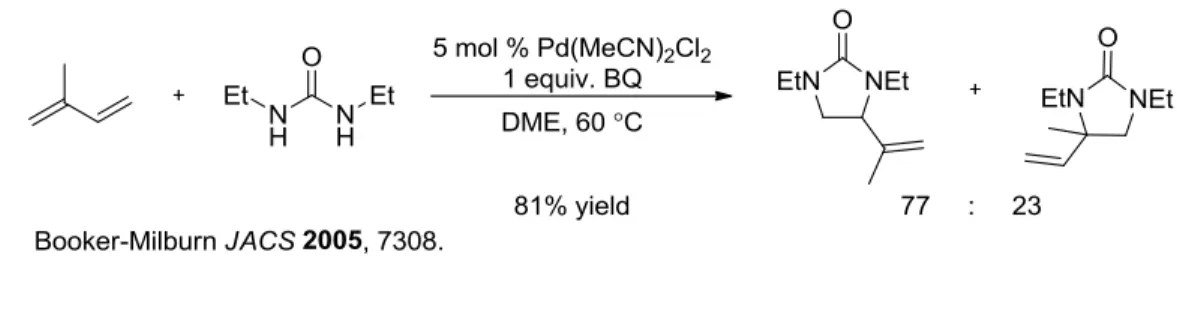
Booker-Milburn developed an intermolecular diamination where 1,3-dienes are treated with
Figure 1-16. Pd-Catalyzed Diamination Using Dialkyl Ureas
1.3 Summary and Outlook
1.4 References
(1) Makowka, O. Zur Kenntnis des Osmiums. Berichte Dtsch. Chem. Ges. 1908, 41, 943–944. (2) VanRheenen, V.; Kelly, R. C.; Cha, D. Y. An improved catalytic OsO4 oxidation of olefins to
cis-1,2-glycols using tertiary amine oxides as the oxidant. Tetrahedron Lett. 1976, 17, 1973– 1976.
(3) Corey, E. J.; Guzman-Perez, A.; Noe, M. C. Short Enantioselective Synthesis of (-)-Ovalicin, a Potent Inhibitor of Angiogenesis, Using Substrate-Enhanced Catalytic Asymmetric Dihydroxylation. J. Am. Chem. Soc. 1994, 116, 12109–12110.
(4) Zhang, Y.; Sigman, M. S. Palladium(II)-Catalyzed Enantioselective Aerobic Dialkoxylation of 2-Propenyl Phenols: A Pronounced Effect of Copper Additives on Enantioselectivity. J. Am. Chem. Soc. 2007, 129, 3076–3077.
(5) Zhu, M.-K.; Zhao, J.-F.; Loh, T.-P. Palladium-Catalyzed Oxime Assisted Intramolecular Dioxygenation of Alkenes with 1 atm of Air as the Sole Oxidant. J. Am. Chem. Soc. 2010,
132, 6284–6285.
(6) Rawling, M. J.; Tomkinson, N. C. O. Metal-free syn-dioxygenation of alkenes. Org. Biomol. Chem. 2013, 11, 1434–1440.
(7) Wirth, T. Hypervalent Iodine Chemistry in Synthesis: Scope and New Directions. Angew. Chem. Int. Ed. 2005, 44, 3656–3665.
(8) Liang, H.; Ciufolini, M. A. Chiral Hypervalent Iodine Reagents in Asymmetric Reactions.
Angew. Chem. Int. Ed. 2011, 50, 11849–11851.
(9) Li, Y.; Song, D.; Dong, V. M. Palladium-Catalyzed Olefin Dioxygenation. J. Am. Chem. Soc.
2008, 130, 2962–2964.
(10) Kang, Y.-B.; Gade, L. H. The Nature of the Catalytically Active Species in Olefin Dioxygenation with PhI(OAc)2: Metal or Proton? J. Am. Chem. Soc. 2011, 133, 3658–3667. (11) Griffith, J. C.; Jones, K. M.; Picon, S.; Rawling, M. J.; Kariuki, B. M.; Campbell, M.;
Tomkinson, N. C. O. Alkene Syn Dihydroxylation with Malonoyl Peroxides. J. Am. Chem. Soc. 2010, 132, 14409–14411.
(12) Greene, F. D.; Rees, W. W. Cyclic Diacyl Peroxides. VI.1 Reaction of Phthaloyl Peroxide with Diarylacetylene. J. Am. Chem. Soc. 1960, 82, 893–896.
(13) Yuan, C.; Axelrod, A.; Varela, M.; Danysh, L.; Siegel, D. Synthesis and reaction of phthaloyl peroxide derivatives, potential organocatalysts for the stereospecific dihydroxylation of alkenes. Tetrahedron Lett. 2011, 52, 2540–2542.
(14) Schwarz, M.; Reiser, O. Metal or No Metal: That Is the Question! Angew. Chem. Int. Ed.
2011, 50, 10495–10497.
(15) Zhu, W.; Ford, W. T. Oxidation of alkenes with aqueous potassium peroxymonosulfate and no organic solvent. J. Org. Chem. 1991, 56, 7022–7026.
(17) Mudiganti, N. V. S.; Claessens, S.; Habonimana, P.; De Kimpe, N. Efficient Synthesis of cis- and trans-3,4-Dihydroxy-3,4-dihydromollugin. J. Org. Chem. 2008, 73, 3867–3874.
(18) Xue, Q.; Xie, J.; Xu, P.; Hu, K.; Cheng, Y.; Zhu, C. Metal-Free, n-Bu4NI-Catalyzed Regioselective Difunctionalization of Unactivated Alkenes. Acs Catal. 2013, 1365–1368. (19) Zhong, W.; Liu, S.; Yang, J.; Meng, X.; Li, Z. Metal-Free, Organocatalytic Syn
Diacetoxylation of Alkenes. Org. Lett. 2012, 14, 3336–3339.
(20) Bodkin, J. A.; McLeod, M. D. The Sharpless asymmetric aminohydroxylation. J. Chem. Soc. [Perkin 1] 2002, 2733–2746.
(21) Bergmeier, S. C. The Synthesis of Vicinal Amino Alcohols. Tetrahedron 2000, 56, 2561– 2576.
(22) Sharpless, K. B.; Chong, A. O.; Oshima, K. Osmium-catalyzed vicinal oxyamination of olefins by Chloramine-T. J. Org. Chem. 1976, 41, 177–179.
(23) Herranz, E.; Sharpless, K. B. Improvements in the osmium-catalyzed oxyamination of olefins by chloramine-T. J. Org. Chem. 1978, 43, 2544–2548.
(24) Li, G.; Chang, H.-T.; Sharpless, K. B. Catalytic Asymmetric Aminohydroxylation (AA) of Olefins. Angew. Chem. Int. Ed. Engl. 1996, 35, 451–454.
(25) Barta, N. S.; Sidler, D. R.; Somerville, K. B.; Weissman, S. A.; Larsen, R. D.; Reider, P. J. Practical Modifications and Applications of the Sharpless Asymmetric Aminohydroxylation in the One-Pot Preparation of Chiral Oxazolidin-2-ones. Org. Lett. 2000, 2, 2821–2824. (26) Donohoe, T. J.; Johnson, P. D.; Helliwell, M.; Keenan, M. The regioselective
aminohydroxylation of allylic carbamates. Chem. Commun. 2001, 2078–2079.
(27) Donohoe, T. J.; Johnson, P. D.; Pye, R. J. The tethered aminohydroxylation (TA) reaction.
Org. Biomol. Chem. 2003, 1, 2025–2028.
(28) Alexanian, E. J.; Lee, C.; Sorensen, E. J. Palladium-Catalyzed Ring-Forming Aminoacetoxylation of Alkenes. J. Am. Chem. Soc. 2005, 127, 7690–7691.
(29) Liu, G.; Stahl, S. S. Highly Regioselective Pd-Catalyzed Intermolecular Aminoacetoxylation of Alkenes and Evidence for cis-Aminopalladation and SN2 C−O Bond Formation. J. Am.
Chem. Soc. 2006, 128, 7179–7181.
(30) Desai, L. V.; Sanford, M. S. Construction of Tetrahydrofurans by Pd(II)/Pd(IV)-Catalyzed Aminooxygenation of Alkenes. Angew. Chem. Int. Ed. 2007, 46, 5737–5740.
(31) Bäckvall, J.-E. Stereospecific palladium(II)-lead(IV)-promoted oxyamination of olefins.
Tetrahedron Lett. 1975, 16, 2225–2228.
(32) Fuller, P. H.; Kim, J.-W.; Chemler, S. R. Copper Catalyzed Enantioselective Intramolecular Aminooxygenation of Alkenes. J. Am. Chem. Soc. 2008, 130, 17638–17639.
(34) Williamson, K. S.; Yoon, T. P. Iron-Catalyzed Aminohydroxylation of Olefins. J. Am. Chem. Soc. 2010, 132, 4570–4571.
(35) Cochran, B. M.; Michael, F. E. Metal-Free Oxidative Cyclization of Urea-Tethered Alkenes with Hypervalent Iodine. Org. Lett. 2008, 10, 5039–5042.
(36) Wardrop, D. J.; Bowen, E. G.; Forslund, R. E.; Sussman, A. D.; Weerasekera, S. L. Intramolecular Oxamidation of Unsaturated O-Alkyl Hydroxamates: A Remarkably Versatile Entry to Hydroxy Lactams. J. Am. Chem. Soc. 2010, 132, 1188–1189.
(37) Wardrop, D. J.; Bowen, E. G. Nitrenium Ion-Mediated Alkene Bis-Cyclofunctionalization: Total Synthesis of (−)-Swainsonine. Org. Lett. 2011, 13, 2376–2379.
(38) Riebsomer, J. L. The Reactions of Nitrogen Tetroxide with Organic Compounds. Chem. Rev.
1945, 36, 157–233.
(39) Shiri, M.; Zolfigol, M. A.; Kruger, H. G.; Tanbakouchian, Z. Advances in the application of N2O4/NO2 in organic reactions. Tetrahedron 2010, 66, 9077–9106.
(40) De Jong, S.; Nosal, D. G.; Wardrop, D. J. Methods for direct alkene diamination, new & old.
Tetrahedron 2012, 68, 4067–4105.
(41) Muñiz, K.; Hövelmann, C. H.; Streuff, J. Oxidative Diamination of Alkenes with Ureas as Nitrogen Sources: Mechanistic Pathways in the Presence of a High Oxidation State Palladium Catalyst. J. Am. Chem. Soc. 2008, 130, 763–773.
(42) Yuan, W.; Du, H.; Zhao, B.; Shi, Y. A Mild Cu(I)-Catalyzed Regioselective Diamination of Conjugated Dienes. Org. Lett. 2007, 9, 2589–2591.
(43) Zhao, B.; Yuan, W.; Du, H.; Shi, Y. Cu(I)-Catalyzed Intermolecular Diamination of Activated Terminal Olefins. Org. Lett. 2007, 9, 4943–4945.
(44) Du, H.; Zhao, B.; Shi, Y. A Facile Pd(0)-Catalyzed Regio- and Stereoselective Diamination of Conjugated Dienes and Trienes. J. Am. Chem. Soc. 2007, 129, 762–763.
(45) Wei, H.-X.; Kim, S. H.; Li, G. Electrophilic Diamination of Alkenes by Using FeCl3−PPh3 Complex as the Catalyst. J. Org. Chem. 2002, 67, 4777–4781.
(46) Sibbald, P. A.; Michael, F. E. Palladium-Catalyzed Diamination of Unactivated Alkenes Using N-Fluorobenzenesulfonimide as Source of Electrophilic Nitrogen. Org. Lett. 2009, 11, 1147–1149.
(47) Elliott, L. D.; Wrigglesworth, J. W.; Cox, B.; Lloyd-Jones, G. C.; Booker-Milburn, K. I. 2,2-Difunctionalization of Alkenes via Pd(II)-Catalyzed Aza-Wacker Reactions. Org. Lett. 2011,
2.
CHAPTER TWO
Aerobic Intramolecular Alkene Dioxygenations Using Hydroxamic Acids
2.1 Introduction
The vicinal dioxygenation of alkenes has long been used in the preparation of functionalized organic compounds and tremendous progress has been made in the development of catalytic and asymmetric protocols.1 However, the robust Sharpless dihydroxylation reaction requires Os-salts that are both expensive and highly toxic. Efforts over the past two decades have attempted to obviate the need of Os in favor of more environmentally friendly and inexpensive approaches (see Chapter 1).
2.2 Background
Alkene dioxygenation was the first class of alkene difunctionalization reported, and one of the most commonly developed types since. Dioxygenation is the addition of two oxygen based functional groups across a double bond, resulting in a formal two-electron oxidation of the alkene. See Chapter 1.2.1 for an overview of alkene dioxygenation methods.
2.3 Reaction Development
In general, molecular oxygen does not react with ground-state organic molecules and thus has not been used successfully as oxygen-atom source. This can be attributed to the spin forbidden reaction between dioxygen with a triplet, diradical ground-state and singlet ground-state organic molecules. However, carbon-centered radicals exist in a triplet state and their reaction with dioxygen is spin allowed. The reaction of O2 with carbon-centered radicals dates back to the groundbreaking work Gomberg conducted with the first reported organic free-radical, triphenylmethyl radical (Figure 2-1).5 In this work, Gomberg observed that generation of triphenylmethyl radical in the presence of O2 resulted in the formation of the dimerized dialkyl peroxide product. Consequently, we hypothesized that the use of O2 as an oxidant as well as an oxygen-atom source in an alkene dioxygenation process could be viable. In order to achieve this, we turned our attention to radical chemistry.
Figure 2-1. Pioneering Organic Free-Radical Studies
We envisioned that a dioxygen-mediated alkene dioxygenation where an oxygen-centered (Figure 2-2). Since the trapping of a carbon-centered radical is a well precedented process, we turned our focus to the identification of a viable oxygen-centered radical for alkene addition.
Figure 2-2. Proposed Approach to Aerobic Radical-Mediated Alkene Dioxygenations
causing H-atom abstraction and β-scission pathways to compete with alkene addition. This reactivity is typically attributed to the instability of the oxygen-centered radical derived from alcohols with O-H bond strengths of approximately 105 kcal/mol.10 As a result, alkoxyl radicals have not found much utility in synthetic chemistry. One relatively rare example of a controlled alkoxyl radical addition to an alkene achieves a dioxygenation. This aerobic, Co-catalyzed homoallylic alcohol cyclization forms 2-hydroxymethyl tetrahydrofuran rings through the proposed formation of a Co-alkoxide which attenuates the otherwise expected unselective behavior of free alkoxy radicals (Figure 2-3).11
Figure 2-3. Intramolecular Co-Catalyzed Alkene Dioxygenation
Conversely, relative to alkoxy radicals, nitroxyl radicals are stabilized by the presence of an adjacent nitrogen atom. These radicals are typified by the bench-stable, N -oxy-2,2,6,6-tetramethylpiperidinyl (TEMPO) radical. While nitroxyl radicals have found a useful place within oxidation protocols (i.e. oxidation of alcohols, sulfides, etc.) and living free-radical polymerizations, they do not find general use for efficient addition to alkenes.12
Figure 2-4. Source of Amidoxyl Radical Reactivity
Studies of amidoxyl radicals have shown that they are capable of intramolecular benzylic hydrogen-atom abstraction, but attempts at allylic hydrogen-atom abstraction were unsuccessful and instead resulted in substrate dimerization following cyclization (Figure 2-5).13
Figure 2-5. Unsaturated Hydroxamic Acid Dimerization Inititated by Single-Electron Oxidants
Figure 2-6. Unique Example of Aerobic Amidoxyl Radical Alkene Dioxygenation
2.3.1 Optimization
Our studies began with unsaturated N-phenyl hydroxamic acid 3. To facilitate cyclization, initial experiments explored the catalytic use of simple, inexpensive cobalt salts, which are known to assist the formation of amidoxyl radicals and other oxygen-centered radicals under aerobic conditions.11,15 Heating 3 with either 2 mol % Co(OAc)2 or 2 mol % Co(acac)3 under 1 atm of O2 in acetic acid (AcOH) delivered the desired deoxygenated [1,2]-oxazinone 3a in 55 and 54% yield, respectively (Table 2-1, entries 1 and 2). A control experiment without any added metal catalyst revealed that the dioxygenation proceeded under 1 atm O2 alone, to afford 3a in 80% yield following a mild reductive work up with 1 equivalent of PPh3 (Table 2-1, entry 3). The use of a reductive work up was not necessary in the presence of either Co-salt investigated, as the cobalt species also served as an in situ reductant of the initially formed alkyl peroxide product.
Table 2-1. Initial Aerobic Dioxygenation Studies
The use of an aerobic atmosphere proved crucial, as replacing the O2 with Ar resulted in no reaction (Table 2-1, entry 5). However, only a slight decrease in yield was observed when the O2 atmosphere was replaced with air, proving that the dioxygen present in air alone was sufficient to serve as the sole oxidant as well as the external oxygen-atom source in this reaction (Table 2-1, entry 6).
2.3.2 Substrate Scope
Encouraged by these initial results, we began to explore the generality of this radical-mediated alkene dioxygenation in a variety of synthetic contexts (Table 2-2). The choice of N-phenyl hydroxamic acids was made for practical reasons, as they are easily synthesized via two simple routes (See 2.5 Experimental). While Perkins uses N-tert-butyl hydroxamic acids exclusively, methods reported for their synthesis were extremely challenging in our hands and required a more intensive synthetic pathway. We did however observe that alkene dioxygenation was successful using N-tert -butyl hydroxamic acids.
well-substrates 5 and 6 (Table 2-2, entries 2 and 3), as well as conjugated alkenes (entry 4). We prepared α-diallyl hydroxamic acid 8 to determine the potential for selective oxidation of diene substrates. We hypothesized that oxidation using a metal-catalyzed intermolecular protocol with this type of substrate would likely lead to mixtures of mono- and bis-dioxygenation products. However, as dictated by the intramolecular amidoxyl radical cyclization, we observe reaction at only one alkene to produce [1,2]-oxazinone 8a in 75% yield (Table 2-2, entry 5).
Table 2-2. Aerobic Dioxygenations of Alkenyl N-Aryl Hydroxamic Acids
six-membered ring systems through alkene cyclizations because of their propensity to undergo side reactions such as 1,5-H-atom abstraction at the allylic position.16,17 It is important to note that we observe no by-products resulting from these allylic oxidation pathways. We attribute this to the attenuated reactivity of amidoxyl radicals compared to alkoxy radicals.
To assess the potential for diastereocontrol in the dioxygenation process, we studied a number of different substrates (Table 2-3). Substrates 9 and 10, possessing β-substituents, undergo highly stereoselective 6-exo cyclizations providing products 9a and 10a as a single diastereomers in good yields (Table 2-3, entries 1 and 2). Thus, β-silyloxy substrate 10, effectively delivers a fully differentiated masked triol, 10a. The differentiation of the oxygen functionality added across the alkene is a common feature of our radical-mediated dioxygenation approach as one oxygen-atom is always protected in the cyclic hydroxamate formed. This is noteworthy as this is not as easily achieved using intermolecular metal-catalyzed alkene dioxygenation methods. We also explored the potential of this process for reactions involving cyclic alkenes. Cyclopentenyl substrate 11 undergoes 6-exo cyclization to provide [5,6]-cis-fused product 11a as a 78:22 mixture of β:α hydroxy diastereomers in excellent yield (Table 2-3, entry 3). The difunctionalization of other cyclic alkene substrates (12 and 13) also favor their respective trans-dioxygenation products (Table 2-3, entries 4 and 5). These results indicate that the aerobic dioxygenation of cyclic substrates favors trans-alkene difunctionalizations, complementing existing cis-selective metal-catalyzed processes.1,3
Table 2-3. Studies of Alkene Dioxygenation Stereoselectivity
2.3.3 Post-Reaction Product Manipulation
Figure 2-7. One-Pot Aerobic Alkene Dioxygenation
2.3.4 Proposed Mechanism
A plausible reaction mechanism is shown in Figure 2-8. Following initiation of the reaction via formation of the amidoxyl radical, a reversible cyclization produces carbon-centered radical C.18 This intermediate reacts with molecular oxygen to provide alkylhydroperoxy radical D, which subsequently performs a hydrogen-atom abstraction from the substrate hydroxamic acid A,19 generating amidoxyl radical B and affording alkylhydroperoxide E. Subsequent reduction by dimethyl sulfide or PPh3, produces dioxygenation product F. We have verified the production of alkylhydroperoxides by isolating and characterizing the peroxide dioxygenation product of hydroxamic acid substrate 6 (see 2.5 Experimental).
Figure 2-8. Proposed Radical-Mediated Alkene Dioxygenation
2.4 Summary
external oxygen-atom sources. The dioxygenation reaction is applicable to a wide range of unsaturated substrates and affords difunctionalized products with differentiated oxygen-atom functionality; a unique feature of this radical-mediated process. This method also exhibits the potential for high reaction stereoselectivity, and results in trans difunctionalizations with cyclic alkenes, complementing transition-metal-catalyzed cis-selective dioxygenation reactions. The mild reaction conditions, simple substrate preparation, and generality of this dioxygenation procedure are attractive aspects for organic synthesis.
2.5 Experimental 2.5.1 General Methods
Infrared (IR) spectra were obtained using a Jasco 260 Plus Fourier transform infrared spectrometer. Proton and carbon magnetic resonance spectra (1H NMR and 13C NMR) were recorded on a Bruker model DRX 400 or 500 or a Bruker AMX 300 (1H NMR at 300 MHz, 400 MHz or 500 MHz and 13C NMR at 100 MHz) spectrometer with solvent resonance as the internal standard (1H NMR: CDCl3 at 7.27 ppm;
13
National Specialty Gases, National Welders Supply Company. All other reagents were obtained from commercial sources and used without further purification unless otherwise noted.
2.5.2 Compound Preparation
N-Phenylhydroxylamine was synthesized according to literature procedures.20 To a vigorously stirring suspension of nitrobenzene (3.62 g, 29.4 mmol) and NH4Cl (1.79 g, 33.5 mmol) in H2O (56 mL) was added activated Zn powder (3.85 g, 58.8 mmol) portion-wise over the course of 10 min. The ZnO solids were filtered away after the suspension had cooled to rt, the solids were washed with 20 mL hot water, and the resultant filtrate extracted with CH2Cl2 (5x). The organic extracts were washed with brine and concentrated under reduced pressure to give a yellow woolen solid that was washed with warm hexanes and filtered to collect 2.13 g (66% yield) N-phenylhydroxylamine as an ivory woolen solid. Note: hydroxylamine is stable for storage at -40 ºC for several weeks. Avoid inhaling; strongly irritating. Physical and spectral data were in accordance with literature data.21
ivory crystals. All spectroscopic and physical data matched a commercially available sample purchased from Sigma Aldrich.
Figure 2-9. Synthesis of 2,2-Dimethylpent-4-enoic acid
2,2-Dimethylpent-4-enoic acid. Title compound was prepared using a procedure outlined by Trost et. al22 followed by standard saponification of the alkylated ester. Physical and spectral data were in accordance with a commercially available sample.
3,3-Dimethyl-but-3-enoic acid was prepared using literature procedures with physical and spectra data in agreement with those reported.23
(E)-5-phenylpent-4-enal was synthesized according to literature Sonogashira procedures26 followed by LiAlH4 reduction
27
and Swern oxidation (Figure 2-10).28 Physical and spectral data were in accordance with literature data.29
Figure 2-11. Synthesis of 2-Allylpent-4-enal
2-Allylpent-4-enal was synthesized according to the following stepwise procedure (Figure 2-11): To a 0 ºC suspension of 60% wt. NaH dispersion in oil (2.16 g, 58.5 mmol) in THF (100 mL) was added diethyl malonate (3.56 mL, 23.4 mmol) dropwise in THF (25 mL) under Ar. The reaction mixture was warmed to rt for 15 min and then treated with allyl bromide (3.96 mL, 46.8 mmol) and heated to reflux overnight. The reaction was quenched with NH4Cl, extracted Et2O (3x) and the combined organic layers were washed with brine, dried (MgSO4) and concentrated in vacuo to give 6.02 g (~quant.) diethyl 2,2-diallylmalonate as a yellow-orange liquid.
The crude acid (5.45 g, 38.9 mmol) was added dropwise as a solution in THF (30 mL) to a suspension of LiAlH4 (2.21 g, 58.4 mmol) in THF (24 mL) at 0 ºC. The reaction mixture was warmed to rt before heating to reflux for 21 h. The reaction mixture was cooled to 0 ºC and quenched by slow sequential addition of H2O (2.2 mL), 10% NaOH (4.4 mL), and H2O (6.6 mL). After 20 min. of stirring at rt the suspension was filtered, the solid washed with Et2O, the collected filtrate dried (MgSO4), and concentrated in vacuo to give crude oil that was purified via flash chromatography (30% EtOAc/Hexanes) to give 2.91 g (59% yield) 2-allylpent-4-en-1-ol as a pale yellow liquid. To a 0 ºC solution of 2-allylpent-4-en-1-ol (1.50 g, 11.9 mmol) in CH2Cl2 (36 mL) was added triethylamine (6.6 mL, 47.4 mmol) followed by pyridine·SO3 complex (5.7 g, 35.6 mmol) as a solution in DMSO (36 mL). The reaction solution was stirred at 0 ºC for 1 h before quenching with sat. NaHCO3. The solution was then extracted with Et2O (3x), the combined organics were washed successively with Na2HPO4, 1N HCl, brine and dried (MgSO4) to give 1.01 g (68% yield) 2-allylpent-4-enal as a pale yellow liquid which was used without further purification. Physical and spectral data were in accordance with literature data.30
Figure 2-12. Synthesis of 5-Methyl-3-phenylhex-4-enal
with Ar, sealed and heated to 50 ºC 24 h, then 120 ºC overnight, and 130 ºC for a second overnight to give a 1:1 mix of recoverable alcohol starting material: aldehyde by NMR. Excess ethyl vinyl ether was removed in vacuo, and the resultant liquid was purified via flash chromatography (15:1 Hexanes:EtOAc) to yield 3.25 g (35% over 2 steps) 5-methyl-3-phenylhex-4-enal as a greenish-yellow liquid. Physical and spectral data were in accordance with literature data.31
Figure 2-13. Synthesis of 3-(tert-butyldimethylsilyloxy)-5-methylhex-4-enal
3-(tert-butyldimethylsilyloxy)-5-methylhex-4-enal was synthesized by TBS protection of Aldol product of ethyl acetate and 3-methylcrotonaldehyde followed by standard DIBAL reduction using literature procedures (Figure 2-13).32
Figure 2-14. Synthesis of 1-Methylcyclopent-2-enecarboxylic acid
purified via flash chromatography (20% EtOAc/Hexanes) to give 1-methylcyclopent-2-ene carboxylic acid (619 mg, 4.91 mmol, 65% yield) as a pale liquid. Physical and spectral data were in accordance with literature data.34
Figure 2-15. Synthesis of 2-(3-Methylcyclohex-2-enyl)acetaldehyde
2.5.3 General Procedures for the Preparation of Hydroxamic Acids
Note: All N-aryl hydroxamic acids should be purified promptly upon formation and stored neat
at -40 ºC.
Method A21
To a 0 ºC solution of carboxylic acid (1 mmol) in DCM (1.4 mL) and DMF (10 drops) was added oxalyl chloride (2 mmol) dropwise under an argon atmosphere. The solution was stirred at 0 ºC for 15 min. then warmed to room temperature overnight. The resultant yellow solution was evaporated almost to dryness under reduced pressure before sodium bicarbonate (2 mmol) was added and redissolved in H2O/Et2O (1 mL/2 mL). The solution was then again cooled to 0 ºC and phenylhydroxylamine (1 mmol) was added and the reaction was stirred at 0 ºC for 3.5 h. The layers were separated, the aqueous layer was acidified with citric acid and extracted with Et2O (3x). The combined organic layers were then washed with brine, dried (MgSO4), and concentrated to give an orange oil that was purified by flash chromatography to yield the corresponding N-phenyl hydroxamic acid.
Method B37
chromatography to yield the corresponding N-phenyl hydroxamic acid. Note: this procedure was not effective for the synthesis of α-disubstituted N-aryl hydroxamic acids.
3 was synthesized via Method A in 79% yield as an orange oil that crystallizes upon scratching. Analytical data for 3: 1H NMR (500 MHz, chloroform-d) δ ppm 8.85 (br. s., 1 H) 7.44 (m, 5 H) 5.79 (m, 1 H) 5.09 (m, 2 H) 2.32 (d, J=7.33 Hz, 2 H) 1.10 (s, 6 H); 13C NMR (126 MHz, chloroform-d) 173.9, 140.1, 134.3, 129.4, 129.2 (2 C), 128.2, 118.1 (2 C), 45.5, 42.4, 26.3 (2 C); IR (thin film, cm-1) 3194, 2976, 1614, 1591, 1496, 1391, 1361, 1271, 1067, 997, 916, 761, 690; HRMS (ESI) Calcd. for [C13H17NO2+Na]
+
= 242.12, Found = 242.1154
4 was synthesized via Method A in 63% yield as a pale yellow solid.
Analytical data for 4: 1H NMR (500 MHz, chloroform-d) δ ppm 8.14 (br. s., 1 H) 7.47 (m, 2 H) 7.40 (m, 2 H) 7.34 (m, 1 H) 5.95 (m, 1 H) 4.97 (m, 2 H) 1.35 (s, 6 H); 13C NMR (500 MHz, METHYLENE CHLORIDE-d2) 174.3, 143.2, 141.1, 128.6 (2 C), 127.3, 124.8, 112.3 (2 C), 45.2, 25.4 (2 C); IR (thin film, cm-1) 3216, 2978, 2931, 1945, 1622, 1592, 1495, 1384, 1355, 1235, 1184, 1084, 1068, 913, 759, 701; HRMS (ESI) Calcd. for [C12H15NO2+Na]
+
= 228.10, Found = 228.1009.
5 was synthesized via Method B in 25% yield as a yellow solid.
(2 C), 128.9, 125.5 (2 C), 125.0, 120.6, 34.0, 27.5, 18.2; IR (thin film, cm-1) 3183, 3055, 2919, 1633, 1593, 1495, 1454, 1398, 1265, 967, 750, 704; HRMS (ESI) Calcd. for [C12H15NO2+Na]
+
= 228.10, Found = 228.0993.
6 was synthesized via Method B in 67% yield as a pale orange solid.
Analytical data for 6: 1H NMR (500 MHz, chloroform-d) δ ppm 9.09 (br. s., 1 H) 7.46 (m, 2 H) 7.41 (m, 3 H) 5.04 (m, 1 H) 2.35 (m, 4 H) 1.68 (s, 3 H) 1.58 (s, 3 H); 13C NMR (500 MHz, chloroform-d) 167.9, 138.0, 133.5, 129.3 (2 C), 129.1, 126.6, 122.1 (2 C), 32.1, 25.7, 24.0, 17.6; IR (thin film, cm-1) 3187, 2968, 2915, 1633, 1593, 1495, 1399, 1092, 1070, 757, 691; HRMS (ESI) Calcd. for [C13H17NO2+Na]
+
= 242.12, Found = 242.1155.
7 was synthesized via Method B in 38% yield as a pale yellow solid.
Analytical data for 7: 1H NMR (500 MHz, chloroform-d) ppm 9.25 (br. s., 1 H) 7.45 (m, 4 H) 7.33 (m, 5 H) 7.24 (d, J=6.87 Hz, 1 H) 6.41 (d, J=15.12 Hz, 1 H) 6.18 (m, 1 H) 2.58 (d, J=6.19 Hz, 2 H) 2.47 (m, 2 H); 13C NMR (126 MHz, METHEYLENE CHLORIDE-d2) ppm 206.7, 137.3, 130.8, 129.3, 129.1, 128.8, 128.5, 128.1, 127.1, 126.6, 125.9, 31.9, 28.5; IR (thin film, cm-1) 3169, 2915, 1627, 1590, 1483, 1400, 1298, 1070, 963, 756, 738, 688; LRMS (ESI) Calcd. for [C17H17NO2+Na]
8 was synthesized via Method B in 59% yield as dark orange oil.
Analytical data for 8: 1H NMR (500 MHz, chloroform-d) δ ppm 9.19 (br. s., 1 H) 7.42 (m, 5 H) 5.64 (m, 2 H) 5.05 (m, 4 H) 2.59 (m, 1 H) 2.42 (m, 2 H) 2.20 (m, 2 H); 13C NMR (126 MHz, chloroform-d) 169.1, 137.5, 134.9 (2 C), 129.4 (2 C), 129.3 (2 C), 127.7, 117.5 (2 C), 41.1, 36.7 (2 C); IR (thin film, cm-1) 3180, 3077, 2979, 2912, 1625, 1593, 1495, 1442, 1402, 994, 916; HRMS (ESI) Calcd. for [C14H17NO2+Na]
+
= 254.12, Found = 254.1154.
9 was synthesized via Method B in 56% yield as a yellow-orange solid.
Analytical data for 9: 1H NMR (500 MHz, chloroform-d) δ ppm 9.20 (br. s., 1 H) 7.43 (m, 3 H) 7.28 (m, 3 H) 7.20 (m, 2 H) 7.12 (m, 2 H) 5.18 (m, 1 H) 4.17 (m, 1 H) 2.62 (m, 2 H) 1.71 (dd, J=7.33, 0.92 Hz, 6 H); 13C NMR (126 MHz, chloroform-d) 166.3, 144.1, 137.8, 133.3, 129.2, 128.9, 128.5, 127.2, 126.8, 126.3, 122.4, 40.9, 39.3, 25.8, 18.1; IR (thin film, cm-1) 3175, 3028, 2968, 2913, 1632, 1593, 1495, 1453, 1394, 1303, 1092, 1071, 757, 698; HRMS (ESI) Calcd. for [C19H21NO2+Na]
+
= 318.15, Found = 318.1467.
J=7.79 Hz, 5 H) 7.14 (m, 1 H) 5.16 (m, 3 H) 4.95 (m, 1 H) 2.83 (m, 1 H) 2.57 (m, 1 H) 1.66 (d,
J=11.91 Hz, 6 H) 0.82 (s, 9 H) 0.01 (s, 6 H); 13C NMR (126 MHz, DMSO-d6) ppm 169.9, 142.2, 131.9, 128.8, 128.7, 124.9, 120.5, 66.8, 43.8, 26.2, 25.9, 18.5, 18.3; IR (thin film, cm-1) 3174, 2955, 2929, 2857, 1633, 1594, 1494, 1389, 1253, 1071, 834; LRMS (ESI) Calcd. for [C19H31NO3Si+Na]+ = 372.19, Found = 372.19.
11 was synthesized via Method A from commercially available 2-Cyclopentene-1-acetic acid in 83% yield as a pale yellow solid.
Analytical data for 11: 1H NMR (500 MHz, chloroform-d) ppm 9.44 (br. s., 1 H) 7.44 (m, 5 H) 5.75 (br. s., 1 H) 5.66 (m, 1 H) 3.17 (m, 1 H) 2.39 (m, 2 H) 2.29 (br. s., 2 H) 2.12 (m, 1 H) 1.39 (br. s., 1 H); 13C NMR (126 MHz, chloroform-d) ppm 167.7, 138.3, 133.7, 131.6, 129.4, 129.2, 126.9, 42.3, 38.1, 31.8, 29.7; IR (thin film, cm-1) 3164, 3058, 2937, 2851, 1631, 1592, 1495, 1393, 1095, 1070, 905, 756, 717, 690; LRMS (ESI) Calcd. for [C13H15NO2+Na]
+
= 240.09, Found = 240.09.
12 was synthesized via Method A in 75% yield as pale yellow solid.
1494, 1454, 1381, 1065, 921, 758, 694; HRMS (ESI) Calcd. for [C13H15NO2+Na] +
= 240.10, Found = 240.1002.
13 was synthesized via Method A in 69% yield as a yellow solid.
Analytical data for 13: 1H NMR (400 MHz, chloroform-d) δ ppm 9.08 (br. s., 1 H) 7.45 (m, 5 H) 5.24 (s, 1 H) 2.69 (m, 1 H) 2.29 (m, 2 H) 1.85 (br. s., 2 H) 1.77 (m, 1 H) 1.63 (s, 3 H) 1.54 (m, 2 H) 1.12 (m, 1 H); 13C NMR (126 MHz, chloroform-d) 167.3, 138.0, 135.5 (2 C), 129.4 (2 C), 129.1, 126.9, 124.2, 38.3, 32.8, 29.9, 28.4, 23.8, 21.2; IR (thin film, cm-1) 3184, 2926, 1632, 1594, 1495, 1395, 1092, 1069, 757, 691; HRMS (ESI) Calcd. for [C15H19NO2+Na]
+
= 268.13, Found = 268.1313. 2.5.4 Dioxygenation Conditions
Caution! Alkylhydroperoxides are produced using the following conditions. While no problems were
encountered in this work, alkylhydroperoxides are prone to rapid exothermic decomposition and
appropriate care should be taken in their handling.
Condition A
Condition B
A new 1-dram vial containing a magnetic stir bar was charged with unsaturated hydroxamic acid and dissolved in dimethyl sulfoxide to make a 0.1M solution. The vial was fitted with a PTFE-lined screw cap and oxygen was bubbled through the solution for 10 min. The reaction was allowed to stir under 1 atm oxygen at the specified temperature. Upon disappearance of the hydroxamic acid substrate as indicated by TLC analysis, the solution was diluted with CH2Cl2 (4 mL), washed with H2O (2 x 5 mL) and brine (5 mL), dried (MgSO4), and concentrated. The resulting cyclic hydroxamate was purified by flash chromatography using the specified solvent system.
Condition C
A new 1-dram vial containing a magnetic stir bar was charged with unsaturated hydroxamic acid and dissolved in dimethyl sulfoxide to make a 0.1M solution. The vial was fitted with a PTFE-lined screw cap and oxygen was bubbled through the solution for 10 min. The reaction was allowed to stir under 1 atm oxygen at the specified temperature. Upon disappearance of the hydroxamic acid substrate as indicated by TLC analysis, the reaction was cooled to rt and 1 equiv PPh3 added to decompose any alkylhydroperoxides in solution. This solution was diluted with CH2Cl2 (4 mL), washed with H2O (2 x 5 mL) and brine (5 mL), dried (MgSO4), and concentrated. The resulting cyclic hydroxamate was purified by flash chromatography using the specified solvent system.
3a was prepared by Condition A using 3 (200.0 mg, 0.912 mmol) and HOAc (9.0 mL). The reaction was completed, as indicated by TLC, after heating at 60 ºC for 5 h under O2. Triphenylphosphine (240 mg, 1 equiv) was added to the crude reaction mixture and upon complete dissolution the mixture was worked up and purified by flash chromatography (40% EtOAc/hexanes) to afford 3a (177.9 mg, 0.757 mmol, 83% yield) as a dark green oil.
Analytical data for 3a: 1H NMR (500 MHz, chloroform-d) δ ppm 7.72 (d, J=7.56 Hz, 2 H) 7.38 (t,
J=8.02 Hz, 2 H) 7.18 (t, J=7.33 Hz, 1 H) 4.47 (qd, J=8.21, 3.09 Hz, 1 H) 3.74 (m, 2 H) 2.12 (br. s., 1 H) 2.03 (dd, J=13.52, 8.02 Hz, 1 H) 1.74 (dd, J=13.75, 8.71 Hz, 1 H) 1.41 (d, J=7.79 Hz, 6 H)); 13C NMR (126 MHz, chloroform-d) 174.9, 139.7, 128.8 (2 C), 125.3, 119.5 (2 C), 81.1, 63.9, 39.1, 38.2, 27.0, 25.5; IR (thin film, cm-1) 3060, 1625, 1494, 1449, 1386, 963, 921, 760, 691; HRMS (ESI) Calcd. for [C13H17NO3+H]
+
= 236.13, Found = 236.1289.
4a was prepared by Condition A using 4 (20.0 mg, 0.0974 mmol) and HOAc (970 µL). The reaction was completed, as indicated by TLC, after heating at 60 ºC for 4 h under O2. Triphenylphosphine (26 mg, 1 equiv) was added to the crude reaction mixture and upon complete dissolution the mixture was worked up and purified by flash chromatography (1:1:1 hexanes:CH2Cl2:Et2O) to afford 4a (19.0 mg, 0.0859 mmol, 88% yield) as a pale yellow residue.
1386, 963, 921, 760, 691; HRMS (ESI) Calcd. for [C12H15NO3+H] +
= 222.11, Found = 222.1126.
5a was prepared by Condition B using 5 (40.0 mg, 0.195 mmol) and DMSO (2.00 mL). The reaction was completed, as indicated by TLC, after heating at 90 ºC for 14 h under O2. The crude reaction mixture was worked up and purified by flash chromatography (1:1:1 hexanes:CH2Cl2:Et2O) to afford 5a (28.4 mg, 0.128 mmol, 66% yield) as a 55:45 mixture of diastereomers.
Analytical data for 5a major: 1H NMR (500 MHz, chloroform-d) δ ppm 7.72 (dd, J=9.0, 1.15 Hz, 2 H) 7.39 (m, 2 H) 7.19 (m, 1 H) 4.20 (m, 1 H) 4.14 (m, 1 H) 2.76 (m, 1 H) 2.63 (ddd, J=14.83, 6.01, 3.67 Hz, 1 H) 2.41 (m, 1 H) 2.12 (m, 1 H) 1.85 (d, J=4.35 Hz, 1 H) 1.30 (d, J=6.42 Hz, 3 H); 13C NMR (126 MHz, chloroform-d) 171.1, 138.9, 128.8 (2 C), 125.1, 118.7 (2 C), 83.4, 68.1, 30.8, 22.4, 18.5; IR (thin film, cm-1) 3420, 2976, 2930, 1667, 1595, 1493, 1458, 1381, 1303, 1065, 756, 690; HRMS (ESI) Calcd. for [C12H15NO3+H]+ = 222.11, Found = 222.1123.
Analytical data for 5a minor: 1H NMR (500 MHz, chloroform-d) δ ppm 7.70 (dd, J=8.82, 1.03 Hz, 2 H) 7.41 (m, 2 H) 7.20 (t, J=7.45 Hz, 1 H) 4.07 (m, 1 H) 3.90 (m, 1 H) 2.68 (m, 2 H) 2.24 (m, 1 H) 2.23 (d, J=3.44 Hz, 1 H) 2.00 (m, 1 H) 1.29 (d, J=6.42 Hz, 3 H); 13C NMR (126 MHz, chloroform-d) 171.1, 139.2, 128.9 (2 C), 125.6, 119.1 (2 C), 84.9, 68.9, 30.4, 24.7, 18.1; IR (thin film, cm-1) 3420, 2976, 2930, 1667, 1595, 1493, 1458, 1381, 1303, 1065, 756, 690; HRMS (ESI) Calcd. for [C12H15NO3+H]
+
= 222.11, Found = 222.1124.
(12 mg, 1 equiv) was added to the crude reaction mixture and upon complete dissolution the mixture was worked up and purified by flash chromatography (1:1:1 hexanes:CH2Cl2:Et2O) to afford 6a (17.0 mg, 0.0722 mmol, 79% yield) as a pale yellow residue.
Analytical data for 6a: 1H NMR (500 MHz, chloroform-d) δ ppm 7.72 (m, 2 H) 7.39 (m, 2 H) 7.18 (m, 1 H) 4.06 (dd, J=8.02, 7.56 Hz, 1 H) 2.74 (m, 1 H) 2.60 (m, 1 H) 2.39 (m, 1 H) 2.11 (dddd,
J=13.43, 11.08, 8.25, 6.19 Hz, 1 H) 1.97 (s, 1 H) 1.41 (s, 3 H) 1.31 (s, 3 H); 13C NMR (126 MHz, chloroform-d) 170.9, 139.0, 128.8 (2 C), 125.1, 118.7 (2 C), 86.2, 72.1, 30.9, 26.2, 25.0, 23.5; IR (thin film, cm-1) 3425, 3067, 2978, 2360, 2246, 1668, 1596, 1494, 1459, 1379, 1305, 1065, 1036, 952, 756, 731, 690; HRMS (ESI) Calcd. for [C13H17NO3+Na]
+
= 258.11, Found = 258.1096.
6c was isolated prior to the addition of PPh3 in a reaction the same as described to isolate 6a. Analytical data for 6c: 1H NMR (500 MHz, chloroform-d) δ ppm 7.86 (br. s., 1 H) 7.77 (dd, J=8.82, 1.03 Hz, 2 H) 7.39 (m, 2 H) 7.18 (m, 1 H) 4.41 (t, J=8.13 Hz, 1 H) 2.73 (m, 1 H) 2.63 (ddd, J=14.89, 6.42, 3.21 Hz, 1 H) 2.33 (m, 1 H) 2.15 (m, 1 H) 1.43 (s, 3 H) 1.34 (s, 3 H); 13C NMR (126 MHz, chloroform-d) 170.9, 139.0, 128.8 (2 C), 125.0, 118.5 (2 C), 83.2, 82.9, 30.8, 23.4, 20.7, 20.2; IR (thin film, cm-1) 3311, 3068, 2983, 2925, 2854, 2361, 2250, 1667, 1596, 1495, 1459, 1382, 1065, 953, 909, 757, 732, 690; HRMS (ESI) Calcd. for [C13H17NO4+Na]
+