THE AMELIORATION OF THERMAL COMFORT INSIDE TRADITIONAL HOUSING IN MENAA CITY-ALGERIA
Riadh Djafri1, Mariana Mohamed Osman2 & Noor Suzilawati Rabe3
1,2,3
Kulliyyah of Architecture and Environmental Design INTERNATIONAL ISLAMIC UNIVERSITY MALAYSIA
Abstract
The traditional housing in Algeria are designed to adapt to the surrounding condition and desert climate. The internal housing layout and thermal comfort plays a significant role in the Algerian traditional housing design and standards. The historical, cultural, religion and climate of Algeria have significant influence on the design of its houses. This study of houses in the City of Menaa in Batna, Algeria, explained the traditional design of houses of the people of Amazigh, particularly Chaoui in the building of homes and shelters. Today, the condition of traditional houses in Menaa Batna, is far from satisfactory because the city has suffered lack of economic investment by the central government which resulted in significant deterioration of its traditional housing condition that lead to discomfort in term of thermal especially during winter. This research aims to analysis the current condition of these traditional houses and to propose improvement in term of thermal comfort to the occupier of these houses. The study used mixed methods namely literature review where the researcher used comparative approach from international case study; and descriptive analyses based on the questionnaire and observations. The results of the analyses enabled the researcher to recommend improvement to the condition of the houses using integrated solutions and techniques. These recommendations were designed to achieve a modern and environmentally acceptable thermal comfort in winter season for the houses, without losing the traditional architectural features of these old houses.
INTRODUCTION
Thermal comfort is defined as a complex sensation produced by a system of physical, physiological and psychological factors, leading to the individual comfort of well being. According to Givoni (1978), the maintenance of thermal equilibrium between the human body and its environment is one of the main requirements for health, well-being and comfort. The TLF (Treasure of the French Language) currently has two definitions of comfort: "Set of materialistic conveniences that provide to the well-being of individual" and "Everything that ensures the well-being of individual in term of spirituality and tranquillity." These two notions are associated with the well-being of the person, either through materialistic element or psychological subjective element (Gallissot, 2012).
Thermal comfort in houses plays an important role in the context of quality of life and building standards. There are two approaches in defining the notion of comfort related to the thermal environment of a building. First by (Fanger, 1973), where the author defined comfort as an expression of the state of neutrality: Givani (1978) defined it as "state of mind expressing the satisfaction of its environment…the subject cannot say if he wants to be colder or warmer". The researcher identified thermal comfort as “a conditions for which the self-regulating mechanisms of the body are at a minimum level of activity".
In Algeria, traditional houses make up the largest number in the housing sector in Algeria and analysis on the housing designs, its construction and its application are needed to maintain the current supply. The information or research on technical element of theses traditional houses, particularly in terms of saving energy, materials, adaptability of design and thermal comfort would ensure the adaptation of the traditional houses to the modern living environment. Adaptation to local climate and cultural element of the community would provides solution to a targeted sample and not adaptable as a universal answer. (Viaro and Ziegler, 1983).
Among the research done on the traditional habitat, Amoudruz (2018) stated that the current proposed solutions to traditional resign of houses tend do not meet the expectations of consumers and traditional architecture must evolve for that. According to the author, the most important aspect of today the preservation work is that the traditional image imposes on each region. Most renovation work need to be respected the traditional design and the restoration work need to be done at a smaller scale. The profound socio-economic changes experienced by the Algerian historic cities during the colonial period and the post-colonial period are on the traditional housing where:
i. "Marginalization Process” where the traditional housing was devalued by modern architect or government officer.
ii. The "let it go" process where traditional homes are totally degraded and abandoned by their owners and later being demolished by the government or owner. (National seminar on traditional housing, 2009)
Consequently, the return to the characteristics of the traditional architectural model adapted to Algerian social and climatic criteria in the field of construction is increasingly recommended by experts in the field. The return to these characteristics promotes energy saving, improvement in the durability of the structure and preserving the Algerian and Maghreb values and traditions.
Laurens (2012), reported that: "It is possible to design modern homes, while preserving the traditional Algerian cachet instead of copying models that do not reflect the local culture". ARUP, an international architecture firms based in Amsterdam, recommended that the development of traditional architectural house model in Algeria, need to be presented in universities and design offices before any renovation or conservation work carried out to the actual building (Extract from the Algerian Portal of Renewable Energies, 2012). In addition, traditional house designs are known for its adaptability to local climates based on centuries of results and experiences. However, it is also known that thermal comfort in winter is a constant problem in traditional housing.
The Chaoui habitat is a mountainous community living in semi-buried troglodyte habitat that integrated their houses into the topography. The traditional houses in the Menaa city is one of the richest in Aurès, located strategically between two rivers that suitable for human habitation. Menaa in the wilaya of Batna in Aures, Algeria is a region that contains these traditional housings where it symbolist the relationship between human and nature with all its diversity and originality (Adjali, 1986). Today the condition and design of these traditional houses in Menaa has no longer meet the needs of the inhabitants especially during winter. The inhabitats tend to leave their traditional houses during winter which lead to this study. Some of the questions arises were
ii. What are the potential design that can be proposed and integrated to improve the condition of these housing?
iii. How can the proposal be adapted to these houses and what are the impacts to the local landscape?
RESEARCH OBJECTIVES
The study proposes the following objectives which are
i. To identify the main factors that contribute to the abandonment of traditional houses during winter in Menaa city;
ii. To analyze the traditional design and its impact to the living condition and the thermal comfort of the occupiers;
iii. To proposed suitable design to address the issue of thermal discomfort during winter that are suitable to the traditional architecture of these houses and the identify within the region.
Based on the study visits and inventories conducted to these houses, most of these traditional houses were used as second or holiday homes. The winter condition in Meena which is quite extreme has led to occupier abandoned the houses and moved to their other houses which have modern facilities and heating element.
METHODOLOGY
The study used mixed method where site inventories and questionnaire survey were conducted to collect the data. A descriptive analysis based on the questionnaires and site inventories and observation were used to validate the anlysis. A questionnaire survey was developed and face to face interview were conducted to the occupier of these houses in order to identify the issues and problem faced by the occupier living in these traditional houses. Within the Menaa city there were 195 traditional housing and 50 were abandoned or unoccupied. 70 samples of respondents were selected for the questionnaire survey.
In term of inventories or observation method, several houses were selected as case study to identified the physical and condition issues. Multiple visits were conducted for inventories purposes and interview were also conducted with the occupiers. Issues related to the thermal discomfort and various other issues were asked to the occupier. The literature review identified that various rehabilitation technique can be used to overcome the themal comfort issues without affecting the traditional design of these houses. These techniques can provide solution to the adaptation of these traditional houses to the need of the occupiers.
10 houses were selected as the case study and various technical and physical issues were identified during the inventories. Physical recommendations were proposed with the consent of the occupier, and these improvements were proposed without harming the traditional architecture, aesthetics value and the authenticity of these traditional houses.
Figure 1 Location of the house (case study) in Menaa city (no scale) Source: drawn from an aerial view I.N.C And an inventory on the ground (Benbouaziz Akila, 2011)
Presentation of the Current Condition of Housing Sample
Figure 2 The floor condition at the yard (left) and exterior wall (right) Source: Author
Figure 3 Cracks on the interior wall Source: Author
Figure 4 Poor condition of the common room walls (left) and stairs (right) Source: Author
Figure 6 Ground Floor Plan (left) and First Floor Plan (right) prior to Rehabilitation Source: Author
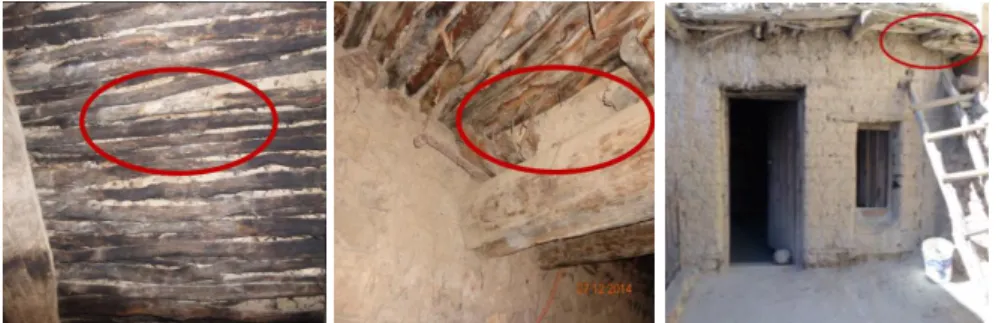
Based on the site inventories, several problems were identified which are: a) The floor of the houses was made of timber reinforced with clay and
straw. The condition of the flooring was in very advanced state of degradation where partial of the foor were collapsing in some part. b) The condition of the interior and exterior plaster was deteriotated
with holes and the stone walls were at high risk of collapsed. c) The lack of waterproofing of the walls and flooring in the common
room and bedroom.
d) The deterioration condition of the timber doors and windows. e) Lack of lighting in the common room and living areas and the
occupiers tend to open the door and window for the purpose of lighting. This has led to cold wind coming into the living area.
RESULT AND INTERPRETATION
This section discussed the anlysis from the questionnaire form from 70 respondents. In Menaa city there were 195 traditional housing and 50 houses were abandoned. The researcher surveyed 70 respondents for the purpose of the study.
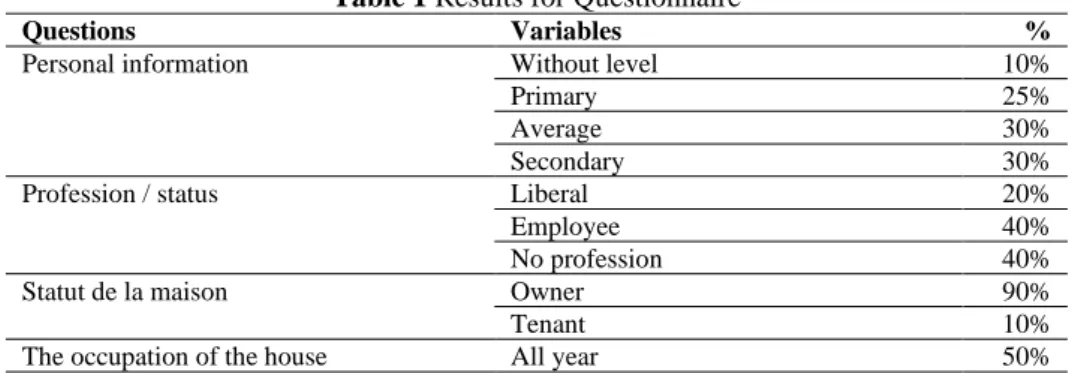
Table 1 Results for Questionnaire
Questions Variables %
Personal information Without level 10%
Primary 25%
Average 30%
Secondary 30%
Profession / status Liberal 20%
Employee 40%
No profession 40%
Statut de la maison Owner 90%
Tenant 10%
Summer period 50% If you do not occupy the house during the
winter period, why?
Adverse conditions in the interior 85% Unfavorable conditions outside 15%
Away from the city 0%
Do you have the following? Gas (Yes or No Question)
Yes 60%
Electricity (Yes or No Question) Yes 80%
Water (Yes or No Question) Yes 80%
Sanitation (Yes or No Question) Yes 60%
What type of heating do you use during the winter?
Gas 60%
Electric 0%
A wood 25%
Butane gas (bottles) 15%
A fuel 0%
Number of floors: 1 floor 35%
2 floors 55%
3 floors 10%
The ground floor is a space of: Life 30%
Sheepfold 20%
Storage 20%
Life and sheepfold 30%
The exterior façade Completed 35%
Not completed 65%
Coating of interior walls Completed 30%
Not completed 60%
Partially 10%
Flooring inside the house Completed 15%
Not completed 70%
Partially 15%
Unfavorable conditions inside the house Cold unbearable 70% Poorly equipped house 20% Does not meet modern comfort 10%
Poor Air flow? (Yes or No Question) Yes 70%
Humidity problem? (Yes or No Question) Yes 25% The factors that contribute to the thermal
discomfort inside the house in winter:
Degradation of interior walls 30%
Soil degradation 30%
Opening presence without glazing 0%
Roof degradation 30%
Carpentry degradation (doors and windows)
10%
Room organization is inappropriate to ensure adequate thermal comfort during winter
Yes 70%
Rehabilitation work (Yes or No Question) Yes 30% Transformation work (Yes or No
Question)
Yes 30%
coldness and harsh condition of winter. When asked the reasons of moving out from the house during winter, 85% of the resopondents stated that the cold conditions in the houses led them to abandoned the houses during this period. 70% of the respondents stated that as the courtyard is an opening in the house, most rooms in the houses were cold and not suitable for habitation due to the design of these rooms that tend to overlook the courtyard. The lack of electricity supply lead to the houses unable to used electric power to provide heating and lighting in these houses. In addition, 90% respondents believed that deterioration of the interior walls, the ground and the leaking roof were the main factors that led to the thermal discomfort of these houses during winter as these houses have many openings and not fully insulated.
The improvement work proposed to the occupants were to rearrange and redesigned the opening and improve the physical condition of the houses using modern brick and material. It is noted that majority of occupants preferred these old houses because it is their traditional houses and owned by their family in generations and the design or layout of the houses tend to promote family relationship and intimacy among the occupiers.
The Proposed Solutions and Techniques
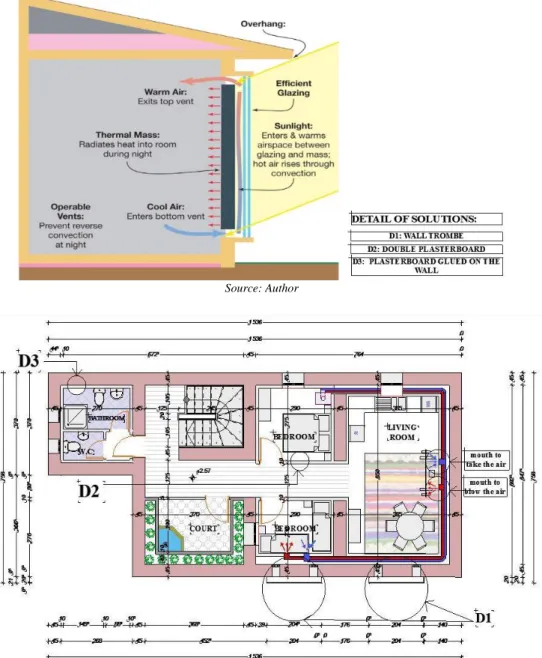
The rehabilitation and enhancement proposal for the traditional houses in Menaa city took consideration all architectural aspects and function related to the buildings. The rehabilitation proposed to use passive design technique which involve immediate works to improve the thermal comfort within the building such as the wall trombe (show details of wall trombe in figure3) separation by BA13mm, insulation of the roofing by ecological materials, double glazing to reinforce the thermal comfort and to minimize the heat losses, floor coverings, transform internal layout the house while keeping authentic traditional in order to reduce degradation process. It is necessary to propose modern, economical and ecological techniques and solutions without harming the architecture and authenticity of the region. The lack of rehabilitation and maintenance works on these houses is the root cause of its degradation.
Source: Author
Figure 7 Plan of the housing sample after rehabilitation Source: Author
Figure 8 View of the courtyard (left) and the common room (right) Source: Author
Figure 9 View towards the kitchen (left) and trombe wall in the common room (right). Source: Author
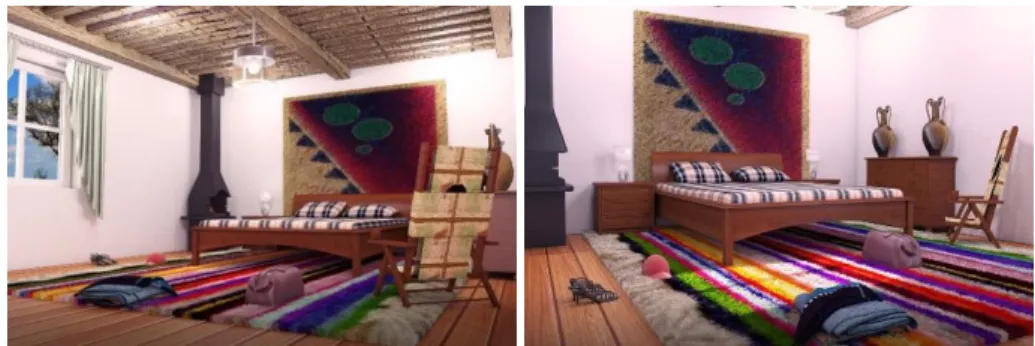
Figure 10 Interior view of the proposed bedroom where the hot air boiler is located Source: Author
Figure 11 Interior view of the proposed second bedroom Source: Author
RECOMMENDATION
In order to ensure acceptable thermal comfort inside the traditional houses in desert climate and to help create a suitable environment for the occupiers of traditional housings in Menaa city, the following recommendations are proposed: i. The authorities concerned should consult the residents and encourage them to maintain the condition of the houses. Financial assisted can be given to the renovation of these houses as this will ensure the preservation of these houses in future.
CONCLUSION
The research has highlighted the amelioration of thermal comfort inside traditional housings in Menaa city. The aim of this research was to propose improvement on thermal comfort of the traditional housings in Menaa during the winter period. The proposals through rehabilitation and renovations of these houses will restore its value by offering modern renovation techniques without harming the identity and traditional architectural landscape of the region. To ensure comfortable thermal comfort in a traditional house, integration of ecological concept using local resources and the use of renewable energy material are essential in order to maintain economic and local tradition.
REFERENCES
Adjali, S 1986, «Habitat traditionnel dans les Aurès», Editions du CNRS.
Alain Viaro, Arlette Ziegler1983, « Habitat traditionnel dans le monde, Eléments pour une approche », UNESCO.
B .GIVONI, «L’homme, L’architecture et le climat», Edition : Le Moniteur, Paris, 1978.
Benbouaziz Akila 2011, mémoire de magister, « Les transformations architecturales et morphologiques de l’habitat traditionnel dans les Aurès : Cas de Menaa », Université Mohamed Khider Biskra,
Boughida Abdelwahab Moncef 2012, mémoire de magister, « Revitalisation Des Vieilles Villes Auresiennes Cas De Menaa », Université Hadj Lakhdar Batna.
Colloque national sur l’habitat traditionnel, Le Soir d’Algérie, 27mai 2009.
Didi Ilies 2013, mémoire de magister, « habitat traditionnel dans la médina de Tlemcen », Université Abou Bakr Belkaid, Tlemcen.
Expédition 6 Climats 6 Habitats. (n.d.). Retrieved March 24, 2015, from http://www.6climats6habitats.com.
Extrait du Portail Algérien des Energies Renouvelables, 2012
Le retour à l'architecture traditionnelle recommandée par des experts, extrait du portail Algérien des énergies renouvelables, lundi 21 mai 2012.
Mathieu GALLISSOT, thèse de doctorat : « Modéliser le concept de confort dans l’habitat intelligent : du multi sensoriel au comportement», sous la direction Jean CAELEN, soutenue le 26 Avril 2012, université de Grenoble, France, Avril 2012. Mozer, M. C. « The Neural Network House: An Environment hat Adapts to its Inhabitants
». In M. Coen (Ed.), 1998, (pp. 110-114)
Réhabilitation et action sociale à Marrakech, Maroc. L’amélioration du cadre de vie traditionnel, RéhabiMed, Maroc, 2008.
Shama Atif 2011,« Typologie de logements marocains : Modèles d’habitats entre persistances et mutations », Énoncé Théorique De Master EPFL - ENAC - SAR 2010.