Degree of Premenstrual Mood Cyclicity is Predictive of Elevated Tonic Interleukin-6 Levels in Women with Menstrually-Related Mood Disorder
Priyenka Niju Khatiwada
A thesis submitted to the faculty at the University of North Carolina at Chapel Hill in partial fulfillment of the requirements for the degree of Bachelor of Science in the biology department in the college of arts and
sciences.
Chapel Hill 2016
Abstract
Menstrually-Related Mood Disorder (MRMD) is characterized by cyclical luteal phase onset of severe emotional symptoms with resolution during menses. Despite the symptomatic similarities with chronic anxiety and mood disorders, the menstrual cycle entrainment of symptoms in MRMD presents a unique challenge for treatment. More information about the pathophysiology of MRMD could help improve treatment options. Low-grade inflammation is implicated in the pathophysiology of some psychiatric disorders with symptom profiles similar to MRMD. We hypothesize that women with both (1) greater peripheral inflammation at baseline (tonic
inflammation), and (2) greater changes in inflammation in response to acute stress, will prospectively report a greater premenstrual elevation of symptoms relative to their own follicular baseline (i.e., greater cyclicity
of symptoms). Women completed 2-4 months of daily symptom ratings. Our sample consisted of 51 women meeting prospective criteria for MRMD on the basis of these daily ratings. For each woman, an average premenstrual symptom elevation in several symptom domains was calculated for each women. Each woman then reported to the laboratory during the luteal phase of the menstrual cycle, and the participant’s response to stress was measured in serum at baseline and during the Trier social stress test (TSST). High-sensitivity ELISA kits were used to measure IL-6 levels as a marker of inflammation. Multilevel models in SAS PROC MIXED (with time points nested within women) predicted IL-6 at each time point from (1) time, (2) degree of cyclicity in each symptom, and (3) the interaction of cyclicity and time. In a sample of 51 women with prospectively-confirmed MRMD, the degree of symptom cyclicity across several domains was positively correlated with elevated baseline levels of inflammation (IL-6). However, degree of symptom cyclicity was not associated with the degree of stress-related increase in inflammation during the TSST. This work provides the first evidence that prospectively-measured premenstrual symptom severity is associated with elevated tonic inflammation; this similarity to major depressive disorders may provide insights into prevention and treatment.
Introduction
treatment of PMDD: effective but not enough (Halbreich et al., 2003). While a drospirenone pill with low estrogen oral contraceptives has been shown to alleviate severe symptoms of PMDD for at least 3 months, it is not known if it helps women with less severe symptoms or is just a better form of birth control ( Lopez, Kaptein, and Helmerhorst, 2012). Neither SSRIs nor birth control pills were created explicitly for the treatment of PMDD/MRMD, but by expanding scientific knowledge about the pathophysiology of PMDD/MRMD a more effective treatment could be developed.
Low-grade inflammation is implicated in the pathophysiology of various psychiatric disorders, including depression, that share common features with PMDD/ MRMD. Low-grade inflammation results from the stimulation of the pro-inflammatory cytokine network, which is activated commonly by injury as well as stress (Berk et al., 2013). Interleukins are critical messengers of the immune system, and interleukin-6 is involved in the pro-inflammatory response. Innate immune cells persistently produce pro-inflammatory cytokines in response to continued stress, resulting in prolonged low-grade inflammation ( Dantzer, 2008). Inflammatory cytokines directly interact with pathophysiologic domains that are affected in depression including neurotransmitter metabolism, neuroendocrine function, and neural plasticity. Activation of inflammatory pathways in the brain is believed to contribute to “decreased neurotrophic support and altered glutamate release/reuptake, as well as oxidative stress, leading to excitotoxicity and loss of glial elements, consistent with neuropathologic findings that characterize depressive disorders (Miller, Maletic, Raison, 2009).” Additionally, low-grade inflammation induces sickness behavior, which includes lethargy, depression, anxiety, loss of appetite, sleepiness, hyperalgesia, reduction in grooming and failure to concentrate (Kent, Bluthé, Kelley, Dantzer, 1992). Inflammatory markers have also been shown to increase during acute psychosocial stress (Steptoe, Hamer, Chida, 2007), and greater stress-related increases in inflammatory markers are associated with depression severity, feelings of social rejection, and higher ambulatory BP(Fagundes, Glaser, Hwang, Malarkey, Kiecolt-Glaser, 2013; Slavich, Way, Eisenberger, & Taylor, 2010; Brydon, Steptoe, 2005). Thus, it is possible that individual differences in tonic inflammatory immune function may play an etiologic role in development of MRMD/PMDD, increasing vulnerability for cyclical premenstrual inflammation and associated symptoms. Additionally, individual differences in the magnitude of stress-related inflammatory responses may also be risky, increasing the likelihood of premenstrual symptoms.
The purpose of the present study is to assess whether (1) peripheral inflammation at baseline (referred to as tonic
inflammation), and (2) changes in inflammation in response to acute psychosocial stress predict the
depressive disorders, we predicted that women with both (1) greater baseline levels of IL-6 at baseline, and (2) greater IL-6 increases following stress would report greater premenstrual increases in symptoms.
Methods
I. General Procedure
Women were recruited and screened prospectively for 2-4 cycles using the DRSP (Daily Record of Severity Problems) and Carolina Premenstrual Assessment Scoring System (C-PASS) described below in Table 1. These prospective data were used to compute both (1) a woman’s average baseline follicular symptoms in each domain and (2) a woman’s average premenstrual symptoms in each domain. Women meeting prospective criteria for MRMD then underwent the TSST (Trier Social Stress Test) described below. During the TSST, IL-6 was measured 4 times in order to gather both baseline inflammation and 3 timepoints to measure inflammatory reactivity to the stressor.
II. Diagnostic and Prospective Data Methods and Procedure
A. Daily Symptom Data Collection
The Daily Record of Severity Problems form (DRSP form; Endicott, Nee, & Harrison, 2005) is a widely used,
well-validated prospective measure of daily ratings, allowing for the assessment of the four diagnostic dimensions. The DRSP contains 21 items, which fully cover the DSM-5 (2013) content, asking the rater to indicate the daily severity of each symptom on a 6-point Likert scale (1 – Not at all, 2 – Minimal, 3 – Mild, 4 – Moderate, 5 – Severe, 6 – Extreme). The DRSP (Endicott et al., 2006) was administered daily during participation.
B. The C-PASS Diagnostic Method
The C-PASS is a recently-developed diagnostic protocol for making the DSM-5 diagnosis of PMDD using >=2 months of daily ratings on the DRSP. It uses only the seven days prior to the onset of menses (days -7 to -1; premenstrual phase) and the 7 days following average menstrual offset on day 4 (days 4 to 10; postmenstrual phase) where day -1 represents the day prior to menstrual onset and day 1 represents menstrual onset. The C-PASS requires that at least 3 out of 7 possible days of ratings be present in each phase from a given cycle; cycles in which 4 or more daily diaries are missing from either the premenstrual or postmenstrual phases are not scored. The C-PASS begins the diagnostic process by characterizing each DRSP item in each cycle (where a cycle is defined as a set of postmenstrual and premenstrual phases from two consecutive menstrual cycles) using the four diagnostic dimensions as described in Table 1 (relative symptom change:
percent
change from premenstrual to postmenstrual >=30%; absolute clearance
: postmenstrual week maximum <=3;
absolute severity
: premenstrual week maximum >=4; and duration: severe premenstrual week days >=2).
threshold on all four required dimensions (see Table 1; Total Symptoms must be >=5 for PMDD; no requirement of Total Symptom number in MRMD) and whether a core symptom has been met (number of core symptoms >=1). Note that the C-PASS counts the number of DSM-5 symptoms meeting criteria at this stage rather than the number of DRSP itemsmeeting criteria (see Table 1). Next, the C-PASS makes the diagnosis of PMDD by counting the number of cycles meeting diagnostic criteria in a given woman (cycles meeting criteria >=2). In the present study, the research diagnosis of MRMD (i.e., at least one emotional symptom met for at least 2 cycles) was used. In addition, the C-PASS was used for each woman to calculate her average percent premenstrual elevation (over their own follicular baseline) of each core symptom. These variables were used as indicators of cyclicity
of each symptom in each woman.
C. Trier Social Stress Test(TSST) Protocol
Each participant underwent the laboratory procedure during the luteal phase of the menstrual cycle, 5–12 days after a home urine ovulation test indicated that the luteinizing hormone had surged due to ovulation (corresponding to days 18–25 of an idealized 28-day cycle). Each participant assumed the role of a job applicant and was individually introduced to a 3 person committee. Participants prepared a speech in 10 minutes and then delivered her speech in 5 minutes. The committee responds with prepared questions. Then the subject subtracts the number 13 from 1,022 as fast and as accurately as possible, having to start over if they make a mistake.
D. Intravenous Blood Draw
A research nurse inserted a butterfly needle into a forearm vein. A non-heparinized, multi-stop-cock system was employed, to allow the nurse to draw blood samples without the added stress involved in multiple venipunctures. Once the needle was in place, a curtain was drawn to prevent the participant from viewing blood sampling. A 15-minute recovery period followed the intravenous blood draw setup. Then samples were taken for baseline measures and 3 timepoints to measure inflammatory reactivity to the stressor during the TSST.
E. IL-6 Assay
Sera were frozen at −80◦ C and later thawed for analysis. Solid phase ELISA kits for human IL-6 immunoassay
results were log10 transformed to achieve distributional normality within our sample, which is critical for statistical analysis.
F. Analytic Plan Testing Hypothesis
IL-6 data are structured such that 4 TSST samples are nested within women.
Therefore, we utilized a
two-level regression model that accounts for this data structure. Hypotheses were tested as multilevel models in SAS PROC MIXED (SAS Institute, Inc, Cary, NC). Models (run separately for each of the 24 DRSP symptoms) predicted IL-6 from the following predictors: (1) sample (baseline, 10 minutes post-TSST, 20 minutes post-TSST, and 30 minutes post-TSST), (2) mean follicular baseline symptoms in a given domain, (3) the interaction of mean follicular symptoms with sample, (4) mean premenstrual symptoms in the same domain, and (5) the interaction of mean premenstrual symptoms with sample. Therefore, the main effects of premenstrual symptoms indicate the association of degree of premenstrual symptom increase over
baseline with tonic levels of IL-6
, whereas its interactions with sample indicate the association of
degree of premenstrual symptom increase over baseline with the degree ofIL-6 reactivity to the TSST
.
For increased clarity, standardized gamma weight estimates (as estimated in SAS PROC GLIMMIX) are presented.
Results
It is known that inflammation increases in individuals with major depressive disorders; however, it is not known whether degree of symptom cyclicity predicts inflammatory response to stress or baseline levels of inflammation. Figure 1 A-D shows the average phase-level symptom means from the C-PASS for depression, anxiety, mood swings, and anger and interpersonal conflict. An average of symptom levels, in both women showing and not showing cyclicity for a given symptom, showed a linear increase from follicular baseline to premenstrual baseline across all symptoms.
In order to assess the relationship between degree of premenstrual symptom cyclicity and inflammation we measured symptoms and IL-6, a proxy to measure the severity of inflammation, for each woman. IL-6 values underwent log10 transformation to achieve normality within the sample of 26 women and values were plotted against degree of symptom cyclicity.
anxiety), difficulty concentrating, lethargy and fatigue, overwhelmed or couldn’t cope, work interference, hobbies and social activity interference, and relationship interference.
Because the multilevel models revealed that mean levels of IL-6 across the TSST-- and not reactivity to the TSST-- were predictive of symptom cyclicity, we chose to provide simpler scatterplot figures of this effect in which we plotted individual IL-6 means against symptom cyclicity variables. As seen in Figure 2 A-H, consistent with predictions, elevated tonic level of IL-6 was positively correlated with a greater degree of symptom cyclicity (i.e., a greater symptom increase from follicular mean symptoms to premenstrual mean symptoms). This was true for a variety of symptoms; higher tonic IL-6 predicted greater cyclicity of hopelessness, worthlessness and guilt, mood swings, rejection sensitivity, anhedonia and loss of interest, physical symptoms, life impairment, difficulty concentrating, lethargy and fatigue, overwhelmed or couldn’t cope, work interference, hobbies and social activity interference, and relationship interference. With anxiety being the only symptom not predicted by tonic IL-6.
In contrast to the robust associations between degree of symptom cyclicity and tonic IL-6, there were no significant interactions between symptom cyclicity and IL-6 levels (all ps < .08); therefore, IL-6 reactivity to stress was neither positively nor negatively correlated with degree of premenstrual symptom cyclicity.
Discussion
The purpose of the present study was to assess whether peripheral inflammation at baseline, and in response to acute psychosocial stress, predicted severity of prospectively-rated premenstrual symptoms in women diagnosed with MRMD. In women with prospectively-confirmed menstrual cycle entrainment of affective psychiatric symptoms (MRMD), degree of symptom cyclicity across several domains was positively correlated with elevated baseline levels of inflammation (Interleukin-6). We expected to observe higher stress-reactivity of inflammation in women with higher cyclicity; however, degree of symptom cyclicity was not associated with stress-reactivity of inflammation during a standardized psychosocial stressor.
persistent background inflammation or luteal increases in baseline inflammatory immune function is a part of the etiology of PMDD/MRMD.
The lack of association of symptom cyclicity with inflammatory reactivity is notable. This may indicate a failure of the HPA (Hypothalamic-Pituitary Axis) axis to reestablish homeostasis following repeated stressors among at-risk women, resulting in an elevated background level of inflammation and blunted, rather than overly reactive, inflammatory response to stress. Consistent with this notion, MRMD women with a history of trauma or other early life adversity show more severe symptom cyclicity and a stronger linkage of progesterone changes and symptoms (Eisenlohr-Moul et al., 2016). Since traumatic experiences are known to cause chronic inflammation via dysregulation of the HPA axis (Miller, Chen, & Parker, 2011), future work should examine whether these effects of traumatic experience in MRMD may be mediated by inflammatory processes. Consistent with previous work implicating inflammation specifically in a depressive pattern of behavior, results appeared particularly robust for depressive symptoms. IL-6 effectively induces inflammatory pathways in the brain altering the glutamate-glutamine cycle and inducing oxidative stress, which are consistent with neuropathologic findings that characterize depressive disorders (Miller, Maletic, Raison, 2009).
The present work has a variety of potential clinical implications. Both psychotherapy and medications may reduce inflammation, both directly and indirectly. Currently treatment includes psychotherapy, oral contraceptives, and antidepressants; however, up to 50% of women fail to respond to these treatments (Halbreich, 2008), suggesting the need for alternative therapies. This study suggests that treatment using anti-inflammatory drugs might better serve the needs of patients. In a proof-of-concept study using 3 doses of tumor necrosis factor (TNF) antagonists (which blocks the activity of inflammation-promoting TNF), a 12-week trial demonstrated that 62% of patients with high baseline inflammatory biomarker showed a ≥50% reduction in depression (HAM-D) scores (Raison, et al., 2013). Additionally, mindfulness-based stress reduction might reduce HPA stress reactivity, which might help the HPA axis better regulate chronic low-grade inflammation (Girdler, Nguyen, Bunevicius, Bunevicius, 2013).
this index represents baseline premenstrual inflammation or the participant’s baseline inflammation across the entire cycle. Ultimately a longitudinal measurement of IL-6 alongside symptoms will be necessary to address this question. Future studies should examine inflammation and symptoms across the cycle in women with MRMD, and examine whether potential premenstrual increases in baseline inflammation mediate premenstrual symptom increases.
The purpose of this study was to assess whether peripheral inflammation at baseline, and in response to acute psychosocial stress, predicted the degree of prospectively rated premenstrual increases in symptoms among women diagnosed with MRMD. As predicted, degree of symptom cyclicity across several domains was positively correlated with elevated baseline levels of inflammation (Interleukin-6). However, degree of symptom cyclicity was not associated with stress-reactivity of inflammation during a standardized psychosocial stressor. These results suggest that chronic low-grade inflammation may play a role in the etiology of menstrually-related mood symptoms, just as in other major affective conditions. Depression presenting with low-grade inflammation has been treated using anti-inflammatory medications; given this evidence that MRMD symptoms may be influenced via similar pathways, anti-inflammatories may be a promising treatment to explore for MRMD.
Table 1. Diagnostic Dimensions of DSM-5 Premenstrual Dysphoric Disorder
DIAGNOSTIC DIMENSIONS Diagnosis Based on DRSP DSM-5
Content Symptoms Core symptoms:
felt depressed/sad/down/blue, felt hopeless, felt
worthless/guilty, felt
anxious/keyed up/on edge, had mood swings, was more
sensitive to rejection/feelings were easily hurt, felt
angry/irritable, had
conflicts/problems with other people
Secondary symptoms: less interest in usual activities, difficulty concentrating,
lethargic/fatigue/tired/lack of energy, increased
appetite/overate, specific food cravings, slept more/took naps/hard to get up, trouble getting to sleep/staying asleep, felt overwhelmed/couldn’t cope, felt out of control, breast
tenderness, breast swelling/felt bloated/weight gain, headache, joint or muscle pain
Impairment symptoms: “Less productivity at work, school, home or in daily routine” “Interference with hobbies or social activities (avoid, do less)” “Interference with relationships”
Criterion B: affective lability,
irritability/anger/increased interpersonal conflicts, depressed mood/feelings of hopelessness/self-deprecati ng thoughts,
anxiety/tension/feelings of being keyed up/on edge Criterion C:
decreased interest, difficulty in concentration,
lethargy/easy fatigability/lack of energy, change in appetite, hypersomnia/insomnia, overwhelmed/out of control, physical symptoms (breast tenderness, muscle pain, bloating, weight gain)
Number MRMD
≥ 1 core symptom
PMDD ≥ 1 core symptom ≥ 5 total
symptoms
Criterion A:
Cyclicity Relative Symptom
Change
30% (relative to range of scale used) decrease from
pre-menstrual week
(days -7 à -1) to postmenstrual week (days 4 à 10) where 1=menstrual onset
Criterion A:
“…present in the week before menses…improve within a few days after the onset of menses”
Absolute Symptom Clearance
Symptoms must not exceed 3 on any day during days 4 à 10
Criterion A:
“minimal or absent in the week postmenses”
Postmenses = following menstrual onset
Clinical Significance
Absolute Severity
4 or more (on a Likert-scale from 1 to 6)
Criterion D:
“symptoms are associated with clinically significant distress OR interference with work, school, usual social activities, or relationships with others”
Duration At least 2 days (doesn’t have to be consecutive)
Criterion D:
“in the final week before the onset of menses”
Not Simply Cyclicity of Other Disorder
Rule out dysmenorrhea using prospective ratings.
Rule out mood and anxiety disorder with SCID-1.
Rule out Borderline Personality Disorder with SCID-2.
Criterion E:
“not merely an exacerbation of the symptoms of another disorder.”
“Key differential diagnoses: dysmenorrhea, bipolar disorder, MDD, dysthymia, and BPD.”
Chronicity ≥ 2 symptomatic months
Criterion A and F:
“In the majority of menstrual cycles…”
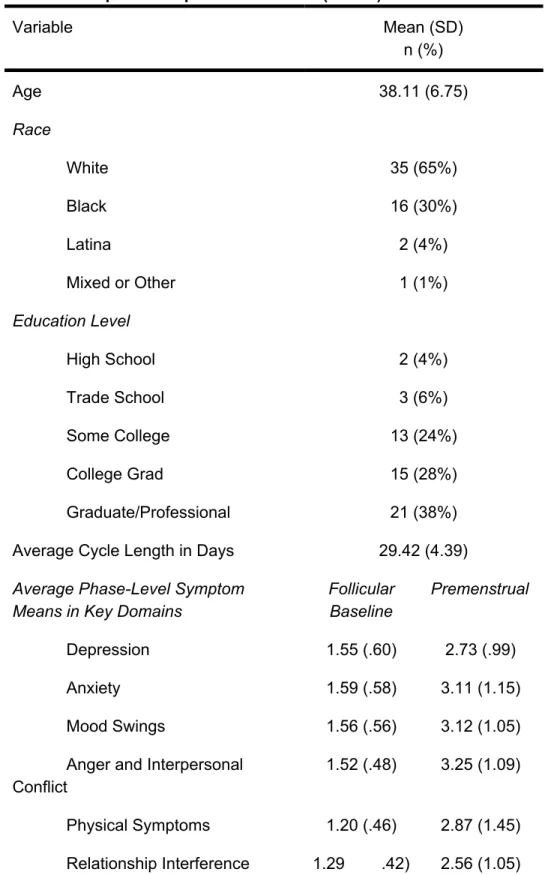
Table 2. Sample Descriptive Information (N = 54)
Variable Mean (SD)
n (%)
Age 38.11 (6.75)
Race
White 35 (65%)
Black 16 (30%)
Latina 2 (4%)
Mixed or Other 1 (1%)
Education Level
High School 2 (4%)
Trade School 3 (6%)
Some College 13 (24%)
College Grad 15 (28%)
Graduate/Professional 21 (38%)
Average Cycle Length in Days 29.42 (4.39)
Average Phase-Level Symptom Means in Key Domains
Follicular Baseline
Premenstrual
Depression 1.55 (.60) 2.73 (.99)
Anxiety 1.59 (.58) 3.11 (1.15)
Mood Swings 1.56 (.56) 3.12 (1.05)
Anger and Interpersonal Conflict
1.52 (.48) 3.25 (1.09)
Physical Symptoms 1.20 (.46) 2.87 (1.45)
Relationship Interference 1.29 .42) 2.56 (1.05)
Note.
Figure 1 A-D: Average Phase-Level Symptom Means for Key Domains (Depression Anxiety, Mood Swings, and Anger and Interpersonal Conflict) at Follicular Baseline and Premenstrual
An average of symptom levels, in both women showing and not showing cyclicity for a given symptom, showed a linear increase from follicular baseline to premenstrual baseline across all symptoms.
Figure 2 A-I: Degree of Symptom Cyclicity vs. Baseline IL-6
Consistent with predictions, a greater degree of symptom increase from the follicular baseline to the premenstrual phase was generally associated with elevated tonic
level of IL-6. This was true for a variety of
I.
Acknowledgements
I’d like to thank Susan Girdler, Ph.D for allowing me to work in her lab under the mentorship of Tory
References
Berk, M., Williams, L. J., Jacka, F. N., O’Neil, A., Pasco, J. A., Moylan, S., ... & Maes, M. (2013). So
depression is an inflammatory disease, but where does the inflammation come from?. BMC medicine
,
11
(1), 1.
Brydon, L., & Steptoe, A. (2005). Stress-induced increases in interleukin-6 and fibrinogen predict ambulatory
blood pressure at 3-year follow-up.Journal of hypertension
, 23(5), 1001-1007.
Clancy, K. B., Klein, L. D., Ziomkiewicz, A., Nenko, I., Jasienska, G., & Bribiescas, R. G. (2013). Relationships
between biomarkers of inflammation, ovarian steroids, and age at menarche in a rural Polish sample.
American Journal of Human Biology
, 25(3), 389-398.
Dantzer, R., O'Connor, J. C., Freund, G. G., Johnson, R. W., & Kelley, K. W. (2008). From inflammation to
sickness and depression: when the immune system subjugates the brain. Nature reviews neuroscience
, 9(1), 46-56.
Eisenlohr-Moul, T. A., Rubinow, D. R., Schiller, C. E., Johnson, J. L., Leserman, J., & Girdler, S. S. (2016).
Histories of abuse predict stronger within-person covariation of ovarian steroids and mood symptoms
in women with menstrually related mood disorder. Psychoneuroendocrinology
, 67, 142-152.
Fagundes, C. P., Glaser, R., Hwang, B. S., Malarkey, W. B., & Kiecolt-Glaser, J. K. (2013). Depressive
symptoms enhance stress-induced inflammatory responses. Brain, behavior, and immunity
, 31,
172-176.
Girdler, S. S., Nguyen, K., Bunevicius, A., & Bluth, K. (2013, April). MINDFULNESS, MENSTRUAL MOOD
InPSYCHOSOMATIC MEDICINE
(Vol. 75, No. 3, pp. A92-A92). 530 WALNUT ST, PHILADELPHIA,
PA 19106-3621 USA: LIPPINCOTT WILLIAMS & WILKINS.
Halbreich, U., Borenstein, J., Pearlstein, T., & Kahn, L. S. (2003). The prevalence, impairment, impact, and
burden of premenstrual dysphoric disorder (PMS/PMDD).Psychoneuroendocrinology
, 28, 1-23.
Halbreich, U. (2008). Selective serotonin reuptake inhibitors and initial oral contraceptives for the treatment of
PMDD: effective but not enough. CNS spectrums
, 13(07), 566-572.
Kent, S., Bluthé, R. M., Kelley, K. W., & Dantzer, R. (1992). Sickness behavior as a new target for drug
development. Trends in pharmacological sciences
,13, 24-28.
Lopez, L. M., Kaptein, A. A., & Helmerhorst, F. M. (2012). Oral contraceptives containing drospirenone for
premenstrual syndrome. The Cochrane Library
.
Miller, A. H., Maletic, V., & Raison, C. L. (2009). Inflammation and its discontents: the role of cytokines in the
pathophysiology of major depression. Biological psychiatry
, 65(9), 732-741.
Miller, G. E., Chen, E., & Parker, K. J. (2011). Psychological stress in childhood and susceptibility to the
chronic diseases of aging: moving toward a model of behavioral and biological mechanisms.
Psychological bulletin
,137(6), 959.
Pearlstein, T., & Steiner, M. (2008). Premenstrual dysphoric disorder: burden of illness and treatment update.
Journal of psychiatry & neuroscience: JPN
, 33(4), 291.
Raison CL, Rutherford RE, Woolwine BJ, et al. A Randomized Controlled Trial of the Tumor Necrosis Factor
Biomarkers.JAMA Psychiatry.
2013;70(1):31-41. doi:10.1001/2013.jamapsychiatry.4.
Slavich, G. M., Way, B. M., Eisenberger, N. I., & Taylor, S. E. (2010). Neural sensitivity to social rejection is
associated with inflammatory responses to social stress. Proceedings of the national academy of sciences
, 107(33), 14817-14822.
Smith MJ, Schmidt PJ, Rubinow DR. Operationalizing DSM-IV criteria for PMDD: selecting symptomatic and
asymptomatic cycles for research. Journal of Psychiatric Research
. 2003;37(1):75-83.
Steptoe, A., Hamer, M., & Chida, Y. (2007). The effects of acute psychological stress on circulating
inflammatory factors in humans: a review and meta-analysis. Brain, behavior, and immunity
,21(7),
901-912.
Wittchen HU, Becker E, Lieb R, Krause P. Prevalence, incidence and stability of premenstrual dysphoric
disorder in the community. Psychol Med
. 2002;32(1):119-132.