Preventive Health Services Use, Medical Mistrust, Cancer and African American Men:
A Secondary Data Analysis and Systematic Review
By
Nzingha White
A Master’s Paper submitted to the faculty of the University of North Carolina at Chapel Hill
in partial fulfillment of the requirements for the degree of Master of Public Health in
the Public Health Leadership Program
Chapel Hill
2012
Advisor
Date
Second Reader
Table of Contents
Abstract of Master’s Paper...2
Original Research Paper (Secondary Data Analysis)...4
Abstract ... 4
Introduction... 6
Methods... 7
Results ...13
Discussion...17
Conclusions ...21
References...23
Figures ...24
Systematic Review... 30
Introduction...30
Methods...32
Results ...33
Conclusions ...55
References...58
Figures ...60
Abstract of Master’s Paper
Background
African American men are at increased risk for cancer incidence and mortality. Cancer related
risk factors; such as tobacco use and obesity are associated with several cancers, including
colorectal cancer. Moreover, high rates of tobacco use and obesity among African American
men, along with receipt of fewer preventive services likely intensifies the disparity of cancer
morbidity and mortality. African American men with higher levels of medical mistrust have been
found to both schedule and receive fewer preventive services, including the routine health
examination. Evidence that explores the relationship between the routine health examination,
cancer related risk factors and medical mistrust is scant.
Accordingly, compared to all other US adults, incidence and mortality rates of colorectal cancer
are highest among African American men while adherence to screening remains low. There is
growing data that adherence among African American men may be higher than previous
estimates. No consensus on guideline consistent colorectal cancer screening adherence among
African American males is currently available. Therefore, this paper both explores factors
associated with preventive health service use, and reviews the relevant literature on adherence
to colorectal cancer screening among African American men.
Methods
This paper includes both a secondary data analysis which explores the association between the
routine health examination, cancer related risk factors and medical mistrust among African
American men and a systematic review of colorectal cancer screening adherence among
African American men. The Theory of Reasoned Action served as the conceptual framework for
associations. PubMed (Medline), EMBASE and CINAHL databases were searched for all
relevant articles on colorectal cancer screening adherence among African American men.
Results
African American men who received a routine health examination within the last year had higher
body mass indices than men who did not receive an examination (B=1.38, p=0.024, 95% CI
0.16-2.59). There was no association between smoking status and receipt of a routine health
examination (OR= 1.24, p=0.452, 95% CI 0.71-2.18) and medical mistrust did not moderate the
relationship between the routine health examination and either smoking status (p=0.535) or
body mass index (p=0.60).
A review of 125 titles and seven eligible articles, revealed that there was significant
heterogeneity in the study populations, methods, results, and quality of studies, as well as a lack
of objective data, examining adherence to colorectal cancer screening among African American
men.
Conclusions
Receipt of a routine health examination is associated with having a higher body mass index, but
not with smoking status. In addition, these relationships were not moderated by medical
mistrust. Consistent, objective, high quality, nationally representative data, examining true
Original Research Paper
Routine Health Examinations, Medical Mistrust, and Cancer Related Risk Factors Among African American Men
Abstract Background
African American men are at increased risk of cancer incidence and mortality. The association
between cancer and modifiable lifestyle factors is clear. Evidence has shown that norms and
attitudes, including medical mistrust are associated with scheduling and receipt of routine health
examinations among African American men. However, evidence that explores the relationship
between preventive health care and medical mistrust, as they relate to cancer related risk
factors is scant.
Methods
This cross-sectional secondary analysis of data collected from a larger study of African
American Men’s Health and Social lives uses the Theory of Reasoned Action as the conceptual
framework to examine the relationship between medical mistrust, routine health examinations,
current smoking status and body mass index. Independent variables included receipt of a
routine health examination within the past year and level of medical mistrust. Dependent
variables included current smoking status and body mass index. Age, socio-demographic
characteristics, health care access, and health status were controlled for in all analyses.
Pearson’s Chi-square, two-sample t-test, one way ANOVA, linear regression and multivariate
logistic and linear analyses were used to examine bivariate and multivariate relationships. Effect
Results
African American men who received a routine health examination within the last year had a
slightly higher body mass index than men who did not receive an examination (B=1.38,
p=0.024, 95% CI 0.16-2.59). There was no significant association between current smoking
status and receiving a routine health examination in the past year (OR= 1.24, p=0.452, 95% CI
0.71-2.18). Medical mistrust did not moderate the relationship the routine health examination
and either smoking status (p=0.535) or body mass index (p=0.60).
Conclusion
Some cancer related risk factors are associated with receipt of a routine health examination.
African American men who received a routine health examination within the last year had higher
body mass indices than men who did not receive a routine examination in the past year.
Current smoking status is not associated with receipt of a routine health examination within the
last year. Medical mistrust did not moderate the relationship between receiving a routine health
Introduction
African American men account for a disproportionate share of cancer morbidity and mortality
within the United States. Between 2004-2008, the incidence of cancer from all sites among
African American males was 626.2 per 100,000 compared to 545 per 100,000 among White
males (1). Further, the incidence of lung cancer among African American males was 102.7 per
100,000 compared to 83.7 for non-Hispanic White males(1). Rates of colorectal cancer
incidence and mortality were 66.9 and 30.5 per 100,000 in African American males and 54.6
and 20.1 per 100,000 respectively, in non-Hispanic White males(1). The relationship between
modifiable lifestyle factors and malignancy is clear (2, 3). Both lung cancer and colorectal
cancers are linked with tobacco use and obesity, respectively (4, 5). Compared to non-Hispanic
White males, African American males have higher rates of obesity (6), and tobacco use among
African American males exceeds the national average (7).
Receipt of preventive care can help address these cancer related risk factors. Despite evidence
that access to care improves receipt of preventive services (8), men are less likely to use
preventive health services (9). Moreover, African American men attend fewer preventive care
visits than non-Hispanic White men (10).
Routine health examinations, though not the only means of care, serves as a primary method to
receive clinical preventive services, risk assessment, and behavioral counseling. Routine health
examinations are associated with increased cholesterol screening, fecal occult blood testing and
decreased patient worry (11). Therefore the routine health examination may serve as a critical
access point for African American males to receive preventive services and address risky
Though evidence supports a significant relationship between medical mistrust and delayed
receipt of the routine health examination (10), the association between the periodic examination,
medical mistrust and specific cancer related risk factors has not been examined. Therefore, we
aim to explore health behavior and health care utilization among African American men-a
high-risk population.
We hypothesize that receipt of a routine health examination is associated with being a
non-smoker, and having a lower body mass index. Theoretically, men with higher levels of mistrust
are engaged in fewer health promoting and disease preventive behaviors, and thus are more
likely to have a less favorable cancer related risk factor profile, therefore, we also hypothesize
that the relationship between the routine health examination, tobacco use and body mass index
is moderated by level of medical mistrust.
Methods
Guiding Behavioral Framework
We use the Andersen Behavioral Model of Health Services Use (12), and the Theory of
Reasoned Action as guiding theoretical frameworks for this secondary analysis (13). The
Andersen model posits that health care service is a function of predisposing (e.g.
sociodemographic), enabling (e.g. economic, social relationships), and need (perceived and
evaluated health) factors. Further, the Theory of Reasoned Action adds to this framework by
proposing that behavioral intentions, which are the determinants of behavior, are a result of
individual attitudes, and subjective norms (13). In this study, receipt of a routine health
examination is used as an indicator of health behavior intention, while medical mistrust
represents contributing attitudes. In this study we examine the relationship between both of
these factors, receipt of a routine health examination (behavioral intention) and medical mistrust
Study Participants
We obtained data collected from a larger cross-sectional study of African American men’s
Health and Social lives (10). Survey data was retrieved in three waves from 2003-2004 and
2007-2009. Participants were recruited from seven barbershops, two academic institutions and
one academic event in five geographically diverse locations (Michigan, Georgia, California,
North Carolina, and Florida). Academic institutions included one community college
(Southeastern Michigan) and one historically Black university (central North Carolina) of varying
size and student population demographic. A conference for African-American male law
enforcement professionals in Miami, FL, served as the academic event.
Recruitment and Research Settings
We recruited participants using flier advertisements, direct contact and word of mouth. As
trusted congregating spaces for African-American men, barbershops were chosen as primary
recruitment sites (14, 15). Traditionally, they serve men from varied socioeconomic backgrounds
and have been utilized successfully for health promotion interventions involving this
population(14, 15). Eight barbershops described as “high volume” businesses (i.e., having a wait
time of 30-60 minutes and serving a minimum of 30 customers per day) by key African
American male informants in the community were approached about participation. “High
volume” shops were preferred as men could use their wait time to complete the surveys.
Study brochures, copy of the survey and consent forms were provided to owners. Seven out of
eight barbershops provided consent and participated in the study. Thereafter, signed letters of
support were obtained from all barbershop owners. Receptionists or barbers invited
self-identified African American male patrons aged 18 years or older to participate in “ a study about
Time constraint was the most frequently reported reason to decline participation. Patrons were
given the option of submitting the survey at a later date, however most participants completed
the survey on-site during their wait time. All participants received a $25 gift certificate for a free
haircut. Similar procedures were used at academic institutions and an event. African American
research assistants approached potential participants during meal times or breaks in areas of
high congregation (e.g., cafeterias, student unions, conference exhibit halls). Eighty-six percent
of men approached at academic institutions and an event completed the survey and received a
$25 gift card. The University of North Carolina at Chapel Hill and University of Michigan
institutional review boards approved all study procedures.
Measures
Outcome Variables (Cancer Related Risk Factors)
Smoking status was measured with one single-item question about smoking behavior: “Do you
currently smoke?”
Body mass index (BMI) was calculated using self-reported height and weight measures. Height
measurements were self-reported in feet and inches, and weight reported in pounds.
Participants responded to the following questions: “How tall are you without shoes?” and “How
much do you weigh without shoes?” BMI was calculated using this height and weight data with
the assistance of an online BMI calculation tool. This tool calculates body mass index using
weight in pounds and height in feet and inches (16).
Main Independent Variable
Routine Health Examinations
To measure receipt of a routine health examination, participants were asked “About how long
Response options were as follows: (1= Within the past year, 2=Within the past 2 years,
3=Within the past 3 years, 4=Within the past 5 years, 5=More than 5 years, and 6=Never).
Responses were dichotomized into 0=Delay and 1=No Delay (receipt of a routine check up in
the past year), as men with no delay in receiving a routine checkup were the group of primary
interest.
Moderator Variable
Medical Mistrust
Medical mistrust was measured with the 14-item Medical Mistrust Index (MMI) which measures
individual mistrust in healthcare organizations as a whole (e.g. “Healthcare organizations are
more concerned about making money than taking care of people”) (17). Six items were coded in
reverse and responses ranging from 1 (“strongly disagree”) to 4 (“strongly agree”) were used to
compute a mean score (Cronbach’s alpha=0.78 Higher scores in this scale indicate a greater
level of individual mistrust in healthcare organizations.
To assess effect modification, we also created an interaction variable calculated from the
multiplication of our two primary predictor variables (receipt of a routine health examination and
medical mistrust).
Control Variables
Socio-demographic variables included age (18-29, 30-39, and ≥40), education (≤ high school, some college, and college graduate/professional degree), marital status (currently married or
unmarried), and site of survey completion (educational institution or barbershop). Age and
education were coded as single indicator variables. Enabling factor measures assessed health
insurance status (has health insurance vs. no health insurance), and usual source of care (has
To measure need factors, including physical health status and the presence of chronic health
conditions, an additional variable, “chronic health conditions” was created. Participants were
asked if had they had ever been told by a doctor or other health professional that they had any
of twelve health conditions (e.g., hypertension, coronary heart disease, angina, heart attack,
heart disease or heart condition, stroke, emphysema, asthma, ulcer, cancer or malignancy,
diabetes or sexually transmitted disease). Responses were coded as 0=No and 1=Yes. An
aggregate score of the number of chronic health conditions was calculated and then regrouped
into the dichotomous variable, chronic health condition (0 chronic health conditions or 1 or more
chronic health condition (s)).
Statistical Analysis
We performed univariate analyses to describe characteristics of our sample. Pearson’s
chi-square, two-sample t-tests, one way ANOVA, linear regression and binary logistic regression
tests were used to measure unadjusted bivariate associations between independent and
dependent variables.
Multivariate regression (binary logistic and linear) analyses examined the relationship between
all sample characteristics, smoking status and body mass index (respectively). Main exposure
variables included having a routine check up within the past year, and mean medical mistrust
scores. We adjusted for age, education, marital status, recruitment site, health insurance
status, usual source of care, and the presence of chronic health conditions in each fully adjusted
model.
Two models (multivariate logistic and linear regression) measuring the interaction between the
examined the relationships between the interaction variable, primary predictors and outcome
variables.
Adjusted odds ratios (ORs), unstandardized coefficients (B), 95% confidence intervals (CI), and
corresponding significance tests (p-values) were calculated for all models.
Variance inflation factor (VIF) values of less than 5 confirmed the absence of multicollinearity
among all independent variables. We conducted the Hosmer Lemeshow test to evaluate the
quality of the multivariate logistic regression model and goodness of fit. The model was found to
have good fit as indicated by non-significant (p>0.05) values. We calculated Pseudo-R2’s
(Cox-Snell and Nagelkerke) to evaluate the variance explained by the multivariate logistic model. R2
and adjusted R2 were calculated to explore the variance explained in the multivariate linear
regression model. Perfect model fit is indicated at a value of 1 and no fit at 0.
Missing data analysis demonstrated that data were missing completely at random. We used
multiple imputation procedures to create five complete data sets (18).
In bivariate analyses, tests of significance (p-values) were not available for the final pooled data
set; therefore p-values are reported in ranges, representing results from all five complete
datasets. If significance tests were identical between all five datasets, one p-value is reported.
Odds ratios, unstandardized coefficients and 95% confidence intervals were obtained for logistic
and linear regression models, respectively for the final pooled data set and all five datasets,
All statistical analyses were performed with Statistical Package for Social Sciences (SPSS for
Windows, Release 19 and SPSS for Mac, Release 20), and 2-tailed tests were considered
significant at the 0.05 alpha level.
Results
Descriptive Characteristics
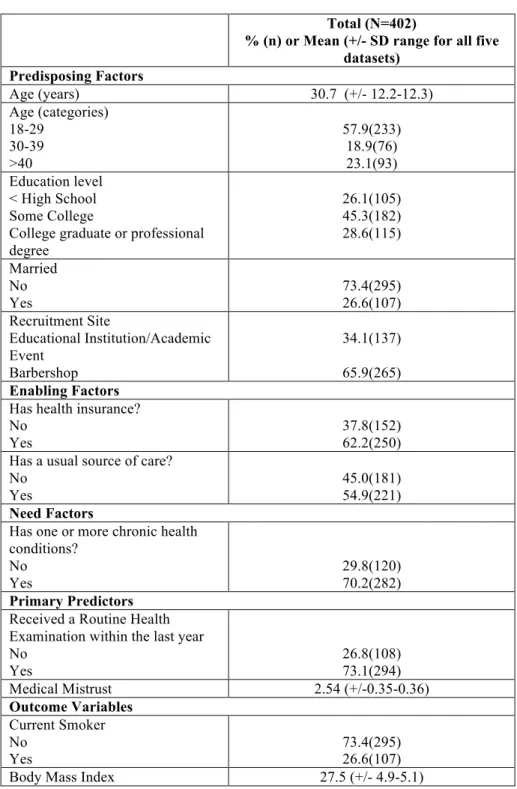
Participant characteristics are presented in Table 1. Most men were between the ages of 18 and
29 (57.9%) with a mean age of 30.7 years. More men had some college education (45.3%)
compared to those having a high school education (26.1 %), being a college graduate or having
a professional degree (28.6%). There were more unmarried (73.4%) men and men who were
recruited at a barbershop (65.9%). Most men had both health insurance (62.2%) and a usual
source of care (54.9%). Further, the majority of participants reported having one or more chronic
health conditions (70.2%).
Most men were not current smokers (73.4%). The mean body mass index for study participants
was 27.5 kg/m2, and ranged from 18.9 to 50.3 kg/m2. Most men in the study sample had
received a routine health examination in the last year (73.1%) (i.e. had no delay) and the mean
level of medical mistrust was 2.54 (SD range +/- 0.35-0.36). Medical mistrust is measured as an
average of 14 items on a 4-point Likert scale. Therefore, a mean level of medical mistrust of
2.54 (+/- 0.35-0.36), indicates a moderate level of mistrust.
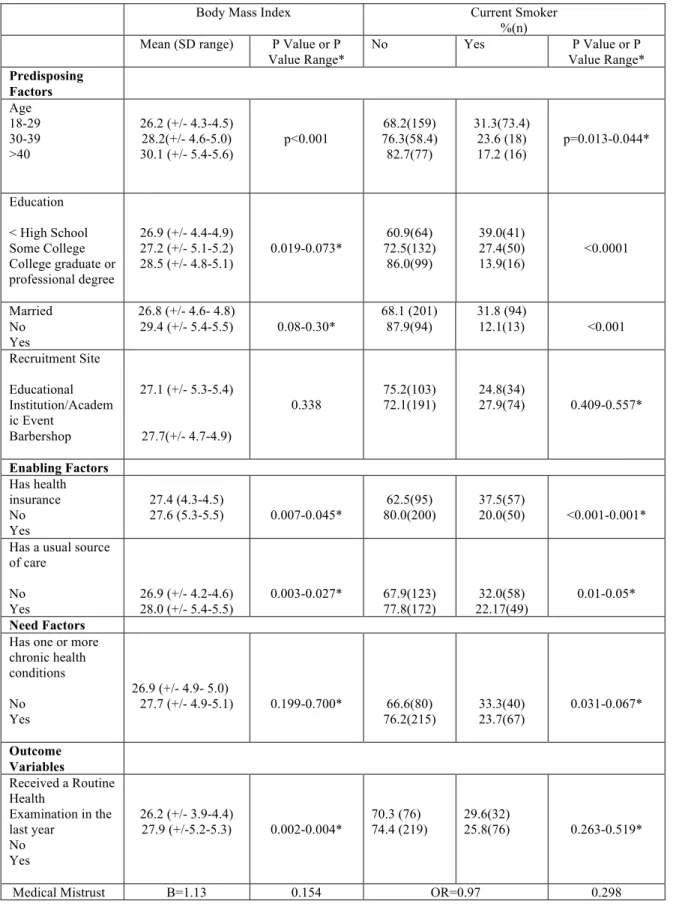
Unadjusted Associations between Primary Predictors and Cancer Related Risk Factors In regards to the primary predictor, receipt of a routine health examination in the last year, the
majority of men who had received a routine health examination were non-smokers (74.4%).
These differences were not statistically significant (p=0.26-0.52). Mean medical mistrust was
also not associated with smoking status (Table 2).
Both age and education were significantly associated with smoking status, with 82.7% of men
over the age of 40 reporting being a current non-smoker, compared to 68.2% of men between
18-29 years of age (Table 2). Most men with college or graduate degrees were not current
smokers (86.0%), compared to 60.9% of men with a high school education or less (Table 2).
Marital status was significantly associated with smoking status. Eighty-seven percent of married
men reported being non-smokers compared to less than 70% of unmarried men (Table 2).
There was no association between recruitment site and current smoking status.
Having both health insurance and a usual source of care were significantly associated with
smoking status. Eighty percent of men with health insurance were non-smokers, whereas only
62.5% of men without health insurance reported being non-smokers. Further, more men with a
usual source of care were reportedly non-smokers (77.8%), compared to those without a usual
source of care (67.9%). Having one or more chronic health conditions was not associated with
smoking status.
Receipt of a routine health examination was significantly associated with participant BMI. Mean
BMI among men who had received a routine health examination was slightly higher (27.9
kg/m2), than that of men who had not received an exam (26.2). Mean medical mistrust was not
significantly associated with body mass index. Among predisposing factors, age was the only
factor that was significantly associated with body mass index. Men over the age of 40 had a
higher BMI than men between ages 18-29, and 30-39. Level of education, marital status, and
recruitment site, were not associated with participant BMI. However, both having health
insurance and men with a regular source of care had slightly higher body mass indices than
men without insurance or a regular source of care. However the body mass index difference
between men with and without insurance was minimal. There was no significant association
between body mass index and having one or more chronic health conditions.
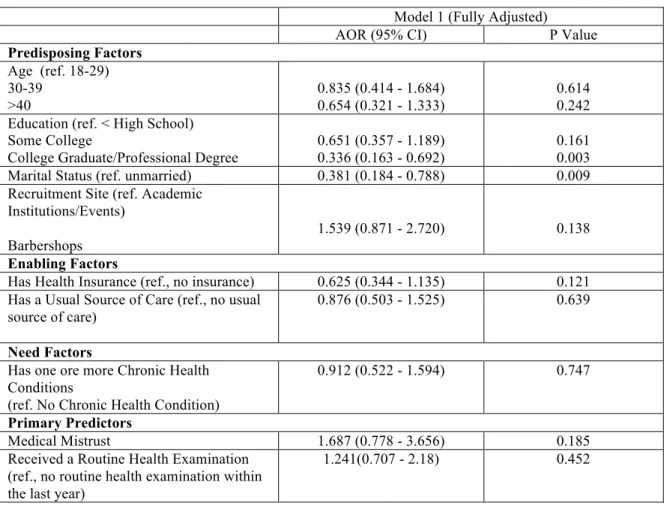
Adjusted Associations between Primary Predictors and Cancer Related Risk Factors After adjusting for all covariates there remained no association between the primary predictors
and current smoking status (Table 3). Having received a routine health examination in the last
year was not associated with smoking status (OR= 1.24, 95% CI 0.71-2.18). Further, mean
medical mistrust was not significantly associated smoking status (OR=1.68, 95% CI 0.78-3.66).
Among predisposing, enabling and need factors there were some significant associations with
current smoking status (Table 3). There was no significant association between age and
smoking status. However, compared to the referent group (men with less than or equal to a high
school education), men with a college or professional degree were significantly less likely to be
current smokers (OR=0.34, 95% CI 0.16-0.69). There was no association between having some
college education and current smoking status. In addition, men who were married were less
likely to be current smokers than unmarried men (OR=0.38, 95% CI 0.18-0.79). Next, there was
no association between recruitment at a barbershop and smoking status, compared to
recruitment at an academic institution or event (95% CI 0.87-2.72). Lastly, there were no
statistically significant associations between current smoking status and any of the examined
enabling or need factors (having health insurance, a usual source of care or one or more
Hosmer-Lemeshow goodness of fit tests indicated that our model adequately fit the data
(p-values ranged from 0.12-0.85). Cox and Snell R2 and Nagelkerke R2 indicate that our fully
adjusted model explained a fair percentage of the variance for smoking status (Cox and Snell
9.9-12.3%, Nagelkerke 14.3-19.9%).
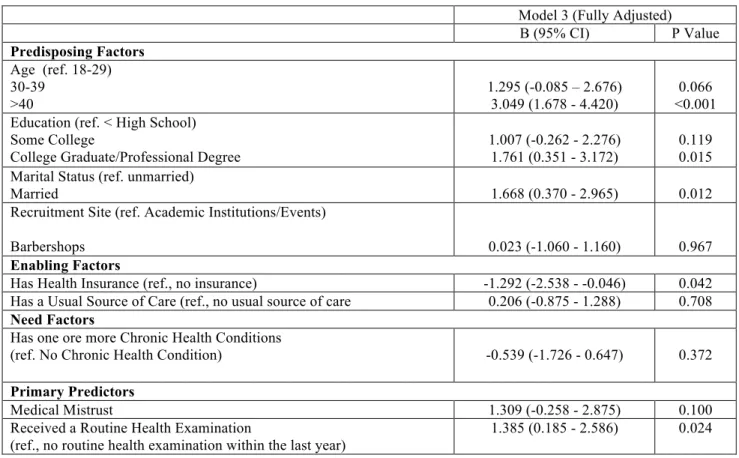
Men who received a routine health examination within the last year had a higher body mass
index, [1.38 units (kg/m2) higher] than men who did not receive an exam (B=1.38, 95% CI
0.16-2.59) (Table 5). However, there was no significant association between level of medical mistrust
and body mass index after adjusting for covariates.
In regards to predisposing factors (Table 5), men over the age of 40 had a body mass index,
3.05 units (kg/m2) higher than men between the ages of 18 and 29 (referent group)(B=3.05,
95% CI 1.68-4.42). There was no association between the age 30-39 category and body mass
index. Next, men with some college showed no association with body mass index, though
participants with a college or professional degree had a body mass index 1.76 units (kg/m2)
higher than men with less than or equal to a high school education (B=1.76, 95% CI 0.35-3.17).
Married men also had a higher BMI [1.66 units (kg/m2 )] than unmarried men (B=1.66, 95% CI
0.37-2.96). Compared to recruitment at an academic institution, being recruited at a barbershop
was not associated with body mass index.
Among enabling and need factors (Table 5), having health insurance was associated with a
lower BMI, however this association was not seen with having a usual source of care. Men with
health insurance had a lower BMI [1.29 units (kg/m2)] than men without health insurance (B=
-1.29, 95% CI -2.54 – 1.29). Yet, men with a usual source of care did not have either a higher or
was no statistically significant association between having one or more chronic health
condition(s) and body mass index.
Effect Modification
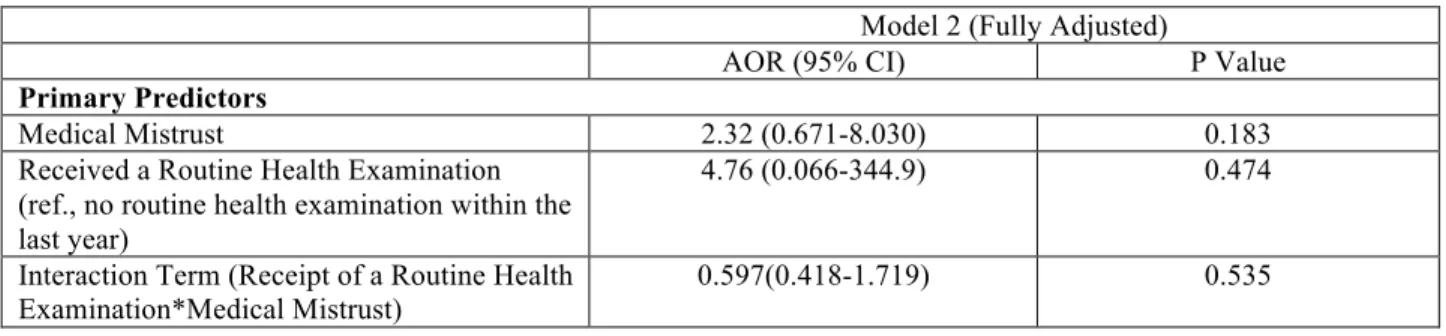
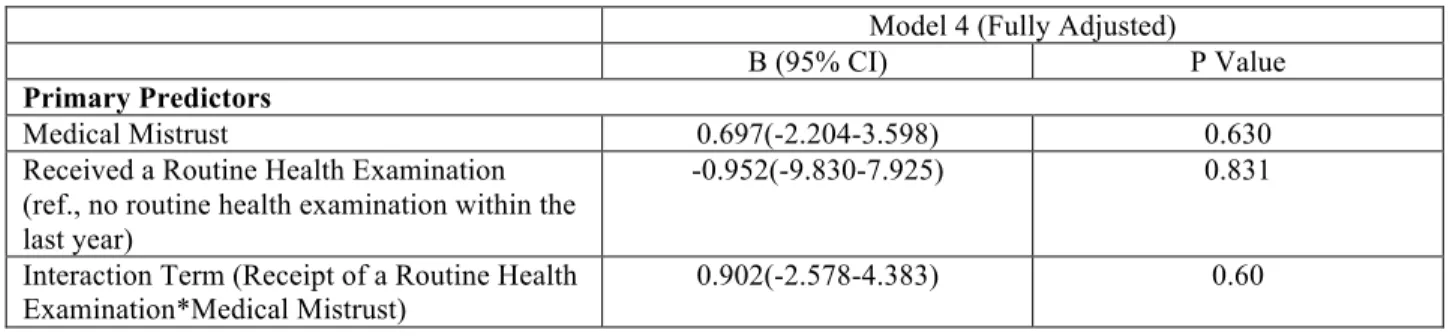
After adjusting for all covariates including the interaction term, a non-significant relationship
between the primary predictors and smoking status was observed (Table 4). In addition, the
relationship between receipt of the routine health examination and body mass index was not
moderated by level of medical mistrust (p=0.604) (Table 6).
R2 and adjusted R2’s indicate that our fully adjusted model explained between 15-16.9%, and
12.3-14.3% of the variance for body mass index, respectively.
Discussion
The goal of this study was to examine the relationship between receipt of a routine health
examination, medical mistrust and two cancer related risk factors (body mass index and
smoking status) among a community-based sample of African American men. We hypothesized
that receipt a routine health examination within the last year is associated with being a
non-smoker and having a lower body mass index. Further, we proposed that medical mistrust would
moderate this relationship, and that men with higher levels of mistrust would have a less
favorable cancer related risk factor profile and therefore more likely to be current smokers and
have higher body mass indices.
We found that after controlling for socio-demographics, health care access and presence of
chronic health conditions, there was a statistically significant association between higher body
mass index and receipt of the routine health examination within the last year. This finding was
health examination would be lower than that of men who did not receive an examination.
Although this finding was statistically significant, the difference (1.77 kg/m2) may not be clinically
significant. Further, we found no association between the routine health examination and
smoking status. In addition, medical mistrust did not moderate the relationship between the
routine health examination and the cancer related risk factors. Level of medical mistrust did not
significantly affect the strength or direction of the relationship between receiving an examination
and either smoking status or body mass index. Lastly, there were no statistically significant
independent relationships between mean medical mistrust and either smoking status or body
mass index.
Previous analyses indicate that delay in receipt of a routine health examination is associated
with higher levels of medical mistrust (10). However, we did not find evidence to suggest that the
relationship between receipt of a routine health examination within the last year and either BMI
or smoking status differs by level of medical mistrust. This is consistent with previous studies
examining medical mistrust and specific health outcomes (19).
Routine Health Examination and Smoking
The absence of a relationship between receiving a routine health examination and being a
current smoker may be explained by several factors. Lack of smoking cessation counseling
performed during the exam, ineffectiveness of counseling or the absence of a true difference
between non-smokers and current smokers may account for this finding. Evidence supports the
effectiveness of smoking cessation counseling during a periodic health examination (20).
However, our study did not examine individual components of the health examination, such as
counseling, performed during the routine health examination may better estimate the
relationship with current smoking status.
Routine Health Examination and BMI
As previously stated, a contradictory inverse relationship was seen between BMI and the routine
health examination. Men who received the routine health examination had higher body mass
indices than those who did not receive an examination in the last year. This may suggest that
overweight men may be more likely to seek and receive care compared to men who are of
normal weight or slightly overweight. Although we controlled for the presence of chronic health
conditions, theoretically accounting for co-morbidities that would require more contact with the
health care system, this may not have fully captured more severe or persistent health
conditions. Lastly, the BMI difference between men who did and did not receive a routine check
up, though statistically significant, may not be clinically significant.
Medical Mistrust, Smoking and BMI
The absence of a relationship between medical mistrust, current smoking status and body mass
index may in fact underscore the complexities of medical mistrust and the patient-physician
relationship. Our medical mistrust scale measured mistrust in healthcare organizations and not
with individual providers. Mistrust among African American men may vary between health
organizations and individual health care providers. The latter relationship may have a greater
association with health behaviors, than that with medical institutions; however, we did not
measure mistrust in individual health care providers.
Further, although mistrust towards the medical establishment is associated with scheduling and
receipt of an examination, this measure may fail to capture trends for high-risk health behaviors,
scheduling and receipt of preventive health care but continue to engage in lower risk health
behaviors. The interaction between medical mistrust and certain health behaviors may be
distinct, based on the behavior (21). Therefore, mistrust though associated with seeking and
receiving health services, is not a strong contributor to other health decisions (smoking or
maintaining a health body weight).
Although there are no studies examining either the relationship between the routine health
examination, smoking status and BMI, or medical mistrust, smoking status and BMI, there are
studies evaluating the effectiveness of the RHE (11) and the role of medical mistrust and certain
health outcomes (19). Our findings add to the current body of literature and offer further insight
into preventive health care services and medical mistrust. In addition, studies examining the role
of both preventive services and medical mistrust as they pertain to men’s health are lacking.
This study suggests that men with a higher body mass index are more likely to receive a routine
health examination within the last year. Furthermore, it proposes that the routine health
examination may not be an influential predictor of smoking status. Also, although a high level of
medical mistrust is associated with preventive service delays, these delays may not translate to
specific health risk factors, including current smoking status and body mass index.
Limitations
This study has several limitations. As this is a cross-sectional analysis, we are unable to
establish causation and only able to report associations. Also, the use of self-report data
introduces possible recall and measurement bias. The calculation of body mass index was
based upon a crude estimate of participant’s self-reported height and weight, and limits the
validity of this measurement. In addition, although a statistical association was found between
the routine health examination and body mass index, this may not be clinically significant. The
receive the routine health examination, may have limited clinical implications. Next, only a fair
amount of the variance (10-20%) was explained in our models. The absence of other variables
(e.g. received weight and/or smoking cessation counseling, level of physical activity, and
nutrition) may have contributed to this. Lastly, given the small sample size and relatively high
proportion of men who had received a routine health examination (>70%) in the last year, this
study population may not be representative of the general African American male population.
Conclusions
Our findings may suggest that: (1) receipt of the routine health examination in and of itself has
little effect on certain health behaviors or health risk factors (2) the assumption that certain
components of the health examination are performed during the examination (risk assessment
and/or behavioral counseling) may be incorrect (3) components of the examination likely to
address smoking status and BMI, may be of varying quality, duration or effectiveness (4) there
are limitations to using the routine health examination as a proxy for risk assessment and/or
behavioral counseling, and finally that (5) medical mistrust is a poor contributor in the
relationship between receipt of preventive services and cancer related risk factors. Medical
mistrust in health organizations may fail to capture the complexities of both the patient-physician
relationship and intention to change.
Future Implications
In order to more accurately answer the questions addressed in this analysis, as well as those in
future studies on African American men’s health, additional research on preventive health
service use, and health outcomes among African American men is needed. Studies exploring
the complexities of medical mistrust and how it relates to behavior change and ultimately health
American men may elucidate effective components of the routine examination including health
References
1. Siegel R, Naishadham D, Jemal A. Cancer statistics, 2012. CA: A Cancer Journal for Clinicians. 2012. 2. National Cancer Institute. National Institutes of Health. Cancer trends progress report, 2009-2010. Fruit and vegetable consumption [Internet].; 2010. Available from:
http://progressreport.cancer.gov/doc_detail.asp?pid=1&did=2007&chid=71&coid=707&mid=.
3. National Cancer Institute. National Institutes of Health. Physical activity and cancer [Internet].; 2009. Available from: http://cancer.gov/cancertopics/factsheet/prevention/physicalactivity.
4. National Cancer Institute. National Institutes of Health. National Cancer Institute fact sheet. Obesity and cancer [Internet].; 2012. Available from: http://cancer.gov/cancertopics/factsheet/Risk/obesity.
5. National Cancer Institute. National Institutes of Health. Cancer trends progress report 2009-2010. Adult smoking [Internet].; 2010. Available from:
http://progressreport.cancer.gov/doc_detail.asp?pid=1&did=2009&chid=91&coid=901&mid=#smoking.
6. Flegal KM, Carroll MD, Ogden CL, Curtin LR. Prevalence and trends in obesity among US adults, 1999-2008. JAMA: The Journal of the American Medical Association. 2010;303(3):235-41.
7. Dube S, McClave A, James C, Caraballo R, Kaufmann R, Pechacek T. Vital signs: Current cigarette smoking among adults aged≥ 18 years—United states, 2009. Morb Mortal Weekly Rep. 2010;59:1135-40.
8. DeVoe JE, Fryer GE, Phillips R, Green L. Receipt of preventive care among adults: Insurance status and usual source of care. Am J Public Health. 2003;93(5):786.
9. Viera A, Thorpe J, Garrett J. Effects of sex, age, and visits on receipt of preventive healthcare services: A secondary analysis of national data. BMC Health Services Research. 2006;6(1):15.
10. Hammond WP, Matthews D, Mohottige D, Agyemang A, Corbie-Smith G. Masculinity, medical mistrust, and preventive health services delays among community-dwelling African American men. Journal of General Internal Medicine. 2010;25(12):1300-8.
11. Boulware LE, Marinopoulos S, Phillips KA, Hwang CW, Maynor K, Merenstein D, et al. Systematic review: The value of the periodic health evaluation. Ann Intern Med. 2007;146(4):289-300.
12. Andersen RM. Revisiting the behavioral model and access to medical care: Does it matter? J Health Soc Behav. 1995:1-10.
13. Madden TJ, Ellen PS, Ajzen I. A comparison of the theory of planned behavior and the theory of reasoned action. Person Soc Psychol Bull. 1992;18(1):3-9.
14. Hess PL, Reingold JS, Jones J, Fellman MA, Knowles P, Ravenell JE, et al. Barbershops as hypertension detection, referral, and follow-up centers for black men. Hypertension. 2007;49(5):1040-6.
15. Hart A,Jr, Bowen DJ. The feasibility of partnering with African American barbershops to provide prostate cancer education. Ethn Dis. 2004 Spring;14(2):269-73.
16. United States Department of Health and Human services. National Heart Lung and Blood Institute. National Institutes of Health. Calculate your BMI [Internet].; 2012. Available from: http://www.nhlbisupport.com/bmi/. 17. LaVeist TA, Nickerson KJ, Bowie JV. Attitudes about racism, medical mistrust, and satisfaction with care among African American and white cardiac patients. Medical Care Research and Review. 2000;57(4 suppl):146-61. 18. Allison PD. Multiple imputation for missing data. Sociological methods and Research. 2000;28(3):301-9. 19. Egede LE, Michel Y. Medical mistrust, diabetes self-management, and glycemic control in an indigent population with type 2 diabetes. Diabetes Care. 2006;29(1):131-2.
20. Bronson DL, Flynn BS, Solomon LJ, Vacek P, Secker-Walker RH. Smoking cessation counseling during periodic health examinations. Arch Intern Med. 1989;149(7):1653.
Table 1. Study Sample Characteristics
Total (N=402)
% (n) or Mean (+/- SD range for all five datasets)
Predisposing Factors
Age (years) 30.7 (+/- 12.2-12.3)
Age (categories) 18-29 30-39 >40 57.9(233) 18.9(76) 23.1(93) Education level
< High School Some College
College graduate or professional degree 26.1(105) 45.3(182) 28.6(115) Married No Yes 73.4(295) 26.6(107) Recruitment Site Educational Institution/Academic Event Barbershop 34.1(137) 65.9(265) Enabling Factors
Has health insurance? No
Yes
37.8(152) 62.2(250) Has a usual source of care?
No Yes
45.0(181) 54.9(221)
Need Factors
Has one or more chronic health conditions? No Yes 29.8(120) 70.2(282) Primary Predictors
Received a Routine Health Examination within the last year No
Yes
26.8(108) 73.1(294)
Medical Mistrust 2.54 (+/-0.35-0.36)
Outcome Variables Current Smoker No Yes 73.4(295) 26.6(107)
Table 2. Unadjusted Bivariate Associations Between Study Sample Characteristics and Outcome Variables, BMI and Smoking Status
Body Mass Index Current Smoker
%(n)
Mean (SD range) P Value or P
Value Range*
No Yes P Value or P
Value Range* Predisposing Factors Age 18-29 30-39 >40
26.2 (+/- 4.3-4.5) 28.2(+/- 4.6-5.0)
30.1 (+/- 5.4-5.6) p<0.001
68.2(159) 76.3(58.4)
82.7(77)
31.3(73.4) 23.6 (18)
17.2 (16) p=0.013-0.044*
Education
< High School Some College College graduate or professional degree
26.9 (+/- 4.4-4.9) 27.2 (+/- 5.1-5.2) 28.5 (+/- 4.8-5.1)
0.019-0.073* 72.5(132) 60.9(64) 86.0(99) 39.0(41) 27.4(50) 13.9(16) <0.0001 Married No Yes
26.8 (+/- 4.6- 4.8)
29.4 (+/- 5.4-5.5) 0.08-0.30*
68.1 (201) 87.9(94)
31.8 (94)
12.1(13) <0.001
Recruitment Site
Educational Institution/Academ ic Event
Barbershop
27.1 (+/- 5.3-5.4)
27.7(+/- 4.7-4.9)
0.338
75.2(103) 72.1(191)
24.8(34)
27.9(74) 0.409-0.557*
Enabling Factors Has health insurance No Yes 27.4 (4.3-4.5)
27.6 (5.3-5.5) 0.007-0.045* 80.0(200) 62.5(95) 37.5(57) 20.0(50) <0.001-0.001*
Has a usual source of care
No
Yes 26.9 (+/- 4.2-4.6) 28.0 (+/- 5.4-5.5) 0.003-0.027* 67.9(123) 77.8(172) 22.17(49) 32.0(58) 0.01-0.05* Need Factors
Has one or more chronic health conditions
No Yes
26.9 (+/- 4.9- 5.0)
27.7 (+/- 4.9-5.1) 0.199-0.700* 66.6(80)
76.2(215) 33.3(40) 23.7(67) 0.031-0.067*
Outcome Variables Received a Routine Health
Examination in the last year
No Yes
26.2 (+/- 3.9-4.4)
27.9 (+/-5.2-5.3) 0.002-0.004* 70.3 (76) 74.4 (219) 29.6(32) 25.8(76) 0.263-0.519*
Table 3.The Association Between Study Characteristics and Current Smoking Status: Multiple Logistic Regression Analysis (N=402)
Model 1 (Fully Adjusted)
AOR (95% CI) P Value
Predisposing Factors
Age (ref. 18-29) 30-39
>40
0.835 (0.414 - 1.684) 0.654 (0.321 - 1.333)
0.614 0.242 Education (ref. < High School)
Some College
College Graduate/Professional Degree
0.651 (0.357 - 1.189) 0.336 (0.163 - 0.692)
0.161 0.003
Marital Status (ref. unmarried) 0.381 (0.184 - 0.788) 0.009
Recruitment Site (ref. Academic Institutions/Events)
Barbershops
1.539 (0.871 - 2.720) 0.138
Enabling Factors
Has Health Insurance (ref., no insurance) 0.625 (0.344 - 1.135) 0.121
Has a Usual Source of Care (ref., no usual source of care)
0.876 (0.503 - 1.525) 0.639
Need Factors
Has one ore more Chronic Health Conditions
(ref. No Chronic Health Condition)
0.912 (0.522 - 1.594) 0.747
Primary Predictors
Medical Mistrust 1.687 (0.778 - 3.656) 0.185
Received a Routine Health Examination (ref., no routine health examination within the last year)
Table 4. Interaction Between Primary Predictors and Current Smoking Status: Multiple Logistic Regression Analysis (N=402)
Model 2 (Fully Adjusted)
AOR (95% CI) P Value
Primary Predictors
Medical Mistrust 2.32 (0.671-8.030) 0.183
Received a Routine Health Examination (ref., no routine health examination within the last year)
4.76 (0.066-344.9) 0.474
Interaction Term (Receipt of a Routine Health Examination*Medical Mistrust)
Table 5. The Association Between Study Characteristics and Body Mass Index: Multivariate Linear Regression Analysis (N=402)
Model 3 (Fully Adjusted)
B (95% CI) P Value
Predisposing Factors
Age (ref. 18-29) 30-39
>40
1.295 (-0.085 – 2.676) 3.049 (1.678 - 4.420)
0.066 <0.001 Education (ref. < High School)
Some College
College Graduate/Professional Degree
1.007 (-0.262 - 2.276) 1.761 (0.351 - 3.172)
0.119 0.015 Marital Status (ref. unmarried)
Married 1.668 (0.370 - 2.965) 0.012
Recruitment Site (ref. Academic Institutions/Events)
Barbershops 0.023 (-1.060 - 1.160) 0.967
Enabling Factors
Has Health Insurance (ref., no insurance) -1.292 (-2.538 - -0.046) 0.042
Has a Usual Source of Care (ref., no usual source of care 0.206 (-0.875 - 1.288) 0.708
Need Factors
Has one ore more Chronic Health Conditions
(ref. No Chronic Health Condition) -0.539 (-1.726 - 0.647) 0.372
Primary Predictors
Medical Mistrust 1.309 (-0.258 - 2.875) 0.100
Received a Routine Health Examination
(ref., no routine health examination within the last year)
Table 6. Interaction Between Primary Predictors and Body Mass Index: Multiple Linear Regression Analysis (N=402)
Model 4 (Fully Adjusted)
B (95% CI) P Value
Primary Predictors
Medical Mistrust 0.697(-2.204-3.598) 0.630
Received a Routine Health Examination (ref., no routine health examination within the last year)
-0.952(-9.830-7.925) 0.831
Interaction Term (Receipt of a Routine Health Examination*Medical Mistrust)
Colorectal Cancer Screening Adherence Among non-Hispanic Black Men: A Systematic Review
Introduction
Despite recent declines in incidence and mortality rates, colorectal cancer remains the third
leading cancer among men in the United States (U.S.)(1). Rates of new cases vary by race, with
51.6 per 100,000 new cases of colorectal cancer among all men, 50.2 per 100,000 among
non-Hispanic white men and the highest rate—63.5 per 100,000—among non-non-Hispanic Black
(Black) men (1). The mortality rate for colorectal cancer among Black men also exceeded the
rate among both men and women within all race/ethnicity categories (1).
In 2012, over 26,000 deaths from colorectal cancer are estimated to occur (2). Mortality rates
among Black men are likely to continue to remain disproportionately high.
Screening for colorectal cancer reduces mortality by identification and removal of pre-cancerous
adenomatous polyps (3). According to National Health Interview Survey data, in 2010 58.6% of
adults in the U.S. received colorectal cancer screening (4). Compared to non-Hispanic White
men and women and non-Hispanic Black women, Black men have the lowest rates of colorectal
cancer screening (5). In 2005, over 55% of Black adults reported never having colorectal cancer
screening (6). Behavioral Risk Factor Surveillance data show slightly fewer (63.7%) Blacks
report having ever had a sigmoidoscopy or colonoscopy compared to non-Hispanic White adults
(66.8%) (7). Conversely, more Black adults (19.9%) reported having a stool blood test in the
previous two years than non-Hispanic White adults (17.4%) (8). These national data underscore
cancer screening disparities. Compared to Whites, Black adults report fewer endoscopies, and
conversely, more stool blood tests.
There is evidence that colorectal cancer screening among Blacks, particularly after controlling
Screening rates also have been shown to vary within certain subpopulations. Colorectal cancer
screening among Black male veterans exceeds that of White male veterans (14). Moreover,
meta-analyses of self-reporting accuracy have shown that self-reporting of colorectal cancer
screening often overestimates true screening when compared to objective data. Racial/ethnic
minorities are more likely to over-report cancer screening than Whites. One meta-analysis
demonstrated that nearly half of self-reported positive colorectal cancer screening histories were
in fact negative and that racial/ethnic disparities are likely larger than reported in national
datasets (15).
Given these conflicting data, this systematic review aims to evaluate the current literature
examining colorectal cancer screening adherence among Black men. In addition to reviewing
reported colorectal cancer screening adherence rates among non-Hispanic Black men, this
review will also explore the types of populations studied, and how adherence has been
measured. This study will specifically review how established guidelines (i.e. American College
of Gastroenterology, American Cancer Society, United States Preventive Services Task Force)
are used to measure adherence, whether studies differentiate between screening tests and
non-screening tests (i.e. follow-up or surveillance) and whether subjective, self report data or
objective data (medical records, claims data) are used.
For our review, we aim to answer the following three key questions:
(1) Key Question 1: What are the reported colorectal cancer adherence rates among
African American men?
(2) Key Question- 2: What populations and/or subpopulations of non-Hispanic Black men
have been studied?
(3) Key Question 3: How is adherence/uptake measured? By self-report, claims-based,
Methods
PubMed (Medline), EMBASE, and CINAHL databases were used to search for all relevant
articles published within the last 10 years. Search terms used, according to database, included:
(1) PubMed- “Colorectal Cancer AND Screening AND adherence AND guideline
adherence (MeSH) AND African Americans (MeSH)
(2) EMBASE- “Colorectal Cancer/exp/mj AND Screening/exp AND practice
guideline/exp AND African American/exp”
(3) CINAHL- “Colorectal Cancer AND Screening AND Adherence AND African
American”
Free text and MeSH search terms were used in the PubMed search, while search terms were
“exploded (exp)” and used as a “major topic (mj)” in the EMBASE search. Search limitations
based on sex, study type and date were not used, as this significantly limited the number of
possibly relevant studies for inclusion in preliminary searches.
One reviewer performed the title search, reviewed abstracts, full texts and abstracted all data.
To be considered for inclusion in this review studies had to (1) evaluate colorectal cancer
screening adherence and (2) include data on Black men. Studies were excluded if they (1) did
not evaluate colorectal cancer screening adherence (2) did not include data on Black men (3)
were randomized controlled trials of the effectiveness of implementing a screening intervention
(4) were qualitative (5) were review or guideline articles (6) only examined patient education or
physician practice only (7) only evaluated predictors of adherence (i.e. attitudes, perceptions,
barriers, preferences) or (8) examined non-adherence only. A brief summary of each article,
including a critical analysis, determination of overall quality and relevance to the three key
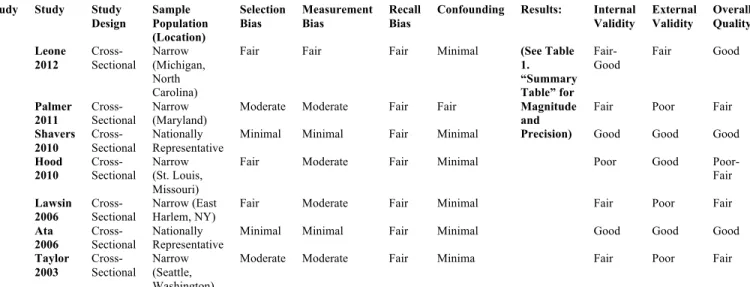
questions are included for each study. Quality of each study was determined based upon
measurement of potential selection, measurement, and recall bias, as well as level of internal
Results
The initial title search from all three databases yielded a total of 125 titles (Figure 1), after which
34 were eligible for abstract review and subsequently 7 full texts were reviewed. This report
reviews seven original studies published in the United States from 2003 to 2012.
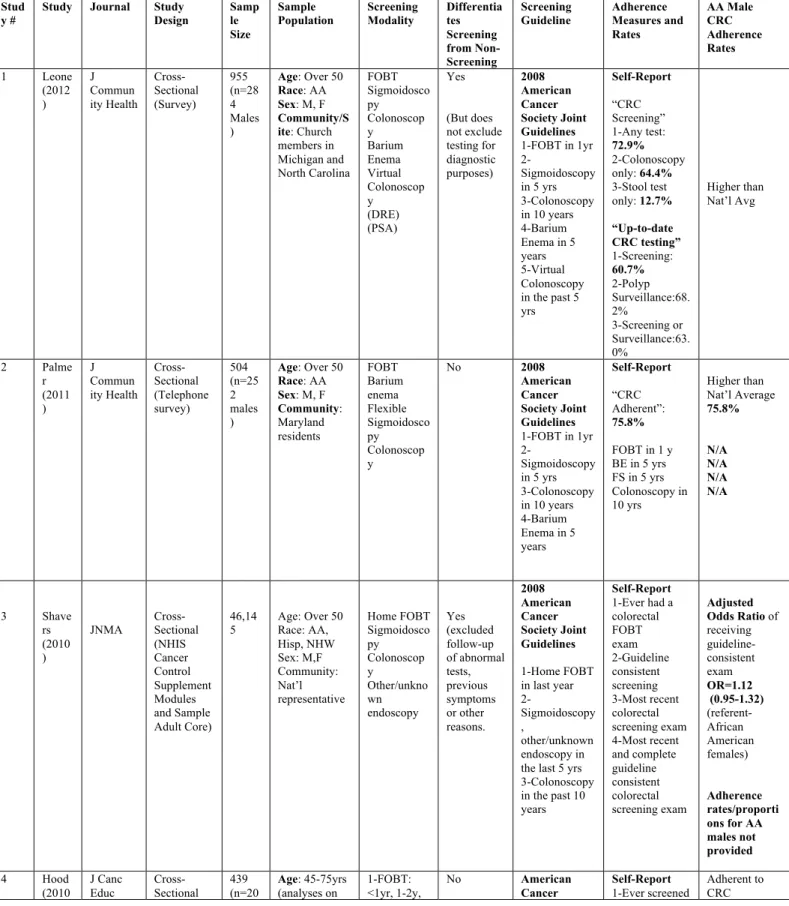
Leone et al. 2012
Leone et al.(16) performed a cross-sectional analysis of cancer screening, weight and gender
among Black church members in two geographically diverse locations. This study examined the
cancer screening patterns by weight and gender among 955 urban Black church members in
Flint, Michigan, Wake, Durham, and Guilford counties in North Carolina. Data was collected
from baseline survey data, obtained during a colorectal cancer prevention trial (ACTS of
Wellness Study).
The aims of this study were four-fold, to: 1) examine the differences in colorectal cancer (CRC)
screening rates among Black men and women in four weight classes (normal weight,
overweight, obese I, and obese II), (2) determine whether the negative relationship between
CRC screening and weight, previously observed in Black church members persists since
colonoscopy became a preferred method (3) investigate whether results differed based on the
definition of CRC screening used, and (4) examine patterns of breast, cervical and prostate
cancer screening based on weight.
Churches were eligible for inclusion if they had at least 50 church members who were age 50 or
older, and had a coordinator willing to recruit members, while individuals were included if they
were (1) Black (2) age 50 or older, and (3) participated in the baseline survey given prior to
The primary colorectal cancer adherence measures were based upon the 2008 American
Cancer Society Joint Guidelines for average risk persons (i.e. having a stool blood test in the
past year, colonoscopy in the past 10 years, flexible sigmoidoscopy in the past 5 years, double
contrast barium enema in the past 5 years or virtual colonoscopy in the past 5 years). They also
further defined “Up-to-Date” CRC screening based on risk status. Whereby participants not
reporting a history of colonic polyps were classified as “Up-to-Date screening,” if they met the
above screening guidelines, and those with a history of polyps were “Up-to-Date Surveillance”, if
they had both a past history of polyps and reported having a follow-up colonoscopy during the
recommended time-frame. Screening behaviors were measured using a reportedly valid tool.
Overall, the authors found that 74.5% of all (male and female) participants reported having any
CRC screening test, and among 284 male participants, 72.9% reported having any CRC
screening test, 64.4% had a colonoscopy only, and 12.7% had a stool test only. Moreover,
60.7% of Black males who did not previously report having polyps were up-to-date on CRC
screening. The authors also report the proportion of men who received polyp surveillance
(68.2%), those who received screening or surveillance (63.0%). There was also a significant
association between weight group and CRC screening. Men with a BMI between 29.95 and
34.94 were more likely to be up-to-date with CRC screening than normal weight men. No
significant differences based on weight were found among women.
Analysis
Although this study had several aims, including examining adherence rates among Blacks, all
research questions were clear, and well defined. The sample population was fairly narrow, and
specific, including only church members in four distinct locations, who participated in the
previously administered CRC prevention trial. In addition to excluding non-church members in
survey) were understandably not included, however systematic differences between these two
groups may have introduced bias (i.e. study participants are more likely to seek/obtain CRC
screening than non-participants in the church). Nonetheless, the authors clearly stated how
adherence was measured, and created multiple measures to clarify those at average risk
receiving “any screen,” those at average risk receiving guideline consistent screening (classified
as “up-to-date screening”) and those with a history of polyps receiving follow-up or surveillance
(classified as “up-to-date surveillance”). However, the authors did not verify test purpose (i.e
diagnostic testing versus true screening).
The method used to measure screening behavior was reported as being a “valid” measure,
though further detail is not provided about this tool. All statistical analyses appeared
appropriate, and although the overall sample size was large (955); the sample was largely
female, with only 284 male participants. The potential for selection bias within each respective
church was fair, as the study population could have been quite different from the sample
population. Those who participated in the trial (and survey) may have been different than those
choosing not to participate. Church members participating in the study, and survey may be more
motivated, and proactive about their health. However, the inclusion criteria for individuals were
broad and did not appear to exclude church members who had indeed participated in the
survey.
It appears that all participants were measured equally, completing a 100-item self-administered
questionnaire, eliminating the potential of interviewer bias, if face-to-face interviewing were
implemented. However, given that objective data (medical records, claims data), confirming test
adherence was not obtained, the potential for recall bias was high, and therefore a significant
Furthermore, the potential for measurement bias of the outcome (adherence to CRC screening)
was fair. Though, authors thoroughly evaluated average risk screening versus surveillance for
polyps, they did not measure those receiving a stool test or endoscopy for diagnostic purposes.
Participants receiving any of the CRC tests for reasons other than screening or polyp
surveillance may have been falsely included in the “any screen” or “up-to-date screening” group.
This differential measurement bias has the potential to overestimate true screening adherence
rates and falsely inflate their results.
In regards to the multivariate logistic findings, the authors did consider and control for a variety
of socio-demographic and behavioral covariates, which lends strength to the results, however a
complete review of these findings are beyond the scope of this review.
The magnitude of their CRC adherence rates was surprising, given the high rate of receiving
either any CRC test (72.9%) or up-to-date guideline consistent CRC screening (60.7%), among
male participants. These rates are higher than the national average and may also be indicative
of the characteristics of the study population. Over 97% of all participants (male and female)
reported having health insurance, while 62% reported earning between $20,000 to $99,999
annually. These results, as well as the very narrow and specific study population limits the
overall generalizability of their findings, while the fair potential for selection, recall, and
differential measurement bias limits the studies internal validity. However, overall this study was
of good quality.
Summary of Leone et al.
Overall, in regards to the three key questions posed in this review, this study provided very clear
sample, and study population were quite specific, and likely not representative of the general
population of Black males. The authors did examine adherence to guideline consistent
screening (2008 ACS Joint Guidelines), and make good attempts to differentiate true screening,
from follow-up or surveillance among higher risk individuals, though they did not consider the
potential for testing for diagnostic purposes. Also, as in previous studies, they relied on
self-report data, and did not corroborate self-reported screening with more objective data (medical
records or claims data).
Palmer et al. 2011
Palmer et al. (17) also performed a cross-sectional analysis of colorectal cancer screening
adherence among a very discrete population between April and July of 2008. This study aimed
to identify factors that influenced adherence to CRC screening among Blacks in Maryland (as
well as identifying adherence rates). A total of 504 Maryland residents, selected by random digit
dialing, who self-identified as Black, 50-75 years of age, and reported never having any type of
cancer were included in their analysis.
Participants were interviewed via telephone, with a pilot tested, 80-item survey, though the
survey was not reported to be an established valid or reliable instrument. Their main adherence
measures were ever receiving a CRC screening test, defined as (1) having an FOBT in the past
year (2) barium enema in the past 5 years, (3) flexible sigmoidoscopy in the past 5 years or (4)
colonoscopy in the past 10 years (based on American Cancer Society 2008 guideline updates).
The authors found that 77.4% of the total study population was adherent to CRC screening, and
75.8% of Black males were adherent to screening. Though this was slighter lower than
adherence rates among Black women (79%), this difference was not statistically significant. Of
recommendation, perceived risk and health care coverage were significant predictors of
adherence to screening. Caregivers were less likely to be adherent, while those who received a
physician recommendation, perceived themselves to be high risk, or had insurance were more
likely to be adherent.
Analysis
This study developed both clear and well-defined research questions, focusing on both
identifying adherence rates, as well as other possible influencing factors. The sample
population, as with Leone et al., was relatively narrow, as participants were only residents of
Maryland and had to have a listed landline telephone number in order to be eligible for inclusion.
This need for telephone access is of course understandable as the survey was delivered via
phone, however this may have excluded individuals of lower SES. Moreover, the exclusion of
residents with a history of any cancer, may also have excluded a significant number of potential
participants. Excluding those with a history of colorectal cancer only would have been a more
accurate exclusion criterion. Unlike Leone et al., there were an equal number of both male and
female participants, with a total of 252 Black males. Also, 87% of participants reported having
health insurance, which may not be representative of the entire population in Maryland.
The measures of colorectal cancer screening, though guideline consistent (ACS, USPSTF),
failed to capture whether tests were truly for screening purposes or for diagnosis or surveillance.
The survey instrument, though previously piloted tested, was not reportedly valid or reliable.
Moreover, measures were self-reported and not objective. Statistical analyses were appropriate
for their design and study question, and the sample size, though moderate, was adequate given
the scope of the study. The magnitude of their results, as with Leone et al., was surprising, and
may be representative of the population surveyed (>86% insured), but also may shed light on
aggressive outreach efforts, conducted by the State of Maryland between 2004 and 2008 may
be a contributing factor to such large adherence rates.
In considering the internal validity of this study, the potential for selection bias was moderate,
given that individuals without a telephone or listed phone number, possibly of lower
socioeconomic status, were excluded as well as well as those with a prior history of any cancer.
The low survey completion rate (57.5%), may also have selected for a specific population. It is
unknown whether those who did not complete the survey were different from study participants,
and if this could have biased the final results.
This may have falsely over-estimated true screening, if those receiving diagnostic or
surveillance testing reported screening. Additionally, given that telephone interviewers were
used, instead of a self-administered exam, this could have introduced added bias, if interviewers
were more (or less) likely to document adequate screening among unscreened or those
receiving follow-up/surveillance. As with Leone et al., this study relied on self-report history and
did not use medical records or claims data, thus potential for recall bias (and over-reporting) is
significant. Also, for their multivariate analyses, authors did measure and control for all
reasonable covariates in their models, though a complete review of these findings are beyond
the scope of this review. Their final results may be generalizable to other Blacks in Maryland,
yet the use of random digit telephone dialing, exclusion of those with a history of cancer and
high rates of insurance use, potentially limits its external validity. Results cannot be generalized
to other populations of Black males in other states. Overall, this study was of fair quality.
Summary of Palmer et al.
In sum, this very focused cross-sectional survey analysis provides somewhat variable quality
residents in Maryland. The authors failed to account for true screening versus testing for
diagnosis or surveillance, thus rates may be overestimated. In addition, the use of self-report
data, instead of medical records or claims data poses threats to internal validity. The narrow
study population and sample population, and surprisingly high rates of having health insurance
also limit generalizability.
Shavers et al. 2010
Shavers et al. (18) performed a cross-sectional analysis of racial/ethnic patterns of colorectal
cancer screening uptake patterns on National Health Interview Survey (NHIS) data in 2003,
2008 (Sample Adult Cores) and 2000, 2005 (National Cancer Institute sponsored cancer control
supplement). Study aims were to identify (1) rates of initiation of colorectal exams among
eligible Blacks, Hispanics and non-Hispanic Whites (2) racial/ethnic differences in utilization of
specific screening guidelines (3) racial/ethnic adherence to colorectal screening guidelines; and
(4) racial/ethnic variation in the self-reported rate of uptake of colonoscopy. NHIS surveys were
conducted in person, among 85,000 (Sample Adult Cores) and 39,000 (NCI Cancer Control
Supplement) civilian, non-institutionalized individualized. A final sample of 46,145 participants is
included in this study. Persons under the age of 50, not Black, Hispanic, or non-Hispanic White,
with a history of colorectal cancer or with unknown data were excluded.
Adherence measures were defined based on having a colorectal exam for screening purposes
only (excluding follow up of abnormal tests, previous symptoms or other reasons). Participants
with a history of a previous abnormal FOBT were not considered in the screening group. Also,
persons having a test for unknown reasons or within unclear time frames were coded as
“unknown for colorectal cancer screening,” and excluded from multivariate analysis of guideline
consistent screening. Further, guideline consistent examinations were defined based upon
sigmoidoscopy in the last 5 years, other/unknown endoscopy in the last 5 years, or (3) home
FOBT in the last year.
The authors found that in 2008, 30.6% of non-Hispanic Blacks (NHB) had a guideline consistent
colonoscopy, compared to 33.3% in non-Hispanic Whites (NHW) and 20% among Hispanics.
Rates for home FOBT, sigmoidoscopy and other/unknown endoscopy were 7.2%, 1.0% and
0.7% respectively for NHB in 2008. Specific rates or percentages among NHB males are not
provided. Multivariate analyses of data revealed that NHB were less likely than NHW to ever
receive a colorectal exam for any reason (AOR=0.85, CI 0.78-0.92). When analyzed by race
and gender, NHB males were more likely than NHB females to receive a screening
sigmoidoscopy or other endoscopy in the past 5 years. There were no significant differences
between NHB males and females in adherence to colonoscopy or home FOBT, and
comparisons were not made between races/ethnicities (i.e. comparisons are made within each
race/ethnicity category).
In terms of receipt of a guideline consistent examination, there were no significant differences
between NHB males and females. However, NHB (males and females) over age 65, with an
income of 75,000 or above and with more than a high school education were more likely to
receive a guideline consistent examination than persons under age 65, with annual incomes
less than $75,000 and with less than a high school education.
Analysis
Shavers et al. developed clear and well-defined research questions, with particular attention to
quantifying receipt of guideline consistent screening estimates, among three racial/ethnic
groups. Given the use of NHIS data, the sample population was nationally representative and