Perinatal HN Testing Policy Development In Wisconsin
by
Pamela F. Rogers 07-May-2005
A Master's paper submitted to the faculty of the University of North Carolina at Chapel Hill in partial fulfillment of the requirements for the degree of Master of Public Health in the School of Public Health, Public Health Leadership Program.
Abstract
Most children with the human immunodeficiency virus (HIV) have been infected through transmission of the virus from their mothers either in-utero, at delivery, or through breastfeeding. In 1994, pharmacological treatment ofHIV-positive pregnant women prior to giving birth was shown to be effective in greatly reducing this transmission. Today, there is the potential for 1,000- 2,000 HIV infected babies to be born each year in the United States. The Centers for Disease Control and Prevention (CDC) estimate that there are between 96,000 and 120,000 HIV-positive women of childbearing age in the United States and approximately one-third do not know their HIV status. Research shows that women want to protect their unborn children and are willing to accept antiretroviral treatment to reduce mother to child transmission of the virus if found to be HIV -positive. Thus, while we may not be able to eliminate mother-to-child
transmission ofHIV entirely, because of women who refuse treatment or testing, we can greatly reduce unrecognized births to HIV -positive women by increasing the numbers of women who are tested and know their HIV status.
Introduction
Mother to child (MTC) transmission is the primary route of HIV infection in young children. MTC transmission of the HIV virus generally occurs late in pregnancy, during delivery and through breastfeeding.
The Pediatric AIDS Clinical Trial Group (PACTG) 076, published in 1994 showed that giving zidovudine (ZDV) to HIV-positive women during pregnancy and labor and to their infants after birth reduced the rate ofHIV transmission from 25.5% to 8.3% (Couner, Sperling, Gelber, 1994). Through advances in medical management and treatment we now have the opportunity to further reduce HIV disease in infants, but in order to do so HIV must first be detected in pregnant women through testing.
HIV infection occurs in all regions of the state of Wisconsin. Between 1990 and the end of October 2004 there have been 79 pediatric cases of HIV reported (Wisconsin HIV I AIDS Quarterly Surveillance Summary, 2005). Figure 1 shows the number of HIV positive infants born in Wisconsin between 1982 and 2003. While the numbers ofHIV infected infants have
been declining since its peak in 1990, babies are still being born with perinatally acquired HIV L
Figure 1. HIV Pos~ive Infants by Year ol8irth, Wisconsin 1981-2003
infection. Review of the data for recent years has shown decline from an average of 6.5 HIV infected babies being born between 1990 - 1993, to an average of 2.3 HIV infected babies being born between 2000 and 2003 (Schell, Steenberg, Hoxie,
""' 1033 19SS 1007 1009 , . . , ,.., .... 1997 , .... 2CXl1
=
2003). Between 2000 and 2003 eleven infected
Year of birth
2004), the fact that babies are still being born with HIV suggests that pregnant women are not receiving HIV tests and do not know their HIV status. In order to encourage HIV testing among pregnant women to we need to look at the current approaches to perinatal HIV testing to
understand what strategies work and if others are needed in Wisconsin.
Surveillance data indicate that there is a greater HIV seroprevalence among women of childbearing age in Milwaukee County. However, since 1996 the number of infants born
outside of Milwaukee County to HIV-positive women has increased. Table 2 includes Wisconsin metropolitan statistical areas (MSAs) by population and HIV incidence among women of
childbearing age for the year 2000 and Table 3 shows the numbers of infants born with HIV infection as of July 2002.
Table 2. Wisconsin MSAs by population and HIV prevalence for the year 2000 (Hoxie, Conway, Vergeront, 2002)
Coun!}' /MSA Poeulation HIV cases!al
N % N % Rate (b)
Milwaukee MSA 1,500741 28 88 59 2.9
Dane County MSA 426,526 8 21 14 2.5
OtherMSA 1,676,237 31 30 20 0.9
Non-metropolitan counties 1,760,171 33 11 7 0.3
Total 5,363,675 100 150 100 1.4
(a) HIV cases reported between 2000 and 2001 among women 15-45 years of age. (Wisconsin AIDSIHIV Program HIV cases surveillance data) (b) Average annual cases reported between 2000 and 2001 among women 15-45 years of age, per 100,000 population.
Table 3. Infants born with HIV infection in and outside of Milwaukee (July 2002) (Hoxie, Conway, Vergeront, 2002)
Total number of infants born to women with
HIV infection
Number of infants infected with HIV
% of infantS infected with HIV
P-Value
In
Milwaukee Outside Milwaukee
Before 19% 1996-2002 Before 19% 1996-2002
74 18 24% 0.0008 87 5 6% 15 5 33% 0.07 47 6 13%
Between January 1, 2000 through December 31, 2003, Wisconsin surveillance data 110 infants were reportedly born to HIV infected women (Schell, Hoxie, Steenberg, 2005). Of those infants, 11 were born with perinatally transmitted HIV infection, including one set of twins (ninety-four where HIV-negative, and 5 were lost to follow-up). Of the ten mothers who gave birth to the 11 HIV -positive infants, four mothers were reported from Milwaukee County, one
from Dane County, three from the remainder of the State, and two mothers had moved to Wisconsin and their infants were tested for HIV shortly after giving birth. The underlying factors in perinatal HIV infection transmission for the HIV positive infants born during that time period include no or very late prenatal care, inadequate treatment or non-compliant treatment (e.g. never told results and not treated; patient did not comply with treatment regimen).
Pre-natal care providers in Wisconsin follow national trends by supporting the concept of universal HIV testing of pregnant women· and when asked, providers echo similar reasons for not offering an HIV test as providers in other parts of the United States. These data are supported in Wisconsin by provider surveys conducted in 1992, 1996, and 2002, which assessed Wisconsin's physician attitudes regarding perinatal HIV testing (Hoxie, Conway, Vergeront, 2002; Wisconsin AIDS/HIV Program, 1993; Wisconsin AIDSIHIV Program, 1996). For each of the three years selected, these self-administered surveys sent to 1,000 providers randomly selected from among 1,357 general, family and obstetrics/gynecology practice physicians who reported being prenatal care providers on a Physician Profile Survey conducted by the Office of Health Care
they offer universal HIV testing to pregnant women in their practice, however, a review of post-delivery medical charts indicates a lower percent of women recalling that they had been offered an HIV test by their pre-natal care provider. To assess the level of prenatal HIV testing in Wisconsin from the woman's perspective, the AIDS/HIV Program selected a random sample of 1,000 births from 2003 Wisconsin birth certificate data. For each birth, a data collection form was mailed to the infection control professional (ICP) at the birth hospital. The data collection form instru<.:ted hospital staff to provide only information regarding completion of HIV antibody testing and not to provide the results of any HIV test. The ICP was asked to review the maternal hospital medical record, complete the data collection form and return it to the survey coordinator. Requests were sent to 95 Wisconsin hospitals and ninety hospitals responded with a review of 968 birth records. Sixty-eight percent of the medical records reviewed indicated that the mother had completed an HIV antibody test during pregnancy. The reasons for the difference in the numbers of pregnant women being tested for HIV and the actual numbers of women being tested need to be investigated. Providers often list the following reasons for not offering an HIV test to pregnant women: they do not believe their patient to be at risk (37%); they believe their patients to have been previously tested for HIV (19%); the time required for counseling and/or obtaining informed consent (11%); and confidentiality concerns (3%). Implementation of universal testing was less frequent in non-metropolitan areas and non-OB/GYN practice groups. Acceptance of HIV testing was higher if providers strongly recommended or encouraged acceptance of testing for all pregnant women in their practice, and discussed a woman's initial decision to decline HIV testing with her.
follow the CDC guidelines of voluntary HIV -testing, with counseling the requirement of informed consent. The Wisconsin Association for Perinatal Care in their Position statement on HIV testing in the Perinatal Period (January 2002) recommend that:
•
•
All pregnant women should be provided with culturally, linguistically, educationally, and age-appropriate information regarding HIV prior to testing;
All pregnant women should be offered and encouraged to accept voluntary HIV antibody testing early in pregnancy. This may be repeated at 36 weeks for select women;
•
Women in labor should be encouraged to accept voluntary HIV antibody testing if their HIV serostatus is unknown.•
•
If HIV testing prior to delivery cannot be documented, postpartum HIV antibody testing of the mother, cord blood or infant blood with the mother's consent should be strongly
encouraged.
For infants whose HIV exposure status is unknown at the first health supervision visit, assessment of the mothers HIV status or HIV testing of the infant is appropriate.
However, the discrepancy between the provider surveys and the chart review seem to suggest that in reality providers may not follow these recommendations. Additionally, surveillance data show that MTC transmission ofHIV still occurs.
Historical Perspective of Perinatal HIV testing
Prior to 1994
Initially in the history ofHIV infection, knowledge about HIV infection during
The greatest opportunity for prevention of perinatal HIV infection at this time was finding women prior to pregnancy who were at risk of contracting the disease through counseling and testing programs. HIV testing of pregnant women was generally not done at this time because:
• There was no known treatment for HIV disease in pregnant women; • Pregnant women felt threatened by being identified as having "risk"; and,
• Fear of pregnancy termination because of being found HIV-positive discouraged women from seeking prenatal care.
After 1994
In 1994 researchers at the US National Institutes of Health (NIH) and its collaborators announced the interim results from ACTG 076, a study of the effects on ziduvodine (ADV) to reduce MTC transmission. The interim results showed that the antiretroviral medication ZDV provided to pregnant women during pregnancy, labor, and delivery and to the newborn during the first six weeks of life could dramatically reduce the risk of MTC transmission of HIV infection. Other studies have since confmned these results or achieved even better results (Cooper, Nugent, Diaz, 1996; Blatner, Cooper, Charurat, 2000; Lallemant, Jourdain, LeCoeur, 2000)
The US Public Health Service (PHS) responded to the interim results with
with advanced HIV disease, low CD4 counts, or prior antiretroviral therapy, be excluded because the risks to those women were not yet known.
In 1995, the PHS altered its HIV testing recommendations for pregnant women from a targeted "at risk" approach to universally calling for counseling all pregnant women about HIV infection and then encouraging them to be tested for the disease. This shift in approach was attributed to both the advances in prevention interventions and the treatment ofHIV with ZDV.
In 2001 the PHS again updated the recommendations founded on the results of the ACTO 076 study. These recommendations acknowledged the effectiveness of the ACTO 076 regimen not only in those meeting the study criteria, but also confirmed the effectiveness of the ACTO 076 therapy regimen in other populations of women with HIV. This is the basis of the current standard of care in treatment of HIV infection in the United States.
Perinatal HIV Testing
Many HIV test strategies for pregnant women have been discussed in the United States and the World. These strategies range from purely voluntary, where the decision of an HN test lies with either the pregnant woman or her care provider, to strictly mandatory, where laws, statutes, or administrative code requires a pregnant woman or her newborn to undergo HIV testing. Understanding the subtle differences in strategies is key to developing perinatal HIV test recommendations for Wisconsin. A logical discussion of the perinatal HIV testing strategies available, from identifYing how HIV tests can be offered to pregnant women, and examining issues of consent and timing, is outlined below and follows. Table 4 contains an outline of these strategies.
Table 4. Outline of Perinatal HIV Test Strategies
I. Approach
A. No Testing B. Selective Testing
1. Test those at risk
2. Test those in high prevalence areas
C. Universal Testing II. Offer
A. Voluntary B. Mandatory
1. Conditionally mandatory a) immigration b) care
2. Required by law
Ill. Consent
A. Opt-in
B. Opt-out
C. No consent
IV. Schedule
A. Early in care B. Late in care
C. Labor and delivery D. Newborn
I. Approach
selective approach of testing women who are most likely to have an HN infection, and yet another is to test all pregnant women for HIV infection.
A. No testing
Physician responsibilities: None Patient responsibilities: None
Advantages: Physicians and patients do not have to take the time to be
tested. No costs are involved.
Disadvantages: Women do not find out their HIV status and would not be
offered treatment if found to be HN -positive. Babies may be born with HIV infections.
Approach recommended by: This approach is not endorsed by any
professional organization or State, although some care providers may use it.
States who uses this approach: Unable to assess. Does it work: No
B. Selective Testing
1. Test those at Risk
In this type of approach only certain individuals are targeted for HN testing. Criteria used to target these individuals for testing are based on a risk assessment of the women for HIV infection. The most frequent questions asked to assess HIV risk include the use of intravenous drugs, sex with an intravenous drug user, sex with a man who has sex with men and sex with someone who is HIV -positive.
Physician responsibilities: Providers must define risk and provide
risk-assessment screening in order to determine the HIV risk status of the patient. If the woman is found to be HIV -positive the provider must have in place a system for referral to treatment.
Patient responsibilities: Patient must obtain prenatal care. Patient must
understand information about HIV risk factors and truthfully answer the assessment questions. Patient must return for their test result and if found to be HIV -positive the patient must obtain and participate in treatment.
Advantages: HIV testing based on assessed risk appears to be
cost-effective. However, because of the greater possibility of missing an HIV-positive woman who was not identified as having risk, costs may actually
~-I
,_be higher because the life-time costs of treating an infected infant missed by this strategy is high.
Disadvantages: Women may choose not to have an HIV test even they
may have risk. The provider must make the decision of who is at risk and who is not, often based is based on provider opinion and may be biased. Testing strategies that are targeted only to women who report high-risk behaviors fail to identify as many as 50%-70% of infected women.
Approach recommended by: Prior to the 2001 CDC recommendations for
perinatal testing their recommendation was to only offer HIV tests to those considered to be at risk. In 2001 the CDC reassessed this strategy and currently there are no professional organizations who recommend this approach.
States who uses this approach: No states who use this approach of testing
only pregnant women determined to be at risk.
Does it work: An article printed in the CDC's November 9th, 2001, Morbidity and Mortality Weekly (MMWR) states that risk-based
voluntary testing approaches identified fewer HIV -infected women than universal testing of all pregnant women. Because there are no states currently using this strategy, there is no new data to support its use.
2. Test those in high Prevalence Areas
This approach relies on HIV surveillance data and targets testing to all
pregnant women who reside in limited geographic areas with high seroprevalence, or who are members of racial or ethnic groups disproportionately affect by HIV.
Physician responsibilities: Provider must define high-prevalence and
decide on geographic areas to be considered then consistently test pregnant women from those areas.
Patient responsibilities: Patient must obtain prenatal care. If a patient has
moved outside of a high prevalence area they must report this to their provider. Patient must return for result after being tested. Patient must participate in appropriate care and treatment if found to be positive.
Advantages: This target approach it is likely to be cost effective since it
may detect a higher percentage ofHIV-positive woinen.
Disadvantages: Risk criteria may differ by provider since the provider
defines seroprevalence levels. A woman may not be truthful in her disclosure of residence or other selection criteria.
Approach recommended by: Early in the epidemic this approach was
promoted as being very cost-effective. However, today no professional organizations recommend this approach because of the potential for discrimination and stigmatization of already disenfranchised or disadvantaged populations.
States who uses this approach: No states who use this approach.
Does it work: Because there are no states currently using this strategy, there is no new data to support its use.
C. Universal Testing
In a universal approach to HIV testing, all pregnant women would receive an HIV test as part of their prenatal care.
Physician responsibilities: The provider must have a system in place for
HIV testing of their patients. If found to be positive, the provider must either refer patient fm treatment or provide treatment.
Patient responsibilities: Woman must be informed about HIV disease its
risk to and effect on her unborn infant. Woman must evaluate
implications of receiving an HIV test. If found to be HIV -positive, the woman must accept and adhere to treatment.
Advantages: All women could potentially be tested for HIV, therefore, a
greater number ofHIV-positive women would be detected and treated. Universal HIV testing could reduce stigma since some women would not be singled out because of risk.
Disadvantages: Cost savings varies by geographic and prevalence area.
Women may feel this violates their civil rights. Women who are HIV-positive may avoid prenatal care
Recommended by: The American Academy of Pediatricians (AAP) and
the American College of Obstetricians and Gynecologist (ACOG) in both 1995 and 1997 recommended this approach. In 1995 the AIDS Alliance for Children, Youth and Families called for universal, voluntary testing to be done routinely as a component of prenatal care.
States that use: Providers in Michigan, Texas, Tennessee, and New
Mexico are required by law to conduct an HIV test on all women unless the woman objects.
Does it work: The acceptability of this approach is high. Sixty-three
II. Offer
A. Voluntary
The care provider does not offer counseling on HIV infection or offer HIV testing. This is a completely voluntary approach where the pregnant woman must specifically request an HIV test.
Physician responsibilities: The physician does not have any responsibility
to offer pregnant women information on HIV disease or HIV testing.
Patient responsibilities: The pati~nt bears all responsibility to educate herself on HIV disease, the effect of the disease on her infant and herself, and the process to get tested for the disease. The patient must then approach her caregiver and specifically ask to receive an HIV test.
Advantages: Care providers save time by not providing information on
HIV that is already readily available. This time can be spent on direct patient care. It is up to the patient to decide if they have risk that would justify taking an HIV test.
Disadvantages: Women must know about HIV, assess their risk for the
disease and, make the final decision to request an HIV test. HIV positive patients may not request the test because of lack of knowledge of the disease, lack of perceived risk for the disease or because of stigma. There is no accountability or evaluation of the strategy. Care providers may not be consistent in their approach- sometimes offering and sometimes not. In 1998 an IOM study concluded that continued perinatal transmission of HIV was mainly caused by a lack of awareness of HIV among some pregnant women. This problem was attributed to some healthcare providers not offering HIV information and/or testing.
Recommended bv: If care providers choose not to inform women about
HIV disease, its effect on their unborn child, testing and treatment, the value of perinatal HIV testing can be lost. Therefore, no professional organizations currently recommend this entirely voluntary approach that relies only on the pregnant woman.
States that use: While a majority of states use a voluntary approach, most
are based on some recommendation or policy. There are only three states, Idaho, Kansas and Vermont, who have neither laws nor policies on counseling and testing of pregnant women leaving it entirely up to the patient to request an HIV test.
Does it work: Because of the voluntary nature of this strategy, no records
B. Mandatory
Mandatory testing as used here means that there is a law or requirement which conveys an obligation to do something. This requirement is legally binding and has penalties for failing to take action. This requirement is enforced by domestic, international courts, or oversight organization.
Eighteen states have laws that specifically address prenatal HIV testing. These states take a variety of approaches. Five states do not apply special HIV testing requirements for pregnant women, but use their general HIV testing requirements for pretest
counseling and or informed consent. Three states require prenatal care providers to give their patients information about HIV testing with no requirement to offer testing. Two states require HIV information and/or testing to be offered to pregnant woman with certain risk factors. Seven states require health care providers involved in prenatal care to offer HIV testing to all their pregnant patients although testing cannot proceed without explicit consent. Eight states require HIV testing of every pregnant woman unless she objects to testing.
1. Conditionally Mandatory
In a conditionally mandatory testing program either the government, a private institution or professional organization makes access to or the provision of services contingent upon participation in testing. Some examples of a conditionally mandatory testing strategy follow.
Physician responsibilities: Caregivers, from both the country of origin and
the United States, must be available to perform an HIV test. Caregivers must have knowledge of what is required for immigration and have the proper forms. Caregivers from the country of origin must collaborate with caregivers in the United States. Caregivers & immigration officials must take the opportunity to enroll those that need care with providers.
Patient responsibilities: Patient must be in care in order to obtain an HIV
test. Patient must have knowledge about immigration requirements.
Advantages: Pregnant women entering into the United States will have
access to care. If found to be HIV -positive, pregnant women will be referred to access treatment.
Disadvantages: This strategy may encourage those seeking residency in
the United States to enter illegally to avoid testing. Testing may have been performed too early to detect the antibodies or a woman may acquire the infection after entering the country. Requires caregivers in both countries to communicate. Seen as a violation ofrights. Language and cultural barriers.
Recommended by: There are no organizations or states that recommend
this strategy. However, for immigration to the United States and to Canada requires that an HIV test be administered to anyone 15 years of age or older.
States that use: No States have laws that require an HIV test for
citizenship in that state.
Does it work: In Canada, the majority of infants born with HIV are born to
mothers who have immigrated recently, to those who have not immigrated legally or to those who have not had prenatal care or have entered into care late.
b) Care provision. As a condition of prenatal care provision in a State, the provider would be required by law to offer an HIV test either to all pregnant women or women at risk for HIV disease.
Physician responsibilities: Caregiver must test for HIV
Patient responsibilities: Patient must seek prenatal care. Patient must take
HIV test.
Advantages: Providers are required to have a discussion about HIV with
their potential patient.
Disadvantages: Possible violation of patients rights. May deter patients
from seeking prenatal care. Possibly cost -ineffective since all patients would be tested.
Recommended by: No professional organizations or states recommend this
approach. However, one state, Kentucky, ties funding to State Prenatal Clinics contingent on testing for HIV.
States that use: Only Kentucky uses a variation of this contingency by
Does it work: While the numbers ofHIV infected infants being born has gone down in Kentucky, there is no specific data to suggest that this is due to the use of this strategy (The Hemy J. Kaiser Foundation, 2002).
2. Required by Law
In a completely mandatory approach state laws are enacted that require some action. If this action is not done, sanctions can be taken. Some states have written laws that require providers to conduct an HIV test on all pregnant women, while some states require HIV testing be done on only those pregnant women who exhibit risk factors. Other state laws require only that providers offer an HIV test. Some States mandate that newborns be tested for maternal HIV-antibody with or without the mother's consent, if the mother's HIV status is unknown at delivery.
Physician responsibilities: Provider must be informed on the law.
Provider must have the capability in their care setting to perform an HIV test, or to refer to a site that does this testing. Providers must also keep a record of who has had the test and the test results. If the woman is found to be positive for HIV, the provider must either refer them to treatment or provide the treatment.
Patient responsibilities: A woman must be in care. If found to be positive
a woman must accept and adhere to treatment.
Advantages: Since HIV testing is mandatory increased numbers of women
with HIV infection will be found. Any woman who is or has been pregnant will know her HIV status. Stigma may be reduced because everyone receives HIV testing.
Disadvantages: Women may avoid prenatal care because they have risk
factors or object to the social or legal implications. A woman who tests positive unexpectedly may suffer adverse mental anguish and possibly physical retribution. HIV tests can produce false positive results.
Recommended by: Currently there are no professional organizations that
endorse mandatory HIV testing of pregnant women. Some states, however, have created laws that require a prenatal care provider to conduct an HIV test unless a woman objects. This opt-out strategy combines both the mandate of testing by law with the option of declining the test by the woman.
States that use: There are no states that require an HIV test of pregnant women without the possibility of the woman refusing the test. However, Michigan, Texas, Tennessee, New Mexico, and Arkansas require that an
HIV test be conducted while allowing the option of a woman to refuse the test.
Does it work: Since there are not states that require HIV tests of pregnant
women, there is no data to support this strategy.
III. Consent
A. Opt-in Testing
Physicians responsibilities: Care provider must counsel or give
Information on HIV to all pregnant women early in their pregnancy and then offer an HIV test. If the woman accepts HIV testing the test result must be documented in her chart. If the woman tests positive, she must be treated or referred to treatment.
Patient responsibilities: Patient must seek prenatal care. Patient must
understand HIV information given to them. Patient must accept testing. If found to be positive, patient must accept and adhere to treatment.
Advantages: Since all women are offered an HIV test, there is no need to
distinguish between those at risk and those not at risk. Because the woman does not need to disclose any risk factors the doctor patient relationship is intact. Stigma is lessened because all women are tested. There is a lower chance of some HIV -positive women not being detected. Since the final decision lies with the woman, the woman still retains the right to opt-in or choose to be tested, thus preserving her constitutional rights.
Disadvantages: Because this strategy is still completely voluntary for
both the provider and the woman, the physician may choose not to even offer testing. Additionally, if the provider does not deliver pre-test counseling the woman may not be fully informed of her rights, and the process for HIV testing. Because there is no enforcement mechanism, the woman has no recourse if her confidentiality is breached. Women state confidentiality concerns such as her spouse finding out and stigma within the community if she decides to be tested.
Recommended by: Many professional organizations recommend this
voluntary, universal approach. In 2001 the Centers for Disease Control and Prevention (CDC) revised their 1995 recommendations to include the voluntary testing of all pregnant women, not just those at risk. The latest recommendation states, "the HIV testing of pregnant woman and infants should be voluntary, providers must obtain informed consent for testing as required by their state laws, and state or local laws and regulations
governing HIV testing should be followed. Health care providers should recommend HIV testing to all of their pregnant patients, and HIV
screening should be a routine part of prenatal care for all women,
however, women may refuse the test and should not be tested without their knowledge. Other professional organizations recommending variations of this strategy include the National Medical Association, the American Medical Association, and the Association of Women's Health, Obstetric and Neonatal Nurses. The American College of Nurse Midwives and the National Governors Association also recommend this strategy, but place additional emphasis on improving access to early prenatal care.
States who use this approach: Thirty-two of the fifty United States use
this opt-in strategy and offer an HIV test to all pregnant women. Most of these states follow the latest CDC recommendations.
Does it work: When offered HIV testing approximately 70% of all
pregnant women will accept.(CDC, 2001)
::--B. Opt-out testing
Under the opt-out approach, women are notified that an HIV test will be included in a standard battery of prenatal tests and procedures. In addition to a test for HIV antibodies, other routine screenings for infection, such as hepatitis B and syphilis, will be included. The care provider should inform the woman that testing is considered routine and there is no need for formalized counseling or written informed consent. A woman can decide not to have (opt-out) of one or all tests. Unless the woman specifically declines the test, the test will be performed.
Physician responsibilities: Care provider must inform the patient that an
HIV test is included in the prenatal testing panel. If counseling is to be given, the caregiver must take the time to explain the test. If written or informed consent is to be given, the provider must obtain this. Provider must record results in chart. Provider must ensure an HIV -positive woman care and treatment for her disease.
Patient responsibilities: Woman must be in prenatal care. Woman must
gather and understand information on HIV. Woman must follow-up to receive result. If positive, the woman must understand its implication and seek treatment.
Advantages: If the default is to perform an HN test, this strategy would
test the most women and likely find the most infections.
Disadvantages: Women, especially those with risk factors, may avoid
prenatal care. Women may elect to opt-out. The cost of testing everyone may be cost-prohibitive for some jurisdictions or care settings. If this cost is passed on to the patient, she may avoid care.
Recommended by: The CDC and many professional organizations
currently recommend this strategy. Most Canadian provinces use this approach.
States that use: Michigan, Texas, New Mexico and Arkansas all require
care providers to test their pregnant patients for HIV unless the patient specifically opt-out.
Does it work: The CDC reports a high rate of acceptance (85% - 98%) of
C. No consent
IV. Schedule
Phvsician responsibilities: Care providers would not be responsible for
obtaining consent.
Patient responsibilities: the patient must on their own seek answers to the
implications, consequences, barriers and benefits to obtaining an HN test.
Advantages: Not obtaining consent may save time for care providers.
The time saved may be translated into additional care for the patient.
Disadvantages: Since neither verbal nor written consent to test takes
place, some have argued that there is a violation of a patients civil rights. Additionally, because the right to refuse is not offered, a pregnant may avoid prenatal care altogether.
Approach recommended by: No professional organizations recommend
this strategy. However, there is recognition that HIV testing does occur without a woman's consent. In 1995 a study of hospital charts and birth records in the United Kingdom showed that of those women offered an HIV test during pregnancy, 15% did not have documentary evidence of giving consent. (Dalzell,Farkas, Hawken, Hudson, 1995)
States who use this approach: No states explicitly use this strategy, although one state, Alabama, permits HIV testing without consent if the physician determines that the test is necessary because results may alter care. (Code of Alabama, 2003)
Does it work: While there has been a reported increase in perinatal HIV
testing in Alabama when this strategy is used, its effectiveness is difficult to assess. However, among patients, a sixty-six percent raised concern about no consent (Sengupta and Lo, 2003)
A. Early in care
Phvsician responsibilities: Care provider must consistently test for HIV at
a woman's first prenatal appointment.
Patient responsibilities: Woman must enter into prenatal care early in her
pregnancy.
Advantages: Early testing for HIV ensure that treatment is offered and
started to a woman found HIV -positive prior to delivery protecting both the health of the mother and the health of the baby.
Disadvantages: If an HIV test is offered only once, early in pregnancy,
some cases may be missed because the woman be in the early stages of infection where antibodies can not be detected or a woman may continue risk behaviors and become infected later in her pregnancy
Approach recommended by: The Wisconsin Association for Perinatal
Care recommends HIV testing during a woman's first prenatal care visit.
States who use this approach: Arkansas and Tennessee recommend
perinatal HIV testing as early as possible and Connecticut recommends testing both at a woman's fust prenatal care visit and again during the third trimester. The CDC guidelines proposed in 1995 recommend HIV testing early in care and ifthe results are not documented in her medical chart, testing should be done during labor and delivery.
Does it work: While testing early in pregnancy works, there are some
cases that are missed. Women infected with HIV may be at particular risk of delaying or not receiving prenatal care. In one study of 4 states, 14% of HIV infected women received no prenatal care and 23% started receiving prenatal care in the third trimester (Mofenson, 2000)
B. Late in care
Physician responsibilities: Care provider must assess whether the woman
has had an HIV test previously done. If not, or if the test has been declined, provider must offer testing. If a woman is found to be HIV-positive provider must discuss pregnancy precautions and treatment options with the woman or refer her to another provider for HIV care.
Patient responsibilities: Woman must have knowledge ofHIV and testing
implications. If found HIV -positive woman must seek and adhere to treatment.
Advantages: By testing closer to delivery, an HIV test is more reflective of
the infant's HIV status. Late testing also eliminates the need for multiple HIV test, such as one during the first care visit and another later in the pregnancy. This approach may provide an HIV test result for those who enter prenatal care late in their pregnancy.
Disadvantages: One objective ofHIV testing is to maximize the benefits
treatment are greater if the time spent on treatment is lengthened. If tested and found to be positive late in the pregnancy, treatment time is shortened.
Approach recommended by: No professional organizations recommend
this as a single strategy, many, such as ACOG and the Public Health Service, recommend it in combination with an HIV test during the first visit.
States who use this approach: In the United States, there are no states offering an HIV test late in pregnancy as the only HIV test. Most states offer an HIV test at the first prenatal visit and again in the third trimester of pregnancy. In Canada, the Northwest Territories recommend an HIV test in the second trimester (Northwest Territories Health and Social Services, 1996)
Does it work: While there are no states that have researched at what stage
of pregnancy a woman would prefer and accept and HIV test we can make some comparisons by looking at when a woman enters into care. Recent data gathered by the Wisconsin Bureau of Family and Child Health identified that 59.4% of women initiated care in the first trimester in Wisconsin and 0.4% pregnant women did not receive any prenatal care. It can then be assumed that if an HIV test was offered late in a pregnancy, if the acceptance rate was at least 90%, most women would be tested for HIV prior to labor and delivery (Wisconsin Bureau of Family and Child Health, 2003).
C. Labor and delivery
If the woman has not been tested for HIV prior to labor and delivery (i.e. not offered test, no notation ofHIV test in chart, or refused the test), she is counseled and offered a rapid HIV test at this time.
Physician responsibilities: The burden of testing lies with the providers at the time oflabor and delivery. Provider must determine if the woman has been tested for HIV. If not, the provider must counsel the woman about HIV, offer an HIV test, perform the test, record the result, link the woman to HIV care and treatment, and link the child to care and treatment.
Patient responsibilities: Woman does not have any responsibility other
than to consent or decline test.
Advantages: Prenatal care provider does not need to do anything related to
HIV since it will be taken care of at the time of delivery. Studies show that most women accept an HIV test when offered at the time of delivery. This will ensure that most cases of HIV are detected.
Disadvantages: A woman may be newly infected and still not detectable
treatment. Because testing is done at delivery, treatment options may be limited for the infant.
Recommended by: ACOG recommends testing in labor and delivery if
previous HIV testing has not been done at an earlier time or if testing has been refused prior to delivery.
States that use: No state uses this strategy as a lone means of perinatal HIV testing.
Does it work: Over 85% of pregnant women receive an HIV test prior to
labor and delivery, therefore data to assess this strategy has been lacking (CDC, 2000)
D. Newborn testing
HIV testing of all newborns born to mothers who have not been tested for HIV infection.
Physician responsibilities: Provider must determine if the newborn's
mother has been tested for HIV prior to delivery. Any healthcare provider, not just the prenatal care provider, must keep accurate records and document in the patient's chart any HIV test and its result. If the newborn is found to have HIV antibodies, the provider must approach the mother to seek permission for treating the infant, and also to get the woman into care.
Patient responsibilities: Woman is responsible to be aware of any
previous HIV test that has been informed, where it was conducted and its result. Woman must seek and adhere to care and treatment for both herself and the infant if the newborn is found to be positive.
Advantages: Cost-effective. Finds most HIV positive pregnant women
through testing of the newborn. Time spent in the hospital, under supervision, is important for woman to adjust to the findings, find a care and treatment provider, and start on treatment.
Disadvantages: Does not allow for treatment prior to delivery. Testing at
delivery does not allow time for counseling or care decisions to be made. May be more upsetting to mother to find out this way. Infants rights may be violated.
Recommended by: As part of their three-step approach to reducing
perinatal HIV transmission, the American College of Obstetricians and Gynecologists (ACOG) recommend that "for infants whose mother's HIV status was not determined during pregnancy, the healthcare provider should educate the parents and recommend HIV testing for the newborn." However, they stop short of requiring mandatory testing of newborns.
States that use: Currently, there are two states, Connecticut and New York
that use this strategy as a part of their option to reduce perinatal HIV transmission. Providers in those states are required by law to perform newborn testing as soon as possible after birth. No consent or
Methodology
authorized by law to test a newborn if they feel that it is medically necessary and the mother has not undergone an HIV test.
Does it work: In 1999, prior to enactment of the newborn testing law,
New York reported a maternal testing rate of 69% and Connecticut reported a rate of31%. After enactment of the law the rate rose to 93% and 81%, respectively (Wolf, Lo, Gostin, 2004).
In order to find a perinatal HIV testing policy that would work in Wisconsin, this paper first looked at the history of perinatal HIV testing and the strategies that are available. A decision analysis model was developed to compare the perinatal HIV test strategies reviewed. Variables in this model included strategy usage (percent of women who would test, percent of providers who would use), the general acceptability of the strategy by the public, the barrier testing imposes on care access (care deterrence rate), cost effectiveness, outcome effectiveness (does the strategy show find HIV-positive pregnant women), and is there an accountability mechanism, evaluation or assessment mechanism.
Table 10. Criteria for assessment of testing strategies
Women Care Providers Public Cost
Criteria would test Deterrence would use Acceptability effective?
Strategy Rate Yes=1,No=O
Approach+ % Rank % Rank % Rank % Rank
No testing 10 3 0 1 77 2 31 3 0
Selective 25 2 0.4 2 15 3 85 2 0.5
Universal 90 1 0.4 2 90 1 88 1 1
Offer ...
Voluntary 95 2 0 1 90 2 85 1 0.5
Mandatory 100 1 1.5 2 100 1 64 2 1
Consent__,.
Opt-in 77 2 0 1 55 3 31 2 0.5
Opt-out 98 1 0.4 2 79 1 68 1 1
No consent 15 3 0.44 3 57 2 28 3 0
Schedule--Early 53 3 No data
--
88 3 77 1 0.5Late 21 4 No data
--
93 2 60 3 0.5Labor 95 1 No data
--
95 I 75 2 1.0Newborn 81 2 No data
--
77 4 45 4 0.5' (CDC, 1998)
++ (Nakchbandi, Longenecker, Ricksecker, et.al., 1998; Jayaraman, Preiksaitis, Larke, 2003)
+++ (Sherr, Bergenstrom, Hudson, 2000)
++++(Pagnini, 2000, Mar/Apr; Johnson, Sorville, Wahl, et.al., 2003)
Table 21. Reasons physicians chose not to offer HIV test (Maxwell, 2003)
Language barriers
Patient population at low risk for HIV Too time consuming
Concern over offending the patient
Patient enters into care late in their pregnancy HIV test takes too long
Effective? Accountability
O=not effective mechanism?
5 =very effective Yes:1.No=O
Scale Rank
0 3 0 2 2 0.5 5 1 1 4 2 0.5 5 1 1 4 2 1 5 1 1 3 3 0 3 2 0.5 3 2 0.5 4 I I
3 2 I
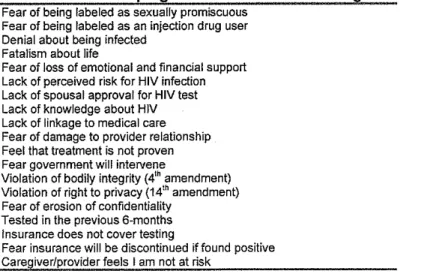
Table 23. Reasons pregnant women chose not to get an HIV test (Aynalem, Kerndt, Hawkins, 2004)
Fear of being labeled as sexually promiscuous Fear of being labeled as an injection drug user Denial about being infected
Fatalism about life
Fear of loss of emotional and financial support Lack of perceived risk for HIV infection Lack of spousal approval for HIV test Lack of knowledge about HlV Lack of linkage to medical care Fear of damage to provider relationship Feel that treatment is not proven Fear government will intervene
Violation of bodily integrity (41h amendment)
Violation of right to privacy (141h amendment}
Fear of erosion of confidentiality Tested in the previous 6-months Insurance does not cover testing
Fear insurance will be discontinued if found positive Caregiver/provider feels I am not at risk
Discussion
Women, especially those of childbearing age, continue to make up a significant percentage of people living with HIV in Wisconsin. In 2004, women accounted for 17% of residents living with HIV infection. Children who have HIV almost always acquire the virus by transmission from the mother. Despite a reduction in the numbers of children being born infected with HIV during the past decade, the CDC estimates that in 2005, 280-370 infected infants will be born in the United States. This underscores the need for effective strategies to ensure all pregnant women are tested for HIV, so that the woman knows her HIV status and if HIV -positive can obtain treatment for the disease and can prevent passing it on to her unborn children.
The advent of successful treatment options for pregnant women to prevent mother to child (perinatal) HIV transmission we now have the opportunity to further reduce, if not eliminate, HIV disease in children born in Wisconsin. To do so, we must develop a consistent statewide strategy. This paper systematically reviews the history and options of perinatal HIV testing in order to recommend such a strategic policy.
Why should I care?
• HIV is a serious health threat to the mother and infant
Although HIV may be considered by some as a chronic disease, it still remains a fatal
lead productive lives (Kamal and Rutlunore, 1997). Knowing the HIV status of the mother not only benefits the infant but also benefits the mother by getting the care and treatment needed so she can care for herself and her infant.
• HIV effects the health of the public.
A Washington Times survey conducted from February 12 to February 14,2005 reports that approximately 63% of those surveyed (864 physicians and 1339 non-physicians) said that they believe that compulsory HIV testing would improve the overall health of the US population (Kaiser Daily HIV I AIDS Report, February 22, 2005).
• It saves taxpayers money
By finding HIV infection in pregnant women it is estimated that 656 infants could be spared being born with HIV with a resulting cost savings of $105.6 million. If these costs were
subtracted from the costs of implementing an HIV testing program the net savings is $38.1 million. The cost-effectiveness and savings depends on the testing strategy employed, the region of the country and the seroprevalance of the region. A study conducted in Chicago states that when taking those criteria into account, even at a prevalence rate ofless than .01% routine screening of pregnant women would be cost-effective. In 2003 Wisconsin's prevalence rate for women was reported to be 0.04% (Immergluck, Cull, Schwartz, Elstein, 2000).
What can be done?
L
policies on counseling/testing of pregnant women and 22 with policies on testing, monitoring or treatment of newborns. Of those 45 states who have policies or follow recommendations, only
19 states have adopted state-mandated laws or regulations on HIV counseling and testing of pregnant women.
Review and analysis of these strategies has shown that offering an HIV test to all
pregnant women (universal) using an opt-out approach, both at the first prenatal visit and during labor and delivery, if EOt tested prior to delivery, offers the best chance of getting pregnant women tested for HIV. While the data did not clearly offer resolution to whether periantal HIV testing should be mandatory versus voluntary, issues of social acceptability, avoidance of prenatal care, violation of 4th and 14th amendment rights, and cost-effectiveness lead to the following recommendations:
Recommendation 1. Strengthen pre-pregnancy HIV services, including Prevention and
Partner Counseling and Referral Services (PCRS)
Prior to pregnancy this is the single most effective means of identifYing women at high risk of exposure in low prevalence states such as Wisconsin. If women with HIV infection can be identified early and then treated the chances of transmitting the disease to their offspring is very low.
Recommendation 2. Develop a standard or care for universal, routine (opt-out) HIV testing
as part of the prenatal laboratory screen during a woman's first prenatal visit
of prenatal care, with notification and the right of refusal. Additionally, emphasis should be placed on maximizing the proportion of women participating in prenatal care during pregnancy. In doing so, an HIV test should be included in routine prenatal laboratory tests panels and offered to the woman at her first prenatal medical visit. Prior to doing any laboratory testing the prenatal healthcare provider will be required to counsel every patient on all tests included in the panel, including the HIV test. The woman would retain the right to decline any and all of the tests offered. Any declination will be noted in the patient chart. Acceptance of HIV testing will be signified by laboratory results noted in the patient chart.
Recommendation 3. Offer HIV testing during the third trimester to those who've previously declined testing or those who at risk for HIV disease.
In order to include women who may reconsider HIV testing, or women who continue to have risk for contracting HIV into their pregnancy, a health care provider should offer an HIV test in the third trimester of pregnancy. This would be at the discretion of the caregiver and the reasons detailed in the patient's chart. Declination of the offer ofHIV testing must be noted in the patient's chart.
Recommendation 4. Require by law that HIV test results, or a statement of declination, be in
a patients chart at the time of labor and delivery.
Recommendation 5. Mandate Newborn HIV testing
if
the mother has not been tested for HIVBecause pregnant women have the right to refuse all offers for an HIV test, a mechanism must in place to protect the child. Therefore, it is recommended that the hospital be required by law to test the newborn for HIV infection if there is no record of the mother having been tested.
Conclusion
Development and implementation of a pr;:rinatal HIV testing strategy in Wisconsin is essential to further reducing the numbers of infants born with HIV infection. Examination and analysis of the perinatal HIV testing strategies available has lead to recommendations of a strategy that will work in Wisconsin. Recognizing that prenatal prophylaxis and treatment for HIV disease is not I 00% effective, detecting HIV -positive pregnant women through the recommended strategy and then offering them treatment could potentially reduce MTC
transmission ofHIV infection in Wisconsin, to 1.6%, or to one or no infants with HIV infection within a four year period (Schell, Hoxie, Steenberg, Maxwell, 2005). While this paper lays out the strategy most likely to be effective in Wisconsin, further development into an effective policy is needed.
L_
L
f
References
AIDS Alliance for Children, Youth & Families. (2004) Understanding the Debate: HIV Counseling and Testing in Pregnancy. Retrieved April 7, 2005 from
http://www.aidsaalliance.org/img/gv2/non-standard files/aids-alliance/understanding-debate.pdf
Anynalem, G., Kerndt, P., Hawkins, K. (2004, December). Routine prenatal HIV testing as a standard of are. Medicine and Society. Retrieved on April 7, 2005 from
http://www.hivdent.org/medical/medRPHTl22004.htm
Barbacci, M.B., Dalabetta, G.A., Repke, J.T., et.al. (l990)Human immunodeficiency virus infection in women attending an inner city prenatal clinic: ineffectiveness of targeted screening. Sex Transm Dis; Jul-Sep; 17(3)122-6.
Bitnun, A., King, S.M., Arneson, C., Read, S.E. (2002). Failure to prevent perinatal HIV infection. JAMC; 166(7) 904-905.
Blattner, W., Cooper, E., Charurat, M., et. Al. (2000, July). Effectiveness of potent antiretroviral therapies on reducing perinatal transmission of HIV -1. Paper presented at: XIII
International AIDS Conference; July 9-14, 2000, Durban, Natal, South Africa.
CDC. (1995) Recommendations for human immunodeficiency virus counseling and voluntary testing for pregnant women. MMWR:44(No. RR-7) p.l-14.
CDC. (1998). Success in implementing Public Health Service guidelines to reduceperinatal transmission ofHIV- Lousiana, Michigan, New Jersey, and South Carolina in 1993, 1995 an dl996. MMWR. 47:688-691.
CDC. (2001) Revised recommendations for HIV screening of pregnant women. MMWR 50 (RR19); 59-86
CDC. (2004) Routine perinatal testing: The opt-out approach. Questions and answers. Retrieved April 7, 2004 from http://www.cdc.gov/hiv/projects/perinatal/materials/C l.htrn
Code of Alabama (2003). Section 22-l!A-52.
Conner E.M., Sperling, R.S., Gelber, R., et.al. (l994).Reductionof maternal-infant transmission of human immunodeficiency vims type-1 with zidovudine treatment. N Eng! J Med. 331:1173-1180.
Cooper, E.R., Nugent, R.P., Diaz, C. et.al. (1996) After AIDS clinical trial group 076: the
changing pattern of zidovudine use during pregnancy, and the subsequent reduction in the vertical transmission of human immunodeficiency virus in a cohort of infected women and their infants. Woman and infants transmission study group. J Infect Dis;l74:1207-1211.
Dalzel, F., Farkas, A. G., Hawken, J., Hudson, C.N.(l995). Antenatal testing for HIV antibody: problems of documentation and record. AIDS Care, 7, 129-133.
Hoxie, N.J., Conway, A., Vergeront, J.M. (2002). HIV antibody testing among pregnant women in Wisconsin. Unpublished.
Immergluck, L.C, Cull, W.L., Schwartz, A., Elstein, A.S. (2000) Cost-effectiveness of universal compared with voluntary screening for human immunodeficiency virus among pregnant women in Chicago. Pediatrics. 105;54. Retreived on April 7, 2005 from
http://www.pediatrics.org/cgi/content/full/l 05/4/e54
Institute of Medicine. National Research Council. (1999). Reducing the Odds: preventing
perinatal transmission ofHIV in the United States. National Academy Press. Washington, D.C.
Jayaraman, G., Preiksaitis, J., Larke, B. (2003). Mandatory reporting ofHIV infection and opt-out prenatal screening for HIV infection: effects on testing rates. Canadian Medical Association Journal. 168(6).
Johnson, D.F., Sorville, F., Wohl, A., et.al. (2003) Frequent failed early HIV detection in high prevelance areas: implications for prevention. AIDS Patient Care and Stds. 17 (6).
Kaiser Daily HIV/AIDS Report. (2005, February). Majority of doctors, public believe mandatory, federally funded HIV testing would benefit U.S. health, survey says. Retrieved from
http://www.kaisemetwork.org/daily reports/print reort.cfi:n?DR ID=28263&dr cat=!
Kamal, H., Rathmore, M. (1997, August). Pediatric HIV infection. Jacksonville Medicine.
Lallemant, M., Jourdain, G., LeCoeur, S., et.al. (2000). A trial of shortened zidovudine regimens to prevent mother-to-child transmission of human immunodeficiency virus. N Eng! J Med; 343:982-991.
Lindgren, M.L. (2000, January). Update on enhanced preinatal surveillance toward elimination of perinatal infection: Surveillance data to target and evaluate HIV prevention programs. Symposium conducted at the Perinatal HIV Transmission Grantee Meeting. Atlanta, GA.
Mofenson, L.M. and the Committee on Pediatric AIDS (2000). Technical Report: Perinatal human immunodeficiency virus testing and prevention of transmission.
Pediatrics. 1 06 ( 6). Retrieved on April 7, 2005 from http://www. pediatrics. org/ cgi/ content/full/1 06/6/ e8 8.
Nakchbandi, I., Longenecker, C., Ricksecker, M.A., et. al. (1998) A decision analysis of mandatory compared with voluntary HIV teting in pregnant women. Annals of Internal Medicine. 128(9):760-767.
Northwest Territories Health and Social Services. 1996. HIV infection and AIDS information for health professionals.
Pagnini, D.L. (2000, Mar/Apr). Psychosocial factors and the timing of prenatal care among women in New Jersey's Health Start program. Family Planning Perspectives. Retrieved on April 7, 2005 from
http://www.findarticles.com/p/articles/mi qa3634/is 200003/ai n8899661/print Schell, W., Steenberg, L.L., Hoxie, N.J., et.al. (2003) Summary of Perinatal Human
Immunodeficiency virus (HIV) transmission in Wisconsin (unpublished).
Schell, W., Hoxie, N., Steenberg,L., Maxwell, M. (2005) Perinatal transmission and prenatal HIV testing in Wisconsin. Unpublished
Scherr, L., Bergenstrom, A., Hudson, C.N. (2000) Consent and antenatal HIV testing: the limits of choice and issues in HIV and AIDS. AIDS Care. 12(3):307-312.
Sengupta, S., and LoB. (2003). U.S. pregnant woman's perceptions of universal, routine prenatal HIV testing. AIDS & Public Policy Journal. 18:3/4 (Fall/Winter) pp. 82-96 The Henry J Kaiser Family Foundation (2002) Fifty state comparisons: HIV testing for mothers
and newborns. Retrieved April 7, 2005 from http://www.statehealthfacts.kff.org/cgi-binlhealthfacts.cgi ?action =compare
US Public Health Service. (200 I) Revised US Public Health Service Recommendations for Human Immunodeficiency Virus Screening of Pregnant Women. Washington, DC. Wisconsin AIDSIHIV Program, Wisconsin Division of Health (1993). HIV prevention services
in prenatal care settings - Results of a survey of Wisconsin prenatal care providers. Unpublished.
Wisconsin HIV/AIDS Quarterly Surveillance Summary. (2005, Winter) Wisconsin AIDS/HIV Update.
Wisconsin Association of Perinatal Care. (2002) Position Statement: HIV testing in the perinatal period. Retrieved April 7, 2005 from
http://www.perinatalweb.org/association!pub mSum.html
L
Wisconsin Bureau of Family and Child Health (2003). Block grant evaluation. Retrieved on April 7, 2005 from http://www.dhfs.wisconsin.gov/DPH BFCH/BlockGrant/NPM/npm18.pdf Wolf. L.E., Lo, B., Gostin, L.O. (2004) Legalbarriers to implementing recommendations for
Appendix A. Logic Model of How to Reduce Perinatal HIV Infection
Continued Perinatal transmission of HIV
The Problem *Treatment can reduce the rate of perinatal HIV transmission
* In order for this to happen, pregnant women must know their HIV status by getting tested for HIV
.
*The goal of 0 transmission is within our reach in Wisconsin
I
I
I
I
I
Social barriers Ethical barriers Systems barriers
*Stigma Legal barriers
*Denial ""Access ""Denial of care *Language
*Rejection *Targeting *Right to privacy *Insurance
*No risk *provider-patient relationship "Bodily integrity *Low prevalence
*Unconstitutional *Time
*Knowledge
*Long-term effects unknown
I
*Rapid test not available*Approval
I I I I
Stakeholders
*Patients *Providers *Advocacy groups *State staff *Legislators *Media
f---r
i
F
Change norms and influences Changing the system
*Universal HIV testing *Develop standard of care
*Routine HIV testing *Mandatory newborn HIV testing
I
Public Policy that supports health
*Standard of Care *Law