“Let’s Talk About It” Mobile Application for
Teen Pregnancy and STI Prevention
mHealth Implementation Plan
by
Zinaida Mahmutefendic
A Master’s Paper submitted to the faculty of the University of North Carolina at Chapel Hill
in partial fulfillment of the requirements for the degree of Master of Public Health in
the Public Health Leadership Program
Chapel Hill
Fall 2013
Approved by:
_____________________________________
_____________________________________
2
TABLE OF CONTENTS
ABSTRACT ... 4
INTRODUCTION ... 5
What is mobile health (mHealth)? ... 5
PROJECT OVERVIEW ... 6
Problem and Opportunity ... 6
Project Background ... 8
DEVELOPING AND IMPLEMENTING mHEALTH INTERVENTIONS ... 11
Lessons Learned and Interviews ... 13
Literature Review ... 14
Theoretical Foundation ... 18
IMPLEMENTATION PLAN ... 21
Project Management ... 22
Team Bio sketch ... 23
Timeline... 24
Scope and Objectives ... 25
Measurement and Evaluation ... 26
Risk Analysis ... 27
Logic Model ... 29
Partners and Stakeholders Register ... 30
Launch and Social Marketing ... 32
Scale-Up and Sustainability Plan ... 33
Conclusion ... 34
APPENDIX ... 35
APPENDIX A: 2013 UNC Science Expo Surveys and Results ... 35
APPENDIX B: Content Resources ... 37
APPENDIX C: Work Breakdown Structure ... 38
3
FIGURES
Figure 1: Birth rates per 1,000 females ages 15-19 in the United States ... 6
Figure 2: Whiteboard Prototype Presented at the 2013 UNC Science Expo ... 10
Figure 3: Let’s Talk About It Project Overview ... 12
Figure 4: Roger’s Diffusion of Innovation Theory ... 21
Figure 5: mHealth Implementation Schematic ... 22
Figure 6: Let’s Talk About It Implementation and Dissemination Timeline ... 24
Figure 7: Logic Model for Implementation of the Let’s Talk About It mobile app for teens ... 30
4
ABSTRACT
Currently, numerous mobile health (mHealth) interventions are being developed across the
globe to help improve public health outcomes. Earlier this year, our three-person team of Masters in
Public Health students came up with a teen pregnancy prevention and Sexually Transmitted Infections
(STI) protection mobile application (app) idea and presented it at the 2013 University of North Carolina
(UNC) Science Expo event in Chapel Hill. Based on a review of evidence-based mHealth interventions,
theories for changing teen health behavior, and the feedback from the first phase of the project, I have
developed a process for development and testing of the mobile app with the ultimate goal of reducing
teen pregnancy and Sexually Transmitted Infections in North Carolina. This paper documents the
implementation and formative development of the Let’s Talk About It mobile app intended to bring teen
health resources to young people’s fingertips. This process includes project management, measurement
and evaluation, launch and marketing, and a plan for scale-up and sustainability. The strengths of this
process are the involvement of the target audience and teen health experts in the development stages
and the use of continuous evaluation methods to refine the app. The risks include the time required,
5
INTRODUCTION
What is mobile health (mHealth)?
MHealth – the use of mobile health applications to improve people’s health – is a new and
dynamic field where technology and health intersect. mHealth Alliance defined mHealth as “medical
and public health practice supported by mobile devices,” including mobile phones, tablets, and any
other wireless technology (mHealth Alliance, n.d.). Mobile applications (apps) provide diverse
opportunities for access to and dissemination of health information and services to a wide range of
audiences in both developed and developing countries by offering symptom assessment, education,
resource location, and tracking of treatment progress (Luxton et al, 2011).
As of October 2013, there are over two million apps available between Apple and Google Play,
the two largest mobile app stores; approximately 97,000 of these relate to health and fitness and
average 300,000 downloads per day (Cook, 2013). As new mobile apps are developed and expanded
daily, the total number of apps targeted at a specific population, teenagers aged 15 to 19 years for
example, is indeterminate. Based on Apple and Google Play platform searches using the keywords “teen
health,” there are 216 mobile apps targeting teenagers on various health topics, the majority of which
relate to physical activity and nutrition and which also include mental health, bullying, beauty, and teen
pregnancy. Based on a similar search using the keywords “teen pregnancy” and “teen pregnancy
prevention” there are 9 apps related to the topic of teen pregnancy and safe sex practices. With many
of these apps being introduced this year, these figures reflect an upward trend in targeting teen
6
PROJECT OVERVIEW
Problem and Opportunity
In 2011, almost half of all high school students reported they have had sexual intercourse
(Center for Disease Control, 2011a). In the United States, the current birth rate for girls aged 15-19 is
higher than any other developed country—29.4 births per 1,000 girls, ranging from 20.5 for Caucasian
girls to 46.3 for Hispanic girls as demonstrated in Figure 1 (Hamilton, Martin, & Ventura, 2013).
Additionally, almost one in five (17%) teen mothers has a repeat pregnancy (Office of Adolescent Health,
n.d.). When accounting for abortions and miscarriages, as well as all live births, the teen pregnancy rate
in the United States includes an even higher percentage of girls. According to the Adolescent Pregnancy
Prevention Campaign of North Carolina (APPCNC), North Carolina has the 16th highest teen pregnancy
rate in the nation at 43.8 per 1000 15-19 year old girls. Ethnic and racial disparities are pronounced with
a broad range of pregnancy rates of 30 for Caucasian girls to 61.6 and 71.1 (per 1,000) for
African-American and Hispanic girls, respectively (North Carolina State Center for Health Statistics, 2012).
Figure 1: Birth rates per 1,000 females ages 15-19 in the United States, by race/ethnicity, 1990-2012
Source: Hamilton, B. E., Martin, J. A., & Ventura, S. J. (2013). Births: Preliminary data for 2012. Hyattsville, MD: National Center for Health Statistics.
Although state and national teen pregnancy and birth rates have declined in the past two
7
costs to teen parents and their children. Many girls drop out of school due to pregnancy, often
becoming single mothers. According to the Centers for Disease Control and Prevention (CDC), teen
pregnancy and child birth cost US taxpayers over $10 billion per year in health care and foster care, and
result in lower high school graduation rates for teen parents (CDC, 2012).
Among teen health issues, pregnancy and sexually transmitted infection (STI) prevention often
go hand-in-hand as both can be prevented by the use of condoms by sexually active teens. According to
the CDC, approximately four million new cases of sexually transmitted diseases (excluding HIV) in the
United States occur among teenagers (CDC, 2011a). Chlamydia and gonorrhea cases are also good
indicators of teen sexual health as they are more common among adolescents than any other age group
(APPCNC, n.d.).
Of the many health determinants for teen pregnancy and sexually transmitted infections, one
major factor is a lack of comprehensive sex education. A recent standardized sex education test
administered to students in Washington D.C. revealed that a majority of fifth through eighth grade
students lacked a basic understanding of the human body; although high school students scored an
average of 75% on reproduction, they demonstrated a lack of knowledge about how to get health
information and help (Office of the State Superintendent of Education, 2012). Teenagers are often not
aware of local, inexpensive, and teen-friendly (i.e. comfortable, not judgmental) resources that can
assist them with learning about and selecting the best pregnancy prevention and STI protection options.
Moreover, many state programs have limited funding available for research and development of
teen-friendly health resources.
In order to address this critical gap, a mobile app seems like a logical next step as mobile
technology becomes more available and widely adopted across various demographic and socioeconomic
8
teenagers in the United States now have a cell phone. Smartphone adoption among American teens has
increased from 23% of teens in 2011 to 37% of teens in 2013, and teenagers are increasingly relying on
mobile access to the internet versus using a desktop or laptop computer (Pew Internet & American Life
Project, 2013a). As reported by Rideout and colleagues, a Kaiser poll found more than half (55%) 7th
-12th graders reported using the Internet to learn about a health issue affecting themselves or someone
they know. High-school students, teenage girls (66% of 15- to 18-year-old girls) in particular, are even
more likely to look up health information online (Rideout, Foehr, and Roberts, 2010).
Project Background
The Let’s Talk About It team traces its origins to the UNC Public Health Leadership Program
Project Management class in Spring 2013. It was developed in response to an assignment to plan and
present a public health project for the campus and community-wide 2013 Science Expo. Our
three-member team found that teen health was an overarching theme and interest for all three-members, in
particular developing a project to reduce teen pregnancy. We identified a need for a reliable and
confidential source of readily available information based on observations that young people have
questions about sex, pregnancy prevention, and STI protection that they may not feel comfortable
talking about with their parents, teachers, and peers. In response to state and national trends, an
interactive mobile app was considered the most tangible option that met the potential need in the
community and our interests. Although mobile apps are becoming more popular in health care and
public health fields, our team noticed a gap in pregnancy prevention apps specifically oriented toward
teen needs, finding only one similar app available on the Android and iPhone platform in early 2013.
The app we found called Pregnancy Prevention, Birth Control Techniques (developed in 2011)seemed like a dated mobile app for audiences of all ages who want to learn about birth control methods.
Additionally, it costs $0.99 to download, which seemed futile for information readily available on the
9
A mobile app geared towards 15-19 year olds provides a user-driven accessible means of clear,
concise, and accurate pregnancy and STI prevention information with the intent of increasing safe sexual
behaviors among teenagers. Apps are a relevant way to reach young people who are the most active
users of mobile technology (Pew Internet & American Life Project, 2013a). At the 2013 UNC Science
Expo, a free all-day family event at UNC Chapel Hill that included exhibits, behind-the-scenes tours of
research labs, and science activities for people of all ages, our team presented the idea to the public
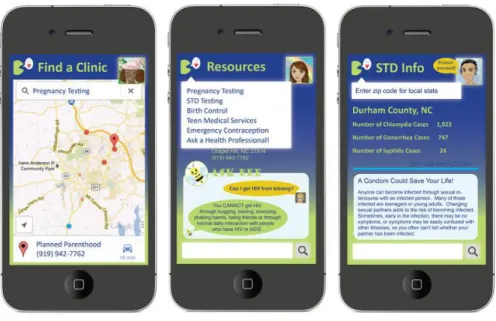
along with a whiteboard prototype in Figure 2. The whiteboard prototype included a visual presentation
of several features in the app as they would appear on the smart phone once downloaded, as follows:
1) Ask a Health Professional (Ask Bee) – Because it is not always easy to find reliable information online, our goal was to partner with teen health providers in order to give real-time, credible,
private answers to teens’ personal questions about sexual health and relationships.
2) Find a Teen Health Clinic – This feature allows the user to search for resources by topic or location. The results display the address, phone number, and website for all available
organizations and health services in the user’s area that specialize in teen health as determined
by the My Location mobile feature or manual zip code entry.
3) Community Fast Facts – Statistics are displayed by user’s location or can be searched by county within North Carolina This brings teen health information closer to home and empowers teens
to take action.
4) Teen Health Game – There are many myths pertaining to teen sexual issues, and this game’s intention was to provide a fun, interactive way for teens to self-test their birth control,
pregnancy, and relationship knowledge.
10
We determined that our app would address several issues that may not be covered in current
sex education curriculum, physician advice, and parental guidance and support; therefore, we decided
on using basic language so that it is understandable for teenagers of all reading levels. Additional
research and evaluation of the proposed text will need to be undertaken in order to determine the
optimal reading level for teenagers in North Carolina. We also chose a discreet, unisex icon that
would appear on the teen’s mobile device for privacy, which was also a recommendation from
ISIS/Youth+Tech+Health, a California-based teen empowerment non-profit organization, as was using
basic teen-friendly language (Boyar, Levine, and Zensius, 2011). The blue-green theme is bright with a
chat bubble that corresponds with the Let’s Talk About It name. Additionally, another feature of the
app is that teenagers can create customizable avatars that pop up in the upper-right corner of the
screen allowing for optional personalization.
Figure 2: Whiteboard Prototype Presented at the 2013 UNC Science Expo
During the Science Expo, our team leveraged the opportunity to evaluate the project by
5-11
point Likert scale survey for parents and teens who visited the Expo table. The 5-point Likert scale
survey, based on the Likert scale developed by psychologist Ransis Likert, allows respondents to indicate
their level of agreement or disagreement with proposed statements on a symmetric 1-5 scale (Allen and
Seaman, 2007). The survey addressed content and usability of the app and included a blank area for
comments and suggestions. As the team lead at the Science Expo, I also recorded general comments
from parents without teenage children, college students, and others who chose not to complete the
survey. We surveyed 16 teenagers and 23 parents (see Appendix A for the detailed UNC Science Expo
Survey and Results). There were no negative responses with only one neutral response from a parent
(“Neither Agree nor Disagree”) for the overall mobile app usability. Though we did not gather feedback
specifically regarding the design, color, and icon of the mobile app and its appeal to male and female
teenagers, our intent was to design a unisex and discreet green-blue icon with a chat bubble
representative of the open conversation about teen sexual health. Some additional limitations in our
survey method were sampling bias as those individuals uninterested in teen health, public health, or
mobile technology would likely not approach our table. However, we assumed this risk and created a
simple title (“Let’s Talk About It”) that did not specifically indicate the project’s topic but was still
relevant to its intent. After receiving overall positive feedback from the community during the Science
Expo, we decided to pursue the idea and develop the mobile app.
DEVELOPING AND IMPLEMENTING mHEALTH INTERVENTIONS
Methods to inform the mobile app development include lessons learned from the first phase,
interviews with mHealth experts, a literature review, and integration of health behavior and sociological
theories. Our team used classic project management guidelines for completing the first phase of the
project, that included lessons learned as the integral last step of the class project that set the stage for
12
Department of Public Health, who developed the Teen NYC Prevention Plus mobile app, as well as two experts from Marie Stopes International, whose team conducts research on mHealth use in quality
improvement of sexual and reproductive services globally.
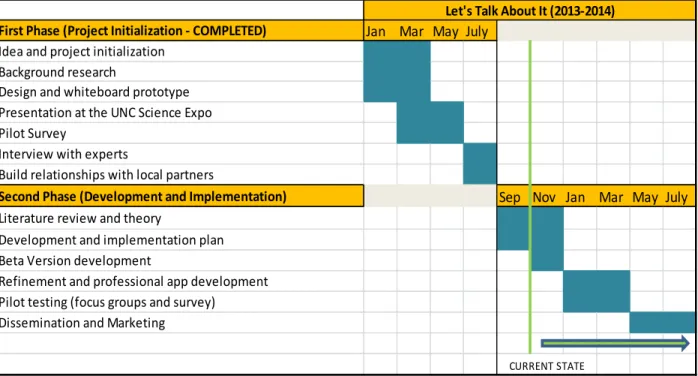
Figure 3 demonstrates the work that has been completed during the first phase of the project,
including interviews, and the work to be completed in the second phase of the project. Through
interactions with local partners, our team recognized the importance of basing public health
interventions on evidence and theory. In the beginning of the second phase, I conducted a literature
review to find evidence-based mHealth interventions and learn more about mHealth intervention
development and implementation. I additionally researched health behavior and sociological theories
applicable to our mobile app development. As signified in Figure 3, we are in phase two of Let’s Talk
About It mobile app development as of this writing.
Figure 3: Let’s Talk About It Project Overview
First Phase (Project Initialization - COMPLETED) Jan Mar May July
Idea and project initialization Background research
Design and whiteboard prototype Presentation at the UNC Science Expo Pilot Survey
Interview with experts
Build relationships with local partners
Second Phase (Development and Implementation) Sep Nov Jan Mar May July
Literature review and theory
Development and implementation plan Beta Version development
Refinement and professional app development Pilot testing (focus groups and survey)
Dissemination and Marketing
Let's Talk About It (2013-2014)
13
Lessons Learned and Interviews
Post UNC Science Expo, the general feedback indicated that the idea was great, and many
participants were surprised that these types of apps were not already widely used. Participants were
also excited that North Carolina could be at the forefront of an innovative teen health intervention for
pregnancy and STI prevention and could serve as an example to other states. Based on the feedback
and lessons learned from the first phase of the project, our team decided to develop the beta version of
the app with several adjustments. The two new features include:
1) What to Expect – Honest and light information on sexual health and clinic visit expectations acknowledging recommendations from the ISIS/Youth+Teen+Health group so that “the tone of
the online communications resonates with youth. It should be forthright, intelligent, and with a
touch of humor” (Boyar, Levine, and Zensius, 2011, p. 36).
2) Birth Control and Treatment Reminders – Brief, less-than-160-character messages that will deliver humorous, discreet birth control and treatment reminders to users who subscribe to
these services (Levine, McCright, and Klausner, 2008).
We decided to eliminate the game feature because game development requires a large amount
of resources and developer time; additionally, based on the teenager feedback at the Science Expo,
including such comments as “Not too many games, seems less mature,” it appeared that interest in
educational games was low. On the other hand, teenagers were very enthusiastic about the chat with a
health professional option (Ask Bee), and because BrdsNBz, a text messaging service that provides confidential and factual sexual health information to young people ages 14 to 19, has been successful,
we decided to find a way to adopt the text messaging system into the app. Additionally, we added the
peer-reviewing option in form of a Like/Dislike button of the local teen health providers, in order to
14
socially or politically sensitive information, such as determining one’s sexual readiness, because there is
no evidence-based practice or tools to assess sexual readiness. Furthermore, the available information
is not suitable for an app.
During the summer, our team had the opportunity to interview Allyna Steinberg from the NYC
Department of Public Health, Maternal, Infant and Reproductive Health Bureau, who developed and
launched the Teen NYC Prevention Plus mobile app in May 2013. The app’s focus is to reduce teen pregnancy and STD infection in New York City (NYC), based on her development of a booklet of clinics
around the city that were identified as teen-friendly. The NYC health department funded its
development into a mobile app so it is more widely and easily accessible. Within one month, their app
had 2,500 downloads at no cost to the user. Another expert interview with a member of Marie Stopes
International confirmed our decision to remove the games feature from our app. Their team did
extensive research on the idea of developing sexual health mobile phone games to reach youth and
found that the use of games for sexual health information is more accepted in developing countries than
developed countries.
Literature Review
The purpose of the following literature review is to gain knowledge regarding development,
implementation, and evaluation of mHealth interventions, more specifically using mobile apps in public
health to inform the development of the Let’s Talk About It mobile app. PubMed and Google Scholar
were used to search the following key terms: “mHealth interventions,” “teen health,” “mobile app,” and
“teen pregnancy.” These key terms were selected to identify relevant sources that will address the
following questions:
1) Have mHealth interventions been successful in improving public health outcomes?
15
3) Have similar mobile apps been invented, and if so, were they successful in increasing safe sex
behavior or reducing teen pregnancy and STIs?
Smartphones provide a good platform for the delivery of behavior interventions because they
are highly valued devices by individuals, used frequently throughout the day, offer the opportunity to
bring “real-time” and “on-the-go” health information (avoiding timing barriers to behavior change), and
provide a cheap, convenient, and less stigmatizing intervention through discreet features and user
privacy (Dennison et al, 2013). In 2012, a systematic review of thirty-two mHealth interventions
published in peer-reviewed journals suggests that mHealth interventions receive positive response
among technology users, particularly young people, and that text-based and video-based interventions
show promise in changing health behavior regarding both treatment and prevention. In particular, for
individual-level prevention interventions, like the use of sunscreen for example, a daily text message
reminder to perform this task yielded a significantly higher sunscreen use rate per week than did the
control group (Buhi et al, 2012). This evidence could translate to daily text reminders for other
preventative behaviors, more specifically as a text reminder (or a push notification feature of a mobile
app) to take birth control pills at the same time every day. Furthermore, for mobile apps with an “ask a
health professional” feature, the developer should incorporate an explanation of the main intent of the
feature to the users. For instance, a family planning and pregnancy mHealth intervention implemented
in Africa and summarized by Gurman, Rubin, and Roess specifies what the messaging feature intends to
do to combat wasting health professionals’ time with unrelated questions or solicitations. Additionally,
it is important to consider the timing and length of alert notifications in order to limit intrusiveness and
reach the target audience. (Gurman, Rubin, and Roess, 2012)
One of the Let’s Talk About It project goals is to translate evidence-based health behavior
16
relatively early stages, other evidence-based interventions provide scientifically-tested practices in teen
health that can be applied through mobile applications. In 2012, the Office of Adolescent Health (OAH)
compiled over 30 evidence-based programs that have proven effective in reducing the number of teen
pregnancies and STIs over the past fifteen years. While most are school-based programs, many
programs emphasize the importance of health clinic follow-up with teenagers post consultation or post
diagnosis of STIs (Office of Adolescent Health, n.d.). Mobile applications can be a good resource for
maintaining health provider contact and presenting available resources in different areas across the
state. Furthermore, the CDC developed a website dedicated to effective, evidence-based programs for
HIV/STD prevention, which includes testing resources and guides for professionals working with youth
(CDC, 2011). Based on the CDC evidence-based programs, the ACT Youth Center of Excellence made
recommendations for successful youth interventions which would target behaviors most responsive to
change (such as condom use), tailor activities to each group, and involve teens in decision making and
capacity building (DiClemente & Sales, 2010). Mobile technology has the capability to recommend
features and activities based on user preferences, which can be beneficial for tailoring positive messages
for teenagers. The Healthy People 2020 website also identifies evidence-based interventions to reach
teen health goals, including increasing number of adolescents who have annual wellness checkups,
reducing number of young people who acquire STIs (particularly gonorrhea and chlamydia), and
reducing pregnancies among adolescent girls. Additionally, five studies cited by Advocates for Youth
indicate that providing access to contraceptive services and methods would make a program more
effective (Pagliaro and Gipson, 2001), which is again one of the primary aims of the mobile app. By
providing nearby locations for teen-friendly health resources as rated by their peers, the mobile app has
the potential to increase the number of people who visit a health provider on a regular basis.
There is little research on the development and evaluation of mobile applications for health
17
source of information and data and can influence change within this target audience (Dennison et al,
2013). In a recent focus group on improving existing teen pregnancy and STI prevention programs,
California teenagers indicated that they want programs they can relate to and greater access to health
services, testing, and condoms. They also indicated that this would encourage them to spread the word
to their peers. While participants did not acknowledge that searching Google or Facebook constituted
“using technology”—the term used by professionals in the study—they added that they wanted more
accurate information online and via mobile phones, particularly resources and links to doctors and free
clinics(Boyar, Levine, and Zensius, 2011). Another young adult focus group in the United Kingdom
suggested mobile app developers consider the following: the cost and effort of downloading and setting
up the app; positively framed alerts and reminders that are pertinent but not too frequent; making the
app discreet and with adequate privacy settings; and including expert advice and feedback to guide
people in how they can change behavior (Dennison et al, 2013; Luxton et al, 2011). Finally, over 30% of
Hispanic and African-American teenagers surveyed by ISIS, currently known as Youth+Teen+Health, are
interested in mobile technology regarding teen health, particularly birth control reminders and
instructional videos relevant to teen life (Boyar, Levine, and Zensius, 2011). Two-way communication
and understanding the target audience seem to be a common theme between the different groups and
should be noted in the development of the mobile app.
Several teen pregnancy and STI prevention mHealth interventions targeting teenagers exist
today, including the APPCNC’s successful BrdsNBz text messaging service that was recently expanded
nationally (see Appendix B for a complete list of teen resources). Additionally, there are six mobile apps
similar to ours geared toward reducing unintended pregnancy in the United States, four of which were
developed in the past year during the inception of the Let’s Talk About It project and only three of which
18
1) Teens in NYC Protection Plus (2013, NYC only, $0) – The mobile app allows teenagers who live in New York City to search for clinics in their neighborhood that provide sexual health
services for teens. Features include “where to go,” “what to get,” and “what to expect.”
2) Pregnancy Prevention, Birth Control Techniques (2011, $0.99) – Outdated mobile app for audiences of all ages who want to learn about birth control methods.
3) Oregon Reminders (2013, $0) – A new mHealth program developed by Youth+Tech+Health (YTH) for all ages that provides a private, secure way for people to set their own health
reminders, such as those for birth control, via text message, voicemail, or email.
4) Bedsider’s Condom Pro (2012, $0) – A mobile app game for ages 17 and above allows users to practice proper techniques for using condoms. Bedsider LLC also has a great website for
teen health information, but currently, only has this game available as a mobile app.
5) Avoid Pregnancy (2013, $0) – A teen pregnancy education app developed in October 2013 by a private developer provides basic information on avoiding and preventing teen
pregnancy.
6) Girls Inc. (2013, $0) – Teen Sexual Health App for girls developed in October 2013 by the Middle School Pregnancy Prevention Program and Teen Health Ambassador Program at Girls
Incorporated of Lynn with funding from the Massachusetts Department of Public Health
Office of Adolescent Health and Youth Development, with facts and myths about teen
health, frequently asked teen health questions, and quizzes about STIs and contraception.
Theoretical Foundation
Many stakeholders and funders want to ensure that projects they are funding are supported by
theory and evidence. As the ACT Youth Center for Excellence indicates, it is necessary to take a focused
19
and STI risk reduction among teenagers (DiClemente & Sales, 2010). The Let’s Talk About It mobile app
is based on several health behavior and sociological theories.
According to Bull and colleagues, behavior change is most prominent among those who receive
tailored materials and have higher self-efficacy (Bull et al., 2001). Many conceptual models of behavior
change in public health share the notion of self-efficacy, which is an individual’s belief in their ability to
succeed through action in a particular situation. Bandura further argues that self-efficacy influences
different aspects of behavior: adopting a new behavior (e.g. a sexually active teenager learning to use a
contraceptive method), inhibition of existing behavior (e.g. avoiding unsafe sex practices), and
disinhibiting of behavior (e.g. lack of knowledge of local teen-friendly health clinics for medical
check-ups) (Bandura, 1994). A teen health intervention based on self-efficacy aims to improve the individual’s
belief in effectively avoiding pregnancy and STIs, which is one of the main goals of the mobile app. The
mobile application targets teenagers at the individual level of the social-ecological framework, rather
than at the interpersonal, community, or population level (CDC, 2009; Sallis, Owen, and Fisher, 2008); in
other words, it focuses on beliefs and knowledge possessed by an individual by generating motivation
and a sense of responsibility through reminders, prompts, and incentives. The individual level is an
appropriate choice for this intervention, because without the teenager’s knowledge of personal health,
awareness of available resources, and motivation to change behavior, it is difficult to affect the norms
on the community or population level.
Furthermore, social learning theory and social cognitive theory were the most used frameworks
in successful STI prevention programs because they incorporated modeling activities (demonstrate how
to put on a condom), skill building activities (role play about how to communicate with a partner), and
self-efficacy (confidence that condom was used correctly) (DiClemente & Sales, 2010). The social
20
interpersonal, and environmental factors. A program called SiHLE offers an application of this theory. In
SiHLE, young women have the opportunity to practice proper condom use skills, which helps them
develop a positive attitude and norm about consistent condom use (OAH, n.d.). The Let’s Talk About It
app takes into account the need for visuals to demonstrate how to use birth control and what to expect
in order to increase teenager’s confidence in safe sex practices.
Most successful adoption of a public health intervention results from understanding the target
population and the factors influencing their rate of adoption. In health promotion, the audience must
be interested in and understand the health information that is presented in order to accept the message
and create dialogue with others (Bull, 2001). Through careful analysis of innovation adoption, Rogers
identified factors that influence the rate of adoption by communities in his diffusion of innovation
theory. These factors include the characteristics of the social system, the innovation itself, and the
characteristics of early and late adopters (Rogers, 1983).
This theory is applicable to mobile app adoption by teenagers that aims to change their
behaviors regarding sexual health. While it may take a few years before the majority of teenagers begin
downloading health apps on their smartphones, developing these apps for the early adopters, who are
typically open to all new technology, will help diffuse the message to later adopters by word-of mouth
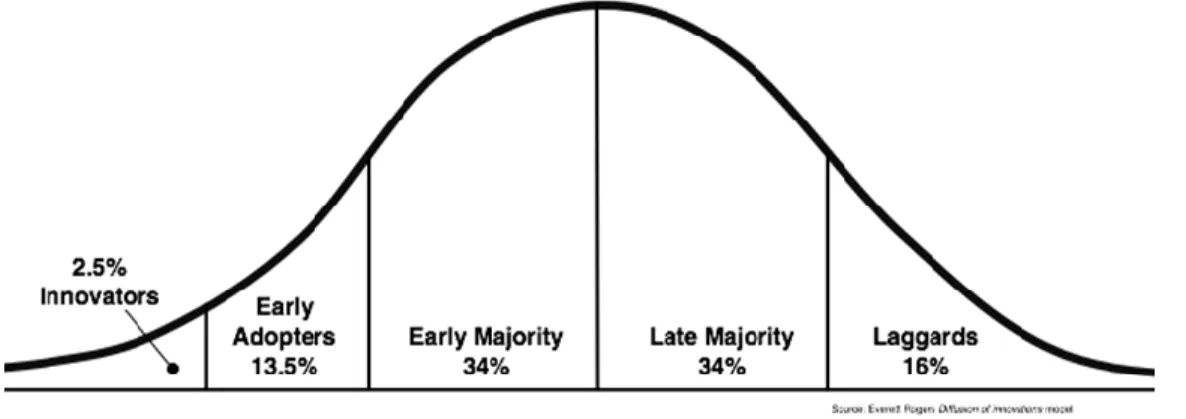
including those who may not yet have a smartphone (Boyar, Levine, and Zensius, 2011). Figure 4
demonstrates the succession of consumer adoption of an innovation, in this case a mobile app, in a
normal distribution graph. Innovators and early adopters tend to drive modern advances, and because
teenagers are often on the cutting edge of new technology, it would appeal to North Carolina teenagers
to be the first users of a new mobile app and model a path for others. The majority adopters must be
persuaded by their peers to download and use the mobile app; therefore, attractive visuals as well as
information delivery style appealing to teenagers (simple language, humor) would help the initial
21
Figure 4: Roger’s Diffusion of Innovation Theory
Because mHealth is a new field and the use of technology is rapidly changing, the publications
used in this literature review may quickly be outdated. However, these studies and theories provide an
overview of teen health within a mobile landscape and insight into teenagers’ use of technology to learn
and communicate about health. In order for the mobile app to be successful in North Carolina, several
factors must be considered in its development:
1) The mobile application should be free or low-cost so that it is easily obtainable by the target
audience and sustainable either through grant funding, crowd-sourcing, or the operating
agencies’ budgets.
2) The mobile application should be relevant and culturally appropriate to the target audience and
respectful to the education efforts of the medical and public health community, teachers, and
parental guidance.
3) The mobile application should produce better health outcomes in the focus areas of teen
pregnancy and STD protection.
IMPLEMENTATION PLAN
Following concept and solution development, Johns Hopkins Bloomberg School of Public Health
22
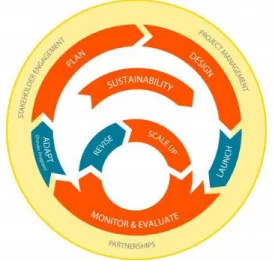
process for mHealth interventions, which consists of six components: project management, partnership
development, preparing for launch, monitoring & evaluation, scale-up, and sustainability (K4Health,
2013). As demonstrated in Figure 5, the project cycle includes these components, while highlighting
launch, revision, and adaptation as critical steps, as well as stakeholder engagement, partnerships, and
project management as ongoing components. Our plan includes ongoing involvement of partners and
stakeholders in the development, testing, and refinement of the mobile app, along with project
management ensuring timely task execution. In addition to knowledge from the literature review, the
guide provides a schematic strategy for success.
Figure 5: mHealth Implementation Schematic
Source: FHI 360 (K4Health, 2013)
Project Management
In the first phase of our project, our team relied on classic project management tools, including
development of the project charter, Work Breakdown Structure (WBS), Gantt chart, stakeholder
register, communication plan, and undertook lessons learned (Wysocki, 2009). Based on the lessons
learned, we found it necessary to plan staffing needs and have a contingency plan in the beginning of
23
implementation project as we did for the Science Expo. By engaging our primary stakeholder–the end
users–to obtain feedback as the mobile app is developed, this approach is an example of agile project
management, which is also reflective of the K4Health model. Additionally, we learned that it is
necessary to start with a narrow scope and build upon it, which is why we decided to build a beta
version before investing in a developer to make a fully functional mobile application.
Team Bio sketch
Tobias (Toby) McNulty is an MPH graduate student in the Public Health Leadership Program at
the UNC Gillings School of Global Public Health. He is also a local entrepreneur, having started a
successful technology design and development firm, Caktus Group, with college friends. Toby is
passionate about linking technology with public health and serves as our business development director
and tech adviser.
Zinaida Mahmutefendic is also an MPH graduate student in the Public Health Leadership
Program at the UNC Gillings School of Global Public Health. She is the project lead for the
implementation and dissemination of the app and will consult with other team member on an
as-needed basis to coordinate issues of staffing, stakeholder input, budget and scheduling. She contributes
to the creative process of the mobile app content and teen outreach, working on research, design,
building partnerships, and implementation of the aims of the project phases.
Katie Donohue was also an original team member during the first phase, but had to drop out
from the project post-graduation. Toby and I are currently operating as a two-member team with
potential for expansion.
Key partners include the Adolescent Pregnancy Prevention Center of North Carolina (APPCNC),
24
Force (see Appendix B for details). Additionally, our team relies on guidance and support regarding
social marketing from Mike Newton-Ward, a social marketing professor at UNC Gillings School of Global
Public Health.
Timeline
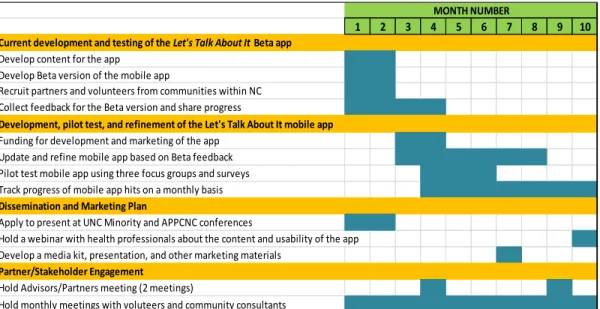
The critical steps to achieving our goals are indicated in the timeline in Figure 6, and specific
tasks are defined by the detailed Work Breakdown Structure provided in Appendix C. Achieving the set
goals per the designed months indicated in Figure 6 will position this stage of the project for a timely
completion. Current beta development and testing phase, which overlaps with the planning period for
the official implementation starting in January, is also included in the WBS and timeline. This flexible
planning structure is an agile project management approach, typically used in creating innovative
products to ensure structure does not hinder creativity (Wysocki, 2009, p.310). The WBS will be
updated on a weekly basis to provide a snapshot of the project’s progress in regards to the schedule and
work completed and will also serve as a guide for the team, partners, and stakeholders.
Figure 6: Let’s Talk About It Implementation and Dissemination Timeline
1 2 3 4 5 6 7 8 9 10
Current development and testing of the Let's Talk About It Beta app
Develop content for the app Develop Beta version of the mobile app
Recruit partners and volunteers from communities within NC Collect feedback for the Beta version and share progress
Development, pilot test, and refinement of the Let's Talk About It mobile app
Funding for development and marketing of the app Update and refine mobile app based on Beta feedback Pilot test mobile app using three focus groups and surveys Track progress of mobile app hits on a monthly basis
Dissemination and Marketing Plan
Apply to present at UNC Minority and APPCNC conferences
Hold a webinar with health professionals about the content and usability of the app Develop a media kit, presentation, and other marketing materials
Partner/Stakeholder Engagement
Hold Advisors/Partners meeting (2 meetings)
Hold monthly meetings with voluteers and community consultants
25
Scope and Objectives
For this project, specifically the implementation and dissemination plan of the Let’s Talk About It
mobile app, the aim is to develop the app and pilot test its effectiveness in assisting teenagers with
selecting pregnancy prevention resources in their communities. A secondary goal is to educate the
teenagers about birth control and STIs to increase self-efficacy for safe-sex practices among teenagers,
thus reducing the number of pregnancies and STI incidence within this population. One way to ensure
these goals are achieved is by setting SMART (Specific, Measurable, Achievable, Realistic, and Timely)
objectives and measuring performance (CDC, n.d.).
The SMART objectives for Let’s Talk About It are:
1) Present the mobile app to at least 200 public health professionals and teen health educators across North Carolina within the first six months of implementation.
2) Achieve at least 5000 mobile app downloads within the first six months of
implementation, an estimate based on the interview with the NYC Department of Public Health. This result would demonstrate that teenagers in North Carolina are interested in
using the mobile app.
3) At least 95% of pilot participants (teen user groups and health providers/educators) will rate the ease and usefulness of the Let’s Talk About It mobile app as very good to excellent within the first six months of implementation. The criteria are based on preliminary satisfaction ratings at the 2013 UNC Science Expo, and it will be collected
through a brief survey to be developed in month 3 of the project. The results would
demonstrate teen interest in using the mobile app and health professionals’ interest in
26
4) The Let’s Talk About It mobile app will be rated at least 4 stars out of 5 in the Apple and Google Play platforms within the first year of implementation. Currently, similar apps are rated from 3 to 4.5 stars (out of 5 possible) indicating medium to high satisfaction with
these apps.
Measurement and Evaluation
Success of implementation will be measured by timely completion of all tasks and activities
using the Work Breakdown Structure (Appendix C) and reaching project goals, including completion of
tasks and indicating if the app meets the needs of the users. Using a free online app developing
software, PhoneGap, we are currently creating a beta version of the mobile app. Because we are
recruiting teen volunteers to work with us, the quality of the beta version will be measured by analyzing
their personal feedback, which will be gathered through surveys about the demo content and features.
Based on this feedback, we plan on working with a developer to build a high functioning mobile app.
Once we have a developed prototype (in month 5), we plan on holding three teen focus groups
to assess the appeal, usability, and usefulness of the mobile app. Focus groups will be used for
gathering teen participants’ insight for further app refinement as they allow for in-depth discussion,
stimulate views within a group context, and require a short period of time for gathering information.
One of the focus groups will be scheduled with the Cabarrus Health Alliance Teen Task Force and the
other two groups will include volunteers from two local high schools, with each group consisting of 8-10
mixed gender participants, ages 15-19. Our team will develop open ended questions for the focus
groups (in month 4). We have submitted this project for review to the UNC IRB and have received
preliminary indication that it will not need approval because we will not be collecting identifiable data
27
Additionally, we plan on including a simple Likert-scale survey after the APPCNC conference in
spring 2014 based on a convenience sample of volunteers to gauge health professional and teen health
educator interest and support for the app. Possible additional measurements in the future include the
number of app downloads, number of “Like/Dislike” ratings for the local resources, and number of
health professional messages sent and received, whose measures depend on privacy and user settings
still to be determined.
Risk Analysis
Several challenges may arise during program planning and implementation that may jeopardize
our efforts. According to program planning theory, these challenges typically include the political
environment, consistency with local, state, and national priorities, acceptability to providers and
recipients, financial resources, and technical feasibility (Issel, 2008). It will be important to analyze the
need for funding to further develop the mobile app, currently estimated at $8000. Previously, we have
discussed using a crowd-sourcing platform, such as Kickstarter (see Appendix B), to raise funds for a
professional developer, but recently we were advised to apply for grant funding through partners and
keep Kickstarter as a backup.
In addition to financial challenges, the student-based nature of the team presents a risk of staff
turnover due to graduation, employment, or moving away. Because one of our team members already
dropped out, the remaining two members have discussed commitment to the project for the next year
and the possibility of expanding the team for the purpose of alleviating the time constraints of each
member. Additionally, as we work with local partners to deliver comprehensive teen health
information, we may encounter organizations that do not agree with our project or are not willing to
share resources with our team. For example, in the case that we are unable to collaborate with the
28
keeping a back-up log of interested teen health providers at local health departments and schools who
may be able to volunteer as a response team. Another innovative option, recommended to our team by
social marketing expert Mike Newton-Ward, is contacting teen health providers who are active in social
media (i.e. Twitter, Facebook) about involvement with the Ask Bee feature of the app.
The team will additionally need to examine the acceptability of the mobile app to the
participants, stakeholders, and the North Carolina community through focus groups and surveys and
ensure their needs are appropriately met. Incentives should be considered during the pilot program as
they are typically successful in securing participation of a target population. Currently, our team has
contact with the Cabarrus Health Alliance, who is willing to provide an incentive to their Teen Task Force
to participate in the Let’s Talk About It focus group in February. Positive social marketing can be helpful
in presenting the mobile app as a resource tool in addition to parental, health provider, and teacher
guidance. This may also help mitigate potential backlash from religious or socially conservative groups
who feel abstinence is the only approach to decreasing teen pregnancy. For this reason, our team has
decided to include abstinence in our educational features and set a Terms of Use policy that reflects the
absence of involvement by politically motivated organizations.
Furthermore, despite receiving positive feedback during phase one of the project, it is possible
that our team may encounter negative feedback during phase two. If any negative feedback relates to
the features and functions of the mobile app, our team is open to further quality improvement of the
content and features, which may extend the official launch date by a few months. We would also take
into consideration any constructive criticism regarding the necessity and usability of the mobile app in
North Carolina, despite the positive feedback and growth in development of similar apps across the
29
Finally, unforeseen circumstances or opportunities may challenge the timely development and
implementation of the app. For example, as mobile apps are becoming more popular (two similar apps
launched in October 2013), new apps could be in the developing stages here in North Carolina. For this
reason, our team intends to maintain a conversation with partners to avoid overlapping projects and
begin piloting the Let’s Talk About It beta version by the end of the year. On the other hand, an
opportunity may arise to expand the project to neighboring states prior to the official launch of the
Let’s Talk About It app. Through agile project management, our team remains open to adjustments to
our timeline if it provides for a better product and better teen health outcomes. Furthermore, we will
continue to discuss risk management strategies and contingency plans at our monthly meetings.
Logic Model
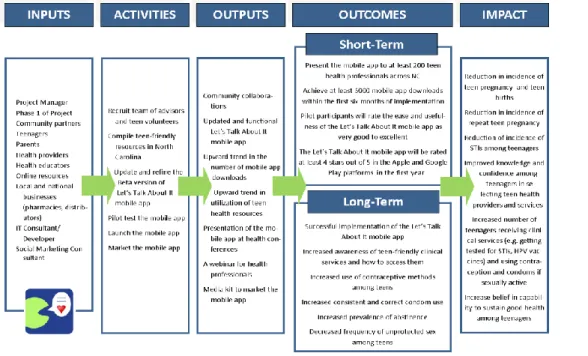
A logic model provides an overview of inputs, activities, and outputs of the project and provides
a supplemental guide to the workplan (Work Breakdown Structure) and timeline for developing a
realistic budget and implementation plan (CDC, 2008). A logic model can also be a useful tool in grant
proposals as they give an overview of the program and its short-term and long-term objectives (Issel,
2008, p.178, 278). Our logic model for implementation of the mobile app, shown in Figure 7, illustrates
the causal relationship between different phases and activities of the project. It highlights the inputs or
essential resources needed for activities to occur, including staff and community resource investments.
The activities reflect the critical steps of the project necessary to produce outputs, which are main
targets delivered by the mobile app and our team. The short-term and long-term outcomes state our
goals for the project, which are expected to contribute to a larger impact. The planned items (inputs,
activities, and outputs) of the logic model are essential to achieving results and should be monitored
30
Figure 7: Logic Model for Implementation of the Let’s Talk About It mobile app for teens
Partners and Stakeholders Register
The partner and stakeholder register is a project management tool that lists the internal and
external individuals, groups, and organizations that can influence the success of the project in a positive
or a negative manner. It can be used as a checklist for contacting stakeholders for input and gauging
their continuous interest in project activities, as well as used to develop our communication strategy
and responsibilities (Evarts, 2013).
The register in Figure 8 identifies the stakeholders involved in the Let’s Talk About It mobile app
development, the level of impact they have in the project, the deliverables they are accountable for, and
strategies for ongoing meetings and communication. We used the categorization assessment of
stakeholders – responsible, accountable, consulted, and informed (RACI) – to identify project impact
(Suchan, n.d.). Suchan explains that, in RACI, ‘responsible’ refers to an individual or group responsible
31
completed, ‘consulted’ is a person or a group who is consulted about the task but not charged with
completing it, and ‘informed’ is a person or a group who is kept informed about the project but typically
has no responsibility. In order to maintain an overview of the parties directly and indirectly involved
and/or impacted by the project, the project manager will update the stakeholder register as new
stakeholders become involved in the project or their level of project impact of changes.
Figure 8: Stakeholder Register
Stakeholder Name Project Impact Information and Deliverables
Strategies to Communicate and Gain Support
Project Team
* Zinaida Mahmutefendic * Tobias McNulty
Consulted, Informed, Accountable, Responsible Discuss and ensure completion of tasks Develop mobile app
Ongoing Monthly in-person meetings, email and/or Google Docs
Partner
Organizations and Consultants
* APPCNC * DPH Women’s Health Branch * Cabarrus Health Alliance
* Mike Newton-Ward * TBD Consulted, Informed Request for collaboration Discuss content for mobile app Test beta version of mobile app
2 times in 2014
In-person meetings (January and June 2014), email, website
Health Providers
* Local Health Departments * Primary Care Providers * Teen Clinics
Consulted, Informed
Final project description
Ongoing Conference presentations (February and May 2014), webinar, email, website
Volunteers * Teenagers * Public health students and professionals Consulted, Informed, Responsible Test beta version of mobile app Discuss content for mobile app Every 2 weeks
In-person meetings (TBD), email
Parents Informed Visual
prototype of mobile app
32
Stakeholder Name Project Impact Information and Deliverables
Strategies to Communicate and Gain Support
Teenagers ages 15-19
* Teen Task Force * High school focus groups TBD
Consulted, Informed
Visual prototype of mobile app
Discuss content for mobile app
Ongoing Website, mobile app store, focus group, school, health provider
Launch and Social Marketing
I have met with Mike Newton-Ward, a social marketing professor at UNC Chapel Hill, to discuss
making the app appealing to the target audience and stakeholders. In order to successfully launch and
market the mobile app, our team will consider the four Ps of social marketing: product, price, place, and
promotion as we develop a product that influences teen behavior (Lee and Kotler, 2011). Health
promotion is typically successful if it integrates all 4Ps.
Product includes the core product and all the benefits that the target audience (teenagers) will
achieve by performing a certain behavior. In our case, the benefits of using the mobile app include
knowledge about local resources, privacy, convenience, and sexual self-efficacy. For example, if a
teenager has a question that they are too embarrassed to ask their parents or friends, they can privately
and with minimal effort ask a health professional for advice using their mobile phone.
Price refers to the costs (monetary and non-monetary) that the target audience pays for
adopting a certain behavior. There are no monetary fees associated with using the app; however,
teenagers must have a smart-phone and take the time to download the Let’s Talk About It app in order
to use its services. We discussed possible incentives, such as downloadable coupons for free condoms,
33
Place refers to “when and where” the target audience will be encouraged to perform a certain
behavior or acquire a tangible service. For example, teens may not be going for regular health
check-ups because they are not aware of teen-friendly places or do not obtain preventative supplies because
they had a bad experience buying condoms in the past. The app will not only show them locations of all
available clinics or pharmacies nearby, but also whether it has teen-friendly staff based on peer
feedback.
Finally, a promotion strategy helps maximize communication efforts using key messages and
various communication channels, and we plan on using social media and events to promote the mobile
app (Lee and Kotler, 2011). Bottom line, the mobile app product is a convenient resource, and the less
young people need to go out of their way to make a change, the more likely they are to make it.
Scale-Up and Sustainability Plan
In order to ensure that the information provided in the mobile app remains up to date and
relevant throughout the state of North Carolina, our goal is to plan for the future housing of the mobile
app within one of the state organizations. Sustainability will be a topic at both advisor/partner meetings
in 2014 to gauge interest of partnering organizations in housing the mobile app post-implementation.
Additionally, the sustainability plan logistics will depend not only on the implementation partners, but
also potential funders for development and marketing of the app. Other resources for sustainability
include tech support and time health educators and providers spend responding to texts. General tech
support can be obtained on an as-needed basis from our Information Technology staff or that of our
partner organizations, or from other external resources, such as tech savvy volunteers or local schools
and libraries. Sustainability of the “ask a health professional” feature can be ensured through innovative
means of delivering information instantly, such as social networking (Twitter, Facebook) as many health
34
While our team is open to scaling up nationally once we have evidence in terms of feedback,
outcomes, and effectiveness of the app at the state level, a scale-up plan has not yet been developed.
In order to expand the health clinic/pharmacy locator nationally, our team will require a way to identify
and locate teen health resources across the country, as these resources are not compiled within a
national directory or easily searchable on existing mapping platforms (Google Maps, iMaps). Currently,
we are working only with North Carolina partners to compile relevant resources for teenagers.
Conclusion
There are many promising teen pregnancy and STI prevention interventions; however, there is
room to explore new opportunities using mobile technology as it becomes more widely used among
teenagers. Mobile app developers must be in tune with the latest evidence-based intervention
research, health behavior theories, and needs of their target audience in order to create a successful
product and improve teen health outcomes. Furthermore, mobile apps are a convenient method of
developing two-way communication between teens and health professionals. This document contains
information that will be useful in developing funding proposals and charters, but can also serve as an
35
APPENDIX
APPENDIX A: 2013 UNC Science Expo Surveys and Results
TEEN SURVEY
Age: ___
1. The content of the app is relevant to me. ○ Strongly Agree
○ Agree
○ Neither agree nor disagree ○ Disagree
○ Strongly Disagree
2. I would use an app about pregnancy prevention and STD protection. ○ Strongly Agree
○ Agree
○ Neither agree nor disagree ○ Disagree
○ Strongly Disagree
3. Comments/Suggestions
PARENT SURVEY
1. The content of the app is appropriate for teenagers. ○ Strongly Agree
○ Agree
○ Neither agree nor disagree ○ Disagree
○ Strongly Disagree
2. I would want my child to have access to an app about pregnancy prevention and STD protection. ○ Strongly Agree
○ Agree
○ Neither agree nor disagree ○ Disagree
○ Strongly Disagree
36
TEEN SURVEY RESULTS (April 2013)
• 16 surveys completed
• 8 male (14-17 yrs), 5 female (13-17 yrs), 1 unknown, 2 outside age range (11 yrs and 21 yrs)
• Male: Strongly agree/agree
“Cool”
“Give honest uncensored answers”
“Seems useful, don’t know how you would spread awareness or how many people would download”
• Female: Strongly agree/agree
“Love this idea! So cool! I would tell all my friends!”
“Not too many games, seems less mature”
“Not from NC, live in VA”
• Unknown: Strongly agree
PARENT SURVEY RESULTS (April 2013)
• 23 surveys completed, have teenage or pre-teen children
• 14 Strongly Agree, 8 Agree or both
“Good presentation, very much needed for the teens! Thanks”
“Interested to see it launch!”
“I like your app picture, very discrete”
“Sometimes kids pay more attention to a trusted source than they do to their parents.”
“Where do I give money?”
• 1 Neither Agree nor disagree
“Well, it’s up to parents to teach their kids”
Other comments collected by team:
– Surprised many apps don’t exist for this already
– Could serve as an example for other states
37
– Health providers enthusiastic about the chat option
– There are many teens without a smartphone
– Surprised by NC statistics, particularly the low number of Planned Parenthood locations in our state
APPENDIX B: Content Resources
Local and State Resources
Adolescent Pregnancy Prevention Campaign of North Carolina (APPCNC) http://www.appcnc.org/
A local organization working to help communities prevent adolescent pregnancy through a combination of advocacy, collaboration, and education.
BrdsNBz Text Message Line (66746)
http://www.appcnc.org/projects-services/brdsnbz-text-message-warm-line
The BrdsNBz Text Message Warm Line provides confidential, factually accurate answers to sexual health questions via text message. A young person simply texts a question, and a trained health educator responds within 24 hours.
Division of Public Health Women’s Health Branch http://whb.ncpublichealth.com/services.htm
Teen Pregnancy Prevention Initiative (TPPI) within the Women’s Health Branch funds communities across North Carolina to implement programs that prevent teen pregnancy and support teen parents.
Planned Parenthood of North Carolina
http://www.plannedparenthood.org/centralnc/
Planned Parenthood of Central North Carolina provides education programs, health care, and advocacy to help reduce unintended pregnancy and sexually transmitted infections, especially among teens, people with limited incomes, and the uninsured.
Gaston County Youth Connected Program http://gastonyouthconnected.org/
A Gaston County organization dedicated to reducing Gaston County’s teen pregnancy rate by 10% by 2015 and developing infrastructures in the community that can support evidence-based pregnancy prevention strategies, including program services for youth that are integrated with clinical services for youth.
National and Online Resources Bedsider: http://bedsider.org
38
YTH: http://yth.org/#projects
Website about new ways to advance the health of youth and young adults through technology.
Kids Health: http://kidshealth.org/teen/sexual_health/
Website for adolescent health information
The Playbook: http://theplaybook.org
A social marketing campaign targeting sexually active older teenagers (ages 18-19).
Sex, Etc. http://sexetc.org/
Sexetc.org has comprehensive sex education information online.
England free condom finder app: http://www.bbc.co.uk/news/uk-england-kent-16567855
Mobile app idea from the United Kingdom.
Planned Parenthood Live Chat for teenagers: http://www.plannedparenthood.org/info-for-teens/ An online chat service for teenagers about sexual health.
Condom delivery service: http://news.discovery.com/tech/apps/sos-condom-app-delivers-great-package-130201.htm
Tech soup: http://www.techsoup.org
Resource for non-profits, but there is some good information relevant to our mobile app development.
Kickstarter: http://www.kickstarter.com/hello?ref=nav A crowd-funding platform for innovative projects.
Other health website links targeting teenagers: http://www.commonsensemedia.org/website-lists/health-websites-for-kids-and-teens
APPENDIX C: Work Breakdown Structure
WORK BREAKDOWN STRUCTURE (through December 2013) TIME TO COMPLETE
Develop content for app October-November 2013 18days
Research available resources online COMPLETE -
Recruit local teen volunteers IN PROGRESS 5days
Recruit local partners to serve as Advisors IN PROGRESS 3days
Work with partners and volunteers to identify resources October-November 2013 10days
Develop beta mobile app October-November 2013 10days
Download PhoneGap COMPLETE -
Learn PhoneGap COMPLETE -
Create beta version of mobile app IN PROGRESS 10days
Administrative Deadlines November-December 2013 9days
Let’s Talk About It Master's Paper Draft (planning period) COMPLETE -
39
Apply for Minority Conference poster (TBD) TBD 2days
Apply for APPCNC Conference (due 11/25/13) November 25, 2013 2days
Present and test beta mobile app October 2013-January 2014 16days
Update website and buy domain IN PROGRESS 2days
Review beta app with local teen volunteers November-December 2013 10days
Compile suggestions for updates and implementation November-December 2013 2days
Plan to present to the Advisory Partners December 2013 2days
WORK BREAKDOWN STRUCTURE (Dec 2013 – July 2014) TIME TO COMPLETE
Funding for development and marketing plan December 2013-January 2014 15days
Find funding opportunities December 2013-January 2014 3days
Create marketing plan January 2014 3days
Create budget January 2014 2days
Write proposal for funding January 2014 5days
Apply for funding January 2014 2days
Update and refine mobile app December 2013-May 2014 26days
Recruit developer December 2013-January 2014 2days
Work with partners and volunteers to develop resources January 2014-May 2014 5days
Work with partners and volunteers to test and adapt resources January 2014-May 2014 5days
Compile contacts for all LHDs regarding teen health December 2013-January 2014 2days
Contact LHDs about teen-friendly resources in their area February 2014 2days
Update content and refine the app based on feedback January-February 2014 10days
Measurement & Evaluation Plan January-March 2014 14days
Develop plan for tracking website hits, app downloads January 2014 3days
Develop focus group questions January-February 2014 3days
Recruit two additional test sites January 2014 5days
CHA Teen Task Force focus group February 2014 1day
Hold Focus Group 2 March 2014 1day
Hold Focus Group 3 March 2014 1day
Disseminate mobile app February-July 2014 32days
Work with partners and volunteers to market the app May-July 2014 5days
Update website and plan future updates April 2014 3days
Create a media kit April 2014 8days
Create presentation and handout April 2014 8days
Present product at UNC Minority Conference (poster) February 2014 1day
Present product at APPCNC conference May 2014 1day
Work with partners on sustainability plan June 2014 5days
Hold a webinar for health professionals and educators July 2014 1day
Meeting Grid
TIME TO COMPLETE
Let's Talk About It Team Meetings Zinaida, Toby 1 hour (monthly)
Advisors/Partners meetings Zinaida, Mike, APPCNC, DPH, TBA JANUARY and JUNE 2014
Social marketing meetings Zinaida, Mike 1 hour (monthly)
Volunteers Zinaida, Volunteers 1 hour (bi-weekly at first, then
monthly)
IT consult meetings Zinaida, Toby, TBA 1 hour (weekly during phase)