Relegitimization in Contemporary Russia: Putin’s PR Project
By Temitope Elutilo-Ayoola
A Thesis submitted to the faculty of the University of North Carolina in partial fulfillment of the require- ments of a degree with Honors in Political Science.
2015
Approved by:
_________________________________ Adviser
_________________________________
Acknowledgements
I cannot express enough thanks to Professor Graeme Robertson for guiding me through this process and being so patient with me. This journey undoubtedly had its ups and downs and you always offered a kind perspective in periods of doubt. With sincere gratitude, I thank you for all of the illuminating views on a number of issues related to this project.
I would also like to thank Professor David Pike whose enthusiasm for Soviet and Russian history sparked my own enthusiasm and pivoted my attention towards the far Eastern shores of Europe. The works of this thesis was greatly inspired by your German 255 class and the intriguing dynamic of the Russian political system. I am grateful for the wonderful insight and invaluable constructive criticism that you are always willing to share.
Table of Contents
Chapter 1: Introduction
4
Definition of Terms
7
Brief Historical Context
10
Chapter 2: Popular Mobilization Under Authoritarianism
14
Legitimacy
14
Russian Nationalism
18
Popular Support for Undemocratic Regimes
20
The Chinese Model
20
Chapter 3: Theory
26
Legitimacy Enhancement Strategies in Putin’s Russia
29
Chapter 4: Testing the Theory
37
Methodology
38
Data
41
Data Analysis and Discussion
44
Chapter 5: Conclusion
51
Limits of Research Study and Future Research
54
Appendix
55
References
65
Chapter 1: Introduction
The results of the December 2011 Russian parliamentary elections, which reinstated the incumbent United Russia Party, catalyzed the gathering of tens of thousands of Russians who denied the election results and accused the government of corrupt vote-rigging practices. These protests were further mobilized by the March 2012 election, which re-elected Vladimir Putin for his third presidential term. Individuals filled the streets in discontent as they accused the Russian government of corruption in addition to expressing many other grievances that they had.
support against the backdrop of a failing economy and continued authoritarian government practices. How exactly has Putin been able to restore and maintain his legitimacy in the eyes of the Russian people as many of the protester's original grievances continue to remain unresolved? This is the political phenomenon that motivates this thesis and the purpose of this study is to present a plausible theory that aims to explain Putin’s ability to recover and successfully secure his legitimacy.
and continuous authoritarian controls. The manipulation of nationalist identity politics and political culture work to his advantage to convince the public of why he is fit to lead Russia as a nation-state.
In this thesis, empirical methods will be employed and Russia will be used as a case study in order to understand the theoretical basis for how a semi-authoritarian government can restore and maintain legitimacy when its rule is under scrutiny. The research question that I just presented is important because the concept of legitimacy can be used as a socio-political contract that binds political and social systems. Understanding the case of Russia as a political
phenomenon will provide insight on legitimization techniques that can be employed when positions of authority are under threat in order to restore the socio-political contract that grants the right to rule. This study is significant because it contributes to ongoing discourse regarding methods of legitimization and is relevant to current events occurring in Russia today. This study is likely to appeal to scholars interested in understanding the mystique regarding Putin’s
consolidation of power. This study can also potentially interest those who participated in the 2011-2012 anti-Putin protest movement and increase their consciousness regarding the current source of Putin’s support base in order to form a stronger oppositional front in the future.
will present a theory that aims to explain how Putin has been able to restore and maintain his legitimacy in his third presidential term. Afterwards, strategies employed by Putin to enhance his legitimacy will undergo a brief analysis in order to examine how they are rooted in nationalist ideology and Russian traditionalism. Then, I will describe the methods employed in this study and then presents the results of my empirical analysis. Finally, I will conclude with statements on these results and comment on projections for future research in relation to this study.
Definition of Terms:
In order to understand the framework in which I will be conducting my research, I must explain certain key concepts. I shall begin by trying to define legitimacy as it pertains to this study. The concept of legitimacy crosses several disciplines such as psychology, sociology and political science.1 Due to the numerous applications of this term, I will use a definition
presented by Mark Suchman in his journal article, “Managing Legitimacy: Strategic and Institutional Approaches.” According to Suchman, “Legitimacy is a generalized perception or assumption that the actions of an entity are desirable, proper, or appropriate within some socially constructed system of norms, values, beliefs and definitions.”2 In other words an entity is
considered legitimate as long as his or her actions are in accord with the preferences of the subjects under his or her rule. Legitimacy is important because trying to govern a society based upon the possession of power alone requires enormous expenditures of resources to coerce individuals to producing desired behavior.3 Therefore, it works to the benefit of an authoritative
1 Wiechnik, Stan. “Political Legitimacy and Values.” (
Small Wars Journal (2013)) 1.
2Wiechnik 574.
3 Tyler, Tom R. “Psychological Perspectives on Legitimacy and Legitimation.”
figure to cultivate a belief in his or her legitimacy in order to secure desired behavior through the willing consent of constituents.4 Despite the fact that many scholars remain divided upon the sources of legitimacy, this study will focus on the following two sources exclusively:
performance and value-based legitimacy.
Performance legitimacy is self-explanatory in the sense that this form of legitimacy is derived from the government’s performance and ability to improve the quality of life of its citizens. Subjects determine whether or not the government is credible based upon their assessment of the government’s actions in this regard. On the other hand, value-based
legitimacy is a form of legitimacy that is not directly derived from government performance but is instead rooted in government appeals to certain internalized values. Value-based legitimacy therefore is derived from appealing to some commonly held value systems of the population concerning the normative appropriateness of government official behavior.5 These appeals foster the perception that government behavior is valid because its actions seem to be in accord with citizen preferences. Therefore, nationalism and other sources of Russian pride such as
traditionalism, shall be examined as sources of value-based legitimacy within the context of this study.
Why Nationalism and Russian Traditionalism?
Nationalism and Russian traditionalism have legitimating effects because they help create a consensus between rulers and members of the nation on mutual aspirations and obligations.6 These two concepts bind the state and society in a collective consciousness based on a sense of
4 Tyler 377.
5 Levi, Margaret, and Audrey Sacks. “Legitimating Beliefs: Sources and Indicators.”
Regulation & Governance (2009) 354.
6 Tuminez, Astrid S.
political loyalty to the nation-state and cultural belonging to that community.7 Therefore, Putin can appeal to the population with actions that cultivate a sense of pride in being part of the Russian nation.
It is also important for me to state the degree of inclusion implied when I use the term “nationalism” because I am aware that it can take either a civic or ethnic form.8 Within the context of this study, the term “nationalism” implies the civic and more inclusive form due to the fact that Putin has acknowledged how an overtly exclusive form of nationalism could pose a danger to Russia’s fragile multiethnic social fabric.9
Also, for the sake of simplicity in the remainder of this thesis, the term “nationalism” will also imply Russian traditionalism. This is because nationalism is a discourse of political culture that can also draw from elements of national history and tradition.10 National identity is
embedded in the nation’s common historical past and the incumbent regime can appeal to a collective historical memory, which can then be exploited and manipulated to the government’s advantage.11 This allows political mobilization around the creation of a commemorative
discourse of a national history mythologized by the incumbent regime to legitimize the nationalistic aspiration for a shared destiny on the basis of the common past.12 More
specifically, exhibiting a commitment to restoring Russia as the powerful force that it once was, especially on the international stage is a nationalist aspiration that has much appeal to the
7 Liao, Ning. “Bringing Ideology Back In: Chinese Nationalism Contextualized in the Legitimacy Enhancement of
an Authoritarian Regime.” 357.
8 Laruelle, Marlene.
Russian Nationalism and the National Reassertion of Russia. [(S.l.]: Routledge, 2009) 3.
9 Sakwa, Richard.
Putin Redux: Power and Contradiction in Contemporary Russia. Abingdon, Oxon ; (Burlington, VT: Routledge, 2014) 200.
10Liao 357. 11
Liao 358.
12
Russian population.13 The government’s ability to pursue society’s nationalist passions arouses an affectionate feeling within the populace toward the regime and this can help the government overcome challenges to its legitimacy. It is also important for me to note that this work
acknowledges the fact that there isn’t always unity in the phenomenon of nationalism but recognizes its ability to establish unity in its constructed nature.14
Brief Historical Context:
This brief historical examination of Vladimir Putin’s tenure as president will explain the circumstances behind his rise to power and also enables one to distinguish historical continuities and discontinuities in current Russian policy.
In the wake of the collapse of the Soviet Union, Russia had defaulted on its debt, salaries for public sector workers and pensions were being paid months late, and basic infrastructure was
collapsing.15 Russia’s economy had declined by 40 percent during the early part of the 1990’s
and had suffered financial collapse by 1998.16 As a result, Putin’s main domestic policy
initiative in his first presidential term was to restore economic stability in Russia by
implementing economic reforms policies meant to reduce inflation and help the economy.17 Not
too long after he began his presidency, there were unprecedented universal price hikes in oil and gas.18 Russia was a major exporter of these strategic commodities, and these price hikes greatly helped to sustain its economic recovery.19 At the beginning of 2007, Russia’s gross domestic
13
Liao 361.
14
Laruelle 3.
15 Bullough, Oliver. “Vladimir Putin: The Rebuilding of ‘Soviet’ Russia.”
BBC News. N.p., 27 Apr. 2014.
16 Dresen, Joseph. “Petrostate: Putin, Power, and the New Russia.”
Wilon Center. N.p., n.d. Print.
17Dresen 18
Dresen
19
product (GDP) finally returned to the same level as in 1990, the penultimate year of communist power.20 The country had six straight years of growth, averaging 6 percent per year and in addition to the oil and gas influx, there was a strong increase in domestic household
consumptions, complete repayment of public foreign debt, a doubling of spending on education, and a tripling of spending on health over the course of Putin’s first two terms in power.21 The rising oil and gas prices in addition to rising living standards had served as the buttress of Putin’s
popularity during his first two terms from the years 2000 to 2008. Economic success seems to be
one of the main contributors to his popularity because Russia under Putin existed as a restrictive
and controlled democracy but he still managed to remain popular despite these controls. Putin was praised for bringing Russia out of stagnation and into a new era of progress and it was this incredible performance that was the source of his legitimacy during his first two terms. Putin had come to embody Russia’s “recovery” and although he is not solely responsible for the amelioration of the country’s economic situation, he has been able to turn this situation to his advantage in the political realm.22
After his success, Putin was limited to two successive terms by the Russian constitution and his nominated successor, Medvedev, was elected while Putin took the position of Prime Minister in 2008.23 Putin and the United Russia Party had hand-picked and endorsed Dmitry Medvedev, who essentially represented the Putin system while modifying some of its features.24 Medvedev won the presidency with 70.3 percent of the vote, most likely because many saw him
20Laruelle 7. 21
Laruelle 7.
22
Laruelle 7.
23
Sakwa 4.
as a surrogate to Putin.25 The Russian economy took a blow after Medvedev was elected and the citizens of Russia suffered hardships that left the population increasingly dissatisfied. When Putin reassumed the presidential seat in 2012, he was met with disgruntled protesters and although initial reports of the immediate causes of the protests were credited to be cries of fraudulence and falsification of parliamentary elections, many believe that the roots of this protest movement go far deeper.
2011-2012 Protests:
On December 5, 2011, up to 10,000 protesters gathered on Chistoprudny Boulevard in Moscow to condemn fraud in the parliamentary ballot and then it gained pace when 100,000 participated in the December 24th protests also condemning the practices of a “managed democracy.”26 The main slogan was “Russia without Putin” while placards with the words
“Putin is a thief” were also prevalent.27 According to Levada-Center surveys, the protest movement was overwhelmingly young and middle class. Although there was a middle class majority, there were also many students, pensioners, and poverty-stricken individuals that participated in the protests.28
Issues of the socio-political nature were what prompted the fall in popularity of Russia’s leader and public outcry against his rule.29 Even though the immediate reasons for protest were fraudulent vote-counting that ultimately allowed the United Russia party to preserve its majority in the State Duma, the dissatisfaction with the regime was much deeper as protesters raised a
25 Rose, Richard. Popular Support for an Undemocratic Regime: The Changing Views of Russians. Cambridge ;
(New York: Cambridge University Press, 2011) 134.
26 Sakwa 120. 27 Sakwa 120. 28
Sakwa 122.
29 Makarychev, A. S., and André Mommen, eds.
whole gamut of issues that reached far beyond that particular campaign, including demands for greater transparency, accountability, good governance, civil rights, etc.30 These protesters were frustrated with the regime’s structural ineffectiveness in delivering public goods and providing social justice and fair governing practices.31 A lack of trust developed between the ruling elite and the rest of Russian society as a result.32 Makarychev and Mommen also present another theory as to why the protests erupted. They claim that, “the roots of the widespread public discontent date back to September 2011, when at the United Russia party convention Medvedev not only refused to run for his second presidential tenure, but instead proposed this job to Putin in exchange for securing his own appointment as the next prime minister.”33 Makarychev and Mommen argue that despite Medvedev’s reputation as Putin’s marionnette, a significant part of Russian society still perceived him as a moderate alternative to Putin’s hard-line policy of state centralization. Medvedev’s voluntary self-removal from the presidential race symbolized for many the end of their hopes for modernization and for a more liberal political regime in Russia.34 Also, the promises of liberalization of the political system and modernization of the Russian economy that were made during Dmitry Medvedev’s presidency were not fulfilled and many Russians felt deceived when they found out that Putin would be returning to his post as
president.35 Russians were simply angered by the overt manipulation of electoral procedure, as
30
Makarychev and Mommen 1.
31
Makarychev and Mommen 3.
32Makarychev and Mommen 3. 33Makarychev and Mommen 2. 34
Makarychev and Mommen 2.
35 Gel
exemplified by the clandestine agreements between Putin and Medvedev, and by the large scale voter fraud that the government had been condemned for conducting.36
Unlike the Russian street protesters in the 1990’s who protested their inability to feed their families as a result of joblessness, the discontent of the 2011-2012 protests was mostly spread across Russia’s middle class who had a higher degree of education, expectations and demands as to the quality of governance that they sought after.37 Stability and order were the key signifiers in Putin’s lexicon at the beginning of his first presidential term, but now in the absence of economic prosperity, issues concerning the quality of government performance and corruption were finally being raised.38
Gel'man, Travin, and Marganiya argue that these protests also reveal that there was a change in the informal “social contract” between the authorities and society.39 According to these authors, “in previous years, Russian authorities provided Russian citizens with a rise of their well-being and material prosperity in exchange for passive loyalty and non-intervention in politics, in the wake of mass protests this contract was if not broken, then at least put into question.”40 The breakdown of this social contract was due to a shift in public opinion influenced by changing perceptions of socioeconomic problems, predominantly as a consequence of the 2008-2009 crisis and the absence of economic prosperity resulted in disillusionment with government corruption and other abuses of authority.41
This is why I argue that value-based legitimacy was what Putin resorted to in order to repair the damaged social contract and distract the population from persisting domestic issues.
36 Gel
ʹman 2.
37
Makarychev and Mommen 4.
38
Makarychev and Mommen 17.
39Makarychev and Mommen 127. 40
Makarychev and Mommen 127.
41
What follows is a review of existing literature on concepts that will provide the context in which my theoretical analysis will be built upon.
Chapter 2: Popular Mobilization under Authoritarianism
In this section I will analyze what we know about the nature of legitimacy, nationalist mobilization, and popular support for a semi-authoritarian regime. The purpose of this literature review is to present existing theories regarding these concepts from major scholarly works and then relate these theories to my examination of Russia as a case study. The works present within this literature review will provide insight on current on-going conversations concerning themes that are integral to this study. The key findings within the seven works that I will present will then be synthesized in order to draw connections between the various research studies and form the foundation upon which I will be conducting my own research.
Legitimacy
institutions that are in place and therefore view the office holder as having legitimacy because they respect the position that the authority has, but not necessarily because they respect the officeholder himself. Legal authority is not rooted in the individual officeholder but is instead rooted in belief of the legitimacy of the rules and laws that have created the specific position of authority. The second source of legitimacy is traditional authority, which finds the roots of legitimacy in the citizen’s reverence for traditional practices. This type of legitimacy is not rooted in elections, but is often found in hereditary systems of rule that have long existed within a specific society. The officeholder within this system tends to retain legitimacy regardless of the individual’s ability to rule. The final categorization of authority is charismatic authority and is the only categorization that is actually rooted in the characteristics of the individual
officeholder. Instead of a focus on legality or tradition, the ruler’s legitimacy is rooted in the individual’s charisma and appealing personality which is able to win over the citizen’s approval to attain legitimacy. These are the three categorizations that many scholars have used to form the basis of their studies regarding the nature of legitimacy, but David Beetham argues that this approach does not sufficiently portray the multi-faceted nature of legitimacy as a concept.
In his book, The Legitimation of Power, David Beetham responds to the Weberian concept of legitimacy and presents what he believes to be present conceptual fallacies within Weber’s categorical framework of legitimacy. In his book, Beetham acknowledges that although the Weberian conception is accurate to an extent, he argues that Weber fails to acknowledge the multi-dimensional nature of legitimacy.42 Beetham argues that Weber’s threefold typology of legitimate authority has caused social scientists since Weber to force every example of
legitimacy into these 3 categories. He argues that this typology elevates each of the contributory
42 Beetham, David.
elements of legitimacy (sanctity of tradition, rule-conformity, and the charismatic qualities of the individual leader) into a separate self-sufficient type of legitimacy and this fails to recognize that each is just one element of a totality. Beetham proposes an alternative approach to the subject by presenting three conditions that he believes need to be fulfilled in order for a power to be
considered legitimate: 1) its conformity to established rules, 2) the justifiability of the rules by reference to shared beliefs, 3) the express consent, of the subordinate, or of the most significant among them, to the particular relations of power. David Beetham also believes that enhanced order, stability, and effectiveness are better ways to assess legitimacy in comparison to Weber’s reliance upon what the people believe or think about the leader.
Tom Tyler’s article, “Psychological Perspectives On Legitimacy and Legitimation,” also discusses the social elements of legitimacy, but presents a more psychological perspective on the topic. He claims that an individual possesses legitimacy if he or she is capable of making others defer to decisions and rules out of obligation rather than out of fear of punishment or anticipation of reward.43 Although he acknowledges that excessive use of force or coercion can lead others to do what a leader wants, it is far easier to maintain social control if a figurehead actually holds legitimacy. He claims that legitimacy convinces individuals to acquiesce voluntarily due to their sense of obligation, which is most useful in periods of scarcity, crisis, and conflict. Tyler also mentions how social norms and values can become a part of people’s internal motivational systems and guide their behavior.44 As specific social norms and values are internalized, control by others become replaced with self-control as these norms become part of one’s own desires and guide how they behave.45 Tyler’s work reveals a sense of obligation and responsibility that
arises out of the internalization of certain societal norms and values that can be used to the advantage of those in power. This sense of obligation is what he argues is a key element in the concept of legitimacy since it establishes voluntary submissiveness to the directives of
authoritative figureheads.46
Russian Nationalism
Astrid Tuminez’s book, Russian Nationalism Since 1856, is an extensive historical analysis on Russian nationalism as a consolidating tool in Russian political history and how it was employed to mobilize people to action. The book defines nationalism as a political ideology that holds the following beliefs: (1) there exists a nation with identifiable members; (2) the nation, as a collective, has characteristics that make it distinct; (3) the individual and the state’s highest loyalty must be to the nation’s core interests or mission; and (4) the nation is the chief repository of legitimate political authority (2). According to Tuminez, the term “nation” is a concept or category that is used to connote a community of people who share kinship based on race, culture, language, ethnicity, religion, and/ or citizenship.47 She argues that nationalism
implies a consensus between rulers and members of a nation on mutual goals and also plays a key role in binding both the state and society effectively together with a common sense of identity and purpose. Due to the fact that the term “nation” holds a conceptual flexibility, it can be made into a force that allows leaders to use it as a way to evoke ideas that might best serve their aims in a particular political, economic, or cultural context.48 Nationalism’s flexibility also
46 Tyler 378.
47Tuminez, Astrid S. Russian Nationalism since 1856: Ideology and the Making of Foreign Policy. (Lanham, MD:
Rowman & Littlefield, 2000) 2.
allows its content and intensity to change over time and under different political and social circumstances.49 Tuminez notes that “historical experience, ethnic socialization, cultural traditions, and collective memory create a ‘structure of political discourse’ that renders public consciousness more susceptible to some nationalist ideas than others and increases the likelihood that these ideas will shape social attitudes and actions.”50 Nationalism has legitimating effects because it finds its political power within a defined “nation,” and those who claim to represent the nation and defend its alleged interests are likely to strengthen their political appeal, increase their societal support, and secure their power.51
Tuminez also notes that her historical analysis of nationalism shows that it has been a weak and uneven mobilizing force in Russia. According to Tuminez, Russian rulers have never successfully used nationalism as an ideology to bind state and society in a lasting way.
Nationalism’s temporal limits are due to the fact that it eventually becomes more difficult to harness nationalism for the purposes of the political elite because it loses its appeal to the population over time.52 Her analysis of tsarist and Soviet Russian history reveals that when the population was mobilized by nationalism to obey orders of the state, make sacrifices that preserved ruling regimes, and defend the state from external threat, they usually end up on the losing end of the aftermath of nationalist mobilization. Their concerns are ultimately left unaddressed and subordinated to the interests of the ruling elite.53
Popular Support for Undemocratic Regimes
Richard Rose’s book, Popular Support For An Undemocratic Regime, uses Russia as a case study for understanding how undemocratic or semi-democratic regimes have been able to mobilize popular support. They seek to examine how Russians slowly develop support for a regime that they see as incongruent with their preference for a complete democracy. Subjects have various reason as to why they support an undemocratic regime and these reasons include: they have an honest belief that the government is legitimate and/or they have a resigned
acceptance of it as an alternative to chaos because it establishes some form of order. The authors also demonstrate that with the passage of time, performance makes evident how a new regime differs from its predecessor and the longer it remains in place, the greater the likelihood that its subjects will abandon any expectation that it could be replaced. The ability of the current Russian government to overcome the challenges that it encounters over time not only makes it durable but it also weakens the population’s hope for any viable alternatives.54 Developing viable alternatives to Putin in Russia remains an issue because no one alternative is endorsed by a majority and this is prevents the opposition from forming a stable and viable coalition against the semi-democratic Russian government.55
The Chinese Model of Value-based Legitimacy
Anne-Marie Brady’s article, “Mass Persuasion as a Means of Legitimation and China’s Popular Authoritarianism” examines the role of mass persuasion in reclaiming and maintaining political legitimacy using an authoritarian Chinese model. According to Brady, “states
traditionally maintain power by means of either performance-based legitimacy or promulgating ideology. Mass persuasion can be used to both promote a regime’s ideology and persuade the public that it is performing the tasks of government effectively and equitably.”56 She also notes that some governments even use a combination of these two to maintain legitimacy. Brady reveals that the Chinese Communist Party (CCP) has always used mass persuasion as a tool of government, but from 1978 to 1989, CCP rule faced a legitimacy crisis. She notes that many critics believed that this legitimacy crisis was the result of the Mao era reforms that were
enforced and ultimately hindered economic growth. Brady believes that the CCP’s reliance upon economic legitimacy alone was too risky and identified this as the source of the political
instability that had led up to the 1989 student protest movement. In response to the protests, the CCP chose to base its legitimacy on both economic growth and ideological goals that would then be incorporated and perpetuated by methods of mass persuasion. Starting from 1991, patriotism
was a key political ideology that the Party included in its mass persuasion campaigns.57 She also
notes how the party also uses major events such as the Beijing Olympics as a method of “mass
distraction” designed to mobilize the population and distract them from more troubling issues such as inflation, unemployment, political corruption, and environmental degradation. Due to the successful incorporation of ideology into methods of mass persuasion, China continues to be a Party-State rather than a multiparty democracy because the CCP government has succeeded in
56 Brady, Anne-Marie. “Mass Persuasion as a Means of Legitimation and China’s Popular Authoritarianism.”
(American Behavioral Scientist (2009) 434.
its task of persuading the Chinese population that the current political system is the most appropriate one for China today.58
Ning Liao’s paper, “Bringing Ideology Back In: Chinese Nationalism Contextualized in the Legitimacy Enhancement of an Authoritarian Regime,” also discusses how the Chinese Communist Party (CCP) has resorted to using nationalism as an ideological tool for its
legitimacy enhancement. Liao seems to agree with Brady and believes that regime legitimacy based solely on economic performance is imperfect and needs to be integrated with elements of ideology in order to restore order and achieve the population’s validation of authority. The CCP utilizes nationalist discourse to portray the party’s commitment to the Chinese population’s interests by exploiting elements present within Chinese culture. According to Liao, a conceptual fallacy exists in the common perception that illegitimacy exists in nations where authoritarian governments exist and their only source of survival is coercion and repression. Even
authoritarian regimes and semi-democratic regimes need some degree of popular legitimacy to sustain their rule because control and coercion can only sustain leaders for a limited time, so they ultimately need to ground their claims in some kind of popular support59 Ning Liao argues that any regime that can sustain its rule for a long time has legitimacy as long as the population continues to accept the right of their leaders to rule. The author therefore believes that
nationalism is an effective ideology that can cultivate a sense of political loyalty to the nation-state, cultural belonging to the community, and can be used as an instrument of regime legitimacy enhancement. Within this context Liao presents the concept of “value-based
legitimacy” and how the CCP utilizes this in order to effectively evade the Party’s “performance dilemma.” According to Liao, “Nationalism-a distinctive discourse of political culture that
draws deeply from the well of national history-is thus selected as a strategy alternative to economic performance to legitimize the rule of the authoritarian regime.”
Liao believes that the moderately high level of belief in the CCP’s regime legitimacy in the minds of Chinese citizens today is less a reflection of its policy performance in
socioeconomic areas, but rather reflective of the regime’s success in framing the population’s perceptions within an ideological framework. He claims that, “even though the Chinese people remain discontented with policies implemented by the incumbent authority in certain issue areas, the overall subjective evaluation of the regime constitutes a reliable basis of popular support of the regime’s rule.” Liao argues that while performance-based legitimacy still serves as a rightful source of the regime’s authority, ideology cannot be treated as an insignificant factor in the enhancement of the CCP’s regime legitimacy. Ultimately, Liao believes that nationalism as an official ideology is arguably much more durable than performance-based legitimacy but also acknowledges the limits to its sustainability as regimes become dependent upon international conflicts and/or events to serve as distractions from the government’s performance-based failures (360).
The works that I have presented within this literature review provided the present
ongoing conversations concerning the nature of legitimacy, nationalist mobilization, and popular support for undemocratic regimes. The first five works examined one of these three topics extensively and the final two works analyzed how these three elements interact with one another within the Chinese model. The theories and claims that these works present matter because they form the framework upon which my study will be conducted and help shape my argument.
theory, I do believe that Russia is an exception to one condition that Beetham presents. The case of Russia is unique as it relates to the first condition, which states that an authority needs to conform to established rules in order to be considered legitimate. Although the legitimacy of the ruling elite in Russia is often questioned when incidents of government corruption come to light, the ruling elite somehow still manages to win the expressed consent of constituents after the legitimacy crisis. Beetham’s conditions are correct when these rules are applied to a fully democratic state, but in the case of Russia any many other undemocratic regimes like it, not all of the conditions that he presents apply because many regimes still find ways to garner popular support despite their fallacies. My study is therefore focused on understanding the strategies employed by undemocratic regimes or more specifically Russia in order to retain legitimacy when citizens bring its right to rule into question.
There also seems to be some discord between these authors regarding whether
goods that will improve the constituent's quality of life, in the absence of state performance and fair government procedures, rulers can gain legitimacy by employing ideologies, symbolic scripts, and techniques of mass persuasion that can be utilized to “hoodwink” state subjects into attaining a “false consciousness.”60 Therefore, value-based legitimacy can lead constituents to believe that the government has the right to rule even despite its deficiencies.
My project fits within the context of the works presented here because I am interested in understanding how concepts such as legitimacy, nationalism, and the maintenance of popular support interact through the use of value-based legitimacy within today’s Russia. Many works seem to focus on political and economic performance as the basis of legitimacy, but far fewer works examine how value-based legitimacy is utilized when a leader can no longer rely upon performance legitimacy alone. The Chinese example has demonstrated how value –based legitimacy is a valid and functional source of legitimacy and the works that I have presented have proven its usefulness to be true. Although Tuminez’s work already provides perspective on how nationalist ideology was used in tsarist and Soviet Russian history, my study is unique because it will analyze nationalism as a legitimacy enhancer in today’s Russia. My research is intended to fill the gap that currently exists concerning the significance of value-based
legitimacy and its usefulness in securing popular support in times of poor economic and/or political performance under the rule of a semi-authoritarian regime. My study is therefore meant to bridge the gap in our understanding of the utilization of value-based legitimacy in the absence of government performance through the examination of contemporary Russia as a case study.
60 Hechter, Michael. “Legitimacy in the Modern World.” (
Chapter 3: Theory
Drawing from the behavior predicted by the previous works of literature that I just
presented, this study aims to examine relative events that have occurred in contemporary Russia. More specifically, the main question motivating this study is how exactly has Putin been able to restore and maintain his legitimacy in his third term following the 2011-2012 protests that erupted? My theoretical argument claims that Putin responded to these protests by changing his legitimization strategy from performance to value-based legitimacy and this is what has helped him secure his right to rule. Although there are numerous values that can be associated with value-based legitimacy, for the sake of limiting the scope of this thesis, I will be focusing on nationalist ideology and other extensions of Russian pride such as traditionalism.
relationship that exists between how Putin has been able to re-legitimize himself after accusations of dissatisfactory performance.
In order to test my theory and examine whether or not Putin actually has placed a greater focus on nationalism in his third term compared to his previous two terms, I decided to analyze his State of the Union Addresses to the Federal Assembly. I chose to examine Putin’s speeches because public rhetoric is an excellent method of exerting political influence and these speeches will also allow me to examine if and how Putin’s political discourse has changed since his
comeback. Leaders use rhetoric in their speeches in order to convey certain ideas and form some sort of bond with the population that they are speaking to and these speeches represent just one of many methods that Putin’s utilizes to disseminate certain ideas when considering the
Putin has given in his first term, second term, and thus far in his third term. In order to
determine whether Putin has indeed chosen to use nationalism as part of his new legitimization strategy, I will test the following hypothesis:
Hypothesis 1: Putin’s use of nationalist rhetoric will increase in his third term in
comparison to his previous two terms
Also, in order to have a more comprehensive examination of Putin’s policy agenda and to assess whether or not there has been a shift from performance-based legitimacy to value-based
legitimacy, I shall also test the following hypothesis:
Hypothesis 2: In order to shift the population’s focus and compensate for his performance
deficit, Putin’s references to government economic and liberal democratic performance
would also decrease in his third term.
If an increase in the use of nationalist rhetoric in Putin’s third term were found to be true, then this would serve to support the argument that he has placed a greater emphasis on appealing to the nationalist sentiments of the Russian population in order to restore his legitimacy in his third term after the protests. An increase in the promotion of nationalist ideology will serve to demonstrate how he is using nationalism to distract citizens from the government’s performance deficit and secure his legitimacy.
whether or not Putin has chosen one source of legitimacy over the other as I have hypothesized and also reveal which particular values and areas of performance have mattered the most to him since he has taken office. Before we test the two hypotheses that I have proposed, I will first present a few instances that serve to demonstrate why I have been led to believe that Putin has pursued more aggressive nationalist promotion strategies in his third presidential term.
Legitimacy Enhancement Strategies in Putin’s Russia
What follows is a brief analysis of legitimacy enhancement strategies employed by Putin that seem to be rooted in nationalist ideology and Russian traditionalism. For the purposes of my research, I will demonstrate how appealing to these values serve to exhibit Putin’s intent on promoting citizen interests so that they will support the current political system. I will briefly discuss how Putin controls narratives through state control of the media, how he has developed a strong relationship with the Church (a strong symbol of Russian historical tradition), and I will also discuss his recent initiatives on the international stage that are utilized to mobilize
nationalism and avert attention from current domestic issues.
Control of Media and the Restoration of Putin’s Image:
It would be remiss of me to discuss Putin’s public oratory without discussing his
consolidation of the Russian media and its implications on his ability to rule. Mass media plays a very important role in every political system because it has the power to influence popular opinion concerning political and societal issues.61 The media serves as a political resource that is
vital to successfully perpetuating the ideological values that Putin is trying to appeal to. Ever since Putin first became president, according to Markus Soldner, “there [were] no electronic
media outlets with nationwide significance and politically relevant content that [were] not influenced-either directly or indirectly-by state agents.”62 For example, Pervyi Kanal and Rossiia, which are the two TV channels with the largest audience share, happen to be under firm state control.63 Other channels with relevant political content are also controlled by people and companies loyal to and dependent upon the government.64 Just as the previously mentioned by Anne Brady, “mass persuasion can be used to both promote a regime’s ideology and persuade the public that it is performing the tasks of government effectively and equitably.” State-controlled news narratives not only provides a platform for Putin to disseminate a particular narrative to the Russian public but it also allows a certain level of censorship over issues that the public is aware of. Therefore, the media outlet allows Putin to control the presence of certain “legitimizing” public narratives. Putin holds a monopoly over information in Russia and this can ultimately influence the population’s perceptions about him and his ability to rule. In order for value-based legitimacy to be completely successful, Putin relies upon controlling and limiting free press to advance his arguments for why he is the rightful leader of Russia. Suppressing counterarguments is the only way to ensure that Putin’s appeals to Russian values are not exposed as manipulations of Russian public opinion. Muzzling anti-Putin voices immensely enhances his ability to portray both himself and his actions in a more positive light without the interference of dissenting voices.
62 White, Stephen, ed.
Media, Culture and Society in Putin’s Russia. Basingstoke [England] ; (New York: Palgrave Macmillan, 2008). 168.
63
White 168.
64
Consolidation of the Russian Orthodox Church:
Religious values are an important aspect of Russian historical tradition and it is important for me to describe the role that religion plays in contemporary Russian politics. The Russian Orthodox Church holds a rich place in Russian history and since the beginning of Putin’s presidency in Russia, the lines segregating church and state have become almost
indistinguishable. The church finally made a resurgence with the fall of the Soviet Union following years of repression that began after the Bolshevik Revolution. After the
socioeconomic insecurity of the 1990s drew crowds of Russians back toward the dwindling institution, the Russian Orthodox Church was finally able to reestablish its central role in Russian society and politics.65 Ever since, the Church has enjoyed a growing influence and relevance in Russian culture that hark back to the Russian imperial era.66 Recent polls show that
74% of Russians consider themselves part of the Russian Orthodox Church, so it therefore becomes easy to understand why Putin would want to develop close ties with the church while ruling over an increasingly pious Russian society.67 Recently, Putin seems to be establishing a close relationship between himself and leader of the Russian Orthodox Church, Patriarch Kirill, who in 2012 once called Putin a “miracle from God,” who rectified the “crooked path of
history.”68 Patriarch Kirill’s public glorification of Putin is a symbolic reflection upon imperial Russian tradition in which the state had close ties to the church and power was bestowed by God himself with the support of the church.69 Not only is Putin’s role as the head of the Russian government thus validated by his close relationship to the patriarch but the patriarch also serves
65 Tschudi, Edle Astrup. “Blurred Lines Abound Between Russian Church and State.”
Brown Political Review.
to gain from this relationship because he needs Putin’s support in order to continue exercising his power.70 This collaboration works because both sides have something to gain from this
partnership – legitimacy and political clout.71 In fact, Patriarch Kirill was granted residence in the Kremlin back in 2011, after he supported Vladimir Putin’s bid for a third term in office. This move restores the church to the offices it once occupied before the 1917 revolution.72 These events serve to illustrate the historical ties that the Orthodox Church has to Russian tradition and demonstrate how appeals to popular religious values serve to benefit Putin and secure his support base.
Strategies on the International Stage:
Internationally, Putin has sought to reestablish Russia as a major player in foreign affairs and what follows is a brief description of key events that I believe have boosted nationalist morale and have helped shape the population’s perceptions about Putin’s ability to effectively
promote national interests in the international arena.
Russia’s Annexation of Crimea and Ukrainian Destabilization:
Putin’s actions regarding the Ukrainian crisis and the Crimean annexation can be seen as attempts to exhibit his dedication to the promotion and protection of Russian interests abroad because Crimea is a region with an ethnic Russian majority, it contains Russia’s Black Sea Fleet military unit, and demonstrates Putin’s recovery of historic Russian territory. The Kremlin’s involvement in the annexation of Crimea ultimately served to create a “rally around the flag”
effect and boost national solidarity. The current destabilization of Ukraine also benefits Putin because, according to Henry Hale, “ [it] nicely fit a narrative Putin has long been weaving that revolutions — and protests that might develop into them — are fraught with the danger of state
failure and territorial dismemberment. These are messages that serve him well at home, at least,
for now.”73 The current situation in Ukraine serves as a warning against any future uprisings that
might occur against his rule at home in Russia.
The current economic situation in Russia as a result of its involvement in Crimea and the Ukraine is dismal at best as Russia deals with fleeing investors, plummeting oil prices, and Western-imposed economic sanctions.74 High levels of inflation in food prices also resulted after Russia banned certain foods from Europe and the U.S. in response to the Western sanctions.75
Even though Putin’s actions in Crimea and the Ukraine have accelerated Russia’s economic
depression and undermines national interests instead of promoting them, Putin’s control of mass
media allows him to reconcile this contradiction by placing the blame for their misfortune on the
West. Instead of taking the blame for the role he has played in the further deterioration of the Russian economy, he has managed to shift the blame onto the West by characterizing their economic sanctions as acts of Western aggression against Russia. Public Western condemnation of Russia’s involvement in Crimea and the Ukraine also serve to support Putin’s argument concerning Western aggression and deflects blame away from Putin.
73 Hale, Henry. “Russian Nationalism and the Logic of the Kremlin’s Actions on Ukraine.”
The Guardian.
74 Radia, Kirit. “Russia’s Currency Tumbles as Investors Panic.”
Sochi Olympics:
The 2014 Winter Sochi Olympics were a convenient international sports event that also boosted nationalist sentiment and portrayed Russia as a great power on the international stage.76 Hosting the Olympics provided an excellent platform to put Russian greatness on display and generate strong national pride. According to Emil& Bo Petersson, “the Sochi Olympics [meant] a renewed chance of displaying vigor and strength, and to project this image internally as well as externally.”77 This sporting event helped revive national pride and stimulated nostalgic
memories of the 1980 Summer Olympics which were held in Moscow at a time when the Soviet Union was at the pinnacle of its power.78 According to Makarychev and Mommen, “The authorities are trying to compensate for the absence of visible social and economic development with spectacular achievements such as the organization of world summits such as sports events like the Sochi Winter Olympics in 2014.79
Syria:
Putin’s capacity to present Russia as a leader in the international arena was also
demonstrated by his actions during the Syrian crisis.80 In response to the Syrian government’s use of chemical weapons against civilians back in 2013, Putin pushed for a diplomatic approach to resolving this issue in order to protect his Syrian ally President Bashar Assad and also thwart
76 Brady 448. 77 Petersson 195. 78 Petersson 23.
U.S. efforts to intervene militarily.81 Ultimately, the parties involved agreed to work towards a diplomatic solution as Putin had originally proposed. This was a massive diplomatic triumph because Putin was able to effectively aid the peaceful dismantling of Syrian chemical weapons while averting Western military assault on the country.82 This international success helped Russia protect its interests in Syria and also assume the role of a global peacemaker by
preventing the further bloodshed in Syria that could have resulted from military intervention.83 According to Richard Sakwa, “His triumph in Syria provided confidence in Putin’s ability to bring Russia as a powerful and influential contender on the international stage and proved his ability to make decisions independent of the U.S. and be successful in pursuing Russian interests without following the lead of the U.S. or being a Western puppet.”84 Putin’s ability to outsmart the West in terms of finding a solution to the Syrian chemical weapons crisis was a monumental feat especially since the U.S. usually assumes the role as international peacemaker. Russia’s ability to act independently of the U.S.’s influence also caters to the notion of Russian exceptionalism and the traditional pursuit of a unique Russian path. According to Putin,
intervention in Ukraine was necessary and legitimate while military intervention in Syria was out of the question.85 These are not issues of principle but rather strategic moves to mobilize the population through the advancement of Russian interests.86 In addition, Russia also thwarted the West by granting asylum to Edward Snowden in the same year as the Syrian crisis. Regardless of whether or not Russia actually extracted information from Snowden, their possession of him
81 Simon, Shuster. “Russia Celebrates a Triumph for Putin After Clinching Syria Deal.”
Time Magazine. N.p., 2014. Print.
symbolizes the acquisition of a resource that could work to the advantage of Russia. Not only did he pull these strategic moves off swiftly but also with a certain finesse that was sure to win over the respect of the Russian population.
In September 2013, after Putin’s triumphs with Syria and Snowden, Putin delivered a speech at the Valdai International Discussion Club, which is an international discussion forum in which leading foreign experts gather to engage in dialogue with Russia’s leaders. The speech that he delivered that year exhibited a reinvigoration of national pride after these international successes.87 Within the speech, Putin emphasized the need of new strategies ‘to preserve our identity in a rapidly changing world and stressed that “the question of finding and strengthening national identity really is fundamental for Russia.”88 Putin argued against copying other
country’s experiences and rejected attempts to “civilize Russia from abroad” and instead stressed that “the desire for independence and sovereignty in spiritual, ideological, and foreign policy spheres is an integral part of our national character.”89 He ended his speech with the argument that after the many tribulations of the post-communist era since 1991, Russia was finally “returning to itself, to its own history.”90 Richard Sakwa characterized this speech as having a traditionalist message while containing a level of conservatism and a developmental strategy that stressed its autonomous values and direction.91 According to Sakwa, “in detail it was
convincing, but when placed in the overall context of the economic and political challenges facing the country, it represented a partial and ineffective model for the future.”92 One important aspect of the speech to note is the fact that it also exhibited the type of nationalism that Putin is
promoting. Putin explains, “Russia was formed specifically as a ethnic and multi-confessional country from its very inception. Nationalists must remember that by calling into question our multi-ethnic character, and exploiting the issue of Russian, Tatar, Caucasian, Siberian, or any other nationalism or separatism, means that we are starting to destroy our genetic code. In effect, we will begin to destroy ourselves. Russia’s sovereignty, independence and territorial integrity are unconditional.”93 This was an attempt to prevent a divisive ethnic form of nationalism from taking hold of the country and disrupting the country’s united front.
Chapter 4: Testing the Theory
Up until this point, I have presented events that have alluded to a more aggressive form of nationalist mobilization in Putin’s third term as a way to re-establish and maintain his legitimacy. This section will now serve the purpose of putting these assumptions to the test. Therefore, I shall be examining Putin’s State of the Union addresses in order to analyze how Putin’s political language has changed over time. Analyzing the content of these speeches will provide insight on what issues and topics are at the top of Putin’s policy agenda and should reveal how the dynamic between value-based appeals and domestic economic and political issues change over the course of his three presidential terms. The content of these speeches will also reveal the topics that Putin aims to focus the public’s attention upon. More importantly, it will allow me to test my theory and determine two things: (1) if nationalist rhetoric has increased in his third term relative to his previous terms and 2) if Putin’s references to government economic and liberal democratic performance truly have decreased in his third term, in order to shift the
population’s focus and compensate for his performance deficit. What follows is a brief
description of the methodology utilized to conduct this study and a presentation of the data that I collected.
Methodology
Content Analysis
Content analysis was the primary method of data collection utilized in this study. My content analysis was directed at eleven of the State of the Union addresses that Putin has delivered between 2000 and 2014 with individual key terms as the unit of analysis. The speeches were coded into a software program called ATLAS.ti 7, which is commonly used for coding and interpreting textual and multimedia data. This software was utilized in order to identify the existence of certain key terms. Computer-assisted content analysis is preferred over manual analysis because computerized programs ensure reliability and replicability. This method also provides a more accurate and unbiased platform in which one can conduct both quantitative and qualitative operations.
I opted to study Putin’s State of the Union addresses primarily because these speeches are directed to a Russian audience. These speeches will provide insight on the appeals that he makes and serve to reveal how Putin’s policy agenda changes over time. Content analysis will allow me to quantify and analyze the presence of certain words and/or concepts in order to make inferences about patterns regarding Putin’s political priorities.94 In order to conduct this content analysis, the speeches were coded into 2 main conceptual categories: 1) Performance and 2)
94 “Content Analysis.”
Values. The key methodological question of this study was determining what terms would be associated with “performance” and what terms would be associated with “values.” I decided to categorize terms that were meant to appeal to Russian tradition and/or boost nationalism as “values”, while terms associated with domestic political and economic performance were categorized under “performance.” The “performance” category had thirteen subcategories such as macroeconomic issues, civil rights, social welfare, law and crime, energy, etc. These
subcategories are meant to reflect typical domestic issues and topics that Putin may address. The “values” subcategories include nationalism and other subcategories that could boost nationalism and traditionalist sentiment such as national security, references to past Russian history, and references to Russian Orthodoxy/spirituality, etc. Although I acknowledge that issues of national security can equally be considered as a performance-related topic, I opted to associate it with nationalist values because issues of national security tend to boost nationalist morale. A
codebook with a full list of terms that projected each of these subcategories was then generated. (The full codebook can be found in the appendix section).
Content analysis can be broken down into two categories: conceptual analysis and relational analysis.95 Content analysis simply establishes the existence and frequency of
concepts most represented by words or phrases in a text, while relational analysis identifies what other words the key terms that I have identified appear next to, in order to determine the different meanings that emerge as a result of these groupings.96 Conceptual analysis simply involves choosing certain concepts for examination by quantifying and tallying its presence, while relational analysis is a more in-depth analysis of the derived meanings of word or phrase
groupings.97 Therefore, it is important for me to note that relational analysis was not utilized in this study for the sake of conducting a more objective and replicable method of analysis.
Coding Procedures: How to determine words to include in codebook
Due to the fact that no relevant dataset had existed prior to this study, I must thoroughly explain all of the coding procedures employed in order to ensure transparency and replicability of this study’s findings. The codebook that can be found in the Appendix was generated using terms extracted from a publicly available dataset, which was derived from the word frequency analysis of U.S. State of the Union addresses dating back to George Washington. This dataset aided in the generation of my codebook because it allowed me to determine topics that are commonly discussed in State of the Union addresses. In addition to this, I also included some terms from The University of Texas at Austin’s Policy Agenda Project codebook (see Appendix) because it also included numerous topics commonly discussed in political speeches. Each of the terms derived from these two sources were then associated with one of the specific subcategories that I previously mentioned.
Coding Procedures: How to code in Atlas.ti 7
The English translations of Putin’s State of the Union addresses were extracted from Putin’s presidential website and were uploaded into Atlas.ti 7. Codes for each category and subcategory were then generated. Afterwards, I randomly selected 3 speeches to read in order to account for certain discrepancies in the way that Putin spells certain terms and the manner that I have spelled them as an American. I noticed that Putin would spell certain words differently
from traditional American spellings, for instance, he used terms such as “labour” instead of “labor”, “rouble” instead of “ruble”, and “defence” instead of “defense” along with a few other noted differences. Therefore, I decided to include both spellings of these words for a more comprehensive study. Then, I input a list of terms to be associated with each subcategory and coded them into the program. For thoroughness, I had the program search for the root words of some terms in order to include all variations of particular words that might have multiple endings. So for example I would input “econom-” as a root word in the program and it would search for words with similar roots such as economy, economic, economies, etc. This makes for a more inclusive analysis of the text. After all speeches had been coded, the accumulated data was then extrapolated onto an Excel spreadsheet in order to analyze the word frequencies related to each category over time. What follows is a presentation of the data that was accumulated.
Data
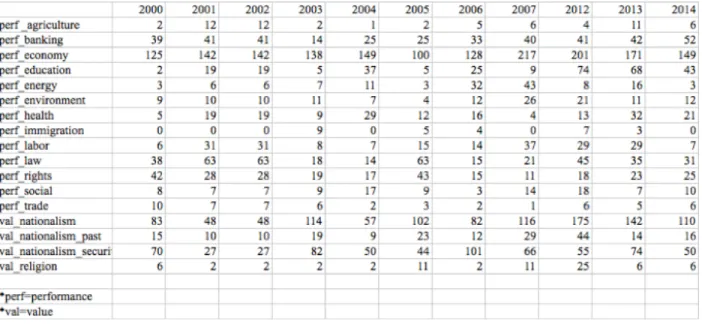
Figure 2: Economic Word Frequency Over Time
Figure 4: Nationalism Word Frequency Over Time
Figure 5: Putin’s Top Three Policy Agendas Over Time
Data Analysis and Discussion
Before data accumulation began, I presented the following two hypotheses:
Hypothesis 1: Putin’s use of nationalist rhetoric will increase in his third term in
comparison to his previous two terms
and
Hypothesis 2: In order to shift the population’s focus and compensate for his performance
deficit, Putin’s references to government economic and liberal
democratic performance would also decrease in his third term.
My findings as demonstrated by figure 4, seem to support hypothesis 1 because they reveal that Putin’s use of nationalist rhetoric actually peaked at the beginning of Putin’s third term in 2012. In addition, Putin’s references to the past and his references to religion also
peaked in 2012 as seen in figure 1. Although nationalism and the other values did increase at the beginning of Putin’s third term as I had predicted, I was surprised to see that they did not remain consistently high in the years that followed. This slight decline may be due to the fact that his dependence upon value-based appeals were no longer as vital to his regime’s survival as they once were back in 2012 when the protests still posed a threat to his rule.
Not all of my findings seemed to support my hypotheses however as demonstrated by figure 2 which shows that Putin’s references to economic performance did not decline in his third term. I expected that he would decrease his references to government economic performance in addition to increasing value-based rhetoric as a way to deflect from his
5 shows how the economy consistently remained a top priority on Putin’s agenda. This serves to indicate that although Putin may have increased his use of value-based rhetoric to help bolster popular support, he also held a consistent interest in discussing the economy. In fact, according to figure 2, the year 2012 was actually an instance in which he had the second highest number of references to economic performance. These findings suggest that although Putin may have tried to compensate for the lack of economic performance with a greater emphasis on nationalist rhetoric, he did not completely deflect from discussing economic issues as I had previously suggested. Although I did not believe that Putin would completely ignore pressing issues such as the dwindling economy, I did expect economic and value-based rhetoric to have a more inversely proportional relationship that would demonstrate his efforts to shift the focus from issues that he has yet to alleviate, to issues in which he seems to be making progress. It is possible that in the absence of a strong economy, Putin resorted to making economic promises and presenting economic initiatives in his speeches as a way to show that he has plans to improve the economic situation in Russia. This reveals that a leader cannot completely deflect from persisting domestic issues but instead has to convince their constituents that they have a plan for change in the future in the absence of good performance in the present. Therefore, Putin’s new legitimization
a change in his legitimization strategy, but was incorrect in determining what exactly this change was.
Interestingly, the results regarding liberal democratic performance were somewhat inconclusive as displayed by figure 3. Similar to my predictions for economic performance, I expected to find a more distinguished decrease in references to establishing a liberal democracy in Putin’s third term as another way to deflect from the issues and refocus the population’s attention on other topics. I cannot draw any clear conclusions regarding whether his references in his third term have increased or decreased relative to his first two terms because the changes are not as drastic as I would have expected, but I will say that relative to the last two speeches that he delivered in his second term, his references to liberal democracy in 2012 seem to have slightly increased. This may be due to the fact that he wants to seem as if he is addressing the grievances of protesters concerning government corruption, administering free and fair elections, and the protection of certain freedoms. This assumption also seems to be supported by the spike in liberal democratic rhetoric evident in the speech that he delivered in 2005 (see figure 3). The fact that this speech was delivered not too long after the beginning of the color revolutions and directly after the Tulip Revolution in Kyrgyzstan, leads me to believe that he sought to address the issue of his government’s democratic deficit in order to prevent a revolution from taking place within Russia. So it is very possible that under the threat of revolution and protests, Putin attempts to portray his government as being more responsive to citizen grievances, even though in reality he has no incentive to make any real changes because the implementation of a true liberal democracy would ultimately only serve to limit his power.