Acknowledgements
I would like to thank my incredible support system who guided me through this yearlong process, including my family, my friends, and my advisors and lab. Thank you to my family, especially to my mother and father, for supporting each and every step as I establish myself in the field of psychology. Even when you were unsure of my future, you were sure that I wanted to forge my own path, and you let me. Thank you to Team Friend for encouraging me with your energy and your perseverance on your own projects, and thank you for allowing me to talk endlessly about the progress I have made with my own. Thank you to my fellow members at the MECCA lab and HGAPS club, both undergraduate and graduate students, former and current, for your constant support and check-ups on my health and on my ventures. A special thanks to Mian-Li Ong and Jacquee Genzlinger for being great mentors from which I have modeled my own leadership. Thank you for standing up for me and teaching me so much. Thank you to Dr. Buzinski who has helped me with my professional development and served on my defense committee. Thank you to the three fellow undergraduates in my lab who also did honors theses; thanks for being my guinea pigs and my moral support. Lastly, I want to thank my advisor, Dr. Youngstrom, for four long years of patience, mentorship, and unforgettable moments. I have appreciated all my time with you and with the lab, and I could not be more grateful. This
Abstract
Diagnosis of mental disorders should be as accurate as possible, particularly for a difficult subject such as depression and bipolar disorder. These mood disorders, the latter in particular, can be suspect to misdiagnosis from a number of reasons, including common comorbidities, symptom presentation during assessment, use of evidence-based practices, cultural differences, and the conceptualization of mental illness by the public and by clinicians. Some research has suggested cognitive biases may occur in clinical settings in a way that can lead to diagnostic inaccuracy, but there is little literature focused on practical applications to offset these heuristics. This study builds on previous research and tests how online tools can be used to improve
diagnosis of mood disorders, particularly across different cultures including the United States and Asia. An online cognitive debiasing video presentation describing common heuristics and practical solutions to offset them was presented to participants in the experimental group, who were hypothesized to diagnose more accurately than the control group. All participants
diagnosed and recommended treatment to short clinical vignettes based on actual cases. This study had several recruitment and retention problems, resulting in a small sample size to extract data from. Preliminary results suggested participants gave overall partially accurate diagnoses and that they learned something new from the debiasing module (M=3.50, SD=0.55). Future studies need to expand recruitment from professional samples, revamp information presentation, expand on implementation research, and prioritize applied practice of intervention techniques to improve diagnosis.
Cognitive Debiasing to Improve Diagnosis of Mood Disorders
Clinical decision making (CDM) is a complicated endeavor with weighty significance as it guides psychological assessment, diagnosis, and treatment. It can be conceptualized as an application of problem solving (Elstein & Schwarz, 2002). The process starts with the health provider proposing a few diagnoses for the client based on presenting symptoms and the provider’s knowledge and expertise. Psychological questionnaires about a client’s symptoms, behavioral observations made by the provider, a parent interview collecting family history, or some combination of these methods would be used for data collection to refute, support, and create new hypotheses. Ideally, health providers would be using multiple information sources and materials that have been supported by research evidence to assess people with mental illness. Use of research-supported tools can be called evidence-based practice (EBP) (Spring, 2007). As the information collected rules out several diagnoses, a final diagnosis is provided. This is the best-case scenario, as the several evidence-based steps ensure thorough data has been provided for an accurate diagnosis and proper treatment recommendations.
Although mood disorders seem to occur in a number of people worldwide, they can be hard to distinguish and thus diagnose. One study found that more than two-thirds of a sample of 600 people with bipolar disorder were misdiagnosed the first time and received an average number of 3.5 other diagnoses beforehand, including depression, anxiety, schizophrenia, and personality disorders (Hirschfeld, Lewis, & Vornik, 2003). Drancourt et al. (2012) found that their participants remember having an average wait time of almost 10 years between initial onset of bipolar symptoms and a mood stabilizer treatment. In between this time, participants were significantly more likely to attempt suicide and have multiple mood episodes. Another study found that clinicians were less likely to diagnose bipolar disorder for a clinical vignette tailored to meet the DSM and ICD criteria for a bipolar disorder when extra information—that they were in a romantic relationship, for example—was provided that could theoretically explain the client’s behavior (Bruchmüller & Meyer, 2009). While this literature suggests that bipolar disorder is being underdiagnosed, the opposite direction can occur as well. One study found that less than half of their participants who reported having bipolar disorder had their diagnosis supported using an evidence-based structured clinical interview (Zimmerman, Ruggero, Chelminski, & Young, 2008). These results demonstrate mishandlings of possible bipolar disorder cases and the need for timelier, more streamlined techniques to improve diagnosis of mood disorders.
determine. For the former, behavioral rating scales may underscore the irregularity of the mood disturbance and highlight unrelated symptoms as the main concern (Lemelin, Hotz, Swensen, & Elmslie, 1994). Irritable mood and rebellious behavior may also be present as a predominant symptom instead of depressed mood, and this can obscure the typical clear sign of depression. For the latter, a full-blown manic episode may not occur in bipolar II disorder—hypomania may result instead. Hypomania is tough to report for the client and for the clinician to detect. People are less likely to come into a clinic reporting problems from hypomania until they have severe problems, and they may fail to report or recognize these symptoms as serious. Clinicians may fail to use evidence-based assessment questionnaires that have specific hypomania subscales, and so they may not pick up this mood problem during an intake interview. If both parties fail to determine hypomania is included in the symptom presentation, a client may be diagnosed with unipolar depression, which is similar in appearance. Indeed, the previous studies mentioned that discussed misdiagnosis of bipolar disorder reported unipolar depression as a very common alternate diagnosis (Bruchmüller & Meyer, 2009; Drancourt et al., 2012; Hirschfeld et al, 2003). Not differentiating bipolar disorder from unipolar depression can be problematic when clients are given treatment options, as some antidepressants may worsen manic symptoms (Phillips and Kupfer, 2013). Lastly, comorbidity with other disorders can occur, with anxiety disorders and ADHD as common secondary diagnoses to depression and bipolar disorders, respectively. These disorders can have symptoms of irritable or depressed mood that are shared with a primary mood disorder Presentation of psychological problems during a clinic visit can overall obscure the picture for an accurate diagnosis to be made.
Rössler (2007) found that its Asian participants were likely to attribute clinically significant symptoms to a temporary and normal response to stress and failed to acknowledge them as a need to seek professional treatment. Other studies have shown people have strong senses of stigma towards people with mental illness, and this stigma can be notably strong from family relatives. These negative feelings towards mental illness may prevent a potential client from reporting symptoms as accurately or completely as possible and ultimately deter future help-seeking behavior because of societal misconceptions. Diagnosis can thus be inaccurate or absent entirely based on how mental illness is seen in the public eye.
impervious to public stigma, especially younger ones with less experience, and this can affect how they interpret client symptoms.
Specific to how clinicians may see mood disorders, Dubicka (2007) found that British clinicians were less likely to diagnose pediatric bipolar disorder than American clinicians, suggesting instead ADHD and pervasive developmental disorders. This discrepancy across countries may be due to a difference in how mental illness is conceptualized in different cultures. Mania in children, for example, is not a widely accepted phenomenon compared to other
disorders in children (Goldstein et al., 2017). The picture suggested by this literature portrays some differences that lead to different diagnoses.
One specific error in clinical decision making involves using cognitive heuristics. Experienced clinicians may also rely on cognitive heuristics to speed up the evaluation of a client, possibly leading to inaccurate assessments (Croskerry, 2002). These errors can attribute to routine practice or oversight. Croskerry detailed several heuristics that can occur in an
emergency room setting, and it is plausible that similar errors can occur across several medical and medical-adjacent fields. For example, the anchoring bias occurs when a clinician bases further testing on a particularly salient symptom in a client’s presentation. A behavioral or cognitive pattern of symptoms may result from that directed testing, guiding the clinician to a specific diagnosis. This decision making can be problematic if there are other symptoms that have been prioritized over that one symptom, and a more accurate diagnosis may be missed as a result. These shortcuts can have a snowballing effect of oversight, leading to a client’s
cognitive heuristics are technically a shortcut, perhaps supplementation of evidence-based practice can create an even springboard for hypothesis testing.
Previous research has suggested effective techniques to combat the cognitive heuristics that may occur in psychological diagnosis. Croskerry (2002) proposed several strategies to offset specific cognitive heuristics. For example, early guessing should be avoided to counter the anchoring bias. These cognitive debiasing practices have also been used in research studies. Jenkins and Youngstrom (2016) showed a presentation that introduced both cognitive heuristics and strategies to offset them before clinicians diagnosed case vignettes. They found that
clinicians who received this presentation made more accurate diagnoses than those who did not, and a moderate effect size was found. Norman and Eva (2009) note in their meta-analysis that effectiveness of these cognitive debiasing strategies are not well-researched, and interventions for health professionals should be focused on application and not just instruction.
Cognitive debiasing techniques such as the ones proposed by Croskerry (2002) and used by Jenkins and Youngstrom (2016) have been limited to the United States. It is unsure if the same methods can be used to improve diagnostic decision making in clinicians outside of the country. This study analyzes how cognitive debiasing strategies can improve clinical decision making in mental health providers in the United States and in Asia. It is hypothesized that presentation of a cognitive debiasing module such as the one used by Jenkins (2016) will improve clinical decision making in clinicians compared to clinicians who do not receive the module. Furthermore, it is hypothesized that the cognitive debiasing module will have a smaller effect size for Asian clinicians because of how mood disorders are conceptualized in Asia, as suggested by Lauber and Rössler (2007).
Participants
Participants were mental health professionals from the United States and East Asia (e.g., South Korea, Taiwan), and included but was not limited to psychologists, psychiatrists, and social workers. Participants also included clinical graduate students and post-baccalaureate students who conduct clinical interviews and assessment. Individuals without doctorate degrees were still involved with clinical interviews and assessment, so they were included because they are also susceptible to similar cognitive heuristics. American clinicians were recruited from professional conferences and seminars, and a study flyer was sent to different regional groups of mental health professionals, located in the northeastern and southeastern United States. Asian clinicians were recruited from online Facebook groups of mental health professionals. These Asian professionals were required to be proficient in English as the materials for this study were not translated into other languages. Both American and Asian clinicians were also recruited via snowball sampling through colleagues. Participants completed an initial intake survey to verify that they met these criteria before completing the full study.
Measures
The demographics survey collected demographic information such as gender, ethnicity, and current region of practice. Participants were asked to summarize their theoretical approach, their current workload focus, and age of clients they worked with. These questions provided an image of participant background and how familiar they were with mood disorders in children and adolescents.
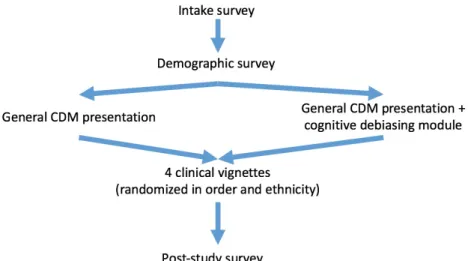
To ensure all participants received some form of helpful information from the study, all participants were shown an online presentation on clinical decision making, specifically
types of mood disorders that exist, and the possible use of evidence-based practice to help with accurate diagnosis. Afterwards, participants in the experimental group were given an extra presentation on cognitive debiasing, while those in the control group moved forward in the study.
The online cognitive debiasing module shown to participants in the experimental group discussed four common heuristics seen in clinical settings. These heuristics were specifically chosen for this study as they are relevant when first reading a vignette or case report presentation of a client’s problems. Search satisficing is an error that leads to a less than thorough search for a diagnosis once the clinician has detected something. Diagnostic momentum results when
clinicians base their diagnoses off previously heard information from informants or other professionals, resulting in a diagnosis without substantial evidence. Anchoring is a heuristic where the clinician fixates on a single symptom early in the decision making process and uses that as the predominant feature in the diagnosis. Race/ethnicity bias is a tendency to diagnose based on the client’s perceived racial or ethnic identity, leading to an inaccurate diagnosis.
The debiasing module contains four remedies specifically counteracting the presented heuristics. First, participants were taught to use alternate search domains and consider other possible diagnoses to negate search satisficing. Next, they learned how to check that the evidence aligns with their proposed diagnosis to overcome diagnostic momentum. Then, they also learned to avoid early guesses to circumvent the anchoring bias. Finally, for race/ethnicity bias,
participants were advised to consider demographic characteristics of the client.
After either version of the module was presented to both groups, four clinical vignettes relating to mood disorders were presented to participants, randomly ordered for each participant. The vignettes are drawn from previous studies and have been reviewed by a board of
vignette specifically addresses cognitive heuristics presented in the debiasing module. Each vignette was also randomly assigned a different ethnicity, white or Asian, for each participant. This specific manipulation examined how a client’s ethnicity may influence the clinician’s decision and represented the race/ethnicity bias.
Vignette 1: Search satisficing - A 7-year-old male with mania and ADHD symptoms
Vignette 2: Diagnostic momentum - 10-year-old male with bipolar symptoms, a moderately high test score on an assessment tool, and a family history of bipolar disorder
Vignette 3: Anchoring - A 16-year-old female with depressive and ADHD symptoms Vignette 4: Classic mania - 11-year-old female with classic manic symptoms
Procedure
Participants began the study survey through a link provided in the study flyer. They completed an intake survey verifying that they met all intake criteria, and then they completed the protocol as a secure Web-based Qualtrics interview. Participants were randomly assigned into the experimental or control group, and Qualtrics randomly assigned white or Asian ethnicities to each vignettes. The demographic part of the survey gathered basic variables and information about credentials and years of experience. Participants were then shown the video presentation previously mentioned, which was a broad overview of mood disorders. The
also select any other diagnoses they ruled out and other diagnoses they were considering. Recommended next steps were selected from a separate menu (Figure 2).
After participants answered all four vignettes, they were asked about the difficulty of the tasks, the confidence they had in their decision making, and how helpful they found the video presentation. These questions were rated from a 0 (strongly disagree) to 5 (strongly agree) Likert scale.
Data analysis
Diagnostic accuracy was evaluated using Cohen’s kappa, sensitivity, specificity, and efficiency (Kraemer, 1992; Youngstrom, 2014). An ordinal “partial credit” scheme was used to examine reasonable alternative diagnoses and “near misses.” In the latter, participants’ additional diagnoses to consider were combined and rated on a Likert scale in terms of diagnostic accuracy. For example, the Joey vignette contains elements of ADHD and bipolar disorder. A participant’s diagnostic selection that indicates both of these disorders is marked as “accurate”, while an answer that only indicates one is marked as “partially accurate.”
A chi-squared test analyzed if there is a significant difference in accuracy between the treatment and control group. Logistic regression tested whether the treatment effect persists after adjusting for covariates such as country of practice, years of experience, and ethnicity of either clinician or vignette. For logistic regression, “partially accurate” diagnoses were given partial credit and grouped with “accurate” diagnostic choices for a final dependent variable with two levels of “accurate” and “inaccurate.”
Results
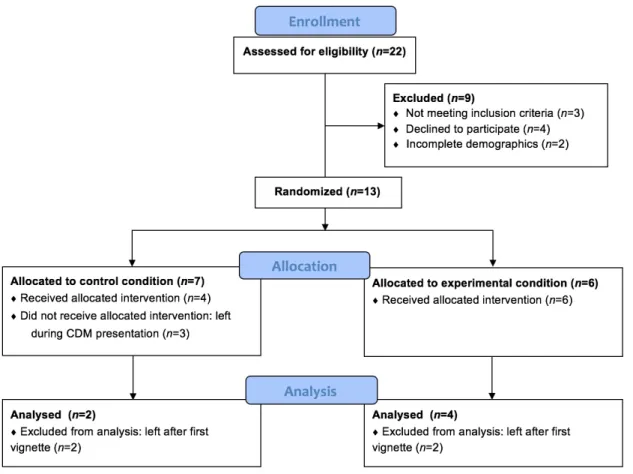
A total of 22 participants began the protocol, of whom more than a dozen stopped midway through the study. Reviewing the incomplete data showed that common places to stop, with a frequency of about three for each place, included the last demographic question before the debiasing intervention video, the debiasing video itself, after starting the first presented vignette, and after completing the first vignette (Figure 1). We reviewed the Qualtrics protocol to make sure that there was not a programming error or other obvious issue, and no issues were found. The range of times spent by participants with incomplete data went from 2.8 minutes to 171 minutes (Mdn=11.8 minutes). In contrast, the participants who completed the entire study spent 15 minutes to 622 minutes (Mdn=80.7 minutes). These results are unusually distributed and quite opposite from the anticipated completion time of less than an hour.
The order of presentation of the vignettes was randomized. Although this is desirable in most regards, this meant that the 15 participants with incomplete data were divided across
multiple vignettes, precluding statistical analysis of any single vignette. Consequently, the results of these incomplete responses were not included in these analyses. Moreover, comparative analyses are excluded from this paper due to a too small sample size for the control and experimental groups.
The six participants with complete data (50% female, 67% Caucasian) were on average between 31-45 years old, had an average of 11.1 years of clinical experience, were clinical and school psychologists, and practiced around East Asia and the eastern United States (Table 1). All participants report having experience with evidence-based practices, and all report having
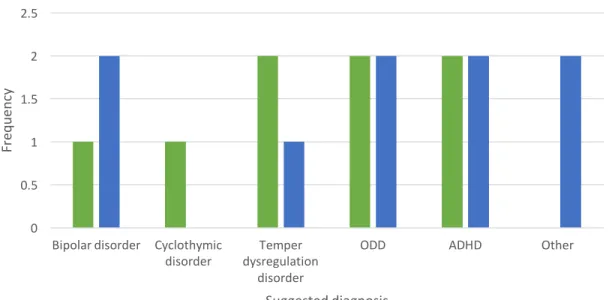
On average, diagnosis of the Caucasian Joey vignette was partially to fully accurate with mentions of both ADHD and bipolar disorder and then some suggestions of a developmental disorder or a behavioral problem (Figure 3). The other vignettes were more complicated to diagnose, as can be seen by the multiple disorders that participants marked as needed to be ruled out or considered. For example, Michael’s behavioral issues likely led to suggestions of ADHD, ODD, and temper dysregulation disorder for participants even though the vignette mentioned a family history of bipolar disorder (Figure 4). Bipolar disorder was mentioned for Michael’s vignette, so these answers were also partially accurate. Arlene’s family and academic problems were interpreted into a major depressive disorder or adjustment disorder, and single mentions of a behavioral problem or abuse were mentioned (Figure 5). Lynda’s case led to the most
suggestions of possible diagnoses, ranging from behavioral-based disorders like conduct disorder to abuse to schizophrenia (Figure 6).
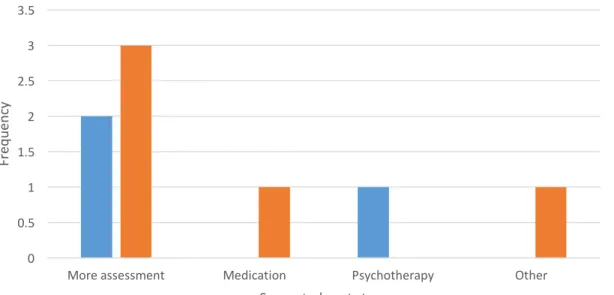
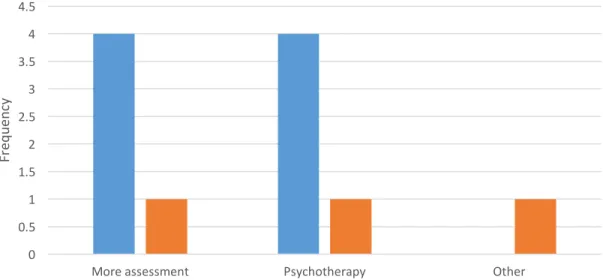
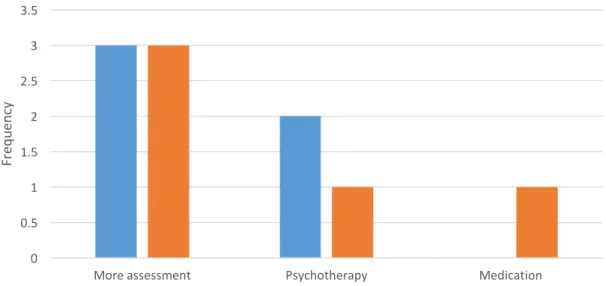
Treatment recommendations were more conservative from participants, who more often than not opted for more assessment than specifying any particular treatment approach (Figures 7-10). The Joey vignette was additionally recommended medication (Figure 7), and the vignettes of Arlene and Lynda were also suggested psychotherapy (Figures 9-10). The Caucasian Arlene vignette is the exception of conservativeness, of which all four participants suggested
psychotherapy (Figure 9), although the type of therapy varied from cognitive-behavioral therapy (CBT) to humanistic therapy to family therapy.
evenly split on whether or not the vignettes’ ethnicity affected the chosen diagnoses and
treatment recommendations (M=2.33, SD=1.86; M=2.17, SD=1.83). All participants agreed that they learned something new from the module (M=3.50, SD=0.55), and four of the six
participants reported using the module to diagnose the vignettes. Discussion
The goal of the study was to analyze how online tools can be used to improve diagnostic accuracy in mood disorder vignettes; these tools could possibly be practical options to use in common clinical practice. Due to limited subject accrual during the time window for the thesis, there was not sufficient sample size to perform statistical analyses to compare across the
experimental and control conditions. Comparisons between how this cognitive debiasing module changes accuracy across clinicians from different backgrounds could not be sufficiently made, as as such, the initial study hypotheses are not supported and further research is needed.
Implications If Hypotheses Were Supported
more in-depth context, such as through YouTube videos or through continuing education programs.
Implications If Hypotheses Were Not Supported
If there were enough participants to conduct the comparative analyses and the study hypotheses were not supported, it would suggest many possible drawbacks to the study design. A psychological study comparing two groups and using an intervention with a medium effect size at best would require a much larger sample from each group. Additionally, the presentation itself might not have educated its participants on mood disorders enough for them to be aware of behavioral trends characteristic of depression or bipolar disorder. This study recruited many mental health professionals from different backgrounds, and some of them could have used their previous knowledge and exposure to instantly detect common patterns in a mood disorder and suggest more accurate diagnoses than professionals who are not as well exposed. The video may also have not been thorough in its description and solution of cognitive heuristics. It is important to note that cognitive heuristics, in its nature, are embedded in human behavior and thought. Much like the problem solving strategies practiced by people with mental illness in therapy, challenging these heuristics and presenting alternatives would take time and multiple exposures. Increasing Recruitment
This study mostly recruited clinical and school psychologists, which presented an
expand the reach of the debiasing module. Other neighboring professions such as social work, psychiatry, and psychiatric nursing are possible groups from which to recruit. They may have more localized networks to quickly spread the study information. It should also be noted that while this study wanted to include “professionals,” this demographic is not the only one that conducts clinical interviews and are subject to heuristics. Clinical psychology graduate students could thus be a more readily available demographic to test the module on, and this population may be more willing to absorb new information than more established professionals.
Additionally, local professional conferences may continue to be a viable recruitment option. This study distributed flyers after specific seminars, but having a separate booth to advertise the study may be more ideal and leave room for small test groups and immediate feedback. Registering the debiasing module as a clinical trial may also increase visibility of the study. Lastly, using a more appealing form of compensation may be used to attract participants. This study used an online Amazon gift card as compensation, but perhaps professionals would prefer continuing education (CE) credit or a larger monetary reward. Receiving feedback from focus groups could shed light on the best direction forward.
Increasing Engagement
Mental health professionals are a notably preoccupied demographic. A combined
withdrawal after the end of the video. Future versions of the debiasing module should
experiment with a short professional article format that presents the relevant information in a pleasing visual format. Alternatively, infographics can also be used as the primary exposure of information. Visual presentation of the data should still be prioritized to keep the reader engaged but also allow for them to proceed at their own pace.
Other Limitations Independent of Sample Size
Questions pertaining to the vignette allowed for free-response explanation for why
participants made certain choices. Interestingly, two participants frequently chose to diagnose the vignette as having an “other,” unspecified mental illness rather than specifying a primary choice. One participant even assumed that the information presented in the vignette was conjecture. This conservative approach is judicious in real-life application, when a typical case report should be several pages of family history and behavioral trends at the least. Future studies should insist that participants answer to the best of their abilities in these hypothetical situations. Alternatively, newer case vignettes of a longer length can be given to participants to faithfully portray clinical cases.
Future Directions
Creating useful tools for professionals from different cultures to use is still an attainable goal that can benefit those in practice. Studies modeled from this cognitive debiasing module would benefit from a shorter time commitment for participants, as well as experimenting with different presentations of the existing heuristics and vignettes. While the chosen heuristics for the debiasing module were believed to be common in reading case reports and in analyzing
to be addressed. Moreover, future studies should remember the previous literature as suggested by Norman and Eva (2009) in that simply informing practitioners of diagnostic errors is not enough for substantial learning much less long-term implementation. Other versions of this study should analyze how professionals interact with these online tools over time and if the
information they learn is retained or only recalled with fresh exposure. Focusing on practical application is the crux for tools like a cognitive debiasing module to succeed.
References
Baker-Ericzén, M.J., Jenkins, M.M., Park, S., & Garland, A.F. (2015). Clinical decision-making in community children’s mental health: Using innovative methods to compare clinicians with and without training in evidence-based treatment. Child & Youth Care Forum, 44(1), 133-157.
Bruchmüller, K., & Meyer, T.D. (2011). Diagnostically irrelevant information can affect the likelihood of a diagnosis of bipolar disorder. Journal of Affective Disorders, 116, 148-151. doi:10.1016/j.jad.2008.11.018
Cheung, F.M., Leong, F.T.L., & Ben-Porath, Y.S. (2003). Psychological assessment in Asia: Introduction to the special section. Psychological Assessment, 15(3), 243-247.
Croskerry, P. (2002). Achieving quality in clinical decision making: Cognitive strategies and detection of bias. Academic Emergency Medicine, 9(11), 1184-1204.
Drancourt, N., Etain, B., Lajnef, M., Henry, C., Raust, A., Cochet, B., … Bellivier, F. (2012). Duration of untreated bipolar disorder: Missed opportunities on the long road to optimal treatment. Acta Psychiatrica Scandinavica, 127(2), 136-144.
Dubicka, B., Carlson, G.A., Vail, A., & Harrington, R. (2007). Prepubertal mania: diagnostic differences between US and UK clinicians. European Child and Adolescent Psychiatry, 17, 153-161.
Goldstein, B.I., Birmaher, B., Carlson, G.A., DelBello, M.P.,, Findling, R.L., Fristad, M., … Youngstrom, E.A. (2017). The International Society for Bipolar Disorders Task Force report on pediatric bipolar disorder: Knowledge to date and directions for future research. Bipolar Disorders, 1-20.
Hirschfeld, R.M.A., Lewis, L., & Vornik, L.A. (2003). Perceptions and impact of bipolar disorder: How far have we really come? Results of the National Depressive and Manic-Depressive Association 2000 survey of individuals with bipolar disorder. Journal of Clinical Psychiatry, 64(2), 161-174.
Jenkins, M.M., & Youngstrom, E.A. (2016). A randomized controlled trial of cognitive debiasing improves assessment and treatment selection for pediatric bipolar disorder. Journal of Consulting and Clinical Psychology, 84(4), 323-333.
Kessler, R.C., & Bromet, E.J. (2013). The epidemiology of depression across cultures. Annual Review of Public Health, 34, 119-138.
Kraemer, H.C. (1992). Evaluating medical tests: Objective and quantitative guidelines. Newbury Park, CA: Sage.
Lauber, C., & Rössler, W. (2007). Stigma towards people with mental illness in developing countries in Asia. International Review of Psychiatry, 19(2), 157-178.
Lemelin, J., Hotz, S., Swensen, R., & Elmslie, T. (1994). Depression in primary care: Why do we miss the diagnosis? Canadian Family Physician, 40, 104-108.
Norman, G.R, & Eva, K.W. (2009). Diagnostic error and clinical reasoning. Medical Education, 44(1), 94-100.
Phillips, M.L., & Kupfer, D.J. (2013). Bipolar disorder diagnosis: challenges and future directions. The Lancet, 381(9878), 1663-1671.
Rettew, D.C., Lynch, A.D., Achenbach, T.M., Dumenci, L., & Ivanova, M.Y. (2009). Meta-analyses of agreement between diagnoses made from clinical evaluations and standardized diagnostic interviews. International Journal of Methods in Psychiatric Research, 18(3), 169-184.
Spring, B. (2007). Evidence-based practice in clinical psychology: What it is, why it matters, what you need to know. Journal of Clinical Psychology, 63(7), 611-631.
Youngstrom, E.A. (2014). A primer on Receiver Operating Characteristic analysis and
diagnostic efficiency statistics for pediatric psychology: We are ready to ROC. Journal of Pediatric Psychology, 39, 204-221.
Table 1
Frequencies and averages of participant demographics
Characteristic Control group (n=2) Treatment group (n=4)
Total (N=6)
Gender (female) 1 2 3
Approximate age
<30 years 0 1 1
31-45 years 1 3 4
46-65 years 1 0 1
Ethnicity
Caucasian 2 2 4
Asian 0 2 2
Region of practice
Northeast US 0 1 1
Southern US 1 0 1
East Asia 0 3 3
Southeast Asia 1 0 1
Years of experience (average)
19.5 6.88 11.1
Professional title
Clinical psychologist 0 4 4
Figure 3. Frequency of participant selected diagnoses for Joey vignette. 0
0.5 1 1.5 2 2.5 3 3.5
ADHD Bipolar disorder Asperger's
syndrome ODD Other
Fr
eq
ue
nc
y
Suggested diagnosis
Figure 4. Frequency of participant selected diagnoses for Michael vignette. 0
0.5 1 1.5 2 2.5
Bipolar disorder Cyclothymic
disorder dysregulation Temper disorder
ODD ADHD Other
Fr
eq
ue
nc
y
Suggested diagnosis
Figure 5. Frequency of participant selected diagnoses for Arlene vignette. 0
0.5 1 1.5 2 2.5
MDD Adjustment
disorder ODD Abuse Other
Fr
eq
ue
nc
y
Suggested diagnosis
Figure 6. Frequency of participant selected diagnoses for Lynda vignette. 0
0.5 1 1.5 2 2.5
Fr
eq
ue
nc
y
Suggested diagnosis
Figure 7. Frequency of participant selected next steps for Joey vignette. 0
0.5 1 1.5 2 2.5 3 3.5
More assessment Medication Psychotherapy
Fr
eq
ue
nc
y
Suggested next steps
Figure 8. Frequency of participant selected next steps for Michael vignette. 0
0.5 1 1.5 2 2.5 3 3.5
More assessment Medication Psychotherapy Other
Fr
eq
ue
nc
y
Suggested next steps
Figure 9. Frequency of participant selected next steps for Arlene vignette. 0
0.5 1 1.5 2 2.5 3 3.5 4 4.5
More assessment Psychotherapy Other
Fr
eq
ue
nc
y
Suggested next steps
Figure 10. Frequency of participant selected next steps for Lynda vignette. 0
0.5 1 1.5 2 2.5 3 3.5
More assessment Psychotherapy Medication
Fr
eq
ue
nc
y
Suggested next steps