Master’s Paper Submission:
Effect of Rotavirus Immunization on Childhood Diarrhea in
Nicaragua
Research Plan for International Research Scientist Development Award (K01) Submission Date: 1/16/09
Submission Agency: Fogarty International Center Principal investigator: Sylvia Becker-Dreps, MD
Mentoring Team:
Felix Espinoza (University of Nicaragua, Department of Microbiology)
Doug Morgan (UNC, Department of Gastroenterology)
David J. Weber (UNC, Division of Infectious Diseases, School of Medicine and Department of Epidemiology, School of Public Health)
Michael Hudgens (UNC, Department of Biostatistics)
Jennifer Smith (UNC, Department of Epidemiology)
Mike Emch (UNC, Department of Geography)
Rodolfo Peña (Dean, University of Nicaragua School of Medicine, Preventive Medicine)
A. SPECIFIC AIMS
Each year diarrhea causes the deaths of over 2.5 million children under age five (1). Rotavirus is the single most important etiologic agent of diarrhea world-wide, accounting for 10-50% of all cases (2-6). In Nicaragua, one of the poorest nations in Latin America, diarrhea is the leading cause of mortality of children under age five outside the neonatal period (6). Among Nicaraguan children who are hospitalized for severe diarrhea, rotavirus was isolated among 28%(7).
In October, 2006, Nicaragua became the first developing world nation to initiate
universal infant rotavirus immunization (UIRI)with the RotaTeq® vaccine. This live, oral, pentavalent human-bovine reassortant vaccine provides 74% protection against any infection with the G1, G2, G3 and G4 genotypes*, and provides 98% protection against severe
infection(8) from these genotypes. Nicaraguan infants now receive this vaccine at the age of two, four, and six months as part of the country’s Expanded Program on Immunization. Although several other developing world nations have since added the live-attenuated human monovalent Rotarix® vaccine to their universal immunization schedules, Rotateq® may prove to provide coverage against a broader range of genotypes than Rotarix® (Brazil). Nicaragua remains the only developing world nation to use Rotateq® for universal immunization.
The rotavirus vaccine may face challenges to its effectiveness in the developing world. Several factors, such as higher rates of breastfeeding, the use of the oral polio vaccine, and higher rates of other concomitant gastrointestinal infections have been hypothesized to render the rotavirus vaccine less effective. The diversity of genotypes and often inadequate storage conditions in the developing world may also limit the vaccine’s effectiveness.
The impact of universal rotavirus immunization on childhood diarrhea in Nicaragua is unknown. A clear understanding of the magnitude of the effect of UIRI is important
information for Nicaragua and other developing world countries who are considering adding rotavirus vaccines to their current vaccine armamentarium. Although preliminary research is measuring the impact of rotavirus immunization in the hospital setting, virtually nothing is known about the effect of UIRI at the primary care or community level. Also, it is not known if genotype shift of the virus is occurring, which could limit the future effectiveness of rotavirus immunization and would inform needed improvements in the vaccine. Finally, we do not know if UIRI is inducing herd immunity.
The purpose of this study is to determine the effect of UIRI on diarrheal disease in Nicaragua at the primary care and community levels. Our specific aims are to:
1. Determine the effectiveness of the rotavirus vaccine in primary care clinical practice, using a case-control study.
Hypothesis: We expect that UIRI with Rotateq® will have a vaccine effectiveness of about 75% in reducing rotavirus infections that present to primary care centers.
2. Determine the effect of UIRI on diarrhea incidence at the community level, using an existing population-based surveillance system. We will compare incidences prior to UIRI to incidences following UIRI separately for children who did and did not receive the immunization.
*
Hypothesis: Prior hospital-based studies would lead us to expect a one-third reduction in diarrhea incidence among immunized children at the community level. We expect this reduction to be most pronounced during the dry season, when the incidence of rotavirus infection is higher. We expect to find a modest, but measurable reduction in incidence among unimmunized children.
3. Explore if circulating genotypes of the virus have changed following UIRI. We will compare the distribution of rotavirus genotypes prior to UIRI with the distribution following UIRI.
Hypothesis: We expect to find a higher percentage of genotypes not covered by the Rotateq® vaccine among immunized children who subsequently develop rotavirus
B. BACKGROUND AND SIGNIFICANCE
I. Rotavirus infection causes a high burden of disease in the developing world.
Among all infectious causes of diarrhea, rotavirus is the single most important world-wide, accounting for 10-50% of all diarrhea cases (2-5). In the United States, rotavirus causes 3 million episodes of diarrheal illness, 60,000 to 70,000 hospitalizations, and 20 to 40 deaths each year(9) (10). In the developing world, poor baseline nutrition and limited medical services to adequately treat dehydration cause a much higher toll from rotavirus, with an estimated 0.5 million deaths of children under age five from rotavirus annually(11). World-wide, there are an estimated 138 million cases of rotavirus diarrhea; 15 to 20% of these cases require treatment at a clinic and 1 to 3% require hospitalization (12). Also, in the developing world, rotavirus transmission occurs at an earlier age, when children may be more vulnerable to dehydration and malnutrition; in a cohort study in Nicaragua, by one year of age, 90% of children had developed rotavirus diarrhea or had evidence of
seroconversion(13).
While the introduction of oral rehydration solution has decreased mortality from diarrhea over thepast several decades, the morbidity from diarrhea has not followed this trend: the incidence of diarrhea today is not lower than the incidence recorded in the 1950’s (1). Interestingly, in Mexico, improvements in the water supply resulted in a reduced incidence of some infectious diarrheas that peak during the rainy season, however, rotavirus diarrhea, that peaks during dry season did not decline(14). More alarming is recent evidence that early childhood diarrhea results not only in physical growth delays, but also in
developmental delays, such as decreased cognitive development and impaired school performance(15)(16). These long-lasting effects of diarrhea have resulted in a call to adjust the disability-adjusted life years (DALYs) weight attributed to diarrheal disease(17,18).
II. Vaccines to prevent rotavirus infection are now available.
In 2006, two new vaccines were introduced for the prevention of rotavirus diarrhea, Rotateq® and Rotarix®. Rotateq® (Merck) is a live pentavalent (G1, G2, G3, G4, and P[8]) human–bovine (WC3) reassortant rotavirus vaccine, which is currently licensed in the United States(8). Rotarix® (Glaxo-Smith-Kline) is a live-attenuated human rotavirus, with G1P[8] specificity(19). Both vaccines underwent very large clinical trials of their efficacy and safety due to the potential increased risk of intussusception discovered after licensing of a previous rotavirus vaccine, RotaShield® (20-23). Both oral vaccines are thought to work by inducing a protective IgA immune response induced in the intestines, however, while Rotateq® produces genotype-specific immunity, Rotarix® works by invoking a heterotypic immune response.
with G1P[8], G3P[8], G4P[8], or G9P[8] genotypes, it protected against only 41% of severe diarrhea with the G2P[4] genotype(19). Neither trial found an increased risk of
intussusception among those receiving the vaccine.
It is unknown how well Rotateq® would protect against genotypes not included in the vaccine, such as G5, G8, G9, and P[6]. The inclusion of one P antigen (P[8]) in Rotateq® may provide some degree of protection against a G-type that is not included in the vaccine, if it is paired with P[8]. However, the G9P[6] and G8P[6] genotypes do not share either a G-type or P-G-type with those included in the vaccine. Similarly, we do not know how well the heterotypic response of Rotarix® works against a range of genotypes not reported in the efficacy trial. It is thought that the Rotarix® may not be effective against the
short-electropherotype strains, such as G9P[6] that belong to a different genogroup as the Rotarix® strain, and share fewer antigens(24).
In addition, we do not know how well the vaccines prevent less severe forms of diarrhea. The primary end-point in both efficacy studies included the most severe forms of rotavirus diarrhea that typically require hospital admission. However, we know little about the effect of these vaccines on reducing outpatient visits, which consume limited health care resources available in the developing world. Even less is known about the effect of rotavirus immunization on the community level, where repeated milder episodes of diarrhea may result in physical and developmental delays of children.
III. In the developing world, there are unique challenges to rotavirus vaccine effectiveness.
There are concerns that the rotavirus vaccine may not perform as well in developing world populations (25). For example, 1) it is unclear how well the vaccines protect against the diversity of strains present in the developing world, 2) malnutrition might blunt the immune response to the vaccine, 3) breastfeeding may interfere with the immune response, 4) the oral polio vaccine or other enteric infections may interfere with the immune response, and 5) lack of an adequate “cold chain” may decrease effectiveness. Although it is
encouraging that the Rotarix® vaccine was found to be efficacious in several Latin American countries during clinical trials, there may be differences between the study population and the general population in these countries. Also, the integrity of the cold chain may be better under study conditions than in routine use.
It is unknown whether the rotavirus vaccines will protect against the diverse distribution of rotavirus genotypes present in the developing world. A surprising diversity of rotavirus genotypes world-wide has been found in the developing world due to improved laboratory methods and increased surveillance. G-genotyping is based on the VP7 antigen in the outer capsid; VP7 plays an important role in immunity against rotavirus In the 1990’s, 7 different G-types of human rotavirus were defined: G1, G2, G3, G4 were
in Malawi is G6P[8](31), and 24% of rotavirus diarrhea in India is G9P[6](32). There are also more mixed rotavirus infections, or, infections with two different rotavirus genotypes, in the developing world (32,24). In Nicaragua, Espinoza, et al, characterized 265 rotavirus-positive samples collected over a three year period(33) (See Table 1.) Of note, the authors
subsequently tested the “non-typable” strains for the G9 genotype, and found that G9 accounted for several of the eleven in this category.
This increased diversity of rotavirus serotypes in the developing world may be attributed to the inherent high frequency of reassortment of RNA segments of rotavirus during dual infection(34).The higher rate of mixed infection(24) and possibly, higher rates of co-infection with non-human strains (35) in the developing world may be the mechanism behind this increased diversity.
It is unclear how well the rotavirus vaccines will function amidst this high strain diversity. Some concern is raised by recent findings from the pneumococcal immunization program among Alaska native children, who had a higher frequency of non-covered strains prior to the immunization program. Three years after the introduction of the vaccine program, there was an increase in the disease rate of nonvaccine serotypes by 140% in comparison with the pre-vaccine era (36). Also, in Brazil there is early evidence that in a population with a Rotarix immunization program, there was a predominance of G2P[4] strains which are not covered by the vaccine(37).
Malnutrition (38) and vitamin A deficiency(39)impair immunity and increase susceptibility to natural rotavirus diarrhea, which raises concerns about the immune response to rotavirus vaccines in malnourished infants. Malnutrition has been shown to decrease the immune response to other vaccines. Although the antibody levels were the same, antibody affinity to tetanus toxoid was decreased in malnourished children (40). Also, hemodialysis patients with malnutrition had decreased immunity following immunization with hepatitis B(41). On the other hand, studies examining the effect of malnutrition on the immune response to the measles vaccine, also a live vaccine, show little effect of
malnutrition(42)(43). Recently, one study showed that the efficacy of the Rotarix® vaccine was the same in malnourished children as in children with normal nutrition (44); however, evidence on Rotateq® is lacking.
Breastmilk can interfere with the immune response to either natural infection or immunization (45); IgA in breastmilk may bind to the rotavirus vaccine and thereby blunt the immune response and tryspins present in breastmilk may physically destroy the vaccine. In addition, there is evidence that lactadherin, a 46 kDa glycoprotein, specifically binds to rotavirus, suggesting another mode for interference with a live rotavirus vaccine (46). In the developing world, rates of breastfeeding are typically higher than in the industrialized world, and breastmilk IgA titers for rotavirus may be higher in developing world populations. Several small studies have compared the efficacy of rotavirus vaccine candidates in breast-fed and formula-fed infants. A meta-analysis in 1990 showed that the immune response to rotavirus vaccine candidates was decreased among breastfed infants (47). A subsequent study in 1995 showed no difference among the two feeding groups (48). To date, there are no published studies on the effect of breastfeeding with the two currently licensed vaccines.
Another concern is that co-administration of a rotavirus vaccine with the oral polio vaccine may diminish the immune response to either one of the two vaccines. Studies with past vaccine candidates have addressed this concern and have found either no effect or a small effect on immune response when these two, live, oral vaccines are
co-administered (49,50). There is some evidence from Brazil with Rotarix® that it does not interfere with the immune response to OPV (51), however, evidence on Rotateq® is lacking. Similarly, there is the concern is that enteric infections, with other enteric viruses, bacterial pathogens, and intestinal parasites may interfere with the immune response to the rotavirus vaccine. Enteric infections are clearly more prevalent in the developing world. However, there are no published studies that examine the link between these other enteric infections and the immune response to the rotavirus vaccine.
Finally, vaccine storage requirements may present a problem to rotavirus vaccine effectivness in the developing world. Both rotavirus vaccines must be protected from light and refrigerated at 2-8°C until used. Electricity outages and lack of adequate refrigeration equipment during transport and storage of the vaccine present a significant challenge.
IV. Nicaragua’s Universal Infant Rotavirus Immunization Program (UIRI) offers a unique opportunity to study vaccine effectiveness.
In October, 2006, Nicaragua became one of the first developing world countries to add a rotavirus vaccine to the country’s Expanded Program on Immunization schedule. Now Nicaraguan children receive a dose of the Rotateq® vaccine at ages 2, 4, and 6 months. This arrangement for free Rotateq® vaccine was facilitated between Merck and the Nicaraguan Ministry of Health by President Clinton’s Millenium Vaccine Initiative. While several other Latin American countries have since added Rotarix® to their national vaccine schedules, due to its lower cost and availability through the Global Alliance for Vaccines and Immunization (GAVI), Nicaragua is the only developing world nation to use Rotateq®.
Studying Rotateq® vaccine’s effectiveness provides needed information for
Our collaborators at the Centers for Disease Control (CDC) are beginning to evaluate Nicaragua’s UIRI program at several hospitals in Nicaragua, however the program’s effect on the primary care and community level remain unknown. Measuring the
vaccine’s effectiveness in the hospital setting is important for understanding the most severe forms of rotavirus infection that present to the health care system. However, for each case of rotavirus diarrhea that requires hospitalization, there are approximately 20 cases that
C: PRELIMINARY DATA:
Prevalence of rotavirus diarrhea among children presenting to primary care and hospital settings in Leon prior to UIRI.
In Espinoza, et al’s study(7), 296 children between age 3 and 36 months who presented to primary care centers and hospitals in Leon with diarrhea received ELISA testing for rotavirus. 28% of these children tested positive for rotavirus.
Prevalence of rotavirus diarrhea among children presenting to primary care in Leon following UIRI. (Study is funded by the Gorgas Memorial Institute Research Award, PI: Sylvia Becker-Dreps, $25,000, awarded 10/07). We are currently measuring the prevalence of rotavirus diarrhea among children under 36 months of age who present with diarrhea to six primary care centers in Leon. Our goal is to compare the prevalence of rotavirus among children presenting with diarrhea before UIRI to the prevalence following UIRI. Our preliminary data of our first 90 participants, recruited in April and May, 2008 show a rotavirus prevalence of 5.6%. In addition to the study of rotavirus prevalence, we are currently piloting specific aim 1 in Leon, including piloting our questionnaire and our informed consent procedures. Our trained home interviewers are piloting recruitment and questionnaire administration to community controls. We have received IRB approval for specific aims 1 and 3 from both the institutional review board at the University of North Carolina-Chapel Hill and the biomedical ethics
committee at the University of Nicaragua-Leon.
Distribution of rotavirus serotypes prior to UIRI. Between 2001 and 2003,
Espinoza(33), et al, determined the serotypes of rotavirus among 265 rotavirus positive samples collected in children under age 3 (Table 1, above). These data will be used to compare to the distribution of serotypes following UIRI among the rotavirus-positive samples collected in specific aim 1.
Hospital-based data on prevalence of rotavirus among children presenting with diarrhea (CDC). Our collaborators at the CDC are currently conducting surveillance at five public hospitals throughout Nicaragua to determine the prevalence of rotavirus among children under age 36 months presenting with diarrhea. This study started in January, 2008, and will continue into early 2009. These hospital-based data should complement the findings at primary care and community levels.
D. RESEARCH DESIGN AND METHODS:
Specific Aim 1: Determine the effectiveness of the rotavirus vaccine in primary care clinical practice, using a case-control study.
To determine the effectiveness of the vaccine in clinical practice, we will perform a case-control study of patients presenting to six community health facilities with severe diarrhea due to rotavirus infection, using both community and clinic-based controls. Cases will be children aged 3 to 36 months who present with severe diarrhea, defined as three or more liquid stools within the past 24 hours and whose stool samples are confirmed by ELISA to have rotavirus. Cases will be recruited from six government-administered outpatient health centers in León. These health centers are free, conveniently located, and are widely attended by residents of each neighborhood. We are already working with these six health centers to determine the new prevalence of rotavirus among children presenting with diarrhea. Study nurses will collect stool samples or soiled diapers from each of the potential cases (children aged 3 to 36 months presenting with severe diarrhea) and also administer a questionnaire to the parents.
For each true case who is rotavirus-positive by ELISA, one community control and one clinic control will be chosen. Community controls will be chosen from households in the same community as the case by home interviewers. They will start at the home of the case and then approach households on alternating (clockwise and counterclockwise) sides until a child within one month of age of the case is found. Clinic controls will be chosen among children within one month of age of the case presenting to the same clinic with diarrhea, but whose ELISA testing is negative for rotavirus.
Inclusion criteria for cases:
Child presents to primary care clinic for assessment of diarrhea, defined as three episodes within a 24 hour period
Child was born on or after August 15, 2006 (the earliest date of birth to be eligible to receive the rotavirus vaccine when UIRI started in October, 2006) and is currently at least 10 weeks of age
Child has not had diarrhea for more than 14 days and was not admitted to the hospital for this episode of diarrhea
Father or mother gives permission for the child to participate in the study and have signed the informed consent form
CHILD’S STOOL SAMPLE IS POSITIVE FOR ROTAVIRUS BY ELISA TESTING
Inclusion criteria for clinic controls:
Inclusion criteria are the same as for cases, (above) except: CHILD’S STOOL SAMPLE IS NEGATIVE FOR ROTAVIRUS BY ELISA TESTING
Child is within one month of age of the case (except the lower age limit remains 10 weeks old)
Inclusion criteria for community controls:
Child is within one month of age of the case (except lower age limit remains 10 weeks old)
Child is identified by starting at the house of the case, and then approaching houses on alternating (clockwise and then counterclockwise) sides of the street
The questionnaire for both cases and controls includes each patient’s date of birth, rotavirus immunization history from the child’s immunization card or medical chart (including number of doses and date of immunization), oral polio vaccine history, detailed breastfeeding history, maternal educational attainment, household water source and sanitation system. Nurses or home interviewers will also measure the child’s weight and height in order to determine his or her nutritional status. From our current experience with recruitment from the same health facilities, we can expect that the data collection will take place between July, 2009 and June, 2010. All of the children in the study will have been born on or after September, 2006, and would be eligible for rotavirus immunization. These ages were chosen to capture the
childhood period when most children in Nicaragua acquire their first and most severe rotavirus infection (13). ELISA testing will be performed in Dr. Espinoza’s virology laboratory at the University of Nicaragua-León, using a commercial kit (DAKO), which has a sensitivity of 98.0% and specificity of 97.2% (52). A sample size of 120 matched pairs will provide at least 80% power to detect a significant effect of the vaccine if the true odds ratio is 0.25 or less (two-sided alpha=0.05), 20% of pairs are discordant for vaccine status, and complete vaccine data are available for at least 83% of the matched pairs (nQuery version 6.0).
Statistical analysis: Using the age-matched pairs, we will calculate the Mantel-Haenszel estimate of the odds ratio along with a 95% confidence interval for severe diarrhea for the immunized versus non-immunized children. The analysis will be performed separately using community controls and clinic-based controls. We will also perform a sensitivity analysis to account for the possible misclassification due to the sensitivity and specificity of the ELISA testing. Vaccine effectiveness will be calculated as 1 minus the odds ratio. We will also compare the overall frequency of rotavirus among the potential cases to a study done at the same health centers prior to UIRI (7). For our secondary aim, we will use Chi-square testing to compare the frequency of rotavirus diarrhea among immunized children who have and do not have each potential risk factor (breastfed, received OPV, malnourished, inadequate water source and inadequate sanitation system). We will also perform logistic regression to calculate the ORs for rotavirus diarrhea for each of the potential risk factors of interest.
Specific Aim 2: Determine the effect of UIRI on diarrhea incidence at the community level, using an existing population-based surveillance system. We will compare incidences separately for children who did and did not receive the immunization.
To estimate the impact of UIRI on a population level, we will evaluate changes in diarrhea incidence and diarrhea-related mortality using an existing population-based surveillance system in León. The Center for Demographic and Health Research (Centro de Investigación en Demografía y Salud, or CIDS) established in 1993 provides longitudinal prospective
epidemiological surveillance for the municipality of León (total estimated population: 200,000). CIDS was established in order to accurately measure child mortality rates and causes in León, Nicaragua. It is the only surveillance system in Latin America to be a member of the
Figure 1
Between 2001 and 2003, prior to the initiation of UIRI, CIDS collected data on diarrhea episodes among 640 children under age 5. These children were chosen randomly using the population-based surveillance system. Skilled female field workers interviewed the mother of the child, or the person who was responsible for the child if the parents were not at home. The data collection occurred every two weeks during 14 weeks of the dry season (December to March) and 20 weeks of the wet season (July to November) each year. This bimodal distribution of diarrhea cases can be seen in ministry of health data collected from all primary care centers and hospitals in Nicaragua (See Figure 1, above).
In addition to diarrhea episodes within the past 2 weeks, field workers collected information on diarrhea characteristics, socioeconomic status, breastfeeding history, household water
source, sanitation system, self-medication, and access to health services. Of the 640 children in the study, 216 children were found to have diarrhea. The incidence rate was 0.07 per person-month during the dry season, and 0.09 per person-month during the wet season (unpublished data).
We will now recalculate the incidence of diarrhea after UIRI, from 2009 to 2011. We will use similar methods, including home visits every 2 weeks to children chosen randomly from the population-based surveillance system in Leon. In addition to the previous data collected, we will now include rotavirus immunization history. This will allow us not only to determine the new incidence of diarrhea following UIRI in the community, but will also allow us to determine whether the incidence is different among children who did not receive the immunization, a gauge of indirect effects of the immunization (herd immunity). One limitation of the study is that there may be other factors responsible for the change in diarrhea incidence between these two time periods. To address this, we will assess for confounding using data on
household water source, sanitation system, breastfeeding history, and socioeconomic status.
Statistical Analysis/Sample Size- Using a simulation study, we calculated that a sample size of 640 children, living in approximately 414 households, will have a power of 0.84 for detecting a 30% reduction in all-cause diarrhea among children following UIRI. This is among children who are of the age group that is eligible to receive the rotavirus vaccine. We will use Poisson regression (with robust variance estimation) to estimate the rate ratios and the 95%
confidence intervals for the effect of UIRI among children eligible for the rotavirus vaccine. Similarly, we will also compare the diarrhea incidence among children who were not eligible for the vaccine (those whose birthdays are before August, 2006, and therefore were too old when UIRI was implemented) before and after UIRI. This would be one measure the indirect effects (herd immunity).
Week
Specific Aim 3: Characterize the circulating genotypes of the virus following UIRI.
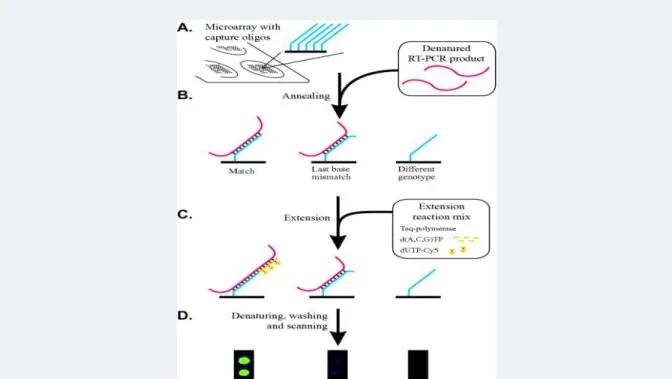
Using the rotavirus-positive samples collected in Specific Aim 1, we will determine the distribution of genotypes present among groups of both immunized and unimmunized children. G and P antigens are carried by outer capsid proteins and both are believed to be responsible for the development of protective immunity. A study (33) conducted in Nicaragua between 2001 and 2003 described the distribution of G (G1-G4) and P (P4,P6, P8) genotypes prior to UIRI (See table 1 in preliminary data section). We will test for these strains and also the newly emergent G5, G8, and G9 strains. We will analyze rotavirus-positive samples by RT-PCR, using a microarray-based system described by Lovmar (54)(See Figure 5 below). This method uses multiplex capture and type-specific extension on microarrays to efficiently genotype a large number of samples with a high degree of polymorphism.
Statistical analysis: We will report the distribution of genotypes among the entire sample, and then separately for the groups of immunized and unimmunized children. We will then use the extension of the Fisher’s exact test to compare this distribution of genotypes to those found prior to UIRI (33).
Figure 5: RT-PCR Microarray system
ADDENDUM: ADDITIONAL BACKGROUND ON ROTAVIRUS
The virus
Rotaviruses are double-stranded RNA viruses which are transmitted by the fecal-oral route (55). The high transmissibility of rotavirus may be explained by two factors: 1) the high level of viral shedding and 2) the persistence of the virus in the environment. During the most
infectious period, 2-5 days after onset of diarrhea, as many as 1010 viral particles are released per gram of stool (56). Among children hospitalized for rotavirus diarrhea, viral shedding extended to 57 days after the onset of symptoms, with a median of 10 days (57). At the same time, the infectious dose needed to cause rotavirus is low (58). Rotaviruses are very persistent in the environment, surviving for about four hours on human hands. When on fomites, they favor low humidity, surviving for several days if the relative humidity is less than 50%. In water sources, they can remain infectivity for weeks. Rotaviruses are somewhat resistant to
commonly used hard-surface disinfectants (39,59).
Infection is characterized by watery diarrhea, vomiting, fever, and dehydration (60). Diarrhea lasts an average of 5 days, although first infections and infections in immunocompromised children may be more prolonged (56). Bloody diarrhea is uncommon, and there are no fecal leukocytes on stool examination (34). Dehydration is more common with rotavirus as
compared with diarrhea from other causes (60). Untreated dehydration, especially in infants and young children, may lead to death.
Rotaviruses are divided into seven distinct groups (A to G); groups A, B, and C are found in humans, with group A being the most common (34). Within each group, rotaviruses are classified by a binary system (similar to influenza) based on its VP7 outer capsid protein (“G”) and by its VP4 outer capsid protein (“P”).
The epidemiology of rotavirus
In the United States, rotavirus causes 3 million episodes of diarrheal illness, 60,000 to 70,000 hospitalizations, and 20 to 40 deaths each year (9,10). In the developing world, poor baseline nutrition and limited medical services to adequately treat dehydration cause a much higher toll from rotavirus, with an estimated 600,000 deaths from rotavirus annually (11). Transmission occurs at an early age in developing countries; in a cohort study in Nicaragua, by one year of age, 90% of children developed rotavirus diarrhea or had evidence of
seroconversion(13).
Figure 1.
Monthly distribution of rotavirus-positive diarrhea among a cohort of 235 children in Nicaragua
(From Espinoza,
The most common circulating genotypes of rotavirus world-wide are G1,G2,G3, and G4. In Nicaragua, rotavirus-positive samples collected over a three year period were characterized (33). Recently, G5 and G8 genotypes were recognized in Latin America and G9 serotypes have emerged globally.
Interestingly, the most prevalent genotype in the population varies from year to year; it is unlikely that the same G-type would predominate for two years in a row. For example, the same Nicaraguan study done over three years found that a G2 strain was most prevalent during the first year, a G1 strain was most prevalent during the second year, and G3 was most prevalent in the third year (33).
Laboratory diagnosis and genotype characterization of Rotavirus
In the typical clinical setting, rotavirus testing is often not performed, because it would not alter the course of treatment, which is primarily rehydration. Under limited clinical settings and for research purposes, stool ELISAs for rotavirus are an effective diagnostic test. The most commonly used ELISA tests for the VP6 inner capsid protein. Sensitivity of ELISA is best between the first and fourth day after the onset of symptoms. The sensitivity of
commonly used commercial ELISA kits are over 95% (52). Reverse Transcriptase-PCR (RT-PCR) can detect viral shedding even after diarrhea has resolved (56). Other diagnostics used primarily for research or in limited clinical settings include dot hybridization, electron microscopy, cell culture, and testing for serologic response with complement fixation.
Serotypic or genotypic characterization of circulating rotaviruses is important to determine if the vaccine being used will be effective in the population, and to determine if a shift in strains is occurring after introduction of UIRI. Determination of G-types can be done either with either ELISA testing or RT-PCR which have a complete concordance rate (34).
Determination of P-types is only possible with RT-PCR. RT-PCR of both G- and P-types can be done efficiently with microarray-based system (54), which allows for the genotyping of a high volume of rotavirus samples with a high degree of polymorphism.
Vaccines for prevention of rotavirus, Rotateq® and Rotarix®
The Rotateq® vaccine underwent a double-blind, placebo controlled trial of 68,038 infants. The trials took place primarily in Europe and the US, but also included sites in Taiwan, Costa Rica, and Guatemala. After the first full rotavirus season after administration, Rotateq® protected against any G1-G4 rotavirus infection by 74% (95% CI 67%, 80%) and protected against hospitalizations for G1-G4 rotavirus infection by 94.5% (95% CI, 91%, 97%
percent)(8). The Rotarix® trails included 63,225 infants from Finland and Latin America. Rotarix® protected against hospitalization for any rotavirus by 85% (p<0.001)(19). Neither trial found an increased risk of intussusception among those receiving the vaccine. Of note, neither trial included sites in Africa or Asia, except for Taiwan.
There are some important differences in the storing and dosing of the two vaccines. Rotateq® is supplied as a pre-mixed solution that must be protected from light and kept refrigerated (at 2-8°C) until it is used. Rotarix® is stored as a powder that is reconstituted with a solvent. The solvent can be stored at ambient temperature; the powder needs to be protected from light and is ideally refrigerated (at 2°C to 8°C), however, it is known to be stable when stored at 37°C for 1 week. While Rotateq® requires three doses of vaccine, Rotarix® requires only two doses (8)(19).
In October, 2006, Nicaragua became one of the first developing world countries to add the rotavirus vaccine to the country’s Expanded Program on Immunization schedule. Now Nicaraguan children at age 2, 4, and 6 months receive a dose of the Rotateq® vaccine.
Determining vaccine effectiveness on a population level
Several approaches in determining vaccine effectiveness that have been used in the past include: 1) Compare infection rates in the era after immunization to historical controls, for example, using hospital or laboratory data (62) 2) establish an active surveillance system to detect cases in the years prior to the introduction and compare these to the cases in the years following introduction (63), 3) Perform a case-control study to compare immunization rates in cases as compared to controls; cases can be population-based or health facility-based(64), or 4) create a mathematical model to predict that effect on the infection(65), 5) Perform a randomized controlled trial for effectiveness(66).
Using a case-control design allows one to calculate the matched odds ratio for immunization among the cases vs. the controls. One can then calculate the vaccine effectiveness:
Vaccine effectiveness (%) = 1 - matched OR for immunization
Haber (67) describes a new measure, the population vaccine effectiveness, which more closely approximates a vaccine’s effectiveness in a population by including the indirect effects (herd immunity) associated with the immunization in that population.
(MMWR, 2005)
Genotypic characterization before and after introduction of the rotavirus vaccine Characterizing the genotypes of rotavirus before vaccine introduction is essential to
determine if the vaccine will be effective in this population. Namely, a high frequency of G5, G8, or G9-type infections in the population would indicate that the vaccine may not be effective. Characterizing the genotypes following immunization allows us to determine if genotypic shift is occurring. From the available literature, this has never been described in a vaccine against a virus. However, in the case of the PCV7 vaccine, there is evidence of an increased risk of infection of non-vaccine pneumococcus serotypes in immunized individuals (36). If replacement with non-vaccine serotypes is truly occurring, the immunization’s
effectiveness in the future could be undermined.
APPLICATION OF STUDY RESULTS/CONCLUSION
By quantifying the impact of Nicaragua’s rotavirus immunization program, this study could provide important information for Nicaragua as well as other developing world countries who are considering adding the rotavirus vaccine to their current immunization schedules.
Although vaccines have a high priority on the global health agenda, this is not a decision to be taken lightly in resource-poor countries. A complete course of Rotateq® costs $198.56 (US dollars) per child, which may consume the entire health budget in some countries. In the future, we would like to use this data as the basis of a cost-effectiveness analysis. Especially in resource-poor countries, policy makers need to make evidence-based decisions to make the best use of their limited healthcare funds. We hope that this study would help provide these policy makers with some of the evidence they need to decide on whether to implement a universal infant rotavirus immunization program.
References
(1) Kosek M, Bern C, Guerrant RL. The global burden of diarrhoeal disease, as estimated from studies published between 1992 and 2000. Bull.World Health Organ. 2003;81(3):197-204.
(2) Mata L, Simhon A, Padilla R, del Mar Gamboa M, Vargas G, Hernandez F, et al. Diarrhea associated with rotaviruses, enterotoxigenic Escherichia coli, Campylobacter, and other agents in Costa Rican children, 1976-1981. Am.J.Trop.Med.Hyg. 1983 Jan;32(1):146-153.
(3) Black RE, Merson MH, Huq I, Alim AR, Yunus M. Incidence and severity of rotavirus and Escherichia coli diarrhoea in rural Bangladesh. Implications for vaccine
development. Lancet 1981 Jan 17;1(8212):141-143.
(4) Kim KH, Yang JM, Joo SI, Cho YG, Glass RI, Cho YJ. Importance of rotavirus and adenovirus types 40 and 41 in acute gastroenteritis in Korean children. J.Clin.Microbiol. 1990 Oct;28(10):2279-2284.
(5) Prado V, O'Ryan ML. Acute gastroenteritis in Latin America. Infect.Dis.Clin.North Am. 1994 Mar;8(1):77-106.
(6) World Health Organization. Numbers and rates of registered deaths, Nicaragua, 2000. 2000; Available at: http://www.who.int/whosis/database/mort/table1_process.cfm. Accessed July, 14, 2008.
(7) Espinoza F, Paniagua M, Hallander H, Hedlund KO, Svensson L. Prevalence and characteristics of severe rotavirus infections in Nicaraguan children. Ann.Trop.Paediatr. 1997 Mar;17(1):25-32.
(8) Vesikari T, Matson DO, Dennehy P, Van Damme P, Santosham M, Rodriguez Z, et al. Safety and efficacy of a pentavalent human-bovine (WC3) reassortant rotavirus vaccine. N.Engl.J.Med. 2006 Jan 5;354(1):23-33.
(9) Fischer TK, Bresee JS, Glass RI. Rotavirus vaccines and the prevention of hospital-acquired diarrhea in children. Vaccine 2004 Dec 6;22 Suppl 1:S49-54.
(10) Glass RI, Bresee JS, Parashar U, Turcios R, Fischer TK, Jiang B, et al. Rotavirus vaccines: past, present, and future. Arch.Pediatr. 2005 Jun;12(6):844-847.
(12) Parashar UD, Bresee JS, Glass RI. The global burden of diarrhoeal disease in children. Bull.World Health Organ. 2003;81(4):236.
(13) Espinoza F, Paniagua M, Hallander H, Svensson L, Strannegard O. Rotavirus infections in young Nicaraguan children. Pediatr.Infect.Dis.J. 1997 Jun;16(6):564-571.
(14) Velazquez FR, Garcia-Lozano H, Rodriguez E, Cervantes Y, Gomez A, Melo M, et al. Diarrhea morbidity and mortality in Mexican children: impact of rotavirus disease. Pediatr.Infect.Dis.J. 2004 Oct;23(10 Suppl):S149-55.
(15) Lorntz B, Soares AM, Moore SR, Pinkerton R, Gansneder B, Bovbjerg VE, et al. Early childhood diarrhea predicts impaired school performance. Pediatr.Infect.Dis.J. 2006 Jun;25(6):513-520.
(16) Niehaus MD, Moore SR, Patrick PD, Derr LL, Lorntz B, Lima AA, et al. Early childhood diarrhea is associated with diminished cognitive function 4 to 7 years later in children in a northeast Brazilian shantytown. Am.J.Trop.Med.Hyg. 2002 May;66(5):590-593.
(17) Dillingham R, Guerrant RL. Childhood stunting: measuring and stemming the staggering costs of inadequate water and sanitation. Lancet 2004 Jan 10;363(9403):94-95.
(18) Guerrant RL, Kosek M, Lima AA, Lorntz B, Guyatt HL. Updating the DALYs for diarrhoeal disease. Trends Parasitol. 2002 May;18(5):191-193.
(19) Ruiz-Palacios GM, Perez-Schael I, Velazquez FR, Abate H, Breuer T, Clemens SC, et al. Safety and efficacy of an attenuated vaccine against severe rotavirus
gastroenteritis. N.Engl.J.Med. 2006 Jan 5;354(1):11-22.
(20) From the Centers for Disease Control and Prevention. Intussusception among recipients of rotavirus vaccine--United States, 1998-1999. JAMA 1999 Aug
11;282(6):520-521.
(21) Centers for Disease Control and Prevention (CDC). Suspension of rotavirus vaccine after reports of intussusception--United States, 1999. MMWR Morb.Mortal.Wkly.Rep. 2004 Sep 3;53(34):786-789.
(23) Murphy TV, Smith PJ, Gargiullo PM, Schwartz B. The first rotavirus vaccine and intussusception: epidemiological studies and policy decisions. J.Infect.Dis. 2003 Apr 15;187(8):1309-1313.
(24) Gentsch JR, Laird AR, Bielfelt B, Griffin DD, Banyai K, Ramachandran M, et al. Serotype diversity and reassortment between human and animal rotavirus strains: implications for rotavirus vaccine programs. J.Infect.Dis. 2005 Sep 1;192 Suppl 1:S146-59.
(25) Grimwood K, Bines JE. Rotavirus vaccines must perform in low-income countries too. Lancet 2007 Nov 24;370(9601):1739-1740.
(26) Matsuno S, Hasegawa A, Mukoyama A, Inouye S. A candidate for a new serotype of human rotavirus. J.Virol. 1985 May;54(2):623-624.
(27) Clark HF, Hoshino Y, Bell LM, Groff J, Hess G, Bachman P, et al. Rotavirus isolate WI61 representing a presumptive new human serotype. J.Clin.Microbiol. 1987
Sep;25(9):1757-1762.
(28) Taniguchi K, Urasawa T, Kobayashi N, Gorziglia M, Urasawa S. Nucleotide sequence of VP4 and VP7 genes of human rotaviruses with subgroup I specificity and long RNA pattern: implication for new G serotype specificity. J.Virol. 1990
Nov;64(11):5640-5644.
(29) Nakagomi T, Akatani K, Ikegami N, Katsushima N, Nakagomi O. Occurrence of changes in human rotavirus serotypes with concurrent changes in genomic RNA electropherotypes. J.Clin.Microbiol. 1988 Dec;26(12):2586-2592.
(30) Leite JP, Alfieri AA, Woods PA, Glass RI, Gentsch JR. Rotavirus G and P types circulating in Brazil: characterization by RT-PCR, probe hybridization, and sequence analysis. Arch.Virol. 1996;141(12):2365-2374.
(31) Cunliffe NA, Gondwe JS, Broadhead RL, Molyneux ME, Woods PA, Bresee JS, et al. Rotavirus G and P types in children with acute diarrhea in Blantyre, Malawi, from 1997 to 1998: predominance of novel P[6]G8 strains. J.Med.Virol. 1999 Mar;57(3):308-312.
(32) Ramachandran M, Das BK, Vij A, Kumar R, Bhambal SS, Kesari N, et al. Unusual diversity of human rotavirus G and P genotypes in India. J.Clin.Microbiol. 1996
(33) Espinoza F, Bucardo F, Paniagua M, Svensson L, Hallander HO, Bondeson K. Shifts of rotavirus g and p types in Nicaragua--2001-2003. Pediatr.Infect.Dis.J. 2006 Nov;25(11):1078-1080.
(34) Knipe DM, Howley PM editor. Field's Virology. 5th Edition ed. Philadelphia: Lippincott Williams & Wilkins; 2007.
(35) Santos N, Lima RC, Nozawa CM, Linhares RE, Gouvea V. Detection of porcine rotavirus type G9 and of a mixture of types G1 and G5 associated with Wa-like VP4 specificity: evidence for natural human-porcine genetic reassortment. J.Clin.Microbiol. 1999 Aug;37(8):2734-2736.
(36) Singleton RJ, Hennessy TW, Bulkow LR, Hammitt LL, Zulz T, Hurlburt DA, et al. Invasive pneumococcal disease caused by nonvaccine serotypes among alaska native children with high levels of 7-valent pneumococcal conjugate vaccine coverage. JAMA 2007 Apr 25;297(16):1784-1792.
(37) Gurgel RQ, Cuevas LE, Vieira SC, Barros VC, Fontes PB, Salustino EF, et al. Predominance of rotavirus P[4]G2 in a vaccinated population, Brazil. Emerg.Infect.Dis. 2007 Oct;13(10):1571-1573.
(38) Brown KH, Gilman RH, Gaffar A, Alamgir SM. Infections associated with severe protein-calorie malnutrition in hospitalized infants and children. Nutr Res 1981;1:33-46.
(39) Ahmed F, Jones DB, Jackson AA. Effect of vitamin A deficiency on the immune response to epizootic diarrhoea of infant mice (EDIM) rotavirus infection in mice. Br.J.Nutr. 1991 May;65(3):475-485.
(40) Chandra RK, Chandra S, Gupta S. Antibody affinity and immune complexes after immunization with tetanus toxoid in protein-energy malnutrition. Am.J.Clin.Nutr. 1984 Jul;40(1):131-134.
(41) Fernandez E, Betriu MA, Gomez R, Montoliu J. Response to the hepatitis B virus vaccine in haemodialysis patients: influence of malnutrition and its importance as a risk factor for morbidity and mortality. Nephrol.Dial.Transplant. 1996 Aug;11(8):1559-1563.
(42) Ekunwe EO. Malnutrition and seroconversion following measles immunization. J.Trop.Pediatr. 1985 Dec;31(6):290-291.
(44) Perez-Schael I, Salinas B, Tomat M, Linhares AC, Guerrero ML, Ruiz-Palacios GM, et al. Efficacy of the human rotavirus vaccine RIX4414 in malnourished children.
J.Infect.Dis. 2007 Aug 15;196(4):537-540.
(45) Siegrist CA. Neonatal and early life vaccinology. Vaccine 2001 May 14;19(25-26):3331-3346.
(46) Newburg DS, Peterson JA, Ruiz-Palacios GM, Matson DO, Morrow AL, Shults J, et al. Role of human-milk lactadherin in protection against symptomatic rotavirus infection. Lancet 1998 Apr 18;351(9110):1160-1164.
(47) Pichichero ME. Effect of breast-feeding on oral rhesus rotavirus vaccine seroconversion: a metaanalysis. J.Infect.Dis. 1990 Sep;162(3):753-755.
(48) Rennels MB, Wasserman SS, Glass RI, Keane VA. Comparison of immunogenicity and efficacy of rhesus rotavirus reassortant vaccines in breastfed and nonbreastfed children. US Rotavirus Vaccine Efficacy Group. Pediatrics 1995 Dec;96(6):1132-1136.
(49) Clements-Mann ML, Dudas R, Hoshino Y, Nehring P, Sperber E, Wagner M, et al. Safety and immunogenicity of live attenuated quadrivalent human-bovine (UK)
reassortant rotavirus vaccine administered with childhood vaccines to infants. Vaccine 2001 Sep 14;19(32):4676-4684.
(50) Markwick AJ, Rennels MB, Zito ET, Wade MS, Mack ME. Oral tetravalent rotavirus vaccine can be successfully coadministered with oral poliovirus vaccine and a combined diphtheria, tetanus, pertussis and Haemophilus influenzae type b vaccine. US Rhesus Rotavirus Vaccine Study Group. Pediatr.Infect.Dis.J. 1998 Oct;17(10):913-918.
(51) Araujo EC, Clemens SA, Oliveira CS, Justino MC, Rubio P, Gabbay YB, et al. Safety, immunogenicity, and protective efficacy of two doses of RIX4414 live attenuated human rotavirus vaccine in healthy infants. J.Pediatr.(Rio J) 2007 May-Jun;83(3):217-224.
(52) Evaluation of Seven Commercial Assays for Detecting Group A Rotavirus. Available at: http://www.novamed.co.il/pdf%20files%5CRotaStick%20clinical%20studies.PDF. Accessed May 28, 2008.
(53) Indepth demographic surveillance sites. Available at: http://www.indepth-network.org/dss_site_profiles/dss_sites.htm. Accessed April 29, 2008.
(55) Kapikian AZ, Wyatt RG, Levine MM, Yolken RH, VanKirk DH, Dolin R, et al. Oral administration of human rotavirus to volunteers: induction of illness and correlates of resistance. J.Infect.Dis. 1983 Jan;147(1):95-106.
(56) Medical Microbiology. Second Edition ed. St. Louis: Mosby; 1994.
(57) Richardson S, Grimwood K, Gorrell R, Palombo E, Barnes G, Bishop R. Extended excretion of rotavirus after severe diarrhoea in young children. Lancet 1998 Jun
20;351(9119):1844-1848.
(58) Ward RL, Bernstein DI, Young EC, Sherwood JR, Knowlton DR, Schiff GM. Human rotavirus studies in volunteers: determination of infectious dose and serological
response to infection. J.Infect.Dis. 1986 Nov;154(5):871-880.
(59) Butz AM, Fosarelli P, Dick J, Cusack T, Yolken R. Prevalence of rotavirus on high-risk fomites in day-care facilities. Pediatrics 1993 Aug;92(2):202-205.
(60) Rodriguez WJ, Kim HW, Arrobio JO, Brandt CD, Chanock RM, Kapikian AZ, et al. Clinical features of acute gastroenteritis associated with human reovirus-like agent in infants and young children. J.Pediatr. 1977 Aug;91(2):188-193.
(61) Cook SM, Glass RI, LeBaron CW, Ho MS. Global seasonality of rotavirus infections. Bull.World Health Organ. 1990;68(2):171-177.
(62) Markey P, Krause V, Boslego JW, Coplan PM, Dargan JM, Kaplan KM. The effectiveness of Haemophilus influenzae type b conjugate vaccines in a high risk population measured using immunization register data. Epidemiol.Infect. 2001 Feb;126(1):31-36.
(63) Lexau CA, Lynfield R, Danila R, Pilishvili T, Facklam R, Farley MM, et al. Changing epidemiology of invasive pneumococcal disease among older adults in the era of pediatric pneumococcal conjugate vaccine. JAMA 2005 Oct 26;294(16):2043-2051.
(64) Vazquez M, LaRussa PS, Gershon AA, Steinberg SP, Freudigman K, Shapiro ED. The effectiveness of the varicella vaccine in clinical practice. N.Engl.J.Med. 2001 Mar 29;344(13):955-960.
(66) Ali M, Emch M, von Seidlein L, Yunus M, Sack DA, Rao M, et al. Herd immunity conferred by killed oral cholera vaccines in Bangladesh: a reanalysis. Lancet 2005 Jul 2-8;366(9479):44-49.
(67) Haber M. Estimation of the population effectiveness of vaccination. Stat.Med. 1997 Mar 30;16(6):601-610.