BETH E. BACHUR. Effect of Temperature and Salinity on the Depuration of Hepatitis A Virus and Other Microbial Contaminants in the Eastern Oyster. (Under the Direction of Dr. MARK D. SOBSEY)
Comparative studies were done to evaluate the
elimination of hepatitis A virus (HAV), poliovirus 1, MS2
bacteriophage, Esherichia coli. and Streptococcus faecalis
in experimentally contaminated Eastern oysters in a laboratory-scale depuration system. The effect of
temperature (12, 18, and 25°C) and salinity (8, 18, and 28
ppt) on virus and bacteria depuration was studied. The oysters were contaminated with high levels of organisms in order to follow depuration over several orders of magnitude during several days of depuration. At each day of the
depuration period, a sample of contaminated oysters was
removed from the tanks and processed for bacteriological and virological analysis. The depuration system was maintained within the range of the environmental conditions required by the U.S. water quality depuration standards. HAV was not effectively depurated and was detected at generally higher levels than the other test organisms at all the conditions tested. Depuration rates were reduced at lower temperature and lower salinity. These results indicate that depuration may not be an effective means of eliminating HAV and other pathogens from contaminated oysters under some depurating conditions.
KEY WORDS: hepatitis A virus (HAV), poliovirus 1, MS2 bacteriophage, Esherichia coli. Streptococcus faecalis, fecal coliform, depuration,
TABLE OF CONTENTS
List of Tables...v
List of Figures...vi
Acknowledgments...vii
INTRODUCTION...1
OBJECTIVES...3
LITERATURE REVIEW...4
I. Viruses...4
A. Enteric Viruses...4
A. 1. Hepatitis A virus...5
A. 2. Poliovirus...7
II. Enteric Bacteria and Viruses in the Aquatic Environment...8
A. Sources of Fecal Contamination...8
B. Persistence and Factors Influencing Survival of Enteric Bacteria and Viruses in the Aquatic Environment...12
C. Contamination of Shellfish...17
D. Coliform Standard for Shellfish...20
III. Epidemiology of Shellfish-Related Disease...22
IV. The Accumulation of Enteric Bacteria and Viruses by Shellfish...26
A. The Oyster and Feeding...26
B. Mechanisms of Uptake...27
C. The Concentration of Enteric Bacteria and Viruses by Shellfish...27
V. Elimination and Depuration of Enteric Bacteria and Viruses in Shellfish...29
A. Mechanisms of Elimination...29
B. Depuration...30
C. Factors Affecting Rates of Elimination...36
MATERIALS AND METHODS...42
I. Media and Components...42
II. Cultivation and Assay of Test Organisms...42
A. Cell Culture...42
B. Propagation of Test Organism...43
B.l. Hepatitis A virus...43
B.2. Poliovirus 1...^.44
B. 3 . Bacteriophage MS2...44
B.4. E. coli B...45
B.5. Streptococcus faecalis...45
C. Assay of Test Organisms...45
C.l. Radioimmunofocus Assay...45
C. 2 . Plaque Assay...47
C.3. MS2 Bacteriophage Assay...47
C. 4. Bacterial Plate Counts...48
III. Oysters...49
IV. Seawater...49
V. Test Organism Recovery From Oysters...49
VI. Experimental Methods...51
VII. Statistical Analysis...53
RESULTS...55
I. Effect of Temperature on Organism Depuration...55
II. Effect of Salinity on Organism Depuration...71
DISCUSSION...86
I. Effect of Temperature on Organism Depuration...89
II. Effect of Salinity on Organism Depuration...90
III. Factors Contributing to Experimental Variation...92
IV. Implications for Commercial Depuration...94
CONCLUSIONS...96
APPENDIX A...97
APPENDIX B...105
Virus Removal in Wastewater Treatment Processes...11
Factors Affecting Enteric Bacteria and Virus Persistence in Water...14
Important Edible Shellfish Species...19
Outbreaks of Shellfish-Associated Hepatitis A Since 1961..25
Depuration Water Quality Standards for Oysters...32
Mean Results of Temperature Experiments...56
Mean Results of Salinity Experiments...57
Summary of Linear Regression for Temperature Experiments..61
Statistical Comparison of the Effect of Temperature on the Depuration of HAV and Other Test Organisms...70
Summary of Linear Regression for Salinity Experiments...75
Statistical Comparison of the Effect of Salinity on
the Depuration of HAV and Other Test Organisms...84
Elimination of Test Organisms at Temperature 12°C...106
Elimination of Test Organisms at Temperature 18°C...107
Elimination of Test Organisms at Temperature 25°C...108
Elimination of Test Organisms at Salinity 8 PPT...109
LIST OF FIGURES
Mean Oyster Depuration at Temperature 12°C...58
Mean Oyster Depuration at Temperature 18°C...59
Mean Oyster Depuration at Temperature 25°C...60
Mean Oyster Depuration of HAV at 3 Temperatures...64
Mean Oyster Depuration of Polio at 3 Temperatures...65
Mean Oyster Depuration of MS2 at 3 Temperatures...66
Mean Oyster Depuration of E. coli at 3 Temperatures...67
Mean Oyster Depuration of S. faecalis at 3 Temperatures...68
Mean Oyster Depuration at Salinity 8 PPT...72
Mean Oyster Depuration at Salinity 18 PPT...73
Mean Oyster Depuration at Salinity 28 PPT...74
Mean Oyster Depuration of HAV at 3 Salinities...78
Mean Oyster Depuration of Polio at 3 Salinities...79
Mean Oyster Depuration of MS2 at 3 Salinities...80
Mean Oyster Depuration of E. coli at 3 Salinities...81
ACKNOWLEDGEMENTS
I would like to thank Dr. Mark D. Sobsey for his
personal interest and guidance throughout this project. I
am also grateful to Dr. Frederic K. Pfaender and Dr. Morris
A. Shiffman for their positive criticism and support during
the preparation of this report.
Special thanks are due to Greg Lovelace for his
valuable assistance with the experiments and to Doug Wait
for helpful discussion.
I especially appreciate my husband, Karl Tameler, and
The mouth-watering tradition of eating
oysters-on-the-half-shell is threatened by man's disregard of his
environment. As the input of pollution to coastal waters
continues to increase, more and more shellfish resources are
closed to harvesting because of the public health risks
associated with consumption of contaminated shellfish.
Sanitation standards for shellfish and
shellfish-growing waters based on levels of coliform bacteria were
established over 4 0 years ago. Although enforcement of
these sanitation standards has resulted in adequate
protection from bacterial disease, the ability of coliform
standards to indicate viral contamination of shellfish has
been questioned. Many outbreaks of hepatitis A and viral
gastroenteritis have resulted from the consumption of contaminated shellfish. In some cases, the
viral-contaminated shellfish had been harvested from "approved"
waters.
Depuration is a process where contaminated shellfish
are placed in clean flowing water and allowed to purge
themselves of contaminating microorganisms. So while
prove to be a more palatable measure for reducing
contaminated shellfish of microbial pollutants. Microbial information on depuration is limited, with very little known
about the elimination of HAV. Studies are needed in order
to evaluate and characterize the behavior of HAV compared to
other enteric viruses, indicator bacteria, and other potential indicators during depuration. In addition,
research is needed to determine the effects of environmental
factors such as temperature and salinity on the rates of depuration in order to identify the optimum conditions
needed to eliminate HAV and other microbial contaminants
To evaluate the elimination of HAV compared to the elimination of poliovirus, MS2 bacteriophage, E.
coli, and Streptococcus faecalis at different conditions of temperature and salinity in a
laboratory-scale depuration system.
-To determine the rates of depuration of high
levels of HAV, poliovirus, MS2 bacteriophage, E. coli, and Streptococcus faecalis at
temperatures of 12, 18, and 25°C.
-To determine the rates of depuration of high levels of HAV, poliovirus, MS2 bacteriophage, E. coli, and Streptococcus faecalis at
I- Viruses
Viruses are small, obligate intracellular parasites which have no capacity for independent metabolism or
replication outside a host cell. They consist of a nucleic acid genome surrounded by a protein capsid specific to the
virus. In addition, some viruses may have an outer lipid
envelope derived from the host cell. Viral nucleic acid is unique in that it may be either single- or double-stranded
DNA or RNA, but both are not found in the same virus.
Viruses range in size from 20nm to 300nm in diameter and
have a variety of shapes, including spherical, rod,
icosahedral, and complex. Furthermore, viruses vary in host
range and can infect and cause disease in the cells of plants and bacteria, as well as in those of animals.
A. Enteric Viruses
Enteric viruses multiply in the alimentary tract and
are excreted in the feces in numbers as high as 1x10-^^ per
gram of feces. Because enteric viruses lack a lipid
the enteroviruses (polioviruses, echoviruses,
coxsackieviruses, and hepatitis A virus), adenoviruses, rotaviruses, reoviruses, Norwalk virus, caliciviruses, and astroviruses. Although many enteric virus infections may be asymptomatic, these viruses can cause a variety of illnesses including paralysis, meningitis, hepatitis, diarrhea, and
vomiting.
A.1. Hepatitis A Virus
Hepatitis A virus (HAV) is a member of the
Picornaviridae family and is classified as Enterovirus 72
(Melnick, 1982). As such, HAV possesses many physical and
chemical characteristics of a typical enterovirus. Mature
HAV particles are nonenveloped, approximately 27nm in
diameter, and have a CsCl buoyant density of 1.33-1.34 g/cc
and a sedimentation coefficient of 156-160S. The genome consists of a single strand of RNA having a molecular weight
of 2.5 X 10^ and positive polarity. The capsid displays
icosahedral symmetry and is composed of 32 capsomers made up
of four polypeptides (VPl, VP2, VP3, VP4).
Like other enteroviruses, HAV is acid (pH 3) stable and withstands inactivation by ether. But HAV is comparatively
more resistant to heating at high temperatures. While other
enteroviruses are quickly inactivated at 60°C, HAV is able
to survive this temperature for up to 12 hours. Siegl et
al. (1984) reported that 50% of HAV particles are
to chlorination is conflicting. Some studies report that HAV is relatively sensitive to free chlorine (Grabow et al.,
1983; Sobsey et al., 1988; Wilson and Sobsey, 1987), while
other studies suggest that it is relatively resistant
(Peterson et al., 1983; Vaughn et al., 1987). However, all studies to date indicate that HAV is relatively resistant to
combined chlorine (Grabow et al., 1984; Sobsey et al.,
1988), which is the form of chlorine present in chlorinated
sewage effluents. HAV is also persistent in soils, sewage,
and the water environment (Sobsey et al., 1987).
The major routes of hepatitis A transmission are
contaminated water and food (particulary shellfish), as well
as direct and indirect person-to-person contact. For
example, Bergeisen et al. (1985) reported a waterborne
outbreak of hepatitis A involving 73 cases in Meade County,
Kentucky. In addition, O'Mahony et al. (1983), using a case-control study, documented that 25% of the hepatitis A
cases in southeast England could be linked to the
consumption of shellfish.
Infectious hepatitis or hepatitis A, a viral infection
of the liver, varies in severity and duration. The
incubation period ranges from 2-8 weeks with large amounts
of virus excreted preceding any symptoms. Clinical features
may last from 2-5 weeks and include fever, nausea, abdominal
pain, vomiting, dark urine, enlargement of the liver and
increases with age. In developing countries, hepatitis A is
endemic due to overcrowding and poor sanitation and hygiene. Only recently has HAV been successfully propagated in cell culture. Provost and Hilleman (1979) demonstrated HAV growth in marmoset liver and fetal rhesus monkey kidney
(FRhK-6) cells. Today, HAV is cultivated in vitro in a variety of cell lines, including human diploid lung
fibroblasts (HDLF) and continuous monkey kidney cell
cultures such as BSC-1 and FRhK-4. In vitro infection with
HAV does not usually produce cytopathic effects but instead
yields a persistent infection of cells.
The development of the radioimmunofocus assay (RIFA) permitted quantification of hepatitis A virus in cell
culture (Lemon et al., 1983). This assay utilizes
radiolabelled anti-HAV and autoradiography to detect foci of
HAV-infected cells on a confluent cell layer. In addition,
the number of radioimmunofoci observed are directly related to the amount of virus inoculated. Therefore, the RIFA method provides an accurate and rapid assay for the
enumeration of HAV. A.2. Poliovirus
Poliovirus is a member of the Picornaviridae family and
the Enterovirus genus. The virion is a naked icosahedron with a diameter of 27nm and a buoyant density of 1.34 g/cc.
In addition, poliovirus is acid-stable like other
positive polarity and a molecular weight of approximately
2.5 X 10^.
Poliovirus is transmitted via the fecal-oral route,
especially through direct and indirect person-to-person
contact. The role of fecally contaminated food and water
remains uncertain. Poliovirus causes poliomyelitis, usually
characterized by symptoms such as fever, sore throat,
headache, vomiting, and possibly meningitis. Only about 1%
of the cases will develop paralysis which may or may not
persist. The incubation period averages two to four days
and infection instills lifelong immunity.
Although vaccine campaigns have been successful in the
developed nations of the world, polio continues to be
endemic throughout many developing countries. Some of the
problems encountered by polio vaccination programs include
inaccessibility of rural villages and inadequate
refrigeration of the vaccine in tropical climates.
II• Enteric Bacteria and Viruses in the Aquatic Environment
A. Sources of Enteric Bacterial and Viral Contamination Enteric bacteria and viruses enter the aquatic
environment from various sources of fecal contamination.
Wastewater containing bacterial and viral pathogens can
create a significant health problem if released into the
environment. The discharge of raw domestic sewage into
surface waters has led to polluted drinking water,
via ocean outfalls (Rao and Melnick, 1986).
Coliform bacteria make up a relatively high proportion of sewage microbes and are an important indicator of water polluted with fecal material. Untreated domestic sewage may contain more than three million coliforms per 100 ml and from 1 X 10"^ to 1 X 10 enteric viruses per liter (Bitton, 1980). Although these concentrations are supposed to be reduced by dilution and natural degradation when discharged,
enteric bacteria and viruses have been detected as far as 8
miles from the sewage discharge (Metcalf et al., 1974).
Persistence at even greater distances has been demonstrated in cold weather (Dahling and Safferman, 1979). Additional
sources of enteric bacteria and viruses for coastal waters
include septic system leachates, storm water runoff, and
boat waste discharges.
Wastewater is treated in order to remove and control
the dissemination of biological pathogens, suspended solids,
and organic contaminants. The conventional steps in
wastewater treatment are primary sedimentation, secondary (biological) treatment, and disinfection. In addition,
advanced processes called tertiary treatment may be
practiced when water is recycled. Primary treatment removes suspended solids in raw sewage by sedimentation. The
primary effluent then undergoes secondary treatment which
utilizes microbiological degradation of soluble organics and
coagulation-sedimentation, filtration, activated carbon
adsorption, and disinfection.
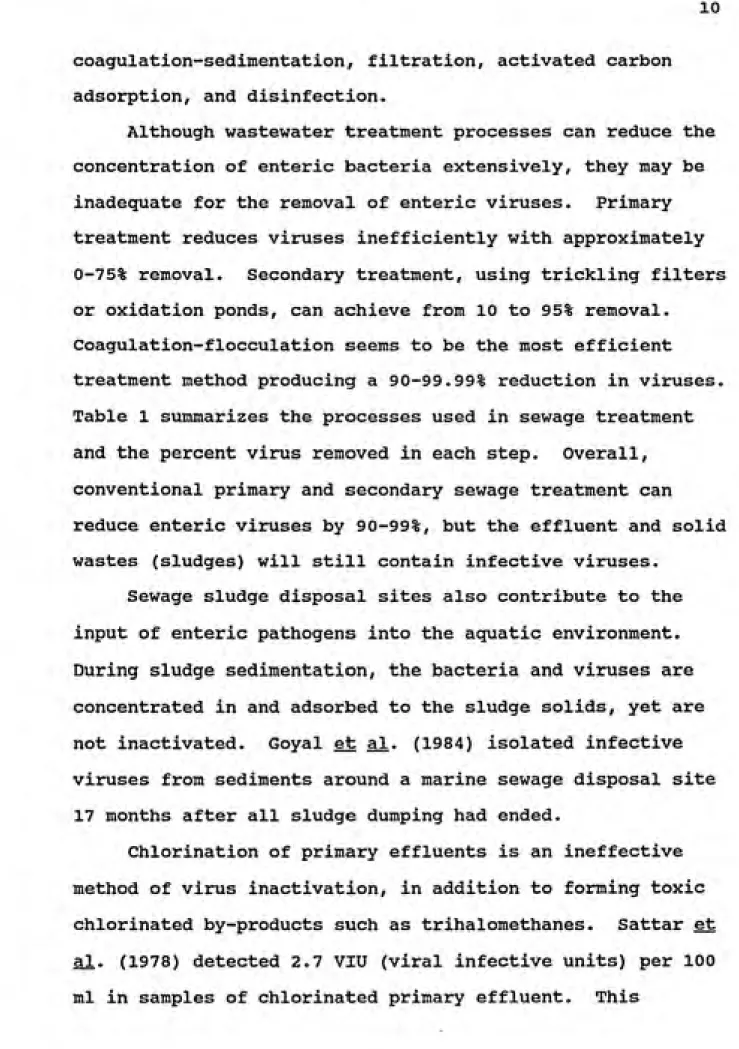
Although wastewater treatment processes can reduce the concentration of enteric bacteria extensively, they may be inadequate for the removal of enteric viruses. Primary treatment reduces viruses inefficiently with approximately
0-75% removal. Secondary treatment, using trickling filters or oxidation ponds, can achieve from 10 to 95% removal.
Coagulation-flocculation seems to be the most efficient
treatment method producing a 90-99.99% reduction in viruses. Table 1 summarizes the processes used in sewage treatment
and the percent virus removed in each step. Overall,
conventional primary and secondary sewage treatment can
reduce enteric viruses by 90-99%, but the effluent and solid wastes (sludges) will still contain infective viruses.
Sewage sludge disposal sites also contribute to the
input of enteric pathogens into the aquatic environment.
During sludge sedimentation, the bacteria and viruses are
concentrated in and adsorbed to the sludge solids, yet are not inactivated. Goyal et al. (1984) isolated infective
viruses from sediments around a marine sewage disposal site
17 months after all sludge dumping had ended.
Chlorination of primary effluents is an ineffective method of virus inactivation, in addition to forming toxic
chlorinated by-products such as trihalomethanes. Sattar et al. (1978) detected 2.7 VIU (viral infective units) per 100
TABLE 1
VIRUS REMOVAL IN WASTEWATER TREATMENT PROCESSES
TREATMENT EXPECTED REMOVAL(%)
Primary
Primary Sedimentation 0-75 Chlorination of Primary Sedimentation
effluent 50
Secondary
Trickling Filter 50
Chlorination of Trickling Filter
effluent 50
Activated Sludge 40-90
Chlorination of Activated Sludge
effluent 50-90
Tertiary
Coagulation-Flocculation
and Sedimentation 90-99.99
Activated Carbon Adsorption 10-50 Chlorination of Tertiary effluent 99-99.99
represented a 10- to 50-fold reduction in VIU compared to the primary treatment. Enteric viruses tend to resist
inactivation by disinfection better than coliform bacteria. Enteric viruses may be inefficiently removed by
drinking water processes under typical plant conditions. Enteric viruses, namely poliovirus type 1, were recovered in treated drinking water drawn from a sewage-contaminated
river (Payment, 1981). All treated water samples contained viruses and most contained at least 1-10 cytopathic units
per 100 liters. The water met coliform, turbidity, and other quality standards. Treatment included
prechlorination, flocculation, filtration, ozonation, and postchlorination, and the finished water contained a
residual chlorine level and no coliforms.
B. Persistence and Factors Influencing the Survival of
Enteric Bacteria and Viruses in the Aquatic Environment Once bacteria and viruses enter the aquatic environment from various sources, the potential for transmission of
disease depends on their survival in the receiving waters.
Enteric viruses have been demonstrated to be more persistent in seawater and sediments than coliform bacteria (Bitton,
1980; Kapuscinski and Mitchell, 1980; Sattar, 1981). Moreover, indicator bacteria in surface waters do not
reflect the concentration of enteric viruses in the water
and sediments (LaBelle et al., 1980). Compared to bacterial
pathogens, enteric viruses have a very low infective dose.
For example, a dose of 1 x 10^ toxigenic E. coli is required
an enterovirus can cause infection (Bitton, 1980).
Therefore, even small amounts of enteric viruses should be prevented from entering the aquatic environment.
Physical, chemical, and biological factors can
influence the persistence or inactivation of enteric
bacteria and viruses in receiving waters. Table 2 shows a
summary of these different environmental factors.
The physical factors governing the survival of enteric
bacteria and viruses include temperature, sunlight,
dilution, and adsorption to solids. Thermal inactivation
studies of bacteria and viruses have shown that higher
temperatures lead to a rapid loss of infectivity and low
temperatures prolong persistence. O'Brien and Newman (1977)
demonstrated that a 1-log reduction of poliovirus required
25 hours and coxsackievirus required 7 hours at temperatures
ranging from 23-27°C. When tested at 4-8°C, the log
reduction times for poliovirus and coxsackievirus increased
to 46 and 58 hours, respectively. In addition, temperature
affects natural aquatic microbial activities, such as
predation and enzyme production, which contribute to enteric
bacterial and viral degradation.
Sunlight, specifically ultraviolet radiation, can
penetrate the water surface and damage microbial nucleic
acid. Ultraviolet light has long been known to inactivate
bacteria and viruses, but may be ineffective in waters with
a high concentration of suspended and dissolved organic
TABLE 2
FACTORS AFFECTING ENTERIC BACTERIA AND VIRUS PERSISTENCE
IN WATER
PHYSICAL
1. Temperature
2. Sunlight
3. Dilution Effects
4. Adsorption to Particulates and Sedimentation
5. Aggregation
6. Presence of Pollution
7. Sedimentation
CHEMICAL
1. pH
2. Salinity
3. Presence of Cations
4. Heavy Metals
5. Dissolved Organic Matter
BIOLOGICAL 1. Virus Type
2. Predation
3. Enzymatic Degradation 4. Shellfish Accumulation
and viruses are reduced by physical dilution in receiving
waters. But the reliance on these "self-purification" processes alone is becoming inadequate to protect the quality of man's drinking water supplies, food-resource
waters, and recreational waters.
Because they are charged colloidal particles, viruses are able to adsorb to suspended and particulate solid
surfaces. Greater than 99% of enteric viruses rapidly adsorb to estuarine sediments (LaBelle and Gerba, 1980). Moreover, adsorbed viruses retain their infectivity and can
accumulate in the sediments.
Numerous studies have demonstrated that adsorption to sediments can protect bacteria and viruses and increase
their persistence in the aquatic environment. LaBelle and Gerba (1980) studied the survival of polio- and echoviruses
in estuarine sediments near sewage outfalls. Both
enteroviruses displayed reduced inactivation rates when adsorbed to sediment. In addition, this study suggested that, in the presence of sewage effluents, viruses persist
longer in sediments but not in surface waters. Another
study found enteroviruses to survive longer when associated
with both suspended and sedimented solids. Poliovirus and
rotavirus SA-11 survived for 19 days when attached to
solids, but survived only 9 days in seawater alone (Rao et
al.. 1984). In addition, Gerba and McLeod (1976) showed
that E. coli had higher survival rates in sediments than in
inactivation when adsorbed. Liew and Gerba (1980) demonstrated that poliovirus adsorbed to sediments had
longer survival times at 24 and 37°C, but displayed no
significant changes in persistence at 4°C.Chemical factors include pH, salinity, and the presence of cations, heavy metals, and dissolved organics. Most
bacteria and viruses are relatively stable at the pH of
natural waters (pH 5-9). Siegl et al. (1984) found both HAV
and poliovirus to be stable between pH 3-10 at 20°C for 30
minutes. However, alkaline pHs greater than or equal to 11
have been shown to inactivate enteroviruses (Bitton, 1980). Salinity does not seem to play a consistent role in the
inactivation of bacteria or viruses, although sudden changes
in isotonic conditions, such as in an ocean outfall, may
result in greater bacterial and viral instability. The
presence of cations, such as Mg"*"^, can protect enteroviruses
against inactivation and enhance adsorption to particulates.
Mitchell (1971) found that heavy metals played a role in
viral inactivation. The increased survival of the
bacteriophage ©X-174 in both autoclaved and filtered
seawater was probably due to the absence of heavy metals.
By competing with viruses for adsorption sites on
particulates, dissolved organics can limit viral protection
by adsorption and can reduce virus survival in the aquatic
environment.
Microorganism type, predation, and enzymatic
persistence. Inherent structural and biochemical
differences in the many varieties of bacteria and viruses cause them to react to environmental processes in different ways. Predation on enteric bacteria and viruses by
indigenous marine bacteria, protozoa, and bacteriophages reduces persistence. These native organisms possess the ability to grow and survive better than enteric organisms at
the low nutrient levels found in receiving waters. Shuval et al. (1971) reported a heat-labile, nonfilterable factor
in seawater which inactivated viruses and later isolated
marine bacteria capable of diminishing poliovirus 1000-fold
in 7 days. Furthermore, the enzymatic activity of bacteria
contributes to inactivation of enteric viruses in surface
waters (Oliver and Herrmann, 1972). In a recent study, proteolytic bacterial enzymes were shown to inactivate
echovirus in freshwater by cleaving the protein capsid (Ward
et al., 1986). This caused the viral RNA to be susceptible
to nuclease digestion.
C. Contamination of Shellfish
Because they live in coastal waters often polluted by
fecal wastes, bivalve molluskan shellfish can become
contaminated with enteric bacteria and viruses. Shellfish,
including clams, oysters, and mussels, feed by filtering
suspended particles from the surrounding water, whereby they
can concentrate enteric microbes in their bodies. This
cooked shellfish can act as vehicles of bacterial and viral diseases.
Enteric bacteria and viruses have been isolated from
many kinds of edible shellfish (Gerba and Goyal, 1978). Important edible shellfish species are summarized in Table
3. Several studies have isolated enteric bacteria and
viruses from both polluted areas closed to shellfishing and
approved areas (Goyal et al., 1979; Vaughn et al., 1980; Ellender et al., 1980; Wait et al., 1983). The percentage of virus-positive shellfish ranged from 9-40% for open waters and 13-40% for closed areas. In all these studies,
enteroviruses were detected in shellfish where no viruses
were isolated from the overlaying waters.
Enteric viruses can survive in shellfish for long periods. Viruses have been reported to survive longer within shellfish than in seawater probably because of protection from virus-inactivating factors (Hedstrom and Lycke, 1964; Metcalf and Stiles, 1965). Lower temperatures
seem to prolong virus survival in oysters. Metcalf and Stiles (1968) showed that enteroviruses will persist in
oysters for at least four months at temperatures below 7°C.
In another study, refrigerated oysters were examined over
time for poliovirus survival (DiGirolamo et al., 1970). In
chilled Olympia oysters, poliovirus was reduced by only 10%
after 5 days of storage at 5°C and by 60% after 15 days.
After 30 days of storage at 5°C, 13% of the poliovirus was
TABLE 3
IMPORTANT EDIBLE SHELLFISH SPECIES
SCIENTIFIC NAME COMMOM NAME
Crassostrea virginica
Crassostrea qjqas
Crassostrea commercialis
Clinocardium nuttalli
Mya arenaria
Mercenaria mercenaria
Mercenaria campechiensis
Mytilus edulis
Ostrea lurida
Ostrea edulis
Tapes iaponica
Eastern oyster
Pacific oyster Sydney Rock Oyster Cockle
Soft Shell Clam
Hard Shell Clam
or Northern Quahaug Southern Quahaug
Blue Mussel
Olympia Oyster European Oyster
Virus survival in typical shellfish cooking methods was also examined (DiGirolamo et al., 1970). Poliovirus
survived to a greater degree in fried and baked oysters than in steamed and stewed oysters. After 8 minutes of stewing, 10% of the poliovirus remained infectious, and 13% survived frying for 10 minutes. Baked oysters retained 13% viable
poliovirus after 2 0 minutes in an oven at 121.5°C, while 30
minutes of steaming resulted in a 2-log reduction and
approximately 7% of the poliovirus survived. Mazanti (1987)
showed that HAV was not inactivated to acceptable levels
under pasteurization conditions. At conditions of 62.8°C
for 30 minutes and 71.7°C for 15 seconds, HAV was
inactivated to 99.8% and 99.95%, respectively. In contrast, poliovirus displayed complete (greater than 99.999%)
inactivation at 62.8°C in l minute and at 71.1°C in 30 seconds.
D. Coliform Standards for Shellfish
There is a need for a reliable indicator of fecal
contamination in shellfish and shellfish-harvesting waters because of the potential for transmission of disease-causing pathogens. The National Shellfish Sanitation Program (NSSP)
established nationwide sanitation standards for U.S.
shellfish and shellfish-growing waters over 40 years ago. The indicator system is based on levels of total and fecal coliform bacteria. The standards for "approved" shellfish
fecal coliforms per 100 ml, and no more than 10% of the
samples can exceed a MPN of 230 and 43 per 100 ml,
respectively. In addition, fecal coliform MPN must not exceed 230 per 100 grams of shellfish meat (FDA, 1987).
During 1977-1979, 36% of the total shellfish-growing area in
13 U.S. states was closed because of failure to meet these
bacterial standards (Rao and Melnick, 1986).
Reasoning behind this system argues that the presence of coliforms is reasonably indicative of fecal contamination and that coliform levels are usually higher than levels of pathogenic organisms. In addition, the methodology involved is fairly easy and inexpensive. Therefore, the use of these standards is an economic means of reducing the risk of
disease acquired by the consumption of contaminated shellfish.
Although enforcement of current sanitation standards has resulted in adequate protection from bacterial disease, recent studies have questioned the ability of coliform
standards to indicate viral contamination of shellfish and
shellfish-harvesting waters (Gerba and Goyal, 1978; Morris and Waite, 1981; Larkin and Hunt, 1982). Enteroviruses have
been isolated in water and shellfish from approved
harvesting areas (Fugate et al., 1975; Goyal et al., 1979; Vaughn et al., 1980). In addition, no significant
relationship has been found between concentrations of
enteric viruses or coliform bacteria in shellfish or
al., 1980; Wait et al., 1983). Outbreaks of hepatitis A have been associated with the consumption of raw oysters harvested from "approved" waters (Portnoy et al., 1975).
Thus, the virological quality of shellfish and their
overlying waters and the resulting risk of viral disease is not adequately controlled by current coliform standards.
Because of the unreliability of coliform bacteria to assess the presence of enteric viruses, other indicator organisms have been considered. Fecal streptococci, bacteriophages, and selected enteric viruses (usually
poliovirus) have all been evaluated as candidate indicators of viral contamination, but none have proven reliable for
the detection of all enteric viruses (Morris and Waite, 1981). Therefore, it seems that the only valid indication
of viral contamination at present is the direct demonstration of specific viruses.
III. Epidemiology of Shellfish-Related Disease
Due to the increasing pollution of shellfish-growing waters and the ability of shellfish to concentrate bacteria and viruses in their bodies, shellfish pose a threat to the consumer. The consumption of raw and partially cooked
shellfish has been associated with outbreaks of bacterial
and viral diseases. Between 1900 and 1983, 198 outbreaks involving 8,659 cases of shellfishborne enteric disease were
reported in the U.S..
Several factors contribute to the occurence of enteric
current coliform standards are inadequate indicators of viral contamination of shellfish and their overlying waters. In addition, improperly classified growing waters and
shellfish poaching can result in the harvesting and
distribution of contaminated shellfish. Heavy flooding and rainfall increases storm runoff, overburdens sewage
treatment plants, and suspends sediments and can lead to significant quantities of fecal contaminants reaching "approved" areas. Finally, inadequate shellfish-tagging
requirements have failed to identify sources of contaminated shellfish.
In the past, outbreaks of typhoid fever have been traced back to the consumption of contaminated shellfish
(Richards, 1985). The incidence of bacterial illness caused by ingesting shellfish has been on the decline because of the current shellfish sanitation measures. An indigenous marine bacterium. Vibrio parahaemolyticus. may play a role
in recent outbreaks of shellfishborne gastroenteritis. This organism is the most frequent cause of food poisoning in Japan and has been isolated in U.S. coastal waters
(Earampamoorthy and Koff, 1975).
Hepatitis A is one of the most important viral diseases transmitted by the consumption of contaminated shellfish.
During 1961-1982, the ingestion of contaminated shellfish was responsible for over 1000 cases of hepatitis A in the
shellfish-associated hepatitis A in the U.S.. The
transmission of hepatitis A through shellfish has also been investigated in other countries. Between Nov. 1, 1980 and
April 30, 1981, 450 cases of infectious hepatitis caused by the consumption of cockles were reported in England
(O'Mahony et al., 1983). In addition, O'Hara et al. (1983)
retrospectively determined that an outbreak of hepatitis A
among the Japanese Overseas Corporation Volunteers stationed in the Phillippines was due to the consumption of
contaminated raw oysters.
In addition to hepatitis A virus, other enteric viruses have been implicated in nonbacterial gastroenteritis
resulting from shellfish consumption. The first documented outbreak of shellfish-related Norwalk virus gastroenteritis
occurred in Australia and involved more than 2 000 people (Murphy et al., 1979). In 1982, at least 103 persons were
involved in outbreaks of clam- and oyster-associated
gastroenteritis in New York state. The causative agent was suggested to be the Norwalk virus (Morse et al., 1986). In
London, there were 181 cases of viral gastroenteritis associated with the consumption of depurated oysters
contaminated with small round structured viruses (Gill et
al.. 1983). The work by Grohmann et al. (1981)
demonstrated the ineffectiveness of current depuration practices to remove viral contamination. In that study,
depurated oysters that met the bacteriological standards
TABLE 4
OUTBREAKS OF SHELLFISH-ASSOCIATED HEPATITIS A SINCE 1961
YEAR CASES 1961 84 1961 459 1961 15 1961 31 1962 3 1963-6 46 1964 123 1964 249 1964 3 1964 43 1964 3 1966 4 1966 3 1966 4 1967 3 1968 3 1969 6 1969 13 1971 5 1971 3 1972 2 1973 263 1973 15 1973 37 1973 1 1977 17 1979 10 1982 11 SOURCE oysters clams clams oysters clams oysters/clams clams clams oysters clams clams clams clams clams oysters/clams clams clams oysters clams clams clams oysters oysters oysters clams shellfish oysters clams LOCATION Alabama and Mississippi New Jersey,
and New York Connecticut
Alabama New York Mass.
Conn, and RI Pennsylvania N.C. New York Wash.,D.C. New Jersey Mass. New Jersey Texas New York New York Florida Mass. R.I. Florida,Mass Texas Georgia Louisiana Minnesota Washington Alabama,Fla. New York
IV. The Accumulation of Enteric Bacteria and Viruses in
Shellfish
A. The Oyster and Feeding
Oysters are filter-feeding bivalve molluscs of the
class Pelecypoda. The eastern oyster, Crassostrea
virainica. is found in estuaries attached to hard surfaces and forming beds. The soft, fleshy oyster body is
completely enclosed within two hinged shells called valves. Oysters feed on plankton by pumping large volumes of water through the shell cavity. The pumping rate is affected by environmental parameters such as temperature and turbidity. Ciliary action moves the water across the oyster body where small particles (plankton, bacteria, and viruses) are
trapped on the mucus sheet secreted by the gills. The mucus
is pushed by ciliary action toward the mouth. The
chemoreceptive mouth can sort particles on the basis of size
and shape. Accepted food particles enter the stomach where
they are digested by extracellular enzymes. Any unaccepted particles are expelled in the pseudofeces. From the
stomach, dissolved particles are transported to the
digestive diverticulum where phagocytosis, intracellular digestion, and storage occurs. Any undigested particles continue through to the intestine and are excreted in the
B. Mechanisms of Uptake
Bacteria and viruses enter the shellfish cavity when
currents of water are pumped during feeding. Bacteria and
viruses, including those that are adsorbed to particulates, bind to the secreted mucus, are swept by ciliary action to the mouth, and ingested by the oyster. Differences in
surface charge among viruses may cause them to accumulate in
shellfish at different rates (Duff, 1967). DiGirolamo et al. (1977) investigated the mechanism of viral uptake by the
shellfish mucus. They concluded that the ionic bonding of viral particles to sulfate radicals on the
mucopolysaccharide fraction of shellfish mucus was the major mechanism of virus entrapment on the mucus layer. In
addition, the influence of salinity and pH on the uptake of
viruses by shellfish suggested that ionic bonding is unlikely to be the only means of attachment.
C. The Concentration of Enteric Bacteria and Viruses by Shellfish
Filter-feeding shellfish tend to concentrate bacteria
and viruses from the water in which they grow. Shellfish
can accumulate bacteria to concentrations 10-40 times higher than levels in the surrounding water (Kelly et al., 1960;
Mitchell, 1966). Viruses may occur in shellfish at
concentrations up to 60 times greater than those found in
the overlaying waters (Mitchell et al., 1966). viruses accumulate mainly in the shellfish hepatopancreas and
digestive diverticulum, but phagocytic ingestion can
1965; Canzonier, 1971; Richards, 1988). No multiplication of viruses in shellfish is known to occur, yet bacteria may
multiply quickly. Within a few hours, bacteria and viruses can accumulate in shellfish to levels equivalent to those in
the ambient water, and as long as sufficient numbers of bacteria and viruses occur in the water, these levels will
continue to be maintained (Hedstrom and Lycke, 1964; Mitchell et al., 1966; Perkins et al., 1980).
The extent of microbial concentration by shellfish is affected by various factors. The level of contamination in
the water column affects the accumulation of bacteria and
viruses by shellfish. Studies have shown that the amount of contamination in the water is directly related to the level
of accumulation by shellfish (Mitchell et al., 1966; Landry
et al., 1982).
Interspecies differences among shellfish have been
shown to affect virus bioaccuraulation. DiGirolamo et al.
(1975) found that at least 86% of poliovirus present in seawater was accumulated within 12 hours by Olympia oysters, while Pacific oysters took 48 hours to attain the same
degree of concentration.
The concentration of bacteria and viruses is affected
by the temperature of the overlying waters. Metcalf and Stiles (1968) reported that oysters did not accumulate virus
at temperatures below 7°C, while temperatures above 7°C
initiated pumping and feeding. Therefore, the physiological
temperatures. A study by Meinhold (1982) found that the
maximum uptake of poliovirus by the oyster occurred in 5
hours at 6°C, 2-3 hours at 17°C, and 1-3 hours at 28°C.
The presence of particulate matter seems to affect the uptake rate of shellfish. The effect of turbidity on
poliovirus accumulation in the oyster was demonstrated by Hamblet et al. (1969). Highly turbid waters (54-80ppm) were
inhibitive to virus accumulation, and oysters concentrated 2-3 times less poliovirus in highly turbid waters than in waters of low turbidity (8-24ppm). Hoff and Becker (1969)
reported thet E. coli and cell-associated viruses were
accumulated to levels 40-60 times higher in Pacific oysters
and Manila clams than were clarified free viruses. In addition, Metcalf et al. (1979) showed that feces- and
solid-associated poliovirus was accumulated more efficiently
than was free virus. These results may be due to either
feeding stimulation by the presence of particulate matter or to more selective acceptance of particles larger than
viruses by the shellfish.
V. Elimination and Depuration of Enteric Bacteria and Viruses in Shellfish
A. Mechanisms of Elimination
When placed in clean water, shellfish have the ability to rid themselves of accumulated microorganisms. The
mechanisms of elimination include active elimination,
physical inactivation, and phagocytic digestion. Enteric
bacteria and viruses can be eliminated from shellfish in the
excretive processes. However, some microorganisms may be
ingested by shellfish phagocytes as a means of
intracellular digestion or protection from foreign substances. Bacteria are probably more susceptible to elimination by phagocytic action than are viruses.
Phagocytes eliminate bacteria from shellfish through either exportation to the surrounding water or digestion by
phagocytic enzymes (Hartland and Timoney, 1979; Perkins et
al., 1980). In contrast, phagocytes may transport viruses
to other tissues where they are removed from normal
elimination processes and can remain for long periods of time. Fries and Tripp (1970) demonstrated that oyster
leukocytes could phagocytize a 60nm algal DNA virus within 2 hours of exposure. Although a phagocytic mechanism for
removal of naturally accumulated viruses has not been demonstrated, viruses have been found in the shellfish
hemolymph (Liu et al., 1966; DiGirolamo, 1975; Metcalf et al., 1979; Metcalf et al., 1980). Furthermore, physical inactivation, mainly involving temperature, can also account
for the reduction of bacteria and viruses in shellfish (Canzonier, 1971).
B. Depuration
Controlled purification is a process used to eliminate contaminating microorganisms from shellfish. This process relies on the ability of shellfish to "self-purify" when
placed in clean flowing water. In the U.S., shellfish
meeting the water quality requirements for restricted or
approved areas. Thus, these waters must have less than 700
total coliforms per 100 ml or less than 88 fecal coliforms per 100 ml and no more than 10% of the samples can exceed 2,300,per 100 ml (FDA, 1987).
Relaying and depuration are two methods of controlled purification. Relaying involves the transfer of shellfish from polluted to approved waters. Reharvesting of relayed shellfish is allowed after 2 weeks. In depuration
processes, shellfish are placed in tanks fed with flowing purified seawater. The seawater is used in a flow-through or recirculating fashion and may be purified by filtration, UV irradiation, ozonation, or chlorination. The use of
chlorine or ozone, however, is less desirable because
residual levels can inhibit shellfish physiological processes involved in elimination.
In order to optimize shellfish elimination activity, environmental conditions of the depuration system must be controlled. Depuration standards include water quality controls for dissolved oxygen, coliform bacteria, salinity, temperature, pH, turbidity, and flow rate. In addition, shellfish must be depurated for a minimum of 48 hours.
Water quality criteria must be developed for each species of
shellfish which is commercially depurated. Table 5
summarizes the U.S. water quality depuration standards for
TABLE 5
DEPURATION WATER QUALITY STANDARDS FOR OYSTERS
Minimum Maximum
Temperature
Turbidity
PH
Salinity
Dissolved Oxygen
Coliform bacteria
Flow rate
10°C 25°C
---- 20 NTU 7.0 8.4
within 20% of harvest area
5.0 mg/1 saturate
---- 1/lOOml
1 gpm/bushel
After the specified time, the depurated shellfish are
sampled and the effectiveness of the depuration process is evaluated by bacteriological analysis. Depurated hard shell
clams (Mercenaria mercenaria) and eastern oysters (Crassostrea virginica) must not exceed a mean fecal
coliform count of 20 per 100 grams of shellfish meat and no
more than 10% of the samples may exceed 20 per 100 grams.
No single sample may be in excess of 100 fecal coliforms per 100 grams nor may the arithmetic mean of duplicate samples
exceed 75 fecal coliforms per 100 grams (FDA, 1987).
Commercial depuration of shellfish is expensive and is practiced only on a limited scale in the U.S. (Cook and
Ellender, 1986). Only approximately 19 plants are
depurating soft shell clams, hard shell clams, and oysters in the U.S.. However, depuration is widely practiced in Europe and Australia. Depurated shellfish can command a premium price in the marketplace because they are less gritty and may have a more salty taste than nondepurated shellfish.
Although depuration may reduce fecal coliforms in
depuration processes on pathogenic bacteria and enteric viruses is conflicting.
Janssen (1973), using a recirculating UV light
depuration system, found that the eastern oyster retained high levels of Salmonella typhimurium and Francisella
tularensis for 49 and 11 days, respectively. Son and Fleet
(1980), however, reported effective depuration of Bacillus
cereus, Clostridium perfrinqens. Salmonella, and Vibrio parahaemolyticus within 2-3 days in the Sydney rock oyster. Concentrations of coliforms and E. coli were substantially reduced in the commercial depuration system used by Eyles and Davey (1984). However, on three occasions, the process
failed to reduce E. coli to acceptable levels. They also
found that potentially pathogenic bacteria (Vibrio
parahaemolyticus and V. cholera) persisted in naturally
contaminated depurated oysters. These results disagree with the work by Son and Fleet (1980) who showed rapid depuration of V. parahaemolyticus in laboratory-inoculated oysters. Thus, the mode of contaminant uptake and the origin of the
contaminant can affect the rates of depuration in shellfish.
Studies evaluating the elimination of enteric viruses by shellfish depuration have generated different results.
coliforms, with the virus persisting in oysters having less than 50 fecal coliforms per 100 grams. In a study using coliphage S-13, Canzonier (1971) demonstrated persistence of the virus for 6 days, while E. coli was rapidly depurated in
24-48 hours. In addition, hepatitis A virus may persist longer than poliovirus during depuration. While oysters reduced poliovirus by greater than 98% in 2-3 days, HAV generally did not depurate more than 90% after 72 hours
(Sobsey et al., 1987). These studies suggest that shellfish depuration based on the reduction of fecal coliforms within 48 hours may not eliminate the risk of shellfish-associated
viral disease.
In fact, the consumption of depurated shellfish has
been associated with outbreaks of viral disease. Following an oyster-associated outbreak of Norwalk gastroenteritis involving over 2,000 persons in Australia, human volunteers were used to test-consume depurated oysters (Grohmann et al., 1981). The oysters were purified by either relaying into pollution-free waters for 7 days or depuration for 48 hours. Although depurated oysters met the bacteriological standards of less than 230 coliforms for 100 grams of oyster meat, 52 volunteers who test-consumed these oysters became
ill with Norwalk gastroenteritis. Another study linked
depurated oysters to an outbreak of viral gastroenteritis in England. Viral gastroenteritis occurred in 181 people who had eaten raw oysters that had been depurated for 72 hours
C. Factors Affecting Rates of Elimination
The rate of elimination depends on the extent of
contamination, the type of shellfish, the specific contaminant, and several environmental factors. The original level of pollution in the water affects the
depuration process. When pollutant levels decrease in the shellfish-growing area, so do the acumulated contaminant levels in the shellfish. Thus, virus levels in shellfish
will decrease as the virus concentration in the water
decreases (Hedstrom and Lycke, 1964; Metcalf and Stiles, 1965). Additionally, the effectiveness of depuration is influenced by the extent of contamination of the shellfish. Heavily contaminated shellfish require longer depuration times than do lightly contaminated ones (Metcalf and Stiles,
1965; Janssen, 1973; Metcalf et al., 1980; Perkins et al., 1980; Son and Fleet, 1980; Cook and Ellender, 1986).
Research has shown that shellfish harvested from marginally
polluted waters are able to depurate to acceptable market
quality after 48 hours, while shellfish contaminated with high levels of bacteria and viruses do not completely depurate during this time (Metcalf et al., 1979).
Differences in virus surface charge may cause viruses
to be eliminated at different rates. Because viruses bind
to the negatively charged sulfate radicals in the shellfish mucus (DiGirolamo et al., 1977), viruses with a stronger
elimination for different viruses have been studied and are
described here. Poliovirus depuration occurs rather
quickly, with approximately 80-99% removed in 48 hours (Hoff
and Becker, 1969; Liu et al., 1967; Metcalf et al., 1979;
Davis, 1986). After 48 hours, depuration is much slower with low levels of virus persisting even after 6 days. However, other studies have demonstrated more rapid
elimination of poliovirus. Mitchell et al. (1966) reported
over 95% of poliovirus was removed from Crassostrea
vircfinica within 8 hours and greater than 99.9% was
eliminated within 24 hours. Hepatitis A virus can persist longer than poliovirus during depuration. Sobsey et al.
(1987) found that Eastern oysters reduced HAV by less than
90% after 5 days, under most conditions tested. The species of shellfish is another variable
determinant of elimination rates. The Eastern oyster can eliminate viruses to undetectable levels in 24 hours, while
the soft shell clam requires 48 hours (Hoff and Becker, 1969). In addition, variability in individual shellfish activity during depuration influences the overall
elimination rate. Depuration studies using pooled shellfish
samples can result in apparent slow elimination rates if a few shellfish are not functioning well and fail to depurate the virus (Seraichekas et al., 1968; Metcalf et al., 1979).
The effectiveness of shellfish depuration depends on
several environmental factors. Environmental conditions
feeding activities of shellfish. However, each species of shellfish may depurate more effectively in different
environmental conditions. Therefore, optimal water quality criteria ranges must be established for each shellfish
species.
The water temperature can determine the physiological activity of shellfish with generally lower temperatures resulting in lower activity or inactivity. Liu et al.
(1967) studied the effects of water temperature on viral depuration in Mercenaria mercenaria. and demonstrated
depuration performance to be a function of temperature. At
18-20°C, enteric viruses were not detectable within 48
hours, but at 5-6°C, approximately 96 hours were required
for depuration. The elimination of Salmonella charity and
Escherichia coli from Crassostrea commercialis was shown to
be more rapid at the water temperature range of 18-22°C than
at 24-27°C, and incomplete depuration resulted at
temperatures below 17°C (Rowse and Fleet, 1984). At higher
temperatures, fecal coliforms and poliovirus are eliminated
at a faster rate in relaid Eastern oysters (Crassostrea virqinica) (Cook and Ellender, 1986). At temperatures less
than 20°C, oysters failed to eliminate poliovirus within 2
weeks, whereas complete depuration occurred in less than one
week at temperatures greater than 25°C. In another study,
Sobsey et al. (1987) demonstrated that the rate of
and 12°C in Crassostrea virginica, while HAV was not
extensively depurated at any temperature.
Several studies have demonstrated that purification is
ineffective at salinities below those to which the shellfish
are acclimated. Liu et al,. (19 67) showed that the reduction of salinity to 75% of the original level did not affect
depuration, while a further reduction to 50-60% of the
original salinity stopped the depuration process. Rowse and Fleet (1984) demonstrated reduced pumping rates, ineffective purification, and death in oysters exposed to lower
salinities (16-20 ppt). Exposure to higher salinities (32-47 ppt) did not result in weakened pumping activity or
mortality and produced effective depuration. Sobsey et al. (1987) found that oysters depurated HAV more effectively at 28 ppt than at lower salinities (8 and 18 ppt). At 28 ppt, less than or equal to 5% and 1% of the original HAV remained
in oysters depurated after 2-3 days and 5 days respectively,
whereas 10-41% remained after 5 days at 8 and 18 ppt. In addition, poliovirus was eliminated more slowly at 8 ppt than at the higher salinities. These studies provide
evidence for a guideline in which the depuration water should maintain salinities above a minimum level to assure
maximum shellfish depuration. Differences in depuration rates at high and low salinities may be a result of
Turbidity does not affect the ability of shellfish to eliminate contaminants, provided the turbidity is not so excessive that water disinfection processes are impaired or gill closing of shellfish occurs. Hamblet (1969) found that Crassostrea virainica depurated poliovirus to nondetectable levels within 48 hours at both low (8-21 ppm) and high (54-80) turbidities in a flow-through system. Hoff and Becker studied the differences in the depuration of cell-associated and filtered poliovirus in Manila clams and Olympia oysters.
They demonstrated that the crude cell-associated virus persisted longer than did the free filtered virus in both
species of shellfish. Crude virus preparations are probably
more similar to viruses found in the natural environment.
Depuration occurs more rapidly in a flow-through system than in a static system. Comparing the two systems,
DiGirolamo et al. (1975) found that Olympia and Pacific
oysters eliminated 99% of poliovirus after 3 days in a
flow-through system, whereas only 74-84% was eliminated in a static system after 5 days. Mitchell et al. (1966)
demonstrated poliovirus to be reduced to greater than 99.9% within 24 hours in Crassostrea virginica using a
flow-through system. Limited oxygen and food and the
concentration of metabolic wastes in a static system may impair the feeding activities of shellfish. A flow-through
system is more likely to simulate the natural environmental
conditions; therefore leading to maximum feeding and
D. Summary
Current literature contains much information on the
depuration of E. coli and poliovirus from contaminated shellfish. However, relatively little is known about the elimination characteristics of HAV by shellfish under
depurating conditions. Previous depuration studies compared HAV elimination to that of poliovirus in a laboratory-scale depuration system using synthetic sea water (Sobsey et al.,
1987), In order to more effectively evaluate the depuration of HAV, the use of internal bacterial and viral controls in depuration experiments would help to compare the results with previous studies. In addition, the use of natural sea water may simulate natural conditions better than synthetic
sea water, and may improve the pumping efficiency of the
I. Media and Components
All media and their formulations are described in the
Appendix A.
II. Cultivation and Assay of Test Organisms
A. Cell Culture
Hepatitis A virus was propagated and assayed in fetal rhesus monkey kidney (FRhK-4) cells. Poliovirus type 1 was grown and assayed in Buffalo Green Monkey Kidney (BGMK) cells. Described below is the procedure used for the production and maintenance of these cell lines.
Cells were grown in Falcon 800 cm^ roller bottles or
150 cm^ flasks using Eagle's Modified Minimum Essential
Medium (Ix MEM) containing 10% fetal calf serum. The cell cultures were incubated at 37°C for 5-7 days and allowed to
grow to confluency. Once the cells formed a confluent
layer, the old growth medium was decanted, the cell were
rinsed with warm PBS, and a 0.05% Trypsin-0.02% EDTA
solution was added to the flask or roller bottle. After the
cell layer was removed from the surface, the cell suspension
10^ cell/ml (BGMK) or 5 X lo'^ cells/ml (FRhK) . Five
milliliters of the cells were dispensed into 60 x 15 mm
tissue culture dishes and incubated in 5% CO2 at 37°C.
After 5-7 days, the cells reached confluency and were used for virus assay.
B. Propagation of Test Organisms B.1. Hepatitis A Virus
A cytopathic strain of HAV, known as pHM-175, was used in these experiments. For HAV propagation, confluent
monolayers of FRhK-4 cells were rinsed with serum-free
maintenance media and inoculated with the virus at a
multiplicity of infection (MOI) of 0.1-0.01 infectious units
per cell. The cultures were incubated at 37°C for 1 hour
and then fresh maintenance media (with serum) was added.
The cells were incubated at 37°C for 5-7 days until they
showed at least 50% cytopathology.
The virus was harvested from the cells by
freeze-thawing and scraping the cells from the flask surface with the frozen medium. The thawed cell lysates were pooled into 250 ml centrifuge tubes and sonicated for 3 minutes total
with 15 second bursts not above the 70-75 Watts setting.
The HAV preparation was then extracted with 1/2 volume of
Freon and centrifuged at 4000 rpm for 20 minutes.
Experimental stock HAV was recovered in the supernatant.
The cell debris and Freon material was extracted with 0.1%
X g for 15-20 minutes at 4°C. HAV stocks were stored frozen
at -70°C until use.
B.2. Poliovirus-1
The vaccine-derived LSc strain of poliovirus was used in all the experiments. Roller bottles of confluent BGMK cells were drained of the growth medium and inoculated with the virus at a MOI of 0.1-0.01 infectious units per cell. The virus was allowed to adsorb to the cell cultures at 37°C for 2 hours and then cell layers were rinsed three times
with maintenance media. Fresh maintenance media was added
to the roller bottles and the cells incubated at 37°C for
1-3 days. When the cells reached nearly complete
cytopathology, the cultures were frozen and thawed three
times and clarified by centrifugation at 5000 rpm for 20
minutes. The viruscontaining supernatant was stored at -70°C for assay and experimental use.
B.3. Bacteriophage MS2
The bacteriophage MS2, which infects male-specific strains of Escherichia coli, was used in these experiments. Stock bacteriophage MS2 was grown on an E_^ coli C3000 host
by the soft agar overlay plate lysis method and partially
purified from infected cell debris and soft agar by fluorocarbon extraction and filtration through a 0.2 um
porosity filter (Rovozzo and Burke, 1973). The phage stock was stored at -70°C until use. The stock used contained 5.9
B.4. E. coli B
Stock cultures of E^ coli B were maintained on slants
of Nutrient Agar #2. A loopful of E^ coli B was inolculated
into 3 0 ml of sterile Nutrient Broth #2 in a shaker flask.
The flask was incubated at 37°C for 5 hours with rapid
agitation. The log phase cultures were then centrifuged at 4500 rpm for 20 minutes, and the cell pellet was resuspended in 5 ml of sterile PBS. The resuspended culture was
enumerated by the pour plate method on Modified MacConkey's
Agar at 37°C for 24 hours and stored at 4°C until
experimental use. Generally, one ml of the suspension
contained 10^ colony-forming units (CFU).
B.5. Streptococcus faecalis
Stock cultures of Strep. faecalis were maintained on slants of Brain Heart Infusion (BHI) agar. Strep, faecalis
was inoculated into 30 ml of sterile BHI broth in a shaker
flask and incubated at 37°C for 5 hours with rapid
agitation. The log phase cultures were then centrifuged at
4500 rpm for 20 minutes and the cell pellet resuspended in 5 ml of sterile PBS. The resuspended culture was enumerated
by the pour plate method on m-Enterococcus agar at 40°C for
24 hours and stored at 4°C until experimental use. One
milliliter of the suspension usually contained 10^ CFU/ml.
C. Assay of Test Organisms C.l. Radioimmunofocus Assay
Hepatitis A virus was assayed by the radioimmunofocus
to 85% confluency in 60 x 15 mm dishes at 37°C and 5% CO2.
Growth medium was aspirated from individual dishes and 0.2 ml of a sample dilution was inoculated onto the cells. Samples were inoculated in duplicate. Virus samples were diluted in serum-free virus diluent (HAV) containing sheep
anti-poliovirus serum at a concentration of 1 x 10"-^. The
anti-polio was added to the diluent to inhibit poliovirus infectivity during HAV assay. Inoculated dishes were
incubated for 1 hour at 37°C with the sample redistributed
over the cell layer every 15 minutes. After incubation, the dishes were overlaid with 5 ml of agarose overlay medium
(formulation in Appendix), the agarose was allowed to
solidify, and the dishes were incubated at 37°C and 5% CO2.
After 4 days, the cells received a second agarose overlay
medium and reincubated.
Seven to ten days after initial inoculation, the
agarose overlay medium was gently removed from the dish, and
the cell layer was washed with 2 ml of warm (37°C) PBS.
After being completely air dried, the cells were fixed with
2 ml of cold acetone for 2 minutes. The fixative was
removed and the cells were allowed to dry. To each dish 1.5
ml of I-'-^^-labelled anti-HAV serum (500,000 cpm/ml) was
added and the dishes incubated at 37°C for a minimum of 4
x-ray film (Kodak X-AR5) in film cassettes. The film was
exposed for 4 days at -7 0°C and then developed. The HAV
foci, appearing as black, circular spots on the exposed film, are then counted and the HAV concentrations were
calculated and expressed as radioimmunefocus units (RFU) per
ml.
C.2. Plaque Assay
Poliovirus-1 was assayed by the plaque technique in BGMK cells. Confluent layers of BGMK cells in 60 x 15 mm dishes were inoculated in duplicate with 0.2 ml of each sample dilution. Virus samples were diluted in PBS
containing 2% heat-inactivated fetal calf serum. The dishes
were incubated at 37°C for one hour with the dishes being
tilted every 15 minutes to redistribute the sample. After the adsorption period, an agar overlay medium (formulation in Appendix A) was added to the dishes and then allowed to
harden. The dishes were incubated at 37°C for 2-3 days.
Plaques were counted on day 2 and 3 of the incubation. Poliovirus concentrations were calculated and expressed as
plaque-forming units (PFU) per ml. C. 3 . MS2 Bacteriophacfe Assay
E. coli C3000 host stock was maintained on slants of
Nutrient Agar #2. A loopful of host cells was inoculated
into 30 ml of Nutrient Broth #2 in a shaker flask. The
culture was incubated at 37°C overnight with agitation and
then stored at 4°C until dispensed. Phage samples were
dilution was added to 3 ml of coliphage single strength top agar (nutrient broth #2 with 0.7% agar) in a 16 x 125 screw cap test tube. Then 0.1 ml of host E. coli was added to the sample mixture and mixed gently by rolling between the
palms. The sample-agar-host mixture was poured onto plates containing a base layer of coliphage bottom agar (nutrient
agar #2). Plates were allowed to harden and then incubated
at 37°C inverted. Plaques were counted after 4-6 hours of
incubation. Phage concentrations were expressed as PFU/ml.
C.4. Bacterial Plate Counts
E. coli B levels in oyster homogenate were enumerated
by the pour plate technique. An appropriate amount of
sample was inoculated into 30 ml of molten Modified
MacConkey's Agar, mixed, and then half the volume (15 ml) poured into each of two plates. The agar was allowed to
harden and the plates were inverted and incubated at 37°C
for 24 hours. Small, disk-shaped, brick-red colored colonies were identified as E^ coli B. Colonies were
counted and expressed as colony-forming units (CFU) per ml. Strep, faecalis was enumerated by the pour plate
technique using m-Enterococcus (ME) agar. An appropriate
amount of sample was inoculated into 3 0 ml of molten m-Enterococcus agar, mixed, and then half the volume was poured into each of two plates. The agar was allowed to
harden, and the plates were inverted and incubated at 40°C
dark maroon-colored. Colonies were counted and expressed as
CFU/ml.
III. Oysters
Eastern oysters (Crassostrea vlrqinica) were harvested
from Calico Creek in the lower Newport River estuary near
Morehead City, NC. The oysters were scrubbed under cold
running water to remove mud and barnacles from the shell and
then stored dry at 4°C for a maximum of 3 days after
collection. The oysters were taken out of the refrigerator and brought to room temperature before use in the uptake tank.
IV. Seawater
Natural seawater used for the experiments was pumped
from Bogue Sound, NC. Salinities in Bogue Sound were 28 parts per thousand (ppt) or greater during all experiments. Salinity was controlled by diluting the incoming seawater
with distilled deionized water and measured with a
refractometer. The pH was maintained at 8.0 by addition of HCl or NaOH. Seawater was filtered sequentially through 5 um and 0.45 um pore size pleated cartridge filters. After
filtering, turbidity of the seawater was less than 0.1 NTU. V. Test Organism Recovery From Oysters
For the assay of bacteria and bacteriophage MS2, a sample of oysters was removed from the depuration tank, aseptically shucked with the liquor discarded, and the
oyster meats weighed in a sterile tared beaker. A sample of
volume:oyster weight of distilled water was added and the mixture blended at low speed for 1 minute, followed by high speed for 2 minutes in a semi-micro blender jar. An
appropriate amount of the 1:2 oyster homogenate was removed for bacteriological analysis, and the remaining homogenate was processed by the UNC Oyster Concentration Procedure
(Sobsey et al., 1978; Wait et al., 1981). This method is a modified adsorption-elution-precipitation method used to
concentrate enteroviruses from oysters.
In this virus concentration procedure, 3.5 volumes of cold distilled water was added to the remaining homogenate to dilute the initial oysters 1:7 overall. The mixture was blended at high speed for 3 0 seconds. The homogenate was then transferred to a sterile beaker with a magnetic stir bar. While magnetically mixing the homogenate, the pH was adjusted to 5.0 and the conductivity corrected to less than
or equal to 2000 mg/1 as NaCl by adding distilled water. In this step, viruses are initially adsorbed to homogenized oyster tissue at a low salt concentration and pH. The
homogenate was then centrifuged at 2 000 x g and 5°C for 15
minutes and the supernatant discarded.
Viruses were eluted from the sediment by resuspending
it in 7 volumes of 0.05M glycine-0.15M saline and adjusting
the pH to 7.5. The samples were then centrifuged at 2000 x