Address for correspondence
Dr. Ayesha Anwar, Department of Dermatology, Services Institute of Medical Sciences,
Case Report
Papillon-Lefèvre syndrome: Case report of 3 siblings
in consanguineous family
Ayesha Anwar, Wasifa Hayat, Shahbaz Aman
Department of Dermatology, Services Institute of Medical Sciences, Services Hospital, Lahore
Abstract The Papillon-Lefèvre syndrome (PLS) is a very rare syndrome of autosomal recessive inheritance characterized by palmoplantar hyperkeratosis and early onset periodontitis, leading to premature loss of both primary and permanent dentition. We report three cases of PLS in the same family who presented with all characteristic features. All patients presented with persistent thickening, flaking and scaling of the skin of palms and soles, mobility and rapid loss of teeth. Severe gingival inflammation, abscess formation, and deep periodontal pockets along with loss of teeth were evident on intraoral examination.
Key words
Palmoplantar hyperkeratosis, Papillon-Lefèvre syndrome, periodontitis.
Introduction
The Papillon-Lefèvre syndrome (PLS) was first described by Papillon and Lefèvre in 1924.1 It is an autosomal recessive disorder that is caused by mutations in cathepsin C (CTSC) gene. It is characterized by palmoplantar hyperkeratosis and aggressive periodontitis, has a worldwide prevalence of 1-4 cases per million in the general population and is often related with consanguinity in 20-40% of patients with PLS.1,2 It usually has its onset between the ages of 1 and 4 affecting males and females equally.3
Cutaneous manifestations begin with erythema which progress to hyperkeratosis of soles and palms within 6 months.2 Palmoplantar keratosis, varying from mild psoriasiform scaly skin to overt hyperkeratosis is characteristic. Hyperkeratosis may also affect other sites such as the elbows, knees, eyelids, cheeks, thighs, labial commissures, external malleolus, toes, and
dorsal fingers. This exacerbates in winter, leading to painful fissures.
The second major feature of PLS is severe periodontitis, which starts at the age of 3 or 4 years.1,4 Aggressive periodontitis begins with the primary dentition leading to premature loss of deciduous teeth by the age of 6 years. Afterwards gums heal, until the development of the permanent dentition. Periodontitis reappears and teeth are prematurely lost by the age of 16 years. Severe resorption of alveolar bone gives the teeth a 'floating-in-air' appearance on dental radiographs.
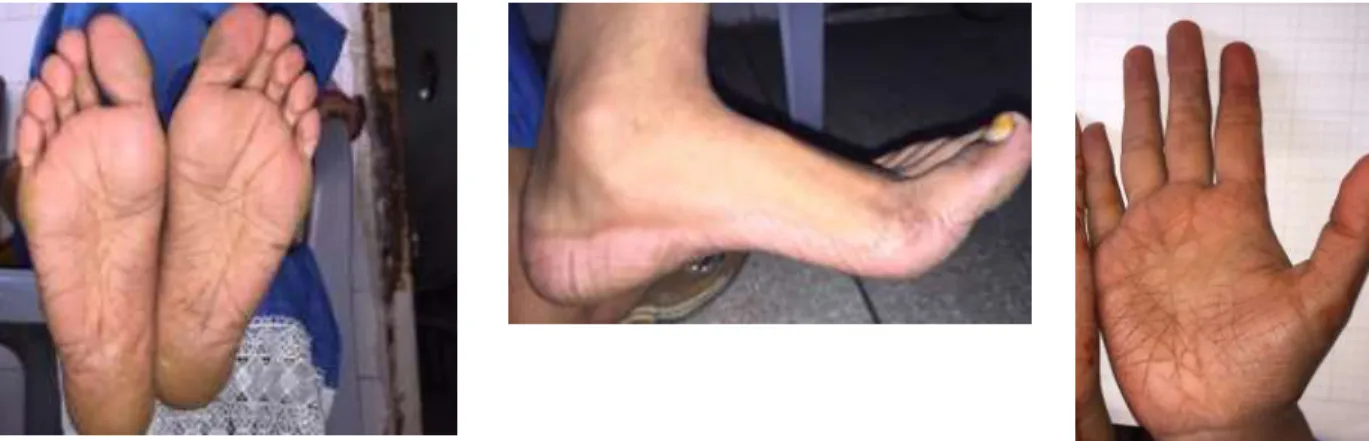
Figure 1Diffuse palmoplantar keratoderma (Case 1).
Figure 2 Plantar keratoderma and psoriasiform plaques on big toe (Case 2).
Figure 4 Missing lower permanent central and lateral incisors (Case 1).
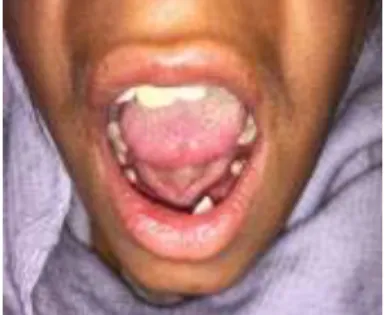
Figure 5Completely edentulous with a few teeth in the right maxillary quadrant (Case 2).
Figure 6 Severe gingival inflammation with heavy deposit of plaques (Case 3). family, having all of the characteristic features
of the syndrome.
Case Reports
A 10-year-old girl (case 1), her younger sister, a 6 year-old girl (case 2), her younger brother, a 4-year-old boy (case 3) reported to the Department of Dermatology, SIMS/Services Hospital, Lahore with complaint of persistent thickening, flaking and scaling of the skin of palms and soles. They also complained of loose teeth and discomfort in chewing along with recurrently swollen and friable gums. The elder siblings also
The rest of their past medical history was unremarkable. The family history revealed consanguineous marriage of the parents. The parents and other 3 family members were not affected. Pregnancy and delivery were normal.
General and cutaneous examination
Psoriasiform, erythematous, scaly plaques were present on the big toe in case 2.
Case 3 revealed thickening and fissuring of the skin of the soles along with psoriasiform erythematous scaly plaques on dorsal surface of both big toes and left lateral malleolus. Diffuse thickening of the skin of palms were present in all cases. Their nails and hair were normal.
Oral examination
Case 1 Lower permanent central and lateral incisors were missing (Figure 4). Severe gingival inflammation, abscess formation and deep periodontal pockets were noticed. Severe mobility affecting all the teeth with heavy deposits of plaque and calculus and halitosis were also present.
Case 2 Few teeth were present in the right maxillary quadrant (Figure 5) and she was completely edentulous in other quadrants. The mucosa of the edentulous area appeared normal.
Case 3 The younger sibling had severe gingival inflammation, abscess formation and deep periodontal pockets. Severe mobility affecting most of the teeth with heavy deposits of plaques and halitosis were present (Figure 6).
Discussion
Papillon-Lefèvre syndrome is an extremely rare disorder that has no predilection for gender or race. The typical clinical features of PLS include palmoplantar hyperkeratosis and generalized aggressive periodontitis accompanied by severe alveolar bone destruction, leading to early loss of both primary and permanent dentitions. The clinical manifestations observed in our patients were hyperkeratosis of the soles, palms and generalized aggressive periodontitis which
resulted in loss of the primary and permanent teeth.10
Various etiological factors are associated with the syndrome like immunologic alterations, genetic mutations and the role of bacteria. Microbiological studies have shown the significant role of Actinobacillus actinomycetemcomitans in the pathogenesis and progression of the rapid periodontal breakdown in PLS.11 An impaired chemotactic and
phagocytic function of polymorphonuclear leukocytes (PMNs) has been described in several studies. It has been shown that inactivation of the cathepsin C gene is responsible for the cutaneous abnormalities and periodontal disease progression.12 We failed to
perform genetic testing in our patients. Their dermatological and periodontal features strongly suggested the diagnosis of PLS.
High incidence of PLS is seen in consanguineous marriages. Three cases reported here were associated with consanguinity of parents. The parents were healthy and no family history of the disease, suggesting an autosomal recessive pattern of inheritance.13
Differential diagnosis
Haim-Munk syndrome It is a rare autosomal recessive genodermatosis characterized by palmoplantar hyperkeratosis, onychogryphosis, arachnodactyly and acroosteolysis. Periodontitis may also be present. Some researchers believe the disorder may be a variant of Papillon-Lefèvre syndrome.
Pachyonychia congenita (PC) It is an autosomal dominant disorder characterized by focal palmoplantar keratoderma, subungual hyperkeratosis of nails, often accompanied by oral leukokeratosis, various types of cysts, follicular hyperkeratosis and palmoplantar hyperhidrosis.
Mal de Meleda It is a rare autosomal recessive transgredient keratoderma. The erythematous component often persists in central palms and soles with hyperhidrotic maceration and malodour.
Other disorders to be considered in differential include psoriasis, dyskeratosis congenita and some of the ectodermal dysplasias.12
Diagnosis of Papillon-Lefèvre Syndrome is made by a thorough clinical evaluation that includes a detailed patient history and identification of characteristic physical findings.
Based on history, clinical examination and normal biochemical findings, PLS was diagnosed in our patients and consanguinity was considered to be a risk factor.
PLS can adversely affect growing children psychologically, socially and esthetically. A multidisciplinary approach involving a team of dermatologist, pediatrician, and dental surgeon team (periodontist, pedodontist and prosthodontist) is important for overall care of the patient with PLS. It may improve the prognosis and quality of life of these children.
Dermatological manifestations of PLS are usually treated with emollients; salicylic acid and topical steroids may be added to enhance their effect. Newer therapeutic modalities involve the use of oral retinoids, such as acitretin, etretinate, and isotretinoin. They have
keratoderma, to reduce chronic inflammation of the gums, resulting in a decreased loss of teeth in some affected individuals. They also help to minimize recurrent pyogenic skin infections associated with the disorder. Early identification of PLS is essential for potentially effective treatment with retinoids.14 Long-term, therapy of
keratosis with retinoids can lead to bone toxicity with resultant disturbances of growth in children, premature closure of epiphysis, and traumatic fracture.
Conventional periodontal therapy, oral hygiene instructions, identification of specific periodontal pathogens and antibiotic therapy appropriate to these microorganisms along with extraction of severely effected teeth can prolong the viability of non-affected teeth. Systemic antibiotics which are used to control the active periodontitis can prevent bacteremia and subsequent pyogenic liver abscess, which are complications of PLS because of impairment of the immune system.15,16 In the future, stem cell
therapy can be expected to open up new modalities in dental treatment of such children.9
Genetic counseling may be of benefit for affected individuals and their families. Other treatment is symptomatic and supportive. Despite meticulous care almost all patients become edentulous at the beginning of adulthood. Life expectancy is normal.
References
1. Papillon MM, Lefèvre P. Two cases of symmetrical, familial (Meleda's malady) palmar and plantar keratosis of brother and sister: Coexistence in two cases with serious dental changes. Bull Soc Fr Dermatol Syphiligr. 1924;31:82-7.
3. Nakajima K, Nakano H, Takiyoshi N, Rokunohe A, Ikenaga S, Aizu T et al. Papillon-Lefèvre syndrome and malignant melanoma. A high incidence of melanoma development in Japanese palmoplantar keratoderma patients. Dermatology. 2008;217(1):58-62.
4. Gorlin RJ. Of palms, soles, and gums. J Med Genet. 2000;37:81-2.
5. Posteraro AF. Papillon-Lefèvre syndrome. J Ala Dent Assoc. 1992;76:16-9.
6. Khandpur S, Reddy BS. Papillon-Lefèvre syndrome with pyogenic hepatic abscess: A rare association. Pediatr Dermatol. 2001;18:45-7.
7. Almuneef M, Al Khenaizan S, Al Ajaji S, Al-Anazi A. Pyogenic liver abscess and Papillon-Lefèvre syndrome: Not a rare association. Pediatrics. 2003;111:85-8. 8. Sreeramulu B, Shyam ND, Ajay P, Suman
P. Papillon–Lefèvre syndrome: clinical presentation and management options. Clin Cosmet Investig Dent. 2015;7:75-81. 9. Lundgren T, Renvert S. Periodontal
treatment of patients with Papillon-Lefèvre syndrome: A 3-year follow-up. J Clin Periodontol. 2004;31:933-8.
10. Shah AF, Tangade P, Agarwal S. Papillon-Lefevre syndrome: reporting consanguinity as a risk factor. Saudi Dental J. 2014;26(3):126-31.
11. Bhavsar MV, Brahmbhatt NA, Sahayata VN, Bhavsar NV. Papillon-Lefevre syndrome: case series and review of literature. J Indian Soc Periodontol. 2013;17:806-11.
12. Biraggari SK, Reddy KKM, Sudhakar J, Bugude SS, Nichenametla R, Hakeem MA et al. Papillion-Lefèvre Syndrome: Periodontitis perspective. Case Rep Dent. 2015;2015:137381.
13. Ashri NY. Early diagnosis and treatment options for the periodontal problems in Papillon-Lefèvre syndrome: A literature review. J Int Acad Periodontol. 2008;10 :81-6.
14. Khan FY, Jan SM, Mushtaq M. Papillon-Lefèvre syndrome: Case report and review of the literature. J Indian Soc Periodontol. 2012;16:261-5.
15. Nickles K, Schacher, Schuster G, Valesky E, Eickholz P. Evaluation of two siblings with Papillon-Lefèvre syndrome 5 years after treatment of periodontitis in primary and mixed dentition. J Periodontol. 2011;82:1536-47.