Q
Q
Q
Q
Q
Q
Q
Q
Q
Q
Q
QQ
Q
Q
Q
Q
Q
Q
Q
QQ
QQ
Q
Q
Q
QQ
Q
Q
Q
Q
Q
Q
Q
Q
Q
Q
Q
Q
Q
Q
Q
Q
Q
Q
Q
QQ
Q
Q
Q
Q
Q
Q
Q
Q
Q
Q
Q
Q
Q
Q
Q
Q
Q
Q
Q
Q
Q
Q
QQ
Q
QQ
Q
Q
Q
Q
Q
QQ
Q
Q
QQ
Q
Q
Q
Q
Q
Q
Q
Q
Q
Q
Q
Q
Q
Q
Q
Q
Q
Q
Q
Q
Q
Q
Q
QQ
Q
Q
Q
Q
Q
Q
Q
Q
Q
Q
Q
Q
Q
Q
Q
Q
Q
Q
Q
Q
Q
Q
Q
Q
Q
Q
Q
Q
Q
Q
Q
QQ
Q
Q
Q
QQ
Q
Q
Q
Q
Q
Q
Q
Q
Q
Q
Q
Q
Q
Q
Q
Q
Q
Q
Q
Q
Q
Q
Q
Q
Q
Q
Q
Q
Q
Q
QQ
Q
Q
Q
Q
Q
Q
Q
Q
Q
Q
Q
Q
Q
Q
Q
Q
Q
Q
Q
Q
Q
QQ
Q
Q
QQ
Q
Q
Q
Q
Q
Q
Q
Q
Q
Q
Q
Q
Q
Q
Q
Q
Q
Q
Q
Q
Q
Q
Q
Q
Q
Q
Q
Q
Q
Q
Q
Q
Q
Q
Q
Q
Q
Q
Q
Q
Q
Q
Q
Q
QQ
Q
Q
Q
Q
Q
Q
Q
Q
Q
Q
Q
Q
QQ
Q
Q
Q
Q
Q
Q
Q
Q
Q
Q
Q
Q
Q
Q
Q
Q
Q
Q
Q
Q
Q
Q
Q
Q
Q
Q
Q
Q
Q
Q
Q
Q
Q
Q
Q
Q
Q
Q
Q
Q
Q
Q
QQ
Q
Q
Q
Q
Q
Q
Q
Q
Q
Q
Q
Q
Q
Q
Q
Q
Q
Q
Q
Q
Q
Q
Q
Q
Q
Q
Q
Q
Q
Q
Q
Q
Q
Q
Q
Q
Q
Q
Q
Q
Q
Q
Q
Q
Q
Q
Q
Q
Q
Q
Q
Q
Q
Q
Q
Q
QQ
Q
Q
Q
Q
Q
Q
Q
Q
Q
Q
Q
Q
Q
Q
Q
Q
Q
Q
Q
Q
Q
Q
Q
Q
Q
Q
Q
Q
QQ
Q
Q
Q
Q
Q
Q
Q
Q
Q
Q
Q
Q
Q
Q
Q
Q
Q
Q
Q
Q
Q
Q
Q
Q
Q
Q
Q
Q
Q
Q
Q
Q
Q
Q
Q
Q
Q
QQ
Q
Q
Q
Q
Q
Q
Q
Q
Q
Q
Q
Q
Q
Q
Q
Q
Q
Q
Q
Q
Q
Q
Q
Q
Q
Q
Q
Q
Q
QQ
Q
Q
Q
Q
Q
Q
Q
Q
Q
Q
Q
Q
Q
Q
Q
Q
Q
Q
Q
Q
Q
Q
Q
Q
Q
Q
Q
Q
Q
Q
Q
Q
Q
QQ
Q
Q
Q
Q
Q
Q
Q
QQ
Q
Q
Q
QQ
Q
Q
Q
Q
Q
Q
Q
Q
Q
Q
Q
Q
Q
Q
Q
Q
Q
Q
Q
Q
QQ
Q
Q
Q
Steve Seidel | Shari Tishman | Ellen Winner | Lois Hetland | Patricia Palmer
The Qualities of Quality
Understanding Excellence in Arts Education
Steve Seidel
|
Shari Tishman
|
Ellen Winner
|
Lois Hetland
|
Patricia Palmer
The Qualities of Quality
Understanding Excellence in Arts Education
Project Zero
Harvard Graduate School of Education 124 Mount Auburn Street, 5th Floor
Cambridge, Massachusetts 02138
Commissioned by The Wallace Foundation and with additional support from the Arts Education Partnership
Q
Q
Q
Q
A CLARION CALL SHOULD GO OUT TO ALL who care about teaching the arts to read this remarkable report. It is a stunning and groundbreaking exploration into the complex factors, actors, and settings that must be aligned to achieve quality in arts education.
I read with awe and gratitude the researchers’ extraordinarily comprehensive, generous, and balanced embrace of the array of theories, debates, and opinions about quality that abound in the fi eld of arts education, giving each the honor of respect and asking that their proponents join a common quest that makes quality experiences of learners the central goal and ultimate, though surely not the lone, criterion of success.
Steve Seidel, who led this Harvard Project Zero research effort, used routine examples with audiences in the early phases of the study to indicate the distinction between encounters with a work of art that is itself of the highest quality and a quality experience of that work. For instance, a master chef has prepared an exquisite meal and invited a group of friends to share it at her restaurant on a lovely summer evening. Unfortunately the air conditioning isn’t working at the restaurant, the waiters are surly, and two of the friends have had a nasty argument on the way to the restaurant that dominates the dinner conversation. The meal itself is of the highest quality but the experiences of the diners are not.
Seidel and his team focused their energies on exploring this second dimension of quality: that of the learners experiencing the arts in an educational setting.
They give priority to the understandings of quality expressed by those educators “in the room” where the learning experience occurs. What do the teachers and artists believe constitute the qualities of arts learning? Why do they believe it important that students experience those qualities? What outcomes of the experiences do they deem most important?
No single answer emerges from these questions, but the researchers found central features of the visions, values, and purposes expressed by those directly engaged in teaching and learning that they consider the touchstones of quality. Those visions, values, and purposes were shaped by the personal experiences of the artists and teachers in learning and practicing an art. They have a passion and
commitment to shape comparable quality experiences for students. And from their personal experiences they know that quality is a constant and persistent quest and not an end game, a quest for ever richer personal experiences, for higher perfection in the art works they make, and for a deeper understanding of the qualities in their own art and that of others.
How do those “outside the room” – administrators, policy makers, theorists, researchers – contribute to creating the opportunities for such learning to occur? This report urges them to derive their views, decisions, and actions from frequent and active discussions with those working “in the room” so that all parties determine how the quality of the conditions for learning time, materials, personnel and resources, are consonant with the aim of quality experiences of learning.
Reading the report is being in the presence of a community of learners who have labored with openness and generosity of spirit to fi nd in their research data – gathered by literature reviews, expert interviews, and site visits – the fundamental questions, concepts, themes, and conditions that defi ne and make quality possible. They distill their conversations into beautiful and clear prose in the central chapters of Parts I and II and into the set of “tools” in Part III to help others gather similar data and have the same conversations.
Indeed they frequently and modestly invite readers to consider this report a conversation starter that they hope will engage and assist others in the quest for the thoughts and actions that will create more and deeper arts learning experiences for those “in and out of the room.”
This report itself is of the highest quality and it is a quality experience to read it.
Richard J. Deasy
Former Director, Arts Education Partnership
The Richard J. Deasy Award for Arts and Education was recently established to honor Mr. Deasy’s career for its contributions to the arts in education. The award will be given annually to an outstanding arts educator by the National Endowment for the Arts, the U.S. Department of Education, the Council of Chief State School Offi cers, and the National Assembly of State Arts Agencies.
MANY CHILDREN IN THE UNITED STATES have little or no opportunity for formal arts instruction, and access to arts learning experiences remains a critical national challenge. In addition, the quality of arts learning opportunities that are available to young people is a serious concern. Understanding this second challenge – the challenge of creating and sustaining high quality formal arts learning experiences for K-12 youth, inside and outside of school – is the focus of our recent research initiative, The Qualities of Quality: Understanding Excellence in Arts Education, commissioned by The Wallace Foundation and conducted by Project Zero at the Harvard Graduate School of Education.
The study focuses on the character of excellence itself and asks three core questions:
(1) How do arts educators in the United States – includ-ing leadinclud-ing practitioners, theorists, and administrators – conceive of and defi ne high quality arts learning and teaching?
(2) What markers of excellence do educators and admin-istrators look for in the actual activities of arts learning and teaching as they unfold in the classroom?
(3) How do a program’s foundational decisions, as well as its ongoing day-to-day decisions, affect the pursuit and achievement of quality?
These questions were investigated through three strands of research: Interviews with leading arts practitioners, theorists and administrators; site visits to exemplary arts programs across a range of settings; and a review of published literature. Sources in each of these areas were selected through an extensive nomination process in which several hundred arts educators and administrators across the country, working in a wide
variety of contexts and art forms, nominated candidates in each area. This report presents our fi ndings and offers a set of tools to help arts educators and their associates refl ect on and discuss the character of high quality arts learning and teaching in their own settings.
Some of the major themes and fi ndings of the study include the following:
The drive for quality is personal, passionate, and persistent. For most of the people surveyed in this study, ideas about what constitutes quality in arts education are inextricably tied to their values and to fundamental issues of identity and meaning. Though people differ in their specifi c visions and concerns, a commonality among almost all with whom we spoke is that the drive for quality is persistent and far-reaching. This drive is ever-present in all aspects of their educational work and shapes their goals for young people. For example, most educators we interviewed wanted young people to have experience with quality – with excellent materials, outstanding works of art, passionate and accomplished artist-teachers modeling their artistic processes – and experiences of quality – powerful group interactions and ensemble work, performances that make them feel proud, rewarding practice sessions, technical excellence, and successful expressivity.
Quality arts education serves multiple purposes simultaneously. The question of what constitutes high quality arts education is deeply linked to the question of why we should be teaching the arts. It is not surprising that when arts educators talk about excellence they also express ideas about the fundamental purposes of arts education – ideas about what students ought to learn through the arts and why these outcomes are important. Our informants mentioned many purposes, and most of them cluster into a handful of broad areas. For example,
E x e c u t i v e S u m m a r y III
many arts educators believe that one of the important purposes of arts education is to foster broad dispositions and habits of mind, especially the capacity to think creatively , and the capacity to make connections. Many also believe that arts education should help students develop aesthetic awareness and visual observation skills and provide venues for self-expression and self-exploration. It is notable that most of the people with whom we spoke believe that good arts programs tend to serve several purposes simultaneously. Though arts programs differ widely in their contexts, goals, art forms, and constituencies, a hallmark sign of high quality arts learning in any program is that the learning experiences are rich and complex for all learners, engaging them on many levels and helping them learn and grow in a variety of ways.
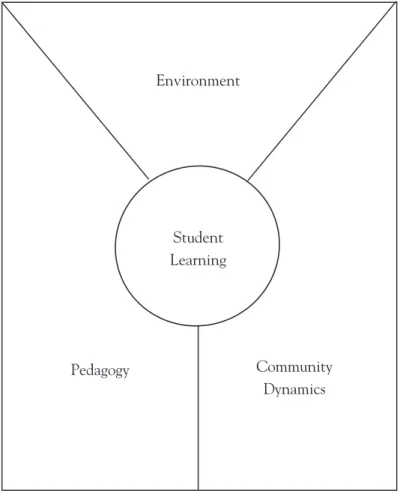
Quality reveals itself “in the room” through four different lenses. When you ask arts educators what they take to be the signs of high quality arts education, they are as likely to point to features of the experience in the setting itself as they are to broad purposes and outcomes. These experiential elements are what you would expect to observe or infer if you opened the door onto a classroom, studio, or rehearsal hall and looked for markers of quality. There are multiple kinds of markers, and one way to look for them is to examine the experience through four different but overlapping lenses: learning, pedagogy, community dynamics, and environment. These lenses all focus on the same experience, but each one brings a different dimension into view. The learning lens focuses on what students are actually doing in the classroom – the kinds of projects and tasks in which they are involved and the character of their engagement. The pedagogy lens focuses on how teachers conceive of and practice their craft – how they conceptualize the teacher-student relationship, and how they design and implement instruction. The
community dynamics lens reveals the nature of the social relationships in the classroom, including relationships among the students themselves, between students and teachers, and among the teachers and other adults who are present. The environment lens focuses on concrete
elements such as the physical space of the classroom, the materials and physical resources available, and the kind of time students are given – hours as well as years – to engage in arts learning.
Foundational decisions matter. Foundational, program-defi ning decisions that give a program its identity and provide the parameters within which quality is pursued. These decisions include (1) Who teaches the arts? (2) Where are the arts taught? (3) What is taught and how? and (4) How is arts learning assessed? Scholars have written extensively about these decisions, and they often take sharply opposing positions. In practice, however, the ways in which high quality programs answer these questions tend to be nuanced and contextualized, often embodying high principles and pragmatic concerns at the same time.
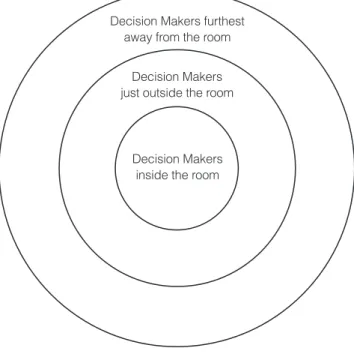
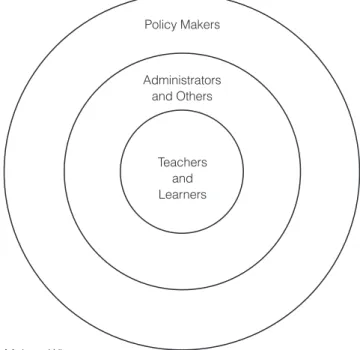
Decisions and decision makers at all levels affect quality. Many decision makers play a critical role in the quality of arts learning experiences. These include people quite distant from the classroom (e.g., administrators, funders, policy makers), those just outside the room – notably program staff and parents, and those who are “in the room” (students, teachers, artists). Decisions made by those “in the room” have tremendous power to support as well as undermine the quality of the learning experience. This is especially true of students, and it is important for students to be as aware as possible of the potential impact of their choices on their own and others’ learning experiences. This may seem obvious, but the role of student choice is often overlooked in discussions of quality, and it invites greater attention.
Refl ection and dialogue is important at all levels.
An overarching theme across many of the fi ndings of this study is that continuous refl ection and discussion about what constitutes quality and how to achieve it is not only a catalyst for quality but also a sign of quality. In other words, thinking deeply about quality – talking about it, worrying about it, continually revisiting ideas about its characteristics and its indicators – is essential both to the pursuit of excellence in arts education and
to its achievement. Another overarching theme is that a misalignment of ideas among decision-makers about what constitutes quality often complicates a program’s pursuit of quality. Alignment is easy to ignore, and achieving alignment among decision-makers at all levels often requires far more basic investigation, dialogue, and negotiation than is given.
In what follows, we offer several tools to help de-cision makers address the twin challenges of refl ection and alignment. The tools are designed to be used by in-dividuals or by groups in workshops or other collegial set-tings. Their purpose is to help arts educators and their associates build and clarify their visions of high quality arts education, identify elements of quality in their own programs, refl ect on the relationship between quality and a program’s foundational decisions, seek alignment be-tween a program’s beliefs about quality and its practices, and seek alignment across decision makers at all levels who help to shape a program’s pursuit of quality.
Q
We thank The Wallace Foundation for commissioning this study and for their recognition of the importance of the issue of quality in arts education.
This has been a complex study and many people have provided insight, support, critique, expertise, and perspective. Hundreds of people were interviewed and observed in the course of this study. We are tremendously grateful to all of them. Their honesty, integrity, wisdom, and generosity were inspiring. A list of all of the sites we visited and the people we interviewed in our interview strand appears in the appendix of the report. We are unable to list the names of everyone we interviewed at the sites – students, parents, teachers, administrators, and many more – but we are indebted to all who took the time to sit and talk with us about quality in arts education.
In addition, many people responded to our call for nominations of programs, experts, and literature, and over 120 sites applied to be part of the study. We thank all those who took our call for nominations and applications so seriously.
Amy Baione and Jen Ryan were invaluable research assistants on the project and dedicated members of the core research team. Our team also included wonderful students in or associated with the Arts in Education program at the Harvard Graduate School of Education: Megan Brown, Edward Clapp, Marit Dewhurst, Regan Doody, Martina Hinojosa, Shira Katz, Dorothea Lasky, Marguerite Nicoll, Barbara Palley, Ashley Rybowiak, Rachel Schiller, and Anna Tirovalas.
Kimberly Sheridan, assistant Professor in Educational Psychology and Art Education at George Mason University, was an invaluable member of the literature review research team. We thank Dr. Dan Serig and Rachel Nelson, from the Massachusetts College of Art and Design, who also contributed to the literature review. In addition, Paddy Bowman, Tina Curran, and
Mark Borchelt, were generous advisors. We thank Luna Kids Dance in Oakland, CA for opening their resource library to us.
All of our colleagues at Project Zero inspire us. For their help on this project, we thank Veronica Boix-Mansilla, Howard Gardner, Stephanie Kacoyanis, David Perkins, Cindy Quense, Damari Rosado, Denise Simon, Tom Trapnell, Terri Turner, and Daniel Wilson.
We thank Bob Fogel, Jack Jennings, and Helen Page at the Harvard Graduate School of Education for their wise counsel at key moments in this process.
Along with many of the people listed above, Barbara Andrews and Elisa Callow provided extensive feedback on drafts of this report and we are grateful for their insights. Fernando Hernández and Myran Parker-Brass provided generous counsel early in the development of the project. Sarah Cunningham and Jane Polin provided important support along the way. Cyrus Driver of The Ford Foundation was also especially helpful at key points in this work.
We have had the opportunity to present reports on this work at a number of conferences and symposia. We thank the organizers of all of those events and the many people who spoke with us during and after those sessions, sharing their perspectives on the design and progress of our study and directly on the question of quality in arts education.
We thank Andrea Tishman for her design of this report.
We are deeply grateful to Dick Deasy and Sandra Ruppert of the Arts Education Partnership for their faith, counsel, and support for this work.
Acknowledgements
Executive Summary III Acknowledgements VII Introduction 5
Chapter 1: Visions of Quality 13
A Compass for Decision Making 13 A Healthy Obsession with Quality 13 “Healthy” Obsessions? 14 Internal Monologues and Collective Dialogue 14 Continuous Examination of What Constitutes Quality 15 Subjectivity and Consensus 15 Quality-Driven and Mission-Driven 16
Chapter 2: The Multiple Purposes of Arts Education 17 A Focus on Learning Purposes 17 Who and What these Seven Categories Represent 18 Seven Broad Purposes of Arts Education 18 1. Arts education should foster broad dispositions and skills, especially
the capacity to think creatively and the capacity to make connections. 18 2. Arts education should teach artistic skills and techniques without
making these primary. 20 3. Arts education should develop aesthetic awareness. 21 4. Arts practices should provide ways of pursuing understanding of the world. 23 5. Arts education should provide a way for students to engage with
community, civic, and social issues. 24 6. Arts education should provide a venue for students to express themselves. 25 7. Arts education should help students develop as individuals. 26 Multiple Purposes of Arts Education: Revisiting the
Relationship Between Purposes and Quality 27
Chapter 3: The Elements of Quality Arts Learning as Seen
Through Four Lenses 29 The Lens of Student Learning 30 The Lens of Pedagogy 34 The Lens of Community Dynamics 38 The Lens of Environment 42 The Elements as Evidence of Quality 45
Contents
No Guarantees of Quality 49 Foundational Issues in the Literature 50 Who Should Teach the Arts? 50 Where Should the Arts be Taught? 53 What Should be Taught and How? 55 How Should Arts Learning be Assessed? 56 The Foundational Questions: Implications for Quality 59
Chapter 5: Decision Makers, Decisions, and Decision Making 61
Decision Makers 61 Decisions 64
Organizational/Programmatic Sets of Decisions 65 Teaching and Learning – In the “Room/Space” and in the Moment 66 Decision Making 67
Chapter 6: Tools for Achieving and Sustaining
Qualityin Arts Education 73 The Learning Purposes of Arts Education:
A Tool for Refl ecting on Visions and Actions 73 Four Lenses on Quality: A tool for identifying
specifi c elements of quality in an arts learning setting 77 Examining the Base: A tool for identifying and
refl ecting on program-defi ning decisions 80 Three Circles: A tool for analyzing alignment and
misalignment among decision makers 83
Chapter 7: Implications of This Study 85 Toward and Experience Perspective 85 Implications for Particular Audiences 85 Promising Areas for Further Research 87 Concluding Thoughts 88
Appendix A: Methodology 89 The Broad Scope of the Study 90 Research Questions 90 The Three Research Strands 91 Activities of the Three Research Strands 92 Cross-Strand Integration 95
Appendix B: Interview Strand Interviewees 97
Appendix C: Case Study Selected Sites 99
Appendix D: Research Protocols 105
Appendix E: References 109
Quality: 1. An inherent feature; a characteristic. 2. A judgment of excellence; a feature of value.
FOR THOSE WHOCARE deeply about excellence in education, the pursuit of quality is as enigmatic as it is essential. At their best, educational programs are complex: They involve dynamic relationships among people, among communities, and among bodies of knowledge. Quality is often a moving target – what counts as high quality in one context or at a particular moment in time may seem quite inadequate at another time or place – and identifying the signs of quality can be challenging, especially in an enterprise as complex and context-specifi c as teaching and learning. At what – and where – should we look? Do test scores refl ect the quality of an education? An arts education? Is the measure of quality in arts education in the works of art produced by students? In the processes by which those works were produced? In an amalgam of process and product? Conceptualizing excellence in arts education, let alone achieving and sustaining it, is full
of profound challenges. Yet the very nature of the arts – in particular, the way that striving for quality is at the core of artistry – may actually suggest that arts education is a fertile place to explore the meaning of quality in education more generally.
The title of this study is “The Qualities of Quality: Understanding Excellence in Arts Education.” As the title suggests, the word “quality” has a double meaning. On the one hand, a quality is a characteristic or feature of something. On the other, quality suggests excellence. This double meaning provides the contours of the research described in this report: Through interviews, case studies, and literature reviews, the Project Zero research team tried to discern how many U.S. arts educators in 2006-2007 were thinking about and trying to achieve the characteristics of excellence – the “qualities of quality” – in arts teaching and learning. The following chart identifi es our major research questions and summarizes what we did to pursue them. A detailed description of our research activities is provided in Appendix A.
Introduction
3 Broad Research Questions
Scope of Research
Three Research Strands
Nomination Process for Each Research Strand
1. How do arts educators in the United States – including leading practitioners, theorists, and administrators – conceive of and defi ne high quality arts learning and teaching?
2. What markers of excellence do educators and administrators look for in the actual activities of art learning and teaching as they unfold in the classroom?
3. How does a program’s foundational decisions, as well as its ongoing day-to-day decisions, affect the pursuit and achievement of quality?
Ages: Grades K-12.
Locations: In school and out of school; urban, suburban, and rural sites.
Art Forms: Dance, music, theater, visual arts, and some emerging forms, such as spoken word.
Literature review.
Interviews with 16 recognized theorists and practitioners in the fi eld. Site visits to 12 notable programs yielding interviews with over 250 people.
Nominations solicited by email from several hundred arts education professionals in a wide range of roles across the United States.
The Qualities of Quality: Understanding Excellence in Arts Education
5
Why study quality in arts education now?
Access and excellence
The infrastructure for in-school arts learning op-portunities in the U.S. has been seriously weakened over the past century. This trend toward devaluing the arts as a core element in the curriculum appeared to reverse with the Goals 2000: Educate America Act (One Hundred Third Congress of the United States, 1994). Goals 2000 forged a beachhead for the arts by establishing arts as re-quired subjects. As a result, the National Standards for Arts Education (Consortium of National Arts Education Associations, 1994) were developed, laying out what ev-ery student should know in the visual arts, music, theater, and dance. Largely because of this achievement, the arts were included as a core subject in the ensuing No Child Left Behind Act (US Department of Education, 2001). However, despite inclusion of arts in this law as part of the core curriculum, the No Child Left Behind Act has not strengthened arts education. With its focus on the “basics” of literacy and numeracy and the pressure for stu-dents to demonstrate competency through standardized tests in mathematics and English, many districts have continued the trend toward reduction or even elimina-tion of arts offerings.
For children in economically affl uent communities, opportunities to study the arts throughout their K-12 years generally remain available both in- and out-of-school and are often of high quality. These students see art in museums, theaters, and concert halls and often have the chance to study with serious and accomplished art teachers and artists. But for students living in or near poverty, access to formal arts learning experiences is nearly absent.
Our research has revealed that the fi eld of arts education has great vitality. Many arts educators and their collaborators care deeply about the lives of our young citizens, with special concern for those most often denied access to excellent arts education. They work with intense commitment to provide access to quality arts learning for all. A close look at the fi eld reveals exciting activity, some of it familiar and some quite innovative. As resources for in-school arts education diminish, enterprising arts educators have sought alternative ways
of providing arts learning opportunities. Increasingly, this activity occurs outside of school walls and beyond the limits of the school day.
Of course, both in and out of schools, most arts educators and their collaborators struggle for funding to survive, let alone thrive. Nevertheless, a close look at the fi eld reveals that important ideas about what constitutes excellence in arts education are embedded in efforts to secure existence and provide access. In this study, we sought to uncover these tacit views.
25 Years of Work on the Challenge of Quality
The challenges of access and excellence in arts education are hardly new; neither is the fi eld’s awareness of them. Signifi cant efforts have been made for decades through research, theoretical debates, and, most importantly, through innovations in practice (see, for example, Performing Arts Workshop, 2006). Since the crippling legacy of Sputnik on arts education became clear in the 1960s, there have been waves of innovation, including the artist-in-residence movement, arts integrated curricula, and the creation of countless organizations outside the schools devoted to providing arts learning experiences to young people.
Throughout the many other developments of the past fi fty years, efforts to address the challenges of achiev-ing both access and quality in arts education have been on-going. The past 25 years, coinciding with the era of broad school reform efforts intiated by the publication of
A Nation at Risk in 1983, have been especially rich in wide-reaching efforts to address the question of how to achieve and sustain quality arts education, even as creat-ing access has become seriously challengcreat-ing.
The school reform movement heralded unprec-edented efforts to address the issue of quality across all academic areas. National, state, and local initiatives to establish high standards in the core academic areas, as well as curriculum frameworks that clarify what should be taught at each grade level, were signifi cant efforts to insure that all children receive serious instruction across the curriculum and at every level. While the arts were only sometimes included in these initiatives, arts educa-tors have lobbied for the arts as core curriculum and have established standards and frameworks for arts education.
At the same time, during these past 25 years, arts educators have been active in initiating reforms and in-novations in the assessment of student learning, program evaluation, and professional development. Each of these areas was seen as a locus for leverage on the issue of qual-ity. Assessment of student learning has remained quite authentic in relation to long-standing practices in the arts, with the use of portfolios, critiques, and performance assessments (Council of Arts Accrediting Organizations, 2007). Similarly, there have been extensive efforts to re-consider the terms and mechanisms through which to judge the quality and effectiveness of a particular arts education program. As with the assessment of student learning, program evaluation poses profound questions about how and when the results or outcomes of a par-ticular learning experience can be perceived, let alone measured. Few in the fi eld have not grappled with this challenge in the last 25 years; virtually every program has struggled to fi nd appropriate, authentic, and responsive ways of capturing what is actually happening with their students and the effects of these learning experiences in their lives.
The past quarter-century has also been a rich period in the literature on arts education. Considerable writing has been published reporting on research studies, but there have also been lively debates over critical, even foundational, questions related to what constitutes quality in arts education – what we aspire to offer our students. As is so often the nature of the literature in many fi elds, writing on arts education has been framed in terms of arguments and debates. Many of these debates have been carried out, as well, in the efforts to create standards, frameworks, and assessments. Four critical questions thread through the arts education literature of the past 25 years:
– Who should teach the arts? – Where should the arts be taught? – What should be taught and how? – How should the arts be assessed?
Foundational questions such as these always provoke strong opinions in education, broadly construed, and these questions continue to generate debate in the
literature on arts education. We discuss some of this literature throughout the forthcoming chapters, and focus specifi cally on these foundational questions in Chapter 4. As we reveal, the conceptual, even philosophical, nature of these questions points to both the variety of answers offered and the passion with which they have been debated. And they will almost certainly continue to be debated. These questions confront not only scholars and researchers, but are actively engaged by policy makers and practitioners at every level, and across a wide variety of settings and contexts.
Yet the Challenge of Quality Persists
What actually takes place in arts programs – in or out of school – despite the presence of countless excellent teachers and programs, is all too often uninspired. Woefully inadequate materials, inauthentic tasks (coloring book-style worksheets; cut-out pumpkins, and other “seasonal” activities for the windows of the classroom or the halls of the school), and inadequate time (now not only squeezed, but often entirely replaced, by test preparation sessions) still characterize arts education in many of our schools (Efl and, 1976, 1983).
And yet, as we have hinted, there are many ways in which arts education is vital and thriving. New ideas and practices, new art forms and practitioners, innovative programs, and creative partnerships are emerging in response to the threats to arts education in our public schools. Serious thinking is ongoing – though we feel it is too little noted or documented – on the issue of what constitutes quality in arts learning and teaching and how it can be achieved and sustained. Our effort in this study has been to examine these efforts and report on what we learned.
How this report is organized
The report is divided into three sections. Here we provide a brief preview of each of the chapters that follows this introduction.
Part 1: Envisioning and Experiencing Quality
Chapter 1: Visions of Quality. For most arts educators, ideas about what constitutes quality in arts education are deeply tied to fundamental issues of identity and meaning,
and embodied in their values as artists, educators, and citizens in the world. Chapter 1 examines the role of these infl uences on educators’ visions of quality and how they provide a compass for navigating the many decisions they make.
Chapter 2: The Multiple Purposes of Arts Education. The question of what constitutes high quality arts education is inextricably linked to the question of why the arts are taught.So it is no surprise that when arts educators talk about excellence they also express ideas about the fundamental purposes of arts education – ideas about what students ought to learn through the arts and why these outcomes are important. Though many purposes were mentioned by our informants, the great majority of them cluster into seven broad categories. Chapter 2 characterizes the central ideas we heard in each of the seven categories and offers them as a backdrop for readers’ own refl ections about the purposes of arts education.
Chapter 3: The Elements of Quality Arts Learning As Seen Through Four Lenses. Visions and purposes come to life in the actual moments of teaching and learning. When you ask arts educators what they take to be the signs of high quality arts education, they are as likely to point to features of the experience in the setting itself as they are to broad purposes and outcomes. These experiential elements are what you’d expect to observe if you opened the door onto a classroom, studio, or rehearsal hall, and looked for markers of quality. One way to bring these markers into focus is to examine the arts-learning experience through four different but overlapping lenses: Student learning, pedagogy, community dynamics, and environment. Chapter 3 discusses the various elements of quality that come into view through each of these lenses.
Part II: Achieving and Sustaining Quality
Chapter 4: Foundational Questions. Arts education pro-grams make foundational, program-defi ning decisions that give a program its identity and provide the param-eters within which quality is pursued. Four critical ques-tions programs must confront are: Who teaches the arts? Where are the arts taught?What is taught and how? and How is arts learning assessed? Scholars have written extensively about these questions, and the literature often takes the
form of debate, with arguments made for one side or an-other. Chapter 4 examines the major debates concern-ing each of these questions and reveals how foundational programmatic decisions that infl uence quality tend to be nuanced and contextualized, often embodying high prin-ciples and pragmatic concerns at the same time.
Chapter 5: Decision Makers, Decisions, and Decision Making. Beyond programs’ foundational decisions there are myriad decisions made in the life of a program, and people at all levels make decisions that have critical infl uence on the quality of arts learning experiences. These include people quite far away from the classroom (e.g., administrators, funders, policy makers), those just outside the room – notably program staff and parents, and those who are “in the room” (students, teachers, artists). Chapter 5 examines the kinds of decisions made at each of these levels, and discusses the twin issues of alignment among decisions, and communication among decision makers.
Part III: Quality in Practice
Chapter 6: Tools for Achieving and Sustaining Quality in Arts Education. Chapter 6 provides tools to analyze ideas about what constitutes quality in arts education. These thought and dialogue tools encourage decision makers to consider the main themes of each of the chapters of this report within their own settings. The tools are designed for individuals or groups in schools and arts education organizations and programs.
Chapter 7: Implications of This Study. In our fi nal chapter, we consider what the fi eld of arts education may gain from this study, and what its implications are for various audiences. We consider how thinking about quality can have implications for practice that affect students, teachers, teaching artists, and classroom teachers. This chapter also considers implications for people “outside the room,” including administrators, funders, and board members. We conclude by considering next steps for investigating the issue of quality in arts education.
Who We Are and What We Hope for
A word about the Project Zero perspective. The research reported here was conducted by a team of researchers at Project Zero at the Harvard Graduate School of Education. Project Zero has a 40-year history of conducting research into the nature of learning in the arts (Gardner, 1982; Gardner & Perkins, 1989; Goodman, 1976; Grotzer, Howick, Tishman, & Wise, 2002; Hetland, Winner, Veenema, & Sheridan, 2007; Perkins, 1994; Project MUSE, 1995; Project Zero and Reggio Children, 2001; Seidel, Eppel, & Mariniello, 2001; Tishman & Palmer, 2007; Winner, 1993; Winner & Hetland, 2000). At Project Zero, we believe that an education without the arts is an incomplete education that fails to develop the full potential of individuals, communities, and societies. We also believe that the arts have a powerful cognitive dimension and are an important way of understanding the world, different from, but just as valuable as, the sciences. While the research team conducting this study agrees on these major points, our own perspectives also sometimes differ. Our goal in this report is to represent the views we discovered in the fi eld rather than our own views. At the same time, we recognize that our deep beliefs and assumptions infl uence how we have understood and interpreted what we saw and heard. We hope the differences in perspective represented on
the team, including both seasoned and new researchers, and the range of sources captured by the three strands of the study have provided adequate checks on the bias we brought to our process.
Our hopes for this report. Not unexpectedly, over the course of this research we raised more questions than we answered, and we offer this report with the acknowledgment that it marks the beginning of an inquiry rather than its conclusion. If there is one overarching theme to our fi ndings, it is that continuous refl ection and discussion about what constitutes quality and how to achieve it is both a catalyst for and a sign of quality. In other words, thinking deeply about quality – talking about it, worrying about it, continually revisiting ideas about its characteristics and its indicators – is essential both to the pursuit and achievement of excellence in arts education. Our fondest hope for this report is that it sparks discussion. We most defi nitely do not offer here a recipe for arts education. Rather, we hope that this report will energize and inform a national conversation and encourage policy makers and practitioners to engage in open and critical dialogue about what counts as quality in arts education and about how they can make decisions at all levels of policy, administration, and teaching to support such quality.
Envisioning and
Experiencing Quality
Q
Q
Q
Q
P A R T I :
OUR INTERVIEWEES HAD powerful visions about what constitutes quality arts education – about what its large purposes are, and about what it looks like “in the room” in the moments of learning and teaching as they unfold. While there was much alignment in their visions, there were also signifi cant differences in emphases, pri-orities, and details. And, as our interviews and site visits repeatedly made clear, these powerful visions provide arts educators with a compass for decision making across all aspects of their work.
In Part II of this report we will take a close look at the kinds of decisions that affect quality. But fi rst, in this chapter, we ask: Where do arts educators’ ideas about quality come from? What infl uences these visions of qual-ity and how do these infl uences provide a frame for the way people see and approach their work?
A Compass for Decision Making
Consider the response of Morgan Cousins, a program coordinator at Urban Word, an in- and out-of-school program for high school students in New York City fo-cusing on spoken word, combining both the literary and performing arts. We asked Morgan, as we often asked on our site visits, to introduce herself, share a bit about her background, and offer any initial thoughts about what constitutes quality in arts learning experiences. She ex-plained that as a high school and college student, she had worked with Youth Speaks, a program that evolved into Urban Word in New York City. She did other work for a while and had just recently come back as a program coordinator.
As an artist, what has helped my growing has been that I was a part of a collective, Sister to Sister, out of Bushwick. We would do arts work with youth to get them involved in shifting their communities. For me, using art is central to a person’s development, especially for young people. Art is a tangible way to see where you are and to envision what you want to create in this world, what sort of energy you want to put out there.
So just as I feel everyone is a living person, we’re all educators. And I believe “each one, teach one.” So, [for] me, being an artist and being an educator, those are be-ing human – it’s very much bebe-ing one thbe-ing. Quality work is working from that place. I feel like it’s working from a
healthy place, how we communicate with people, how… at the core, believing that you should live these things that you believe. The work is not just from the hours of work-shops here, but how you’re living your life, how you’re im-pacting these young people’s lives on a daily basis, with the principles that you walk with daily. For me, it’s like you are always working. The work is 24 hours and, you know, it’s like your personal growth. You have to keep growing in order to keep that work progressing. That’s where I feel like quality is always remembering that it’s necessary to keep growing, it’s completely necessary – whether it’s paid or unpaid.
Over the course of our interviews, especially as we probed the sources of an individual’s ideas about what constitutes quality, we were struck by the deeply person-al nature of the responses. Ideas about what constitutes quality in arts education were, for most of these people, inextricably tied to fundamental issues of identity, pur-pose, and values as an artist, an educator, a citizen in the world. This deep subjectivity was the source of strength at the core of these visions of quality. This was the compass that guided the many aspects of the countless decisions these educators make, defi ning in so many ways why they do what they do in the way they do it.
In some cases, we heard personal stories of early ex-periences with remarkable teachers (arts and other kinds of teachers, including parents or other family members) as well as horrible teachers, whose example, even many years later, still had a profound infl uence on visions of quality. We heard other stories as well – stories both from in and outside of arts experiences – where a sense of and taste for high quality was fi rst experienced, the memory of which was so powerful and so attractive that the hunger for that taste has essentially never been fully satisfi ed.
A Healthy Obsession with Quality
In his study of craft and crafts people, Richard Sen-nett considers the “obsessional energy” that is at the core of the drive to achieve quality.
In a way signaled by the second word in the phrase “qual-ity-driven,” driven means the obsessional energy invested in making a concrete object or forming a skill. Obsessional energy marks the characters of great workmen like Christo-pher Wren but is also and more elementally a trait of actions small as well as large. Rewriting a sentence again and again
Vi s i o n s o f Q u a l i t y 13
to get its imagery or rhythm just right requires a certain obses-sional energy. In love, obsession risks deforming the character; in action, obsession risks fi xation and rigidity. These dangers the individual craftsman also has to address, as so does the well-crafted organization. The pursuit of quality entails learning how to use obsessional energy well. (Sennett, 2008, italics in the original)
We met many people during this study for whom this taste for quality in arts learning experiences – a rather spe-cialized area of connoisseurship – appears to be a profound need. Indeed, for these people, creating high quality experi-ences for others has become a value that informs virtually all of the decisions they make in relation to what will happen “in the room.” Perhaps because it could seem tautological, this rather obvious connection between valuing quality (cellence) as a part of a quality (excellent) arts learning ex-perience was not explicitly named as often as it might have been in our interviews. In a sense, it seems too obvious to state. But it is a value that informs people’s notions of what constitutes quality.
To that end, the educators we interviewed wanted young people to have experiences with quality – for example, excellent materials, outstanding works of art, passionate and accomplished artist-teachers modeling their artistic pro-cesses – and experiences of quality – powerful group inter-actions and ensemble work, performances that make them feel proud, rewarding practice sessions, and so on. In addi-tion, they wanted them to have experiences with the work of striving for and achieving high quality – technical excel-lence and successful expressivity – in making art.
“Healthy” Obsessions?
Many of the programs and people we spoke to seemed to be, in Sennett’s terms, “quality-driven.” Indeed, they seemed obsessed with quality. This obsession not only guided their thoughts, but their actions, decisions, and conversations with their colleagues and students. Whatever term they used – quality, excellence, continual improvement – the drive was essentially the same. This hunger seems rarely satisfi ed with an internal monologue; it must become a dialogue with oth-ers. Like so many obsessions, it pulls others into its pursuit.
If you push this image further, it is easy to see why “ob-session” has a bad reputation; it becomes associated with a kind of unhealthiness. But, in this context, given the
respon-sibility of arts educators for such a potentially important as-pect of young people’s life experience, this obsession begins to feel quite justifi ed, necessary, and, in the end, rewarded in profound ways – seeing young people build deep and long-lasting relationships with the arts and seeing all that the arts can do to enrich their intellectual, aesthetic, social, politi-cal, and moral lives.
Yet the line between a healthy and unhealthy obsession with quality in arts education can be thin. Sennett warns of an obsession’s capacity to “deform” and the risk of “rigid-ity and fi xation.” We were told that working in a “qual“rigid-ity- “quality-driven” organization was both thrilling and exhausting. The drive to achieve ever-higher levels of quality in an arts pro-gram must be continual and must accommodate the energy and developmental levels of the teachers and staff. While some people in an organization may well see important room for improvement of practices “in the room,” all teachers and artists may not be able to achieve those visions as quickly as the visions themselves can be articulated. The need for sup-port and encouragement that children feel as they strive to get better is also a need of artists and teachers as they work to improve their practice. Calibrating the “drive” for quality with the capacities of those involved in the effort to achieve it seems to be critical to keeping the obsession “healthy.” At the same time, a commitment to increasing those capacities links professional development to the pursuit of quality.
Internal Monologues and Collective Dialogues
Almost by defi nition, though, thoughtful, refl ective arts educators ask themselves daily why they are doing what they do in the way that they do it. Why do I choose to work with these young people in this program? Do these choices help me achieve my larger work and personal goals? Am I doing my work as well as I possibly can and with the greatest possible impact?
If that is the nature of a constant internal monologue, these same people are also engaged in an ongoing actual dia-logue of a similar nature with their colleagues. Why do we
go about our work in the ways we do? How could we better achieve our goals? Should our goals be reconsidered? Are our practices aligned with our purposes and our values? These discussions often take place within established structures like staff meetings, supervision sessions, and planning processes,
some of which we were invited to observe during our site visits.
But few groups have enough time for these conversations in formal settings. Most continue these conversations in the spaces between teaching, meetings, cleaning up a studio, or dealing with art supplies and materials. Often these conversations occur while driving from one school to another, getting from a community center to a program’s offi ce, or walking from one end of a building to another. Sometimes these conversations are congratulatory; often they are self-critical; in some cases, real disagreements surface about what constitutes quality and whether it was achieved in today’s dance class or trip to the museum.
Continuous Examination of What Constitutes Quality
This examination of quality – as we witnessed it and had it described to us by our interviewees – was most often carried out over time and through continu-ous dialogues about specifi c instances (a particular class session, a course that has just ended, a performance or a new exhibit of visual art, and so on). While the ground-ing of these dialogues was in specifi cs, the conversations seem actually to be extended examinations of core beliefs and values, purposes, and best understandings of basic issues like the nature of learning, teaching, community, and art. This close analysis of what, in a specifi c context, constitutes quality seems to be one way that people do, implicitly and explicitly, develop a philosophy of prac-tice. That philosophy then functions as a compass for all subsequent dialogue about what constitutes quality and decision making done with quality in mind.
While our site visits were rarely more than two days, it was clear to us that in most places the exploration of basic questions about purposes and practices as well as inquiries into effectiveness and possible improvements is a way of life and work. Over and over, we heard, in response to our questions, that the staff had recently had a discussion of just this issue or that the program’s evalu-ators, a funder’s questions, or an incident in a classroom had provoked a dialogue on a similar question just a few weeks earlier.
At the same time, we were frequently told how much our interviewees appreciated the opportunity to stop, refl ect, and consider questions that were often asked in a new way as an opportunity to re-engage with the challenges of quality. Indeed, even the use of particular language – like the term quality or the focus on ‘experi-ences’ – was often felt as a provocation to enter into this set of issues from a different angle. In a sense, we heard that, simultaneously, the people we were talking with were both deeply involved in deliberations about issues of quality in a variety of settings and under various ban-ners, and also desirous of more and deeper explorations of this basic issue. The ability to think, discuss, and analyze on both philosophical and practical levels seemed to be a characteristic of the organizations we visited, as was the feeling that quality is both a process and a conversation that never ends.
Subjectivity and Consensus
As deeply personal and subjective as ideas about quality may be, there seemed to be broad areas of consensus about what does and does not constitute a quality arts learning experience “in the room.” The typical low-quality arts activity for children most frequently cited was the activity of coloring cut-out turkey shapes at Thanksgiving using broken crayons. Activities that trivialize artistic processes such as fi lling in outlined shapes or working with materials of limited quality such as old and broken crayons or ripped and dirty costumes were seen as failing to respect children’s capabilities and interests and not recognizing art’s deep power and possibilities. Such activities were considered inadequate opportunities for signifi cant arts learning.
Of course, an artist who works with iconic images (e.g., cut-out turkeys) and invents innovative and unusual approaches to old materials (like broken crayons!) may do provocative work and might also, working with teachers, design rich learning experiences for children on such top-ics as gratitude and what it means to give thanks, iconic images of Thanksgiving, and/or the animal we know as the turkey. (In short, the turkey is not the “turkey,” it’s what we do with it as an arts learning experience.) Per-haps a distinction between an activity and a learning
experi-15
ence is useful here. An activity is something we might do to keep us occupied, for the purpose of simply keeping busy, or to pass time; a learning experience is shaped and defi ned by intentionality, challenge, performance, and growth.
Similarly, there seemed to be consensus about some broad characteristics of quality in arts learning experienc-es. The most commonly cited is engagement – focused, total, all-encompassing. Other characteristics that were named frequently and around which there seemed to be some broad consensus, though not everyone addressed all of these explicitly or equally, included:
• An involvement with authentic artistic processes
and materials.
• An exploration of “big ideas” about art and human
experience.
• Direct experiences with works of art made or in the
making.
While this kind of broad consensus does seem to ex-ist, it does not mean that there is agreement on an absolute “objective” set of criteria for determining what counts as quality arts education. None of the people we spoke with wanted to escape the task of fi guring out what constitutes quality and how to achieve it. Instead, they told us that they want to create and sustain a dialogue about quality that includes as many of the participants and stakehold-ers as possible. We return to this issue of dialogue and decision making later in this report in Chapter 5.
Quality-Driven and Mission-Driven
Perhaps the central element of this dialogue about what constitutes quality is an examination and clarifi ca-tion of the purposes of any particular arts educaca-tion pro-gram and individuals’ experiences within them.
While many of the people we spoke with were explicitly quality-driven in their work as arts educators, regularly asking themselves and others how to improve the experiences their students were having, they were also deeply mission-driven. Ideas about quality did not seem to exist independently of articulations of purposes. Though driven to create the best arts programs possible at that moment with available resources, including the human resources of program design, administrative, and pedagogical knowledge, quality was not an abstraction,
a thing in itself, or an objective reality. Instead, quality seemed to be inextricably tied to the mission and goals of each individual program.
That quality and purposes are wedded seems, on the surface, to be an obviously true statement. It is hard to conceptualize how any learning experience could be considered high quality if it does not achieve its purposes. Beneath the surface of this statement about quality and mission, however, there is a complex relationship between highly interconnected moving parts.
As we will discuss in Chapter 2, our study revealed that arts educators hold multiple purposes for programs, courses, or projects. At any moment, the priority and relationship of those purposes may shift or evolve. With one group of students, there may well be a primary emphasis on developing certain technical skills. With others, creating a powerful experience of ensemble work might feel like the critical task at that moment. And with another, working on discipline and responsibility might be the essential starting point. None of these goals diminishes the importance of others, but an assessment of particular groups at particular moments may well suggest new and appropriate ways of prioritizing purposes.
In addition, as one’s understanding of how to achieve purposes deepens over time, ideas about sequence and em-phasis will likely evolve as well. In other words, knowledge of how to achieve a complex set of goals should inform how one approaches achieving it. As one learns what is possible to teach and how to do that teaching well, the very framing of those goals evolves.
As we have noted, achieving quality and fulfi lling a mission are processes rarely completed. As one level of achievement is accomplished, new goals, often both broader and deeper, are conceptualized. Ambitious arts educators constantly seek new understandings of both quality and mission and how to achieve them. The nature and multiplicity of the purposes discussed in Chapter 2 reminds us of the incredible complexity of the arts educa-tion enterprise and the challenges of coming to a vision of quality, let alone achieving that vision.
AS DISCUSSED IN THE PREVIOUS CHAPTER, the question of what constitutes high quality arts education is inextricably linked to the question of why we should be teaching the arts in the fi rst place. Over the course of our research, we conducted many interviews, from phone calls with experts in this fi eld to the many formal and informal conversations at our site visits. Almost every-one we spoke with linked their quest for quality to the purposes they were striving to achieve in their programs or policies. What they perceived the arts to be and to do for individuals and groups strongly infl uenced their ideas about what they wanted students to learn through their education in the arts. Accordingly, achieving quality to a large extent means achieving these purposes. So it is no surprise that when arts educators talk about excellence they also express ideas about the fundamental purposes of arts education – ideas about what students ought to learn through the arts and why these outcomes are important.
We noted two distinct but interrelated beliefs held by the great majority of those we interviewed.
• There are multiple legitimate purposes of arts
education. As a fi eld, arts education seems to be in an expansive mood these days. Theorists and prac- titioners are aware of the multiplicity of purposes their colleagues pursue and regard this multiplic- ity as healthy. Though of course there are disagree- ments about specifi c theories and approaches, when people referred to points of view other than their own, they did so in a spirit of open-mindedness and respect, rather than debate or divisiveness.
• High quality arts programs tend to serve several
purposes simultaneously. As a group, arts educa- tors conceive of high quality arts education as complex in its outcomes, serving multiple puposes for each student. Though arts programs differ widely in their contexts, goals, art forms and con- stituencies, a hallmark sign of high quality arts learning in any program is that the experience is rich and complex for all learners, engaging them on many levels and helping them learn and grow in a variety of ways.
When our phone interviewees articulated what stu-dents ought to learn from high quality arts education, what we heard fell into seven broad goals. Most people referred to several of these learning outcomes as desirable, not just one or two. These seven goals were also ones mentioned by our site interviewees when they told us what they were striving to achieve, and they are echoed in the literature. We heard that arts education should:
• Foster broad dispositions and skills, especially the
capacity to think creatively and the capacity to make connections.
• Teach artistic skills and techniques without making them primary.
• Develop aesthetic awareness.
• Provide ways of pursuing understanding of the
world.
• Help students engage with community, civic, and
social issues.
• Provide a venue for students to express themselves. • Help students develop as individuals.
This chapter characterizes the central ideas dis-cussed in each of these areas. We offer fi rst a few words of clarifi cation about what these seven categories are meant to represent and how they might be useful to readers of this report.
A Focus on Learning Purposes
Arts programs have a variety of purposes that are closely linked to the communities and contexts in which they operate. Not all of these purposes are directly related to learning, and a distinction can be drawn between an arts program’s learning purposes and its programmatic pur-poses. A learning purpose has to do with the specifi c skills, dispositions, and understandings a program aims to teach. Programmatic purposes are often more general in nature and emerge in response to community and political needs and realities that include but can also extend beyond the arts per se. For example, programs have been developed in response to a community’s need to keep young people off the streets after school hours and to provide them with positive adult mentors from the community. Many