35
THE INFLUENCE OF POTENTILLA REPTANS EXTRACTS ON THE
PHYSIOLOGY OF AGROPYRON REPENS L. PLANTS
BUSE-DRAGOMIR LUMINITA(1), NICOLAE ION (2), NICULESCU MARIANA (3)
(1) University of Craiova, E-mail : [email protected] (2) University of Craiova, E-mail : [email protected] (3) University of Craiova, E-mail : [email protected]
Key words: couch grass, allelopathy, photosynthesis, respiration
ABSTRACT
During the experiments, the influence of the aqueous extracts obtained from the leaves of Potentilla reptans on the physiology of Agropyron repens was studied.
Agropyron repens is a plant of spontaneous flora of Romania, growing on cultivated and uncultivated soils and is one of the most harmful plants in agriculture.
In areas where Potentilla reptans grows, couch grass growth is inhibited; this demonstrates that this plant can have an allelopatic action on the couch grass.
During these experiments, aqueous extracts from the leaves of Potentilla reptans were used in concentrations of 5 g / l, 10 g / l, 15 g / l and 20 g / l. These extracts were used in order to water the Agropyron repens plants .
The experiments focused on the intensity of leaf photosynthesis, leaf respiration intensity, transpiration intensity, leaf water content and chlorophyll content.
In the variant with a concentration of 5 g / l, photosynthesis had much lower values, and at 20 g / l the process was reduced by about 50%.
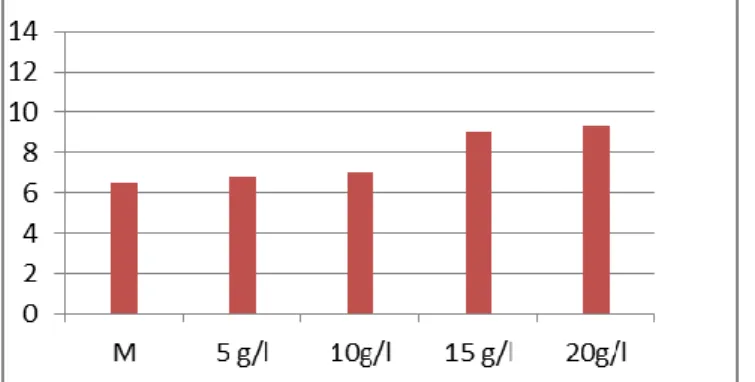
Regarding the respiration process, there was an increase, but only at high concentrations of the extracts (15 and 20 g / l). At low concentrations, the differences from the control were undetectable.
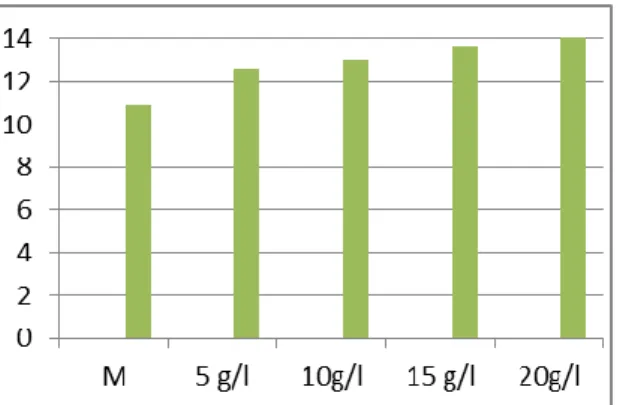
In the control variant, the intensity of leaf transpiration had the lowest value. In the other variants, it has been found to intensify the transpiration process in proportion to the increase in the concentration of the extracts.
INTRODUCTION
Couch grass (Quack grass): Elymus repens (L.) Gould 1947, Agropyron repens (L.) Beauv. (1812), Elytrigia repens (L.) Nevski 1933, Triticum repens L. (1753) is a perennial plant, native of Europe. Because of its aggressive habit of growth, it is often a very harmful weed in croplands, gardens and orchards
(http://ecocrop.fao.org/ecocrop).
Leaf blades are soft and relatively flat, 3-10 mm wide, dull and mostly dark green, sometimes glaucous. On the lower leaves, sheaths are often strongly hairy, on upper leaves smooth or slightly soft-hairy. Growth-chamber experiments in Sweden show that the sheaths become
hairier at low than at high. Auricles occur at the junction of the sheath and blade. The inflorescence is a dense to rather lax spike, like a wheat spike but more slender, mostly 5-10 cm long.
36
A. repens reproduces mainly vegetative from rhizomes but also sexually by seed. New rhizomes grow primarily in summer (up to 3 m (9.84 ft) per year). Tillage operations that cut existing rhizomes into smaller pieces may increase the quack grass infestation since from every segment a new plant may emerge. Low temperatures and long day conditions in summer induce rhizome growth, new tillers develop in spring and fall. The plants commonly produce 40 - 60 seeds per stem, also immature seed (dough stage) can germinate. Low light intensities induce shoot growth.Quack grass reduces productivity of crops, rangeland and pasture. It is also a nuisance in lawns, ornamentals and home gardens and reduces growth and germination of neighboring plants by
release of allelochemicals. A
contamination of seed grain crops reduces the value of the harvest. Reduction of tillage intensity favors quack grass
(https://www.cropscience.bayer.com). The weed flourishes on many types of soils, mineral as well as organic soils. A. repens is most competitive on fertile soils, which are rich in nitrogen with a good water supply and is less successful on very acid or very dry, shallow soils. A high N-content in the soil favors rhizome growth and bud production. In conventional agriculture, weed control with herbicides is not just a costly practice; is also harmful to the environment. (Fang Cheng and Zhihui Cheng, 2015), therefore, the use of allelochimic compounds contributes to reducing the negative impact of agriculture on the environment (Cheema and Khaliq, 2000, Cheema et al., 2013). Rhizome fragmentation in a growing white clover sward could reduce the amount of A. repens rhizomes and that repeated mowing is an effective control method, but that great seasonal variation exists( Bergkvist, Göran and Ringselle, Björn and Magnuski, Ewa and Mangerud, K. and Brandsæter, L. O.,2017).
At present, a more efficient solution could be the use of vegetable extracts from plants that have an allelochimic action on the quack grass Such a plant is Potentilla reptans, which inhibits the growth of the A.repens, but not the growth of other plants such as white clover.
Allelopathy can be a biological control solution for many harmful weeds.
Allelopathy refers to the beneficial or harmful effects of one plant on another plant, both crop and weed species, from the release of bio chemicals, known as allelochemicals, from plant parts by leaching, root exudation, volatilization, residue decomposition, and other processes in both natural and agricultural systems. Allelochemicals are a subset of secondary metabolites not required for metabolism (growth and development) of the allelopathic organism. Allelochemicals with negative allelopathic effects are an important part of plant defense against herbivory (i.e., animals eating plants as their primary food) (Stamp 2003).
The term allelopathy is from the Greek-derived compounds allelo and
pathy (meaning "mutual harm" or "suffering") and was first used in 1937 by Austrian scientist Hans Molisch in the book Der Einflusseiner Pflanze auf die andere - Allelopathie (The Effect of Plants on Each Other) (Willis,1985). First widely studied in forestry systems, allelopathy can affect many aspects of plant ecology, including occurrence, growth, plant succession, the structure of plant communities, dominance, diversity, and plant productivity. Thereafter worldwide, a lot of allelopathic research has been conducted in various fields of Agricultural and Biological Sciences. Therefore, the International Allelopathy Society in 1996, broadened its definition to Allelopathy, refers to any process involving secondary metabolites produced by plants, microorganisms, viruses and fungi that influence the growth and development of Agricultural and Biological Systems
(http://www.bioxbio.com/if/html/ALLELOP
37
for weed control through the production and release of allelochemicals from plants. Allelochemicals may impact the availability of nutrients through effects on the symbiotic microbes. Destruction and changes in the use of soils in the tropics have decreased biodiversity, bringing about the loss of valuable natural products. Many different types of useful products such as natural pesticides and drugs can arise from allelopathy studies. New methods must be generated for allelopathy as a part of the biotic resources management strategies ( Anaya A. L. 1999).
Mixed application of allelopathic extracts with one-third to half of the standard herbicide dose provided effective weed control as achieved from the standard herbicide dose in several field crops. Application of allelopathic mulches, soil incorporation of allelopathic residues, and intercropping with strong allelopathic crops also provided effective control of several weeds. In recent years, commercialization of allelopathic extracts for weed management is under way. Allelopathy has also been effective in controlling stored grain and field crop pests in addition to several pathogens which may also be controlled by allelopathy. (Cheema Z., Farooq M.,
Khaliq A. 2013).
The overuse of synthetic
agrochemicals often causes
environmental hazards, an imbalance of soil microorganisms, nutrient deficiency, and change of soil physicochemical properties, resulting in a decrease of crop productivity. The incorporation of allelopathic substances into agricultural management may reduce the use of synthetic herbicides, fungicides, and insecticides and lessen environmental deterioration. Scientists in many different habitats around the world have demonstrated the above examples previously. It is known that most volatile compounds, such as terpenoids, are released from plants in drought areas. In contrast, water-borne phytotoxins, such as phenolics, flavonoids, or alkaloids, are
released from plants in humid zone
areas. Both allelopathy and
autointoxication play an important mechanism in regulating plant biodiversity and plant productivity (Chou C. H.,1999).
Alllopathic cultures, which have a great potential to minimize the introduction of refractory chemicals and effectively control weeds in agricultural ecosystems, represent the most promising application of allelopathy (Mahmoud and Croteau, 2002).
The allelochemicals influence the respiratory activity of mitochondria isolated from soybean. Interesting experences have been made in this regard by Abraham D., Takahashi L., Kelmer-Bracht A. M., Ishii-Iwamoto E. L. (2003).
Allelochemicals consist of various chemical families and are classified into the following 14 categories based on chemical similarity (Rice, 1974 quoted by. Albuquerque M. B., Santos R. C., Lima L. M., MeloFilho P. D. A., Nogueira R. J. M. C., Câmara C. A. G., et al. (2010): water-soluble organic acids, straight-chain alcohols, aliphatic aldehydes, and ketones; simple unsaturated lactones; long-chain fatty acids and polyacetylenes; benzoquinone, anthraquinone and complex quinones; simple phenols, benzoic acid and its derivatives; cinnamic acid and its derivatives; coumarin; flavonoids; tannins; terpenoids and steroids; amino acids and peptides; alkaloids and cyanohydrins; sulfide and glucosinolates; and purines and nucleosides.
There was a significant negative relationship between switch grass biomass and weed biomass during the middle part of the growing season (i.e., 28 July and 30 August). This indicated that the competitive effects of switch grass had the greatest effect on weed growth during this stage. The residue of Blackwell, Illinois USA, and Pathfinder suppressed weed growth more than the growing switchgrass plants did. These results have implications for weed
38
ecosystems and provide important information for the introduction of switchgrass to new ecosystems( An Y., Ma Y. Q., Shui J. F. 2013).
The allelopathic effects of A. petiolata are likely either due to degradates of the compounds produced by the plant, or to other unknown mechanisms (Barto E. K., Cipollini D. 2009).
Allelopathic activity of barley probably originated from different landraces, and in most cases from a specific landrace from the Swedish island of Gotland. We suspect that more than 100 years of selection and breeding have resulted in a dilution of the genes from landraces and consequently a declining allelopathic activity. In the Swedish collection, two cultivars did not follow the general trend and in both cultivars, several landraces had been combined (Bertholdsson N. O. 2004). A negative effect was that grain yield was reduced by 9% in the high allelopathic lines. It is suggested that the reduced biomass of weeds in plots planted with the highly allelopathic wheat lines is related to differences in allelopathic
activity and not differences in plant growth (Bertholdsson N. O. 2010).
Sorghum allelopathy is a new technique, which has been tested for controlling weeds of wheat (Triticum aestivumL.) as a substitute for chemical herbicides to reduce environmental pollution. Mature sorghum herbage contains a number of water-soluble
secondary chemical substances
(allelochemicals). (Cheema Z. A., Khaliq A. 2000).
An evaluation of the mitotic index was made in preparations of previously treated meristematic cells with corn pollen . A decrease in mitotic activity of more than 50% was found, as well as irregular and pycnotic nuclei. The data obtained from this study reflect an important mechanism of action of the allelopathic compounds of corn pollen( Cruz Ortega R., Anaya A. L., Ramos L. 1988).
Urease, invertase, dehydrogenase and polyphenoloxidase activities of paddy soils may be positively influenced by allelopathic rice variety through the release of allelochemicals (Gu Y., Wang
P., Kong C. H. 2009).
MATERIALS AND METHODS
During the experiments, the influence of the aqueous extracts obtained from the leaves of Potentilla reptans on the physiology of Agropyron repens was studied.
Potentilla reptans (five fingers) is a perennial plant with origin in Eurasia and North Africa, which has also been
naturalized in other areas.
The composite leaves are worn on long stems. It blooms in June - August with yellow flowers (2 cm in diameter) with five petals in heart shape. It's quite common.
Potentilla reptans can be an invasive weed in lawns and flowerbeds and it is hard to eradicate.
In areas where Potentilla reptans
grows, couch grass growth is inhibited; this demonstrates that this plant can have
an allelopathic action on the growth of
Agropyron repens.
During these experiments, aqueous extract from the leaves of
Potentilla reptans were used in concentrations of 5 g / l, 10 g / l, 15 g / l and 20 g / l. These extracts were used in order to water the Agropyron repens
plants. In the control variant, tap water was used.
Agropyron repens plants have been watered every three days.
The experiments focused on the intensity of leaf photosynthesis, leaf respiration intensity, transpiration intensity, leaf water content and chlorophyll content.
39
The chlorophyll content was determined
using the Minolta portable
chlorophillmeter, the results being expressed in SPAD units, and the total
water content was determined
gravimetrically by drying the plant material at the oven at 105 0C.
RESEARCH RESULTS
Photosynthesis intensity
Three weeks after application of the aqueous extract, changes occurred at the level of the assimilator tissue.
Thus, in the control variant the intensity of photosynthesis had the highest value (13.74 μmol / m 2
/ s).
In the variants with Potentilla reptans extracts, even at the concentration of 5 g / l, photosynthesis
had much lower values; at 20 mg / l the process has been reduced by about 50% (7.1 μmol / m 2
/ s) (graphic 1).
These observations are consistent with data from the literature which shows that allelochimicals affect photosynthesis mainly by influencing the function of the photochemical system II (Wang et al., 2015).
Graphic 1. The influence of Potentilla reptans extract on the process of photosynthesis at Agropyron repens (μmol / m2 / s)
Respiration intensity
As for the respiratory process, an increase has been observed, but only at high concentrations of the extract (15 and 20 g / l). At low concentrations, the differences from the control variant were undetectable (graphic 2).
Intensification of the respiratory process may have negative effects, as this process consumes some of the organic back-up substances and releases more energy than the plant needs.
40 The intensity of the transpiration process
In the control variant, the intensity of leaf transpiration had the lowest value (10.92 mmol / m 2 / s). In the other variants, the transpiration intensity was proportional to the increase in the concentration of the extract, the latter being recorded in the plants treated with Potentilla reptans extracts (graphic 3).
An intensification of the process has a negative effect on Agropyron plants, causing the loss of large amounts of water; the water content cannot be restored because of a low capacity of absorption. Thus, the hydric balance of the plant becomes negative, and absorption cannot cover the loss of water.
Graphic 3. The influence of Potentilla reptans extract on Agropyron repens leaf transpiration intensity (mmol/m2 /s)
The water content of leaves
Due to the intensification of the transpiration process, the amount of water recorded in plants treated with aqueous extracts was much lower.
The lowest water content was recorded in plants treated with Potentilla reptans extract at a concentration of 20 g / l (graphic 4).
Graphic. 4. Total water content of the leaves of Agropyron repens treated with Potentilla reptans extract (%)
The content in chlorophyll pigments
The determination of the content of chlorophyll pigments in the leaves of
Agropyron repens revealed significant differences from the control sample in the
variants treated with Potentilla reptans
41
If, in the control variant, the mean leaf chlorophyll content was of 43.5 SPAD, in the variants with a high
concentration of Potentilla extracts, the average content was of 31.7 SPAD( gr.5).
Graphic 5. The amount of chlorophyll pigments in the leaves of Agropyron repens plants which have been treated with Potentilla reptans extracts (SPAD units)
CONCLUSIONS
- Significant effects on
photosynthesis, respiration and transpiration are the most characteristic results of allelopathic interactions
- Alternatively, the application of allelopathic compounds before, along with or after synthetic herbicides could increase the overall effect of both materials, thus reducing the rates of application of synthetic herbicides
- The species Agropyron repens,
one of the most harmful and
hardest to control weeds, has a rather high sensitivity to the compounds with an allelopathic potential.So these can be efficiently used in different crops in order to combat couch grass.
- Potentilla reptans can be considered effective in combating couch grass.
- Allelochemicals can act as organic herbicides, fungicides, insecticides and plant growth regulators and can be of great value in the branch of sustainable agriculture.
BIBLIOGRAPHY
1. Abrahim D., Takahashi L., Kelmer-Bracht A. M., Ishii-Iwamoto E. L. (2003). Effects of phenolic acids and monoterpenes on the mitochondrial respiration of soybean hypocotyl axes. Allelopathy J. 11, 21–30.
2. Albuquerque M. B., Santos R. C., Lima L. M., MeloFilho P. D. A., Nogueira R. J. M. C., Câmara C. A. G., et al. (2010). Allelopathy, an alternative tool to improve cropping systems. Rev. AgronSust. Dev. 31, 379–395
3. Anaya A. L. (1999). Allelopathy as a tool in the management of biotic resources in agroecosystems. Crit. Rev. Plant Sci. 18, 697–739. 4. An Y., Ma Y. Q., Shui J. F. (2013).
Switchgrass (Panicumvirgatum L.) plants and switchgrass residue reduce the biomass and density of associated weeds. Acta Agric. Scand. 63, 107–113
5. Barto E. K., Cipollini D. (2009).
42
secondary metabolites. Chemosphere 76, 71–75.
6. Bertholdsson N. O. (2004). Variation in allelopathic activity over 100 years of barley selection and breeding.
7. Bertholdsson N. O. (2010).
Breeding spring wheat for improved allelopathic potential. Weed Res. 50, 49–57
8. Bergkvist, Göran and Ringselle,
Björn and Magnuski, Ewa and Mangerud, K. and Brandsæter, L. O. (2017).Control of Elymus repens by rhizome fragmentation and repeated mowing in a newly established white clover sward. Weed research. 57, 172-181
9. Cheema Z. A., Khaliq A. (2000).
Use of sorghum allelopathic properties to control weeds in irrigated wheat in a semi arid region of Punjab. Agric. Ecosyst. Environ. 79, 105–112
10. Cheema Z., Farooq M., Khaliq A. (2013). Application of allelopathy in crop production: success story from Pakistan,” in Allelopathy, edsCheema Z. A., Farooq M., Wahid A., editors. (Berlin Heidelberg: Springer-Verlag Press; ), 113–143.
11. Cheng Z. H., Wang C. H., Xiao X. M., Khan M. A. (2011). Allelopathic effects of decomposing garlic stalk on some vegetable crops. Afric. J. Biotechnol.
12. Cheng Z. H., Xu P. (2013). Lily (Lilium spp.) root exudates exhibit different allelopathies on four vegetable crops. Acta Agric. Scand. 63, 169–175
13. Chon S. U., Nelson C. J. (2010).
Allelopathy in compositae plants. A review. Agron. Sustain. Dev. 30, 349–358
14. Chou C. H. (1999). Roles of allelopathy in plant biodiversity and sustainable agriculture. Crit. Rev. Plant Sci. 18, 609–636
15. Cruz Ortega R., Anaya A. L., Ramos L. (1988). Effects of
allelopathic compounds of corn pollen on respiration and cell division of watermelon. J. Chem. Ecol. 14, 71–86
16. Fang Cheng and Zhihui Cheng, 2015, Research Progress on the use of Plant Allelopathy in Agriculture and the Physiological and Ecological Mechanisms of Allelopathy, Front Plant Sci. 2015; 6: 1020.
17. Farooq M., Bajwa A. A., Cheema S. A., Cheema Z. A. (2013). Application of allelopathy in crop production. Int. J. Agric. Biol.
18. Gu Y., Wang P., Kong C. H. (2009). Urease, invertase, dehydrogenase and polyphenoloxidase activities in paddy soil influenced by allelopathic rice variety. Eur. J. Soil Biol. 45, 436–441
19. Han X., Cheng Z. H., Meng H. W., Yang X. L., Ahmad I. ,2013, Allelopathic effect of decomposed garlic (Allium Sativum L.) stalk on lettuce (L. Sativa Var. Crispa L.). Pak. J. Bot. 45, 225–233
20. Mahmoud S. S., Croteau R. B. (2002). Strategies for transgenic manipulation of monoterpene biosynthesis in plants. Trends Plant Sci. 7, 366–373.
21. Stamp N (2003) Theory of plant defensive level: example of process and pitfalls in development of ecological theory. Oikos 102: 672-678. Allelopathy and abiotic stress.
22. Zhang W., Ma Y., Wang Z., Ye X., Shui J. (2013b). Some soybean cultivars have ability to induce germination of sunflower broomrape. PLoS ONE 8:e59715. 10.1371/journal
23. Willis R.J 1985.The historical bases of the concept of allelopathy.J.Hist.Bio.18:71-102. 24. Wang M., Wu C., Cheng Z. and
43
(Solanum melongena L.) upon relay intercropping with garlic (Allium sativum L.). Front. Plant Sci. 6, 262 10.3389/fpls.2015.00262
http://www.sadrabiotech.com/catal og/Biological%20Control%20Benefits %20and%20Risks%20BOOK.pdf
http://www.bioxbio.com/if/html/ALL ELOPATHY-J.html)
http://ecocrop.fao.org/ecocrop https://www.cropscience.bayer.co m