Effect
of
hand
hygiene
on
infectious
diseases
in
the
office
workplace:
A
systematic
review
Paul
N.
Zivich
MPH
a,
Abigail
S.
Gancz
b,
Allison
E.
Aiello
PhD,
MS
a,c,*
aDepartmentofEpidemiology,GillingsSchoolofGlobalPublicHealth,UniversityofNorthCarolinaChapelHill,NCbDepartmentofBiostatistics,GillingsSchoolofGlobalPublicHealth,UniversityofNorthCarolinaChapelHill,NC
cCarolinaPopulationCenter,UniversityofNorthCarolinaChapelHill,NC
Key Words:
Office Hand hygiene Infectious disease Pandemic
Background: Extensivedatasuggeststhathandhygieneisacriticalinterventionforreducinginfectious diseasetransmissionintheclinicalsetting.However,itisunclearwhetherhandhygieneiseffectiveat cuttingdownoninfectiousillnessesinnon-clinicalworkplaces.Theaimofthisreviewistoassessthe currentliteratureconcerningtheeffectsofhand-washinginterventionsoninfectiousdisease preven-tionamongemployeesinnonclinical,office-basedworkplaces.
Methods: Incompilingthisreview,PubMed,Scopus,andBusinessSourcePremierwereexaminedfor studiespublishedfrom1960through2016.
Results: Elevenstudies(eightexperimental,twoobservational,oneasimulation)wereidentifiedas el-igibleforinclusion.Hand-hygieneinterventionsatvariouslevelsofrigorwereshowntoreduce self-reportedillnesssymptoms.
Conclusions: Handhygieneisthoughttobemoreeffectiveagainstgastrointestinalillnessthanitisagainst respiratoryillness,butnoclearconsensushasbeenreachedonthispoint.Minimalhand-hygiene inter-ventionsseemtobeeffectiveatreducingtheincidenceofemployeeillness.Alongwithreducinginfections amongemployees,hand-hygieneprogramsintheworkplacemayprovideadditionalbenefitsto employ-ersbyreducingthenumberofemployeehealthinsuranceclaimsandimprovingemployeemorale.Future researchshoulduseobjectivemeasuresofhandhygieneandillness,andexploreeconomicimpactson employersmorefully.
Prevention of infectious disease in the office-based workplace is a vital objective because such settings hold high potential for contact between healthy and ill individuals, and they harbor nu-merous contaminated fomites. Further, businesses with such workplaces may suffer substantial economic losses due to prevent-able illness. In the Occupational Safety and Health Administration guidelines on workplace influenza pandemic preparedness, hand hygiene plays a central role in mitigating risk in all types of
workplaces.1Aside from their potential as pandemic sites,
work-places are key locations for exposure to seasonal infectious diseases.
Almost 20% of known contacts with visibly ill individuals occurs in
the workplace,2and each year, 50% of workers develop a
respira-tory ailment.3Furthermore, these contacts in the workplace were
associated with 11 times the risk of gastrointestinal (GI) illness and four times the risk of respiratory illness among those exposed, com-pared with those who were not exposed during that week or the previous week.
These studies suggest that the workplace is an important loca-tion for infectious disease propagaloca-tion. Dynamics of infectious disease transmission are also affected by office design and equip-ment sharing. Office spaces with an open floor plan have higher
numbers of disease-related absences,4and employees with shared
offices have more episodes of the common cold compared to
em-ployees in private offices.5Structural factors, such as ventilation
systems, influence transmission, but much remains to be
determined.6Certain shared items at worksites have the potential
to be important fomites, such as phones, keyboards, and desks. These have been recognized as key sources for the spread of infection in
clinical settings7,8and have been shown to be contaminated in
nonclinical settings.9,10
* Address correspondence to Allison E. Aiello, PhD, 135 Dauer Dr, 2101C McGavran-Greenberg Hall, Chapel Hill, NC 27599.
E-mail address:[email protected](A.E. Aiello). No organization sponsored the research.
The economic loss at the employee level due to infectious diseases is a function of two factors— absenteeism and presenteeism. Absenteeism, in this context, means missing work due to illness.
Influenza-like illness causes an estimated<1–4.3 days of missed
work per individual.11Influenza is estimated to cost the United
States $16.3 billion in lost productivity and loss of life annually,12
and influenza accounts for only 5%–20% of all illness-related
absences,13 so the overall impact of infectious diseases is likely
substantial. Less is known about the impact of GI illness, but evidence indicates that it is associated with higher rates of work
absence.14,15
Presenteeism, or attending work while ill, has been observed to have negative impacts on employee mood and
productivity,16–19 but strategies to reduce this practice are
under-studied.20 A cross-sectional study found that 50% of all
participants reported always attending work while symptomatic
for a cold, in 2008.21A decrease to 40.9% was observed after a
hygiene campaign was conducted in response to the 2009 H1N1 pandemic. Another study found that less than one third of
employ-ees with respiratory infections take sick leave.3,15In addition to
effects on the individual, presenteeism increases the potential for
transmission of infections to coworkers.22In total, presenteeism
has been estimated to account for up to 66.4% of a $25 billion of annual economic loss in the United States, due to the common
cold alone.23Clearly, reductions in absenteeism and presenteeism
are likely to have substantial economic benefits and lead to improvements in population health. One way to potentially reduce infection rates and minimize their spread is through increased hand hygiene.
Hand hygiene has been shown to be an important means of
pre-venting respiratory and GI illness in both clinical24–26and community
settings such as schools and households.27Less is known about the
impact of hand hygiene in the office-based workplace. This setting is a promising arena in which to employ hand-hygiene interven-tions because employed adults spend about 7.6 hours each day doing work-related activities, and 82% of employees complete at least some
of their work at the workplace.28Moreover, employees are often a
captive audience during work hours, and employers have an eco-nomic stake in the health of their employees.
The primary objective of this systematic review was to assess the impact of hand hygiene on infectious disease risk among em-ployees in nonclinical, office-based workplaces. We discuss types of hand-hygiene interventions that are effective and the potential economic impact of such interventions on employers. The purpose of this review is to inform infection-control policies, identify ef-fective strategies to influence hand hygiene, and highlight gaps in the literature.
METHODS
We searched PubMed, Scopus, and Business Source Premier (BSP), using title/abstract/MeSH (medical subject heading)/other term fields, including publications up to September 2016. Articles published after that date, up to July 27, 2017, were evaluated for additional studies that met the criteria and were published after the start of the review. The protocol and study process were registered with the Interna-tional Prospective Register of Systematic Reviews (PROSPERO: CRD42016050285) on October 26, 2016. The PRISMA (Preferred Re-porting Items for Systematic Review and Meta-Analyses) guidelines
for literature search and presentation of results were followed.29
Search strategy
The primary search strategy included any search terms from
cat-egories 1, 2, or 3 (Table 1, Column 1). No restrictions were placed
on publication date or language. Since BSP is a database of pre-dominantly business, not medical, publications, a secondary search strategy was used to minimize the potential to miss articles. The
second search of BSP used general illness terms (Table 1, Column
2), rather than the more-specific terms used in the primary search. The secondary BSP search added 11 additional articles to our search results. A manual search of references of included studies was per-formed to identify any articles missed by our search.
Eligibility criteria
To be included, studies had to meet three criteria: (1) be located in an office-based (nonclinical, non–food industry) workplace; (2) include a hand-hygiene measure; and (3) explore infectious disease outcomes. Studies examining food industry employees were ex-cluded from the systematic review because these businesses have different regulations regarding hand hygiene than do office-based workplaces. Additionally, studies without a focus on employee hand hygiene and risk of infection (e.g., school-based studies focusing on students) were excluded. Only nonclinical workplaces were in-cluded, since risk of exposure to infectious illness and hand-hygiene requirements differ from those in clinical settings. Clinical workplaces included hospitals, medical schools, and doctor and dentist offices. The infectious outcomes included disease rates and economic cost–benefit related to infectious disease. No exclusions were made based on study design, hand-hygiene measure, or outcome measure.
Table 1
Terms used for database searches
PubMed/Scopus/Business Source Premier (1) Business Source Premier (2) Category 1: hand hygiene “hand washing” OR “hand hygiene” OR “hand rub” OR “hand
sanitizer” OR “hand cleaner” OR “hand wash” OR “hand disinfection” OR “hand sanitation” OR “hand soap” OR “alcohol” OR “alcohol rub” OR “alcohol sanitizer” OR “antiseptic” OR “hygiene education”
“hand washing” OR “hand hygiene” OR “hand rub” OR “hand sanitizer” OR “hand cleaner” OR “hand wash” OR “hand disinfection” OR “hand sanitation” OR “hand soap” OR “alcohol” OR “alcohol rub” OR “alcohol sanitizer” OR “antiseptic” OR “hygiene education”
Category 2: workplace “workplace” OR “work” OR “office” OR “occupation” OR “offices” OR “work site” OR “work place” OR “job site” OR “worksite”
“workplace” OR “work” OR “office” OR “occupation” OR “offices” OR “work site” OR “work place” OR “job site” OR “worksite”
Category 3: infectious disease “cold” OR “diarrhea” OR “diarrhoea” OR “respiratory” OR “infectious disease” OR “infectious illness” OR “infection” OR “infect” OR “prevent” OR “prevention” OR “morbidity” OR “communicable disease” OR “vomiting”
“health” OR “illness” OR “disease”
Study selection
Two independent reviewers (two of the authors, PNZ & ASG) screened identified studies by title, followed by a review of ab-stracts. The included studies then underwent a full text review. If consensus was not reached, the reviewers held a discussion, and if consensus still was not reached, a final decision was made by the third author (AEA). As recently recommended for systematic
reviews,30neither reviewer was a content expert in hand hygiene.
From the final included studies, references were manually searched and screened using the same process.
RESULTS
Search strategy
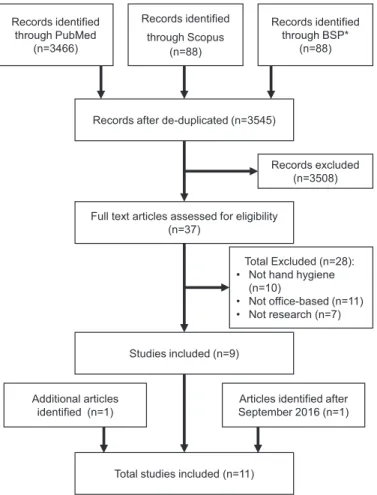
The initial search returned 3545 unique studies; 37 articles were eligible after title and abstract screening, and of these, 9 met the inclusion criteria. The references of the selected articles were re-viewed for additional studies that met the criteria. The final search, conducted in July of 2017, identified one additional article that had been published after the start of the review. Another eligible article, not identified by our search or in the references of other articles, was identified by searching for a citation regarding infections in offices. In total, 11 studies were included for the systematic review (Fig 1). Eight are experimental studies, two are observational studies,
and one is a simulation-based study (Table 2).
Experimental designs
Seven of the experimental studies were randomized control trials (RCTs), and one was a pre/post-test study. Of the seven RCTs, four were unique trials conducted on hand-hygiene and infectious disease outcomes. One trial took place in a German university and
govern-ment administrative offices,31,42one in a Finnish corporation,32-34one
in a U.S. midwestern government building,35and one in a U.S.
mid-western health insurance company.36The pretest–posttest study was
conducted in a southern U.S. corporate office37(Table 3).
The RCT in Germany was randomized on an individual level, matching for customer and archival paper document contact.
In-tervention enrollees (n=64) were provided with a hand-sanitizing
rub in dispensers, instructed when to use the rub, and
encour-aged to use it at least five times daily. Controls (n=65) received no
intervention. The primary outcomes were reduction in self-reported
illness42and sustainability of hand-washing practices by employees.31
Participants were contacted once a month to report general illness symptoms. The researchers found that the intervention group had significantly reduced odds of contracting a common cold (odds ratio
[OR]=0.35; 95% CI: 0.17, 0.71), a fever (OR=0.38; 95% CI: 0.14, 0.99),
and a cough (OR=0.45; 95% CI: 0.22, 0.91); they also had fewer
ab-sences from work due to diarrhea (OR=0.11; 95% CI: 0.01, 0.93).42
Of all employees in the intervention arm, 19% reported following the recommended five times daily, at work, hand hygiene for the duration of the RCT. No assessment of hand hygiene of controls was conducted. Over half of the employees in the intervention favored continued use of hand-hygiene products after the study ended.
The RCT in Finland was conducted among six corporate offices.32
These sites were subdivided, matched on risk factors, and
cluster-randomized to one of three groups: soap and water (n=257);
alcohol-based hand sanitizer (n=202); or control (n=224).
Par-ticipants in the two intervention arms of the trial received similar hand-hygiene instructions, advice on reducing the spread of illness, and soap/alcohol dispensers to use at home. Controls were in-structed to maintain their current hygiene habits.
The primary outcomes were respiratory illness and GI illness reported per week. Participants reported symptoms weekly via an online questionnaire. Due to the emergence of pandemic 2009 H1N1 influenza (pH1N1), the trial outcomes were split into prior pH1N1 and after pH1N1. The authors observed a 16.7% reduction
(P=.002) in illness episodes per week in the soap-and-water
hand-washing group, compared with the control group, prior to pH1N1.33
When outcomes were subdivided into respiratory and GI illness, a statistically significant 15.9% reduction occurred in respiratory illness episodes per week (only before the occurrence of pH1N1), and a 25% reduction occurred in GI illness episodes per week for the full follow-up. No statistically significant reduction in either illness type was observed in comparisons of the alcohol-based hand sani-tizer group and the control group over any time periods. In the control group, a significant reduction was seen in the number of illness episodes reported after pH1N1, compared with before pH1N1
(P=.005).
A reanalysis of the data was conducted in which information was used on self-reported exposures to individuals with respiratory or GI illness. This analysis revealed that the soap-and-water interven-tion arm minimized GI illness, independent of reported exposures
to ill individuals (risk ratio (RR)=0.74; 95% CI: 0.51, 1.05).34
Soap-and-water hand hygiene was only marginally associated with prevention of respiratory illness, and prevention was strongest when there were no reported exposures. No effect was observed in the alcohol-based hand-rub intervention arm for either outcome. This analysis did not stratify between pre- and post-pH1N1, which the
authors34acknowledge is a possible reason for the difference in
results from those of the prior analysis. Records identified
through PubMed (n=3466)
Records identified
through Scopus (n=88)
Records identified through BSP*
(n=88)
Records after de-duplicated (n=3545)
Full text articles assessed for eligibility (n=37)
Studies included (n=9)
Total studies included (n=11)
Records excluded (n=3508)
Articles identified after September 2016 (n=1) Additional articles
identified (n=1)
Total Excluded (n=28): • Not hand hygiene
(n=10)
• Not office-based (n=11) • Not research (n=7)
Table 2
Summaries of included articles
Citation Country Office type Type of study Study Period Sample Size* Intervention Major Findings
Hubner NO31 Germany Government and
university offices
Randomized trial March 2005–April 2006
134 (64,65)
Instructions for proper Use, frequency (5x daily), provided alcohol hand sanitizer
Intervention significantly reduced odds of experiencing symptoms (common cold, fever, coughing)
Intervention significantly reduced odds of being absent due to diarrhea but significant increase in odds for absent due to bronchitis
Hubner NO42 Germany Government and
university offices
Randomized trial March 2005–April 2006
64 78.1% of monthly questionnaires of intervention group met the
recommended 3x per day disinfections
45% complied with hand hygiene time of at least 30 seconds 56.4% favored further Use of disinfectants at workplace Savolainen-Kopra C32 Finland Corporate offices Randomized
clU.S.ter trial
January 2009–May 2010
683 (257,202,224)
Both intervention arms were given hand hygiene products for Use at home, hand hygiene
instructions, infection prevention instructions Alcohol sanitizer arm
received alcohol sanitizer dispensers at desks and bathroom
-Savolainen-Kopra C33 Finland Corporate offices Randomized
clU.S.ter trial
January 2009–May 2010
683 (257,202,224)
Soap and water intervention arm has a significant reduction in infection incidence overall (6.7%,P=0.04) and prior to pdmH1N1 (16.7%,P=0.002)
No significant reduction in alcohol-based sanitizer intervention arm
Soap and water intervention arm had significantly higher reported sick leave episodes (P=0.004) and absences (P=0.009) Hovi T34 Finland Corporate offices Randomized
clU.S.ter trial
January 2009–May 2010
683
(257, 202, 224)
The soap and water intervention arm had a risk of 0.74 (0.51, 1.05) for GI illness compared to the control arm
Respiratory illness risk was only reduced when no exposure to a symptomatic individual was reported (RR=0.68 95% CI: 0.55, 0.82)
No protective effects were seen in the alcohol rub intervention arm Thompson SJ37 U.S. Corporate offices Pretest-posttest December 2012–
February 2013
681 Hand hygiene products placed at employee desks, common workspaces, and critical points, educational materials, team point system for to encourage participation
A 37% reduction in detected ATP on measured office surfaces Reduction in days absent due to minor illness (median 1 day to
median 0.87 days) over 30 day period
A nonsignificant reduction in average medical service costs due to minor illness ($45.96 to $32.88) over six month period
Stedman-Smith M35 U.S. Government offices Randomized
clU.S.ter trial
February 2013– June 2013
324 (131,193)
Hand hygiene training video (5 minutes), posters, alcohol sanitizer dispensers, personal sanitizer dispensers
Intervention significantly reduced combined respiratory tract/GI illness symptoms
(IRR=0.69, 95% CI: 0.49–0.98)
No significant reduction in lost work days (IRR=0.79, 95% CI: 0.51–1.22)
Hand hygiene score, agreement with hygiene expert score, and reported frequency of hand sanitizer use compared to soap and water similar between intervention and control
Arbogast JW36 U.S. Corporate offices Randomized
clU.S.ter trial
February 2014– March 2015
1132 (525,607)
Alcohol sanitizer dispensers, personal sanitizer dispensers, sanitizing wipes
Intervention significantly reduced hand hygiene preventable health care claims (24.3%,P=0.016)
Intervention not associated with less Use of paid time off (P=
0.344)
Intervention increased reported hand hygiene practices, sense of control, satisfaction with employer (P<0.05)
Stedman-Smith M39 U.S. Bank offices Observational March 2011 159 - TPB constructs were associated with hand hygiene
60% of survey participants reported at least one illness symptom in prior 30 days
Stedman-Smith M40 U.S. University offices Observational March 2012–April
2012
361 - TPB constructs were associated with hand hygiene
Hand hygiene reduced odds of reporting illness (OR=0.55, 95% CI: 0.30–0.98)
Beamer PI41 U.S. General office Simulation - - Facial tissues, hand
sanitizer, sanitizing wipes, Use instructions
Intervention would reduce rotavirU.S. and rhinovirU.S. infections by 77%
(P<0.0001)
The pretest–posttest study in a U.S. corporate office (n=681) was
a pilot test of a hygiene-based intervention.37The intervention
program was conducted for 90 days. The intervention consisted of three parts: hand and surface sanitizers were placed on employee desks, common workspace areas, and critical locations; educa-tional materials using protection motivation theory were distributed over the course of the intervention program; and employees were put into teams, with points awarded for germ reduction. The out-comes of the study were as follows: an indicator of bacterial contamination (adenosine triphosphate, a biochemical used for energy storage and use) detected on surfaces; self-reported work-place absence due to minor illness; and medical claims for defined infectious disease diagnoses.
The authors reported a 37% decrease in detected adenosine tri-phosphate across all tested surfaces after the intervention. The time between pre- and post-measures for these outcomes was not clearly presented, and no information was provided regarding environ-mental cleaning. Comparing the 30 days before versus after the intervention, a statistically significant reduction in days absent was observed, with a median of 1 day absent decreasing to a median of 0.87 days absent. The average medical cost for employees de-creased from $45.96 to $32.88, in the 6 months before versus after the test, though this difference was not statistically significant. Al-though self-reported information on hand hygiene was collected, it was not reported.
For the RCT in the U.S. government offices, 18 departments were
cluster randomized to intervention (n=131) or control (n=193).35
The intervention arm received personal bottles of hand sanitizer, installation of hand-sanitizer dispensers, and motivational posters. They watched a short video on hand hygiene. The control arm watched a video regarding effective communication with healthcare
providers. Educational posters were placed around department common areas regarding the video viewed by either group. Surveys were sent out monthly to assess self-reported compliance with hand washing suggestions and self-reported illness/lost work days. The primary outcomes of the study were respiratory and GI illness and lost work days due to illness. The authors found that the hand-washing intervention significantly reduced the incidence of respiratory or GI illness in the intervention group (incidence rate
ratio [IRR]=0.69; 95% CI: 0.49, 0.98), but not lost work days due
to illness (IRR=0.79; 95% CI: 0.51, 1.22). No significant difference
was found between the intervention and control groups in re-ported hand-hygiene performance score or use of hand sanitizer at least 25% of the time, compared with soap and water.
The RCT in a U.S. health insurance company was cluster
ran-domized to either intervention (two office buildings, n=525) or
control (one office building, n=607).36The outcomes were the
number of health insurance claims for select conditions and the number of sick episodes, based on unscheduled, paid time off. In the intervention offices, alcohol-based sanitizer dispensers were placed in high-traffic areas/common areas, and individual alcohol hand-sanitizer bottles and hand wipes were placed in each cubicle. Both the intervention and control groups received identical hand-hygiene education and hand-washing posters placed in bathrooms. The intervention group had a statistically significant reduction in the number of health insurance claims compared with the control
group (24.3%;P=.016). This effect remained after historical
insur-ance claim data from the prior 4 years were factored into the analysis. The intervention group had a nonsignificant reduction in
ab-sences (7.7%;P=.344). Additionally, the authors estimated the
amount of hand washing required to see this effect by measuring the hand-washing products before and after the intervention. Levels Table 3
Strengths and weaknesses of included articles
Study (first author) Strengths Weaknesses
Hubner31,42 • Individual randomization based on customer contact and
paper document contact
• Assessed skin problems in participants
• Assessed employee attitudes
• Self-reported hand hygiene
• Self-reported outcomes
• No measure of hand hygiene in controls
• One month between follow-up surveys
• Small sample size Savolainen-Kopra32,33
Hovi34
• Cluster randomized trial
• Matched clusters on risk factors
• Compared soap and water, and alcohol sanitizer, to control
• Weekly follow-up
• Long duration (16 months)
• Self-reported hand hygiene
• Self-reported outcomes
• Contamination due to 2009 influenza pandemic
• Potential leakage of intervention between arms
Thompson37 • Assessed objective proxy for bacterial contamination of surfaces
• Economic assessment
• Self-reported hand hygiene
• Self-reported absence
• No measure of subclinical employee illness Stedman-Smith35 • Cluster randomized
• Matched based on department size
• Self-reported hand hygiene
• Self-reported outcomes
• One month between follow-up surveys Arbogast36 • Objective measure of hand hygiene
• Objective measure of infectious illness
• Economic assessment
• Assessed only impact in difference of availability of hand-hygiene products
• Compared to control and historical data of intervention group
• Global measure of hand hygiene
• No measure of subclinical employee illness
• Different public transportation use between trial arms
Stedman-Smith40 • Focus on constructs impacting hand-hygiene behavior
• Explored real-world hand-hygiene practices
• Observational
• Self-reported hand hygiene
• Self-reported outcome
• Single timepoint, prior 30 days Stedman-Smith39 • Focus on constructs impacting hand-hygiene behavior
• Explored real-world hand-hygiene practices
• Observational
• Self-reported hand hygiene
• Self-reported outcome
• Single timepoint, prior 30 days
• No reported association Beamer43 • Based on randomized trial with bacteriophage tracers
• Well measured contamination levels of fomites and hands in office setting
• Adapt a previous mathematical model
• Large number of estimated parameters
• Weak evidence for multiple parameters
of use required to see this effect were 1.8 to 3 times per day for sani-tizer, 2.1 to 4.4 times per day for soap, and 1.4 to 1.5 sanitizing wipes per week. The estimates were based on global average use and not on individual-level average use of the hand-hygiene products. The authors also reported that employee attitudes toward hand hygiene improved, and reported hand-hygiene compliance increased, as did the perception that the company cared about employee well-being.
Observational studies
Of the two cross-sectional surveys conducted by
Stedman-Smith et al.39,40, the authors tested whether the Theory of Planned
Behavior (TPB) predicted hand-washing habits in Ohio bank
em-ployees (n=159)39and Midwestern U.S. public university employees
(n=361).40Information on hand-hygiene practices and illness were
self-reported by participants via e-mail. Among both bank and uni-versity employees, the constructs of TPB (underlying attitudes, subjective norms, and perceived control) were associated with hand-hygiene performance. To change hand-hand-hygiene behavior, intervention strategies should use TPB constructs, such as provision of motiva-tional posters and easy access to hand-washing supplies. Among university employees, hand-hygiene behaviors were associated with reduced odds of reporting sickness in the preceding 30 days (OR
0.55; 95% CI: 0.30, 0.98), adjusting for various risk factors.40No results
regarding the association between hand hygiene and self-reported illness were reported for bank employees.
Simulation-based study
The simulation study43utilized a previous hand-washing
inter-vention study on pathogen spread in an office.38Bacteriophage
tracers were used to contaminate participants’ hands as a way to identify where viruses were transmitted in an office. Using these data, and hand transmission data, the effect of a hand-washing
in-tervention was estimated for rotavirus and rhinovirus.43 The
intervention consisted of increased access to hand washing facilities and surface wipes, paired with a simple educational
intervention.38The model estimated that the intervention would
reduce both rotavirus and rhinovirus infection by 77%.43
These simu-lations were limited, because they required a host of estimated parameters with limited data to guide parameter choice. For example, the parameters for hand-to-face contact were estimated from
chil-dren’s behavoir41or from that of extremely small samples of adults.44
DISCUSSION
This systematic review is the first of its kind of hand-hygiene interventions in the nonclinical workplace. As the literature cur-rently stands, few studies focus on hand hygiene as a method to prevent illness in office-based workplaces. The generalizability of the current literature is further limited due to the heterogeneity of interventions applied, unit of analysis (individual vs. group) and mea-sures used, and outcomes assessed.
Despite these limitations, research indicates that hand-hygiene interventions may prevent illness in the workplace across various measures. Although alcohol-based hand sanitizer was effective in
most studies,35,36,42,43it was not in all cases.33,34Additionally, hand
hygiene with soap and water may be more protective against GI
illness than for respiratory illness.34Many GI pathogens, such as
non-enveloped viruses and bacteria spores, are more resistant to
inactivation by alcohol, thus requiring physical removal.45,46Alcohol
is effective against respiratory viruses, which are generally envel-oped viruses, because the mechanism of action for alcohol is to denature proteins and disrupt the lipid envelope, which is
re-quired for entry into host cells.47
Current research suggests that interventions to improve hand hygiene do not have to be extraordinarily intensive. Merely pro-viding easier access to hand-hygiene products can lead to improvements in hand-hygiene compliance. This finding is most
clearly indicated in the study by Arbogast et al.36which provided
educational instructions to both intervention and control groups and nonetheless observed a larger decrease in health insurance claims related to infectious illnesses in the intervention group compared with the control group. The impact of hand-hygiene interventions
had little37,42or no effect33,35,36on reducing employee absences in
the intervention group, compared with the control group. The lack of effect may be due to a culture of presenteeism in the work-place, influencing all employees to attend work despite illness, or to the relative rareness of severe infectious illnesses that would cause an individual to be physically unable to go to work. Previous studies may be too small to capture a reduction, based on hand hygiene, in employee absences attributable to infectious disease, owing to the relative rarity of severe illness. Receiving infection prevention education may also increase the tendency of workers to stay home, resulting in the paradoxical positive association between
partici-pating in a hand-hygiene intervention and absenteeism.33Trials with
no education arm do not report an increase in absenteeism, sug-gesting that increasing hand hygiene without additional education
does not lead to this spurious association.35,36
Published research contains a dearth of studies on presenteeism in the workplace, and various methods to prevent it. Better ways to measure presenteeism and prevent its occurrence need to be devised. A previous systematic review on paid sick-leave policy
found a large gap in the research on presenteeism.20Of the papers
investigated in our review, only two of 11 directly mentioned
presenteeism as a problem.36,39
The trifecta of individual-level strategies to prevent employee illness includes hand hygiene, paid sick leave, and vaccination. Al-though research on vaccines in the workplace suggests that they
are effective,48,49vaccines are limited in the scope of pathogens they
address. For example, a workplace influenza vaccine program will confer protection only for influenza strains for that season and not for a host of other pathogens that may be circulating during a given influenza season. Although both paid sick leave and hand hygiene are broad in the scope of pathogens they protect against, the rig-orous research needed for policy recommendations in these areas is lacking. One study has shown that a lack of workplace sick-leave policies is associated with increased incidence of respiratory
illness.50Additionally, paid sick leave is likely to require a large policy
change at the local, state, or federal level, as employers may be loathe to implement policies individually. In the meantime, individual em-ployers can improve hand-hygiene practices in their workplaces to protect against a variety of pathogens, potentially lowering the burden of altering workplace policies regarding absenteeism.
Arbogast et al.36and Thompson et al.37were the only studies that
looked at economic savings due to increased access to hand-hygiene products. Although the results seem to be cost saving to employers, these results need to be interpreted cautiously. Cur-rently, no other studies are available by which to compare the potential savings reported. Although productivity is reported to be lower during illness, the potential economic loss due to presenteeism remains under-researched. Additionally, economic benefits may be offset by the failure of hand-hygiene programs to prevent work
ab-sences. The work of Arbogast et al.36was funded by a manufacturer
of hand-hygiene products. Similar concerns relating to other studies included in the review are that some products or funding were
pro-vided to conduct the research,35,43author had a disclosed conflict
of interest,31,42or existing conflicts of interest were not disclosed.37
All of the reviewed studies have limitations. The most severe
community-based studies suggest that self-reported hand washing
may not validly measure the true frequency of hand washing.51,52
The potential limits of self-reported hand hygiene in offices are seen
in the work of Stedman-Smith et al.35
in their comparison of hand-hygiene scores between intervention and control groups. Either their sample size was too small to detect a minute difference, or self-reporting does not accurately measure hand-washing practices.
Arbogast et al.36attempted to estimate the amount of hand washing
of employees by measuring the amount of product used. This measure produces only a global level of use and cannot effectively estimate individual level of use. Other ways to measure hand hygiene have been previously detailed in hand-hygiene compliance studies
among healthcare workers.53
Additionally, studies relied on self-reported illness
symptoms31–35,39,40,42or absences.37One study collected only limited
samples from patients,32and another relied on insurance claims
data.36Another issue is time between follow-up surveys.
Self-reports of illness symptoms and hand-washing compliance
were requested for the preceding month,31,35,39,40,42making them
sus-ceptible to increased recall bias. Potential mistaken recall was
minimized in other studies by having weekly reports.32–34A final
limitation is that some studies had higher proportion of female
respondents,31,34,35,39,40,42which may bias results because women are
more likely to engage in protective hand-washing behaviors.54–56
Several new lines of research are underway that should natu-rally follow the findings reviewed here. Specifically, comprehensive monitoring of hand hygiene designed to obtain more accurate mea-sures of hand-hygiene practices in the workplace is needed. In addition, attention to the social network structure of individuals in the workplace might inform intervention measures. For example, an intervention targeted at managerial/senior employees may be more effective at reducing infectious diseases; those in
manageri-al positions are more likely to work while sick,15,16and to have more
contacts capable of transmission in the workplace, compared with other employees.
Although self-report influenza-like illness may be adequately
measured by self-diagnosis,57,58a more objective method,
includ-ing havinclud-ing trained observers identify symptoms and obtain specimens for pathogen identification, would be preferable. With the identification of pathogens in samples, the etiology of infec-tions can be determined, along with molecular information for tracking transmission within the workplace. Ideally, follow-up would be weekly instead of monthly, so as to reduce potential biases in recall of symptoms and hand-hygiene habits. The persistence of any hand-hygiene intervention also should be assessed, as whether the interventions suggested in this review result in long-lasting changes in behaviors among individuals in the workplace remains unclear. Last, better participant recruitment and compensation strategies should be used to increase response rate and encourage more male
office employee participation. Arbogast et al.36used a study
meth-odology that avoided this problem by using employee insurance claim data. Other strategies that similarly avoid gender issues could be devised. Another important measure is presenteeism and how to best assess it, in addition to absences in hand-hygiene interventions.
CONCLUSION
Hand hygiene in the workplace is a key target method for re-ducing communicable disease in the workplace. Although current research studies include some limitations and gaps, the overall find-ings indicate that hand hygiene is effective at reducing respiratory and GI illness among office employees. Our findings are compati-ble with widespread evidence that hand hygiene is a key measure for reducing infectious illnesses in other community settings, such
as schools and daycare centers. The interventions examined here were relatively easy to implement (e.g., providing easier access to hygiene products with simple instructional information on proper hand hygiene), suggesting that the potential cost to employers may be moderate to low. Reducing illness among employees may improve productivity, raise employee morale, and generate cost savings for employers by reducing insurance claims. Enhancing hand-hygiene behaviors and education is a relatively easy and cost-effective in-tervention for reducing infectious diseases and their impact.
References
1. Occupational Safety and Health Administration. Guidance on preparing workplaces for an influenza pandemic. (OSHA 3327-05R 2009). Washington, DC: US Department of Labor; 2009.
2.Hovi T, Ollgren J, Haapakoski J, Amiryousefi A, Savolainen-Kopra C. Exposure to persons with symptoms of respiratory or gastrointestinal infection and relative risk of disease: self-reported observations by controls in a randomized intervention trial. Trials 2015;16:168.
3.Mohren DC, Jansen NW, Kant IJ, Galama J, van den Brandt PA, Swaen GM. Prevalence of common infections among employees in different work schedules. J Occup Environ Med 2002;44:1003-11.
4.Pejtersen JH, Feveile H, Christensen KB, Burr H. Sickness absence associated with shared and open-plan offices—a national cross sectional questionnaire survey. Scand J Work Environ Health 2011;37:376-82.
5.Bodin Danielsson C, Chungkham HS, Wulff C, Westerlund H. Office design’s impact on sick leave rates. Ergonomics 2014;57:139-47.
6. Luongo JC, Fennelly KP, Keen JA, Zhai ZJ, Jones BW, Miller SL. Role of mechanical ventilation in the airborne transmission of infectious agents in buildings. Indoor Air 2016;26:666-78.
7. Neely AN, Maley MP, Warden GD. Computer keyboards as reservoirs for acinetobacter baumannii in a Burn Hospital. Clin Infect Dis 1999;29:1358-9. 8.Pal S, Juyal D, Adekhandi S, Sharma M, Prakash R, Sharma N, et al. Mobile phones:
reservoirs for the transmission of nosocomial pathogens. Adv Biomed Res 2015;4:144.
9.Anderson G, Palombo EA. Microbial contamination of computer keyboards in a university setting. Am J Infect Control 2009;37:507-9.
10.Boone SA, Gerba CP. The prevalence of human parainfluenza virus 1 on indoor office fomites. Food Environ Virol 2010;2:41-6.
11.Keech M, Beardsworth P. The impact of influenza on working days lost: a review of the literature. Pharmacoeconomics 2008;26:911-24.
12.Molinari NA, Ortega-Sanchez IR, Messonnier ML, Thompson WW, Wortley PM, Weintraub E, et al. The annual impact of seasonal influenza in the US: measuring disease burden and costs. Vaccine 2007;25:5086-96.
13.Schanzer DL, Zheng H, Gilmore J. Statistical estimates of absenteeism attributable to seasonal and pandemic influenza from the Canadian Labour Force Survey. BMC Infect Dis 2011;11:90.
14.Jones TF, McMillian MB, Scallan E, Frenzen PD, Cronquist AB, Thomas S, et al. A population-based estimate of the substantial burden of diarrhoeal disease in the United States; FoodNet, 1996-2003. Epidemiol Infect 2007;135:293-301. 15.Mohren DC, Swaen GM, Kant I, van Schayck CP, Galama JM. Fatigue and job stress
as predictors for sickness absence during common infections. Int J Behav Med 2005;12:11-20.
16.Keech M, Scott AJ, Ryan PJ. The impact of influenza and influenza-like illness on productivity and healthcare resource utilization in a working population. Occup Med (Lond) 1998;48:85-90.
17.Palmer LA, Rousculp MD, Johnston SS, Mahadevia PJ, Nichol KL. Effect of influenza-like illness and other wintertime respiratory illnesses on worker productivity: the child and household influenza-illness and employee function (CHIEF) study. Vaccine 2010;28:5049-56.
18.Smith A, Thomas M, Whitney H. Effects of upper respiratory tract illnesses on mood and performance over the working day. Ergonomics 2000;43:752-63. 19.Smith AP, Brice C, Leach A, Tiley M, Williamson S. Effects of upper respiratory
tract illnesses in a working population. Ergonomics 2004;47:363-9. 20.Edwards CH, Tomba GS, de Blasio BF. Influenza in workplaces: transmission,
workers’ adherence to sick leave advice and European sick leave recommendations. Eur J Public Health 2016;26:478-85.
21.Meilicke G, Riedmann K, Biederbick W, Muller U, Wierer T, Bartels C. Hygiene perception changes during the influenza A H1N1 pandemic in Germany: incorporating the results of two cross-sectional telephone surveys 2008-2009. BMC Public Health 2013;13:959.
22.Bagherirad M, Trevan P, Globan M, Tay E, Stephens N, Athan E. Transmission of tuberculosis infection in a commercial office. Med J Aust 2014;200:177-9. 23.Bramley TJ, Lerner D, Sames M. Productivity losses related to the common cold.
J Occup Environ Med 2002;44:822-9.
24.Semmelweis IP. The etiology, concept and prevention of childbed fever. 1861. Am J Obstet Gynecol 1995;172:236-7. [Article in German].
26. Sickbert-Bennett EE, DiBiase LM, Willis TM, Wolak ES, Weber DJ, Rutala WA. Reduction of healthcare-associated infections by exceeding high compliance with hand hygiene practices. Emerg Infect Dis 2016;22:1628-30.
27. Aiello AE, Coulborn RM, Perez V, Larson EL. Effect of hand hygiene on infectious disease risk in the community setting: a meta-analysis. Am J Public Health 2008;98:1372-81.
28. Bureau of Labor Statistics. American time use survey—2015 results. Washington, DC: U.S. Department of Labor; 2016. Available from:https://www.bls.gov/ news.release/archives/atus_06242016.pdf. Accessed November 19, 2017. 29. Moher D, Liberati A, Tetzlaff J, Altman DG. Preferred reporting items for systematic
reviews and meta-analyses: the PRISMA statement. Ann Intern Med 2009;151:264-9, W64.
30. Ioannidis JP. The mass production of redundant, misleading, and conflicted systematic reviews and meta-analyses. Milbank Q 2016;94:485-514. 31. Hubner NO, Hubner C, Kramer A. Impact of health campaign on hand hygiene
with alcohol-based hand rubs in a non-clinical setting. J Hosp Infect 2013; 83(Suppl 1):S23-8.
32. Savolainen-Kopra C, Haapakoski J, Peltola PA, Ziegler T, Korpela T, Anttila P, et al. STOPFLU: Is it possible to reduce the number of days off in office work by improved hand-hygiene? Trials 2010;11:69.
33. Savolainen-Kopra C, Haapakoski J, Peltola PA, Ziegler T, Korpela T, Anttila P, et al. Hand washing with soap and water together with behavioural recommendations prevents infections in common work environment: an open cluster-randomized trial. Trials 2012;13:10.
34. Hovi T, Ollgren J, Savolainen-Kopra C. Intensified hand-hygiene campaign including soap-and-water wash may prevent acute infections in office workers, as shown by a recognized-exposure -adjusted analysis of a randomized trial. BMC Infect Dis 2017;17:47.
35. Stedman-Smith M, DuBois CL, Grey SF, Kingsbury DM, Shakya S, Scofield J, et al. Outcomes of a pilot hand hygiene randomized cluster trial to reduce communicable infections among U.S. office-based employees. J Occup Environ Med 2015;57:374-80.
36. Arbogast JW, Moore-Schiltz L, Jarvis WR, Harpster-Hagen A, Hughes J, Parker A. Impact of a comprehensive workplace hand hygiene program on employer health care insurance claims and costs, absenteeism, and employee perceptions and practices. J Occup Environ Med 2016;58:e231-40.
37. Thompson SJ, Rew L. The healthy workplace project: results of a hygiene-based approach to employee wellness. Am J Health Promot 2015;29:339-41. 38. Reynolds KA, Beamer PI, Plotkin KR, Sifuentes LY, Koenig DW, Gerba CP. The
healthy workplace project: reduced viral exposure in an office setting. Arch Environ Occup Health 2016;71:157-62.
39. Stedman-Smith M, DuBois CL, Grey S. Workplace hand hygiene and wellness: a survey of knowledge, beliefs, and practices. Workplace Health Saf 2012;60:477-85.
40. Stedman-Smith M, DuBois CL, Grey SF. Hand hygiene performance and beliefs among public university employees. J Health Psychol 2015;20:1263-74.
41. Beamer PI, Luik CE, Canales RA, Leckie JO. Quantified outdoor micro-activity data for children aged 7-12-years old. J Expo Sci Environ Epidemiol 2012;22:82-92.
42. Hubner NO, Hubner C, Wodny M, Kampf G, Kramer A. Effectiveness of alcohol-based hand disinfectants in a public administration: impact on health and work performance related to acute respiratory symptoms and diarrhoea. BMC Infect Dis 2010;10:250.
43. Beamer PI, Plotkin KR, Gerba CP, Sifuentes LY, Koenig DW, Reynolds KA. Modeling of human viruses on hands and risk of infection in an office workplace using micro-activity data. J Occup Environ Hyg 2015;12:266-75.
44. Nicas M, Best D. A study quantifying the hand-to-face contact rate and its potential application to predicting respiratory tract infection. J Occup Environ Hyg 2008;5:347-52.
45. Weber DJ, Rutala WA, Miller MB, Huslage K, Sickbert-Bennett E. Role of hospital surfaces in the transmission of emerging health care-associated pathogens: norovirus, Clostridium difficile, and Acinetobacter species. Am J Infect Control 2010;38(5 Suppl 1):S25-33.
46. Boyce JM, Pittet D. Guideline for hand hygiene in health-care settings. Recommendations of the Healthcare Infection Control Practices Advisory Committee and the HICPAC/SHEA/APIC/IDSA Hand Hygiene Task Force. Society for Healthcare Epidemiology of America/Association for Professionals in Infection Control/Infectious Diseases Society of America. MMWR Recomm Rep 2002; 51(Rr–16):1-45, quiz CE1-4.
47. Block SS. Disinfection, sterilization, and preservation. Philadelphia: Lea & Febiger; 1991.
48. Lee BY, Bailey RR, Wiringa AE, Afriyie A, Wateska AR, Smith KJ, et al. Economics of employer-sponsored workplace vaccination to prevent pandemic and seasonal influenza. Vaccine 2010;28:5952-9.
49. Campbell DS, Rumley MH. Cost-effectiveness of the influenza vaccine in a healthy, working-age population. J Occup Environ Med 1997;39:408-14.
50. Kumar S, Quinn SC, Kim KH, Daniel LH, Freimuth VS. The impact of workplace policies and other social factors on self-reported influenza-like illness incidence during the 2009 H1N1 pandemic. Am J Public Health 2012;102:134-40. 51. Jay LS, Comar D, Govenlock LD. A video study of Australian domestic
food-handling practices. J Food Prot 1999;62:1285-96.
52. Manun’Ebo M, Cousens S, Haggerty P, Kalengaie M, Ashworth A, Kirkwood B. Measuring hygiene practices: a comparison of questionnaires with direct observations in rural Zaire. Trop Med Int Health 1997;2:1015-21.
53. Haas JP, Larson EL. Measurement of compliance with hand hygiene. J Hosp Infect 2007;66:6-14.
54. American Society of Microbiology. Public handwashing takes a hike. Washington DC: American Cleaning Institute, American Society for Microbiology: 2010. http://www.cleaninginstitute.org/public_handwashing_takes_a_hike/. 55. Anderson JL, Warren CA, Perez E, Louis RI, Phillips S, Wheeler J, et al. Gender
and ethnic differences in hand hygiene practices among college students. Am J Infect Control 2008;36:361-8.
56. van de Mortel T, Bourke R, McLoughlin J, Nonu M, Reis M. Gender influences handwashing rates in the critical care unit. Am J Infect Control 2001;29:395-9. 57. Macintyre S, Pritchard C. Comparisons between the self-assessed and
observer-assessed presence and severity of colds. Soc Sci Med 1989;29:1243-8. 58. Larson EL, Lin SX, Gomez-Pichardo C, Della-Latta P. Effect of antibacterial home