MILD METHODS OF GLYCOSYL RADICAL GENERATION FOR C-GLYCOSIDE SYNTHESIS
Robert Stephen Andrews
A dissertation submitted to the faculty of the University of North Carolina at Chapel Hill in partial fulfillment of the requirements for the degree of Doctor of Philosophy in the Department of
Chemistry.
Chapel Hill 2012
Approved by
Professor Michel R. Gagné
Professor Maurice Brookhart
Professor Michael Crimmins
Professor Jeffrey Johnson
ii Abstract
ROBERT STEPHEN ANDREWS: Mild Methods of Glycosyl Radical Generation for C-Glycoside Synthesis
(Under the direction of Prof. Michel R. Gagné)
Carbohydrates are a promising and expanding class of therapeutic drugs for a disparate group of diseases. As the anomeric linkages in these compounds are subject to enzymatic degradation, carbon-linked analogs of therapeutic glycosides have been developed and shown to increase the efficacy and bioavailability of the drug. Radical-mediated methods for the synthesis of anomeric carbon-carbon bonds feature excellent anomeric stereoselectivity and high functional group tolerance, making them ideal approaches to synthesis of C-glycosides. However, these methods often require the use of highly-toxic materials, elevated temperatures, or the use of a large excess radical acceptor to achieve high yields.
To improve upon these limitations, a nickel-catalyzed, room temperature approach to generate glycosyl radicals has been developed. Notably, this methodology requires only a slight excess of radical acceptor and does not use toxic tin reagents. Yields range from 20-98%, with highly electron-deficient alkenes providing the best results. Glycosyl radical addition into 1,1-disubstituted alkenes initially provided low diastereoselectivities, but by incorporating bulky alcoholic proton sources, the diastereoselectivity was improved up to 5:1.
A second-generation method of forming glycosyl radical was developed based on a single electron transfer from photo-generated Ru(bpy)3
+
iii
investigations led to a proposed mechanism. Further investigation into the rate of the photoredox process utilized trapping of the generated glycosyl radical with thiols. It was determined that catalyst hydrophobicity and solvent composition significantly affect the rate of the reaction, and these concepts were successfully applied to an improved synthesis of C-glycosides.
iv
v
Acknowledgements
Over the course of my graduate career, I have had the pleasure of interacting with so many people, many of whom I will never forget. Each person has changed me in some way, and I’d like to thank everyone for the experience. To anyone I do not specifically mention, please know that I am grateful.
I would like to thank Mike for the pleasure it has been to work in his lab for the past five years. He has given me the freedom to direct my own research and the support necessary to achieve my goals. His patience and guidance have been instrumental to my success, for which I am truly thankful. I am also very grateful for the trips to conferences in exotic lands he has funded, which were fantastic experiences. Thanks, Mike!
Thanks to my former teachers and professors who have helped me pursue a career in science. Special thanks to Mr. Jason Calhoun, (Gar-Field SHS), Mr. Jeff Malloy (JMU), Dr. Kevin Caran (JMU), Dr. Scott Lewis (JMU), Dr. Tom DeVore (JMU) and especially Dr. Kevin Minbiole (JMU) for his continued help long after I graduated and stopped working in his lab. Without your influence, I would not have even come to graduate school.
Thanks to my labmates at JMU for their help and companionship: Andrew (Super Duper) Blanchard, (the now) Dr. Erik Stang, Marita Lawler, Kevin Jellerson, Seth Kingree, and Kerry O’Neil. The long summers were far more pleasant around these guys, and I thank them for that.
vi
gripes, and everything in between. Dr. Colleen Munro-Leighton for the years of companionship while bringing the lab up to T. Brent Gunnoe standards. Dieter Weber for our long discussions about chemistry over the years that I have enjoyed, as well the numerous discussions of Deutschland. Joe Sokol and (Mike) Geier for the endless hours discussing the finer points of sports, as well as for forming a wonderfully successful trivia team. Ryan Felix for serving as the sole person in lab with whom I can discuss games, much to the chagrin of the rest of the lab. Laura Adduci for her endless patience and constant upbeat attitude, which is necessary to survive in a bay with me for as long as she has. Thanks everyone for the wonderful time, and I wish you all the best.
I would like to especially thank Elise. You have suffered along with me and been a source of constant support and optimism, regardless of my dour moods. I was only able to make it this far with your help. I cannot express how much this means to me, and I can only hope to return the favor.
Thanks to Holly, Vic, Mike, Christi, James, Cynthia, and Sergey for the invaluable friendship and helping me see the bright side of things. Thanks to the Poker Guys for the great times over the years I will not soon forget (looking at you, Stu).
vii Table of Content
List of Tables ... ix
List of Schemes ... x
List of Figures ... xiv
List of Abbreviations and Symbols ... xvi
Chapter 1 - Introduction. ... 1
Carbohydrates and Glycosides. ... 1
Glycosides in Biology. ... 5
C-Glycosides. ... 8
Methods of C-Glycoside Synthesis. ... 12
Radical C-Glycoside Synthesis. ... 27
Research Objectives. ... 33
Chapter 2 : Radical Intermediates in Negishi Cross-Couplings. ... 34
Nickel-Catalyzed Radical Formation. ... 34
Application of Nickel Catalysts to Glycosyl Radical Generation (Dr. Hegui Gong). ... 37
Substrate Scope: Alkenes and Carbohydrates. ... 40
Diastereoselectivity of 1,1-Disubstituted Alkenes. ... 43
Proposed Mechanism and Stereochemical Model. ... 46
Diastereoselectivity: Chiral Auxiliaries. ... 50
Second Generation Catalysts: Atom-Transfer Radical Generation. ... 52
Conclusion. ... 54
viii
Chapter 3 – Light Mediated Radical C-Glycoside Synthesis. ... 73
Photoredox Catalysis: Background. ... 73
Initial Optimization. ... 83
Substrate Scope: Carbohydrates and Alkenes. ... 86
Control Experiments and Mechanistic Investigations. ... 88
Proposed Mechanism and Attempted Application to Propiolates... 90
Conclusion. ... 95
Experimental Section. ... 95
Chapter 4 - Rate of Glucosyl Radical Generation. ... 107
Effect of Alkenes and Catalyst on Rate. ... 107
Rate of Photoredox Cycle. ... 110
Experimental Design. ... 112
Rate Dependence on Reagent Concentration. ... 114
Application to C-Glycoside Synthesis. ... 121
Conclusion. ... 122
Experimental Section. ... 122
Chapter 5 - Large Scale Synthesis of C-Glycoconjugates ... 130
Synthesis of C-Glycoconjugates. ... 130
Planned Synthesis of C-Glycoamino acids via Key Aldehyde Intermediate. ... 136
Large Scale Synthesis of C-Glycosides. ... 140
Evaluation of Photo-Flow Reactor. ... 144
Synthesis of C-Glycoconjugates. ... 147
Conclusion and Future Work. ... 152
Experimental Section. ... 153
ix
List of Tables
Table 2.1: Optimization of Nickel-Catalyzed Radical Addition into Alkenes by Dr. Hegui Gong. .... 38
Table 2.2: Substrate Scope of Acrylate-Based Alkenes. ... 40
Table 2.3: Radical Addition into Substituted Styrenes. ... 41
Table 2.4: Sugar Substrates in Ni-Catalyzed Addition into Alkenes. ... 43
Table 2.5: Optimization of Diastereoselectivity of Addition into Disubstituted Alkenes. ... 44
Table 2.6: Diastereoselective Addition into Alkenes Scope. ... 46
Table 2.7: Influence of Oxazolidinone-based Chiral Auxiliaries on Diastereoselectivity. ... 50
Table 2.8: Investigation of Copper Catalysts for C-Glycoside Synthesis. ... 53
Table 3.1: Initial Optimization of Ru(bpy)3 2+ -Mediated C-Glycoside Synthesis. ... 83
Table 3.2: Optimization of Additives for the Synthesis of C-Glycosides. ... 84
Table 3.3: Final Optimization of Radical-Mediated C-Glycoside Synthesis. ... 85
Table 3.4: Substrate Scope of Radical-Mediated C-Glycoside Synthesis. ... 86
Table 3.5: Control Experiments in the Light-Mediated Synthesis of C-Glycosides. ... 88
Table 4.1: Yield and Conversion of C-Glycoside Synthesis with Optimized Conditions. ... 121
Table 4.2: % Conversion of 4 for various cosolvent concentrations ... 125
Table 5.1: 24-hour Continuous Flow Reaction for Ac- and Piv-Protected Sugars. ... 145
Table 5.2: Calculation of % Transmittance Based on Path Length and [Ru(dmb)3 2+ ] ... 155
x
List of Schemes
Scheme 1.1: Equilibrium between Aldohexose and Pyranose Form of Glucose. ... 2
Scheme 1.2: Electrophilic Activation of Saccharides for C-Glycoside Synthesis. ... 13
Scheme 1.3: Stereoselectivity of Cyanide Addition to Glucosyl Fluorides Based on Conditions. ... 13
Scheme 1.4: Alkylation of Glycosyl Halides with Various Nucleophiles. ... 14
Scheme 1.5: Synthesis of C-Allyl Glycosides. ... 14
Scheme 1.6: Examples of Electrophilic Substrates for C-Glycoside Synthesis. ... 15
Scheme 1.7: Synthesis of C-linked Glycerolipid via Ramberg-Bäcklund Rearrangement. ... 16
Scheme 1.8: Nucleophilic Addition of Glycals into Aldehydes. ... 17
Scheme 1.9: Synthesis of Iodo-Glycals for Cross-Coupling Reactions. ... 17
Scheme 1.10: Stereospecific Addition of Lithium-Saccharides via Direct Metal-Metal Exchange. ... 18
Scheme 1.11: Stereoselective Addition of Lithium-Glycosides into Aldehydes via Reduction. ... 18
Scheme 1.12: Deprotonation of Sulfonyl Glycosides and Stereoselective Protonation. ... 19
Scheme 1.13: Addition of 1,3-Diketones into Ally-Palladium Complex. ... 19
Scheme 1.14: Palladium-Catalyzed Heck-type Coupling for Aryl-C-Glycoside Synthesis. ... 20
Scheme 1.15: Palladium-Catalyzed Stille Reaction of Stannyl Glycals. ... 21
Scheme 1.16: Negishi Cross-Coupling of Iodo-Glycals. ... 21
Scheme 1.17: Stereoselective Rhodium-Catalyzed α-Arylation of Glycosyl Enones. ... 22
Scheme 1.18: Divergent Synthesis of Aryl-C-Glycosides Based on Oxidant. ... 22
Scheme 1.19: Saturated, Unsaturated, and Fully Oxygenated Glycosyl Electrophiles. ... 23
Scheme 1.20: Nickel-Catalyzed Negishi Cross-Coupling of sp3-Hybridized Electrophiles. ... 24
Scheme 1.21: Negishi Cross-Coupling of Glucosyl Bromides and Alkylzinc Reagents. ... 25
Scheme 1.22: Negishi Cross-Coupling of Mannosyl Bromides and Alkylzinc Reagents. ... 25
Scheme 1.23: Selectivity of Negishi Cross-Coupling with Glucosyl Bromides and Arylzinc. ... 26
xi
Scheme 1.25: Orientation of Glucosyl Radicals. ... 28
Scheme 1.26: Tin-Mediated of Glycosyl Halides into Alkenes. ... 28
Scheme 1.27: Rate of Glycosyl Radical Generation Based on Orientation of C2 Substituent. ... 29
Scheme 1.28: Mechanism of Tin-Catalyzed Radical Addition into Alkenes. ... 30
Scheme 1.29: Examples of Tin-Catalyzed Radical Generation for the Synthesis of C-Disaccharides.31 Scheme 1.30: Generation of Glycosyl Radicals by Titanocene(III) Chloride. ... 32
Scheme 1.31: Nickel-Catalyzed Radical Generation and Addition into Acrylates. ... 33
Scheme 2.1: Reaction of Ni(I) and Ni(II) Complexes with Alkyl Coupling Partners. ... 34
Scheme 2.2: Proposed Catalytic Cycle of Ni-Catalyzed Negishi Reactions. ... 35
Scheme 2.3: Observed Radical Cyclization by Cárdenas in Negishi Cross-Coupling. ... 37
Scheme 2.4: Radical Clock Reaction in Negishi Cross-Coupling. ... 37
Scheme 2.5: Ring-Opening of Vinyl Cyclopropane 58. ... 47
Scheme 2.6: Proposed Mechanism of Ni-Catalyzed Synthesis of C-Glycosides. ... 47
Scheme 2.7: Proposed Stereochemistry Model. ... 49
Scheme 2.8: General Mechanism for ATRP. ... 52
Scheme 3.1: Reduction of Glycosyl Bromides by Nickel(I) Complex ... 73
Scheme 3.2: Metal to Ligand Charge Transfer to Form Ligand-Centered Radical. ... 74
Scheme 3.3: Redox Behavior of Excited State Ru(bpy)3 2+ ... 75
Scheme 3.4: Reduction of Phenacylsulfonium Salt by 1,4-Dihydropyridine with Ru(bpy)3Cl2. ... 76
Scheme 3.5: Reduction of Phenacyl Bromide 12 Catalyzed by Ru(bpy)3Cl2. ... 77
Scheme 3.6: Ru(bpy)3Cl2-Catalyzed Enantioselective α-Functionalization of Aldehydes. ... 78
Scheme 3.7: Proposed Organocatalytic and Photoredox Mechanism by MacMillan and Nicewicz. ... 79
Scheme 3.8: Formal [2+2] Intramolecular Cyclization of Enones. ... 80
Scheme 3.9: Ru(bpy)3 2+ -Catalyzed [2+2] Cycloaddition of Crossed Enones. ... 81
Scheme 3.10: Radical-Mediated Reduction Debromination with Ru(bpy)3 2+ . ... 81
xii Scheme 3.12: Planned Reactivity of Ru(bpy)3
+
and Glycosyl Bromides. ... 82
Scheme 3.13: Thiol-Trapping Control Experiment. ... 89
Scheme 3.14: Radical-Mediated Conjugate Additions into Vinyl Cyclopropane 51. ... 90
Scheme 3.15: Proposed Mechanism of Ru(bpy)3 2+ -Catalyzed C-Glycoside Synthesis. ... 91
Scheme 3.16: Attempted Conjugate Addition into Propiolates. ... 92
Scheme 3.17: Potential Mechanism for Synthesis of 61. ... 93
Scheme 3.18: Reaction of 23 with Propiolate 59. ... 93
Scheme 4.1: Proposed Mechanism of Reductive Quenching of Ru(bpy)3 2+ with Amines. ... 110
Scheme 4.2: Proposed Trapping of Glycosyl Radicals with Thiols. ... 112
Scheme 4.3: Varying Concentration of Thiol on Consumption of 4. ... 114
Scheme 5.1: Synthesis of C-Alanine via Radical Addition into a Chiral Alkene. ... 131
Scheme 5.2: Wittig-Approach to β-C-Alanine Glycoamino Acid. ... 131
Scheme 5.3: Wittig-Approach to Glycosyl C-Serines. ... 132
Scheme 5.4: Synthesis of β-C-Serine via Ramberg-Bäcklund Rearrangement. ... 132
Scheme 5.5: Synthesis of C-Serines via Nucleophilic Addition of Chiral Zinc Reagent to Glycal. . 133
Scheme 5.6: Synthesis of α-C-Serine via Olefiniation and Asymmetric Hydrogenation. ... 134
Scheme 5.7: Organocatalytic α-Amination of Aldehydes for C-Alanine Synthesis. ... 135
Scheme 5.8: Organocatalytic α-Amination of Aldehydes for C-Serine Synthesis. ... 136
Scheme 5.9: Planned Synthesis of C-Glycoconjugates from Common Aldehyde Intermediate. ... 137
Scheme 5.10: One-Pot Organocatalytic Asymmetric Strecker Cyanation of Aldehydes. ... 138
Scheme 5.11: L-Prolinamide Catalyzed α-Chlorination of Aldehydes for Amino Acid Synthesis. .. 139
Scheme 5.12: α-Substitution of Aldehydes with Iminoglyoxalate 56 for Amino Acid Synthesis. .... 139
Scheme 5.13: Conversion and TOF Based on Vessel Size. ... 140
Scheme 5.14: One-Pot Organocatalytic Synthesis of Glycosyl Amino Nitriles. ... 147
Scheme 5.15: Platinum-Catalyzed Hydration of Nitrile to Amide. ... 148
xiii
Scheme 5.17: α-Chlorination of Aldehydes and Subsequent Derivatization to Azido Ester. ... 149
Scheme 5.18: α-Addition of Aldehyde into Iminoglyoxalate, Reduction, and Lactonization... 150
Scheme 5.19: α-Addition of Aldehyde into Iminoglyoxalate and Protection. ... 151
xiv
List of Figures
Figure 1.1: Structure of Aldose and Ketose Carbohydrates. ... 1
Figure 1.2: General Structure for X-Glycosides. ... 2
Figure 1.3: α- and β-Anomeric Forms of Common Pyranose Monosaccharides. ... 3
Figure 1.4: Anomeric Effect in Pyranose Monosaccharides. ... 4
Figure 1.5: Energy Diagram for the Anomerization of Glucosyl Bromides. ... 5
Figure 1.6: Absence of Anomeric Effect in C-Glycosides. ... 8
Figure 1.7: Nojirimycin-Glucose Dimer as Glucosidase Enzyme Inhibitor. ... 9
Figure 1.8: O- and C-Glycoside Analogs of KRN7000. ... 10
Figure 1.9: Presence of Sporozites based on Dosage of O- and C-linked KRN7000. ... 11
Figure 1.10: Polymer-based Sialic Acid C-Glycosides for Inhibition of Influenza Binding. ... 12
Figure 1.11: Catalyst- and Substrate-Control in Negishi Cross-Couplings of Glycosyl Halides. ... 27
Figure 2.1: Common Byproducts in the Nickel-Catalyzed Radical Addition into Alkenes. ... 39
Figure 2.2: Structure of Pincer Ligands Used in Optimization. ... 39
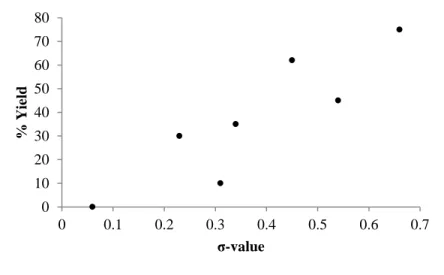
Figure 2.3: Plot of % Yield vs ζ-value of Substituent for a Series of Substituted-Styrenes. ... 42
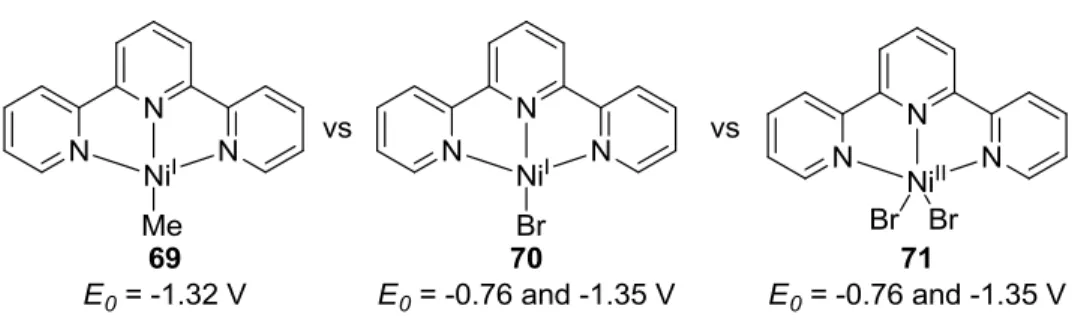
Figure 2.4: Reduction Potentials of Terpy-Nickel Complexes. ... 48
Figure 2.5: Chiral Auxiliaries Investigated and Resulting Diastereoselectivity. ... 51
Figure 3.1: Structure of Trisbipyrdine Ruthenium(II). ... 74
Figure 3.2: Time-Based EPR of Carbon-Based Radicals in Light-Mediated Reactions... 90
Figure 3.3: Attempted Amine Quenchers for Addition of Radicals into Propiolates. ... 94
Figure 4.1: Reaction of Glucosyl Bromide 4 with Methyl Acrylate.. ... 108
Figure 4.2: Reaction of Glucosyl Bromide 4 with Methyl Vinyl Ketone. ... 109
Figure 4.3: Experimental Setup for CFL Irradiation of NMR Tubes. ... 113
xv
Figure 4.5: Conversion after 3 h of irradiation with increasing [Ru(bpy)3
2+
] for CFL and blue LED light sources. ... 115
Figure 4.6: Experimental Setup for the Irradiation of NMR Tubes with Blue LEDs... 116
Figure 4.7: % Conversions after 3 h of irradiation as a function of initial EtNiPr2 concentration.. ... 117
Figure 4.8: % conversion of 1 (20 min) after photolysis with blue LEDs versus cosolvent additive.. ... 118
Figure 4.9: Conversion after 20 min of irradiation with blue LEDs with increasing [Ru(bpy)3 2+ ]. ... 119
Figure 4.10: Conversion after 20 min of irraditation with blue LEDs for Ru(L)3 2+ . ... 120
Figure 5.1: % Transmittance vs distance (d) from the Wall from the Beer-Lambert law. ... 141
Figure 5.2: Diagram of the Designed Photo-flow Reactor. ... 143
Figure 5.3: TOF vs [Ru(dmb)3 2+ ] at Two Tubing Diameters. ... 144
Figure 5.4: Experimental Setup for the Synthesis of Acetate-Protected C-Glycosides. ... 146
Figure 5.5: Experimental Setup for the Synthesis of Pivaloate-Protected C-Glycosides. ... 146
xvi
List of Abbreviations and Symbols
°C degrees Celcius
%T % transmittance (light)
Å angstrom
Abs absorbance (light)
Ac acetyl
α alpha – opposite sides of pyranose ring (stereochemistry)
AIBN 2,2’-azobis(2-methylpropionitrile)
aq aqueous
β beta – same side of the pyranose ring (stereochemistry)
BINOL 1,1’-bi-2-naphthol
Boc tert-butoxycarbonyl
bpy 2,2’-bipyridine
Bn benzyl
brms based on remaining starting material (yield)
nBuLi n-butyllithium
tBu tert-butyl
tBuLi tert-butyllithium
tBuOH tert-butyl alcohol
Bz benzoate
C- carbon (linkage in saccharides)
Cbz carboxylbenzyl
CFL compact fluorescent light
COD 1,5-cyclooctadiene
xvii
d doublet (NMR)
d distance
D dextrorotary (stereochemistry, relative to glyceraldehyde)
de diastereomeric excess
DFT density functional theory (calculations)
DMA N,N-dimethylacetamide
DMAP 4-(dimethylamino)pyridine
dmb 4,4’-dimethyl-2,2’-bipyridine
DMF N,N-dimethylformamide
DMI 1,3-dimethyl-2-imidazolidinone
DMSO dimethylsulfoxide
dr diastereomeric ratio
dtb-bpy 4,4’-di-tert-butyl-2,2’-bipyridine
E entgegen – opposite (German)
Ea activation energy
ee enantiomeric excess
epi. epimer (stereochemistry)
EPR Electroparamagnetic resonance (spectroscopy)
eq. equivalent
ESI electrospray ionization
Et ethyl
EtOH ethanol
ϕ quantum yield
FEP fluorinated ethylene propylene
g gram
xviii
µg microgram
GCMS gas chromatography – mass spectroscopy
h hour
hν energy (from light)
HEH Diethyl 1,4-dihydro-2,6-dimethyl-3,5-pyridine dicarboxylate
HMETA 1,1,4,7,10,10-hexamethyltriethylenetetramine
HPLC high performance liquid chromatography
HRMS high resolution mass spectrum
Hz hertz (NMR coupling constants)
I.D. inner diameter (tubing)
L liter
L any unspecified ligand
L levorotary (stereochemistry, relative to glyceraldehyde)
mL milliliter (10-3 liter)
µL microliter (10-6 liter)
λ lambda - wavelength
LC-TOF liquid chromatography time of flight mass spectrometry
LDA lithium diisopropylamide
LED light emitting diode
m multiplet (NMR)
m- meta – 1,3 relationship on aromatic
M molar – 1 mol / liter (concentration)
Me methyl
MeOH methanol
mg milligram
xix
min minutes
MLCT metal to ligand charge transfer
mM millimolar – 10-3 mol / liter (concentration)
mmol millimole
mol % mole percent (catalyst loading)
mp melting point
MS molecular sieves
m/z mass-to-charge ratio (mass spectrometry)
ν nu – frequency (cm-1)
n non-bonding (orbital)
NCS N-chlorosuccinimide
ND not determined
NMR nuclear magnetic resonance
Nuc any unspecified nucleophile
o- ortho, 1,2-relationship on aromatic
p- para, 1,4-relationship on aromatic
P any unspecified protecting group
Ph phenyl
π pi – electrons involved in C-C multiple bonds
1,10-phen 1,10-phenanthroline
Piv pivaloate
PMETA Tris[2-(dimethylamino)ethyl]amine
ppm parts per million (NMR relative difference)
ppy 2-phenylpyridine
iPr iso-propyl
xx
pyr pyridine
q quartet (NMR)
R- any unspecified carbon-containing group
rt room temperature
ζ sigma – electrons involved in C-C single bonds
ζ* antibonding orbital in C-C single bonds
s seconds
s singlet (NMR)
SCE saturated calomel electrode
SFC supercritical fluid chromatography
STP standard temperature and pressure (296 Kelvin and 1 atmosphere)
t triplet (NMR)
TBDMS tert-butyldimethylsilyl
THF tetrahydrofuran
TIPS triisopropylsilyl
TMEDA N,N,N’,N”-tetramethylethylenediamine
TMS trimethylsilyl
TOF turnover frequency
Ts p-toluenesulfonate
PhMe toluene
W watt (energy)
X- any unspecified heteroatom (saccharides)
Xc any unspecified chiral auxiliary
Chapter 1
- Introduction.
Carbohydrates and Glycosides.
Carbohydrates, or saccharides, are biological macromolecules primarily comprised of carbon, oxygen, and hydrogen atoms. These molecules are responsible for essential biological processes in living organisms, such as energy storage and intercellular recognition events.1 Carbohydrates have an empirical formula of (CH2O)n, or “hydrated carbon”, from which the term “carbohydrate” is derived. While formaldehyde (n = 1) can be considered the simplest carbohydrate, it has little biological relevance due to its toxicity, so instead trioses (n = 3, e.g. glyceraldehyde 1) are generally regarded as the smallest carbohydrate.1c Monosaccharides typically range in size from trioses through heptoses and can exist as two distinct structural isomers based on the location of the carbonyl. Aldoses terminate in an aldehyde, whereas ketoses contain an internal carbonyl (Figure 1.1).
Figure 1.1: Structure of Aldose and Ketose Carbohydrates.
1 a) Collins, P.; Ferrier, R., Monosaccharides. Their Chemistry and Their Roles in Natural Products. West
2
Monosaccharides are the basic building blocks of more complex biological structures. By connecting multiple monosaccharides, oligo- and polysaccharides are formed, such as the disaccharide sucrose and the polysaccharide α-amylose.1 Carbohydrates can exist as pure saccharides, containing only carbohydrate monomers, or as glycosides in which the carbohydrate is covalently linked to a non-saccharide group called the aglycone (Figure 1.2). Glycosylation of other biological macromolecules creates glycoconjugates such as glycopeptides and glycolipids, which separates carbohydrates from other classes of biological macromolecules.
Figure 1.2: General Structure for X-Glycosides.
Carbohydrates adopt multiple conformations based on substitution, stereochemistry, and the molecule’s environment.1a,c
For example, aldohexoses are of particular interest because of their ability to form stable 6-member cyclic hemiacetals called pyranoses. The carbonyl moiety allows the saccharide to undergo an internal cyclization in order to form the hemiacetal. Glucose is the most prevalent member of the pyranose class of saccharides, and its pyranose (3) and ring-opened (4) forms are shown in Scheme 1.1.
3
These ring-forms are in a thermodynamic equilibrium dependent on the environment and structure of the monosaccharide. Generally the cyclic hemiacetal is strongly favored under physiological conditions. Glucose exists solely as the pyranose form in water at 40 °C.1c In the case of pyranose monosaccharides, the hemiacetal can adopt two distinct anomers defined by the orientation of the alcohol at C1 relative to the C-5 substituent (compounds 5-7, Figure 1.3). When the substituents are on the same face of the ring, the hemiacetal is the α-anomer, and when the substituents are on opposite of the ring, the hemiacetal is the β-anomer(compounds 8-10, Figure 1.3). In the case of glucose, mannose and galactose, this coincides with the axial and equatorial position of the alcohol, respectively.
Figure 1.3: α- and β-Anomeric Forms of Common Pyranose Monosaccharides.
These cyclic hemiacetals benefit from anomeric stabilization. This is a non-bonding secondary orbital overlap between the lone-pair on the ethereal oxygen and the ζ* antibonding orbital of the C-X bond, where X is an electron-deficient atom such as oxygen, nitrogen, or sulfur (Figure 1.4).2 Although populating antibonding orbitals weakens the C-X bond, the molecule is stabilized as a whole. The equatorial anomer has poor orbital overlap due to the equatorial orientation
2
4
and does not exhibit any anomeric stabilization, thus the anomeric effect favors the axial conformation in pyranose monosaccharides.3
Figure 1.4: Anomeric Effect in Pyranose Monosaccharides.
The anomeric effect directly controls the reactivity of saccharides and can be used to control stereochemistry of substitution at the anomeric position. An example of this was reported by Lemieux and co-workers in 1975.4 The authors developed a halide ion-catalyzed glycosylation reaction for the selective synthesis of α-O-glycosides based on the thermodynamic stability of anomers. Adding bromide salts to a solution of glycosyl bromide 11 allows for the interconversion of the anomers to create an equilibrium between the α- and β-anomers (11 and 12, Figure 1.5).
3 a) Juaristi, E.; Cuevas, G., Tetrahedron 1992,48 (24), 5019-5087. b) Takahashi, O.; Yamasaki, K.; Kohno, Y.;
Ohtaki, R.; Ueda, K.; Suezawa, H.; Umezawa, Y.; Nishio, M., Carbohydr. Res. 2007, 342, 1202-1209.
5
Figure 1.5: Energy Diagram for the Anomerization of Glucosyl Bromides.
Because the absence of the anomeric effect destabilizes the β-anomer, the activation energy for substitution is lower, making the β-anomer more reactive towards substitution. The reaction proceeds under Curtin-Hammett control, and a second SN2 displacement of bromide by the nucleophile gives
the net-retentive product (14) as the major isomer.5
Glycosides in Biology.
Biological macromolecules can be divided into four major classes: DNA, proteins, carbohydrates and lipids.1b Carbohydrates are unique among these for two reasons: they often exhibit a high degree of branching, and carbohydrate monomers may be connected to each other through linkages. These attributes allow for highly complex carbohydrate structures, which control how carbohydrates and glycoconjugates to participate in a plethora of biological processes.6 Perhaps the
5 Carey, F. A.; Sundberg, R. J. In Advanced Organic Chemistry, Part A, 4th ed.; Kluwer Academic / Plenum
Publishers: New York, 2000; pp 220-222.
6 a) Varki, A., Glycobiology 1993, 3, 97-130. b) Struwe, W. B.; Cosgrave, E. F. J.; Byrne, J. C.; Saldova, R.;
6
most important carbohydrate functions is as a source of energy for organisms, as monosaccharides are converted into energy in the form of adenosine triphosphate (ATP) through metabolism.7 Plants convert solar energy and CO2 into carbohydrates through photosynthesis, and polysaccharides serve
as a method to store these monosaccharides for later conversion to energy (i.e. ATP). It is through this conversion of monosaccharides into ATP that carbohydrates provide the necessary energy for the majority of complex living organisms, but the importance of carbohydrates extends far beyond this function.
Aside from their role in energy conversion and storage, the biological roles of carbohydrates can be classified into two broad categories.1b The first is to provide structure and modulate biological components. For example, all cells in nature are covered by a complex array of glycans, or complex polysaccharides, that serve as a physical protective barrier and define the shape of the cell. In the same fashion, the glycans on glycoproteins provide a physical shield to protect the underlying polypeptide from enzymatic degradation. These same glycans also ensure proper folding of the protein after synthesis in the endoplasmic reticulum (ER). Failure to fold properly due to incorrect glycosylation will prevent the protein from exiting the ER, which serves to regulate the formation of these glycoproteins.
The other major biological role of carbohydrates is to act as targets in specific recognition events.1b These recognition events can either be within the same organism (intrinsic) or between organisms (extrinsic). Receptors can recognize specific glycans in a variety of different types of interactions within an organism, which allows these receptors to control critical functions, ranging from the clearance of soluble blood-plasma glycoproteins to cell-cell interactions in the compaction of mouse embryos. Glycans also serve as ligands for the specific binding of pathogens, such as
7
7
bacteria, viruses and parasites, to host sites. These interactions can be highly selective, specific to the structure and modification of the host site.
The role of glycans in these recognition events suggests the potential of glycosides and glycoconjugates as therapeutics. For example, it is known that carbohydrates attached to a protein carrier can trigger an antibody response to protect an organism from infection.8 Furthermore, if a carbohydrate is able to mimic the antigens of a malignant tumor, it has the potential to act as a vaccine to prevent reoccurrence or metastasis of the cancer. Danishefsky has detailed progress toward a carbohydrate-based cancer vaccine, and other examples of carbohydrate-based cancer vaccines are in various stages of clinical trials. 9 Additionally, several carbohydrate-based therapeutics are currently on the market for conditions such as epilepsy, gastric ulceration, and sepsis, and a carbohydrate-based vaccine against childhood meningitis is also approved for use.9,10 It is clear that carbohydrates are an emerging class of pharmaceuticals with the capability of treating a disparate group of conditions.
In general, glycosides, and thus glycoside-based therapeutics, suffer from significant problems under physiological conditions that can limit bioavailability. Glycosidase enzymes can cause glycan degradation through ionic cleavage of anomeric linkages, in particular O-linkages.11 This serves to decrease the lifetime of the glycoside and consequently its efficacy. Significant effort has been devoted to the development of carbohydrate mimetics that have more desirable
8 a) Osborn, H. M. I.; Evans, P. G.; Gemmell, N.; Osborne, S. D., J. Pharm. Pharmacol. 2004, 56, 691-702. b)
Kuberan, B.; Lindhardt, R. J., Curr. Org. Chem. 2000, 4, 653-677.
9 Danishefsky, S.; Allen, J. R., Angew. Chem., Int. Ed. 2000, 39, 836-863. 10 Doores, K. J.; Gamblin, D. P.; Davis, B. G., Chem. Eur. J. 2006, 12, 656-665. 11
8
pharmacokinetic properties. Modifications of naturally occurring glycosides can alter the lifetime, bioavailability, binding affinity, and selectivity of the therapeutic.
C-Glycosides.
One approach to prevent the enzymatic or hydrolytic cleavage of O-glycosides is to synthesize the corresponding C-glycoside as a more stable isostere.11 By replacing the anomeric carbon-oxygen bond with a carbon-carbon bond, the nature of the anomeric center has been changed in several significant ways. The carbon-carbon bond is no longer polarized, and the oxidation state of the anomeric center is reduced. These combine to prevent the formation of an oxonium intermediate at the anomeric position through acid-catalyzed or enzymatic activation. Furthermore, the ζ*C-C
orbital is a poor acceptor and does not allow for the anomeric non-bonding interaction (Figure 1.6). This significantly stabilizes the anomeric bond in C-glycosides, because these molecules do not exhibit the anomeric effect.
Figure 1.6: Absence of Anomeric Effect in C-Glycosides.
C-linked glycosides have been shown to resist enzymatic cleavage by glycosidase enzymes, which cleave anomeric C-O bonds in O-glycosides and carbohydrate dimers such as sucrose. The utility of these stabilized isosteres in pharmaceutical and biological research has been recognized for years.12 Liu demonstrated this ability to inhibit α-glucosidase through the development of an enzyme
12
9
transition-state inhibitor.13 Based on the key binding interactions in the α-glucosidase binding pocket, a nojirimycin-glucose dimer (15, Figure 1.7) was chosen as the inhibitor to both bind tightly to the enzyme and to resist hydrolysis once in the binding pocket. The molecule demonstrated an in vitro inhibition constant (Ki) of 2 x 10
-6
M for the α-glucosidase enzyme, as compared to a Km of 2 x 10 -2
M for sucrose. When administered to mice in a dosage of 2.5 mg/kg along with sucrose or starch, postprandial hyperglycemia was significantly suppressed, indicating the sucrose or starch was not being hydrolyzed to glucose monomers. The authors attribute this to the ability of the developed C -glycoside to bind to the enzyme and resist degradation.
Figure 1.7: Nojirimycin-Glucose Dimer as Glucosidase Enzyme Inhibitor.
C-glycosides also demonstrate improved therapeutic properties due to the increased bioavailability of the drug. The α-galactosyl ceramide immunostimulant KRN7000 (16, Figure 1.8), has been extensively studied for its activity as a treatment for several types of cancers,14 malaria,15
Martin, O. R., Bioorg. Med. Chem. 2001, 9, 3077-3092. e) Nicotra, F.; Driguez, H.; Thiem, J., Synthesis of C-glycosides of biological interest
In Glycoscience Synthesis of Substrate Analogs and Mimetics, Springer Berlin / Heidelberg: 1997; Vol. 187, pp 55-83.
13 Liu, P. S., J. Org. Chem. 1987, 52, 4717-4721.
14 a) Kikuchi, A.; Nieda, M.; Schmidt, C.; Koezuka, Y.; Ishihara, S.; Ishikawa, Y.; Tadokoro, K.; Durrant, S.;
Boyd, A.; Juji, T.; Nicol, A., Br. J. Cancer 2001, 85, 741-746. b) Nakagawa, R.; Motoki, K.; Ueno, H.; Iijima, R.; Nakamura, H.; Kobayashi, E.; Shimosaka, A.; Koezuka, Y., Cancer Res. 1998, 58, 1202-1207. c)
10
diabetes,16 and hepatitis B.17 Franck and co-workers were the first to synthesize the nearest C-analog of KRN7000 (17) and test its activity in a variety of assays.18
Figure 1.8: O- and C-Glycoside Analogs of KRN7000.
Mice were treated with KRN7000 and its C-analog and exposed to malaria. After an incubation interval, the mice livers were assayed for the sporozoite stage of the disease. While both KRN7000 and C-KRN7000 were effective at reducing sporozoite levels, the C-analog showed excellent suppression of the disease at 1-ng dosage, whereas KRN7000 required 1 µg to achieve similar activity, a 1000-fold increase in protection for 17 over 16 (Figure 1.9).
The authors then carried out experiments to determine the length of activity of galactosyl ceramides 16 and 17. The initial interval between dosing and malaria exposure was varied. The O -glycoside showed activity for only one day, whereas the C-glycoside continued to be effective for up to four days. The authors postulate this could be due to either the increased stability of the C -glycoside, which increases the bioavailability of the therapeutic, or different binding of the
15 Gonzalez-Aseguinolaza, G.; de Oliveira, C.; Tomaska, M.; Hong, S.; Bruna-Romero, O.; Nakayama, T.;
Taniguchi, M.; Bendelac, A.; Van Kaer, L.; Koezuka, Y.; Tsuji, M., Proc. Natl. Acad. Sci. U.S.A. 2000, 97, 8461-8466.
16 Hong, S.; Wilson, M. T.; Serizawa, I.; Wu, L.; Singh, N.; Naidenko, O. V.; Miura, T.; Haba, T.; Scherer, D.
C.; Wei, J.; Kronenberg, M.; Koezuka, Y.; Van Kaer, L., Nat. Med. 2001, 7, 1052-1056.
17
Kakimi, K.; Guidotti, L. G.; Koezuka, Y.; Chisari, F. V., J. Exp. Med. 2000, 192, 921-930.
11
glycoside to the receptor to favor more effective signaling cascades. While the authors favor the latter proposal, it nevertheless clearly demonstrates the potential of C-glycoside analogs.
Figure 1.9: Presence of Sporozites based on Dosage of O- and C-linked KRN7000.
In another example, Nagy and co-workers attempt to prevent the attachment of the influenza virus to the surface of erythrocytes using sialic acids.19 It has been shown that polyvalent sialic acids can bind to the surface of these cells to prevent the binding of virus lectins, which in turn inhibits viral binding and plaque formation. However, neuraminidases present on the surface of the virus specifically target and hydrolyze O-glycosidic linkages, limiting the efficacy of O-sialic acid therapeutics. The authors synthesized a polymer containing C-sialic acid-bound monomers and were able to achieve 50% binding inhibition of the virus with only 0.2 µM of 30 wt% sialic acid polymer and 50% reduction in plaque formation at 100 µM (18, Figure 1.10). Most importantly, the authors were able to demonstrate that the polymers were resistant to hydrolysis by the neuraminidases on the surface of the virus.
19
12
Figure 1.10: Polymer-based Sialic Acid C-Glycosides for Inhibition of Influenza Binding.
Methods of C-Glycoside Synthesis.
As these examples clearly show the potential of C-glycosides as stable isosteres of glycoconjugates, significant research has been devoted to the synthesis of these analogs.20 Methods that create a new C-C anomeric bond in pyranose monosaccharides are the most direct method of synthesizing C-glycosyl analogs. These methods can generally be divided into four major classes of reactions determined by the reactivity of the anomeric carbon: electrophilic, nucleophilic, transition metal complexes, and radical.
Electrophilic reactions are a widely used glycosylation method for the synthesis of both C -glycosides and O-glycosides.20,21 In this approach, the saccharide serves as an electrophile which reacts with a carbon-based nucleophile to create a new carbon-carbon linkage. The substrate can be rendered electrophilic in several ways, the most common of which is activation of the anomeric substituent under Lewis acidic conditions to generate an oxocarbenium ion (20, Scheme 1.2). The nucleophile then attacks the C1 position to form the C-glycoside, and the resulting stereochemistry is primarily substrate controlled.
20 a) Postema, M. H. D., C-Glycoside Synthesis. CRC Press, Inc.: Boca Raton, 1995. b) Levy, D. E.; Tang, C.,
The Chemistry of C-Glycosides. Pergamon: Tarrytown, 1995.
13
Scheme 1.2: Electrophilic Activation of Saccharides for C-Glycoside Synthesis.
In these reactions, each component must be carefully selected in order to obtain high yields and selectivities. Acetates, ethers, halides, and trichloroacetimidates are examples of viable leaving groups, and typical Lewis acids include BF3OEt2, TiCl4, TMSOTf, and SnCl4. This methodology has
been successfully demonstrated with a range of nucleophiles, the simplest of which is cyanide. For example, reacting tetrabenzyl glucosyl fluoride (22, Scheme 1.3) in the presence of BF3OEt2 results in
a mixture of anomers that is dependent on the Lewis acid concentration.22 While the substrate has a strong influence on the stereochemistry of the product, the reaction conditions can be tailored to override this natural selectivity, which is a common feature of electrophilic activation for C-glycoside synthesis.
Scheme 1.3: Stereoselectivity of Cyanide Addition to Glucosyl Fluorides Based on Conditions.
Alkylations with anionic carbon nucleophiles other than cyanide have been demonstrated with malonates,23 organocuprates,24 and Grignard reagents (Scheme 1.4).25 In these reactions, the superior
22 Araki, Y.; Kobayashi, N.; Watanabe, K.; Ishido, Y., J. Carbohydr. Chem. 1985, 4, 565-585. 23
Hanessian, S.; Pernet, A. G., Can. J. Chem. 1974, 52, 1266-1279.
14
nucleophilicity of the carbanions allows these reactions to proceed in the absence of a Lewis acid promoter.
Scheme 1.4: Alkylation of Glycosyl Halides with Various Nucleophiles.
Allylations are possible with allyltrimethyl silanes but require a Lewis acid due to the poor nucleophilicity of allylsilanes (Scheme 1.5).26 This method has been used to synthesize substituted allyl-C-glycosides, which are useful for further derivatization.
Scheme 1.5: Synthesis of C-Allyl Glycosides.
25
Shulman, M. L.; Shiyan, S. D.; Khorlin, A. Y., Carbohydr. Res. 1974, 33, 229-235.
15
While less prevalent, other electron deficient saccharides serve as electrophilic substrates for substitution (Scheme 1.6).
Scheme 1.6: Examples of Electrophilic Substrates for C-Glycoside Synthesis.
Examples of these include sugar allyl acetates,27 epoxides,28 enones,29 and lactones,30 which utilize electron-withdrawing oxygen substituents to activate the substrate for nucleophilic attack. However, these substrates require further modification to arrive at a fully-substituted saccharide. For example,
27 Herscovici, J.; Delatre, S.; Antonakis, K., Tetrahedron Lett. 1991, 32, 1183-1186 28 Bellosta, V.; Czernecki, S., J. Chem. Soc., Chem. Commun. 1989, 199-200.
29 Goodwin, T. E.; Crowder, C. M.; White, R. B.; Swanson, J. S.; Evans, F. E.; Meyer, W. L., J. Org. Chem.
1983, 48, 376-380.
30
a) Kraus, G. A.; Molina, M. T., J. Org. Chem. 1988, 53, 752-753. b) Czernecki, S.; Ville, G., J. Org. Chem.
16
glycosyl lactones must be reduced in order to generate a C-glycoside without a hemiacetal (41), and glycosyl enones must be reduced to form 2-deoxy-C-glycosides (38).
Frank and co-workers have applied the basic concept of electrophilic activation for a different approach to C-glycoside synthesis.31 In this approach, potassium thioacetate was reacted with N -acetyl-D-acetylglucosamine to form the S-acetyl glycoside (43, Scheme 1.7). This intermediate was selectively cleaved and substituted with a glycerolipid backbone, which was then oxidized to the sulfone. Ramberg-Bäcklund rearrangement afforded the Z-isomer of the glycosyl alkene (46), which after hydrogenation and deprotection afforded the desired glycoglycerolipid (47).
Scheme 1.7: Synthesis of C-linked Glycerolipid via Ramberg-Bäcklund Rearrangement.
Complimentary to electrophilic activations of saccharides are nucleophilic sugar substitutions, which are unavailable to other glycoside isosteres (e.g. O-, N-, S-glycosides). 20,32 In this class of reactions, the sugar serves as the nucleophile, typically in the form of lithiated sugar
31Yang, G.; Franck, R. W.; Bittman, R.; Samadder, P.; Arthur, G., Org. Lett. 2001, 3, 197-200.
32 Beau, J.-M.; Gallagher, T.; Driguez, H.; Thiem, J., Nucleophilic C-glycosyl donors for C-glycoside synthesis.
17
derivatives, to react with a carbon electrophile. These nucleophiles are synthesized through direct hydrogen- or metal-metal exchange, substituent reduction, or deprotonation. Hydrogen-metal exchange can be used for the lithiation of glycals with common lithiating reagents such as tBuLi or LDA. Aldehydes can serve as competent electrophiles (Scheme 1.8), 33 and Schmidt and Dietrich have reported the stereoselective synthesis of C-substituted glycosides in this manner.
Scheme 1.8: Nucleophilic Addition of Glycals into Aldehydes.
In a multistep approach to C-glycosides, lithium-glycals have also been utilized for the synthesis of C1 iodoglycals (Scheme 1.9).
34
These electrophiles can be used as substrates for transition-metal catalyzed cross-coupling reactions, which will be discussed later.
Scheme 1.9: Synthesis of Iodo-Glycals for Cross-Coupling Reactions.
Direct metal-metal exchange has been used on fully-saturated carbohydrates in nucleophilic glycosidations.35 In these reactions, trialkylstannyl glycosides are again reacted with common lithiating reagents to generate the alkyl-lithium glycoside nucleophile. Competent electrophiles for
33 Schmidt, R. R.; Dietrich, H., Angew. Chem., Int. Ed. Engl. 1991, 30, 1328-1329. 34
Friesen, R. W.; Loo, R. W., J. Org. Chem. 1991, 56, 4821-4823.
18
these reactions include enones, epoxides, and allyl halides (Scheme 1.10). Importantly, the stereochemistry of the starting material is retained in the product through a stereospecific lithium-metal exchange; thus, β-stannyl glycosides (53) provide the β-C-glycosides (55).
Scheme 1.10: Stereospecific Addition of Lithium-Saccharides via Direct Metal-Metal Exchange.
Reduction of glycosyl halides with lithium-naphthalide provides a complimentary mechanism for preparation of alkyl lithium glycosides.36 However, these reactions are stereoselective for α-C -glycosides via the interconversion of the lithium-glycoside anomers, which favors the more stable axial carbanion. For example, exposure of a mixture of α- and β-pyranosyl phenylsulfones to lithium-naphthalide and subsequent reaction with aldehydes yields only α-products (Scheme 1.11).
Scheme 1.11: Stereoselective Addition of Lithium-Glycosides into Aldehydes via Reduction.
Glycosyl carbanions stabilized through the use of electron-withdrawing groups provide another alternative to lithium-naphthalide reductions.36 In this case, the presence of a sulfone or ester in the anomeric position allows for deprotonation and subsequent reactivity to form β-C-glycosides.
19
Exposure of a mixture of phenylsulfone glycoside anomers (59) to LDA or nBuLi followed by D2O
quenching results in a 4:1 β:α mixture anomers (60 and 61, Scheme 1.12). This concept has been applied to the stereoselective synthesis of C-disaccharides.37
Scheme 1.12: Deprotonation of Sulfonyl Glycosides and Stereoselective Protonation.
In general, electrophilic and nucleophilic activation of saccharides provides C-glycosides with reasonable stereocontrol but often require strong acidic or basic conditions. This limits the functionality on both the carbohydrate backbone as well as the aglycone, especially when attempting asymmetric syntheses on epimerizable substrates. Transition-metal catalysis has been applied to C -glycoside synthesis in an attempt to overcome the inherent limitations of these acid or base sensitive substrates.20 The simplest metal-catalyzed examples utilize acetate-protected glycals (61) in the presence of a palladium catalyst in order to generate a palladium-allyl species, which then reacts with a nucleophile (e.g. malonates, 1,3-diketones, Scheme 1.13).38
Scheme 1.13: Addition of 1,3-Diketones into Ally-Palladium Complex.
37
Beau, J.-M.; Sinaÿ, P., Tetrahedron Lett. 1985, 26, 6189-6192.
20
While this approach is considered transition-metal catalyzed, it is limited in scope by the nucleophile and loses stereochemical information at C3. Transition-metal catalyzed cross-coupling reactions are an effective method for forming new carbon-carbon bonds.39 Through prefunctionalized positions, a new anomeric bond can be formed with a wide variety of substrates. For example, acetate-protected glycals can undergo Heck-type coupling with various electrophiles to generate C-glycosides (Scheme 1.14).40
Scheme 1.14: Palladium-Catalyzed Heck-type Coupling for Aryl-C-Glycoside Synthesis.
Loss of stereochemistry on the saccharide occurs due to β-hydride elimination during the catalytic cycle, and while stereoselective hydrogenation can restore the stereocenter, this situation is not ideal. To circumvent this problem, Stille couplings with anomeric stannanes have been developed (Scheme 1.15).41 In these examples, the saccharide serves as the transmetallating reagent in a polarity-reversed cross-coupling.
39 Hartwig, J. F., Organotransition Metal Chemistry: From Bonding to Catalysis. University Science Books:
Sausalito. 2010; pp. 877-965.
40
Czernecki, S.; Dechavanne, V., Can. J. Chem. 1983, 61, 533-540.
21
Scheme 1.15: Palladium-Catalyzed Stille Reaction of Stannyl Glycals.
Vinyl halides can also serve as electrophiles in the presence of transmetallating reagents. This gives greater flexibility, as these substrates are generally easier to synthesize and a wider range of transmetallating reagents can be employed. For example, Friesen and co-workers have demonstrated a high-yielding palladium-catalyzed Negishi cross-coupling with glycosyl vinyl iodides and arylzinc halides (Scheme 1.16).34
Scheme 1.16: Negishi Cross-Coupling of Iodo-Glycals.
While high-yielding, these reactions with vinyl halides do not directly create a new anomeric stereocenter. In this regard, several stereoselective cross-coupling reactions of glycols have been reported. Maddaford and co-workers have described a rhodium-catalyzed arylation of 3-oxo-glycals that gives exclusive α-selectivity (Scheme 1.17).42
22
Scheme 1.17: Stereoselective Rhodium-Catalyzed α-Arylation of Glycosyl Enones.
Ye and co-workers have shown the palladium-catalyzed arylation of trisilyl-glycals produces different products based on the oxidant in the reaction (Scheme 1.18).43 In this manner, the authors are able to synthesize highly functionalized aryl-C-glycosides both with and without anomeric stereocenters.
Scheme 1.18: Divergent Synthesis of Aryl-C-Glycosides Based on Oxidant.
As the stereochemistry of the carbohydrate backbone is a key to the behavior of glycosides in recognition events, it is imperative for future applications that methodologies for C-glycoside synthesis are tolerant of fully-oxygenated, saturated saccharide substrates. Many of the previously
23
discussed methods require glycals or other unsaturated bonds on the saccharide to achieve reactivity, which then require further derivatization to achieve a fully-oxygenated glycoside. However, analogous cross-couplings with fully-saturated substrates would require an sp3-hybridized electrophile (Scheme 1.19), which can lose stereochemistry via β-hydride or β-acetoxy elimination after forming a metal-glycosyl intermediate.39
Scheme 1.19: Saturated, Unsaturated, and Fully Oxygenated Glycosyl Electrophiles.
Fu and co-workers have reported their efforts to mitigate β-hydride elimination in sp3 alkyl halides (Scheme 1.20).44 They have found the use of Pybox pincer ligands sufficiently suppress β-hydride elimination. This knowledge was then applied to the Negishi cross-coupling of alkyl halides with aryl- and alklyzinc reagents.
44 For selected examples, see: a) Zhou, J.; Fu, G. C., J. Am. Chem. Soc. 2003, 125, 12527-12530. b) Zhou, J.;
24
Scheme 1.20: Nickel-Catalyzed Negishi Cross-Coupling of sp3-Hybridized Electrophiles.
The concept developed by Fu and co-workers served as an inspiration for the seminal work of Gagné and Gong, who have reported a nickel-catalyzed Negishi cross-coupling of alkyl- and arylzinc halides with fully-oxygenated glycosyl halides for the synthesis of C-glycosides.45 In these reactions, a protected glycosyl bromide is reacted in the presence of a nickel catalyst, a Pybox or Terpy ligand, and excess transmetallating zinc reagent to afford the corresponding C-glycoside. These studies focused on the anomeric stereoselectivity of the product based on both catalyst complex and substrate. Glucose-based substrates have exhibited an inherent preference for β-selectivity with alkylzinc reagents. This preference was further reinforced by utilizing Terpy as the pincer ligand although in diminished yields (Scheme 1.21).
45
a) Gong, H.; Sinisi, R.; Gagné, M. R., J. Am. Chem. Soc. 2007, 129, 1908-1909. b) Gong, H.; Gagné, M. R.,
25
Scheme 1.21: Negishi Cross-Coupling of Glucosyl Bromides and Alkylzinc Reagents.
Conversely, mannosyl bromides exhibited exclusive α-selectivity, yielding alkyl-C-mannosides in high yields and selectivities (Scheme 1.22).
Scheme 1.22: Negishi Cross-Coupling of Mannosyl Bromides and Alkylzinc Reagents.
26
Scheme 1.23: Selectivity of Negishi Cross-Coupling with Glucosyl Bromides and Arylzinc.
As seen with alkylations, mannose substrates favored the α-products with both classes of ligands, with Pybox resulting in higher α-selectivities (Scheme 1.23).
Scheme 1.24: Selectivity of Negishi Cross-Coupling with Mannosyl Bromides and Arylzincs.
27
Figure 1.11: Catalyst- and Substrate-Control in Negishi Cross-Couplings of Glycosyl Halides.
Radical
C
-Glycoside Synthesis.
Each of the previously discussed methods of C-glycosidation has involved ionic mechanisms. Non-ionic, or radical, pathways represent another approach to the formation of C-glycosides. 20 As opposed to ionic pathways, radical mechanisms have a high functional group tolerance and are highly diastereoselective. Anomeric radicals tend to favor α-substitution, providing exclusive substrate control in C-glycosidations, differing from previously discussed protocols. Giese and co-workers have reported that a tetraacetyl glucosyl radical adopts a boat conformation that orients the C2 and C3 substituents axially (Scheme 1.25).46 This then provides additional stabilization of the anomeric radical through a non-bonding interaction of the singly-occupied orbital of the radical and the ζ* of the C-OAc bond at C2.
46 a) Dupuis, J.; Giese, B.; Rüegge, D.; Fishcer, H.; Korth, H. G.; Sustmann, R., Angew. Chem., Int. Ed. Engl.
28 Scheme 1.25: Orientation of Glucosyl Radicals.
The SOMO/LUMO interaction is further enhanced by the increased electron density at the radical center as a result of anomeric donation from the lone-pair on the ethereal oxygen. The boat conformation then favors axial substitution to provide the α-products (Scheme 1.26). By contrast, methyl-protected glucosyl bromides give lower α-selectivities. The authors suggest this is due to the poorer electron-withdrawing ability of the methyl ethers as compared to the acetates, which disfavors the boat conformation.
Scheme 1.26: Tin-Mediated of Glycosyl Halides into Alkenes.
29
Scheme 1.27: Rate of Glycosyl Radical Generation Based on Orientation of C2 Substituent.
Giese and co-workers have used this knowledge to develop a general method for C-glycoside synthesis from glycosyl halides and electron-deficient alkenes.47 In these reactions, tributyltin hydride is photolyzed by UV light to generate a tin-radical, which abstracts bromine from the glycoside (Scheme 1.28). The resulting glycosyl radical then adds into the alkene, generating a new alkyl radical. Hydrogen abstraction from an additional equivalent of tin hydride affords the product and another tin radical, which propagates the radical chain.
47 a) Giese, B.; Dupuis, J., Angew. Chem., Int. Ed. Engl. 1983, 22, 622-623. b) Giese, B.; González-Gómez, J.
A.; Witzel, T., Angew. Chem., Int. Ed. 1984, 23, 69-70. c) Giese, B.; Witzel, T., Angew. Chem., Int. Ed. 1986,
30
Scheme 1.28: Mechanism of Tin-Catalyzed Radical Addition into Alkenes.
This radical method is general for saccharide alkyl substrates; cyclohexyl bromide and non-anomeric sugar radicals both react well under these conditions.47b Giese and co-workers have applied this methodology to the synthesis of C1-4-disaccharides, a common linkage in naturally occurring
glycosides (Scheme 1.29).47c By varying the location of the halogen, the authors were able to affect the regio- and stereoselectivity of the addition into a carbohydrate-derived alkene.
31
certain degree of chemoselectivity to the radical reactions. Since only electron-deficient alkenes can be expected to react, electron-rich alkenes can be incorporated into the aglycone for later derivatization.
Scheme 1.29: Examples of Tin-Catalyzed Radical Generation for the Synthesis of C-Disaccharides.
32
Alternative, tin-free radical C-glycosidations have been developed to avoid some of the disadvantages associated with the Giese protocol. Spencer and Schwartz report the use of titanium(III) reagents for the reaction of glycosyl bromides with electron-deficient alkenes (Scheme 1.30).48 In this case, titanocene(III) chloride generates the glycosyl halide, which undergoes radical conjugate addition to form α-radical 95. A second equivalent of titanocene(III) chloride reduces 95 to a titanium-enolate (103), which is then protonated upon workup to afford the desired product (104).
Scheme 1.30: Generation of Glycosyl Radicals by Titanocene(III) Chloride.
A similar methodology was reported by Marsden and co-workers, whereby glycosyl radicals were generated by Ni(tmc)2(BF4)2 in the presence of a Mn
0
reductant (Scheme 1.31).49 The methodology provides the C-glycosides in modest yields as a single anomer without the use of toxic tin reagents. A phosphine reductant is required in this reaction in order to terminate the α-radical.
48 a) Spencer, R. P.; Schwartz, J., J. Org. Chem. 1997, 62, 4204-4205. b) Spencer, R. P.; Schwartz, J.,
Tetrahedron 2000, 54, 2103-2112.
33
Scheme 1.31: Nickel-Catalyzed Radical Generation and Addition into Acrylates.
Research Objectives.
Chapter 2
: Radical Intermediates in Negishi Cross-Couplings.
Nickel-Catalyzed Radical Formation.
In an attempt to develop a mild method for glycosyl radical generation, we considered the mechanism of nickel-catalyzed Negishi cross-couplings.
Scheme 2.1: Reaction of Ni(I) and Ni(II) Complexes with Alkyl Coupling Partners.
Previously reported examples of nickel-catalyzed C(sp3)-C(sp3) cross-coupling reactions using non-carbohydrate substrates have proposed radicals as key reactive intermediates,50 but Vicic and co-workers reported the first investigations into the nature of the active nickel-species in these
50
35
reactions.51 To differentiate between a M0/MII couple, common in palladium-catalyzed cross-coupling reactions, and a mechanism involving MI species, the researchers synthesized and isolated NiII(Me)I (1) and NiI-Me (2) complexes (Scheme 2.1).
Scheme 2.2: Proposed Catalytic Cycle of Ni-Catalyzed Negishi Reactions.
51 a) Anderson, T. J.; Jones, G. D.; Vicic, D. A., J. Am. Chem. Soc. 2004, 126, 8100-8101. b) Jones, G. D.;
McFarland, C.; Anderson, T. J.; Vicic, D. A., Chem. Commun. 2005, 4211-4213. c) Jones, G. D.; Martin, J. L.; McFarland, C.; Allen, O. R.; Hall, R. E.; Haley, A. D.; Brandon, R. J.; Konovalova, T.; Desrochers, P. J.; Pulay,
36
Upon exposure to stoichiometric quantities of heptylZnBr, complex 1 provided only an 8% yield of octane, which suggests oxidative addition of alkyl halide followed by transmetallation and reductive elimination is not the mechanism of nickel-catalyzed Negishi cross-couplings (Scheme 2.1, reaction A). However, complex 2 was found to react with iodoheptane to generate octane in a 90% yield, indicating 2 is the catalytically active species in these reactions (Scheme 2.1, reaction B). The authors propose the NiI species (2) reacts with the alkyl halide to generate an alkyl radical. Upon further investigation, 2 was found to behave as a NiII complex with a ligand-centered radical anion that can serve as a strong reductant (Ered = 1.44 V vs Ag/Ag+ in THF).51b,c The authors proposed that single electron transfer from 2 to the substrate reduces the alkyl halide to generate an alkyl radical (5). Radical recombination with the nickel catalyst (6) and reductive elimination produces the product and turns over the catalytic cycle (Scheme 2.2). This mechanism was later supported by DFT calculations by Lin and Phillips.52
Similarly, Cárdenas and co-workers have demonstrated the intermediacy of alkyl radicals in nickel-catalyzed Negishi cross-coupling reactions through the use of internal radical traps (Scheme 2.3).53 By incorporating an alkene into the substrate, the authors were able to induce radical-mediated cyclization prior to radical recombination with the catalyst and subsequent reductive elimination from the resulting complex.
52
Lin, X.; Phillips, D. L., J. Org. Chem. 2008, 73, 3680-3688.
37
Scheme 2.3: Observed Radical Cyclization by Cárdenas in Negishi Cross-Coupling.
The authors attempted to determine the approximate lifetime of the radical through the use of radical clocks. While other internal alkenes failed to provide any rearrangements, it was found that cyclopropyl iodomethane (10) rearranged prior to radical recombination and transmetallation to provide alkene 11. This suggests the key C-C coupling reaction has a rate comparable to a unimolecular process, in the range of 0.9x10⁷–6.7x10⁷ s-1.
Scheme 2.4: Radical Clock Reaction in Negishi Cross-Coupling.
Application of Nickel Catalysts to Glycosyl Radical Generation (Dr. Hegui Gong).
38
summarized in Table 2.1.54 Glucosyl bromide 12 was allowed to react with a mixture of 10 mol% Ni(COD)2 (13), 15 mol% of a pincer-ligand, 2 eq. of methyl acrylate, 1 eq. of Zn
0
as a stoichiometric reductant, and 2 eq. of a NH4Br as a proton source to protonate the putative enolate formed after
conjugate addition and reduction. It was found that C-glycoside 14 could be formed in a 37% yield along with glucal (15, 24% yield, Figure 2.1) from β-acetoxy elimination (Table 2.1, entry 11).
Table 2.1: Optimization of Nickel-Catalyzed Radical Addition into Alkenes by Dr. Hegui Gong.
Entry Ligand/Solvent % Product 14 % Glucal 15
1 Pybox/DMA 35 12
2 R-Ph-Pybox/DMA 70 Trace
3 R-iPr-Pybox/DMA 69 5
4 S-Ph-Pybox/DMA 52 Trace
5 Terpy/DMA 46 5
6 tBu-Terpy/DMA 54 8
7 R-Ph-Pybox/DMF 35 Trace
8 R-Ph-Pybox/DMI 30 Trace
9 R-Ph-Pybox/THF Trace Trace
10 R-Ph-Pybox/MeCN 40 12
11 None/DMA 37 24
12 None/DMA 5 Major
Additional byproducts, including hydrolysis from adventitious water (16) and over-conjugate addition (17, Figure 2.1), comprise the bulk of the mass balance.
39
Figure 2.1: Common Byproducts in the Nickel-Catalyzed Radical Addition into Alkenes.
As has been seen in other activations of sp3-hybridized electrophiles, pincer ligands such as Pybox (18) and Terpy (19) suppress β-elimination and the formation of glucal 15 (Table 2.1, entries 1 and 5). While further substitution on Terpy ligands provided only a modest improvement in yield (Table 2.1, entries 5 and 6), substituted Pybox ligands significantly increased the yield of 14. R -Ph-Pybox (20, Figure 2.2) afforded the highest yield (70%), although S-Ph-Pybox (22) was less effective, suggesting the existence of matched and mismatched combinations of catalyst-ligand complex and the chiral substrate.
Figure 2.2: Structure of Pincer Ligands Used in Optimization.