Georgia State University
ScholarWorks @ Georgia State University
Public Health Theses School of Public Health
Fall 1-5-2018
Association between Sleep Disturbances and
Suicidal Ideation among Opioids Abusers
Aditiben PatelFollow this and additional works at:https://scholarworks.gsu.edu/iph_theses
This Thesis is brought to you for free and open access by the School of Public Health at ScholarWorks @ Georgia State University. It has been accepted for inclusion in Public Health Theses by an authorized administrator of ScholarWorks @ Georgia State University. For more information, please contact [email protected].
Recommended Citation
Patel, Aditiben, "Association between Sleep Disturbances and Suicidal Ideation among Opioids Abusers." Thesis, Georgia State University, 2018.
1
ABSTRACT
Association between Sleep Disturbances and Suicidal Ideation among Opioids Abusers
By Aditi Patel
October 27 2017
INTRODUCTION: Several previous studies have documented a relationship between sleep problems and suicide. However, this association has not been explored specifically among opioid users. Given that studies have suggested that opioids can interrupt sleep and that opioid users are more likely to attempt suicide than non-users, it is important to further investigate the association between sleep disturbance and suicidal ideation, planning, and attempts among opioid abusers.
METHODS: Data from the National Survey on Drug Use and Health 2010-2014 survey were analyzed to assess whether there was an association between sleep problems and suicidal ideation, planning and attempts among individuals who report abusing opioid medications. Prevalence of opioids abusers by demographic characteristics, odds ratios and 95% confidence intervals unadjusted and adjusted by age, gender & mental health disorders were reported.
RESULTS: Results indicated that opioids abuse was higher in ages 18 to 25 years. Results of 2011 unadjusted and adjusted analyses showed significant associations between sleep
disturbance and suicidal planning. Results of 2012 adjusted analyses showed significant associations between sleep disturbance and suicidal attempts. Results of 2013 unadjusted and adjusted analyses showed significant association between sleep disturbance and suicidal ideation among opioids abusers.
DISCUSSION: This research provided some evidence of an association between sleep
disturbances and suicidal ideations, planning and attempts among opioids abusers using NSDUH data. This study’s findings can be beneficial for educational and public health prevention
2
Association between Sleep Disturbances and Suicidal Ideation among Opioids Abusers
By
Aditi Patel
Master of Public Health, Epidemiology GEORGIA STATE UNIVERSITY
A Thesis Submitted to the Graduate Faculty of Georgia State University in Partial Fulfillment
of the
Requirements for the Degree
MASTER OF PUBLIC HEALTH
3
APPROVAL PAGE
Association between Sleep Disturbances and Suicidal Ideation among Opioids Abusers
By
Aditi Patel
Approved:
Dr. Ashli Owen-Smith
Committee Chair ___________________________
Dr. Sheryl Strasser
Committee Member_________________________
4
Acknowledgments
5
Author’s Statement Page
In presenting this thesis as a partial fulfillment of the requirements for an advanced degree from Georgia State University, I agree that the Library of the University shall make it available for inspection and circulation in accordance with its regulations governing materials of this type. I agree that permission to quote from, to copy from, or to publish this thesis may be granted by the author or, in his/her absence, by the professor under whose direction it was written, or in his/her absence, by the Associate Dean, School of Public Health. Such quoting, copying, or publishing must be solely for scholarly purposes and will not involve potential financial gain. It is understood that any copying from or publication of this dissertation which involves potential financial gain will not be allowed without written permission of the author.
Aditi Patel
Signature of Author____________________
6
TABLE OF CONTENTS
ACKNOWLEDGMENTS ...4
LIST OF TABLES………...7
INTRODUCTION...8
LITERATURE REVIEW...9
Epidemiology of chronic pain in the US………...………....10
Definition of opioids………...10
Epidemiology of opioids.……….………...11
Demographic Characteristics of Individuals Who Abuse Opioids………....………....12
Risk factors for/predictors of opioid abuse………..………...13
Consequences of opioid use and abuse……….………...13
Literature on association between chronic pain, opioid use and sleep disturbance………...15
Literature on association between chronic pain, opioid use and Suicidality...16
Relationship between Sleep Disturbance and Suicidality...………...17
Summary of literature and gaps in literature………....………...18
METHODS ………...19
Study Design……..………...19
Variables………..………...20
RESULTS...21
DISCUSSION...22
Conclusions………....……….24
7
List of Tables
8
Association between Sleep Disturbances and Suicidal Ideation among Opioids Abusers
Introduction:
The United States (US) opioid epidemic is growing, and it is becoming an important community health issue in all states (Rudd, Seth, David & Scholl 2015). Drug overdose deaths increased by three times between 1999 and 2014; among those that occurred during 2014, 60.9% of these deaths involved opioids (Rudd et al., 2015) and six out of ten overdose deaths involve opioids as a leading cause of mortality. According to the recent Centers for Disease Control and Prevention (CDC) report, 91 Americans die every day from opioids overdose (Suicide Overdose, 2016).
According to Substance Abuse and Mental Health Services Administration (SAMHSA), the number of opioid prescriptions dispensed by US retail pharmacy increased from 76 million in 1999 to 207 million in 2013. The US consumes nearly 100% of worldwide hydrocodone and consumes 81% of oxycodone. Treatment admissions for opioids abuse other than any other drug abuse increased from one percent of all admissions in 1997 to five percent in 2007. Prescriptions for medications such as oxycodone, hydrocodone, and methadone use have increased almost four times over the last 23 years, and there is a growing concern about opioid misuse in the US
(Rudd, Seth, David & Scholl, 2015). The International Narcotics Control Board Report in 2008 found that the number of hydrocodone prescription dispensed by US pharmacies increased from 25 million to 124 million and for oxycodone increased from 12 million to 53 million between 1999 to 2013.
More than half of fifty states had increased rates of drug overdose deaths from opioids; decreased rates were attributed to policy changes regarding opioids in some states (Rudd et al., 2015). According to National Institute on Drug Abuse (NIDA), people who become addicted to opioids take more and more of the same drug to get higher effects. Opioids abusers can overuse pain pills using their own prescriptions from doctors or use them for non-medical reasons even after they do not need pain pills left over from surgery or dental procedures. People with opioids addiction might steal medicines from loved ones, get them from a friend or buy them from a drug dealer. Opioids abusers are also more likely to shop around at different pharmacies to fill their multiple opioids prescriptions. Many risk factors lead people to abuse opioids and use it for non-medical reasons just like any other types of disease occurring from risk factors. People who have a history of substance abuse disorders, different types of sleep-disordered breathing, and mental illness are more likely to abuse opioids than other individuals without these risk factors. Risk factors also lead people to abuse opioids and use it for non-medical reasons just like any other types of disease occurring from risk factors. People who have a history of substance abuse disorders, different types of sleep-disordered breathing, and mental illness disorders are more likely to abuse opioids than other individuals without these risk factors (Robinson et al., 2017).
9
women group because of that same age group also more likely to abuse opioids than their older counterparts.
Bohnert et al. (2013) study among addictions treatment patients for opioid use for reasons related to pain vs. for reasons other than pain relief can provide some insights on the nonmedical use of opioids among abusers. According to Bohnert et al. (2013) state that people use opioids for purposes other than pain relief for several reasons such as to receive
pleasure/social enhancement, reduce emotional distress from depressive symptoms, and cope with negative experiences and emotions by using opioids. Bohnert et al. (2013) also reported the higher level of non-medical use of opioids for reasons other than pain among people who have prior drug overdose history, mental disorders, and other substance use history. (2013). Addiction treatment patients who abuse opioids for reasons other than pain also reported taking higher doses than people who use opioids for pain relief. There are also higher number points of in mental health problems disturbances among opioids abusers who use opioids drugs for nonmedical use for reasons other than pain (Bohnert et al., 2013).
Major concerns are rising related to drug overdose deaths by opioids use (Cheatle, 2011). For example, previous studies involving opioid users suggest that there may be a relationship between sleep problems and opioids use (Bernert, 2008). This study is particularly concerning given that evidence suggests that there is a strong link between sleep disorders and suicide (Bernert, 2008). There is the possibility of an association between opioids use, sleep disturbance and suicidal ideation, planning, and attempts. However, this relationship has not been explored specifically among opioid users. Given that studies have suggested that opioids can interrupt sleep and that opioid users are more likely to attempt suicide than non-users, it is important to further investigate the association between sleep problems and suicidal ideation, planning, and attempts in this population. The purpose of this research is to explore the relationship between sleep disturbance and suicidal ideation, planning, and attempts among opioid abusers.
Specifically, the following research questions are addressed:
(1) What is the association between sleep disturbance and suicidal ideation, suicide planning and attempts among opioid abusers reported in the National survey on Drug Use and Health (NSDUH) dataset from 2010 to 2014?
(2) How do the associations between sleep disturbance and suicidal ideation, planning and attempts among opioid abusers progressing throughout years 2010 to 2014 NSDUH dataset change over time?
Understanding the association between sleep disturbance and suicidal ideation may help doctors and other healthcare professionals who work with people who use opioids to understand the phenomenon of opioid abusers’ higher risk of sleep disturbance, suicidal ideation, planning and attempts, and death from opioid overdose.
Quantifying the association using NSDUH data from 2010-2014 will provide significant opportunity to intervene in the drug overdose epidemic among abusers. In a further literature review, we will examine opioid addicts’ demographics and characteristics, opioids effects on the human brain, opioids and sleep disturbance, opioids and suicidal ideation, planning, and
10
Literature Review:
Epidemiology of chronic pain in the US
Opioids are commonly prescribed because they are effective in relieving many types of pain. Among these many types of pain, the National Institute of Health Statistics survey indicated that low back pain was the most common (27%), followed by a severe headache or migraine pain (15%), neck pain (15%) and facial ache or pain (4%). Adults with low back pain are often in worse physical and mental health than people who do not have low back pain. According to the same survey which concluded low back pain was the leading cause of pain, they also reported 100 million Americans are experiencing chronic pain. Freburger et al. also suggested that lower back pain prevalence increased over the 14 years- interval, from 3.9% in 1992 to 10.2% in 2006. Increases were seen for all adult ages, males, and females and black and white races. Since 1999, an increasing number of Americans are receiving prescription opioids for their pain, but they are still reporting the same level of pain as before. According to Barbour et al., the number of American reported severe joint pain in health survey done by CDC was 10.5 million in 2002, and that same number increased to 14.5 million in 2014 (2016). The Morbidity and Mortality Weekly Report (MMWR) report on Prevalence of Severe Joint Pain Among Adults with Doctor-Diagnosed Arthritis between 2002 and 2014 also estimate that the prevalence of arthritis among US adults is expected to grow 52.5 million in 2010-2012 to 78.4 million by 2040 (Barbour et al., 2016).
According to Robinson et al. (2017) chronic pain affect approximately 100 million Americans, and sociodemographic, medical history, healthcare access and utilization,
self-management barriers, and social support affect how people manage chronic pain. Among chronic pain population in the USA, middle-aged and older adults make up 80% of prevalence, and they are more vulnerable than any other group. As earlier stated, factors such as sociodemographic, medical history, healthcare access and utilization, self-management barriers, and social support are same factors which more likely to affect minorities and women and also affect chronic pain effects (Robinson et al., 2017). According to 2009 National Health Interview Survey, women were twice as likely to experience migraines (severe headaches), or pain in the face or jaw than men. Johannes et al. (2010) also found some of the subgroups report experiencing pain more than others in their internet based survey. Ages 55 to 65 years old three times more likely to experience pain than youngest age group 18-24 years old (Johannes, Le, Zhou, Johnston & Dworkin, 2010). People with low income, unemployed with disability and females are 20% more likely to experience chronic pain than any other group (Johannes et al., 2010). There are
approximately 100 million people have chronic pain in America, and the even small number of those people become addictive to opioids have a serious effect on population health (Volkow, 2014). Opioids also produce a feeling of well-being and pleasure among users, and it directly affects the rewards part of the brain. Those effects are similar to some illegal drugs such as heroin. Studies on opioids use support evidence based findings on opioids abuse leading to heroin epidemic in certain areas of the US (Volkow, 2014).
Definition of opioids
11
ones from natural plants as stating materials and mixing chemical synthetic and synthetic ones are from total synthetic and petrochemical building blocks (National institute on Drug Abuse (NIDA), 2017). According to NIDA, the definition of opioid abuse is taking pain prescription drugs in a dose other than prescribed, using someone else’s prescription and taking them to get high. Opioids are very effective to treat pain for a short time by taking as prescribed by doctors. Misused opioids can lead to more dependence and addiction (NIDA, 2017). According to American Society of Addiction Medicine, addiction is one of the chronic brain reward diseases. Addiction’s effects such as the inability to abstain, mental impairment, craving, diminished thinking and dysfunctional emotional response make opioids more harmful and opioids abusers to more vulnerable to problems such as overdose deaths and injuries.
Epidemiology of opioid use
According to Volkow and McLellan, more than 30% of Americans have some form of chronic and acute pain, and among old Americans, the prevalence of chronic pain is 40% (2014). Opioids are more frequently dispensed in US retail pharmacies now than 20 years before.
Volkow and McLellan also found that US retail pharmacies dispensed 85 million prescriptions for opioids in 1994 compare to recent data about 245 million prescriptions for opioids in 2014. The study also found that 65% of that prescription was for short-term opioids therapy and 9.6 million to 11.5 million of the adult population are on longer-term opioid therapy (Volkow & McLellan, 2014).
As a result of the increased use of opioids in the US, there has also been an increase in the number of deaths related to opioid use/abuse. Thirty-seven percent of the 44,000 drug overdose deaths were from opioids use compared to 19% of heroin-related deaths in 2013. The overdose deaths from opioids are due to the current epidemic of opioids abuse. Volkow and McLellan stated that there were 2.5 million adults were affected by opioids overdose in 2014. Volkow and McLellan (2016) also stated that heroin is typically cheaper than opioids and it is easier to obtain in some instances. Opioid users often transition to heroin abuse (Volkow & McLellan, 2016). There is a relatively small percentage (4%) of addicted persons who transition to heroin according to Volkow and McLellan (2016) findings; however, that number is growing. The main source of opioids are prescriptions written by physicians, and some of the physicians and medical associations also released specific guidelines for prescribing opioids and managing chronic pain. Opioids misuse often times results from patients seeking prescriptions by “doctor-shopping” or going to different pharmacies (Volkow & McLellan, 2016). Many physicians also admitted that they do not know how to prescribe opioids safely, how to detect abuse or addiction, and even how to educate their patients about side effects of opioids use (Volkow & McLellan, 2016).
The study by Volkow & McLellan (2016) also found that addicted patients who abstained from opioids for sometimes, they also have some risk for an opioids overdose. Discontinuation of opioids reverse the tolerance and physical dependence within days or weeks, but the
12
Demographic Characteristics of Individuals Who Abuse Opioids
According to Zacny et al. (2003), non-medical use of opioids leads to psychological effects such as impairment or distress, social and interpersonal problems, substance dependence from addiction effects and suicide attempts. Non-medical use of opioids may lead to different types of physical and social problems for opioids abusers. According to the CDC opioids drug overdose report, most of opioids abusers have common characteristics such as obtaining multiple prescriptions for opioids, taking high doses of opioids, mental or substance abuse disorders and living in a rural low-income household (2016). The shared characteristics stated above suggest that suicides can be possible by attempting to get high and leading to deaths from overdose among same group (Zacny et al., 2003). Most of the times opioids abusers also try to attempt suicide using drugs in high dose. There is also a similarity between them for higher risk of overdose and suicide. Often, individuals who abuse opioids also have substance abuse disorders. The drug overdose report by CDC also suggested that individuals with addiction disorders have a higher risk of the drug overdose (2016). For this research purpose, it will be important to
examine characteristics of opioids users’ such as gender, mental health, alcohol abuse, other substance use, sleep problems, and suicidal idealization to get a better understanding of the association between sleep and suicide among opioids abusers.
According to Tordoff and Ganty, there are three types of major characteristics seen among opioids abusers (2010). Pseudo-addiction is one the characteristics among opioid users when their pain is untreated or not treated with the right dose of opioids. Untreated pain and patient’s fear of recurring pain can lead to illegal drug use and often time these characteristics is mistaken for addiction among opioid users (Tordoff & Ganty, 2010). The second characteristic is dependence resulting from the continuous use of opioid prescriptions and resulting tolerance and withdrawal symptoms from reduced dose. Dependence is to prevent physiological withdrawal, where addiction is the continued use of the drug, despite its harm. Third type of characteristics is tolerance among opioids users to either its therapeutic effects or its unwanted side effects. Tolerance can make opioids users to increase their dose and craving for opioids more. Findings from Enevoldson suggests that opioid addicts are more likely to experience sleep problems and suicidal ideation (2004). Nonmedical use of opioids can also lead to panic, depressive, and psychiatric symptoms. Trémeau et al. (2008) found that opioids use contributes to low serotonin level in brain, which can contribute to the risk of addiction, sleep disorders and suicide ideation (2008).
Risk factors for/predictors of opioid abuse
13
people hide mental health problems due to stigma in society. Misdiagnosis can lead to opioid use rather than appropriate psychiatric medication (Cochran et al., 2014). Opioids users were also more likely to have anxiety, mood, pain, personality disorders, and other kinds of psychotic disorders; these characteristics may lead them to abuse and become more addicted to opioids. 57.7% of opioid users had another substance use disorder diagnosis compared to 3.4% of nonusers. Cochran et al., study found 20.7% alcohol dependence, 16.3% other, mixed, or
unspecified drug abuse, 7.1% cocaine dependence among opioids users compared to 0.5%, 0.1%, and 0.0% among nonusers. These findings are useful to identify opioid abuse characteristics among people who use opioids for medical purposes (Cochran et al., 2014).
Volkow and McLellan also suggest that one critical issue for treating pain patients is identifying their risk for abusing pain prescriptions (2016). All prescribers should know risk of diversion, overdose, and addiction among opioids users. Volkow and McLellan (2016) also found that not all medical schools have proper curriculum on pain and addiction treatment. Long term treatment of opioids has questionable benefits and more public health risk. Providers who have gap in knowledge about opioids long term treatment, their patients are at more risk for opioids abuse (Volkow & McLellan, 2016). According to Volkow and McLellan, abuse risk is greatest when the individual has risk factors in all three categories (psychosocial factors, drug-related factors, and genetic factors) (2016). In the absence of psychosocial and genetic risk factors, opioids users are less likely to develop the addiction. At the same time, the individual with a history of substance abuse and psychosocial comorbidity are at increased risk, especially if treatment with opioids is not monitored by physicians (Volkow & McLellan, 2016).
Consequences of opioid use and abuse
Several research studies suggested sleep disturbance and suicidal ideation as
consequences of opioid use and abuse. According to Cheatle (2011), comorbid depression poses the greater risk for suicide among people living with pain (2011). It is almost impossible to determine the number of failed and successful suicides among opioids users because opioids abuse also leads to overdose. After deaths from overdose, it will be hard to determine if it was intended or unintended among opioids abusers (Cheatle, 2011). Evidence suggests that there is a higher risk for suicide among opioids users and support the fact that some overdose deaths from opioids are intended suicide attempts. The number of opioid-related poisoning increased from 4,000 to 13,800 deaths from 1999 to 2006 and among that 40% of deaths involved opioids use (Cheatle, 2011). Opioid-related fatal poisonings also support the increased availability of written prescription of opioids from clinicians. Results from the 2010 SAMHSA also states that
emergency department visits for drug-related suicide attempts increased by 30% and there was a 55% increase in opioid-related attempts between 2005 and 2007. Cheatle (2011) also stated that committing suicide is a way out for a situation or problem that is causing the extreme problem. In 2007, 1 in 5 individuals who have been admitted to the ER for suicide-related injury showed evidence for using prescription opioids (Cheatle, 2011). Risk factors for suicide include the family history of suicide, history of childhood abuse, previous suicide attempts, history of mental disorders, history of alcohol and substance abuse, aggressive behaviors, social and work
14
suicide is an easy way out for chronic patients (Cheatle, 2011). According to Franklin (2014), there has been the major shift in science and policy regarding opioids prescription during the 1980’s to recognize pain as a vital sign, and it is directly or indirectly responsible for increased prescriptions dispensed by US retail pharmacies and it affected 100,000 deaths from opioids use to date. The use of prescription opioid medications has increased greatly in the US during the past two decades; in 2010, there were 16,651 opioid-related deaths. The Drug Abuse Warning Network also reported 183% increased medical emergencies related to opioids from 2004 to 2011(Dart et al., 2015).
According to Hassett, Aquino and Ilgen (2014), there have been 38000 suicide deaths in 2010 associated with opioids, and for every death, approximately 25 suicide attempts led to personal injury. In Hassett, Aquino and Ilgen (2014) study, patients experiencing pain expressed the desire to die to end the pain compared to individuals without pain. Hassett, Aquino, and Ilgen (2014) report that suicide mortality is associated with greater severity of pain, after controlling demographic factors, health status, physical functioning, medical comorbidities, sleep duration, alcohol consumption, body mass index, smoking, and psychological stress factors. Another study among 260,254 veterans also found 45.27 suicide rate in 100,000 person-years with very mild pain and a rate of 80.65 suicide rate in 100,000 veterans with very severe pain after controlling all factors including psychiatric factors (Hassett, Aquino, & Ilgen, 2014). Therefore, evidence suggests that individuals experiencing pain are more likely to express suicidal ideation compared to individuals without pain.
Some studies suggested the need of intervention for suicide among opioids users because evidence suggests they are five times more likely to commit suicide and their risk of suicide is double that of individuals who are not taking opioids (Hassett, Aquino, and Ilgen, 2014). Greater pain increases the risk of mortality related to suicide. The presence of Psychiatric
Comorbidity also plays an important role in leading suicide. In the study, 31.0 % of chronic pain patients with anxiety expressed suicidal ideation compared to 13.0 % of chronic patients without anxiety (Hassett, Aquino, & Ilgen, 2014). Pain is still the independent factor, but analysis of other substance use is also necessary to prevent suicide mortality among chronic patients. According to Hooley, Franklin, and Nock (2014), more than 1 million die by suicide each year due to some major risk factors responsible for completed suicidal attempts leading to deaths. Risk factors for include older age, male sex, previous suicide attempts, and the presence of psychiatric problems. For opioids users, chronic pain is the one of the big factor leading to suicide because Hooley, Franklin, and Nock (2014) pointed out depression, emotional pain, desire to escape pain, increased capabilities for suicides, and burdensomeness for belongings from chronic pain leads to suicide behavior anxiety and hopelessness. According to Cheatle and Webster, the study among pain treatment for a particular subgroup of patients with non-cancer pain do experience adverse side effects from opioid therapy (2015). Side effects include
addiction, sleep disorder, cognitive difficulties, sedation and bladder dysfunction. These factors often lead to the lack of sleep and suicide attempts (Hooley, Franklin, & Nock, 2014).
Literature on association between chronic pain, opioid use and sleep disturbance
According to Finan, Goodin, and Smith, pain greatly influences neurons in the
15
colleagues suggest that 67-88% of people with chronic pain disorders complained about sleep and diagnosed insomnia was present among 50% of chronic patients (2013). Chronic pain and sleep disturbances share some of the common comorbidities such as depression, obesity, and type 2 diabetes. Development of pain and sleep disturbances indirectly affect each other one way or another way. Prospective studies have suggested that lack of sleep also increases pain
sensitivity among people and loss of sleep causes nociceptive stimuli (Finan, Goodin, & Smith, 2013).
Angarita, Emadi, Hodges, & Morgan, (2016) also found that dizziness and sleepiness are common side effects of opioids, and even short-term opioid use leads cognitive effects such as the ability to make the judgement about the unnecessary use of opioids among chronic pain patients. Not only initial use, but withdrawal and abstinence from opioids affect sleep same way by showing effects of increased sleep latency, reduced sleep duration, insomnia, inadequate sleep quality and quantity and increased drowsiness. Even a single dose of opioids interrupt sleeping patterns among healthy adults. For example, in one recent study, an electrical scan of the brain showed the difference between total sleep time, sleep efficiency, sleep latency, total time awake, and time spent moving among opioid users and nonusers (Angarita et al., 2016). Several
cognitive abnormalities caused by breathing patterns and oxygen intake among people who use opioids also lead to sleep disturbances. Past research has suggested depressive and anxious symptoms, nicotine use, pain, and unemployment are major risk factors for poor sleep quality and opioids users have all of those characteristics most of the time (Angarita et al., 2016). There is need to identify risk factors associated with individual’s sleep disturbances to avoid side effects caused by sleep disturbances among opioids users. Better management of sleep disturbance among opioids users by healthcare providers can stop the harm caused by lack of sleep.
Several previous studies found that patients with chronic pain can experience sleep disorder in the long term. There is also a scientific debate about whether opioids have beneficial or harmful effects on sleep quality and efficiency (Cheatle & Webster 2015). Sleep disordered breathing is sleep related breathing problems and irregular breathing during sleep. A sleep disorder can create a headache, irritability and mood swings, and it can sleep disorder can lead to unintentional opioid overdose attempts among opioids users. According to Cheatle & Webster, the study among pain treatment for a particular subgroup of patients with non-cancer pain do experience adverse side effects from opioid therapy (2015). Side effects include addiction, sleep disorder, cognitive difficulties, sedation and bladder dysfunction. In the non-cancer patient study, there are greater than 50% of participants reported sleep disorder. Sleep disturbance leads to poor sleep quality among opioids users, and it can increase their pain intensity (Cheatle & Webster, 2015). Cheatle and Webster also found that there is evidence of sleep disordered breathing from opioid use and it is one of a risk factor for drug overdose (2015). So far, there are clear paths leading sleep disturbance to suicide and opioids leading to suicide.
Literature on association between chronic pain, opioid use and suicidality
16
Mental disorder greatly affects the rate of suicide, but several research studies also suggested that opioid use may increase the likelihood of fatal and non-fatal suicidal behavior. Drug users more likely to experience traumatic experiences such as drug-scene crime events, illegal drug market activities, being in prison and it also contributes to developing ideations about suicide attempts and planning (Arribas-Ibar et al., 2017). Arribas-Ibar et al.’s study also found 32.7% prevalence for suicidal ideation among illicit drug users in the treatment facility is much higher than the general population (2017). Suicide is one of the factors leading to high rate of morbidity and mortality among drug users. The presence of mental disorders, history of trauma, previous suicide attempt and stressful events also significantly contribute to suicidal ideation among opioid users (Arribas-Ibar et al., 2017).
Ilgen, Zivin, Mccammon & Valenstein (2008), also suggested that chronic pain is associated with depression, anxiety, alcohol and drug abuse or dependence (2008). The
relationship between pain and suicide is also suggested by previous research (Ilgen et al., 2008). Ilgen et al. also found that 30% of patients seeking treatment for chronic pain reported suicidal ideation, 37% of patients receiving opioid therapy reported suicidal thoughts, over 20% chronic patients also disclosed lifetime suicide attempts made by them to their primary providers (2008). Some the studies also showed evidence of 2-3 times more suicidal ideation among patients with pain.
Kuramoto et al. suggested that suicidal ideation does not vary between stages level of nonmedical prescription opioid use such as past two years use or past one-year use, but all levels of duration of opioid use are responsible for suicidal ideation (2011). Suicidal ideation is also affected by the withdrawal of opioids use, so continue monitoring for suicide is necessary among past and present opioids users. In the earlier research, there was a strong link between pain and suicide, so that also explains the connection between suicide and opioids users by stating most opioid users have chronic pain. Most of the national data such as NSDUH does not ask the direct question about pain in the reasons of for opioids use, so the only close causal relationship is possible between opioids-use and suicide is through statistically and analytically (Kuramoto et al., 2010). Neurobiological changes caused by opioids may be the mechanism by which opioid use is associated with suicidal ideation. Mood disorder is common among opioids users, and it is also one leading risk factor for suicidal planning and attempts (Kuramoto et al., 2010).
17
The family history of suicide was also responsible for suicide ideation, attempts, and planning.
The Relationship between Sleep Disturbance and Suicidality
Increasing evidence in research shows sleep disturbance significantly contribute to suicidal ideation, suicide attempts, and death by suicide (Bernert, Kim, Iwata, & Perlis, 2015). Depression and mental health disorder are significant implication to determine direct causal relationship between sleep and suicide. Bernert et al. found that association between suicidal ideation, behaviors and sleep disturbance exist above and beyond from the depression, but there are not enough clinical studies about the relationship between sleep and suicide after controlling depression are available. Insomnia and other sleep disturbance risk factors also offer unique opportunity to prevent suicide by intervening risk factors (Bernert et al., 2015). Identifying risk factors for suicide-related to sleep disturbance can strengthen prevention of suicide and research in coordinated care in the medical world.
Some of the common risk factors for suicide and sleep disturbance include history of childhood abuse, history of mental disorders, history of alcohol and substance abuse, aggressive behaviors, social and work isolation, fear of seeking help poor social support system, being unemployed, being divorced, suffering from chronic illness, and having psychiatric disorders (Cheatle, 2011). Pigeon, Pinquart, and Conner (2012) suggested that depression did not moderate the association between insomnia and nightmares and suicidal thoughts and behavior from their meta-analysis research study. Pigeon, Pinquart, and Conner (2012) study found smaller association after adjusting for depression, but the result was still significant for sleep and suicide relationship.
Wong and colleagues also found in their study of adolescence that trouble sleeping is a strong predictor of subsequent suicide thoughts and self-harm behaviors (2011). Additional examination of disordered sleep and self-harm by the researchers, which controlled for gender, parental alcoholism and parental suicidal thoughts, and prior suicidal thoughts or self-harm behaviors among participants 12–14 years old in statistical modelling, determined that sleep difficulties/disturbances were predictive of suicidal thoughts and self-harm behaviors at ages 15– 17 (Wong, Brower, & Zucker, 2011). The research team also found that trouble sleeping is easier to assess in interviews among adolescence in their longitudinal study to determine the
association between trouble sleeping and suicide (2011). The study also suggested future research for early intervention to reduce sleep problems and consequentially risk of suicide among adolescence.
In a similar study conducted by McCall (2013), insomnia, hopelessness, and nightmares were found to be modifiable risk factors for suicide. Hopelessness was identified as the strongest risk factor for suicide because it was recognized as an independent factor that distinguishes individuals with depression that have suicide ideation from those without (McCall, 2013). Serotonin in the brain plays the major role in sleep-related problems, and low level of serotonin also known as to impair decision-making skills in individuals (McCall, 2013). Poor decision making choices about life leads to suicidal ideation from that. McCall (2011) findings about sleep and suicide association are somehow mediated by serotonergic mechanisms. While the clinical world focuses on controlling infectious disease outbreaks and risk reduction, suicide continues to rise as a global health threat. Prevention strategies to tackle problems sleep problems is necessary to stop the threat of suicide from that (McCall, 2011).
18
more sleep disturbances than non-suicidal individuals in their study sample of patients seeking services at a sleep center. This research has determined that suicidality is positively correlated with sleep problem severity and chronicity (Krakow et al., 2011). Scientific research is
convincing that sleep disturbances is linked strongly with suicidal ideation-which reveals an important window of opportunity for investigation when examining patterns of risk specifically among opioid abusers.
Summary of literature and gaps in literature
According to Bernert and Joiner, suicide kills more Americans than homicides, and it is the 11th cause of death in the USA (2007). Suicidal behaviors and attempts have the
significant impact on public health and health care cost because more than 400,000 emergency room visits are the result of suicidal ideations. Identification of risk factors for suicidal behaviors are necessary for successful prevention efforts to decrease suicidal attempts. Bryan and Rudd (2012) stated that acute suicidal ideation could resolve within few months, but chronic suicidal ideation involves greater severity of ideation and attempts. Several studies also already
suggested that acute and chronic suicidal ideation and attempts is associated with social, psychological, and biological variables (Bryan & Rudd, 2012). In the present research
environment, there is also a need for identifying the link between sleep disturbances and suicidal ideation. The Substance Abuse and Mental Health Services Administration also listed sleep disturbance under top 10 warning signs of suicide. This study is necessary to understand
relationships between pain, sleep disturbances, suicide and overdose deaths among opioids users. Bonar et all study also found the strong link between overdose history and opioids use (2014). The further analysis from NSDUH can provide the missing link between overdose deaths and opioids users by suggesting possible mechanisms sleep disturbances and suicidal ideation. The previous literature review suggested that suicidal ideation is greater among opioids users
compared to non-users and people with withdrawal symptoms also have a greater risk. Increased rate of overdose deaths and opioids use in the USA also suggest scientific research to stop the harm among opioids users. Most of the studies found underlying risk factors for opioids users, but there is not a single study using national data such as NSDUH to explore the association between sleep disturbance and suicidal ideation among opioids users. Pain is the significant factor for the lack of sleep, and suicidal ideation and most of the opioids users do suffer from pain. This research study will help providers to identify high risk for sleep disturbances leading to suicide and overdose deaths among opioids users. Interventions for risk factors among chronic pain patients can also help the population health by identifying and intervening possible risk factors and consequences of opioids use.
Methods
Study Design
19
conducts NSDUH surveys each year.
The primary purpose of NSDUH is to measure the prevalence of drug use in the US. The survey includes several questions on mental health issues, illicit drugs use, alcohol, and tobacco among members of the US civilian and noninstitutionalized population ages 12 or greater. The NSDUH consists demographic items and questions about the tobacco, alcohol, marijuana,
inhalants, cocaine, crack, cocaine, heroin, hallucinogens, pain relievers, tranquilizers, stimulants, and sedatives. Before 1999, the study was conducted using paper-and-pencil interviewing
methods for an interview lasting about an hour.
Prior to 1982, Health Statistics and Quality professionals went to participants’ homes and administered the surveys (after 1982, RTI nternational was selected to conduct the surveys). Initial surveys were about 3,000 respondents selected from 50 states in the earlier phase of NSDUH surveys. Participants completed substance use and other sensitive questions via paper and pencil, so the interviewer was not aware of answers. Less sensitive questions about
demographics, occupational status, household size, and composition were asked aloud by the interviewer and recorded in the booklet.
Since 1999, the interview has been conducted using computer-assisted methods. The survey uses a combination of computer-assisted personal interviewing conducted by an
interviewer and audio computer-assisted self-interviewing by RTI professionals going to selected participants’ homes. Use of computer assisted methods is designed to provide respondents with a highly private and confidential means of responses to questions and to increase the level of honest reporting of illicit drug use and other sensitive behaviors.
Computer assisted methods also created similar state level estimates to paper-pencil methods, but with a sample size of about 70,000 respondents per year from 50 states for NSDUH surveys each year.
Since 1999, the survey sample has a 50-state design with an independent, multistage area probability sample. For 1999 through 2013, the eight states with the largest population were designated as large sample states with a target sample size of 3,600, while the remaining 42 states and the District of Columbia had target sample of 900. From 2014 through 2017 the sample design has a more cost-efficient sample allocation to the largest states, while at the same time maintaining sufficient sample sizes in the smaller states to support small area estimation. Each NSDUH respondent since 2002 has been given an incentive of $30 in order to facilitate a larger response rate.
Variables
Opioid Abuse
20
Sleep Disturbance
In order to assess sleep disturbance among abusers for this study, it was necessary to use two questions related to sleep disturbance. Sleep Disturbance for this study include questions about whether the respondent reported “having problems sleeping/waking early” and reported “having sleep problems” to get a better understanding of sleep disturbance among abusers. Two questions related to sleep disturbances were used in the analysis. There were six possible responses to two questions used for sleep disturbance in the study. Two different questions included same responses such as yes, no, don’t know, refused, and legitimate skip for survey participants. For this study’s main research question, only individuals who answered ‘yes’ were included in the results.
Suicide Ideation, Planning, and Attempts
In order to assess suicidal ideation, participants were asked about whether, when their problems are worse, they (1) “think it would be better if they were dead” or (2) “think about committing suicide”. In order to assess suicidal planning, participants were asked about their problems are worse, they (1) have “any thoughts or plans of suicide” or (2) “make a suicide plan.” In order to assess suicidal attempts, participants were asked about whether, when their problems are worse, they “make a suicide attempt.” Response options for all questions about suicidal ideation, planning, and attempts include “yes”, “no” or “don’t know”; participants could also refuse to answer or skip the question. As earlier stated, only individuals who answered ‘yes’ were included to find the association.
Recent Mental Health Disorder
In order to assess the presence of any recent diagnosed mental health disorders mental health disorders, participants were asked, “Received Any Mental Health Treatment in Past Year?” Response options included “yes”, “no” or “unknown”. For this question, only individuals who answered ‘yes’ were included to control mental health disorders for the relationship between sleep disturbance and suicidal ideation, planning, and attempts.
Data Analysis
To better understand the association between suicidal ideation and sleep disturbance among opioids abusers, statistical analyses with NSDUH data were conducted using SAS software. Data analyses were done using single year analysis from 2010 to 2014. There is also time trend analysis done using all variables from 2010 to 2014 associated with the main question in this study. The first data analysis was conducted using SAS to assess whether sleep
21
suicidal ideation, planning, and attempts. Due to the complex weighting samples, the SAS procedures PROC SURVEYFREQ and PROC SURVEYLOGISTIC were used. NOMACR option was used for each model to estimate results better. The level of significance in this work was set at α = 0.05.
Results
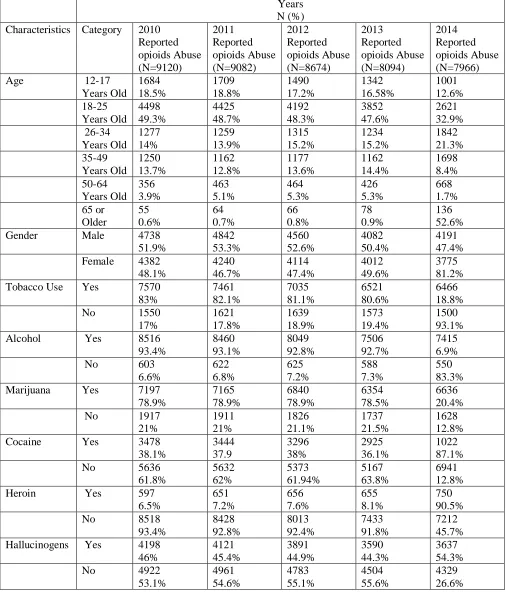
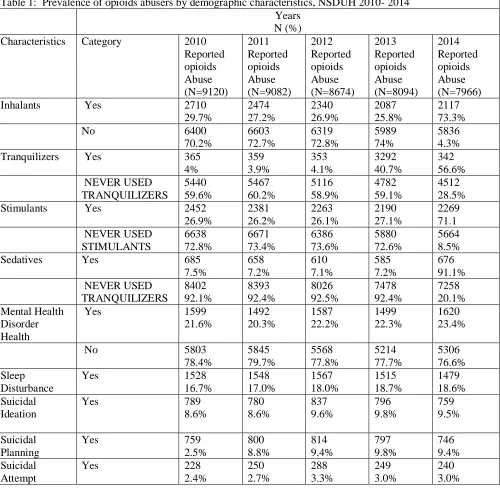
Table 1 shows the nonmedical prescription opioid use among other drug use, mental disorders, and demographic characteristics. To be consistent with previous published studies of NSDUH, some of the common demographic variables are included. There were more female than male participants that were associated with higher response rate in surveys from 2010 to 2014. Tobacco use and hallucinogens did not have any missing data like other categories of drug use. Almost all of the demographic variables from 2010 to 2014 had similar number of counts for responses in a given category. Opioids abuse was higher in ages 18 to 25 years from all years 2010 to 2014. A greater number of opioids abusers also reported tobacco, alcohol, and marijuana use in all years 2010 to 2014.
Table 1 also includes recoded variables such as Sleep Disturbance, Suicidal Ideation, Suicidal Planning, and Suicidal attempt by using responses for the questions “when problems worst have problems sleeping/waking early sleep problems”, “when problems worst think it would be better if dead”, “when problems worst think about committing suicide”, “when problems worst make a suicide plan”, “when problems worst make a suicide attempt any thoughts or plans of suicide”, from NSDUH 2010 - 2014 surveys. Table 1 also provides
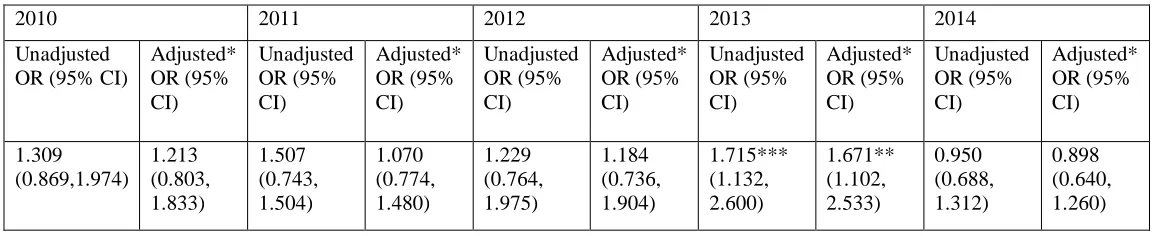
frequency and percentage for any mental health treatment received by abusers in the past year. Table 2 presents results on the association between sleep disturbance and suicidal ideation among opioids abusers obtained from proc survey logistic method, adjusted by age, gender, and mental health disorder. The odds ratios across years 2010-2014 ranged from 0.898 to 1.715. In Table 2, OR= 1.715 (CI: 95% 1.132 – 2.600) in 2013 unadjusted and OR= 1.671 (CI: 95% 1.102– 2.533) in adjusted data in same years were significant among opioids abusers, and suggested higher odds of association between sleep disturbance and suicidal ideation. Some positive odd ratio given in the table suggested higher odds of association between sleep disturbance and suicidal ideation among opioids abusers, but they were not significant. Table 3 presents results on the association between sleep disturbance and suicidal planning among opioids abusers obtained from proc survey logistic method, adjusted by age, gender, and mental disorder. The odds ratios across years 2010-2014 ranged from 0.843 to 1.707. In Table 3, OR= 1.570 (CI: 95% 1.048– 2.352) in 2011 unadjusted and OR= 1.531 (CI: 95% 1.014– 2.313) in adjusted data in same years was significant among opioids abusers, and suggested higher odds of association between sleep disturbance and suicidal planning. Some positive odd ratio given in the table suggested higher odds of association between sleep
disturbance and suicidal planning among opioids abusers, but they were not significant enough. Odd Ratios were negative in year 2010 and 2013 in both unadjusted and adjusted data suggested negative association between sleep disturbance and suicidal planning among opioids abusers.
22
attempts. Some positive odd ratio given in the table suggested higher odds of association between sleep disturbance and suicidal attempts among opioids abusers, but they were not significant. Odd Ratios were negative in 2013 both unadjusted and adjusted and in 2014 adjusted data suggested negative association between sleep disturbance and suicidal attempts among opioids abusers.
Discussion
Drug overdose by opioids is a major public health concern in recent time. Often time, it is very hard to determine intentional or unintentional overdose when overdose leads to death. It is important to understand the association between sleep disturbance and suicidal ideation because that can provide ways to intervene opioids use and decrease number of overdose deaths among abusers.
Results from surveys in 2013 indicate sleep disturbance is associated with suicidal ideation among opioids abusers. Results from surveys in 2011 indicate strong association
between sleep disturbance and suicidal planning among opioids abusers. Results from surveys in 2012 among adjusted data indicate strong association between sleep disturbance and suicidal attempts among opioids abusers. These results are somewhat aligned with previous research described in literature review about opioids abusers having sleep problems, suicidal ideation, planning, and suicidal attempts.
This research makes contributions by giving the understanding of higher odds of association for sleep disturbances and suicidal ideations, planning and attempts among opioids abusers using variables and responses given in 2010-2014 NSDUH data. Opioids epidemic is growing recently, but there are some research gaps for this topic. Knowledge of these research findings of the association can help early intervention and screening among opioids abusers and stop overdose deaths.
One of the studies by Webster et al. found that methadone caused more opioid-related deaths than any other opioids due to physician knowledge gaps, patient nonadherence to other medicines, medical and mental health comorbidities, other substance use, and payer policies that mandate methadone as first-line therapy (2011). Opioids related deaths are multifactorial, so solutions should include all of the factors to decrease harm among people. This research study’s association results should be taken into consideration for risk evaluation and harm reduction strategies among opioids abusers.
Another study by Paulozzi and Xi also suggested that opioids use is not the urban problem anymore, but increased opioids treatment also resulted in more abuse in rural areas in the USA (2008). This study makes one major contribution by assessing sleep disturbance and suicidal ideation, planning, and attempts among opioid abusers. The study’s findings of higher odds of association between sleep disturbance, suicidal ideation, suicidal planning, and attempts are consistent with previous studies mentioned before about association between sleep problems and suicide. There is no other study published to show the association between sleep disturbance, suicidal ideation, suicidal planning and attempts among opioids abusers, so this finding adds value to public health research. National Survey on Drug Use and Health from 2010 to 2014 did not show a higher prevalence of nonmedical use of pain relievers, and that could be one of the limitations for not getting significant results.
23
sleep disturbance and suicidal ideation, planning, and attempts among opioid abusers over time. Such a study could identify risk factors associated with sleep and suicide among opioid abusers. Strategies for preventing progression across sleep disturbance and suicidal ideation, planning, and attempts among opioid abusers will be invaluable findings. More research can help to find risk factors and achieve overall mission of harm reduction among opioids abusers.
Strengths and Limitations of studies by NSDUH
NSDUH is the national representative sample of annual estimate about drug use and mental illness among the noninstitutionalized population in the US. Most of the questions in NSDUH administered with computer assisted methods, which is designed to provide the private and confidential mode for respondents. It is also intended to increase the level of honest
reporting of illicit drug use and other sensitive behaviors. Also, the large and dispersed NSDUH sample enables not only state-level estimates but also estimates for sub-state levels. NSDUH is useful for many purposes, but it has some limitations. The data are self-reports, and thus the validity of the data depends on respondents' truthfulness and accurate memory about drug use and other topics. Some experimental studies suggested the validity of self-reported data and NSDUH procedures were designed to encourage honesty and recall among participants. Some underreporting and over reporting is seen in surveys. Underreporting and over reporting were recoded by RTI international professionals according to answers given by individuals in similar questions asked during surveys.
Second, the survey is cross-sectional rather than longitudinal. In this survey, individuals were interviewed only once and were not followed for additional interviews in subsequent years. Each year's survey provides an overview of drug use prevalence at a particular point in time rather than how drug use changes over time for the specific group of people. That means we cannot make casual interpretation between sleep disturbance and suicidal ideation, planning or attempts among opioids abusers.
Third, because the target population of the survey is defined as the civilian,
noninstitutionalized population of the US, a small proportion of the population is excluded. The subpopulations excluded are the homeless, members of the active-duty military and individuals in institutional settings. If excluded populations are opioids abusers with higher odds of
association between sleep disturbance and suicidal ideation, planning or attempts, it is missing useful data for this study and non-generalizable results.
24
Conclusion
In summary, this research described the association between sleep disturbances and suicidal ideation, planning and attempts among opioids abusers. Some significant results from 2011, 2012, and 2013 years indicate a risk for sleep disturbance and suicidal ideation, planning or attempts among opioids abusers. Not all years’ data unadjusted and adjusted were significant, so we cannot suggest greater association between sleep and suicide problems among opioid abusers to be able to generalize. This paper still provides future direction to find the association using data where the prevalence of opioids uses, sleep problems, and suicidal problems are high. This study’s findings can also be beneficial for educational and public health prevention
25
References
AAPM Facts and Figures on Pain. (n.d.). Retrieved July 21, 2017, from http://www.painmed.org/patientcenter/facts_on_pain.aspx#refer
American Society of Addiction Medicine. (2011, April 19). Definition of Addiction. Retrieved August 12, 2017, from https://www.asam.org/quality-practice/definition-of-addiction National Institute on Drug Abuse. (2014, May 14). America's Addiction to Opioids: Heroin and
Prescription Drug Abuse. Retrieved July 21, 2017, from
https://www.drugabuse.gov/about-nida/legislative-activities/testimony-to-congress/2016/americas-addiction-to-opioids-heroin-prescription-drug-abuse#_ftn5 National Institute on Drug Abuse. (2014, September 25). Opioids and Chronic Pain-A Gap in
Our Knowledge. Retrieved July 21, 2017, from https://www.drugabuse.gov/about-nida/noras-blog/2014/09/opioids-chronic-pain-gap-in-our-knowledge
National Institute on Drug Abuse. (2016, August 1). Misuse of Prescription Drugs. Retrieved August 1, 2017, from https://www.drugabuse.gov/publications/research-reports/misuse-prescription-drugs
National Institute on Drug Abuse. (2017, July 6). Opioids. Retrieved August 1, 2017, from https://www.drugabuse.gov/drugs-abuse/opioids
Opioid Overdose. (2016, March 16). Prescription Opioids. Retrieved May 01, 2017, from https://www.cdc.gov/drugoverdose/opioids/prescribed.html
Opioid Overdose. (2016, December 20). Prescribing Data. Retrieved July 21, 2017, from https://www.cdc.gov/drugoverdose/data/prescribing.html
Under the Brain's Control. (2007, December 18). Retrieved August 1, 2017, from http://healthysleep.med.harvard.edu/healthy/science/how/neurophysiology
Vital Signs. (2014, July 01). Opioid Painkiller Prescribing. Retrieved July 21, 2017, from https://www.cdc.gov/vitalsigns/opioid-prescribing/
Angarita, G. A., Emadi, N., Hodges, S., & Morgan, P. T. (2016). Sleep abnormalities associated with alcohol, cannabis, cocaine, and opiate use: a comprehensive review. Addiction Science & Clinical Practice, 11(9), 1-17. doi:10.1186/s13722-016-0056-7
Arribas-Ibar, E., Suelves, J., Sanchez-Niubò, A., Domingo-Salvany, A., Brugal, M. (2017). Suicidal behaviors in male and female users of illicit drugs recruited in drug treatment facilities, Gaceta Sanitaria,31 (4), 292-298,
http://dx.doi.org/10.1016/j.gaceta.2016.11.011.
Baldini, A., Korff, M. V., & Lin, E. H. (2012). A Review of Potential Adverse Effects of Long-Term Opioid Therapy: A Practitioner’s Guide . The Primary Care Companion For CNS Disorders. 14 (3), 1-42. doi:10.4088/pcc.11m01326
Bernert, R. A., & Joiner, T. E. (2007). Sleep disturbances and suicide risk: A review of the literature. Neuropsychiatric Disease and Treatment, 3(6), 735–743.
Bernert, R.A., Kim, J.S., Iwata, N.G. et al. (2015). Sleep Disturbances as an Evidence-Based Suicide Risk Factor. Current Psychiatry Rep,17,15. doi:10.1007/s11920-015-0554-4 Baldini, A., Korff, M. V., & Lin, E. H. (2012). A Review of Potential Adverse Effects of
Long-Term Opioid Therapy. The Primary Care Companion For CNS Disorders. doi:10.4088/pcc.11m01326
26
http://dx.doi.org/10.15585/mmwr.mm6539a2
Bohnert, A. S. B., Eisenberg, A., Whiteside, L., Price, A., McCabe, S. E., & Ilgen, M. A. (2013). Prescription opioid use among addictions treatment patients : Nonmedical use for pain relief vs. other forms of nonmedical use. Addictive Behaviors, 38(3), 1776–1781. http://doi.org/10.1016/j.addbeh.2012.11.005
Bonar, E. E., Ilgen, M. A., Walton, M., & Bohnert, A. S. (2013). Associations among Pain, Non-Medical Prescription Opioid Use, and Drug Overdose History. The American Journal on Addictions, 23(1), 41-47. doi:10.1111/j.1521-0391.2013.12055.x
Bryan, C. J., & Rudd, M. D. (2012). Life stressors, emotional distress, and trauma-related thoughts occurring in the 24 h preceding active duty US Soldiers suicide attempts. Journal of Psychiatric Research, 46(7), 843-848. doi:10.1016/j.jpsychires.2012.03.012 Chau, D. (2008). Opiates and elderly: Use and side effects. Clinical Interventions in Aging, 3,
273-278. doi:10.2147/cia.s1847
Cheatle, M. D., & Webster, L. R. (2015). Opioid Therapy and Sleep Disorders: Risks and Mitigation Strategies. Pain Medicine, 16 (1), S22-6 doi:10.1111/pme.12910
Cheatle, M. D. (2011). Depression, Chronic Pain, and Suicide by Overdose: On the Edge. Pain Medicine, 12(2), S43–S48.doi:10.1111/j.1526-4637.2011.01131.
Chesney, E., Goodwin, G. M., & Fazel, S. (2014). Risks of all-cause and suicide mortality in mental disorders: a meta-review. World Psychiatry, 13(2), 153-160.
doi:10.1002/wps.20128
Cochran, B. N., Flentje, A., Heck, N. C., Bos, J. V., Perlman, D., Torres, J., Carter, J. (2014). Factors predicting development of opioid use disorders among individuals who receive an initial opioid prescription: Mathematical modeling using a database of commercially-insured individuals. Drug and Alcohol Dependence, 138, 202-208.
doi:10.1016/j.drugalcdep.2014.02.701
Cormier, R. A., Dell, C. A., & Poole, N. (2004). Women and Substance Abuse Problems. Women's Health Surveillance Report, 4.Retrieved from
https://bmcwomenshealth.biomedcentral.com/articles/10.1186/1472-6874-4-S1-S8 Dart, R. C., Surratt, H. L., Cicero, T. J., Parrino, M. W., Severtson, S. G., Bucher-Bartelson, B.,
& Green, J. L. (2015). Trends in Opioid Analgesic Abuse and Mortality in the United States. New England Journal of Medicine, 372(3), 241-248. doi:10.1056/nejmsa1406143 Enevoldson, T. P. (2004). Recreational drugs and their neurological consequences. Journal of
Neurology, Neurosurgery & Psychiatry,75(3), Iii9-Iii15. doi:10.1136/jnnp.2004.045732 Ford, J. A., & Perna, D. (2015). Prescription drug misuse and suicidal ideation: Findings from
the National Survey on Drug Use and Health. Drug and Alcohol Dependence, 157, 192-196. doi:10.1016/j.drugalcdep.2015.10.010
Fox, T. P., Oliver, G., & Ellis, S. M. (2013). ISRN Addiction, 2013, 1-6. doi:10.1155/2013/450348
Franklin, G. M. (2014). Opioids for chronic noncancer pain. Neourology, 83 (14), 1277-128. http://dx.doi.org/10.1212/WNL.0000000000000839
Garland, E. L., Riquino, M. R., Priddy, S. E., & Bryan, C. J. (2016). Suicidal ideation is associated with individual differences in prescription opioid craving and cue-reactivity among chronic pain patients. Journal of Addictive Diseases, 36(1), 23-29.
http://dx.doi.org/10.1080/10550887.2016.1220800
27
pain. Journal of Pain Research,10, 979-987. doi:10.2147/jpr.s131979
Hassett, A. L., Aquino, J. K., & Ilgen, M. A. (2014). The Risk of Suicide Mortality in Chronic Pain Patients. Current Pain and Headache Reports, 18(8). doi:10.1007/s11916-014-0436-1
Ilgen, M. A., Zivin, K., Mccammon, R. J., & Valenstein, M. (2008). Pain and suicidal thoughts, plans and attempts in the United States. General Hospital Psychiatry, 30(6), 521-527. doi:10.1016/j.genhosppsych.2008.09.003
Johannes, C. B., Le, T. K., Zhou, X., Johnston, J. A., & Dworkin, R. H. (2010). The Prevalence of Chronic Pain in United States Adults: Results of an Internet-Based Survey. The Journal of Pain, 11(11), 1230-1239. doi:10.1016/j.jpain.2010.07.002
Jones, J. D., & Comer, S. D. (2016). The Epidemiology of Pain and Opioid Abuse: Treating Comorbid Opioid Use Disorder in Chronic Pain. Available from
https://link.springer.com/chapter/10.1007%2F978-3-319-29863-4_2
Kaye, A. D., Jones, M. R., Kaye, A. M., Ripoll, J. G., Jones, D. E., Galan, V., Manchikanti, L. (2017). Prescription Opioid Abuse in Chronic Pain: An Updated Review of Opioid Abuse Predictors and Strategies to Curb Opioid Abuse (Part 2). Journal of Pain Physician, 20(2S), S111-S133. Retrieved from https://www.ncbi.nlm.nih.gov/pubmed/2822633 Kaye, A. D., Jones, M. R., Kaye, A. M., Ripoll, J. G., Galan, V., Beakley, B. D., Manchikanti, L.
(2017). Prescription Opioid Abuse in Chronic Pain: An Updated Review of Opioid Abuse Predictors and Strategies to Curb Opioid Abuse: Part 1. Journal of Pain Physician,
20(2s), S93-S109.Retrieved from https://www.ncbi.nlm.nih.gov/pubmed/28226333 Kosten, T., & George, T. (2002). The Neurobiology of Opioid Dependence: Implications for
Treatment. Science & Practice Perspectives, 1(1), 13-20. doi:10.1151/spp021113 Kuramoto, S. J., Chilcoat, H. D., Ko, J., & Martins, S. S. (2012). Suicidal Ideation and Suicide
Attempt Across Stages of Nonmedical Prescription Opioid Use and Presence of Prescription Opioid Disorders Among US Adults. Journal of Studies on Alcohol and Drugs, 73(2), 178-184. doi:10.15288/jsad.2012.73.178
Krakow, B., Ribeiro, J. D., Ulibarri, V. A., Krakow, J., & Joiner, T. E. (2011). Sleep
disturbances and suicidal ideation in sleep medical center patients. Journal of Affective Disorders, 131(1-3), 422-427. doi:10.1016/j.jad.2010.12.001
Lavigne, G. J. (2016). Prevention of Opioid Misuse: A Summary with Suggestions from a Pain Working Group. Pain Research and Management, 2016, 1-6. doi:10.1155/2016/8708654 Mccall, W. V., & Black, C. G. (2013). The Link Between Suicide and Insomnia: Theoretical
Mechanisms. Current Psychiatry Reports, 15(9). doi:10.1007/s11920-013-0389-9 Manchikanti, L., Giordano, J., Boswell, M. V., Fellows, B., Manchukonda, R., & Pampati, V.
(2007). Psychological factors as predictors of opioid abuse and illicit drug use in chronic pain patients. Journal of Opioid Management, 3(2),89-100.Retrieved from
https://www.ncbi.nlm.nih.gov/pubmed/17520988
Mccabe, S. E., West, B. T., & Boyd, C. J. (2013). Medical use, medical misuse, and nonmedical use of prescription opioids: Results from a longitudinal study. Pain, 154(5), 708-713. doi:10.1016/j.pain.2013.01.01
Morasco, B. J., O'Hearn, D., Turk, D. C., & Dobscha, S. K. (2014). Associations Between Prescription Opioid Use and Sleep Impairment among Veterans with Chronic. Pain Medicine,15 (11),1902-1910. doi: https://doi.org/10.1111/pme.12472
28
Paulozzi, L. J., & Xi, Y. (2008). Recent changes in drug poisoning mortality in the United States by urban-rural status and by drug type. Pharmacoepidemiology and Drug Safety, 17(10), 997-1005. doi:10.1002/pds.1626
Pendick, D. (2015). Report highlights the dangers of opioid painkillers. Retrieved July 21, 2017, from http://www.health.harvard.edu/blog/report-highlights-dangers-opioid-painkillers-201501157615
Pigeon, W. R., Pinquart, M., & Conner, K. (2012). Meta-Analysis of Sleep Disturbance and Suicidal Thoughts and Behaviors. The Journal of Clinical Psychiatry, 73(09). doi:10.4088/jcp.11r07586
Robinson, K. T., Bergeron, C. D., Mingo, C. A., Meng, L., Ahn, S., Towne, S. D., Smith, M. L. (2017). Factors Associated with Pain Frequency among Adults with Chronic Conditions. Journal of Pain and Symptom Management. doi:10.1016/j.jpainsymman.2017.07.043 Rosenblum, A., Marsch, L. A., Joseph, H., & Portenoy, R. K. (2008). Opioids and the treatment
of chronic pain: Controversies, current status, and future directions. Experimental and Clinical Psychopharmacology, 16(5), 405-416. doi:10.1037/a0013628
Rudd RA, Seth P, David F, Scholl L. (2016). Increases in Drug and Opioid-Involved Overdose Deaths United States, 2010–2015. MMWR Morb Mortal Wkly Rep, 65,1445–1452. DOI: http://dx.doi.org/10.15585/mmwr.mm655051e1.
SA, G. (2015). Association among Sleep Pattern, Sleep Disturbance and Problem Behavior in Persons with Developmental Disabilities: A Systematic Review Study. Retrieved July 21, 2017, from http://clinical-psychiatry.imedpub.com/association-among-sleep-pattern- sleepdisturbance-and-problem-behavior-in-personswith-developmental-disabilities-a-systematicreview.php?aid=7808
Schneeweiss, S., Patrick, A. R., Solomon, D. H., Mehta, J., Dormuth, C., Miller, M., Wang, P. S. (2010). Variation in the Risk of Suicide Attempts and Completed Suicides by
Antidepressant Agent in Adults. Archives of General Psychiatry, 67(5), 497. doi:10.1001/archgenpsychiatry.2010.39
Smith, K., & Lipari, R. (2017, January 17). Women of childbearing age and opioids. Retrieved August 1, 2017, from
https://www.samhsa.gov/data/sites/default/files/report_2724/ShortReport-2724.html Tang, D., Li, P., Guo, L., Xu, Y., Gao, X., Deng, J., Lu, C. (2016). The prevalences of and
association between nonmedical prescription opioid use and poor sleep among Chinese high school students. Scientific Reports, 6(1). doi:10.1038/srep30411
Tordoff, S. G., & Ganty, P. (2010). Chronic pain and prescription opioid misuse | Continuing Education in Anaesthesia Critical Care & Pain | Oxford Academic. Retrieved July 21, 2017, from https://academic.oup.com/bjaed/article/10/5/158/274992/Chronic-pain-and-prescription-opioid-misuse
Trémeau, F., Darreye, A., Staner, L., Corrêa, H., Weibel, H., Khidichian, F. and Macher, J.-P. (2008), Suicidality in Opioid-Dependent Subjects. The American Journal on Addictions, 17, 187–194. doi:10.1080/10550490802020160
Volkow, N.D., & Mclellan, A.T. (2016). Opioid Abuse in Chronic Pain--Misconceptions and Mitigation Strategies.New England Journal of Medicine. 374(13),1253-63. doi: 10.1056/NEJMra1507771.
Drug-29
related Behavior among Patients with Chronic Pain. The Clinical Journal of Pain, 23(4), 307-315. doi:10.1097/ajp.0b013e3180330dc5
Webster, L. R., Cochella, S., Dasgupta, N., Fakata, K. L., Fine, P. G., Fishman, S. M., . . . Wakeland, W. (2011). Analysis of the Root Causes for Opioid-Related Overdose Deaths in the United States. Pain Med, 12 (2), S26-S35. DOI: https://doi.org/10.1111/j.1526-4637.2011.01134.x
Wilson M. Compton, Nora D. Volkow. (2006). Abuse of prescription drugs and the risk of addiction, Drug and Alcohol Dependence, 83 (1), S4-S7, Doi:
https://doi.org/10.1016/j.drugalcdep.2005.10.020
Wong, M. M., Brower, K. J., & Zucker, R. A. (2011). Sleep problems, suicidal ideation, and self-harm behaviors in adolescence. Journal of Psychiatric Research, 45(4), 505-511. doi:10.1016/j.jpsychires.2010.09.005
30
Table 1: Prevalence of opioids abusers by demographic characteristics, NSDUH 2010- 2014 Years
N (%) Characteristics Category 2010
Reported opioids Abuse (N=9120) 2011 Reported opioids Abuse (N=9082) 2012 Reported opioids Abuse (N=8674) 2013 Reported opioids Abuse (N=8094) 2014 Reported opioids Abuse (N=7966)
Age 12-17
Years Old 1684 18.5% 1709 18.8% 1490 17.2% 1342 16.58% 1001 12.6% 18-25 Years Old 4498 49.3% 4425 48.7% 4192 48.3% 3852 47.6% 2621 32.9% 26-34 Years Old 1277 14% 1259 13.9% 1315 15.2% 1234 15.2% 1842 21.3% 35-49 Years Old 1250 13.7% 1162 12.8% 1177 13.6% 1162 14.4% 1698 8.4% 50-64 Years Old 356 3.9% 463 5.1% 464 5.3% 426 5.3% 668 1.7% 65 or Older 55 0.6% 64 0.7% 66 0.8% 78 0.9% 136 52.6%
Gender Male 4738
51.9% 4842 53.3% 4560 52.6% 4082 50.4% 4191 47.4% Female 4382
48.1% 4240 46.7% 4114 47.4% 4012 49.6% 3775 81.2%
Tobacco Use Yes 7570
83% 7461 82.1% 7035 81.1% 6521 80.6% 6466 18.8%
No 1550
17% 1621 17.8% 1639 18.9% 1573 19.4% 1500 93.1%
Alcohol Yes 8516
93.4% 8460 93.1% 8049 92.8% 7506 92.7% 7415 6.9%
No 603
6.6% 622 6.8% 625 7.2% 588 7.3% 550 83.3%
Marijuana Yes 7197
78.9% 7165 78.9% 6840 78.9% 6354 78.5% 6636 20.4%
No 1917
21% 1911 21% 1826 21.1% 1737 21.5% 1628 12.8%
Cocaine Yes 3478
38.1% 3444 37.9 3296 38% 2925 36.1% 1022 87.1%
No 5636
61.8% 5632 62% 5373 61.94% 5167 63.8% 6941 12.8%
Heroin Yes 597
6.5% 651 7.2% 656 7.6% 655 8.1% 750 90.5%
No 8518
93.4% 8428 92.8% 8013 92.4% 7433 91.8% 7212 45.7% Hallucinogens Yes 4198
46% 4121 45.4% 3891 44.9% 3590 44.3% 3637 54.3%
No 4922