Munich Personal RePEc Archive
Entry Deterrence in Banking: The Role
of Cost Asymmetry and Adverse
selection
Mallick, Indrajit
cssscal.org
8 July 2011
Online at
https://mpra.ub.uni-muenchen.de/32698/
Entry Deterrence in Banking: The Role of
Cost Asymmetry and Adverse selection
By
Indrajit Mallick
*Centre for Studies in Social Sciences, Kolkata
Hamid Beladi
University of Texas at San Antonio
Address for correspondence: Indrajit Mallick, 8A Dover Road, Calcutta –700019, India Email Address: [email protected]
Abstract
In this paper, we review and explore the strategic mechanisms that deter entry in banking. The literature relies on externality between banks to generate entry deterrence. Typically, the externality generated is caused by differential adverse selection faced by incumbents and entrants. In this paper it is shown that adverse selection problem between a bank and its borrowers is neither a necessary nor a sufficient condition for entry deterrence. We show that cost asymmetry between different types of incumbents and private information about costs can generate conditional entry deterrence. This source of externality can cause entry deterrence just as other types of externalities created by differential adverse selection. Forward contracts can act as signaling device for incumbent costs. Incorporating adverse selection problem in the credit market in fact relaxes entry conditions: entry can take place even if the incumbent is of strong type and can signal credibly.
JEL Classification: C7, D4, G1, L1
I.
Introduction
High barriers to entry have characterized the banking industry throughout history. One reason behind this has been regulatory protection1. However, it should be noted that, despite the weakening of regulatory barriers in different countries in recent times due to financial liberalization and greater competition, entry patterns have not been uniform. In Europe, despite the formation of the European Union, cross border movements have been relatively small. The national banking markets of most of these countries are still remarkably segmented and well protected with an oligopoly of big banks commanding the major share of assets and a periphery consisting of small banks. In the United States on the other hand, the relaxation of interstate barriers have led to movements and consolidation across State lines. At the same time capital has shown an increasing tendency to move through cross border branching and acquisitions by the American and Spanish multinational banks at a global level. Entry seems to be conditional not only on a set of regulatory but natural barriers as well. One clearly needs to develop an industrial organization model of banking that addresses this issue satisfactorily.
There has been a proliferation of work on entry deterrence in the industrial organization literature. One factor is increasing returns – the literature highlighting it has primarily focused on the excess capacity creation effect by the incumbent(s) which can directly lead to entry deterrence (see Spence [1977] and Dixit [1980] who use the Stackelberg
1
model of sequential capacity choices)2. The presence of increasing returns in the banking industry certainly makes capacity creation a natural instrument for deterrence or blockade. However, one can conjecture that in recent times, fixed costs of capacity creation have become less relevant in the banking industry due to the rapid rate of obsolescence in information gathering, processing and disseminating technology on which banking depends on so heavily and the data partially supports the conjecture.3. Another view of looking at the entry deterrence model is that of the canonical model of limit pricing under incomplete information popularized by Milgrom and Roberts (1982). The limit pricing model show how even a weak incumbent can discourage entry by developing a reputation for tough play. When cost asymmetry is pronounced in banking and the cost structure of a bank is private information, this model becomes relevant for developing a benchmark model of entry deterrence in the banking industry. In the case of banking, which is highly intensive in knowledge and human capital industry, cost differentials can be significant. Gehrig and Sheldon [1999] conduct an analysis of scale, scope and x-efficiency of European banks and find significant cost differentials especially within the national borders. The major part of cost differential stems from differences in x-efficiency rather than economies of scale or scope4. What emerges from all these studies is that, while we are far away from understanding the causes of cost differentials in banking industry, they are significant and should be given adequate weight in theoretical modeling. Cost structures in banking have two components: the first and the readily observable component is the interest cost of funds generally common to all banks, but there is another component which is the cost of management of the bank which distinguishes a superior from an inferior bank. Another issue regarding cost
2
Other factors that have been associated empirically with deterrence or entry include product creation and differentiation advantages (with respect to specific markets like retail business, risk customization, specialized industry etc), capital requirements, reputation and the use of contracts as a barrier to entry (see Aghion and Bolton [1987] for a generic model).
3
The evidence on economies of scale in banking is mixed. Using USA data from the 1980s in banking, Berger and Humphrey [1991] found that medium sized banks achieve the optimal scale while Berger, Hanweck and Humphrey [1987] found little evidence on scope and product mix efficiency. On the other hand, using accounting data from the 1990s, Berger and Mester [1997] found significant scale efficiencies for a small sample set of very large banks.
4
differences or comparative advantage is that they are often private information5. This raises the question how cost structures are signaled in the process of credit market competition. Do efficient incumbent banks have incentives to fully reveal their cost in order to defend their market? Can they limit price entrants by cost signaling via forward contracts with their customers? Can entrants enter despite the presence of strong incumbents? Can weak incumbents prevent entry? Answering these questions is certainly a direction of research worth pursuing and is the approach of the present paper. But our analysis of entry deterrence in banking will be incomplete unless one looks at the interaction of cost asymmetry and the classical adverse selection problem.
As Stiglitz and Weiss [1981] pointed out, credit markets are imperfect when banks face different risk class of borrowers and cannot observe the borrower type directly. Adverse selection can cause different kinds of imperfections and a literature has developed to show that entry deterrence is one of them. Broecker [1990] considers a credit market where banks face an adverse selection problem due to the presence of two types of firms (high risk and low risk). Banks use imperfect and independent tests to assess the ability of a potential borrower to repay credit. Each bank competes by announcing interest rates at which they will lend to the applicants who have passed the test of the bank. The lowest interest rate bank’s clientele will be determined by its own credit-worthiness test. This is not true for the other banks, their clientele consists of all those firms which are rejected by the lower interest rate bank but accepted by itself (it will therefore contain a high ratio of high risk firms). This means that banks face externalities caused by interest rates and the rejection decisions of other banks. The average credit worthiness decreases with the increase in the number of active banks, which means that the number of banks in equilibrium will be limited thus limiting entry. In the context of a dynamic strategic entry model, there may also be a similar kind of externality. In addition to the classical asymmetric information problem between banks and borrowers, there is also an asymmetric information problem between entering banks who cannot observe the type of the borrowers and the incumbents who do observe the types. The most notable paper to
5
valuable good, banks may have an incentive to strategically display and share information. A pertinent question is the effect of information sharing on banking competition. Padilla and Pagano [1997] argue that banks may try to release information in order to raise the effort levels of borrowers but this increases the degree of competition also so that information sharing will be limited. Gehrig and Stenbacka [2001] show that information sharing may act as a collusive device, because a reduction in future informational rents reducescurrent competition. Another paper worth mentioning in this context is that by Bouckaert and Degryse [2006]. They argue that incumbent lenders release of information about their profitable borrowers through private credit registries are motivated by strategic reasons. The pool of unreleased borrowers creates a severe adverse selection problem and prevents or restricts entry for high type but unsuccessful borrowers.
In all these above mentioned papers (and others in this specific literature), there is an externality problem between banks. This externality takes the form of adverse selection between banks in addition to that between banks and their borrowers. In other words, incumbent banks know more about the market of borrowers than the entrant(s). As long as the adverse selection problem is not uniform, the externality remains, creates and sustains oligopolistic structure in the banking industry with emphasis on diversity of outcomes like differential credit, information and entry blockade or deterrence.
II. The Model with Cost Asymmetry and without Adverse Selection
In this section, we highlight the role that cost asymmetry can play in entry deterrence in banking. We assume that the borrower type is uniform and well known so that there is no adverse selection problem in the credit market. Generating entry deterrence in this setup has two implications. Firstly, that if cost differentials in banking are significant (as is documented in the empirical literature so far), then relative cost efficiency can create the externality needed for entry deterrence. Incumbents charge an interest rate for forward contracts and the interest rate charged can signal the type of the incumbent to the entrant and cause entry deterrence at when the signal is that the incumbent is of the strong/low cost type. Thus this model asks us to take cost differentials in banking seriously. Second, the fact that we generate entry deterrence without adverse selection problem implies that adverse selection is not strictly necessary for entry deterrence.
There are two dates t = 0 and t = 1 which mark the beginning and the end of a contractual period respectively. At t = 0 a forward market for loan opens where the incumbent bank can promise a loan to a borrower at a specified interest rate. If the borrower accepts the contract then the contract is executed at t =1 and there is no entry. Otherwise, if the forward contracts offered by bank is rejected at t = 0 then at t = 1, the spot market for credit opens and the entrant takes the decision to enter or not, and a limit pricing game ensues in the spot market.
There is a single borrower who has no funds of its own and needs one unit of credit at t =1. Its project has a return denoted by V. Also, there exists a single incumbent bank. It can be of two types distinguished by it’s cost of funds, ri where i denotes type of fund
cost, and the type can be strong ( i = s ) or weak ( i = w ) with probability p and 1 – p respectively.
Let us assume that rw > rs and the incumbent knows it’s type but others do not. Also, the
entrant appears at t =1. Its cost of funds is re. Next we assume that, V> rw > re > rs. This
type (re > rw > rs) rules out entry trivially and similarly assuming a cost advantage over
both (rw > rs > re) generates entry with probability of one in all states of nature.
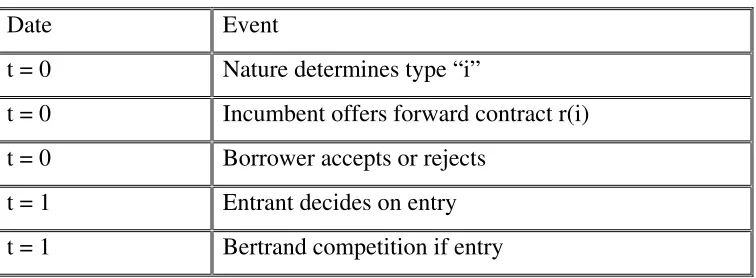
[image:10.612.128.506.196.335.2]In order to ascertain the sequence of moves, we construct the following table
Table I.A Sequence of Moves:
Date Event t = 0 Nature determines type “i”
t = 0 Incumbent offers forward contract r(i) t = 0 Borrower accepts or rejects
t = 1 Entrant decides on entry t = 1 Bertrand competition if entry
The incumbent can offer any rate of interest belonging to the real line R. Note that given the forward contract offer, the entrant can make an inference about the type of the incumbent. Thus we have a posterior probability function qi(r(i)) which gives the
probability that signal is coming from a strong type given the signal is r(i). The entrant can either enter or decide not to. We have the entrant’s decision function as de(r(i))
which takes the value E (enter) or D (do not enter). Given the posterior beliefs of the entrant about the incumbent type, there is an optimal decision function of the entrant which maps each possible belief to a unique point in the binary action space of the entrant (enter, do not enter).
Assumption I(i). The borrower is strategic and updates priors by Bayes’ rule. The borrower accepts the forward contract only when it believes that incumbent is of strong type and the participation constraint of the borrower is satisfied.
As described above, we have a dynamic game of incomplete information. The relevant equilibrium concept for this type of game is Perfect Bayesian Equilibrium. Therefore, equilibrium of this signaling game G is a strategy profile [r(i) , de(r(i)) ] and posterior
beliefs qi(r(i)) such that:
∀i, r(i) ∈ arg max ∏i[ qi(r(i)) , de(qi) ] (i)
∀r(i), de(qi) ∈ arg max ∏e[ r(i) , qi(r(i)) ]. (ii)
For the information sets belonging to the equilibrium path of the game G, the posterior probabilities are related to the priors in the following way:
qi(r(i)) = [ p(i) p(r(i) ⎜i) ] / ∑[ p(i) p(r(i) ⎜i) ] (Bayes’ Rule). (iii)
Proposition 1: There exists a unique separating equilibrium (in pure strategies) where
the strong incumbent deters entry and entry takes place if the incumbent is weak.
Proof. Consider the case when the incumbent is of strong type. The borrower will compare between the expected spot market contract (if it rejects the forward contract) and the forward contract. If the incumbent is strong, then there is no entry since, when the strong incumbent successfully signals its type, the entrant will not enter as limit pricing under Bertrand competition will imply zero profit for the entrant. Given assumption I(ii), the entrant will not enter. Thus the participation constraint of the borrower will be determined by the forward contract given the signal that the incumbent is of the strong type. The strong type of incumbent has to also offer a contract that ensures that a weak type of incumbent could not mimic the contract given assumption I(ii). So the strong type incumbent solves the following maximization problem:
[
]
( )
max ( ) s
r s r s −r
subject to V- r(s) ≥0 (1) r(s) - rw ≤0. (2)
The inequality (1) is the participation constraint of the borrower(s) and the inequality (2) is the incentive compatibility or no mimicking condition.
Given that rw < V, the optimal solution is r(s) = rw. Note that this satisfies the
with positive profit. When the entrant observes the contract E(r) it correctly infers that - with probability of one - the incumbent is of strong type. Hence, deterrence results. For all other contracts r≠E(r), the entrant infers, with probability of one, that the incumbent is of weak type. Therefore, in such cases, it enters. Further, since the pure strategy solution to the strong type’s and the weak type’s problem is unique, the equilibrium of the game is unique as well. Q.E.D.
III. The Model with Asymmetric Costs and Differential Adverse
Selection
Our benchmark model can now be easily modified to accommodate the adverse selection problem in the credit market. Now we introduce two kinds of borrowers (high return/low risk and low return/high risk). In this section, we introduce differential adverse selection by assuming that incumbent has an information advantage over the entrant. We allow the advantage to be maximum in the sense that the incumbent is assumed to have complete and perfect information about the type of the borrowers, while the entrant knows only the distribution of the borrower types.
To formally introduce adverse selection, we modify the benchmark model in the following way:
Assumption III(i) There are two types of borrowers: the high type incumbent bank (denoted by h) has a marginal revenue φh from borrowing with probability ph and the
low type (denoted by the l) has a marginal revenue φl from borrowing with probability
pl where,
(a) pl φl < ph φl < rw < ph φh and,
(b) {(φh– (rw / ph)} / (φh –φl) ≥ (λ) / (1-λ).
The type of the borrower is private information to the entrant but known to the incumbent.
where L is total loanable funds, λ is the proportion of high type of borrowers, N is the total number of borrowers, B1 is the amount lent to high type in exchange for promised
return R1 and B2 is the amount lent to low type of borrowers who are supposed to pay
back R2.
III(iii) The borrowers are strategic and update priors by Bayes rule. They accept forward contract only when they believe that incumbent is of strong type.
The sequence of moves and definition of equilibrium is as discussed earlier. In order to show that differential adverse selection is not a sufficient condition for entry deterrence, we have to basically show that for a strong incumbent, there will exist some parameter values which generate entry. The following proposition shows this.
Proposition 2: The strong incumbent will offer contract for the high type of borrower
only. When the incumbent is strong the entrant will enter only if φl pl > re (in this case the
entrant will target the low type of borrower) and the entrant will not enter if re≥φl pl.
Proof: Since the project returns are linear, the strong incumbent will target the high type only. The decision problem of the strong incumbent is as follows:
Choose (R1 , B1 ) to solve max
[
R p1 h −r Bs 1]
λNsubject to ph(φh B1 - R1) ≥ 0 (3)
0 ≥ {R1ph - rw B1}λN , (4)
where equation (3) is the participation constraint of the high type of borrower and the inequality given by (4) is the no mimicking condition that ensures effective signaling about the (strong) incumbent type. The no mimicking condition is binding from assumption (i) (a) , so that,
{R1ph - rwB1}λN = 0. Then we have,
R1 = rw[B1 / ph]
or,
where (rw / ph) < φh. Note that the other constraint given by (11) is also satisfied. With
this strategy we can state the following:
Whenever (R1 / B1) = (rw / ph), the entrant believes the incumbent is strong and
targets the low type and we have,
{
2 2}(
)
max R pl−r Be 1−λ N subject to
(φl B2 – R2) ≥0 (participation constraint) (6)
Since the low return borrowers form a captive market of the entrant, there is no incentive constraint to satisfy. (R2 / B2) = φl.
From assumption III(i)(b) we have {(φh– (rw / ph)} / (φh –φl) ≥ (λ) / (1-λ)
or {(φh– (rw / ph)} L / (λN) ≥ (φh –φl) L / ((1-λ)N)
Note that this implies that incentive constraint for the high type is also satisfied, since (φh B1 – R1) = {(φh– (rw / ph)}L / (λN) ≥ (φh–φl)L / ((1-λ)N) = (φh B2 – R2).
It is easy to verify that the condition for entry is φl pl > re Q.E.D.
IV. Concluding Remarks
In this paper we have reviewed and explored the strategic mechanisms that deter entry in banking industry. The existing models of entry deterrence in banking primarily highlight adverse selection as the main driving force behind deterrence and ignore the role of cost differences or comparative advantage in banking. This paper attempts to contribute to the emerging literature on the subject and to clarify certain issues. There are two basic insights of this paper. The first is to argue that cost asymmetry and private information about costs can be important in the context and then build upon the premise of cost differences to show that preemptive forward contracts which signal cost differences play a vital role in entry deterrence in banking. The second point of the paper is to illustrate that adverse selection in the credit market between a bank and its borrowers is neither a necessary nor a sufficient condition for entry deterrence.
To show that adverse selection is not a necessary factor for entry deterrence in banking, we have constructed a game where there is cost asymmetry between incumbent banks and private information about the incumbent’s type. This allows us to use a signaling game approach to entry deterrence in banking. The insight generated is that preemptive forward contracts are sufficient to convey incumbent strength and discourage entry when the incumbent is strong. Thus, even without adverse selection one can have entry deterrence though it should be noted that there must exist some kind of asymmetry between the banks which creates an externality as mentioned in the literature studied. The asymmetry in cost structure is thus a complementary way of looking at entry deterrence in banking with respect to the existing literature.
One must note that we have focused on the adverse selection between banks and borrowers and we have not labeled the externality between banks as ‘adverse selection’. However, our approach relying on cost asymmetry and incomplete information with signaling of cost, can be viewed as a model of externality or “adverse selection” between banks. While adverse selection between banks and borrowers have been shown to be neither necessary nor sufficient for entry deterrence, the adverse selection or externality between banks is clearly necessary for entry deterrence. The spirit of the paper should be taken in the sense of enriching the literature by means of developing a complementary approach.
Another point should be clarified here: adverse selection does ensure that the strong incumbent prevents entry in the market for high return borrowers, but cannot (and does not want to) prevent entry for low return borrowers. Thus there is entry deterrence for a class of borrowers while there is also entry for another class of borrowers. Thus while one concurs with the literature that adverse selection problem usually acts in the favor of the incumbent bank and may restrict entry, adverse selection can also cause effective segmentation of the credit market and ease entry.
References
Aghion, P. And P. Bolton [1987], "Entry Prevention Through Contracts with Customers",
American Economic Review 77: 388-401.
Berger, A., S. Bonime., L. Goldberg, L. White (1999) “The Dynamics of Market Entry : The Effects of Mergers and Acquisitions on De Novo Entry and Small Business Lending in the Banking Industry” Working paper, Board of Governors of the Federal Reserve System.
Berger, A., G. Hanweck and D. Humphrey [1987] “Competitive Viability in Banking: Scale, Scope and Product Mix Economies”, Journal of Monetary Economics, 20, 501-520 Berger, A., and D. Humphrey [1991] “The Dominance of Inefficiencies over Scale and Product Mix Economies in Banking”, Journal of Monetary Economics, 28, 117-148 Berger, A., and L. Mester [1997] “Inside the Black Box: what explains the Differences in the Efficiencies of the Financial Institutions”, Journal of Banking Finance, 21, 895-947 Berger, G. Udell, R. DeYoung and H. Gunay [2000], “Globalization of Financial Institutions: Evidence from Cross Border Banking Performance”, Brookings-Wharton Papers on Financial Services Vol. 3 (2000)
Boot, A.W.A., A.V. Thakor, and G. F. Udell (1987), “Competition, Risk Neutrality and Loan Commitments”, Journal of Banking and Finance, 15, 605-632.
Broecker, T. [1990], “Credit-Worthiness Tests and Interbank Competition”,
Econometrica, 58, 2, 429-452
Caminal, R., and C. Matutes [1997], “Can Competition in the Credit Market be Excessive? ”, CEPR Discussion Paper No 1725, London.
Dell’Ariccia, G. [2001], ”Asymmetric Information and the Structure of the Banking Industry”, European Economic Review, 45, 1957-1980
Dell’Ariccia, G., Friedman, R. Marquez [1999], “Adverse Selection as a Barrier to Entry in the Banking Industry”, RAND Journal of Economics, 30,515-534
Dixit, A. [1980], “The Role of Investment in Entry Deterrence”, The Economic Journal,
90, 357, 95-106
Ferguson, Niall [1998], The House of Rothschild – Money’s Prophets 1798-1848,
Penguin Books
Gehrig, Th. [1998], “Screening, Cross Border Banking, and the Allocation of Credit”,
Research in Economics, 52, 387-407
Gehrig, Th. and G. Sheldon [1999], Costs, Competitiveness and the Changing Structure of European Banking, Report to Fondation Banqe de France. Managed by CEPR.
Gehrig, Th. and R. Stenbacka [2001] “Information Sharing in Banking: a Collusive Device?”, Centre for Economic Policy Research, Discussion Paper 2911
Hauswald, R. and R. Marquez [2000], “Relationship Banking, Loan Specialization and Competition”, University of Maryland Working Paper
Maksimovic, V. [1990], "Product Market Imperfections and Loan Commitments",
Journal of Finance, 45(5), December.
Marquez, R. [2002] “Competition, Adverse Selection and Information Dispersion in the Banking Industry”, Review of Financial Studies, 15, 901-926
Milgrom, P. and J. Roberts [1982] “Limit Pricing and Entry under Incomplete Information: An Equilibrium Analysis”, Econometrica 50, 443-460
Padilla, J.A. and M. Pagano [1997] “Endogenous Communication among Lenders and Entrepreneurial Incentives”, Review of Financial Studies, 10, 205-236
Seelig, S. and T. Critchfield [1999] “Determinants of De Novo Entry in Banking”, FDIC Banking Review, 12(2), 1-14
Spence, A. [1977], “Entry, Capacity, Investment and Oligopolistic Pricing”, Bell Journal of Economics, 8, 534-544