Virtual Shapers & Movers: Form and Motion affect Sex Perception
Rachel McDonnell1 Sophie J¨org1 Jessica K. Hodgins3 Fiona Newell2 Carol O’Sullivan1
1∗Graphics Research Group and2†Institute of Neuroscience, Trinity College Dublin.3‡Carnegie Mellon University
Abstract
An experiment to determine factors that influence the perceived sex of virtual characters was conducted. Four different model types were used: highly realistic male and female models, an androgy-nous character, and a point light walker. Three different types of motion were applied to all models: motion captured male and fe-male walks, and neutral synthetic walks. We found that both form and motion influence sex perception for these characters: for neu-tral synthetic motions, form determines perceived sex, whereas nat-ural motion affects the perceived sex of both androgynous and real-istic forms. These results have implications on variety and realism when simulating large crowds of virtual characters.
CR Categories: I.3.7 [Computer Graphics]: Three Dimensional
Graphics and Realism—Animation;
Keywords: motion capture, virtual humans, perception
1
Introduction
Animated virtual humans are needed for many applications in enter-tainment, education and science. Their movements can be created by artists, by programs (procedural animation), or recorded from real people using motion capture technology. Crowd simulation systems, in which thousands of virtual humans navigate realistic environments such as cities present a particular challenge. Crowds simulated with synthetic walking motions can lack personality, so motion captured data can be used to add realism (Figure 2).
In this paper, we investigate some factors that affect the perceived sex of walking virtual humans, with a view to increasing the realism of pedestrians in real-time crowd simulations. We cannot simulate everyone in a crowd with their own personal motion captured walk, as the more motions we use, the greater the demands on potentially limited computational and memory resources (e.g., a games con-sole or hand-held device). Therefore, the challenge is to optimise quality and variety with the resources available. Specifically, we ask the question whether, if there is a clear visual indicator of sex (i.e., a highly realistic, unambiguously female or male model, as shown in Figure 1), will motion or form information dominate our perception of the sex of the character? If motion information alone always determines perceived sex, then we would always need to create templates of every different motion for both males and fe-males. However, if we find that form dominates, or that simulated neutral motions are as good as captured natural motions under some circumstances, then such duplication may not always be necessary. Perhaps some actors’ walks can be equally effectively applied to both male and female models. Any of these results would allow us to create “canonical” motions to which variety could later be added, irrespective of sex.
∗e-mail:{Rachel.McDonnell, Sophie.Joerg, Carol.OSullivan}@cs.tcd.ie †e-mail: [email protected]
[image:1.595.328.544.124.231.2]‡e-mail: [email protected]
Figure 1: Four model representations were animated with real
fe-male, real male or synthetic neutral motions. From left to right: Woman model, Man model, Androgynous figure and Point light walker.
2
Background
There have been many studies on the perception of sex in the ex-perimental psychology literature, both on the role of human motion with minimal shape information and on the effect of shape on the perception of sex. Only recently have the effects of both shape and motion been considered together. A note on terminology: some-times gender is used in the literature to refer to the sex of a person, i.e., male or female. However, gender perception refers to the clas-sification of the femininity or masculinity of a human, which is a different metric, e.g., a man can have a feminine walk but should still be classified as a male.
Johansson [1973; 1976], reported that natural motion, in the ab-sence of any spatial information, is a sufficient cue to determine the sex of a walker. His ‘point-light’ displays were designed to separate biological motion information from other sources of information that are normally intermingled with the motion of a human, such as form or outline. He showed that 12 moving light points suffice to create a rich perception of a moving human figure, within a very short space of time (200msec, or five frames of a movie). They also reported that the sex of the walker could be identified even when the number of lights was reduced to two on the ankles. However, it was later shown that this could have been mainly due to stride length [Kozlowski and Cutting 1978].
Many studies since have used Johansson’s point-light displays to show that biological motion perception, an extreme example of so-phisticated pattern analysis in the brain, extends even further, e.g., to recognising a particular walker [Cutting and Kozlowski 1977] or even one’s own walking pattern [Beardsworth and Buckner 1981]. Kozlowski and Cutting [1977] explored some of the parameters of sex recognition without familiarity cues and showed that, while point-lights are sufficient for recognising the sex of a walker for dy-namic sequences, static images were found to be insufficient, i.e., the human form cannot be identified when using static point-light stimuli alone.
Figure 2: Crowd simulation requires variety in colour, form and
motion [Dobbyn et al. 2006].
at incongruent pairings of torso and walks, the motion was a more salient source of sex information than the body structure. However, altering point light walkers to display different body types may still leave uncertainty with respect to their sex, so perhaps it is not sur-prising that motion overrides shape in this case. Also, using syn-thetic motions that have exaggerated properties of male and female walks may not produce the same effects as natural motions. Johnson and Tassinary [2005] studied the effects of both shape and motion on the perception of sex, gender and attractiveness. Instead of using point light walkers which give little body shape informa-tion, they used silhouettes of human body shapes with varying waist to hip ratios, from exaggerated hour-glass to tubular figures. Even though synthetic motion was restricted to two highly informative parameters (i.e., swagger for men and hip sway for women), they found that the shape of the character was more informative of the sex of the individual than its motion. They recently followed this up with a study in which they showed that both form and motion information, using these exaggerated feminine and masculine cues, contributed to participants’ judgments of attractiveness [Johnson and Tassinary 2007],
In summary, using exaggerated synthetic motion on point light walkers of differing shapes showed that motion was more dominant than shape information in sex perception. Conversely, using syn-thetic motion on exaggerated male and female silhouettes showed that morphology was more influential than motion. In this paper, we describe an experiment where natural female and male motions, as well as synthetic neutral motions, were applied to very realistic male and female models (e.g., as may be found in modern computer graphics applications). Furthermore, we directly compare results with an androgynous shape and point light walker and also exam-ine the effects of incongruent shape and motion combinations.
3
Experimental Method
Forty one participants (22M, 19F, aged 20 to 45) took part in an experiment to determine whether the motion or the shape/form of a virtual character is more salient. All participants were na¨ıve to the purpose of the experiment and had normal or corrected to normal vision. Participants (consisting of staff, students and professionals from different educational backgrounds) viewed the stimuli on a large projected screen in a lecture theatre (see Figure 3). We used a two-way, repeated measures design and the conditions were motion type (3) and model type (4).
Motion type: Six undergraduate students (3M, 3F) volunteered to
[image:2.595.342.533.52.186.2]be motion captured, each in a separate session per actor. They were not informed as to the purpose of the motion capture session which was conducted using our 10 camera Vicon optical system, using 41 markers placed according to the Vicon human template. A curved path was drawn on the floor in the capture area and they were asked to walk naturally up and down this path, which they did about 20
Figure 3: Group participating in experiment.
times. We captured some of the walks without their knowledge to ensure they were walking naturally, then applied the motion cap-ture data to characters in 3D Studio Max and kept one natural walk per actor (see video at http://isg.cs.tcd.ie/mcdonner/APGV/). We also generated three different neutral walk motions, with neither male nor female characteristics (such as hip sway or shoulder move-ment). These motions were generated using 3D Studio Max’s foot-step modifier which allows the automatic generation of synthetic walk motions. The distance between footplants was altered in or-der to create 3 unique neutral walks.
Model type: Four different models were used to display the
differ-ent motions (Figure 1): highly detailed woman and man models of approximately 35000 polygons each, an androgynous charac-ter, and a point light walker. The woman and man were chosen as typical characters that would be used in a computer simulation of natural crowds. The androgynous figure was chosen as it did not appear particularly male or female and so could serve as a control. The point light walker was generated from a generic neutral skele-ton and so contained minimal shape information. We included this representation both as a baseline, and to compare with the results of the earlier studies described above.
Figure 4: (L) Walker’s path, (R) Camera view.
A grey ground plane was added to the scene and the camera was placed so that the majority of the walk was in a straight line coming towards the camera (Figure 4). Each of the different motion types (3) from each of the actors (3) were applied to each of the model types (4), with two repetitions for each condition, resulting in a total of 72 movies, each approximately 3.5 seconds long.
The movies were sorted randomly in two different playlists and two groups of participants each viewed one of the sets of 72 movies on a large projected display1(Figure 3). They were told to take both mo-tion and form/shape into account and they marked their selecmo-tions on an answer sheet. Each movie was followed by a four-second blank screen, during which participants categorised the character they just saw on a five-point scale of 1: very male, 2: male, 3: ambiguous, 4: female or 5: very female. The number of the next stimulus was then displayed for two seconds, with an accompany-ing alertaccompany-ing sound.
1Similar group experiments were conducted with only a monitor at the
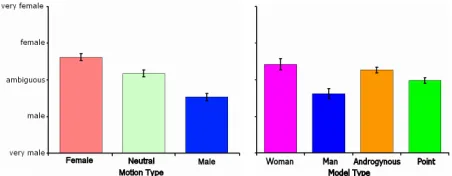
[image:2.595.322.551.413.471.2]Figure 5: Main effects of (L) walk type (averaged over all models),
(R) model type (averaged over all motions)–with standard errors.
Figure 6: The interacting effects of model and walk type.
4
Results
Before beginning the experiment, participants were shown a static image of the androgynous figure and asked to rate it on the same five-point scale. As it was considered to be ambiguous by almost all participants we concluded that, based on shape/form information alone, the figure truly appeared androgynous.
We averaged participants’ ratings over the two repetitions and three actors for each combination of walk and model type. We first found that the sex of the participants had no effect, as in [Kozlowski and Cutting 1977; Johnson and Tassinary 2005]. A two factor ANaly-sis Of VAriance (ANOVA) with repeated measures showed a main effect of walk type (F2,80 = 130, p ≈0). Post-hoc analysis was then performed using a standard Newman-Keuls test for pairwise comparisons among means. In Figure 5 (left) it can be seen that, as expected, female walks were rated overall as female, neutral walks as neutral and male walks as male (p≈0in all cases). There was also a main effect of model type (F3,120 = 24, p≈0). Figure 5 (right) shows that the man was considered significantly more male than the woman or the androgynous figure, while the point walker was considered significantly less male than the man and less female than the woman or the androgynous figure (p ≈ 0in all cases). There was also an interaction between model type and walk type
(F6,240= 25, p≈0).
Figure 6 shows that male walks on the woman are rated as ambigu-ous, as are female walks on the man. This implies that applying motion captured from actors of the opposite sex to the character will produce confusing or unsatisfactory results in general. Inter-estingly, neutral walks were considered male when viewed on the man and female when viewed on the woman. This implies that for neutral walks, the appearance of the character takes precedence over the motion in determining the sex of the character. This sult has implications for computer graphics applications where re-sources are limited, as re-using the same neutral walks on male and female characters would appear to produce the desired effect. There were three significantly different ratings for the androgynous figure for male, neutral and female walks (p ≈ 0). This implies
that for a character with androgynous appearance, the motion in-formation is most important when determining the sex (as without motion, the androgynous figure was consistently rated to be am-biguous). Replicating the results of previous studies, we showed that participants were able to determine the sex of the walker using point light walkers with good accuracy.
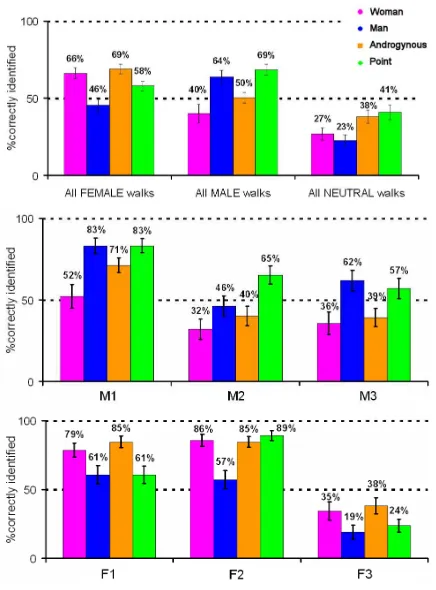
[image:3.595.57.287.171.336.2]We then looked more closely at the ratings for each of the motion captured walks. Female walks 1 and 2 (F1, F2) were consistently rated as female for all model types (see Figure 7 and colour plate Figure 1). However, F3 was consistently rated as either ambiguous (for the woman and the androgynous figure) or slightly male (for the man and the point walker). We noticed that the female actor that performed F3 did not move her hips much, but swung her arms quite a lot and her natural walk was slightly faster than the other two females. This result implies that care should be taken when choosing an actor, as misinterpretations can occur. This was also the case in [Kozlowski and Cutting 1977] where they found that one of their female walks was more difficult to rate than the others.
Figure 7: Classifications of individual walkers for each model type
(Female walks F1-F3, Males M1-M3, Neutral N1-N3).
The three neutral walks were ranked similarly to each other for each of the model types. Also, a similar trend across the three different male walks was found for each model type, with M1 considered significantly more male than the other two male walks (p ≈0in all cases). For the man, the motion of M3 was considered more masculine than M2. The actor that performed M2 did appear to have a more feminine walk than the other actors when we were capturing the session. However, it is interesting that this was most evident on the male model.
[image:3.595.328.547.252.424.2]Figure 8: Identification accuracy (top) overall; (middle) for the
three male walks; (bottom) for the three female walks.
were actually classified as neutral for any of the models. In partic-ular, only about 25% of the neutral walks on the realistic characters were perceived to be ambiguous. Closer examination reveals that 62% of neutral walks were classified as female on the woman, but only 11% as male (F82,1= 14.22, p <0.0005), with an equal and opposite effect on the man, with 65% classified as male and 13% as female (F82,1= 8.19, p <0.005).
5
Conclusions
In this paper we have identified some of the factors that influence perception of the sex of virtual characters. Unlike previous work, we found that both the appearance and the motion of the character influence perceived sex. We also found that for walk motions with no male or female characteristics, it is the appearance of the charac-ter that will dominate our perception of the characcharac-ter’s sex, whereas it is the motion that dominates our perception for characters with an androgynous appearance.
This information will be useful in computer graphics applications, as it is now clear that in order to have a convincing male/female character, you must apply a female walk to a female character, and a male walk to a male character. Care must be taken when choosing an actor, as we found some misinterpretations. From our results, it is certain that you cannot apply a female walk to a male charac-ter, or vice versa, as viewers will judge this conflicting information to be ambiguous. A simple solution would be to reduce memory costs by using neutral walks, as we found that they will look female on a female character, and male on a male character. However, we do not know how natural the participants found these anima-tions and would like to investigate in future studies whether or not they found these motions to be natural (we have some implicit ev-idence that they did, however, as they had the option to categorise these walks as ambiguous, which they did for the other models). We may need to add stereotypical characteristics such as hip sway
and shoulder movement to increase motion believability [Cutting 1978]. Therefore, a comparison of synthetic and natural walk mo-tions could also be beneficial. Something akin to a “Turing test” could be appropriate here, where people would indicate whether a walking motion was real or synthetic. Furthermore, we chose only two models to represent male and female appearance in this study. It would be interesting to investigate the effect of different male and female shapes, to see if the results are replicated.
It would be interesting to see if our results are replicated with other motions besides walking. Perhaps it is also the case for gestures; that male actors performing certain stereotypical gestures (e.g., woodcutting or boxing) will always be considered male. However, this may not be the case for unfamiliar motions such as those typ-ically used in games. Perhaps it would be possible to re-use un-familiar motions (such as shooting and kicking) from single actors on multiple game characters (both male and female). Furthermore, highly dynamic motions have less freedom for style than walking (because they are closer to the energy limit of the human body). Therefore, such motions may naturally be more neutral. However, the dynamics of the actor will play more of a role in such actions, so the properties of male/female style that are linked to the kine-matics and dynamics of the body (e.g., wider hip spacing, smaller size, lower moment of inertia in females) could actually cause the differences to be more obvious in dynamic motions. Such issues merit further investigation.
References
BEARDSWORTH, T., AND BUCKNER, T. 1981. The ability to recognize oneself from a video recording of ones movements without seeing ones body. Bulletin of the Psychonomic Society 18, 1, 19–22.
CUTTING, J.,ANDKOZLOWSKI, L. 1977. Recognizing friends by their walk: Gait perception without familiarity cues. Bulletin of the Psychonomic Society 9, 5, 353–356.
CUTTING, J. 1978. Generation of synthetic male and female walk-ers through manipulation of a biomechanical invariant. Percep-tion 7, 4, 393–403.
DOBBYN, S., MCDONNELL, R., KAVAN, L., COLLINS, S.,AND O’SULLIVAN, C. 2006. Clothing the masses: Real-time clothed crowds with variation. In Eurographics Short Papers, 103–106. JOHANSSON, G. 1973. Visual perception of biological motion and
a model for its analysis. Perception and Psychophysics 14, 2, 201–211.
JOHANSSON, G. 1976. Spatio-temporal differentiation and inte-gration in visual motion perception. Psychological Research 38, 379–393.
JOHNSON, K. L.,ANDTASSINARY, L. G. 2005. Perceiving sex di-rectly and indidi-rectly: Meaning in motion and morphology. Psy-chological Science 16, 11, 890–897.
JOHNSON, K. L.,ANDTASSINARY, L. G. 2007. Compatibility of basic social perceptions determines perceived attractiveness. Proceedings of the National Academy of Sciences 104, 12, 5246– 5251.
KOZLOWSKI, L., ANDCUTTING, J. 1977. Recognizing the sex of a walker from a dynamic point-light display. Perception and Psychophysics 21, 578–580.
KOZLOWSKI, L.,ANDCUTTING, J. 1978. Recognizing the gender of walkers from point-lights mounted on ankles: Some second thoughts. Perception and Psychophysics 23, 459.
Virtual Shapers & Movers: Form and Motion affect Sex Perception
[image:5.595.170.445.113.519.2]R. McDonnell, S. J¨org, J. K. Hodgins, F. Newell and C. O’Sullivan

![Figure 2: Crowd simulation requires variety in colour, form andmotion [Dobbyn et al. 2006].](https://thumb-us.123doks.com/thumbv2/123dok_us/8812843.919195/2.595.77.272.47.187/figure-crowd-simulation-requires-variety-colour-andmotion-dobbyn.webp)