Georgia State University Georgia State University
ScholarWorks @ Georgia State University
ScholarWorks @ Georgia State University
Public Health Theses School of Public Health
3-31-2010
Examination of the Mental Health and Family Dynamics in
Examination of the Mental Health and Family Dynamics in
Caribbean Immigrants using the National Survey of American Life
Caribbean Immigrants using the National Survey of American Life
Brian D. Carter
Georgia State University
Follow this and additional works at: https://scholarworks.gsu.edu/iph_theses
Part of the Public Health Commons
Recommended Citation Recommended Citation
Carter, Brian D., "Examination of the Mental Health and Family Dynamics in Caribbean Immigrants using the National Survey of American Life." Thesis, Georgia State University, 2010.
https://scholarworks.gsu.edu/iph_theses/101
EXAMINATION OF THE MENTAL HEALTH AND FAMILY DYNAMICS IN
CARIBBEAN IMMIGRANTS USING THE NATIONAL SURVEY OF AMERICAN
LIFE
by
BRIAN D. CARTER
Under the direction of Frances A. McCarty
ABSTRACT
Previous studies have documented an association between mental illness rates and
US-nativity, younger age at immigration, and recent immigration status among Caribbean
immigrants to the US. This analysis examines these associations with the addition of
important demographic controls and two indices of family support and conflict in
Caribbean immigrants represented in the National Survey of American Life (n = 1623).
The results indicate that previous correlates disappear when the index of family conflict is
taken into account. Future efforts should focus on culturally appropriate identification
and treatment methods addressing family dynamics in Caribbean immigrants.
INDEX WORDS: immigrant mental health, family dynamics, National Survey of
EXAMINATION OF THE MENTAL HEALTH AND FAMILY DYNAMICS IN
CARIBBEAN IMMIGRANTS USING THE NATIONAL SURVEY OF AMERICAN
LIFE
by
BRIAN D. CARTER
B.A., GEORGIA STATE UNIVERSITY
M.A., GEORGIA STATE UNIVERSITY
A Thesis Submitted in to the Graduate Faculty
of Georgia State University in Partial Fulfillment
of the
Requirements for the Degree
MASTER OF PUBLIC HEALTH
ATLANTA, GEORGIA
EXAMINATION OF MENTAL HEALTH AND FAMILY DYNAMICS IN
CARIBBEAN IMMIGRANTS USING THE NATIONAL SURVEY OF AMERICAN
LIFE
BY
BRIAN D. CARTER
APPROVED:
__________________________________ Committee Chair
__________________________________ Committee Member
For Desiree and Buddha
ACKNOWLEDGEMENTS
I would like to thank the faculty of Georgia State University’s Institute of Public Health for the wonderful experience I have had over the past two years. My decision to work towards my Master’s in Public Health has been one of the better professional experiences in my life thus far. I have felt that the support and education I have received has prepared me for any context I may find myself in public health.
Special thanks to Francesca Lopez, Catherine Prather, Travie Leslie, and Southside Medical Center for supporting me through a research assistantship my first year. The experience working on public health interventions was invaluable.
Over the past year I have worked at Emory University under the direction of J. Lee Westmaas, Ph.D and Jeuneviette Bontempts-Jones MPH and without this financial support, I am not sure how I would have been able to complete my degree. Additionally, their academic and professional guidance cannot be overstated and I owe them much gratitude.
AUTHORS STATEMENT
In presenting this thesis as a partial fulfillment of the requirements for an
advanced degree from Georgia State University, I agree that the Library of the University shall make it available for inspection and circulation in accordance with its regulations governing materials of this type. I agree that permission to quote from, to copy from, or to publish this thesis may be granted by the author or, in his/her absence, by the professor under whose direction it was written, or in his/her absence, by the Associate Dean, College of Health and Human Sciences. Such quoting, copying, or publishing must be solely for scholarly purposes and will not involve potential financial gain. It is
understood that any copying from or publication of this dissertation which involves potential financial gain will not be allowed without written permission of the author.
__________________________________
NOTICE TO BORROWERS PAGE
All these deposited in the Georgia State University Library must be used in accordance with the stipulations prescribed by the author in the preceding statement.
The author of this thesis is: Brian D. Carter
801 Oakview Rd. Apt 1 Decatur, GA 30030
The Chair of the Committee for this thesis is: Frances McCarty, Ph.D
Institute of Public Health Georgia State University P.O. Box 3995
Atlanta, Georgia 30302-3995
Users of this thesis who not regularly enrolled as students at Georgia State University are required to attest acceptance of the preceding stipulation by signing below. Libraries borrowing this thesis for the use of their patrons are required to see that each user records here the information requested.
Name of user Address Date Type of use
Brian D. Carter 801 Oakview Rd. Apt 1
Decatur, GA 30030
Education
Georgia State University, Atlanta, GA
Master of Public Health, Prevention Science - August 2009
Georgia State University, Atlanta GA
Master of Arts, Anthropology - December 2006
Georgia State University, Atlanta GA
Bachelor of Arts, Anthropology - August 2004
Professional Experience
American Cancer Society, Atlanta, GA Epidemiologist
April, 2010 - Present
Emory University, Atlanta, GA Research Assistant
August 2009 - April, 2010
Georgia State University, Institute of Public Health Graduate Research Assistant
August 2008 - August 2009
Hope Homes Inc, Smyrna, GA Substance Abuse Counselor
October 2005 - March 2008
Georgia State University, Atlanta GA Lab Instructor
TABLE OF CONTENTS
Page
ACKNOWLEDGEMENTS ……….
ACKNOWLEDGEMENTS ………. IV
LIST OF TABLES ………..
LIST OF TABLES ……….. VII
CHAPTER ……… CHAPTER ………
I. INTRODUCTION ………
I. INTRODUCTION ……… 1
II. LITERATURE REVIEW ………..
II. LITERATURE REVIEW ……….. 4
III. MATERIALS AND METHODS ………..
OUTCOME VARIABLES ………
IMMIGRATION VARIABLES ………..
DEMOGRAPHIC VARIABLES ………
FAMILY DYNAMICS ………..
ANALYSIS ………. III. MATERIALS AND METHODS ………..
OUTCOME VARIABLES ………
IMMIGRATION VARIABLES ………..
DEMOGRAPHIC VARIABLES ………
FAMILY DYNAMICS ………..
ANALYSIS ……….
22
24
25
25
26
27
IV. RESULTS
IV. RESULTS 29
V. DISCUSSION
V. DISCUSSION 37
REFERENCES CITED 48
LIST OF TABLES
1 Results of logistic regressions examining associations between main predictor and control variables for anxiety disorders.
29
2 Results of logistic regressions examining associations between main predictor and control variables for moon disorders.
31
3 Results of logistic regressions examining associations between main predictor and control variables for anxiety disorders.
33
4 Results of logistic regressions examining associations between main predictor and control variables for substance disorders.
Chapter I
Introduction
The understanding that mental health is at least as important as physical health
has become a predominant theme in public health over the past two decades. The global
burden of disease profiles published by Murray and Lopez (1996) found that the
disability resulting from mental disorders accounted for more disease burden than cancer
and HIV combined and nearly equivalent to cardiovascular and respiratory diseases. At
the time of their research there were still not accurate estimates of mental disorders
prevalences because there were very few nationally representative surveys in the US and
those available were limited by diagnostic and methodological problems. Furthermore,
these surveys failed to differentiate the burden of mental disorders in among minorities
and rapidly growing immigrant populations, of whom little was known (J. S. Jackson, et
al., 2004)
Researchers had long noticed interesting characteristics in the patterns of health
problems in immigrant groups. Studies of Latinos living in the US consistently
demonstrated that first generation immigrants had substantially better health than other
Americans despite their generally poor socioeconomic conditions. These results were so
striking and consistent that they have been labeled the ‘Hispanic Paradox’ (Crimmins,
Kim, Alley, Karlamangia, & Seeman, 2007 ). Even more interesting was that these health
benefits were not observed in the children and grandchildren of Latino immigrants;
recent immigrants or any other social group after controlling for the usual factors
including income, age, gender, marital status, and education. In many instances, these
poor health outcomes are accentuated with economic achievement, acculturation level,
English-language proficiency, and education. This Hispanic Paradox led researchers to
study other immigrant groups and the findings were fairly generalizable, although to
different extents. This paradox has been observed in Asian (Gould, Madan, Qin, &
Chavez, 2003), Caribbean (Portes & Grosfoguel, 1994), and African (P. Jackson, 2005)
communities living in the US.
Noting this effect across all immigrant populations, researchers asked whether the
same would be observed in their mental health and discovered similar findings (Takeuchi,
Alegria, Jackson, & Williams, 2007). Most of the work has focused on Latino
immigrants because they are the largest and fastest growing minority group in the US
(Camarota, 2002), but not as much work has been done concerning other immigrant
groups. The National Survey of American Life (NSAL) (J. S. Jackson, et al., 2004)
documented the mental health and possible correlates of Caribbean immigrants living in
the US as part of the Community Psychiatric Epidemiology Surveys (ICPSR 2004), and
the examination presented here augments the original exploratory studies with additional
variables concerning family dynamics.
Many of the studies outlined in the next section have estimated the prevalences of
mental disorders in immigrant populations, but little in the epidemiological literature
focused on the family dynamics in these communities that may or may not form the basis
of these results. The anthropological literature is ripe with examples of how immigrant
perspective is useful in describing how changes in cultural values may affect family
dynamics and, in turn, mental health.
The study presented here analyzed mental health outcomes in a sample of
Caribbean immigrants previously examined by Williams et al. (2007) who noticed
increased rates of depression, anxiety, and substance abuse associated with US-nativity,
younger age at immigration, and recent immigration. This analysis replicates their results
with the addition of some demographic factors including marital status, work status, and
income, as well as two constructed variables describing family dynamics. Previous
examinations have indicated that family dynamics are an important predictor of
psychological wellbeing and this study hypothesizes that many of the associations
discussed by Williams et al. will be reduced or eliminated with the addition of these two
Chapter II
Literature Review
Public health is concerned with reducing disease and disability in the population
through preventative efforts within an environmental context. As compared to the
medical model, public health is not as focused on traditional aspects of diagnosis and
treatment; rather, understanding the broader epidemiology of disease can serve as a tool
for prevention, health promotion, and more efficient delivery of health services to those
most in need. In this instance, it is important for public health to accurately ascertain the
distribution and burden of mental illness through a comprehensive epidemiological
approach. Previous surveys have indicated that mental illness is a major cause of
disability worldwide, in terms of personal impairment and its effect on productivity and
consequences to physical health.
Mental disorders contribute about 6.2% of the nation’s healthcare expenditures
(Insel, 2008; World Health Organization, 2005), but this grossly underestimates the full
economic costs of mental illness because unlike medical disorders, the costs of mental
illness are more indirect than direct. Indirect costs incurred through reduced labor
productivity and educational attainment are estimated at $193.2 billion annually (R.
Kessler, et al., 2008; Murray & Lopez, 1996). Mental illness is associated with a variety
of comorbidities leading to higher utilization of health resources and early mortality
(Colton & Manderscheid, 2006); for example, it is estimated that people with serious
Brown, & Gloster, 2002). Additionally, as many as 22% of individuals in jails and
prisons have been diagnosed with some form of mental illness (James & Glaze, 2006).
The Global Disease Burden (GBD) study sought to provide a consistent estimate
of incidence, prevalence, duration, and case-fatality for 107 conditions and their sequelae
as a means of judging the state of population health (Murray & Lopez, 1996). The
disease burden was summarized using the Disability Adjusted Life Year (DALY), an
index described as a single year of healthy life lost to disease or disability. With the
incorporation of disability into total disease burden, the GBD study discovered that
mental disorders ranked nearly as high as cardiovascular and respiratory diseases, and
higher than all cancers or HIV. This analysis has underscored the need for a broad public
health perspective that valued mental health with the same importance as physical health
(U.S. Department of Health and Human Services., 1999).
Assessing the prevalence of mental disorders in the US has been complicated by
methodological and diagnostic problems. Before the 1980’s, psychiatry lacked the
systematic rigor required for large-scale surveys of mental health. The early diagnostic
manuals made little effort to provide classification schemes; case in point is the
prominent psychologist Karl Menninger who, working in the 1960s, understood that all
mental illness could be reduced to the patient’s inability to adequately adapt to his or her
environment (Wilson, 1993). This resulted in a manner of treatment that was highly
individualized and less focused on standardization and diagnosis. The first two editions
of the Diagnostic and Statistical Manuals only included around 100 separate diagnoses
compared to the 297 identified in the fourth edition (American Psychiatric Association,
In 1980, the third edition of the Diagnostic and Statistical Manual (DSM-III)
(American Psychiatric Association, 1980) transformed the nature of psychology. The
DSM-III incorporated a diagnostic model from medicine that emphasized categories of
illness rather than the previous prominence placed on normal and abnormal behaviors
(Horwitz, 2002). The result of this paradigm shift in psychology was that large-scale
community surveys could be conducted that would use standardized diagnoses of mental
disorders to estimate the disease burden on society (Mayes & Horwitz, 2005).
The first two large community surveys, the National Institute of Mental Health’s
Epidemiologic Catchment Area Program (NIMH-ECA) (Eaton, Reigier, Locke, & Taube,
1981) and the National Comorbidity Survey (NCS) (Harvard School of Medicine, 2005),
have been the main sources for estimates of mental disorder prevalence in the US
throughout the 1980s and 1990s. Both used diagnostic criteria designed for use in
epidemiological and cross-cultural applications of the DSM-III . These surveys showed
an overall past-year prevalence for mental disorders of 30% and lifetime rates
approaching 50%, estimates that many criticized as unrealistically high compared to
clinical experience (R. C. Kessler, et al., 2003). However, clinical calibration studies of
the NIMH-ECA found that the indicated prevalences were accurate when compared to
blind clinical interviews based solely on DSM-III criteria (R. C. Kessler, et al., 2004).
The conclusion reached by the psychiatric community was that the classification system
as structured under the DSM-III tended to over-diagnose within a clinical context.
In 1994 the APA published the fourth edition of its Diagnostic Manual (DSM-IV)
which reconsidered many of the clinical criteria that had been used in previous editions.
required that symptoms cause clinically significant distress or impairment in important
areas of functioning (American Psychiatric Association, 2000). Analyses of the previous
surveys using the new diagnostic criteria revised the estimates substantially and
underscored the need to develop a more accurate and clinically relevant survey (Narrow,
Rae, Robins, & Regier, 2002). Based on these new criteria, a series of new national
surveys of mental disorders was conducted in 2001-2002 and was designed to update the
information on prevalence, correlates, and clinical significance of DSM disorders in the
US.
The National Comorbidity Survey-Replication (NCS-R) was administered
nationally between 2001-2003 to English speaking adults and provided a means of
assessing the prevalence and severity of mental disorders using the DSM-IV and has
become the new standard assessment of the burden of mental illness in the US.
According to the National Institute of Mental Health (2009), these data indicate that
26.2% of American adults suffer from a diagnosable mental disorder at some point in
their lifetime.
Although the diagnoses in the NCS-R were reviewed as clinically valid (R.
Kessler, et al., 1998), it still failed to account for the severity of mental illness; thus, it is
likely that these prevalences indicated in the NCS-R exaggerate the actual burden of
mental illness in the US. In what has become the definitive review of the NCS-R, Kessler
et al. (2005) classified cases as serious, moderate, or mild severity based on a number of
criteria including suicidality, work impairment, degree of disability, violent tendencies,
and psychosis. They concluded that most of the disease burden is concentrated on the
of cases surveyed could be classified as mild, transitory, or self-limiting. Anxiety
disorders are the most prevalent, although they tend to be of mild severity. Mood
disorders have the second highest prevalence and the highest proportion of serious cases.
Nearly half of cases include at least one other comorbid psychiatric diagnosis. Other
disorders were included in the analysis, many of which fall disproportionately in the
severely disabling category; however, these disorders, Alzheimer’s disease,
schizophrenia, autism, eating disorders, etc., tend to have lower prevalences in the
population and thus contribute less to the overall disease burden.
The NCS-R was restricted only to English-speaking adults and thus excluded a
substantial proportion of the population. Two other nationally representative surveys,
The National Survey of American Life (NSAL) and the National Latino and Asian
American Study (NLAAS) used similar methods and diagnostic tools and focused on
special populations to better document the mental health needs of minority and immigrant
communities in the US (Pennel, Bowers, & Carr, 2004).
These three surveys highlighted patterns in the epidemiology of mental illness.
Even the earliest studies of psychiatric patients in the 1930s demonstrated an inverse
relationship between socioeconomic status and mental health (Fee, 1987). The
NIMH-ECA was the first large-scale survey to demonstrate this inverse relationship and showed
that the six-month prevalence for any DSM-III diagnosis was 2.9 times greater among
members of the lowest socioeconomic class compared with the highest, although the
exact difference varied by illness; for instance, the relationship was weakest for
This inverse relationship between mental disorder prevalence and socioeconomic
status has been explained through two alternate theoretical approaches. The Social
Causation Perspective argues that members of the lowest socioeconomic classes
experience greater psychological stress without the psychological rewards of more
affluent groups and that this stress results in a greater risk of mental illness (Cooper,
2005). In other words, impoverished individuals tend to experience more stressful life
events, both acute and chronic, than those with higher incomes. Alternatively, the Social
Drift Theory explains that the lowest socioeconomic groups have higher rates of mental
disorders because a decline in socioeconomic class is a result of their mental illnesses. In
this perspective, socioeconomic status is not the causal factor; rather, it is a result of
consequences stemming from a disabling mental condition (Perry, 1996).
Although most research has agreed that the excess risk of mental disorders in
lower socioeconomic classes is a result of an interaction between these two processes, the
literature has been remarkably inconsistent in which is the greater determining factor.
Case in point is Hudson’s (2005) examination of state hospital records in Massachusetts.
He found the expected strong inverse association between socioeconomic status and
mental illness and hypothesized that the rates of mental illness were primarily due to the
economic stressors faced in impoverished communities. Although his data supported that
hypothesis, he admitted that he was unable to demonstrate causation because his analysis
was missing the time element necessary to determine directionality. His data also could
not completely rule out the social drift perspective, at least for some illnesses.
Comparing the timing of hospitalization and changes in demographic variables,
hospitalization was responsible for only a slight net decline in socioeconomic status.
Although 14.5% of patients moved to less favorable communities after discharge, this
was balanced by the 13.3% of patients who moved to more affluent areas.
Dembling et al. (2002) examined geographic migration patterns of state
psychiatric patients in Virginia over 18 years and found that 59% of them moved to areas
of less favorable socioeconomic conditions. They found that there was a net flow of
individuals from the mental health system that could be understood as a migration of the
mentally ill from more affluent areas to places where the costs of living were less
expensive. This migration effect would result in the excess risk indicated in the
previously discussed community surveys.
It is important to keep these trends in mind when examining the epidemiology of
mental illness in immigrant populations. The results discussed above were based
primarily on established American communities, but when they were compared with
those of immigrant populations, researchers uncovered an interesting effect. The NSAL,
NLAAS, and a number of other exploratory studies established that many immigrant
groups scored significantly higher on mental health exams than would usually be
expected based on their demographic characteristics (Takeuchi, Alegria, et al., 2007).
Generally, these immigrant groups have relatively low socioeconomic potential when
they arrive in this country and one would assume, from the studies discussed above, that
their mental health would suffer accordingly. Rather, it seems that immigration provides
a protective element against mental illness and that the prevalences are significantly
below the expected rates. More comprehensive examinations of the NSAL and NLAAS
with years of US residency, language proficiency, greater education and income, and
successive generations (J. S. Jackson, et al., 2007; Williams, et al., 2007).
This protective nature of immigration has been explained in a number of ways.
Some have argued that there is a selective pressure for mentally healthy immigrants
(Takeuchi, Zane, et al., 2007); in other words, only the mentally healthy are fit to leave
their homes and succeed at a life in a new country. Others have reasoned that these
results may be an artifact of cultural values and poor English-communication or problem
recognition when participating in mental health exams (Abe-Kim, et al., 2007).
However, a growing body of evidence suggests that that the mentally healthy immigrant
is a real phenomenon and that greater acculturation, longer US residency, and US-nativity
places one at an elevated risk for psychiatric distress.
This paradoxical effect, that immigrant groups exhibit better mental health than
would be predicted by their social circumstances, has been observed to some extent
across all immigrant groups. Studies of Latino immigrants have reported lower rates of
anxiety, depression, and substance abuse despite the stress and poverty associated with
their immigration experience; however, this trend is reversed in later generations.
Furthermore, studies of this phenomenon noticed that there was an obvious reduction in
mental illness in Mexican immigrants compared to their Mexican-American counterparts
but that this difference disappears for immigrants that resided in the US for more than 12
years (Hovey & Magana, 2002). Alegria et al. (2007) examined the prevalence of these
disorders in Latinos represented in the NLAAS. They found that US-born Latinos are 1.6
times more likely than immigrant Latinos to have a lifetime mental health disorder.
with US-nativity, increased English proficiency and US-residence, and higher education
and income (Alegria, Mulvaney-Day, Woo, et al., 2007; Alegria, Shrout, et al., 2007)
although these effects differ somewhat between ethnic subgroups. For example, the
protective nature is observable for all disorders in Mexican immigrants, it is only
pronounced for substance disorders in Cubans and other Latino groups, and not observed
at all in Puerto Ricans.
Analyses of Asian immigrants show much of the same pattern. Examinations of
the prevalences of mental health disorders (Duldulao, Takeuchi, & Hong, 2009; Takeuchi,
Alegria, et al., 2007; Yip & Gee, 2008) and mental health service use (Abe-Kim, et al.,
2007) indicate that Asian Americans appear to have lower rates of mental disorders and
service use compared to the general population but increase in successive generations.
For both lifetime and 12-month psychiatric disorders in men, the risk of mental illness
increases significantly through each generation. The pattern is also seen in Asian women,
although not statistically significant for the second generation. Data analyzed from the
NLAAS have also indicated the same trend in suicidal behaviors. US-born Asian women
had a significantly higher prevalence of suicidality compared to all other groups and after
controlling for the standard socio-demographic variables, both US-born men and women
were more at risk compared to those born outside the US.
What about the immigration experience reduces the risk of mental illness and why
would this protection not remain throughout US-residency or extend to the children and
grandchildren of immigrants? Researchers have theorized that the answer to this trend
can be found by analyzing the acculturation process and at least some of it can be
For example, Park and Bernstein (2008) examined the experiences for Korean
immigrants in the US to see how they mitigated the stress of acculturation. Koreans were
chosen as an interesting case study because, as a group, they are the newest and fastest
growing immigrant population and almost all are foreign-born. Park and Bernstein found
that aspects of Korean culture have mediated the stress of immigration and reduced
symptoms of depression. The greater value of the collective over the individual is a
traditional aspect of Korean culture, and they found that a greater involvement in one’s
family and community worked to balance out the stresses of American life and were
negatively associated with symptoms of depression. They found evidence that the
acculturation process was most stressful through its conflict with traditional culture
because it forced people to fill multiple roles. For example, employed women were
required to function in the western workplace as well as continuing to perform all their
household and child-rearing family responsibilities, oftentimes resulting in psychological
distress. However, the prime protective variable against mental disorders was access to
sufficient social support networks. Previous studies have found that a higher level of
social and familial support was associated with a lower incidence of depression. For
instance, although physical or emotional separation from family is associated with a
greater susceptibility to the consequences of stress, having a strong confidante in one’s
social network that can provide emotional support is sufficient to mitigate the symptoms
of depression and anxiety (Fawzi, et al., 2009 ; Merz, Oort, Ozeke-Kocabas, &
Schuengel, 2009; Park & Bernstein, 2008).
This benefit of healthy social networks has also been observed in Latino
acculturation process result in significant increases in depression, suicidality, and anxiety
(Hovey, 2000; Hovey & Magana, 2002), but that this stress can be mitigated or
exacerbated through various factors of social life. They concluded that individuals with
satisfactory social and family support experience less psychiatric distress than those
without the same support. Furthermore, the likelihood of mental illness was greater in
immigrants who felt caught between the influence of the values and norms of traditional
and mainstream societies. Taking this into account, Alegria et al. (2007) found that
sufficient perceived family support reduced the odds of depression and anxiety by half
and substance abuse by 10%. Alternatively, they found that perceived family stressors
increased the odds of depression, anxiety, and substance abuse by over 300%.
This is only a brief discussion of the effects of social support on mental illness
rates in Latino and Asian immigrants, but the research is exhaustive in these groups;
however, little work has been conducted on Caribbean populations living in the US.
Often times, Afro-Caribbeans and African Americans are included together as a
homogenous group in community surveys (Bryce-Laporte, 1999; J. Jackson & Cothran,
2003; J. S. Jackson, et al., 2004; Portes & Grosfoguel, 1994), but the NSAL included
psychosocial health-related data on these ethnic groups and was the first survey available
that made the distinction.
The Office of Management and Budget only specifies American Indian or Alaska
Natives, Asian, Black or African American, Native Hawaiian or Pacific Islander, and
White as racial categories for purposes of enforcement and civil rights legislation (U.S.
Census Bureau, 2000) but this often conflates the distinction between immigrant or ethnic
socially prosperous Japanese and Koreans as well as the less prosperous Southeast Asians
that have experienced more difficulties. In this instance, African Americans and
Afro-Caribbeans have been included together for policy purposes although they differ
culturally and in their health needs (Waters & Eschback, 1995).
Additionally, there are important distinctions in the immigration experience
between different Caribbean nationalities. In 2002, the Center for Immigration Studies
published a snapshot of America’s foreign-born populations (Camarota, 2002) and found
that Caribbean immigrants accounted for 8.2% (2.6 million) of foreign-born individuals
living in the US and were among the top 25 nationalities entering the country each year.
The social circumstances of each nationality differed substantially; for instance, poverty
rates varied by nationality with Dominicans at 25.6%, Cubans 19.8%, Haitians 12.0%,
and Jamaicans 6.3%. Similar disparities were discovered for educational attainment,
employment, and qualification for welfare services. And although exact statistics were
not available, they estimated that most Caribbean immigrants choose to reside in dense
city centers or suburban areas surrounding large metropolitan areas; very few are found in
rural communities. This has had important implications for the provision of resources to
Caribbean immigrants because they build communities in urban areas where services are
already available (J. S. Jackson, et al., 2007).
The only full exploratory analysis of Caribbeans represented in the NSAL was by
Williams et al. (2007) and compared prevalences of mental disorders against African
Americans and between US-born and foreign-born Caribbeans. Compared to African
Americans, the authors found that men claiming a Caribbean background were slightly
substance disorders. Caribbean women were significantly less likely to have an anxiety
or substance disorder but did not differ from African American women in their prevalence
of mood disorders. US-nativity and immigration at an early age were significant risk
factors for men and women in all mental disorders. Similar to studies of Latinos and
Asians, generation status was a primary predictor of mental status: second generation
men had twice the risk of any mood or anxiety disorder and 8.7 times the risk of a
substance disorder, and this risk was accentuated in the third generation. Second
generation women did not differ significantly in any disorder from the first generation,
but the pattern held true for third generation or later with odds ratios similar to those seen
in the men. The only variable that did not fit the pattern seen in other immigrant groups
was the number of years of US residence which was opposite of the usual trend. Except
for mood disorders in women residing in the US for more than twelve years, longer US
residency tended to reduce the odds of any mental disorder in men and women.
Williams et al. (2007) noted that the first generation of immigrants have only a
slightly higher prevalence of mental disorders compared to the African-American
population as a whole, but that these rates deteriorated with US Nativity. They explain
that this can be discussed through a number of hypotheses including the social-drift and
social causation theories discussed earlier. According to these perspectives, only those
with adequate psychological and material resources are able to leave their homes and
settle in a new country. However, their US-born children and grandchildren would react
to the stressors of their socioeconomic situations similar to native populations and thus
directly, but a cursory discussion of the psychological landscape in Caribbean countries
may be useful in exploring this idea further.
A literature review revealed no large-scale community surveys similar to the
NCS-R available for this discussion; however, many studies reported smaller-scale efforts
at determining the mental health conditions in some Caribbean countries and these have
implications in understanding the immigrant experience. Of all Caribbean nations,
Jamaica is best situated economically to identify and address the mental health needs of
its population. Two primary issues have been identified in Jamaica concerning mental
health issues and practice.
First is a problem with disaster psychiatry. All Caribbean islands are affected by
natural disasters in the form of floods and hurricanes as well as man-made disasters like
crime and violence; however, the mental health system is not set up to deal with the
resultant post traumatic stress-related disorders (Baker-Henningham, Meeks-Gardner,
Chang, & Walker, 2009; Daly, et al., 2008). For example, the Jamaican government
estimates that 29% of the population aged 15-74 suffer from some kind of PTSD-related
diagnosis (Saunders, 2008) which is significantly higher than prevalences observed in
immigrants to the US (Williams, et al., 2007).
The second problem faced is a cultural stigmatization placed on the mentally ill
that discourages many from admitting to personal problems or seeking professional help.
Gibson et al. (2008) found that stigmatization and negative attitudes are deeply
entrenched in Caribbean societies to the point of becoming internalized by the mentally
ill and their families. They documented extreme rates of violence and prejudice against
are so pervasive in the culture that they are internalized in the minds of the mentally ill
and their families. Although family members reported fewer instances of stigmatizing
behaviors and attitudes, they were not immune to societal effects. Furthermore, these
attitudes negatively effected help-seeking behaviors of those needing treatment. Gibson
et al. (2008) conclude that this culture of stigmatization substantially hampers any
estimates of national mental health and must be taken into account when developing
official and treatment policies.
Additionally, it is important to note that Caribbean nations can not be discussed as
a homogenous group. For example, although many of these nations face similar
environmental problems, the socioeconomics of each affect how problems are dealt with
and how illness rates may be examined in recent immigrants to the US. The Jamaican
Health Service followed a similar trend of deinstitutionalization as the US but did not
compensate through improved community based services (Hutchinson, et al., 2004);
however, there are strong state-run hospitalization programs and community services.
On the other side of the spectrum, conditions in Haiti are dismal and the infrastructure is
such that no community surveys are available for comparison to recent US immigrants.
Thus, although in situ discussions of Haiti are not available, Fawzi et al. (2009 )
examined rates of mental illness in recent Haitian immigrants compared to other
immigrant and refugee groups and found rates of depression and PTSD more similar to
east-Asian refugees than other Caribbeans.
These conditions faced in their home countries can explain the slightly higher
prevalences of mental disorders in recent Caribbean immigrants compared to
generations. According to the social-causation hypothesis, the later generations should
exhibit mental health problems in accordance with the social circumstances; however, in
this case the later generations actually decline relative to African-American populations
and their parents, despite positive changes in social achievement. It is possible that this
pattern can be understood within the process of acculturation in immigrant communities.
Caribbeans self-segregate themselves from other ethnic groups in the US.
Jackson et al. (2003) examined the relationships between African Americans and
Afro-Caribbeans to understand how Afro-Caribbeans construct their identities in the greater
American milieu. They found that Caribbean populations living in the US consciously
distance themselves from other African-heritage groups. For example, Caribbeans were
more likely to report forming social relationships with only other Caribbeans rather than
Africans or African Americans, usually for reasons of shared culture and background.
When examining the interpersonal relationships between Caribbeans and African
Americans, Caribbean-born individuals were more likely to report negative attitudes or
feelings of superiority over African Americans. For example, Caribbeans were more
likely to view African Americans as poorly educated, culturally out of touch, and
possessing a slavery mentality of futility and defeat. As a result, the authors conclude,
the study participants indicated that communication between Caribbeans and African
Americans was poor due to myths, misconceptions, ignorance, and stereotypes; thus,
these groups generally self-segregated from each other.
However, these interactions begin to change in the second generation. Waters and
Eschbach (1995) observe similar findings to Jackson et al. (2003) that first generation
deal of discrimination. They respond by forming a reactive ethnicity characterized by
strong cultural networks and self-segregation and develop social capital through these
community ties. Contrary to the children of European immigrants earlier in the 20th
century, second generation Caribbean minorities tend to experience socioeconomic
decline relative to their parents. They are likely to ‘Americanize’ by internalizing many
the attitudes of the native ethnic group of which they have social access and this has
important consequences to the developing psychology of these children. It results in a
hybrid cultural system that does not fully engender the later generations into a single
social niche and the resultant conflict between this hybrid culture and the traditional
culture of their parents has well-documented implications for the development of mental
disorders.
Hovey (2000) writes that family dysfunction and ineffective social support were
predictors of mental disorders in immigrant groups and that the provision of emotional
support seems to ease stressful experiences of acculturation. In other words, individuals
who experience excessive acculturative stress may be at risk of developing mental
disorders. He identified factors that may mitigate or exacerbate acculturative stress
including social support or conflict found in the community or family. Hovey concluded
that individuals with relatively high levels of social and family support may experience
less psychiatric distress than those without that same support. This perspective can be
used to understand the higher rates of mental disorders observed in later generations.
Acculturation stress experienced in both situations has been linked to increased
prevalence of anxiety and depressive disorders (Alegria, et al., 2008; Alegria,
rooted in the conflict between traditional values and those of mainstream society. In this
instance, the strength or weaknesses of family and social ties become prime predictors of
disorder rates.
The overall trends in mental illness for Caribbean immigrant populations
discussed above are similar to those of other immigrant groups. In the following
examination, the perceived effectiveness of family support will be evaluated as a
predictor of emotional health and a mitigator of the stress experienced through the
acculturation process. Additionally, a high level of perceived family conflict should
exacerbate the stress experienced through acculturation and be associated with higher
rates of mental disorders. Presumably, if family support and conflict are causal factors,
the disorder rates observed in Williams et al. (2007) will disappear or become less
Chapter III
Materials and Methods
The National Survey of American Life (NSAL) was designed to elucidate the
distribution of mental disorders, service use, and behavioral correlates in African
American (n = 3570) and Afro-Caribbean (n = 1623) populations in the US compared to
Caucasian populations (n = 1006) matched to the same communities (ICPSR, 2004). The
study was conducted by the Program for Research on Black Americans within the
Institute for Social Research at the University of Michigan in partnership with the
National Institutes of Mental Health. The interviews were conducted face-to-face using a
computer-assisted survey between February 2001 and March 2003 and 14% were
conducted at least partially over the telephone (J. S. Jackson, et al., 2004). Additional
interviews were conducted with 1200 African-American and Caribbean adolescents
attached to sampled households, but these were not included in this analysis (J. S.
Jackson, et al., 2004).
Mental disorders were identified using the Diagnostic and Statistical Manual-IV
(DSM-IV), International Statistical Classification of Diseases and Related Health
Problems (ICD-10) and the World Health Composite International Diagnostic Interview
(WHO-CIDI) and included details of physical health, social conditions, known associated
factors, and demographic characteristics. The diagnostic portion of the questionnaire was
adapted from a modified World Health Organization’s Composite International
Diagnostic Interview (CIDI) (ICPSR, 2004) which was evaluated by Kessler et al.
(2004). Previous studies had indicated that the more structured and objective the
diagnostic instrument, the more it underestimated prevalence. Interviews and
questionnaires are structured into a series of stem-questions; if a respondent answers
positively to a stem question, they are prompted into a deeper investigation which
produces a longer interview. Kessler et al. (2000) found that respondents were quickly
overcome with interview fatigue and learned to answer negatively to stem questions in
order to shorten the interview which resulted in an underestimation of disorder rates. .
With this methodological issue in mind, the evaluation of the WHO-CIDI
consisted of a modified test-retest design. Clinical interviewers were unblinded to the
survey results and participants were forced to discuss each of the stem questions with a
clinician. In order to further reduce the effect of interview fatigue, the order of the
questions was changed between the test and retest. The result of this evaluation was to
create a statistical model for judging the relative proportions of WHO-CIDI surveys
needing additional structured clinical interviews for validity. This method was applied to
the NCS-R and included 677 individuals from the NSAL. Each of these individuals
received a structured clinical interview in addition to the WHO-CIDI survey which
evaluated the prevalence of Major Depressive Episodes, Dysthymia, Generalized Anxiety
Disorder, Panic Disorder, Phobias, Post-Traumatic Stress Disorder, and Drug and Alcohol
Abuse-Dependence.
The NSAL was unique from previous epidemiological studies of minority
psychiatric disorders. It included a large, nationally representative sample of
African-Americans because previous studies had lacked adequate sample sizes to address
African-American populations in health-related surveys, so the NSAL was the first study
to distinguish between the two and examine the variation between these important
demographic groups. The NSAL not only assessed the presence of mental disorders, but
also determined the levels of impairments associated with these diagnoses needed for a
clinical diagnosis. Finally, care was taken to include equal proportions of
African-Americans, Afro-Caribbeans, and Caucasians from all social contexts and geographical
areas.
The final sample used for this analysis included 1,598 adults claiming Caribbean
decent. Respondents self-identified as Spanish Caribbean (n = 180), Haitian (n = 298),
Jamaican (n = 510), Trinidad and Tobago (n = 170), or Other (n = 440). Other data
included age at immigration, marital status, number of years in the US, and work status.
A majority of the individuals were sampled from the Northeastern US (n = 1119) or the
South (n = 449); the remaining 30 individuals lived in the West or Midwestern regions.
Outcome Variables
Lifetime prevalence of mental disorders were computed using the DSM-IV
diagnoses included in the NSAL and were differentiated into three categorical variables
describing the presence or absence of any mood, anxiety, or substance disorder.
Prevalence of mood disorders included any diagnosis of bipolar disorders, dysthymia,
hypomania, mania, major depressive disorder, or depressive episode. Anxiety disorders
included lifetime diagnoses of generalized anxiety disorder, panic disorders, post
traumatic stress disorder, separation anxieties, and all phobias. Substance disorders
Immigration Variables
Previous studies have determined that there are distinct differences in mental
illness patterns associated with the immigration experience. As discussed earlier
regarding Caribbean populations living in the US, an increased risk of mental illness has
been associated with the acculturation process. The risk of mental illness is increased
with US-nativity and generation status, increased income, and education but reduced with
years of US residency in foreign born individuals (J. S. Jackson, et al., 2007; Livingston,
Neita, Riviere, & Livingston, 2007; Murphy & Mahalingam, 2004; Williams, et al.,
2007). Each of these variables were included in the analysis as primary predictors for the
mental health outcomes.
Age at immigration was collected categorically in the NSAL: respondents
responded as either US-born or immigrating to the US at ages <12, 13-17, 18-34,or 35+.
Years of US-residency were also collected categorically in the NSAL, US-born, <5, 5-10,
11-20, or 20+ years. The NSAL included the national origins of Caribbeans included in
the survey: Haiti, Jamaica, Trinidad and Tobago, Spanish Caribbean, or Other.
Additionally, the NSAL asked respondents to indicate simply whether they were foreign
or US-born.
Demographic Variables
For this analysis, the demographic variables included family income, age
category, work and marital status, and family income. Work status was established
through participants responses indicating that they were not in the work force, employed,
or unemployed. Marital status was established as never married, divorced/separated, or
0-11, 12, 13-15, and 16+ years. Although the NSAL collected age as a continuous
variable in the NSAL, it was converted into categories, 18-29, 30-39, 40-49, 50-59, and
≥60, for the purpose of this analysis. Income was also collected as a continuous variable
with an upper limit of $200,000/year, but this was also converted to categories,
$0-$12,499, $12,500-$22,499, $22,500-42,499, $42,500-$74,999, and $75,000+.
Family Dynamics
Family factors were assessed through the support or conflict perceived by the
individual rather than merely measuring access to social networks. It is likely that simple
access to a social network does not ensure that the support will be effective (Hovey &
Magana, 2002); thus, the perceived quality may be a more accurate measure of social
support. In this case perceived family support and conflict was calculated from a list of
questions designed to establish the degree that families either positively or negatively
contribute to emotional well-being. Family support was constructed using a seven-item
index questioning the frequency family helps one out, the frequency one helps the family,
the frequency of contact with relatives, feelings of closeness with family members,
frequency family makes one feel loved, frequency family listens to problems, and the
frequency family expresses concern for one’s well-being. Respondents answered through
a Likert-type scale ranging from 0 for never to 5 for always. A total score was calculated
by summing the item responses with a higher score indicating a higher level of perceived
support. A Cronbach’s alpha calculation was used to test the internal consistency of the
reliability of the total score. In this case, the internal consistency of the seven included
questions was judged to be adequate for use in later analyses (α = 0.736). The family
calculated identically to the family support index. It included questions of how often a
respondent’s family makes too many demands, criticizes, or takes advantage of them.
The total score was also judged to have an adequate internal consistency (α = 0.726).
Analysis
The hypothesis being tested was whether these family dynamics are the
underlying factors determining the decline in mental health observed discussed earlier.
Compared to previous studies, variables associated with higher risk of mental illness
should be reduced or eliminated while the family health indicators remain significant.
To test this hypothesis, binomial logistic regressions were performed to determine
the relative increases or decreases in risk contributed by each variable. Logistic
regression is commonly used when the dependent variable is categorical and there are
several categorical and continuous independent variables. In this instance, three separate
regressions using the dependent variables of lifetime mood disorders, lifetime anxiety
disorders, and lifetime substance disorders, were performed separately for men and
women. The independent variables of prime interest used were ethnic background,
number of years in the US, nativity, age at immigration, family support and family stress
indices. Additional known risk factors of mental disorders were included as control
variables. For instance, previous studies have indicated that income level, employment
and marital status, years of education, and age are all important contributors in the
assessment of risk in mental disorders (R. Kessler, et al., 2008).
The review of the literature indicated that men and women present with
significantly different prevalences of psychiatric disorders. For example, women are
Weich, Sloggett, & Lewis, 1998), and substance dependence is 45% higher in men than
women (Dawson, 1996). These gender disparities in prevalence are observed regardless
of age or ethnicity and was found to be true in this sample. Significant differences were
observed in the lifetime prevalences of mood disorders (Χ2 = 7.892, 1df, p = 0.005), substance disorders (Χ2 = 21.434, 1df, p < 0.001), and anxiety disorders (Χ2 = 9.567, 1df, p = 0.002); thus, it was deemed appropriate to conduct separate multivariate analyses for
Chapter IV
Results
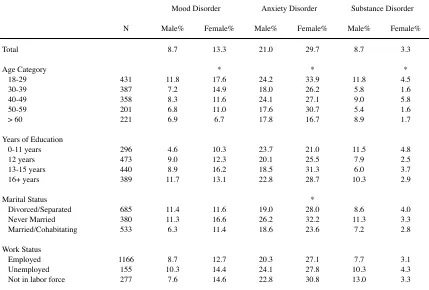
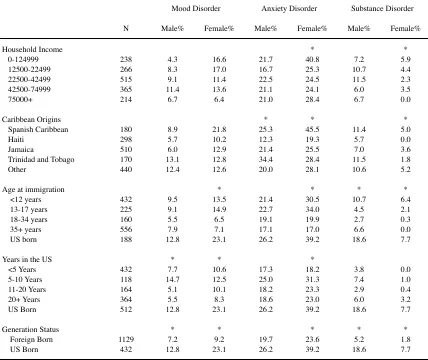
Table 1 presents the percentages of men and women in the sample having a mood,
anxiety, or substance disorder as well as indicating significant chi-square variation.
Women had higher unadjusted prevalences of mood and anxiety disorders, but a greater
percentage of men carried a substance disorder diagnosis and these gender differences
[image:40.612.111.540.367.657.2]met statistical significance.
Table 1
Rates of mental disorders in males and females for each control and predictor variable.
Table 1
Rates of mental disorders in males and females for each control and predictor variable.
Table 1
Rates of mental disorders in males and females for each control and predictor variable.
Table 1
Rates of mental disorders in males and females for each control and predictor variable.
Table 1
Rates of mental disorders in males and females for each control and predictor variable.
Table 1
Rates of mental disorders in males and females for each control and predictor variable.
Table 1
Rates of mental disorders in males and females for each control and predictor variable.
Table 1
Rates of mental disorders in males and females for each control and predictor variable.
Mood Disorder
Mood Disorder Anxiety DisorderAnxiety Disorder Substance DisorderSubstance Disorder N Male% Female% Male% Female% Male% Female%
Total 8.7 13.3 21.0 29.7 8.7 3.3
Age Category 18-29 30-39 40-49 50-59 > 60 431 387 358 201 221 11.8 7.2 8.3 6.8 6.9 * 17.6 14.9 11.6 11.0 6.7 24.2 18.0 24.1 17.6 17.8 * 33.9 26.2 27.1 30.7 16.7 11.8 5.8 9.0 5.4 8.9 * 4.5 1.6 5.8 1.6 1.7 Years of Education
0-11 years 12 years 13-15 years 16+ years 296 473 440 389 4.6 9.0 8.9 11.7 10.3 12.3 16.2 13.1 23.7 20.1 18.5 22.8 21.0 25.5 31.3 28.7 11.5 7.9 6.0 10.3 4.8 2.5 3.7 2.9 Marital Status Divorced/Separated Never Married Married/Cohabitating 685 380 533 11.4 11.3 6.3 11.6 16.6 11.4 19.0 26.2 18.6 * 28.0 32.2 23.6 8.6 11.3 7.2 4.0 3.3 2.8 Work Status Employed Unemployed Not in labor force
Table 1 continued
Mood Disorder
Mood Disorder Anxiety DisorderAnxiety Disorder Substance DisorderSubstance Disorder N Male% Female% Male% Female% Male% Female% Household Income 0-124999 12500-22499 22500-42499 42500-74999 75000+ 238 266 515 365 214 4.3 8.3 9.1 11.4 6.7 16.6 17.0 11.4 13.6 6.4 21.7 16.7 22.5 21.1 21.0 * 40.8 25.3 24.5 24.1 28.4 7.2 10.7 11.5 6.0 6.7 * 5.9 4.4 2.3 3.5 0.0 Caribbean Origins Spanish Caribbean Haiti Jamaica
Trinidad and Tobago Other 180 298 510 170 440 8.9 5.7 6.0 13.1 12.4 21.8 10.2 12.9 12.8 12.6 * 25.3 12.3 21.4 34.4 20.0 * 45.5 19.3 25.5 28.4 28.1 11.4 5.7 7.0 11.5 10.6 * 5.0 0.0 3.6 1.8 5.2 Age at immigration
<12 years 13-17 years 18-34 years 35+ years US born 432 225 160 556 188 9.5 9.1 5.5 7.9 12.8 * 13.5 14.9 6.5 7.1 23.1 21.4 22.7 19.1 17.1 26.2 * 30.5 34.0 19.9 17.0 39.2 * 10.7 4.5 2.7 6.6 18.6 * 6.4 2.1 0.3 0.0 7.7 Years in the US
<5 Years 5-10 Years 11-20 Years 20+ Years US Born 432 118 164 364 512 * 7.7 14.7 5.1 5.5 12.8 * 10.6 12.5 10.1 8.3 23.1 17.3 25.0 18.2 18.6 26.2 * 18.2 31.3 23.3 23.0 39.2 3.8 7.4 2.9 6.0 18.6 0.0 1.0 0.4 3.2 7.7 Generation Status Foreign Born US Born 1129 432 * 7.2 12.8 * 9.2 23.1 19.7 26.2 * 23.6 39.2 * 5.2 18.6 * 1.8 7.7 * Chi-Square indicates significant differences in these groups, p<.05
* Chi-Square indicates significant differences in these groups, p<.05 * Chi-Square indicates significant differences in these groups, p<.05 * Chi-Square indicates significant differences in these groups, p<.05 * Chi-Square indicates significant differences in these groups, p<.05 * Chi-Square indicates significant differences in these groups, p<.05 * Chi-Square indicates significant differences in these groups, p<.05 * Chi-Square indicates significant differences in these groups, p<.05
The distribution of mental disorders for each of the demographic variables is
largely consistent with previous findings. More years of education carries a higher
prevalence of mood disorders for men and anxiety disorders in females. Married or
employed men and women have lower overall rates of each mental disorder. US-born
have substantially higher rates of each disorder compared with foreign-born individuals,
both men and women have a marked rate increase for all disorders. Of those born outside
Table 2
Results of logistic regressions examining associations between main predictor and control variables for mood disorders.
Table 2
Results of logistic regressions examining associations between main predictor and control variables for mood disorders.
Table 2
Results of logistic regressions examining associations between main predictor and control variables for mood disorders.
Males
OR (95% CI) OR (95% CI)Females Age Category 18-29 30-39 40-49 50-59 > 60 1.000 1.239 (.465 , 3.301)
.750 (.259 , 2.174) .959 (.227 , 4.048) .839 (.185 , 3.807)
1.000 .540 (.294 , .994) .683 (.338 , 1.380) .411 (.160 , 1.060) .709 (.209 , 2.410) Years of Education
0-11 years 12 years 13-15 years 16+ years
1.000 .491 (.168 , 1.436) .522 (.169 , 1.608) .285 (.093 , .876)*
1.000 .685 (.329 , 1.427)
.445 (.211 .936)* .421 (.190 , .933)* Marital Status
Never Married Divorced/Separated Married/Cohabitating
1.000 .563 (.233, 1.362) .731 (.311 , 1.716)
1.000 .939 (.514 , 1.715) .956 (.561 , 1.630) Work Status
Not in Work Force Employed Unemployed
1.000 1.068 (.360 , 3.160)
.855 (.207 , 3.531)
1.000 .943 (.510 , 1.741) .816 (.360 , 1.848) Household Income 0-124999 12500-22499 22500-42499 42500-74999 75000+ 1.000 .425 (.094 , 1.921) .548 (.139 , 2.167) .313 (.077 , 1.271) .629 (.133 , 2.972)
1.000 .725 (.377 , 1.392) 1.601 (.846 , 3.031) 1.618 (.775 , 3.378) 4.323 (1.554 , 12.028)* Caribbean Origins
Spanish Caribbean Haiti
Jamaica
Trinidad and Tobago Other
1.000 1.940 (.568 , 6.624) 1.786 (.599 , 5.327) .755 (.215 , 2.651) .815 (.289 , 2.297)
1.000 1.631 (.734 , 3.621)
.947 (.470 , 1.909) 1.272 (.544 , 2.970) 1.355 (.670 , 2.741) Age at immigration
US Born < 12 years 13-17 18-34 35+
1.000 1.630 (.584 , 4.547) 2.185 (.606 , 7.877) 3.195 (.993 , 10.282) 1.846 (.332 , 10.265)
1.000 2.883 (1.476 , 5.631) 3.065 (1.351 , 6.952) 8.532 (3.662 , 19.879) 7.053 (2.058 , 24.172) Years in the US
US Born <5 Years 5-10 Years 11-20 Years 20+ Years 1.000. .467 (.089 , 2.439) .310 (.087 , 1.103) .754 (.237 , 2.401) .944 (.385 , 1.364))
1.000 .372 (.123 , 1.121) .277 (.110 , .693)* .593 (.286 , 1.231) .965 (.327 , 1.106) Nativity Status
Foreign Born
US Born 1.168 (.210 , 6.503)1.000 .914 (.290 , 2.884)1.000 Family Support .932 (.869 , 1.000) .970 (.929 , 1.012) Family Conflict 1.392 (1.221 , 1.587)* 1.250 (1.146 , 1.364)* * p<.05
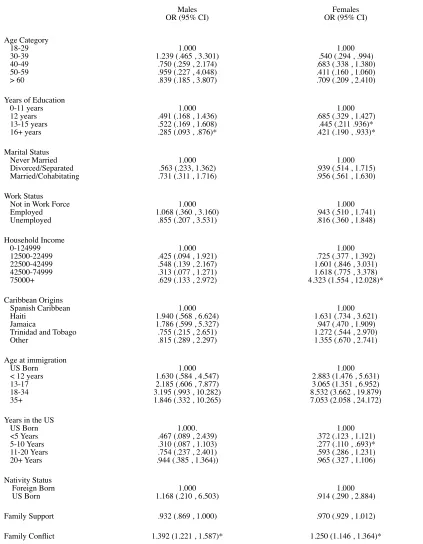
The results of the logistic regressions for mood disorders are presented in Table 2.
Men and women were examined separately to identify the predominant risk factors for
lifetime mood disorders. For men, 16+ years of education compared to 0-11 years
provided a significant reduction in risk for mood disorders (OR = .285, 95% CI .093 , .
876). The family support index provided a slight reduction in risk, but it was just shy of
statistical significance (OR = .932 95% CI .869 , 1.000). The Family Conflict Index was
the single most significant factor that determined whether or not an individual would
present with a mood disorder diagnosis (OR = 1.392, 95% CI 1.221 , 1.587). All other
factors failed to meet statistical significance. Similar to men, women with higher
education also tended to have a reduced risk of mood disorders. Women had an
increasing level of risk associated with their age at immigration compared to those born
in the US. There is a trend towards a reduction in risk in women with more recent
immigration, although this reduction failed to meet statistical significance in most cases.
For example, compared to women born in the US, women living in the country were less
likely to have a mood disorder until they had been in the US for over 20 years where they
were nearly equivalent as native-born although only women living in the country between
5-10 years met statistical significance (OR = .277, 95% CI .110 , .693). Finally, women
in the highest family income bracket, >$75,000/year had an increased risk of lifetime
mood disorders (OR = 4.323, 95% CI 1.554 , 12.028). All other variables failed to reach
any statistical significance.
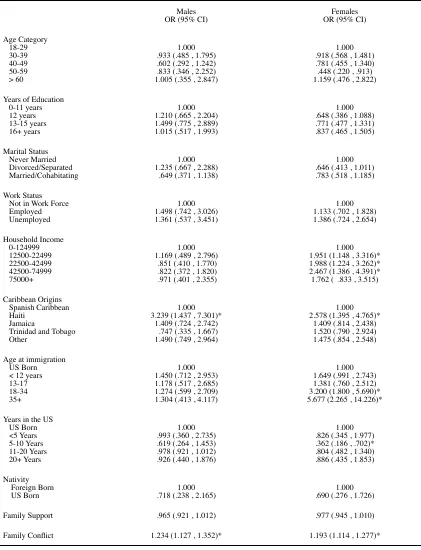
The second logistic regression, presented in Table 3, focused on risk factors
associated with a lifetime diagnosis of anxiety disorders for men and women. Haitian
Table 3
Results of logistic regressions examining associations between main predictor and control variables for anxiety disorders.
Table 3
Results of logistic regressions examining associations between main predictor and control variables for anxiety disorders.
Table 3
Results of logistic regressions examining associations between main predictor and control variables for anxiety disorders.
Males
OR (95% CI) OR (95% CI)Females Age Category 18-29 30-39 40-49 50-59 > 60 1.000 .933 (.485 , 1.795) .602 (.292 , 1.242) .833 (.346 , 2.252) 1.005 (.355 , 2.847)
1.000 .918 (.568 , 1.481) .781 (.455 , 1.340) .448 (.220 , .913) 1.159 (.476 , 2.822) Years of Education
0-11 years 12 years 13-15 years 16+ years
1.000 1.210 (.665 , 2.204) 1.499 (.775 , 2.889) 1.015 (.517 , 1.993)
1.000 .648 (.386 , 1.088) .771 (.477 , 1.331) .837 (.465 , 1.505) Marital Status
Never Married Divorced/Separated Married/Cohabitating
1.000 1.235 (.667 , 2.288) .649 (.371 , 1.138)
1.000 .646 (.413 , 1.011) .783 (.518 , 1.185) Work Status
Not in Work Force Employed Unemployed
1.000 1.498 (.742 , 3.026) 1.361 (.537 , 3.451)
1.000 1.133 (.702 , 1.828) 1.386 (.724 , 2.654) Household Income 0-124999 12500-22499 22500-42499 42500-74999 75000+ 1.000 1.169 (.489 , 2.796)
.851 (.410 , 1.770) .822 (.372 , 1.820) .971 (.401 , 2.355)
1.000 1.951 (1.148 , 3.316)* 1.988 (1.224 , 3.262)* 2.467 (1.386 , 4.391)* 1.762 ( .833 , 3.515) Caribbean Origins
Spanish Caribbean Haiti
Jamaica
Trinidad and Tobago Other
1.000 3.239 (1.437 , 7.301)*
1.409 (.724 , 2.742) .747 (.335 , 1.667) 1.490 (.749 , 2.964)
1.000 2.578 (1.395 , 4.765)*
1.409 (.814 , 2.438) 1.520 (.790 , 2.924) 1.475 (.854 , 2.548) Age at immigration
US Born < 12 years 13-17 18-34 35+
1.000 1.450 (.712 , 2.953) 1.178 (.517 , 2.685) 1.274 (.599 , 2.709) 1.304 (.413 , 4.117)
1.000 1.649 (.991 , 2.743) 1.381 (.760 , 2.512) 3.200 (1.800 , 5.690)* 5.677 (2.265 , 14.226)* Years in the US
US Born <5 Years 5-10 Years 11-20 Years 20+ Years 1.000 .993 (.360 , 2.735) .619 (.264 , 1.453) .978 (.921 , 1.012) .926 (.440 , 1.876)
1.000 .826 (.345 , 1.977) .362 (.186 , .702)* .804 (.482 , 1.340) .886 (.435 , 1.853) Nativity
Foreign Born
US Born .718 (.238 , 2.165)1.000 .690 (.276 , 1.726)1.000 Family Support .965 (.921 , 1.012) .977 (.945 , 1.010) Family Conflict 1.234 (1.127 , 1.352)* 1.193 (1.114 , 1.277)* * p<.05
(OR = 3.239, 95% CI 1.437 , 7.301). A high family conflict score also contributed to the
likelihood of an anxiety disorder diagnosis (OR = 1.234, 95% CI 1.127 , 1.352).
Statistical significance was not observed for any other variable in men. There were more
variables significantly associated with anxiety disorders in women compared to men.
Age at immigration clearly affects the the prevalence of anxiety in this sample: the risk
was elevated for women who immigrated to the US between the ages of 18-34 (OR =
3.200 95% CI 1.800 , 5.960) and >35 years (OR = 5.677 95% CI 2.265 , 14.226)
compared to US natives. Haitian women were two and a half times more likely to have a
diagnosis than the reference group (OR = 2.578 95% CI 1.395 , 4.765). Household
income also contributed significantly to women’s anxiety. Compared to the lowest
income bracket, women in households making between $12,500-$22,499/year (OR =
1.951 95% CI 1.148 , 3.316), $22,500-$42,499/year (OR = 1.988 95% CI 1.224 , 3.262),
and $42,500-$74,999 (OR = 2.467 95% CI 1.386 , 4.391) all increased risk. There was a
reduction of risk associated with between 5-10 years of US residency (OR = .362, 95%
CI .186 ,.702) compared to US-born. Finally, there was a slight association between
family conflict index and anxiety diagnosis in women (OR = 1.193, 95% CI 1.114 ,
1.277).
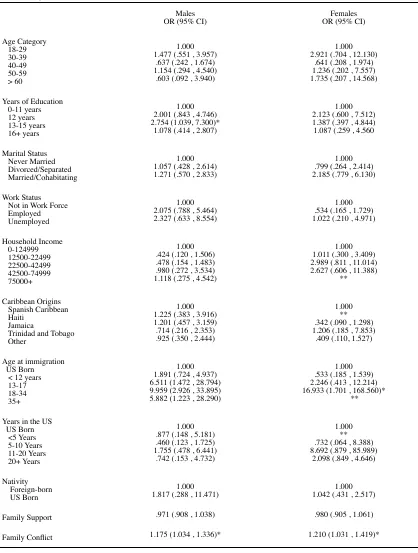
The regression analysis on lifetime substance abuse, presented in Table 4, was
hampered by the lower overall prevalence, especially for women. In men, a higher risk of
substance related disorders was associated with having between 13-15 years of education
(OR = 2.754, 95% CI 1.039 , 7.300), immigration to the US after the age of 13 compared
to US natives, and a high family conflict index (OR = 1.175, 95% CI 1.034 , 1.336). All