
ScholarWorks @ Georgia State University
ScholarWorks @ Georgia State University
Chemistry Theses Department of Chemistry
4-26-2010
Synthesis of Near-Infrared Heptamethine Cyanine Dyes
Synthesis of Near-Infrared Heptamethine Cyanine Dyes
Jamie Loretta Gragg
Georgia State University, [email protected]
Follow this and additional works at: https://scholarworks.gsu.edu/chemistry_theses
Recommended Citation Recommended Citation
Gragg, Jamie Loretta, "Synthesis of Near-Infrared Heptamethine Cyanine Dyes." Thesis, Georgia State University, 2010.
https://scholarworks.gsu.edu/chemistry_theses/28
This Thesis is brought to you for free and open access by the Department of Chemistry at ScholarWorks @ Georgia State University. It has been accepted for inclusion in Chemistry Theses by an authorized administrator of
by
JAMIE L. GRAGG
Under the Direction of Dr. Maged M. Henary
ABSTRACT
Carbocyanine dyes are organic compounds containing chains of conjugated methine
groups with electron-donating and electron-withdrawing substituents at the terminal
heterocycles of the general formula [R1-(CH)n-R2]+X-. The synthetic methodology and
optical properties of carbocyanineswill bediscussed.
This thesis consists of two parts: (A) synthesis and optical properties of novel
carbocyanine dyes substituted with variousamines and the synthesis of unsymmetrical
carbocyanine dyes containing monofunctional groups for bioconjugation.
In part A, the synthesis of carbocyanine dyes functionalized with various amines and
studies of their optical properties with respect to absorbance, fluorescence, quantum
yield and extinction coefficient will be presented. These property studies will aid in
designing efficient dyes for future biomedical applications. Part A will also include a
one pot synthesis of unsymmetrical carbocyanine dyes functionalized with mono
carboxylic acid chains, useful for biomolecule (i.e. proteins, amino acids, etc.)
conjugation.
Part B will describe the synthesis of novel carbocyanine dyes to be used for
cancer image-guided surgery. Cancers are thus far incurable diseases, i.e. there are no
drugs currently available to cure cancer; however, by designing a dye to visualize tumor
cells will greatly increase the efficiency of cancer removal and hopefully increase the
survival rate of cancer patients. The dyes reported in this thesis are superior to
commercially available dyes used to visualize and identify various tumors invisible to
the naked eye of surgeons with regards to biodistribution and clearance through kidney
filtration.
SYNTHESIS OF NEAR-INFRARED HEPTAMETHINE CYANINE DYES
by
JAMIE L. GRAGG
A Thesis Submitted in Partial Fulfillment of the Requirements for the Degree of
Master of Science
in the College of Art and Sciences
Georgia State University
Copyright by Jamie Loretta Gragg
by
JAMIE L. GRAGG
Committee Chair: Dr. Maged M. Henary
Committee: Dr. Alfons Baumstark
Dr. Donald Hamelberg
Electronic Version Approved:
Office of Graduate Studies
College of Arts and Sciences
Georgia State University
DEDICATION
This thesis is dedicated in memory of my late grandparents, Pauline and J.C.
Green, whose strong-willed spirits have guided me, not only through this thesis but also
ACKNOWLEDGEMENTS
First and foremost, I would like to thank my advisor, Dr. Maged M. Henary,
whose attitude and love and for science made it possible for a once-proclaimed shy
biologist to become a well-rounded, confident chemist. He has not only taught me tricks
and secrets of organic synthesis, but also how to think. Without his paternal guidance
and encouragement, this work would not have been possible.
I would also like to extend my appreciation to Dr. Lucjan Strekowski for sharing
his expertise with me and allowing me to complete my work in his lab as well as Dr.
Alfons Baumstark for giving me the opportunity to do research in chemistry.
I would like to thank Dr. Davon Kennedy for sparking my interest in chemistry as
well as giving me the encouragement to pursue chemistry as a career.
I would like to thank Beth Raux and Ava Blake for their friendship, guidance, and
advice. I would also like to thank Jeff Klenc, Nilmi Fernando and Mariusz Mojzych for
their help in the lab. Thanks to Reid Daniell and Adam Ehalt for keeping me entertained.
I would also like to thank Catharine Collar for the encouragement and great friendship
she provided me with during my time at GSU.
Last but not least, I want to thank my sister Lisa and aunt Nola for their
encouraging words, advice, and humor, and for keeping me sane during my graduate
studies. And most of all, I would like to thank my parents, James and Loretta Gragg, for
their emotional and financial support throughout my college career. This would not have
TABLE OF CONTENTS
ACKNOWLEDGEMENTS v
LIST OF TABLES viii
LIST OF FIGURES ix
PART A: SYNTHESIS AND OPTICAL PROPERTY STUDIES OF HEPTAMETHINE CARBOCYANINE DYES SUBSTITUTED WITH VARIOUS AMINES AND UNSYMMETRICALCARBOCYANINE DYES CONTAINING MONOFUNCTIONAL GROUPS A.1. SYNTHESIS OF CYANINE DYES, A REVIEW A1.1. INTRODUCTION A.1.2. Historical background 1 A.1.3. Naturally occurring cyanine dyes 2 A.1.4. Monomethine cyanine dyes 6
A.1.5. Dimethine cyanine dyes 8
A.1.6. Trimethine cyanine dyes 9 A.1.6.1. Synthesis using orthoester method 9
A.1.6.2. Synthesis using diphenylformamidine method 11
A.1.6.3. Synthesis using De Rossi method 12
A.1.7. Pentamethine cyanine dyes 14
A.1.8. Heptamethine cyanine dyes 16
A.1.9. Synthesis of Meso-substituted Cyanine Dyes 19
A.1.9.1. Trimethine cyanine dyes 19
A.1.9.3. Synthesis of Rigid Meso-substituted Cyanine Dyes 21
A.1.9.3.1. Pentamethine cyanine dyes 21
A.1.9.3.2. Heptamethine cyanine dyes 22
A.1.9.3.3. Synthesis of Bis(Heptamethine Cyanine) Dyes 26
A.2. SYNTHESIS OF CARBOCYANINE DYES SUBSTITUTED WITH VARIOUS
AMINES
A.2.1. RESULTS AND DISCUSSION 33
A.2.2. CONCLUSION 41
A.3. SYNTHESIS OF UNSYMMETRICAL CARBOCYANINE DYES
CONTAINING MONOFUNCTIONAL GROUPS 42
A.3.1. RESULTS AND DISCUSSION 42
A.3.2. CONCLUSION 46
PART B: SYNTHESIS OF HEPTAMETHINE CARBOCYANINE DYES TO BE
USED FOR IMAGE-GUIDED SURGERY
B.1. SYNTHESIS OF CYANINE DYES FOR CANCER GUIDED IMAGING 49
B.1.1. INTRODUCTION 49
B.2. RESULTS & DISCUSSION (DYES FOR CANCER GUIDED IMAGING) 52
B.2.1. In Vivo Biodistribution and Clearance of NIR Fluorophores 102/103 54
B.3. CONCLUSION 56
4. EXPERIMENTAL 57
5. REFERENCES 72
LIST OF TABLES
LIST OF FIGURES
Figure 1. The first synthetic monocarbocyanine dye [1]. 2
Figure 2. Various carbocyanine dye structures [1]. 2
Figure 3. Natural carbocyanine dyes [5]. 3
Figure 4. General structure of carbocyanine dyes [6-9]. 3
Figure 5. Reactive groups for post-synthetic modification [7-11]. 4
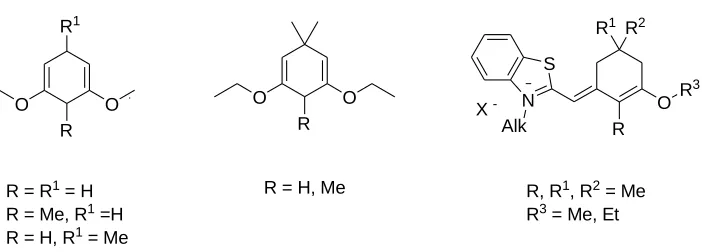
Figure 6. Various cyclohexene groups for synthesis of pentamethine cyanines [54-56]. 22
Figure 7. Stokes shift [100]. 30
Figure 8. Spectrophotometer [100]. 31
Figure 9. Suggested single electron transfer mechanism of the meso-chloro substituted dyes 102]. 35
Figure 10. Indocyanine Green (ICG) [120]. 49
Figure 11. An amino sugar derivative of Indocyanine Green dye (SIDAG) [120]. 49 Figure 12. Methylene Blue 50
PART A
SYNTHESIS AND OPTICAL PROPERTIES OF HEPTAMETHINE
CARBOCYANINE DYES SUBSTITUTED WITH VARIOUS AMINES AND
UNSYMMETRICALCARBOCYANINE DYES CONTAINING
A.1. SYNTHESIS OF CYANINE DYES, A REVIEW
A1.1. INTRODUCTION
A.1.2. Historical Background
In 1856, C. H. G. Williams synthesized the first cyanine dye [1] upon heating N
-amyl quinolinium iodide with N-amyl lepidinium iodide in ammonia to produce a
“magnificent blue colored” compound 1a-c (Fig. 1). The Latin word cyanos, meaning
blue [1], gave rise to the general cyanine dye name. In the following years, related
compounds were synthesized and referred to as isocyanine 2, pinacyanol 3,
psuedocyanine 4, and kryptocyanine 5 (Fig. 2) [1].
Cyanine dyes are characterized as possessing two heterocyclic moieties, acting as
both electron donors and acceptors, and are joined by a single or odd of number of
methine groups in which (n+1) bi-electrons are distributed over n atoms [1] producing a
delocalized cation 1c across the methine chain. This unique characteristic gives cyanine
dyes a wider range of absorption than any other known class of dyes. Synthetic cyanines
[2-5] are known to absorb between the visible and infrared regions of the electromagnetic
spectrum. In addition, cyanines exhibit narrow absorption bands and high extinction
coefficients. Due to these properties, cyanine dyes have been extensively employed in
various applications such as photographic processes, laser printing, nonlinear optical
materials, and more recently fluorescent probes for biomolecular labeling. In particular,
N n-Amyl
I
N n-Amyl
1a N n-Amyl I N 1b N n-Amyl
N n-Amyl
1c
I
[image:15.612.119.495.72.220.2]n-Amyl
Figure 1. The first synthetic monocarbocyanine dye [1].
[image:15.612.143.477.73.377.2]N Et I N Et 2 N Et I 3 N Et N Et I 4 N Et N Et I 5 N Et
Figure 2. Various carbcyanine dye structures [1].
A.1.3. Naturally occurring cyanine dyes
Since their accidental discovery, cyanine dyes have been identified as colorants in
natural products [2-5]. These natural dyes were first observed by Wyler [2,3] in the late
1960s and by Musso [4] in the late 1970s. These dyes were confirmed to contain a similar
feature; a pentamethinium cyanine chromophore substituted with two chiral end groups
derived from L-α- amino acids. Betanin 6, which is responsible for the red-violet color of
the red beet, Beta vulgaris, exhibits a visible absorption at 537 nm [5]. The orange-red
fungus dye musca-aurin I 7, is found in the toadstool fly agaric Amanita muscaria, with
O OH Glucosyl N CO2 H NH COOH HOOC H 6 Betanin
537 nm (red-violet)
CO2 H N NH COOH HOOC H N O HO 7 Musca-aurin I
[image:16.612.110.499.72.186.2]475 nm (Orange-red)
Figure 3. Natural carbocyanine dyes [5].
Cyanine dyes are cationic molecules in which two terminal nitrogen heterocyclic
units are linked by a polymethine bridge as shown by the general structure 8 (Fig. 4)
[6-9].
N N
n
R R
8
Figure 4. General structure of carbocyanine dyes [6-9].
Cyanine dyes' common names depend on the number of methine groups in the
polyene chain. For example, compounds 8 with n = 0, n = 1, n =2, and n = 3 are referred
to as mono-, tri-, penta-, and heptamethine cyanines, respectively.
Many different polymethine cyanine derivatives have been synthesized during the
last decade. Their syntheses are accomplished by a stepwise condensation reaction of two
nucleophilic aza-heterocycles containing an activated methyl group with a polyene-chain
precursor i.e., an unsaturated bisaldehyde or its equivalent. Structural diversity is
achieved through variations in the polyene chain, nitrogen substituents, and the
heterocycles. However, this general synthetic method is not compatible with a wide range
of reactive groups located on the aza-heterocycles for a fine tuning of the solubility,
[image:16.612.256.358.315.381.2]Functional groups such as carboxylic and sulfonic acids are completely inert
toward the reagents and reaction conditions used for achieving the condensation reaction.
An alternative synthetic approach utilized is based on the preparation of a precursor of
the target functionalized cyanine dyes, or a “convertible cyanine dye”, and its subsequent
post-synthetic chemical transformations to give the fluorophore bearing the desired
reactive groups. This synthetic methodology was applied to the chemical derivatization of
heptamethine cyanine dyes (Fig. 5).
N Z Y
N
R R1
Cl
reactive group for post-synthetic modifications (SNR1 reaction)
Y, Z = CR2, NH, O, S R, R1 = alkyl
N Z Y
N X
-H2N COO
-n
m m
reactive group for post-synthetic modifications (acylation or nucleophilic substitution reactions)
free for further modifications or covalent attachment to target analytes n = 0 - 3
[image:17.612.103.455.262.580.2]m = 0 - 5
Figure 5. Reactive groups for post-synthetic modifications [7-11].
The use of a precursor having a chlorine atom at the meso position [7,8], can be
easily replaced by various nucleophiles (alcoholates [9], amines [10,11], and thiols
substituent on an aromatic compound is replaced by a nucleophile through an
intermediary free radical species).
Some substituents such as carboxyl and amino groups attached to heptamethine
dyes cyanines containing a chloro-cyclohexyl moiety in the polyene chain are important
as NIR labels whose reactivity and optical properties are suitable for in vivo imaging [14]
and DNA sequencing applications [9].
General problems with near-infrared (NIR) fluorophores compared to visible light
fluorophores are: 1) significant spectral broadening as the wavelength increases, 2) low
quantum yield, 3) photoinstability, 4) chemical instability with increasing red-shift, and
5) the tendency to aggregate because of hydrophobicity. The ideal NIR dyes for in vivo
imaging should have the following characteristics: 1) a peak fluorescence close to
700-900 nm, 2) high quantum yield, 3) high chemical and photostability, 4) non-toxicity, 5)
good biocompatibility, biodegradability and excretability, 6) availability of
monofunctional derivatives as platform technology, and 7) commercial viability and
scalable production for large quantities required for human use [15].
Recently, there have been extensive reports describing the synthesis and
applications of polymethine dyes as non-covalent labels for nucleic acid detection
[16-18]. Such dyes range between the visible and near-infrared spectral regions. There are
mono-, tri- and pentamethine cyanines, used for non-covalent nucleic acid labeling.
Although there are many well developed synthetic routes to monomethine and trimethine
cyanines [19], the pentamethine and heptamethine dyes are generally synthesized via
dialdehyde or equivalent [19,20-23]. In this review chapter, various synthetic routes to
produce different classes of carbocyanine dyes will be discussed.
A.1.4. Monomethine cyanines
The monomethine cyanines show absorption in the visible region; the addition of
one vinyl moiety to the chromophore produces a bathochromic shift of about 100 nm
[23]. As the length of the polymethine chain increases, the fluorescence quantum yield
decreases upon binding with nucleic acid [17].
Asymmetric monomethine cyanine dyes are the best non-covalent binding nucleic
acid labels due to the generation of high fluorescence signals. The synthesis of the
monomethine cyanine dyes is performed upon heating sulfobetaines derived from N
-alkylheteocyclic compounds and a quaternary salt of heterocyclic 2- or 4-methyl
compounds under a basic conditions (Equation 1) [18,24].
N Et
SO3- Me N
Et + N Et N Et 4 -Me-Ph-SO3
-1. Et3N
2. KBr
Br
-(1)
A novel method for the preparation of symmetrical and asymmetrical
monomethine canine dyes was developed by Deligeorgiev et al. [25]. They found that the
preparation of monomethine cyanine dyes can be carried out by melting the starting
compounds e.g. a sulfobetaine derived from an N-alkylheterocyclic system and the
quaternary salt of a 2- or 4-methyl heterocyclic salt under basic conditions. The
applicability of this modification depends on the melting points of the substrates and their
relative thermostability. However, for less thermo-stable intermediates, preparation in
N R
Me -O3S N
Me + N R N Me - SO2, -H2O
X- Reflux EtOH X
-(2)
Another approach to the synthesis of monocyanines have been suggested from the
reaction of 7-hydroxy-4-methyl(H)coumarin 9 and 2- or 4-methyl quaternary salts e.g.
ethylpyridinium and ethylquinolinium iodide [26] in the presence of piperidine as a
catalyst to afford monomethine cyanine dyes 10 (Equation 3).
X O R HO 9 Piperidine, EtOH X R HO N Et Me I -N Et I -10
R = H, Me X = O, NH
(3)
Other synthetic approaches to monomethine cyanines 11, 12 are shown in Scheme
1 [6]. Polycationic cyanine derivatives including 11, 12 have been synthesized as strong
N X SMe Me I -N X Me I -N I N I -I N X Me 4I
-N N N N
N X
Me
Me Me
Me Me
11: X = S
12: X = O
Me2N NMe2
Me
Scheme 1
A.1.5. Dimethine cyanine dyes
Kovalska et al. first synthesized a series of styrylcyanines containing a 2-aryl
imidazo[1,2-a]pyridinium moiety and different substituents at 2-phenyl ring [34]. The
general pathway for the synthesis of novel styryl imidazo[1,2-a]pyridinium dyes shown
in Scheme 2. 2-Amino-4-picoline 13 was reacted with phenacyl bromide derivatives 14,
and the product 15 was treated with alkylating agent to generate quaternary salts 16. Then
N NH2
Me O
Br N
N Me
EtOH Et2SO4 N
N Me R2 Et N O H Me Me N N R1 R2 Et N Me
EtSO4
-EtSO4
-+
14 15 16
17 R1 R2 R2 R1 R1 n-butanol piperidine 18 Me 13 Scheme 2
Abd El-aal et al. reported the synthesis of dicyanines 20a,b beginning with
3-formylcoumarin 19a (X = O) or 3-formylquinolinone 19b (X = NH) and 2- or 4-methyl
quaternary salts e.g. ethylpyridinium and ethylquinolinium iodide under basic conditions
(Equation 4) [26].
X O HO CHO 19a,b N Et Me I -X O HO N EtI -Piperidine, EtOH
20a: X = O
20b: X = NH
(4)
A.1.6. Trimethine cyanine dyes
A.1.6.1. Synthesis using orthoester method
The orthoester method is used as a general synthesis of trimethine cyanine dyes
(Equation 5). This method was discovered by Koenig [35] and is applied only for the
substituents in the aromatic ring 21 are reacted with orthoesters 22. Pyridine is usually
used as a base [36] and in some cases mixtures of pyridine and other organic-amino bases
have been reported [37].
N X R R2 Me A
-R1C(OR)3
-HA/B, -3ROH
R1 X
N N
X
R2 R2
R R
+
21 22 23
A
-X = NR, CR2, O, S, Se R = alkyl
R1 = H or alkyl
R2 = alkyl or other carbon-chain functionality base
A- = counter anion
(5)
Utilizing the orthoester method for the preparation of trimethine cyanine dyes,
Mujumdar et al. synthesized new water soluble trimethine dyes using appropriate
naphthylamine derivatives as starting materials (Scheme 3) [38].
N Me Me N Me Me COOH N Me Me COOH -O 3S
KO3S Me
COOH CH(OEt)3, pyridine
Cy3. 205.OH
SO3
-SO3K KO3S
KO3S
A.1.6.2 Synthesis using diphenylformamidine method
The N,N’-diphenylformamidine method (Scheme 4) is applied for the synthesis of
symmetrical and unsymmetrical trimethines. The first step can be carried out with or
without activating agents (e.g. acetic anhydride [39]) for nucleophilic attack, and yields
the corresponding anilinovinyl 25 or anilidovinyl 26 compounds [37,39,40]. When the
condensation is performed without acetic anhydride [41], the reactions are conducted in
n-propanol or dimethylosulfoxide (DMSO) at high temperatures (130-180 oC) for several
hours. When acetic anhydride is used, the reaction is carried out at reflux for 30-60 min.
The second step is carried out similarly to the orthoester method – i.e. of pyridine the
precursor 26 is coupled with another molecule of methylene base 27 under basic
conditionsto form the trimethine dye 28.
N X R2 Me A -24 X N N Y
R2 R4
R1 R3
28
A -Ph
N N Ph
+ H N Ph X N R2 R1 25 A -N Ph X N R2 R1 26 A -Ac (AcO)2O,
N Y R4 Me A -27 pyridine,
-HA, -PhNH2 / PhNHAc A- = counter anion
X = Y = NR, CR2, O, S R1 = R3 = alkyl or R1 # R3
R2 = R4 = alkyl or other carbon-chain functionality or R2 # R4 R1
R3
A.1.6.3. Synthesis using the De Rossi Method
De Rossi et al. [41] reported that the preparation of trimethines requires two
equivalents of indolinium salt 29 reacted with iodoform in the presence of excess of
potassium or sodium t-butoxides to yield 30 (Equation 6).
N X R1 R2 Me A -X N N X
R2 R2
R1 R1
+
29 30
A
-CH3I
t-BuOK, ROH
- 3KI, -KA -4 t-BuOH
A- = counter anion
R = Me, Et
R1 = common substituent
R2 = alkyl or other carbon chain functionality X = NR, CR2, O, S
(6)
A new Vilsmeier-type reagent was generated from N,N-dimethylformamide
(DMF) and hydro bromide (HBr), then reacted with the salt 32 to yield a mixture of
indocarbocyanine pH-sensitive dye 33 and symmetric indocarbocyanine dye 34 (Scheme
5) [42].
HN N
SO3
-N N
SO3
-SO3H
33 (30%) 34 (52%)
Me Me Me Me Me Me Me Me
N Me
SO3Na Br Me Me HBr 32 N Me Br
SO3Na
31 Me Me DMF, reflux H N OH Br Scheme 5
A simple and practical method for the synthesis of indocyanine dye 39, useful in
commercially available 2,3,3-trimethylindolenine 35, which was alkylated with the
appropriate alkyl halide to provide corresponding N-alkyl derivatives 36 and 38. Then,
the condensation of 36 with diphenylformamidine in acetic anhydride afforded
corresponding acetanilidylvinyl indolium salt 37 in excellent yield. Salt 36 was then
reacted with the other salt 38 in ethanol in the presence of triethylamine to give desired
dye 39 in good yield. Dye 39 was easily converted into the corresponding N
-hydroxysuccinimide ester (NHS) 40 by treatment with N,N’-disuccinimidyl carbonate
(DSC) under basic conditions (Scheme 6).
N Me Me Me 36 N Me Me Me
CH3CH2CH2Br
N Me Me N Ph 37
Br(CH2)5COOH
1,2-dichlorobenzene N Me Me Me N Me Me N Me Me COOR HOOC
1) 38, Et3N, EtOH
2) DSC, Pyridine
35
38
39 R = H (Cy3)
40 R = (NHS) Ac
PhHN NPh
Ac2O, reflux
1,2-dichlorobenzene Br Br Br Br N O O Scheme 6
A.1.7. Pentamethine cyanine dyes
Mujumdar et al. synthesized new water soluble pentamethine benz-indolenine
dyes using appropriate naphthylamine derivatives as starting materials [38]. The general
N Me Me N Me Me COOH COOH N Me Me N Me Me COOSu COOSu DSC, pyridine Cy5.205.OH
KO3S
KO3S
KO3S
KO3S
SO3
-SO3K
SO3
-SO3K
N Me Me COOH -O 3S
KO3S
Me
MeO-CH=CH-CH(OMe)3
pyridine, 80 oC
DSC = N,N-disuccinimidyl carbonate
Scheme 7
Chipon et al. published the first original synthetic route to new water soluble
functionalized fluorescent amino acid derived from a pentamethylene cyanine dye [44].
The multi-step synthetic pathway to this dye is presented in Scheme 8. In the original
report [44] 1,1,2-trimethyl-1H-benz[e]indole 41 is a common starting substrate for both
iminium quaternary salt 42 and 45. Then compound 42 was reacted with malonaldehyde
dianilido hydrochloride in a mixture of acetic acid and acetic anhydride under reflux to
give 43 in quantitative yield. Reaction of 43 with 45 in a mixture of acetic acid and
pyridine under reflux furnished the pentamethine cyanine containing phthalimide moiety
which was treated with an excess of hydrazine monohydrate to give the target
N Me Me Me N Me Me Me N O O N O O Br N Me Me Me HOOC Br -H N N x HCl N Me Me HOOC Br -N Me O Ph HOOC Br N Me Me HOOC CF3COO
-N
H2N
Me Me
1. AcOH, pyridine
2. H2NNH2, MeOH, CH2Cl2 3. FC on RP-C18 silica gel column Ac2O, AcOH, reflux
MeCN, reflux
Sealed tube, 140 oC
43 41 42 46 44 45
FC = Flash Chromatography
RP = Reverse-Phase
A.1.8. Heptamethine cyanine dyes
One of the most important heptamethine cyanine dyes, indocyanine green (ICG)
dye 48 [45]. Approved in 1958 by the Food and Drug Administration (FDA), ICG is well
known and has previously been clinically used to diagnose liver activity (Equation 7).
N Me Me Me N Me Me N Me Me
48 (indocyanine green, ICG)
PhN NH2Ph
SO3- SO3Na
-O 3S
47
Cl
-(7)
In this context, Nagao et al. described the synthesis of a new fluorescent labeling
reagent, the indocyanine green amide derivative of 1,3-thiazolidine-2-thione (ICG-ATT)
as an ICG analog [46]. The synthetic pathway for the ICG-ATT is outlined in Scheme 9.
1,1,2-Trimethylbenz[e]indole 41 was alkylated with ethyl iodide in acetonitrile under
reflux for two days to afford compound 49 in 91% yield, which was treated with
glutaconaldehyde dianilido hydrochloride in acetic anhydride at 100 oC for 1h to yield
compound 51 in a quantitative yield. N-alkylation of 41 with 6-iodohexanoic acid in
acetonitrile under reflux gave compound 50. Reaction of 50 with 51 in pyridine at 40 oC
furnished an indocyanine green derivative 52 bearing carboxylate group in 77% yield.
Finally, 52 was treated with 1,3-thiazolidine-2-thione in the presence of
1-(3-dimethylaminopropyl)-3-ethylcarbodiimide hydrochloride (WSCD.HCl) and a catalytic
amount of dimethylaminopyridine (DMAP) in dichloro methane at 0 oC to give the
N Me Me Me N Me Me Me Et 41 N Me Me N Me Me
(CH2)5COO -NHPh
PhHN
Ac2O, DIEA Cl
-N Me Me N Ph Et Cl
-COMe 49 51 N Me Me Me
(CH2)5COO -EtI, MeCN
I(CH2)5COOH MeCN
51, pyridine
Et N Me Me N Me Me Et N O 4 S S HN S S WSCD
.HCl, DMAP, CH 2Cl2
ICG-ATT 53
50 52
Cl
-DMAP = WSCD-HCl = N N N N C N H Cl Scheme 9
In analogical way NIR fluorescent norcarbocyanines (H-ICG 55 and H-cypate 56,
57) were synthesized as a nonspecific pH indicator or as a target-specific pH probe by
N Me Me Me N Me Me Me R
54 R = CH2CH2-COO -47 R = CH2CH2CH2CH2-SO3 -41 N Me Me HN Me Me R
55 R = CH2CH2-COO -56 R = CH2CH2CH2CH2-SO3 -57 R = CH2CH2CH2SO3
-NHPh PhHN
Ac2O, DIEA
Cl
-Scheme 10
Tung et al. [15] published the synthesis of 61 as depicted in Scheme 11. Starting
with 1,1,2-trimethylbenzindoleninum 1,3-disulfonate dipotassium salt, it was converted
to 58 by treating with ethyl iodide. The reaction of 58 with malonaldehyde dianil
hydrochloride or glutaconaldehyde dianil hydrochloride results in the intermediate 59
(Scheme 11). The asymmetrical dye 61 was synthesized by reacting 59 with
N Me Me N Me Me N Me Me Et SO3
-KO3S Me
PhHN NHPh n N Me Me Et -O 3S
KO3S
N COMe Ph n Cl
--O 3S
KO3S Et
KO3S
COOH n N Me Me HOOC
(CH2)4SO3
-Me KOAc, AcOH, Ac2O
58
59 n =3
61 n = 3
60
Ac2O
Scheme 11
A.1.9. Synthesis of Meso-substituted Cyanine Dyes
Some polymethine cyanine dyes substituted at the meso-position by alkyl or
halogen groups [23] are introduced to adjust absorption wavelength and to control their
aggregation property [48]. Various meso-substituted cyanines have been synthesized and
assayed for their electronic spectral properties.
A.1.9.1. Trimethine cyanine dyes
A facile synthesis of meso-substituted trimethine cyanine 63 is presented in
S N Et N S Et TsO
-N
CHO
1. pyperidine, EtOH 2. NaI, MeOH Me S N Et N S Et N I -62 63
(8)
A.1.9.2. penta- and heptamethine cyanine dyes
In the original report [50] some new indodicarbocyanines 65-67 bearing
C-substituents at the meso-position have been synthesized by palladium-catalyzed
cross-coupling reactions (Scheme 12). A much simpler and more versatile approach is
available. Functionalization of the indodicarbocyamnine 64 can be easily achieved by
condensation of the corresponding malonaldehyde or its derivative with an indoleninium
salt [51]. However, this method serves a few restrictions e.g. the availability of a suitable
malonaldehyde and the survival of the desired substituents in the synthesis.
Br N N Me Me Me Me Me Me
BF4
-S Bu3Sn
R
Pd(PPh3)4 / DMF PdCl2(PPh3)2 / DMF
N N
Me Me
Me
Me Me
Me
BF4
-N N
Me Me
Me
Me Me
Me
BF4
-R
S 65 R = H 66 R = CN
67 64
A.1.9.3. Synthesis of Rigid Meso-substituted Cyanine Dyes
A.1.9.3.1. Pentamethine cyanine dyes
A series of pentamethine cyanine dyes with cyclohexene or cyclopentene group in
the polymethine chain, assumed as DNA groove-binders, were studied as fluorescent
probes for nucleic acids as well as for native and denatured proteins [52]. It was revealed
that the presence of methyl or dimethyl substituents in 5 position of the cyclohexene
group hinders the formation of dye-DNA fluorescent complex, while the methyl
substituents in 2 position leads to the increasing of the dye-DNA complex fluorescence
intensity.
Cyclopentane-1,3-diones 68a,b were condensed with the quaternary salt of
2-methylbenzothiazolium 69a,b at 210 oC in triethylamine to give pentamethine dyes 70a,b
(Equation 9) [53].
R O O S N Me R1 + R S N N S
R1 R1
68a R = Me 70a R = H, R1 = Me, X- = ClO
4
70b R = R1 = Me, X- = Br 210 oC
X Et3N X
69a R1 = Me, X- = ClO4
69b R1 = Me, X- = Br
68b R = H
(9)
For the synthesis of pentamethine cyanines with the cyclohexene group in the
chromophores, the condensation of the quaternary salts of various heterocycles
(benzothiazole or benzoxazole) containing the active methyl group, with the
1,5-dimethoxy-1,4-cyclohexadienes or with 5,5-dimethyl- or
R1 R O O R O O R O R 3 R2 R1 S N Alk X
-R = -R1 = H R = Me, R1 =H R = H, R1 = Me
R = H, Me R, R1, R2 = Me
[image:35.612.131.482.94.220.2]R3 = Me, Et
Figure 6.Various cyclohexene groups for synthesis of pentamethine
cyanines [54-56].
A.1.9.3.2. Heptamethine cyanine dyes
Classical synthesis of heptamethine cyanines involves condensation of a
dialdehyde 72 or equivalent 73 (Equation 10) with a methyl substituted quaternized
heterocyclic compound in acetic anhydride or in ethanol in the presence of base such as
sodium acetate, triethylamine or pyridine.
O X R R O OH X R N H NHPh Ph Cl
-PhNH3Cl EtOH, H2O
1. POX3, DMF
CH2Cl2, OoC
2. 80oC
71 72 73
R = H, COOEt X = Cl, Br X = Cl, Br
(10)
The chloro carbocyanines 76 (Scheme 13)have traditionally been synthesized by
condensation between N-alkyl heterocyclic bases, containing an activated methyl group
in the 2- or 4-position in relation to the quaternary ammonium salt, and an unsaturated
catalyzed by sodium acetate [21,57-60] or triethylamine [59-61], using a mixture of
acetic acid and acetic anhydride [58,60] or ethanol [21,57,59] as solvents. More recently,
an uncatalyzed synthesis of several symmetric and asymmetric chloro indocyanine dye
analogous 76 (X = CMe2), achieved by heating under reflux, a solution of an N-alkyl
substituted quaternary salt derived from 2,3,3-trimethylbenzoindole and a bisaldehyde 72
in butanol/benzene (v/v, 7/3), with continuous azeotropic removal of the water formed,
was described to be advantageous over the traditional method by avoiding complex
mixtures [7,8]. Several chloro- and chloro-substituted indoheptamethine cyanines similar
to 76 are now commercially available for use as near infrared laser dyes [62], optical
recording media [63], spectrophotometric determination of trace water in organic
solvents [64,65], determination of hydrophobicity of proteins [66], fluorescent labeling
agents for proteins and their ultra-trace determination [7,8,57,67-72], fluorescent tags in
DNA sequencing [7,8,67-68,73-74], immunoassays [71,72] and flow cytometry [75].
N X R1 Me Cl O OH
+ benzene/butan-1-ol (3/7)
reflux N X R1 O Cl N X R1 Cl N X R1
74 72 75
76 I
-R = H R1 = alkyl
X = CH=CH, O, S, Se
benzene/butan-1-ol/ pyridine, (3/7/2), reflux
I -R
R
R
Scheme 13
Studies show that heptamethine cyanine dyes containing a rigid chloro
quantum yield [65,76]. This structure also provides the dye with a reactive chloro-group
for chemical substitution at the central position [69]. By substitution of the chloro atom
with different nucleophiles, many heptamethine cyanine dyes were obtained and used as
biosensor and fluorescent probes [76,77-79]. Some of them were employed as
photo-induced electron transfer (PET) sensors. Song et. al. reported the synthesis of
heptamethine cyanine dyes with thio-substituents in the central position such as 78 in
which PET can be tuned by changing the electron-donating ability of the substituents
(Equation 11) [94].
N N Me Me Me Me 77 ClO4
-Ph Ph
Cl -O
3S SO3
-RSH / DMF
N N
Me
Me Me
Me
78a R = Ph 78b R = 4-NH2 -Ph 78c R = 4-MeCONH-Ph ClO4
-Ph Ph
SR -O
3S SO3
-(11)
The central chlorine atom at cyclohexene ring substituted by electron-donor group
can enhance the photostability of the dyes obviously [10]. Many works were done to
modify the heptamethine cyanine dyes by chemical synthesis in order to obtain more
advanced photochemical and photophysical properties [79,80-82].
The novel water-soluble near-infrared heptamethine cyanine dye 79 with C-N
bond group substituted at cyclohexenyl bridge in heptamethine chain was synthesized by
N N Me Me Me Me 77 ClO4
-Ph Ph
Cl -O
3S SO3
-Ph-CH2 - NH2
N N
Me
Me Me
Me
ClO4
-Ph Ph
NH -O
3S SO3
-CH2Ph
DMF
79
(12)
Pandey et. al. developed the synthesis and biological studies of target-specific
bifunctional agents which could produce the photophysical properties suitable for tumor
detection by optical imaging as well as photodynamic therapy (Scheme 14) [86]. Chloro
heptamethine cyanine 80 was reacted with 4-aminophenylthiol to produce 81 in 80%
yield, then reaction with 3-(4-hydroxyphenyl) propionic acid hydrazide (HPPH) 82 in the
presence of N,N'-Dicyclohexylcarbodiimide (DCC) afforded HPPH-cyanine dye
Cl N N Me Me Me Me
(CH2)4 NaO3S (H2C)4
SO3
-S N N Me Me Me Me
(CH2)4 NaO3S (H2C)4
SO3
-NH2 NH2 SH S N N Me Me Me Me
(CH2)4 NaO3S (H2C)4
SO3
-HN O N NH HN N O OC6H13
O N NH HN N O OC6H13
HO 82 HPPH = 82 80 81 83 HPPH Scheme 14
A.1.9.3.3. Synthesis of Bis(Heptamethine Cyanine) Dyes
Strekowski and coworkers reported for the first time the synthesis of a novel class
of near-infrared (NIR) bis(heptamethine cyanine) (BHmC) dyes containing a flexible
polymethylene linker between the two cyanine subunits with versatile spectroscopic
properties [88]. These bis-cyanines may be of significant bioanalytical utility due to their
negligible fluorescence in aqueous solution and a strong increase in fluorescence (~1000
presented in Scheme 15. Indolenine 35 was quaternized with appropriate dibromoalkane
to yield the resultant bis-indolium salt 86, then condensed with the half dye 85.
Compound 85 was prepared by the reaction of 35 with butyl iodide to yield 84, followed
by the treatment of 84with Vilsmeier-Haack reagent 73 [89].
N N N N n-Bu n-Bu Me Me Me Me Me Me Me Me
(CH2)n
Cl Cl N N Me Me Me Me Me Me
(CH2)n
N Me Me Me N Me Me Me n-Bu I -2Br -N H N n-Bu Me Me Cl Ph I -N
H NH
Cl Ph Ph Cl -MeCOONa, EtOH reflux MeCOONa, EtOH reflux
Br-(CH2)n-Br
xylenes reflux n-BuI, MeCN reflux 35 84 73 85 85
BHmC-4: n = 4 BHmC-6: n = 6 BHmC-8: n = 8 BHmC-10: n = 10
86
87
A.2. SYNTHESIS OF CARBOCYANINE DYES SUBSTITUTED WITH
VARIOUS AMINES
Cyanine dyes are NIR chromophores possessing large molar extinction
coefficients and a broad range of wavelengths. Each vinyl addition to the polymethine
chain between the terminal heterocyclic groups shifts the wavelength of absorption
approximately 100 nm. The polymethine chain is electron deficient due to the
delocalization of the cation on the terminal heterocyclic moieties and causes the dyes to
absorb in longer wavelengths. Chlorine at the meso carbon of the cyclohexene ring, an
electron withdrawing group, pulls electrons from the polymethine chain, causing
absorbance to shift to even longer wavelengths. Substitution of the chlorine atom with
various nucleophiles shift the absorption wavelengths into the red or blue regions of the
electromagnetic spectrum depending on the electron withdrawing or electron donating
character of the substituent. By the substitution with electron donating groups, such as
amines, the absorbance signal shifts into the shorter wavelengths, or blue region of the
electromagnetic spectrum.
It is noted that blue shifts of wavelengths increase the photostability of the dyes.
NIR cyanine dyes (λmax >700 nm) have a tendency to undergo photodegradation [90].
This is important for all practical applications of cyanine dyes involving fluorescence
spectroscopy, where either high sensitivity or high signal-to-noise ratio is crucial. Recent
research has placed focus on the effects of changes with regards to the substituted
polymethine chains [91], substituted terminal aromatic rings[92] and the scaffold of the
dyes [93]. Strekowski et. al. suggested the incorporation of a cyclohexene ring in the
molecule in order to enhance the photophysical properties of the NIR dyes [94,95]. Song
et. al. demonstrated the substitution of the central chlorine atom of the cyclohexene ring
with electron donor groups enhance photostability of the dyes [96]. Bertolino et. al.
described novel heptamethine cyanine dyes with large Stokes’ shifts for biological
applications in the near-infrared [97].
Bertolini et. al. synthesized dyes containing O, S and N at the γ position of the
chloro-cyclohexene ring, which induced acknowledgeable differences in the absorption
and emission spectra of the dyes. It is known that ether substitution in the meso position
shifts absorbance around 10 nm however substitution with amines shifts the absorption
much more.
In spectroscopy, absorbance is Aλ = -log10(I/I0). I is the intensity of light at a
specific wavenlength that has passed thtough a samples, while I0 is the intensity of light
before it enters the sample [98]. Absorbance of a sample is proportional to the
concentration of a sample. It is also important to know the molar extinction coefficient of
compounds because these are parameters that define how strongly the compound absorbs
light at a certain wavelength [98].
Fluorescence is a highly sensitive method; therefore, some signals observed may
not be the compound of interest because of the high amplification [99]. One may be
observing background fluorescence from solvents, stray light passing through the optics,
or turbid solutions, just to name a few interferences. Generally, one wants to record
The emission spectra is a wavelength distribution of the emission measured at a
constant excitation wavelength while an excitation spectra is the dependence of emission
intensity measured at a single emission wavelength upon excitation [100]. For most
fluorophores, quantum yield and emission are independent of excitation wavelengths due
to rapid relaxation. Emission is a plot of fluorescence emission intensity versus the
wavelength of emitted light when the fluorophore is excited with a monochromatic beam
[image:43.612.198.425.265.436.2][99].
Figure 7. Stokes shift [100].
Energy losses between excitation and emission are observed for fluorescent
molecules in solution [100]. Stokes shift is caused by the rapid decay to the lowest
vibration level (S1). Flurophores generally decay to higher vibrational levels (S0) which
results in loss of excitation energy by thermalization of excess vibrational energy [100].
Fluorophores can also present Stokes shifts due to solvent effects and energy transfer.
Quantum yield is possibly one of the most important characteristics of a
fluorophore [99]. The best way to estimate quantum yield of fluorophores is using a
standard in this research study [99]. A spectrophotometer [Fig. 8, 100] is depicted below
in Figure 7. A light source, usually xenon, is used for excitation purposes and once the
[image:44.612.199.448.168.394.2]wavelength is emitted, a detector is used to identify the peak and create a spectrum.
Figure 8. Spectrophotometer [100].
Fluorescence quantum yield is defined as the efficiency with which absorbed light
produces some effect and the quantum yield can be defined by the equation [101]:
photons emitted
photons absorbed (13)
Experimentally, relative fluorescence quantum yields can be determined by
measuring fluorescence of known quantum yields with the same experimental parameters
The quantum yield is then calculated by:
Int AR n2
IntR A nR2
= R X (14)
where
Φ
is the quantum yield, Int is the area under the emission peak, A is absorbance atthe excitation wavelength, and n is the refractive index of the sample [101]. The subscript
R represents reference substance. In our research, we focused on determining how
amines substituted in the meso position of the heptamethine dyes affect the Stokes shift
and fluorescence quantum yield for future use in bioanalytical applications.
Aimof the study
The aim of this study was to synthesize and characterize novel near-infrared
heptamethine cyanine dyes substituted with various amines including N-methyl
piperazine, diethyl amine, and aniline, as fluorophores possessing spectral and
photophysical properties, with respect to high fluorescence quantum yield, absorption,
emission, and extinction coefficients. Currently there is not much literature discussing the
synthesis and photophysical properties of heptamethine cyanine dyes containing amine
moieties. Chloro dyes containing various alkyl chains on the terminal heterocycles will
be synthesized for amine substitution to observe differences in spectral properties. It is
important to synthesize and investigate different dye analogues for comparison with the
literature dyes to better understand how the optical properties change with various
A.2.1. RESULTS AND DISCUSSION
As shown in Scheme 16, the heptamethine carbocyanines possessing a chlorine
atom at the meso carbon and alkylated with various groups such as methyl, butyl, and
phenylpropyl chains on the nitrogen atom of the indole rings were synthesized.
N
R X MeCN
reflux 48 h N
R X N N Ph Ph H H Cl Cl
EtOH, NaOAc, (CH3CO)2O
reflux 5 h
Cl N N R R X N N N R R X R" R' 35
88a = R = CH3 , X = I 88b = R = (CH2)3CH3 , X = I 88c = R = (CH2)3Ph , X = Br
73
89a = R = CH3 , X = I
89b = R = (CH2)3CH3 , X = I
89c = R = (CH2)3Ph , X = Br
DMF, 70 0C
90a = R = CH3 , X = I , R' = H , R" = Ph
90b = R = CH3 , X = I , R' = R" = N-methyl piperazine
90c = R = (CH2)3CH3 , X = I , R' = R" = N-methyl piperazine
90d = R = (CH2)3Ph , X = Br , R' = R" = N-methyl piperazine
90e = R = (CH2)3Ph , X = Br , R' = R" = CH2CH3
N H
R" R'
Scheme 16
The synthesis of chloro dye derivatives involved a Fischer base alkylation with
various alkyl halides in boiling acetonitrile to afford quaternary ammonium salts 88a-c.
Salts 88a-c were then condensed with Vilsmeier-Haack reagent 73 [89] under basic
conditions in absolute ethanol to yield the meso-chloro derivatives of heptamethine
carbocyanine dyes 89a-c which then underwent nucleophilic substitution (SNR1) in N,N
The chloro derivatives of carboyanines are susceptible to reactions with
nucleophiles and redox active species due to their electron deficient π–systems. The
meso-chlorine atom in cyanines shown in Scheme 16, undergo displacement upon
treatment with various nucleophiles; however, nucleofugal group displacement may
involve two mechanistic pathways [102].
The first of these pathways includes the direct addition of the nucleophile to the
cationic π –system followed by elimination of the chlorine ion. Nonetheless, kinetic
control of the nucleophiles addition to the polymethine chain was found to occur at the
most nucleophilic site of the chromophore, the 2(2’) position [103]. This is consistent
with immediate decolorization that results upon reaction with hard nucleophiles such as
hydroxide, alkoxides, and alkylamines [104]. This addition, although instantaneous, is
reversible and the thermodynamic pathway leads to substitution at the meso position via a
subsequent addition-elimination mechanism that proceeds upon heating or prolonged
reaction times, as shown in Scheme 17 [102].
Z = various amines
N N
R R
Cl Z Cl Z
N N R R N N R' R' Cl 1 2
3 4 5
A second suggested mechanism involves the SNR1 pathway [102]. This process is
initiated by single-electron transfer (SET) from the nucleophile species Z- (Eqn. 1, Fig. 9)
to the cationic Π–system of the chromophore to form two radical species. After
dissociation of R-Cl·to the radical cation R·+(Eqn. 2, Fig. 9), reaction with a nucleophile
Cl N N R R X Z N N R R X Z Na or Z-H
SRN1 mechanism
(R-Cl) X
(R-Cl) + Z
(R-Cl)
R + Z
(R-Z) + (R-Cl)
R + Cl
(R-Z) (R-Cl) + Z SET
SET = Single Electron Transfer
(R-Z) + (R-Cl)
(1)
(2)
(3)
[image:48.612.93.518.178.375.2](4)
Figure 9. Suggested single electron transfer mechanism [102].
Z- (Eqn. 3, Fig. 9) results in intermediate radical nucleophile adduct (R-Z) · that serves as
the one-electron donor in the radical propagation process (Eqn. 4, Fig. 9). This process is
consistent with the cationic chromophores affinity for electrons. Cyanine dye radicals
were detected in the absence of molecular traps, via bleaching studies of the respective
borate salts. Further studies by Schuster [105], utilized a radical system generated in situ
as an initiator for the free radical polymerization.
The addition followed by elimination mechanism is not favored in these reactions
shown in Scheme 16 because single electron transfer is supported by the fact that the
synthesis of carbocyanine dyes substituted with various amines can only be performed in
(DMSO). These solvents support the single electron transfer SNR1 mechanism as shown
in Figure 7 [102].
A series of carbocyanine dyes substituted with various amines were synthesized
as presented in Scheme 16. In order to understand the optical properties of these dyes,
spectroscopic studies were performed as outlined in Table 1, which contains numerical
data of 5 carbocyanine dyes with regard to their optical properties as well as yields. It is
important to study these properties to develop an ideal NIR dye for future bio-analytical
applications.
The data collected in Table 1, outlines absorption, emission, Stokes' shift,
extinction coefficient, and quantum yield for the amino derivatives of cyanine dyes.
These dyes are substituted with different alkyl groups such as methyl, butyl, and
N N R' R' X R" 1 2
3 4 5
6 7 1' 2' 3' 4' 5' 6' 7' 1" 2" 3" 4" 5" 6" 7" 1"' 2"' 3"'
Dye 90a 90b 90c 90d 90e
R'
R'' N
H
% yield 56% 70% 67% 49% 20%
Abs λmax (nm)
(MeOH) +/-1% 734 697 703 700 707
Emission λmax (nm)
(MeOH)
776 782 787 791 778
Stokes' Shift
(nm)
42 85 84 91 71
ε × 105 L mol-1cm-1
(MeOH)
1.02 0.55 0.79 0.78 0.82
[image:50.612.111.503.69.699.2]
ΦF (MeOH) 0.017 0.083 0.048 0.047 0.057
The chloro dyes shown in Scheme 16 possess an absorption band at 780 nm and a
fluorescence band around 800 nm; by substitution reactions of the chlorine atom with
various amines, a blue shift in the electromagnetic spectrum is observed. This also leads
to large Stokes shifts. As can be seen in Table 1, absorptions of meso substituted amine
heptamethine cyanine dyes range from 697 nm to 734 nm with molar extinction
coefficients ranging from 0.55 to 1.02 x 10⁵ M-1 cm-1.
The molar extinction coefficients (ε) follow the decreasing order of 90a > 90e
> 90c > 90d > 90b. Dyes with lower absorption wavelengths have lower molar
extinction coefficients. The enhanced molar extinction coefficient of dye 90b (0.55 x
105 M-1 cm-1) is less in comparison with 90c (0.79 x 10⁵ M-1 cm-1) and 90d (0.78 x 10⁵
M-1 cm-1).
According to the data shown above in Table 1, 90b had a yield of 70%, an
absorbance at 697 nm and an emission at 782 nm, giving this compound a Stokes shift of
85 nm. Extinction coefficient was calculated to be 0.55 M-1 cm-1 and the quantum yield
was calculated to be 0.083. This dye exhibited the largest quantum yield of the 5
compounds. Dye 90a had a yield of 56% and an absorbance at 734 nm with an emission
of 776 nm. The Stokes shift (42 nm) was lowest of all compounds in Table 1; however,
the extinction coefficient was found to be the highest of the 5 compounds at 1.02 M-1
cm-1. The quantum yield was the lowest at a value of 0.017 possibly due to the primary
amine.
Dye 90c had a yield of 67% and the absorbance was found to be 703 nm and the
emission at 787 nm. Stokes shift was high at 84 nm and an extinction coefficient of 0.79
half in comparison to 90b. Propylphenyl dyes substituted with N-methylpiperazine and
diethyl amine were synthesized with yields of 49% and 20% respectively. The
absorbance of 90d was found to be 700 nm and have an emission of 791 nm, giving this
dye the greatest Stokes shift of 91 nm. The absorbance of 90e was found to be 707 nm
and have an emission of 778 nm, giving this dye a Stokes shift of 71 nm. Extinction
coefficients for 90d and 90e were 0.78 and 0.82 with quantum yields of 0.047 and 0.057
respectively.
Table 1 shows Stokes' shift is significantly larger in secondary and cyclic amines
than it is in primary and alkyl amines. The extinction coefficient appears highest in
primary and aromatic amines and followed by secondary amines, meaning that the
primary amines are absorbing more light at a given wavelength than are the secondary
amines. Fluorescence quantum yield (ΦF) exhibits a decrease from cyclic amines, to
secondary amines to primary amines. This is due to the rigidity of the amine and its
ability to conjugate with the polymethine chain. Secondary amines, especially cyclic
ones, are more rigid and the lone pair of electrons can be conjugated with the
polymethine chain, while the primary amine of aniline is conformationally flexible,
allowing free rotation around the carbon bond; therefore, the lone pair of electrons are
conjugated with the benzene ring rather than the polymethine chain of the dye. It is clear
that the Stokes shift is primarily determined by the R” position and not R’ because of the
electron donating to the polymethine chain.
All compounds were characterized by 1H NMR, 13C NMR, High Resolution Mass
Spectrometry (HRMS), and melting point.Compounds 88c, 89c, and 90d were chosen
The initial alkylation of 35 with 3-bromophenyl propane provides 88c which
undergoes a condensation reaction with 73 to form chloro dye 89c. Chloro dye 89c
undergoes SNR1 reaction to form the amine-substituted heptamethine cyanine dye 90d.
The 1H NMR spectrum of 88c is relatively simple and characteristic of
indolenines with two resonances in the aliphatic region for the C-2 and C-3 methyl
protons and the remaining signals resonate in the aromatic region. The aromatic region is
more complex than a simple indolenine due to the phenyl rings of the alkyl chains. The
remaining aliphatic carbons appear as two triplets and a multiplet to identify the propyl
chain. The C-2 carbon of the 3H-indolium cation resonates at 196.6 ppm. There are 6
carbons in the aliphatic region and 11 carbons in the aromatic region. The melting point
of 88c was found to range between 2 degrees, 156-158 °C and HRMS was calculated for
C20H24N [M+] m/z 278.1909, found 278.1915.
The 1H NMR spectrum of 89c revealed characteristic resonances in the aliphatic
region for the C-3 methyl protons. The 1’’’, 2’’’, and 3”’ hydrogens resonated in the
aliphatic region as a multiplet and a triplet. The propyl chain hydrogens resonated in the
aliphatic region as a multiplet and two triplets. Characteristic resonances for the
polymethine chain of dyes are shown as doublets in the aromatic region around 6.01 and
8.29 ppm. The C-2 carbon of the 3H-indolium cation resonates at 172.2 ppm. There are 7
carbon signals in the aliphatic region while there are 15 carbon signals in the aromatic
region of the spectrum. The melting point of 89c was found to range between 2 degrees,
151-153 ˚C °C and HRMS was calculated for C48H52 N2Cl [M+] 691.3819; found
The 1H NMR spectrum of 90d revealed characteristic resonances in the aliphatic
region for the C-3 methyl protons. The 1’’’, 2’’’, and 3”’ hydrogens resonated in the
aliphatic region as a multiplet and a triplet. The propyl chain hydrogens resonated in the
aliphatic region as a multiplet and two triplets while the N-methylpiperazine resonated at
2.48, 3.75, and 3.96 as a singlet, and two broad triplets. Characteristic resonances for the
polymethine chain of dyes are shown as doublets in the aromatic region around 5.65 and
7.60. The C-2 carbon of the 3H-indolium cation resonates at 173.3 ppm. There are 10
carbon signals in the aliphatic region while there are 15 in the aromatic region. The
melting point of 90d was found to range between 2 degrees, 148-150 ˚C and HRMS was
calculated for C53H63N4 [M+] 755.5053, found 755.5047.
A.2.2. CONCLUSION
A series of meso-amine-substituted heptamethine dyes were synthesized for
photophysical studies. Results show Stokes shift to be higher in the secondary amines
than primary amines while the extinction coefficient was found to be higher in primary
amines than secondary amines. Fluorescence quantum yield was higher in secondary
amines compared to primary amines due to the conjugation of the amino group’s lone
A.3. SYNTHESIS OF UNSYMMETRICAL CARBOCYANINE DYES
CONTAINING MONOFUNCTIONAL GROUPS
Aim of the study
The aim of this study was to synthesize mono-functional, unsymmetrical
carbocyanine dyes alkylated with various carboxylic acid chain lengths attached to the
terminal heterocycles. Due to the importance of unsymmetrical dyes used to conjugate
bio-molecules such as proteins and amino acids, it is necessary to develop an efficient
synthetic methodology for mono-functionalized unsymmetrical dyes.
Near-infrared fluorescence-based imaging is currently of interest to scientists as it
is a useful tool in early disease diagnosis, therapeutic applications, and biochemical
analysis [106,107]. Ideally, there is a need for improved, brighter near-infrared water
soluble dyes containing various functional groups that can be conjugated to biomolecules
[108,109].
Generally, unsymmetrical dyes are synthesized via formation of a quaternary
ammonium salt and reacted in a 1:1 ratio with Vilsmeier-Haack reagent [89] to yield a
half dye which is then reacted with another equivalent of a different salt to give the final
unsymmetrical dye with poor yield and tedious chromatographic separation.
As part of this research project, we developed a facile, one-pot synthesis of
unsymmetrical carbocyanine dyes with mono-functional carboxylic acid groups, useful
for bio-conjugation as shown in Scheme 18.
A.3.1. RESULTS AND DISCUSSION
In order to achieve a one pot synthesis of mono-functional carbocyanine dyes,
2,3,3-trimethyl indolenine 35 reacted with various brominated carboxylic acid chains (n =
1, 2, 5)in boiling acetonitrile under a nitrogen atmosphere to afford quaternary salts
91a-c, which were then reacted with Vilsmeier-Haack reagent 73 [89] in acetic anhydride
under basic conditions. The mixture was then quenched with methanol and products were
isolated by column chromatography 92a-c.
N 35 Cl N N Br N N Ph Ph H H Cl Cl
(CH3CO)2O, NaOAc,
reflux h MeOH
73
Br (CH2)n COOH
MeCN, reflux N
HOOC n
R1OOC
R2OOC
n n
Br
91a: n = 1
91b: n = 2
91c: n = 5
92a: n = 1, R1 = H, R2 = Me (73%) 92b: n = 2, R1 = H, R2 = Me (19%) 92c: n = 5, R1 = R2 = Me (8%); R1 = H, R2 = Me (29%); R1 = R2 = H (17%)
Scheme 18
As outlined in Scheme 18, and under the same conditions, bromo-ethanoic acid,
bromo-propanoic acid, and bromo-hexanoic acid were used as the alkylating agents in the
formation of quaternary ammonium salts 91a-c. Both 91a and 91b yielded monoester
heptacyanine dyes 92a and 92b respectively as the major compounds upon reaction with
However, salt 91c yielded a mixture of three compounds, a diester, monoester, and diacid
heptamethine cyanine dyes 92c with yields of 8%, 29%, and 17% respectively.
It should be noted that the reaction of salt 91c with Vilsmeier-Haack reagent 73 in
boiling ethanol under basic condition yielded dye 92c as diacid, as the sole product.
(CH3CO)2O
N N
Br
Cl
O O O
MeOH N N Br Cl HO O O OH N N Br Cl HO O O O N N Br Cl O O O O N
H NH
Cl Cl N O OH Br I-A Scheme 19
The mechanism for the formation is thus far, unknown. As shown in Scheme 19,
its suggested that acetic acid anhydride aids in intra-molecular cyclization between the
two N-terminal chains substituted with carboxylic acid groups to form the anhydride
intermediate, I-A. Then by addition of methanol, cleavage of the anhydride intermediate
I-A occurs to form monoester, diester, and diacid dyes (Fig. 8). The same conditions
were then used to synthesize dyes with shorter chain lengths of carboxylic acid such as
same procedure discussed above. The results suggested there was sole formation of a
monoester/monoacid product 92a. When the same conditions were applied again to the
propionic acid dye derivative, one product was isolated, monoester/monoacid 92b.
All compounds were characterized by 1H NMR, 13C NMR, High Resolution Mass
Spectrometry (HRMS), and melting point.Dye derivatives 92c were chosen for further
characterization and analysis.
The initial alkylation of 35 with 6-bromohexanoic acid provided 91c which
undergoes a condensation reaction with 73 in acetic anhydride followed by quenching
with methanol to form the chloro dye derivatives 92c.
The 1H NMR spectrum of the diester dye 92c shows the resonation of the 3' and
3" methyl groups as a singlet in the aliphatic region around 1.7 ppm. The 6 hydrogen
from the 2 methyl groups of the ester chains are present as a singlet around 3.6 ppm. In
the aliphatic region, signals are seen as the polymethine chain doublets. The carbon
spectrum shows 10 signals in the aliphatic region and 12 in the aromatic. The melting
point of diester dye 92c was found to range between 2 degrees, m.p. 161-163ºC; and
HRMS was calculated for C44H56N2O4Cl [M+] m/z 711.3921; found 711.3915.
The 1H NMR spectrum of the monoester dye 92c shows the resonation of the 3'
and 3" methyl groups as a singlet in the aliphatic region. The singlet for 3 protons from
the monoester group also resonates in the aliphatic region. In the aromatic region, two
doublet-doublets are seen as the characteristic polymethine chain dye peaks for
assymetrical dyes. The melting point of monoester dye 92c was found to range between
2 degrees, m.p. 165-167ºC; and HRMS was calculated for C43H54N2O4Cl [M+] m/z
![Figure 1. The first synthetic monocarbocyanine dye [1].](https://thumb-us.123doks.com/thumbv2/123dok_us/9132961.988095/15.612.119.495.72.220/figure-synthetic-monocarbocyanine-dye.webp)
![Figure 3. Natural carbocyanine dyes [5].](https://thumb-us.123doks.com/thumbv2/123dok_us/9132961.988095/16.612.256.358.315.381/figure-natural-carbocyanine-dyes.webp)
![Figure 5. Reactive groups for post-synthetic modifications [7-11].](https://thumb-us.123doks.com/thumbv2/123dok_us/9132961.988095/17.612.103.455.262.580/figure-reactive-groups-post-synthetic-modifications.webp)
![Figure 7. Stokes shift [100].](https://thumb-us.123doks.com/thumbv2/123dok_us/9132961.988095/43.612.198.425.265.436/figure-stokes-shift.webp)
![Figure 8. Spectrophotometer [100].](https://thumb-us.123doks.com/thumbv2/123dok_us/9132961.988095/44.612.199.448.168.394/figure-spectrophotometer.webp)
![Figure 9. Suggested single electron transfer mechanism [102].](https://thumb-us.123doks.com/thumbv2/123dok_us/9132961.988095/48.612.93.518.178.375/figure-suggested-single-electron-transfer-mechanism.webp)

![Figure 11. An amino sugar derivative of Indocyanine Green dye (SIDAG) [120].](https://thumb-us.123doks.com/thumbv2/123dok_us/9132961.988095/62.612.227.386.266.374/figure-amino-sugar-derivative-indocyanine-green-dye-sidag.webp)

