Anthropology Theses Department of Anthropology
12-17-2014
Evaluating Population Origins and Interpretations of Identity: a
Evaluating Population Origins and Interpretations of Identity: a
Case Study of the Lemba of South Africa
Case Study of the Lemba of South Africa
Jessica R. Engel
Georgia State University
Follow this and additional works at: https://scholarworks.gsu.edu/anthro_theses
Recommended Citation Recommended Citation
Engel, Jessica R., "Evaluating Population Origins and Interpretations of Identity: a Case Study of the Lemba of South Africa." Thesis, Georgia State University, 2014.
https://scholarworks.gsu.edu/anthro_theses/86
STUDY OF THE LEMBA OF SOUTH AFRICA
by
JESSICA ENGEL
Under the Direction of Dr. Bethany Turner-Livermore
ABSTRACT
This study compares genetics and linguistics of the Lemba, a population living primarily
in South Africa, as a means to identify any possible correlation between these two sources, to
better understand how identity is impacted by ancestry testing, and to examine the Lemba’s
claim to Jewish ancestry with this evidence. The methods compare allele frequency data from
several populations that were expected, based on Spurdle and Jenkins (1996), Casanova et al
(1985), Ritte et al. (1993), Santachiara Benerecetti et al (1993), and Soodyall (2013), to be
geographically proximate to and thereby more closely related the Lemban people. Results were
clustered by language community to detect possible correlations. The different frequencies
considered yielded dissimilar relationships between genetic and linguistic clusters, thus
three sources, geographic, linguistic, and genetic, by which to derive an identity and how these
can produce contradictory answers.
STUDY OF THE LEMBA OF SOUTH AFRICA
by
JESSICA ENGEL
A Thesis Submitted in Partial Fulfillment of the Requirements for the Degree of
Masters of Arts in Anthropology
in the College of Arts and Sciences
Georgia State University
Copyright by Jessica Rose Engel
STUDY OF THE LEMBA OF SOUTH AFRICA
by
JESSICA ENGEL
Committee Chair: Dr. Bethany Turner-Livermore
Committee: Dr. Steven Black
Dr. Isabel Mendizabal
Dr. Soojin Yi
Electronic Version Approved:
Office of Graduate Studies
College of Arts and Sciences
Georgia State University
DEDICATION
For my grandparents James L. Horak Sr. and Frances J. Horak who have taught me that
ACKNOWLEDGEMENTS
I would like to express my deepest appreciation to my advisor and committee chair, Dr.
Bethany Turner-Livermore, for her guidance through this M.A. program and especially during
the thesis research and writing process. I would also like to thank my committee members, Dr.
Steven Black, Dr. Isabel Mendizabal, and Dr. Soojin Yi, whose work inspired me to pursue the
major topics of this thesis.
I thank my fiancée, Giovanni Vargas, for his patience, for all the feedback he gave on my
ideas and writing, for his continuous support of my career aspirations, and for helping me keep
TABLE OF CONTENTS
ACKNOWLEDGEMENTS ... v
LIST OF TABLES ... viii
LIST OF FIGURES ... ix
1 INTRODUCTION ... 1
1.1 Purpose of the Study ... 1
1.2 Expected Results ... 1
1.3 Overview of Chapters ... 2
2 SCIENTIFIC ATTEMPTS TOWARDS HUMAN CATEGORIZATION ... 4
2.1 Historical Approaches to Classification ... 4
3 PREVIOUS GENETIC AND LINGUISTIC STUDIES ... 9
3.1 Racialized traits and mechanisms of variation ... 9
3.2 Processes of linguistic variation ... 13
3.3 Determining Population Ancestry ... 14
3.4 Case Studies ... 18
4 IDENTITY AND ANCESTRY TRACING ... 26
4.1 How Ancestry Tracing Impacts Identity ... 26
4.2 Specific Cases ... 32
5 METHODS ... 35
5.2 Methods ... 42
6 RESULTS ... 45
6.1 Alu Insertion Data ... 45
6.2 p12F2 Data ... 47
6.3 49a Data ... 48
6.4 6-STR haplotype Data ... 49
7 DISCUSSION AND CONCLUSION ... 51
7.1 Discussion ... 51
7.2 Conclusion ... 54
REFERENCES ... 57
APPENDICES ... 66
Appendix A – 49a/TaqI Frequency Data ... 66
Appendix A.1 ... 66
Appendix A.2 ... 66
Appendix B – Alu Insertion Frequency Data ... 67
Appendix C – p12F2/TaqI Frequency Data ... 68
Appendix D – Genetic Ancestry Companies ... 69
LIST OF TABLES
Table 1, 49a/TaqI Haplotype Frequencies (Data from Spurdle and Jenkins 1996). ... 66
Table 2, Sample Populations (Data from Spurdle and Jenkins 1996). ... 66
Table 3, Alu Insertion Frequencies (Data from Spurdle and Jenkins 1994). ... 68
Table 4, p12F2/TaqI Frequencies (Data from Spurdle and Jenkins 1996, Casanova et al
1985, Ritte et al. 1993, Santachiara Benerecetti et al 1993). ... 68
Table 5, Genetic Ancestry Companies ... 69
LIST OF FIGURES
Figure 1, Natural Selection (Courtesy: National Human Genome Research Institute) .... 10
Figure 2, Genetic drift (Courtesy: Gringer, CC BY-SA 3.0) ... 11
Figure 3, Bottleneck diagram (Courtesy: Professor Marginalia, CC BY-SA 3.0) ... 11
Figure 4, Founder effect diagram, (Courtesy: Professor Marginalia, CC BY-SA 3.0). ... 12
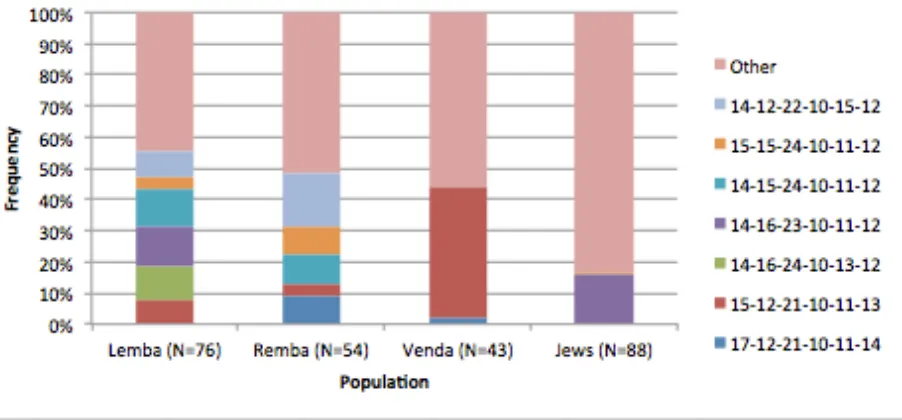
Figure 5, Alu Insertion Frequencies………...45
Figure 6, p12F2 Frequencies………..47
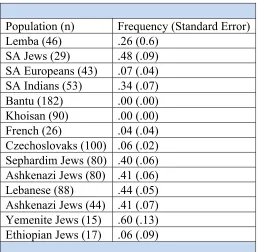
Figure 7, 49a Frequencies………..48
1 INTRODUCTION
1.1 Purpose of the Study
This study aims to investigate any possible connections between genetic, linguistic, and
geographical patterns of populations and to evaluate whether either type of data can be utilized to
support the other. It also seeks to evaluate how identity is impacted by different methods of
determining ancestry. The study focuses on a specific population known as the Lemba from
Sub-Saharan Africa, an indigenous population who also claim Jewish ancestry, and re-considers this
emic affiliation by consulting previous studies and analyzing a combination of linguistic and
genetic data. In examining how ancestry tracing has impacted the Lemban community and its
individuals’ sense of identity, this study aims to contribute to the discussion of the validity of
these genetic and linguistic sources that contribute to concepts of identity. Moreover, this study
aims to inform the larger dialogue on how policy should be adjusted to accommodate the
growing popularity and use of genetic ancestry tracing, as well as the accessibility of such testing
products.
1.2 Expected Results
In my project, I consider the following questions:
1. Can one use linguistic groups as evolutionary units and is there enough evidence from
population studies in genetics, geography, and linguistics to suggest that any of the
three could be utilized to support the results of new studies from any of the others’
types of data?
2. Specifically regarding the Lemba, do linguistic and genetic evidence support their
foreseen enhancements/consequences of this affirmation/contradiction to their
self-prescribed identity?
3. How does modern policy need to be shaped to handle human rights in the human
genome age? How can this case population be utilized to enhance ethics surrounding
population ancestry tracing and identity?
While genetic and linguistic changes occur under different conditions and at differing
rates, it is still possible that a parallel could exist between these two types of data in a population
since they can both be impacted by some shared factors, such as contact periods between two
distinct groups. However, since the mechanisms that govern both sources are dissimilar, it is not
expected that one source could be a predictor for the other but instead could provide supporting
evidence for a historical event that would require further investigation. A clear understanding of
how genetic, linguistic, and geographic data for a population relate would be a vital part when
looking at how a community’s identity is formed.
1.3 Overview of Chapters
Chapter 2 focuses on how scientists have attempted to study, quantify and categorize
people as races in the past and also how the concept of race is perceived and applied in the
modern day. It also briefly discusses more useful, mechanism-based models of human variation
as well as more modern thinkers’ contributions to the discussion of race as a social category.
Chapter 3 first considers how genetics, linguistics, and geography have been used in comparison
in the past. It briefly covers conditions and limitations for each type of source to be used in
studying populations. Secondly, this chapter illustrates case studies in which one or more of
these types of sources have been implemented for the sake of better understanding population
regions or continents. The survey of these case studies uses the population terminology set forth
by the researchers to discuss their results.
Chapter 4 focuses on the impacts of genetic ancestry tracing on identity. A major part of
this discussion is how different types of information about a person can shape an identity and
how society perceives an individual or group’s identity. It also offers recommendations for
dealing with and preventing situations of identity conflict. Lastly, it provides two case examples
of issues erupting in concepts of identity from genetic testing.
Chapter 5 describes the sample population, the Lemba, and the significance they hold to
the conversation on genetic ancestry tracing and identity. Additionally, it briefly surveys Jewish
history and explains where Lemba identity fits in this timeline. It also highlights the Lemba’s
neighboring groups of Bantu and Khoisan populations. This chapter also lays out the
methodology utilized and describes the various genetic sources in the dataset. Chapter 6
examines the results produced from the methodology described in Chapter 5. It also provides
figures displaying the allele frequencies for comparison between populations. The populations
are grouped by language affiliation to allow for comparison of allele variant frequencies between
language communities. The population labels utilized are those set forth by the original data
source; these labels are often problematic, as will be discussed further.
Chapter 7 provides a discussion and interpretation of the results, discussing the patterns
and exceptions to these patterns visible from the results. Furthermore, this chapter covers how
the results compare to the hypothesis proposed and if the research questions were fully answered.
This chapter also provides recommendations and directions for future studies and the broader
2 SCIENTIFIC ATTEMPTS TOWARDS HUMAN CATEGORIZATION
2.1 Historical Approaches to Classification
Classification has always been a foundational method employed by scientists as a means to
simplify and better understand the complex nature of the world. Scientific curiosity over human
biological variation gained momentum in the Age of Exploration while many scholars were still
battling to sort out factual and fictional beings (Mielke et al. 2011). During this time, Europeans
traveled by land and sea to areas of the world that they previously held no contact with and
encounter peoples that they perceived to be drastically biologically and culturally dissimilar from
themselves. Naturalists of this period began to attempt to classify and categorize other humans
into new species, varieties, and types based on observational descriptions. The description by
Francois Bernier in 1684 is believed to have been the first Eurocentric racial classification,
separating humans into species of Europeans, Africans, Asians, and Lapps. The naturalists of the
eighteenth century grappled with the idea that humans may be more similar to other animals than
previously thought, despite this obvious conflict with religious traditional teachings. Many were
conflicted with whether human diversity could be explained as separate species or as a spectrum
of variety within a single species. Some scholars saw human diversity as the result of their
surrounding environment while others proposed a trajectory of progress in which populations
initially were savage, then barbaric, and ultimately civilized (Mielke et al. 2011).
The father of taxonomic nomenclature Carolus Linnaeus classified humans with primates
but maintained their position at the top of the Great Chain of Being. He recognized a species as a
unit that is immutable and a variety or subspecies as a unit that can exhibit unique characteristics,
and grouped humans into subspecies of American, European, Asian, and African, with each
“ruled by customs”, the European variety was “white, sanguine, and muscular” and “ruled by
laws”, the Asian variety was “pale yellow, melancholy, and stiff” and “ruled by opinions”, and
the African variety was “black, phlegmatic, and relaxed” and “ruled by caprice” (Mielke et al.
2011: 5-6). While these classifications did not specify a hierarchy it was relatively implied and
provided a fair reflection of the Eurocentric perspective of superiority (Mielke et al. 2011).
The concept of race came into being with Johann Frederich Blumenbach, also known as
the father of physical anthropology (Mielke et al. 2011). In his later works, he would coin the
term “Caucasoid”, based on the fair-skinned people living in the region near the Caucasus
Mountains, and divide humans into five races: Caucasian, Mongolian, Ethiopian, American, and
Malay. Furthermore, he established a model of what he deemed to be degeneration with
Caucasians as the pinnacle from which the other groups deviated. He also studied skulls from his
different groups extensively and proposed that environmental factors, such as lifestyle and
customs, could impact morphology (Mielke et al. 2011).
Blumenbach would not be the last to develop his own racial grouping of humans. Much of
these perspectives were highly ethnocentric and based on scholars’ subjective observations. The
hierarchy formulated from racial classifications stemmed issues of inequality and injustice,
particularly as perceived inferior traits became justified as God’s will. Still, some scholars
argued for a single unified human species, a common origin, a recognition of the spectrum of
diversity and the inability to draw boundaries between these prescribed human subspecies
(Mielke et al. 2011).
The nineteenth century added mental and moral abilities to the discussion of race theory.
The race concept fueled the debate between monogenesists, those supporting a single common
human groups, on human origins. Samuel Morton was a supporter of polygenesis, stemming
from his research on mainly the size of human skulls. A trend of attempting to quantify and
scientifically prove racial categories was primarily focused on the skull. From this endeavor,
concepts of ideal humans or type specimens emerge and racism materializes and begins to take
hold as a public mindset. Anthropometrics and anatomy were the tools scholars of this period
implemented to establish specific requirements for each classification; each race was perceived
to be limited to discrete traits rather than continuous variation (Mielke et al. 2011).
The twentieth century brought about the Modern Synthesis in evolutionary biology and
provided new biochemical methods through which researchers continued their efforts toward a
valid racial classification scheme, still isolating Europeans as distinctive from the rest of the
world’s populations. In the early twentieth century, the ABO blood antigen system was
discovered as well as the findings of Gregor Mendel’s early genetic research. This time period
also initiated the scholarly conversation on the value of other factors playing a role in what
makes people unique, such as social institutions, language, and religion. Race was deemed by
some to be useless for describing or studying human variation; moreover, researchers such as
Ashley Montagu recognized the important role that culture played in shaping what many
scientists had attributed to biological variation between different groups. Consequently, the term
ethnic group replaced the term race because it was more comprehensive in describing both
biological and cultural aspects of group identity. Those scientists that supported this perspective
did not disregard the clear visible differences between populations but believed that variation
was continuous rather than discrete and pushed for a reconsideration of natural selection as a
mechanism for impacting human diversity. Many new topics entered the realm of
(Mielke et al. 2011: 13). The abundance of genetic material caused many scientists to reevaluate
racial categories; while some furthered the idea that any differences would be minimal between
racially defined groups, others saw genetics as a more objective way to determine races (Mielke
et al. 2011).
Kroeber (1923) discussed race as strictly a biological concept rather than having a social
application. If differences among people were based wholly on a single trait, it would be
relatively simple to cluster individuals into groups. However, most classifications do not
acknowledge the discrete or multi-faceted aspects of human biological traits, which make such
groupings foundationally unfeasible. Plasticity, or the ability for the body to adapt and change
according to its environment, is often disregarded, despite its seemingly rapid occurrence, as
Franz Boas described in his seminal study of immigrants from Europe to the United States
(Kroeber 1923, Boas 1912).
The 1950s brought an increased emphasis on the scientific method and studying dynamic
processes to physical anthropology, compared to the more speculative and descriptive procedures
that characterized earlier research into human variation and biological identities. However,
racialist science still persisted; Garn and Coon, for example, proposed three tiers of races:
geographical, local, and micro races (Mielke et al. 2011). The geographic races were based on
the major continents, the local races were regional divisions of each continent, and the micro
races were populations at the level at which breeding occur. The comparison of the five living
races of Caucasoid, Mongoloid, Australoid, Congoid, and Capoid, as published by Carleton
Coon in 1962, to the fossil record attracted a great deal of criticism over methodology and
seemingly a return to the old ways of physical anthropology (Mielke et al. 2011). A rebuttal from
selection. He acknowledged human variation but recommended that scholars consider what he
called clinal variation, that of a single trait across a geographic area. Many anthropologists began
to speak out on the ambiguity and loaded nature of the term race (Mielke et al. 2011). One of the
major figures in this discussion was Ashley Montagu, a pupil of Bronsilaw Malinowski, Franz
Boas, and Margaret Mead, who was quoted on the propensity for anthropologists and biologists
to try to categorize races: “In our own time valiant attempts have been made to pour new wine
into the old bottles. The shape of the bottle, however, remains the same” (Montagu 1962:920).
The succeeding decades of the 1960s and 1970s focused more on clines than races for studies of
human diversity (Mielke et al. 2011).
Many disagree on whether racial classifications are fully removed from scientific inquiry
today and whether these categories hold any value to research in human variation. A survey of
published articles in the American Journal of Physical Anthropology found no real decline in the
use of race from 1965 to 1996 (Mielke et al. 2011), but a follow up study (Mielke et al. 2011) did
find this decline by 2000. Despite the race concept disappearing from scientific literature, it
remains a component of the ideology held by many scientists (Mielke et al. 2011). Subjectivity is
still evident in research studies, and biological traits are often misunderstood to relate to culture.
It is therefore evident that attempts to use biological criteria, whether those criteria are
phenotypic or genotypic in nature, are fraught with potential analytical and interpretive pitfalls
(Molnar 1983).
3 PREVIOUS GENETIC AND LINGUISTIC STUDIES
3.1 Racialized traits and mechanisms of variation
Genes are not the sole or even optimal variables to use in defining a group of people, and
many of the most commonly utilized traits used to distinguish between groups are malleable to
environmental influence, of limited heritability, and complex in their inheritance. Skin color, for
example, demonstrates some of the greatest variability in the human species and is polymorphic
and environmentally plastic in its expression (Molnar 1983). This and many other polymorphic,
non-concordant traits make humans an incredibly diverse species that cannot be usefully
classified into biological races as scientists once hoped, and often still hope, to do (Molnar
1983). However, there are significant insights that can be gained in discussing population
ancestry and its impacts on the construction of identity, using genetic data; this is particularly
true when genetic data are not the sole variables used, but instead are analyzed with linguistic
and historical data as well (Molnar 1983).
Each individual inherits genetic material from both his or her mother and father.
Inheritance from either parent can be dominant or recessive, and consequently, there is a chance
that such a trait may not appear or may appear in a form unlike is seen in the parents. A
distribution and frequency of these traits across a population is where typological ideas of racial
testing.
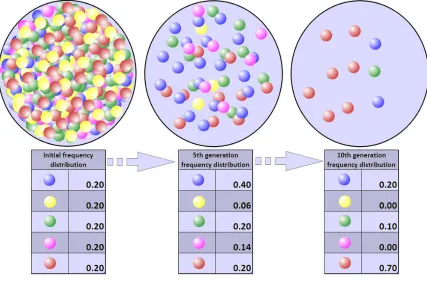
Figure 1, Natural Selection Example (Courtesy: National Human Genome Research Institute)
However, these frequencies can significantly change through four mechanisms or forces
of evolution: mutation, natural selection, gene flow, and gene drift. Mutations can contribute
completely new traits to a population; while the underlying cause of mutations can be
environmental, the cause is not always known. Natural selection (see Figure 1) acts upon traits
that are more or less advantageous, and accordingly, not at all possible genotypes are equally
likely to make it to the next generation.
Figure 2, Genetic drift (Courtesy: Gringer, CC BY-SA 3.0)
Populations can also receive an influx of new genetic material from gene flow, or new
genetic combinations that result from contact periods of migration, trade, or warfare. Genetic
drift, or limitations of genetic variation being passed on due to population size (see Figure 2), can
also eliminate potential genotypes from being passed to the next generation.
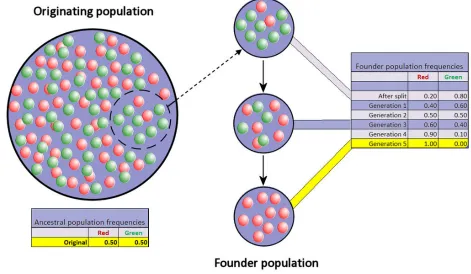
[image:23.612.77.504.412.693.2]Bottlenecks and founder effects are examples of instances of genetic drift that result in
[image:24.612.103.574.164.438.2]reduced frequencies in particular alleles (see Figure 3 and 4) (Molnar 1983).
Figure 4, Founder effect diagram, (Courtesy: Professor Marginalia, CC BY-SA 3.0).
Population history is often studied using the following types of genetic data: mtDNA, the
non-recombining portion of the Y chromosome (NRY), autosomal short tandem repeats (STRs),
and single nucleotide polymorphism (SNP) microarrays. Mitochondrial DNA does not
recombine and has a smaller effective population size, both making it easier to contrast between
populations and reconstruct a phylogenetic tree. The NRY makes up roughly 95% of the Y
chromosome. It also does not recombine and has a small effective population size. However,
both are highly impacted by natural selection, have variable mutation rates, and reflect an
tandem repeats are DNA sequences that have a variable number of short repeated segments,
anywhere from 2-6 base pairs. Their high mutation rates make STRs advantageous for assessing
more recent demographic events as well as examining closely related populations while making
them restricted when studying older demographic events. SNPs can produce high-resolution
results of population structure but are not as useful for establishing population divergences and
shared origins from a parent population (Veeramah and Hammer 2014). Genetic diversity can be
measured using different types of estimations, including the use of allele frequencies, the number
of segregating sites, and the mean number of pairwise differences (Jobling 2004).
3.2 Processes of linguistic variation
In contrast to genetic change, language diversification does not occur at a constant rate;
new dialects or daughter languages can manifest themselves somewhat unpredictably.
Additionally, there are many possibilities for language extinction and shift, including periods of
contact between two or more groups. Linguistic diversity does not correspond to any particular
pattern but rather appears more randomly. Spread zones, an area where a small language group
lives on a spatially wide area, are particularly interesting to study in linguistics with emphasis on
dialects. We can expect that as groups moved from away from each other language components
from either will become more distinct. Language spread occurs as a result of migration,
expansion, or language shifts (Nichols 1997). Geographical barriers, such as mountains and
coastlines, can also significantly impact language diversity. Geographic barriers restrict contact
between groups on either side and therefore limit any flow of new linguistic features that could
be shared. Additionally, this barrier stimulates an increase in diversification of language on
either isolated side (Lee and Hasegawa 2014). The spread of political and economic entities also
Genetic and linguistic clusters must not be misunderstood to be synonymous but rather
that language is a good indicator of an ethnic and genetic group. Therefore, it makes sense for
genetically related groups to be similar linguistically. However, there are exceptions that are
often attributed to more recent admixture between two populations and events of isolation. Both
genes and language can be impacted by similar factors; change can initiate from an individual
and spread throughout a population with either. Yet, such changes are far less frequent in
genetics than in linguistic. Genetic changes are often in the form of mutations, which require
direct transmission between related individuals and generational time. Linguistic changes,
however, can occur much faster, especially because individuals do not have to be related and no
time frame is required before passing it on. Humans are able to learn any language, but language
can create barriers between groups that would otherwise exchange genetic material. As a result,
it is most believable that language influences genes rather than the other way around
(Cavalli-Sforza 2000).
3.3 Determining Population Ancestry
The study of population ancestry involves experts in many different disciplines, each of
whom provide their own perspective and methodology to provide insights into the same
questions. In recent years, anthropologists have illuminated notable correlations between genetic,
linguistic, and geographic variables in populations in a number of regions worldwide. Much of
the correlation present among genetic, linguistic, and geographic data can be attributed to
changes in the population due to similar processes, such as geographic isolation or genetic
exchange following a contact period, despite being different aspects of the population.
As a result of the many correlations identified between these factors, experts have
osteology (Barbujani 1997). A distinguished paper from Cavalli-Sforza et al. (1988) was one of
the early attempts to synthesize the different data available to construct a more clear view of
human evolution. In their phylogeny of the human species, the authors identified an initial split
between Africans and non-Africans and a second split resulting in two major clusters of global
populations. The first cluster defined by the authors included Caucasoids, East Asians, groups
from Arctic regions, and Native Americans, while the second cluster included Southeast Asians,
Pacific Islanders, New Guineans, and Australians. The authors found genetic distance to be in
concordance with population divergence times as determined by the archaeological record and to
intersect significantly with the linguistic families and superfamilies (Cavalli-Sforza et al. 1988).
Geographic distance and both physical and linguistic barriers limit the gene flow that will
occur between multiple groups. Even still, linguistic and genetic diversity are variably impacted
by isolation depending on the population’s size. While a population’s geographic history can be
limited by the availability of written records or oral tradition, reconstructing both linguistic and
genetic histories can help determine the origin of a population and shared origins with differing
populations. In employing different methods for reconstructing origins, researchers can also
attempt to identify points of splitting and divergence in language and genetic groups (Barbujani
1997).
The intertwined relationship between linguistics and genetics with regards to population
history has encouraged some to speculate that either may be utilized to predict the other. Yet, the
conclusion that a parallel evolution exists between linguistics and genetics still seems uncertain.
Evolutionary processes can affect different types of genetic data uniquely and at dissimilar rates.
When applying classic population genetics and nonparametric statistics to the relationship
instantly and without preceding intermixing. Additionally, differences in allele frequencies
would have been the result of genetic drift. Under this assumption, these differences would
appear more quickly in smaller groups than in larger groups (Barbujani 1997). With regards to
language diversity, it can be assumed that linguistic diversification succeeds population
separation or distinction because events of language replacement are notably rare, except in
recent contexts resulting from colonial and post-colonial inequality (Ward et al. 1993). If
operating from the assumption that a common language or related language points to a shared
origin, one would expect to find parallels between markers of genetic and linguistic diversity. In
scenarios where genetic differentiation from another population and departure from equilibrium
occurs slowly, a separation or migration seems plausible as the geographical distance between
the two groups would increase. In populations with a more abrupt change in allele frequencies,
some form of isolation from the other population would be expected. Where both genetic and
linguistic differentiation is remarkably stark simultaneously, barriers inhibiting free flowing
reproduction between the two groups are most plausible, as they would drastically reduce the
speed at which the population returns to genetic diversity equilibrium (Barbujani 1991).
Partnering linguistics and genetics in demographic studies does have its limitations. A
major obstacle in these population ancestry studies is classification, whether genetic, cultural, or
linguistic. Depending on the type of classification employed, different results could arise in the
population’s structure. As Nettle and Harriss (2003) point out, past studies of the relationship
between population linguistics and genetics have often yielded results of strong correlation,
making some believe that a parallelism between the two is a rule rather than an unusual feature.
A linguistic tree implemented in some studies is derived from Ruhlen (1987); Nettle and Harriss
roughly half of the tree is based on recognized language families the remaining half is classified
based on plausible evidence but is ultimately speculative. A better understanding of how
languages should be classified and how linguistic groups are related to each other will influence
population ancestry studies. The same can be said for improving the construction of haplotype
groups (Belle and Barbujani 2007). Another serious obstacle in this research is the privacy,
proper use and consequences of genetic data for the participants. In projects where mass genetic
surveying is being conducted, researchers often face accusations of being exploitative in either
their interpretation of the data or what they do with the data after their study concludes (Bisol et
al. 2008). This social aspect of genetic research will be discussed more thoroughly in the next
section.
Additionally, it is difficult to be certain that the differences in language diversity are
attributable to impacts of historical events or simply the population’s geography (Barbujani
1991). While the influence of historical events and geography is sometimes considered together,
too often geography alone is analyzed to be a correlate with genetic diversity (Bertorelle and
Barbujani 1995). Shared components of language might suggest that two sedentary populations
encountered and exchanged culture with each other, but it could also be indicative of populations
with a language distinct from another moving into a new territory (Barbujani and Pilastro 1993).
Furthermore, measuring language diversity can be variable depending on the type of linguistic
data considered. Colonna et al. (2010) recommend utilizing syntactic data rather than lexicon
data, which have been more commonly used in previous studies, because they are more easily
comparable across different groups and are more stable and quantifiable. Just as challenging as it
is to discern what causes these changes, researchers also disagree on what a correlation between
possibility is that their correlation is a reflection of the same events occurring. Another
hypothesis is that they evolved independently but were impacted by many of the same influences
(Nettle and Harriss 2003). While there is certainly justification for trying to identify a correlation
between genetic and linguistic diversity, it cannot be disregarded that linguistic diversity does
not necessarily exemplify an evolutionary unit as it undergoes processes that may be unique to it
and dissimilar from processes affecting genetic diversity (Roychoudhury 2001). Other
limitations to accuracy of results from studies of population structure include the quality of the
database used, the number of genetic markers employed in the study, and the diversity present in
the populations of the region (Shriver and Kittles 2004).
3.4 Case Studies
Recently, Cavalli-Sforza (2000) wrote a book tackling some of the major concerns in
studies of population origins based on his own work. He discusses the comparison of genetic and
linguistic trees and points out how groups can often be attributed the same label linguistically
and genetically (Cavalli-Sforza 2000). An early study of population origins using genetics
compares the categorized populations of Europeans, Africans, and Asians. Nei and Livshits
found Europeans and Asians to be more closely related than Africans and deemed that their
results supported the theory of an African origin for Homo sapiens. However, the authors used
African Americans to represent African populations for roughly 17% of the loci. They offer that
the European and African populations could be as similar as the European and Asian populations
had they used individuals from Africa for all loci (Nei and Livshits 1989).
Rosenberg et al. (2002) studied 377 autosomal loci from 52 populations across the world
to assess predefined population groups. They found that genotypes were more graduated than
Additionally, they noticed that many populations that share a language also grouped into clusters
based on genetics. Furthermore, populations that had been isolated for extended periods of
history demonstrated relatively low heterozygosity, most likely due to genetic drift in smaller
sample sizes (Rosenberg 2002).
In 1979, Carmelli and Cavalli-Sforza conducted a study of Jewish groups based on
initially physical characteristics. They considered four blood markers for 12 Jewish groups and
found when compared with other non-Jewish groups, their genes reflected their Middle Eastern
origin and relatively minimal admixture with other groups. While similarities were observed
with Near Eastern populations, the known gene frequencies for Asian populations was minimal
at this time, and therefore, the authors did not draw conclusions from any correlations (Carmelli
and Cavalli-Sforza 1979)
Genetic and linguistic diversity appears to follow similar patterns in European groups
while a weaker relationship between the two is found within Native American, Asian, and North
American populations (Monsalve et al. 1999). When comparing X chromosome diversity with
language groups, a notable relationship was identified in only European and East and Central
Asian populations (Belle and Barbujani 2007). In an analysis of worldwide samples from
p49a,f/TaqI polymorphic marker of the Y chromosome, population structure seemed to parallel
that of language families and was in agreement with archaeological evidence. Furthermore,
geography correlated with this genetic marker as well. Poloni et al. found that this marker closely
identified with the same patterns found in autosomal and mitochondrial DNA (Poloni et al.
1997).
A study by Nettle and Harris (2003) proposes that correlations between genetic and
Cavalli-Sforza (1966) argues such interpretations are the result of the particular loci that have
been selected for study and more research is needed to demonstrate true diversity through
analysis of samples from numerous genome regions (Belle and Barbujani 2007). In a study by
Belle and Barbujani, they respond to this need of further research by considering an extensive
sample of polymorphic microsatellite loci that are well dispersed in the genome against language
diversity. While they found there was a relationship between linguistic and genetic diversity, the
authors propose that this could be explained by both being related to population geography. The
study also investigates physical barriers and depicts the distinction of sharper contrasts in genetic
data in populations that shared geographic borders but maintained languages from two distinct
language phyla. This result expands upon the discussion of geographical barriers earlier in this
chapter that physical barriers are not necessary to induce the same evolutionary effects of
isolation; the same impacts can be derived from language barriers or distinct cultural, including
religious, differences (Belle and Barbujani 2007).
Much of the genetic variation present in Europe is interpreted as a result of population
expansion and structure during the Neolithic period and at the rise of agriculture (Barbujani and
Pilastro 1993). As more food was able to be produced, Nostratic speaking and Near East
dwelling populations were able to grow in mass waves and from these waves spouted new
protolanguages, specifically Indo-European, Elamo-Dravidian, Afro-Asiatic, and Altaic; this
concept is known as the Nostratic demic diffusion model, or the NDD model (Barbujani and
Pilastro 1993). In Barbujani and Pilastro’s reevaluation of the NDD model, they determined that
the language clines present in Europe reflected the spread of agriculture and at least three of
these protolanguages originating and spreading from the Near East into Europe (Barbujani and
Correlations in European populations are of particular interest to those studying
demography, specifically population structure and classification, as it is home to diverse
languages and cultures. Yet, it is disputed whether language groups and genetic distances
between European populations are really connected or if both are just a reflection of a shared
geography. Even still, some groups that experience physical or cultural isolation, such as the
Basque, Finnic, and Semitic language families, demonstrate particularly distant genetic relation
to geographically nearby groups (Harding and Sokal 1988). These discrepancies in a possible
relationship between the two could be attributed to the classification of language phylogenies in
Europe (Harding and Sokal 1988). A subsequent study of European genetic and linguistic
diversity found points of abrupt genetic change where physical and linguistic barriers were
present. Barbujani and Sokal concluded that other factors that would isolate a population or
cause them to migrate may have inhibited population admixture more than geographical distance
(Barbujani and Sokal 1990).
A study by Ward et al. (1993) considered linguistic and genetic diversity against
population geography in the Americas, where both have appeared as poor correlates in previous
studies. Specifically, the authors studied three tribes, the Haida, the Nuu-Chah-Nulth, and the
Bella Coola, in the Pacific Northwest, covering Amerind and Na-Dene, two language phyla, and
Wakashan and Salishan, two Amerind language families (Ward et al. 1993). Their analysis of
the groups’ linguistics showed that the Haida, who spoke Na-Dene, diverged considerably more
recent than the Nuu-Chah-Nulth and the Bella Coola. However, in studying their genetic
differentiation, significantly less sequence divergence was present between the Haida and the
two Amerind groups, than would be expected given the linguistic analysis. Ward et al. (1993)
particularly understandable since both will differentiate under unique processes. Furthermore,
when language is understood as a part of culture, which would be influenced by social and
historical events in a population, it is anticipated that language differentiation would not follow
the static pace of molecular evolution but rather would be linked to instances of rapid change
(Ward et al 1993), as is described earlier in this chapter.
A study by Gravel et al. (2013) sampled individuals from Colombia, Puerto Rico, and
Mexico to study the diversity present in the Americas. The Americas represent an admixture
occurring over time between African, European, and Pre-Colombian populations. They used
these samples to investigate how people moved in the Americas from Eurasia through the Bering
Strait and how they disperse after moving farther south. Their results reflect an initial bottleneck
and then rapid divergence and migration after moving into the Americas (Gravel et al. 2013).
Africa poses an interesting area of study in population diversity; a third of the world’s
modern languages can be found spoken in its countries, the four language families being
Niger-Kordofanian, Afroasiatic, Nilo-Saharan, and Khoisan. Additionally, continental Africa is
believed to be the origins of the anatomically modern human population and the point from
which all populations would diverge and migrate. For this reason, it is easy to understand how
Africans demonstrate the highest genetic variation and the deepest lineages compared to
non-Africans, when considering mitochondrial DNA, the non-recombinant portion of the Y
chromosome, and autosomal DNA. In a study by Scheinfeldt et al. (2010), a correlation between
linguistic and genetic distances for three of the four language families was reflected, with the
Khoisan relationship lacking clarity (Scheinfeldt et al. 2010).
Another region noted for its extreme genetic diversity is the Caucasus area, between the
and genetic changes, which are distinct from those visible in other regions of Eurasia. While
some have pointed to geographic subdivision as the reason for these distinct distributions,
Barbujani et al. (1994) insist that the Caucasus area is too large for this to be the only factor.
They propose several evolutionary scenarios that could explain the patterns that appear for the
Caucasus area; however, the most probable scenario, considering the data sets is either a mass
migration scenario or an elite dominance scenario. In a mass migration, members of an ancestral
population would gradually separate, and this would impact the geography and genetic distance
relationship (Barbujani 1994). In an elite dominance scenario, a new minority population would
force their language upon an existing yet large population (Barbujani 1994). Overall, the
Caucasus region does not seem to exhibit a correlation between language and genes to the extent
of other regions. On the contrary, Barbujani et al. (1994) propose that the linguistic and genetic
change may have occurred independently for most of the populations’ history (Barbujani et al.
1994). A more recent study of the Caucasus region examined mitochondrial DNA and its
relationship to linguistic families. The Caucasus region demonstrates less diversity than is found
in the Near East but more diversity both within and between its populations than is found in
Europe (Nasidze and Stoneking 2001). The authors’ analysis of the mtDNA suggests that
Caucasus populations may have been the result of admixture between European and Near
Eastern groups or could have been ancestors to European populations (Nasidze and Stoneking
2001). Despite the presence of actual physical boundaries, such as the Caucasus Mountains,
authors Nasidze and Stoneking found a stronger relationship between genetic diversity and
geography than genetic diversity and linguistic diversity (Nasidze and Stoneking 2001).
An investigation of the population history of India has led to an examination of tribal
Tibeto-Burman. Herein lies the debate among linguists, anthropologists, and historians, over
which population contained the initial inhabitants of the Indian region; some point to the Austric
group, others believe the Dravidian group to have been in India first, and particular researchers
think both language families stemmed from a common proto-Australoid language
(Roychoudhury 2001). All sides can agree that the Tibeto-Burman group migrated from the Tibet
and Myanmar areas (Roychoudhury 2001). An analysis of the mtDNA contrasted with language
families provides results that suggest each language group in India represent a different founder
group; however, the Austro-Asiatic group appears to have been the first to migrate to the Indian
region (Roychoudhury 2001).
Previous studies in Asia found a north to south clinal graduation in genetic variation. A
study by Suo et al. sought to understand the basis for this pattern. In examining SNPs from 22
populations, they found a strong correlation between allele frequencies and geographical latitude
(Suo et al. 2012). A study by Qian et al. focuses on adaptations visible from genome-wide 63
populations equally representing linguistic and ethnic groups of Asia and supports the concept of
local genetic adaptations. The researchers identified a selection for genes involved in hair follicle
development and cancer. Southeast Asians demonstrated selection for genes involved in body
mass, insulin, and metabolism regulation (Qian et al. 2013).
These modern scientific attempts to explain and oftentimes categorize human diversity
have yielded varying interpretations. The lack of a consensus from examining linguistic and
genetic patterns simultaneously makes an important point for the discussion of identity that will
follow in the next chapter. Differing patterns of diversity can be interpreted to signify equally
reflect the same demographic events or not, such evidence does not dismiss cultural concepts of
4 IDENTITY AND ANCESTRY TRACING
4.1 How Ancestry Tracing Impacts Identity
The increased availability of genetic technologies to the study of human populations has
initiated a debate on both ethical identity and concerns. Commercial genetics services offer the
unique opportunity for individuals to learn about their personal ancestral history (see Appendix
D) whereas population geneticists, anthropologists, and epidemiologists consider the same topics
of admixture, origins, and migrations but at the population or subpopulation levels. In contrast to
researchers in academia that utilize all genetic markers depending on the research in question,
commercial genetics most often utilizes haploid markers, specifically mitochondrial DNA or Y
chromosome haplotypes, to make inferences on the ancestry of individuals, in lieu of autosomal
markers. Since the mtDNA reflects only the maternal lineage and the Y chromosome reflects
only the paternal lineage, this unilineal approach provides only half of a person’s story.
Additionally, the lineage approach can infer that two people or two groups share a common
ancestor with relative confidence but it cannot infer exactly where this ancestral population
would have resided and at what point in time they would have lived there. In other words, this
method cannot soundly be applied for geographical inferences of the shared ancestral population.
Furthermore, in instances where population data is unavailable some ancestry testing will
incorrectly attribute portions of the genome to another population and skew the similarity
between an individual’s history and the samples available from that population. Origin
inferences can also be incorrect when an individual represents a more recent admixture, and
consequently, an origin that is rather intermediate between these two groups is attributed to be
that extensive modeling is undertaken and all possible limiting factors are considered to restrict
the amount of inaccurate inferences made on ancestral histories (Royal et al. 2010).
Our understanding of genetic ancestry does have the potential to be applied for the
enhancement of population health. Since genetic factors oftentimes are the primary source for
health risks, ancestry can be an important tool for gauging predisposition, especially in ethnic
groups where particular genetic variations are exhibited more frequently. However, risk factors
can be variable and may be attributable to environmental factors rather than genetic factors
(Royal et al. 2010). In reality, each person displays a unique profile for risk factors, as every
individual has a unique genetic makeup and distinctive environmental exposures based on their
life choices (Risch et al. 2002). Regardless of the contributing factors, our understanding of
genetic ancestry can serve as tool to educate and ensue behavioral changes for those that would
have otherwise suffered hereditary diseases (Shrive and Kittles 2004). By categorizing potential
risk factors, epidemiologists are able to put into effect plans for prevention and treatment,
targeted to those that are most vulnerable. Ultimately, patients would be able to receive therapy
that is even more individualized for their specific needs. Some researchers argue that the
availability of genetic testing makes clinical evaluations based on genetics no longer an option
but now an obligation for a good health practitioner (Risch et al. 2002).
The privacy of data collected for genetic ancestry tracing is a valid concern as this
industry continues to grow. Since these commercial genetics endeavors are ultimately in the
hands of corporations, should a corporation fail the future security of their data is of utmost
interest. Even for companies that are still in business, there is justified anxiety caused by
potential unauthorized sharing or using of individuals’ personal genomic information. Despite
chance, environmental factors, or behavioral choices, they could be penalized. For example,
having a person’s health genetic predispositions revealed to an insurance carrier could drastically
impact the price they are required to pay for coverage or their ability to get coverage. (Royal et
al. 2010).
Although the commercial genetics industry can provide a wealth of knowledge, the
public is also gaining access to countless amounts of personal information in addition to
inferences on population history being made that could be incorrect. While ancestry has been
used interchangeably with “race” in the past, it is important to differentiate between these two
terms and recognize ancestry as an origin associated with a particular parent population or
geographic area. Societal implications resulting from the pursuit of popularizing genetic ancestry
tracing have the potential to be quite severe. For groups in which membership is based on blood
laws, genetic ancestry data could eliminate an individual from a group that they have identified
with and lived within for their entire life (Royal et al. 2010, Elliott and Brodwin 2002).
Obviously this is heavily based on the strictness of the group and how they perceive identity.
Even in situations where individuals are still accepted by a group, they may suffer an identity
crisis based on their results. While some may rely more heavily on etic perspective of how
society classifies the ancestry of a person or a group based actual data, others may depend on a
more emic view and base identity on the actual person or group’s interpretation of their own
identity or how they construct their personal genealogies. Nonetheless, new information
regarding individuals’ ancestry can have profound effects on how society perceives them and
how they view themselves in the context of group and personal identities. (Royal et al. 2010).
With these threats to identity, there is also room for a new basis of discrimination and injustice
confused with racial categories, despite being recognized as attributes on a spectrum rather than
with firm categorical boundaries (Shriver and Kittles 2004). More than on a personal level, such
discrimination and injustice could surmount to the societal level. Cultural identities are upheld as
banners of allegiance and alterations to such identities could have political implications.
Identities and language are closely tied to nationalism and concepts of ethnicity. Having a shared
bond of linguistic and cultural tradition imbues a sense of community and connectedness within
a group of people (Rajagopalan 2001, Elliot and Brodwin 2002).
Concepts of identity are especially crucial in the discussion of the societal impacts of
genetic ancestry tracing and are now an important point of investigation for anthropologists.
Genetic tracing technologies are fulfilling much more than just the needs of academic research
questions but now provide information to the public. Such technologies have the ability to instill
a belief that our identities are born unto us and thereby unchangeable. More people are
reevaluating who they think they are and who they can claim a social connection to. Embarking
upon such studies poses a considerable threat to “personal esteem and self-worth, group
cohesion, access to resources, and the redressing of historical injustice” (Brodwin 2002: 324).
Quality control of interpretations extends beyond the genetic markers or sample size utilized in a
study but also requires a comparison with other sources such as oral and cultural traditions and
written records (Brodwin 2002).
Anthropologists have taken on this social issue for further investigation and pose
questions to all aspects of the genetic ancestry tracing and identity conflict. Their investigation
starts with an understanding of who is calling for these questions of ancestry, what audience is
being provided the answers, historical timing at which people are asking these questions, and
subconscious (Brodwin 2002). Anthropologists seek to understand how genetic knowledge
affects how people make claims to social groups and how they perceive themselves to be similar
or dissimilar from someone else. Researchers also examine how the information provided by
genetics can and should be incorporated into other sources of ancestry such as oral and archived
evidence. Additionally, they are interested in why some groups place such value in genetic
evidence and why others are highly skeptical (Brodwin 2002). Some classification is based on
language family, geographic region, or political entity, while some groups are classified by
multiple factors simultaneously. As the work of genetic ancestry tracing continues into the
future, population studies may encourage the development of new ethnic groupings based on
such data, a process known as ethnogenesis (Brodwin 2002).
A real danger is the possibility of genetic evidence evidentially undercutting other means
of collective history, particularly if the public perceives science as the ultimate truth. In a time
when the sources yield different results, a key question is which line of evidence should be
accepted as most credible (Brodwin 2002, Elliot and Brodwin 2002). For example, in a situation
where tracing is through the paternal or maternal line, a single ancestor that originates from an
area distinct from the rest of the lineage and is of a more recent time period would shift the
haploid typing and ultimately reflect a stronger connection to a different ancestry (Brodwin
2002). This scenario could easily discount a person’s previously held identity, despite any other
traditions or group membership that the individual and their family have upheld for generations.
The classification of groups in genetic ancestry studies is also important for anticipating how the
public will interpret any results (Brodwin 2002). Genetic information can strengthen or devalue
Shriver and Kittles (2004) emphasize the value of implementing clinical psychologists
that are familiar with identity issues in the staff of a commercial genetic tracing group. By doing
so, the company would be able to offer counseling to their customers and ensure their emotional
and mental well-being after receiving their genetic results (Shriver and Kittles 2004).
Additionally, this would remove the genetic essentialism mindset, or the idea that reduces
humans to just a composite of their genetic makeup, and accentuates the human component of
those being studied (Brodwin 2002). Furthermore, companies should be prepared to discuss the
accuracy, application, and significance of ancestry tracing results with their customers (Shriver
and Kittles 2004). Codes of conduct and accreditation have been proposed to uphold genetic
tracing companies to a higher standard; yet, there is still too much concern for the liability of
providing a stamp of approval for the inferences made from studies’ results (Shriver and Kittles
2004, Royal et al. 2010). Anthropologists have the skills to serve as cultural brokers between the
public and scientific communities; yet even the motives of such work are contested. If they are
helping the public better understand the scientific perspective, should they not also help the
scientists more fully understand the public’s perspective? Experts must then reconcile whether
they should aid in misunderstandings of genetic evidence if it means either advantageous or
disadvantageous effects to a population. Whatever position experts in anthropology and other
discipline experts choose to take, they cannot dismiss the weight of their opinion and how
4.2 Specific Cases
One famous example of a conflict founded on ancestry tracing, identity, and ownership is
in the discovery of the Kennewick Man. The case begins with the unearthing of skeletal remains
at the Columbia River near Kennewick, Washington in 1996. While some of his skeletal features
made him appear to be a historic period Caucasoid. An archaic spear point lodged in his hip
made this hypothesis seem incorrect. This conflicting evidence was assessed through Carbon 14
dating and ancient DNA analysis, but before a connection to either a Native American and Asian
haplotype or a non-Native American and Asian haplotype could be established, the Army Corps
of Engineers became involved. The Army Corps of Engineers managed the land where the
remains were discovered and sought to repatriate the remains to the local Native American tribal
group, per the Native American Grave Protection and Repatriation Act, known as NAGPRA
(Kaestle and Smith 2005). This law
Requires that the disposition of Native American remains discovered on federal lands or curated by federal agencies be determined by identifying their lineal descendants or ‘cultural affiliation’ with living Native Americans, if possible. Cultural affiliation is to be determined by ‘a preponderance of the evidence based upon geographical, kinship, biological, archaeological, anthropological, linguistic, folkloric, oral traditional, historical or other relevant information or expert opinion’ (NAGPRA, Section 7a(4)) (Kaestle and Smith 2005).
This inspired a protest from scientists that deemed such action to be a preemptive move,
and consequently, the Burke Museum at the University of Washington detained the remains until
ancestry could be determined by a scientific group chosen by the Department of the Interior. The
group was unable to definitively determine any specific ancestry under nondestructive analyses;
the skeletal morphology, however, most closely resembled modern Asian and Pacific Islander
populations rather than either Native American or non-Native American populations. Even when
ancient DNA samples within the remains. A legal battle between the scientists and the local
Native American tribes followed, ultimately granting scientific access to the remains once again
(Kaestle and Smith 2005). In 2004, the Kennewick Man was determined to be most similar to the
Moriori, a Polynesian group found near New Zealand but also sharing many features with the
Ainu, possibly revealing a shared ancestral history (Walker and Owsley 2012).
Another famous case, which involved genetic ancestry testing revamping identity, is on
the descendants of Sally Hemings and, supposedly, Thomas Jefferson. The study conducted Y
chromosome haplotyping to examine this ancestral claim and pulled samples from descendants
of Hemings, Jefferson’s paternal uncle, and Jefferson’s nephews’ paternal grandfather. The claim
was based on a historical account by Madison Hemings, one of Sally Hemings’s children. In his
account of his family history, he discusses how his mother was the daughter of a slave woman,
Betty Hemings, and the plantation owner John Wayles, also Thomas Jefferson’s father-in-law.
When Wayles died, Betty and her children joined the plantation of Thomas and Martha
Jefferson. When Sally Hemings was a teenager, she served as both a companion to Jefferson’s
daughter and as a mistress to Thomas Jefferson. She would bear six to seven children, one of
which was relocated to the plantation of Thomas Jefferson’s relative John Woodson after a
scandalous story in the papers describing a slave child, known as “Tom” or “Thomas” that
resembled Jefferson, and circulating rumors of his illegitimate children by a slave woman. From
this new plantation family, Thomas and thereby his descendants took on the family name
“Woodson” which is still carried by the Woodson family today. Genetic ancestry testing was
pursued for this case and its results published in 1988; the data showed that one of Sally
Hemings’s other sons, Eston, had descendants whose Y haplotype precisely matched that of
early 2000s, Sloan Williams (2005) examined the Woodson family’s reactions to these results
and the strength of the conclusions put forth. A major issue found was the lack of full disclosure
in the consent form provided to the participants that provided samples; the consent form was
clear on the procedures of the blood sampling process and with whom the ownership of the data
would reside, but it was not explicit on why the study was being conducted or what possible
consequences could arise. Unfortunately, despite an agreement to provide the results to the
family prior to publication, most of the participants learned of the results for the first time from
media sources or when the media contacted them for commentary. Additionally, the researchers
from this study did not consider the detrimental impacts of revealing nonpaternity of a person to
the rest of the Woodson family through this experiment. This case truly emphasizes the value of
5 METHODS
5.1 The Population
The Lemba people are renowned in the research community for their claim to Jewish
ancestry. The Lemba people live in parts of South Africa and Zimbabwe, and while many of
their customs are similar to those in Jewish tradition, some researchers do not find this to be
sufficient to confirm their Jewish ancestry. Genetic technologies have been implemented in
population studies of the Lemba to scrutinize the validity of their claim. To understand how the
Lemba might fit into the Jewish ancestry, it is valuable to first appreciate the Jewish history as a
whole (Bjarnadottir 2013).
Jewish history is particularly remarkable because their cultural traditions have preserved
a lineage that can be traced to tribes living in the Middle East around the second millennium BC
(Atzmon et al. 2010). The present-day global Jewish population consists of roughly thirteen
million people and can be divided into three main groups: Ashkenazi Jews, Sephardic Jews, and
Middle-Eastern Jews. An extraordinary aspect of these populations is the shared conservation of
their old traditions and customs, despite their initial separation some millennia ago. The
Ashkenazi Jewish population consists of communities that migrated to Central and Eastern
Europe. The Sephardic Jews are in communities that would have migrated to the Mediterranean
and North Africa. The Middle Eastern Jewish population includes communities that remained in
what were once the Babylonian and Palestinian regions. However, a large majority of Jewish
people lives in either Israel or the United States (Hammer et al. 2000, Ostrer 2001).
The Jewish tradition asserts that their population originated with Abraham, as is
described in the Old Testament of the Bible, at which point they were known as the Hebrews.