ScholarWorks @ Georgia State University
ScholarWorks @ Georgia State University
Gerontology Theses Gerontology Institute
Spring 8-2012
Marriage and Memory in Older Adults
Marriage and Memory in Older Adults
Renu Kumar
Follow this and additional works at: https://scholarworks.gsu.edu/gerontology_theses
Recommended Citation Recommended Citation
Kumar, Renu, "Marriage and Memory in Older Adults." Thesis, Georgia State University, 2012. https://scholarworks.gsu.edu/gerontology_theses/30
MARRIAGE AND MEMORY IN OLDER ADULTS
By
RENU KUMAR
Under the Direction of Dr. Elisabeth Burgess
ABSTRACT
Some loss in memory is considered a part of normal aging; however, there is a considerable
heterogeneity in cognitive aging among older adults. Studies show that living arrangements,
social interaction, social relationships and size of social network are among the predictors of
memory decline for older adults. Moreover, marriage has been associated with physiological
health as well as psychological and social well-being. This study has examined the relationship
between the marital status and memory performance in older adults. It was hypothesized that (1)
being married will be positively related to memory of older adults; (2) participants with larger
supportive social network will perform better on memory tests; and (3) that quality of married
life will be positively related to memory for married older adults. Results from this study did not
support the hypotheses when age was controlled suggesting no relationship between marital
status and memory performance.
MARRIAGE AND MEMORY IN OLDER ADULTS
by
RENU KUMAR
A Thesis Submitted in Partial Fulfillment of the Requirements for the Degree of
Master of Arts
in the College of Arts and Sciences
Georgia State University
Copyright by Renu Kumar
MARRIAGE AND MEMORY IN OLDER ADULTS
by
RENU KUMAR
Committee Chair: Elisabeth Burgess
Committee: Ann Pearman
Candace Kemp
Electronic Version Approved:
Office of Graduate Studies
College of Arts and Sciences
Georgia State University
DEDICATION
I like to dedicate my thesis to my mother and my in-laws. My mother who was very
independent all her life had a very sharp decline in her memory after the age of 65 where as my
both in-laws stayed mentally sharp till their death (90s). This contrast in memory gave me the
ACKNOWLEDGEMENTS
I would like to thank my thesis committee members, Dr. Ann Pearman and Dr. Candace
Kemp for their assistance and keen interest in my project. Their continued support and timely
feedback with suggestions were of great help in the completion of my thesis. Most importantly, I
would like to thank my thesis committee chair, Dr. Elisabeth O. Burgess for her enthusiasm and
guidance. She took me under her wings when she was not even familiar with my work. Her
continued support and encouragement helped me finish my project within the time frame. I
would also like to thank other faculty members of Gerontology Institute for providing me
different perspectives and challenging me on issues related with gerontology.
I am indebted to all those participants who have given their time and energy for being the
participants in my study without any monetary rewards. Without their altruistic efforts, I could
not have conducted this study. So many participants made indelible impression on me that I feel
I had learned more through these direct interactions with them than through class lectures.
It has been an honor for me to be a graduate student in the Gerontology Institute. For
past two years, the Gerontology Institute has been my second family where the fellow students
and my lab mates have provided me unconditional support. They have been my confidants and
great friends for which I have been extremely grateful.
Finally, I would like to thank my children, Atul, Anjli, and Asha for encouraging me to
do my best and my father for believing in me. I would especially thank my husband for his
unconditional support, love, and encouragement. His unwavering love and confidence in me to
TABLE OF CONTENTS
ACKNOWLEDGEMENTS v
4 RESULTS
4.1 Descriptive Analyses
4.2 Word List Recall and Marital Status
4.3 Lubben Social Network Scale – 6 and Memory
4.4 Satisfaction with Life and Marital Adjustment Test and
Memory 26 26 27 31 34
5 DISCUSSION
5.1 Overview
5.2 Marital Status
5.3 Social Interaction
5.4 Satisfaction with Life and Quality of Life
5.6 Possible Limitation
5.7 Future Research
6 CONCLUSIONS
36 36 36 39 41 41 43 45
7 REFERENCES 46
8 APPENDICES 57
8.1 Appendix A
a. Participant Information Questionnaire
b. Lubben Social Network Scale – 6
c. The Satisfaction with Life Scale
d. Marital Adjustment Test
e. Mini Mental State Examination
f. The Word Recall Test
8.2 Appendix B
a. Study Flyer
71
71
LIST OF TABLES
Table 1a. Demographic Characteristics of Participants
Table 1b. Additional Characteristics of Participants
Table 2. Independent t-test for Word List Recall by Marital Status and
Gender
Table 3. Univariate Analysis of Variance Between-Subject Effects
Table 4. Lubben Score and Marital Status
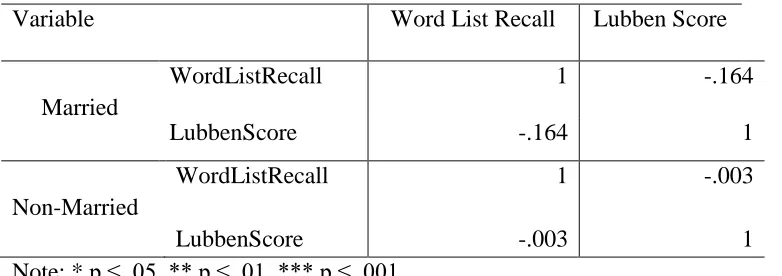
Table 5. Correlations between Lubben Social Network and Memory
Table 6. Univariate Analysis of Variance Tests of Between-Subjects
Effects for Lubben Scale and Word List Recall
Table 7. Satisfaction with Life and Marital Status
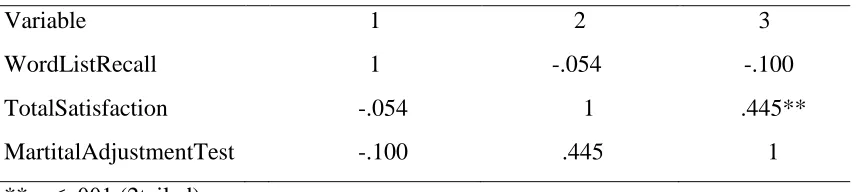
Table 8. Correlations Between Life Satisfaction, Marital Adjustment,
and Memory
28
29
29
31
33
33
34
35
35
LIST OF FIGURES
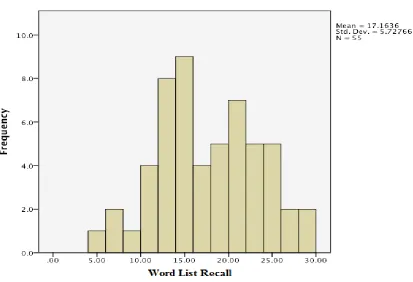
Figure 1. Histogram of Word List Recall for Married Participants
Figure 2. Histogram of Word List Recall for non-married Participants
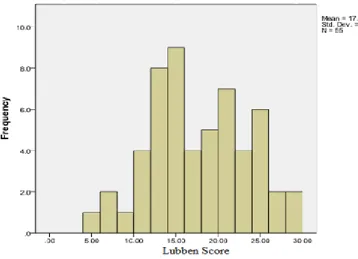
Figure 3. Histogram of Lubben Score for Married Participants
Figure 4. Histogram of Lubben Score for Married Participants
30
30
32
1 BACKGROUND INFORMATION
Human beings are social animals. To satisfy their needs and desires, humans have created
a social structure consisting of different people playing different roles (Berkman, 1995). Family
is one of these social structures where each person has a different significance in that social
configuration. Social relationships start the day a child is born and these relationships develop
across the life span as the person grows. Social relationships provide people important social,
psychological, and behavioral function throughout their lives (Uchino, Cacioppo, &
Kiecolt-Glaser, 1996). Engaging in social relationships also promotes complex interpersonal exchanges
in which people share their joy and sorrow with someone who has the capability to understand
them (Holtzman, Rebok, Saczynski, Kkouzis, Doyle, & Eaton, 2004). Complex interpersonal
exchanges, in turn, may stimulate their cognitive faculties (Bassuk, Glass, & Berkman, 1999).
As people age, they often go through physiological as well as cognitive changes. Some
loss in physical ability and in memory is considered a part of normal aging (Pansky, Goldsmith,
& Koriat, 2009). These age-related losses generally should not hinder quality of life and their
independence. However, there is considerable heterogeneity in physical and cognitive aging
among older adults as some people who are in their seventies and eighties are more physically
intact and cognitively sharp than other people who may suffer impairment in their physical and
cognitive abilities (Seeman, McEwen, Singer, Albert, & Rowe, 1997). So, the question that is
explored in this study is: why do some people show more age-related decline in memory during
later life than others or more specifically, how do social relations specially having a spouse, help
people to keep their memory sharp? The focus of this study was to see if marital interaction is
Existing literature shows that physical activities, stress levels, living arrangement (such
as living alone or living with a spouse), social interaction, social relationships and size of social
network are among the predictors of memory decline for older adults (Bassuk, et al., 1999; Ertel,
Glymour, & Berkman, 2008; Holtzman et al., 2004; Holt-Lunstad, Birmingham, & Jones, 2008;
Luanaigh & Lawlor, 2008; Lupien, deLeon, de Santi, Convit, Tarshish, Nair, Thakur, McEwen,
Hauger, & Meaney, 1998; Seeman et al., 1997; Seeman, Lusignolo, Albert, & Berkman, 2001;
Uchino et al., 1996). A tremendous effort has been made by many researchers to examine the
factors that may have an impact on the memory of older adults including social relationships and
social support in general. However, little of the research addresses this topic in a marriage
context. In fact, only few studies have focused on social relationships and social support that
comes from being married and how these factors interact with memory. This type of research is
needed especially when the life expectancy has been increasing steadily and people are living
into their eighties and nineties (Gupta, Rowe, & Pillai, 2009; Kuster & Merkle, 2004) and to stay
in the community independently, these older adults need to stay cognitively sharp. Once people
retire from their jobs, they lose their professional circle. By this time, children have left the nest
to build their own lives. Although majority of parents do stay in regular contact with their adult
children, it is not the same level of face-to-face contact as co-residence (Hong & Duff, 1997).
All these factors may contribute to social disengagement for older adults as they are not in
contact with relatives and friends in person which could be a risk for their cognitive decline
(Bassuk et al., 1999). As married older adults reach their seventies or eighties, the spouse may
be the only relation that provides them with social interaction on consistent basis.
In the current study, relationship between the marital status and cognitive ability in older
memory tests than unmarried older adults. More specifically, the purpose of this study was to
examine the potential benefits of built-in factors of marriage such as social interaction, social
embeddedness, quality of life, supportive network, as well as social isolation and their
relationship with memory performance in older adults. The result of this study will serve as
valuable baseline information, and contribute to the body of literature providing some answers
2 LITERATURE REVIEW
2.1 Introduction
Marriage has been associated with physiological health as well as psychological and
social well-being because married people perform better in memory than non-married people
(Gove, Style, & Huges, 1990; Kim & McKenry, 2002; Pansky et al., 2009; Lee, Seccombe, &
Shehan, 1991; Marks, 1997; Shapiro & Keyes, 2008; Xinhua, 1997). Marital status binds people
together in an intimate relationship. It also provides a feeling of belonging and purpose to
people which can help buffer the stress of life. Marriage is not only beneficial to young people,
this benefit continues with age because it tends to reduce the level of isolation (Xinhua, 1997).
On the other hand, individuals with better mental health may be more likely to get married and
stay in marriage (Gove et al. 1990). The association between marital status and individual
psychological well-being can be explained with two perspectives: 1) role theory and 2) social
selection perspective. The role theory which Kim & McKenry (2002) call protective perspective
states that there is something about the spousal relationship that produces positive well-being and
as a result married people feel emotional support (Gove et al, 1990) and mutual obligations for
each other which appear to reduce the depressive symptoms (Kim & McKenry, 2002). However,
according to the selective perspective, personal attributes such as personal disposition and
idiosyncrasies, past experiences, physical and psychological health, and socioeconomic status
appear to have an impact on people to be involved in social relationship (Kim & McKenry,
2002). Studies show that more people with high levels of well-being tend to get into marital
relationships and stay in relationships than people with low levels of well-being (Gove et al,
1990). The aim of this research was to understand if: 1) marital relationship makes a difference
of an older adult. Thus, in this literature review, the protective perspective to explain the
relationship between marital interaction and memory in older adults is explored.
Although there had been extensive studies examining the benefits of marriage and/or
social interaction on mental and physical health in older adults, there were fewer studies that had
examined these benefits in terms of cognition. Here, in this study, the research on the benefits of
social and specifically marital interaction on the memory of older adults was reviewed.
2.2 Marital Status and Memory
Marriage often plays a central role in many adults’ lives. According to the US Census
Bureau, about fifty-six percent of people ages 65 and older were married in 2009 (US Census
Bureau News, 2010). In 2009, seventy-two percent of men and forty-two percent of women
were married. There were four times more widows than widowers (41% to 13%), thirteen
percent of women were divorced or separated as opposed to eleven percent men and a total of
eight percent of men and women were single (never married) (US Department of Health and
Human Services, 2010).
According to Current Population Survey (CPS) from US Census Bureau (2010), about
sixty percent of people with high school diploma were married and forty percent of people were
non-married whereas sixty-seven percent of people with master’s degree were married and
thirty-three percent people were non-married. For the professional degree or doctorate degree,
this discrepancy between married and non-married was even wider. For example, seventy-six
percent of people with professional or doctorate degree were married as opposed to twenty-four
percent were non-married (Current Population Survey: Version 3.0. 2010).
According to CPS from US Census Bureau, thirty-four percent of people who reported
whereas sixty-three percent of people who reported their income between $25,000 and $49,000
were married and thirty-seven were non-married. As the disparity was found more in higher
education between married and non-married groups in 2010 CPS, the same was true for higher
income brackets. About seventy-eight percent of people who reported their income $75,000 and
over were married and twenty-two percent of people were non-married (Current Population
Survey: Version 3.0. 2010).
Due to the greater commitment in marriage, the relationship between spouses may be
more influential than other relationships (Holt-Lunstad et al., 2008). Married older adults tend to
report that their spouse is their closest social relationship (Abbey et al., 1985). In addition,
spouses often provide life satisfaction through intimate relationship and social isolation
avoidance (Hong & Duff, 1997). Hong & Duff (1997) interviewed 796 older adults including
people who were married (52.6%), widowed (35.3%), divorced or separated (14.9%), and never
married (14.9%) who lived in retirement communities. The married participants reported that
their most important source of life satisfaction came from their spouse as compared to other
potential significant others which included friends and children. The second source of
satisfaction came from participating in community activities and the third source of satisfaction
came from seeing friends. The authors suggest that the spousal satisfaction may be due to fact
that this relationship provides satisfaction to many needs including the need for intimacy as well
as the need for a good friend. Even if older adults were happy with their social environment in
their retirement community, they were found favoring their spouses for support over children,
other relatives and friends (Hong & Duff, 1997). They also found that the participants rated their
friends over the children as a source of support in the hierarchy of relationships because they get
Marriage has been found to have many health benefits such as providing some protective
effects in the regulation of blood pressure (Holt-Lunstad et al., 2008). Although blood pressure
variable will not be measured or controlled in this study, it is important to acknowledge the role
physical health can play in understanding cognitive ability (Zelinski, Crimmins, Reynolds, &
Seeman, 1998). Both high and low blood pressure have been found to be associated to poor
cognitive performance ( Molander, Gustafson, & Lövheim, 2010; Robbins et al., 2005;
Thorvaldsson, Skoog, Hofer, Börjesson-Hanson, Östling, Sacuiu, & Johnson, 2011) and spousal
relationship may lead to improvements in health in the long run (Holt-Lunstad et al., 2008).
As a result of stability and built-in social and emotional support that is usually embedded
in marriage, married couples often report being happier and more satisfied with their lives than
unmarried people (Holt-Lunstad et al., 2008). Holt-Lunstad and colleagues (2008) examined
how marital status, relationship quality, and network support impact people’s psychological
wellbeing and cardiovascular health. Using Marital Adjustment Test (Locke & Wallace, 1959)
and other measures, the researchers assessed the impact of the marital relationship and life
satisfaction. They used subjective well-being to measure the life satisfaction. Holt-Lunstad and
colleagues (2008) found that satisfaction with life was higher among married people than single
people. However, participants with lower quality of marriages had significantly higher blood
pressure than unmarried participants which suggests that quality of marriage is important for
their well-being. They also found that an unhappy marriage did not shield people from unwanted
effects of stress and depression. For example, the difference in blood pressure was not
significant for participants who were not happy in their marriage and people who were single.
Holt-Lunstad and colleagues (2008) suggest that being happily married is better than other
colleagues (2001) posit that the benefits of marriage may also extend to better cognitive
functioning and more independence in later years of life.
The mutual commitment between spouses may also help them fend off the environmental
strains such as economic hardships (Kessler & McLeod 1985; Pearlin & Johnson, 1977). Pearlin
& Johnson (1977) compared married people to unmarried people and studied how they dealt with
daily life strains. Participants were interviewed on topics such as conflicts, frustrations and
strains in the roles of occupation, marriage, childrearing, economic life, and their coping
methods to strains. They were also asked about their emotional stresses and their symptoms such
as depression and anxiety. The authors found that marriage did not appear to protect people
from economic and social problems but it did seem to shield people from psychological strains
that may arise from these economic and social problems. They posited that marriage may act as
a barrier between life strains and depression. They suggest that marriage can provide people a
stable, social, and emotional support structure which can serve as a substantial barrier against
external strains (Pearlin & Johnson, 1977) whereas the emotional strains may hold the resources
from executive control that strengthen the cognitive ability resulting into cognitive decline
(Gerstorf, Hoppmann, Kadlec, & McArdle, 2009).
Does this mean that marriage at any cost provide health benefits? Hawkins & Booth
(2005) compared the well-being of unhappily married people to divorced and remarried and
divorced and unmarried people. They followed the unhappy marriages over a 12 years period.
They found that staying unhappily married was not beneficial as they reported low self-esteem
and worse overall health than divorced people. They also found that divorced people who
remarried had greater happiness than unhappily married people and divorced people who stayed
unhappy marriage. However, Waite and colleagues (2002) found that sometimes when
unhappily married couples stay together long enough with each other, they become happily
married.
With the advancement of medical science and public health practices, there has been a
steady increase in life expectancy throughout the twentieth century. With age, older adults
become more vulnerable to a variety of chronic diseases than young adults due to decreased
physiological and biological reserves (Johnson, Backlund, Sorlie, & Loveless, 2000; Yang &
Lee, 2009). Social support provides interaction and embeddedness which is defined by Johnson
and colleagues (2000) as a sense of purpose or social role in society and this social interaction
and embeddedness appears to shield married people from elevated risks of certain old age
diseases. The researchers speculate that marriage provides an outlet for relieving stress as well
as motivation for personal care which people can lack in the non-married groups.
2.3 Physical Health and Memory
Prior research has studied the relationship between physical health and memory. Age
does not cause the chronic diseases; as people age, however, they become more susceptible to
certain old age diseases such as cardiovascular diseases, osteoarthritis, cancer, stroke and
diabetes (Fontana, 2009). The onset of these chronic diseases can increase frailty and interfere
with memory. Compromise in the physiological system may, in turn, bring cognitive impairment
to some people in their old age (Dahle, Jacobs, & Raz, 2009; Holt-Lunstad et al., 2008; Hsu-Ko,
Sorond, Iloputaife, & Gagnon, 2004; Seeman et al., 2001; Uchino et al., 1996).
2.4 Social Interaction and Memory
Beside the marriage, other members in community such as friends and relatives also can
benefits for people (Bassuk et al, 1999; Ertel, Glymour, & Berkman, 2008; Holt-Lunstad et al.,
2008; Holtzman et al., 2004; Seeman et al, 2001; Spitzer, Llabre, Ironson, Gellman, &
Schneiderman, 1992). Research suggests that interacting with different people makes older
adults feel integrated into society. In their longitudinal analysis, Holzman et al. (2004) compared
the cognitive functions of 354 adults aged 50 years and older across 12 years by using
Mini-Mental State Examination (MMSE) scores and they found that cognitive ability was better
maintained when people got emotional support through variety of social interactions including
friends and relatives.
Social support also appears to mitigate the severity of stressful events. Uchino and
colleagues (1992) examined the effects of aging, chronic stress, and social support on
cardiovascular functioning in young and elderly caregivers. Thirty-six family caregivers of
patients with Alzheimer’s disease and 34 control subjects who did not have any caregiving duties
between the ages of 30 –84 years were selected. Participants performed mental arithmetic such
as counting backward and a structured interview. Social support was measured with Social
Support Interview in which participants rated 10 important people in their lives with whom they
have contact. Caregivers who had more social support showed less age-related increase in
heart-rate reactivity during the testing than those caregivers who had less social support. The authors
suggest that social support may diminish the impact of stressful events through emotional
support (Uchino, Kiecolt-Glaser, & Cacioppo, 1992).
In another similar study, Seeman and colleagues (2001) examined the relationship
between people’s social engagement and their cognitive decline by using the existing data from
the MacArthur Studies of Successful Aging (n = 722; mean age of participants = 74 years).
of emotional support was predictive of cognitive performance (i.e. the higher the level of
emotional support, the better the cognitive performance). The authors suggest that social
networks may actually protect people from cognitive decline.
2.5 Size of Network and Memory
Size of social network in the community as well as frequency of network interaction have
been found to provide health benefits (Ertel et al., 2008; Holtzman et al., 2004; Seeman et al,
2001). Larger social networks may provide more opportunity for emotional support as well as
more cognitive stimulation than smaller social network. Holtzman and Colleagues (2004)
examined the relationship between social network and global cognitive status using data from the
Epidemiologic Catchment Area survey at the Baltimore site. The Mini-Mental State
Examination MMSE was used to measure global cognitive functioning and size of the network
was measured with survey item such as “the number of relatives and family members outside the
household” and frequency of interactions was measured with survey items such as “the number
of friends and neighbors with whom the participants kept in touch by phone or visits.” They
found that people’s cognitive function was positively related to their larger social networks at
baseline as people with larger networks maintained higher MMSE over 12 years. Also, there
was a strong positive association between frequency of interactions with MMSE scores (r = .86,
< .001). The authors suggest that this may be because larger social networks provide diverse
cognitive stimulation and frequent consistent interaction and, therefore, protect them from
cognitive decline.
In another study, Wang, Karp, Winblad, & Fratiglioni (2002) examined the relationship
between social and leisure activities and cognitive decline. The participants (n = 776) were 77
network including spouse or partner, children, relatives and/or friends; (2) moderate social
network included two out of three extensive relationships; ( 3) limited social network included
only one of three extensive network; (4) poor social network means being single and living alone
without a child or close social ties. The findings show an association between social activities
and cognition preservation. Based on their results, Wang and colleagues (2002) suggest that
participating in frequent social activities in extensive social network which includes both friends
and family provides a rich environment for interactive life which may help preserve cognition
and hinder cognitive decline.
2.6 Quality of Interaction and Memory
Seeman et al. (2001) argue that not only the size of network is an important variable in
cognitive health, but the quality of relationships is also important. When there is harmony,
understanding, and support in a relationship with minimal conflicts, people tend to rate their
relationship with higher autonomy which, in turn, may lead to better subjective well-being.
Conversely, when there are conflicts and inconsistencies in a relationship, it can make people
feel disconnected which, in turn, can lead to reduced sense of autonomy (Merz & Huxhold,
2010). Merz & Huxhold (2010) examined how both emotional support and instrumental support
may affect people’s subjective well-being. They defined emotional support as receiving advice
and comfort, and instrumental support as receiving help in cleaning and household chores. Using
data from 1,146 participants who were 65 years of age or older in the German Ageing Survey,
Merz & Huxhold (2010) divided participants into three groups: 1) those who did not receive any
instrumental support; 2) those who received instrumental support from family members; and 3)
those who received instrumental support from non-family people. Participants who rated their
reported poor relationship. They also found that receiving instrumental support can have a
negative impact on the well-being of older adults because it often brings a feeling of dependency.
However, improved quality of relations with family members and friends moderated the negative
impact of receiving instrumental support. This study suggests that supportive relationship may
help reduce cognitive health decline.
In another similar longitudinal study, Béland and colleagues, (2005) studied a
community- dwelling older adults Spanish population (n = 372). Participants were evaluated
using three measures: cognitive function (Leganes Cognitive Test), social network (social ties
and social engagement with significant others), and social integration (membership and
attendance in community, religious services, community center, and outdoor meeting place).
Researchers collected data four times during the course of study. They found an association
between social integration and family ties and cognitive function. Participants who associated
with friends or participated in community activities exhibited fewer declines in cognitive
function than participants who had less association with friends or did not participate much in
community activities. These studies suggest that frequency as well as quality of interaction can
help people maintain their health and well-being (Béland et al., 2005).
However, there are situations when having a large social network is not beneficial if the
social network is not positive and/or supportive. For example, if one’s social network is not
providing a high quality of interactions, it may be perceived as a burden and negative. Pagel and
colleagues (1987) studied the positive or helpful aspects as well as upsetting or negative aspects
of social network over the course of one year. They defined positive aspects as being those that
help and support the well-being of the person and negative aspects as social interactions that
Alzheimer’s disease. Four semi-structured initial interviews were conducted within the two
week period and two follow-up interviews were conducted 8-12 months later. Participants
provided perceptions about their stress that originated from their spouses’ diseases and major
changes in their lives as well as about their social network being helpful or upsetting.
Participants were also asked to keep a daily log for two weeks about their experiences with
people from their network list. In another interview, they were asked to review their social
network list if they would want to delete a member or add a new member in their social network.
In most cases, the caregivers kept their original list (91%). The authors did not find a
relationship between the helpful/positive aspect of the network and depression and overall
network satisfaction. However, if relationships were upsetting to the caregivers, the caregivers
felt depressed and reduced satisfaction with their social network. The researchers suggest that
positive social networks help maintain and negative social networks aggravate psychological
disturbance. They posit that there is a good possibility that quality social relationships may
support cognitive health (Pagel, Erdly, & Becker, 1987).
Although frequent social interactions with a larger network are positively related to
cognitive health (Ertel et al., 2008; Holtzman et al., 2004; Seeman et al, 2001), it is unclear what
type of social relationship affects cognitive health in older adulthood. According to
Socioemotional Selectivity Theory, an older adult’s social circle tends to become smaller
because of motivational goals toward emotional intimacy and well-being as compared to younger
adults who strive for large social networks (Carstensen, 1992; Fredrickson & Carstensen 1990).
Older adults’ motivational goals of emotional regulation may be in part due to affective gain
because the familiar partners provide them more desirable positive affect and the new partners do
young adults tend to put more emphasis on information gain and future contact which leads to
increased social networks. In one of their two-part study, Fredrickson and Carstensen (1990)
compared 80 participants of varying ages from 11 years old to 92 years old on the selection of
their social partners. The older adults group of 40 participants comprised of 20 home-dwelling
community residents and 20 nursing home residents. The researchers used three measures:
health status, social traits, and perceived social support. By using the card-sort task participants
rated their potential social partners with whom they could expect to spend their time socially.
Participants sorted cards into different piles depending upon how similar they felt with the
person and they would like to interact with these people socially or how dissimilar they felt with
the social partners and they would not like to interact. At the end, the participants also expressed
who they liked most in the card sort list and if thinking about someone they did not know before
they declared if they would like to know them better. The researchers found that older
participants gave more emphasis to the “affect anticipation” (selecting familiar partners) in their
interaction while the younger adults put more emphasis on future contact or information seeking.
They also found that nursing home older adults preferred the familiar social partners over the
novel social partners. In the second part of their experiment, Fredrickson and Carstensen (1990)
interviewed 380 community residents in the San Francisco and Los Angeles areas over the
telephone under two conditions. In the first condition, the participants were asked the question:
if you have half an hour of free time, with whom would you like to spend that time with? The
choices included two novel social partners and one familiar social partner. In the second
conditions, they were asked: “In just a few weeks, you plan to move across the country – by
yourself and while preparing for your departure, you have half an hour of free time. Which
choices as in condition one- two novel social partners and one familiar social partner. In this
condition, the researcher tried to simulate the example of a social ending that many older adults
face at this phase of their lives. The age of the participants varied from 11 – 92 years. In first
condition, only 35% of the young participants chose the familiar social partners, however, in the
second condition where there was an anticipated ending in relocation, a total of 80% of the
young participants chose the familiar social partners suggesting that unspecified circumstances
make people stick to familiar person. Fredrickson and Carstensen (1990) suggest that this
feeling of nearness to death among older adults influence their partner selection limiting their
social network. Harwood (2007) also suggests that older adults may want to focus more on close
and familiar relationships that provide them most significant rewards. They prefer to have a
quality relationship with fewer people than bigger networks with more peripheral relationships
suggesting the shift in motivational goals in older adults.
During this phase of life (65+) when people usually retire from formal or informal jobs,
who can alleviate the loneliness or social isolation among older adults without burdening the
society and who can provide social interaction on a daily basis to older adults that can help
stimulate their cognitive health? At this later phase of life, one’s parents are often deceased and
if the couple has children, they have either left the nest to establish themselves and/or are busy
with their own lives. Although friends may be available, friendship does not usually carry the
same expectations of caregiving. Out of all relatives and friends in network and based on our
social structure, one’s spouse seems to be the right choice who could provide social interaction,
companionship and intimacy to each other (Hong & Duff, 1997; Schuster, Kessler, & Aseltine,
1990). In addition, it appears that having a spouse may alleviate loneliness and social isolation
typically find greater commitment, importance, investment, and/or intimacy in marriage which is
not available in other relationship.
To date, many studies have been conducted that provide evidence of the beneficial effects
between social interaction and physiological processes such as cardiovascular system as well as
and psychological process such as depression (Luanaigh & Lawlor, 2008; Uchino el al., 1996).
However, there have been limited studies conducted that provide evidence of a relationship
between marital status and memory, particularly in old age. The purpose of this study was to
identify whether there is a correlation between marital status and memory performance.
2.7 Research Question
This study investigated the relationship between marital status, maritalquality, and
memory in a sample of married and non-married older adults. In addition, the characteristics of
marriage and social interactions that may have positive impact on the memory of older adults
were examined.
2.8 Hypotheses
For this project, three hypotheses were explored:
1. The first hypothesis was that being married will be positively related to memory.
Thus, the memory of married older adults will be better than single older adults.
2. The second hypothesis was that the participants with larger supportive social network
will perform better on memory test than those who have small unsupportive social
network. However, social network will be less significant for memory of married
people than for memory of non-married people.
3. The third hypothesis was that the quality of married life will be positively related to
3 METHOD
3.1 Participants
This sample was a convenience and non-random sample of population including only
those who were willing to participate in this study without any monetary reward as there were
funding constraints for the project. A total of 104 participants with various ethnic backgrounds
and different cultures were recruited for this study. Participants included both men and women
selected from the Metro-Atlanta area in Georgia. Participants were 60 years of age or older and
were either married or non-married (single, separated/divorced, or widowed). Participants were
recruited from different neighborhood senior centers: Naturally Occurring Retirement
Communities (NORC) such as NORC at Toco Hills; Independent living facilities such as
Christian Tower, Lutheran Tower; community centers such as Marcus Jewish Community Center
from Dunwoody; adult day care, churches and temples where they have special groups of older
adults such as “Not Too Old” (NTO) group. If the director or manager of the program agreed to
allow advertisements about the study at their location, flyers about the study were posted
throughout the above mentioned facilities (see Appendix B). Participants were also recruited
using a “snow ball” technique whereby people recommended their friends for the study. On
several occasions, the experimenter went to different facilities and gave a small presentation
about the study to the residents/members. After the presentation, note cards were distributed to
the seniors who showed interest in participating. These cards were used to provide their names
and numbers and these potential participants were contacted later and invited to participate in the
study. At some facilities, a sign-up sheet was used to recruit participants. Personal contacts were
prepared by the researcher to schedule the study time. The researcher contacted the building
authority at each location to obtain a quiet room to conduct the study.
Although the sample was a convenience sample, purposive quota sampling method was
also used. Participants were recruited until each group, married and non-married had at least 20
participants of each gender in each group. Participants were divided into two groups based on
their marital status: one group of married older adults and another group of non-married older
adults who were single, separated/divorced, or widowed. Criteria for inclusion for the married
group were that participants should be married for at least 5 years or longer. Criteria for the
non-married group were that they should be single, separated/divorced, or widowed for at least 5
years or longer.
3.2 Variables
The dependent variable in this study was memory performance and the independent
variables were marital status, marital satisfaction, size of social network, and quality of social
interaction.
3.3 Setting
All data were collected by one researcher and took place in a private quiet room located
in either the facility from where participants were recruited or at the location of participant’s
convenience. Most participants participated at the recruitment location. For scheduling reasons,
only a few participants requested the researcher to come to their homes. Questionnaires were
administered individually and they were administered only by the student primary investigator.
Participants were required to complete the questionnaire in one session. The data were collected
3.4 Measures
Quantitative method design was used for this study. All participants completed a
questionnaire (see Appendix A) composed of demographic questions modified by the researcher
and four instruments that measured global cognitive ability, memory, satisfaction with life, and
social network size. However, married participants also completed the Marital Adjustment Test.
The instruments used in this study were: Marital Adjustment Test, The Satisfaction with Life
Scale, Lubben Social Network Scale – 6, Mini Mental State Examination, and The Word Recall
Test.
The demographic questionnaire included questions about marital status, age, race,
ethnicity, education, and income. The demographic questionnaire also had questions about their
living situation and safety of their living arrangements. In addition, the demographic
questionnaire contained three questions that measured perceived memory and health and to
assess the importance participants place on memory.
Marital Adjustment Test (MAT; Locke & Wallace, 1959) is a Likert-type response scale.
The MAT measures the marital satisfaction and marital quality. The MAT has fifteen questions
with six categories with 5 = always agree to 0 = never agree. The MAT includes questions such
as how happy the participants are in their marriage and to what extent they agree on matters such
as demonstration of affection, sex relations and philosophy of life. The MAT has a total possible
score of 0 – 168 with higher scores indication better marital quality.
The Satisfaction with Life Scale (SWLS) is an assessment of global life satisfaction as it
measures an individual’s general sense of satisfaction with life (Pavot & Diener, 2008). This
scale has five items with Likert-style responses ranging from 1 = strongly disagree to 7 =
life satisfaction. The reliability of SWLS ranges from 0.79 to 0.89 (Pavlot & Diener, 2009)
which indicates that the scale has high internal consistency.
Lubben Social Network Scale – 6 is a measure of social network (Crooks, Lubben,
Petitti, Little, & Chiu, 2008; Lubben, Blozik, Gillmann, Iliffe, Wolfgang, Beck & Stuck, 2006).
It has six questions: three of the questions assess the social interaction with family members and
relatives with whom the participants keep in touch or socialize regularly and the other three
questions measure the social interaction with friends with whom the participants keep in touch or
socialize regularly. Lubben Social Network Scale – 6 is a Likert-type scale with 6 choices: 0 =
no member in the network and 5 = nine of more people in the network. The possible mean score
for this test ranges between 0 – 30 with higher scores indicating larger networks.
Mini-Mental State Examination (MMSE; M.F. Folstein, Folstein, & McHugh, 1975) is a
general test of global cognitive function. It also has three memory questions. The MMSE has 11
questions (scores range from 0 to 30) that cover several different areas of cognition, including
orientation, registration, memory, attention, and language. This questionnaire is considered a
valid, objective, and quantified assessment of global cognitive status.
The Word List Recall test consists of 30 categorizable nouns with 6 words from 5
distinctive taxonomic categories using norms from Howard (1980) such as metals, animals, trees,
sports, and flowers. It measures both – Immediate & Delayed memory and it was constructed by
Hertzog, Dixon, & Hultsch (1990). The Word List Recall had been widely used by researchers to
assess the memory performance of people of different ages including older adults (Lachman,
Andreoletti, & Pearman, 2006; Pearman & Lachman, 2010). The scores are recorded as number
3.5 Apparatus
To maintain confidentiality, participants were not required to provide their names on the
questionnaire. Questionnaires were given identification (ID) numbers once completed. The
information participants provided was stored in the principal investigator’s office in the locked
cabinet. Only the ID numbers were used in data files to make the study confidential. Other facts
that might point to participants will not appear when this study will be presented or discussed
with others. The findings are summarized and reported in group form. The data from the
questionnaires were entered into statistical software called Predictive Analysis Software
(PASW). The electronic files were password protected and stored in a password protected
computer at the Georgia State University (GSU) Gerontology Institute. Also when results are
published in future, individual participants’ information will not be identified at any point.
3.6 Procedure
Once the Internal Review Board at GSU approved the study, the researcher started
recruiting participants by giving presentations about the study at different facilities. Participants
either participated immediately or provided contact information to schedule at a later date. Once
participants agreed to take part in the study, the researcher explained the informed consent
process. Participants were given a printed copy of the consent form. The researcher read over
the form with them and asked if they understood. The participants were then asked to sign the
form. The researcher retained the signed portion of the consent form and participants were given
the remaining consent form.
On the day of questionnaires were administered, the consent form was the first form
given to the participants. The researcher explained the purpose and main points of the study to
served as the initial screening tool as this test can be scored right on the spot. If participants
successfully completed the MMSE, they continued the study; however, if participants were not
able to complete the MMSE, they were provided the referral sheet and they were dismissed at
this point without getting any further into the study. Dismissing participants at this stage
occurred only 5 – 6 times during the whole study. The referral sheet contained the contact
information of some local resources and some national resources about aging services to connect
older adults to specialists in the memory area.
If participants successfully completed the MMSE, they continued the survey. First, they
were given the instructions about the Word List Recall test. Participants were instructed about
the two phases of first Word List Recall test: study phase and recall phase. They were told that
study phase will be for three minutes in which they will review the words; however, for the recall
phase there was no time limit. After the instructions, the word list was given to participants to
study for three minutes. After three minutes, the word list was taken away from the participants
and the Recall Sheet One was provided and participants were asked to write as many words as
they could remember. Participants were told to put the pen down once they felt that they could
not remember any more to let the experimenter know that they were done. Although there was
no time limit for writing the words on the recall sheet, after three minutes the experimenter asked
participants who were not finished if they need more time. Once they were done, the first recall
sheet was taken away from the participant. This completed the first trial of the Word List Recall
test. During the second trial, participants were given the word list again and asked to review the
word list for one additional minute. After one minute was over, they were provided the Recall
participants were again told in the second trial to put the pen down once they felt that they could
not remember any more words.
After the second trial of Word List Recall test was completed, demographic questionnaire
was given to collect information about their marital status, age, education, socioeconomic status,
their living arrangements, and how they perceive their health and memory. After the completion
of demographic questionnaire, participants were given one of the two packets of questionnaires
depending upon their marital status: one that included MAT, SWL, and Social Network Scale-6
if the participants were married or the other that included only SWL and Social Network Scale-6
if they were single, divorced/separated, or widowed. Once they completed this portion of survey
which usually took between 10 – 14 minutes, they were asked to write the word list one more
time on the third Recall Sheet Three to measure delayed memory. If participants took less than
ten minutes to complete the remaining surveys, they were asked to wait to elapse the twenty
minute period between the first Word List Recall test and the third Word List Recall test. After
completing the survey, the researcher asked if participants had any questions and thanked them
for their time. At the end, all participants who were concerned about their memory were
provided the referral sheet compiled by the researcher. More women than men expressed
concerns about their memory. Completing the whole study usually lasted between thirty to forty
minutes.
3.7 Analyses
Predictive Analysis Software (PASW) 18 was the statistical program selected to conduct
analyses of the data. Data were analyzed by marital status (married older adults and non-married
demographic characteristics of the sample. For the second analysis, independent samples t-test
was used to compare the two marital status groups for each study variable. Analysis of
covariance was also used to compare the differences between the married and non-married
groups while controlling for age and education differences between the groups. A third analysis
using Spearman correlation coefficient was conducted to explore the relationship between the
4 RESULTS
4.1 Descriptive Analyses
Descriptive analyses were conducted to identify the demographic characteristics of the
sample. There were total of 112 who participated in the study, however, data from only 104
participants fit the inclusion criteria of being married, single, divorced, separated or widowed for
five years or longer (see Table 1a). Out of 104 participants, forty-three percent were male and
seven percent were female. Forty-seven percent of participants were married whereas
fifty-three percent participants were non-married. Participants ranged in age from 60 to 90 years with
a mean age of 73.4 years and standard deviation of 7.8. Most participants were Caucasian (66%)
whereas 16% of the participants were Black/African American, and 9% of the participants were
of other races including Chinese, Japanese, and Indian origin.
The majority of participants (53%) who reported having post-graduate education were
married and only twenty-four percent non-married participants reported having post graduate
education. About twenty percent of married people as well as non-married people reported
completing college, and twenty-four percent of married people had some college education.
More non-married participants (18%) reported having high school education where as only four
percent married participants reported having high school education. Only eight percent of the
married population reported having less than high school and only nine percent non-married
participants reported having less than high school education.
Overall, sample was evenly distributed in five income levels except one category of
$10,000 – 25,000 in which 27.2% of participants reported their income. However, majority of
non-married participants reported to have income less than $50,000 whereas, married
with their spouse whereas non-married people lived alone. Most participants reported their
health good or excellent (67%) and very few people reported their health in poor condition (<
10%) (see Table 1b). In addition to descriptive statistics, an independent t-test was performed on
some of the demographic variables such as age, level of education, and income to see the
differences between the married group and non-married group. Independent t-test revealed that
there was a significant difference between the married and non-married groups on these variables
as married older adults did better on the Word List Recall than non-married older adults.
4.2 Word Recall and Marital Status
The first hypothesis states that married older adults will perform better on the memory
test than non-married older adults. The Word List Recall test was used to measure memory
(Hertzog et al., 1990; Howard, 1980). The Word List Recall scale ranges from 0 – 30. For this
sample, the mean Word Recall score was 16.28 and responses ranged from 3 - 29.
Analyses show that the Word List Recall score for married group was 17.7 with a
standard deviation of 6.2 (see Figure1) and the Word List Recall score for non-married group
was 14.9 with a standard deviation of 5.7 (see Figure 2). There was a three point difference in
the average Word List Recall score for married and non-married participants. To further analyze
this hypothesis, an Independent t-test was conducted on marital status and the Word List Recall.
The findings illustrated that there was a significant difference between the married group and
non-married Word Recall scores. Married participants performed significantly better than the
Table1a.
Demographic Characteristics of Participants
Characteristics Married Non-Married Total n % or M n % or M n % or M Gender
Men Women
Age in Years* 60 – 70 71 – 80 81 – 90
Level of Education* Less than High-School High-School
Some College College Graduate Post Graduate
Income*
$10,000 or less $10,000 to $25,000 $25,000 to $50,000 $50,000 to $100,000 $100,000 or more
Race White Black/African American Others Ethnicity Hispanic Not-Hispanic Living Situation Living Alone Living with Spouse
Living in Retirement Home 24 25 26 15 8 2 2 9 10 26 1 5 7 17 16 35 3 5 2 43 7 40 9 49 51 M73.4 SD7.8 53 31 16 4 4 18 20 53 2 11 15 37 35 81 7 12 4 96 13 71 16 20 35 17 20 18 5 10 16 11 13 12 23 10 3 1 34 13 3 3 46 46 1 24 36 64 31 36 32 9 18 29 20 24 24 47 20 6 2 68 26 6 6 94 65 1 34 44 60 43 35 26 7 12 25 21 39 13 28 17 20 17 69 16 8 5 89 53 41 33 42 58 41 34 25 7 12 24 20 38 14 29 18 19 18 74 17 9 5 95 42 32 26
Table1b.
Additional Characteristics of Participants
Characteristics Married Non-Married Total n % M n % M n % M Overall Health Compared to Peers
Excellent Good Average Fair Poor
Overall Health Compared to Peers Excellent
Good Average Fair Poor
How Important Your Memory Couldn’t be More Important Very Important
Somewhat Important Not at all Important
9 22 15 3 0 3 15 24 6 1 11 35 3 0 53 42 63 33 0 42 39 62 43 17 48 48 43 0 8 31 9 6 1 4 23 15 8 5 12 38 4 1 47 58 38 67 100 57 61 38 57 83 52 52 57 100 17 53 24 9 1 7 38 39 14 6 23 73 7 1 16 51 23 9 1 7 37 38 13 6 22 70 7 1 Table 2.
Independent t-test for Word List Recall by Marital Status and Gender
Variable N M SD Min Max Range T
Marital Status Married Non-Married 49 55 17.7 14.9 6.2 5.7 5.7 3 29 28 23 25 -2.60* Gender Men Women 44 60 17.9 16 6 6 3 6 29 29 26 23
Figure 1. Histogram of Word List Recall for Married Participants
[image:42.612.120.533.380.662.2]Table 3.
Univariate Analysis of Variance Between-Subject Effects (controlling for age)
Source Mean Square df F Sig (2tailed)
Age 367.74 1 11.53 .001**
Married vs. Non-Married 84.28 1 2.6 .107
Note: * p ≤ .05, ** p ≤ .01, *** p ≤ .001
To further explore the relationship between marital status and memory, additional
analysis such as, Analysis of Covariance (ANCOVA), was performed. After controlling the age
and education, the difference between married and non-married groups was not significant. This
suggests that the variance is not explained by marital status, but by age and education differences
of the sample. These differences are probably due to the non-random sampling conducted in the
study.
4.3 Lubben Social Network Scale – 6 and Memory
Thesecond hypothesis states that participants with larger supportive social network will
perform better on memory test than those participants who have smaller unsupportive social
network. The size of social network was measured by the Lubben Social Network Scale-6
(Lubben, et al., 2006). Lubben Social Network Scale-6 consists of two parts – family Lubben
and friend Lubben and this test has the capability of measuring the differences between family
and friend network. The Lubben Social Network Scale -6 scores ranges from 0 – 30. The total
Figure 3. Histogram of Lubben Score for Married Participants
[image:44.612.145.503.419.678.2]
Both groups of participants reported having a social network between 8-29 people in their
social network (see Table 4). Three married participants scored twelve or lower score whereas
eleven non-married participants scored twelve or lower score. The Lubben score for married
respondents was 20.8 with a standard deviation of 5.3 and the Lubben score for non-married
respondents was 18.1 with a standard deviation of 9.4. There was almost three point difference
in the Lubben mean score between married and non-married participants. To further analyze this
hypothesis, the Pearson correlation was conducted on the Lubben Social Network and the Word
List Recall. Although married people average score was higher than non-married group, the
Lubben Social Network scale - 6 was not found to be correlated significantly to the Word List
Recall for either group (see Table 5). The trend, however, was for married people with smaller
[image:45.612.67.360.427.506.2]social networks to have better memory performance (r=-.16).
Table 4.
Lubben Score and Marital Status
N M SD Range
Married 49 20.8 5.28 5 - 29
Non-married 55 18.07 9.43 8 - 29
Table 5.
Correlations between Lubben Social Network and Memory
Variable Word List Recall Lubben Score
Married
WordListRecall 1 -.164
LubbenScore -.164 1
Non-Married
WordListRecall 1 -.003
LubbenScore -.003 1
[image:45.612.66.457.566.704.2]Table 6.
Univariate Analysis of Variance Tests of Between-Subjects Effects
Dependent Variable: Word List Recall
Source Mean Square Df f Sig
Age
LubbenScore
515.10 1 15.77 .000
4.88 1 .149 .700
Note: * p ≤ .05, ** p ≤ .01, *** p ≤ .001
An ANOVA also revealed that relationship between Lubben and Word List Recall was not
significant when age was controlled for (see Table 6). These results do not support the second
hypothesis that is respondents with larger supportive social network will perform better than
respondents with smaller unsupportive social network.
4.4 Satisfaction with Life, Quality of Life, and Memory
The third hypothesis states that quality of married life will be positively related to
memory for married participants. To test this hypothesis, two measures were used- SWLS
(Pavot & Diener, 2008) and MAT (Locke & Wallace, 1959). SWLS was used to measure the
overall life satisfaction and was given to all participants whereas the MAT was used to measure
marital satisfaction and marital quality and was administered to married participants. The SWLS
has five items and each item’s possible score ranges from 1 – 7 with the total possible scores of 5
to 35. Higher score indicate higher satisfaction with life. The MAT has fifteen questions with
six categories. The score for the MAT ranges from 2-168 and higher score indicate higher
marital satisfaction.
Analysis show that the SWLS mean score for married respondents was 28.3 with a
standard deviation of 6.2 (see Table 7). Fifty-four percent of married men reported being
extremely satisfied whereas none of the non-married male participants reported to be extremely
satisfied. On the other hand, 38% married women reported to be extremely satisfied whereas
[image:47.612.67.291.234.315.2]only 26% of non-married women reported being extremely satisfied.
Table 7.
Satisfaction with Life and Marital Status
N M SD
Married 55 28.3 6.7
[image:47.612.70.502.374.470.2]Non-married 49 25.3 6.2
Table 8.
Correlations Between Life Satisfaction, Marital Adjustment, and Memory
Variable 1 2 3
WordListRecall 1 -.054 -.100
TotalSatisfaction -.054 1 .445**
MartitalAdjustmentTest -.100 .445 1
** p ≤ .001 (2tailed)
The average MAT score for married participants was 124 with a standard deviation of 16.9.
Pearson Coefficient Correlation between the SWLS, MAT, and the Word Recall was performed
to further analyze the hypothesis. There was no relationship between the SWLS and the Word
List Recall. In addition, there was no relationship between MAT and the Word List Recall (see
Table 8). Therefore, the third hypothesis was not supported. However, there was a significant
relationship between life satisfaction and marital adjustment (r= .445) (see Table 8) suggesting
5 DISCUSSION
5.1 Overview
This study was designed to investigate marriage and memory in older adults. The size of
supportive social network, quality of married life, and memory were also investigated in older
adults. Memory was measured using the Word List Recall scale. The hypotheses were not
supported by the results. The population in this study was similar to general population in many
characteristics such as education and income. As the table 1a reports that more married
participants reported having higher education than non-married participants, a trend in the
general population. The same was true for income. More married participant reported having
higher income ($50,000 or more) and more non-married participants reported having lower
income ($50,000 or less) (Current Population Survey: Version 3.0. 2010). This chapter will
explain the findings in the context of existing research. In addition, it will address study
limitations and recommend directions for further study.
5.2 Marital Status
The first hypothesis was that married older adults will perform better on memory test
than non-married older adults. Preliminary analysis suggested that that married older adults did
perform significantly better on the Word List Recall test than non-married older adults.
However, these differences in the mean scores of Word List Recall between married and
non-married groups were not significant when age and education were controlled. The descriptive
analysis tells us that non-married group in this sample is 4.5 years older than married group.
Given that the sample of married adults is significantly younger and more highly educated than
the unmarried sample, it is not surprising that they performed better on a memory task. It is well
better on verbal memory tests than people with less education. Given the non-random nature of
the sample, controlling for the age and education, differences was the only way to test hypothesis
one which was not supported in this analysis.
Extant research found a relationship between marital status and memory. For example,
van Gelder and colleagues (2006) found that married men who lived with others had the smallest
cognitive decline whereas the non-married men who lived alone had double the cognitive
decline. These researchers suggest that cognitive stimulation from the partner may provide
protective interaction and the satisfaction with life gained from this interaction may be protective
from cognitive decline (van Gelder, Tijhuis, Kalmijin, Giampaoli, Missinen, & Kromhout 2006).
Holt-Lunstad and colleagues (2008) also suggest that marriage may provide the protective effects
to married older adults influencing their physical health which, in turn, may be protective against
cognitive decline as physical health has been found to affect cognitive health (Holt-Lunstad et
al., 2008; Hsu-Ko et al., 2004; Seeman et al., 2001; Uchino et al., 1996). However, this study
suggests that additional factors such as age, education, and income are more significant than
marital status.
There could be few possible reasons that there was no significant difference in memory
performance for the two groups – married and non-married in this study. One of the
explanations for this could be that although marriage does provide spouses social interaction to
consistently stimulate memory, married people are not getting enough stimulation because of
similar interests or their physical health is stressing them out to consistently stimulate memory.
It is possible that married participants in this study might be going through the burden for care of
the spouse (some of the participants did mention taking care of their spouse) which might be