Georgia State University Georgia State University
ScholarWorks @ Georgia State University
ScholarWorks @ Georgia State University
Educational Policy Studies Dissertations Department of Educational Policy Studies
Winter 1-6-2012
Gender and Leadership: Female ROTC Cadets' Perceptions of
Gender and Leadership: Female ROTC Cadets' Perceptions of
Gender and Military Leadership
Gender and Military Leadership
Darbra J. Mahoney
Georgia State University
Follow this and additional works at: https://scholarworks.gsu.edu/eps_diss
Part of the Education Commons, and the Education Policy Commons
Recommended Citation Recommended Citation
Mahoney, Darbra J., "Gender and Leadership: Female ROTC Cadets' Perceptions of Gender and Military Leadership." Dissertation, Georgia State University, 2012.
https://scholarworks.gsu.edu/eps_diss/90
ACCEPTANCE
This dissertation, GENDER AND LEADERSHIP: FEMALE ROTC CADETS’
PERCEPTIONS OF GENDER AND MILITARY LEADERSHIP, by DARBRA JEAN MAHONEY, was prepared under the direction of the candidate’s Dissertation Advisory Committee. It is accepted by the committee members in partial fulfillment of the
requirements for the degree Doctor of Philosophy in the College of Education, Georgia State University.
The Dissertation Advisory Committee and the student’s Department Chair, as representatives of the faculty, certify that this dissertation has met all standards of excellence and scholarship as determined by the faculty. The Dean of the College of Education concurs.
______________________________ ______________________________ Richard Lakes, Ph.D. Patricia Carter, Ph.D.
Co-Committee Chair Co-Committee Chair
______________________________ ______________________________ Jami Berry, Ph.D. Robert Michael, Ph.D.
Committee Member Committee Member
______________________________ Date
______________________________ Sheryl A. Gowen, Ph.D.
Chair, Department of Educational Policy Studies
______________________________ R.W. Kamphaus, Ph.D.
AUTHOR’S STATEMENT
By presenting this dissertation as a partial fulfillment of the requirements for the
advanced degree from Georgia State University, I agree that the library of Georgia State University shall make it available for inspection and circulation in accordance with its regulations governing materials of this type. I agree that permission to quote, to copy from, or to publish this dissertation may be granted by the professor under whose direction it was written, by the College of Education’s director of graduate studies and research, or by me. Such quoting, copying, or publishing must be solely for scholarly purposes and will not involve potential financial gain. It is understood that any copying from or publication of this dissertation which involves potential financial gain will not be allowed without my written permission.
NOTICE TO BORROWERS
All dissertations deposited in the Georgia State University library must be used in
accordance with the stipulations prescribed by the author in the preceding statement. The author of this dissertation is:
Darbra Jean Mahoney 965 Copper Mines Road
Murrayville, GA 30564
The director of this dissertation is:
Dr. Richard Lakes and Dr. Patricia Carter Department of Educational Policy Studies
VITA
Darbra Jean Mahoney
ADDRESS: 965 Copper Mines Road Murrayville, GA 30564
EDUCATION :
Ph.D. 2011 Georgia State University Educational Policy Studies
M.Ed. 2005 North Georgia College & State University Interrelated Special Education
B.Ed. 2000 University of Alaska, Anchorage Elementary Education
PROFESSIONAL EXPERIENCE:
2004-Present Interrelated Special Education Teacher Forsyth Central High School, Cumming, GA 2003-2004 Interrelated Special Education Teacher
ABSTRACT
GENDER AND LEADERSHIP: FEMALE ROTC CADETS’ PERCEPTIONS OF GENDER AND MILITARY LEADERSHIP
by
Darbra Jean Mahoney
Gender continues to be an impediment for women in military leadership positions,
particularly in Reserve Officers’ Training Corp (ROTC) training programs in higher
education. This study examines the social construction of gender by female cadets in a
predominately male military environment. According to Herbert (1998), female soldiers
strike a balance between being feminine enough to be considered a woman yet masculine
enough to be considered a military leader—sustaining a view that finds these women are
viewed as less than competent officers. Achieving equilibrium between femininity and
masculinity is a common thread in much of the literature on female military leadership.
This dissertation is informed by gender schema theory, role congruity theory, and social
comparison theory. The research is narrative in design and uses a structured
questionnaire for two to three one-hour interviews with six junior and/or senior female
cadets matriculated in the ROTC program as well as four one hour focus group
interviews and three one hour military staff interviews. The study determined female
cadets manage their gender in a predominately male military environment at a Senior
Military College by appearing more masculine than feminine when in uniform. Female
cadets often felt they worked twice as hard as their male colleagues, yet gender
embraced the patriarchy of the military values appeared to be the most successful leaders
in this study. The findings will benefit those who study gender and leadership in higher
GENDER AND LEADERSHIP: FEMALE ROTC CADETS’ PERCEPTIONS OF GENDER AND MILITARY LEADERSHIP
by
Darbra Jean Mahoney
A Dissertation
Presented in Partial Fulfillment of Requirements for the Degree of
Doctor of Philosophy in
Educational Policy Studies in
the Department of Educational Policy Studies in
the College of Education Georgia State University
Copyright by Darbra Jean Mahoney
ACKNOWLEDGMENTS
I am so very grateful to so many people for their support and contributions to my research and writing. I would first like to thank my dissertation committee members, Dr. Richard Lakes, Dr. Patricia Carter, Dr. Jami Berry, and Dr. Robert Michael for their
encouragement and expertise. Thank you for expecting my best work and guiding me in the direction to identify the research needed to make this dissertation possible. I would like to especially thank Dr. Patricia Carter for her exceptional knowledge of gender. Your classes were by far my most challenging and most informative. I am forever grateful for the leadership and knowledge you were willing to share with me.
I would like to also thank Colonel Jo B. Rusin, U.S. Army (Retired). You have always been there for me with wise words of encouragement. You have cheered in my corner and given me the sanity I needed when I felt I was moving in too many directions. I appreciate your phone calls, visits, and continuous support of my research. Thank you for your focus and consistent friendship.
I would like to thank my parents, Dennis and Diana Mahoney, and my brother and sister-in-law, Daniel and Denese Mahoney, for understanding when I could not make it to family gatherings. Thank you for the many phone calls and the words of encouragement I needed to continue my academic journey. I love you all dearly.
Finally, I would like to thank my two children, Trevor and Dennis Carrier. Without your support I could not have completed this program. Thank you for understanding when I missed a play or ballgame. You are the two best children any mom could ever hope for. I am so lucky to have you as my sons. I am forever grateful for your support and love. I am so proud of you and love you with everything in me.
TABLE OF CONTENTS
Page
List of Tables ………..……….. v
List of Figures ………...……… vi
Abbreviations and Acronyms ……… vii
Chapter 1 INTRODUCTION The Problem ……… 1
Gender Studies as a Theoretical Framework ……….. 4
Need for the Study ……….. 7
Purpose of the Study ………... 8
Historical Milestones of ROTC ……….. 9
Definitions ……….. 12
2 REVIEW OF THE LITERATURE Female Stereotypes in the Military ………. 14
Through the Lens of Gender ………... 25
3 METHODOLOGY Introduction ………. 47
Research Process ……… Description of Setting ………. 52 57 Selection of Participants ………. 57
Research Questions ………. 59
Negotiating Entry ……… 60
Researcher Role ……….. 61
Confidentiality and Ethics ……….. 61
Assumptions ………... 61
Limitations of Study ………... 62
Coding of Themes ………... 62
4 RESULTS Findings ……….. 66
ROTC Structure ……….. 68
ROTC Orientation………... 69
ROTC Residency ……… 70
ROTC Uniforms ………. 71
ROTC Clubs ………... 72
ROTC Physical Training ……… 73
ROTC Academics ………... 74
Honor Code ………. 75
Documents and Observations ………. 75
Corps of Cadet Admissions ……… 76
What Cadets Should Expect ………... 77
A Typical Day for Cadets ……….. 80
Female Cadets Introduction ...………. 85
Research Question One: Themes………. 89
Conflicts with Self………... 90
Balancing Femininity and Masculinity……… 97
Penalties of Gender……….. 110
Analysis of Research Question One……… 121
Research Question Two: Themes……… 123
Perceptions of Military Ratings………... 123
Peer Perceptions………... 128
Analysis of Research Questions Two……….. 133
5 DISCUSSION Introduction……….. 140
Gender Barriers………... 141
Findings and Interpretations……… 142
Suggestions for Further Research………. 147
Summary………... 149
References……… 150
Appendixes………... 160
LIST OF TABLES
Table Page
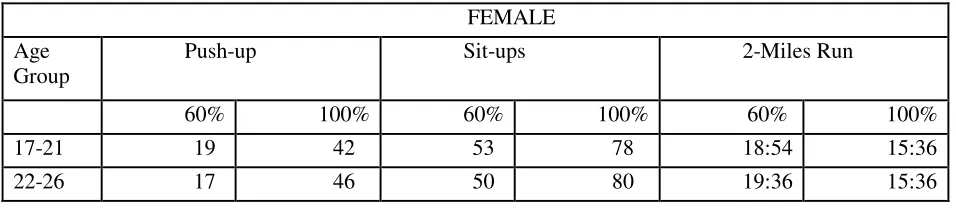
1 Male PT Standard ………. 73 2 Female PT Standard ……….. 74
LIST OF FIGURES
Figure Page
1 Flow Chart: ROTC Structure ………... 69
vi
ABBREVIATIONS & ACRONYMS
ACU Army Combat Uniform
ASU Army Service Uniform
ASVAB Armed Services Vocational Aptitude Battery
AVF All-Volunteer Force
CAF Canadian Air Force
CAS3 Combined Arms and Service Staff School
Col. Colonel
DoD Department of Defense
ESN Excellent, Satisfactory, Needs Improvement
FTX Field Training Exercise
GPA Grade Point Average
JROTC Junior Reserve Officers’ Training Corps
LDAC Leader Development and Assessment Course
Lt. Lieutenant
MLC Military Leadership Center
MSU Military State University – pseudonym
NCOR Non-Commissioned Officer Report
NGCSU North Georgia College & State University
NDA National Defense Act
OSI Office of Special Investigation
PE Physical Education
Pfc. Private First Class
PT Physical Training
Ret. Retired
ROTC Reserve Officers’ Training Corps
SAL Scholar, Athlete, Leader
SMC Senior Military College
Sgt. Sergeant
USAFA United States Air Force Academy
USMA United States Military Academy
USNA United States Naval Academy
VMI Virginia Military Institute
CHAPTER 1
THE PROBLEM
Introduction and Significance
Women have been faced with significant barriers to their employment
opportunities since they were first permitted rank in the U.S. Military. Although limited
mostly to support positions such as clerical, nursing, and food preparation during World
War II, women have continued to commit their lives to the U.S. Armed Forces in spite of
the many walls built to dissuade them otherwise (Ives, n.d.). As recently as April 25,
2007, Pfc. Monica Brown, Charlie Troop, 4th Squadron, 73rd Cavalry Regiment, an Army
medic stationed in Paktika, Afghanistan, heroically saved the lives of two fellow male
soldiers in a burning humvee. For her bravery and selfless actions she earned a silver star,
a promotion to specialist, and offered a position as a White House staff employee. To Pfc.
Brown’s dismay she was also removed from Paktika and reassigned to a noncombat
environment (Scott-Tyson, 2008). Although Pfc. Brown has earned exemplary military
recognition as a soldier, her status as a female soldier overshadows her accomplishments
in the field. Under the combat exclusion laws currently in place, women are forbidden
admission to combat units. Publicity of a female soldier in a combat position forced the
military officers to remove her from harm’s way. In reality, nowhere is completely safe;
2
it is often safer when danger is apparent. Currently female soldiers, such as Pfc. Brown,
are only ‘attached’ to combat units. Pfc. Brown represents successful women soldiers
who are denied equal opportunities of leadership through combat exclusion. As Col.
Rusin (2001) notes, “For those who would debate whether or not women should be in
combat, it is worth noting that the days of clearly defined front lines are also over. The
enemy, not pundits or doubting male soldiers, will decide who will be in combat when
the shooting starts” (p. 157-158). Society and the military have relentlessly viewed
females as less competent physically and emotionally than their male colleagues despite
their efforts to gain equal opportunities in all professions.
There are only two other occasions when women have earned silver stars in the
military. The first was during World War II in 1944; 1Lt. Mary Roberts Wilson, 2Lt.
Elaine Roe, 2Lt. Virginia Rourke, and 2Lt. Ellen Ainsworth accomplished recognition for
evacuating forty-two patients by flashlight from a hospital at Anzio Beach, Italy. Killed
during the attack, 2Lt. Ainsworth received her silver star posthumously (Carson, 2005).
The second occasion was March 20, 2005, when Sgt. Lee Ann Hester, Kentucky Army
National Guard’s 617th Military Police Company, in Baghdad, Iraq, valiantly defended
her company against an insurgent attack (Soucy, 2007). Sgt. Hester’s decision to engage
in direct combat action is an indication of the degree to which women are intricately
embedded in combat, despite the inability to achieve a distinction between combat and
non-combat roles.
One means of diminishing status differentials for military women is to increase
3
traditional training ground for military leaders, has a long history of conforming to
paternalistic biases “fulfilling a powerful American belief: that the military must be
subservient to civilian interests for it to truly represent and defend the interests of the
society it serves” (Neiberg, 2000, p. 13). However, Lt. Gen. Ann E. Dunwoody, the
highest ranking female officer in the military, is one recent example of the government
and society recognizing female leadership in the military. Although Lt. Gen. Dunwoody
could not attend West Point, as did the other male military leaders in her family, she
decided to join a female officer orientation course and commissioned shortly after
finishing college. On June 23, 2008, Lt. Gen. Dunwoody was “nominated for
appointment to the rank of general and assignment as U.S. Army Material Command
commanding general” (Edgecomb, 2008). She is the first woman in the history of the
military to earn a position as a four star general. She commented at her promotional
ceremony, “I’ve heard from moms and dads who see this promotion as a beacon of hope
for their own daughters” (Female Army vet receives 4-star rank, 2008).
The U.S. Census Bureau’s 2010 Statistical Abstract: The National Data Book,
reports a total of 2,840,000 active military, Reserve and National Guard, and civilian
personnel. Of the 197,900 active duty female soldiers, 163,600 are enlisted female
soldiers and 34,300 are female officers. Female soldiers serving in the armed forces
account for 14.35% of the military population. According to the U.S. Census Bureau’s
2008 Population Estimates, there are approximately 307,600,000 people residing in the
United State, approximately 151,800,000 men and 155,800,000 women. Obviously
4
than proportionate (“Army ROTC”). Considering federal efforts to gain equal
opportunity employment, one must ask why there is a close to equal number of men to
women ratio in civilian employment but a significantly lower number of women
employed in the armed forces than men. Are more men attracted to a military lifestyle
than women? Are women discouraged to pursue careers in the field? Does society view
men and women equitably in a protector role?
Gender Studies as a Theoretical Framework
This research uses gender schema theory (Bem, 1981), role congruity theory
(Diekman and Goodfriend, 2006; Ritter and Yoder, 2004; Jorgensen, Patelle, and
Slaughter, 1989), and social comparison theory (Collins, 2003; hooks, 2003; Lee 2005) to
explore perpetual gender roles in the military. Gender schema theory (Bem, 1981)
provides an explanation for how people learn stereotypical ideals of masculine and
feminine traits, and how people conform to fit within these roles. Masculine traits for
men include a ‘get it done’ attitude and protector role, while feminine traits for women
include nurturing and expressive roles. These preconceived notions of gender are taught
through social experiences, such as those from the home, school, and church
environments. Gender schemas produce a readiness to categorize men and women into
roles based solely upon biology. Gender dichotomy is so embedded in our society that we
have become blind to its effects. Through socialization children are sex-typed as
masculine, feminine, or androgynous and create their place in society according to the
5
word female, she will associate the meaning of that word with other previous experiences
of femininity. Gender schema theory, therefore, informs my study of female military
leadership education to the extent that it asks how female cadets “do” or potentially
change gender to be accepted as feminine yet masculine enough to be considered and
accepted as a leader.
Role congruity theory explains that social roles hold positive or negative value,
dependent upon whether the role is typical to the group to which an individual belongs.
Diekman and Goodfriend (2006) researched college students to determine their
perceptions of how female roles might change over time, 1950, 2006, and 2050.
Although both male and female college students believed females would take on more
masculine roles in the future, they still believed women would retain the primary role of
care-takers and nurturers. On the other hand, men were seen as varying only slightly
toward the feminine role. Respondents in Ritter and Yoder’s (2004) research also
maintained that women would be less likely to emerge as leaders when conflicting leader
stereotypes were present. Dominantly-rated women in their study only emerged when the
role of the leader was consistent with a stereotypical feminine role, such as a wedding
planner. Ritter and Yoder (2004) found that dominantly-rated women were more likely to
relinquish leader authority to a submissively-rated male when the stereotypical role was
masculine, such as playing a football game. Ritter and Yoder (2004) claimed “women
have less potential to emerge as leaders than do men and will be evaluated more harshly
than men when women do assume leader roles” (p. 187). Biernat, Crandall, Young,
6
increased rather than decreased over time, substantiate these studies of female military
leadership. Ritter and Yoder (2004) shed light on why female cadets are rated lower on
leadership competency than males who possess the same leadership characteristics. They
note women are less likely to emerge as a leader when men opt for the position. Further,
Jorgensen, Petelle, and Slaughter’s (1989) study found that congruity with subordinates’
expectations and experiences in the workplace yielded congruity with their supervisor’s
expectations and vice versa for non-congruity. When the female employees are expected
to portray a feminine facade, they complied with the expectations of their employers. Yet
if women in the workplace, such as the military, are expected to perform as caring,
nurturing women, the only way they will find congruity with themselves and their
supervisors is to remain within the role congruity of gender. Judith Butler’s (2008) theory
of femininity as performance illustrates that women in the military break traditional
gender boundaries by achieving success in this historically masculine domain. But, Butler
(2008) also argues that “the distinction between sex and gender serves the argument that
whatever biological intractability sex appears to have, gender is culturally constructed:
hence, gender is neither the causal result of sex nor as seemingly fixed as sex” (p. 8).
Role congruity informs my study to the extent women are negatively valued for moving
beyond traditional social roles. I also address the question as to what extent women
consciously perform gender to fit in when breaking their socially accepted role. As
female cadets experience negativity towards their military leadership position, they
7
Finally, the third element of my research framework, social comparison theory,
focuses on how minority groups perceive subordinate roles and devalue their
contributions to the group based on their minority status. Women in general, and female
cadets specifically, fall into the category of a minority group. Stereotypes of women as
being emotional, weak, and physically inferior to men (Mitchell, 1998; O’Beirne, 2006)
are no less damaging than stereotypes of minorities as lazy, intellectually inferior, and
violent (Collins, 2003, hooks, 2003, Lee, 2005). Collins (2003) states that “[o]ne way to
dehumanize an individual or a group is to deny the reality of their experiences” (p. 339).
These embedded notions in our Western European-dominate culture continue to uphold
being white and male as the most significant characteristics that determine authority and
success. Social comparison theory informs my study of how female cadets perceive their
value or contributions to the military education program. This study found social
comparison theory salient in deciphering how female cadets perceived their leadership
contributions within a male dominated group.
Need for the Study
There are a disproportionate number of military female cadets to male cadets and
likewise female military leaders to male military leaders. Women have struggled to be
accepted in the military and more specifically into ROTC military academies. It was not
until 1948 that women gained “ professional military status…when President Truman
signed the Women’s Armed Services Integration Act which limited their number to 2
8
limited female roles. In 1967 Public Law 90-130 eliminated the two percent restriction.
In 1973 when the All Volunteer Force (AVF) was introduced, women were given the
same family benefits as their male colleagues. Over this time, change also became
evident in military academies.
The Air Force admitted women to ROTC in 1969, Army and Navy in 1972, and
Coast Guard in 1975 (Stanley, 1993). Datnow and Hubbard (2002) maintain that females’
inclusion in ROTC parallels females’ increased status in society and higher education.
Within ROTC, both the curriculum and pedagogy have slowly transformed to
acknowledge the rights of females to assume military leadership roles.
Purpose of the Study
The purpose of this study was to gain a rich, deep understanding of how female
cadets experience gender in an ROTC environment and how their experiences influenced
their leadership potential. I wanted to gain knowledge of how female cadets changed their
gender perceptions and performance to become accepted as leaders in a predominately
male military environment. As the military progressively values female leadership so
shall society. Survival of the university systems depends greatly on the ever changing
needs of society as well. Democratic values of the United States need to be embodied and
enacted in every aspect of society but particularly in its goals. Therefore, university
systems mimic new challenges as they arise in society and evolve to meet these
challenges. With the military as an integral body within ROTC programs in universities,
9
alike. Society, universities, and ROTC programs are all structures within themselves, but
they must work cohesively to ensure the views of the people are positively accepted.
There is a strong reflection of societal values embedded in universities’ preparation of
military officers. These officers “reflect the values, beliefs, and interests of their society”
(Neiberg, 2000, p. 5) as society asserts pressure within universities to expand to become
more inclusive of all its members.
Historical milestones of ROTC
Women have always played a part in the U.S. military. As early as the
Revolutionary War of 1775-1783, women engaged in direct combat environments
(Military nursing, 2007). However, far more women participated in military roles that
involved nursing, cooking, and cleaning. Deborah Samson disguised herself as a man to
fight on the front lines as a revolutionary soldier; Margaret Corbin fought by her
husband’s side firing cannons; Jemima Warner died in battle (the earliest recorded
incident); and Sybil Ludington rode more than 40 miles in one night to warn that “British
troops were burning the nearby town of Danbury in Connecticut” (Nathan, 2004, p. 13).
West Point was officially opened for ROTC training in 1802. Eligibility was
limited to elite, white males (Nieberg, 2000). Prior to the War of 1812, the only public
college having any type of military training was the University of Georgia. Norwich
University in Northfield, VT, formerly known as the American Literacy, Scientific, and
Military Academy, opened its doors to ROTC in 1819 (Neiberg, 2000). The American
10
From this conflict was born the Morrill Act of 1862 which, aside from building colleges,
required all male students who attended these land grant colleges to also enroll in the
ROTC program (Nieberg, 2000).
The Great World War of 1914-1918 spurred the government to create the
National Defense Act (NDA) of 1916, which expanded the military into three
components: active duty, organized reserves, and National Guard. Citizen soldiers were
in great demand during this time in history. During World War II, 1939-1945, the Officer
Personnel Act of 1947 changed promotions to objective, merit based instead of the
previous subjective promotion ladder based on personality. This act made promotions
more equitable and encouraged soldiers to remain in the military (Neiberg, 2000).
The Universal Military Training and Services Act of 1951 made ROTC more
similar across the branches. The General Military Science program in 1953 further
encouraged students to learn more of the broad training necessary by establishing a
generalizable curriculum across the various branches of the armed services and not
necessarily specific criteria related to one branch of the military. This was successful for
the ROTC programs because it gave students an option of their choice of armed services
branches and a more uniform general military science format. In 1962, ROTC became a
voluntary program for students and altered its focus from preparing reserve officers to
preparing active duty officers. This was not only more beneficial monetarily for the
government because fewer male students were required to attend ROTC, but it also gave
11
of their curriculum. As governmental needs and societal needs changed, so did that of
universities and ROTC (Neiberg, 2000).
The Vietnam War of 1960-1976 also brought tumultuous change within many
aspects of American culture and the military. President Truman declared desegregation of
the military on July 26, 1948, yet deep-rooted racial biases continued, and little was done
to rectify segregation. The Civil Rights Act of 1964 mandated racial desegregation within
the military and ROTC. Due to the decline in military enlistment, the ROTC Vitalization
Act of 1964 was created to entice more students to join the military. Although there was
conflict between the universities and military, a dire need of preparing military leaders
escalated. It became so great during the Vietnam War that in 1967 Public Law 90-130
was created to reverse the two percent ceiling of the 1948 Women’s Armed Services
Integration Act and allow women to freely join the armed forces without restriction of
numbers (Neiberg, 2000).
January 30, 1968, during Tet, the Vietnamese Lunar Year, Vietnamese soldiers
attacked American soldiers and brought insurmountable doubt to the American citizens
about winning the war. Almost immediately ROTC enrollment dropped. Anti-war
demonstrations were at an all time high, and ROTC programs were targeted. Many
draft-age males enrolled in ROTC as a means of deferring military obligations rather than
joining active duty. With the internal problems between ROTC and the universities on the
increase, the Benson Report (1969) investigated major issues surrounding ROTC and
offered general guidelines for improving and saving ROTC on college campuses, such as
12
A “zero-draft” military environment became effective in 1973, along with the
All-Volunteer Force (AVF) which gave military personnel better wages, housing, and overall
military quality of life (Neiberg, 2000). Along with the promise of a better lifestyle also
came the encouragement to females and minorities to enter ROTC. Although minorities
had gained increased access to ROTC since 1969 when ROTC expanded to black
colleges, it was not until 1972 that women were permitted to join ROTC.
It was not until 1975 that women were allowed to participate in all branches of
ROTC. The Citadel in Charleston, South Carolina was the last Senior Military College to
accept female cadets in 1995 and only after a long legal battle. In 1999, Nancy Mace
became the first female Citadel graduate. Some military colleges, such as the Citadel,
wanted to keep the long tradition of an exclusively male-only enrollment. For most
colleges, the inclusion of women in their ROTC program drew little attention and was
welcomed by the universities.
Definitions
For the purposes of clarity, understanding, and consensus, the following definitions will
apply when the following terms are used in this research unless otherwise specified.
ROTC
Reserve Officers Training Corps is a military program of study through a post
secondary institution. Generally speaking ROTC encompasses the gamut of every
participating college or university system from the Army War College to locally
13
field exercises to prepare cadets to be successful leaders as officers in a military
environment.
Senior Military College
There are only six Senior Military Colleges in the United States: the Citadel,
North Georgia College and State University, Norwich University, Texas A&M, Virginia
Military Institute, and Virginia Polytechnic Institute and State University.
Armed Forces
There are five branches of the military: Army, Navy, Air Force, Marines, and
Coast Guard. This research addressed the first four branches, most specifically the Army.
The Coast Guard is a member of the homeland security division of the military, and its
policies on female leadership inclusion and career opportunities differ from the other four
branches of the armed forces.
Military Leadership
Military leadership will be defined through Field Manual 6-22. The Headquarters
Department of the Army (2006) defines leadership as “the process of influencing people
by providing purpose, direction, and motivation while operating to accomplish the
mission and improving the organization” (1-6). All references to leadership are based on
CHAPTER 2
REVIEW OF THE LITERATURE
Female Stereotypes in the Military
In general the research literature related to gender and the military finds that
women are viewed as less frequent and competent leaders. This is not surprising since
our culture emphasizes male and female role differentiation from birth. Girls are dressed
in pink with bows in their hair and given dolls to play with, while boys are dressed in
miniature blue sports uniforms and given a truck or sports ball. The notions of male and
female roles are so deeply embedded in western culture that even the scientific
community debates nature versus nurture. A child is defined as a female at birth due to
her sexual organs, but her gender identity is formed through her life experiences. This
literature review explores how gender defines and limits experiences of female cadets
currently enrolled in a military college and the implications of their future military roles.
Irish (2007) considers possible factors that contributed to gender integration in the
U.S. military academies. In 1973, North Georgia College & State University (NGCSU)
was the first Senior Military College (SMC) to admit women into the corps of cadets.
Norwich admitted women in 1974. Both NGCSU and Norwich became co-ed campuses
which made the transition smooth, unlike West Point in 1976 and Virginia Military
Institute (VMI) in 1997. Irish's (2007) study focuses on the integration and success of
15
Norwich, West Point, and VMI “through an examination of enrollment, physical training,
academics, military training, and the social and sexual culture” (p. 20). Arguments
against integration of the military academies concluded “that the presence of women
would despoil the warrior atmosphere at the academies; and secondly, that the purpose of
the federal academies was to train officers for combat roles, making the integration of
women entirely unnecessary” (p. 21). Neither argument prevailed in court, since in 1975
President Gerald Ford signed P.L. 94-106, which permitted women to join the service
academies. But VMI continued to claim that women could not endure their “adversative
method” of training, “which involved harsh verbal and physical discipline, causing
proponents of single-sex education to claim that, while this system may work for men, it
was inherently unsuitable for the way that women learn” (Irish, 2007, p. 22). However,
VMI, after fierce legal battles, was the last military college to admit women. The United
States v. Virginia (1996) concluded “[e]xcluding women from state-supported schools
contravened the Fourteenth Amendment” (“Women’s history: United”).
The establishment of differing physical standards for males and females at West
Point resulted in sexual harassment of female cadets, such as misogynist cadences of
sexual prowess, heckling, and jeering. Irish (2007) claims the administration’s constant
pressure on cadets at VMI and Norwich is the reason Norwich and VMI did not appear to
have as many problems with the physical fitness tests, but they too are the only ones who
did not change the standards of the tests, unlike West Point. VMI and Norwich held male
and female cadets to the same standards (p. 35). Female cadets at West Point were not
16
VMI was also much less than that of West Point due to efforts by the administration.
VMI prepared not only the student body of the upcoming female cadets, but also the
faculty by “[o]fficial training sessions dealing with fraternization, sexual harassment and
the new polices” (p. 31). Norwich avoided the media’s attention “[d]ue in part to its
status as a private university and its rural location in central Vermont” (p. 42), while VMI
and West Point claimed the media caused more distance between the male and female
cadets. Irish (2007) notes “Norwich seemed to find the right combination of
circumstances and actions that assimilated women into the corps of cadets and made it
the most successful example of gender integration on a military campus” (p. 43).
Stereotypes of women caused integration delays and problems at West Point and VMI
that Norwich did not fully experience.
Biernat, Crandall, Young, Kobrynowicz, and Halpin (1998) use the “shifting
standards model” to determine if white male captains’ perceptions of their female and
black colleagues, also captains, shift over the course of a nine-week period while
attending the Combined Arms and Services Staff School (CAS3). The shifting standards
model suggests that white men will judge as less capable those who are not like
themselves, white and male. Beirnat et al. (1998) hypothesized that stereotyping should
decrease as white male participants are exposed to female and minority members. Using
social comparison theory, participants are expected to compare themselves to others in
their group “based on social category memberships such as sex” (p. 303). The shifting
standards model and social comparison theory are used to show that white male captains’
17
indicates that women and minorities will internalize their leadership competencies as less
successful than their white male colleagues. For example, a lone female soldier in a group
of men was more likely to rate her leadership competencies lower than men’s, while
female soldiers in groups of two or more did not. However, in both groups white male
captains rated the leadership competencies of other white male captains higher than that
of female or minority members. Thus, the shifting standards theory that exposure to
working with female and minority colleagues over time would shift toward more
equitable evaluations was not born out in the Beirnet et at. (1998) study. Surprisingly,
negative stereotypes about female and minority competencies increased over time.
Women were specifically judged by white male captains as less capable than other male
captains regarding technical competencies. When male captains ranked their colleagues,
“pro-male judgment bias was more evident in rankings than in ratings, particularly for
White targets” (p. 301). The authors summarize: “[o]fficers appeared to duplicate Army
policy by applying different standards to women and men, yet evaluating Whites and
non-Whites relative to a single criterion” (p. 313) of being white and male.
Negatively evaluated stereotype leadership traits addressed in Biernat et al. (1998)
are also visible in Boldry, Wood, and Kashy (2001). Their research at Texas A&M asked
male and female cadets to evaluate written descriptions of two cadets. The descriptions
were exactly the same except one had a male name and the other a female name. The
research found male cadets evaluated the description of the female cadet as less
motivated and possessing fewer leadership qualities, but of higher character than male
18
consistently evaluated as “less leader-like, less motivated, less masculine, and more
feminine than they judged themselves” (p. 702).
Boyce and Herd’s (2003) research at the United States Air Force Academy
suggests the military culture is so indentified as masculine that cadets are unwilling to
accept the possibility of female leadership traits. Both males and females view masculine
leadership traits as the most successful. Although women are able to accept the diversity
of female leadership traits, men tend to view feminine traits as less successful and
unacceptable. Furthermore, these male views became more pronounced over the time
they remained in the service academies.
Larwood, Glasser, and McDonald’s (1980) study predicted men entering into
ROTC would evaluate women as less capable to enter combat-related specialties, while
ROTC “men who had had more experience in working with women would be more
accepting of them” (p. 383). The authors used a “Training Attitude Survey” and
“Sex-Role Attitudes in the Army” questionnaire for Study 1. Participants were asked to rate
questions such as “[d]o you think the women (in this company or others in this camp) are
as capable as the men? (Scale: 1-4, definitely to probably)” and “[w]ould you trust a
woman in a command position over you to the same extent that you would trust a man?
(Scale: 1-4, definitely to probably not)” (p. 385). Their research of the first study
concluded: (1) that male cadets are less likely to feel confident regarding women in
leadership positions, (2) women are more accepting of female leadership, (3) men in
gender-integrated companies are only slightly more confident of women in leadership
19
their attitudes become towards women cadets, (5) the longer female cadets remained at
this camp the less confident they felt, and (6) male cadets with female siblings are more
accepting of female leaders than males without female siblings.
In their second study (1980) all cadets were in their fourth and final year of
mixed-sex ROTC training. Male and female cadets were questioned concerning “family
background, ROTC experience, and attitudes toward women in the leader/subordinate
roles relative to the respondent” (p. 387). Participants were asked to respond to questions
such as “[d]o you think women cadets will make as effective leaders as male cadets?
(Scale: 1-5, definitely to definitely not)” and “[h]ow do you feel about having a female as
your superior? (Scale 1-5, very positive or very negative)” (p. 387). The second study
concluded: (1) women are more confident than men in female leadership, (2) the longer
the exposure to female cadet leadership does not improve male ROTC confidence in
female leaders, and (3) men are much more negative towards women in leadership roles
than in subordinate roles. Larwood, Glasser, and McDonald (1980) see implications of
such negative male attitudes in cohesion and effectiveness in mixed-sex units. The
authors conclude that a possible solution would be “to open the two tiers of work
classification to both sexes: those who are physically able could then enter the specialties
requiring their abilities irrespective of sex, while those who are less capable would be
restricted accordingly” (p. 390). By saying this, the authors mean that both men and
women who fall below a certain threshold of performance for their respective gender
20
Female roles in the military are slowly expanding to include high ranking officers,
support to combat units, and Navy ships and submarine duty. Zeigler and Gunderson’s
(2005) “study examines the reasons for the changes [in the military] that are already
underway, considers the merits of more rapid integration, and identifies the inevitable
cultural struggle that emerges when the traditional values meet postmodern innovations”
(p. 2). Zeigler and Gunderson (2005) reference Moskos, a military sociologist, who
suggests the military is moving from a modern military of masculine, war oriented
soldiers to a postmodern military smaller in size and reflective of the wider social
demographics of Western society. Their study suggests the military be inclusive with
standards of equal opportunity commensurate with that of the civilian workplaces.
Zeigler and Gunderson (2005) determined the catalyst for change resides in the corps of
cadets. The perception amongst the ROTC cadets the authors surveyed remains “that
women cannot handle the physically toughest jobs” (p. 28) that are currently not available
to them, such Army roles as:
Artillery Mechanic, Bradley Fighting Vehicle Systems Mechanic, Cannon Crewmember, Cavalry Scout, Combat Engineer, Field Artillery Automated Tactical Data Systems Specialist, Field Artillery Firefinder Radar Operator, Fire Support Specialist, Infantryman, M1 Abrams Tank System Maintainer, M1 Armor Crewman, Multiple Launch Rocket System Crewmember, Special Forces
Candidate (United States Army, 2010).
Further, the male cadets surveyed “believe that combat positions, especially ground
combat, should be closed to women” (p. 37).
An example of women in combat zones and the crucial role they fulfill presently
includes being ‘attached’ to combat units where they are essential for searching female
21
research the Canadian Air Force (CAF) concluded that women’s attrition rate from
combat units was six times that of their male colleagues. They cited that women left for
six main reasons: misleading recruitment tactics, use of quotas, fraternization
(inappropriate relations), harassment, isolation, and training injuries. Zeigler and
Gunderson (2005) found that CAF women “were met with hostility and resistance from
the moment they entered training,” and “were not prepared for the social and
psychological burdens of service – the resentment they encountered was a complete
surprise” (p. 88). Finally they note:
The military’s failure to successfully confront the problem of integrating women into the last bastion of masculine isolation has resulted in significant damage to its credibility. Only by accepting the need for change and implementing measures for a smooth transition to a postmodern institution can the military secure continued public respect and support (p. 163).
Morgan (2004) investigated gender differences in leadership at the Military
Academy and the inherent male power structure that prevents women from equal
opportunities in leadership positions. Morgan’s (2004) goal was “to identify the
characteristics of the determined female minority at the United States Military Academy
that distinguish them as a group from their male counterparts” (p. 2483). Female cadets at
the US Military Academy are well-known for “being the most harassed women on record
at any military college campus in America” (Francke, 1997). Although female cadets
tend to score better on academic tests and their physical fitness tests are similar to their
male colleagues, male cadets continue to express less confidence in their female
colleagues leadership abilities. Overall female cadets were rated equitably to their male
22
“influencing others (subordinate and peer), professional ethics (subordinate), supervising
(chain of command), planning and organizing (chain of command), and developing
subordinates (subordinates)” (p. 2491). Of the six categories identified as statistically
significant, only duty motivation (chain of command) favored female leadership
characteristics. See Appendix A Cadet Performance Report for summarized definitions of
each category.
Looney, Robinson-Kurpius, and Lucart (2004) assessed how gendered military
leadership was evaluated at the United States Naval Academy. In this quantitative study
of military evaluators and their perceived gender stereotypes, the authors utilized Bem’s
Gender Schema theory which “provides a theoretical framework for understanding the
potential impact of gender role attitudes on leadership evaluations” (p. 105). Gender
Schema theory is linked to perceptions of male and female traits based on generalizations
of men being masculine ‘go getters’ and women being feminine ‘helpers.’ The authors
asked the USNA midshipmen to rate an officer for an upcoming promotion on a written
Fitness Report and then answer questions and complete the ratings. The only difference
on the Fitness Report was the name, either Lt. Arthur Reynolds or Lt. Alice Reynolds.
Looney et al.’s (2004) Fitness Report determined that “[a]lthough the only variable
manipulated in the fitness report was the sex of the leader, female leaders were
automatically ascribed emotional characteristics” (p. 112). Participants were also asked to
complete the Attitudes Toward Women Scale and Male Role Norms Scale. Looney et al.
(2004) found that males and females who possess traditional stereotypic male traits (firm,
23
female characteristics (affectionate, cheerful, compassionate, gentle, soft spoken) are
believed to be weak and emotional (p. 112). Although successful women leaders are rated
as more emotional than successful male leaders, this rating is acceptable to their male
colleagues as long as the women also possess strong male characteristics.
Anderson, Lieven, van Dam, and Born (2006) investigated role congruity theory
and expectancy violation theory in relation to a construct-driven investigation of gender
differences in a leadership-role assessment center. Role congruity theory suggests men
and women are expected to engage in society's gender norm expectations, and deviations
from the gender norm activities will lead to lower performance ratings of women.
Contrary to role congruity theory, expectancy violation theory concludes that when
gender norm expectations are violated, performance ratings of women will increase.
Anderson et al. (2006) hypothesized according to role congruity theory and expectancy
violation theory “[t]here will be significant gender differences favoring male candidates
on task-oriented leadership dimensions such as impact and problem solving” and “[t]here
will be significant gender differences favoring female candidates on interpersonally
oriented leadership dimensions such as communication and interaction” (p. 557).
Anderson et al. (2006) concluded although the “study found significant latent mean
differences favoring female applicants on the dimensions of oral communication and
interaction,” they “did not find gender differences favoring male candidates on impact
and problem solving” (p. 562). Therefore their study (2006) found contrary to their
24
Drake (2006) examined ambivalence towards women in varying military
preparatory environments. This study surveyed officers from the Army, Navy, Air Force,
Marines, and cadets from the USAFA, USMA, USNA, ROTC to determine to what
extent officers, academies, and ROTC cadets are ambivalent toward women’s roles in the
military. In order to account for additional biases Drake (2006) deconstructed the
research to include race, religion, and political affiliation. She found that although
“southerners are over-represented in the military (DoD, 2002)” (p. 50), this did not affect
the outcome of the study.
Drake asked participants to respond to the following five questions/statements:
1. Even though women can serve in the military, the military should remain
basically masculine, dominated by male values and characteristics.
2. If, under present standards, your commander was female, how would you feel?
3. Overall, are men and women held to the same standard in the military?
4. How do you think the military has done in dealing with the problem of sexual
harassment?
5. Consider how the military justice system deals with sexual harassment (letting
guilty go free vs. punishing the innocent).
Overall Drake’s (2006) research found that male soldiers, across the board,
believe that the military is a masculine environment, discriminates against women, and
that the “military has gone too far in responding to sexual harassment” (p. 55).
Drake (2006) also discovered a high correlation between historically predominate
25
need to maintain this culture. She expects “it will take longer for occupational integration
to have an effect on attitudes in organizations that hold a deep reverence for their own
(male) history” (p. 48). This research suggests that the more female soldiers
interact/integrate in the military environments, the more accepted women are by other
male soldiers. Drake’s (2006) “study found the Army units with greater percentages of
women were less likely to have a highly masculine culture” (p. 60). Also pertinent to this
research is the fact that women are not permitted to join combat units in the Army and
Marines, yet they are in most jobs in the Air Force, including pilots, and the Navy in roles
such as on ships and submarines. Drake (2006) suggests that males will hold on to the
belief women are not considered “real soldiers” until women have engaged in combat.
Further, Drake (2006) suggests ROTC students, who attend state colleges and
universities, are less likely to be ambivalent towards other female soldiers than Academy
students who attend military colleges because they are integrated with other civilian
students.
Through the lens of gender
Enloe (2007) analyzes the impact of gender on the military through a lens of
feminist curiosity which “involves exploring, questioning – refusing to take something
for granted. One is not curious about the things one takes for granted” (p. 1). For
instance, why it is considered “natural” for women to accept positions of subservience to
men? Why are women’s abilities to argue for equal rights and equal pay stifled? Enloe
26
described as “natural” thus should be carefully examined under the feminist curiosity
microscope, because anything that is labeled “natural” is something you are being
encouraged not to explain” (p. 21). This would include rationalizations which position
national security against women’s unencumbered access to military leadership roles.
The presumption according to Enloe (2007) is that national security demands
“rational” thinkers and not “emotional” thinkers. Therefore militarization is depicted as a
masculinized job because men are viewed as rational and women as emotional (Enloe,
2007, p. 40). Further, war is considered a male domain. Appearing feminine or soft on
military support is a fear politicians especially have when engaging in war. Governments
sometime have a masculine stand-off with other agencies – such as the investigation into
whether or not Iraq had weapons of mass destruction. Enloe (2007) states
“[m]asculinization, as we have seen, often is fueled by key players’ anxieties and fears of
feminization” (p. 52). She argues that the American presence continued long after it was
widely considered an unwinnable war and was stoked by a masculine unwillingness to
admit defeat. A similar standoff can be seen in the polarization of American agencies as
to whether Iraq had weapons of mass destruction. Masculinization can only be studied
while keeping in context with feminization (p. 52). Protected versus protector – the
protector is almost always male. In order to be a protector there must be a protected that
is almost always female. Protectors are seen as stronger and smarter; protected are seen
as emotional, domestic, and in need of being protected. “The idea that the world is a
27
tends to put the mostly male national security elite in positions of exceptional authority”
(p. 162).
Arnot and Mac an Ghaill (2006) consider ‘individualization’ and ‘self-culture’ as
social movements that bring gender equity change to the current social order. Through
individualization and self-culture peoples’ lives are “an art form – something to be
created” (p. 2). Arnot and Mac an Ghaill (2006) state the “new generation of youth are
now ‘becoming individual’ through reflexivity” (p. 2), while “[c]entral to this self-culture
are the processes of reflexive individualization in which individuals come to see
themselves as centres of their own life world” (p. 2). These social movements are visible
in schools as well as the military. The authors note that as female students succeed, boys
are considered failures, precipitating an imagined masculine crisis. Social fears of the
‘feminized’ schools run parallel to the military. As women prove themselves as worthy
soldiers, some fear that the military is being feminized, with discipline and expectations
diluted in order for females to realize their goals (Mitchell, 1998). Yet Solaro (2006)
argues that women join the military for the same reasons men do: “a clear-cut matter of
citizenship and what an American citizen’s responsibilities are to her polity” (p. 342).
Lieutenant Colonel Florence Kerins-Murray attributes her successes in leadership in her
later careers to her military experiences in the armed forces in the 1940s. Kerins-Murray
chose to enter the Army so she too could serve her country, a motivation she observed in
male citizens who had served (Desrosiers, 2008, p. 43).
Citizenship and the military are intertwined in American society. As Harris (2004)
28
oppressed victim to empowered liberator” (p. 274). The military appears to provide a
place where women cannot only relinquish their own oppression but also the oppression
of other women. Solaro (2006) agrees, suggesting the military provides women a position
from which they can rightfully enforce the liberation of the Iraqi and Afghan women. In
fact, she argues it is the civic duty of free women to ensure the freedoms of other women
in the world. Ideally, women in the military are real life examples to women in oppressed
countries that they too can live and fit in a formerly male dominated environment.
Davies (2004) suggests people intentionally look for where they fit in and place
themselves accordingly, while abjecting that which makes them appear different from
those with whom they align themselves. Davies refers to abjection as a means by which
children exclude from their identities characteristics they do not want associated with
themselves. She illustrates this concept through interviews with children which indicate
their abjection of feminism. She states, “[t]hat which we abject is that which becomes
unimaginable for ourselves, that which is removed to outside borders of the subject’s
identity” (p. 75). Abjection of unwanted characteristics is also seen in the military
academies and colleges. Both male and female cadets align themselves with the military
patriarchy and abject all things feminine as weak and unworthy of military inclusion.
Mitchell (1998) claims the Air Force Academy cadets resist “[t]he sharing of experiences
by men and women in order to mold androgynous warriors [which] would necessarily
have made the women more masculine and men more feminine, had not the men resisted
this imposition on their inner self” (p. 44). Although not all men feel the unnatural need
29
the military and should not participate in any way whatsoever. Mitchell (1998) opposes
gender transgression in the military, suggesting that it weakens the morale of the male
soldiers and strains readiness of the military in times of need.
Davies (2004) sees “acts of transgression” as disruptions in the gender norms (p.
72). According to Davies (2004), children will “recreate the binary and hierarchical
gender order once it has been breached” (p. 72). Children align their identity within the
gender boundaries and will correct or make fun of other children to ensure that the gender
boundaries are not crossed. The same kind of border maintenance occurs in the military
but with much higher stakes ranging from diminishing self-confidence to loss of
professional status and opportunity as well as sexual harassment and physical abuse.
Some military women are simply rendered invisible. One example is Captain
Linda Bray who valiantly served in Panama during the Operation Just Cause. On
December 20, 1989, Captain Bray and other female soldiers were caught in the midst of
combat fire exchange, as were women who were in aircraft combat during the invasion
(Francke, 1997). Since women are not allowed to officially engage in ground combat, it
is said they are not in combat, when in fact they are. News reporters in Panama following
this story were not allowed to leave their hotel while waiting to interview soldiers in
Panama. At first reporters were not allowed to speak to anyone about what happened.
Female soldiers were even said to be “off bounds” for interviews. One journalist
“accidentally” found out about Captain Bray’s ordeal and was told it was okay to talk
with her. He reported that Captain Bray, as well as other male and female soldiers,
30
kennel where illegal military weapons were stored. At first the Pentagon allowed Captain
Bray to tell her story, even encouraged it, but when the Pentagon was informed that she
was engaged in combat, they discredited her. They made Captain Bray’s military life so
unbearable that she eventually opted out of the military. Although the men in Panama
received the Combat Infantryman Badge, not one of the female soldiers did. While the
larger society did not appear to have problems with women, such as Captain Bray and her
female soldiers, in combat, “the military culture would not accept women as warriors in
life or in death” (Francke, 1997, p. 72).
Bourdieu (2001) clarifies that the awareness of women’s contributions to society
have been suppressed historically by a patriarchy that is reproduced through family,
church, state, and the educational system. Within families children are taught gender
roles at the earliest of their formative years. Church and state, despite claims of
separation, work in tandem to encourage patriarchal hierarchies of male dominance and
female submission. Educational systems model gender differences in hard and soft
disciplines, faculty, and athletics. According to Bourdieu (2001) women are considered
on the ‘left hand’ as caring, social, and nurturing, while men are on the ‘right hand’ as
protectors and providers. These roles are reconstituted outside the family in the
workplace where women are often restricted to middle management positions at best. In
the military, Francke (1997) states “[t]he cultural issue was not whether women could
perform combat roles, but whether women should” (p. 18-19). Female soldiers are stifled
in their careers due to combat exclusion and lack of confidence in their leadership
31
The ‘left hand’/’right hand’ analogy described by Bourdieu (2001) is also
important to Kenway and Fitzclarence’s (1997) research on masculinity and violence in
schools. With women as the left hand representing nurturing and caring and men as the
right hand as protectors and providers, masculinity and violence are excused as ‘just the
way boys are.’ Boys who fear that others will perceive them as feminine may react
violently to perceived attempts to diminish their masculinity. Masculinity must have
something to compare itself to; it must have something to be dominating over. Kenway
and Fitzclarence (1997) state:
It is commonly accepted that masculinities cannot be fully understood without attending to their relationship to femininities within the broader scope of patriarchy. It is therefore important to identify the sorts of femininities which unwittingly underwrite hegemonic masculinity. The literature suggests that this particular version of femininity involves compliance and service, subservience and self-sacrifice and constant accommodating to the needs and desires of males (p. 208).
Mixed messages are sent to young boys about violence, and some media directed
to a juvenile audience portrays masculinity and physical domination as heroic. The
opposite message is sent to young girls that they are to be submissive and supportive of
their men. As Bourdieu (2001) points out in his research, family, church, state, and the
education system all work in conjunction to inculcate prescribed gender roles.
Historically women have been portrayed as more emotional and less mentally and
physically capable than men. Despite evidence to the contrary, men are more likely to be
thought of in the provider and protector role. When female students, such as the tomboy
example in Reay (2001), transgress to a new masculine gender role, they must abject all
32
successful with their transgression between gender roles while others are not. D’Amico
and Weinstein (1999) refer to gender as “a costume we put on, or a type of camouflage”
(p. 5). Women such as Lieutenant Colonel Peggy Bahnsen at West Point believe women
could be feminine and masculine simultaneously. She wore skirts, long hair (pinned up
according to Army regulation), and ran three minutes faster than the required two mile
allotted time by her age group (Francke, 1997, p. 205).
Still others struggle with their feminine identity in a patriarchal military
environment. Weinstein, D’Amico, and Lynn Meola (1999) question, “[s]hould women
attempt to be one of the guys? one of the girls? the gender-neutral “soldier”? Or should
they directly challenge the military system?” (p. 108). What about the fact that as long as
“women are still excluded from most combat-related jobs in the military” this will help to
“preserve male authority” (p. 108)? Can military women and men be equals as colleagues
and friends? Young people are learning how to reflect upon their lives while at the same
time connecting and making friends with others. McLeod (2002) argues that boys feel
socially awkward due to the shifting gender roles; the sharing of power and control is
never given up easily. McLeod (2002) discovers in her research of gendered patterns of
research that girls want ‘pure relationships’ of equality; feminization has made women
want emotional equality in their relationships as well. McLeod (2002) also discovers that
males and females address friendship problems differently. Males tend to rationalize
conflicts with peers and move on, whereas girls tend to become more stymied by discord
and do not move on as quickly. Each wants to feel connected to their friends and peers.
33
personal relationships. Female soldiers also desire pure and personal relationships with
their peers. Solaro (2006) states “the real reason that fraternization can be such a tough
problem to solve is that personal relationships are natural” (p. 315). However,
fraternization in the military carries a consequence of an Article 15, a non-judicial
punishment. Solaro (2006) claims the policy has less to do with sex and more to do with
“preventing nonsexual relationships between soldiers that might threaten professional
relationships” (p. 316). Nonetheless, soldiers who would naturally be friends outside of
the military arena are banned from such friendships within the military.
Sadler (1999) states “[t]oday, although more than 90 percent of Army and Marine
Corps occupations are open to women, the major combat units of infantry, tanks,
artillery, and special forces remain closed” (p. 48). Despite the sense that bearing arms is
intricately linked as “central to citizenship in the American political tradition” (Solaro,
2006, p. 347), female police officers carry weapons, ready to engage in fire exchange if
necessary. Female soldiers will not be assigned to occupations that may cause them
bodily harm. Why are women encouraged to defend our country stateside but not in the
military? Why is the military a bastion of hyper-masculinity that is slow to relinquish
power to female leaders? Pfluke (1999) argues that it is because women are viewed as
weak, emotional, and less physically capable than men, not because they truly possess
these characteristics, but because to admit they do not is to admit women are equal.
Harrell, Beckett, Chien, and Sollinger’s (2002) study was conducted through
RAND’s National Defense Research Institute (NDRI) (2002) who tried to determine “the