2018 International Conference on Computer, Communication and Network Technology (CCNT 2018) ISBN: 978-1-60595-561-2
Design of Wireless Control System for Smart Home Based on Android
Shun-kai XIANG*, Jun YANG, Qiang WANG, Xian-feng WANG and Mei HAN
School of Information Science and Engineering, Wuhan University of Science and Technology, Hubei, Wuhan, China
*
Corresponding author
Keywords: Smart home, Android, GSM, Sensor network.
Abstract. On the basis of summarizing the previous semi intelligent home control schemes that only use wireless sensor network technology and Android operation system technology, this paper puts forward a set of innovative intelligent home control scheme. This paper studies a set of intelligent home control system consisting of Android mobile terminal, GSM mobile communication system, sensor detection network, device response system, human-machine speech interaction system and atomizing glass curtain system, and analyzes the application prospect of this system. The system realizes the automatic response function of home appliances based on sensor network detection signal, the real-time control and state monitoring function of Android mobile terminal to home devices, and the control function of home devices through human-machine interaction system.
Introduction
With the progress of science and technology and the improvement of people's living standards, the indoor security and monitoring of visual, mobile and remote home, the detection and control of indoor indoor living environment parameters (gas leakage, air quality, temperature and humidity, etc.), the detection and control of windows and curtains are getting more and more attention. The traditional smart home system simply tests the indoor environment parameters and controls the household appliances, and can not realize the mobile and visual function[1-3].Based on this, the article proposes a set of intelligent home control scheme, which is visual, mobile, remote control and human-machine interaction. This system can greatly enhance the convenience and comfort of people in their home life. After testing, the system works stably, and can realize the related settings and control functions of mobile, visual, remote and human-machine speech interaction.
[image:1.612.117.508.535.709.2]System Architecture
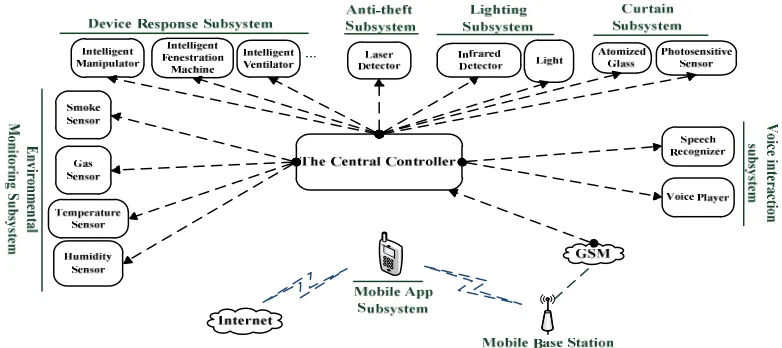
Figure 1. Overall architecture diagram of the system.
the system studies an intelligent home control system composed of Android mobile terminal, GSM mobile communication system, sensor detection network, device response system, man-machine voice interaction system and liquid crystal prop atomized glass curtain system. Unification. The hardware system and the Android mobile terminal use GSM communication technology to achieve real-time communication, so as to realize the real-time monitoring and control of the user's home environment. The overall architecture diagram of the system is shown in Figure 1[4].
Hardware Design
Sensor Detection Network
The sensor network is mainly composed of MQ-2 smoke sensor, MQ-5 LPG sensor, DHT11 temperature and humidity sensor, laser detector, infrared detector, and photosensitive sensor. MQ-2 smoke sensor, sensitive material is a kind of N type semiconductor. When the smoke in the environment spreads to the gas chamber of the sensor, it causes the change of surface conductivity. The larger the smoke concentration and the greater the electrical conductivity, the greater the output analog signal is [5]. The MQ-5 LPG sensor is fixed in a cavity made of plastic or stainless steel by a micro AL2O3 ceramic tube, a SnO2 sensitive layer, a measuring electrode and a heater, which has a good sensitivity of to the combustible gas in a larger concentration range [6]. The DHT11 temperature and humidity sensor contains two important electronic components. One is the humidity sensing element used to test the humidity parameters of the surrounding environment. The other is the NTC temperature measuring element used to test the temperature parameter [7]. It is a 8 bit digital serial output sensor. It is easy to be programmed and convenient to use. The humidity range is 20%-70% and the temperature is fine. The degree is 1 degrees, the error is 2 degrees, the humidity accuracy is 1%RH, the error is 5%RH[8]. The laser sensor is composed of an infrared transmitting tube and a receiving tube. When the receiving tube detects infrared signals, it outputs low level, and vice versa, it outputs high level. The infrared sensor is used to detect the infrared signal of human heat radiation. When people are near, the low level is output and the high level is output when far away. The detection range is up to 5-7 meters. The photosensitive sensor uses simple photosensitive resistance to constitute the detection circuit, when the detection light reaches a certain intensity, it outputs low level and vice versa, it outputs high level. The whole sensor detects various environmental parameters of the network to detect the home environment, so as to realize automatic control of all kinds of household appliances.
Device Response System
This system is mainly composed of intelligent windowing machine, intelligent manipulator, intelligent ventilator and intelligent socket and intelligent switch composed of electromagnetic relay. When the home sensor detection network detects smoke or gas signals, the intelligent manipulator, the intelligent fenestration machine, and the intelligent fan respond simultaneously to turn off the gas valve, open the window, and open the air exchange equipment. In addition, home appliances such as TV, refrigerators, air conditioners and lighting fixtures are connected to smart sockets and smart switches, and mobile phone mobile terminals can control these home appliances remotely. Among them, the intelligent manipulator and intelligent windowing machine are composed of steering gear, and the intelligent ventilator is composed of alternating current motor. Intelligent socket and intelligent switch mainly embed electromagnetic relay into socket and switch, and control the power source. It has the intelligent remote control function of Android mobile terminal [9].
Voice Interaction System
extracted, the speech signal will be input in the test and comparison section. The characteristic vector sequence is compared with the feature vector sequence of each word, and the smallest difference is output [10]. The voice interaction system adopts LD3320 speech recognition module and YS-M3 voice playback module. LD3320 chip is a "speech recognition" special chip. This chip integrates the speech recognition processor and some external circuits. This chip does not need any auxiliary chips such as Flash and RAM, which can be integrated directly in the existing products, which can realize speech recognition/sound control/human conversation function and the key of recognition. The list of words can be dynamically edited. The YS-M3 voice playback module has 9 direct trigger ports. These 9 ports correspond to 9 MP3 voice files at the same time, the first one to ninth, respectively. This module not only directly triggers the functions of 9 MP3, but also has 31 MP3's code on demand functions. The system can realize voice interaction between users and devices, and control various household devices.
Curtain System
The system adopts the liquid crystal prop atomized glass, the atomized glass curtain system can be triggered directly by the sensing signal of the photosensitive sensor or remote control by the Android mobile terminal. The atomized glass is one of the sandwiched glass. When the atomized glass is in the state of power breaking, the liquid crystal molecules in the atomized glass show irregular walking state, and the dimming glass presents a transparent and opaque state. When the atomized glass is in an electrified state, the liquid crystal molecules are arranged neatly, and the light can penetrate freely. The internal liquid crystal molecules are arranged in Figure 2, shown in Figure 3.
Figure 2. Molecular arrangement diagram of liquid crystal in atomized state.
Figure 3. Molecular arrangement diagram of liquid crystal in transparent state.
Software Design
Figure 4. Flow chart of programming.
Application Prospect
China's smart home industry has a good opportunity for development, which mainly depends on its social foundation and national policy support. Since China's reform and opening up, people are getting richer and richer, and their demands for quality of life are getting higher and higher. The comfort, health and convenience of smart home have attracted people's attention. At the same time, post-80s and post-90s have become the main force of home consumption. They are interested in advanced technology and are good at accepting new things. Therefore, the development of smart home has a strong social foundation. In addition, since 2009, central and local governments have introduced policies to support the development of the smart home market. The introduction of these policies has provided a powerful rear protection [13] for the development of smart home. Based on this, the design of an intelligent home control system is particularly important, with extraordinary development potential and broad market prospects.
Summary
References
[1]Ceng Songwei, Zhang Yun, Qiu Weiqiang. Design of smart home control system based on Internet of things [J] modern electronic technology, 2011, 34 (9):168-171.
[2]Pan Chao, Luo Xiao Qiao, Huang Jia, et al. Design of intelligent home control system based on GSM short message, [J]. electronic measurement technology, 2013, 36 (6):121-124.
[3]Cui Bin, Han Junfeng, Liang Jinchang, et al. Intelligent door and window design based on embedded system [J]. modern electronic technology, 2010, 33 (22):78-80.
[4]Jiang Yu, Xu Feiyun, Yang Zhong, Yu Ji Ming. Design of smart home system based on ZigBee technology [J/OL]. Journal of Jinling Institute of Technology: 1-3.
[5]Li Zonghao. STM32 based intelligent smoke alarm system [J]. network security technology and applications, 2018, (2): 137142.
[6]Wang Xianwei. Design of coal mine gas monitoring alarm based on MQ-5 and AT89C51 [J]. Heilongjiang science and technology information, 2014, (13): 108-109.
[7]Huang Youjie, Lu Song Yu, Fang Weijia, et al. Design and implementation of wireless temperature and humidity monitoring system based on ZigBee [J]. Fujian computer, 2018, (2): 17-18100.
[8]Chen Jianxin.DHT11 digital temperature and humidity sensor in greenhouse control system [J]. Shandong industrial technology, 2016, (18): 120-120
[9]Liu Yue. Part of the intelligent socket test discusses [J]. daily appliances, 2017, (8): 31-33. [10]Wang Xiaoran, Qu Liguo, Fang Xing. Human-machine speech interaction system based on STM32 [J]. electronic world, 2017, (13): 104-106.
[11]Lei Wenli, Ren Xin Cheng, Zhang Dong, et al. Design of instant messaging system based on Android platform [J]. modern electronic technology, 2015, (3): 13-15.
[12]Dong Yuyi, Li Fuhai, he Kai Qing. Design and research of smart home control system [J]. mobile communication, 2012, (11): 39-43.