SCHEDULING CASE SIMULATION TO
PERFORMANCE EVALUATION OF HOSPITAL
PRODUCTIVITY
1FIRDAOUS BENNIS, 1MUSTAPHA AMGHAR, 1NAWAL SBITI, 2ABDELMAJID ELOUADI
1
Automation and Computer Engineering Laboratory, The Mohammadia School of engineering, Mohammed V University Agdal, Rabat, MOROCCO
2
Ibn Sina Hospital, Rabat, MOROCCO
E-mail: [email protected] , [email protected] , [email protected],[email protected]
ABSTRACT
The block is a strategic and complicated system in the hospital. It uses diversified and expensive human resources, material and information flow. In this field which investments are very expensive, simulation is a tool for decision-making to analyze the operation and detect malfunctions for dimensioning the system and obtaining the performance. We develop in this article a C++ simulation with a theory of queues based on the optimum of the proposed scheduling model. This model consists of a new approach. For scheduling model, we propose a new production model related to the hybrid flow shop hierarchy manufacturer. We solve the scheduling problem using the discrete particle swarm optimization with travelling salesman problem approach. The case study of our approach applied to the national Institute of Oncology in RABAT, Morocco, allowed us to measure the maximum of patients that can be accepted in a day and the allocation of the three machines queues stretchers, Operating rooms and beds among the scheduled elements involved.
Keywords:Case Simulation, Hospital, Scheduling, Production Model, Hybrid Flow Shop Hierarchy
Manufacturer
1. INTRODUCTION
The operating room is a strategic sector of a hospital. It’s the most important and complicated entity as far its technical platform, risk and generating costs. Profitability is linked to its efficiency, the quality of its organization for better attractiveness, and the fluidity of its processes given by the critical issue reflected on human life. An operating room consists of a set of local sights of invasive aseptic procedures and operates
logically 24h/24h (operations room,
post-interventional monitoring room and logistics adjoining). It is difficult, even risky, to intervene in the operating blocks system upon which human lives depend, then we must be able to assess a priority of the operation system re-structuring. Hence the need to use simulation.
The latter persists to estimate the behavior of the system under extreme operating conditions evaluates and compares various scenarios to identify the most sensitive system changes
components and visualizes the system behavior
during its design and even before its
implementation.
Our paper is Organized as follows: After literature overview in the second part, we present a simulation model developed in C++ which has, as an entry point, the scheduling optimum result obtained by the algorithm of particle swarm optimization, in order to see the maximum number of patients who can pass the current day and the allocation of various resources required for its operation. This gives us the flexibility to evaluate possible solutions for improving and scaling the current system block.
In the third part, we present our scheduling model
concerning the problem with a machines
problem approach, with a new definition of the distance concept from the operating time of each machine.
2. LITERATURE OVERVIEW
Several research studies have investigated the hospital management issues in general and the operating room in particular.
The modeling and simulation subject: They were applied to emergency services [1] [2].They used a discrete event simulation to solve dimensioning resources problem. Besides, [3] used a simulation model that seeks to provide an optimal location for emergency teams and a better distribution of personnel and equipment, which means the distribution that minimizes the time unit response of emergency services for a given time value of the desired service.
[4] proposed an agent based simulation model to examine twelve different policies for assigning casualties to destination hospitals
following an improvised explosive device
explosion in downtown Pittsburgh (USA).
[5] Presents the use of a DES model to simulate the number and costs of hospital emergency services delivered to the population in one Polish region.
The scheduling operating rooms subject: Planning is to allocate time in the "operating room" for a practitioner or a group of practitioners to enable them to care for their patients while ensuring the satisfaction of human resources in their interaction with the system (patient, doctor and paramedical staff), the availability of equipment and various hazards.
We find in the literature three
programming models that are as follows [5]: 1- The programming opening (Open Scheduling) share a common principle of planning without prior decision where the surgeons place their interventions either chronologically or periodically by challenging previous investments. This technique has the advantage to be centralized and easy to organize. However, it can cause malfunctions [6] as the resources under-utilization, a greater rate of deprogramming, time overruns, when performed empirically.
2- Programming by prior allocation ranges (Block Scheduling) is a policy based on the prior allocation of time slots to surgeons for a given period, usually a week. Then, surgeons will just place their interventions within these ranges. It is therefore the technique that has been most commonly used in North America [7],[8],[9]. The
difficulty with this type of programming is in the management plane construction of the slots allocation time.
3- Programming prior allocation ranges adjustment process (Modified Block Scheduling). The concept of lost time becomes soft with a possibility of extension. The Manager block has the possibility to act on the time slots that are previously assigned and based on monitoring the progress of a surgical program. The adaption time scale can be adjusted according to the actors will. [10].
3. SIMULATION BY THE QUEUES
MANAGEMENT
We have developed a simulation program using a C++ based on queues to check the feasibility of the schedule obtained by the discrete particle swarm optimization of our system on three phases:
o Phase 1: a team of stretchers carrying the
patient to the operating room.
o Phase 2: The procedure is performed in an
operating room.
o Phase 3: When the operation is completed,
the patient was immediately transferred to an awaking bed.
As soon as the patient is fully awake, the stretcher carries him to his room. At the same time, the operating room cleaning begins.
This simulation also allows us to inject scheduling process determined in the model in order to simulate the number of patients accepted in a day and the allocation of resources of different sequenced interventions. The surgeries are placed first in the order obtained by DPSO, first on the machine (stretcher), then on the machine (operating room) and in the end on the machine (awaking bed). When an intervention arrives on a machine that is not available, the job is placed in a queue; and when the resource becomes available - if the queue includes multiple operations - a priority rule is used to resolve the conflict.
A priority rule is a formula that associates a value to each operation of a queue, usually calculated on the parameters of the operation. [11]. The queue operation to be placed on the machine is the one which value is the lowest or the highest. Numerous priority rules exist, using various criteria: [12], [13] or [14]. Many studies have been done to try to determine the impact of these rules on the scheduling and overall performance compared to some criteria.
basically shows that no rule outperforms the other at all the objects or workshops [15].
The effects of a priority rule on the scheduling are difficult to predict as it heavily depends on the workshop.
We study the real case of the National Institute of Oncology, Rabat, Morocco as well as we introduce the following as an input of our program:
The optimum scheduling we received during the execution of the algorithm
Stretcher duration.
Surgical intervention duration. Awaking bed spent duration.
Operating block Stretchers number (2).
Operating rooms number (three operating rooms). Awaking beds number (3 beds Wake).
We defined the following functions: stretchering, stretcher liberating, intervention, free operation room, waiting bed, awaking bed, liberating awaking bed.
We also defined a set of structures to follow the clock and the number of stretched patients, operating rooms, awaking beds…etc. The patient structure is as follows:
typedefstruct patient {
indint; / / optimum scheduling DPSO inttb; / / stretcher duration
toint; / / Operating Room duration inttr;/ / Time awaking Room intbr;/ / stretcher assigned to patient int n;/ / Operating room assigned to patient lrint; / / awaking bed assigned to the patient };
struct patient patients[N];
« N » patient number (surgeries generated from the DPSO).
We’ve defined 3 queues: stretcher's Operating room and awaking bad.
4. MODEL OF THE PROPOSED PROBLEM
SCHEDULING
The flow shop problem receives the attention of many researchers. Solution begins when [16] has found a solution in the case of two or three machines. The objective is to find the maximum flow time (makespan), which is a model of hierarchical hybrid flow shop with three floors, especially if the job shop with duplicate machines: each floor K Mk parallel machines with Mk> 1.
Five set for intervention I = {P1, P2Pn}, not preemptive interventions: they run uninterruptedly assigning to this day scheduling.
[image:3.595.308.573.159.361.2]The model proposed scheduling problem is as follows (Figure 1):
Figure 1: hierarchical hybrid flow shop proposed
This problem is NP-hard, we can define it with the notations of rinnooy [17]. (1)
FH3 ((Pn(1),Pn’ (2), P(t)n’’(3) / /Tmax (1)
For the first time, this is an extension for the operating block problem which is generic and represents the different possible interactions within and between machines. It has been identified and presented in quéré [18] and oriented to the modeling and optimization of manufacturing systems as follows: (each floor or machine can be a flow shop or a hybrid flow shop). This model represents the operating room as a hybrid flow shop (stretcher, operation room, awakening bed) and the operating room in hybrid flow shop too (Mar, Chir).
5. DESCRIPTION OF THE SCHEDULING
PROBLEM
The objective of scheduling problem is to minimize the total length of scheduling, denoted T max is equal to the date of the last intervention completion during the scheduled day in the operating room.
Considering the fact that we held a modeling simulation for the best configuration of operating rooms and recovery rooms, we suppose in this case that all machines are available: T max= max{T (Pi)} with T (Pi) is the patient (Pi)
surgery end date.
Min Max (T (Pi), PTS (Pi, Ti, Si)) (2) ∀Pi ∈P, ∀Ti ∈T, ∀Si ∈S.
The process of solving this scheduling problem is as follows:
Step 1: Calculation of distance.
Step 2: Calculation of a unique solution after scheduling this set by OEP.
Step 3: Simulation and C++ queues. Problem assumptions are as follow:
o Each intervention was assigned a prior to a
surgical team (surgeon and anesthetist).
o Material resources are always available
during the scheduled day.
o All surgeons are available at all times.
o A priority is given prior to each
intervention.
o Operating time is given.
o All operating rooms are similar.
o All awakening beds are similar.
o All operating rooms and SSPI open
simultaneously at 08:00.
o No pre-emption in the operating room and
SSPI.
o Resources are disjunctive (non-shareable)
and perform a task at the same time. Our problem is as follows:
We have a set of planned interventions for the day J and we should schedule their passage through the machines we took into account in our system modeling, which are: stretcher, operating room and recovery room. In each machine, the procedure takes a duration defined as “ti” depending on its type.
The interventions durations listing is taken into consideration in the algorithm, consequently the average length is used at NIO (table 1).
Table 1: The interventions durations listing
Designation of the act
Mean TROS/act
Patey 150
ovary 230
Breast conservative
treatment 160
Tumeurectomie 100
colpohysterectomy 222
soft parts 126
Laying implantable 93
jejunostomy 75
axillary 83
Total vulvectomy 186
cervicotomy 145
mammaplasty 100
Hystéroctomie 126
colostomy 145
Liver + VB 220
gastrostomy 125
Anterior resection of
the rectum 495
Laparoscopy
(laparoscopic) 245
laparotomy 75
laryngectomy 520
SpNIO'sear 115
Tumor of the ear 205
thyroidectomy 205
occlusion 160
leg amputation 190
peritonitis 380
lymphnodebiopsy 60
Note that TROS include: T1 * (patient preparation time) T2 * ('' Time of induction)
T3 * (Duration of the surgery itself) T4 * (Duration of bandage) T5 * (Time restoration of the room)
TROS intervention: Begins with the patient entry into the operating room and finishes with the end of the reinstatement of the room.
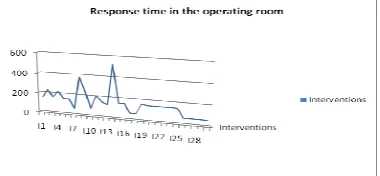
[image:4.595.307.497.479.567.2]We can obviously see that the intervention time is varied:
Figure 2: Response time in the operating room
Step 1:
be able to help the decision maker in relation to respect of deadlines, current level, and the workshop charge. They are dynamic and will allow the simulation of physical flows.
In our case, the initial population will be selected RAND: random order.
Step 2:
We first solve this problem by an extension of the meta-heuristic optimization introduced by Eberhartand Kennedy [19] in 1995 in the United States which is the discrete particle swarm optimization (DPSO).
The basic principle of the OEP is a technique based on the concept of cooperation between agents (particles) with rather limited capacities; and the exchange of information in between allows them to solve difficult problems.
At the beginning, a swarm that contains a set of particles enters in a search space. Each particle in the swarm has the following five characteristics:
1. Position.
2. Speed.
3. Its current position and the value of the
objective function for this position.
4. The value of the best position of its
neighbors and the corresponding
objective function.
5. Its best previous position.
In the discrete case:
A position X: a sequence of operations: potential schudeling, (x1, x2,….xn)
A speed V is a list of transposition ((x i-k, x
j-k)) k=1,…||V||
F (x): The value of the objective function in the X position: Fitness
Operators in the discrete OEP are as follows:
Subtraction (position, position) = speed
External Multiplication (real, speed) =
speed
Addition (speed, speed) = speed
Move (position, speed) = position
Addition (position, speed) = position
The algorithm is as follows:
Initialization
Xi// Generate initial particles of the swarm randomly
Vi // generate the initial velocity of the particles X besti // Identify the best position of the particle
Xgbesti// Identify the best position of the swarm X Nbesti // Identify the best positions of the neighboring
Repeat
Loop i = 1 .... N (all particles in the swarm) Fitness i (t) // Evaluate Fitness (Xi) If
Fitness i (t) <Fitness Xbesti (t) Xbesti // Xi attractor particles end IF
Loop i = 1 .... M (M number of neighbor in swarm)
X Nbesti// Define best position in the neighborhood
end Loop If
Fitness i (t) < Fitness Xg best (t) X gbesti// Xi best attractor particles end IF
For i1 .... N
Update velocity V id (t +1)
Vi Vi+ p1 (X best i-Xi) + p2 (x i g best-Xi)
Update position id X (t +1) Xi Xi + Vi To end
Until the process converges
We will propose a generalization of the distance notion between jobs that must be defined in our hybrid hierarchical flow shop model. [20]
One of the basic ideas of our solving approach is to solve scheduling surgeries problem in analogy with the classical traveling salesman problem approach to obtain interventions scheduling and then study their assignment with a simulation of queues.
For the first problem, it is necessary to define the notion of distance between two interventions. This distance is of course based on the transit times between the three machines of our system, which are:
o The patient transport duration from the
hospitalization bed by the porter to the operating room.
o Surgery duration in the operating room
depending on the invention type.
o The awaking bed duration.
This distance takes into account only two interventions Ij and Ij+1. The distance between the last and the first job in the sequence is not considered. Indeed, we must find a sequence that minimizes the total time wasted and that is given by the shortest path from the initial intervention. This distance definition consists of a weighting of difference between the two surgeries processing
duration taking place simultaneously. The
the first machines. (3)
For (k=0; k<n-1; k++) For (l=k+1; l<n; l++)
d= T k branc i + abs (T k sale j - T l branc i’) + Tl lit h (3)
i∈ [1, m], with m number of stretcher
j∈ [1, m’], avec m number of operating
room
h∈ [1, m’’], avec m number of awakening
beds
And assuming that:
All rooms are available
All awakening beds are available
All stretcher are versatile
A FIFO rule is used in the floors: the
first machine available is the first served.
6. EXPERIMENTAL RESULTS
We will make a graph for 6, 8, 10, 12 and 14 interventions.
[image:6.595.72.519.75.744.2]For 6 interventions: We use the surgical procedures as indicated in the table and the operating time as follows: (Table 2)
Table 2: surgical procedures used
stretcher time DF (1) (i)
Designation
of the act Operating room time DF (2) (i)
Bed awakening
time DF (3) (i)
I1 5 Patey 150 60
I2 5 ovary 230 60
I3 5
Breast conservative
treatment 160 60
I4 5
Colpohst
erectomy 222 60
I5 5 Patey 150 60
I6 5 Patey 150 60
The input graph of the DPSO algorithm with distances is:
We develop a C + + program to calculate the matrix of distance with the formula explained in the previous paragraph with the operating time of the previous table, then we get: (Table 3)
Table 3: Matrix of distance
I1 I2 I3 I4 I5 I6
I1 0 210 210 210 210 210
I2 210 0 290 290 290 290
I3 210 290 0 220 220 220
I4 210 290 220 0 282 282
I5 210 290 220 282 0 210
I6 210 290 220 282 210 0
For 8 interventions:
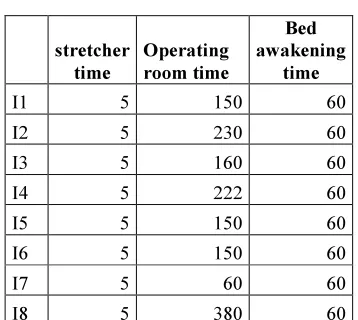
[image:6.595.317.496.335.495.2]We use the surgical procedures as indicated in the table and the operating time as follows: (Table 4)
Table 4: surgical procedures used
stretcher time
Operating room time
Bed awakening
time
I1 5 150 60
I2 5 230 60
I3 5 160 60
I4 5 222 60
I5 5 150 60
I6 5 150 60
I7 5 60 60
I8 5 380 60
The input graph of the DPSO algorithm with distances is: with C++ developed (Table 5)
Table 5: Matrix of distance
I1 I2 I3 I4 I5 I6 I7 I8
I1 0 210 210 210 210 210 210 210
I2 210 0 290 290 290 290 290 290
I3 210 290 0 220 220 220 220 220
I4 210 290 220 0 282 282 282 282
I5 210 290 220 282 0 210 210 210
I6 210 290 220 282 210 0 210 210
210 290 220 282 210 210 0 120
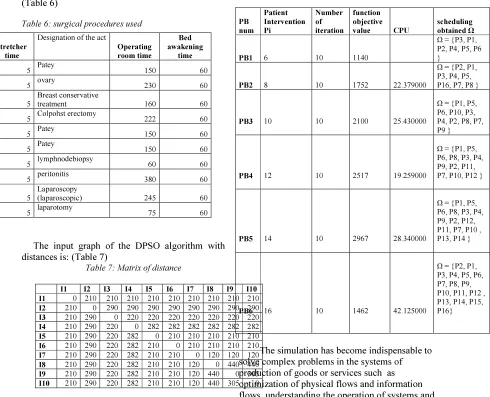
[image:6.595.62.295.469.613.2]With the same reasoning, For 10 interventions: (Table 6)
Table 6: surgical procedures used
The input graph of the DPSO algorithm with distances is: (Table 7)
Table 7: Matrix of distance
I1 I2 I3 I4 I5 I6 I7 I8 I9 I10 I1 0 210 210 210 210 210 210 210 210 210
I2 210 0 290 290 290 290 290 290 290 290
I3 210 290 0 220 220 220 220 220 220 220
I4 210 290 220 0 282 282 282 282 282 282
I5 210 290 220 282 0 210 210 210 210 210
I6 210 290 220 282 210 0 210 210 210 210
I7 210 290 220 282 210 210 0 120 120 120
I8 210 290 220 282 210 210 120 0 440 440
I9 210 290 220 282 210 210 120 440 0 305
I10 210 290 220 282 210 210 120 440 305 0
With the same reasoning, we also define a set of intervention for 12, 14 and 16 patients. After the execution of the DPSO algorithm, we have the following results that represent the optimum schedules for 10 iterations, the value of the objective function and the CPU used when compiling the program.
Table 8: Scheduling obtained
PB num
Patient Intervention Pi
Number of iteration
function objective
value CPU
scheduling obtained Ω
PB1 6 10 1140
Ω = {P3, P1, P2, P4, P5, P6 }
PB2 8 10 1752 22.379000
Ω = {P2, P1, P3, P4, P5, P16, P7, P8 }
PB3 10 10 2100 25.430000
Ω = {P1, P5, P6, P10, P3, P4, P2, P8, P7, P9 }
PB4 12 10 2517 19.259000
Ω = {P1, P5, P6, P8, P3, P4, P9, P2, P11, P7, P10, P12 }
PB5 14 10 2967 28.340000
Ω = {P1, P5, P6, P8, P3, P4, P9, P2, P12, P11, P7, P10 , P13, P14 }
PB6 16 10 1462 42.125000
Ω = {P2, P1, P3, P4, P5, P6, P7, P8, P9, P10, P11, P12 , P13, P14, P15, P16}
The simulation has become indispensable to solve complex problems in the systems of production of goods or services such as optimization of physical flows and information flows, understanding the operation of systems and compare several scenarios to select the best configuration that achieves the objectives.
With the simulation, we had the results as follows:
For 6 interventions: (Table 9)
We have the optimum scheduling generated by the algorithm of particle swarm optimization, which is: Ω = {P3, P1, P2, P4, P5, P16}.
We affect the necessary means for this scheduling in order to operate the patients; we get as a result, and the optimum assignment throw the queues management and we find out that all the patients could pass a current day.
stretcher time
Designation of the act
Operating room time
Bed awakening
time
I1 5 Patey 150 60
I2 5 ovary 230 60
I3 5
Breast conservative
treatment 160 60
I4 5 Colpohst erectomy 222 60
I5 5 Patey 150 60
I6 5 Patey 150 60
I7 5 lymphnodebiopsy 60 60
I8 5 peritonitis 380 60
I9 5
Laparoscopy
(laparoscopic) 245 60
Table 9: Result of simulation for 6 interventions
stretcher time
Designatio n of the
act
Operating room time
Bed awake
ning time
Num
br Num so Nu
m lr
I3 5
Breast conservati ve
treatment 160 60 br0 so0 lr1
I1 5 Patey 150 60 br1 so1 lr0
I2 5 ovary 230 60 br0 so2 lr2
I4 5
colpohyste
rectomy 222 60 br1 so1 lr1
I5 5 Patey 150 60 br0 so0 lr0
I6 5 Patey 150 60 br1 so2 lr2
For 8 interventions: (Table 10)
The same for this configuration, we used the optimum scheduling that we got by using the method described in the paragraphs below and which is Ω = {P2, P1, P3, P4, P5, P16, P7, P8} to serve 8 patients during a day time, we see that we can satisfy all patients presented in the scheduling and who are assigned to different machines (medic, operating room and bed)
Table 10: Result of simulation for 8 interventions
stretcher time
Designation of the act
Operating room
time
bedawa kening time
numbr numso numlr
I2 5 ovary 230 60 br0 so0 lr2
I1 5 Patey 150 60 br1 so1 lr0
I3 5 treatment 160 60 br0 so2 lr1
I4 5
colpohysterect
omy 222 60 br1 so1 lr1
I5 5 Patey 150 60 br0 so2 lr0
I6 5 Patey 150 60 br1 so0 lr0
I7 5
lymphnodebio
psy 60 60 br0 so2 lr2
I8 5 peritonitis 380 60 b1 so1 lr0
For 14 interventions: (Table 11)
We note that the 13 th is the last Intervention affected. From the 14 th interventions, the patient is denied in the system. Resources (surgeons, anesthetists, nurses ....) should work extra hours to make interventions require further study to diagnose other criteria such as: the cost to add and prioritization of interventions that needs to be done for better organization.
Table 11: Result of simulation for 14 interventions
stretc her time
Designation
of the act Operating room time
bedawak ening
time
Num br
Num so
Num lr
I1 5 Patey 150 60 br0 so0 lr0
I5 5 Patey 150 60 br1 so1 lr0
I6 5 Patey 150 60 br0 so2 lr1
I8 5 peritonitis 380 60 br1 so0 lr2
I3 5 treatment 160 60 br0 so1 lr0
I4 5
colpohystere
ctomy 222 60 br1 so2 lr2
I9 5
Laparoscopy (laparoscopi
c) 245 60 br0 so2 lr1
I2 5 ovary 230 60 br1 so1 lr0
I12 5 Patey 150 60 br0 so2 lr2
I11 5
thyroidecto
my 205 60 br1 so0 lr1
I7 5
lymphnodebi
opsy 60 60 br0 so1 lr1
I10 5 jejunostomy 75 60 br1 so1 lr0
I13 5 gastrostomy 125 60 br0 so2 lr2
I14 5
laryngectom
y 520 60 - - -
7. CONCLUSION:
In this paper, we developed a C++ program to be simulated by queues, number of patients that can be accepted during a day, and studied the real case of the National Institute of Oncology, Rabat-Morocco, as well as the allocation of resources sets we’ve defined already in the modeling of our scheduling system that are (stretcher, operating room and awaking bed). Being used as a program input, the optimum scheduling result of DPSO.
We formulated the scheduling problem with a new approach; we first set a new model of our scheduling system using the hierarchical hybrid flow shop model. After that, we introduced a new design to our scheduling problem that is based on the travelling salesman problem approach issue in which we have developed a new concept of distance suiting this type of system. The scheduling issue was then solved with the discrete swarm particle optimization.
REFERENCES:
[1] A. Artiba, C. Martinelly, J. Vissers “Patient flow based allocation of inpatient resources”, European Journal of Operation Research, 1998, 105, 356-370.
[2] F.J. Ramis, Palma, et al., “The use of simulation
for process improvement at an
ambulatory” European journal of operational surgery centre proceedings of the 2001 winter simulation conference, 2001, PP. 1404-4 [3] A.S. Zaki, S.K. Cheng, “A simulation model for
the analysis and management of an emergency service”, Journal of Socio-economics planning sciences, ed. Elsevier Sciences, vol 31, pp 173-189, 1997.
[4] Y. Wang , K.L. Luang Kesorn & L. Shuman, 2012 “Modeling emergency medical response to a mass casualty incident using agent based simulation”.Socio-Economic planning sciences, 46 (4), 281-290.
[5] H. Fei, N. Meskens, & C. Chu, (2010). “A planning and scheduling problem for an operating theatre using an open scheduling
strategy.” Computers and Industrial
Engineering, 58(2), 221–230.
[6] D. Dubois, H. Prade, 1987. “The mean value of a fuzzy number.” Fuzzy Sets Syst. 24 (3), 279– 300.
[7] T.M.Chang, Y.H. Yih, “Constructing a fuzzy rule system from examples”, Integrated Computer-Aided Engineering, 6 (3), 213-222(1999).
[8] H. Fei, C. Chu, N. Meskens, & A. Artiba, (2008). “Solving surgical cases assignment problem by a branch-and price approach.” International Journal of Production Economics, 112(1), 96–108.
[9]A. HuaKe, B. Baoding Liu, “Applied
Mathematical Modelling” (2010) 301–308, Fuzzy project scheduling problem and its hybrid intelligent alogorithm.
[10] B. BouSchon Meunier, “ La logique floue et ses applications”, (1985)
[11] D. Boucon, “Ordonnancement d'atelier : Aide au choix des règles de priorité ”, Thèse de Doctorat en Automatique, Ecole Nationale Supérieure de l'Aéronautique et de l'Espace, Avril 1991.
[12] S.S Panwalker, W. Iskander, “A survey of scheduling rules”,Operations Research, vol.9, n°, 1977, pp. 45-61.
[13] M. Montazeri, L.N. VanWassenhove,
“Analysis of scheduling rules for an FMS”, International Journal of Production Research,
vol.28, n°4, 1990, pp. 785-802.
[14] O. Holthaus, C. Rajendran, “Efficient jobshop
dispatching rules: further developments",
Production Planning and Control, vol.11, n°2,2000, pp. 171-178.
[15] H .Pierreval, N. Mebarki, “Dynamic selection of dispatchingrules for manufacturing systems scheduling”, International Journal of Production Research, vol.35, n°6, 1997, pp. 1575-1591. [16] M. Garey, D. Johnson, & R. Sethy, (1976).
“The complexity of flow shop and job shop scheduling. ” Mathematics of Operations Research, 1(2), 117–129.
[17] H. G. RINNOOY KAN, “Machine scheduling
problems: classification, complexity and
computations, ” Nijhoff, The Hague, 1976. [18] A. Quéré “Gestion et optimisation des flux
matières dans les systèmes de production de type flow-shop hybride . ” Doctorat d'informatique, Université Blaise Pascal, Clermont-Ferrand II, 1998.
[19] R. C. Eberhart, and J. Kennedy. “A new optimizer using particle swarm theory.”
Proceedings of the 6th International Symposium
on Micromachine and Human Science, Nagoya, Japan. p. 39-43, 1995.